Tying the UV Chewee Skin Mini Stone

This spring we have been playing with UV materials in our fly patterns quite a bit. The UV Cahill fished very nicely this spring and a scaled back “creamier one” is bound to kill during the PMD hatch coming on daily in the lower river. The UV Chewee Skin Green Caddis Soft hackle has been doing it’s damage as well. With Green Caddis emerging it  has fished all day long, swung down and across.

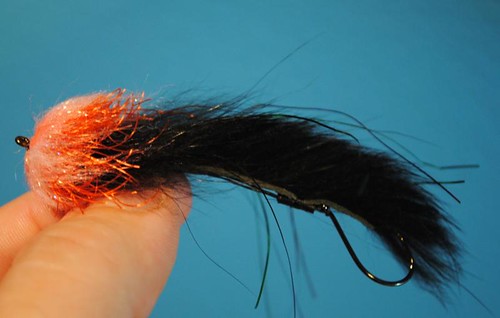
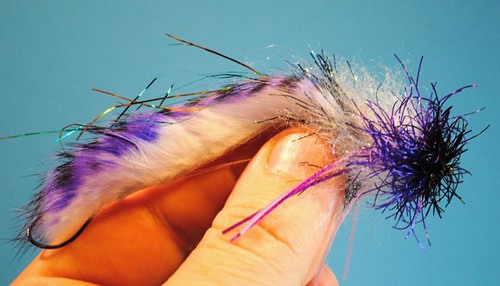
In the latest of our UV Chewee Skin patterns Barrett ties a Mini Stone with the material. The Mini Stone sinks very nicely for it’s size and fishes well on the McKenzie, Middle Fork and Deschutes to name a few. Fish it with another small nymph like a Copper John, Pheasant Tail or small Possie Bugger. We are really becoming beleivers in the fact that UV colors make a difference, we suggest you give it a try in some of your patterns as well.–CD

UV Chewee skin mini stone

Posted in Fly Tying, Lower Willamette, McKenzie River, Middle Fork Willamette River fishing | Leave a comment

Eugene area Summer Steelhead Report

Early summer steelhead fishing has been a hit or miss game in our local rivers. Water levels are a bit up, but the clarity in the Willamette and McKenzie is fine. We have been floating a couple times a week for the past few weeks and found fish on about half of the trips. It still seems a bit early for an epic, multi-fish day, but finding one fish helps your mood. At the end of the floats(especially when skunked) I look forward to getting home to see the updated fish counts, which have not let me down yet with the promise of awesome summer steelhead days to come.

jason's summer run

Flies to be using to get these fish to move in higher water conditions: MOAL Leech, Signature Intruder, Bush’s Town Run, Pick Yer Pocket, and larger nymph and egg patterns.–JC

Posted in Fishing Reports, Lower Willamette, McKenzie River, Summer Steelhead | 3 Comments

ODFW seeks volunteers for Mann Lake goldfish extermination

This summer, ODFW will be applying rotenone to Mann Lake in the Steens Mountain area. The high desert lake has been stocked with Lahontan Cutthroat trout since the 1950s, but an explosion of introduced goldfish has wrecked the fishery.

Steens behind Mann Lake Mann Lake photo by Wildernice

Prior to the rotenone treatment, ODFW is looking for anglers to help catch Lahontan Cutthroat. They will be held in a nearby pond and placed back into Mann Lake once re-stocking begins. For more info, check the ODFW press release.

Lahontan cutthroat trout are native to the high desert of Eastern Oregon. Check out this video on ODFW doing a Lahontan Cutthroat population study.

Posted in Eastern Oregon | Leave a comment

Lower Mckenzie fishing report: Still on despite high water

The lower Mckenzie is coming into shape and produced some fine redsides on a sunny Sunday. This trip set a record for the boat for most fish lost by angler on a trip: which included one steelhead! Noah had the hot rod using the Beldar Double Beaded Stone and the infamous Possie Bugger. However, our other angler manged to land some fine redsides.

P5020269

P5020255

Overall, it was a great day to be out on the water. We did see some Mckenzie Green Caddis bombing around but no takes. Angling should continue to improve with better water levels and weather. LV

Posted in Uncategorized | 2 Comments

Beads-R-Us

The incredibly talented Jay Nicholas has been helping me with product descriptions for Caddisflyshop.com. The following discussion, description, enlightening tale, delves into the world of fly tying beads. Keep in mind most of this is true and was written after hours and days of fly tying sessions, fly tying research and 50,000 fly tying related words being typed into a Macintosh.–CD

IMG_3314

A glimpse into the Arcane, Obsessive World of Fly Tying Beads, Cones, Coneheads, Eyes, Barbells, and – – – – –

Fly tying beads are simple, right? Wrong. Nothing is simple in the world of fly tying these days. In 1962, here in Oregon, any self-respecting fly tyer used Nymo threads. A few fancy-pants European knock-offs used something fancy like Pearsall’s or some such silkilsh stuff. But to a thirteen-year-old learning to tie flies from Audrey Joy in the Portland Meier and Frank Store, there was Nymo and – Nymo. Hooks, too, were simple. It was Mustad or some Partridge like thing, which at the time I thought was a bird.

When fly tying beads came along, it was yet another foot in the door of obsession for fly tyers. IN the beginning, which I think was deep in the heart of Europe, fly tying beads began oozing out of an ancient Roman Aqueduct, or a volcano, or a hot springs frequented by aging European men wearing Speedos, or some such portal to the underworld.

At any rate, one day the fly tying world was clean and fresh, free of beads. Boom. Next day, there were these tiny, innocent little things called fly tying beads all over the European continent. Like pearls, they were scooped up by fly tyers who had no real idea what to do with them, but as they were free at that time, and fly tyers are notoriously stingy, the beads were scooped up and stashed on fly tying benches and in Man-Rooms across the Old World.

Ah-ha. That was the diabolical plan of the fly tying bead goddess, she who must not be named. Within a few years, these simple brass balls with tiny holes in their centers began to mutate and morph into — into a staggering roster of metallic thingamagigs that are now-a-days attached to fly hooks. By this time, us fly tyers were doomed. The rumor had already spread that nymphs and wet flies had to be tied with beads in order to catch fish.

This is silly, of course, because humans had been catching fish with normal Gold-Ribbed Hare’s Ears nymphs, sans bead, for at least three million years. Ahhhhh, those, too were the simple days when there was only one kind of fly rod (a stick) and one fly line (dried tree-roots), and one hook (the toe bone from a saber-tooth tiger).

Anyway, for millions of years, fly fishers caught fish all over the globe. Suddenly, however, we all woke up believing that flies tied with beads were better than flies without beads. This imaginary factoid lit the fly tying plains like wildfire when ordinary anglers began crawling home from rivers and lakes with harrowing tales of the number and size of fish they had just caught on flies tied with bead heads. Little flies with fly tying beads. Big flies with fly tying beads. Wet flies. Nymphs. Soft hackles. Streamers. Buggers. Midges. Leeches. Even dry flies with bead heads were being touted as super fish attractors.

We were hooked. All us obsessive fly tyers were hooked and we remain hooked to this day. Simple brass beads with holes morphed into a staggering number of variants, just as the common cold mutates constantly, forever eluding clear classification and – heaven forbid – development of a “cure.” So too with fly tying beads, they continue to mutate and evolve, defying any attempt to ever settle on a favorite style, size, color, or weight.

The permutations are as perplexing as they are multitudinous. Bead head Gold Ribbed Hare’s ear. Bead Head Possie Bugger. Bead head Prince. Bead Head Pheasant Tail. Bead head Wooly Bugger. Bead head mini Leech. Bead Head egg sucking leech. Bead head midge. Bead head Crazy Charlie. Bead head Clouser Deep Minnow. Bead head rabbit leech. Bead head Copper John. Bead Head French Onion Soup. Bead head soft hackles. Bead Head Green Rockworm. Bead Head October Caddis. Bead Head Pulled Pork Sandwich. Yummmmm.

This reminds me, did you hear the one about the Hareline Gold Cyclops bead at the Simms Ice Out event in Bozeman Montana? Well, this Gold Cyclops Bead was standing at the bar, quaffing a Coors Light, when up steps a Hareline Copper Slotted Tungsten Bead, a hot feminine fly fishing industry rep who ordered some sort of fancy hefeweizen with a name like “Sunset over the Rockies after a June white-out with a Hareline fly tying bead designer at my side.”

The Hareline Gold Cyclops Bead, calm as could be, turned to the bartender, who just happened to be a fluorescent pink Hareline Countersunk Tungsten fly tying bead, said, with a quiver of anticipation clearly evident in his voice, “the lady’s drink is on me.” Maybe you had to be there. Hickman can vouch for every word.

As I write this, I am recovering from seventeen straight hours writing about fly tying beads, cones, eyes, barbells, mono eyes, lead fly tying eyes, painted lead eyes, tungsten beads, tungsten slotted beads, faceted tungsten beads, faceted slotted fly tying beads, bead chain eyes, countersunk tungsten beads, pseudo eyes, aluminum sea eyes, and, lord save me from myself. Forget that. Lord save me from the fly tying beads in my head when I close my eyes. Humm. Come to think of it, when was the last time I closed my eyes?

Here, for your fly tying bead obsession, just because I love to share my pain, are a few snippets about these critters.

Hareline Cyclops Beads are like Wheaties were in the good old days. The breakfast of Champions. Pour a hundred Hareline Cyclops beads down the toilet and it will do the same job as Mr. Roto, at a tiny fraction of the house-call fee. Use these in the cat’s litter box. Fish eat these on every imaginable fly style and size. Use with caution. The Hareline Cyclops fly tying bead is the gateway drug. Once you start down this road you are on the Highway to bead-o-mania.

Hareline tungsten beads. Start with the gateway bead-drug and make it sink better, here is what ya get. Tungsten sinks faster than depleted uranium.

Hareline Slotted Tungsten beads. We know that we are suffering an economic crisis on planet earth. Unemployment is high, retirement nest eggs disappeared, and swine flu still lurks in the shadows. Slotted Tungsten fly tying beads are one small step to improving the human condition. Buy these now. The slots will allow swift passage of your hook barb, thereby reducing karmatic angst, and every bead you purchase will put someone to work in Monroe, Oregon.

A side-note on bead and cone colors at this point. Gold is great. Copper is great. Black is killer. Nickel is for mid-day when water temperatures are hovering around freezing. Fluorescent orange makes fish think they are eating salmon eggs. Fluorescent white imitates worm larvae. Fluorescent green makes salmon think they are eating shark eggs. Flies tied with several beads in contrasting metallic and fluorescent colors on the same hook shank trigger psychotic mental lapses in the most gigantamundo salmon and cause them to swallow said flies shortly after they hit the water.

All of this is true, more or less. Maybe less more than more. But there could be some truth in this line of thinking, but maybe not. Are you going to be the one to de-bunk the mystique of fly tying beadology? I think not.

Another side-bar note here. The SEC has recently announced initiating an investigation of insider trading on the stock market related to Hareline fly tying beads, cones, coneheads, Pseudo Eyes, and Dazzle Beads. The tipping point for the SEC occurred when an anonymous caller blabbed that the Caddis fly had invested seventy Million bucks in the fly tying bead futures market. This by itself was not curious, but it then came to an accusation that the Caddis fly was trying to corner the worldwide fly tying bead market, control supply, fix prices, and influence color and style release dates.

This news was heartbreaking, to say the least. I now realize that all of the allegations are false and that the Caddis Fly will be absolved of any “wrong doing” when all the facts come out.

Have I mentioned Beads-R-Us? The people at Hareline Dubbin have pretty much proven that they are out to get us innocents with their onslaught of fly tying beads. But imagine what their daily lives are like. Surrounded by seven thousand packages ready to be picked up by the UPS guy wearing shorts in winter; hands all purple, orange, and hot pink from the latest schlappen dye party; every room littered with bar-coded labels and itty-bitty plastic bags; eating pizza next to twelve tons of cute little rabbit faces; stepping around thirteen thousand tanned deer hides; and dreading the day when they need to transfer seven miles of ultra-fine copper wire onto eleven million fly-shop spools – maybe their proclivity to obsess about fly tying beads is – nearly normal.

Sad to say it, but Ed Ward and George Cook do not use Hareline Faceted Slotted Tungsten Beads on their signature Intruders. This is perplexing because these guys are smart fly fishers. They catch a ton of giant king salmon every year. At least that’s what I’ve heard. Maybe it’s an exaggeration. Why wouldn’t they want to catch two tons of giant king salmon. I know it is a slight problem that these faceted tungsten fly tying beads don’t fit on a Waddington Sank. So what, I say. These guys, and people like Rob and Jeff and Jason are all savvy enough that they could use Super Glue to gob a bunch of these fly tying beads on their intruders. Then they could fish these on a Scandi Compact or Rio AFS instead of a Skagit line with twenty feet of T-17 sink tip.

By the way, you, the insane reader, should buy at least three hundred and seventy four packs of assorted beads, no matter what. Here is why. It will stimulate the Eugene, Oregon economy. It will stimulate the Monroe, Oregon economy. It will keep the French pastries in stock on Fridays at the Fly Shop. It will keep cold water in the tank and a case of Coca Cola in the fridge. It will keep bathroom tissue in the restroom (toilet paper in the bathroom). No there is no bath in the bathroom at the Caddis Fly.

Oh my gosh I have fly tying beads on the brain. Doing my internet research, I learned that NASA buys Hareline fly tying beads, cones, and eyes, — melts them down, and injection molds them to make parts for the Mars Lander. The USMC buys Hareline fly tying beads to make tank tracks. The USN uses fly tying beads as bearings on their missile turrets. Skate boarding punks buy fly tying beads to re-pack their wheels and surfer dudes use fly tying beads as shark pelting devices.
Rick Hafele is rumored (sorry Rick) to have documented that stonefly nymphs on the Deschutes have evolved to have actual gold-colored bead-heads just like the Kaufmann Bead head rubber leg stonefly nymph sold by the gazillion in Fly Shops. Art imitates nature, and nature imitates art. Fly tying beads should not be used as strike indicators, although they are useful for many other things like boat anchors.

Last thought, if you are still with me, the Caddis Fly stocks several thousand metric tons of fly tying beads, craft beads, depleted uranium beads, invisible beads, sub-atomic beads, big-as-a-house beads, and imaginary beads. Just a hint.

JN

Posted in Fly Tying | 8 Comments

Tony’s Purple Tube Leech: Steelhead fly tying video

In this video Tony Torrence ties a killer tube leech that gets down, swims, and pisses off awaiting anadromous fish. Tony uses HMH and Eumer tubing to create the fly. In addition he adds a Eumer Monster Cone to aid in the flies sub-surface action. Add a trailer hook and you are in business.–CD
Torrence Tube Rabbit

Purple Tube Leech

Tube: Small HMH and Eumer Med Tube
Thread: White Ultra Thread 140D and Black Uni-Thread 6/0
Tail: Mirage Krystal Flash
Tag:Mirage Krystal Flash
Wing: Black Rabbit Tied Zonker Style
Body: Cactus Chennile Med Purple and Crosscutt Rabbit Purple
Flash: Mirage Flashabou
Hackle: Black Saddle/Purple Guinea
Cone: Eumer Monster Cone Pink Large

Posted in Fly Tying, Lower Willamette, McKenzie River, Summer Steelhead | 3 Comments

May McKenzie River Report: river shaping up nicely

get-attachment-8.aspx

This week on the McKenzie was wet, cold, and pretty good all things considered. High water and “squally weather”  made for very light pressure on the river. This weekend and coming week we are headed into “Prime Time” as a local salmon angler so aptly, and garishly stated on his boat one year. The weather is stabilizing, water temperatures are rising and the river is dropping. Yesterday afternoon from Belinger to Armitage numerous Green Caddis, Golden Stones, larger Brown Caddis, March Browns, and Pale Morning Duns were emerging. This smorgasbord of insect activity had the fish eating despite off color water. We caught fish on nymphs: Beldar’s Double Bead Stone in Black and Golden, Possie Buggers and Mega Princes, swung wets: Royal Coachman, and Dark Cahil.  McKenzie River Wild rainbows and Cutthroats ate the size 10 Possie Bugger swung as well as any other bug. When the Big Green Caddis are hatching it is hard to get away from having the Possie Bugger on. The water is going to clear up considerably over the next couple of days and fishing is going to be outstanding.–CD
get-attachment-5.aspx

4565837774_1d31e73f7a_b

Posted in Fishing Reports, McKenzie River | Leave a comment

Tony’s Temple Tube Fly Tying Video

In this video Tony Torrence demonstrates how to tie his version of a Temple Dog style fly on a tube. By inserting a small HMH Tube into a medium Eumer plastic tube the tier has a built in junction tube to slide the hook into. In addition having the small tube inside the medium tube allows for normal thread pressure without compressing the tube. Tony uses the HMH Tube Fly Vise Attachment to hold everything in place.

The Temple Tube fishes well swung down and across on a floating or sinking tip. Depending on your water depth, clarity and speed one could use a weighted tube or add barbell eyes to the fly or leave it light as in this video.–CD

Torrence Ice Wing Dog

Tony’s Temple Tube

Tubes: Small HMH Plastic Tube and Med Eumer Clear
Thread: Black Danville 6/0
Tag: Oval Silver Lagartun
Rib: Oval Silver Lagartun
Body: Rear 1/3 Lagartun Mini Flat Braid Purple
Front 2/3 UV Ice Dub Black
Hackle: Purple Saddle Hackle
Underwing: Purple Finnish Racoon or Artic Fox
Ice Wing UV Purple
Silver Holographic Angel Hair
Colar: Black Saddle Hackle
Wing: Black Finnish Raccoon
Black Ice Wing

Posted in Fly Tying, Lower Willamette, McKenzie River, Oregon Winter Steelhead Fishing, Summer Steelhead | 2 Comments

Hatchery trout removal economic case study: The Metolius River

Understandably, several McKenzie River business owners have expressed their concerns about the potential economic impacts of removing hatchery programs. Since no definitive case studies were available, the McKenzie River Native Trout Coalition decided to interview business owners on the Metolius and Deschutes rivers, where hatchery trout have already been removed.

In all cases, business owners we spoke with said the net result was either positive for their bottom line or had no effect. One case in particular, that of Roger White, owner of the Camp Sherman Store, is very compelling:

Metolius River Oregon Photo by TomHyde2

Roger White bought the Camp Sherman Store in 1996. The last hatchery trout were planted in the Metolius River in August of 1995. Prior to his investment, Roger and his wife had been living in Hawaii. They didn’t know much about the Metolius or the area, but the store appeared to be a great investment on paper. The couple’s business plan was simply to re-tool the store to better serve area residents and tourists, and to provide excellent customer service.

Upon arrival in the valley, Roger started hearing complaints from a handful of anglers who predicted the end of fishing and business on the Metolius. One local fishing guide was almost run over by one of the area lodge owners. “A lot of people were really pissed at John,” said Roger. “He was the guy who stood up for the river. Took guts…people hated him.”

“Some folks were really upset about the new catch and release rules,” Roger explained. “We were nervous, mortgaged up to our eyeballs, so we tried to become informed. At first I was very skeptical. And it was hard to get good information, but finally we were directed to Bob Hooton at ODFW. He helped us understand what was going on. He and others came forward and assured us that the river would respond, and that we would end up having better fishing.”

“One interesting thing: that last year they put hatchery fish in here, they had a weir down at Billy Chinook where they monitored how many fish were migrating out of the Metolius and into the lake. Those hatchery fish were showing up way down at the lake after only a couple of days from being planted at Camp Sherman. It was obvious the fish weren’t even staying in the river for very long. They were usually shocked by the cold water and didn’t swim right. They just got flushed out.”

Roger had gross-sales numbers from the previous store owners. “We knew what they had done as far as business goes, and we beat those numbers by a good margin the first year. That was mostly due to tighter management. We stocked the store with the right things.” Then, Roger went on to grow the business steadily over the following several years. “Just a few percentage points a year, but we did quite well. We didn’t blow away like some had predicted. Neither did the rentals. We all did pretty well.”

Roger says fishing on the Metolius was terrible for the first two years after the plantings stopped. “It was really bad,” he says. “But by year three the fishing bounced back. By year four people were coming in the store bragging about all the big fish they were catching.” Today, Roger thinks the Metolius offers a great fishing experience. He remembers how he once saw anglers bunched up around the stocking truck, standing shoulder to shoulder. “These guys didn’t fish the river. They just went to the pools where they knew all those fish had been planted and they cast in the same spot over and over.”

Upon hearing about the controversy on the McKenzie, Roger had some interesting comments:

“Well, I can tell you the hatchery fish had major impacts on the Metolius. During the plantings, our wild trout population fell to near extinction. It took some time, but they came back, and now we have a healthy trout population.”

“I would think the guides could still offer a trout lunch for people. They just need to bring some store-bought trout. And I bet if they asked their clients, there’s probably a lot of folks who would rather have a burger. Or a sandwich. A lot of people aren’t too crazy about trout.”

“I don’t want to cast any kind of negative light on the guides. They’re just trying to make a living. But I can tell them there is a happy ending. The fish will come back. The river will recover and be better than it is now.”

“I’ll tell you another thing I realized about those hatchery fish. You know, people always take a few trout home, maybe the biggest one. Then they forget, and months later they find this freezer burned old thing and throw it out. It’s not a good use of a river to just waste fish like that. But with catch and release it just makes good business sense. Those fish are worth too much to throw away like that.”

-RR

Posted in Oregon Conservation News | 6 Comments

Upper McKenzie River fishing report: Trout are hungry

Rick Allen just sent in these photos from a trip above Blue River with Matt O’Neal. Big black stoneflies were particularly hot with small caddis around as well. Matt and Rick got into several gorgeous wild trout.

Rick Allen Upper McKenzie Pics

Rick Allen Upper McKenzie Pics

Rick Allen Upper McKenzie Pics

Posted in Fishing Reports, McKenzie River | 3 Comments

Oregon Board of Forestry clear cuts protections for salmon in the Tillamook

Last week, the Oregon Board of Forestry voted 5-2 to increase clearcutting on 600,000 acres in Tillamook and Clatsop state forests. The new plan lowers protections for older forest and increases the target for clear cutting. As a result, 50,000 acres of currently protected stands will be opened to clear cutting. Under the current plan, no more than 15% of the forest can be a recent clear cut. Under the new plan, up to 25% will be a recent clear cut.

North Fork Trask Logging

From OPB: Brian Pasko of the Sierra Club said, “We are disappointed by this decision – the Board of Forestry ignored overwhelming public comment against their plan to increase clearcutting and reduce protections for older forests and salmon streams. Of all days, you’d think on Earth Day they might try to align themselves with the majority of Oregonians who want more protection for our forests, but again and again this Board has shown it doesn’t reflect the mainstream.”

Bob Van Dyk of the Wild Salmon Center expressed concern about the scientific underpinnings of the plan changes. “State law requires the state forest plans to protect and restore fish habitat. The high levels of clear cutting allowed by this change need an independent scientific review before being implemented,” he said.

The effects on endangered species were also a concern. “Today’s decision to increase cutting on the Tillamook State Forest will harm water quality and place coho salmon, spotted owls and numerous other fish and wildlife species in jeopardy. These changes are not in the interest of Oregonians,” said Noah Greenwald, endangered species program director for the Center for Biological Diversity.

Some of the key salmon watersheds identified by Oregon Fish and Wildlife are predicted to have very high levels of clear cutting under the approved changes. An internal review by the Department of Forestry noted that under the new plan some watersheds would be at a “high risk” of changing watershed function due to extensive clear cutting, with potentially negative effects on salmon.

Posted in Oregon Conservation News | 8 Comments

Lower Willamette Produces

Lou took “the boys”, Ty and Clay, out for a day on the lower Willy. They had not seen the lower Willamette and by the end of the trip, they were impressed.

Sunday offered up some fine cuts. Strong runs with some nice airborne activity made lasting impressions.

Lakeview & team Hollaway 041

The hot patterns on this trip were the Hot Butt CDC Caddis, Lou’s Brew (a brown CDC soft Hackle) and March Brown Wet. The hatch conditions were near perfect.

Air temp was warm with high overcast. We had March/April? Brown hatches first and then followed by tan caddis. The hatch was strongest late afternoon. Most of our fish were caught either on top or on the swing. It was a great day to be out and have “the boys” see the Willy up close.

Lakeview & team Hollaway 047

Lakeview & team Hollaway 044

Bottom line there is nothing like NATIVE FISH!
LV

Lakeview & team Hollaway 048

Continue reading

Posted in Middle Fork Willamette River fishing | 6 Comments

Summer Steelhead Flies for Inspiration

Former OregonFlyFishingBlog.com Fly Tying Contest winner Chad Potter dropped by a box of gorgeous Summer Steelhead patterns. I was able to talk him into letting me photograph them and put them on the blog. Chad has a great style and uses natural fibers like Angora Goat, Grizzly Hackle Tips, Lady Amherst tail feathers, Pheasant Rump, Golden Pheasant Tippets, Guinea feathers, Saddle and Schlappen Hackles. All of these Summer Steelhead patterns are based on traditional proven fish catchers. When the water drops and you get tired of “hucking”  intruders, MOAL leeches and Pick Yer Pockets give some of these lighter flies a swing through.–CD

IMG_3288

IMG_3286

IMG_3285

IMG_3284

IMG_3283

IMG_3282

IMG_3281

IMG_3280

IMG_3279

IMG_3274

IMG_3273

IMG_3272

IMG_3278

IMG_3276

Posted in Fly Tying, Summer Steelhead | 7 Comments

Tying the Purple Skunk Summer Steelhead fly

Summer Steelhead are pouring over Willamette Falls, all indications lead to a great year for our McKenzie and Willamette Steelhead runs. In this video Tony demonstrates how to tie a Purple Skunk. The Purple Skunk is an excellent Summer Steelhead pattern for the Deschutes and Umpqua as well as our local waters. The fly can be fished on a floating line or a variety of sinking tips using a down and across swing method.–CD

Tony's Purple Skunk

Hook: Daiichi Alec Jackson Steelhead Iron 3,5,7
Thread Black Danville 6/0
Tag: Oval Lagartu Silver Med
Tail: Red Golden Pheasand TippetRib: Uni Mylar Peacock # 10Body: STS Trilobal Dub Purple
Hackle: Strung Guinea Dyed Purple
Wing: White Arctic Fox

Posted in Fly Tying, Summer Steelhead | 2 Comments

Wild Winter Steelhead on the Willamette

Here are a few photos of wild winter steelhead, caught recently on the Middle fork of the Willamette. Nice henfish. Look at those perfect wild fins. Jay described the dilemma of a wild steelhead considered non-native, and therefore eligible for harvest, in his blog FishingwithJay.wordpress.com–CD

Willamette Winter Steelhead

Willamette Winter Steelhead

Willamette Hen

wild steelhead

The release

Posted in Lower Willamette, Oregon Winter Steelhead Fishing | 7 Comments