Hook Size to Bead Size

With so many beads, cones, and eyes on the market today it can be a challenge to determine what bead, x-eye cone, barbell etc.. goes with which hook size. In addition there are many eyes designed to take an adhesive eye/eye ball. What goes with what?
Of course some tiers/anglers want bigger beads on small hook sizes to increase sink rate. We offer this discussion based on what fits and understand there are many deviations possible.

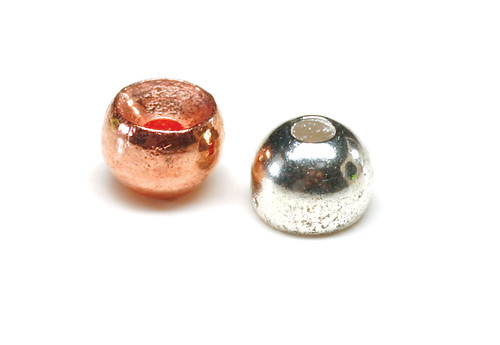
Bead Size Recommendation. This recommendation applies to Cyclops Beads, Bright Beads, Tungsten Beads, Dazzle Beads and Glass Beads. Generally speaking beads are counter sunk and the expectation of this suggestion is that the bead goes over the barb without being smashed down. Slotted beads and cones have a huge range of hook size capabilities and are not part of this discussion.

Counter Sunk Tungsten Beads

Bead Size- Hook Size
1/16 -18,20,22
5/64 -16,18,20
3/32 -14,16,18
7/64 -12,14,16
1/8 -10,12,14
5/32 -8,10,12
3/16 -6,8,10

Sunken barbell eyes

Adhesive eyes

Sunken Brass Barbell Eyes
Barbell size-Stick/glue in eyes
1/8″(XS) or 3.2mm – 3/32 Adhesive eyes
5/32″(S) or 4mm -3/32 Adhesive eyes
3/16″(M) or 4.8mm- 1/8 3D eyes
7/32″(L) or 5.5mm – 5/32 3D eyes

x-eyed cones

3D eyes

X-Eyed Cones
Cone Size- stick/glue on eye
1/4″(S) 6.3mm- 1/8″ 3D eyes
3/8″(M) 9.5mm- 3/16″ 3D eyes
7/16″(L) 11mm- 7/32″ 3D eyes

aluminum deep sea eyes

oval eyes

Aluminum Deep Sea Eyes. Huge surface to work with, minus the weight of a lead or brass eye.
1/4″(M) 6.3mm- 7/32″ 3D eyes
3/8″(L) 9.5mm- 5/16″ 3D eyes
7/16″(XL) 11mm-3/8″ 3D eyes

We hope this helps tiers/anglers to determine what what eye goes with which hook. There are many more beads, eyes, and cones out there and we welcome any questions suggestions and comments.–CD

Posted in Fly Fishing Gear Review, Fly Tying | 3 Comments

Lower McKenzie Continues to Produce Excellent Fishing

Perfect weather and decent hatches were the order of business on the McKenzie today. The weather stabilized, at least for a day, and the fish were ready to feed. Green Caddis were not out in big numbers but when the bugs were around fish noticed them. Many of todays biggest fish were males, could spawning be over and the big boys are out to get fat and happy?

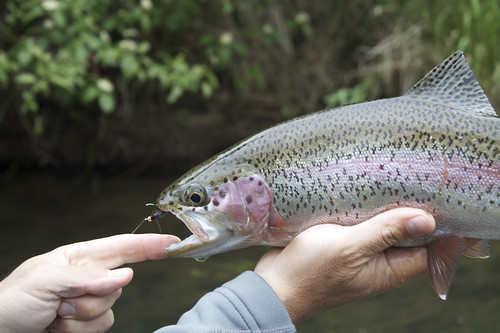
post spawn lower McKenzie buck

Rod jolting grabs early in the day. Fish taking the Possie Bugger Stonefly combination dropped off a Thingamabobber. Dead drifting the nymph rig is critical but you know the fishing is good when your flies are getting ripped before they settle into the drift or as they rise up from the bottom at drifts end.

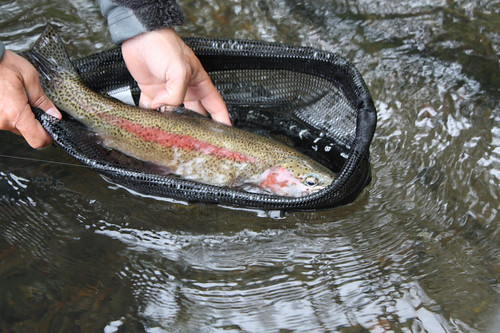
lower McKenzie Rainbow chunk

Lower McKenzie Rainbow buck

Nymphing was consistent early in the day but around mid day we switched to swinging wets. A Possie Bugger and Chewee Skin Green McKenzie Wet fished well. Around 4pm Pale Morning Duns came off in big numbers. During the hatch swung Light Cahill wets and Sparkle Dun PMD’s were the tickets.

lower Mckenzie Cutthroat with sparkle dun pmd

The McKenzie is a bit high but a great level to keep the lower river fishing well through June. If your travel plans don’t take you far from the Eugene area this weekend have a look at the lower McKenzie River.–CD

Posted in Fishing Reports, McKenzie River | 3 Comments

Pike fly patterns: Fly tying videos before the Canada trip

My brother Nate and I have been fly fishing for Northern Pike for about half our lives, over three decades collectively. These are the patterns I use to chase them.

Nate's Esnagi Canada fly fishing trip

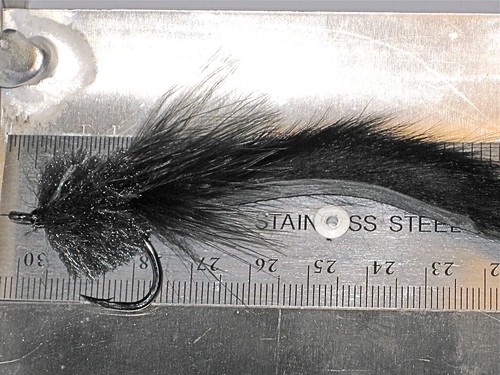
The first pike fly pattern, The Carpet Muncher, is Nate’s and is probably based on somebody’s fly that we’re not crediting but oh well. The Carpet Muncher is named for the Antron carpet fiber used to create the body/head of the fly. This is a light-weight, ultra durable bug that uses the action of rabbit strip. I fish this fly in shallow flats where I need a pattern that I can work slowly and not spook the pike.

The Carpet Muncher: Pike Flies

The Carpet Muncher
Hook: Gamakatsu SC17 2/0
Thread: 140 denier Ultra Thread, black
Tail: Rabbit Strip, black
Body: Marabou, black
Head: Body Fur, black

This second pattern, I’m calling the Stansberry Big Eye Baitfish. The main features on this fly are the huge eyes and big fat baitfish belly profile. See exhibit A:

Canada Fishing '05

I use these patterns for big pike feeding aggressively in slightly deeper or off-color water. This version of the fly uses Saltwater Yak Hair, but I’ve had a lot of success with Icelandic Sheep as well and like both.

Big Eye Baitfish: Pike Flies

Esnagi 2008

Stansberry’s Big Eye Baitfish
Hook: Gamakatsu Saltwater hook 2/0
Thread: 140 denier ultra thread, white
Eye: Hareline Aluminum Sea Eyes
Pupil: Hareline 3D oval eyes
Tail: Saltwater Yak Hair
Collar: Craft Fur, white
Flash: Ice Wing Fiber

Any variations of these two pike fly patterns in white, black, yellow or red should do the trick.
-MS

Posted in Fly Fishing Travel, Fly Tying | 4 Comments

Lend a hand for Wild Fish on the Pere Marquette

Our pal Matt Dunn from Fish Beer and Third Coast Fly is looking for some help protecting the Pere Marquette, a Great Lakes trib with amazing fish potential. The PM is home to non-native, but wild reproducing steelhead, salmon and brown trout, and one of the great Hexagenia hatches in the Midwest. Matt is looking for some emails supporting tighter angling regs on this wild river to the Michigan fisheries folks. He’s specifically targeting out-of-state anglers, so help out if you can. Fill out an email here. Get the background here.
-MS

Posted in Oregon fly fishing links | 3 Comments

The Front Line of Rio Trout Fly Lines

Years ago there were only a few choices of floating fly lines. The Peach 444 or Mint Green 444SL from Cortland and the Air Cel from Scientific Anglers. Today there are numerous companies making a huge variety of floating trout lines. Rio Fly Lines alone has 11 styles of floating fly lines. Why so many?

Specificity and specialization come to mind. Examples: When you want to throw a size 4 Salmon Fly into the wind upstream under a tree with your ultra fast action Sage TCX 5wt rod you need to match it with the proper fly line, a Rio Grand 5wt. When you are on a Spring Creek and need to delivery a size 18 PMD Spinner delicatly downstream to rising fish with your moderate action Winston BIIT you need a Rio Trout LT.

In trying to give the angler every advantage possible, fly lines have evolved to match rod action, fishing situations, distance, fly size and more.

Are there standard do it all fly lines out there? Indeed the Rio Gold and Scientific Angler Trout Tapers do a great job. In this video George Cook of Rio, Redington, Sage discusses the key three Rio Floating Fly Lines for the trout angler.–CD

Posted in Fly Fishing Gear Review | Leave a comment

Fly fishing NYC: Hot bite in the big city

I spent the last week in NYC on business, but managed to get out for a couple days fishing with some good friends. The first day we chased stripers with Capt. Ken Jones, out of Gateway Marina in Brooklyn. We headed out into the Atlantic, where Ken had luck all week chasing birds (and stripers). As is the case with most fishing situations… we should have been there yesterday. The wind had changed and the fish and bait were scattered across miles of featureless 30-foot deep shoreline. We did find a few pods of working birds, and just as the crew was giving up hope, I hooked up with a fish. I was breaking in my friend’s Sage Xi3 9wt, and tied into a 25″ striped bass on an intermediate shooting head and a white clouser minnow.

Stripers!

Soon after, we headed back into Jamaica Bay, casting to structure as huge jetliners landed and took off from JFK airport. I hooked up with a small bluefish, but we couldn’t find the rest of the school. Success that day depended on one thing — the two hand strip retrieve. The bottom line, when fishing in big water stripping flies, you need to stick that rod in your arm pit and strip with both hands. Not for speed, though sometimes you need that too, but it is important to keep tight to your fly. If you strip with two hands on your fly line, you will catch more fish.

The next day, we piled into my friend Matt Z’s truck and headed upstate to the Delaware River. We stopped in at the Catskill Fly Shop, and proceeded to get a raft of shit from the proprietor’s wife when I asked about wader rental. “But I called two days ago, and the guy one the phone told me it was no problem,” I said. “Do I know you? You don’t look like a regular customer,” she said, getting in my face and knocking me back on my heels. Why would that matter if you have our credit cards? Why would a regular customer rent waders? I eventually convinced her that we were responsible enough to rent waders to, while the guy I’m sure I talked to hid behind the counter and shrugged. We proceeded to spend about a hundred bucks on tiny tippet material, unfloatable dry flies tied by the owner, and day licenses. It’s not how I’d run a fly shop, but she still got our cash and I got a kick out of it. Welcome to New York.

We headed out to the West Branch of the Delaware River, and plied the flat calm currents with our East Coast March Brown patterns. There were a few huge mayflies around, along with a good medium-sized caddis hatch. Brown Trout were rising sporadically, and we cast to them, feeding the flies downstream to them so they wouldn’t see the leader material. These are picky fish, and they see a lot of imitations. Crazy flat water with nearly zero surface disturbance makes it tough to fool these educated fish. Eventually, we left for a much cooler location — the mainstem of the Delaware River along the PA/NY border. This looked a lot more like a trout river, and had riffles and boulders, and really big fish. We did hook up as evening brought a massive caddis hatch but couldn’t bring a fish to hand. Rising fish all over us, and nothing to show for it. Aside from some well-deserved humility.

NYC Fly Fishing May 2010

We had tough fishing both days, but NYC is a tough place. And the fish are there.
-MS

Posted in Fly Fishing Travel | 6 Comments

Summer Steelhead on the Oregon Coast

It’s been a wild spring for this chinook bum, quite literally. The only two chinook I’ve seen were both McKenzie River natives, and they put on quite a show. But mostly I’ve had a spring full of unicorn hunts, swinging flies against all odds, exploring new waters and soaking in my new Upper Willamette Valley surroundings. More on that in a future post!

Coastal salmon are still my favorite, even though they are insanely elusive. Talk about unicorn hunting…I can’t possibly recall all the fruitless days spent chasing coastal spring chinook. But I keep going back for a reason. Just the chance of seeing a fresh coastal springer is enough to roll me out of bed at 2:30am.

So far this season I have consistently missed the handful of passing salmon that have pushed into North Coast rivers. We’ve encountered late winter steelhead on every trip, which is always life-affirming. It’s amazing to see these beautiful fish slipping in and out under the radar, long after the throngs of rabid steelheaders have evaporated. Their presence has convinced me to eliminate bait from my program completely. That has raised the bar considerably, but has also added to the anticipation, making each trip all the more interesting.

Last weekend I made my second spring foray into Tillamook County, knowing I was pushing the calendar a little. The pull of coastal chrome was too much to bear, even with the thousands salmon and steelhead coursing through Eugene. Our first day ended with two grabs, but no fished solidly hooked. We didn’t see a single moving fish all day, and by afternoon the wind was howling. Every bone in my body said to go home and sleep, but after dinner at the Pelican Brew Pub, sleep caught me early. I ended up sleeping in my rig on the beach near Pacific City.

Crying seagulls woke me up around 6am, picking through my boat, fighting over soggy potato chips. The salty air was a tonic, and the promise of morning got the best of me. Rather than winding my way back to the Willamette, I decided to give Tillamook County one more try. And there, in one of my favorite salmon pools, I received a mighty yank. A heavy fish ran to the next pool, jumping as she went. She stopped under a submerged tree and quietly wrapped the leader around a branch. Pandemonium ensued, but luck won the day. A spectacular summer steelhead came to rest in the shallows, showing off a tail so perfect it had to be recorded for posterity. I hope you enjoy it!–RR
summerstealheadrusselpost

Posted in Fishing Reports, Summer Steelhead | 2 Comments

Weather and water moving through the Willamette Valley.

Despite local weather conditions being nasty to say the least, trout fishing has been holding up nicely both on the upper and lower Mckenzie. In addition the Middle Fork of the Willamette near Oakridge has been seeing some decent green McKenzie Caddis action. Look for the water to go up but not out over the next couple of days. Hills Creek Resevoir’s outflow was just increased and the minor flush is a welcome to the upper Willamette fishery. Trout will spread out and new fish from the lower river and lake bed of Lookout Point Reservoir will move up. A “reshuffling of the deck” as some of our Norther Umpqua guide buddy’s call it.

Hatches on the lower McKenzie to be aware of this time or year include Pale Morning Duns, small brown Caddis, Little Yellow Stones and Green Mckenzie Caddis. For the upper McKenzie and Middle Fork be looking for Pale Morning Duns, a variety of caddis including the Big Green, Golden Stones, and few Green Drakes.

The inclimate weather is a bit of a pain now but the late water makes for a great summer to come. Speaking of summer how about the Steelhead numbers over Willamette Falls! If the current pace keeps up we are looking at a 2004 like run. Wow there were some fish around that year. Dexter Dam down to Valley River on the Willamette system and Leaburg down to Hendricks on the McKenzie are the areas to concentrate your steelhead angling. Swinging  Sink tips using Moal Leeches, Pick Yer Pockets, Green Butt Skunks, Loop Leeches and Salmonid Buggers will be effective until we get lower water.–CD

Posted in Fishing Reports, Lower Willamette, McKenzie River, Middle Fork Willamette River fishing | 2 Comments

Need a new Lake Fly Line?

George Cook of Sage, Rio, Redington stopped by the shop the other day. I wanted to get his take on the Rio Outbound fly line for lake use. Check out this short video discussion of the Rio Outbound and it’s uses.

The Rio Outbound fly line is an integrated shooting taper with a variety of applications. The Outbound excels in saltwater fly fishing, distance casting, “hucking” wind resistant streamers and lake fishing. We have cast this line in lakes and find it to be a huge advantage in terms of distance. The Hover sink tip and the Intermediate sink tip are both superb slow sinking, long casting lake lines. If you need a new lake line this year give the Outbound a look.–CD

Posted in Fly Fishing Gear Review, Oregon High Lakes | Leave a comment

Feels like summer!

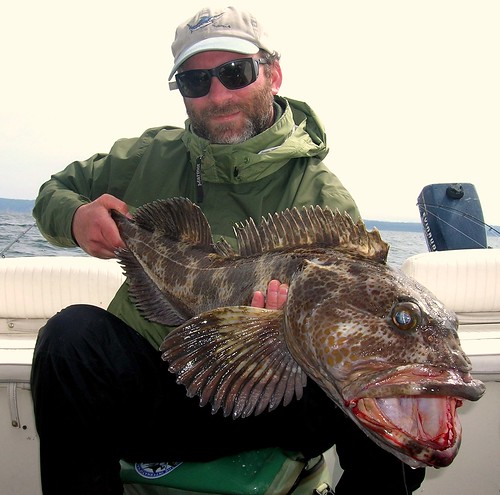
With less than two weeks until the ocean salmon season it sure feels like summer! The rock fish are running wild and the big lings are still around…
DSCN1334
I will keep it short and too the point and leave you with this super cheesy picture from the front of the boat! This was 15 miles from port…

DSCN1332
Tons of fly rod doubles this weekend!
DSCN1329
Ling a ding ding!

Want to chase some salmon with a fly rod in the open ocean? Call the shop 541-342-7005.
-NS

Posted in Fishing Porn, Fishing Reports, Oregon Saltwater Fishing, Uncategorized | 6 Comments

Salmon Fly Hatch Developing on the Deschutes

Reports from Maupin have the annual Salmon Fly Hatch on the Deschutes beginning to move it’s way up river. Fishing both adult Salmon and Golden Stone patterns worked this weekend near Maupin. If you are headed to the Deschutes make sure to have a variety of adult Golden Stone patterns and Salmon Fly patterns. Nymphing will produce as well, Tungsten Trout Retrievers, Beldars Double Bead Stone, Carnazzo’s Stepping Gold Stone and Moab Stone will help get a dropper fly to the bottom in fast water. Drop a smaller nymph 12-18″ off one of the Stone nymphs.  Patterns like Copper Johns, Possie Buggers and Prince Nymphs in sizes 14-18.

Below you will fine some of this years adult stonefly patterns. So far the Norm Woods is the leading fish getter according to early reports from the Deschutes.–CD

Half Down Golden
HaLF DOWN

Norm Woods
NORM WOODS

Thingamastone
THINGAMASTONE


CDC Salmon Fly

Cdc SALMON FLY

Rogue Foam Stone Golden
ROGUE FOAM STONE

Aane’s Mo Jo Stone
AANES MO JO STONE

Stalcups Salmon Fly
STALCUPS SALMON FLY

Golden Stone Rolling Stone
GOLDEN STONE ROLLING

Hedge Hog Salmon
HEDGE HOG SALMON

Clarks Stone
CLARKS STONE

Larimer’s Golden Stone
LARIMERS GOLDEN STONE

Posted in Central Oregon Fishing Report, Eastern Oregon, Fishing Reports | 3 Comments

Gem of a day at Diamond Lake

Lou took Ken (of the Mens Technical Council, Old dogs who have fished together for a couple of decades) out to Diamond Lake on Saturday. Rumors had been swirling around the shop about the ice off on Diamond and “how it’s usually pretty good after the ice off” or ” it’s always good for fly anglers at the south end”. So, after a quick call, Ken and I hit the road for Diamond. It had been a few years since I had been there and used the south end boat ramp. When we pulled in it looked like this!

Steven, Diamond, Peter's Nephews 014

Oh well, it looked like the snow melt had a ways to go for this boat launch. So, we headed north to the next ramp. We put in and joined the rest of the armada at the south end.

Steven, Diamond, Peter's Nephews 016

I started with Chironomids and a bobber. Ken (a bugger loyalist) started with the Bead Head Electric Leach. We scanned the fleet and saw nets in the water or heard “fish on!” Ken and I were beginning to have doubts. Ken was getting hits on his bugger, but not connecting. I changed to a Bead Head Electric Leach and hit a small, but mighty Diamond fish.

Steven, Diamond, Peter's Nephews 018

Ken was still getting hits and then proclaimed: “I think I have these fish figured out! I’ve lost my touch on the bugger hits, but now, I have my strikes dialed in for sure.” In a few minutes Ken began to light up the score board.

Steven, Diamond, Peter's Nephews 024

Steven, Diamond, Peter's Nephews 035

Steven, Diamond, Peter's Nephews 036

We changed buggers throughout the day using the Cascade Bugger, Carey Special, Tungsten Thin Mint, and Bead Head Electric Leach. I got to use my Sage 99 with a full sinking (clear) line and it lived up to all of it’s expectations. Ken was using my intermediate sinking line and we both felt that line was key in his success. We figured the water depth we were fishing was about 7 to 10 feet.

Steven, Diamond, Peter's Nephews 033

We enjoyed a mostly windless day at Diamond and even caught fish dragging buggers back to the ramp. All and all, Ken I left Diamond feeling very fortunate to be living where we do and enjoyed the very best of another great lake in the Oregon Cascades. LV

Steven, Diamond, Peter's Nephews 041

Posted in Oregon High Lakes | 3 Comments

Tying the Chromie Chironomid

In this short video Barrett demonstrates how to tie a simple but effective Chironomid pattern. The white bead head and slender body are the keys to the effectiveness of this pattern. Fish it under an indicator at various lengths depending up the Chironomid activity on your favorite still-water.–CD

Chromie

Chromie Chironomid

Hook: TMC 2457 or Daiichi 1120 #10-14
Thread: Uni-Thread Black 8/0
Bead: White to Match Hook size
Rib: Ultra Wire Red Brassie Size
Body: Lagartun Flat Silver Tinsel

Posted in Fly Tying, Oregon High Lakes | 1 Comment

Steelhead Continue to move into the Willamette Valley

summer fish

Steelhead fishing in the valley continues to get better.  Each day it is a little easier to get up at 4:30 am. Although, I can’t figure out why I continue to get up this early, most of the fish I have hooked, seen hooked, or heard of being hooked have been from 10 am to 8:30 pm. I guess early summer steelhead are a bit like winter fish in that they like the water to warm up a little before they take flies.

Early Summer Steelhead  are  on the move more than they are in the summer and fall. This means that a run that has been fished by another angler my have a new fish or two by the time you run through it. It is helpful to experiment with flies when fishing water that has been fished by other anglers. Flies such as MOAL Leeches, Dirk’s Wiggler, and Pick Yer Pocket, are all great flies to move fish, but a smaller fly such as a Purple Peril, Green Butt Skunk, or Silver Hilton (or the even sexier Paris Hilton) may put the fishes flight/fight option in your favor. Whether you are fishing Spey Rod, Switch Rod, or a Single Hander, about 10 ft of T-14, 10 ft Fast Sinking Polyleader, or VersiLeader will put you in the zone.

Water temps on the Willy have been steady around 50 degrees, but the water level has been fluctuating a bit. The water temp on the Mac is a little cooler, but the flow has been more consistent. Fish are being caught on both rivers.–JC

Posted in Fishing Reports, Lower Willamette, McKenzie River, Summer Steelhead | 1 Comment

Summer Steelhead Fish Porn

2010 is looking like a great year for Summer Steelhead, check out the numbers over Willamette Falls the past few reported days. Jason and Clay made it out to Dexter for a nice morning.–CD

summer steelhead Willamette River

summer steelhead Willamette River

summer steelhead Willamette River

summer steelhead Willamette River

Posted in Fishing Porn, Fishing Reports, Middle Fork Willamette River fishing | 2 Comments