Fly fishing for Northern Pike — Canadian Freakout 2010

Just back from the annual Canadian northern pike trip, I’m still reeling from sunburn, fried walleye and travel hangover.

Esnagi Canada Pike Fishing

The trip started with a fourteen hour drive from Akron, Ohio through the Rust Belt and into Canada at Sault Ste Marie, and up Canada’s Rte 17 around Lake Superior through the moose riddled landscape.

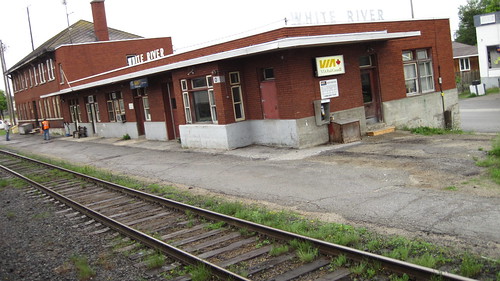
We spent the night in White River Ontario, and hopped a train to the lake in the morning. Unfortunately, some busybody wrecked the train situation. For over forty years, our family has taken this train into Lake Esnagi, and has ridden in the back with the gear, pounding cold meatballs and Molsons. But this year, the railroad officials decided not to let guests ride in the cargo cars thanks to an anonymous letter from a rider complaining about the drunken fishermen in the back. So instead the complainers got stuck with our crew, reeking of stale bourbon and reading aloud from raunchy Canadian porn mags, in the passenger car next to them.

Esnagi Canada Pike Fishing

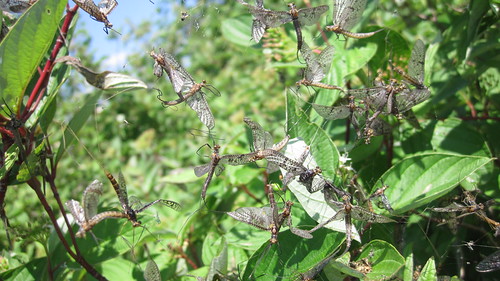
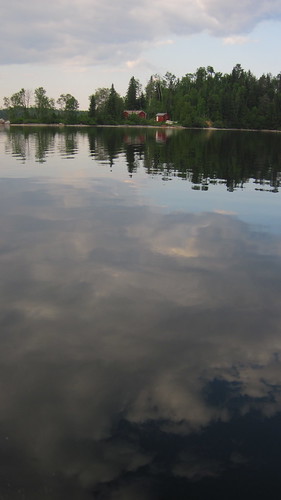
We were shocked by the lake conditions when we pulled up to the water. After the warmest spring on record and minimal snowpack, the lake water level was down several feet. Ice out, normally in mid-to-late May, had been April 1st. The lake and fishing conditions were practically a month ahead of schedule. Also, the lake’s massive Hexagenia mayfly hatch had exploded. Neither boded well for fly fishing for pike. Every fish in that lake gorges on the huge mayflies when they’re available, and with warmer lower water, the largest pike weren’t likely to spend afternoons in the shallow bays.

Esnagi Canada Pike Fishing

Also, we didn’t have Nate. After something like fifteen consecutive years without missing a trip, Nate stayed back in Oregon this year to make the most of his offshore fishing season. While I can catch pike till my arms fall off, in order to catch the biggest pike you need to hunt them. And that’s what Nate does best.

Esnagi Canada Pike Fishing

Esnagi Canada Pike Fishing

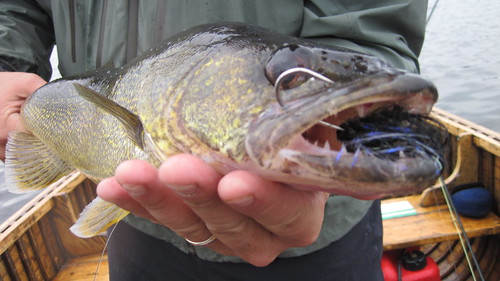
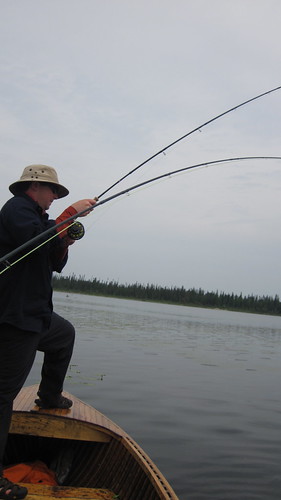
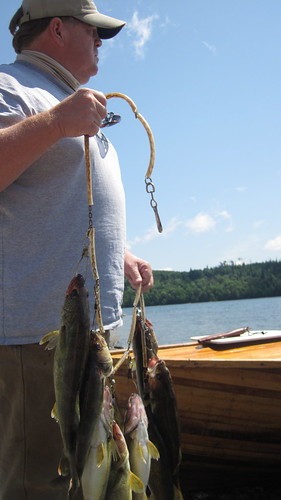
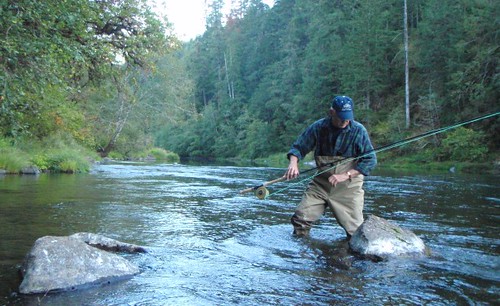
The deck was stacked against us, but we tied on our shock tippets and headed out to strafe the shorelines with our eight-weights. The first day, we started out at a spot with guaranteed success, a big bay next to deep water with a big boulder pile in the middle. We banged out a bunch of pike and a big aggressive walleye and started to shake off the cobwebs

Esnagi Canada Pike Fishing

Esnagi Canada Pike Fishing

The next few days, we spent poling around the shallow flats where big pike had been holding in years past. Protected bays with feeder creeks, the mouth of the Magpie River, windblown coves where baitfish stacked up – but the biggest fish eluded us, while my dad and fishing buddy John trolled up monsters off the deep water points with crankbaits.

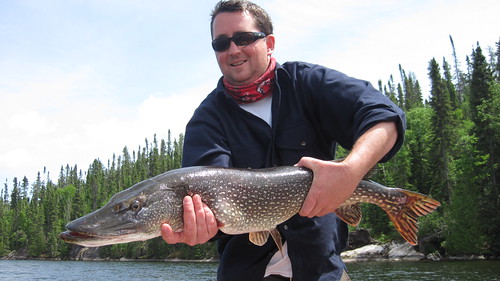
Rather than fight the inevitable, we got out the trolling rods for a morning to put our boat on the boards. It took no time for Julian to hook up with a big 38-inch monster for a photo, and then it was back to business as usual.

Esnagi Canada Pike Fishing

Esnagi Canada Pike Fishing

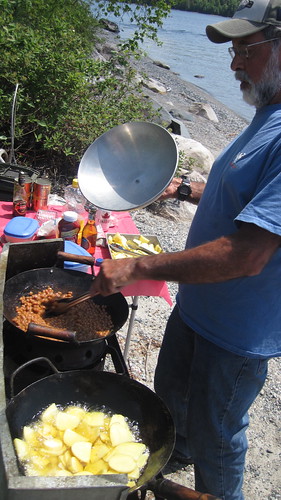
We spent the rest of the week eating deep fried walleye and banging on small to medium size pike on near-shore rock piles. Playing poker all night, and enjoying good bourbon.

Esnagi Canada Pike Fishing

Esnagi Canada Pike Fishing

Esnagi Canada Pike Fishing

Even without the forty-inch pike on the fly rod this year, the trip was still a blast and we managed to bust up our arms and hands on more than enough five to ten pound fish to make up for it.

Esnagi Canada Pike Fishing

Esnagi Canada Pike Fishing

-MS

Posted in Fly Fishing Travel | 1 Comment

Salmon Hatcheries in the Pacific Northwest Part 1

As a person who is deeply committed to wild fish conservation and the future of
fishing, I am also steep on the learning curve when it comes to to understanding
the science and policy options related to hatcheries here in the Oregon. After
blundering into the midst of McKenzie River wild trout management, I realized
also that my grasp of a historical context of fish hatcheries in Oregon was
pretty limited.

I asked Jay Nicholas to write a piece on the historical and contemporary
expectations of salmon hatcheries, hoping stimulate dialogue among the broader
community of passionate fish conservationists and anglers. Jay is my go-to guy
because of his of science and policy experience, his respect for civil
dialogue among individuals and groups with very different perspectives, and his
passion for preserving the future of fish and fishing. The article he wrote is
in two parts and I think it is a fascinating read.

I am learning more and more about fish biology, genetics, and management policy
than I had ever imagined. I am also learning more about how others view the
role of hatchery and wild fish. These two articles have jammed a lot of new
information into my brain. Issues that seemed simple now have more depth and
complexity.

Hope you find these articles interesting. Feedback is always encouraged.–CD
get-attachment-1.aspx

Part 1: Historical Expectations

Salmon without Rivers, by Jim Lichatowitch (2001), is a must-read book, and it tells the hatchery story in the depth it deserves. Jim and I have read much of the same source materials in the historical record of fish management in the Pacific Northwest. My remarks and observations will refer mostly to California, Oregon Washington, and Idaho; however, these ideas are broadly applicable. Anyone who finds his or her interest piqued by this article should read Jim’s book. If you have already read his book you might find differences in the nuances of our respective interpretations.

Lest anyone try to make it so, this article is not a condemnation of choices made by managers, officials, and the public in years gone by. It is simply my effort to summarize what people expected salmon hatcheries to accomplish, and my assessment of whether these expected outcomes were achieved. My intention is to share information and stimulate discussion among all the people who care about native salmon , steelhead, and trout here in the Pacific Northwest. Hatcheries have been part of the psyche of salmon managers and fishers for about a hundred and forty years here in the lower 48. A full understanding of our history as fishers and managers seems crucial to the choices we make about the future of native, wild fish n the region.

This is my no-frills assessment of what hatcheries were intended to accomplish during the 19th Century (Part 1), followed by key 21st Century rationale (Part 2). I think that 19th Century thinking regarding salmon hatcheries is still deeply embedded in 21st Century management philosophy and public perception.

19th Century Intention: make salmon habitat unnecessary. A dynamic balance that had sustained native humans and salmon across the region for over ten thousand years was not appreciated by a society determined to conduct commodity transactions with wood, precious metals, salmon, transportation, water, and the like. Officials charged with fish management were few in number, virtually powerless, and recognized quickly that the industrialization of the Pacific Northwest was destructive to salmon and steelhead runs. Hatcheries, these officials reasoned, offered a solution. Hatcheries, they believed, could effectively replace the natural habitats that were being destroyed.

Was this outcome achieved? Nope. We have lost 80 – 90% of the salmon-producing capacity of many Pacific Northwest watersheds in the lower 48. Hatchery salmon and steelhead – clearly – have not fully compensated for this staggering loss.

Is this still a 21st Century expectation for hatcheries? Sadly, I think so. I see a risk that this thinking is alive-and-well in 2010 and could easily be resurrected to justify increased rates of urbanization and resource extraction, not only across the lower 48, but also in Canada and Alaska. Pristine and highly diverse and productive salmon and steelhead runs n Canada and Alaska are seriously threatened by precious metal mining, oil drilling, and timber harvest. All of these resources are in high demand. Development that stands to profit from mining minerals, water, oil, and land represent a serious threat, in my opinion, to the ecological, cultural, and economic legacy that our native salmonid runs represent.

19th Century Intention: minimize interference with resource extraction activities.
Fishery officials of the 1800s and early 1900s recognized that 1) they had no power to prevent the destruction of salmon streams and 2) even if they did have the power, the economic effects of limiting fishing, logging, mining, dam building, irrigation, and the like, would damage the economy of the region. Reserving rivers for salmon was incongruous with the thinking of the time. White men were here to tame the west and harvest the riches of lands and waters; it didn’t make sense for salmon to stand in the way of that mandate. Hatcheries were viewed as a means to allow full-bore conduct of fishing, logging, mining, dam building, and the like, while still having a bounty of salmon to catch.
jay-nicholas-hatchery-salmon-historical-1

Was this outcome achieved? Yes. The promise of hatchery salmon-a-plenty did, in my opinion, diminish debate over resource extraction and destruction of salmon habitat.

Is this still a 21st Century expectation for hatcheries? Again, sadly, I think so. Current and pending efforts to alter what little salmon habitat we have left in the Pacific Northwest could get the go-ahead if people buy into the promise of hatchery salmon in lieu of wild fish runs.

19th Century Intention: Improve on nature. The mind-set of the Nineteenth Century was that human industry was superior to the unpredictability and apparent inefficiency of nature. Man could grow better crops. Man could tame rivers. Man could improve on nature’s beasts. A female salmon produced several thousand eggs, most of which could reliably be protected from floods in hatcheries. Mere hundreds of salmon cultured in hatcheries could produce millions; far more that nature was capable of.

Was this outcome achieved? Not even close. Salmon and steelhead hatcheries presently operating in the Pacific Northwest haven’t replaced what we’ve lost. Hatcheries do, in some situations, produce a return of adult fish greater than natural spawning could these days. I cannot think of a single instance where hatchery technology has produced super salmon, critters that are superior to nature’s own.

Is this still a 21st Century expectation for hatcheries? I think many people still believe that science can create a better salmon than nature.

19th Century Intention: Allow virtually unrestrained fishing. This 19th Century intention was clear. Salmon meant money. Restricted fishing seasons meant less money. Hatcheries were thought capable of producing more salmon, or at least as many salmon as white folks found here when the fish, the lands, and the waters were shared with native peoples, thereby allowing fishing to continue, predictably, year after year, with clear consciences all around.

jay-nicholas-hatchery-salmon-historical-2

Was this outcome achieved? No. This will be discussed more in a following Chapter, as I believe that even the promise of having an endless supply of salmon from hatcheries enticed managers into excessive-harvest of wild stocks. Although hatchery salmon and steelhead do allow fishing in many areas today, and provide fish that contemporary habitat would not otherwise be able to produce, hatcheries have not produced the fishing bonanza that was promised by the founders of the hatchery system.

Is this still a 21st Century expectation for hatcheries? Somewhat. Because hatcheries do produce salmon, and some hatcheries produce what seems like a lot of salmon, many people still equate salmon and salmon fishing with hatcheries.

19th Century Intention: Provide food. Salmon represented money to 19th Century cannery and fishing industries. Salmon also represented a food resource. Hatcheries that could produce bountiful salmon runs were seen as a means of keeping the money and food supply resources of the Pacific Northwest on “full.”

Was this outcome achieved? Historically, no. Today, somewhat. Early hatchery production efforts were virtually ineffective, and only wild fish were harvested to support the fishing industry and provide food. Today, however, many of the fish that are available for harvest in the Pacific Northwest (remember that this article refers principally to CA, OR, ID, and OR) are hatchery salmon and steelhead.

Is this still a 21st Century expectation for hatcheries? Yes. Some mitigation hatcheries are virtually the sole source of salmon in rivers where wild runs were extirpated. In such cases, tribal treaty rights to salmon and steelhead are entirely dependant on hatchery fish, as are non-tribal fishing and harvesting opportunities.

Summary. Hatcheries in the Lower 48 region of the Pacific Northwest began production during the Nineteenth Century. Historically, hatcheries were promised as an effective means to 1) render salmon producing habitat unnecessary (failed); 2) minimize disruption of resource extraction in the region (succeeded); 3) improve on nature (failed); 4) allow unrestrained fishing (conditional success); and 5) provide food (conditional success).

Next up – Salmon Hatcheries in the Pacific Northwest – Part 2: Contemporary Expectations.

JN

Posted in Oregon Conservation News, Oregon Salmon fly fishing | 4 Comments

Dad is the World’s Greatest Fisherman

Dad1

My earliest memories come through like faded Polaroids. I’m crouched in the shadow of my father, poised on the grassy edge of a tiny trout stream high in the Sierra Nevada. Dad flips a little fly into the rippling current and drags it across the surface. The trout panic, but starvation gets the better of one, and in a split second a wriggling golden trout is hoisted to the bank. I pounce on the slippery prize, squeeze tightly, remove the fly, and add it to our stringer. My hands smell sweet with trout, and I can imagine our morning catch sizzling in bacon grease, eyes shrinking to tiny white balls. In my memories, Dad and I fished together all the time. His memories are probably more reliable:

“I remember you being more interested in the tree frogs in the meadow,” he laughs. “For the first couple of years, fishing was just like any other wildlife harassment. As long as you were chasing something, you were happy. Then the fishing disease took hold.”

In my broken family, fishing was first deemed a “disease” by my Mom. The year was 1970, the scene, Arcata, California. Mom was working full time while Dad went to school. After serving in Vietnam, Dad decided to get a science degree. Fisheries seemed like a natural avenue for an avid outdoorsman, and he enrolled at Humboldt State. The arrangement was a sure-fire recipe for disaster, and the ripples from those years still lap at the edges of my psyche. So much pain flared as these two people learned how wrong they were for each other. So much guilt was stored up, presumably to prevent me from following in my father’s footsteps. But the shocking power of fear and guilt is in their ability to create what they most loathe. Sure enough, I turned out even fishier than my Dad, and that’s saying something.

The outcome was for the best, as is most often the case. In fact, fishing and the outdoors are what eventually saved my father and me from lives stained by guilt. We both tried our hand at conforming to expectations, and it didn’t work. We both learned to embrace who we are–namely, fishermen.

These days my Dad and I spend a lot of time together. He still loves to fish, though not as much as in his youth. He retired last year from a rewarding career as a science educator, and now is free to stay with me for weeks at a time. We have a lot of fun, me rowing him around, steering him toward big flashy fish just like he hauled me around his favorite waters in the High Sierra. Whatever else happens in our little lives, we will have fished, and fished well. We know how fortunate we are, and we relish our days. We have explored the finest waters from the Olympic Peninsula to San Diego. We have climbed peaks, bush-whacked through wilderness, gone crazy from blackflies, and marveled at the beauty of our native West. Wherever we go, I know my Dad will catch fish. Because, to me, Dad is the greatest fisherman in the world. RR

I love you, Papa.

Posted in Uncategorized | 11 Comments

Instructions for fishing MOAL Leeches

Many people, it seems, are seeking knowledge regarding the proper technique for fishing MOAL Leeches.

Ask and ye shall receive.

Sort of.

moal leech

Q: How to fish MOAL leeches

A: Itemized instructions for fishing MOAL leeches follows. Angler must follow these strictly or risk not catching an actual salmon or steelhead.

Hire steelhead guide.

Purchase new rod/reel/line fly fishing combo outfit.

Purchase spare rod/reel/line outfit.

Purchase Simms guide waders, guide jacket, guide boots, guide undies, guide gloves, guide layering, guide socks, guide wader bag, guide tackle bag, guide sling pack, guide bottle opener, canvass camp hat, and guide nippers.

Dismiss Guide.

Pay trip cancellation fee for pissing off guide.

Purchase drift boat, trailer, oars, fish box, rescue rope, whitewater bags, Polaroid glasses, digital camera, life jackets, walkie talkies, binoculars, Powerbars, Gatorade, electric fillet knife, vacuum packer, toxic egg cure, box of latex gloves, sunscreen, lip balm, propane heater, 4X4 Tahoe, and fishing license.

Submit request for vacation time.

Receive notice that vacation account is empty.

Receive layoff notice.

Tell boss to take his layoff notice and – – – – – – –

Call Rob Russell and sign up for Spey casting class.

Stop by Caddis Fly on way home from office to pick up last minute fishing items, including spare nippers and Simms aluminum cigar humidor.

Sign up for unemployment insurance (12weeks).

Inform wife, girlfriend, boyfriend, mother, room mate, cat, dog, bird, or appropriate significant other that you are on “special assignment” and will be working away from the office for the next 12 weeks.

Drive to nearest steelhead or salmon bearing water.

Park new SUV in near river, adjacent to stnaky trash receptacle that is dispersing stench of dead ghost shrimp and 6-month old elk carcass.

Dress with waders, vest, underwear, and so on.

Walk to stream.

Walk back to SUV and put on Simms Guide boots.

Return to stream.

Walk back to SUV.

Assemble new rod, reel, line, leader, and tie on MOAL Leech.

Walk back to stream.

Drop MOAL Leech into water at feet, while stripping fly line off reel in preparation to execute first cast.

Stumble backwards in astonishment at the sight of a school of steelhead (salmon, trout, carp, or catfish) rushing into shallows to consume previously mentioned MOAL Leech.

Break both elbows trying to keep from breaking tailbone.

Lay in 9” of water, keeping nose above water level, crying out for help from fellow anglers nearby.

Enjoy morphine-induced euphoria on ambulance ride to emergency room.

Take taxi ride home from Emergency room.

Relate fabricated story to wife, girlfriend, cat, and/or bird (you remember the list) explaining how you broke two elbows on “special assignment.”

List all recently purchased fishing-related items on Craigslist, offering same for approximately 13% of retail value.

Save one dozen MOAL Leeches for future use, just in case.

JN
Posted in Fly Tying | 5 Comments

Deschutes Spring 2010: Days 2-4

We put in on Thursday at 10:30am. The weather was not the best and the water level was around 6500 cfs. Ken and I decided to head straight for our camp below Whitehorse Rapids and pass on fishing for a few hours. Upon arrival we saw Whitehorse in full fury:

TMC Spring 10 036

We safely moved on to camp and got ready for a fine evening of fishing. The sky was a clear sign the weather was perhaps beginning to change.

TMC Spring 10 017

The next day brought clear skies and warmer temperatures. We saw many golden stones flying about. The fish were still keying on stone imitations! We were pleasantly surprised to see the Norm Woods Special producing many fine redsides along with Half Down Golden, and Clark’s stone producing. We also fished some eddy’s and found the Hot Butt Caddis pattern working very well.

TMC Spring 10 027

The fishing proved to be better each day with each of us landing decent sized redsides. One thing we did manage to do was walk back up to Whitehorse Rapids and see how much the river had dropped over the last two days.

TMC Spring 10 037

We could not believe the river had dropped so quickly and the fishing still remained strong.

TMC Spring 10 022

It was easy to see the impact of the all of the rain in the canyon on our way out. I could not recall when the canyon was so green.

TMC Spring 10 041

Ken and I left having a great trip and on the way out of the canyon enjoyed a view that always reminds us of how fortunate we are to live in Oregon. LV

TMC Spring 10 058

I love this product and will buy it again. . Our Online Canadian Pharmacy is verified by Pharmacy Checker.
Posted in Fishing Reports | 2 Comments

Deschutes Spring 2010: Day One: Plan Change

It has become a spiritual journey for me to connect with the Deschutes River each spring and fall. Each spring brings much anticipation for the buy viagra from canada salmon fly hatch and the adrenalin rush of Whitehorse Rapids . However, the spring of 2010 became a special trip. Due to the hands of mother nature: freezing level of 8,000 feet, an early hatch, and rains leaving every stream, and the Deschutes at much higher flows than normal (7,000 cfs!), a change of plans was in order. Our first day on the Deschutes was to be June 9, a Wednesday. The weather forecast was not the best, we elected to “camp” at Sunriver for one night and allow the D to at least drop toward 6,000 cfs. Ken and I headed for Crane Prairie for one day of fishing. Weather on the lake turned out be cool, breezy, and sometimes calm.

TMC Spring 10 009

We put on the lake at 10:30 am and used our Diamond Lake technique: Buggers with a trailing chironomid behind on a slow troll with intermediate sinking lines behind the boat. We used Thin Mints, and Black leach patterns. The wind came up and the temperature was dropping, I turned to Ken and said “let’s head for the barn”. Ken headed back and saw a flat spot in the water and headed across….WHAM!

TMC Spring 10 007

This beast of a Crane-bow hit the Thin Mint bugger like a freight train. After a very nervous chase we landed it. It took me about 15 minutes after some pictures, to stop shaking and realize what a special fish and experience this day had become. Ken and I could only hope the Deschutes would bring us both such great fishing the next few days.
LV

Good product and long expiration date; arrived quickly. ! We’re a company that is dedicated to providing you the high-quality prescription medication you need.
Posted in Oregon High Lakes | 3 Comments

New Book for Father’s Day: Oregon Lake Maps & Fishing Guide

Our good buddy Gary Lewis has delivered a masterwork just in time for Father’s Day! His new book, Oregon Lake Maps & Fishing Guide covers 40 lakes, offering detailed information on access, launches, peak fishing times, accommodations and more. Like the rest of Frank Amato’s fishing atlases, this book is packed with information and is destined to become a mainstay for Oregon’s lake anglers.

The Caddis Fly has secured a good stock of these great books just in time for Father’s Day. Swing in for a look, drop us a line, or visit our online store to get your copy!

Oregon Lake Maps and fishing guide

Posted in Shop Sales and Specials | 1 Comment

Great Chinook Season on the Horizon

Time to start thinking about fall chinook? Yeah, we know that summer steelhead season is barely starting to crank up, but it is never too soon to start thinking about SALMON.

Jay's Salmon Pic

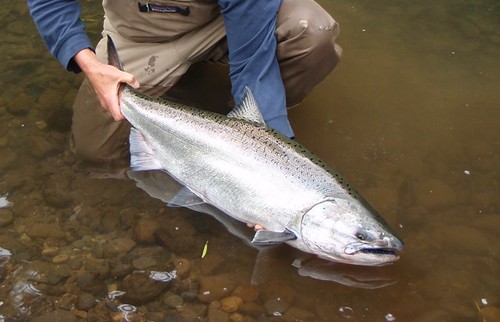
Yep. The coast-wide return of spring chinook (are you happy Rob?) has been better than expected and definitely better than we have seen the last several years. I, for one, am hoping for a strong return of fall chinook in many of our coastal rivers. The run to the Elk should be GREAT. Yes it can get crowded. Yes it can take days and days of no fish, or close calls, and “shouda-been-here-yesterday” to finally connect – but when you do, it is almost unimaginably fun. OK, I admit I am over-the edge, but it is likely to be fun for anyone who catches a bright chinook on a fly.

The Elk fishery is a great one because, in spite of the crowding, it offers easy access, lots of fish, and lots of people to observe and learn from. The slow days are always interesting. The hot days (one fish) are FANTASTIC!

The Caddis Fly is offering complete rod-reel-line-backing packages at very attractive prices for folks who want to be properly equipped for this fishery. A complete coastal chinook fly fishing outfit can be built to suit your style and budget. Interested? Give the guys at the Caddis fly a call and browse the complete fly fishing outfit section of the online catalog to get an idea of the types of fly fishing combo outfits that are in the process of being assembled for your salmon angling adventures. Some great single and two-hand steelhead packages are already good-to-go and should provide an excellent opportunity for folks thinking about going after summers with a fly rod this season. And yes, there are ocean striper/blues/salmon and Bass/pike combos in the works too!

JN
Posted in Oregon Salmon fly fishing | 1 Comment

Fly Fishing Gifts For Fathers Day 2010

The big weekend for Dad is coming up and we have a variety of products sure to make his day. A short list of highlights included in our gift guide video is below. If you have any questions or would like other ideas please feel free to give us a ring. Fly selections can be made and a number of fly fishing outfits are available.–CD

Father’s Day Gift Suggestions
Gift Certificate for Guided Fly Fishing Trip
Yeti Coolers
New Fly Fishing Vest
Patagonia PFD
Sharkskin Fly Line
Fishpond Dakota Rod and Reel Case
Sage Typhoon Chest Pack
Metalhead DVD
Bugwater Book
Simms Rod and Reel Cases
Ross Evolution Fly Reels
Patagonia Great Divider Gear Bag
Cliff Justin Case

Posted in Shop Sales and Specials | Leave a comment

Greg Senyo talks shop about Senyo’s Laser Dub, fly tying tactics

We nailed down Great Lakes fly fishing phenom Greg Senyo, creator of Senyo’s Laser Dub, for a chat about fly tying, new materials and where he got the inspriation to develop new products through Hareline Dubbin.

shaggydub2

senyo's shaggy leech

How did you come up with Senyo’s Laser Dub? What was the inspiration?

Senyo’s Laser Dub is like reliving the past for local Lake Erie Steelheader’s. A product called Laser yarn was developed in the 1980’s by the late Ed Bordas called Steel Ed’s Laser Yarn. This product was made of natural furs and was a great tying material for local steelhead anglers. When Ed passed over 15 years ago; the material stock dwindled and eventually was no longer available.

I loved using this material so much that I pitched the idea of creating a synthetic material with similar characteristics of Ed’s locally known laser yarn to Shawn Brillon of the Orvis Company, and Marcos Vergara at Hareline Dubbin Inc. Working along side with Marcos and Shawn and their expertise in fly tying and synthetic material properties, we where able to get the ball rolling. After a few months of testing different colors and materials we were able to create the product you know today as Senyo’s Laser Dub.

Our Great Lakes steelhead feed on a smorgasbord of different fish species such as Emerald Shiner, Dace, Perch, and Goby to name a few. Tying big streamers and sculpins with traditional wool or deer hair can become quite time consuming on a guides schedule, so by using Laser Dub I can create custom large sculpins, baitfish, leeches with hot heads or in natural colors by simply stacking on the material, tying the material down with a few thread wraps, folding over and comb out the loose fiber, or simply applying the material in a dubbing loop. No trimming is necessary!

Add the fact that veiling egg patterns in multiple colors, hot spotting thoraxes on nymphs, creating small fry, and minnow imitations are extremely quick uses for laser dub as well. Being able to incorporate one material into many uses has simplified my prep time and tying, and had made filling my guide boxes with streamers, eggs, and nymphs much more efficient and practical.

I use it a lot for adding a hot-spot to the front of a fly. What are your favorite uses for it? What are some that people may not have thought of?

I pretty much use laser dub in most if not all of my steelhead, salmon, and trout patterns in some way or another. My favorite applications for laser dubbing are in building Sculpin heads and small fry-minnow type imitations. Laser dubbing is just so easy to use, and it blends together and works well with just about every fly tying material out there. From the feedback I am getting, people have found easy and practical ways to incorporate laser dubbing into their own custom patterns.

Only recently anglers have been incorporating laser dubbing into dry flies, by using the material to create highly visible Parachute posts, and sparse spinner wings with the white laser dub. I really enjoy using the material in creating mayfly and caddis emergers due to the laser dubs translucent properties, sparse flash, and it seems to trap and hold small air bubbles in the fiber.

Small hot spotted soft hackle wet flies are another example of a simple pattern that laser dub works well with, and a style of fly patterns I enjoy fishing, and could not think of fishing without. I really don’t think many anglers have used laser dubbing for these types of tying or fly pattern applications. I have never been one not to try something once, and for us to be successful anglers on the Great Lakes where angling pressure is an issue at times, being different and fishing new patterns is just one of the ways to get a few good tugs.

I’ve seen some of your new shaggy dubs. What are those about? And how are they being used?

Senyo’s Shaggy Dub is a spandex micro hair material with similar properties to rubber. The major difference is Shaggy Dub is UV resistant and will not break down, crack, deteriorate, rot, and become unusable like rubber after being exposed to the elements and sun light.

senyo's shaggy sculpin purple

senyo's shaggy sculpin1

Shaggy Dub is also cut long so that it can be utilized by tiers for everything from small nymphs to extremely large streamers. The movement of this material brings your flies to life, and the faintest motion or water current creates an “Alive” pulse to the fly pattern. Shaggy dub is available in 12 colors and blends well with laser dub and Ice dubbing to create some wild bodies and heads on streamers and leeches to “turn it up a notch” on all you favorite steelhead/salmon bugs… Just cut off a chunk in your desired length blend or tie in straight! Customization is totally in the hands of the tier.

Last year I started incorporating Shaggy dub into the sculpin heads and large streamers that I enjoy swinging for steelhead and salmon. Shaggy dub added a “Break Dance” type of movement and pulsed in the river current, some of my best days ever swinging flies came on patterns tied with this stuff. I also added Shaggy Dub to the rear and heads of intruder style patterns with great results. I have added Shaggy Dub to all my egg sucking leeches and I am still finding different ways to use this material, I think it gives the fish a fresh look, and I’m having a lot of fun doing it.

Have you ever done any west coast steelheading?

I have yet to experience the steelhead and salmon fishing of the West Coast, but It is only a matter of time! The Great Lakes Region has always had so many rivers that offer stellar fishing opportunities for the fly angler! Michigan’s Muskegon and Manistee Rivers, Ohio’s Grand River and Conneaut Creek, Pennsylvania’s Elk Creek, The Catt and Salmon River in New York State, and the Garden River in Ontario. So many places to choose from for year round fishing opportunities, just as I am sure many of you enjoy the same experiences and choices in the west. Most of my open travel time has been spent going to Alaska and has become a yearly event for our guide staff.

I do tie a lot of custom fly orders each season for West Coast Anglers, and have several great West Coast friends to share stories with. I have a true appreciation and love for fishing flies on the swing. West Coast steelhead tactics have really helped open a whole new way of tying, fishing, thinking, and is a positive influence in the way many are sharing their fishing time on our Great Lakes streams. Even though we are located in opposite parts of the country on entirely different fisheries, were all have much more in common that you can possibly imagine, and we all share the same concerns and passions about fish on the fly and the water they live in.

Posted in Fly Tying | 6 Comments

T-minus 36 hours till I’m hooked up with a pike on my eight-weight

After circling Denver airport for four hours with a screaming baby in my arms, spending the night at a roach motel, and catching a new flight in the morning… I’ve finally made it to Ohio and prepare to leave in the morning for the annual Northern Pike Fishing Adventure. Here is about 1/3 of the flies I’ve tied for the trip.

Northern Pike Fly Fishing 2010

See everybody in about 10 days.
-MS

Posted in Fly Fishing Travel | 2 Comments

Weekend Weather Looking Good For Local Fishing

Log Jam upper McKenzie

Although the McKenzie has been ridiculously high of late the fishing has been “pretty darn good.” Green Drakes have been hatching throughout the entire length of the McKenzie. Pale Morning Duns are also emerging daily during  brief warming periods in between squalls. Warming air temperatures are going to get those rain soaked Golden Stoneflies and Caddis popping and laying eggs all over the river. All of our local rivers are scheduled to drop significantly over the next 72 hour period.

We have long held on the the notion that middle June can have some of the very best fishing on the McKenzie and this weekends warmth and dropping water will have fish happy and hungry. Have the previously mentioned Green Drakes, PMD’s and Brown Caddis, Golden Stones, Green Caddis, Possie Buggers, Mega Princes, Prince Nymphs, Green Drake Nymphs and Curtis Peackock Pupae. Look to fish the slower insides of corners, back eddies and slow pools until the river takes on more definition. If you are fishing above the dam check out Blue River to Finn Rock, yet to be stocked and fishing well. I had a look at it today and there are some excellent spots to fish despite the 7800+ cubic feet per second. We caught several nice wild fish in this section. The high water and rain is getting old but for the health of the river and fish we can’t do any better. Don’t let the high water keep you away from the McKenzie it is fishing well.–CD

Upper River Rainbow

Blue River to Finn 17" Rainbow

Posted in McKenzie River | Leave a comment

Rob Russell’s estuary chinook fly pattern: The Black Tail

In this fly tying video, Rob Russell shows you how to tie his top pattern for fly fishing for chinook salmon in the Pacific estuaries. If you think salmon don’t eat flies, check out this shot:

Spring Chinook Fly Fishing in Oregon
Rob Russell Chinook fly pattern

The Black Tail
Hook: TMC 700 size 4-8
Thread: 6/0 Unithread black
Eyes: Bead chain
Tail: Black buck tail
Flash: Orange Krystal flash
Rib: Medium copper wire
Body: Gold holographic braid
Hackle: Pink dyed grizzly
Thorax: Red chenille
Collar: Orange saddle hackle

Posted in Fly Tying, Oregon Salmon fly fishing | 4 Comments

Fathers Day Special on Sunglasses

Where has the sun been? The west coast has been hammered with nasty weather for what seems like months. Well this weekend the sun will be out and 80 degree temperatures along with it. Can’t wait!
Caddisflyshop.com has an excellent variety of sunglasses from Oakley, Smith, Sun Cloud and Fishermans Eyewear. To celebrate the sun and fathers day we are offering 15% off this week and weekend. Sale ends Monday June 14th. Check it out at Caddisflyshop.com

47ebef2a5f227

Posted in Shop Sales and Specials | Leave a comment

Selway River Trip photos

My brother-in-law Hal Tweto recently took a trip down the Selway River. Hal resides in Missoula, fishes/boats/hikes/photographs a variety of the beautiful landscape. See his post below. -CD

Any trip on the Selway river means some of the most pristine wilderness boating in the lower 48, and this run on May run was no exception. What was exceptional was the spring storm which blew through much of the Bitterroot range in the 24 hours prior to our launch, dropping a foot or more of new snow at on the Nez Perce pass between Darby, MT and our put in at Paradise. Not the most heartening experience, waiting for the shuttle drivers and obsessively running through a mental inventory of your warmest gear. Our shuttle drivers have a business built up around handling such conditions, however, and they run these specially modified, early 80’s Tacomas, neither driver nor tire fit for paved road. They had already come through once with chainsaws to clear out all the downed lumber (“Pretty wintery up here last night,” was, I believe, the only thing our diver said on the two hour trip). So, the caravan of jalopies trudged through, up, and over, and we arrived at Paradise on time, river time, threw our boats and gear together, and pushed off.

Pass1

Gear2

Our water level was pretty comfortable, 2 feet at the Paradise gauge, a Forest Service word for a stick in the water. This is a reasonable flow for the float, though we all understood it was lower than it would have been had our winter been what it could have been. Snowpack is just terrible in our area this year. The Selway’s season is all about spring run-off, and like any river so oriented, it is usually fast and furious early and slower and more mellow late, when fishing is more of a pursuit.

WaterLevel

SelwayMooseCreek

WolfCreek

Campfire

We were the beneficiaries of that storm in two regards: first, it was a big’un, so some higher pressure came in behind and left the weather pretty mild for the rest of the week, which we appreciated even in our dry suits; second, it had pushed a ton of wildlife down from the higher elevations. Hundreds of cow elk were working on the easier grass down low, and they bring other opportunistic animals with them to clean up those elk that stumble on the steep cliffs or that misjudge river currents. Bald and golden eagles, then, and three wolves, one grey and two black, tugging on a carcass just above Osprey rapid.

Dinner

The fish were not interested in any of this. This was a fast trip, a training trip for two companies, so we did not fish. But we didn’t miss it, as the scene seemed “pretty wintery” still. Our high temps were mostly close to 50, lows close to 40, and the water stays pretty near 35 now. Bugs were not happy with the wind and occasional flurries, and the fish weren’t visible along the river bottom. Our last day was the exception: the sun was out, the temperature was closer to 65, which brought out some Baetis and a single, lonely salmon fly. Rises were afoot, and fish were darting around over the golden riverbed. Clearly the potential was there, and a trip later in the season would be productive.

Tango

I took this trip with my friend Ari Kotler, guide and owner of SOAR Northwest River Co, 208-709-8033 or www.northwestriver.com or aridkotler@gmail.com. Three Rivers Rafting company, owned by Marty Smith, 888-926-4430 or www.threerivers.com or info@threeriversrafting.com, was the other company training guides on this trip. All four commercial outfitters with Selway permits get four launches, so trips usually book up well in advance. I’m not sure what Marty’s situation is, but I know that Ari has some room on a trip later in this season. Plus, he just picked up some nifty new boats specifically for that lower, more fishable water, which you should check out here: www.streamtechboats.com.

Posted in Fly Fishing Travel | 2 Comments