Two months in Ohio now. And I’ve spent my days chasing farm pond bass, troll-caught walleye and Lake Erie steelhead – the fishing decent, but not very compelling. I’d started to think I should hang up the fly rod and do other things, spend time with family. Maybe take up bird watching — bald eagles, bitterns, herons, buntings, warblers…
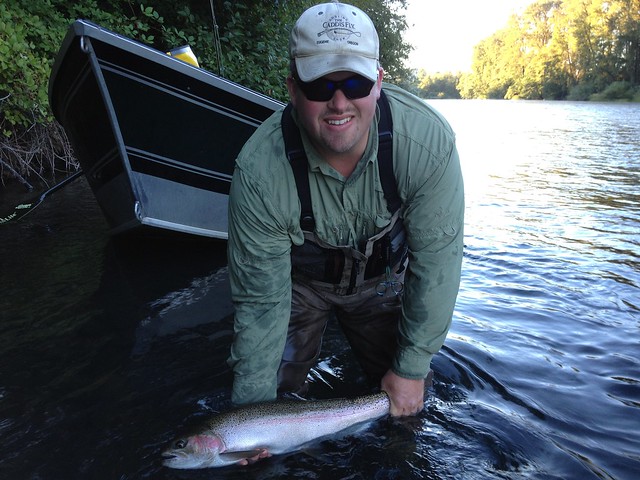
Then last week, Nate texted me a photo with a muskie he’d caught on a fly rod.
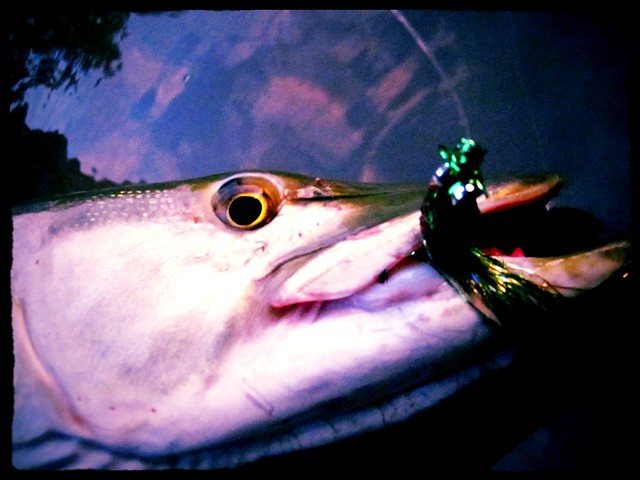
I’ve left my house pre-dawn hours every morning since to get to the river.
The first day, we fished a big slow pool at dawn, rolling muskies all over the surface. I almost thought they might be carp – fat and golden. Until one of them jumped on the end of my fly line, shot vertically out of the water.
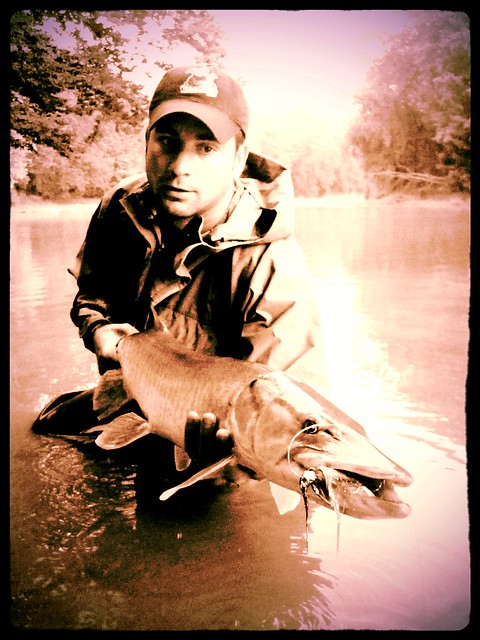
Beginners luck. I haven’t had another grab since. But I’m figuring it out. And two muskies on the fly rod in one week isn’t anything to sneeze at for me and Nate. The largest muskie caught in Ohio was a 50.5 inches, 55 lb. 2 oz. fish taken from Piedmont Lake by Joe Lykins in 1972.
The river itself is gorgeous. Walnut, sycamore, oaks and maple line the banks. Turkeys and woodpeckers call all morning. The place looks almost tropical — vines and deciduous trees, the brown, warm, slack river. Fog rises off the pool, water much warmer than the air.

Long casts, shallow water, not much current – I’m starting to get a handle on the gear and the flies.
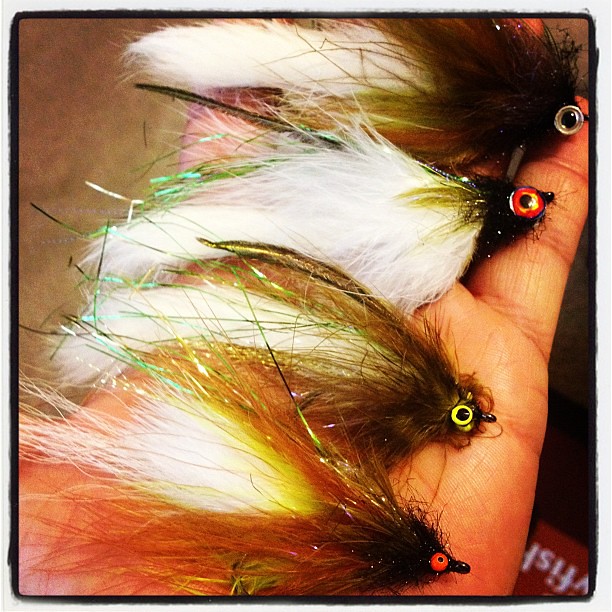
If a muskie is a fish of 1,000 casts, you can’t do it casting a soaking wet knee-sock. I loved how the Dahlberg mega-rabbit strip diver looked in the water, but couldn’t keep it up. The huge rod, the slapping presentation, none of it made sense.
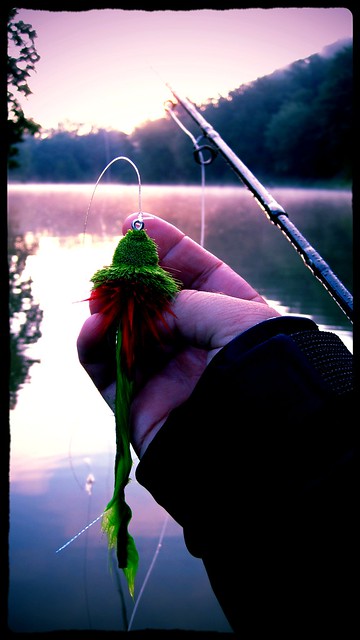
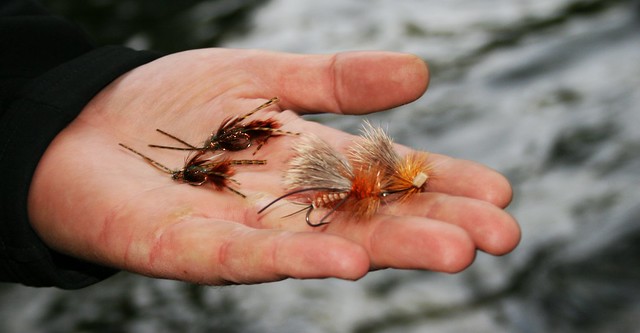
So I’m still fine tuning, but here are the gear notes: A light eight-weight fly rod with an Outbound clear intermediate line is about perfect. Six inch flies with synthetic materials – maximize size without bulk and wind resistance. Thin wire hooks like the Gamakatsu B10S Stinger 1/0 work best for my system. I use 40lb test fluorocarbon for a bite tippet, and six feet of 30lb fluorocarbon for the leader (something to turn over a big fly). When you hook that on the bottom, you’ll want a hook that’ll straighten out before you tear out the loop in your fly line.
Stay tuned for more muskie action on the Great Lakes Fly Fishing Blog, as I doubt Nate or I will be able to think about much of anything else for the rest of the fall.
-MS