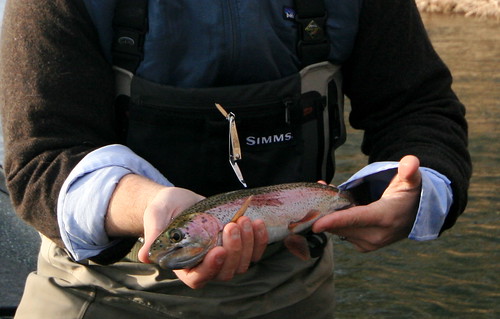
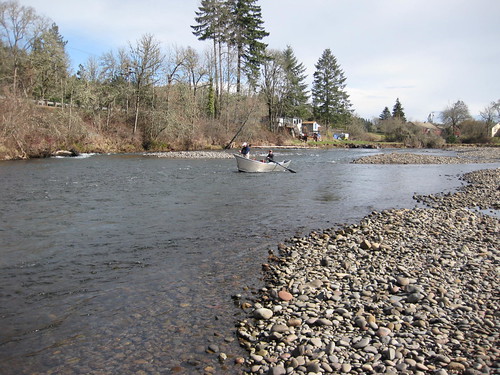
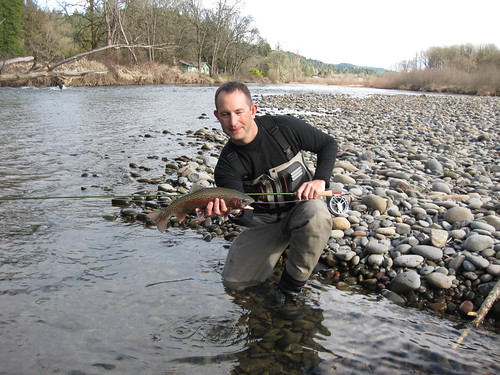
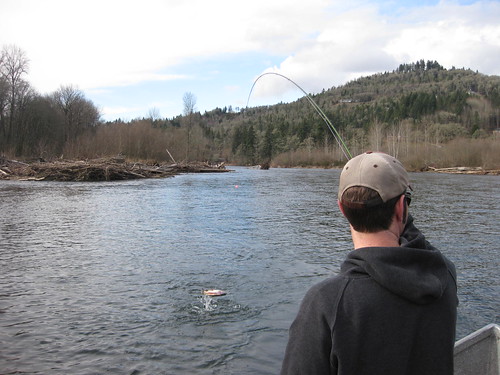
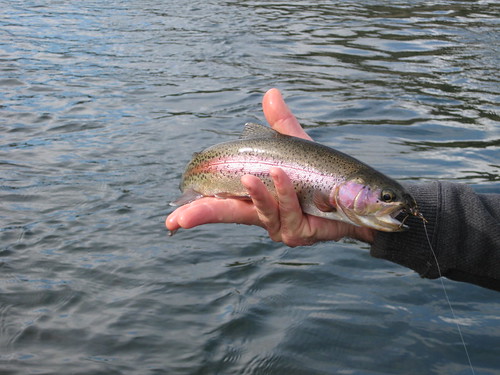
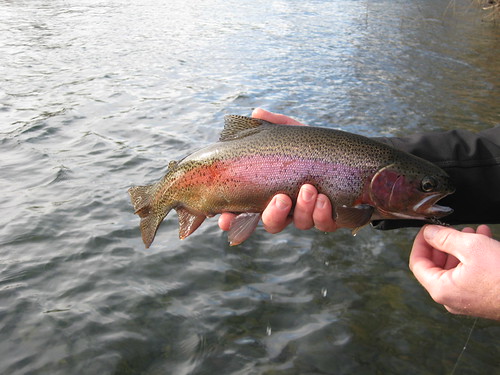
Icy cold weather but winter Steelhead fishing heating up

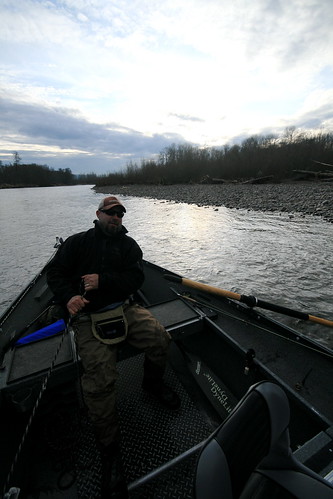
Cold weather and no rain has left many of Oregon’s best winter steelhead streams low and clear. For the fly angler with a stealthy approach success can be had. These fish were kind enough to get their picture taken yesterday. They were caught on lowly glowly’s dropped six feet off a thingamabobber with 2x rio flouroflex tippet and Winston BIIX 7 and 8 wt rods.  The next two months offer the very best opportunity to catch winter steelhead in Oregon. Rivers like the Umpqua, Siletz, Siuslaw, Lake Creek, Alsea, Nestucca, Nehalem and many more are in great shape. Get out there-CD

IMG_0627

IMG_0625

IMG_0620

IMG_0614

IMG_0631

Posted in Fishing Porn, Fishing Reports, Oregon Winter Steelhead Fishing, Uncategorized | 7 Comments

Oregon Trout Unlimited and the Klamath Restoration Project

Last month, Todd Mullen, vice president of Trout Unlimited Chapter 678 sat in on a call with the TU folks who are working on the Klamath Basin Restoration Agreement and sent out the following summary:

You may have heard on the news that an agreement was signed by the U.S. Department of the Interior, Governor Kulongoski, Governor Schwarzenegger, and PacifiCorp, setting the stage for removal of four dams on the Klamath River (J.C. Boyle, Copco, Iron Gate I and Iron Gate II). There are lots of parties involved including two state governments CA and OR, the Federal Government, several county and city municipalities, farmers, ranchers, multiple native American tribes, and of course the various environmental contingencies.

The highlights of the agreement are as follows:

1. The agreement is not a “Final Agreement”. It is an agreement in principle and is non-binding.
2. This is the first time that Pacific Corp. said it would remove the dams.
3. The agreement would be the world’s largest river restoration project.

The estimated cost of the project is over half a billion dollars. As part of this agreement Pacific Corp. has agreed to pay up to $200 million for dam removal. California plans to institute a general obligation bond for $450 million. Interim measures include instituting a surcharge for Pacific Corp. customers to cover the costs. Pacific Corp will also work on developing new power sources to replace the loss of energy production when the dams are removed.

A dam removal study would be completed by 2012 and analyzed by the Secretary of the Interior. The study would determine the benefits and justify the cost of sediment removal etc. Permitting for dam removal and approval would be obtained during the 2012-2020 time period. Then in 2020 (the target for dam removal) the project would be handed over to the contractor with the winning bid. During and after dam removal there will need to be continued interaction with the farming community to ensure a workable solution for all parties.

In general TU supports the agreement and has secured a place at the negotiating table. The agreement is by no means finished. Criticisms to the agreement include the following:

– The agreement is seen as being too beneficial to Pacific Corp.
– The agreement will cost rate payers too much.
– The agreement takes too long for dam removal.
– The study is only for dam removal.
– There is nothing in the agreement that addresses water usage and water quality.

A binding agreement will hopefully be agreed upon next year in conjunction with the new administration. TU has experience with negotiating dam removal projects and has already signed three previous agreements with Pacific Corp. TU will also be able to provide extensive restoration experience for this phase of the project. Scientists will provide support to the project as no one really knows what will happen when the dams are removed.

Payoffs expected for 2025 and beyond:
– Sustainable fish populations
– Money for fisheries programs
– Improved ground water and surface water allocations
– Improved spawning above Upper Klamath Lake
– Money for improving Sprague River habitat
– Better access for fish to the Williamson and Wood Rivers that are already in pretty good shape.
– Good Coho habitat under the reservoir
– Improvements in water quality as currently there are toxic algae bloom problems in the California reservoirs.
– Green jobs would be created which would aid in improving the economic viability of many of the small (less populated) counties in the region.

For more on the Klamath Project, check out National Geographic’s great article.

Posted in Oregon Conservation News, Southern Oregon | Leave a comment

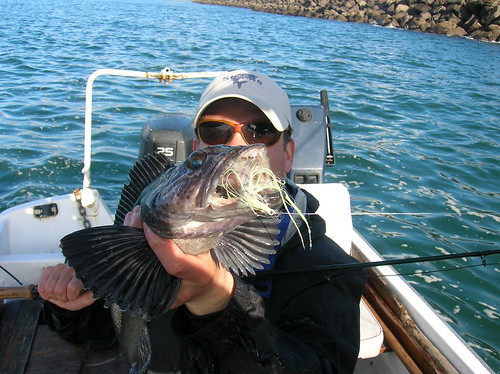
Rockfish on the fly: Oregon coast is fishing great

There are plenty of big rockfish to be caught off the Oregon Coast this time of year. Big fish, including ling cod, should be moving into the inshore areas in the next couple months. Look for good weather patterns and throw big clousers to pull up some bruiser bottomfish fly fishing on the Oregon Coast.

Rockfish fly fishing Oregon

Rockfish fly fishing Oregon

Rockfish fly fishing Oregon

Rockfish fly fishing Oregon

Rockfish fly fishing Oregon

Posted in Fishing Porn, Fishing Reports, Oregon Saltwater Fishing | 9 Comments

ArgentinaTrip: Dorado fishing suffers due to low water

The Parana river delta is suffering from the lowest water levels in 50 years. While the Parana is a gigantic river delta, (one of the largest in the world) the rivers that bleed out of the Parana are 4-7 feet lower than normal. 

Our 7 night 6.5 day fishing trip for the freshwater Golden Dorado of Argentina begins with a flight from Beunos Aires to Sante Fe City, about a one hour flight. Our hosts from Timbo Lodge  then transport us 3 and 1/2 hours to Romang Town on the San Javierto river. The San Javierto is one of the thousands of rivers that flow in and out of the Parana river. From the lodge on the San Javierto we were about an hour by boat from the Parana. In high water we would have been about 20 minutes.  The typical day, under normal water circumstances, begins around 6am where after breakfast you walk out of the lodge door and down the boat ramp and begin fishing about 10 minutes up or down the San Javierto.

low water morning

fishing in a ditch anyone

1200 and one

The strategy for catching the Dorados is to cast big streamers, baitfish muddlers and the like towards cover, current edges and busting fish. The fishing is casting intensive. A combination of pounding the banks like you were streamer fishing for browns or snook fishing in the mangroves. Literally thousands of casts are made, each cast is followed by a couple strips then pick it up and pound it back in towards another likely holding spot. The low water we encountered reduced current, took most of the cut banks out of play and made the fish extremely wary. In addition the low water reduced the amount of water travelling through the massive wetlands of the Parana. The filtration of the sediment laden water was non-existent. The water throughout most of the Parana river delta and we are talking about hundreds of thousands of miles of streams, rivers and side channels was very turbid.

We did find fish, but we worked our asses off to get them. Mornings and evenings were best as the mid-day sun made temps around 91 degrees.

Solitude mullet

joan and jugo with a nice dorado

reef on him judy

Judy gets it done

Around 11am we would head back to the lodge for lunch. One of the great things about staying at Timbo is how great the service and food is start to finish. Victor the “cooker” as the folks at Timbo call him is really an amazing chef. Every meal we ate fantastic local meats, cheeses, breads, fruits and salads. Of course wine is served at lunch and dinner, and if you want a really nice siesta before the evening fishing begins you want to over eat and drink. I am pretty sure the reason they Argentines don’t have much of an obesity issue country wide is the fact that they sleep off their meals. This replaces exercise and seems to work for them. Evening fishing begins around 5pm and ends when you can’t see anymore around 10pm. Cocktail hour begins when you get back, and dinner is served around 11pm, seriously 11pm. If you want to take a swim during the mid day heat there is a nice pool on site.

poolside

every meal

IMG_3991

IMG_3988

Our guides worked their butts off to scratch and scrape for fish. They clearly knew where to find the fish and the flies that would work. The boats were in good shape and ran well. As a result of the San Javierto being so low we decided to expand our fishing territory taking some very long boat rides to find more water. We travelled to the Parana river itself, a huge river that container ships utilize. Again the river was super dirty and fishing was tough. Our second trip to the Parana led us to some cleaner water and we had our best fishing. It took us two hours to get to clear moving water with really aggressive fish. The boat ride was and experience itself. We literally bushwhacked by boat down small channels to get to another drainage. That day the fish were on the grab as I had hoped. I was able to do some wading and caught better numbers of fish. Both Dorado and Pallometta a cousin of the Pirana. The Pallometta is a one fly one fish species, like the Dorado they require Toothy Critter.

Palometta, nice lower lip

Palometta, pirana cousin

wading, swing, strip

bush wacking with a 90 horse

Overall we had a great time, the lodge provided a high level of service and if the fish had cooperated we would probably still be there.

A few more shots from the trip.

Bad motor day

bad motor day

Breakfast of champions, Mate high powered South American tea, Brahma high powered South American beer and OFF just in case you get stuck out in the delta.

mate, beer, and off

Sunset on the San Javierto

sunset\

sunset and in

Casting Practice

casting practice

Dink in a ditch

IMG_4047

Jacare not feeling so well

IMG_4025

For more information on booking this trip or trout, wine, and Dorado fishing in Argentina please feel free to contact me at caddiseug@yahoo.com–cd

Posted in Fly Fishing Travel | 1 Comment

Fishing Jones Q&A with Rivers of a Lost Coast producers

Rivers of a Lost Coast interview here.


Rivers of a Lost Coast from Skinny Fist on Vimeo.

Posted in Uncategorized | Leave a comment

Rick’s Yucatan Bonefish Safari

Caddis Fly regular and fly fishing junkie Rick Allen just got back from Tulum, on the Yucatan peninsala in Mexico last week. He caught about 15 bonefish over two days, and hooked four Tarpon in the mangroves, but they were camera shy and decided to throw the hook with some spectacular aerobatics, Rick said.

Rick's Yucatan Bonefish Safari

Rick's Yucatan Bonefish Safari

Rick's Yucatan Bonefish Safari

Rick's Yucatan Bonefish Safari

Rick's Yucatan Bonefish Safari

Rick's Yucatan Bonefish Safari

Rick's Yucatan Bonefish Safari

“Tulum, is a special place. I fished two 8 hour days at Pesca Maya at Assension bay. I caught all my fish which included 15 Bone fish, 4 nice barricudas and played with Tarpon along with a few reef fish on Fly’s I tied. As a brand new fly tyer this was very satisfing. I really look forward to expanding on my fly tying. The folks at the Caddis fly shop have been a great resource,” Rick said.

Send us your fishing trip pics and stories.

Posted in Fishing Porn, Fly Fishing Travel | 2 Comments

Switch fly rods: Videos on when and how to use them

Jeff Putnam, Federation of Fly Fishers certified Casting Instructor based in Northern California has put together a series of great high-definition videos on YouTube on how and when to use the new “Switch” Fly rods. Switch rods are a hybrid between a singlehanded rod and a spey rod. An eleven-foot graphite rod is light enough to cast overhand, but long enough to make them work as a spey outfit. The switch rod has become popular for indicator fishermen, mending for drag free drift.

Watch these on the blog, or switch over to YouTube for the High Def versions.

Switch Rod Overview

Switch Rod Casting Techniques

Switch Rod Snap-T Casting and Shoreline and Surf Switch Rod Casting are also available on YouTube.

You can pick up a Switch Rod from Sage, Winston or Redington at CaddisFlyShop.com.

Posted in Fly Fishing Gear Review | 2 Comments

Winter steelhead madness descends on Oregon

It starts with huge rains and high water, the darkest days of the year. Long nights surrounded by a small fortune in Lady Amherst feathers, staring into the mouth of madness, trying to perfect Intruder-style steelhead patterns. Or filling giant Bugger Beasts with row after row of steelhead jigs. You scout eight rivers in two days, alternating between litter-lined, mud-choked combat fishing for hatchery fillets to chasing wild winter fish on unnameable, healthy streams near the Pacific. You can’t always get what you want in the winter. But sometimes you get what you need.

Intruder Madness

Nate's Steelhead Trip

Winter Steelhead Trip

Winter Steelhead Trip

Nate's Steelhead Trip

The water is still dropping. Get out there.

-MS

Posted in Oregon Winter Steelhead Fishing | 3 Comments

Protecting the McKenzie River from death by 1,000 cuts

Joe Moll, Executive Director of McKenzie River Trust is working hard to prevent us from loving our homewaters to death. Find out more about the threats to the McKenzie River watershed and what our local land trust is doing about them in this Q&A:

How is a land trust different from a traditional conservation group?
Joe Moll: Most people are familiar with The Nature Conservancy — 60 years ago, ecologists noticed the wild places where they did their research, the places they loved, were being developed. They said we need to stop this somehow. The land trust movement in the United States is private people that came together with a preservation mentality. We love this block of woods, let’s buy up and protect it. So now you have over 1500 land trusts around the country, and some of them have only one preserve.

We bring money and tax incentives to the table and people are willing to put restrictions on their land. We either acquire land, like we have at Green Island, where we hold it and manage it. Or we acquire a conservation easement, which is a restriction on development. The easements can be as unique as the land or the values you want to protect. For our river areas, protection of riparian areas is one goal, the interface between the land and water. This is where people have more opportunity to protect land because it’s not easy to develop anyway. But hey still do it in Lane County, and that’s one of my biggest frustrations. Despite land use codes which should restrict what happens on the river, it doesn’t always do it. Our role is to get in on opportunities to work with landowners to put on a different layer of protection.

We don’t go around throwing out lawsuits. If we see an organization like a timber company or developer that wants to do something on the river, we try to work with them and say ‘Hey, is there any incentive we can bring to the table to get you to back away from the river and let the flood plain be the flood plain?’

What is it about the McKenzie River that’s stood out to you as being significant?
Moll: It’s hard to deny the geology. It’s such a unique river in how it bubbles out of the ground and builds out of the Cascades and volcanic soils, snowmelt. What’s really struck me since moving here is talking to the researchers that said in the old days, pre-dam, the McKenzie’s flow in the summer provided 40-50% of the flow of the Willamette. That steady flow, it’s not a flashy system, is something unique. You can see it in the clarity and coldness of the water, what it supports.

Conservation groups do a lot of work in the lower watershed, we do a lot of work in the upper watershed, but the criticism I’ve gotten is that how much good is any of that going to do if the spawning habitat and rearing habitat are separated by dams?
Moll: That is a multimillion dollar question. And maybe quite honestly, we are fooling ourselves to some degree. We’re spending a lot of money helping fish get back and forth with great risk. Like a lot of things, we’re managing fish and wildlife populations right on the margin. We aren’t giving that wildlife much room for error, for natural occurring disasters. Historically in these systems, if one stream gets plugged up because of a natural slide, a fish could move somewhere else. But it’s not that easy anymore.

As a biologist, that’s not my bailiwick, but I think it’s always worth asking those questions. Are we really losing site of the bigger picture?

Are there any better fish migration mitigation options on the horizon? Any opportunities you see to improve this issue?
Moll: I’ve really been impressed with what the Army Corps of Engineers has started to do in the last five to ten years. They’ve started working with biologists to look at the manipulation of the dams to at least more closely mimic historic flows. Instead of looking at just recreation and flood protection, the Corps is recognizing that they have some leeway to manipulate the flows to mimic spring freshets or fall rain. You could still argue that it’s not having much of an effect, but it’s a sea change in terms of what the Corps as an agency is willing to consider.

Those changes in the agencies to consider questions they hadn’t considered before, I take a lot of heart in that. I’ve been accused of being a Pollyanna sometimes, but in this line of work you have to be I think. You butt your head against so many concrete dams, you cheer the little victories that you get.

How do you characterize the Trust’s role with ODFW and other wildlife agencies?
Moll: They’re certainly more subject to politics then we are — the politics of the legislature and federal and state funding. I think that they look to us to open the door to willing landowners. The land trust approach, which is to work with anybody as long and land and water management is at the table, allows the agencies to practice their trade with less politics involved. If we can secure land and protect it in some way, it will at least stop the killer threats — concrete, subdivisions, things that are really hard to reverse over time that have long term cumulative impacts.

What’s your assessment on the general health of the McKenzie River?
Moll: I think it’s threatened. Absolutely, it’s a beautiful river. It’s got great water quality as it comes out of the ground, but as soon as it starts heading downstream it’s a death from a thousand cuts. The irony is we love our rivers to death. We want our houses to be near them. We want our hospitals to be near them, because it really does help heal people to be in natural areas. So it’s a Catch 22. The more you spend time close to or in a river, the greater chance you’re going to muck it up.

You can see it as you come downstream, the river gets forced into a narrower channel, you get development right up to the edge. More and more people are putting more things into the river. I know EWEB is doing some work on water quality. People around the country are finding Prozac and Viagra showing up in our fish. It sounds kind of funny, but that’s the scale of the impact we’re having on our rivers. I think people have thought, because of the unique hydrology of the McKenzie, it wouldn’t have the problems that other rivers would. But if these climate change projections come to pass, it’s going to change like other rivers will as well. I think that it’s a race between development pressure on the river versus a growing awareness that this is our drinking water, this is where fish and wildlife live. This is something very close to all the people in Springfield and Eugene.

What is the biggest threat to the river?
Moll: People look at the river during summer flows, they see a band of water moving, and they think that that’s the river. But all you have to do is go out this time of year and see it even at moderate flows, starting to get back into its flood plain, and people forget very quickly how quickly the river can change course and therefore, how important that channel meander zone, how important that wider floodplain is. You don’t have that recognition, that what you see on that July day isn’t the river. The river the next July could be a quarter mile away on a different meander. If you don’t recognize that, you’ll say it’s OK to build here. And that’s what allows the death of a thousand cuts.

For more on McKenzie River Trust’s work at Green Island, check out the efforts from our McKenzie Two-Fly Tournament.
-MS

Posted in Fly Fishing Profiles, McKenzie River, Oregon Conservation News | 1 Comment

United States, Canada Agree to Reduction in Canadian Chinook Harvest

The United States will compensate Canada to the tune of thirty million dollars and the Canadians will reduce chinook harvest off the west coast of Vancouver Island by thirty percent.  The change came about as a result of the Pacific Salmon Treaty which governs the harvest of our beloved transboundary fish.

The treaty was first signed in 1985 as an attempt to preserve salmon stocks and alleviate the historic tensions over salmon harvests between the two countries.  Both the United States and Canada routinely and heavily harvest salmon originating and returning to watersheds under the other nation’s jurisdiction.  For example, it is estimated that 75% of the total chinook harvest off Vancouver Island’s west coast is comprised of salmon destined for U.S. waters.  Some of those stocks are listed as threatened or endangered under the Endangered Species Act.

The countries also agreed to a reduction in sockeye harvest in transboundary rivers shared by Alaska and Yukon and a ceiling on Fraser River chum salmon harvest by U.S. fishermen.  The treaty shall remain in place until at least 2018.

These changes should result in more salmon returning to our local rivers.  Hard to argue with that.–KM

Posted in Oregon Conservation News | 2 Comments

Fly Fishing Links: New Year resolutions — get back on the internets

In this installment of Fly Fishing Links, we’re pointing out a few fly fishing bloggers that fell off the wagon but got back onboard last week. Felt Soul started blogging again in a big way with an update on Red Gold and how folks that were inspired by the movie can get involved with protecting Bristol Bay. And John Montana from Carp on the Fly is back in business after a three month break.

Jeff Kennedy of Drawing Flies 365 finished his year of daily fly fishing artwork — all 365 days of 2008. The wrap up is here. Kennedy plans to put out a high quality coffee table-style book at the end of January. The book will include most of the flies created along with Kennedy’s thoughts that occurred during the creation of the paintings.

In case you missed it: The third issue of Catch Magazine came out!

And of special importance to me, since I’m considering taking the plunge on a spey rod in ’09, KBarton at SingleBarbed seems to be doing the same, and his intro to Spey post is damn funny. It helps to see other single-handed veterans share the same trepidations about getting into a new method for fly fishing.

Lastly, as if Spey casting weren’t complicated enough, the forum crew at WestFly is talking about small spey rods for trout. The consensus seems to be that it’s easier to cast, you’ll probably catch more fish, but how fun will it be to whoop on 13-inch fish with a 13-foot rod? On the other hand, Itinerant Angler Zach Matthews makes the case for trout spey rods.

-MS

Posted in Oregon fly fishing links | 2 Comments

Monitor River Levels for Coastal Winter Steelhead Success

Here’s a quick run-down on some preferred river levels:

Siuslaw: 7′-4′ (at Mapleton)
Alsea: 6.5′-4′ (at Tidewater)
Siletz: 6.5′-4′ (at Siletz)
North Fork Umpqua: When the flow on the Steamboat Creek gauge and the North Fork at Copeland Creek gauge add up to approximately 2000 cfs.
Umpqua River: 8′-4′ (at Elkton)
Elk River: 6′-4′

Much more so than during the relatively stable flows of summer, understanding the wildly fluctuating flows of your favorite river is critical to winter steelhead success.  Judging from the number of inquiries about river levels at the shop, most steelheaders understand that good conditions are important but many aren’t sure what levels to look for.

Each river has an optimum range for winter steelhead fishing expressed in either cubic feet per second or height at a given location or both. It isn’t important which measurement you monitor (unless one gauge only has one or the other) but it is critical that you monitor the gauge of the river that you want to fish.  Watching the gauges regularly gives you an idea of trends which are important as our rivers often fish best when “dialed back in” after a period of higher water.  By knowing what levels are high, low and optimal and following trends you will maximize your chance of finding winter chrome.

The National Oceanic and Atmospheric Administration publishes a couple pages that are useful for anglers in our area. For streams in the Willamette Zone and Northwest Zone you can find flows, levels and forecasts at this link: Northwest Oregon.  For southern Oregon, the NOAA publishes forecasts and levels here: Southern Oregon. In addition to the NOAA river level website, the USGS also maintains it’s own site: USGS River Levels.   There are a few gauges on the USGS page that are not shown on the NOAA page.  Though it doesn’t happen as often anymore, in the event that you don’t have or can’t reach an internet connection you can call the National Weather Service at (503) 261-9246 and follow the prompts.  The Elk River does not have an online gauge but you can get a reading by calling the hatchery at (541) 332-7025.

The Siuslaw fishes up to about 8.5 feet on the Mapleton Gauge and the Alsea fishes from the bank all the way up to 9 feet at the tidewater gauge if you want to fish the hatchery or have access to private water on the upper North Fork.  Otherwise, don’t bother until the river has fallen to a more respectable level.

I generally prefer the water at around 5.5 feet and steady or falling on the Alsea at Tidewater gauge.  As for the Siuslaw, the river fishes better at 7.0 feet and below on the Mapleton gauge.  Under 5.5 feet, the Whitaker Creek to Wildcat drift gets a little low but passable.   When the river falls beneath 5 feet, the angling pressure really drops off but those low water conditions are great for getting after steelhead with your fly rod.  Below five feet, hit the Whitaker to Wildcat drift or focus on the next section from Wildcat to Linslaw Park which also is productive amongst other times, when the river is right around five feet.

Look for water that is on the low end of what is considered fishable to maximize your chance of success with a fly rod particularly from the bank.  That said, don’t just stay home if the water isn’t perfect.  In higher water conditions, fish will hang closer to the bank and you won’t need a long cast to reach the fish.

Memorizing what rivers fish best at which levels isn’t the easiest thing to do.  Fortunately, there are a couple good publications carried at the shop that local anglers can use as a reference tool for finding when rivers will be “in.”  With so much water to fish in Oregon, everyone forgets from time to time.

If you don’t own Fishing in Oregon by Madeline Diness Sheehan come buy it . . . now.  Seriously.  It is that important.  Another book full of useful information is the Oregon River Maps and Fishing Guide which shows river access points, boat launches, best river levels and other relevant information.

The bottom line is that learning your river levels is hardly the most glamorous aspect of winter steelheading but is as important as anything for steelhead success.  Good luck out there.–KM

Posted in Coastal Steelhead Fishing | 5 Comments

Barrett’s prescription for blown out rivers: Get organized

The rivers are blown out, 300% of typical snowpack in Oregon’s Coast Range melting and sliding into the ocean. Our rivers needed the flush to get the winter steelhead season started, but the weather has left a lot anglers twiddling our thumbs. While there are a lot of more productive things you could be doing with your time — banking quality time at home, repairing your gutters, etc. — if you’re reading this, you’re thinking fish. Barrett’s got a laundry list of things to do between now and the next shot at fishable water in this new Oregon Fly Fishing Podcast.

If you want to be doing something productive, fish related this week:
-Get stacked up with the important spring patterns — March Browns, Pheasant Tails, Possie Buggers.
Mend waders and boots.
-Organize your steelhead box!
-Get tying on some bass bugs for May on Davis Lake. Tie up some of this time-consuming patterns, like Barrett’s Cascade Bass Killer.

Me? I usually go a little less practical come dead winter: dark beers and big streamers. I’ll be on a Quixotic lingcod fly-rod quest come Feb-March and I’m getting excited about some of the new fly tying materials from Hareline like Senyo’s laser dub and BaitFish Emulator. Check ’em out:

Crazy Lingcod streamer?

Senyo BaitFish Emulator streamers

Senyo BaitFish Emulator streamers

I’ll be experimenting with Icelandic Sheep, Larva Lace, Glow-in-the-dark Flashabou and a bunch of other stuff and put out a post once I’ve got the perfect blend for a ling-cod-killer.
-MS

Posted in Fly Tying, Oregon Fly Fishing Tips | 1 Comment

Wild Bill’s Bahama Bonefish

Here’s a little fresh fish porn for your Sunday morning from Wild Bill Laroux’s Bahamas Bonefish trip:

Wild Bill's Bahama Bonefish

Wild Bill's Bahama Bonefish

Send us your fish pics!

FYI: If you noticed some blog downtime last week, our apologies. We had a sick MySQL database somewhere in the works. It’s fixed now, but we lost the past year’s worth of comments.

Posted in Fishing Porn | Leave a comment

Video: Top new fly tying materials from Hareline Dubbin

Marcos Vergara of Hareline Dubbin stopped by the Caddis Fly Shop to demonstrate how to use some new fly tying materials and tools. Check out the latest trends in fly tying with these three videos.

In this first video, Marcos demonstrates Senyo’s Laser Dub. This wool substitute material was developed by Hareline, Greg Senyo and Orvis. It’s a dull finish acrylic with the properties of wool with some ice-dub mixed in. Senyo’s Laser Dub combs out great for heads and collars on steelhead or salmon flies, or wooly heads for sculpin patterns.

Marcos also demonstrates how to use the new Marryat CDC Winding tool and how you can use extra-long premium CDC feathers to tie better flies.

In Part 2 of our Hareline material demo, Marcos introduces one of my favorite new fly tying materials of the year: Baitfish Emulator. This material has half opaque fibers that hold bright colors, and half pearlescent fibers that give it sheen. All you need is about 2-3 inches of Baitfish Emulator per fly. It’s super-fast and easy to tie and it holds up better to toothy fish then standard bucktail. This segment also demonstrates Hareline’s pseudo marabou and pseudo hackle for tying a two-material wooly bugger.

Hareline baitfish emulator

In this third segment, Marcos talks about some of the new materials Hareline is carrying, including Lady Amherst Center Tails, some great new fox tails for Foxy Clousers, and new Pseudo Hair.

You can buy any item from the Hareline materials catalog at CaddisFlyShop.com. Check out our factory tour at Hareline Dubbin.

Posted in Fly Tying | 1 Comment