"Ling Quest" continues

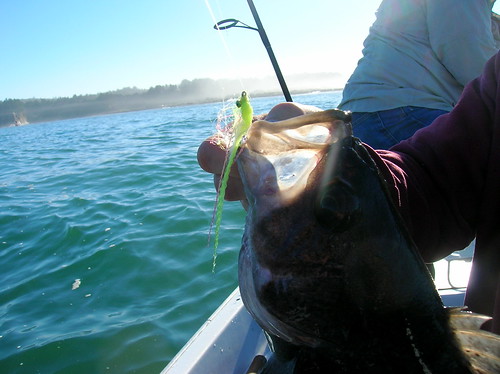
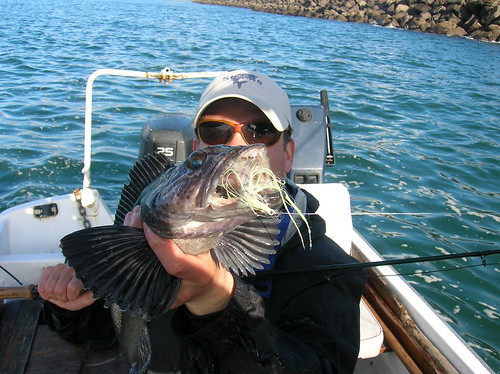
Nate Stansberry has been out in the bay again. Ling Cod have moved into Oregon’s coastal bays and are available to the fly angler. Keep this in mind when and if our steelhead rivers get blown out next week. Nate is hiding behind his fly caught Ling Cod in the photo below.

DSCN1163

He is fishing a 9wt Winston B2X rod with Rio intermediate running line and a T-17 drop to the bottom sinking head. Successful flies include Blanton’s Whistler and standard clousers.-CD

Posted in Oregon Saltwater Fishing | 3 Comments

Lower Mckenzie continues to fish well with nymphs

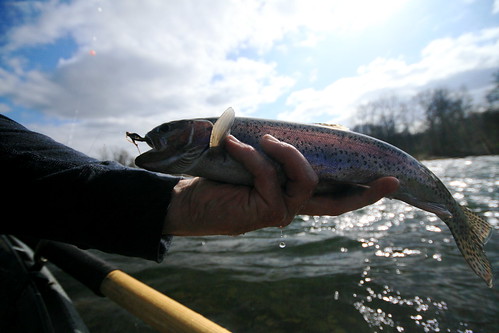
Summer levels on the McKenzie and Willamette rivers are giving anglers an early shot at some really nice native rainbows generic cialis 10mg this February. Lou and Nate were on the McKenzie yesterday and despite bright windy conditions they had success fishing Prince Nymphs and Possie Buggers off of a Thingamabobber strike indicator.  Nice work guys. Other anglers report that Golden Stone nymphs with small egg patterns tied off the bend of the hook about 12 inches have been working well. March Browns have been spotted on coastal streams in pretty good numbers.  Very few have been seen on the McKenzie and Lower Willamette. With the  warm rain coming we should see water temps rise and March Browns  emerge with consistency.

Bellinger_to_Hayden_Shahab_&_Nate_003

 CD

Posted in McKenzie River | Leave a comment

Improvements to the “Willamette Project” may help threatened chinook and steelhead

Recently, Greg Taylor, a biologist with the Army Corps of Engineers spoke candidly with  Trout Unlimited 678 members about the impacts of and planned improvements to Federal dams in the Willamette Basin.

The “Willamette Project” operated by the Army Corps of Engineers consists of thirteen high head, multipurpose flood control dams and about forty miles of revetments on Willamette River tributaries.

The "Willamette Project"

The dams have been effective in reducing  flood damage (for example, seasonal Lake Glenwood has dried up)  but the once prolific runs of spring chinook and winter steelhead in the basin are a fraction of their former glory.  Historic runs of hundreds of thousands of wild produced adult chinook now number in the ten to twenty thousand fish range.

In 1999, Upper Willamette spring chinook and steelhead were listed as threatened under the Endangered Species Act. The ESA requires that agencies operate their facilities in a manner that does not jeopardize the continued existence of a listed species.

The Willamette Project as it is currently operated jeopardizes listed chinook and steelhead by blocking access to large amounts of historic spawning habitat, impeding downstream passage of outmigrating smolts and degrades downstream habitat amongst other deleterious impacts.  Eight short years since the listing and one lawsuit later, the Army Corps of Engineers completed the required consultation with NOAA fisheries and together they have a plan to prevent extinction of Upper Willamette Spring chinook and steelhead, an underwhelming but enormously important goal.  Here is some what is planned at this time:

Mckenzie River:  Construction of a sorter at Leaburg dam (Leaburg is not a Corps facility).  This will prevent upstream passage of non-native summer steelhead and hatchery chinook by 2014.  The temperature control tower on the South Fork Mckenzie is part of the solution as well.  An improved adult collection facility is under construction on the South Fork.  Adults entering the facility will be trucked around the dam.  Downstream passage improvements are also planned.

Middle Fork Willamette: Improved adult collection facilities below Dexter dam.  Downstream passage improvements at Lookout Point dam by 2021.  Hatchery fish from the Middle Fork hatchery at Dexter will be use to “jump start” wild production above the dams.

North Santiam: Beginning in 2009, the Corps make operational changes minimize impacts to water quality from Detroit Dam.  By 2018 the Corps will complete long term changes at Detroit dam to reduce unnatural water temperatures as a result Detroit dam.  It is likely that this will take the form of a temperature control tower similar to what was constructed on the South Fork Mckenzie.  By 2023 downstream improvements shall be completed.

All upstream passage upgrades shall be trap and haul facilities.  Downstream passage improvements are still on the drawing board.  This is the second bite at the apple for the Corps of Engineers and for the northwest generally at downstream passage.  The downstream passage facilities that were initially put in place at the Willamette basin dams did not function properly and were mothballed.  At no point in the history of the northwest have effective downstream passage measures been put in place at high head dams.  This underscores the challenge facing the Corps.

I am unsure how a plan that relies on technology that does not exist is sufficient to prevent the extinction UWR spring chinook and winter steelhead.  Nonetheless, this plan represents the best chance at ending the Upper Willamette’s anadromous fish species’ slide into extinction.

As for an actual recovery plan, that is apparently something that shall be left to the State of Oregon and the conservation community in cooperation with the feds.  It is unlikely that we will see a return to historic abundance but with careful planning and hard work by all parties we should see increased numbers of wild fish in the basin while maintaining a consumptive fishery for hatchery chinook and steelhead.  Keep posted and get involved.  Big changes are coming in the Willamette basin  . . .  hopefully for the better. –KM

Posted in Oregon Conservation News | 9 Comments

Wine and Waders this Sunday: Support TU in Eugene

Annual Trout Unlimited Fundraising event this Sunday: Wine and Waders

Please join us this Sunday February 22nd for the annual fundraising auction for Trout Unlimited Chapter 678. The event takes place at Territorial Vineyards, 907 W 3rd Ave. Eugene, OR 97402 (541) 684-9463 from 12pm-4pm.

The event is free and open to the public.

Auction and raffle: Get a great deal and support wild fisheries conservation. Come by and bid on our amazing lineup of auction items, including:
-Genuine Bellinger 4-weight bamboo fly rod
-OutCast Fish Cat 4 pontoon float tube
-Guided trips, fly fishing for salmon and trout
-Lodging at local luxury inns
-Expert-tied flies from local gurus
-Fly tying equipment and more!

The silent auction closes at 2:30pm and we’ll have an oral auction and raffle at 3pm.

Food and drink: Territorial Vineyards makes some of the best Pinot in the Willamette Valley and it will be available for purchase.

In the past, TU members have brought potluck appetizers to this event. Please feel free to bring something, but it is not required. In addition, Karl Mueller will be grilling up some serious bratwurst sandwiches for a $3 suggested donation.

Support local fisheries conservation: This is our chapter’s primary fundraiser for the year. We do not receive financial support from the National TU organization, and other fundraisers like our McKenzie River Two-Fly Tournament primarily go toward habitat restoration. This event funds our chapter’s operating budget for all of 2009.

Even if you’re new to the Trout Unlimited, please come to the event, talk to our chapter officers about our priorities, projects and goals for 2009, and enjoy an afternoon with fellow conservationists and anglers.

Special thanks to our generous contributors, including:
Bellinger Fly Rods
Bi-Mart
The Caddis Fly Shop
Homewaters Fly Shop
Hareline Dubbin
Eagle Rock Lodge
Jay Nicholas
Mike Brooks
Rob Russell
Wayne’s Garage
The Mule and Brent Ross!
And everyone else who has volunteered products and time!

Email me if you’re interested in bringing any items to the potluck or auction, or have any questions.
-MS

Posted in Oregon Conservation News, Oregon Fly Fishing Clubs and Events | Leave a comment

Low water ideal for "Lowly Glowly" and winter steelhead success

Mid February is prime time for winter steelhead but lack of rain has our coastal streams low and clear. Typically winter storms bring pulses of of high water to Oregon’s coastal drainage’s. Each rise and fall of river levels bringing new fish, and new hope that  fish have moved into  pools, riffles or runs.  Given the current conditions anglers are doing best on main-stem rivers, rivers relatively close to ocean. The fact that February is half over means winter steelhead must come now, or they simply are not coming. Despite the low water fishing can be very good. 

 Today I was fortunate enough to be  riding in the front of the boat with a highly experience oarsman and winter steelhead angler Matt Oneil. Matt operates All Star Outfitters Rafting on the Mckenzie in summer.  When he is not rafting or coaching his sons basketball teams, he loves to fish for Salmon and Steelhead on Oregon Coastal streams. He knows were the fish are and is not afraid to bump and grind the drift boat down a low clear stream to get into the right position to cast. Numerous times today Matt took the skinny (shallow) route around the slot or pool so that we did not run over the fish. With water conditions low and clear the cautious approach pays.

IMG_0874[]

IMG_0880[]

We caught fish in fast water as well as slow. The key today seemed to be about 5-8 ft of depth and  steelhead green colored water. When you couldn’t see the bottom your fly was in the right spot. The rig was the usual winter nymph style set up with “lowly glowly”geting down deep to hunt the winter steelhead. I ran 4-7 feet of 14lb flourocarbon tippet off the large Thingamabobber indicator and tried to get a dead drift on anchor or while the boat was moving from spot to spot.

IMG_0881[]

IMG_0884[]

IMG_0888[]

IMG_0878[]

Rain or not the next 30 days will be some of the best winter steelheading of the year. There are fish in the coastal systems and more on the way.-CD

Posted in Fishing Reports | 11 Comments

Intruder Alert: 130 hours and $500 later

Intruder Alert! Please welcome salmon-crazy Rob Russell to Oregon Fly Fishing Blog.

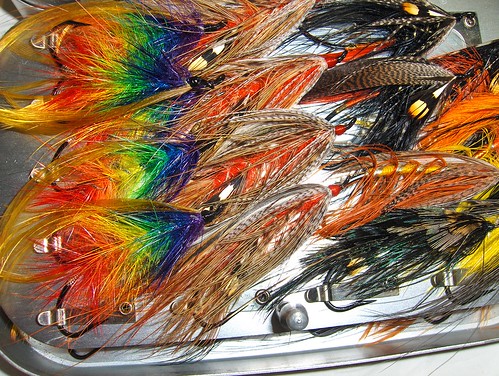
This winter, after seven years of procrastination, I decided to start tying Intruders. For those of you wondering what I’m referring to, an Intruder is a fly. More specifically, Intruders are steelhead flies that swim like living, breathing sea creatures. They were originally designed by fly-guide Ed Ward for Alaskan king salmon. He was looking for something big and burly with lots of action, but sparse enough to get down. What he came up with is arguably the most important breakthrough in the history of steelhead fly design. A well-dressed Intruder displays a large profile with minimal bulk and maximum movement. Properly rigged, they have the added benefit of being virtually snag-proof. The hook is set to dangle upside down, allowing the fly to skip over boulders and cobbles.

Rob Russell Intruder

Soon after designing the Intruder, Ed put the pattern to work on the his home steelhead river, Washington’s Skagit. Several Skagit regulars swung big flies, most often tied on long hook shanks. But the long shanks gave steelhead considerable leverage to work their way free. Ed had designed the Intruder to be rigged like a tube fly, allowing him to use a short-shank hook that dangled off the back. The placement of the hook increased the ratio of hook-ups to grabs. The shorter shanks and freedom of movement increased the ratio of hook-ups to landings. Ed had solved a lot of problems with his new design. But would steelhead eat a three- or four-inch Intruder? I think we all know the answer to that question.

Today’s “Compact Skagit” fly lines, referred to as “heads,” all can trace their roots back to the Intruder. When Ed first picked up a two-handed rod, there were few decent lines available. None, actually. Certainly nothing with removable sink-tips. Ed and others made their own, chopping up all kinds of super-thick lines and experimenting out on the river. Ed’s lines were especially thick and short to help him throw his giant intruders. A dozen or so years later, we can all thank Ed for his inventions as we comfortably crack 80- to 100-foot casts across runs and riffles.

I first saw an Intruder in a Dec Hogan photograph. Wild Steelhead and Atlantic Salmon Magazine always featured an article by Dec, the hero of steelhead sickos everywhere. This particular article included a photo of Ed holding up a big Skagit hen. I remember fixating on the giant fly hanging form the fish’s mouth. A short time later I saw the fly again. The Kamchatka Steelhead Project was printing and distributing promotional fish-porn featuring Scott Howell and Monte Ward holding up Russian steelhead, most sporting the same crazy flies. I tried to dig up information on the flies, but there was an obvious repression in play. People refused to talk about these flies outside of their little Alaska-guide club. They literally hid the flies, even from friends. Some shabby interpretations popped up here and there, but the real deal was impossible to find for several years.

In 2001, several years after the Intruder was perfected, I floated the Clackamas with Monte Ward. Monte was sales and marketing director for the Kamchatka Steelhead Project, the eco-tourism branch of the Wild Salmon Center. Early in the day he pulled out a tupperware tub full of flies. He played it down, only giving me a glimpse at first. But he could tell I was desperate, and finally let me check them out. I was blown away. I’d never seen anything so cool. Then he rigged one and let it swim. I lost my mind. It was ALIVE!

Rob Russell Intruders

That season, Monte and I fished the hell out of the Clackamas. It was a banner steelhead year, with winters and early summers popping up everywhere. It was the season that taught me just how deadly Intruders can be. Not only did they look good, they made steelhead stupid. Monte would let everyone else swing through a run, then come in last and clean up the fish. One day stood out in particular. Monte hooked nine fish, landing six or seven. I hooked two and landed one. His best fish was the most humiliating, as he hooked it within three feet of my wading boots after I had carefully covered the same water. Needless to say, I was convinced of the power of the Intruder.

When the day came that I got to watch Monte tie an Intruder, I was amped. I had no doubt I would pick it up and run with it. How hard could it be? But two hours into it, Monte was still working, tediously brushing every strand of fur, folding and turning and brushing and spinning. It looked ridiculous and expensive, but the result was undeniably effective. I went home and tied a crappy one, then another crappy one, feeling dejected. I needed so much stuff! I didn’t even know where to get it all.

The next trip, Monte took pity on me and handed be a gorgeous purple Intruder. I immediately caught a fish with it. I went on to catch over a dozen fish with that fly, until it finally gave up the ghost. Over the following years, I could usually weasel one or two flies out of Monte, so I always had at least one in my box–my confidence fly.

Today you can find Intruders in the bins here at the Caddis Fly. Some specimens are pretty good–what we steelhead guides call “client flies.” They’re good enough to do the job, and they don’t take two hours to tie. But they’re not Intruders in the true sense. No commercial pattern comes close. Like so many things in life, there’s just no substitute for spending time at the vise.

Rob Russell Intruders

As for me, I finally took the plunge. Since December I’ve dropped over $500 in materials and spent over 130 hours at the vise. I know this because I have tied 65 Intruders. They average two hours apiece. The one I tied last night took me almost three hours. Of the 65 flies I’ve tied, half of them will end up in the garbage, a quarter will end up in the fly boxes of my friends. So I really only have a handful of flies that I want to use. But I feel a surprising sense of satisfaction when I finish a good fly. I take it to the sink, fill up a bowl of water, and see how it swims. I often feel like I’m breathing life into these things in the final stages. And I think about Ed and Monte, knowing I owe it all to them.

In case you’re wondering, I did actually catch a fish on one. The big Umpqua gave up a 36″ hen the other day. She was my first fish from the Umpqua, ten years after I first swung a fly on that river. Now THAT was the coolest!

RR

Video of Ed Ward at the Sandy Spey Clave.

Posted in Coastal Steelhead Fishing, Fly Tying, Summer Steelhead | 9 Comments

Oregon fisheries news: Omnibus Wilderness and Merkley’s Snake Dam Stance

Omnibus Public Lands Management Act protects Oregon’s Elk River salmon and steelhead
From our pal Nic Callero at the National Wildlife Federation

The Omnibus Public Lands Management Act (S. 22) is expected to hit the floor of the House of Representatives in March. It is a large package of public lands bills that would go a long way for protecting wildlife habitat. This is the largest expansion of wilderness in over fifteen years:
• Designating over two million acres of Wilderness in nine states
• Protecting over a thousand miles of rivers, and;
• Creating a permanent 26 million acre National Landscape Conservation System (NLCS).

The bill passed the Senate in mid-January with a vote of 73-21.

Virtually all of the pro-Wilderness measures included in the package have strong local support, and the vast majority of bills have little to no opposition with broad, bi-partisan support in Congress.

The Oregon wilderness includes The Lewis and Clark Mount Hood Wilderness Act of 2007, The Copper Salmon Wilderness Act, The Oregon Badlands Wilderness Act of 2008, The Cascade Siskiyou National Monument Voluntary and Equitable Grazing Conflict Resolution Act, The Spring Basin Wilderness Act of 2008, The Fisheries Restoration and Irrigation Mitigation Act of 2008 and The Watershed Restoration and Enhancement Agreements Act of 2007 had been held up during the 110th Congress by opposition from Senator Tom Coburn (R-Okla.), but a Sunday vote on the bill achieved enough votes in favor of the legislation to override his objections.

All of Oregon’s congressional representatives have indicated support for the bill, aside from Rep. Greg Walden. Go ahead and let him know how you feel about protecting our fisheries.

Time to talk to Merkley about the Four Lower Snake River Dams
From Tom Wolf, Oregon State Council Trout Unlimited

As many TU members in Oregon know, Senator Jeff Merkley was recently elected on a platform that included a commitment to leadership on fish and wildlife issues in the Northwest. He also addressed one of Trout Unlimited’s signature Northwest issues – the recovery of wild salmon and steelhead in the Columbia and Snake Rivers – agreeing that all options, including the removal the four lower Snake River dams, should be on the table.

Trout Unlimited has been a key plaintiff in the fight to find real solutions to the ongoing crisis in these rivers that works for fishermen, farmers, and Northwest ratepayers. Oregonians, and their elected officials, have a key role to play. A restored Snake River will bring more fish, and fishing opportunities, to both the east and west sides of the state. Your voice in making this a reality is needed today.

Please take a moment to call Senator Merkley’s office: (202) 224-3753

Ask him to lead on a legislative solution in the 111th Congress to restore wild salmon and steelhead to the Columbia and Snake Rivers by removing the four lower Snake River dams and replacing their limited services with salmon-friendly alternatives.

Calls are most effective, but you can also send an email message here.

Fewer troopers covering Oregon’s wild areas, poachers rejoice
A $2.3 million reduction in the Oregon State Police Fish and Wildlife Division’s general fund portion the next biennium eliminates the Division’s general fund budget by half. Fish and Wildlife troopers typically patrol in remote areas where other law enforcement is not readily available.

This budget cut will result in the elimination of 4 sergeant positions and 13 trooper positions.

-Coastal Fish and Wildlife troopers will be reduced by 3 or 12.5%, which will impact the Division’s ability to provide enforcement for marine resources, including shellfish, marine fisheries, and a $350 million commercial fish industry.

-Troopers assigned to the I-5 Corridor will be reduced by 6 or 18%, which will severely impact the Division’s ability to provide fish and wildlife enforcement for Oregon’s largest population base.

-Central/Eastern Oregon Fish and Wildlife Troopers will be reduced by 2 Troopers or 6%, impacting the Division’s ability to address Columbia River fisheries issues.

Posted in Oregon Conservation News | Leave a comment

More sale flies added to online store

Hogan’s Chubby Cousin, Fergus BW Bug and Mr Rubber Legs are a few of the flies I’ve just added to the .35-.75 cent flies in our SALE FLIES section.–CD

hoganchubby

Posted in Oregon Fly Fishing Tips | Leave a comment

McKenzie Trout Warming up!

An afternoon float produced several colorful Rainbows for Tony Torrence and Nate Stansberry despite fishing an hour behind several Caddis Fly Shop “ringers”. Hot flies were the usual suspects… Mega Prince and Pheasant Tail nymphs in sizes 10-12. Thanks for leaving a couple behind fellas!

DSCN1124

DSCN1129

DSCN1134
NS

Posted in Fishing Reports, McKenzie River | 6 Comments

February 11, Lower Mckenzie near Eugene

Summer river levels and some decent weather has the lower McKenzie fishing pretty well for early February. Today we floated from Belinger Ramp to Hayden Bridge Ramp.

IMG_0708

We’ve had quite a few inquiries about the hazards below Belinger and as the sign states you want to stay river right at the first split below the ramp. It’s  hard to tell what the water will do when it comes up again,   but as the river is today going right is the way to go.

IMG_0713

Although we did see a few Blue Winged Olives the only fish that surfaced  was one trying to eat the thingamabobber indicator. We concentrated on nymphing and  two rigs didn’t change all day. Around 5 feet of leader or tippet below the thingamabobber indicator a single split shot, a Mega Prince #10, 15 inches of 4x tippet then a Pheasant Tail nymph #16 tied off the bend of the Mega Prince. The other rig had a Possie Bugger and a Pheasant Tail of the same sizes. The bigger flies produced a little better but is was virtually even over the course of the day. The fish were in nice shape a fought hard despite the cold water.

IMG_0716

Mcknezie Trout below Belinger take out

mckenzie trout jumping

early season rainbow

native Mckenzie trout

Most of the fish were in medium flows, not pushed up into the fast water at the tops of riffles. The river was in great shape and appearred to contain less sediment than recent years. Hopefully our high water at the end of 2008 scoured out some the rivers sediment and algae but left enough bugs and fish to make 2009 a great year.

vibram and tcx

The trip was the first for me with my new Simms Headwater  Vibram Sole boots from Simms. The Vibram is a new traction sole in the Simms line up of boots. Simms calls it the Cleanstream Product line. “The boots designs feature materials that are more resistant to “hitchhiking” organisms and have less exposed stitching, fewer ridges and pockets that could potentially hide stowaways.” The Vibram sole did very well in terms of traction and did not carry the amount of water and dirt into the boat as my old felt boots. Studs can be inserted in the boots if needed. I felt the Vibram was very comparable to a new pair of felt boots with respect to traction.–CD

Posted in McKenzie River | 1 Comment

Mckenzie and Willamette Rivers in good shape

Blue Winged Olives, Winter Stones, Stonefly nymphs, Pheasant Tail Nymphs, Prince Nymphs, Possie Buggers, Skwala Stones and the hope of March Browns. It’s that time of year again and local angling oppurtunities are available. 400 cubic feet per second out of Hills Creek Dam near Oakridge means the Middle Fork of the Willamette is in prime wading shape. The Mckenzie near Eugene is a perfect level and anglers have been taking fish. Fish a thingamabobber with a stonefly nymph and small pheasant tail under it. Look for Blue Winged Olives and do your best bug dance for a good March Brown Hatch.–CD

Posted in Middle Fork Willamette River fishing | 2 Comments

Trout Unlimited Wine and Waders event Sunday Feb 22

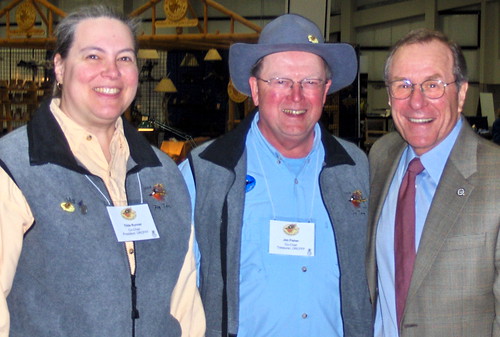
Next Sunday is Trout Unlimited Chapter 678’s annual Wine and Waders event at Territorial Vineyards in Eugene. This is a potluck event with auctions and raffles for a great cause — restoration and conservation of our native coldwater fish. The event takes place Feb. 22nd, 12-4 at 907 W 3rd Ave Eugene, OR 97402.

This year we have excellent auction items, like a guided trip fly fishing for Spring Chinook on the Tillamook system, an Outcast FishCat 4, hand-tied fly collections from expert anglers like salmon-guru Jay Nicholas and Mike Brooks (whose Atlantic salmon-style steelhead flies are in the Smithsonian).

Be sure to come by, bring a plate of bean dip or mini corndogs, drink a little Pinot and help support TU’s fishery conservation goals.

If you have any questions or would like to donate auction items, please email Matt Stansberry.

Posted in Oregon Conservation News, Oregon Fly Fishing Clubs and Events | Leave a comment

Scenic skunking on the Hoh River for winter steelhead

My first Olympic Peninsula winter steelhead pilgrimage went just about as I’d expected: great scenery, the promise of large native chromers just out of grasp, and consumption of staggering amounts of Wild Turkey at a local bar in Forks, WA.

Scenic Skunking on the Hoh River

Scenic Skunking on the Hoh River

The OP is experiencing the same bizarro late winter drought we are, so all of the rivers are extremely low, and very clear. Conventional wisdom said to put off the trip — wait a month for more native fish and better water. But circumstances dictated this trip was now or never.

We started the trip Friday morning at the Olympic National Park on the Upper Hoh River. We hiked in on a trail that runs upriver from the park visitor center and it’s the highest access point on the river.

Scenic Skunking on the Hoh River

The Hoh has a wide channel, with gravel bars spreading out to either side of the river, and with the low water we had access for miles, up and down the banks. But there wasn’t much holding water. The fish were supposed to be kegged up in the deepest pools, which were few and far between. But we didn’t sniff a bite on this upper section.

That night we got smart, pouring whiskey into a local fly fishing guide until he helped us come up with a plan: Fish the lower Hoh River with black or purple leeches. The water below 101 was much fishier. Bigger water, gun-metal blue glacial silt, and some really great runs for swinging flies on spey rods.

Scenic Skunking on the Hoh River

Scenic Skunking on the Hoh River

One of our crew hooked a steelhead on a big black string leech, but lost it a foot from the bank. Some plunkers had a nice hatchery fish strung up down by the reach of tide. But day two passed with no fish to hand.

We spent another night in that weird, Twin Peaks-ish town bar and wound up on a guided trip on the middle section of the Hoh for the next morning.

Scenic Skunking on the Hoh River

The middle section of the Hoh has great swing water, and a lot of deep boulder-strewn holes for pitching an egg and thingamabobber. But as the title of this post indicated, we didn’t catch any steelhead. Of the seven boats that the Washington Fish & Game official had checked that day, only one had caught a fish in that stretch.

The Olympic Peninsula is a fickle place. While there are a lot of gorgeous places to get skunked on winter steelhead closer to home, something about those rivers will likely call me back to Forks.

-MS

Posted in Fishing Reports, Fly Fishing Travel | 7 Comments

New "SALE FLIES" Section added to Caddisflyshop.com

Our spring fly shipments have begun to arrive and it’s time to make some room. We have some great deals on flies that work great, but didn’t sell great. Patterns like  Barr’s Graphic Caddis, Mercer’s Micro Mayfly Nymphs, Tungsten Bead Soft Hackles and more. Check out some of the flies selling from .35-.75 cents. Yes thats right,  really cheap!   Click to go to the site–CD
Posted in Oregon Fly Fishing Tips | Leave a comment

Eugene Bonefishers make the most of Bahamas cold snap

The first 4 days of February in Sandy Point Bahamas on the Island of Abaco resembled spring weather in the Columbia Gorge. Gusting winds up to 40mph, air temps dropping below 60 degrees and 9 foot swells on bonefish flats, we really should have brought the wind surfing gear and wet suits.

group shot

Despite the tough weather our group of 11 had a great time. Our guides, who were dressed in everything they owned,  looked like they were ready for the ski slopes hung tough and fished us everyday. Bahamian guides simply are not used to the cold we had this past week. One day Ricardo Burrows owner of Rickmon Bonefishing Lodge told his clients he simply could not get in the water and wade around with them, the water was just to cold. Instead he poled his guys around all day and they fished exclusively from the boat.

We did have good tides and fished a nice variety of flats around Sandy Point. Day one we headed off to Moores Island about a 40 minute boat ride. Moores can be great, and is know for it’s big solitary bonefish. These fish have attitudes like Barracuda and don’t seem to be bothered by much. The generally stay just out of casting reach and if you do stick one they can be in your backing 2 or three times during the battle.

10 pounder

the release

We had shark attack that day. Having  a 5 foot black tip  eating your bonefish 6 feet from where you are standing it’s a bit invigorating.

dwight's first

Day two was out to Gorda Key or Castaway Key 9 miles out of Sandy Point, Disney owns the Island and uses it for a daytime stop over for it’s cruise line. Gorda has both inside and outside flats and with the right tides is home to both Permit and Bonefish. The wind made it tough for us on the outside that morning so we headed to the internal lagoon/flats and found a few fish cruising around but were unable to land any of them . When we got back out of the lagoon and onto the outside flats there were about 400 bonefish in several schools milling about on the flats. We had some success that afternoon.

off he goes

gory fumble

Day three and four found us on the flats a stones throw from the lodge. Boating was simply dangerous in flats boats with ocean whipped up as it was. “The Town Flats” of Sandy Point are excellent and nearly always have numbers of fish, and fish with size roaming in and out with the tides. Unfortunately the wind was howling,  to cast all you had to do was hold your rod up at about 45 degrees downwind. The guys and guides hung tough and some fish were landed.

blowing down wind

hunt the bones

clutch the bones


The gear that performed well on this trip included: Sage TCX 9ft 8wt rod with a Nautilus NV 8/9 and a Scientific Angler Bonefish line. Echo 2 Saltwater rods 7 and 8wts. Sage 4580 CF reel was a surprise as it is amazingly light and had ample drag, Saltwater Sharkskin lines were the hit. Perhaps the most well likes piece of equipment on the trip was the Original Buff Headwearthat we all wore religiously. The Buff Headwear was protection against wind, sun and unfortunately for this trip the cold as well.
For more information on this trip, booking this trip or Bonefishing in the Bahamas give us call or an email anytime.–CD

Posted in Fishing Reports, Fly Fishing Travel | 1 Comment