Zowie Dub: Custom dubbing blends by Jackson and Jay Nicholas

An enticing selection of custom dubbing color blends were showcased on Saturday, April 4th at the Caddis Fly by Jackson Nicholas with a little help from his parents, Jay and Lisa.

Zowie Dub is a series of a dubbing blends created by the Nicholas family with support from Hareline Dubbin. Zowie Dub’s roots go back to when Jackson, then age 6, stuffed Jay’s coffee grinder with multi-colored chunks of Anton yarn, blending piles of weird-colored fluff, covering the kitchen counter and pretty much everything within a 30 foot radius of ground zero. Fluff was fun to make, but it was better suited to padding bird nests than to tying flies.

Eventually, dad offered access to his inventory of commercially packaged dubbing. The creative imagination of a 7 year old combined with the experience of the seasoned tyer elevated the product from bird-nest material to a real advantage at the fly vise.

The first public unveiling of Zowie Dub occurred at the FFF Expo at Albany in 2007. Starting with a half-dozen colors of dad’s dubbing in fresh-from-the-rack-packets, Jackson began creating wild color combinations and handing out free samples to curious onlookers. Jay sat at the next table, tying Clouser Minnows. More people were attracted to Jackson’s table than dad’s.

The artistry and utility of Jackson’s custom blends has grown over the past 3 years, to the point where Jackson has a dedicated following of EXPO tyers who have been back three-years-running, telling fish stories, asking for more of last year’s blend, and requesting new color combinations.

Straight-off-the-peg dubbings are perfectly functional, and a great selection is available. But some fly tyers want more. More what? More variety. Different color shades. Dubbing that incorporates complex color highlights. More sparkle. Greater allure.

We want to say thanks to Hareline Dubbin and Marcos Vargara. First, Hareline provided the raw materials that we experimented with the last two years. One day, I was talking with Marcos about people’s reactions to the blends Jackson was creating, how great the color/texture combinations were, and, for lack of a better word, I just paused and said: Zowie! Days later, Marcos suggested that we name a dozen of our most enticing blends and name it Zowie Dub. Wow, Marcos, what a great idea. So here we go. Jackson’s Zowie Dub – The Lucky Thirteen blends. Note: We hope this Key Ingredients list will help jump-start your creative grinding. Enjoy!

JN & JN

Zowie Dub ingredient list:

Regal Roe No. 1 Fresh Roe
A translucent orange cast; creates the impression of fresh eggs.
• Hot Orange Trilobal
• Fl. Cerise Trilobal
• Red Trilobal
• Fl. Pink Trilobal
• Red-cast Pearl Ice Dub
• Chartreuse Trilobal

Regal Roe No. 2 Dead Egg
Choose creamy pink blend when the water is cold, clear, or when everyone else is fishing bright colors.
• Hot Pink Trilobal
• Cream Trilobal
• Hot Pink Hareline
• Fl. Yellow Hareline
• UV Minnow Bally Ice Dub

Ultimate Egg-Head
A dazzling palate of fluorescents; a perfect complement to any egg-sucking Leech. By the way, this blend makes a great Sea-run cutthroat fly too.
• Fl. Pink Trilobal
• Cream Trilobal
• Fl Shell Pink Trilobal
• Fl Red Hareline
• Fl. Yellow Hareline
• Red-cast Pearl Ice Dub

King Salmon Green
Fishing big Kings or Chum salmon? Your big Intruders deserve to be dressed with this is the mother of all greens.
• Chartreuse Trilobal
• Kelly Green Trilobal
• Chartreuse Ice Dub
• Kingfisher Blue Trilobal
• Fl. Orange Hareline
• Red-cast Pearl Ice Dub

Lisa’s Voluptuous Violet
Summer steelhead love this shimmery violet blend. Swim it, skate it, the fish will eat it. Believe in it. You will be rewarded.
• Purple Trilobal
• Cream Trilobal
• Kingfisher Blue Trilobal
• Fl. Yellow Hareline
• UV Minnow Belly
• Steelie Blue Ice Dub

Hypnotic Blue
Blue is the new purple. Steelhead, kings, silvers, half pounders, and Atlantic salmon all go for blue flies. This custom blend isn’t just blue, it’s the living, breathing blue these fish can’t resist.
• Blue Trilobal
• Black Trilobal
• Red Trilobal
• Purple Trilobal
• UV Minnow Belly Ice Dub
• Steelie-Blue Ice Dub

Ultimate Steelhead
If you must choose one blend for tying dark steelhead, salmon, and trout flies, this is it. Not quite black, purple, blue, or claret – or is it? Tie it, fish it, hang on.
• Black Trilobal
• Purple Trilobal
• Kingfisher Blue Trilobal
• Fl. Flame Trilobal
• Stonefly Brown Trilobal
• Steele-blue Ice Dub

New Millennium Skunk
This blend elevates black to a new level of excitement for fly tyers. Your traditional salmon and steelhead flies will look better and fish more effectively than ever before. A hint of fluorescence and a sparkle of silver add to the magic.
• Black Trilobal
• Purple Trilobal
• Kingfisher Blue Trilobal
• Silver Ice Dub
• UV Minnow belly Ice Dub

Perilously Purple
Not your father’s Purple, this enticing blend is a dark purplish that shimmers like it is alive. Egads!
• Purple Trilobal
• Black Trilobal
• Gold Ice Dub
• Red-cast Pearl Ice Dub

Gathering Storm
Can’t decide whether to stick with tried-and-true black or experiment with a claret fly at dusk? Here ya go. This subtle blend isn’t quite black or claret, and looky here, is that a hint of copper too?
• Black Trilobal
• Claret Trilobal
• Stonefly Brown Trilobal
• Copper Ice Dub
• UV Minnow Belly Ice Dub
Posted in Fly Tying | Leave a comment

More reader photos: Big bows and N. Umpqua Steel

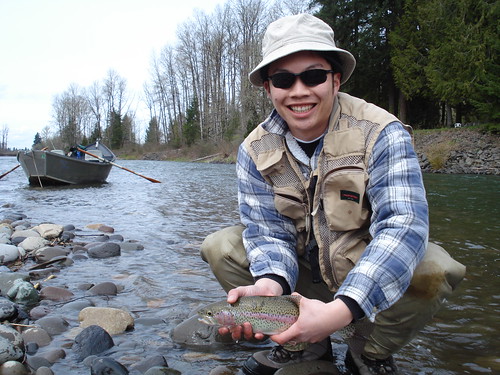
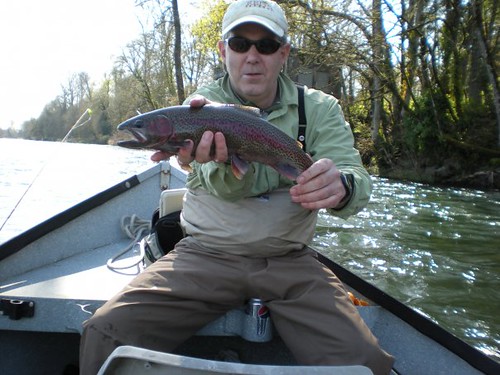
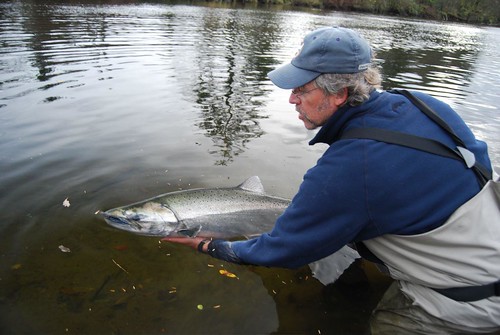
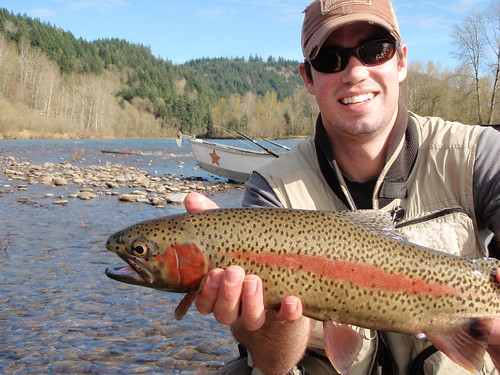
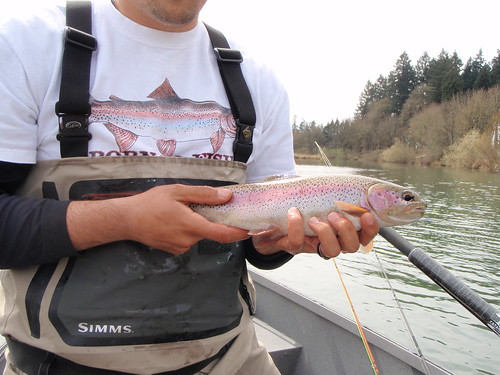
Oregon Fly Fishing Blog reader Evan had a has had a great April so far, with some nice Lower McKenzie Trout and a North Umpqua Steelhead.

Reader Photos

Reader Photos

Reader Photos

Send us your pics and reports.

Posted in Fishing Porn | Leave a comment

Red Gold in Portland this week

Red Gold in Portland

RED GOLD, a 1 hour documentary film showing at the Baghdad Theater on THURSDAY, APRIL 16th. Doors open at 5:30, film starts at 6:30. Admission is $3. Hosted by guest speakers Lisa Sedlar, President of New Seasons Markets, Guido Rahr, president of Wild Salmon Center and MacGregor Walker commercial fishermen and president of West Coast Wild Salmon , a Q&A will follow the film. FREE BRISTOL BAY SALMON will be served!

Posted in Oregon Fly Fishing Clubs and Events | 1 Comment

Trout Unlimited Lower McKenzie outing trip photos

Last weekend, Trout Unlimited put together a crew to tackle the Lower McKenzie River, floating from Armitage to Cross in search of native redsides. A few rainbows were caught, along with dozens of cutthroat and some trophy suckers. We saw some march browns and an explosion of Mothers Day Caddis. And Moon baked mozzarella sticks. In the boat.

Trout Unlimited McKenzie Float

TU McKenzie Outing

Trout Unlimited McKenzie Float

Trout Unlimited McKenzie Float

Posted in McKenzie River, Oregon Fly Fishing Clubs and Events | 5 Comments

Rivers of a Lost Coast showing in Eugene Oregon!

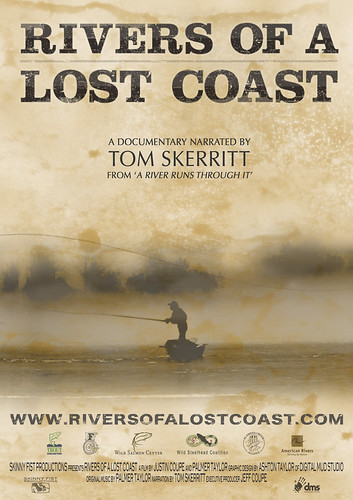
From Rivers of a Lost Coast: At the turn of the 20th Century, a handful of pioneers carried their fly rods into California’s remote north coast and gave birth to a culture that would revolutionize their sport. For a select few, steelhead fly fishing became an obsessive pursuit without compromise.

Rivers of a Lost Coast

Featuring legendary West Coast anglers Russell Chatham, Bill Schaadt and Ted Lindner, this film focus’s on the rise and fall of Northern California’s great fly fishing waters, and bitter rivalry between two angling titans.

Join the filmmakers Justin Coupe and Palmer Taylor as well as salmon biologist Jay Nicholas for a great evening.

David Minor Theater, Eugene OR
Tuesday May 12th
Two showings — 5:30pm and 7:30pm
Tix $12, presale at The Caddis Fly Shop. Seating limited, 50 per showing.
PLEASE KEEP TICKET FOR ADMITTANCE, PLUS DRINK SPECIALS AT THE AFTERPARTY TBA.
Benefits Trout Unlimited Chapter 678 and The Steamboaters.
Food from Lucky Noodle and Cornucopia, Ninkasi brew available on premise.
21 and over.

Rivers of a Lost Coast

Rivers of a Lost Coast

Posted in Oregon Conservation News, Oregon Fly Fishing Clubs and Events | Leave a comment

Fish photo gets you a free drink

This week Phil Calandra “The Don du Comucopia” co-owner of Cornucopia’snew restaurant and bar on 5th and Pearl street stopped by the shop.

http://www.gaelnet.de/wp-content/themes/twentyten/writing-an-apa-paper.html

He was out promoting the new establishment, and invites anglers to bring a fish photo to the resturant.  Phil will post your photo on his wall of fish fame, and in exchange for your photo he will buy you a drink, what a deal!–CD

Posted in Oregon Fly Fishing Tips | 1 Comment

Lower river reports: McKenzie and Willamette Rivers

The lower McKenzie and Willamette rivers have dropped into fine shape and are fishing well. The March Brown emergence continues to develop and best dry fly fishing has been between 2 and 4pm. When the temperature rises enough to get the caddis flying both cutthroat and rainbows will take them near shore. If we can get the weather to creep up just a bit the dry fly fishing will really improve. Anglers have been reporting fish getting a bit wiser during the hatch and emerger patterns have been the most successful of late. Try Klinkhammer March Browns, Harop’s Captive Dun Brown Drake and Harop’s CDC Biot Emerger March Brown. These patterns sit down in the film nicely and do a great job of imitating the struggling to emerge March Brown adult.

IMG_0856

This week I floated from Armitage to Cross Roads Tuesday and Belinger to Armitage Wednesday.

 Cross Roads ramp is off of Coburg Road near mile post 13 north of the town of Coburg. The shuttle from this side is much easier and the landing feels much safer than the Hayes Lane “Marshall Island” side off of River Road. There is a slough to row up but once you squeeze by a few stumps it’s no problem. You will know you are at the slough when you see a large Osprey nest on your left and power lines over head. Shuttle services are available from Al’s shuttle 541 343 5744 or 541 729 7664 for $25. The drift from Armitage down is perfect at this flow. We caught numerous cutthroats and very few rainbows. Fishing was best in 4-6 foot riffles with soft inside edges. Our best patterns were the Royal Coachman Wet and March Brown Bead Head Emerger both swung down and across with a 9ft 4x tapered leader.

Belinger to Armitage was busy on Wednesday and all the boats I spoke to had reasonably good success. Caddis dries, March Brown dries and swung wets all worked for folks. Water temperatures are slowly rising and post spawn rainbows are beginning to show themselves. Nymphing remains productive with Mega Prince and Golden Stones doing the bulk of the damage. With things warming up a touch anglers may want to look slightly higher in the river Deerhorn to Hendricks, Hendricks to Hayden are both good drifts. Shuttle service is available from Ed Ebsen 541 912 0044. Have a great weekend–CD

vile 726 3/4 mile below belinger ramp 14.5 inches

Posted in McKenzie River | 4 Comments

Profiling the genetics of the Willamette and McKenzie redside rainbow trout

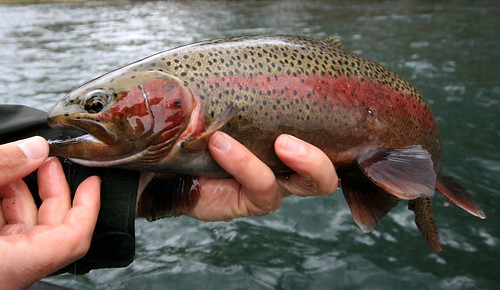
The McKenzie Redside rainbow is one of the most beautiful and sought-after native fish in the Northwest. But how much have we diluted the genetics of these fish with massive hatchery programs? Where are the most pure strains of native fish in the system?

These are the questions ODFW is hoping to answer in its genetic sampling project for the Upper Willamette redside rainbow trout.

McKenzie River Rainbows

According to ODFW biologist Jeff Ziller, the idea for the project began over ten years ago when Willamette Winter Steelhead were being listed as an endangered species. The original plan from the National Marine Fisheries Service was to call every Oncorhynchus mykiss in the Willamette basin a steelhead, meaning every rainbow trout in the basin would be included in the plan.

“We didn’t think that was right, so we did some analysis to suggest there ought to be a break at the Calapooia River,” Ziller said. “Most of the lower tributaries of the Willamette Basin have steelhead, and from Albany upstream we have trout.”

ODFW collected genetic material from different stocks of steelhead and rainbow trout in the basin, and found the two strains of fish are dramatically different. The Willamette winter steelhead are genetically similar to the Columbia River strains of steelhead, while the upper basin rainbow trout are totally unique.

In fact, Ziller hypothesizes that redside rainbow trout and Willamette winter steelhead entered the Willamette and McKenzie Basins from entirely different river systems.

Our native rainbows are more closely related to fish in the Umpqua River, according to genetic sampling. “What we think is in geologic time, some kind of headwater capture or landslide turned a creek in another direction in a low spot, out past Cottage Grove,” Ziller said. “There’s a really low pass between the Umpqua and the Willamette there.”

Also, the Umpqua is the only other place that has a relative to the Oregon Chub, found exclusively in the Willamette Valley and the Umpqua, further evidence of trading of fish species between those watersheds.

McKenzie River Rainbows

Native Redside Rainbow trout face massive threats
For nearly 100 years, our native trout populations have been decimated, primarily by the very agencies we’ve appointed to protect them.

In 1963, after the completion of Hills Creek Dam, the US Fish and Wildlife service rolled out a tremendous rotenone project to remove “non-game fish” going all the way up into the tributaries of the Upper Willamette. They applied rotenone so heavily that the poison took out every fish down to Lookout Reservoir.

Oregon started planting hatchery rainbows in the McKenzie River in 1921, and we haven’t let up since. There are very few places in the entire watershed that have not been planted with hatchery fish.

According to historic accounts, a guide in 1916 took three anglers down a five mile stretch of the McKenzie River from Thompson Lane landing to the Leaburg Lake area, before the dam. They took 225 fish (limit was 75 per person at the time), and the guides didn’t take any fish less than 12 inches. There were a lot of wild fish in the Upper McKenzie basin, all naturally reproducing.

But by 1947, the wild fish population in the McKenzie was already reduced. According to creel surveys, 45% of the fish caught in those years were hatchery fish.

Today ODFW is dumping 600,000 hatchery trout into the system. And the programs have gotten worse and worse for native fish.

In the early 1980s, OFDW stocked the McKenzie four times a year, once in the lower and three times in the upper sections. “That created a spike of activity – that first week was outrageous, but by the third week the fishery wasn’t going. They’d fished them out,” Ziller said.

Today, ODFW is stocking at more regular intervals. The upper river is stocked every other week, from the fourth Saturday in April through August. That provides a constant supply of hatchery fish, which is constant competition for wild fish and constant angler pressure.

Where did the impetus for massive pellet-head production come from? You can trace it back to the 1950s and 60s, when the Army Corps of Engineers started building flood control reservoirs in the Willamette Valley. The Corps’ mitigation responsibility to replace fish lost by dams and reservoirs is funneled into fish factories. Instead of putting money into habitat, the Corps is obligated to pump out pellet-heads.

ODFW has implemented some half-hearted protections for wild trout. In 1992 the entire McKenzie turned to catch and release for all wild trout. Since 2005, ODFW has been experimenting with triploid or sterile fish to help cut down on interbreeding.

But competition for food and constant angling pressure are driving down populations of wild rainbows nonetheless, especially on the middle section of the McKenzie River.

“If we were going to do something that would bolster the wild trout in the McKenzie River, we would probably not release summer steelhead and salmon on top of them, and we would for sure not release rainbow trout,” Ziller said. “You’re going to have a lot of injury to the wild population in that section of river. Are you going to damage that population irreparably? Probably not. We’ve got native populations in other sanctuary areas that could reinvade if we ever do decide to change the policy there.

“It’s not a life and death situation right now,” Ziller said. “It’s a depressed population – and there’s a reason for it. There’s a lot of impact. It’s a sacrifice area right now for people that want to utilize the steelhead, salmon and hatchery trout.”

Rays of hope for native rainbows
Despite the depressed populations of native redsides in the most heavily used sections of the McKenzie River, there are strongholds of mostly pure genetic native fish.

The Upper McKenzie above Blue River is the best section where there is the least amount of hatchery rainbow interaction. There was also historically very little trout stocking below Armitage park on the lower river.

“I wouldn’t want to call that section of river pristine, but there is a lot of habitat down there and there are a lot of rainbows. That is one of our best chances for native redsides,” Ziller said.

ODFW now has funding to determine the genetic characteristics of all of the rainbow trout in the Upper Willamette Basin. Ziller said this data will provide the baseline information for ODFW’s management decisions in the future.

The team at the Caddis Fly and several other guides and organizations are helping ODFW collect genetic material from native trout by taking a small clip off the ventral fin of wild trout. The volunteers are putting the small clippings in numbered vials which ODFW is sending off to a US Fish and Wildlife lab for analysis.

One project that has Ziller excited is the possibility of improving the viability of rainbow trout above Hills Creek Reservoir. The wild fish above Hills Creek are largely interbred Cape Cod strain hatchery fish that have gone back to the wild (after the 1960s rotenone dump). The populations aren’t as robust as the Upper McKenzie where the population is more genetically pure and fish are more adapted to that specific watershed.

Ziller said it’s possible that in certain areas of the Upper Middle Fork Willamette, ODFW could reintroduce the fry or eggs from a wild stock identified by the genetic analysis, and the native strain fish would out-compete planter strain rainbows, and expand the range of the redside.

This article was based on a presentation Ziller gave at a Trout Unlimited meeting in January 2009.

-Matt Stansberry

Posted in McKenzie River, Oregon Conservation News | 5 Comments

Local anglers hooking up with nice trout

Sun Saeteurn and friends had a big day fishing sparkle duns and soft hackles.

Sun's Pics

Sun's Pics

Sun's Pics

Jim Enright went down deep with a possie bugger and pulled out this pig between Bellinger and Hayden on the Lower McKenzie.

Jim Enright McKenzie Slab

Send us your fishing pics and reports.

Posted in Fishing Porn, Fishing Reports | 2 Comments

It’s never a bad time for a good idea: Pacific Salmon Stronghold Conservation Act of 2009

Without much fanfare, Senator Maria Cantwell reintroduced her Pacific Salmon Stronghold legislation in the U.S. Senate. The purpose of the bill is “to  expand Federal support and restoration of the healthiest remaining salmon strongholds.”  In Oregon, Washington, Idaho and California the bill would focus resources on the roughly 20 percent of the habitat that supports approximately two-thirds of salmon abundance.  In Alaska, the bill would increase resources to public and private groups working to conserve core areas of salmon abundance.

Current federal efforts are a losing strategy if the goal is to ensure robust populations of salmon for ourselves and future generations.  Federal salmon recovery efforts are ESA driven and are triggered only after salmon populations are recognized as being at risk of extinction.  The attention is better late than never but wouldn’t it be better to avoid that situation in the first place?

The existing recovery efforts are important and should continue unabated but there needs to be an existing complementary program.  A policy that identifies and directs federal and state resources to conserve, maintain and enhance already healthy populations of salmon.  This is particuarly true in the Pacific Northwest where are healthiest rivers produce salmon at a fraction of their historic numbers but with directed funding could produce many, many more fish.

This is exactly the type of legislation we can and should get behind.  The bill has the support of all Senators from California, Oregon, Washington and Alaska.  Other notable supporters include: ODFW, WDFW, CDFG, the Oregon Governor’s Office, Trout Unlimited, Oregon Trout, California Trout, the Pacific Coast Federation of Fishermen’s Associations and many others.

This is an idea whose time has arrived and we will continue to support this legislation until it becomes law.–KM

Posted in Central Oregon Fishing Report, Oregon Conservation News | Leave a comment

April sunshine on the lower McKenzie

We floated from Hayden to Armitage today 12pm-4pm.  The water had dropped and cleared considerably since Thursday. As expected the bright and windy conditions made fishing a bit tough. But the beautiful day made up for any angling related deficiencies. The March Brown hatch came off around 2pm and there were fish up on dries. March Brown Comparadun’s and Hare’s Ear Soft Hackle were our best patterns.

Cash and Patsy lower McKenzie Cutthroat

Big numbers of caddis were flying near shore in wind protected areas. The caddis did not bring the fish up nearly as much as the March Browns for us. Fish were rising in some areas and not in others. Peak activity was around 2pm.

We did manage to collect some trash from the banks, most of it plastic left over from the high water in January.

IMG_1232

Our weather forecast is for more sunshine in the coming days. The caddis hatch will most likely intensify. March Browns and Caddis should have fish looking up throughout the afternoon and possibly evening. Both the main-stem Willamette and Lower McKenzie will continue to drop and be in perfect spring shape. Nymphing early in the day will be productive, then finding a nice riffle or current edge to sit on in that 1-3pm range should be the ticket. Enjoy the weather!–CD

Posted in McKenzie River | 1 Comment

April Caddis emergence has started

Early April sunshine and a slight warming of water temperatures have spurred our annual “mothers day caddis hatch”. Be on the look out the next few days for ridiculous numbers of tan, charcoal, and black caddisflies sizes #14-18 in AIG type numbers. This hatch can be frustrating the first couple of days. Look for isolated feeders, swing wets, and hope you get March Browns as well. I will be on the lower McKenzie today so a more in depth report to follow.–CD

Posted in McKenzie River | 1 Comment

Reminder: Dubbing blending lesson tomorrow at the shop

Fresh from an enthusiastic reception at the FFF Expo in Albany, Jackson and Jay Nicholas will be at the Caddis Fly on Saturday, April 4 from 10am to 3pm, to demonstrate the art and science of blending custom dubbing colors and textures. Request a custom blend – we’ll mix you up a free sample!

Jackson and Lisa dubbing at FFF Expo

Also, if you missed Jay Nicholas’ talks on fly fishing for salmon this winter, you’ve got another chance to catch him. Nicholas will be at the Trout Unlimited Meeting on Wed. April 8th at 7pm to answer everything you ever wanted to ask about chinook salmon.

Jay Nicholas Salmon Seminar

Posted in Oregon Fly Fishing Clubs and Events | Leave a comment

Winter Steelhead Closure? Not Quite

I always think of March 31st as the end of my winter steelhead season and my thoughts inevitably start drifting towards the warmer days of summer, dry flies and big resident trout on light rods.  But just because my season has ended doesn’t mean yours has to just yet. Sure, most of our streams close on the last day of March but some remain open and one other thing . . . there are still fish around.  Good numbers of fish.

I went on March 31 to one of my favorite small streams (now closed) and I was eaten 3 times.  Those bites yielded one solid hook-up and one fish landed.  My point?  There are still fish around for the catching, especially towards the begining of April.  So, if you still have winter steelhead swimming in your blood . . .

Northwest Zone:

Alsea River and North Fork Alsea: Open for finclipped steelhead until April 30.

Kilchis River: Open for finclipped steelhead all year.

Nestucca River: Open for finclipped steelhead all year (below Moon Creek).

Siletz River: Open all year for finclipped steelhead.

Siulsaw: Open from Whitaker Creek to 200 yards below Wildcat Bridge until April 15.

Trask River mainstem: Open all year.

Wilson River mainstem: Open all year.

Southwest Zone:

Mainstem Coos River: Open all year

South Fork Coos above the head of tide: Open for finclipped steelhead until April 30th.

Coquille River (all forks):  Open for finclipped steelhead until April 30th.

Eel Creek: Open

Millicoma River: Open for steelhead all year.

Rogue River: Open for finclipped steelhead all year.

Umpqua River: Open for finclipped steelhead all year.

Smith River from Spencer Creek to Sisters Creek: Open for finclipped steelhead until April 30.

North Umpqua: Open for finclipped steelhead the entire year.

So, as you can see there are still lots of opportunities to catch coastal winter steelhead.  One more thing, be sure to check your regs.–KM

Posted in Coastal Steelhead Fishing, Oregon Winter Steelhead Fishing | 1 Comment

March Brown hatch sputters amidst cold weather and inconsistent flows

This week has been a bit tough on local anglers seeking the March Brown hatch. Tuesday I sat on a riffle in the lower McKenzie for 3 hours in hopes of a hatch that I had seen in the same spot over the weekend, no dice. We are hearing the same thing from anglers on the lower Willamette and upper Willamette near Oakridge. Hatches Thurs-Sat of this past weekend were excellent and if we can get air temps close to 60 degrees again things should improve.

Water levels have remained high but fishable.

I really don’t mind high water as long as it is reasonably clear. But the up and down spikes we have been experiencing over the past two weeks can’t be helping. Steady flows, or dropping flows are ideal for this time of year.

Despite some less than ideal conditions anglers are still catching fish. Adult March Brown patterns like March Brown Comparadun and Western March Brown have been working when the hatch does materialize. Steady success has been with the faithfull Mega Prince dead drift under a Thingamabobber. Swinging wets during the warmest part of the day has also worked, try March Brown Beadhead Emerger and March Brown Wets.–CD

Mckenzie Rainbow

Posted in Middle Fork Willamette River fishing | Leave a comment