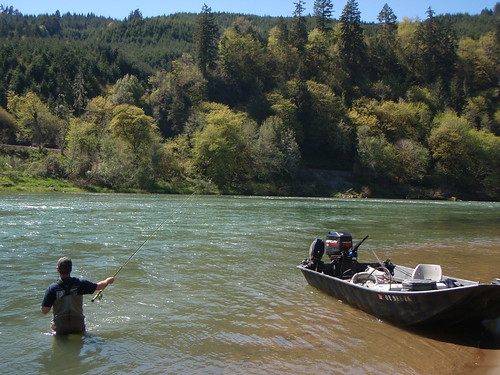
McKenzie River dropping into shape, but March Browns still slow

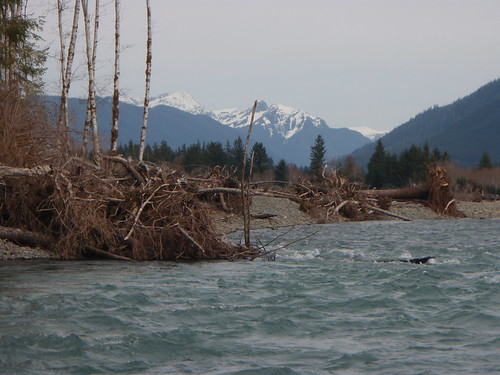
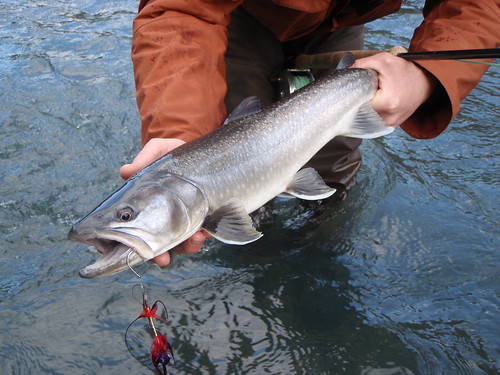
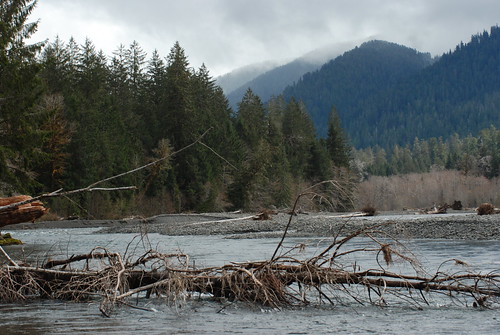
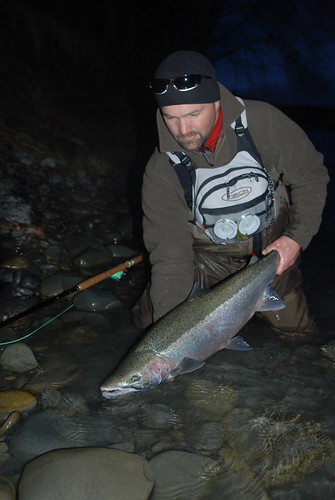
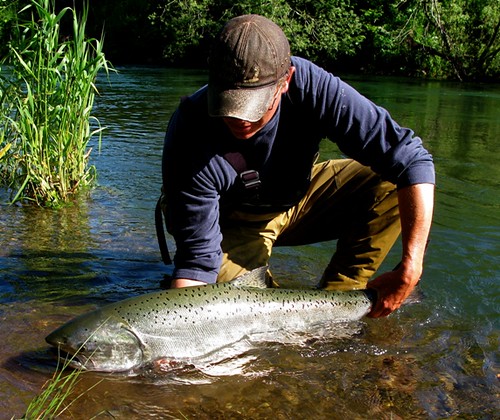
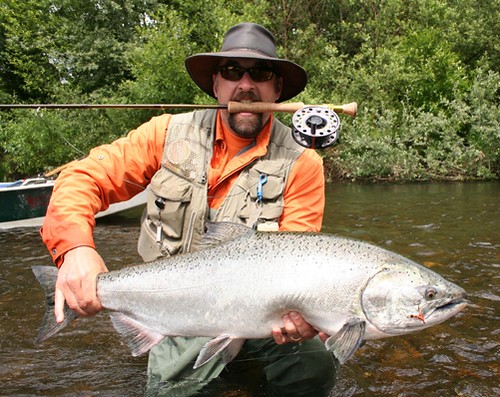
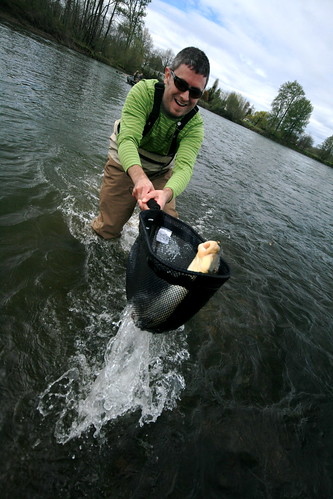
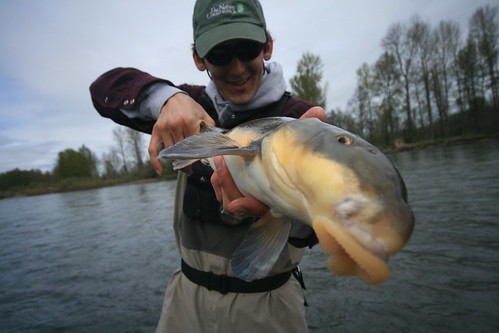
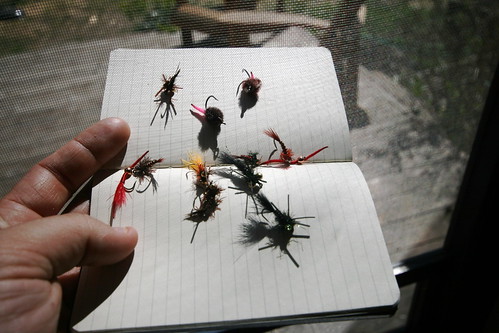
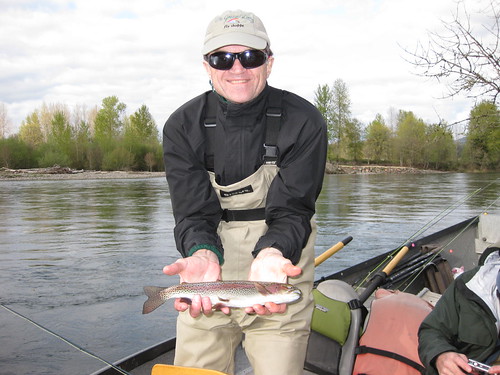
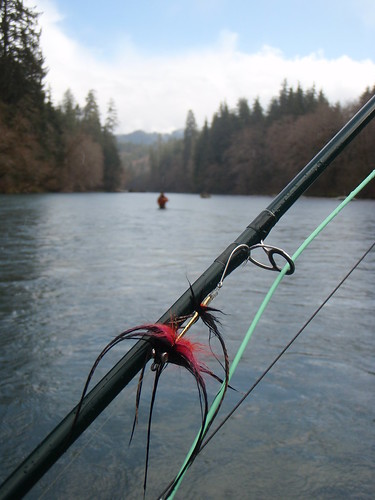
Not much in the way of surface action today, but the McKenzie is clear and dropping. Lots of nice fish under the thingamabobber, golden stonefly nymphs, megaprinces are turning out fish.

March brownin'

March brownin'

Posted in McKenzie River | Leave a comment

Nature and Community on the McKenzie River — An Evening with Barry Lopez

One of my favorite writers, Barry Lopez, the acclaimed writer and long-time McKenzie River valley resident, will read and reflect on his life-long study of the natural world and human culture on Friday, May 8, 2009, 7:30 pm, Soreng Theater, Hult Center, Eugene, OR. This is a rare opportunity to hear from one of North America’s foremost writers on nature and culture and to lend your support for the McKenzie River Trust in celebration of its 20th Anniversary.

Lopez received the National Book Award for his work Arctic Dreams, was honored with the Award in Literature from the American Academy of Arts and Letters, and was the recipient of Guggenheim, Lannan, and National Science Foundation fellowships, and other honors.

WHEN: FRIDAY, MAY 8, 2009, 7:30 PM, SORENG THEATER, HULT CENTER, EUGENE, OR
TICKETS ON SALE NOW: Hult Center.
FOR MORE INFORMATION: Visit McKenzie River Trust’s website.

Posted in Oregon Fly Fishing Clubs and Events | 1 Comment

NW Fly Tyer & Fly Fishing Expo 2009

The NW Fly Tyer & Fly Fishing Expo was held this past weekend. Shop employee Lou V. was on there and captured some pictures for all to see. Early estimates indicated another crowd of over 1,400 attended the 2009 Expo. One surprise attendee was Governor Ted Kulongoski, shown below with Tilda Runner, ORCFFF President & Co-Chair of Expo 2009 and Jim Fisher, ORCFFF Treasurer & Co-Chair of Expo 2009. The governor had a great time and was “just another fly angler” amongst the crowd.

Albany Fly Tyer's Expo

Albany Fly Tyer's Expo

Below are some pictures of the crowds, booths, and some amazing fly tyer’s. If you were able to attend, it was very difficult not leave the Expo fully charged for fly fishing and fly tying! If you could not attend this year’s Expo, next year’s 2010 Expo is planned for March 12 & 13, same place, same times….see you there! -LV

Albany Fly Tyer's Expo

Albany Fly Tyer's Expo

Albany Fly Tyer's Expo

Albany Fly Tyer's Expo

Albany Fly Tyer's Expo

Albany Fly Tyer's Expo

Albany Fly Tyer's Expo

Posted in Fly Tying, Oregon Fly Fishing Clubs and Events | 1 Comment

Salmon restoration expert Charley Dewberry’s presentation blows my mind

‘The good news is that the fish are still here.  Despite our best efforts for the past hundred years, they are still around.”   Charley Dewberry, March 2009.

As good a starting point as any . . . .  The fish are still here, largely anyway:

Pacific Salmon Distribution

Graphic Courtesy of the Sightline Institute.

But as the graphic shows, they are threatened.  Our task is restoring salmon and their watersheds and to do that we need to know what the habitat and watershed  looked like and how it functioned in its undisturbed state.  This has been a large part of Dewberry’s life’s work.

According to Charley, large woody debris placement projects as they were and still are (to a certain extent) being conducted are not “restoration.”  They are  “band-aids”, or ” random acts of kindness” that have their place  and will boost numbers in the short run  but will never achieve true restoration.

When Charley’s work began, Forest Service restoration planning consisted of clear-cutting and placing a large woody debris jam where convenient.  This didn’t bring salmon back, that much was clear.  The question was, why not?

To answer that question, Charley asked the fish.  As architect of the Knowles Creek restoration project, he snorkeled the entire length of Knowles Creek in the Siuslaw basin and what he found was something of a surprise: three fourths of the salmonid smolts were in one beaver pond.  This area obviously was highly productive.  He also noticed that in years when smolts were relatively abundant they were small; when they were scarce, they were large.  It doesn’t take a biology degree to riddle that one: they are food limited.

Charley realized that the whole watershed is not created equal for salmonids.  Instead, the entire Knowles Creek basin contains about 20 “flats.”  If the creek near the flat was being slowed, clogged with the boulders and enormous trees from a debris flow, this would create a slower water habitat ideal for rearing salmon smolts.  These areas, where flats coincided with log/debris jams are described quite aptly by Charley as “pearls on a string.”   The system was never static . . . the “pearls” moved on the string but the constant was that some of these these high value habitats, the flats, were life supporting pearls . . . .

The lesson?  Large woody debris projects need to be strategically placed in areas with high intrinsic potential, not where a  road is conveniently near the creek, or underneath some timber unit where you have some spruce logs stacked.   Another thing Charley mentioned is the types of trees that were present in these debris flows can’t be helicoptered in, can’t be truly replicated by anything but time and natural occurrence, they need to grow again.

These were true Oregon Coast Range giants, the backbone of the historic log jams  that formed beneath the flats and created the conditions that made huge runs of adult salmon possible:  remaining in place until perhaps another catastrophic storm event; decomposing over a period of twenty or more years; collecting the leaves, carcasses and debris that form the base of the food chain; and, retaining the gravel that adults need to spawn.  They were trees like this and lots of them:

Large Woody Debris/ Old Growth Spruce

Now, what comes sliding down the hill is smaller second or third growth and associated slash and debris that holds for at most a couple minutes temporarily damming the creek until the tremendous hydraulic power of the water blows it out, sending sediment downstream constantly and scouring the creek bed–more similar to splash damming during early log drives than  historic conditions.

The action, as Charley sees it, is as much on the slopes as it is in the riparian area.  The areas where historic debris slides occurred, (and these are a limited number of areas) need to be protected from harvest so that enormous trees may again grow and slide into the watershed.

We’ve been thinking too small, according to Charley, focusing our restoration efforts on the reach scale rather than looking at the entire watershed.  There are three things that need to happen according to Dewberry in order to see meaningful “restoration.”  In his view, all of these things have to be done to see fish populations recover:

  • Protect highly functioning areas and areas with high intrinsic potential to  contribute to fish productivity.

This means protecting the upslope areas that  are likely to contribute large woody debris to the system naturally, the debris fans.  This also means protecting the riparian areas.  This also means protecting or restoring the flats.

  • Stormproof the roads.

The Oregon Coast range is built out with many roads.  Where streams cross these roads, the culverts need to be designed for a one hundred year flood event.  If the culvert does fail, it should be designed to fail at the crossing.  It is much more destructive for the water to flow in the road ditch for a couple hundred yards and then blow out the road flowing downhill through an area that hasn’t been previously eroded in that manner.

  • Re-establish mixed species riparian areas.

Currently riparian areas are alder dominated and restoration efforts often focus on planting alder.  Alder is important.  It is a nitrogen fixer in a nitrogen depleted system and it is also “the fastest leaf in the west.”  Alder drops its leaves first and they are the first to be eaten by the stoneflies that are the most important aquatic macro-invertebrate in the Coast Range watersheds.  But, alder leaves are also the first to decompose.  Right now, in February/March everything (the bugs anyway) is eating maple leaves.  It isn’t as high quality food, but it lasts.  Currently, maple is in short supply.  Without food there are no bugs.  Without bugs there are no salmon.

For those of us that care about salmon restoration, the task before us is huge and daunting.  But we are very lucky in that the Siuslaw, which is in our backyard has some of the best potential for recovery of any river in the United States.  The stream used to (and still does at times) produce huge numbers of fish, much of the basin is in public ownership, Florence, at the mouth, is the biggest town in the watershed, and with the exception of industrial forestry, there is really no industry in the basin.  According to Charley, if we can’t do it on the Siuslaw, we can’t do it anywhere.

I believe that with hard work, the Siuslaw can recover. If you think otherwise, it might be worth remembering that despite our best efforts, the fish are still here.–KM

Posted in Fishing Porn, Oregon Conservation News, Uncategorized | 3 Comments

Winter Steelhead Porn

Caddis Fly customer Sandy Young caught this fish just before the water went out Friday. Great work Sandy and thanks for the report. Sandy caught the fish on a “Pink Fluffy”.–CD

Red eyed fluffy

Posted in Fishing Porn | Leave a comment

River levels spike up, could it be good?

Western Oregon’s river levels went straight up this weekend. Warm rain and low elevation snow melt were the cause.

Here is my positive spin. We get one more chance for another push of winter steelhead. Rivers like the North Umpqua have yet to reach historical normal levels and this rain should move those fish up into the fly water.

  When levels and clarity come back, water temperatures will be higher and trout fishing will be on, assuming all the March Brown nymphs are not in one big eddie near Corvallis.

Small coastal rivers will be in shape late Monday or Tuesday. The Mckenzie and upper Willamette should fish by late Wednesday. –CD

Posted in Fishing Reports | Leave a comment

Tillamook fisheries and rivers need our help

All of us who care about the rivers of Tillamook County need to get pumped up for a fight. We need to act, and we need to prepare ourselves for more action in the future. Here’s the deal: A handful of county politicians, backed by the timber industry, are using the current recession as an opportunity to attack Oregon’s State Forests. They have been effective at pushing the Oregon Department of Forestry to drastically increase harvest levels since 2001. But last November, ODF came out strongly against further increases, and recommended that harvest levels be scaled back based on their best science. The timber industry and Oregon’s rural counties were outraged and moved to cut ODF off at the knees.

This week they introduced legislation that would redefine ODF’s mandate for forest management by defining the value of state forests as only timber revenue. Their bill also includes a declaration of emergency upon passage, giving them an express lane to their goal of 90% harvest in 40 years.

Below is the first in a series of articles designed to inform the public and call for action to help us kill this bill. I ask you to read it and distribute it to everyone you can. Post it on your blogs, print it in your mags. If you disagree with what I’ve written, or if you find errors, let me know. I’m happy to work on it until you are satisfied. And there will be more to come–more stories, more details, more photos. The next piece will focus on the positive, by showing off the world-class steelheading that Tillamook County offers, and emphasizing the need to protect her rivers.

Thanks to Bob Van Dyk at the Wild Salmon Center for starting this dialog, to Jeff Mishler for stoking the fire and providing photography, to Dave Moscowitz for consulting on the house bill and political system, and to Guido Rahr, Jay Nicholas and Ivan Maluski for their commitment to the Tillamook.

Let’s kick some ass.

Oregon Counties Reject Science and Attack State Forests, Fish & Wildlife

While President Obama promises America’s citizens that the best available science will lead environmental policy under his administration, a number of Oregon’s state and county politicians are attempting to circumvent science and double the harvest from state forests, putting the future of wild salmon and steelhead at risk. At the center of the debate are the Tillamook and Clatsop State Forests, known collectively as “The Tillamook.” The Tillamook encompasses over 500 square miles of temperate rainforest—among the most productive and least protected forestlands in North America. Rainfall in excess of 150 inches per year feed the legendary salmon rivers of the Tillamook—the Nestucca, Trask, Wilson, Kilchis and Nehalem. These rivers are known for producing incredible sea-run fish, but populations have declined sharply in recent years. Some species are at serious risk, including spring chinook and chum salmon. But all of the Tillamook’s rivers support strong runs of wild fall chinook and winter steelhead.

Oregon’s Forest Management Plan (FMP), adopted in 2001, allows for the “sustainable” harvest of up to 150 million board feet of timber per year from the Tillamook. In reality, harvest rates from 2002 to 2008 have bounced between 175 and 225 million board feet. Several county commissioners, backed by the timber industry, want more. The counties need more money to help pay for important public services and schools, and they see the Tillamook as their cash box. The timber industry wants to use the current economic crisis as a lever to ensure unbridled access to Oregon’s public forests.

North Fork Trask Logging

Logging on the North Fork of the Trask, looking NW across Hembre Ridge towards the Wilson River. How many clear-cuts can you count? This photo was taken last summer. Yet Tim Josi wants to dramatically increase harvest? Photo courtesy of Jeff Mishler

Tim Josi, Tillamook County Commissioner and chair of the Forest Land Trust Advisory Committee, recently stated his belief that harvest levels should be raised to 300 million board feet, and together with some state legislators and the timber industry, is pushing a house bill (HB 3072) to force a dramatic increase of timber harvests from Oregon’s state forests.

Forester managers disagree with the proposed increase. In fact, last November the Oregon Department of Forestry (ODF) recommended that logging be scaled back to 144 million board feet per year, explaining that coastal forests have proved to be less productive than had been expected.

According to Andy White, District Forester for the Tillamook District, the productivity of many of the Tillamook’s stands was over-estimated in the FMP. “Growth in these stands has slowed dramatically, said White. “Nearly all of the Trask is plagued with simple, poorly growing stands fraught with health issues that are growing slower than they should for the Coast Range.” White was referring to stands that are the result of replanting efforts in the 50s and 60s following a series of catastrophic fires known as the “Tillamook Burn.”

A Legacy of Recklessness
On a hot August day in 1933, loggers in Tillamook’s ancient forest were ordered to halt all activities due to the high risk of fire. Such closures were normal in the driest month of the year, since forest fires were a known hazard. Humidity had reached a dangerous low on this day, and the stop-order spread quickly through the forest. One independent logger, having heard the decree, decided to ignore the risks and ordered his crew to load one more truck. As the last massive log was dragged along the forest floor toward the bed of the truck, eyewitnesses say a spark flared several feet in the air, instantly igniting the log and starting what would become the most catastrophic wildfire in American history. The fire raged and spawned other fires, some popping up many miles from the front line. Over the weeks that followed, firefighters fought heroically to save camps and settlements in the forest. Many settlements were lost, but human lives were saved. Then things got ugly. Winds shifted and the complex of separate fires converged, exploding like an atom bomb into a cloud that mushroomed tens of thousands of feet into the atmosphere. The cloud was seen as far away as Yellowstone Park. Old-growth trees rocketed hundreds of feet in the air in a display that was described as “apocalyptic.” Rain eventually prevailed, as it always does in the Tillamook, but by the time the fire died, it had burned over 240,000 acres, or 375 square miles. Most of the burn had been old-growth forest.

After the fire, a massive wave of salvage logging spread through what was left of the Tillamook. Roads were cut indiscriminately, and the already tortured landscape was ravaged. The heavy logging activity, combined with dry summers and denuded, parched land triggered another massive fire in 1939, burning over 190,000 acres. Again, salvage operations took what they could. Harvest ramped up even more during World War II, and like clockwork, in 1945 another massive fire ran wild, measuring 180,000 acres.

Tillamook

After the fire: Burma Road in the south portion of the Tillamook Burn. Courtesy of Bert Pickens.

When the ashes had settled from the third fire, over 355,000 acres had been burned, much of it repeatedly. The forest land, most of which had been privately held before the Great Depression, ended up in the hands of the surrounding counties due to tax foreclosures. The counties, unable to manage the land, transferred ownership to the state in exchange for a promise of future timber revenues. A massive replanting effort was undertaken, and Oregonians united in the cause of restoring the Tillamook. One more fire would burn another 32,000 acres in 1951, again the result of human activity, but restoration was well underway and would continue through the 1960s. The recurring fires had become known as the “six year jinx,” and by the winter of 1951, less than two percent of Tillamook’s original old growth forest remained.

Ironically, when a coalition of concerned Oregonians fought in 2004 to set aside a portion of the Tillamook for uses other than timber harvest, outraged county leaders and the timber industry argued that such preservation would increase the risk of catastrophic wildfire. Playing on the fears of rural Oregonians, timber interests ran television ads warning of impending fires if environmentalists got their way. But too few of Oregon’s citizens knew the full history of the Tillamook to understand the incredible insult that claim represented. Reckless timber harvest had been the sole cause of the Tillamook’s past devastation and posed the greatest risks for its future.

Stealing from Future Generations
Today, as the Tillamook is maturing into a fine young forest and watersheds are in a relative state of restoration, a handful of politicians backed by the timber industry work to undermine Oregon’s Forest Management Plan. They strive to increase harvest from the Tillamook, claiming that their interest is for the schools, communities and future generations. But a bizarre dissonance rings loudly overhead. While they claim that the resulting revenues will help counties weather the current economic downturn, they must be painfully aware that timber prices are at their lowest levels in decades. Many of the Tillamook’s scheduled timber sales are finding no buyers. ODF is slashing prices on some timber sales to entice potential suitors, which means the state is tossing its public resources into a black hole. A recent editorial (March 10th, 2009) in the Daily Astorian put it this way:

As financial regulators stood by or actively facilitated the monstrous housing bubble, forests were felled to provide the raw materials. Professional foresters are a big step up from the irresponsible financiers on Wall Street, but they still fell victim to some of the same thought patterns when it comes to asset management.

There is a troubling mismatch between the pace at which forests mature and the rate at which they are logged. Fifty-year harvest rotations dwindled to 40 and have been pegged at as little as 35 in recent years. That is demanding a lot from soils and watersheds.

Because of calls from local communities for revenues and employment, even in public forests there is constant pressure to step up harvests.

We need a much longer and more deliberate planning horizon for the woods, one that places explicit financial value on their role in keeping carbon out of the atmosphere, purifying water and a host of other essential functions. Forests must no longer be managed solely to maximize financial returns in the current fiscal year for shareholders, whether those shareholders own corporate stock or serve on county commissions.

To make matters worse, and to revisit the theme of fire, state foresters admit they cannot interest timber companies in the tops of trees that lay in piles at every harvest site. There’s just no money in it for the loggers. So these piles remain exposed as potential fuel for forest fires.

The Greatest Permanent Value
Oregon Statute requires that state forests be managed to “secure the greatest permanent value of state forestlands to the state.” The same statute defines “greatest permanent value” (GPV) as “healthy, productive, and sustainable forest ecosystems that over time and across the landscape provide a full range of social, economic, and environmental benefits to the people of Oregon.”

House Bill 3072 represents an immediate threat to the Tillamook and its vital rivers by seeking to amend the statute, redefining GPV, requiring the Board of Forestry to revise forest management plans to achieve policy and goals described in the new bill AND declare an emergency, effective upon passage of the bill. The following is taken directly from the proposed amendment:
SECTION 1. ORS 530.050 is amended to read:

530.050. (1) As used in this section, “secure the greatest permanent value” means to ensure that lands are forests managed primarily for timber production in order to produce revenue for counties, schools and local taxing districts that receive revenue from those lands.

The proposed changes move directly against public and scientific opinion. In 2006 ODF hired a contractor to conduct a survey of Oregon’s residents and state forest stakeholders. The survey tested knowledge of, values regarding, and attitudes toward natural resource management in Oregon state forests. The survey found that ecological values were more important to Oregonians than timber values or recreation values on state forests. Scientific opinion within ODF, as discussed earlier, warns that the state is already over-harvesting, particularly in the Tillamook.

What You Can Do
I strongly urge concerned citizens to become more informed on this issue, to support the organizations that are fighting for sound forest management, and respectfully express your urgent opposition to HB 3072 directly to the legislators. According to sources in the state capital, this bill will get a hearing and has a high likelihood of passing in Oregon’s House of Representatives. You can help change that by writing letters and making phone calls to the Representatives listed below.

Our fight for the Tillamook will take staying power. This is the first of many rounds. So let’s all use this round to learn the process and do our best, knowing that we will have to act many more times in the coming months and years to secure protection for the forest and rivers we love.
Below is a road map to start that journey.

And stay tuned for more installments of Tillamook County Chronicles. Next time: Wild Steelhead of the Tillamook

Please write letters and/or emails to these members of the Agriculture, Natural Resources and Rural Communities Committee (general districts in parentheses):
Brian Clem, chair (Salem)
Arnie Roblan, past chair (Coos Bay)
IMPORTANT: all emails to the above should include a cc: to the Committee Administrator, Beth Patrino

Learn more by clicking on these links:

House Bill 3072

Recent Opinion Piece by Bob Van Dyk, Wild Salmon Center

December 02, 2008 Oregonian Article

Recent Opinion Piece by Tim Josi, Tillamook County Commissioner

Recent Editorial in the Daily Astorian

Please support these organizations:
The Wild Salmon Center
Audubon Society of Portland
Oregon Sierra Club

Thank you, Rob Russell

Posted in Oregon Conservation News, Oregon Salmon fly fishing | 2 Comments

March Brown hatch about to go off on the Lower McKenzie

Lots of big fish and big bugs on the Lower McKenzie River today from Hayden Bridge to Armitage.

March Browns coming

Clear skies and stiff cold winds kept the major March Brown hatches from coming off, but it should be happening in the next couple days.

March Browns coming

We spotted quite a few of the big mayflies late in the day, but all of our action was on megaprince nymphs and Micro Mayflies, under a thingamabobber.

March Browns coming

March Browns coming

March Browns coming

Posted in McKenzie River | 4 Comments

How to match fly leader to fishing conditions

Each fishing situation requires a different leader selection. From deep dredging sink tips for steelhead to delicate dry fly presentations,  leader length and size determines how your fly is presented to the fish.

The following is a discussion of leader lengths one might select given their line, fly, method, or water type.

2-4 feet

Calling 2-4 feet of mono a leader is probably a stretch.  Use 2-4 feet when fishing shooting heads or sink tips deep. You want that head or tip down and the fly to follow. With such a short leader you  know your fly is very near the line. A much longer leader will reduce your depth and control of the fly. Unless your flies weight and density match the line perfectly a long leader off of a sink tip or head means your fly could be to high in the water column. Depending on your quarry simply graduate two pieces of mono, ie 25lbs and 12lbs using a loop to loop connection or a sliding nail knot.

6 feet

Ideal for five to ten foot sinking tip lines when swinging weighted flies for steelhead. A six foot leader with a heavy butt and mid section really helps turn over a heavily wieghted conehead leach.  Six to sixteen pound six foot leaders are also great for fishing streamers.  Continually pounding the banks and stripping the fly a few times then picking it up and hammering back to the bank. The short leader simply makes it easier to pick up out of the water with a heavy fly.

7.5 feet

Tremendously popular for summer trout fishing. Utilizing a tippet diameter of 3x-6x the 7.5′ leaderis a great all around length.  If you want to really keep track of your tippet and leader length take a new 7.5′ leader and  before you tie on a fly, tie on some tippet. Because most knotless tapererd leaders are 25% butt 50% taper and 25% tippet you will have just lengthened your tippet. After changing flies a few times you will come up to your knot, again tie on some tippet, you will really lengthen the life of your leader.

9 feet

By far the most popular length of leader. From trout to bonefish keeping your leader roughly the length of your rod is a good bet. Most often used when fishing moderate sized rivers and lakes with tippet diameters ending in 3x-7x. When fishing a floating line for trout the 9′ leader is a great choice.

12-15 feet

The longer leaders, 12-15′ feet are great for lakes and spring creeks. I also really like them when fishing upstream to feeding fish. When I don’t want the line to spook the fish,  just having the leader cast over them is a better strategy. You can purchase already extruded 12-15′ leaders but you can also take a 9 footer and graduate it yourself. I like to start with a 9′ 3x knot less tapered leader and graduate it down to 4x and then 5x.  By extending the leader myself I know what my ending diameter is exactly.  If you are in the midst of an intense hatch on you local water and the fish are acting like they have PHDs lengthen and reduce the end diameter of you leader, it can make the difference.

Spey Leaders as defined by George Cook at Anglers Rendevous

With 15′ sink tips Type 3,6 and 8. I like a 2 or3 section gig as follows:

Winter Steelhead and King Salmon 3 stage tapered:

18″-20″ of 25 lb./18″ 20 LB../18″ 15 lb. Total 3 stage 54″-60″

Two Stage taper; 24″ of 25 LB./24″ 15 Lb.  48″ Total

Blood or Surgeons Knots will fly. MATERIAL: Rio Max+ or maxima Green.

Comments: I only like really short 30″-36″ leaders w/ Unweighted Flies…with Intruder type critters I like a little longer as I think it cast and sets-up BEST. One Exception being the ole Intermediate 15′ tip (Which is a killer tool in the daily wind-fest on the Deschutes) here go w/ a 6-7 and a half foot leader…a good one is a 6′ Rio Steelhead leader at 12 LB (or Stealth out w/ Flourflex + tippet 0x taking you from 6′ +18″ to 7′ 6″ total).

Floating Line leaders: AFS Floating and Intermediate set-ups-7 and a half foot overall leader length w/ the Spey Versi-leader gig.
With the Spey versi-leaders/Air floPoly Leaders from 2.6 thru 7.0 IPS “A 2 stage setup 20-24″ and again 20-24′ (40-48” Total). 20 lb to 12 lb.

Other Floating lines such as Skagit (Full floating), Powerspey or good ole Windcutter I like what I call the 75%+ Rule for length-that being a leader w/ an Overall length of at least 75% of ROD LENGTH. Examples: Sage 7136-4    13′ 6″ use a 10-12′ leader.
Sage 6126-4   12′ 6″ use a 9-12′ leader. Rio makes lot’s of really good Steelhead grade leaders in both 9′ and now 12′ lengths. No need to tie em’ up when these are perfectly tapered!

Other general notes on leaders.

Full flourocarbon tapered leaders: Great in terms of visibility(lack of), abrasion resistance and sink rate. Not great when fishing a dry fly on a floating line, the leader simply sinks to much. I like to use flouro tippet all the time, but an entire flouro leader is best when you want the fly sink. Superb in lakes when using sinking lines, swinging flies for steelhead, bonefish and subsurface bass fishing.

The end of the leader or tippet diameter: In general use the “rule of three”. Divide your fly size by three to get your tippet diameter.

Best knots: When flourocarbon became popular folks really had problems with marrying it to regular mono or itself for that matter. I had several discussions with the folks at Rio on this one and what we came to was a really well tied, lubricated, slow drawn down BLOOD KNOT is the very best knot when tying similar sized mono or flouro together. I have put this to practice and really believe in this one.–CD

Posted in Oregon Fly Fishing Tips | 2 Comments

Chapter Overview: Trout Unlimited McKenzie, Upper-Willamette 678

Over the past few months, our little Eugene Trout Unlimited Chapter has grown from a few guys sitting around a conference table to groups of up to 20 folks at the shop, with guest speakers. The organization has always had around 300 members turning in dues, but not much participation. Now that participation is up, we’re getting lots of questions regarding what it is that TU Chapter 678 does, and what are our priorities. So here they are:

TU 678 is involved in native coldwater fisheries conservation in the Willamette Valley.

CONSERVATION PROJECTS AND PRIORITIES:

Willamette River restoration Whilamut Natural Area: TU volunteers are working with the Eugene Stream Team to restore native riparian vegetation in the Whilamut natural area of Alton Baker Park on the Willamette River. What began 2007 as a blackberry thicket has been transformed into an area where native vegetation may again thrive.  TU Chapter 678 hosts regular blackberry removal and replanting sessions.

Trout Unlimited Tree Planting

Carmen Smith Hydropower relicensing: Spearheaded by Trout Unlimited’s Kate Miller, our chapter entered into negotiations with EWEB to provide greater environmental protections and enhancement actions while allowing EWEB to continue to operate the Carmen Smith Hydropower Project. The agreement is a positive step for restoring endangered spring chinook salmon and bull trout populations in the Mckenzie basin while allowing EWEB to utilize a clean, non-polluting energy resource.

Green Island restoration: TU 678 teamed up with McKenzie River Trust (MRT) to work on the organization’s ongoing Green Island Project. This island, over 1,000 acres in size is located at the confluence of the McKenzie and Willamette Rivers and was purchased by MRT. Once an active floodplain, the previous owners built up flood control levees around the property to keep flood waters and migrating channels from inundating the agriculture fields. TU 678 helped fund the notching of one of these structures, reconnecting the island to the rivers and improving the riparian habitat for juvenile native salmonids, while removing habitat for invasive warmwater species. The chapter also works to plant trees on the property.

Green Island McKenzie River restoration

Upper Willamette Bull Trout habitat enhancement: In 2006 TU Chapter 678 secured a $10,000 grant from Trout Unlimited to fund habitat restoration in the Upper Willamette watershed to improve spawning habitat for bull trout. The Chapter also worked on the monitoring and follow up to this project. The chapter is currently working to secure more funding for habitat restoration in this area.

McKenzie River Bait Ban Coalition: Would you support a bait ban regulation on the McKenzie River to protect wild trout? TU 678 is participating in a coalition of guides, local businesses and conservation groups are spearheading an effort to get a bait ban for trout on the McKenzie River. This regulation would maintain the current salmon and steelhead bait regulations, while making the entire river artificial flies and lures only for trout.

Stopping the WOPR: As anglers who care deeply about the health of our coastal salmon and steelhead, we can’t sit quietly by as the Bureau of Land Management puts local rivers at risk. The Western Oregon Plan Revision (WOPR) is the BLM’s attempt to ramp up logging and dramatically reduce riparian protections on 2.6 million acres of land in the western part of the state managed by that agency. TU Chapter 678 has lead the charge against this plan, as so many of the rivers in our area would be effected, including the Siuslaw, the Umpqua, the Alsea, the Rogue, and the Smith.

TRIPS:
TU 678 hosts a handful of recreational fishing outings a year, including trips on the Lower McKenzie for the March Brown hatch, wilderness backpacking trips into the Cascade High Lakes, and roadtrips to southern Oregon to fly fish for chinook salmon on the Elk and Sixes Rivers.

FUNDRAISERS:
TU Chapter 678 relies almost entirely on local fundraising efforts. We do not receive operating funds from TU National or the Oregon State Council. We host an annual McKenzie River Two-Fly Tournament (October 10, 2009). We also host an annual auction, bring fly fishing movie events to the Eugene area, and created an Oregon Bull Trout T-shirt to fund upper watershed bull trout habitat restoration (COMING SOON!).

Drift at David Minor Theater in Eugene

MEETINGS:
TU Chapter 678 meets the second Wednesday of the month at 7pm at The Caddis Fly Shop, 168 West 6th Ave., Eugene, OR 97401. Each month we host a conservation speaker/leader from the area. Meetings are open to the public.

OFFICERS AND CONTACTS:
Al Avey, President: 541-431-0328
Todd Mullen, Vice President: 541-343-0695
Karl Mueller, Conservation Officer: 541-915-2411
Matt Stansberry, Outreach: mattstansberry@gmail.com
Brent Ross, Communications: brentross@gmail.com

Hope to see you on Wed. for guest speaker Charley Dewberry.

Posted in Oregon Conservation News, Oregon Fly Fishing Clubs and Events | 4 Comments

March Brown hatch set to blow up next week with warmer temperatures. What flies should you have in your box?

Both the McKenzie and the Willamette drainage’s are in fine shape. We’ve had mixed reports the past couple of days. Some anglers doing well nymphing and swinging March Brown Wets. Others seeing adult March Browns and fish up, devouring them. And even other anglers who made it out during a cold, bright and windy day with little or no activity. Thats Spring fishing for you. The forecast has this coming Thursday at 58 degrees, perfect for a great March Brown day.

March Browns are beginning to hatch, Blue Winged Olives have been out, along with Winter Stones, Skwala Stones and Midges. Hopefully the month of March brings us some better weather and anglers get the time to get on the water. Here is a discussion of the shops favorite  bugs you want to consider stocking your fly box with.

 March Brown Sparkle Dun/March Brown Heavy Hackle Parachute: It is a tough call between the Parachute March Brown and the March Brown Sparkle Dun as to which is the better adult March Brown imitation. During a full blown emergence when fish are up and obviously eating adults the March Brown Sparkle Dun is probably my first choice but if I don’t find success with it, the Parachute is next.

IMG_1086

IMG_1005

March Brown Soft Hackle: Weather you are pre, during or post hatch the March Brown Soft Hackle is a killer. Especially during ideal March Brown weather, warm cloudy and rainy. March Brown adults struggle to break the surface miniscus and at this highly vulneralble point of their life cycle trout key on them. If you were stuck fishing three flies on the lower Mckenzie this spring the March Brown Soft Hackle would be one of them.

Copy of IMG_1079

Tungsten Hunchback March Brown Nymph: March Brown nymphs live in shallow, oxygenated riffles. If you find your self fishing prior to the hatch and can’t get fish to come to swung wet flies like the March Brown Soft Hackle of the March Brown flymph, fish the Hunchback by itself with a split shot or coupled with a Possie Bugger or Mega Prince. The Tungsten Bead will get this pattern down were you want it.

IMG_1113

Tungsten Trout Retriever: Both the McKenzie and Willamette have decent populations of stoneflies. The nymphs seem to increase thier activity starting now and will hatch out sporadically throughout the spring. I will use the Trout Retriver series in golden or black to help get other smaller nymphs down to the bottom, pheasant tails, march browns, princes. But you will have those days when the fish really key on the big nymph.

troutretriever

Mega Prince/Possie Bugger: Both hall of fame flies for all of our local waters and beyond. A discussion of spring flies would simply be incomplete without including these two. When the water is up a bit I will swing the Mega Prince with a March Brown Flymph or Wet. You can always dead drift  either fly under an indicator, and as the water drops and clears a touch, the Possie Bugger remains an excellent choice at all levels of the water column.

IMG_0904

IMG_0907

Blue Winged Olive “Drymerger Beatis“: I’ve spent many days on the McKenzie and Willamette with excellent numbers of March Browns on the waters surface. Yet getting a fish to eat my March Brown adult imitation seemed impossible. Switch to a Blue Winged Olive, seemingly microscopic amongst the large March Brown duns and instantly have fish scoop up my smaller bug. While smaller than the March Brown, many days the Blue Winged Olive mayfly is far more numerous, and fish find it far more efficient to eat the plentiful Blue Winged Olives.

Copy of IMG_1087

Skwala Stoneflies “Silvey’s Little Olive Stone“: You aren’t going to see huge hatches of the Skwala stones on the McKenzie or Willamette like you would on the Bitterroot out of Missoula, but you will see these medium sized adult stoneflies enough to carry a few in you box. It is basically a slimmed down dark stimulator. You will find these bugs in a variety of waters, not just near the bank like their larger cousins the Golden and Salmon flies. Consider fishing the nymph version as well. The Tungsten Skwala Stonefly nymph is slim and dense, a perfect pattern to help sink a March Brown Nymph in a riffle with moderate depth.

IMG_0891

IMG_1102

Royal Coachman Wet/Dark Cahill/March Brown Beadhead Emerger: No other time of year do I fish so many wets/emergers. The river is up a bit usually, and covering water with a down and across swing is very effective. Tying one of these behind a dry fly during a hatch is also effective. The Coachman is a great wet fly on the lower McKenzie and Willamette in Spring. It really gets the Cutthroat going with or without a hatch. Try a tandem Cahil and Coachman set up on the lower river, it’s been working for 75 years, tough to argue with success. The March Brown Beadhead Emerger has been our best selling Spring wet the past couple of years. The orange thread head, thorax bead and traditional overwing all contribute to it’s success.

IMG_0943

IMG_0942

IMG_0851

Numerous other patterns work as well, and before you know it things will have warmed up enough for us to start talking about early season caddis.–CD

Posted in Middle Fork Willamette River fishing | 3 Comments

Cognitive dissonance: My obsession with tying huge baitfish

I’ve been tying flies since I was twelve years old, and haven’t gotten much better since.

I started tying as a kid in Ohio at an Orvis shop in the middle of nowhere. It was on the way to my dad’s fishing buddy’s house, and my dad, brother and I stopped in out of curiosity one day.

Soon after, my brother and I started taking fly tying classes at this random fly shop, literally hundreds of miles from any trout stream.

Frank, the old guy who owned the place, had fly fished all over the world, and somehow wound up with a fly shop in Ohio, a german wirehaired pointer, and a huge library of fly fishing books.

A younger guy named John who dressed like an English professor taught the fly tying classes and he smoked a pipe. I still get nostalgic at the smell of dubbing wax, head cement and pipe smoke.

My dad wasn’t much interested in fly fishing, but he took my brother and I to these fly tying classes every week and watched us struggle over wooly worms or big spindly monstrosities that were supposed to be dry flies. I’m sorry to say, my dries pretty much look the same now as they did then.

I don’t remember exactly how it happened, but somewhere during the fly tying lessons the focus shifted to stacked deer hair bass bugs, which surprisingly turned out better than our trout imitations.

At twelve and nine years old, Nate and I were stacking and shaving up passible deer hair divers. My guess is that Larry Dahlberg’s earliest fly fishing for pike videos were what pushed us over the edge. See, my brother and I were destined to tie big bugs.

It’s not that I can’t tie small trout flies at all. I can stock a fly box with passable soft hackles or possie buggers. Or even simple dries, like a deer-hair wing sparkle dun — I can manage them if I stick to the pattern, trying a few dozen over the course of a few nights, and the last six will look slightly pregnant, but fishable.

But when I’m tying big bugs — giant streamers for trips far off in the future for fish that probably don’t care about what they eat , so long as it’s slightly smaller than them and moving — I’m in my element. I’d even say masterful.

I can experiment with materials, techniques and colors, and even my most impressionistic bizarre patterns at least look like something I did on purpose.

But this causes cognitive dissonance. I tie giant streamers because I like them, but should be tying trout flies because I need them.

I’ll spend a week on the vise cranking out purplish perch-shaped baitfish, and someone comes in the shop and says “The BWOs are going off!” and I’ve got a dozen barracuda baits.

Writing this now, I’m coming off a couple weeks at the vise tying trout flies and I’ve got a fly box full of nymphs, inadvertently crippled march browns, green caddis tied by friends, and golden stones tied by kids in Asia. So I’m covered through spring.

But I’m not done tying, so I’m going back to the big baits, experimental shad patterns tied with silvery nutria fur and yak wool. We’ve got plans to fish some Pacific NW tiger muskies in Central Washington, Pike in Idaho this summer — so the bait can at least see a little action.

But I’m still trying to figure out what to do if I decide to follow my gut and keep tying giant baitfish patterns. I mean, how many can I use? Leave me your suggestions in the comments. -MS

Posted in Fly Tying | 5 Comments

Salmon restoration expert Charley Dewberry to speak at next Trout Unlimited meeting

On Wednesday, March 11 at 7:00 at the Caddis Fly Angling Shop in Eugene, Charles Dewberry will be speaking about ongoing salmon restoration efforts in the Siuslaw basin, Tillamook basin and coastwide.  His presentation will also explain the habitat needs of these simultaneously sensitive and tenacious fish and what is being done to improve conditions to ensure they continue to survive and thrive.

One of the most experienced fieldworkers in the Pacific Northwest in the field of salmon and watershed restoration ecology, Charley Dewberry is best known as the chief Architect of the Siuslaw Partnership’s Knowles Creek Restoration project which was a finalist for the prestigious Thiess Riverprize in 2003.

Charley’s work, along with that of many others on this project, uncovered many of the management principles that we take for granted today,  most notably the importance of large woody debris in forming habitat for juvenile salmon and in capturing gravel for spawners amongst other benefits.

The improvements in the Knowles Creek basin have been tremendous.  Strong runs of coho have become stronger, weak runs have improved by 200%-2000%,  cutthroat have increased by 432%, steelhead by 28% and chinook are at historic levels!

The findings from the Knowles Creek basin have been applied to many basins throughout the region and it just might be that if you’ve caught a salmon in Oregon, you have Charley Dewberry to thank for that fish.  Then again, maybe not. . . .  They were there before, there were just fewer of them because their habitat was worse.–KM

Posted in Oregon Conservation News, Oregon Fly Fishing Clubs and Events | 2 Comments

North Umpqua Winter Steelhead heating up

It would seem long in coming but the North Umpqua river is fishing well for wild steelhead. Tony Wratney and Jeff Carr of Summer Run Guide Service had a nice weekend on the North.  Using a Sage 7136-4 Z-Axis Spey Rod a Skagit spey line with sinking tip and a “lowly glowly”the guys caught some great fish. The Umpqua has really come on strong late the past couple of years. It will fish really well all through the month of March. Call the shop to set up a trip or get down there on your own, “it’s happening” now!!–CD

P2270055

Posted in North Umpqua River Fishing Reports | 6 Comments

McKenzie River bait ban coalition underway

First of all, thank you to the first 100 people to sign the McKenzie River Bait Ban petition. Click Here to sign the petition. It was offline a bit this afternoon when we hit the 100-respondent mark. The free software we were using to collect responses only allowed us to have 100 folks, so we upgraded the account and we’re back in business.

We also launched a new site: McKenzie Bait Ban Coalition, and published some of the comments from the petition. We’re currently recruiting business owners, guides and conservation organizations to join the coalition. If you’re intersted in having your business or guide service listed as a supporter of the McKenzie River Bait Ban, please email me.

Posted in McKenzie River, Oregon Conservation News | 4 Comments