Inventing Montana, Dispatches from the Madison Valley

Inventing Montana by Ted Leeson

Fans of Ted Leeson will be very pleased to know that his latest book, Inventing Montana, Dispatches from the Madison Valley, is now available at the Caddis Fly. Leeson is well known as one of the most artful and articulate voices in angling literature. His previous books include The Habit of Rivers and Jerusalem Creek, both acclaimed as instant classics by the likes of Tom McGuane, John Geirach, and Nick Lyons.

Inventing Montana

Our advance copy of Inventing Montana came with a handwritten note from Nick Lyons, one of fly-fishing’s most gifted and prolific publishers. Nick’s letter states: “It’s one of the two or three best fly-fishing books I’ve handled in more than forty years of publishing.” Say no more, Nick. We’re on it!

-RR

Posted in Fly Fishing Books | Leave a comment

The boom and bust cycle of Chinook salmon in Oregon

This post by Jay Nicholas is a response to the recent, thought provoking post on the dilemma faced by those of us who live to fish for wild chinook salmon on the Oregon Coast each fall:

You may recall Oregon’s chinook boom in the late eighties. I know you remember 2002, 2003, and 2004. Those were big run-years, and we all felt like fly fishing heroes. In contrast, the last three years have almost brought us to our knees. Of course, it’s the fish that have really suffered. Most California and Oregon rivers have recently seen the lowest chinook returns in six decades.

How is it that this could have happened? Can we blame the seals? Nope. The bad-boys fishing off Canada and Alaska? Probably not. Foreign fishing factories? Don’t think so. Degraded freshwater conditions in spawning or rearing areas? Doubt it. All of these factors could be taking a little whack at our coastal chinook, but I don’t think, even collectively, they are the principle cause of our depressed runs.

Jay Nicholas Rogue

Enter that mysterious and hard to describe “ocean conditions” factor.

Although this villain may seem like a fish biologist’s dream excuse, it is the most likely explanation for the collapse of chinook populations from Sacramento clear up the Oregon Coast during the last several years.

So just what are ocean conditions? While I am not the expert here, I know they include water temperatures, upwelling, primary production at the bottom of the food chain, predators, actual salmon feed, and perhaps even the ominous “dead zones” that we’ve all read about in recent years.

Salmon are best suited to relatively cool water temperatures, so warmer-than-usual water is not good. It elevates metabolic rates into the not-so-good range for salmon. If this gets bad enough, salmon can experience direct mortality of adults, a phenomenon rarely seen except in severe El Nino conditions.

Upwelling is generally good, because it brings cool, nutrient rich water from deep layers to the surface, jump-starting primary production that provides for everyone in the food chain. Upwelling can be not-so-good if it brings up warm water, or cool, nutrient-poor waters.

Upwelling can also be a problem if it brings up a ton of nutrients, which creates a huge primary production bloom, and then dies. If a pile of bottom-of-the-food-chain critters is suddenly swimming in a nutrient poor environment, it can result in a sea of dead little critters that decay and suck all the oxygen from the water, creating “dead zones”. These anoxic areas cannot be good for salmon, but I do not think we completely understand whether or not the salmon can escape these zones.

Predators just need to make a living, like any other critters. If ocean waters are warmer than usual, it may allow oceanic predators to expand their range into salmon waters, preying directly on the salmon or on the salmon’s food.

Getting back to the problem of not enough chinook to make us happy fly anglers, the kings from the Sacramento to the Columbia have differences in their timing of ocean entry, live in different parts of the ocean, and as far as I am aware, have never ALL crashed at the same time in the last 60 years. Rivers like the Sacramento are heavily stocked with hatchery fish, but almost all of our Oregon Fall Chinook are wild fish – and ALL crashed at the same time.

Jay Nicholas Clousers

The most optimistic signs I am aware of are 1) sampling by NOAA in the ocean in the last two years have indicated that the abundance of juvenile salmon and salmon food has been much higher than the previous several years; and 2) friends fishing Oregon coastal rivers the last two years have caught a lot of jack Chinook. Both observations point to increasing runs in the next several years. Good numbers of jacks in the last two years should mean that we will see more two- and even three-salt males this fall.

I’m going to close this rant with several observations that the previous post hinted at:

First, the run this year could be very low, so use discretion when fishing for and releasing fish. There are likely to be good numbers of wild silvers in the bays and if you can dial these fish in, it could be a great opportunity to catch and release bright coho in the lower estuaries where cool water will be the norm.

Second, be prepared to go easy on the kings, but be open to the possibility that there may be relatively more males in the three- to ten-pound range. These make great table fare. PLEASE discourage everyone you know from keeping the big females. Those eggs should go in the gravel, not in the bait bucket.

Third, advocate for protection of our home-water rivers and the wild fish they still support. If the ocean turns around, we could still have some glory seasons ahead.

Jay Nicholas Chinook

Finally, and this is really important, don’t ever believe that hatchery fish are capable of producing consistently high runs of chinook in our coastal rivers. The Rogue River produced a return of close to a hundred-thousand wild kings in 2003 and 2004. Wild kings! The Sacramento run crashed even though there are zillions of hatchery chinook stocked there. In short, our best path to good chinook fishing on the coast is to limit our impacts, keep an eye on the Pacific Salmon Treaty monitoring information, refrain from expanding hatchery production, and make sure that the habitat in these wild-fish factories is adequately protected from development like urbanization, dam building, water withdrawals, logging, agricultural practices, and river-side trophy homes.

JN

Posted in Oregon Conservation News, Oregon Salmon fly fishing | 6 Comments

October Caddis Patterns: fly tying contest from Hareline Dubbin

Following on the heels of our 2009 Summer Steelhead fly tying contest, Hareline Dubbin is sponsoring another great fly tying event with a new category: October Caddis, Limnephilidae Dicosmoecoes.

Middle Fork November 07

According to Gary LaFontaine, “The question for fly fishermen seeking big trout is: Which insects provide the best opportunity for catching such fish? My list would be: Giant Orange Sedge (Dicosmoecus sp.), Salmon Fly (Pteronarcys californica, a stonefly), and the Michigan Mayfly (Hexagenia limbata). Dicosmoecus is the most important — and the contest is not even close.”

Contest rules are the same as last time. We want to see your best October Caddis pattern, either an original or your own spin on a classic. Octrober Caddis Dry, wet or nymph.

Drop off two finished flies at The Caddis Fly Shop, along with paperwork that includes the fly pattern name, material list, your name and address, and either email or phone number for contact. You will not get the flies back — one will go to Hareline and one will go to the shop. Bob Borden and the folks from Hareline Dubbin will be judge of the fly patterns.

If you are not local, please send your flies in the mail to the shop.

PRIZES

First prize is an entire run of Ice Dub from Hareline — one of each color, lots of stuff you never see in shops. Second prize, entire color run of grizzly barred rubber legs. Third prize is the entire run of thin fly foam.

Fly patterns are due October 1st. Check out WestFly’s October Caddis entomology info to help get inspired.

Posted in Fly Fishing Contests, Fly Tying | 2 Comments

Reminder: Sea-Run Cutthroat Class w/ Jay Nicholas in two days

Sea-run cutthroat class at The Caddis Fly Shop, Saturday August 29, 2009 9am to 1pm with Jay Nicholas.

searun cutthroat

Sea-run cutthroat trout are fascinating anadromous fish with complex life histories.

Understanding a little about biology, life history and the fisheries management history of this species can help unlock some of the mystery of where, when and how to catch them on a fly.

Rods and reels don’t have to be expensive to put you into the Sea-runs. We’ll highlight tackle that will help you fish most effectively. The lines and leaders you choose to fish are an extremely important part of your game.

We’ll have an active Q/A on time-tested strategies for selecting lines and leaders during this class.

searun cutthroat

Are you a fly tyer? Let’s introduce or add perspective to tying flies that will tempt Harvest trout, including colors, materials and hooks.

Are there secret fly patterns for Harvest trout? Nah! But there are some features about flies that can make them more effective: think movement think bushy, then think bright, undulating and teasing.

What type of water are Sea-run cutthroat likely to be found in? How should you fish your fly? Should you hunt Blueback in tidewater or upriver?

At the turn-of-the-century, fishing for sea-run cutthroat was often more popular than fishing for salmon or steelhead, but the popularity of this fishery, declined during the 1980s and 1990s.

The number of fly fishers pursuing these fish in has increased in recent years as their runs have increased. Old Harvest Trout anglers are returning to the game and newcomers are investigating the lure of this exciting fishery.

This class will cover all the bases and give you a great start — or perhaps tease the seasoned Blueback fly angler with a few new ideas.

Entering our rivers from summer throughout fall, these anadromous Pacific fish are intriguing, challenging and rewarding quarry for the fly fisher.

Fly fishing for this species is shrouded in rumor, misinformation, and downright elusiveness. Come share some stories, delve into science, boost your effectiveness, and have some fun in this class.

-JN

Posted in Oregon Fly Fishing Clubs and Events | 1 Comment

Green Drake Parachute fly tying video

In this new fly tying video, Barrett shows you how to tie a high-floating green drake dry fly for the Upper McKenzie River.

IMG_1756

Green Drake Parachute
Hook: TMC 100 Size 10
Thread: 6/0 Unithread
Tail: Moose
Body: Dark Olive Goose Biot
Wing: CDC Dark Olive
Thorax: Dark Olive Dry Fly Dubbing
Hackle: Dark Olive Dyed Grizzly Rooster Saddle

Posted in Fly Tying | 1 Comment

Hustle and Fish at the Portland Sierra Club Thursday night

This just in from Jeff Hickman:

Its all FREE!!!!!! Beer, snacks, Hustle and Fish, and a Tillamook Rivers slideshow.

Hustle & Fish

Come down to the awesome fly fishing movie night in Portland. Oregon’s screening of Hustle and Fish this Thursday evening at 7:30pm Sierra Club Portland office (1821 SE Ankeny St, PDX, 97214) for questions contact: jeff.hickman@sierraclub.org or 503-238-0442 x 306.

The folks at Rollcast Productions have this to say about the film: Hustle & Fish is a one-of-a-kind experience featuring breathtaking cinematography, high stakes adventure, gut busting humor, big fish, bears, sharks, wolves, extremely strange characters and tons of fish porn!

“Hustle and Fish” Trailer V1 from Rollcast Productions on Vimeo.

Posted in Oregon Fly Fishing Clubs and Events | Leave a comment

Fall Chinook 2009: To fish or not to fish?

Normally that would be a very stupid question. Kings are our greatest salmon, and we are fortunate to have strong wild runs in almost all of our coastal rivers. But 2009 marks a turning point for Oregon.

ODFW has closed the Nehalem and Winchuck Rivers, as well as the Chetco terminal area, to chinook fishing this summer and fall due to incredibly low returns. It probably should have closed the Siletz and Alsea, too, but the agency’s reluctance to limit fishing opportunity trumped that hope.

nehalem
Caption: The stunning Nehalem River estuary basks in the late-summer sun. In 2003 the Nehalem saw 30,000 kings. This fall ODFW expects less than 2,000.

So, with several rivers in crisis, does it make sense to fish for kings this year? It’s a great question, one we all need to be willing to ask. Looking at the Oregon Coast as a whole, and in spite of some serious crashes in specific drainages, the answer is an emphatic “Yes.”

The majority of Oregon’s coastal chinook populations are not in crisis. While they are not enjoying bountiful returns, most are expected to hold somewhere near their 10-year average. The Columbia, Wilson, Trask, Nestucca, Yaquina, Siuslaw, Umpqua, Coos and Rogue will all have good fisheries, barring asteroids from space. And with “ocean conditions” improving, we can expect these populations to increase over the next few seasons.

WilsonKing09
Caption: A perfect tidewater chinook shows off her ocean-fresh chrome on a chilly fall morning.

If you do plan on fishing for kings this summer and fall, there are some important guidelines to follow:

1) Avoid Catch & Release in warm water. C&R is a great management tool for fisheries biologists, allowing for expanded angling opportunity with minimal impacts. But as an ethic, C&R is a bust when water temperatures reach into the 70s. If you’re fishing in bath water, it’s probably better to kill your fish and go home.

2) Fight ’em hard and fast. Prolonging the battle with a fish you plan to release is a mistake. It’s better to break the fish off than to risk it’s life.

3) Keep kings in the water and avoid netting them if you plan on releasing them. If you can’t get your fly or lure out of its mouth quickly, just break it off. If you want a photo, lift, click, and set back in the water. Even a few seconds out of the water can risk a life.

3) Give the Nehalem, Siletz and Alsea a rest. These are some of our greatest treasures, and they are facing seriously hard times. We can lead by example and either hang up our rods or move to another river.

If you don’t plan on fishing for kings this year, more power to you. Hanging it up is one of the most profound actions an angler can take to show his support for the fish.

-RR

Posted in Oregon Conservation News, Oregon Salmon fly fishing | 1 Comment

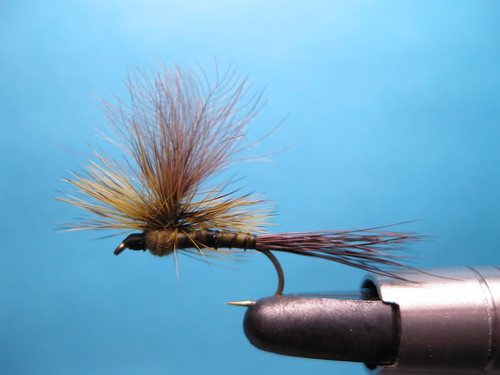
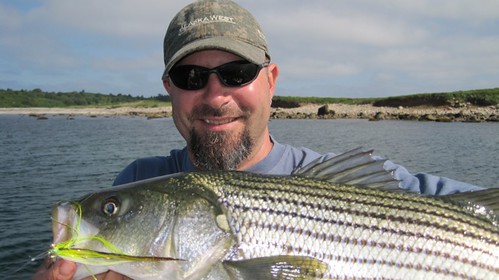
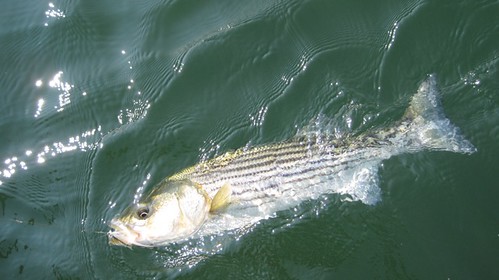
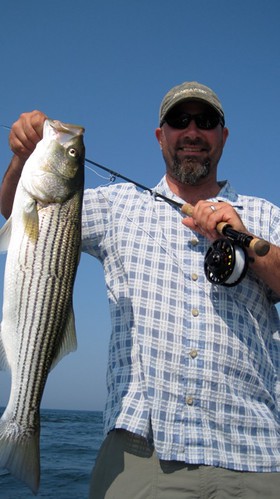
East Coast fish porn: Martha’s Vineyard Stripers on the fly

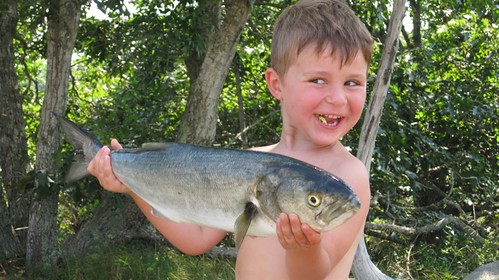
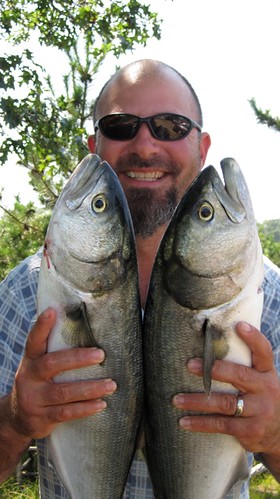
Rick Allen just sent us a new batch of photos from his annual trip to Martha’s Vineyard where he hooked up with some excellent saltwater fly fishing for stripers and bluefish.

Fly fishing for stripers

Fly fishing for stripers

Fly fishing for stripers

Fly fishing for stripers

Fly fishing for stripers

Fly fishing for stripers

Posted in Fishing Porn, Fly Fishing Travel | 1 Comment

Pacific Sharks on the fly: I think we’re going to need a bigger rod

There are days on the Oregon Coast that surprise and surpass all expectations. Where the seas actually behave and you have a chance to experience new and exciting fisheries as if you were not in one of the most dangerous fishing environments on the planet.

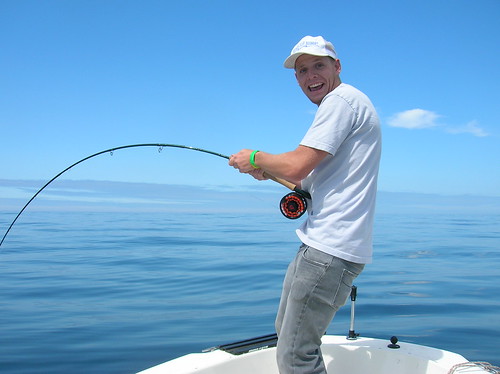
Stripping baitfish flies for Coho in the open ocean, my friend Cody and I hooked multiple fish and were busy experimenting with flies and retrieval rates. Conditions were perfect, and before long we were 10 miles offshore with an itch to explore further. After a call to the Coast Guard for a forecast, we decided to run out a few more miles.

We found BAIT! TONS AND TONS OF IT!

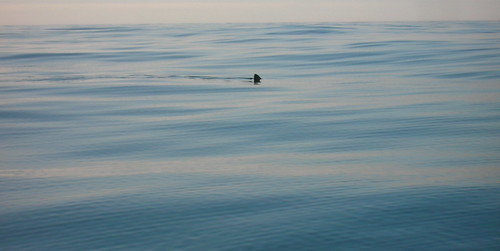
The water was still a cool 57 degrees, but the graph was full of fish and we knew we had to put out our gear and see what these marks might be. Soon after setting the gear, I noticed a big dorsal fin off the bow. Having a 12-weight BIIX ready to rock, we tossed out a monster bug in the path of the unsuspecting blue shark. He mauled the fly, but missed the hook completely!

Captn Nate's Offshore Adventures

Standing on the bow and searching the deep blue water we saw more fins. A lot more. And these were not blues, but salmon sharks. A mess of them! If you’ve never seen one, just imagine a small great white, around 200 pounds. These fish were tailing the surface while corralling schools of baitfish and we would intercept them and tossing red flies which were made to target pike in Canada. The sharks would pounce on the flies and proceed to abuse the line, leaders, and rods to an extent unmatched in my fishing experience.

DSCN1265

I think I need a bigger rod…

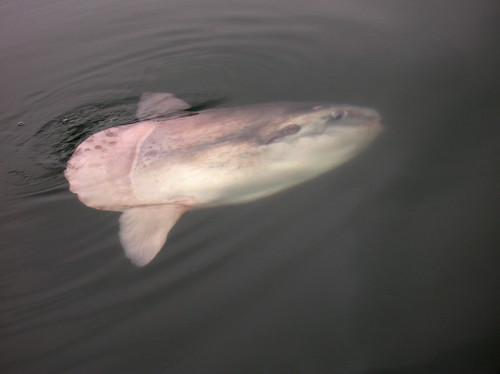
Check out the Ocean Sunfish, Mola mola.

Captn Nate's Offshore Adventures

-NS

Posted in Oregon Saltwater Fishing | 1 Comment

Tapered leader for steelhead: RioMax Plus Leader vs. Maxima

Product Review: RioMax Plus Leader

Check out the photos below. First one shows the leader and fly I fished this year, luring and releasing a beautiful 32”wild summer steelhead.

RioMax  Muddler

Also, note the second photo, showing the dreaded wind knot that was in the leader as I was playing my precious steelhead.

RioMax  Wind Knot

Fact is, fully 25% of the summer steelhead I have caught this summer using RioMax have had wind knots in them, with no fish broken off. How large a sample size. Ha ha, I ain’t tellin’. Point is, I believe that this leader is good stuff. My bias is that #12 RioMax (at .011) is a little smaller diameter than #10 Maxima Ultragreen (at .012), but is stronger. If so that is a terrifying possibility, because we all know that single strands of #10 Maxima are used for parachute cord by Navy Seals.

I have found that the RioMax ties well (I like to use a Uni-Loop-knot for most of my steelhead and salmon flies), is plenty tough, and is more supple than my old standby Maxima. As a result of my happy experience, I have switched over completely to using RioMax for my steelhead fishing. Next up, Chinook season. I will probably go with #12 fishing salmon, whereas I typically use #10 RioMax for summer steelhead and #6 for Sea-Run cutthroat.

For any of you readers who are not familiar with the term wind knot, see below.

Wind Knot
This is an unintended knot of questionable source in one’s fly leader. Traditional belief holds that the “wind” tied the knot in the leader, thus absolving the caster of any responsibility for the presence of the knot. These pesky little things can cost a fly angler the one steelhead or salmon they might hook each 3.7 years, so wind knots are dastardly things. A wind knot can be as elegant as an overhand knot or as complex as a triple-obverse-anticlockwise-multipicative-nutronium knot (see Birds Nest).

Any and all wind knots should be united or cut-out of a leader upon detection. New research suggests that Pogies may be responsible for 57% of all wind knots. Spey Casters find wind knots in their leaders on about every third cast.
JN

Posted in Fly Fishing Gear Review | Leave a comment

Upper McKenzie Walk and Wade

It’s August. It’s hot. It’s a great time to be fishing the upper McKenzie on foot! Caddis fly guide Barrett Christiansen took clients into some of the upper most portions of the McKenzie to score on late season natives. Fishing hopper dropper setups remained good through the hot, high sun periods. Look for shade in the canyon sections to maximize catch rates. Half down goldens, tungsten possie buggers,and mega princes seemed to be the ticket saturday. The day was highlighted by a beautiful 19 in rainbow on a dry fly at noon! If you are interested contact the Caddisfly to set up trips .–CD

DSC01029

DSC01039

DSC01037

DSC01035

Posted in Fishing Reports, McKenzie River | 1 Comment

Introducing Jay Nicholas’s fly fishing glossary

The Fly Fishers Glossary: Snippets From the Underbelly of Fly Fishing, Fly Tying, Fish Biology, Dusty old Facts, Hallucinations, and the Plain Truth as I know it.

Jay W. Nicholas

We’re fly fishers, right? We have our own language, our history, and God knows, our quirks. We are serious about this stuff, and we know that we are a bunch of silly idiots too. How on earth could a non-fly fisher ever begin to understand us, and the language we use to communicate? Crazy stuff. Practically unintelligible. Deep.

So I decided to begin writing the Fly Fisher’s Glossary – a barely serious, mostly silly, personal collection of completely or partly made-up definitions that provide insight on what just might be going on in the twisted brains of dedicated fly anglers. Here’s a special note, a request that the reader not take seriously any smart-alecky remarks that seem to disparage any specific products. I love and need each and every one of the products that earned mention here, even the Kevlar thread. Really

This is a work in progress, folks. It just seems to grow and expand. The glossary now stands at about a hundred and fifty terms, but it grows every time I sit down to edit the damn thing. Ultimately, I hope to collect the whole list and call it good. In the meantime, I wanted to share the glossary as it evolves.

About once a week, Matt Stansberry and I will be posting parts of the glossary on the Caddis Fly Blog, offering a perspective that you know in your hearts is true, but has rarely been formally expressed. This material is rough and still needs editing. However, in the spirit of getting-on-with-it because who knows how long any of us will be able to stick around, here goes.

JN

Alaska, Russia, Canada
Places where salmon and steelhead are actually caught more than once or twice a year. In contrast, see North Umpqua.

AFS
This is a Spey Fly line manufactured by Rio. AFS is short for Advanced Flight Spey. These are excellent fly lines best suited to casting rather small and/or light steelhead flies (i.e., no gi-mundo leeches). Also, these are best fished with a floating tip and a rather long leader, say, 1.5x rod length. These differ from Skagit Heads in that their mass and diameter is greatest near the back, tapering gradually to a relatively fine tip. These lines are yellow with an olive tip. Research has demonstrated that this line color produces superior catch rates on the Deschutes from August 17 – September 7 and on the Skeena from September 26 to October 9. See also Scandi.

Air Cell Supreme
Fly line manufactured by Scientific Anglers. Back in about 1962 or 63, I tied parachute flies for Norm Thompson’s Southwest Portland retail store. I charged them 35-cents per fly and they were tut-tutting at me because that was more than they paid for any other fly they sold at the time. I don’t remember how many dozen flies I tied, but I used every penny to purchase a Pflueger 1494 reel, a Phillipson six-foot, five weight glass rod, fifty yards of backing, a full box of a dozen green Gladding tapered 6X leaders, and a SA Ivory Air Cell Supreme fly line. I was in heaven. I went fishing on the Metolius and caught a mess of trout. Norm Thompson’s sold all the Parachutes in about fourteen seconds. Peter asked me to tie them up four-hundred dozen Parachutes so they could sell them through a catalog. I laughed and went back up to the Metolius to catch another mess of trout. I can remember those trout gliding up out of the deep blue, opening their mouths, and wondering what the hell was going on when I jerked my high-floating Parachute out of their open mouths before they could chomp it.

Anchor
Device, usually composed of toxic lead, purportedly intended to hold a boat in place selected by the boatman. Anchors commonly used with drift boats may be a variety of shapes including round cannonballs, triangular pyramids, complex astronomical representations, and likenesses of primitive deities.

Practical experience has proved that anchors do not, generally, hold a drift boat in place in areas where being held in place is desirable. On the contrary, these drift boat anchors only hold said boat in place in areas where being held in place is most highly undesirable, for example, in the middle of a Class IV rapids. See also anchor release.

Drift boat anchors come in two sizes: too-light and too-heavy. These weight classifications refer only to the likelihood of causing spinal injury when attempting to retrieve anchor via an anchor release. If given the opportunity, a smart angler chooses the too-light anchor. This is because all anchors, whether too-light or too-heavy, perform in a functionally identical manner in the river; so save yourself a smushed disc or a blob of your guts popping out through your belly button hole – go with the little anchor every time.

Alternate: The anchor is a term that refers to a section of Spey line, a Spey line tip, a Spey leader, or even a little tiny fly that is stuck in the water and provides what is referred to as an anchor that is purportedly essential as a platform from which to launch a Spey cast. Lifting said anchor up from the water’s surface before the Spey cast has been launched (see also chuck) is referred to as a case of premature anchor releasification. Such premature release of one’s anchor is not a good thing.

Anchor Release
This is a trick device installed in all drift boats. The advertised function of the device is to release an anchor when the boat is positioned in a desirable location to fish, eat lunch, pee over the side of the boat, or receive a cell phone call. In practice, the anchor release never functions as advertised. Here’s what happens: The oarsman maneuvers the boat to a desirable anchor location. The oarsman grasps the anchor rope, attempting to release the anchor. The anchor does not release. The oarsman pulls harder. The boat drifts towards the crashing surf, a waterfall, or the whirlpool at the edge of the known universe. About the time the oarsman gives up and tries to row away from danger, the anchor inexplicably releases and holds the boat directly in harm’s way.

Several manufacturers’ offer fundamentally different anchor release designs and each develops enticing glossy brochures regarding their respective virtues. Don’t believe any of it. As is the case of all anchors performing similarly regardless of weight, all anchor releases only release an anchor in the worst possible places.


Posted in Fly Fishing Glossary | Leave a comment

North Umpqua steelhead recon — after the fire

As most of you are already aware, the North Umpqua produced over a week of incredible dry fly fishing just as the Williams Creek Fire was getting started. Remember those cloudy, misty days a week or two ago? While you and I were shopping at the mall and mowing the yard, fly guides were wading lucky dudes and dudettes into amazing numbers of hot summers. All on top.

So what better time for me to plan a recon trip to the North Umpqua? It’s a guarantee that by the time a hot fishing report gets to us townies, it’s all over. And here I was arriving on the river as the east wind picked up and a heat wave was setting in. Stupid, right? But considering the fact that I never catch steelhead on the Umpqua, does it really matter when I go?

North Umpqua River Summer

I pulled into Idleyld Store for some cocktail ice and a few last-minute items. As I walked inside, a large caravan of personnel carriers eased into the parking lot. The vehicles were marked “Chief Mountain Hotshots.” Soot-covered firefighters poured out of the trucks, lighting cigarettes, pulling out their cell phones and looking relieved. It was Friday evening after two weeks of hard work.

“What’s the latest?” I asked one of the hotshots.

“The fire is out!” he grinned. “It’s dead, and we killed it! Now it’s back to Montana.” There were shouts all around the store as guys picked snacks off the racks. This place was about to run out of ice, beer and Marlboros. I thanked the fine gentlemen from Montana, handed over a twelve pack of Corona to show I meant it, and got out of there while I still could. More of the crew was still arriving as I headed up river.

I passed Rock Creek, then Baker Wayside, then Susan Creek. Just east of Susan Creek Campground a huge sign warned that there would be no parking along the highway for the next ten miles–all the way to Steamboat Inn. That ten miles includes many of the most hallowed steelhead runs on planet earth. The idea that nobody would be able to park and fish the river through a peak-season summer weekend was hard to believe. But thanks to a tip-off from Jason that morning, I had a mountain bike!

As I progressed up the road, fire damage became increasingly apparent. The area surrounding Frank and Jeanne’s house seemed to be hit the hardest. Their place was spared, but looking around the canyon as I drove, I saw lots of scorched cliffs and dead trees along the North rim. In several places the fire had burned right down to the highway. The smoke got heavier around the Williams Creek turnoff, then dissipated as I moved toward Steamboat Creek. At Mott Bridge the air was clear, my favorite campsite was open, and it was time to go fishing. A few minutes later I was wading out on Sawtooth, skating a funky Woolly Bugger with a hitch, and remembering how to throw my little 6-weight Dredger. I worked my fly until it was streaming along the lip of the tail out. The day was over, and in the low light I was rewarded by a show of flying spring chinook. They seemed to be celebrating. I felt my way back to shore and walked back to camp, fantasizing about a big springer grabbing my skater and towing me around the pool all night.

Dinner in summer steelhead camp can drag on into the wee hours. You roll into camp around 9:30pm, pop a beer, pour a little whisky, and compare notes. A few snacks come out, a lantern is lit, another beer is popped. Around 10:30pm the crew gets really hungry. Everyone digs through their coolers holding up suggestions. Nobody wants to make a decision. A mass of ingredients is heaped on the camp table, and the sauced chef torches it all until it can be flopped on flimsy paper plates, grabbed with grubby hands and consumed. Our Neanderthal cousins would be proud. And before you know it, it’s 1:00 in the morning. Who’s setting the alarm?

I started each new day swinging Millionaire’s, a beautiful pool just above Mott Bridge. The light didn’t hit the tail out until about 9:30am, so it fit well with my 7:30am wake-up schedule. Once the light was on the water, a trip to the top of the bridge proved that there were plenty of fish in the river. Saturday I counted twenty steelhead holding right under the bridge. They were fresh fish in a variety of sizes. We hung over them and drooled. But the next day there was only one fish.

Saturday afternoon we took a mid-day trip up Steamboat Creek to see Lee Spencer. Lee is a source of great inspiration and insight for Umpqua steelheaders, providing unrivaled observances and opinions on the subtleties of steelhead behavior. He has enjoyed a long career fly fishing the North Umpqua, and clearly loves to fish. But his years of devotion and contemplation have led him to a gentler kind of fishing–something I once hear coined as “pointless fishing.” He breaks the hooks off his flies. Somehow he has even managed to land fish using his hookless method. He is a special kind of fishing guru, and spending time in his camp, marveling at the hundreds of wild steelhead suspended below, is a gift.

That night, Jason and I rode our bikes into the no-parking zone. Fishing was super slow, but Jason did manage to find a player in a classic tail out. I showed up well into the session and witnessed four big grabs, but the rascal never stuck. And that was day one.

Day two ended without any grabs, boils or yanks. And we fished hard, covering water from Soda Springs all the way down to the bait water. At dark we headed for camp. I fried up a heap of Captain Nate’s killer rockfish fillets and we ate fish tacos, sipping Hamms from a can. Another year, another beatdown. No big whoop.

-RR

If you want to book a guided trip on the N. Umpqua, call the shop.

Posted in North Umpqua River Fishing Reports, Summer Steelhead | 1 Comment

Introducing: Lower Deschutes River swung fly steelhead maniac Jeff Hickman

We have a very unique river running through Central Oregon. You’ve heard of it. It begins high in the Cascades at Little Lava Lake, flows north through a series of reservoirs along the east side of the Cascades, carving through sage covered high desert on its way to the Columbia River. The confluence is just upstream of Celilo Falls, the ancient fishing site now buried by the Dalles Dam.

Of course, I’m talking about the famed Deschutes River. How is this river so unique? In many ways, but those I am most familiar with revolve around the steelhead fishing. The Deschutes is really, really good!

Jeff Hickman Deschutes Summer Steelhead

I work the lower Deschutes. I’m not talking about the entire 100 miles of river below Pelton dam. I’m talking about the lower, lower Deschutes. I spend the majority of my time fishing the 22 roadless miles from the river’s mouth upstream to Mack’s Canyon. I am a swung fly, steelhead maniac, and that’s how I ended up here. For those of us with the sickness, the lower Deschutes is probably the best place to be.

Jeff Hickman Deschutes Summer Steelhead

Our fish come in droves starting in early July and chrome bright fish continue strong through November. Your fly is likely to swing over more steelhead in this stretch of river than anywhere else in the lower 48. It also helps that this stretch of river has some of the sweetest swinging water on the planet. The lower section of the Deschutes is a funnel through which the entire Deschutes steelhead population must travel. But that’s just the beginning. Add to that the fact that thousands of stray steelhead from other Columbia tribs spend weeks or months in this section. The cool, oxygen rich, emerald green flow is too tempting for those upriver-bound steelhead to pass up. I think you may even have a better chance at catching a Clearwater River steelhead in the lower Deschutes than you do in Idaho. Those are the big boys we all have nightmares about. Swinging a fly in the lower Deschutes you never know what you’re going to find.

Jeff Hickman Deschutes Summer Steelhead

With no road access, the best option for accessing the lower river is a jet boat. This section has been called the “double black diamond” of jet boating. Let’s just say it’s not for kids. To fish this magic water you need a guide, and if swinging flies is your thing, there is only one show in town, Larimer Outfitters.

Jeff Hickman Deschutes Summer Steelhead

Deschutes Steelhead in Full Force

For me, the Deschutes steelhead season got started a month and a half ago during the first week of July. Nearly all of the early July fish were beautiful natives. All were chrome and hot as can be. Grey backs and mirrored silver sides. It is rare to see even a hint of pink on a gill plate that time of the year. If you missed early July on the Deschutes this season, you have my condolences. Fortunately there is still time for you to make it up to yourself. There are still three more months of incredible fishing ahead!

Jeff Hickman Deschutes Summer Steelhead

Our record-breaking heat wave of late July is behind us, and the Columbia cooled last week to relatively safe traveling temps for our cold water friends. Last week with the cool evening temps and splash of rain resulted in the largest numbers of steelhead passing Bonneville Dam EVER! Last Thursday alone the steelhead count for the day was 34,053. That is double the previous all-time record for steelhead in a single day!

Jeff Hickman Deschutes Summer Steelhead

Much of this big return can be accredited to Judge Redden’s mandated water spill through the Columbia/Snake dams to aid downstream migrating smolts three years ago. This is good news for us, but our Columbia steelhead crisis is far from over. Only around one third of the steelhead that have passed Bonneville so far this year were born in gravel. Yes, these man made fish are missing fins, genetically impure and quite expensive for the taxpayer to produce. So I am calling on you to do your part for conservation. Go swing those flies and bring home some fresh hatchery steelhead fillets!

See you on the water,

-Jeff Hickman,
Sierra Club Hunter/Angler Organizer
Steelhead Guide
Native Fish Society River Steward

Photos by Jeff Mishler

Posted in Central Oregon Fishing Report, Summer Steelhead | 7 Comments

Deschutes Steelhead fishing report

Numerous anglers have been reporting great Summer Steelhead fishing on the Deschutes.  Check out the fish counts on Aug 12,  28,314, then Aug 13   35,054. These are record breaking numbers for  Steelhead  counted over Bonneville Dam. Fishing should be great throughout the fall.

Fishing from Maupin to the mouth of the Columbia  should be outrageous this month. As we get later in the fall the fish will spread themselves out all the way up to Warm Springs and Pelton Dam. Use a floating line or a short sink tip  swinging the long runs the Deschutes is famous for. The Deschutes was built for Spey casting and the perfect river for using your lighter rods like the new Winston 12ft 6inch 6/7 BIIX.

Steelhead flies for the Deschutes lean more toward the classic side. Sparse, lighly dressed, and light in weight get these fish moving. Try Idly’s Postman, Silvey’s Pool Cleaner, Low Water Fierce Allegiance, Bennet’s Last light  and other similar patterns.

We have openings this Sept, Oct and the underrated November for multi day Deschutes River steelhead trips give us a call to discuss options.–CD

Posted in Eastern Oregon, Fishing Reports, Summer Steelhead | Leave a comment