East Coast fish porn: Martha’s Vineyard Stripers on the fly

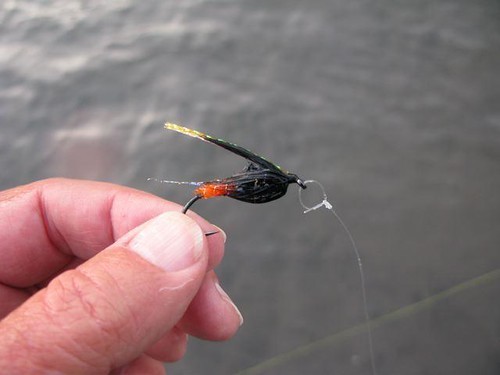
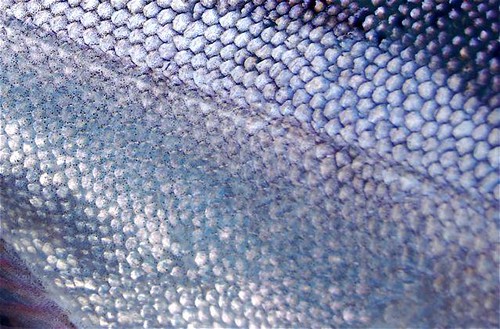
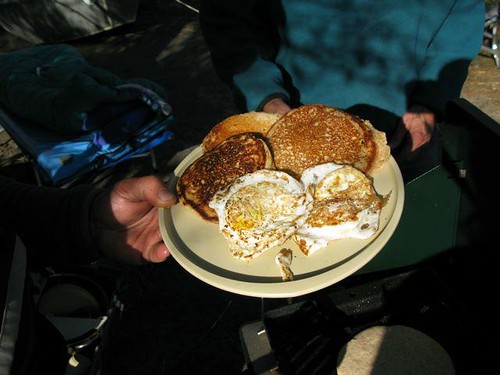
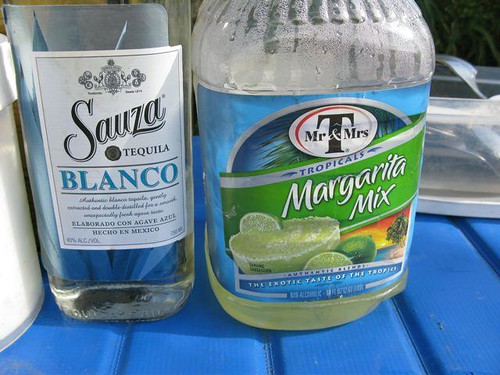
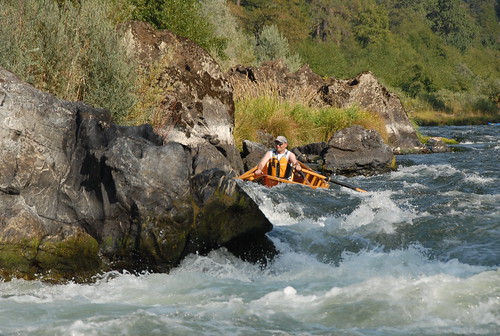
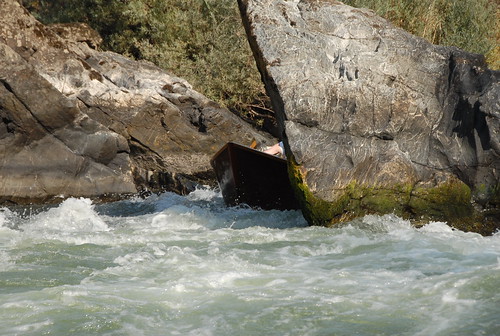
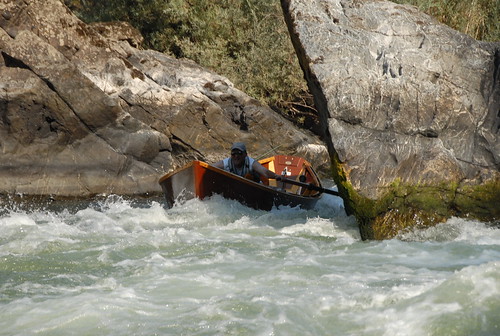
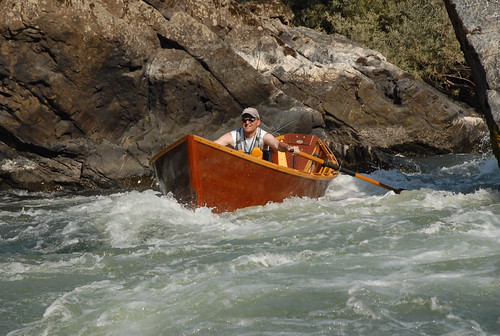
Rick Allen just sent us a new batch of photos from his annual trip to Martha’s Vineyard where he hooked up with some excellent saltwater fly fishing for stripers and bluefish.

Fly fishing for stripers

Fly fishing for stripers

Fly fishing for stripers

Fly fishing for stripers

Fly fishing for stripers

Fly fishing for stripers

Posted in Fishing Porn, Fly Fishing Travel | 1 Comment

Pacific Sharks on the fly: I think we’re going to need a bigger rod

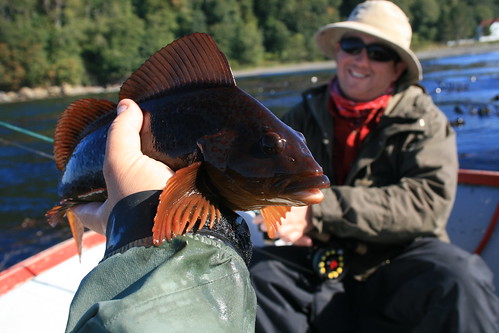
There are days on the Oregon Coast that surprise and surpass all expectations. Where the seas actually behave and you have a chance to experience new and exciting fisheries as if you were not in one of the most dangerous fishing environments on the planet.

Stripping baitfish flies for Coho in the open ocean, my friend Cody and I hooked multiple fish and were busy experimenting with flies and retrieval rates. Conditions were perfect, and before long we were 10 miles offshore with an itch to explore further. After a call to the Coast Guard for a forecast, we decided to run out a few more miles.

We found BAIT! TONS AND TONS OF IT!

The water was still a cool 57 degrees, but the graph was full of fish and we knew we had to put out our gear and see what these marks might be. Soon after setting the gear, I noticed a big dorsal fin off the bow. Having a 12-weight BIIX ready to rock, we tossed out a monster bug in the path of the unsuspecting blue shark. He mauled the fly, but missed the hook completely!

Captn Nate's Offshore Adventures

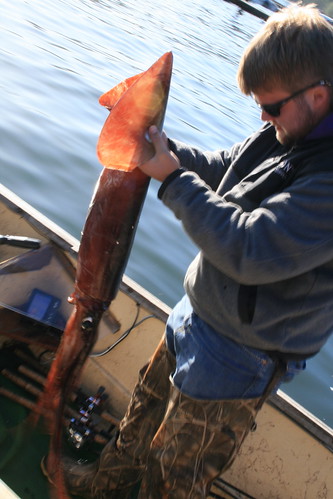
Standing on the bow and searching the deep blue water we saw more fins. A lot more. And these were not blues, but salmon sharks. A mess of them! If you’ve never seen one, just imagine a small great white, around 200 pounds. These fish were tailing the surface while corralling schools of baitfish and we would intercept them and tossing red flies which were made to target pike in Canada. The sharks would pounce on the flies and proceed to abuse the line, leaders, and rods to an extent unmatched in my fishing experience.

DSCN1265

I think I need a bigger rod…

Check out the Ocean Sunfish, Mola mola.

Captn Nate's Offshore Adventures

-NS

Posted in Oregon Saltwater Fishing | 1 Comment

Tapered leader for steelhead: RioMax Plus Leader vs. Maxima

Product Review: RioMax Plus Leader

Check out the photos below. First one shows the leader and fly I fished this year, luring and releasing a beautiful 32”wild summer steelhead.

RioMax  Muddler

Also, note the second photo, showing the dreaded wind knot that was in the leader as I was playing my precious steelhead.

RioMax  Wind Knot

Fact is, fully 25% of the summer steelhead I have caught this summer using RioMax have had wind knots in them, with no fish broken off. How large a sample size. Ha ha, I ain’t tellin’. Point is, I believe that this leader is good stuff. My bias is that #12 RioMax (at .011) is a little smaller diameter than #10 Maxima Ultragreen (at .012), but is stronger. If so that is a terrifying possibility, because we all know that single strands of #10 Maxima are used for parachute cord by Navy Seals.

I have found that the RioMax ties well (I like to use a Uni-Loop-knot for most of my steelhead and salmon flies), is plenty tough, and is more supple than my old standby Maxima. As a result of my happy experience, I have switched over completely to using RioMax for my steelhead fishing. Next up, Chinook season. I will probably go with #12 fishing salmon, whereas I typically use #10 RioMax for summer steelhead and #6 for Sea-Run cutthroat.

For any of you readers who are not familiar with the term wind knot, see below.

Wind Knot
This is an unintended knot of questionable source in one’s fly leader. Traditional belief holds that the “wind” tied the knot in the leader, thus absolving the caster of any responsibility for the presence of the knot. These pesky little things can cost a fly angler the one steelhead or salmon they might hook each 3.7 years, so wind knots are dastardly things. A wind knot can be as elegant as an overhand knot or as complex as a triple-obverse-anticlockwise-multipicative-nutronium knot (see Birds Nest).

Any and all wind knots should be united or cut-out of a leader upon detection. New research suggests that Pogies may be responsible for 57% of all wind knots. Spey Casters find wind knots in their leaders on about every third cast.
JN

Posted in Fly Fishing Gear Review | Leave a comment

Upper McKenzie Walk and Wade

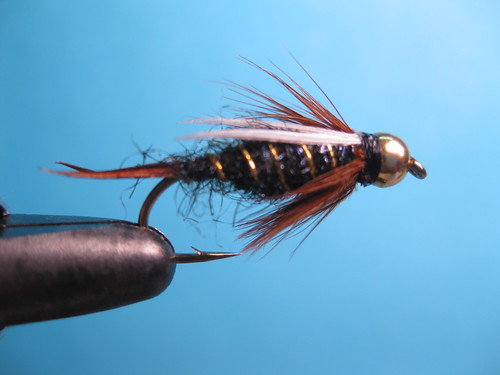
It’s August. It’s hot. It’s a great time to be fishing the upper McKenzie on foot! Caddis fly guide Barrett Christiansen took clients into some of the upper most portions of the McKenzie to score on late season natives. Fishing hopper dropper setups remained good through the hot, high sun periods. Look for shade in the canyon sections to maximize catch rates. Half down goldens, tungsten possie buggers,and mega princes seemed to be the ticket saturday. The day was highlighted by a beautiful 19 in rainbow on a dry fly at noon! If you are interested contact the Caddisfly to set up trips .–CD

DSC01029

DSC01039

DSC01037

DSC01035

Posted in Fishing Reports, McKenzie River | 1 Comment

Introducing Jay Nicholas’s fly fishing glossary

The Fly Fishers Glossary: Snippets From the Underbelly of Fly Fishing, Fly Tying, Fish Biology, Dusty old Facts, Hallucinations, and the Plain Truth as I know it.

Jay W. Nicholas

We’re fly fishers, right? We have our own language, our history, and God knows, our quirks. We are serious about this stuff, and we know that we are a bunch of silly idiots too. How on earth could a non-fly fisher ever begin to understand us, and the language we use to communicate? Crazy stuff. Practically unintelligible. Deep.

So I decided to begin writing the Fly Fisher’s Glossary – a barely serious, mostly silly, personal collection of completely or partly made-up definitions that provide insight on what just might be going on in the twisted brains of dedicated fly anglers. Here’s a special note, a request that the reader not take seriously any smart-alecky remarks that seem to disparage any specific products. I love and need each and every one of the products that earned mention here, even the Kevlar thread. Really

This is a work in progress, folks. It just seems to grow and expand. The glossary now stands at about a hundred and fifty terms, but it grows every time I sit down to edit the damn thing. Ultimately, I hope to collect the whole list and call it good. In the meantime, I wanted to share the glossary as it evolves.

About once a week, Matt Stansberry and I will be posting parts of the glossary on the Caddis Fly Blog, offering a perspective that you know in your hearts is true, but has rarely been formally expressed. This material is rough and still needs editing. However, in the spirit of getting-on-with-it because who knows how long any of us will be able to stick around, here goes.

JN

Alaska, Russia, Canada
Places where salmon and steelhead are actually caught more than once or twice a year. In contrast, see North Umpqua.

AFS
This is a Spey Fly line manufactured by Rio. AFS is short for Advanced Flight Spey. These are excellent fly lines best suited to casting rather small and/or light steelhead flies (i.e., no gi-mundo leeches). Also, these are best fished with a floating tip and a rather long leader, say, 1.5x rod length. These differ from Skagit Heads in that their mass and diameter is greatest near the back, tapering gradually to a relatively fine tip. These lines are yellow with an olive tip. Research has demonstrated that this line color produces superior catch rates on the Deschutes from August 17 – September 7 and on the Skeena from September 26 to October 9. See also Scandi.

Air Cell Supreme
Fly line manufactured by Scientific Anglers. Back in about 1962 or 63, I tied parachute flies for Norm Thompson’s Southwest Portland retail store. I charged them 35-cents per fly and they were tut-tutting at me because that was more than they paid for any other fly they sold at the time. I don’t remember how many dozen flies I tied, but I used every penny to purchase a Pflueger 1494 reel, a Phillipson six-foot, five weight glass rod, fifty yards of backing, a full box of a dozen green Gladding tapered 6X leaders, and a SA Ivory Air Cell Supreme fly line. I was in heaven. I went fishing on the Metolius and caught a mess of trout. Norm Thompson’s sold all the Parachutes in about fourteen seconds. Peter asked me to tie them up four-hundred dozen Parachutes so they could sell them through a catalog. I laughed and went back up to the Metolius to catch another mess of trout. I can remember those trout gliding up out of the deep blue, opening their mouths, and wondering what the hell was going on when I jerked my high-floating Parachute out of their open mouths before they could chomp it.

Anchor
Device, usually composed of toxic lead, purportedly intended to hold a boat in place selected by the boatman. Anchors commonly used with drift boats may be a variety of shapes including round cannonballs, triangular pyramids, complex astronomical representations, and likenesses of primitive deities.

Practical experience has proved that anchors do not, generally, hold a drift boat in place in areas where being held in place is desirable. On the contrary, these drift boat anchors only hold said boat in place in areas where being held in place is most highly undesirable, for example, in the middle of a Class IV rapids. See also anchor release.

Drift boat anchors come in two sizes: too-light and too-heavy. These weight classifications refer only to the likelihood of causing spinal injury when attempting to retrieve anchor via an anchor release. If given the opportunity, a smart angler chooses the too-light anchor. This is because all anchors, whether too-light or too-heavy, perform in a functionally identical manner in the river; so save yourself a smushed disc or a blob of your guts popping out through your belly button hole – go with the little anchor every time.

Alternate: The anchor is a term that refers to a section of Spey line, a Spey line tip, a Spey leader, or even a little tiny fly that is stuck in the water and provides what is referred to as an anchor that is purportedly essential as a platform from which to launch a Spey cast. Lifting said anchor up from the water’s surface before the Spey cast has been launched (see also chuck) is referred to as a case of premature anchor releasification. Such premature release of one’s anchor is not a good thing.

Anchor Release
This is a trick device installed in all drift boats. The advertised function of the device is to release an anchor when the boat is positioned in a desirable location to fish, eat lunch, pee over the side of the boat, or receive a cell phone call. In practice, the anchor release never functions as advertised. Here’s what happens: The oarsman maneuvers the boat to a desirable anchor location. The oarsman grasps the anchor rope, attempting to release the anchor. The anchor does not release. The oarsman pulls harder. The boat drifts towards the crashing surf, a waterfall, or the whirlpool at the edge of the known universe. About the time the oarsman gives up and tries to row away from danger, the anchor inexplicably releases and holds the boat directly in harm’s way.

Several manufacturers’ offer fundamentally different anchor release designs and each develops enticing glossy brochures regarding their respective virtues. Don’t believe any of it. As is the case of all anchors performing similarly regardless of weight, all anchor releases only release an anchor in the worst possible places.

Posted in Fly Fishing Glossary | Leave a comment

North Umpqua steelhead recon — after the fire

As most of you are already aware, the North Umpqua produced over a week of incredible dry fly fishing just as the Williams Creek Fire was getting started. Remember those cloudy, misty days a week or two ago? While you and I were shopping at the mall and mowing the yard, fly guides were wading lucky dudes and dudettes into amazing numbers of hot summers. All on top.

So what better time for me to plan a recon trip to the North Umpqua? It’s a guarantee that by the time a hot fishing report gets to us townies, it’s all over. And here I was arriving on the river as the east wind picked up and a heat wave was setting in. Stupid, right? But considering the fact that I never catch steelhead on the Umpqua, does it really matter when I go?

North Umpqua River Summer

I pulled into Idleyld Store for some cocktail ice and a few last-minute items. As I walked inside, a large caravan of personnel carriers eased into the parking lot. The vehicles were marked “Chief Mountain Hotshots.” Soot-covered firefighters poured out of the trucks, lighting cigarettes, pulling out their cell phones and looking relieved. It was Friday evening after two weeks of hard work.

“What’s the latest?” I asked one of the hotshots.

“The fire is out!” he grinned. “It’s dead, and we killed it! Now it’s back to Montana.” There were shouts all around the store as guys picked snacks off the racks. This place was about to run out of ice, beer and Marlboros. I thanked the fine gentlemen from Montana, handed over a twelve pack of Corona to show I meant it, and got out of there while I still could. More of the crew was still arriving as I headed up river.

I passed Rock Creek, then Baker Wayside, then Susan Creek. Just east of Susan Creek Campground a huge sign warned that there would be no parking along the highway for the next ten miles–all the way to Steamboat Inn. That ten miles includes many of the most hallowed steelhead runs on planet earth. The idea that nobody would be able to park and fish the river through a peak-season summer weekend was hard to believe. But thanks to a tip-off from Jason that morning, I had a mountain bike!

As I progressed up the road, fire damage became increasingly apparent. The area surrounding Frank and Jeanne’s house seemed to be hit the hardest. Their place was spared, but looking around the canyon as I drove, I saw lots of scorched cliffs and dead trees along the North rim. In several places the fire had burned right down to the highway. The smoke got heavier around the Williams Creek turnoff, then dissipated as I moved toward Steamboat Creek. At Mott Bridge the air was clear, my favorite campsite was open, and it was time to go fishing. A few minutes later I was wading out on Sawtooth, skating a funky Woolly Bugger with a hitch, and remembering how to throw my little 6-weight Dredger. I worked my fly until it was streaming along the lip of the tail out. The day was over, and in the low light I was rewarded by a show of flying spring chinook. They seemed to be celebrating. I felt my way back to shore and walked back to camp, fantasizing about a big springer grabbing my skater and towing me around the pool all night.

Dinner in summer steelhead camp can drag on into the wee hours. You roll into camp around 9:30pm, pop a beer, pour a little whisky, and compare notes. A few snacks come out, a lantern is lit, another beer is popped. Around 10:30pm the crew gets really hungry. Everyone digs through their coolers holding up suggestions. Nobody wants to make a decision. A mass of ingredients is heaped on the camp table, and the sauced chef torches it all until it can be flopped on flimsy paper plates, grabbed with grubby hands and consumed. Our Neanderthal cousins would be proud. And before you know it, it’s 1:00 in the morning. Who’s setting the alarm?

I started each new day swinging Millionaire’s, a beautiful pool just above Mott Bridge. The light didn’t hit the tail out until about 9:30am, so it fit well with my 7:30am wake-up schedule. Once the light was on the water, a trip to the top of the bridge proved that there were plenty of fish in the river. Saturday I counted twenty steelhead holding right under the bridge. They were fresh fish in a variety of sizes. We hung over them and drooled. But the next day there was only one fish.

Saturday afternoon we took a mid-day trip up Steamboat Creek to see Lee Spencer. Lee is a source of great inspiration and insight for Umpqua steelheaders, providing unrivaled observances and opinions on the subtleties of steelhead behavior. He has enjoyed a long career fly fishing the North Umpqua, and clearly loves to fish. But his years of devotion and contemplation have led him to a gentler kind of fishing–something I once hear coined as “pointless fishing.” He breaks the hooks off his flies. Somehow he has even managed to land fish using his hookless method. He is a special kind of fishing guru, and spending time in his camp, marveling at the hundreds of wild steelhead suspended below, is a gift.

That night, Jason and I rode our bikes into the no-parking zone. Fishing was super slow, but Jason did manage to find a player in a classic tail out. I showed up well into the session and witnessed four big grabs, but the rascal never stuck. And that was day one.

Day two ended without any grabs, boils or yanks. And we fished hard, covering water from Soda Springs all the way down to the bait water. At dark we headed for camp. I fried up a heap of Captain Nate’s killer rockfish fillets and we ate fish tacos, sipping Hamms from a can. Another year, another beatdown. No big whoop.

-RR

If you want to book a guided trip on the N. Umpqua, call the shop.

Posted in North Umpqua River Fishing Reports, Summer Steelhead | 1 Comment

Introducing: Lower Deschutes River swung fly steelhead maniac Jeff Hickman

We have a very unique river running through Central Oregon. You’ve heard of it. It begins high in the Cascades at Little Lava Lake, flows north through a series of reservoirs along the east side of the Cascades, carving through sage covered high desert on its way to the Columbia River. The confluence is just upstream of Celilo Falls, the ancient fishing site now buried by the Dalles Dam.

Of course, I’m talking about the famed Deschutes River. How is this river so unique? In many ways, but those I am most familiar with revolve around the steelhead fishing. The Deschutes is really, really good!

Jeff Hickman Deschutes Summer Steelhead

I work the lower Deschutes. I’m not talking about the entire 100 miles of river below Pelton dam. I’m talking about the lower, lower Deschutes. I spend the majority of my time fishing the 22 roadless miles from the river’s mouth upstream to Mack’s Canyon. I am a swung fly, steelhead maniac, and that’s how I ended up here. For those of us with the sickness, the lower Deschutes is probably the best place to be.

Jeff Hickman Deschutes Summer Steelhead

Our fish come in droves starting in early July and chrome bright fish continue strong through November. Your fly is likely to swing over more steelhead in this stretch of river than anywhere else in the lower 48. It also helps that this stretch of river has some of the sweetest swinging water on the planet. The lower section of the Deschutes is a funnel through which the entire Deschutes steelhead population must travel. But that’s just the beginning. Add to that the fact that thousands of stray steelhead from other Columbia tribs spend weeks or months in this section. The cool, oxygen rich, emerald green flow is too tempting for those upriver-bound steelhead to pass up. I think you may even have a better chance at catching a Clearwater River steelhead in the lower Deschutes than you do in Idaho. Those are the big boys we all have nightmares about. Swinging a fly in the lower Deschutes you never know what you’re going to find.

Jeff Hickman Deschutes Summer Steelhead

With no road access, the best option for accessing the lower river is a jet boat. This section has been called the “double black diamond” of jet boating. Let’s just say it’s not for kids. To fish this magic water you need a guide, and if swinging flies is your thing, there is only one show in town, Larimer Outfitters.

Jeff Hickman Deschutes Summer Steelhead

Deschutes Steelhead in Full Force

For me, the Deschutes steelhead season got started a month and a half ago during the first week of July. Nearly all of the early July fish were beautiful natives. All were chrome and hot as can be. Grey backs and mirrored silver sides. It is rare to see even a hint of pink on a gill plate that time of the year. If you missed early July on the Deschutes this season, you have my condolences. Fortunately there is still time for you to make it up to yourself. There are still three more months of incredible fishing ahead!

Jeff Hickman Deschutes Summer Steelhead

Our record-breaking heat wave of late July is behind us, and the Columbia cooled last week to relatively safe traveling temps for our cold water friends. Last week with the cool evening temps and splash of rain resulted in the largest numbers of steelhead passing Bonneville Dam EVER! Last Thursday alone the steelhead count for the day was 34,053. That is double the previous all-time record for steelhead in a single day!

Jeff Hickman Deschutes Summer Steelhead

Much of this big return can be accredited to Judge Redden’s mandated water spill through the Columbia/Snake dams to aid downstream migrating smolts three years ago. This is good news for us, but our Columbia steelhead crisis is far from over. Only around one third of the steelhead that have passed Bonneville so far this year were born in gravel. Yes, these man made fish are missing fins, genetically impure and quite expensive for the taxpayer to produce. So I am calling on you to do your part for conservation. Go swing those flies and bring home some fresh hatchery steelhead fillets!

See you on the water,

-Jeff Hickman,
Sierra Club Hunter/Angler Organizer
Steelhead Guide
Native Fish Society River Steward

Photos by Jeff Mishler

Posted in Central Oregon Fishing Report, Summer Steelhead | 7 Comments

Deschutes Steelhead fishing report

Numerous anglers have been reporting great Summer Steelhead fishing on the Deschutes.  Check out the fish counts on Aug 12,  28,314, then Aug 13   35,054. These are record breaking numbers for  Steelhead  counted over Bonneville Dam. Fishing should be great throughout the fall.

Fishing from Maupin to the mouth of the Columbia  should be outrageous this month. As we get later in the fall the fish will spread themselves out all the way up to Warm Springs and Pelton Dam. Use a floating line or a short sink tip  swinging the long runs the Deschutes is famous for. The Deschutes was built for Spey casting and the perfect river for using your lighter rods like the new Winston 12ft 6inch 6/7 BIIX.

Steelhead flies for the Deschutes lean more toward the classic side. Sparse, lighly dressed, and light in weight get these fish moving. Try Idly’s Postman, Silvey’s Pool Cleaner, Low Water Fierce Allegiance, Bennet’s Last light  and other similar patterns.

We have openings this Sept, Oct and the underrated November for multi day Deschutes River steelhead trips give us a call to discuss options.–CD

Posted in Eastern Oregon, Fishing Reports, Summer Steelhead | Leave a comment

Help support the Devil’s Staircase wilderness

Earlier this summer, . DeFazio (D-OR) and Sen. Wyden (D-OR) introduced companion bills, H.R. 2888 and S. 1272, designating the 29,650-acre Devil’s Staircase Wilderness, protecting a large section of the Smith River tributary Wassen Creek. The watershed supports wild coho, Chinook, steelhead and sea-run and resident cutts. Check out the video below.

Devil’s Staircase from Cascadia Wildlands on Vimeo.

This is one gnarly section of coast range old growth. Three times this summer already, rescue crews have gone looking for hikers that have tried to find their way in and out of this area. From the recent article:

The Devils Staircase area has no developed trails into the falls and most roads are not signed. All search missions have been due to people over estimating their ability to get in and out of the area in one day.

The Douglas County Sheriff’s Office advises hikers who visit this area that it may take an overnight trip to complete the route; that GPS units do not work very well in the area due to heavy timber and steep canyons; there are no developed trails; and people need to be prepared for an overnight stay and be well equipped and experienced in land navigation.

Cascadia Wildlands is raising money to make sure this legislation gets passed. You can donate here.

Posted in Oregon Conservation News | 3 Comments

Prince nymph variation fly tying video: Ice dub prince

This variation of the classic Prince Nymph uses Ice Dub from Hareline Dubbin and is a great pattern for imitating green drake nymphs in the Willamette Valley, McKenzie River region of Oregon.

IMG_1754

Ice Dub Prince
Hook: TMC 5262 Size 6-10
Thread: 6/0 unithread
Bead: 3/16 gold bead
Weight: .025 lead
Tail: Brown biot
Rib: Small oval gold tinsel
Body: Ice Dub — olive and peacock
Wing case: White biot
Hackle: Brown hen

Posted in Fly Tying | 3 Comments

Barrett’s Pelagic Baitfish: Bluewater streamer for Oregon Albacore

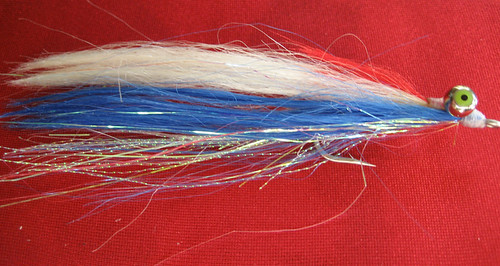
In this new fly tying video, check out Barrett’s Pelagic Baitfish, a great pattern for offshore saltwater fly fishing. This fly has all the action to imitate a variety of pelagic baitfish — match the bait with different sizes and colors.

Barrett’s Pelagic Baitfish: Fly tying video from Matt Stansberry on Vimeo.

IMG_1755

Barrett’s Pelagic Baitfish
Hook: 3/0 SC152H Gamakatsu
Thread: 6/0 Unithread
Tail: White Bucktail
Flash: Pearl and Silver Flashabou
Body: Flat holographic silver braid
Wing: White bucktail, Blue Bucktail, UV Herring-back
Throat: White bucktail
Eye: 3/8 Mirage Eye
Head: Epoxy

Use the Flex Coat Cordless Big Wheel epoxy fly turner from Hareline to turn your epoxy heads.

Posted in Fly Tying, Oregon Saltwater Fishing | 1 Comment

The Strange Case of the Mystery Hatch

Arlen Thomason lives on the McKenzie River and is  the author of BugWater, scheduled for release by Stackpole Books in January. Oregon Fly Fishing Blog thanks Arlen very much for this discussion of a very underrated emergence. We look forward to the release of Bugwater. Arlen’s photographs and “angler perspective” of aquatic insects will make Bugwater a must have reference.

Come walk with me now, down to the shores of our local river. I’m going to show you some clues left there for us by a mysterious denizen of its flowing waters. Let’s see if you can identify the creature that left this calling card.

Mystery_Hatch-01
Mystery bug shuck

You get partial credit if you said “stonefly.” But what kind of stonefly? It’s a big one—with a body length up to about 1.5 inches. Golden stonefly, perhaps you say? Close, but no cigar. It does belong to the same family, though—Perlidae—and it bears a strong family resemblance.

The hatch started on south Willamette Valley rivers several weeks ago, about mid-July, and will continue off and on through September and into October in the upper reaches of some streams. Observant fly fishers will have noticed the nymphal shucks, like the ones in the picture above, on half-submerged rocks along the banks of the McKenzie and Willamette rivers lately. But the great majority of anglers have no idea that a hatch of big stoneflies is underway locally, nor have they ever heard its name—neither the official scientific designation, Claassenia sabulosa, nor the “common name” of shortwing stonefly. What’s more, you will rarely see a magazine article about it, nor is it even mentioned in most fly fishing books.

 
Yet shortwing stoneflies are found all across the western states, with the highest numbers in certain rivers of Idaho, Montana, and Wyoming. Most larger rivers in Oregon and the Pacific Northwest contain at least decent populations. The McKenzie has moderate numbers in its lower reaches, increasing as you proceed upstream. Every fall I run into adult shortwings above McKenzie Bridge. Adults are only occasionally observed below Leaburg, not only because they are less abundant, but mostly because of their rather secretive daytime habits. Nymphs, on the other hand, are rather easy to find—if you know where to look—in most sections of the McKenzie and southern Willamette. The places to look to find the greatest numbers of these bugs are riffles with cobble predominantly in the range of 3-6 inches in diameter.

Mystery_Hatch-02
Shortwing stonefly nymph

You may be thinking that this looks an awful lot like a golden stonefly nymph, and indeed it does. Here’s how you can tell the difference. We have two species of golden stoneflies locally—the “true” golden stonefly, Hesperoperla pacifica, and the western stonefly, Calineuria californica. They hatch at the same time—late spring to early summer—in mostly the same places, and are both called goldens by nearly everyone. H. pacifica is a little larger, and the adult is slightly different in color (along the yellow-to-orange spectrum) than C. californica. (Note that the bugs in the photo below are not dead, just chilled to inhibit their tendency to scamper off the photo set.)

Mystery_Hatch-03
Golden stonefly adults

The nymphs of both kinds of golden stoneflies have light-colored, feathery gills at the base of each leg; while lacking gills along the abdomen. H. pacifica nymphs have an additional pair between the tails, and that’s how you can easily tell them apart.

Mystery_Hatch-04
Golden stonefly C. californica nymph: no gills between tails

Mystery_Hatch-05
Golden stonefly H. pacifica nymph: gills between tails, hourglass on head

But if you carefully check the photo above of the shortwing stonefly nymph, you’ll see that it also has a pair of light gills between the tails, just like H. pacifica. So how do you distinguish a shortwing stonefly nymph from a golden stonefly H. pacifica nymph? By the marks on their heads. An H. pacifica nymph has a white mark shaped like an hourglass on top of its head. The mark in the same position on a shortwing stonefly nymph is in the shape of the letter W—or an M, depending on the angle you view it.

Mystery_Hatch-06
The “W” on the head of a shortwing stonefly nymph

Luckily for us, when the shortwing stonefly hatches, it leaves behind that tell-tale W / M insignia on its nymphal shuck. If you look back at the shuck in the first photo of this article, and squint a little, you should be able to see it there. So now whenever you’re out on the river and you spot big stonefly shucks bearing that mark, you’ll know that shortwing adults are out and about, prowling the banks.

 
But where are they? Unless they are really plentiful, you may not see any adults, or just a few. That’s because they don’t fly around like golden stoneflies, for the most part they don’t climb vegetation, and they are mainly nocturnal. During the day, they hide under stones along the banks.

 
So what do adult shortwing stoneflies look like? Females are about the same size as—or slightly larger than—golden stoneflies, and have a similar shape. But the color is different—they are brown to gray above, and light tan on the bottom.

Mystery_Hatch-07
Adult female shortwing stonefly

When you turn one over and look at its ventral side is when you’ll really appreciate the difference from golden stoneflies.

Mystery_Hatch-08
Adult female shortwing stonefly, ventral view

Notice that the wings of the female extend well past the posterior of the abdomen, just like a golden stonefly. Now let’s take a look at a male shortwing adult, which has a body length only about 2/3 that of a female.

Mystery_Hatch-09
Adult male shortwing stonefly, a few hours after hatching

Now you can finally see where this bug gets its common name. The wings of male shortwing stoneflies are strangely stunted, extending only about half way down their abdomens. As a result, males can’t fly. Female shortwings can fly, but they rarely do. But both sexes can run like the dickens. Not only on land, but across the water surface. As you can imagine, a big bug like that skittering across the water is going to drive fish mad.

 
Your best chance of seeing adult shortwings is at dusk and a few hours immediately following. The best places? Those same spots where you found the discarded nymphal shucks. Adults that have been on land a while will be running around looking for mates, especially the males. Females run out on the water to lay eggs, and males will scamper across the water from rock to rock seeking females. Newly arriving nymphs will be crawling out of the water to hatch. They never go far, like some stoneflies do, before starting to emerge. Often, they hatch when the nymph is half in and half out of the water.

 
When you go looking, arrive near dusk, and bring a flashlight. If you’re lucky, you might see something like this.

Mystery_Hatch-10
Hatching female shortwing stonefly, and a visitor

This hatching female has so far pulled herself only half out of the nymphal shuck. But the waiting male is overanxious, and has already climbed on her back. Shortwing stoneflies are known to be exceptionally libidinous, for whatever reason. As soon as her abdomen is exposed, he will mate with her. He may stay and guard her from other males, mating with her repeatedly. Or he may go off looking for other females. Real playboys, these guys.

 
Notice how pale—actually quite yellow—the emerging female is. Both sexes look like this at first, then gradually darken over the next few hours after hatching. Males generally hatch first, then patrol the shoreline waiting for the females. That’s why the male on her back is considerably darker, because he hatched earlier, possibly even on a previous night.

 
When adult shortwing stoneflies are around, trout know it. They may see them mainly just before dark, but they seem to remember them all day long. In places where these bugs are really thick, like the South Fork of the Snake in Wyoming and eastern Idaho, big stonefly dry flies are prime producers during the shortwing season. And the great thing about the shortwing season is that it is so long, lasting several months. In that region, a favorite fly during late summer and fall is the big foam Chernobyl Ant. With its realistic stonefly silhouette and wiggly rubber legs, trout really smash it.

Mystery_Hatch-11
Size 6 Chernobyl Ant

You don’t see many anglers in western Oregon employing that pattern, but I can attest that it works here too when the shortwings are hatching.

Mystery_Hatch-12
Upper McKenzie native redside that fell for a shortwing stone imitation

So give it a shot. You just may find that fishing the hatch of the strange bug with the mysterious habits that no one knows about can pay off.

Posted in Oregon Fly Fishing Tips | 10 Comments

Trout Unlimited Meeting Tonight: 8/12/09

Tonight our local Trout Unlimited Chapter will be holding our monthly meeting at the Eagle’s Aerie off Irving Road in north Eugene at 7:00. Joining us will be Doug Larson, Fish Biologist for the Willamette National Forest Middle Fork Ranger District. Doug will be speaking on the District’s joint project with Trout Unlimited to restore Bull Trout to the Upper Middle Fork Willamette. So far, those efforts have been succesful. Bull Trout have now been documented spawing above Hills Creek reservoir for the first time since 1964.

Everyone is invited to attend–even if you aren’t an official Trout Unlimited member. Hope to see you there!

Posted in Oregon Fly Fishing Clubs and Events | 1 Comment

Light cahill wet — fly tying video

This fly tying video shows one of the great mid-summer patterns for fly fishing in the Willamette Valley. Check out Karl’s Light Cahill Wet fly — easy to tie, deadly on fish.

Karl's Wet Light Cahill

Light Cahill Wet:
Hook: Size 14-18 TMC 101
Thread: 8/0 Light Cahill Uni-Thread
Tail: Wood duck flank or dyed mallard
Body: Hareline Dubbin, Light Cahill or cream color
Hackle: Ginger hackle
Wing: Wood duck flank or substitute

Posted in Fly Tying | Leave a comment

Northwest Steelheaders forming Central Oregon Chapter — FREE BEER

If you’re in the Bend Area on Thursday August 13th, stop by the Deschutes Brewery and check out the launch of the Central Oregon Chapter of the Northwest Steelheaders. Festivities begin at 5:30pm. The door prize is one day fishing and lodging on Idaho’s Clearwater River. RSVP: Call Sharon Schaub at 503-653-4176 or E-mail sschaub@anws.org.

Northwest Steelheaders Logo

Posted in Oregon Fly Fishing Clubs and Events | Leave a comment