Eastern Oregon Gold: Oregon’s Isolated Population of Native Westslope Cutthroat Trout

If someone told you that Oregon had three native species of cutthroat trout you may be surprised. Many people are only familiar with Oregon’s Coastal Cutthroat trout. These fish can be subdivided into two populations: resident fish that never leave their natal streams/drainages, and sea-run fish that have an anadromous life story much like a salmon and steelhead spending some time in the ocean feeding and growing. Eastern Oregon also has a small population of Lahontan Cutthroat Trout, just like the brutes in Pyramid lake. The third Cutthroat is one that is famous here in the West, but generally Oregon doesn’t come to mind when this fish is mentioned. The Westslope Cutthroat trout, once widely regarded as the most abundant Cutthroat in the West, is isolated to a small portion of a drainage in Eastern Oregon.

Nick stealthily reaches around a corner on a spring fed creek containing John Day Westslope Cutthroat Trout

The Oregon Westslope Cutthroat is a isolated to the upper reaches of the John Day Basin. It is not entirely clear how these fish got here, but one theory states that they could have been isolated/deposited by the Missoula floods. The same holds true for the population in the Yakima basin North of us in Washington which is totally isolated in a similar fashion. Our Westslopes share the upper basin with native Columbia Basin Redband Trout, Bull Trout, as well as non-native invasive Brook Trout. The John Day Westslope Cutthroat trout has a caramel/olive colored appearance. Spotting on the fish is largely concentrated towards the rear of the body, and the belly is generally devoid of spots. They have the telltale Cutthroat scarlet colored “slash” under their gills. They can occasionally feature a rosy colored belly and cheeks as well.

The Oregon Westslope Cutthroat generally do not get as large as their “out of state” cousins.

Much of the middle and lower John Day get far too warm to sustain trout populations, and it is best known as a smallmouth fishery. The Westslopes are found in the upper portion of the basin, especially spring fed tributaries. Fish will move through the system and overwinter lower down. They can be especially difficult to find in the lower months because the floor of the basin is largely privately owned for grazing, residences, farming, etc. In the summer months, these fish can be found in the headwaters and tributaries where they can find shade and cold water in closer proximity to springheads.

Here you can see the scarlet telltale Cutthroat “Slash” on the underside of the jaw.

Nick and I ventured out to catch these fish some weeks ago. It was a trip I have done several years before, but was new for him. I had done my research along with a friend and we went in with a list of tributaries that should hold these fish. That first trip was filled with mapping to several dry creek beds and lots of driving. Towards the end of the trip we had found them, so I had a rough idea of where to go. This time I was more excited to explore some other tributaries in the area.

A meandering spring creek lazily bounces back and forth creating deep holds for the fish along its banks.

These fish live primarily in spring fed tributaries at the top of the John Day basin. You will find everything from rolling meadows with undercut banks to tight brushy forest with lots of shade. Generally the gradient is low, so the stream meanders slowly back and forth creating deeper sections in the corners of the creek. Parts of the upper drainage might look “messy” and difficult to fish, but the logs, stumps, and other debris in the river provides great habitat for these fish.

Water like this is hard to fish, but provides great habitat for trout of all ages, as well as shelter from predators and anglers alike.

Generally in my experience, as you work your way up first you will bump into native Columbia Basin Redband Trout. These fish live alongside the Westslopes and naturally, there is some hybridization. Eventually you will bump into some Cutbows, and if you keep moving higher you will find the more pure looking Westslopes. This is largely dependent on the portion of the river or what tributary you are in. In my experience, I found the Westslopes in the cooler water with deeper undercut banks and what looked to be better habitat suited for growing larger fish. There would be some intermingled small Redbands in this section, but by the size of the Westslopes, it seems like they generally outcompete the Redbands given the right habitat.

The heavy spotting, red lateral line, and unspotted tail are ways to differentiate Columbia Basin Redbands from Westslopes. If you were to flip this fish, it likely would not have had a slash under its jaw.

Because it is generally easier to find these fish in the warmer months, water temperature is something that you should be mindful of. Carrying a thermometer is a must when pursuing these sensitive fish. Much of the system is spring fed in the upper reaches, but you should still be cognizant. The day Nick and I fished it was 98 degrees out, but the water we isolated our fishing to hovered around 56 and never broke 60. The warmer sections that got more light, were shallower, or lower in the system were devoid of trout. If they were in those portions, they definitely didn’t want to eat; if they did, we would risk harming a vulnerable fish population.

Keeping these fish wet when observing them is one way to keep them safe. Also carrying a thermometer can help you reduce harm to these fish.

The cold water in the upper stretches of the drainage is prime habitat for native Bull Trout. You may see these fish, and even have one come after a fly. We urge you to leave these fish alone because their population is even more at risk than their Westslope and Redband neighbors that they share the creek with. The system is unsuitable in the lower stretches, so adult Bull Trout do not have space to migrate as they’d like to. Another concerning threat to the native Bulls is the presence of Brook Trout in the system. They both are members of the Char family, meaning they can hybridize. This generally creates sterile offspring and reduces the amount of spawning adults. Brook Trout in the West, when present, generally overpopulate a stream and have a high density of small adults in the system. This creates an issue of food competition and ravenous brook trout eating native fry. When fishing delicate systems like this if you want to take a fish, make it a brook trout. That way you get a small meal and can help the overall health of the stream. See the figure below of how to discern native Bull Trout from invasive Brook Trout; to an untrained eye, they can look similar. If you do happen to catch a native Bull Trout please keep it wet, handle it as little as you can, and reflect on the special fish that you just caught upon releasing it. If you can’t properly ID it remember: “If you don’t know, let it go”.

If you don’t know, let it go.

Any rod from a 2wt to a 5wt is sufficient to catch these fish. I was using an 8’6 3wt Winston Air 2 and Nick used a 9″ 4wt G. Loomis IMX Pro v2. A standard floating line is ample to fish the streams in the area, we both fished a Scientific Anglers Amplitude Infinity Textured Line, a shop favorite. Nick and I primarily had all of our action on dries, but had a few fish take a small lightly weighted dropper below a bushier dry. Terrestrial insects such as grasshoppers, crickets, ants, beetles, etc. make up the bulk of these fishes diet in the summer. I had better luck getting fish to eat using 5x to my dry and my trailing nymph would be off 6x tippet. Here are some dries that worked great for us: Mason’s Wingman Ant, Fat Angie, Dry Humper, Elk Hair Caddis Tan, or a Carlson’s Purple Haze. Here are some nymphs: Zebra Midge, Galloup’s Peacock Hares Ear #18, or a Juju Baetis. In the warmer months, there’s generally no need for waders. A good rubber coated small net, is important to have. A rubber coated net is especially important for these fish which need all the gentle handling that they can get. Lastly, a good thermometer is a crucial piece of equipment when chasing Oregon’s Westslopes.

Fish like these are keyed in to taking dries most of the summer.

These fish are part of a very sensitive population that are entirely isolated to the upper John Day Basin, meaning they have nowhere else to go. Several populations have depressed fish counts, so if you decide to pursue this special fish please use caution. Their largest threats include: warming waters, drought, grazing, farming, wildfires, human development, irrigation, and invasive Brook Trout. Several of the creeks I visited on my first trip years ago in a burn area were entirely dried up. Fish may have been higher in the system, but stressing those fish out even more is not something I wanted to do. Visiting the Upper John Day basin in search of Oregon’s only Westslopes is a special experience, and will give you respect for a resilient species in the face of all odds. Again, if you choose to pursue these fish in their home, please do it respectfully.

Pastures for grazing are not an uncommon sight when working your way up a tributary in search of colder water, and better habitat.

Nick’s thoughts on the trip: “The waters that these fish live in are part of such of a pristine ecosystem. It is amazing to be in their home and have the chance to catch these special trout in such a beautiful place. I would definitely recommend other people to get out there and track down some of Oregon’s unique trout species and have the opportunity to experience all of their different environments.”

Some of the smaller Westslopes are the most beautiful, still sporting their juvenile parr marks.

If you have any questions on the matter, please reach out to the shop, we are happy to help you out. Tracking down Oregon’s native trout will take you to some beautiful places, and give you an appreciation for the fish and places we are so lucky to have in our backyard.

-Simon

Posted in Eastern Oregon, Fishing Porn, Fly Fishing Glossary, Oregon Fly Fishing Tips, Uncategorized | Tagged , , , , , , , , , , , , , , | 1 Comment

Summer Small Stream Tactics With Simon and Nick

In this video, Simon and Nick venture up into the mountains to fish a small freestone stream. Hot weather and wildfires have them searching out cold, shaded tributaries for small native trout. This helps give the trout in the warmer portions of our rivers a much needed break this time of year. The stream they fish is packed with beautiful wild Rainbows and Coastal Cutthroat Trout willing to cooperate and come up for dry flies. What these fish lack in size, they make up for in their beautiful markings. Exploring small creeks like these give you respect for the water and the wild fish that inhabit them. A day of tromping your way through a small stream will give you a reminder of the many things fly fishing is all about. Simon and Nick work through some small stream tactics that they’ve learned over the years that serve them on smaller waters and will help you on yours. This is the time of year to bring out your lighter weight rods and explore that small creek you’ve been meaning to check out. You’ll be surprised what you may run into, and if you pay attention close, you’ll always learn something new spending your day exploring a small creek.

Posted in Fishing Reports, Oregon fly fishing links, Oregon Fly Fishing Tips | Leave a comment

Fly of the Week: Charlie Craven’s Fat Angie

This fly was developed initially by the famed fly tier Charlie Craven and is now tied commercially by Umpqua. Whether you are on a small spring creek, high alpine lake, small freestone stream, or near the brushy banks of a large river, the Fat Angie is a fly that will not disappoint. The fly comes in two distinct sizes “standard” and “big“. This is one of those flies that is truly irresistible to trout; I’ve caught countless trout in many states on this fly and even have caught a rogue largemouth on it. This article will cover the fly’s design, why we like it in the shop, and how we like to fish it.

The brushy banks of the spring creeks in the Driftless Area are a match made in heaven for the Fat Angie.

One of the most important aspects of this fly lies in the hook it is tied on. The fly is built on a curved hook, this allows the rear end of the fly to sit in the water. This is suggestive of a natural insect struggling to stay afloat. Dropping the rear of a fly into the water can be especially helpful when fooling fish in spring creeks or high lakes. These fish have more time to inspect your offering before deciding whether or not they want to eat it. The body of this fly is made up of dubbing and foam and is tied slim in its profile. This stands in stark contrast to its large synthetic wing which it gets the bulk of its buoyancy from. Below that big wing the abdomen of the fly will sit naturally in the film, and the rubber legs will highlight the fact that this insect is indeed struggling on the surface. A few wraps of hackle towards the head help provide additional buoyancy; it is clipped on the bottom to help the fly ride lower. The Big Fat Angie has a second wing making it an awesome dry for summer dry-dropper setups.

Smaller tributaries of the Cascades are a great place right now to take your Fat Angies on a test drive and find cooler water during the summer.

Although this fly is an attractor at heart, I consider this fly more of a terrestrial pattern. It could be a cricket, an ant, a beetle, or a young grasshopper. Last year around the small spring creeks of the Driftless area in the Midwest, there were loads of tan young grasshoppers. When I was visiting, the Cinnamon Fat Angie in a 14 was perfect, and it was one of my favorite single searching flies there. The large wing is also plenty buoyant to allow you to run a small nymph below this fly. On smaller streams in the summer, a large portion of trout’s diets consist of land based “terrestrial” insects. When fishing the upper stretches of the Werner Basin for the Werner Basin Redband Trout, this fly was irresistible to those fish whose favorite snacks are stray ants, beetles, crickets, and small hoppers that end up in the creek. On streams like these is where the Fat Angie really excels. It also can replace virtually any attractor style fly as long as fish are looking up.

These Werner Basin Redband Trout couldn’t get enough of the Fat Angie.

When fishing this fly on a spring creek, I will cast it towards the brushy bank with the seam on it. Ideally, I will have the fly land along the bank, or just in the grass. One small strip will have the Fat Angie falling off streamside foliage just like a real insect. Below is a picture of a brown trout that was fooled by a #14 Purple Fat Angie in just that fashion. On high lakes, look for logs or other structure that insects might fall off of into the lake. When using this fly to search on small freestone streams, I like to present it with a small splash in likely holding water. This again will drive the point home that the insect accidentally fell into the water. The Fat Angie with its large wing does a great job of making a natural looking wake when it falls. Tiny strips too can mimic the insect attempting to fly off the surface as the Angie’s large wing pushes small ripples of water. When searching larger rivers where fish are keyed in on top, try tagging a small Fat Angie behind a large attractor fly, this will help you keep track of it. Also searching with a Big Fat Angie and a nymph dropped below is a great way to search on the surface and underwater simultaneously.

This brown was holding in an undercut bank and rose to a purple Fat Angie being ticked along the grassy bank.

This fly has been a big hit in past years and already this summer in the shop. For me personally this fly smashed last month all around Northern California on the Upper Sacramento and Mccloud. I’ve fished this fly locally on our home waters the Willamette and Mckenzie, and this fly has served me well up in Washington and on spring creeks in Wisconsin. Long story short, I always have a few in my box! We have a wide variety of Fat Angies to choose from, and know you can find one to fit your needs. Our Standard Fat Angies are size 14 and come in purple, black, and cinnamon. The Big Fat Angies are size #8 and come in black and purple. Swing by the shop and check them out, or shop online for them here.

Have fun out there,

-Simon

Posted in Eastern Oregon, McKenzie River, Middle Fork Willamette River fishing, Oregon Fly Fishing Tips, Oregon High Lakes, Stillwater Fishing, Uncategorized | Tagged , , , , , , , , , , , , , , , , , , , , , , , | Leave a comment

The Campfire’s Edge Podcast

Check out this new podcast featuring stories from hunters and anglers about paranormal encounters in the wild, called The Campfire’s Edge, cohosted by blog-contributor Matt Stansberry and Sarah Rose.

The first four episodes are live now, including an interview w/ Captain Nate Stansberry about his death-defying experiences fishing the Oregon Coast.

The show asks: What happens when people paying close attention to nature encounter the anomalous? How does a paranormal or spiritual experience change a person’s relationship with the landscape? And if there are entities or forces interacting with us in the wild, who are they and what can we hunters and anglers teach us about them?

Chris will be joining an episode soon to talk about bigfoot, so stay tuned!

Posted in Fly Fishing Profiles, Oregon Bigfoot | Leave a comment

Hatchery Reform on the Table in Oregon as ODFW Launches Public Engagement Process

by Jennifer Fairbrother Native Fish Society

A System in Need of Reassessment

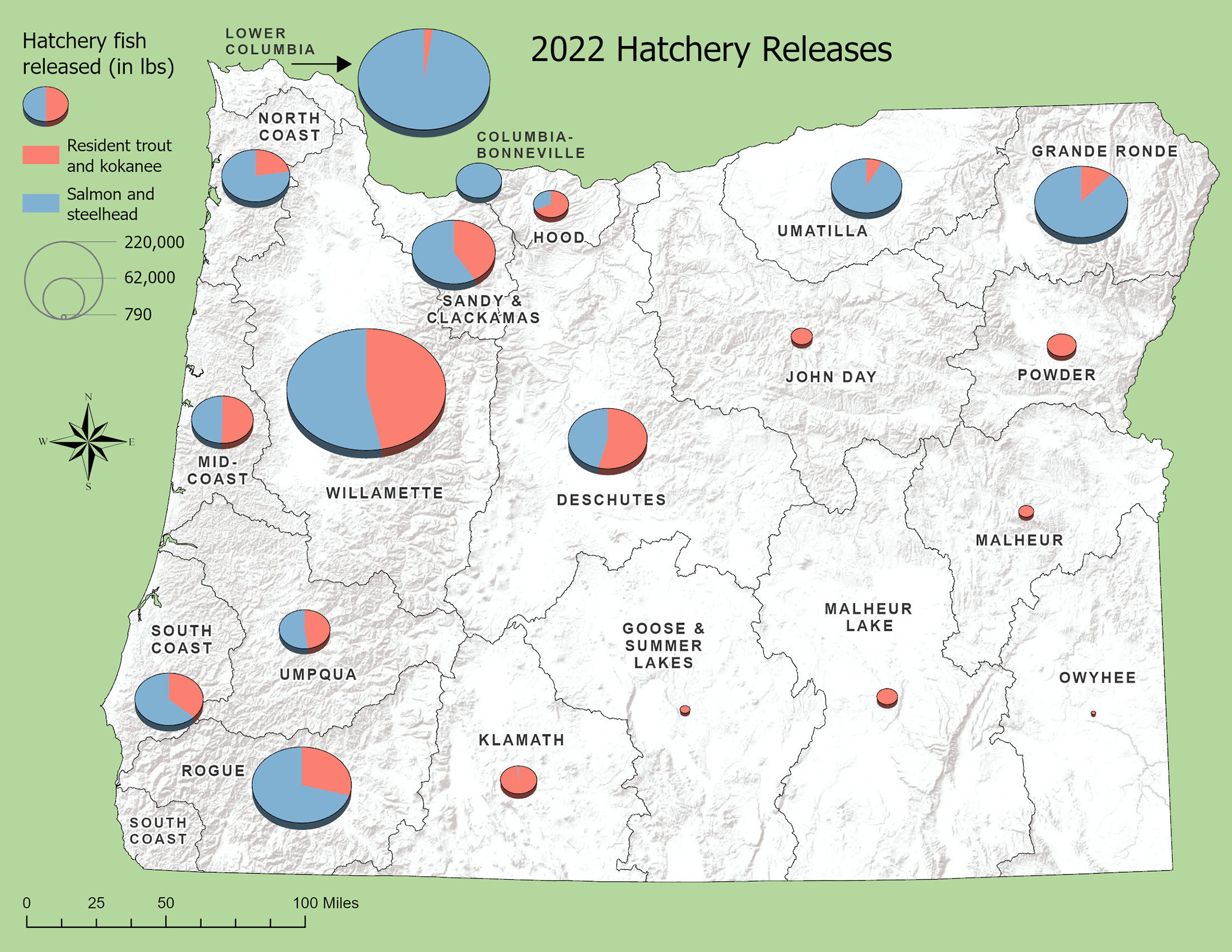
Warming rivers; wildfires; aging infrastructure; supply cost increases; conflicts with wild fish conservation and recovery. Just a few of the reasons it’s time for the state of Oregon and the public to take a good hard look at the future of Oregon’s hatchery system.

The Oregon Department of Fish and Wildlife (ODFW) held a kickoff meeting on June 27th to begin the public engagement process for a comprehensive assessment of the state’s hatchery system. This effort aims to evaluate the state’s hatchery operations, considering factors like economics, climate vulnerability, and impacts on the conservation and recovery of wild fish populations. 

The initiative is focused on a key portion of Oregon’s hatchery system–the 14 facilities owned by the state. These hatcheries raise a variety of salmon and steelhead as well as resident trout and have long played a role in fisheries management, particularly in Oregon’s coastal watersheds. 

Yet these facilities are facing a diversity of issues that make it difficult for the agency to continue status quo operations over the coming decades. (Read more about how this initiative got started in our previous update). Understanding that there are strongly held perspectives surrounding hatcheries, the department has hired a third-party facilitator to lead a public engagement process. 

The June kickoff meeting highlighted the diverse needs of stakeholders. Some advocated for continued hatchery investment and modernization, while others emphasized the importance of prioritizing wild fish conservation and habitat restoration efforts. 

Open Dialogue, Diverse Viewpoints: Charting a New Course for Oregon’s Fisheries

Some may view the debate over hatcheries as an intractable “war” with entrenched positions. While finding a workable solution that departs from the status quo may be challenging, it’s not impossible.

I urge all of us to come to the table, be willing to listen openly to the information presented in the analyses, and engage in good faith with the diversity of viewpoints represented. At the end of the day, I’m hopeful that we may be able to help the agency chart a path forward that balances the diverse needs of stakeholders while supporting the long-term health and resilience of Oregon’s native, wild fish populations.

What’s Next? How You Can Be Involved.

The good news is ODFW is creating space to hear from the public and interested stakeholders throughout this process. Here’s how you, as a supporter of wild fish and healthy rivers, can make your voice heard:

ODFW will hold a series of public meetings and webinars throughout the summer. The next phase will include three webinars presenting the findings of the third-party assessments. Visit ODFW’s website for more details and to register. Meetings will also be live-streamed and available as a recording on the ODFW YouTube Channel.

  • First Webinar – Looking Ahead: Assessing Future Need for Hatcheries
    Date & Time: Thursday, August 1, 12pm-1pmODFW will lay groundwork for the review with a summary of ongoing and projected environmental changes (e.g., temperature, flow) that are affecting fish populations and hatchery operations in Oregon.
  • Second Webinar – Looking Ahead: Hatchery Economics and Fish Stock Trends
    Date & Time: Thursday, August 8, 12pm-1pmThis webinar will cover two topics. First, ODFW will summarize results of a third-party economic analysis of Oregon’s state-owned hatcheries. The analysis includes a description of current operating costs and economic benefits of hatchery production. ODFW will also summarize findings from an assessment of the likely impact of climate change on the future viability of hatchery programs. ODFW rears and releases many different species/stocks—some of which will likely do better in future than others.
  • Third Webinar – Looking Ahead: Infrastructure Challenges and Opportunities
    Date & Time: Thursday, August 15, 12pm-1pmThis third webinar summarizes the results of a third-party assessment of the climate vulnerability of each facility, the costs and benefits of infrastructure investments in each state-owned hatchery facility, and whether an alternative to the current model could improve the system’s sustainability.

Register For Webinars

  • Attend the ODFW Hatchery Assessment Public Meeting #2
    Date & Time: Wednesday, August 28th from 10:00 AM to 4:00 PM
    Location: ODFWs Commission Room (4034 Fairview Industrial Drive SE, Salem, OR 97302)
    • The meeting will also be accessible remotely via this link.
  • Share your perspective: ODFW will establish a dedicated platform for public comment. We will share this information as soon as it becomes available, allowing you to directly express your concerns and recommendations for a future that prioritizes healthy wild fish populations.
.

By actively participating in this process, we can ensure the ODFW’s Hatchery Resilience Initiative leads to a future that safeguards Oregon’s native fish and the ecosystems they depend on. 

Let’s work together to ensure a sustainable future for Oregon’s iconic fisheries!

Posted in Oregon Conservation News | Leave a comment

Volunteers Needed for Salmon Watch

With the new school year comes the return of one of the Watershed Council’s most treasured programs: Salmon Watch. During the months of September and  November, students from across Lane County participate in the Salmon Watch Program to witness the magic of the salmon life cycle. Volunteers lead four stream-side learning stations on the topics of water quality, riparian ecology, salmon biology, and macroinvertebrates. It is an experience that has a lasting positive impact on students and their relationship with the natural world.  

If you are someone who has a love for the environment and would like to help to grow that passion in the next generation, please join us for a Salmon Watch volunteer training session! 

New volunteers are required to attend one or both training sessions before signing up to support trips. Training sessions will be held on the following dates: 

Salmon Watch Volunteer Training on Friday, August 16th from 3:00 PM – 5:00 PM at the McKenzie Watershed Council OfficeClick Here to Sign Up

Salmon Watch Volunteer Training Field Module on Saturday September 21st from 10:00AM – 1:00PM at Carmen Smith ReservoirClick Here to Sign Up

If you would like to volunteer at Salmon Watch, but cannot attend either training, please reach out to the Salmon Watch Coordinator at Dassy@middleforkwillamette.org

For more information and summaries of each of the stations: click here

Posted in Classes and Instruction, McKenzie River, Middle Fork Willamette River fishing, Oregon Conservation News, Oregon Fly Fishing Clubs and Events, Oregon Salmon fly fishing | Leave a comment

Dream Dory Raffle is on NOW!

From Native Fish Society

Win a Wooden Drift Boat for Only $100 and Support the Revival of Wild, Native Fish! Dream Dory Raffle is on NOW!
BUY TICKETS HERE
What: A chance to win your dream wooden dory in the name of wild fish for just $100! Only 250 tickets will be sold, so don’t miss your chance!

The Prize: 17’ Ray’s River Dory Rogue Drift Boat – personally built by the founder of Ray’s River Dories, C. Ray Heater! Includes: Boat cover, trailer, and three spruce oars with tip guards. Condition: Lightly used 

When: Tickets are on sale now through 5pm on Saturday, August 17th, 2024. The lucky winner* will be pulled in-person at our 6th Annual Homewaters Roundup in Bend, OR on Saturday, August 17th! 
BUY TICKETS HERE

That’s right, a Ray’s River Dories Rogue wooden drift boat, complete with a trailer, cover, and a set of oars could be yours! This is your best (and most economical) shot to win your very own wooden drift boat for only $100!⁠ Act fast – with only 250 tickets available, now is the time to get your raffle ticket today and make your dory fishing dreams a reality! The lucky winner will be pulled in person at our 6th Annual Homewaters Roundup in Bend, OR on Saturday, August 17th! *Need not be present to win.

For those in the Central Oregon area wishing to attend on August 17th, Homewaters Roundup in-person tickets are FREE, but registration is requested, so RSVP today if you haven’t already! Join us for a lovely evening of fellowship, festivities, live music, food, beverages, and other exciting raffle prizes, benefitting Oregon’s native fish and wild rivers. You don’t need to be present at the Roundup to win the Dream Dory Raffle, but we’d sure love to see you there!

Posted in Fly Fishing Contests, Oregon Conservation News, Oregon Fly Fishing Clubs and Events, Oregon fly fishing links | Leave a comment

Summer Dry Dropper Fly Fishing in Oregon

In this video, Simon works his way through a beautiful stream on a hot day. He primarily uses a Dry-Dropper setup to search and work his way through some beautiful water. This video marks the beginning of more “on the water” content coming from our Youtube channel @caddisflyshop. This will highlight local waters and fisheries beyond. They will focus on skills and helpful tips for beginners and experienced anglers alike. Stay tuned for more on the water fishing videos from us! Feel free to give us feedback on the video and let us know what you’d like us to cover next! All of the gear and more can be found on our website, caddisflyshop.com.

Posted in Fishing Reports, Oregon fly fishing links, Oregon Fly Fishing Tips | 1 Comment

Local Fishing Report July 13

Right now is a great time to get out on a float or get out on a guided float trip.

Fishing locally has been great despite our recent heat wave. We’ve made it through this heat wave without any wildfires here in the valley and without our local trout water getting too terribly hot. Water temperature is still a factor to be aware of as summer progresses. Prolonged elevated temperatures, especially warmer nights can have negative impacts on trout health. As conscious anglers, we should be aware of this and do everything in our power to mitigate harm to the fish.

Trout behavior can change drastically with temperature swings, but it is very predictable. During these hot days, fish will be pushed up higher in the rivers and creeks. In each run, fish will be pushed towards the head of the pool where there is a higher concentration of dissolved oxygen. There also is more surface turbulence towards the head of a pool which provides cover from predators because they cant see in the water. Once water temperatures reach 65 you should start being extra careful when trout fishing. Use heavier tippet and bring fish in quickly, keep them in the water, and release them as quick as possible. As a rule I like to move upstream and find colder water when the water is 65 and up. This is also a great time of year to hit the high lakes, or smaller streams with lots of shade, as they stay cooler. This time of year you should be carrying a thermometer to gauge water temps. I especially like the
Fishpond Riverkeeper Digital Thermometer
; I clip it to my net and check the temperature by pushing my net deep underwater. The Hareline Stream Thermometer also makes a good option. Warmwater fishing for bass and panfish also makes a great option as they are more heat tolerant. The coast is also an option; Surfperch fishing is great this time of year off the beach, or rockfish and lingcod off the jetty.

Fish will hold in the heads of pools where there is more oxygen.

Lately we have been seeing hatches of Golden Stoneflies, Yellow Sallies, and assorted Caddis in the afternoons. There is a relatively reliable hatch of Pale Morning and evening Duns every morning and evening. As things warm up even more lately terrestrials play a big role in trout’s diets. Crickets, beetles, grasshoppers, ants, and other land based insects become increasingly important to our local trout. This is even more important on smaller streams with brushy banks.

Fishing spring creeks is a great way to beat the heat and get in on some great terrestrial fishing.

The most effective, versatile, and straightforward way to fish right now is with a dry-dropper setup. For those of you that do not know, this is a setup which uses a buoyant dry fly too suspend a nymph subsurface. It makes for a great way to search water because you cover the surface and subsurface simultaneously. Often the dry fly has to be bigger and tied with buoyant materials to be able to suspend a nymph below. The larger insects present that you would be mimicking with your large dry would be a Golden Stonefly or a larger grasshopper. Other “attractor” style dries that just look “buggy” are great options too. Try these for your dry fly portion of your rig in sizes 6-12: Fools Gold Golden Stoneflies, Willy’s Ant, or a Double Stack Chubby Chernobyl Fly. The nymphs that we like to run below our dries are slim bodied jig nymphs in sizes #12-16 this time of year. Choose the fly size/weight that best matches the depth of the water you are fishing, and proportionately matches how buoyant your fly is. Here are some shop favorites for your dropper nymph: Jigged Duracell, Jigged Frenchie, or a Tungsten Jig PMD.

Fish are looking up, especially in the upper river where there’s more shade.

For fishing a single dry fly, the most reliable hatch that you will come across is the PMD/PED hatch. This is the summer hatch where you can consistently cast at rising fish. If the hatch is happening in the morning or evening try some of these: Tactical Light Cahill Parachute, Quigley’s Film Critic PMD, or a Rusty Spinner. If you are seeing lots of larger fluttering golden colored insects, they are likely gold stones and we would recommend fishing one of the following: Burkus Bearback Rider Golden Stone, Morrish Fluttering Stone, or a yellow/gold colored Chubby Chernobyl. During the mid day lull searching with a small yellow sally can be effective; here are some shop favorites: Silvey’s Yellow Sally or Front End Loader. Searching in the afternoon with a small caddis can be effective, especially into dusk. Feel free to tag one of these behind a larger golden stonefly or fish it solo: X2 Caddis, Peacock Caddis, or an Olsen’s Foam Front End Loader. Lastly, general attractors sized #10-16 will bring fish to surface in the morning and late afternoon, here are some great attractors that are must haves in your box: Carlson’s Purple Haze, Elk Hair Caddis Tan, or an Adams Heavy Hackle Parachute.

Shade is your friend, hug that far bank that’s where fish will hold.

Terrestrial insects are what you want to be throwing if you’re on smaller rivers and creeks or fishing near a brushy bank. These would be grasshoppers, ants, crickets, beetles, etc. We recently wrote an article on terrestrials and listed our top 5 here. Feel free to run a small nymph below any of the more buoyant ones as well.

Areas with more foliage will help reduce water temps and provide habitat for terrestrials this time of year.

Midday when its sunny and hot dry fly fishing can turn off. The heat can be exhausting for fish to exert energy to surface and the bright sun makes them vulnerable to predators. You certainly can fish your dry dropper rig throughout the day, but indicator and euro nymphing can be especially effective when fish wont surface to eat. Pairing a larger stonefly nymph with something smaller is generally effective. Here are some great options for your larger fly: Sili Leg Stone Fly, Mega Prince, or a Tunghead 20 Incher. Here are some choices for smaller flies: Jig Fullback Napoleon, Jigged Perdigon, or Improved Jigged 20 Incher.

Cool mornings are a great way to get in on some great dry fly fishing with hatches of PMDs

As things get real warm here turning towards warmwater fishing may help ease stress on our local trout fisheries. Fern Ridge, the Coast Fork Willamette, South Umpqua, John Day, and other ponds are great local options. Fish poppers and mice on the surface in the morning and evening for explosive surface action, here are some great sellers that we have in the shop: Surface Seducer Patriot Popper, Surface Seducer Double Barrel Foam Popper, or a Morrish’s Mouse For streamers, we like the following: Clouser Deep Minnow, Sculpzilla, or a Meat Sweats.

Cold, clear, and deep water is what trout like when it is hot out.

The word is out that it is a great steelhead year locally. People are consistently picking up fish on the Mckenzie, the Willamette, and the Santiam drainage. MF Willamette remains high with more consistent success coming out of the Willamette in town, McKenzie and Santiam drainage. A few positive reports have come out of the North Umpqua, but preliminary counts are not encouraging across Winchester as of this update. Now is when the lower Deschutes should have a few around. Swinging is effective for summers throughout the day. All techniques are effective mornings and evenings. Flashier, larger flies with heavier tips is the program as the sun hits the water. Here are some must haves for swinging: Coo Coo for Cocoa Puff’s, Hoh Bo Spey, or a Moal Leech. People are also picking them up on larger flashier nymphs like: Steelhead Lightning Bug, Rogue Steel Stone, or a Double Bead Epoxyback Peacock.

There are loads of steelhead in the river right now, get out while its good and swing some up!

If you need anything swing by the shop and chat with us, we are happy to help. We can also help you over the phone give us a call. Have fun out there, now is a great time to work higher up and explore new water that is colder!

-Simon

Posted in Fishing Porn, Fishing Reports, Lower Willamette, McKenzie River, Middle Fork Willamette River fishing, Oregon fly fishing links, Oregon Fly Fishing Tips, Summer Steelhead, Uncategorized | Tagged , , , , , , , , , , , , , , , | Leave a comment

Top 5 Summer Terrestrial Fly Patterns

Summer is in full swing and that means trout have terrestrials on the mind. This term refers to land based insects such as: ants, crickets, grasshoppers, beetles, cicadas, bees, etc. On small streams with lots of streamside brush and vegetation, this is even more important. Often terrestrials will pick up as the day warms up, terrestrial insects will need to “warm up and wake up” before coming active enough to end up in the water. Windy days are your friend, especially on spring creeks with grassy banks. The wind will blow insects into the water and fish will be holding along the banks sipping bugs as they fall in. On high lakes during the summer fish key in on small terrestrials near logs and the bank as well. Many of these are “Attractor” style patterns meaning they might not imitate one insect, but rather are suggestive of many.

Our top 5 terrestrial patterns have battled it out against other patterns on the water and came out on top. These were chosen with versatility and buoyancy in mind. All of these flies work great locally, but also are proven winners on trout streams across the country. All of these options make great dries to run a small dropper below. As much as we love Chubby Chernobyls in the shop, they did not make the list as they’re often bigger, and a smaller fly will imitate a terrestrial more effectively. Smaller Chubbies size 12-14 work great along with plenty of other flies in the store or on our site that didn’t make the absolute top 5.

Dry Humper

The Dry humper is an awesome delicate terrestrial pattern. They come in several sizes and colors but we like sizes 12 and 14. The bottom hackle is clipped to help it ride low for a more realistic presentation. A large wing keeps it visible from a distance.

Charlie Craven’s Fat Angie & Craven’s Big Fat Angie

Craven’s Fat Angie is a shop favorite and is a true attractor terrestrial pattern. It could be an ant, cricket, beetle, or a small hopper. They come in two sizes, standard and big. The big is especially buoyant for larger droppers. The smaller size sacrifices some buoyancy for a more realistic look. The abdomen is dropped subsurface on a curved hook driving the point home that this is a struggling insect. This makes it great for high lakes and spring creeks where fish have longer to look at your fly. I’ve fished this on spring creeks in a few states and it is big brown approved.

Morrish’s Hopper

The Moorish Hopper is a legendary hopper pattern that is one of the most popular ones out there. Lots of legs mean lots of movement which drive fish nuts. A hot spot on the back makes it easy to see. On spring creeks try small strips to mimic a hopper “kicking” its way to the bank.

Henneberry Hopper

The Henneberry hopper was new in the shop last year and did really well. It is the most realistic fly of the list and makes a great option on water with picky fish. The legs are reinforced with tubing to keep them sticking out while the fly is on the water. It rides low and has a super realistic pattern on it for enticing the pickiest of fish especially on spring fed creeks.

Rio’s Blade Runner Hopper

Rio’s Blade Runner Hopper is a favorite of mine. I first encountered this fly in the Driftless area in the Midwest and fished it on the spring creeks there. It effectively mimics smaller hoppers making it a great early season hopper. This is the one I’d be fishing right now on a small creek. The hopper’s rear legs are foam. This helps the fly remain more buoyant and offers a realistic touch.

Have fun out there, feel free to swing by the shop or give us a call with any questions.

-Simon

Posted in Fishing Reports, Fly Fishing Glossary, Lower Willamette, McKenzie River, Middle Fork Willamette River fishing, Oregon Fly Fishing Tips, Uncategorized | Tagged , , , , , , , , , , , , , , , , , , | Leave a comment

Simon’s Secret Sally: Yellow Sally Dry Fly Tutorial

A slim profile is essential when mimicking a Yellow Sally effectively

Yellow Sallies are often an overlooked summer staple in Western Trout’s Diets. What they lack in size they make up for in abundance. Often Yellow Sallies make a more subtle option in pressured waters when people gravitate to throwing Gold Stones, Green Drakes, or other more popular insects/attractor flies. Yellow Sallies are a small stonefly and are the middle child in terms of size with their relatives; they are smaller than Gold Stones and larger than Winter Stones. They are active mid afternoon when things can be slow, so they make a great searching pattern. In this video, Simon ties a high-floating Yellow Sally variant. This fly is tied to float high in the turbulent water if our local rivers in the Willamette valley. Heavily hackled, this fly is sure to get some looks. It excels being tossed in at the head of a pool where fish stack up in the summer in search of food and water with a higher oxygen content. Because this fly is tied slightly larger, it is made for quicker water where fish have less time to critique your tying skills. If you happen to be fishing more tailouts, slower water, or even a spring creek, consider sizing this fly down to a 14 or even 16. Colors can be adjusted to brighter or more drab yellow or even lime for the elusive Lime Sally hatch. If you tie some up tor have fish photos from tying this one up tag us on instagram. If you’ve had an amazing day fishing Sallies, share your story in the comments below.

Simon’s Secret Sally

Hook- Ahrex 501: Size 10 Traditional Dry

Dubbing- Hareline Microfine Dry Dubbing: Sulphur Yellow & UV2 Fine & Dry: Red

Wing- Hareline Mallard Flank: Yellow

Hackle- Whiting Saddle: Light Ginger

Post- EP Trigger Point Fibers: White

Legs- Montana Fly Company Yellow Barred Sexy Floss: Small

Resin- Solarez Bone Dry

Additional Tools- Hareline Overton’s Wonder Wax & Hareline Anodized Hook, Hackle, & Bead Gauge

Bobbin- Rite Bobbin

Vise- Renzettti Traveler 2304 & Renzetti Streamer Base

Posted in Eastern Oregon, Fly Tying, Fly Tying Materials and Supplies, McKenzie River, Middle Fork Willamette River fishing, Oregon Coastal Fly Fishing, Uncategorized | Tagged , , , , , , , , , , , , | Leave a comment

Cliffhanger Green Drake Emerger: Fly Tying Tutorial

Great shot from customer Mike Potter

In this video, Simon ties a Green Drake emerger for the pickiest of trout. Whether you’re fishing the Green Drake hatch locally up on the Mckenzie, on the mighty Metolius, or out east on a limestone spring creek in Pennsylvania, this fly is one that you want. It is specifically tied to mimic an emerging Green Drake. The rear of the fly is tied with ostrich, a material chosen with water absorption in mind. This will drop the rear of the fly into the water mimicking a nymphal shuck. This is exactly what fish are looking for subsurface when they are being choosy. The front of the fly is heavily hackled, has 3mm Hi Float Foam, as well as Widow’s Web for maximum buoyancy. This fly will ride high and stay visible when fish are feeding on Drakes in the riffles of the Mckenzie and Metolius. It also will fish well in a tailout or spring creek, riding low looking very realistic for situations where fish have longer to examine your fly. This pattern can be adopted for just about any mayfly and sizes and colors can be substituted. In fact, it was originally developed for the Black Drake hatch on the Williamson river. It was a proven winner there, so it only made sense to tie up a Green Drake variant. Whip some up and get out there!

Cliffhanger Green Drake Emerger

Hook- Ahrex FW531 Sedge Dry Barbless: Size 12 

 Thread- Semperfli Olive Nanosilk: 50D 

 Shuck- Montana Fly Company Ostrich: Grey & Uni Olive Soft Wire: Extra Small 

 Wing- Montana Fly Company Widow’s Web: Smoke

Foam- Hareline 3mm Hi-Float Foam White 

 Abdomen- Hareline Micro Fine Dry Dub: Sulphur Yellow, BWO Olive, & PMD Olive Dun  

Hackle- Whiting Grizzly Barred Olive Saddle  

Bobbin- Stonfo Steeltech Bobbin

Additional Tools- Hareline Anodized Hook, Hackle, & Bead Gauge 

 Vise- Renzettti Traveler 2304 & Renzetti Streamer Base

Posted in Fly Tying, Fly Tying Materials and Supplies, McKenzie River, Middle Fork Willamette River fishing | 2 Comments

2024 Double Brood Cicada Dry Fly Tying Tutorial

In this video, Simon ties a robust cicada patterns just in time for the legendary Brood XIX and XIII cicada hatch of 2024. These are two overlapping hatches of 13 & 17 year periodical cicadas that won’t happen again in our lifetimes. So many insects hatch during these events that fish, birds, and other creatures gorge themselves on cicadas. If you’re lucky enough to live in a region where this is happening, you need to get in on it. Cicadas are large insects that are clumsy fliers. If you’ve ever been hit by one flying you know they are big bugs that have to make a big splash when they hit the water. This fly is tied with 6mm foam to push water as it hits the surface and bring up the largest fish. Tied on a robust Ahrex hook, this fly is safe for the biggest fish crushing cicadas. Tie some up and share your photos with us!

Note: We misspoke in the video about which batch of cicadas are hatching this summer. The 2024 hatch contains Brood XIX and Brood XIII not Brood X (2021).

2024 Double Brood Cicada

Hook- Ahrex FW570: Size 6

Thread- Veevus FL. OrangePower Thread: 140D

Abdomen- Hareline 6mm Fly Foam: Black & Thread

Thorax/Head- Hareline 2mm Hi-Float Foam: Black, Hareline Micro Fine Dry Dub: Trico

Wing- Hareline Elk Hair Natural

Legs- Hareline Grizzly Orange Barred Rubber Legs: Medium

Eyes- Hareline Chicone’s Fettuccine Foam: Orange

Glue/ Resin- Loctite Brush On & Solarez Bone Dry

Bobbin- Rite Bobbin

Vise- Renzetti Traveler 2304

Posted in Fly Tying, Fly Tying Materials and Supplies | Tagged , , , , , | Leave a comment

Finn Rock Boat Landing Now Open

From McKenzie River Trust June 15th 2024

We’re celebrating the re-opening of the Finn Rock Landing on the McKenzie River. One of the more popular launches for local whitewater opportunities, the Finn Rock Landing serves thousands of visitors annually.

The improved landing designs were created based on community feedback gathered in 2017 in partnership with Cameron McCarthy Landscape Architects. This spring, Delta Sand and Gravel Company completed upgrades including adding defined parking spaces, pedestrian safety routes, places to gather out of traffic, and installing bird-friendly lighting. “The most exciting part of this project is the incorporation of Universal Design principles,” observed Zane Wheeler with the City of Eugene. “Every summer, through our Adaptive Recreation Program, we bring dozens of people who use mobility aids such as wheelchairs to the river to take advantage of our special rafting equipment. Having accessible infrastructure, including ADA parking and ramps, is an important step forward in creating a more equitable outdoor experience.” 

The landing project, which cost around $850,000, was funded with a combination of grants from the Oregon Parks and Recreation Department’s Recreational Trails Program, Lane County Parks bond measure, and private donations. Access continues to be free of charge, and McKenzie River Trust looks to community members to help in its stewardship. We know that people and land need each other. At Finn Rock Reach, we’re relying on visitors not to leave garbage and to help pick it up when they see it. The landing is open year-round from dawn to dusk for people to launch non-motorized watercraft and access the McKenzie River for fun and fishing.

Posted in McKenzie River | Leave a comment

PSA: The Road to Gold Lake Is Open 2024

The gate on Gold Lake road which leads to Gold Lake is now open. For all of you anglers who are looking for a closer stillwater option than going all of the way up the Cascade Lakes highway, Gold Lake is a wonderful stillwater option. At about an hour and fifteen minutes from Eugene, it is a closer option than going to East, Paulina, Diamond, Crane, Lava, Elk, Hosmer, or even further to the lakes way out East.

It is a smaller lake making it a great float tube friendly lake. You can drive right up so there is no need to hike in with your tube. It also has a ramp for launching a boat. Gold lake has some spectacular brook trout fishing, and there are some sizeable rainbow trout as well.

Make sure to bring some Chironomids, Balanched Leeches, Pine Squirrel Leeches, Buggers, Ants, and other small dries. Fishing floating line for dries, or an indicator setup work great. An intermediate line works great for fishing small nymphs, damsels, scuds, and streamers in the shallows. A sink 3-5 line works for dredging deeper with streamers.

Below are some fly recommendations

Chironomid Bomber

Buzzer

Chironocones

Montana Fly Company Rowley’s Balanced Leech

Mason’s Stable Maiden

Blonde Leech Balanced

Dorsey’s UV Scud Fly

Scud Expecting

Thin Mint

Pine Squirrel Leech Fly

Cascade Bugger

CFO Ant

Turck’s Power Ant

Fat Angie

Carlson’s Purple Haze

Adams Heavy Hackle Parachute

Have fun out there,

-Simon

Posted in Central Oregon Fishing Report, Fishing Reports, Oregon High Lakes, Stillwater Fishing | Tagged , , , , , , , , , | 1 Comment