Soft Hackle Trout Flies Part 1 – Feather Selection

Soft hackles are an often overlooked but always an important element of our trout fly fishing tackle complement. Here is a short video where I review some of the best soft hackle feather materials that we all have access to these days, with soft hackle flies as our search image.

Each of the feather types featured here offers excellent qualities for creating soft hackle flies, and yes, there are times when small soft hackles are just what summer steelhead want to eat. Fish the upper Deschutes, Upper Rogue, the Rogue Canyon, or the North Umpqua, and Klamath – if you put your time to good use, you are likely to find evenings when a size #10 to #16 soft hackle will be taken with confidence by summer steelhead anywhere from July through October.

Browse this video and my notes below about these great feathers. Hope this tutorial helps you tie your best soft hackle trout and steelhead flies ever.

Hungarian Partridge (full skin): this is possibly the best source of soft hackle hackles ever. Domestically bred and raised birds are perfection, and available in natural and dyed colors. I use feathers from the tip of the skin for #16s down to feathers over the back for #10s. Feathers at the tip and sides of the skin are black and white barred, feathers straight down the back are brown/bronze striped. The bars are fine and the fish love the look of flies tied with partridge as much as we love their traditional look. Zero waste and the feathers are sorted for us on the skin by size. Partridge feathers are relatively short, so I find I must be quite slow and easy winding them

Metz Grizzly Hen Capes: these are another amazingly versatile source of soft webby feathers, easy to tie with, and we can use these Metz hen cape feathers for our smallest soft hackles and our steelhead Silver Hiltons also. Oh yes, the tips of these feathers allow us to create wings on dry and wet flies from tiny to steelhead size. These hen cape feathers are long enough that it is fairly easy to wind one to four wraps of hackle and still have plenty of feather to hang on to. Zero waste, wide range of flies, and ease of use are major advantages.

Starling Skins: I had always wondered about this product and who was using starling feathers for what. Well, now I know. These are apparently used as cheeks on traditional streamers and Atlantic Salmon flies, but they also shine if we want to tie small soft hackles with dark grey hues. These starling skins offer very low price, very fine feathers and zero waste. The feathers are short and fine, they wind nicely, but I had to be very careful with my nubby salmon fly tying fingers and handle these feathers with a delicate touch. Too short to tie with fingers only, these will require you to pull out and apply your hackle pliers. One or two turns of these feathers and your soft hackle is ready to swim.

Whiting Brahma Hen Saddle: This is my preferred hackle for larger soft hackles, lake wet flies in the #8 & #10 range, and similar size summer steelhead wet flies. Zero waste, size graded on the skin, and nice barring. The feathers are denser than partridge but the overall barring is very similar.

Whiting Hen cape: these have all the properties as the Metz Hen Capes discussed above, but are available in browns and duns. Easy to work with, exquisite fine feather stems that wind marvelously, and never any waste. Soft hackles, wings, and collars on all manner of wet flies, streamers, and nymphs.

Wapsi India Hen capes: these are a more colorful analogy to starling skins, beautifully marked, easy to tie soft hackles, wings, beards and collars on all manner of small trout flies. Hummmmm. Bluegill would take these flies too, methinks. These also call for a delicate hand, like the Partridge and Starling feathers, but the care is worthwhile when you see the finished fly.

Soft hackle flies can imitate emerging Mayflies, Caddis flies, midges, and just plain old trout food. Sometimes we think we know what we are imitating, but I think sometimes trout and steelhead just take these little wisps of a fly because they look interesting and sort of like food. My personal preference for tying soft hackles is to use from one to three turns of hackle. In other words, I like to make soft hackle flies fairly sparse. Three turns of starling is about as dense as two turns of Metz or Whiting hen hackle, because the Starling is a finer fiber feather. The Whiting Brahma Hen Saddle is perhaps the most dense fibered feather of the ones reviewed here, and I prefer these for flies in the Carey Special family to imitate big juicy lumbering caddis struggling to the surface to emerge. Keep in mind, also, that most of these feathers make great collars on nymphs like the Prince and our good old standard wet flies like the Royal Coachman, Leadwing Coachman, and oh yes, I almost forgot …

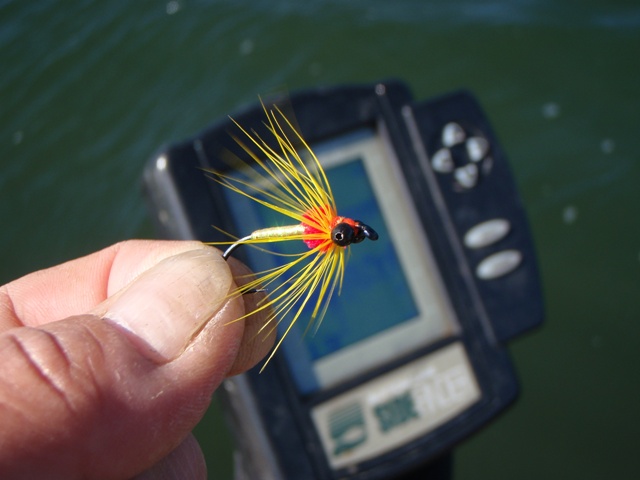
Remember how effective a Grey Hackle Peacock with red or yellow tail was in years gone by? Let’s be clear. These flies, tied with a Metz Grizzly Hen Cape in sizes #12 – #16 are still deadly for trout, and in sizes #4-#8 are wonderful summer steelhead flies too.

JN

Posted in Fly Tying | 1 Comment

Squatch celebrity: Bigfoot-mania continues in the McKenzie River Valley

After watching the recent episode of Finding Bigfoot on Animal Planet, I can finally say that I’ve had my fifteen minutes of fame. Bob Welch wrote up a column on the show in the Register-Guard, friends sent me photos of me on their TV screens, and people I hadn’t talked to in ages came out of the woodwork on Facebook, freaking out.

photo

If you missed it last night, I suspect Animal Planet will replay the show. Or you can check out this bootleg version we found on YouTube:

Stay tuned for Caddis Fly Squatch gear coming soon.
-MS

Posted in Oregon Bigfoot | 7 Comments

Dahlberg Diver Bass Fly Tying Video

Matt Stansberry demonstrates how to tie two versions of Dahlberg Diver style flies. We love these for Bass, Pike, Muskie, Freshwater Dorado and more. Spinning deer hair can be intimidating we hope that these videos dispels some of difficulty in tying good looking spun deer hair heads. Continue reading

Posted in Fly Tying | Leave a comment

Sage Z-Axis Fly Rod Blow Out Sale Just in Time For Fathers Day

z-axis rods

Sage has given dealers the green light to discount Z-Axis single handed fly rods just in time for fathers day. See note below from our Northwest Sale Rep, Spey casting guru and hunter extraordinaire George Cook.

Many of you already know , have guessed or sniffed out that the successful run of the ZAXIS Single Handed series has come to an end. While August 1st was the INITIAL DECLARED date for Reduced Blow out pricing on the US Retail front, various circumstances (The usual Media suspects…Web/Blog/Twitter/Facebook) have already taken such Viral and today the decision came down to announce the Discontinuation of the Single Hand portion of the ZAXIS Family. In essence this is a “Green Light” to put on SALE as you see fit. Please bare in mind that ZAXIS SPEY and SWITCH Rods will CARRY OVER INTO all of 2012.

Check out the existing and ready to ship or pick up inventory at the following links.

Four piece Z-Axis Rods
Two piece Z-Axis Rods

z-axis rods

Posted in Shop Sales and Specials | 6 Comments

Real-time springer report from Jay Nicholas

Lest anyone think springers to the fly are easy or common here in Oregon. The bay is practically deserted. I put in early and fished the north flats. Then south flats. No fish or fellow anglers.

Determined was I. Bored was I. Lonely. Does trolling a Comet count as fly fishing?

Jay Nicholas Springer fishing

The tide turned. Heading for the boat ramp, I see two Kings roll in 3′ of water. Anxious to set up and cast before turn of tide. I anchor in a foot of water, ease into the water (darn near fell in), and cast from a sand bar. Continue reading

Posted in Oregon Salmon fly fishing | 2 Comments

Chinook Report from Jay Nicholas in Tillamook Bay

photo-1

Honest reporting here at OregonFlyFishingBlog.com, Jay Nicholas sent this to me “real-time” this afternoon but I was so busy fielding calls from women seeking feathers ( super impossible to get feathers) I couldn’t get the post up till now. Continue reading

Posted in Oregon Salmon fly fishing | 10 Comments

Rio, Airflo, SA Fly Lines: Review & Product Guide

As promised, this here blog entry is a humble attempt to sift through some of the mystery involved in our contemporary – and technically dizzying array of fly lines we have at out hand in our local fly shops and Internet Catalogs. Chris Daughters, with the purest of educational intentions, invited knowledgeable folks who represent our big three (Rio, Airflo, and Scientific Anglers) to answer a few questions about their fly lines.  Those Q & A will be at the tail end of this blog post, for anyone who wishes to read the technical information they offered. Continue reading

Posted in Fly Fishing Gear Review | 8 Comments

Fish porn from the annual pike trip 2011

Over the past two decades, I’ve only missed two trips with my family for our annual pike trip, including this year. And according to Nate, this was not the year to miss. Last year summer came early, the water was the lowest I’d ever seen it, and the big pike were locked into a summer pattern, sulking in deeper water most of the day and not hanging around the shallows. This year the water was high, the weather had been cold, and the pike spent the best part of the day sunning themselves and feeding on the flats. Nate said they had a 40-inch fish to the boat every day. Good times.

044 Continue reading

Posted in Fishing Porn, Fly Fishing Travel | 4 Comments

Local Waters in Great Shape and Fishing Well

IMG_8221

The McKenzie River has dropped into nice condition of late and the Middle Fork of the Willamette had a day or two under 2000 CFS last week. Warmer water and air temperatures have spurned more insect activity of late. Continue reading

Posted in Fishing Reports, McKenzie River, Middle Fork Willamette River fishing | 5 Comments

Fishing for Bigfoot in Oregon: June 19, 10pm Animal Planet

Our big debut on Animal Planet is one week from this Sunday. Mark your calendars for Finding Bigfoot, Jun 19, 10:00 pm.

McKenzie River Bigfoot

From the Animal Planet Website: Bigfoot expert Matt Moneymaker takes his team of specialists to Oregon to examine a video taken on a rafting expedition. While investigating, the BFRO team hears a sound in the middle of the night that they believe could prove the creature’s existence.

Posted in McKenzie River | 9 Comments

Hardy Fly Rods at the Caddis Fly; Saturday June 11

Hardy

Please join Garry Sandstrom, our Hardy Rods Sales Rep, on Saturday June 11 at the shop to demo the latest Hardy Rods. Garry will be bringing the latest new rods from Hardy, the Sintrix family: both Zentih and Proaxis models in various weights. Garry brings a full breadth of products for our Caddis Fly customers to ask questions and learn the latest, not only from Hardy Rods, but from Waterworks Lamson, Scientific Angler, Dr. Slick , Fishermans Eyewear, and Hardy Reels. Please join us in the shop on Saturday, June 11, from 11:00am to 2:00pm.

Posted in Shop Sales and Specials | Leave a comment

Reminder: Trout Unlimited Meeting Tonight

Mckenziee-Upper Willamette Trout Unlimited will be hosting its standing meeting at 7:00 at the Vet’s Club in Eugene.  Guide Brian Marz will be presenting on spring fishing in 2011.  With high water conditions, the fishing has been atypical but there has always been something to fsh for when your home waters are out of shape.  Brian will present a video on his spring fishing experiences including everything form flats carp’n to salmonflies on the Deschutes. 

Hope to see you there.

7:00 PM, Veterans Club, 1626 Willamette Street.

Posted in Oregon Fly Fishing Clubs and Events | Leave a comment

First adult chinook returns to Upper Deschutes

Jim Bartlett, Portland General Electric Fish Passage Biologist-Facilities Team Lead passed the following photos from the Round Butte hatchery from late last month:

ATT20125708 Continue reading

Posted in Central Oregon Fishing Report, Oregon Conservation News | 7 Comments

The Best Way to Lose a Chinook Tournament

On the eve of Tillamook’s annual spring chinook tournament, the Bounty on the Bay, I arrived at a strategic viewpoint overlooking the upper estuary. It was 7:02pm and the sun was blazing. A hot wind howled down from the Northwest, pushing up frothy waves and making the bay look wildly inhospitable. My tournament partner, Chris Santella, was due to arrive any minute. We had planned to get in an hour or two of fishing before dark, but as I looked out at the angry, flooded bay, I knew we were busted. The adjacent public boat ramp was nearly empty, apart from a lone diesel pickup. I took a deep breath to quell my disappointment, then stepped out of my rig to look around. As I neared the pickup, a middle-aged man came rushing around the bumper, gripping a lively chinook. He quickly slipped the springer into a big cooler in the bed of his truck. The setting sun illuminated a prominent adipose fin as the fish flopped into the hold. The man’s eyes met mine, surprised and wary. He wasn’t sure what I had seen, and was visibly weighing the situation.

“Where is everybody?” I asked cheerfully, blowing off his crime. I was already a flat-lander from Slick-city. The last thing I needed was to turn in one of the locals for poaching wild salmon.

“Been nobody here for hours,” he chuckled nervously. “Hell, it’s been dead all season.”

“Guess it just came to life!” I quipped with a phony smile, walking past him to get a view of the water. I paused for a few seconds, long enough to see several chinook porpoising excitedly around a distinct current seam. “Holy shit,” I said, “They’re rolling like piranhas down there!”

“Yeah, now they are,” he said. “I’ve been fishing all day and they just started jumping a few minutes ago.”

I barely heard the end of his sentence as I moved to prep the drifter for launch. Chris arrived with a six pack of cold Sierra Nevada Pale Ale right after the boat hit the water. We exchanged greetings, jumped in the boat, and popped a couple of bottles. “To our success tomorrow!” we toasted.

It was a short row to the tide rip where salmon were still frolicking. I set the anchors, chose a rod, and tore line off the reel into a pile. My first cast was stopped by a tangle of running line. No surprise there. I sorted out the mess and made another cast, perpendicular to the current. The line sunk slowly, even while under the tension of a sweet, slow swing, and my gut told me the fly was coming through at about three or four feet in eight or nine feet of water. It felt good, and the fish kept up their show. Chris hammered casts in the same zone, using the same line, but a different fly. The wind was still intense, but it was at our back, so casting was easy.

On the third or fourth swing, my line jerked hard. I stripped fast and set the hook twice before cranking up the loose running line on the deck. The fish made a good run, helping me close the gap, and soon it was on the reel and tearing off line against a tight drag. Chris took the oars and rowed me to the beach. The tide was low enough for us to step out on the sand, so I pulled off my shoes and socks and flew overboard. The chinook had run to the opposite side of the pool and was holding steady, right on the surface. Every time I tried to ease his head my way, he’d buck and pull another yard or two of line. In a couple of minutes he relented, and as his head slid up on the sandy beach, Chris and I marveled at the beauty before us–a perfect fish, about 15 pounds, showing off his brightest chain-mail in the setting sun. We clinked our beer bottles, praised the fish gods and got back in the game.

Spring Chinook Tournament Continue reading

Posted in Oregon Salmon fly fishing | 24 Comments

Deschutes River Trout Fishing Report: The Salmonfly Hatch is in Full Swing

salmon flies on the deschtes

The annual emergence of Pternarcys and Golden Stones is now out along the entire length of the Lower Deschutes, and the fish are certainly taking notice.   Between Pelton Dam and Maupin, the Deschutes is host to the most prolific hatch of these bugs anywhere in the country.  It is quite a spectacle.

I have done several multi-day trips on the stretch between Warm Springs and Maupin lately.  Earlier on, closer to the middle of May, the dry fly fishing was a little spotty, with some high and off-color water, and many of the fish still in transition as the hatch worked its way upstream.  In the last week and a half, however, the water has dropped and cleared, the fish have lined up where they should be, and we have had some spectacular sessions of dry fly fishing. Continue reading

Posted in Central Oregon Fishing Report, Eastern Oregon, Fishing Reports | 2 Comments