Pull a little harder will ye!

The coast is a plethora of action right now. Sea Runs are in and Fall Chinook to follow. Calm inland seas brings anglers to the very reliable inshore fishery.


Pull a little harder will ye!
The coast is a plethora of action right now. Sea Runs are in and Fall Chinook to follow. Calm inland seas brings anglers to the very reliable inshore fishery.
Last weekend was to be my first scouting trip for fall chinook, only two weeks after saying farewell to North Coast springers. I relished the chance for three long, quiet days of unicorn hunting. No fish required. A study in low expectations, but sure to produce magic in some unexpected form.
Doctor Brad’s email came Wednesday morning. He knew what I was planning, and he wanted to tag along, do some camping, fish or no. I reluctantly agreed, happy for the company, but nervous about having to entertain anyone under such dismal odds. Then came an email from Sean, our “Third Amigo.”
“Let’s have a fish party! Should we take the sled?” Continue reading

Here it comes folks. Blatant commercialism. Deal with it. Fact is, I got a chance to fish some fly rods, fly lines, and a fly reel that are either new in 2011 or at least new to me. People are genuinely interested in product reviews. I know that because I find myself answering a continuous stream of emails asking advice about this rod or that, which fly lines are best for specific applications, fly reels, value/cost ratios, leaders, and so on. Continue reading
On the heels of a sucessful event on Monday evening, Trout Unlimited will be hosting its monthly meeting at the Vet’s Club on Wednesday night at 7:00 pm. Mark Christie of Oregon State will be speaking on the interactions between hatchery and wild steelhead and Dwayne Meadows of Trout Unlimited National will be speaking about TU’s campaign to prevent Pebble Mine, slated to be the world’s largest open pit mine at the headwaters of Bristol Bay, one of the world’s most productive sockeye fisheries.
The meeting is as always, free and open to the public. Hope to see you there.–KM

Oregon Fishing Perspectives.
Someone said, sometime, that an understanding of the challenges we face, the decisions we make each day, could surely benefit from understanding the perspective of people who have preceded us. Or something philosophical like that. Continue reading

I am NOT a stalker. Really.
This seems an appropriate opening assertion for this article, given the fact that I just recently opened the Caddis Fly Blog to find that my most trusted and share everything friends RR and MS had just returned from a venture to one of MY favorite Oregon Cascade mountain streams. FINE! Fellows, I was prowling these waters from the banks and underwater 35 years ago. So maybe you should at least let me know that you are going; just returned; might go; and yes, that you are going to blather about it for the Blogosphere. Continue reading
Fish Lake located “just off the highway” (14 miles) on Steens Mountain provided some fun fishing on day three of our four day trip (see previous post for the rest of the days). The lake had some planted trout which were hearty but not very mighty! However, float tubing in this high mountain desert lake, enjoying the sun, provided a great afternoon of angling. Continue reading
As a Midwest native, I came to trout fishing late in life. And had an idea that the craggier the water, the better the fishing opportunities. Broken, boulder-strewn, rapid filled stretches were easy to read — it limited where fish would actually hide. Also, something about dramatic water features appealed to my flat-lander fantasies.

Our Sage, Rio, Redington Sale Representative George Cook has stopped by this week to write orders for the coming season. While we are in the back battling about some ugly Redington Vest please come by and cast the new and really cool Sage ONE Fly Rod. The rods are lined up and ready to go, it will just take a few minutes of your time. We tried them out yesterday and they are very nice. Continue reading
Last week a few of the Technical Men’s Conference (old dawgs who have fished together for decades) headed off to The Steens. Marc, who grew up in Burns, was our tour guide. The rest of us only had read about the Steens. The Steens were settled by cattleman Pete French who drove cattle from Sacramento, Callyfornia, in the late 1800’s, to The Steens. Let me be frank….the Steens are not a place you just say “I think I will drop by today and visit the Steens”. The Steens are located sort of southeast of Burns, and are “just off the highway”. “Just off the highway” in Eastern Oregon, means at least 25-50 miles of dirt road! Besides the angling, our group wanted to get the most of our visit. We took the Steens loop road which was under repair and closed above the South Loop Campground to enjoy the views of the canyons from above the rim. Continue reading
The McKenzie Fly Fishers, Trout Unlimited Chapter 678, and The Caddis Fly invite you to a free lecture by renowned author and environmentalist Anders Halvorsen, author of An Entirely Synthetic Fish: How Rainbow Trout Beguiled America and Overran the World.
Suppose that, more than a century ago, U.S. government officials became concerned democracy itself was at risk because men seemed to be less virile. And to reverse this trend they decided to populate streams, rivers, and lakes with “an entirely ‘synthetic’ fish”—quarry with which Americans could rediscover their abilities to capture and kill animals. And suppose that, up to the present, these creatures were still being produced and distributed on a massive scale, sometimes even being trained like gladiators and pumped full of the same supplements as the best human athletes so that they would provide a better fight.
Where: Boulevard Grill, 2123 Franklin Boulevard, Eugene, OR (541) 686-2020
When: August 8, 2011, 7:00-9:00 pm
Sponsors: McKenzie Flyfishers, The Caddis Fly Angling Shop, and Trout Unlimited Upper Willamette Chapter (678)

We had many great fishing adventures with Rick McCreery over the years, all of them memorable. Rick touched many people through his work and fishing career and we will miss him tremendously. Continue reading
Recommendations for care of flies fished in Seawater.

This is a very fine Daiichi Salmon Fly hook exposed to Seawater for several days. Continue reading
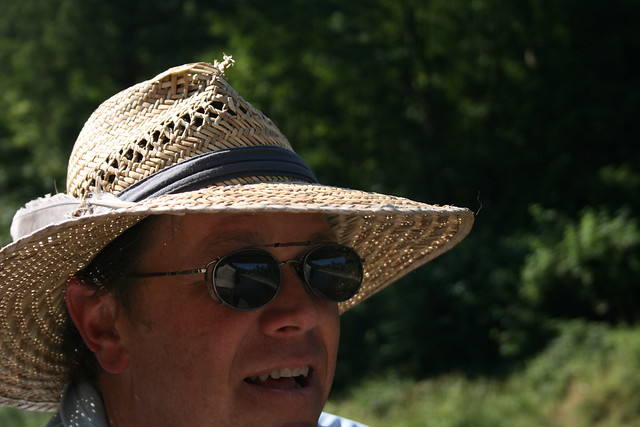
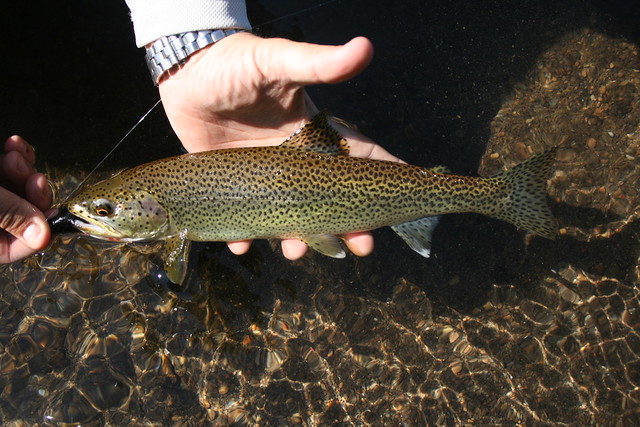
Mark Twain was right — the clothes make the man. We floated through a jungle of Japanese Knotweed, ate a jack spring chinook cooked over a driftwood fire, and saw some football sized sea-run cutthroat. Good summer day on the North Coast.

-MS