John Larison book reading in Corvallis tonight

The OSU Literary Northwest Reading Series presents a reading by John Larison.
Thursday, November 3
7:30 p.m.
The Valley Library, Main Floor Rotunda
Free and Open to the Public
Book-signing to Follow

Rob Russell fly fishing for salmon

Larison has lots of noteworthy jacket blurbs for his books, but we’re going to post our own:

Northwest of Normal Review: I’ve been waiting for this book, and yet there was a natural reluctance to pick up and read a novel that presumes to describe my world, my life, my experiences, as Larison has done in Northwest of Normal. I was ready to hate it, but I ended up loving it. And I hope he keeps writing novels, because I want more.

The Complete Steelheader Review: John Larison’s The Complete Steelheader has changed the way I fish more than any other book I’ve read. There are lots of other books out there that have had an effect on my life, fishing philosophy, etc. But no other book actually changed the way I approach the mechanics of the sport.


Holding Lies Review
: This book is about asking why we fish. It’s about the wedge fishing can drive between an angler and family – between fishing and everything else really. Because you can lose yourself in the river. It asks the question of whether or not it’s worth it – whether we’re wasting our lives fishing. Torturing small animals and letting them go. Larison’s book captures the nuances of these questions beautifully, and asks you to come up with your own answers.

John Larison is an instructor at OSU, a river steward for the Native Fish Society, and the Northwest Field Editor for Fly Fisherman magazine. His first novel, Northwest of Normal, was heralded by the Denver Post as “a first-rate contribution to the novels of the West.” His new novel, Holding Lies, has been praised by reviewers, including the New York Journal of Books, which called Larison’s prose “worthy of comparison to that of Jim Harrison, Howard Frank Mosher, and Michael Ondaatje.” He lives with his family in Corvallis.

Buy John’s books at the Caddis Fly!
Holding Lies
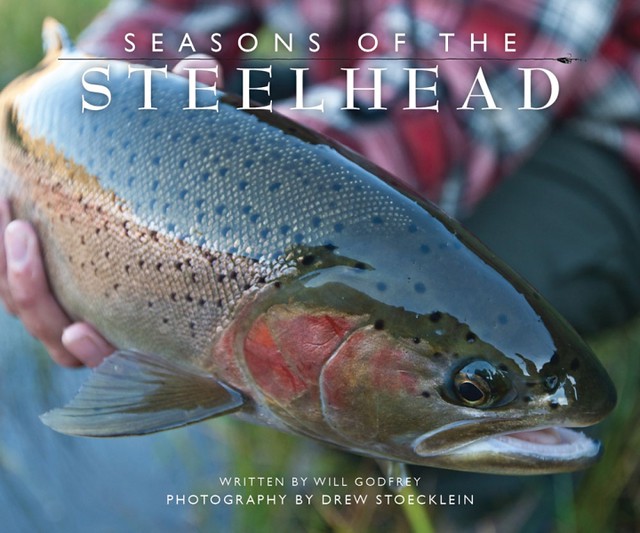
The Complete Steelheader
Northwest of Normal

See you tonight! Be there.

Posted in Fly Fishing Books | Leave a comment

Oregon Silvers: Bringing Sexy Back (part 1)

From TU’s man in Portland, Alan Moore: Recent postings to these pages showing fat n’ not-so-happy silvers sucking poppers off the surface of Oregon coastal waters warmed us to the core here at Conservation Clearinghouse PDX.

The rap on Oregon coast coho that they’re crappy fly biters has always been a bit of an albatross for those of us doing habitat and other fish work on the coast and trying to get anglers and other conservation-minded souls excited about it.

Wetlands&Wood_cohoparadise

Regardless of how one feels about the Oregon coastal coho’s ESA-listed status, the fact that they are listed means much of the conservation funding, attention and opportunity focuses on them first. Not the way it should be, necessarily – we’re working hard to build an integrated, multi-species approach across all of our work – but that’s just the way it is right now.

The ESA tag does help when it comes to getting agencies, funders and restoration hacks like us excited, but let’s face it: when we’re planning a fishing day it’s pretty meaningless. As a species we’re much more likely to invest precious conservation time and resources into fish that will reciprocate by ripping a couple hundred feet of line off our reels. For showing that symbiosis in action, in real time, and for bringing sexy back to silver, Jay, we thank you. The wild coho thank you.

Someday. Maybe. OK probbly not.

For real and lasting coastal coldwater fish conservation to have a chance, we’ll need to recognize over time that it takes a village of fish to make these ecosystems go, just as it takes a broad and diverse range of native plants, bugs and other animals too. Including people. All play a vital role; all have their quirks; all are unique in some way. The closer we look, in fact, it’s often those unique quirks are the keys its critical role in the continuum.

One of the Oregon coast coho’s quirks is its need for slow-water habitats full of cover and bugs to forage and rear in its time as a juvenile in fresh water. Low-velocity water means less energy chasing and fleeing other stuff, and results in bigger smolts. Or “smolt” if you’re proper. Bigger smolts survive to adulthood at higher rates, and make for bigger adults when they do. Of all those coastal wetlands, marshes, side channels and perennial puddles off the mainstem of rivers that we so conveniently drained, filled and blocked as we developed floodplain areas, most were probably coho nurseries chock full of future pink popper-eaters, all or part of the year. Restoring passage, habitat integrity and hydrologic function for adults like these to reach spawning areas is critical for all salmonids, but making sure the progeny have ways to survive to smolthood after they emerge from the gravel is just as critical, and widely overlooked.

This comes as no surprise. Making wetlands, transitional marshes and turbid slackwaters is not sexy, especially competing with restored brawling mainstem reaches and placid babbling tributaries. And 3-inch fish make for pretty pathetic grip-n-grin poses compared to 18-pounders. Despite these handicaps, TU and our many wonderful partners in our coastal work in recent years continue to make sure that these restoring these rearing areas remains a part of our habitat program.

In part 2, we’ll show a couple of these unique projects, including one where the only heavy equipment we’re using to re-route streams is the two front teeth at the business end of large rodents’ mouths, and a way coming up for anyone interested to get involved this month.

-Alan Moore

Posted in Oregon Conservation News, Oregon Salmon fly fishing | 2 Comments

Three Must-Have flies for Elk River……..

Anyone who is planning on fishing Elk River should have the three flies pictured above: non negotiable.

By the way, if you haven’t heard, the Elk is “lit up” as you read this. Might be the best fishing in the last decade there. Just sayin’. Might be a hundred anglers at the estuary, but lots of Chinook too. Lots and lots.

Numerous variations of these flies are just fine, and the Chinook will take to them all. The key issues here are a few patterns that are in the Comet or Boss style, and a fly that is in the Comet Deep Minnow style.

Fundamental characteristics of the Comet/Boss flies are a longish tail and either an orange or chartreuse hackle, with or without bead-chain eyes, and the Clouser could start with Chartreuse, and range into purple, blue, and grey color hues.

What fly sizes to choose? Low clear water fishes best with small flies – the #6-8 range. Dirty or high water fishes better with larger flies, say the #2-4 range.

Don’t over-think fly selection for the Elk, just get yurself some orange and green flies and chuck ’em in the Elk. If there are chinook there, and if they are in a grabby mood, you will get a yank or two. Keep in mind, though, I and other self-proclaimed “expert” salmon fishers have been humbled on the Elk on many occasions. So many times that it hurts. This dispute our having carried two dozen or more fly styles stuffed into our vests and hip packs. It just happens that way sometime. But if you are there when the Elk is “on” with a selection of orange and green Comet/Bosses, plus a few Clousers, you will be in the game just like the “experts.”

Jay Nicholas
Late October 2011

Posted in Fishing Reports, Oregon Fly Fishing Tips, Oregon Salmon fly fishing | 4 Comments

Lower Mckenzie River Fly Fishing Report

Lower Mac Steven 020

The Lower Mckenzie River continues to provide good fishing. From an angling perspective the fall is a very special time not only in the valley but all over Oregon. I have often told folks the fall is the toughest time in the year to go fishing.

Like a good news, bad news joke. The good news; the fishing in the fall is red hot! The bad news; too many places to choose and you can only be at one! This week I chose the Lower Mckenzie.

Lower Mac Steven 033

Lower Mac Steven 044

The skies were clear when we launched but turned to overcast as the day ended. The overcast skies also brought out a fine hatch of small yellow mayflies. We used a Lou brew yellow compara dun, yellow sparkle dun and parachute adams.

Nymphing earlier in the day with the possie bugger and mega prince provided some real excitement when a steelhead decided to latch on to the possie bugger. We spent the majority of the day working some riffles casting to rising trout. Another great day of fall fishing.
LV

Posted in Fishing Reports, McKenzie River | 2 Comments

Klickitat River Fishing Report

Last week I hauled my box of ridiculous steelhead flies the Klickitat River in South Central Washington.

A gauntlet of boats lined the sand bar on the mouth of the Klick, focusing on an introduced tribal coho fishery.

We picked a pullout in the first few miles of river, and my buddy Julian and I started trying out flies. My rabbit string leech looked like a baby tube sock in the water. I put a marabou fly in my mouth, it smelled like like McRib and tobacco, decided the scent worked and tied it on.

IMG_4875

Clouds funneled in through the gorge, brushing over the sharp, shear walls, and a few skinny, disinterested steelhead held near the bank, in slack water at the edge.

A craggy dead tamarack, bigger than any other tree on the horizon reached up like a skeletal hand on the west bank of the river, perch for a big golden eagle.

Is that the bottom?

Julian hooked up. The fish jumped twice downstream, a little dark but thick as my leg. It came in to bank, and the big TMC 7999 popped out of its beak as I reached for it.

IMG_4885

I continued down the run, knocking October caddis loose from the branches of the alders. The clouds at sunset turned the color of a rotting salmon. Continue reading

Posted in Summer Steelhead | 5 Comments

White Salmon River Unleashed

From the Oregonian: With 700 pounds of dynamite, PacifiCorp contractors blasted a hole in the Condit Dam. It will allow the last of Northwestern Lake to empty and begin the dam’s demise.

After two decades of controversy, Condit is the latest and, at 125 feet tall, among the biggest U.S. hydroelectric dams to fall. PacifiCorp concluded that upgrading Condit for fish passage would cost roughly three times more than the $35 million to take it down.

In the Northwest, it follows the breaching of Marmot Dam on the Sandy River, Powerdale Dam on the Hood River and four dams in the Rogue River basin. Removal of two dams on the Elwha River in Washington’s Olympic National Park — the largest dam demolition to date — started in September.

Condit’s fall will unleash one of the Northwest’s cleanest and wildest rivers, originating from glaciers on Mount Adams. The White Salmon is a one-hour drive east from Portland, a magnet for kayakers and rafters, and a potential haven for wild salmon that have teetered on the edge of extinction for nearly a century.

Posted in Oregon Conservation News | 1 Comment

Nicholas’ Mack’s Canyon Summer Steelhead Fly

This fly is the Mack’s Canyon and it isn’t. Does this Nicholas’ Steelhead Simplicity adaptation of the Mack’s Canyon catch fish? Yup. Does it perform any better then the original? Sometimes. At least that’s my story and I’m stickin’ to it. You will have to decide for yourself. The original pattern has a white and orange hackle tail, exhibits a substantial profile, and has an orange and white-topped calf tail wing. While the original Mack’s Canyon is a winner, this variation will bring a solid eat at times when the original fly might only get a little tug or boil, but no solid grab.

Our friend Doug Stewart conceived this fly on one of his jaunts down the Lower Deschutes during the early 1970s. I have had the pleasure of camping, storytelling, and fishing with Doug and his son Dave on the Deschutes. They always, always gave me and my buddy Steve the best camp water to fish. Doug and Dave are friends, great fly tyers, and astute fly fishers. This fly is sometimes referred to as the Max Canyon, and anyone should fish it with confidence wherever summer steelhead roam.
JN Continue reading

Posted in Fly Tying | 1 Comment

To Lane County Commissioners: Oppose Willamette Water Company’s McKenzie Water Right Application

Lane County Commissioners today are hearing a resolution regarding Willamette Water Company’s water rights on the McKenzie River.

From Doug Heiken at Oregon Wild:

The Willamette Water Company is a small water company that is trying develop a big boondoggle to divert scarce water from the McKenzie River to areas south of Goshen where there is no established need. There is no clear need for this water. The company’s current right is for 4 CFS, but they are only using only a fraction of that, and the new application is for 34 CFS. Where’s the need? Why give them 80 times the water they are currently using? How do we know this speculative future need trumps the obvious needs of the river ecosystem?

McKenzie River

You can reach Lane County Commissioners here: 541-682-4203. Or at the bottom of this page is a list of emails.

The Oregon Water Resource Department is asleep on the job. They have not documented any need. They just take the word of the traditional economic boosters who think that the “next big industry” is right around the corner if we just give away more public resources for private profit.

Allocation of water should be a public decision made in the public interest, not delegated to private profiteers who speculate on water rights. Giving up a huge allocation of McKenzie River water to the Willamette Water Company will take the public out of the equation.

There are ESA-listed fish in the McKenzie River, not to mention a valuable recreational fishery. There is already shortage of water in the river in the dry summer months. It makes no sense to move water that far outside of the McKenzie watershed.

Posted in McKenzie River, Oregon Conservation News | 3 Comments

Product Review: Gary Krebs Popper Jig Set

The Gary Krebs Popper Jig Set provides a simple, straight-forward means of transforming a plain foam cylinder into a cool looking, easy to cast, highly effective popper body.

See the ratty lookin’ popper pictured above? Half the legs gone, tooth divets and all? This was one of my very first attempts in making a popper using Gary’s popper jig set. The teeth marks left many many exciting and joyous memories. My poppers look more professional now, and they hold up better to coho salmon attacks, but this first popper did the job on silver salmon in fine fashion. Yeah baby.

We shot this series of videos to help understand the tool, show it in use, explore some of the “do’s and dont’s” of cutting popper bodies and gluing hooks into them, and finally featuring tying a popper with a body cut with the Gary Krebs Popper Jig tool. Well, in the spirit of easing the viewer’s pain, we chose to break up the videos into a series of short segments. Continue reading

Posted in Fly Tying, Fly Tying Materials and Supplies | 3 Comments

Late Season Guide Trip Special Returns

IMG_2814

Starting Oct 26th and ending Nov 30 The Caddis Fly Guide Service offers a late season Trout or Steelhead half day guide trip special. The trip will be 4-6 hours during the best time of the day for either Steelhead or Trout whichever the guests choose. Trips will be via McKenzie Style Drift Boats on the McKenzie and Willamette Rivers. Trips will include all equipment and flies, but will not include lunch. All this for just $250 bucks, give the shop a call and reserve your date today. The weather looks to be holding for a while longer, water conditions are excellent and fishing has been very good.

Shop Phone: 541 342 7005 email: Caddiseug@yahoo.com

IMG_2811

Posted in Lower Willamette, McKenzie River, Middle Fork Willamette River fishing, Oregon Fly Fishing Tips, Shop Sales and Specials | 1 Comment

Silvers still eating poppers on the coast. Really. No foolin’.

fly fishing for silver salmon

Coho salmon fly fishing on the oregon coast

Coho salmon fly fishing on the oregon coast

October 21, 2011. Think popper fishing for salmon in Oregon is over for the season? Nope. Think that it is only in T-Bay where Silver salmon (coho) eat poppers? Nope again. Eight days fishing poppers this season so far. Fish boiled every day. Sometimes a few. Some days so many that counting is silly. Not every coho eats the popper, but it is such an adrenaline rush that it doesn’t really matter.

Fast strip. Wind. Hard focused work. Exciting. Not easy. This is the most demanding, most exhausting fly fishing I have ever experienced. More casts, faster retrieves, more line cuts, swollen tendons and knuckles. White, red, yellow and black, red and black, green, green and black, orange and black. and (fill in the color preference here) foam bodies in the River Road Creations Foam Cylinders (7/16″ and 1/2″) cut with the Salt water Gary Krebs Popper Jig Set have been on he menu so far.

Think this fishing is hot? Sometimes two chrome silvers will follow and boil on the same retrieve. Expect to make a hundred casts for every boil. Expect 3-4 explosive boils per take. Expect to be surprised as all get out when they chomp your fly. Yes, I call these a fly. So there. The fresh fish are still coming in, mixed with Kings, and those are the fish I am determined to bring up to a popper, eventually anyway. No retention on the silvers, but a lot of fun and think Kings please please please.

Jay Nicholas October 21, 2011

Here’s the scoop on the tackle I have been fishing…
Echo 3 SW 7 wt.
Airflo Tactical Stelhead 5 wt. (no tip)
Airflo Ridged Running line
10# Maxima Ultragreen leader

Coho salmon fly fishing on the oregon coast

Coho salmon fly fishing on the oregon coast

Posted in Fishing Reports, Oregon Salmon fly fishing | 8 Comments

Off the Grid is here!

Off the Grid Fly Fishing DVD

Shot in Mexico, Alaska, British Columbia, Montana, Wyoming, Colorado, Florida, Northwest Territories, and a few surprise locations, this collection of films is about places that are off the beaten path. It is about people that live the fly fishing lifestyle, not to be a name, but because fly fishing is part of their soul. It is about unspoken hatches, unknown fish, and rivers that will go unnamed.

Here’s R.A’s own description of the new DVD:

“Two years on the road filming in an assortment of locations around the world. All of the films are connected by a common theme: there are places that, for our crew, were out of the ordinary. We basically tried to avoid as many of the “Big Name” waters, hatches and fishing grounds as we could. We do visit a few regions that are by no means off the beaten path, but try to show them in a different light. All said and done, the DVD boasts over two hours of fly fishing content – almost too much fish for the non-diehard. Here’s what’s on the disc:

Off the Grid:
The “title track,” so to speak, is the hour-long master cut that ties all of the major locations and segments into a somewhat cohesive story.
Bluewater:
If you spend 9 days on bluewater boats in the middle of the ocean, off the coast of Guatemala, fishing with the best captains, crews and anglers in the world – it turns out you get a ton of killer Marlin and Sailfish content. Bluewater is a short film about chasing some of the largest and fastest fish in the sea – with a fly rod in hand.
Midwest Tour:
With segments featuring brookies in Michigan, carp in the Great Lakes and pike and smallies in Wisconsin Rivers – this film offers a brief look into a few of the fishing opportunities in the Midwest.
Short Films:
We’ve included over a dozen short films – Drake Magazine award winners, instrumental action cuts and other short stories.
Action Cut:
Some people would go so far as to call it “Fishporn.” We’re not really sure what it is – except for a 15 minute montage/collage of our favorite
fishing segments and clips, cut to music. What we would loop at a party or while tying flies.
Extras:
We’ve never really consciously filmed any fly tying instructionals, but low and behold, we ended up with three segments as a result of all the filming. Nothing fancy, just three very gifted tiers showing you their favorite patterns.
Come and get your copy of R.A. Beattie’s new film collection, Off the Grid by calling the Caddis Fly: 541-342-7005 or visiting our e-commerce site: http://www.caddisflyshop.com/off-the-grid-dvd.html

Posted in Fishing Porn, Fly Fishing Books, Shop Sales and Specials | Leave a comment

Steelhead will eat anything

Or so it would seem, based on the box of flies I’m packing for an upcoming trip to a summer steelhead river east of the Cascades.

When tying steelhead flies, or really in life, there are only two rules.

Rule #1: All action is good action.
Rule #2: If things get weird, see rule #1.

IMG_4816

Most of the flies in my box look like alien life forms dressed in drag, or a squid at a rave. Glittery pastel colors, silver-painted lead eyes. The rest look like taxidermy song birds or rodents. To some extent, that’s what they are… mostly feathers and rabbit with a little mylar.

If a steelhead is supposed to hit a fly out of aggression, then I think I’ve achieved what most fish would consider an affront to nature. They’ll all swim as if they need to be put out of their misery. And probably half of these flies would actually work.

I grew up in the Midwest, fly fishing for pike – fish that will eat anything for a different reason, because they are crazy hungry! Six years into chasing fish that don’t eat, I’ve started piecing together what I consider some rules, or guidelines.

Steelhead like motion. Crazy marabou, flapping rabbit, gangly ostrich herl. Put it on there! I want articulated leeches four inches long. And forget the tubes (though I do like Pro Tubes). But shanks just shudder and juke in the water better than a plastic straw wrapped in feathers. For all you tube fans, this is my rulebook, go start your own.

Put on that rubber! Seriously, there’s no fly pattern that wouldn’t benefit from rubber legs. Popsicle? Sure. Green butt skunk? Put ‘em on there. And don’t even get me started on those curly tails. Super hot. See rule number one.

Get heavy. I’ve been casting heavy flies most of my life, because I don’t trust skinny people or things. And I certainly don’t trust fly line manufacturers who’re guesstimating how fast their sink tips will drop in the water column. I’d much rather control my depth with fly weight and swing speed. The welts on the back of my head are the proof.

Just tie a dozen egg sucking leeches. With big pink beads, lead wraps, rubber legs, UV flash material in the tail… and that’s it. One fly. I won’t even take my own advice, because I’m too busy making abstract art projects out of dead chickens, hopped up on head cement fumes. But seriously, that’s the one fly.

And that’s how cults are formed. Steal ideas from other people, apply causality to a few coincidences, sacrifice some small animals and all of the sudden you’ve got a way to make sense of a random world.

Disclaimer: I have probably caught less steelhead than anybody else who writes for this blog and have a mental block against dry flies, scandi lines, and doing things the easy or correct way.

-MS

Posted in Central Oregon Fishing Report, Fly Tying, Summer Steelhead | 9 Comments

Tiger Trout — coming to Fish Lake, OR

ODFW will stock tiger trout fingerlings in Fish Lake for the first time this morning.

“Tiger trout are a unique fish being used in a unique situation here at Fish Lake,” said David Haight, Assistant District fish biologist. “They tend to be more aggressive and are easier to catch than other predatory trout like brown trout. They should also feed on the minnows – tui chub and fathead minnows – that are in Fish Lake and be catchable by next summer. Angling will be catch and release.”

Taking a little restPhoto by El Frito

Haight explained the minnows were illegally introduced into Fish Lake and have taken over the lake’s ecology and harmed the trout fishery. Fish Lake has been treated with rotenone several times over the years, but too many springs prevented an effective treatment. ODFW has also been stocking spring chinook to provide a better fishery for anglers.

ODFW is stocking about 1,500 tiger trout fingerlings this year. These fish are a sterile hybrid of brook trout and brown trout. Both brook trout and brown trout are currently present in parts of the Rogue watershed.

Posted in Oregon High Lakes, Southern Oregon | 4 Comments

Jeff Hickman’s Flash Taco Steelhead Fly

Our wild and crazy friend and fishing buddy Jeff Hickman knows Steelhead, Salmon, Trout, and the flies they love to eat. His innovative and effective fly patterns are featured by Idylwilde Flies, and we fish these sweeties all the time. Sometimes we tie our own, but often we just buy them out of the bins at the Caddis Fly: no time to tie them and no way to do better than Idylwilde’s commercial offerings that Jeff has personally approved.

Hickman’s Flash Taco is one of these hot flies. Tied here on Fish Skull Articulated Shanks, we have come close to the official Hickman/Idylwilde fly. This fly uses a new Holographic Flashabou color, is light, casts easily, and fishes on sink tips to put us in the steelhead zone.

The colors shown here are an effective combination, and you can mix it up, combining different colors and sizes to suit your personal style and the places where you fish. This fly is a steelhead and Chinook attractor among the best of the best.

IMG_2756

Jeff Hickman’s Flash Taco

Shank/Hook: Fish Skull Articulated shank 35mm/Gamakatsu Octopus #2
Stinger Line: Maxima or Fireline
Thread: Lagartun 150 Shrimp Pink
Butt: Chartreuse Ultra Chenille standard
Body: Hot Pink Trilobal Chenille Small
Palmer Hackle: Fl. Cerise Chinese Saddle
Collar: Ice Wing Fiber Blue Purple Back, Holographic Flashabou Pink, Strung Guinea Hot Pink

Posted in Fly Tying | 2 Comments