Ramsey’s Goofball Fly Tying Video

Ramsey’s Goofball has become one of our favorite fly patterns for 2013. The Goofball is a great general attractor, and it can imitate numerous insects. This Winter/Spring we used a green Goofball for a Cicada in New Zealand. In April we used the same green version for the McKenzie Caddis on both the McKenzie and Middle Fork of the Willamette. In May and June the Orange and Yellow versions are excellent patterns on the Deschutes for salmon fly, and golden stone imitations. Throughout the summer the Goofball is an excellent hopper dropper dry fly. As we move closer to the Fall I look forward to using this version for an October Caddis imitator. The tan version is an excellent pattern for a short winged stonefly.

Matt Ramsey, creator of the Goofball and other killer fly patterns like, Husker Du, Pan Fish Spider, Chernobyl Squirrel and Mouseketeer resides in Eugene and guides locally and afar in Mongolia. Matt stopped by to tie the fly. We made two videos, one without sound and sped up, and one with a full explanation of each step. Enjoy.

Ramsey's Goofball video  soon on oregonflyfishingblog.com

Materials for Ramsey’s Goofball

Hook: TMC 5212 # 8
Thread: UNI 3/0 Orange
Tail: UV Pearl Krystal Flash
Wing: Elk Body Hair
Butt: Trilobal Orange Dub
Abdomen: 2mm Orange Foam
Rib: 4x Tippet
Hackle: Brown Saddle Hackle
Thorax Hackle: Grizzly Saddle Hackle
Legs: Grizzly Med Round Rubber Legs

Posted in Fly Tying, Fly Tying Materials and Supplies | 2 Comments

Caddis Fly Shop Albacore Adventure August 2013

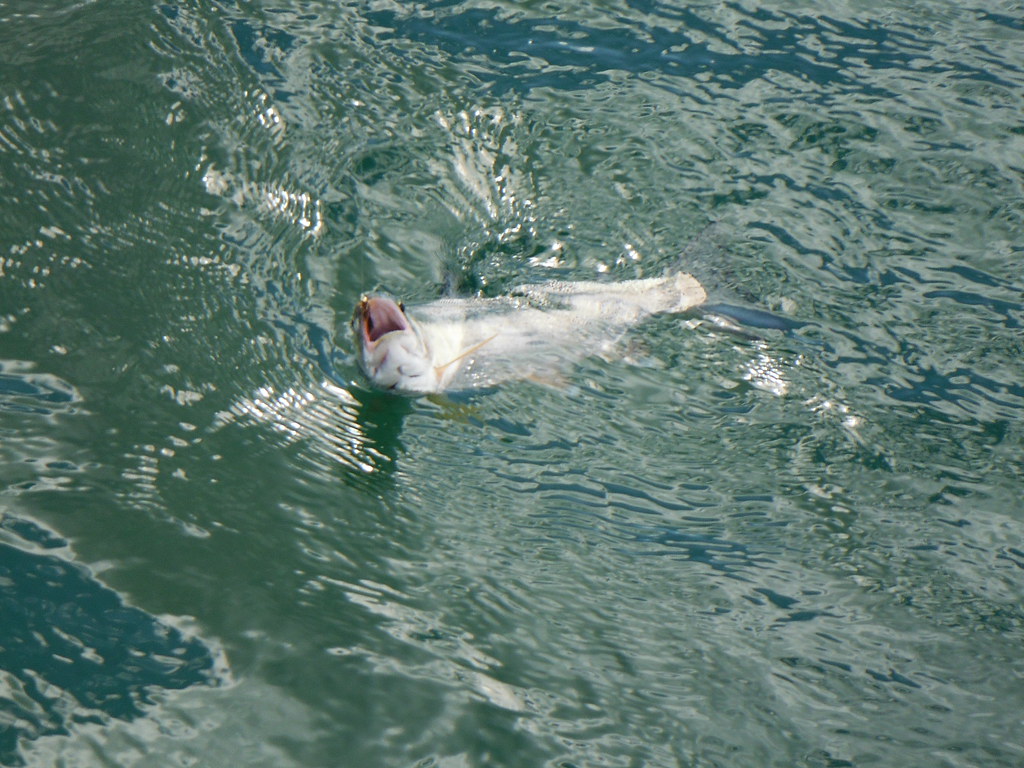
The Caddis Fly Shop partnered with Capt Jad Donaldson and his fine vessel, the OPPOR-TUNA-TY, a 42 ft all weather craft powered by triple 300 hp engines, to fly fish for Albacore Tuna in the Pacific Ocean west of Garabaldi, on August 18 and 19, 2013.

We had a wonderful time. We cast the fly to Tuna, caught just enough to make our hearts full and open our minds to the possibilities out there west of our usual trout, salmon, steelhead, and carp haunts here in Oregon.

We did not troll, although we could have if circumstances required.  We all caught Albacore on the cast and retrieved fly.  We were all amazed by the fish and the overall quality of the experience.

‘Nuff said.  Here are some trip photos.  If you have the interest, we will be pleased to help you connect with Jad or you may contact him directly.  He provides a first class, highly affordable opportunity (OPPOR-TUNA-TY) to actually cast a fly to one of the hottest fly rod fish in our home waters.

Best to you all.

Jay Nicholas, August 2013

Posted in Fishing Reports, Oregon Saltwater Fishing | 1 Comment

Tackle Recommendations for Saltwater Fly Fishing

I am very late to the Saltwater fly fishing game, yes indeed, but striving mightily to make up for lost time.

A lot of folks have been calling and emailing asking about appropriate tackle, rods, reels, lines, leaders and such, for fly fishing in the ocean.  This post is intended to lay out just a few ideas and opinions to give people the confidence to get out there and give it a go.

First order of business is to say that if you get a chance to go fish in the salt, just do it.  Sure it would be better to have salt-dedicated gear, because the ocean can be really harsh on one’s tackle.  High end rods and reels of all brands are generally all-water componentized, with the exception of cane and the under-6 wts, so any of your best rods in the 6+ wt range with high-end fly reels will probably stand up to the salty brine, given a rinse after fishing.

Complete Saltwater Outfit Packages: take a peek online or just call or email the Caddis Fly and ask for a package deal on rod, reel, line, and backing.  The staff are skilled at assembling combo outfits that are properly matched to the species and fishing conditions you will encounter and these package deals offer significant savings if you decide to get a complete package.  Any rod, reel, and line can be included in every price range, so consider this option if it seems like you are going to give saltwater fly fishing a decent commitment.

The following recommendations are personal; and these are not brand-name based, and intended merely to help you feel the excitement of dreaming about fishing in the Ocean.  It is wonderful, not really knowing what might be about to close its mouth on your fly.  Big fish and small fish, fast fish and stubborn fish, they often live together, and it is like being a kid again to head west with fly rod aboard.

Black Rockfish Tackle:

Rod wt: I like to fish a 5 or 6 wt if the fish are in the upper 20 ft of water.  If they are down at 40 – 50 ft depths, you will probably need  an 8 wt that will cast a fast sinking fly line.

Reel Capacity:  Rockfish do not need much backing.  That said, one could easily intercept a coho or Chinook salmon when fishing for the Blacks. for this reason, I always want at least 100 yds of backing and I prefer 150 yds even when fishing 4 or 5 wt rods for Rockfish.  This is an insurance issue, not a requirement for the target species.

Fly lines:  Black Rockfish can be caught on floating or intermediate sink fly lines when they are feeding in the top 6 or so feet of the water.  These bottom-fish will often feed on the surface and it is really exciting to see them rolling and slashing the surface, sometimes porpoising in their rush to intercept the feed.  That said, my day-in, day-out fly line is a fast sinker.  RIO lines that get the job done include the Striper line, the Outbound, and the new Outbound Shooting Head. Airflo fly lines that offer fast sinking tips include the Depth Finder, Coldwater Sniper and Ridge Striper Line.  The SA Streamer Express is another fast sinking fly line that fishes well.

Leaders:  I have fished leaders as short as 3 ft and as long as 12 ft for Black Rockfish, in tippets that ranged roughly from 10 to 20 pound test.  I believe that one very important issue with leaders for many fish species, Rockfish included, is using a loop knot so that the fly can work and wiggle. Next, there is the matter of adjusting leaders to presentations at different depths.   When striving for deep presentations with heavily weighted flies, a leader of about 6 ft is a good balance of castability and keeping the fly attuned with the sinking rate of the line. When making presentations closer to the surface, with smaller flies, and with unweighted flies, you I feel like I can cast and fish more effectively with a leader in the 8-9  ft range.  I really like a leader as follows using RIO Hard Alloy Nylon: 2 ft 20 lb; 3 ft 16 lb; and 4 ft 12 lb.  This material is tough, stiff, casts easily, and is plenty strong for even the occasional Coho or Chinook one may hook while fishing for Rockfish off Oregon.  This material is thicker than my old favorite, Maxima Ultragreen, but I think it out-performs in terms of durability.  Big Ling Cod have succumbed to these leaders too, and I just like the way the stiff nylon holds its straightness, after much fishing use and many fish caught.  This is a surprising case when thicker and stiffer leader material is preferable to more limber material.  Again, this is personal, so if you have any other leader, it will work.

Salmon Saltwater Fly Tackle:

Rod wt: I like to fish a 7 wt anytime I am pursuing silvers casting to rolling feeders or bucktailing  behind the boat.  If silvers are are deep or if you are targeting Kings in 40 – 50 ft depths, you will probably need  an 8 or 9 wt that will cast a fast sinking fly line with a 350 to 400 gr head.

Reel Capacity:  Salmon can make nice respectable runs, so figure on a 200 yds of backing just in case you hook a big one.

Fly lines:  Bucktailing can be done with any fly line, because the boat’s speed will keep the fly near the surface.  If you want a waking buck tail, you should choose a floating line and keep the fly close in the prop wash.  Fishing a long line with a fast sinking head will only put your fly down a foot or so, and there are times when the foot-deep fly trolled 90 ft behind the transom is the preferred presentation.  Deep water presentations of the cast fly to salmon require one of the sinking lines noted above by RIO, AIRFLO, or SA, preferably in the 300 – 400 gr head weight that achieve a sink rate of 6 or more inches per second.

Leaders:  This is where I am today on the subject of Coho Leaders.  I am tying a 9 ft leader using RIO Fluoroflex tippet as follows: 2 ft + 3 ft + 4 ft.  Leaders for trolling bucktails go from #25 to #20, to #16 lb Fluoroflex.  Leaders for casting to silvers go from #20, to #16, to #12 Fluoroflex.  As always, if you have a stash of Maxima Ultragreen on hand, it will fish and perform with dependability, so don’t feel like my bias to Fluorocarbon should be taken too seriously.  Always use a loop knot to allow the fly to work freely.

Albacore Tuna Fly Tackle:

Rod wt: 12 wt rods are spot-on.  These are very fast, very strong fish.  You may think a 10 wt will be fine but it won’t be.  Get the 12 wt. Your friends who are waiting for you to land your Tuna so they get a turn to cast will thank you too.

Reel Capacity:  300 yds of 30 lb Dacron.  Get Super Braid if you can afford it and load more than 300 yds if it fits.  Never know when you might hook a 45 pounder that could clean you out.

Fly lines:   Remembering that I am a beginner myself, Jad Donaldson tells me that we want a fast sinker like the RIO, AIRFLO, or SA lines mentioned above, with preferred lines being the RIO Leviathan, AIRFLO Big Game Depthfinder.  These lines are fast sinkers, have stronger core strength (over 50 lb) and are longer (in the 150 ft range).  These qualities all combine to make for a perfect package for the stress regime that Tuna can subject your fly line to.

Leaders:  Whoa baby, these fish will stress your leaders.  To date, I have fished two-step leaders of 8-12 ft.  The long leader was a mistake, tied in the frenzy of fishing after having just broken off an Albacore at the fly using #20 Ultragreen.  A Blue Shark hit my line (or my line hit the shark) and the fish with fly was gone.  Instead of removing my old tippet i added another section of #20 Ultragreen making my leader a full 12 ft long.  This was awkward indeed because I proceeded to hook an over 30 lb Tuna that required me to reel the fly line inside the tip in order to bring it close enough to gaff.  Sorry for the ramble.  I have not had time to fish Fluorocarbon leaders for Tuna but that is next on my list.  JadDonaldson regularly fishes Fluorocarbon leaders with tips that range from 15 lb to 25 lb.  So far, my personal successes and failures in the leader department have been using Maxima Ultragreen as follows.  2 ft #30 + 7 ft #20 lb.  Simple.  Now I hope for more days to experiment with fluorocarbon as several of my more-experienced Tuna Fly Fishers say I should.  Just tellin’ it like it is today.

General list of  very good Saltwater Fly Rods:

Echo 3  SW: and Echo Prime,  and; ION

Redington Vapen ; Vapen Red, and Predator

Sage:  Xi3; ONE, and the new Sage MOTIVE

General list of  very good Saltwater Fly Reels:

Nautilus N/V and CCF Reels

Bauer Rogue and CFX

Hatch Finatic 9 or 11 (I really like the capacity of the 11)

SAGE 8000 pro and Sage 6000 Reels

General list of  very good Saltwater Fly Lines:

RIO Leviathan, Striper, and Coldwater Outbound

AIRFLO Depth finder & Depth Finder big Game, Coldwater Sniper, and Ridge Striper

SA Streamer Express

Hope this helps, have fun, get out there!

Jay Nicholas August 2013

Posted in Fly Fishing Gear Review, Oregon Saltwater Fishing | 6 Comments

Sage Method and Rio Switch Chucker Demonstration Video

George Cook demonstrates the new Sage 7119-4 Method Switch Rod. The Method 7 weight switch is the do it all rod for large anadromous species, streamer fishing and beyond. I found it to be the easiest switch rod I have ever spey cast. The new Rio Switch Chucker fly line gives anglers a “spey castable” line as well as a nymphing line when the indicator needs to come out. The Switch Chucker is vastly different than the Rio Switch Line and Rio Indicator Line which have been popular “winter steelhead nymphing” lines on the West Coast.

The Switch Chucker will play the nymphing game without a doubt, but where it excels is in it’s ability to cast the added sink tip or poly leader. Imagine your out Winter steelheading and you know your in a prime run or slot water with fish holding in it. Your confident you can tie up the “bobber rig” with a lowly glowly egg pattern and an indicator and get the job done but you really want to swing a fly through the run first. With the Rio Switch Chucker you can add a MOW tip a short leader and a heavy fly and give the run a deep probing swing with your switch rod. Instead of struggling with line designed for nymphing you have a line that will turn over that heavy fly and tip for the swing. Now if the swing doesn’t get the job down quickly remove the MOW tip and put on the indicator and get back to the business of dead drifting. No muss no fuss, one line does it all and does it well!

Posted in Fly Fishing Gear Review | Leave a comment

Salmon Slam 2013 update

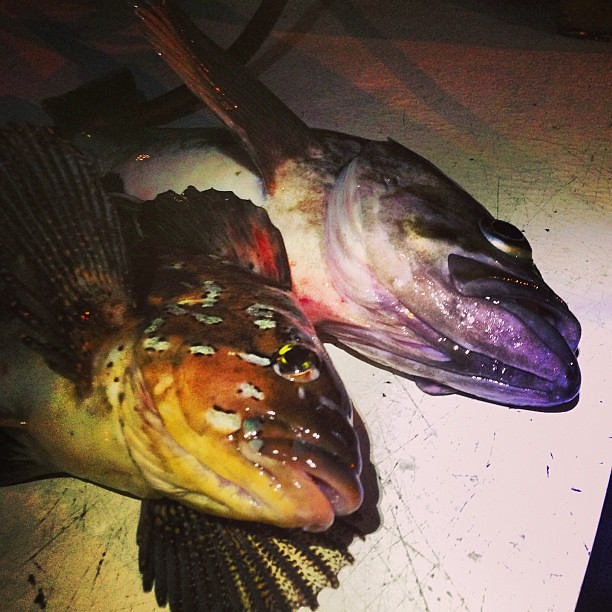
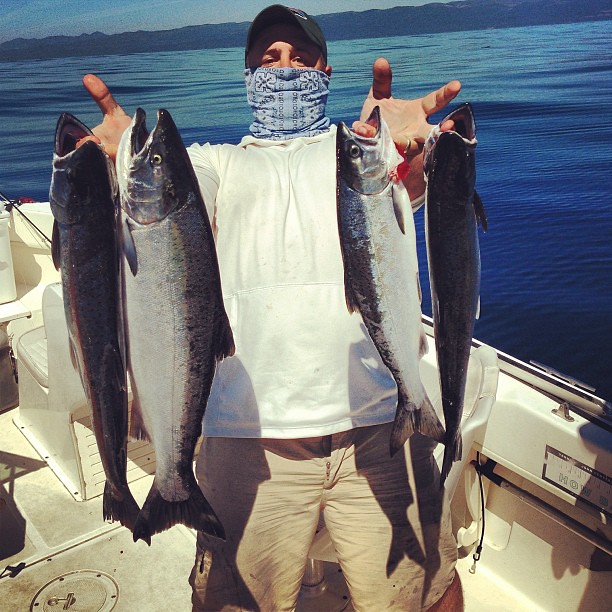
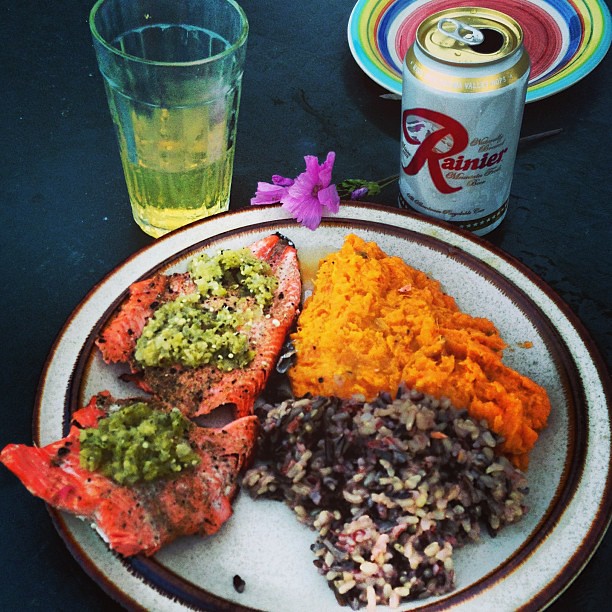
Midweek report from Sekiu, WA: Salmon slam is well underway with lots of hatchery silver salmon pulled out of the saltwater off the northern edge of the Olympic Peninsula. This is a big pink salmon year, but the tricky little guys are hiding down deep. No matter, the silvers are game, and with a few extra guests this year I’ve been forced to use the fly rod a bit more, and it’s paid off. The old-school technique of bucktailing — dragging a bucktail fly behind the prop wash of the boat at relatively high speeds — is really working out this year.

Back to Sekiu

upload

upload

At request

upload

-MS

Posted in Fly Fishing Travel, Oregon Saltwater Fishing | 1 Comment

Tying a Kilowatt Steelhead Fly on a Jig Hook Fly Tying Video Instruction

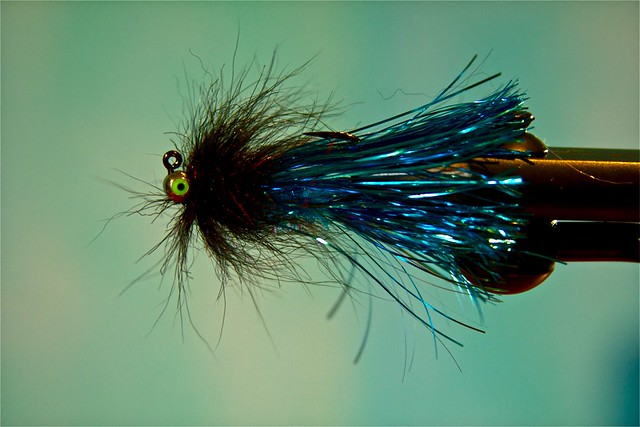
Jay Nicholas claims that black and blue are well-known steelhead attractors. He’s probably right on that one. So is Flashabou. Jig hooks keep a swinging fly from snagging on rocks and sticks more so than a traditional down point hook.

Combine these features and you have a very simple fly to tie that fishes and fishes, and will be effective for salmon and steelhead wherever these fish live. Winter and summer steelhead, Kings, Silvers, lake-run Browns, and Atlantic Salmon should all eat this fly and it can be tied in any variety of Flashabou and body color combinations that please you and the fish in the local area where you may be fishing.

This Kilowatt is tied with Hareline Balz Eyes instead of the standard lead eyes because they look great and are incredibly durable, whereas the lead eyes will chip and break off when they bounce against rocks

If you insist, this fly can also be fished under a bobber. There. Said it.

The Kilowatt steelhead fly may be tied as an adaptation on a traditional hook shank with straight, turned-up, or turned-down eye. Your choice.

Fly 17

Key materials of this Kilowatt Steelhead fly are noted as follows:

Thread – Veevus 6/0 or 8/0 red

Hook – Daiichi 90 degree Standard Jig Hook D4660 #1
Hook alternative – Gamakatsu 90 degree Jig hook #1
Tail – Hareline Flashabou, Dark Blue or your variation
Body – Hareline Cactus Chenille, Minnow Blue
Collar – Black EP Foxy Brush 1.5”
Dumbell Eyes – Hareline Balz Eyes, 5/23 medium, your color
Wire Cutters – Dr. Slick 4.75” Gold Barb Crusher Scissor Clamp

Posted in Fly Tying, Fly Tying Materials and Supplies | 1 Comment

Redington Butter Stick Fly Rod is a Pleasure to Cast and Catch

IMG_1097

I got a chance to fish the Redington Butter Stick fiberglass fly rod this past week on our family trip to Idaho. I had the 7’6″ 4wt 3 piece model with me and figured it would be perfect for the Big Wood River, Big Lost River and others in the area. Due to the Beaver Creek fire, fishing around Ketchum itself was a bit challenging this past week with smoke and ash in the air. We headed to Redfish Lake and the Salmon River for a float and fish. The Salmon out of Stanley is all new to me and I am not sure mid-August and low river conditions are the best for fishing but we had a good time nonetheless.

watermaster on the salmon river in idaho caddisflyshop.com

The Redington Butter Stick is a joy to cast and is surprisingly progressive in it’s action. Fiberglass is very slow compared to graphite of course, but the Butter Stick is not so sloppy that tailing loops occur every time you lose you casting stroke a bit. You can press on the rod in the wind and it will turn over a 9 foot leader with a size #12 bushy dry with ease. I did not fish the rod with a nymph or hopper dropper set up but plan to this week on the McKenzie. The rods soft tip and moderate “glass action” is going to be perfect for swinging wets on the lower McKenzie and elsewhere.

redington butter stick

We didn’t catch any big fish on our trip but the small rainbows and cuttbows we did catch put a fantastic bend in the rod. One of the best attributes of the rod is definitely it’s “fish fighting flex”. I can’t wait to hook a 17 inch fish with the Butter Stick!

I was somewhat concerned about the length of the rod I used. At only 7’6″ I figured it’s mending and roll casting might be hampered a bit. While fishing a single dry I really didn’t notice the length of the rod being a problem at all. I had the Rio Perception line on it which has a head of about 35 feet on it and it cast very nicely, even at distances over 40ft. If you are looking for another light rod with character and added enjoyment of mega flex with a fish on, give the Redington Butter Stick a look.

Redington butter stick at work. Sweet stick 476-3 casts awesome with the Rio Perception

IMG_1138

IMG_1146

Posted in Fishing Reports, Fly Fishing Gear Review | 1 Comment

Lake Erie Bass Fly Fishing

lake erie large mouth bass

Bass fishing… yep.. ole billy bucketmouth… They love bugs and the Lake Erie watershed is one of the best places in the world to find them. Don’t believe me?

The Lake Erie & Lake St. Clair took two of the top five spots in Bassmaster’s 2013 lake ranking…http://www.bassmaster.com/news/100-best-bass-lakes-2013

Freaking Bassmasters…Alabama based… song of the south Bassmasters!

Ok… so now that?

lake erie bass fly fishing

Get your fly rods out and start exploring…

Lake Erie is a warm-water fly fishing Paradise. For many anglers when they think of fly fishing the Great Lakes the tendency is to think about opportunities for steelhead and salmon. Fantastic opportunities for these fish are abundant and there are many to be caught, but that is only part of the story. Musky, Bass (White, Smallmouth, Rock, and Largemouth), Panfish, and numerous other warm water species fill the near shore reaches of Lake Erie and are available to fly anglers from boat and on foot.

lake erie fly fishing with nate stansberry

Fly fishing begins on Lake Erie once water temps reach 50 degrees typically at the end of April with consistent fishing continuing through October. The Islands of Lake Erie’s western basin as well as many of the harbors and marinas across Erie’s southern shore will hold huge populations of Black Bass throughout spring, summer, and fall and are easily accessible to the fly rodder. So how many fish are we talking about? Forty fish days on fly gear isn’t uncommon and if you want a 6 pound plus smallmouth you will get your shot. But what about largemouth? Same… in fact while they are a little smaller than their southern counterparts fishing for largemouth bass in Lake Erie is fantastic!

lake erie water fowl

So what do you need to get the job done? In most situations on Lake Erie fly rods between 6-8weight and 9 feet in length (or shorter) will be the preferred size. If I had to pick one size rod to have on Lake Erie it would be a 7wt. 9ft. fast action multi-piece fly rod from a reputable manufacture (a few of my favorites include Winston, Orvis, Echo, and Sage). Ironically this is the same set up many anglers already have to tackle steelhead on our local river systems. Heavily tapered lines are the rule and either floating or intermediate (slow) sinking and should suffice in a majority of fishing situations on Lake Erie. Tapered leaders between 6-9feet are normal and as a rule larger flies require shorter leaders, while a longer leader lender to a stealthier presentation for smaller flies in shallower water. Leaders should match the size and conditions anglers are faced with, but 12-6 breaking strength should handle most situations.

lake erie bass fly

Bottom line!

If you like fly fishing warmwater Lake Erie is for you!

lake erie fishing with stansberry sportfishing

Headed to the mid-west?
Shoot me an email nstansbe@gmail.com

NS

Posted in Fishing Reports | Leave a comment

On site fishing from OregonFlyFishingBlog

Jay Nicholas sent me this one this morning from the Albacore Trip. They head out tomorrow as well so I am sure we will be hearing much more about the trip.

jay nicholas Tuna fly fishing on the oregon coast

upload
I found these photos on Matt Stansberry’s flickr page, Salmon Slam is under way.

upload

Posted in Fishing Porn, Fishing Reports | Leave a comment

Sixth Annual McKenzie River Two Fly Tournament

Mark your calendars for the sixth annual McKenzie River Two-Fly Tournament October 5th 2013, brought to you by the Caddis Fly Angling Shop and your local native-fish supporting guides. Since it’s inception, the tournament has raised $25,000 for habitat restoration on the McKenzie River.

This is your chance to fish with some of the best guides on the river at the best time of the year to catch big wild trout. And all funds go to help protect and restore our resource.

McKenzie River two-fly tournament contestants

McKenzie River Two-Fly Tournament

McKenzie River Two Fly Tournament

McKenzie River Two Fly Tournament

McKenzie River Two Fly Tournament

Daughters 009

Two Fly Tournament

The event starts on a Friday night October 4th, with a group of anglers, conservationists, and family gathering around your favorite fly shop, buzzing with fishing chatter and local Ninkasi beer on tap. Mazzi’s portable woodfire pizza oven in the parking lot, kids piling ripe local vegetables, sausage and cheese on fresh tossed dough.

A representative from McKenzie River Trust will talk about the work that organization was doing. Good work, taking care of the land around our river and putting it back into the floodplain, repairing broken, nearly invisible systems that are integral to the river’s survival into the coming decades.

The rules are simple: Anglers fish in teams of two. Each picks two flies. Take photos of them, don’t lose them. Fish 9am to 5pm. Guides are judges, tape your biggest fish and take a digital snapshot. Your three biggest fish might add up to a win. Prizes TBD this year, but past winners have walked away with gorgeous fly rod and reel outfits, resort accommodations, and other fly fishing gear.

Special thanks to the guides who sacrifice a day’s pay in the best part of the year to give back to the resource.

Cost is $750 per boat, or $375 per angler. Contact the shop for details on how to register 541-342-7005. Space is limited, so sign up now.

Posted in McKenzie River, Oregon Conservation News | Leave a comment

Tube Sunrise Pink Bead Head EP Bugger Fly Tying Video Instruction

Jay Nicholas goes at the tube fly craze with abandon here – because Tubes seem the perfect vehicle for tying any and every bugger fly in the fishing universe. Buggers are long flies, and the use of a short shank hook with a tube seems a great alternative to the traditional long shank hook because it should hold better (no leverage from the long shank) and should be easier on the fish, plus the fly should last longer too, allowing us to tie more color variations to stock yet more fly boxes.

The EP Tarantula Hairy Legs Brush in the ½” width makes a great body for buggers. WE have been using this material in several colors during 2012 on many salmon flies and find it simple to use and the fish find it quite tasty as well.

Fly 16

Key materials of this Sunrise Pink EP Tarantula Tube Trout/Steelhead Bugger are noted as follows:

Thread – Veevus 6/0 or 8/0 red

Hook – Daiichi Short Shank Straight Eye D1640 #4 to #8
Mandrel – Small Pro Sportfisher Flexi Needle
Tube – Small Classic Pro Sportfisher Tube, black or clear
Hook Guide – Pro Sportfisher small, clear, orange, or red
Tail – Hareline Hot Pink Wooly Bugger Marabou
Tail Flash – Krystal Flash Hot pink
Body – EP Tarantula Hairy Legs Brush, ½” width, pink/yellow
Bead – Hareline Tungsten Plumeting Bead 7/32
Wire Cutters – Dr. Slick 4.75” Gold Barb Crusher Scissor Clamp

Posted in Fly Tying, Fly Tying Materials and Supplies | 1 Comment

Gripshooter, Redington Dually and Skagit Max Demonstration Video

We continue our series of product discussions with Far Bank’s northwest sales rep George Cook. In this video he focuses on Rio’s new shooting line. Gripshooter couples a handling line section of 14 feet made of traditional floating line with slick shooter for easy handling, awesome “shootability” and a built in distance marker. Gripshooter is brand new from Rio products and is a must for all anglers who like how mono running lines fly out of the guides. Other products utilized are the 6126-4 Dually Spey Rod and the new Skagit Max skagit style shooting head.

Posted in Fly Fishing Gear Review | Leave a comment

Fly fishing links: Searching the Web to waste your workday

Readers, there are a lot of fly fishing blogs out there, some of them updating infrequently, but still kicking out important and/or entertaining stuff.

Osprey Steelhead News notes a warm-water fish kill on the John Day. “ODFW biologists estimated that a total of 183 fish, 60% of this summers return, died when water temperatures rose into the upper 70s. While these type of random events are a fact of life for salmon in the arid west, they are exacerbated by land use changes and water extraction that further stress fish.”

Brian Wise at Fly Fishing the Ozarks has a few new fly tying videos up, Nick Granato’s Sasquatch Series and Thomas Harvey’s Trophy Wife, which Brian ties in tandem with his wife. Worth checking out:

John Montana posted a great report of 30 mph winds, crashing waves, and epic carp on the Columbia. “Most of the takes being of the darting, slashing, wave surfing, mind blowing type that I only see when the whitecaps are around.”

Matt Dunn makes the case for Pulp Fly 2 here, featuring a lot of my favorite fly fishing writers today. You need a Kindle or some kind of e-Reader. Buy it on Amazon.

Big char, bigger bears. The photos from the Admiralty Report are worth checking out.

Posted in Oregon fly fishing links | Leave a comment

Helicopter fly fishing in New Zealand: Cedar Lodge

As many of you know we have a deep love for fly fishing in New Zealand. The beauty, gin clear waters and big fish have brought us back year after year.

The early days found us sleeping roadside, and driving dilapidated sedans on 25+ day fishing benders. We moved to a van we could sleep in, then a small house on the South Island and a 4-wheel drive. Instead of driving 10,000 kilometers on a month long trip we began to focus on the rugged, but beautiful south western zone of the South Island.

For my 40th Birthday we went to Cedar Lodge. A dream trip! Heli fishing daily to unforgettable rivers with large trout eating large dry flies! Amazing. Then for Shauna’s 40th we returned to Cedar. A friendship formed with owners Dick and Robyn Fraser. A plan was hatched and we write you today to inform you that we have purchased Cedar Lodge.

untitled-8148

This unique opportunity is intended to augment our existing business. We will continue to operate The Caddis Fly year round. With fantastic staff in place at both locations and perfect seasonality, we feel it’s an ideal situation.

Cedar Lodge is located near the Makarora River; a stone throw to Mt. Aspiring National Park and two hours from Queenstown airport. Because we own our helicopter we are able to fly anglers daily without the cost of a separate charter service. Weather permitting we fly anglers to rivers as far as 40 minutes away and as close as 10 minutes. The lodge’s location allows us to fish a good number of rivers with incredibly diverse beats on both sides of the South Islands coastal divide.

We invite you to join us for this truly unique experience on New Zealand’s South Island. Shauna, Patsy, Cash and I will open the lodge in early November close December 20th; re-open from Jan 15 through till March 30th.

We fell in love with this spot and know you will too!

untitled-8461

Cedar Lodge was just featured in Catch Magazine this month, and below is an excerpt from that article. All photos in this post by John Covich.

Early morning light pours over mountaintops into the valley floor. A clear morning means the chopper will be taking off soon. You get your gear ready, you go over your tackle checklist in your head and then add the heli safety talk to the forefront of your mind one more time, — don’t walk around the back of the machine, take your hat off, when in doubt sit tight and let pilot tell you what to do. Soon you’ll be flying over spectacular South Island backcountry terrain on your way to sight fish for large trout in sparkling clear waters.

untitled-8301

untitled-8308

Whop, Whop, Whop hat in your pocket camera in hand you duck towards the front seat. Head sets on, door check, the machine backs and lifts at the same time and then we’re off! Soaring over glacial mountain sides, aquamarine pools and meandering river valleys.

We land, unload and the chopper is gone. We are greeted with the smell of native beech, manuka and the cleanest air on the planet. Cicadas are buzzing, the river is clear, we are in trout paradise. A high bank nearby offers a perfect view point for a lengthy pool. We spot a fish, the adventure begins.

untitled-8250

untitled-8397

New Zealand’s youthful, rugged geography was designed for Helicopters. Helicopters that deliver angler and guide to clear waters with big trout taking big dry flies. Cedar Lodge has been flying anglers into New Zealand’s gorgeous backcountry rivers for over 30 years. The lodge’s location is ideal for access to the South Island’s West Coast and Mount Aspiring National Park.

New Zealand’s South Island Rivers are so perfectly designed to hold trout it’s shocking that until the late 1800s there where no rainbows or browns holding in crystal clear pools, runs and riffles. Once liberated, trout have naturally reproduced and come to occupy most of New Zealand’s freshwater rivers and lakes.

untitled-8224

untitled-8817

untitled-9161

Anglers are hunters, hikers, walkers and spotters in New Zealand. Walking upstream along dreamy trout streams where every possible bit of trout water must be examined thoroughly before moving on to the next. Taking your time amidst the beauty of New Zealand’s forests, braided rivers, and rugged gorges is critical to not missing a fish but it also gives you time to take in your surroundings and enjoy where you are and what your doing.

Rarely do you run into significant hatches but the seemingly sterile waters of New Zealand’s South Island do hold a variety of insects. Trout can key on aquatic life but seem to be attentive to all of their surroundings. Cicada’s, beetles, hoppers, crickets and even mice are part of the diet that feed fish that average 3-8lbs.

If the mornings chopper ride wasn’t exciting enough you have now spotted a 5lb rainbow elevated towards the surface in a crystal clear pool. You see every one of its movements. Right and left he swings as much as 8 feet to grab an invisible subsurface nymph. He doesn’t break the surface but is extremely active. The anticipation of your presentation is part of the New Zealand experience.

untitled-8722

untitled-9288

Your first cast is critical. Long leaders, drab fly lines and a thoughtful position help you to increase your odds. If your cast lands short, the fish is likely to sense your fly’s presence, turn downstream towards you and either eat the fly while you gaze into his eyes or get nervous and change his feeding habits for the worst.

Knowing all this, you make a perfect cast upstream of the fish in the current line close to him but not directly in line. You know he will move a distance and use this to your advantage. He rises up to a size #10 Ramsey’s Goofball dry, he is facing away from you and you give him time to drop back down towards his feeding lie, you tighten up and the red hot rainbow is hooked!

8561692843_1780f4865d_b

-CD

Posted in Fly Fishing Travel | 3 Comments

Saltwater Clouser: Steve Farrar’s Blend delivers Rock-solid Quality

I have been tying a ton of fun saltwater flies lately, fishing them all, from Deceivers to SeaDucers, to clousers, to Toad-like flies, and Crab-like flies, and Squid like flies, and some worked well and some required tuning but the work with materials heretofore foreign to me was at first daunting then fun as all get out and VERY CHALLENGING.  Surely there are plenty of Pacific anglers tying up a fly storm but they are pretty quiet on YouTube, where it is Striper, and False Albacore, and Pike, and Musky, and of course Tarpoooooon fly country and Snook and Redfish and Bass and anyway my intention was to tie and fish and tie and fish and so on to see what our Oceanic species here off Oregon would eat and what if anything they would reject and …….

Expect many videos to follow but probably not for months to come so now for just a quick fly that fishes very well in different sizes and uses a new-to-me material: Steve Farrar’s Blend.

I have fished Clousers tied with Steve Farrar’s Blend in various sizes and colors, all of which will be disclosed and analyzed to the point of nausea, because if the TARPON TOAD deserves 156 YouTube videos, surely our inconspicous Oregon Saltwater flies should receive similar exposure, huh?

My Clousers have typically been constructed with bucktail, and several alternate materials I have tried in the past left me less than enthused.  Note here that just because I like a material or do not like a given material does not mean that my opinion is the only word on the subject.  It clearly ain’t.

I was instantly drawn to the Steve Farrar’s Blend for several reasons, including the fact that it consists of fibers that are somewhat resistant to becoming pierced by a hook point, and in my mind that equates to less hook fouling.  The stiffness factor of the material is close to bucktail but a little more pliable, meaning more wiggle and flow; and several of the SF Blend colors are actually a blend (hummmmm) of different color fibers with flash incorporated in the blend already.

The SF Blend colors are amazing, the textures are intriguing, and I have worked with at least a dozen of the various colors.  I will note here that different colors at times will have different textures, and some are easier to work with then others.  Same goes with natural bucktails too, so nothing new here, just surprised me that synthetics of the same brand would vary so much.  Steve Farrar markets several other synthetic winging materials too, much like the EP line but with some differences that are worth exploring (and I will have more on those at a later date also).

Bottom line on Steve Farrar’s Blend? I like it.  I like it a lot.  So much so that it has become a go-to for many of my Saltwater Clousers, and ditto for a series of Saltwater Deceiver style flies I have been tying and fishing for salmon and bottomfish.

These two Saltwater Clousers both use the same hooks and materials, one tied on #1/0, the other on #2/0 Gamakatsu hooks.  Here is the recipe, you can figure out the size for yourself. Please pass on the Kevlar thread; in my opinion it is NOT needed; I use 140 D Ultra Thread or Mono thread.  And no epoxy either, I use Clear Cure Goo in Thin, Tack Free, or Hydro to lock it all down.  These materials will take a tremendous pounding; when bucktail would normally have been ripped to shreds and stuck in fish teeth, this Steve Farrar material still has what it takes to keep on flowing and shining  and drawing fish.

Hook:  Gamakatsu Big Game SL12S or similar

Thread: 140 D White Ultra Thread

Alternate Thread: Danville’s .006 fine mono

Eyes: large painted lead or XL chrome plated eyes

Wing: from bottom to top when hook is inverted as it swims with lead eyes on underside of fly:

Steve Farrar’s Blend in White, Electric Yellow, Bleeding Red, and Herring Back Blue

Flash: Lateral Scale#1733

Accent in middle of wing: Fluoro Fiber in Fluoro Pink – this whispy material really shows up in the water and you do not need much at all, really sparse is best and spread out to not clump together if you can manage.

You may note that the white is tied in by the butts as per usual and tied behind the eyes.  The other wing is tied facing forward then pulled back to secure the wing in the proper position.  This leaves a bump where the material is doubled over and I do not try to cover that up with thread.  The clear Cure Goo will make the mono transparent which is sort of cool and it forms an extremely durable head very quickly.

Also note when lashing in the upper wing facing forward put the blue on the bottom so it is on top when you reverse it to lash it down and finish the fly.

Hope you get a chance to tie and fish this fly, it produces and produces and produces.  As do all of my flies, naturally, ha ha.

Jay Nicholas,  August 2013

Posted in Fly Tying, Fly Tying Materials and Supplies | 2 Comments