Spring Cleaning Continues : Sale Flies!

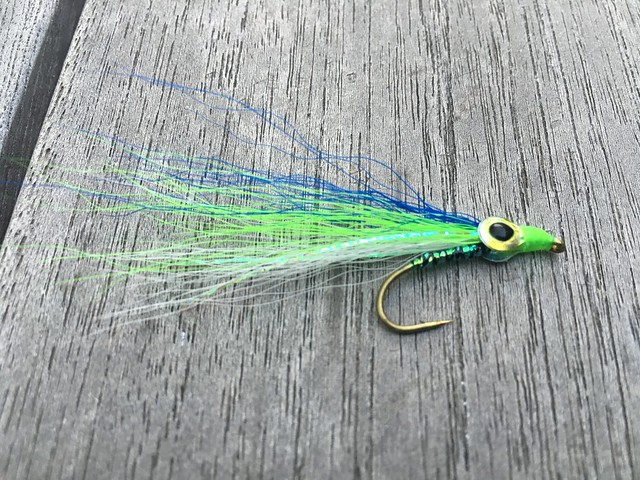
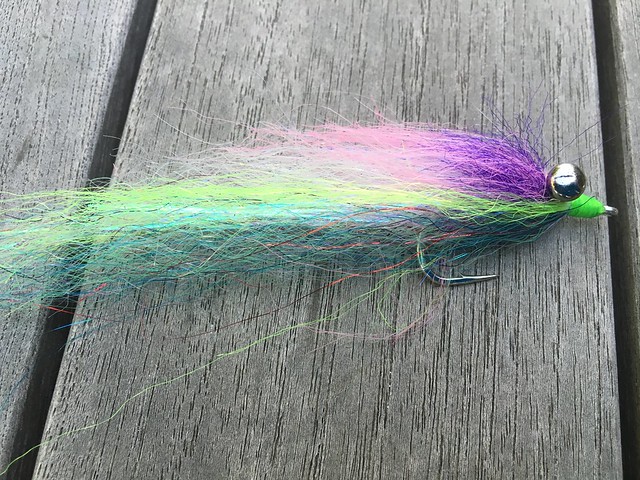
Check out our new section of sale flies online here: SALE FLIES

Here are a few, many more are available at the link above.

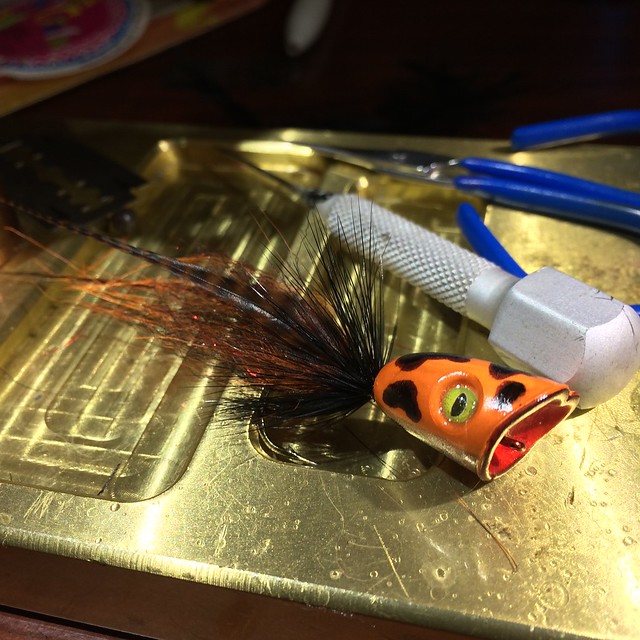
Sale flies

Sale flies

Sale flies

Posted in Oregon Fly Fishing Tips, Shop Sales and Specials | Leave a comment

SLF Soft Hackle Fly Tying Video

In this video Jay Nicholas demonstrates how to tie a classic wet fly variation. We love to fish this fly on a floating line “down and across” style on our local rivers in spring time. It does a great job of imitating a variety of may fly emergers.

SLF Soft Hackle

Jay flies April 2016

Hook: Daiichi 1530 10-16
Thread: Veevus 12/0 Black
Tail: GP Tippet Dyed Orange
Rib: Lagartun Wire
Body: SLF Dubbing Tan
Wing: Lemon Wood-duck
hackle: Brown Hen or Dyed Brown Partridge

Posted in Fly Tying, Fly Tying Materials and Supplies | Leave a comment

McKenzie River Trust Protects Finn Rock

McKenzie River Trust recently purchased 122 acres of riverfront property on the Upper McKenzie.

Upper McKenzie 2009

From the Register-Guard:

The Trust finalized the purchase of the additional acreage, which includes the Finn Rock Boat Landing — which will remain open to the public — and the former Finn Rock Logging Camp, where Rosboro Lumber workers lived from the 1940s through 1980s.

Both properties were purchased from Springfield-based Rosboro, each for $775,000, or a combined cost of $1,550,000, in a closed-bid auction.

Liz Lawrence, the trust’s associate director, said the trust used private donations and a low-­interest loan to buy both properties, now jointly referred to as Finn Rock Reach. The Eugene Water & Electric Board, which is keen to see its­ ­McKenzie River water supply protected, kicked in a $250,000 grant for conservation and restoration efforts.

While specific plans have not been finalized, Lawrence said the trust wants to conserve and enhance Finn Rock Reach in different ways, such as managing weeds, pulling invasive species and planting native plants. The trust also may restore areas affected by timber harvest, or make gravel ponds on the property less hospitable to non-native fish species, such as bass.

From MRT’s Press Release:

“We are grateful to the folks at Rosboro for working with us on this legacy project,” said Joe Moll, Executive Director of the McKenzie River Trust. “When you think of the McKenzie River, you imagine clean blue water, incredible salmon spawning habitat, and healthy floodplain forests. This property has all of that.”

Posted in McKenzie River, Oregon Conservation News | Leave a comment

Spring Fly Fishing on the McKenzie River

McKenzie river fly fishing may 2016

Fly fishing on the McKenzie River is in full swing this May. We have ideal water levels, great weather and good fishing. Numerous insects are available to wild rainbow and cutthroat trout.

This year I have seen more Salmon Flies than I can remember and the fish are really recognizing and attacking them on the water. Historically we have seen this emergence but this year I am seeing more shucks on the waters edge, more insects on the water and flying over head. This past Saturday there were so many that large ravens were seeking them out over the the river.

There are small brown caddis, Green McKenzie Caddis, Pale Morning Duns and smaller tan/grey stoneflies available as well. Depending upon the water you find yourself in you can catch fish from top to bottom right now.

McKenzie river fly fishing may 2016

Water temps have been on the steady rise, this is a key to some of the excellent spring fishing at hand…

McKenzie River Water Temperatures

Water levels are looking good for the near future…

McKenzie River Fly Fishing

Posted in Fishing Reports | 2 Comments

River of Life

River of Life features the reflections of 3 women dealing with breast cancer while out fly fishing on the waters of the Pacific Northwest. The narrative connects the struggles of wild, native and anadromous fish with the challenges the women face in their own lives, while also capturing the magic and joy of fly fishing. This film is brought to life by the sensitive and insightful cinematography of Todd Moen, whose camerawork captures the vibrancy of the natural world both above and below the water line. The film explores life’s tenacity, and its fragility.

Women in Fly Fishing – River of Life from Todd Moen Creative on Vimeo.

The group behind the film is trying to raise $12,000 through donations to make this film possible. Any money raised above basic costs, or through screening the film, will be donated to: Casting for Recovery, Trout Unlimited and the Plastic Pollution Coalition, Costa’s Kick Plastic campaign and other like-minded organizations. Check the link to see the rewards, including a guided trip donation from The Caddis Fly.

Posted in Oregon Fly Fishing Clubs and Events | 1 Comment

Lagartun Flat Braid, Tinsel, & Threads are Back!

Jay Nicholas Lagartun Carded Flat Braid

After a period when we were unable to supply our discriminating tyers with the full range of Lagartun’s superior and unique products, the tide has turned and we are in the process of adding Lagartun back to our regular IN-Shop inventory and catalog offerings.

My personal affection for Lagartun was based on their threads, oval tinsel, and a few colors of Mini Flat Braid (Flat French Mini Flat Braid).

Lagartun threads earned a place as my #1 choice because they are strong (very strong) and lay very flat. I tended to tie with 95D and 150D, but it is available in 74D as well.  I wasn’t very imaginative, most often tying with black, white, chartreuse thread. Needless to say, there are many color options that please a corresponding range of tyers.

What makes Lagartun Fly Tying Products so special? 

Lagertun tinsels are produced in France, are genuine metal and tarnish resistant. the Braids are flat – really flat – with vibrant vibrant vibrant colors. The

The core of the X-fine oval Lagartun Tinsel  is silk, but the core of all other oval Lagartun tinsel is a polyester – meaning that you can reef on it and it will lay very flat and help you compose very neat and tidy flies.

All of the Lagartun tinsels are varnished and are very tarnish resistant -they are also so much tougher than plastic mylar tinsels that the comparison is unnecessary.

The Lagartun, 95D, and 150D are polyester threads. These stretch a little, and they lay really really flat too.

I occasionally used Lagartun embossed french metal tinsel, but I devoured Lagartun oval silver and oval gold tinsel by the bucket load. I found it to be the smoothest, strongest, and it resisted tarnishing quite stubbornly. These oval tinsels make wonderful tags and ribs on steelhead and salmon flies: overall I just felt instinctively that the tinsels were truly a superior product.

The Lagartun product I used more than any others was the Flat Mini Braid, offered on spools. The shiny gold holographic and shiny silver holographic Mini Flat Braids were the staples of my Muddlers. The Fl. chartreuse, Fl. orange, Fl. Blue, and Fl. pearl were always a key ingredient of my Chinook Comets.

My newest Lagartun discovery is the Carded Flat Braid. This material is similar to Flat Diamond Braid – but quite different in several respects. First, it is slim and flat, and I mean really flat. The width is 1/8″ which makes it perfect for larger steelhead and salmon fly bodies, and especially for my Intruders. But the colors of this carded Lagartun Braid are really impressive and moves it immediately to the front of my material choices. I’m in the process of ordering roughly 20 colors of this carded Lagartun Flat Braid for and can already imagine them lined up on pegs in the Shop.

The Lagartun Carded Flat Braid is a woven metaloplastic material  that is roughly 3mm (1/8″) wide. Metaloplastic is a wonderful material that I do not understand in a technical sense, but that makes me a very happy camper when I tie with it. It is strong, it lays really flat, it does not bulk-up when I tie it in or tie it off, and the colors are spectacular and permanent.

I have been tying with Lagartun again for about two months now. Listen to some of the colors: Rainbow, Sky Blue, Pearl/blue holo, Pearl/Fuchsia holo, Pearl/green holo. Pearl/red holo, Pearl/black + Peacock/pearl, Copper, Candy Pink, several Fl. colors, and my trusty holo shiny gold and silver. Lagartun Flat Braid is tough, lays flat, makes bodies as slender as you wish, and I have been creating AMAZING bodies on trout and steelhead flies from size 10 and larger.

Lagartun Micro Flat Braid is a product I’ve not yet tried out, but Ben Gherke, (our Lagartun Rep/owner) tells me that the micro flat braid has been very popular with trout tyers as bodies on Chironomids and with trout, steelhead, and salmon tyers as a colored ribbing material, or as a tag.

Like the wider Carded Flat Braid, Micro and Mini flat braids are a metaloplastic material that is super durable and wonderfully pleasing to work with.

Lagartun colors are vibrant and the range of available colors are a great asset on my bench.

There is more to Lagartun than braid and oval metal tinsel.

Varnished specialty wire.

Micro Flat Braid.

Flat metal shiny Tinsel.

Flat Embossed metal tinsel.

French Silk Floss

All of these Lagartun products are proven quality and are nearly always the first choice of tyers who are crafting the finest classic traditional Atlantic Salmon Flies. More and more, Lagartun is showing up as a first choice among trout fly tyers.

The Caddis Fly Angling Shop is now stocking a basic range of Lagartun products on the wall and we would like you to shoot us an email, phone call or drop in to share your ideas regarding expanding the range of products we stock on a regular basis.

Lagartun special orders?

You bet. Let us know what you would like and we will let you know how soon we will be able to provide the thread, braid, tinsel, wire, mohair, or silk floss of your dreams.

We are pleased to have the opportunity to add Lagartun to our regular tying products and appreciate your patience as we work to adjust our working inventory and display arrangements. We think you will be thrilled to lash Lagartun onto your fly hooks and create superior flies of all sorts.

Questions? Ask away.

Jay Nicholas

Posted in Fly Tying Materials and Supplies | 2 Comments

Possum Leech Fly Tying Video Instructional

Bruce Berry from Pro Sportfisher demonstrates how to tie a “taper cut” Possum Leech steelhead pattern. This fly catches steelhead anywhere they swim. Shrink the fly down a bit and use natural colors and you have a wicked trout streamer as well. Enjoy!

New fly videos

Possum leach

Tube: Micro Tube Orange
Hook Guide large fl orange
Weight pro raw weight small
Body:Pink polar chenille UV
Wing: taper cut hot pink pro opossum taper cut
Flash: Rainbow flashabou
Collar 1 pro opossum hot purple
Collar 2: purple schlappen
Cone: Ultra sonic cone purple metallic

Posted in Fly Tying, Fly Tying Materials and Supplies | Leave a comment

McKenzie and Willamette River Tactics for late April 2016

Cooler temperatures look to prolong traditional spring conditions this week. We have had a bump in water, although it’s already on the way back down (see photo). Water conditions will improve each day this week.

hydro-plot

Over the next few days look for Blue Winged Olives to be the predominant mayfly hatch. As it warms for the weekend Green McKenzie Caddis (which have been spotted in low numbers) should be around enough to get the trout’s attention.

Below you will find some fly tying videos for Blue Winged Olives and Green McKenzie Caddis.

Blue Winged Olive Emerger

Blue Winged Olive Biot Dun

CDC Blue Winged Olive Emerger

Blue Winged Olive Thorax Dun

UV Ice Dub Blue Winged Olive Nymph


McKenzie Caddis

McKenzie Caddis Wet


CDC Green McKenzie Caddis


Karnopp’s Riffle Diver: Green McKenzie Caddis emerger

Posted in Fishing Reports, Fly Tying, Fly Tying Materials and Supplies, Lower Willamette, McKenzie River, Middle Fork Willamette River fishing | 1 Comment

Shop Spring Cleaning – Fly Line Sale

Sale lines

In an attempt to tidy up the shops offering and free up some space and dollars we offer you a tremendous value on selected fly lines. In order to purchase simply click the following link: SALE LINES and order online, we will ship to you or hold for pick up.

Sale lines

CD

Posted in Shop Sales and Specials | Leave a comment

Sombrero Baitfish Fly Tying Video

Bruce Berry demonstrates how to tie his favorite “Baja Baitfish” fly patterns. The fly has a great profile and is relatively easy to cast given it’s size.

New fly videos

Sombrero Baitfish

Hook: Gamakatsu SC15 1/0-4/0
Thread: Veevus 50 denier GSP White
Tail: White marble fox
Flash: Olive Krystal Flash
Rear Wing: Light Grey Pro Marble Fox
Rear Body: chromatic Brush White

Middle Wing: Light Grey Pro Marble Fox
2nd Flash Lateral Scale

Front Body: Chromatic brush white
Front Wing: Light Grey Pro Marble fox
2nd front wing: Light Grey Pro Marble fox
Lateral Line: Holographic Angel hair
Soft Head Medium for 3/0 hook 1/0 Hook soft head small 4/0 or larger soft head large
Medium soft gets 6mm eyes

Posted in Fly Tying, Fly Tying Materials and Supplies | 1 Comment

20 Fly Patterns you need in your box for Spring Angling Adventures

In no particular order other than style, here are 20 fly patterns to have/consider/create if you are fishing in Oregon over the next few weeks.

Go Deep! “Highish” “Coldish” water means it pays to get your flies down in the water column. The “Go Deep” trend is likely to last for a while.

Spring flies

McKee’s Girdle Bug – Excellent all around stonefly pattern that does the job getting to the bottom quickly.
Double Bead Peacock Nymph – Another dense nymph double beads get down, peacock catches fish.
Tungsten Trout Retriever – This stonefly pattern has been great this spring on the Middle Fork of the Willamette.
Lex’s Improved Golden Stone – Not as heavy as the previously mentioned patterns but very effective.

The following patterns work well deep but are also effective in the “mid water column” as well. They can even be swung and are deadly as they drift near the bottom and then rise towards the surface.

Spring flies

Possie Bugger – Hall of fame trout fly, you need several sizes in your box wherever you are.
Mega Prince – An absolute favorite in high water, as well as water with a bit of color.
Jigged 20 Incher – Deadly quick sinking pattern that works well all over the west.
Jigged Pheasant Tail – Like the 20 Incher this one gets down for it’s size and is very effective in clear water.
Montana Prince Nymph – An excellent small stonefly imitator this one can be fished off of a larger dry.

Moving towards the surface….. Soft hackles and emergers are deadly this time of year particularly on cloudy rainy days. A down and across swing method, or a short dropper off of a dry fly are effective tactics to fish the following patterns. Soft hackles are one of the oldest, easiest, and most effective fly patterns around!

Spring flies

Beadhead March Brown Emerger – The March Brown emergence has stalled a bit on the bright days of late but will most likely improve as the clouds develop.
Soft Hackle Hares Ear – One of the best all around soft hackle patterns.
Soft Hackle Peacock – Another classic emerger that works pre-hatch, during the hatch and when it’s so dark you can’t see your dry.

Dry flies for Trout

Spring flies

Parachute Adams – Caddis hatch, March Brown hatch, Blue Winged Olive hatch you name it the Parachute Adams is a must have.
Parachute Caddis – Numerous species of caddis will be emerging from now on, this pattern is a couple of sizes/colors will have you covered.
Carlson’s Copper Haze – A high vis March Brown imitator – good all around mayfly pattern.
Bear’s Hi-Vis Parachute Blue Winged Olive – When cooler temps bring on the smaller mayflies try this one.
Deer Hair Flying Ant – An excellent searching pattern or a match the hatch on a hot spring day.
Morrish’s May Day – High vis but sparse enough for flat water and picky fish. It’s a new favorite.
CDC Green McKenzie Caddis – Very effective on both the McKenzie and Willamette in late April-June.
Gould’s Half Down Golden Stone – One of our favorite Golden Stone adult patterns, and an excellent big dry to hold up dropper nymphs.

CD

Posted in Fishing Reports | Leave a comment

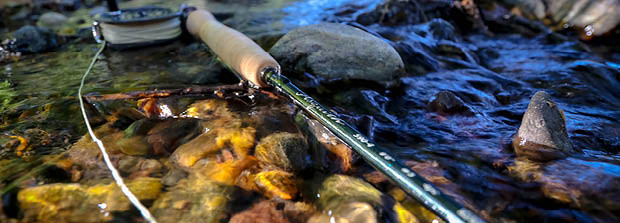
Three great Switch Rods – Nicholas’ Review of Echo, Scott, and Redington

Jay Nicholas Switch Rod Review a

Why consider a Switch Rod? With the winter steelhead season about wound down, I realize that I have responded to more people than ever who have enquired about the relative merits of Switch fly rods compared to full-on Spey rods when fishing Oregon coastal rivers. My answer applies to all waters, and here is basically how it goes.

I started out  (in the 60s and 70s) fishing nine foot single hand rods for steelhead and salmon, with the occasional ten footer in the mix, but the longer rods were often ungainly and awkward to handle all day long. At some point I discovered Spey rods, well after most everyone else here in the region. The rods I worked with in the 80s and 90s were generally longer (14-15 ft) and were beastly things to fish especially with my lacking skills. Time passed and the rods and line systems improved considerably, with manufacturers introducing shorter Spey rods that were lighter but still capable of making very long casts.

Sometime after 2000 (who’s got the date?) you could purchase very good 8 wt Spey rods at 12.5 to 13.5 ft that were light and great casting rods. The standard seemed to settle in with 6 wt rods being under 13 ft, 7 wt rods being 13 ft but under 14 ft, and 8 wt Spey rods pushing around the 13.5 – 14 ft mark.

Well, the longer Spey rods were (and still are) fine fishing tools when wading out in nice gravel studded runs with plenty of back casting room for forming D loops. When fishing in places with trees or rocks close behind, as is often the case on our coastal rivers, these longer rods are not nearly as much fun to maneuver.

Enter the Switch rods, offered at somewhere between the old 10 ft mark of the long single hander – and the 12 ft mark usually occupied by five or six wt Spey rods. The switch rods in the generic 11 ft class offer a superior option when fishing with tree branches overhead or close behind. They also make great beach, boat, and estuary fishing rods that may be fished overhead or with traditional Spry style casts.

I have watched many anglers struggle with longer Spey rods when fishing close quarters, and often loaned them my Switch rods to play with. The result is always the same – they want to add a Switch rod to their tool box – then the question becomes – which rod to recommend.

The high-end customer has several options that are all good, but not everyone has nine hundred bucks to drop on yet another fishin’ pole. So I have devoted considerable effort to exploring a range of mid-price options for the angler who is about to delve into the Switch rod world for the first time.

The Switch rods I’m reviewing in this post are three excellent rods that I’ve fished extensively this recent winter steelhead season. I’d venture that I’ve put in at least 36 hours fishing each of the three rods (18 days x 6 hours fishing per day, with equal time (2 hrs per rod each day).  I have fished other days with other Switch rods also, but none were as pleasing as these three (the term pleasing means that these three rods meshed well with my modest casting ability, considerable bad casting habits, and personal quirks). When people come to me and ask about purchasing a modestly priced switch rod, these three are the very first I’m recommending without reservation.

My attraction to these three rods is based on serious time on the river, not an hour or an afternoon. Day after day trudging up and down the river banks, falling in, stumbling, smacking my rod tip into overhanging brush (all three rods took a lot of punishment), wrapping flies around the rod when I placed my anchor poorly, and even a few steelhead hooked, lost, and released.

Mid Price – You will note that these three Switch rods are in what we refer to the mid-price range – meaning that there are rods that cost less and far more than these. The Sage ONE   is an excellent high end rod as are the Sage Method, Scott T3H Premium, and Burkheimer Switch rods. These Switch rods are all very good but I wanted to keep this review focused on mid- rather than high-end rods.

The three Switch rod I’ll discuss are 

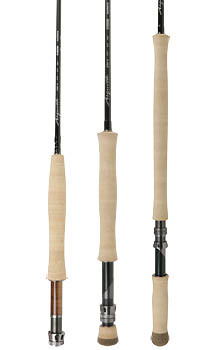
Echo 3 Switch rod

Redington Chromer Switch rod

Scott L2H Switch rod

Price wise – the ECHO is just over five bills, the Scott is about halfway north of five bills, and the Redington a tad less expensive at roughly four hundred bucks.

Length – the ECHO is an even 11 ft while the Scott and Redington are both 11 ft 6 inches.

Action – All are what I consider fast action rods with soul, meaning that they are in a different class than rods like the Echo Dec Hogan II, a full action Burkheimer, or a modern glass rod. When I say these have soul, that means that I can feel them load as I’m casting. All three rods are fast but comfortably fast.

Distance casting ability – all are very versatile. I always start by making casts with only my sink tip out of the guides, and gradually lengthen the reach of my swing as I prospect a run. All three of these rods have allowed me to make very long casts and very short precise casts whether I’m wading out in an open run or hunkered under trees dodging tree branches.  As far as I’m concerned, there was never a situation when I was incapable of covering the water because of casting distance limitations – other than my own limitations. All of these rods will deliver your fly to the farthest reach of our coastal rivers with ease.

Line matches – I fished a six wt in the Chromer Swtch and a seven wt in the Scott and Echo rods. Both seven wts cast an Airflo Compact Switch Skagit at 450 gr, but I fished an OPST Commando 375 gr head on both rods more often than not. The 6 wt Chromer fished spectacularly with a 420 gr Compact switch or a 325 OPST Commando.

Sink Tips – I fished 10 ft RIO Mow tips in T-11 and T-14. I also fished AIRFLO Flo tips in T-10 and T-14. I found it uncomfortable when I tried the 12 ft T-14 tips with these lines and rods, but otherwise they were all up to the task of throwing T-10 to T-14.

Jay Nicholas Switch Rod Review b

Handle – The handles on these rods are different but similar, and I’ll have difficulty in this discussion, but here goes.

16.75″ – The Scott L2H is the shortest handle of the three rods and is very subtly different with the bulges at lower and upper top grip. For my hands and my casting style, I preferred this handle configuration over the other two handles.

17.25″– The Echo 3 Swich rod has the middle length handle and I would characterize this as the most generic shape of the three. A good handle overall.

17.75″ – The Redington Chromer handle is the longest of the three rods and is unique insofar as the rubber tip on top and bottom hand. While the handle overall is a little thinner than I’d prefer, I found that I liked the feel of the rubber tips so much that I was swayed towards this handle.

Hardware – All three rods have good hardware. We are all fickle about these small matters but I found myself most attracted to the Scott reel seat.

Warranty cost and service – All three manufacturers offer great warranty service. Echo  requires  a payment of 35$, Redington 40$, and Scott charges 50$ to pay for warranty service. This is usually a per section fee, but the manufacturer has some discretion in this matter.

If you ship a damaged rod to the factory from your home, you pay the cost of shipping the rod but the warranty fee covers the return of the rod to you. All warranties are original owner-based.

If you deliver a damaged rod to the Caddis Fly Shop, we will ship the rod for you at minimum cost and you will cover than the warranty fee charged by each respective company when the rod is returned. In our experience, warranty service is rarely needed for any of these three rods, and when it has been exercised we get rods back from Echo in less than a week, Redington is usually within two weeks, and Scott may be three or four weeks, depending on the rod and the season.

Rod Performance –  Excellent for all three rods. Remember, I fished other switch rods that were not so pleasing and chose these specifically because I can recommend each without reservation, meaning I can recommend them enthusiastically.

Making a decision – if you fish under trees and close to brush, the ECHO is going to make the cast a little easier because it is shorter. If you are price shopping the Redington  will save you on the sale. If you compare warranty cost and time of return the Echo will save you a tiny amount and get the rod back in your hands the fastest. Did any of these rods perform better than the others? No that I could detect.

Did I have a personal favorite? Yes, but it is based on largely insignificant personal quirks, and you’ll not see my call on what is essentially a photo finish here, because it is not the slightest bit objective.

You are likely to see me out on the river with any or all of these three rods on any given day. This speaks highly for the performance of all these rods.

DSC_1268

I’m sure that there are many very good 6 wt and 7 wt switch rods out there that I did not fish, but if you are even close to considering any of these three rods, I feel confident that you will be pleased fishing any of the three.

If you have further questions about these and other rods, lines, and matching lines to rods, I will be pleased to help puzzle through the morass if you contact me through the fly shop.

Jay Nicholas, April 2016


Posted in Fly Fishing Gear Review | 12 Comments

Springtime on the Lower Deschutes – April 2016

Before the hustle and bustle of the salmon fly hatch and long before the dog days of caddis fishing, there is fun trout angling to be had on the Lower Deschutes. Especially with the new 2016 regulations, you can now fish the water between Warm Springs and the reservation boundary, which you traditionally couldn’t fish between January 1-April 28.

Sunrise

Sunrise

A few friends and I did a quick overnight float between Trout Creek and Maupin and it was great to be back on the big river trout fishing. The river is certainly running higher this time of year than its summer flows, which is good. It was around 5300 CFS when we were down there. Rainy and cloudy weather on Thursday had me thinking we’d see mayflies hatching and fish looking up, but it was most certainly a nymph game on our float. We found a few fish rising, but we were pretty much nymphing the entire time. In a few weeks time, golden stoneflies and salmonflies will be covering the streamside bushes and fluttering around in massive numbers on the Deschutes. That’s why during the month leading up to the hatch, nymphing with stoneflies is the ticket. The rocks are covered in them right now as they begin to make their way to the banks to complete the final stage of their life cycle, and the trout love ‘em.

Redside

Redside

A two-stonefly nymph rig is all you need. We had good success with Jimmy Legs, Tungsten Trout Retrievers, Beldar’s Stonefly, and the Peacock Stone.  However, any of your favorite stonefly nymphs will work.  The redsides were in great shape and strong as ever. There are certainly steelhead and Chinook smolt around as well and you’ll get those too, as well as the occasional whitefish.

Overall, April is an awesome month down there and if you can find the time to make a trip before the salmon fly crowds hit the river, it can be awesome. The hills are green with the spring bloom and its quiet and peaceful. The fish are active and hungry, too. Remember to always handle the fish with care and use barbless hooks. They have a long summer of angling pressure ahead of them and how us anglers treat the fish and the river reflects on the quality of the area as a whole for everyone who wishes to enjoy it.

Have fun out there!
Andy

Posted in Central Oregon Fishing Report | Leave a comment

Demo Day Reminder – This Saturday at the Shop

April demo day

Starting 10am April 16th 2016 manufacturers representatives from Patagonia, Winston, Echo and Airflo will be at the shop displaying the newest gear. Please stop by the shop and check out some new gear and get the low down on design, fit and implementation.

April demo day

April demo day

While you are at the shop enter your name to win one of the following products: Patagonia wading boots, Echo fly rod, Airlfo F.I.S.T triple density skagit head.

A few highlights of what will be on hand.
–new waders and wading boots from Patagonia-
–new Winston Rods – give these a cast and check out the slickest rod guides on the planet.
–new airflo fly lines, leaders and tippets

April demo day

We plan to have the shop keg loaded with a new brew and will be serving up some brauts from the BBQ.

Hope to see you this Saturday!

Posted in Fly Fishing Contests, Fly Fishing Gear Review, Oregon fly fishing links, Shop Sales and Specials | Leave a comment

Lower McKenzie Fishing Report April 2016

Lower McKenzie river

This past Wednesday Peter and I floated the lower McKenzie from Hayden Bridge to Armitage State Park. The water was in fine shape as you can see from the hydro plot below. There was little or no hatch until late in the day. During the day insect activity was very sporatic, a few caddis, a huge stonefly, but really nothing that brought fish to the surface until later. Between 3-5pm we did see March Browns, Blue Winged Olives and a few Caddis. It was during that late in the day period when fish were willing to come to a Purple Haze style parachute pattern.

hydroPlot

The rest of the day we found success swinging wet flies, March Brown Emergers, Possie Buggers, Dark Cahill’s and Pheasant Tail Soft Hackles. Nymphing was also effective, we used a large Pheasant Tail Jig pattern as the bottom fly and a mid sized Flashback Pheasant Tail above it 15 inches or so. The entire rig was dropped off of the indicator about 6.5ft.

You can see from the water level graph that yesterdays rain bumped the river up considerably. It will need a few days to come back into shape. Fishing should only improve as we slowly warm up to Spring!

Posted in Fishing Reports, McKenzie River | Leave a comment