Jay’s Olive Brush Bugger Fly Tying Video

Jay demonstrates how to tie a wooly bugger style fly on a Pro Sportfisher tube. By using an EP Foxy Brush as the hackle the fly becomes super durable and quick to tie.

brush-bugger

Jay’s Brush Bugger Olive

hook guide: medium lavender/green
Tube: pro nanotube sink – 4
Tail: Olive UV Marabou
Flash: Krystal Flash Peacock
Weight: Pro Drop Weight
Body: Speckled Chenille Lime/Olive
Collar: EP Foxy Brush 3.0 Olive/Brown
Cone: Ultra Sonic Disc black
Hook: Glo Bug C14S

Posted in Fly Tying, Fly Tying Materials and Supplies | Leave a comment

Nicholas’ Shamen Fly Tying Bobbin Review

Jay Nicholas Shamen Bobbin 1
Fly Tying Tools Review: Shamen Bobbin

I have tied flies with many, many bobbins over the last five decades. Complicated and simple, inexpensive and pricey.

In general, I prefer bobbins that are on the less technically challenging variety, and appreciate high quality, durability, adjustability and feel in the hand.

I have used so many bobbins over the years that it is impossible to even recall specifics of many, but I’m quite sure that I have not been impressed with every new bobbin that comes along just because it is new or shiny.

The Shamen bobbin is one of the relatively new members of the bobbin family that I have tested and appreciated.

The model I have tied with is a standard size. A midge size is also offered and I assume that I would rate it highly as well.

Shamen Bobbin 3
Solid features of the Shamen Bobbin:
• Good fit in hand – very comfortable
• Easy to load the new thread spool
• Provides a secure hold on the spool
• Durable – I have many hours, days, weeks, and so forth with this bobbin in hand
• Easily adjustable thread tension! This is a BIG plus.
• Dependably adjustable thread tension – got to say it twice, it is so important.
• The tension is adjusted by means of the “screw” mechanism and it is SMOOTH.
• Adaptable to very fine and very stout thread
• Ceramic thread tube means no thread fraying

Please don’t assume that this is the only bobbin I keep on my desk. There are many very dependable fly tying tools available these days, unlike when I was learning to tie flies back in the early 1960s.

That said, I’m heartily endorsing this Shamen bobbin as a trustworthy companion at the fly bench.

Jay Nicholas, late 2017

Posted in Fly Tying, Fly Tying Materials and Supplies | Leave a comment

Fishpond Submersible Packs

Most of you are Moldy Chum fans, but if you haven’t been over lately you need to check out their in-depth analysis of Fishpond’s Thunderhead Submersible packs.

If you typically fish with your phone or a camera handy, you are taking a big risk. I’ve soaked phones, favorite point-and-shoots, and even my digital SLR once… And the replacement cost for those was far more than a convenient, waterproof gear bag.

Now Fishpond has really upped its game by introducing a waterproof, submersible pack made from post-industrial recycled material. They took home some major awards at the IFTD this year. Here is a great video summarizing the product line:

From the Moldy Chum review: If you haven’t seen one of these packs in person yet, make sure to head over to your local fly shop and check one out. It’s an obsessively designed product that will provide years of great use on your local stream or in the harshest waters on the planet. And if you’re still trying to figure out what gear to add to your holiday wish list, you won’t regret putting this pack at the top of the list.

You can pick up the various models at the Caddis Fly Shop.

Fishpond Thunderhead Submersible Backpack

Fishpond Thunderhead Submersible Lumbar Pack

Fishpond Thunderhead Submersible Duffel Bag

Posted in Fly Fishing Gear Review | Leave a comment

Washington Cancels Atlantic Salmon Farming Lease

From the Seattle Times:

Cooke Aquaculture Pacific has lost the lease for its Atlantic salmon net-pen farm in Port Angeles and must shut down and remove it, said Hilary Franz, state commissioner of public lands, who terminated Cooke’s lease.

The farm, operated by a series of owners since 1984, currently holds nearly 700,000 Atlantic salmon. Franz said the Washington Department of Natural Resources (DNR) would work with other state agencies to enforce an orderly shutdown and complete removal of the farm.

Salmon

Check out a great informational source on the dangers of farmed salmon in the Northwest at Our Sound Our Salmon

download

Posted in Oregon Conservation News | 1 Comment

The Best Travel Fly Tying Vise – Great Last Minute Christmas Gift

The Morsetto Airone Travel vise from Stonfo is a great choice for anglers who tie on the fly. Pun intended. Thanks to its special design and to a series of articulated joints it can be folded and placed in a 4in by 6in box. No assembly/disassembly required. It uses the same interchangeable jaw as the Stonfo Elite Vise and the head has adjustable angle, height and 360 degree rotary action. The rotary tension is adjustable and can lock at any angle. The accurate machining and choice of materials provide exceptional performance to this small, portable vise.

This unique fly tying travel vise will make a great gift for the fly tier.

Posted in Fly Fishing Gear Review | Leave a comment

Seasons Greetings from the Metolius River

“The colors are gone. It’s now a tableau of black and white and shades of gray. The water is inky black with a silver screen of snow reflected on its surface. There are little mists rising. Yet, even in the midst of the worst storm, right at the water’s edge there is a little band of green where the grass is as bright as if it were spring. This little oasis never goes away because the water temperature, still at 48º F, fresh from the headspring, warms the ground, leaving a little patch of land that never knows winter.”
-John Judy, Seasons of the Metolius

Processed with VSCO with c1 preset

Late fall and winter can be a marvelous time on the Metolius River. The crowds thin out, as most people are unwilling to wade waist deep into the river when the air temperature is barely breaking the 20º F mark. And you can hardly blame them; it is cold out there right now. Frozen guides, frozen fly lines, and frozen hands are provided at no extra charge when you spend a day on the Metolius this time of year.

The fishing remains a challenge, as always, on this perplexing and humbling stream. The fish certainly react to the brisk air temperatures, as do the bugs, primarily because there is less sun striking the surface during the increasingly shorter days that define December. Typically they wont move as far for a fly, whether that is correlated to the ambient temperature or their biological clocks beginning to shift toward an urge to move into the upper river to spawn in the coming months, who knows. That being said, you can still have some awesome afternoons full of beautiful, willing fish right now.

Processed with VSCO with p5 preset

Processed with VSCO with a5 preset

The past few outings have proven that. Concentrating our efforts during the afternoon hours when the sun is on the water and the outside temperature is more bearable, rainbows, whitefish, and a few bull trout have been eating a variety of nymphs. There have also been small mayflies fluttering around in the back eddies, and if you get a period of sunshine on the water, the trout have been feeding on the surface as well.

Processed with VSCO with hb2 preset

Mayfly nymphs are a good choice this time of year on the Metolius. The most important thing is that your setup is heavy enough to get down to the fish in the deep, turbulent water in which they often hold. Pheasant Tails, Possie Buggers, and Morrish’s Anato May are good places to start in combination with a heavier stonefly for the depth charge. In terms of dry fly patterns, small Thorax BWOs and small Parachute Adams are the ticket.

Processed with VSCO with c1 preset

If you’re looking for an opportunity to get your fix, remember that the spring-fed Metolius remains an option 365 days a year. Keep your eye on the forecast, as warmer temperatures will bring heightened insect activity and more eager trout.

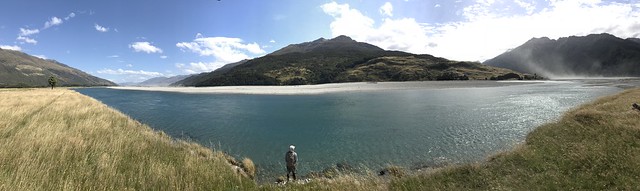
As always, the mantra of my mates and I when we venture to this river is be prepared for absolutely anything and be prepared to catch absolutely nothing. The joy of the Metolius comes from standing on the bank, the sun warming your face, the old growth trees towering what seems like an infinite height above your head, and Mt. Jefferson looming ever present in the distance. An elk bugles upstream, mergansers soar downstream, and here you are situated in the middle of it all.

Processed with VSCO with c1 preset

Andy Archer
Posted in Central Oregon Fishing Report | Leave a comment

New Options for an Old Favorite: UV and Pastel Bucktail by Spirit River and Hareline

Spirit River UV2 Bucktail

Spirit River UV2 Bucktail

Fly Tying Materials Review: Hareline Pastel and Spirit River UV2 Bucktails.

I am a regular and frequent user of bucktails and am always on the lookout for variations or specifics when it comes to acquiring bucktails to tie my salmon Clousers.

I recently learned that Hareline is now offering UV2 Bucktails (Spirit River) and Pastel Colors in Bucktails.

Hareline Pastel Bucktail.

Hareline Pastel Bucktail.

Both of these new options are promising and I naturally added to my bucktail inventory by adding several colors of these two products.

Here are but a few of the pastel bucktail colors by Hareline.

Here are but a few of the pastel bucktail colors by Hareline.

As far as the Pastel Colors go, I really appreciate the subtle muted colors and will have freshly tied Clousers featuring several of these colors when spring Chinook season rolls around in 2018.

Here are a few of my favorite Spirit River UV2 Bucktail colors - many more options are available.

Here are a few of my favorite Spirit River UV2 Bucktail colors – many more options are available.

I have already been playing with a selection of Clousers tied with the Spirit River UV2 Bucktails. These colors are vibrant and sure to draw the salmon’s attention. With these two options (UV2 and Pastel) available, I will be able to more fully stock my fly boxes with Clousers that meet my preferences for different water conditions.

Jay Nicholas Pastel Bucktail 5

Naturally, fly tyers who are specializing in bass, musky, panfish, and so forth will be intrigues to look over these bucktail options for their tying preferences.

Tarpon flies? Bonefish flies? Permit flies? I’m betting that these will all be home for UV2 bucktails and Pastel bucktails, so the trout, steelhead, and salmon fly niche is not the only place where these tails will provide great color options to the adventurous tyer.

Jay Nicholas, late 2017

Posted in Fly Tying, Fly Tying Materials and Supplies | 1 Comment

Jay’s Crafty Bird Fly Tying Video

Jay demonstrates how to tie a Sand Eel pattern using an EP Craft Fur Brush. The Sand Eel is a killer baitfish imitation for fresh and estuarine waters.

crafty-bird

Crafty Bird

Tube: Nanotube Sink 4
Cone: Pro Cone XSmall Red/Orange
Flash: Ice Wing Pheasant Tail
Hook Guide: Lavender Medium
Hook: Glo Bug #6
Overwing: Ostrich Olive
Weight: Drop Weight Medium
Body/Wing: EP Craft Fur 3″ Brush Sand/Brown
Thread: Veevus Thread 6/0 – 10/0

Posted in Fly Tying | 1 Comment

Safina: Pebble Mine is a Death Wish

On a day after the president just enacted the the largest reduction of public-lands protection in U.S. history, we need to again take up the fight against the Pebble Mine. You may have thought it was dead, but it is not.

July 26, 2010 Stunning wetlands

From the L.A. Times:

For more than a decade, a Canadian mining company, Northern Dynasty Minerals, has wanted to gouge one of the world’s largest gold and copper mines into the heart of the watershed, putting its rivers on a centuries-long poison drip. The company has failed to move forward with the project, known as Pebble Mine, due to intense and sustained opposition. It has also been burdened by proposed restrictions recommended by the Obama-era Environmental Protection Agency — the result of a four-year review.

But President Trump’s EPA administrator, Scott Pruitt, has rejected his agency’s review and moved to withdraw its proposal to impose restrictions on the mine, thereby reviving the company’s prospects for federal permitting. Pruitt is poised to take this action imminently, showing a flagrant disregard for the public’s overwhelming opposition.

Now, in what could very well be the most important land-use decision in North America in our time, an essentially eternal supply of food is pitted against an essentially eternal supply of poison.

The fly fishing industry has been fighting this tooth and nail, but you can get involved directly here.

Posted in Oregon Conservation News | 3 Comments

Updating ODOT’s Culvert Repair Program

Earlier this year, federal courts ruled in favor of salmon and steelhead against the state of Washington, requiring the state to replace poorly designed culverts.

Culverts are pipes under roadways that carry streams and runoff. When a culvert becomes plugged by debris or crushed, salmon cannot pass through to reach their spawning grounds, and young cannot migrate to sea.

Some culverts are too small, and others are perched, or too high from the level of the stream bed for salmon to negotiate.

Government Creek's fish-friendly culvert

Oregon has laws on the books to prevent obstruction of fish passage, but the Oregon Department of Transportation is currently allowed to repair culverts without allowing fish passage. The Native Fish Society, WaterWatch and The Conservation Angler recently released a statement, calling out ODOT for setting a poor example and doing so little to help fish recovery.

“ODOT will spend a total of approximately $35 million on fish passage over the next five years. While that may sound like a lot, it is less than one percent of ODOT’s highway repair budget. To put things in perspective, ODOT is proposing to spend $450 million to widen just two miles of freeway near Portland – more than 10 times what it is proposing to spend statewide on fish passage over the next five years.”

ODFW’s Commissioners are reviewing the regulations December 8th.

Posted in Oregon Conservation News | Leave a comment

Jay Nicholas at the tying bench – December 2, 2017


Jay Nicholas & Boomer at the Fly Bench

I hope that you will be able to drop by and join me sometime between 11 AM and 4 PM on Saturday, December 2nd. No, Boomer will not be with me at the Shop, but I’ll be tying trout streamers and steelhead flies on micro tube – with some new twists added to the game.

I’m pleased with the new fly options I’ve developed this autumn and believe that several or all of the patterns I’ll be tying will be of interest to trout and steelhead fly tyers.

As usual, I’m always looking forward to re-connecting with my friends – and this will provide an opportunity while we are discussing the state of affairs with tube flies.

Hope to see you there!

Jay Nicholas, December 2017

Posted in Fly Tying, Fly Tying Materials and Supplies | 1 Comment

The World of Syd Glasso: Redsides Meeting Dec 4th

The Redsides Chapter of Trout Unlimited is proud to announce that Dave McNeese will be presenting:”Syd Glasso’s Hidden Flies.” December 4, 2017 at 6:30 at Roaring Rapids Pizza.

unnamed

Dave is known for a long history in the Fly Fishing Community as a Shop Owner, Fly Designer, and Fly Tying Mentor. His flies have graced the pages of numerous books including several publishings from Trey Combs. Currently, Dave is researching and writing a book about Syd Glasso. In his research he has uncovered a vast treasure trove of Mr. Glasso’s flies and how they were created.

Please join us at Roaring Rapids Pizza for what will be an eye opening experience into the world of Syd Glasso.

Brief general member meeting to follow.

Posted in Oregon Fly Fishing Clubs and Events | Leave a comment

Plan D Fly Boxes and How to Use Them

Pocket-ArticulatedPlus-2

We are super excited to be working with Dylan at Plan D Fly Boxes this year as he introduces his latest line of fly boxes designed specifically for intruder and tube style flies. The latest versions of Plan D Boxes have improved durability and design.

Pocket and Pack boxes have clear lids so you can see what you are selecting before you open the box. Pocket Max and Pack Max boxes have dark gray lids and bases to double the capacity of the boxes.

PackMax-ArticulatedPlus

The coolest thing about these boxes is manor in which they hold flies that are notorious for getting mixed up tangled up and “balled up” in a standard fly box. With Plan D Boxes your flies are fixed on a hook or tube mandrel so they stay lined up, visible and organized. The articulated fly box is pretty simple you use the “j-hook” to hold the fly shank or eye and the foam base pad to hold the hook. Depending upon the box you can carry 10-40 articulated patterns in a super organized fashion.

PackMax-Tube

The “Tube Plus” versions of the new Plan D Boxes allow for some customization. Dylan Stanley Plan D’s owner has given us detailed instructions that I thought I would share in this post.

1. To get started you will need: (1) pair of wire cutters, (1) Plan D mandrel kit, (1) Plan D tube fly box and your flies.

thumbnail

2. Insert a mandrel through the back end of the fly until the clip at the end of the mandrel clips over the junction tubing (or the tube itself if not using junction tubing.)

thumbnail-1

3. Measure exposed mandrel against the tube block in the fly box and cut mandrel to length using wire cutters. Leave some exposed mandrel sticking out of the end of the tube block.

thumbnail-2

4. Insert the exposed mandrel into the slotted silicone tube block. Repeat with the rest of your flies! Flies are held securely in the silicone block . The box can even be used to rinse and dry flies that were used in salt water. The small foam pad is for your tube fly hook storage.

thumbnail-3

Posted in Fly Fishing Gear Review | Leave a comment

Gamakatsu Fly Tying Hooks – A Review

Let’s get one thing straight: it is impossible to tie a first class fly of any sort on a sub-standard hook. It is also true that the best tyer who applies virtually identical materials to five different hook styles will produce five different-looking flies. Thus the shape of the hook has an incredibly strong influence on the overall appearance of the finished fly, this in addition to considering the quality and performance of the hook itself.

Over a period of some five decades when I have tied flies, Gamakatsu fly tying hooks have ranked at the top of my materials list since they were first available to the US tyer’s market.

Gammie logo

My interpretation of the Gamakatsu hook manufacturing company’s history follows: (Please note that this summary is gleaned from my perusal of information available on the Internet, including from the Gamakatsu website.)
1955: First hooks produced by Gamakatsu – all produced by hand. Gamakatsu was the smallest Japanese hook producer.
• 1963: mechanized wire-tempering technology established.
• 1974: established automated technology to manufacture hooks.
• 1976: Gamakatsu was ranked as the leading Japanese hook producer.
• 1986: Redesign and improved technology in hook production & automation process.
• 1988 – 1992: Gamakatsu expanded production and distribution of their hooks from an Asian focused market to an International market.

My fly tying in the 1960s and 1970s was almost entirely based on the use of Mustad and Eagle Claw hooks. It is worthy of note that my tying in those years was entirely directed to freshwater flies tied for trout and steelhead. The Mustad 94840 and 36890 were standards, along with the Eagle Claw 1197-B, 1197-G, and 1197-N. Somewhere in there, I frankly don’t remember when, I became aware of hooks like TMC and Gamakatsu. My tying of trout flies and freshwater patterns seemed in retrospect focused on TMC hooks. My exposure to Gamakatsu fly tying hooks occurred rather late in my life when I developed an intense interest in fly fishing for Chinook and then when I was introduced to saltwater fly fishing from dory boats launched from the beach at Pacific City, Oregon.
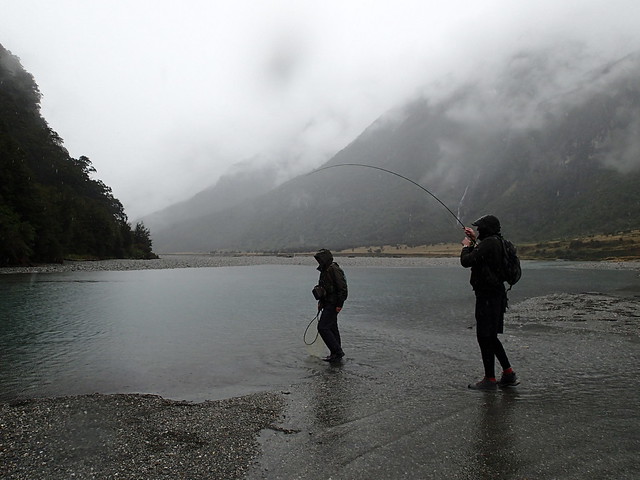
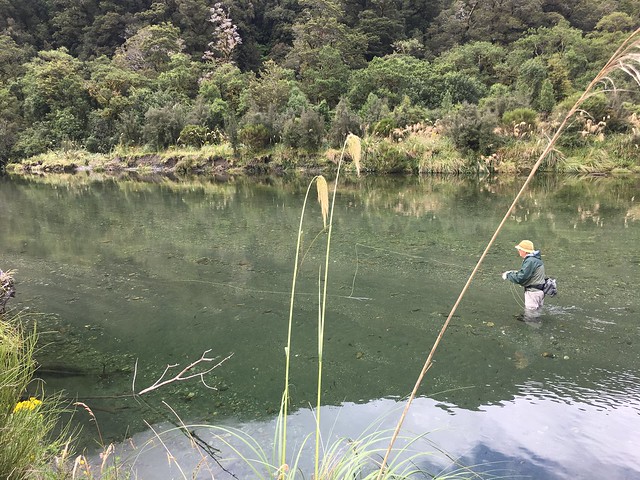
Bluntly, the world of high-quality hooks that one may use for bait, lure, and fly fishing is complex. I’ve gone to the websites of various hook manufacturers and read the technical specifications of hooks and manufacturing processes. All this has achieved is an advanced state of confusion. All of the manufacturers use high-quality wire, advanced hook tempering and point sharpening technologies. I can not read the tech-specs of any of these various manufacturers and determine objectively which hook brand might be superior to others.
On a practical basis, however, I have tied flies with a fair number of different hooks and have developed strong opinions regarding the performance of specific hooks. When I judge the performance of any hook, I consider many factors.
• Hook wire diameter
• Sharpness of the point
• Height of the barb
• Flexibility or stiffness of the wire
• Design of the hook bend, durability of the point
• Durability of the hook finish
• Craftsmanship of the hook eye
• Ability to sharpen the hook

This is where I’ll get to the punch line of this review.

I have found Gamakatsu hooks in general, and fly tying hooks in particular, to be absolutely superior to many of the patterns I tie. I see no value in touting the carbon content of the hook steel, the tempering processes, and the sharpening technologies. Far as I’m concerned, the reader can look those features up and decide whether or not they understand the technicalities. Personally, I do not.

What I do understand is that I’ve tied on and fished Gamakatsu hooks for over two decades. During that period, I have found Gamies ultra dependable, and I have only had one Gamakatsu hook fail (it broke on a fish). During this same period, I’ve had two TMC hooks break on me (one in a fish and one on a log). Over the course of my five decades tying flies I’ve found hook deficiencies were barely more common in Mustad, Eagle Claw, and Daiichi hooks. Overall, the instances of outright hook failures are scant compared to design features. I’ve not ever had complaints about the sharpness of Gamakatsu or TMC hooks. I can not say the same for other hook brands.

This is not to imply that I don’t prefer other fly tying hooks for specific flies. For example, I’ll almost certainly reach for a TMC fly tying hook if I’m about to tie an Elk Hair Caddis, a Stimulator, a Bugger, or a Muddler. My hand might waver when reaching for a hook to tie traditional steelhead wet flies, however, and I may just as often choose a Gamakatsu or a TMC hook interchangeably to tie a Silver Hilton.

When it comes to tying the vast majority of saltwater fly patterns, however, I’ll far more often reach for Gamakatsu fly hooks. Here are some of my most dependable hooks.
Gamakatsu SL12S
Gamakatsu SL12S 1X Short
Gamakatsu SC 15
Gamakatsu SC15 2H
Gamakatsu B10S
Gamakatsu Octopus
Gamakatsu SC17

Ultimately, I know that personal opinion plays a role in each angler’s choice of the hooks they use to tie and fish. I can tell you without reservation that the hooks I’ve listed above are excellent performers.

I hope this helps up your confidence regarding your hook choices for your specific needs.

Jay Nicholas, November 2017

Posted in Fly Tying, Fly Tying Materials and Supplies | Leave a comment

JAY’S RABID WABBIT (shiner) Fly Tying Video

In this video Jay uses a jig style hook to add action to his streamer fly. The “Rabid Wabbit Shiner” is an excellent trout, bass and more fly pattern. This super durable fly uses natural and synthetic materials to attract fish from distance.

thumbnail

JAY’S RABID WABBIT (shiner)

Hook – #4 Umpqua S506H Jig
Eyes – IBalz eyes medium
Tail – Brown Barred Rabbit Strip/flesh
Brush – Senyo Chromatic Live Bait 3”
Flash – smolt blue Krystal Flash
Rubber (white) Life Flex
Body: Cactus Chenille Lg Pearl
Thread: Danville 210D white
Glue: Loc Tite brush-able glue

Posted in Fly Tying, Fly Tying Materials and Supplies | 4 Comments