Pick your days for ocean success.

Late this week has provided some of the best ocean conditions we have had in a long time. The best site I have found to track the seas would be http://www.nws.noaa.gov/om/marine/zone/west/westmz.htm
DSCN1195
Bust out the big rods and shooting heads ASAP! Check out some of these pics from first time saltwater fly fishermans Troy Russell and my trip yesterday. Hot flies were clouser minnows in chartreuse and pearl.
DSCN1194
NS

Posted in Fishing Porn, Fishing Reports, Oregon Saltwater Fishing | Tagged | 1 Comment

McKenzie drops into excellent shape

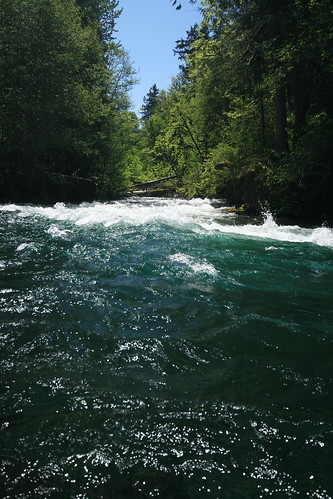
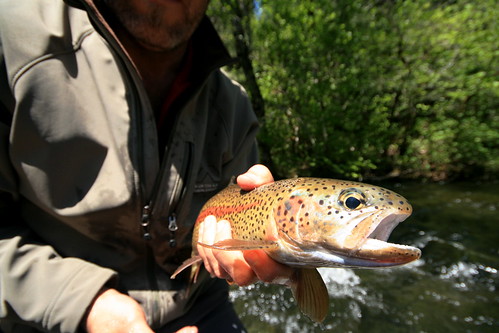
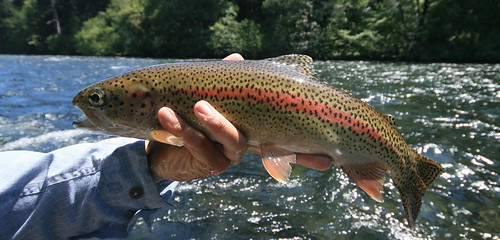
Today I fished the lower McKenzie from Deerhorn down to Belinger. The river was as low as I had fished it in 2009. Drop offs, seams, midstream depth changes and structure were far more evident with the water around 4000cfs. The river really looks great.  Around 2pm things warmed up and March Browns hatched in big numbers. Pale Morning Duns, small caddis, Little Yellow Stones and a few large Golden stones were also emerging  in the afternoon. Fishing was not incredible but we did catch a few nice fish. The most notable aspect of the day was the fact that the larger fish were taken on a size #14 Possie Bugger and a size # 8 Mega Prince in shallow fast water. All spring it seems I have been finding nice fish in deeper troughs and slow edges with depth. With the water down and things warming up fish appear to be moving into the prime feeding lanes that are now so well defined.–CD

MCKENZIERAINBOW

Posted in McKenzie River | 1 Comment

Local Steelhead, Bass and Shad

We’ve been hearing more and more reports from anglers catching steelhead on the McKenzie and Willamette Rivers.  Hatchery steelhead are trickling in. So far the numbers are less than impressive, but fish are being caught below Leaburg Dam on the McKenzie and throughout the Willamette below Dexter Dam and on into the town run. Good patterns include the Moal Leach and Thunderhead Moal pictured below.

IMG_1286

IMG_1284

Bass fishing at Davis Lake has been decent. Warming temperatures will help this fishery improve. The road to Lava Campground is open and anglers “crawling”(slow deep strips) patterns like the Bass Blastin Moal, Meat Whistle, and Barrett’s Bassmaster Cascade Killer have been taking fish. Moal and Whistle pictured below. Click the link for Barrett’s Bassmaster to see the fly tying video.

IMG_1285

Copy of IMG_1073


Shad fishing on the Umpqua is picking up. Anglers are taking fish behind the town of Elkton, at Yellow Creek, and the “Popcorn Hole” below the town of Umpqua. Shad flies need to be fished deep. It’s time to get out the T-14 or T-17, create a sink tip 5-10 feet long and slow swing a shad dart into the slots shad tend to stack up in. A few of our favorite Shad Darts pictured below.–CD

IMG_1301

IMG_1300

Posted in Fishing Reports | Leave a comment

Photo slideshow from Wooden Boat Festival

A photo slide show from Barbara May from the McKenzie River Wooden Boat Festival.

Posted in Oregon Fly Fishing Clubs and Events | Leave a comment

Early run off in Western Montana

March and April can be a great fishing months  around Missoula Montana. A few years back my wife’s sister moved out to a beautiful log home on the way up to Snow Bowl ski resort. Since then it hasn’t been to tough to convince me to visit the family. Much like the McKenzie and Willamette spring fishing success hinges on water levels, water temperatures and air temperatures. When all three variables come together, fishing on Montana’s Bitterroot, Clark Fork and Rock Creek can be fantastic in the early season. Typically in March, April and early May water levels are low and clear, with snow falling or clinging to the spectacular mountain ranges surrounding Missoula. Most residents can predict traditional run off within days of May 17th. This year however unseasonably warm weather has brought early run off to the area. Local fly shop reports were recommending you stay home and tie flies this past Friday. But when you drive 10 hours to fish, you go fishing regardless of the conditions. With the Clark Fork and Bitterroot completely blown out, chocolate mud we decided to try Rock Creek. The shop we stopped in to get a licence suggested the middle section and upper section of the creek would be best. We picked up some San Juan Worms (great high water “fly”) and headed off.

IMG_1305

Lower Rock Creek was really ugly and 2200 CFS is a big number on a fast flowing cold river.

IMG_1306

We tried a couple of spots with zero success. We drove all the way up to the Philipsburg Junction before we found accessible water around a Gilles boat launch. It was around 2pm by now and the river is still looking brown but the air temperature has risen just a bit. As we ate our sandwiches river side, I convinced myself that a fish had risen on the other side of the river, always the other side. River access is a bit of an issue on this stretch, and clearly farmers do not want anglers jumping fences and tromping the banks.  But that is really tough to take when you are skunked at 2pm and the best looking water is across a river that is not all that wade-able.  Yet a farm road on the other side of a nearby bridge leads right to the spot. Needless to say I found a way to fish the slow water on the other side.

IMG_1308

IMG_1309

The slow water across from the ramp produced, and I continued to search out slow inside turns and side channels with success for the next couple of hours. Most of the fish were nice cutthroats with a couple of browns mixed in. All but one fish ate the worm tied below a Mega Prince off a Thingamabobber 5 feet.

IMG_1311

IMG_1323

On the way back to Missoula that evening we scouted a float for the next day. The ramp was 8 miles upstream, just downstream from the West Fork confluence. On the way we saw Bald Eagles, Elk, Big Horn Sheep and the Moose pictured below.

IMG_1317

We took my brother in laws PAC 13 Outcast on day two, the boat is ideal for most of Missoula’s shallow running rivers throughout the year. Again we stopped at a local shop and picked up a few bugs. More red worms and some Yellow Yummy’s at the shops suggestion.

IMG_1341

IMG_1344

The start of the drift was all fast flowing riffles and minor rapids with little holding water. We found a few spots on the upper three miles but very little ideal holding water given the water and air temperatures. I did not take a water temp but it was very cold, around 46 I would say. We had a bit of sun, snow, rain and lots of wind, especially late in the day. About 4 miles into the drift the water slowed and classic cut banks and moderate speed riffles developed. We found fish on the worms, Mega Prince and the Yellow Yummy’s. With 65 degree air temps, (which we did not have) March Browns, Skwala Stone Flies and Blue Winged Olives would have been present. As it was however, only a few adult insects were present and very few fish came to the surface.

IMG_1343

IMG_1350

IMG_1352

We drifted through private land the entire way. The float season is very limited on Rock Creek and by July first it is illegal to float Rock Creek in it’s entirety. I am pretty sure we were one of the few boats to float this section this year. I say this because we came across a barbed wire fence completely blocking the river.

IMG_1354

Like Oregon, Montana’s water rights allow for public access within the floodplain of a river.  Constructing a fence across and thus blocking a river is completely illegal. Needless to say, we cut the bloody fence and watched it swing down stream to the other bank. Barbed wire is a bit tough on rubber but a leatherman has no problem with it.

Although is was very cold and water conditions could have been much better, my spring trip to Missoula was a great time.–CD

Posted in Fly Fishing Travel | 4 Comments

McKenzie and Willamette continue to fish well

Calm overcast conditions had the lower McKenzie and Middle Fork of the Willamette fishing well the past few days. The McKenzie is still running a bit high but still at a very nice level. The lower river is maintaining the best water temperatures and nymphing remains the most productive strategy. Use Mega Princes, Possie Buggers, Bead Head Princes, Bead Head Pheasant Tails and Bead Head Poxy Backed Hares Ear nymphs under an indicator for all day success.  The March Brown hatch is still hanging on. The bugs tend to get smaller and lighter in color as the hatch winds down use March Brown extended body to match this “slighter” may fly.

IMG_1304


The Middle Fork of the Willamette’s water level has bounced around a bit but is now at an excellent level. Similar tactics as the McKenzie will work well. Both rivers continue to experience large numbers of small caddis adults in various stages of development. Look for bank feeders and fish moving into shallow riffles as evening approaches.–CD

IMG_1303

Posted in Middle Fork Willamette River fishing | Leave a comment

Trout Unlimited Fundraiser: Bull Trout T-Shirts are in

Support Trout Unlimited Chapter 678 and Bull Trout with this great new T-Shirt. Original artwork by David Wilson, and 100% of the proceeds go to protecting and restoring bull trout habitat in Oregon. Cost $25. Buy yours today, online or in the shop. Sizes Medium-Double XL.

Bull Trout Shirt

Bull Trout Shirt

bull trout painting by David Wilson

Back of the shirt: Salvelinus confluentus Bull Trout
In Oregon, bull trout were historically found throughout the Willamette River Tributaries on the west side of the Cascades, the Columbia and Snake River tributaries east of the Cascades, and in streams of the Klamath Basin. Currently bull trout are listed as a threatened species and are mostly limited to the headwaters of their historic ranges do to degraded stream habitat. Bull trout are an indicator species and are more sensitive to increased water temperatures, and degraded stream habitat than many other salmonids. Stream habitat restoration, reduction of siltation from roads, and modification of land use practices to improve water quality are all important to bull trout survival.

Bull Trout Shirt

Thanks to the following sponsors: BiMart, Scientific Anglers, Bauer Reels, Oregon Council of the Federation of Fly Fishers, Bellinger Bamboo Rods, Printwear of Oregon, The Caddis Fly Shop.

Posted in Oregon Conservation News, Oregon Fly Fishing Clubs and Events | 8 Comments

Rio Outbound fly line review by Jay Nicholas

Rio Outbound Fly Lines

Rio_Outbounds_on_Table

Chris knows that I fish these lines and has asked me, on a couple of occasions, what I thought about them. Dude, I fish them, what more do I need to say? I don’t fish junk, well, not more than a few casts anyway. If a line doesn’t perform, it doesn’t last – period. Anyway, he asked me to jot down some of my thoughts about these lines for the Blog – so here goes.

But first, a short story. Last fall, I met a nice guy out on the water, a very effective bait fisher who was intrigued with the possibility of catching salmon on a fly. We chatted over several days. I gave him some flies. He asked lots of questions about my tackle, lines, leaders and so on. It turns out that he was listening.

One day I was walking around downtown in Corvallis and my cell phone rang. This fellow was at a fly shop, trying to buy the two lines I recommended he try. They were trying to talk him out of it. Imagine that! The “experts” in the fly shop were contradicting my advice. How rude. What part of “the customer is always right” did they not understand?

Anyway, they were telling him that no one was fishing for salmon with Integrated Head fly lines. The Rio Outbound is an Integrated Head fly line. That means it has a relatively heavy “shooting head” smoothly transitioned (integrated) into a thin running line. Other manufacturers produce Integrated Head lines too.

Well, I guess the sales staff hadn’t consulted with me before they made a blanket dismissal, had they? They were trying to convince him to purchase several standard shooting heads, (about 30’) and a separate running line. The lines they wanted to provide my friend fish quite well (I use them myself sometimes), and they are the traditional tools for fly fishing salmon. So they were giving reasonable advice. But what’s up with arguing against an Integrated Head line?

I just don’t get it. When I meet someone who asks for advice regarding fly lines for salmon fly fishing I go straight to the Integrated Head fly line. The Rio Outbound is a perfect match up for any beginner or advanced fly angler who is getting into the crazy world of salmon fishing.

Scene_Jay_Fighting_king_wilson_1

Here’s why. Outbound lines have about a 37’ shooting head and will be easier to cast than a standard shooting-head. Rio Outbound fly lines, notably, are heavier than the standard rod-weight ratings would dictate. As a consequence, these fly lines will really load your rod. Seriously. Throw on a Rio Outbound 10 weight line (425 gr) and that rod will launch your fly across the lagoon with one back-cast.

Hey, folks, don’t think that these lines are only for salmon fishers, no-siree. Think Sea-Run Cutthroat with a 5 weight F/I Outbound line. Think Klamath Lake with a WF 6 I/3 line. Think Surf Perch. Think Ling Cod with an Outbound Custom-Cut T-14 head. Dude, that line will put you down with the lunkers.

Imagine fly fishing for sea-runs in tidewater or in the slow flowing pools a few miles above tidewater. It’s August, you’re fishing Outbound WF5 F/I line, and you’re cruising the shoreline, casting to structure, looking for a school of cutts. Cast to the shore, strip, strip, strip – no take. Roll cast the line into the air in front of you, make one back-cast, and shoot the line. See there? You’re fishing already. None of the usual make-a-dozen false-casts to get your line out of the guides and your fly back in the water. The Outbound Line, simply, will keep your fly in the water more, and increase your effective fishing time in the process.

I hope you paid attention to those casting instructions. Go watch Jim Teeny demonstrate how to cast his lines. He will retrieve the line to the point where the Head is just about at the rod tip, roll the line out of the water, make one back-cast, and zoom! Out of the guides it flies! That’s how you should be casting all the Integrated Head lines. Now, if fishing conditions require you to retrieve your fly close to the rod-tip, you’re gonna need to make a few more false casts while unleashing some line to load the rod. But believe me, you’ll make far fewer false-casts with an Outbound than you would have made with a standard shooting head.

And there is one more little perk to these Integrated Head lines: No loop-to-loop connection to jam in the guides. Oh-my, that can get me frazzled. The smooth transition from head to running line in the Outbound takes all the worry out of your cast.

If you have to choose two lines for fly fishing salmon in Oregon I would suggest the F/I and the I/3 Integrated Head lines. For Alaska it would be the I/3 and I/6 lines. Why the difference? We tend to fish slower water here at home compared to the Alaska rivers where a faster sinking line is needed to put you in the zone. I/3 refers to an Integrated Head line with a floating running line and an slow sinking head. An I/3 has an intermediate running line with a 3” per second sinking head.

Fishing Klamath for big Rainbow or Crescent for Lakers? The I/3 will probably perform best if the fish are shallow, but deep water might call for the I/6 or even the I/8 lines.

Give these lines a chance. They are a joy to cast and they will put you in any depth zone you choose.

JN

Buy Rio Outbound at the shop.

Posted in Fly Fishing Gear Review, Oregon Salmon fly fishing | 7 Comments

Trout Opener Tip: Avoid Marten Rapids

Saturday is opening day of trout season on the Mckenzie River, a day that always brings out the crowds. If you plan on floating the Mckenzie in the next few weeks be sure to avoid Marten Rapids.

The log that was at the top of the rapid last year has moved into the rapid proper and another log has lodged itself at the upper portion of Marten. Crews plan on removing the obstructions in the next couple weeks when the water gets lower but for now it is best to skip running the rapid altogether.

Ben and Kay Dorris is your last chance to take out upstream and Helfrich is your first put in downstream of the rapid.

Here are a couple links to the story:

Guide: Avoid Marten Rapids on the Mckenzie River

Dangerous Debris on the Mckenzie River

Get out there, have a good time, catch some fish . . . but above all be safe. Good Luck!–KM

Posted in Fishing Reports, McKenzie River | Leave a comment

Oregon Fishing Links: ODFW wants you to kill more groundfish

Kill more groundfish!
ODFW is increasing the bag limit on groundfish to 7-per day starting May 1st. As part of the agency’s obsession with “Increasing Angler Opportunity”, biologists decided six just wasn’t enough. A week from today, you’ll able to kill one more of these slow growing, slow-to-reproduce, near shore fish! Thanks guys!

$100 million project to get salmon and steelhead up the desert goes bonk
The $100 million project to get fish passage at Pelton Round-Butte Dam on Lake Billy Chinook went FUBAR earlier this month when a part of the new apparatus broke free and fell to the bottom of the reservoir. The plan would have helped Chinook and Steelhead move up into the Upper Deschutes, Crooked and Metolius. Buster Wants to Fish says the tower setback doesn’t really matter, since the whole project relies on trucking fish past the dams.

Wild Steelhead Festival in Bend tomorrow night
The Save Wild Steelhead Festival is coming to the Bend Orvis store, featuring the films “Raising The Ghost,” by Team FlyBoys and “Steelhead Yawning,” by Wahoo Films. Writer and Patagonia Fishing Ambassador, Dylan Tomine, will make his “State of the Steelhead” presentation, accompanied by photographer Tim Pask’s images.

Removing dams on the Elwah
A $54 million chunk of federal stimulus money will speed removal of two aging, salmon-killing dams from the Elwha River on the Olympic Peninsula. From the Seattle PI: Built early in the 20th Century, in contravention of state fish protection laws, the dams blocked salmon migration on all but the lower five miles of the Elwha. The river is the largest watershed on the Olympic Peninsula. The dam removal will open up 70 miles of the Elwha to salmon spawning. A century ago, the river was home to 100-pound Chinook salmon.

Posted in Oregon fly fishing links | 4 Comments

Lower McKenzie Fishing Report

This Tuesday and Wednesday were beautiful days on the river. Sunshine, clear water, and great air temperatures. But 81 degrees has it’s downside as well and it wasn’t until Wednesday afternoon that I could get a water temp above 50 degrees. A mild run off plagued the river early in the week. Fishing was medium at best.

Blizzard caddis hatches were present but windy conditions made feeding fish hard to find. Late in the day fish did get on the caddis and we had decent dry fly fishing after 3.30 pm. March Browns are still hatching and fish would feed on the well presented March Brown Sparkle Dun. With a bit of run off, a ton of caddis, and a rising river fishing was not what it could have been. But the Mckenzie is turning a corner it always does this time of year. Big fish are recovering from their spring spawn, and the big bugs Green McKenzie Caddis, Salmon Flies and Golden Stones are just coming around. The water is dropping currently and melt should be reduced during the coming days, warming water temps, and cloudy skies will improve fishing on the McKenzie.

Other opening day thoughts:

Lower Deschutes is in good shape and nymphing with big stone fly imitations is always productive this time of year. Look for March Browns and Blue Winged Olives to also be productive this time of year on the Lower Deschutes.

-CD

Posted in Fishing Reports, McKenzie River | Leave a comment

Brownlining tip: Flip flops not recommended

IMG_1805

Posted in Oregon Fly Fishing Tips | 5 Comments

Fly fishing events in May — a great month to be in Eugene

Lots going on next month, so make room and mark your calendars.

McKenzie River Trust Benefit: Barry Lopez
Friday May 8, 2009, 7:30 PM,at the Hult Center
Join McKenzie River Trust and the Hult Center in spending an evening with Barry Lopez. Lopez, the acclaimed writer, explorer, and long-time McKenzie River resident will read and reflect on his life-long study of the natural world and human culture. This is a rare opportunity to hear from one of the greatest twentieth-century American nature writers and to lend your support for MRT, in celebration of MRT’s 20th anniversary. Check out the recent Register-Guard article on Lopez.

Trout Unlimited Benefit: Rivers of a Lost Coast
Tuesday May 12, 2009, 5:30 and 7:30pm, David Minor Theater in Eugene
Rivers of a Lost Coast is coming to the David Minor Theater in Eugene. Two showings, Tuesday May 12, 5:30 and 7:30pm. Proceeds from the event will go to Trout Unlimited and the North Umpqua Steamboaters. Join the film makers and salmon biologist Jay Nicholas. Buy tickets online, seating is limited.

McKenzie River Spey Casting Classes
Saturday-Sunday May 23-24, 2009 9am-3pm, McKenzie River
One week after the Sandy River Spey Clave, Sage casting instructor John Hazlett will offer a two-day clinic on the McKenzie River, May 23-24, 9am-3pm. John will be taking a maximum of six students and you will fish both sides of the river, using his jet sled. Cost is $100 and lunch is included. The Caddis Fly will supply rods if need be but folks can bring their own. Because Jon has a sled he will teach anglers to fish/cast from both sides of the river. There may even be a few fish around. Jon guides for steelhead much of the year and will offer fishing insights as well.

Spey Casting Clinic

Learn the Double-Spey, Snap-T, Snake Roll, Switch Rod basics, and other two-hand rod tactics.

Posted in Oregon Fly Fishing Clubs and Events | Leave a comment

Fly Fishing for Spring Chinook, King of Kings

The Spring Chinook, King of Kings

springer1

Caption: A particularly fine spring chinook, the kind that swim in and out of my dreams. Courtesy of Jay Nicholas.

Spring chinook light a fire in me like no other fish in freshwater. When I think about the reasons, I can’t pin it down to one attribute. It’s the whole package–strength, speed, cunning, beauty, girth, stamina. It’s also the time of year, when days are suddenly long, rain is warm, rivers smell sweet, swallows skim the water, ospreys dive, and eagles ambush. Nature’s palate of green becomes impossibly vivid and varied, and the once skeletal river banks are hidden under the shade of alder and cottonwood.

Fly fishing for spring chinook is a singular challenge. While these brutes are the occasional by catch of steelheaders, springers are extremely difficult to target and hook with consistency. I have still never landed a springer on a swung fly, and the two I am certain of hooking tore me to shreds and left me with a stubby leader. Only one of my clients ever landed a spring chinook on a swung fly in ten years of guiding. He actually landed two in one morning, a twenty-pounder and a ten-pounder (the late Don Wysham, a gentleman and a great angler). I still devote time to the chase every season, and I know that one day lightning will strike.

Stripping flies has been much more productive in my experience. But that’s not saying much. Last year I didn’t hook a single springer on the fly, devoting several days to the effort. But there was one season when everything came together. I lost count of the fish we brought to hand. That season was highlighted by several days that I will never forget. One such day Frank Amato and I stood in the bow of my drift boat watching fresh salmon circling in a pool. We hooked several fish, bringing three or four to the boat, but lost every one before we could bring them to hand. We watched them chase and grab our flies, but every fish beat us, either by wrapping around an underwater tree limb, diving into a log jam, wrapping around the anchor rope, or wearing a hole in their lip and slipping away. The last fish of the day was a monster, probably 25 or more pounds, super chrome. It put up an astonishing fight. Near the end of the battle, the fish went to the bottom of the river, clearly visible to us, and started smacking its jaw against the bottom of the river. The motion resembled that of a spawning female, but instead of the tail flapping against the gravel, this fish used its head. It was a brilliant tactic, and a few moments later as the net was lowered for the scoop, my hook straightened and came free.
springer2

Caption: Scott Plemmons was rewarded for his persistence with this beast, just a couple of miles from reach of tide.

Portland was quite a hub for springer fishing. I had the lower Willamette, the Clackamas and Sandy, all just minutes away. In the upper Willamette Valley, opportunities for chasing spring chinook are still quite good. The Willamette and McKenzie both offer reasonable opportunities, and I look forward to checking them out. But my quest for ocean-fresh fish is pulling me toward the Umpqua. What a river! I have never seen a river with such grandeur, variety and character. A little surfing on the world-wide-web quickly revealed that the Umpqua is famous for jumbo-sized springers. A gear popped loose in my brain when I read about the FIFTY-POUNDERS! That’s more than my little pea brain can handle, and I can already imagine the conversations with my new boss about how I can’t take a sick day every time it rains.

The Umpqua has seen fairly modest runs of spring chinook for the past few years, but in big years it is capable of producing over 30,000 fish. The 2008 run is expected to be relatively small, and as a result, angling pressure will be lighter than average. Most anglers fish on anchor from a boat, or plunk close to the bank. Less boat traffic should mean that fish are more relaxed, and more likely to suspend off the bottom. It should also mean that they are more susceptible to a swung fly.

springer3
Caption: Mishler scoping out a sexy-grab-a-licious corner on the big Umpqua.

So, last weekend my friend and fellow chinook junkie Jeff Mishler decided to try our luck. We plied the river from Elkton to Scottsburg, looking for the best places to swing a fly to moving chinook. The hot, sunny weather didn’t seem to work in our favor, and the other anglers we spoke to had similarly poor luck. But we did find a few spots that had all the right qualities–inside bend, relatively shallow, slow swinging, sexy-grab-a-licious! We also found out that, despite her demure appearance, the Umpqua has some big ass rapids. The hairiest ones have big logs sticking up in the middle of them, as if to say “over here, little human, over here!”

After two full days on the water, I hooked two bright kings on the fly, one about four inches, and the other pushing six inches. They were strong for their size, though somewhat out-matched by my thirteen-foot Burkheimer spey rod. I thought about swallowing the small one whole, but as the thought came to me, the fish slipped away. They are SO smart! Or maybe I’m just that…duh, never mind.

Reality Check

Sadly, our best fish is also our most imperiled. In most watersheds in the lower forty-eight, spring chinook are barely holding on. They are the most susceptible to human-caused changes, both as juveniles and adults. One prominent biologist recently told me he is afraid that conditions in many coastal rivers no longer allow for the survival of wild spring chinook. Water is sucked out of these rivers during the dry summer months, at their headwaters for municipal supplies, and out of the flood plains by irrigators. Riparian zones have been severely altered, particularly in the flood plain, leading to hazardous warming of what water is left. And then there’s pollution. It’s not a pretty picture.

Historically the Columbia River hosted the largest mass of spring chinook anywhere on the planet. Among the Columbia’s tributaries, the Willamette was the jewel. But today only two Willamette tributaries have viable wild runs, and the numbers are paltry. In the early 1800s the Willamette springer run was estimated at between 200,000 and 400,000 fish. Today the wild runs on the Clackamas and McKenzie are fewer than 10,000. Fisheries agencies still manage all of the Willamette’s tribs for spring chinook, directed by the Endangered Species Act to “prevent their extinction.” But aside from the Clack and McKenzie, the remnant populations in Willamette tribs are supported purely by hatchery programs.

On Oregon’s northern coast, my favorite place to chase springers, most fish are of hatchery origin. Ironically, they are reared and released by the very hatcheries I have always railed against. I admit my own ridiculous hypocrisy spending so many hours, days, weeks on a fishery maintained by hatcheries I oppose. I’m an addict. My biologist friend consoles me by saying that our coastal rivers may no longer be capable of sustaining wild fish. So are hatchery springers better than no springers? I guess so. But it may be a bit early to write off wild spring chinook. Every year I see a few wild ones, and they are often the best and brightest fish of the season. Locals “complain” about catching “damn” natives. So our rivers are at least capable of sustaining a few fish, if not the great runs of the past.

Eugene’s local chapter of Trout Unlimited is directly engaged in efforts to restore habitat wild salmonids, including endangered spring chinook, in the upper Willamette basin. If you would like to be a part of the solution, come to a meeting and see what’s going on. Visit the chapter blog for more info.

The Wild Salmon Center is proving to be the strongest voice for wild salmonids in the Pacific Northwest. To learn more and to contribute, visit their website.

-Rob Russell

Posted in Oregon Salmon fly fishing | 3 Comments

Fourth Annual Mckenzie River Wooden Boat Festival to be Held Saturday, April 25.

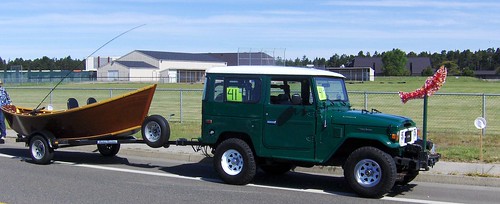
Coinciding with the opening day of trout season, the fourth annual Mckenzie River Boat Show will be held this Saturday, April 25th at Eagle Rock Lodge in Vida, Oregon. The event is free and features historic wooden Mckenzie River drift boats as well as newer wooden boats by modern builders. This is a great opportunity to see side by side the past, present and future of these nimble, stable and beloved boats!

CRW_5425

This year, there is also going to be a wooden boat parade. If you have a wooden boat and want to participate contact Greg Hatten.

The parade is a modest revival of a tradition that began on the Mckenzie in 1938 when a handful of guides launched at Belknap and took out at Leaburg Lake, scouting the river just prior to the opening of trout season. From that first small scouting party the event grew and by 1962 the parade had over 300 participants.

The parade became huge. Dignitaries and tv personalities were invited and crowds of up to 30,000 people lined the river banks to watch the spectacle. The archival footage below is from a 1958 Universal Studio’s news reel, note the boat flipping shortly into the clip:

Unfortunately, the tradition became unsustainable. Alcohol, unsafe craft and the Mckenzie’s icy waters were a potentially lethal combination. The crowds left large amounts of litter and the last parade was held in 1970 after a participant was killed. Even today there are those who rue the idea of the parade making a comeback and to keep the number of participants down, the parade is limited to wooden boats.

The boat show is always well attended and is a lot of fun. Even if you are just floating by, pull your boat up on the lawn and celebrate our region’s biggest contribution to fly fishing!–KM

Posted in McKenzie River, Oregon Fly Fishing Clubs and Events, Uncategorized | 2 Comments