Lower Mckenzie Still Fishing

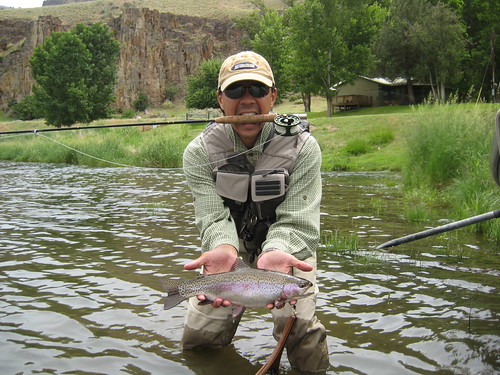
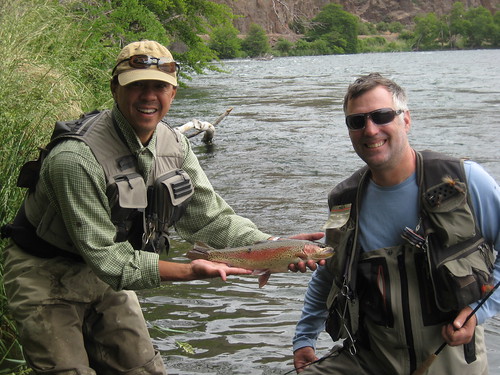
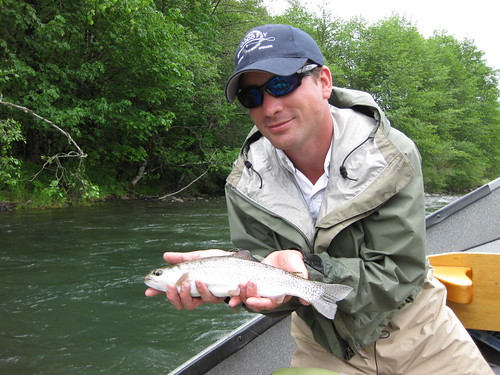
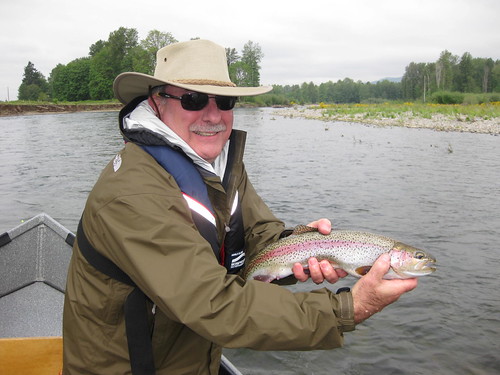
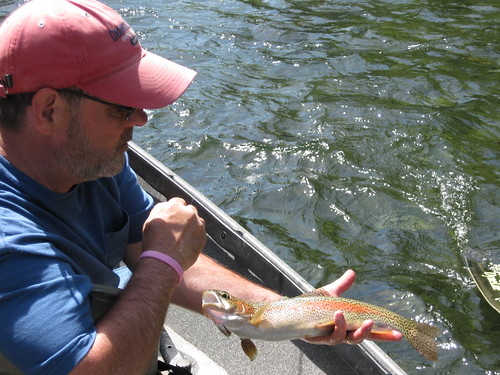
On Friday, Mckenzie-Upper Willamette Communications Officer Brent Ross and Dave Mcbride fished the lower Mckenzie from Hayden Bridge to Armitage connecting with some nice cutthroat. They even took the trout porn to the next level:

Mckenzie Cutthroat

Mckenzie Cutthroat

Photos Courtesy of Dave McBride.

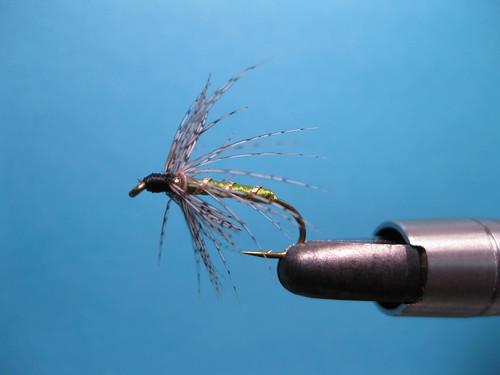
Trout were taken on #10 Possie Buggers and Mckenzie Green wets.  They used Dave’s brand new Olympus 1030 SW to capture these images.  Word on the street is that this new underwater Olympus is a sweet little package.  Affordable, crush-proof, freeze-proof and water-proof to 30 feet it apparently takes nice shots and I’ve even heard of guys pitching them out under a bobber to get an idea of the structure of their favorite holes.

Thanks for the report and the great photos.–KM

Posted in Fishing Porn, Fishing Reports, McKenzie River | Leave a comment

Oregon’s prime big bug hatches under way

When people ask “What is the best time of year to come to your area?” I usually give a lengthy answer skirting the question, discussing how many great options there are to fish from the Eugene area. The fact that every month of the year offers some excellent fishing. But when it really boils down to it. And I am pinned down to an answer, between May 15 and July 15 given normal water years are the best. Of course then you have the fall Sept-Oct how can you beat the fall.
We are in the midst of that prime spring window and why it is so good is the fact that “big bugs” are available.

Green Drakes: Upper Mckenzie, Metolius, Deschutes, Upper Willamette and many more. The size of the Western Green Drake alone is impressive but the fact that the largest trout in the river seem to come to the surface during the hatch is the deal.

Green Mckenzie Caddis: McKenzie and Middle Fork of the Willamette. Yesterday I fished the middle fork and there were impressive numbers of the green bug out. Afternoons are best. The aggressive take on these active caddis is awesome. Skate, drag, lift and swing your dry or wet and hang on.

Golden Stones: McKenzie, Middle Fork of the Willamette, Metolius, Deschutes, and most other western waters. Locally these bugs are very much present but not nearly as intense as they are on the Deschutes. A great fly to use as an indicator fly Half Down Golden, Aanes Mo Jo Golden Stone, or Foam Top Madam X Yellow.

The Golden Stones, Green Drakes and Green McKenzie caddis are the big bugs that seem to bring the post spawn  rainbows of our area to the surface. There are other important hatches as well. Pale Morning Duns, numerous tan and brown caddis and little yellow stones are all present and happening now. Fishing is great, get out there.–CD

Posted in Oregon Fly Fishing Tips | 1 Comment

Fly Fishing Christmas Island: The Finale!

A major angling event occurs each month on Christmas Island when huge schools of bone fish will form during the spawning process. Large males are at the front of schools followed by the females. Paris Flat is a key location for fly anglers to have a shot at these schools.

We had a plane to catch at 3:00pm and our hosts, Ikari Lodge, saved the best for last. We fished from 7:00am to 11:00am at Paris Flat.
Here are our stats and a few pictures of our last hours of fishing on Christmas Island.

Note: The majority of the catch during our last day was over 20″. It truly was a day to remember and a great way to end our trip.

Last day log entry:

Bones caught; 57
Bones lost; 18
Toasted; 6 (see previous post for definition)

O.K, here we go, this is Marc with “Mongo”, the largest bone caught on our trip. Even the guides (English, Ray and Tookey) wanted a picture taken with this very large bone.

IMGP1709

Here are Divo and head guide “English”, with a fine bone Divo caught off a passing school.

English_&_bone

This is Wink, known as “Wayne” to locals on the island.

IMGP1669

This last picture is Hugh, known as the guy who gets his checked bags loaded for free while the rest of us had to pay $15!

File0015

In conclusion….we are going back in 2010!

LV

Posted in Uncategorized | 2 Comments

Nickel’s Green Caddis Rockworm: Fly tying video

This Green Caddis Rockworm from guide Ethan Nickel is a great pattern to fish below a nymph or on the swing this time of year. Easy to tie, easy to fish.

IMG_1447

Green Caddis Rockworm:
Hook: Size 10 3761 TMC
Rib: Lagartun Oval tinsel
Body: Uni-floss Olive
Hackle: Partridge

Posted in Fly Tying | Leave a comment

One more winter steelhead

Salmon and steelhead junkie, Rob Russell is headed back to fly fish for springers on the Tillamook this weekend. Here’s his belated report from Memorial Day.

The river was still running high enough for easy drifting. There had been some big days in the river and in tidewater. A reliable friend said there had been twenty salmon taken on Tuesday. Best of all, Memorial Day weekend coincided with the best set of tides all month. That should pull some fish out of the ocean and into the lower river. Every sign pointed to a fantasy weekend, and that was reason enough to be prepared for the worst.

I had originally planned to head back to the Hoh and Solduc for the legendary but seldom discussed spring chinook run, but my friends pulled out at the last minute. I weighed my options. Should I camp solo on the Umpqua and continue my quest for the mythical fifty-pound spring chinook? Or should I head back to old faithful for some low-water king fishing? Then I got an email from Tim. He was heading to the Narrows for the weekend, fishing by himself. “Let’s fish!” I said, and I packed my gear.

I arrived in Tillamook the next evening, glowing in the orange sunset and singing along with the radio. I turned up the Wilson River, blew by the RV park, and slowed down as the charred remains of the Guide Shop came into view. My old home-away-from-home. Tears welled up as a hundred memories flew by. Sunsets spent on the deck, gazing over the edge at the river below. The smell of a burger grilling inside. The sound of the front door bell. Toy’s sweet smile, Pete’s big laugh, and the kindness and generosity of Gary and Ernie. In a breath it was gone and I could feel Mills bridge pass under me.

Tillamook Summer

Up river at the Narrows, Tim and I made our plans. We expected competition, so we set the alarm for 3:30am. Then we uncorked a bottle of Talisker 10-year and caught up on life and fish. Fly boxes came out, voices were raised, and stories were animated with wild hand gestures. But the river eventually lulled us to sleep.

Morning came early. We slugged down some coffee and eggs and got on the road. The boat hit the water at 5:00am, and soon we were gliding down the canyon, eyes peeled for moving salmon. We fished hard in every likely drift and pool with no signs of fish. By 10:00am we were nearing reach-of-tide, and by noon we were nearing the bay. The tidewater crew had picked up some early-morning biters, but there had been a lot less fish than boats, so we didn’t feel like we missed much. The boat was trailered, and we zoomed back to the top for a repeat. By 1:00pm the wind was howling, but we fished hard in spite of the challenge. And we fished well. But we never had a bite other than a few cutts.

The abuse continued on day two, puncutated by one lost opportunity mid-morning. Again we doubled up on the drifts, and covered the river twice. No salmon. Not even a drive-by. That night we grilled a trout that had taken the hook deep. It was delicious, and for a few moments I was thankful for the idiotic kill-fishery that had opened for cutthroat on Saturday. I guess every nuclear blast has its golden lining.

Day three brought an air of desperation, but we shook it off, happily conceding to our worthy adversaries. The salmon have to win sometimes. Just not all the time. It was our fifth turn down the river in three days and we had our program down to a science. We knew which runs fished right, and we savored them. We knew which ones sucked and we blew by them. Two pools held our interest. The first was a total bust. The second was shaping up to be the same. Then, as Tim neared the end of the pool, his rod flattened out and a steelhead broke the surface. What a fighter! It was a wild winter kelt, strong and flawless. It jumped several times, and refused to give up. As Tim got her close to shore, she made one last wild maneuver and straighted the hook. “Perfect!” we said in unison, glad to see the fighter dart back into the riffle, none the worse for wear.

By noon we drifted into the Two Bit Hole, just a quarter mile from our take out. None of the regulars were there. The salmon that had been holding there all week were gone. They had shot by us somewhere in the river, but we would never know where or when. We put the best face on our disappointment, driving home to our friends and families empty handed. As I wound up the Wilson toward home, I remembered that great steelhead, wondering if she was the last winter fish I would see this year. Probably, but these fish continue to surprise me!

Posted in Oregon Salmon fly fishing | 2 Comments

Deschutes River Fishing Report: Salmonfly Madness

We just finished a week on the Deschutes yesterday. The fishing over the week ranged from good to outstanding. I would give specifics, but most readers would probably think I was full of it.

IMG_0764

IMG_0763

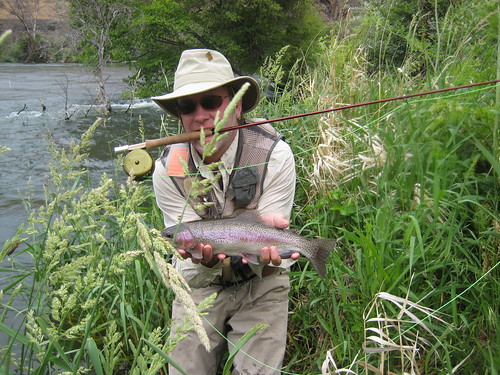
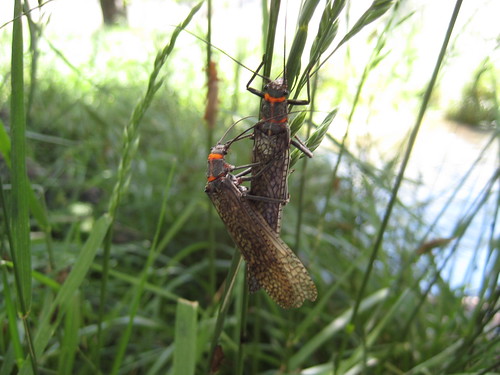
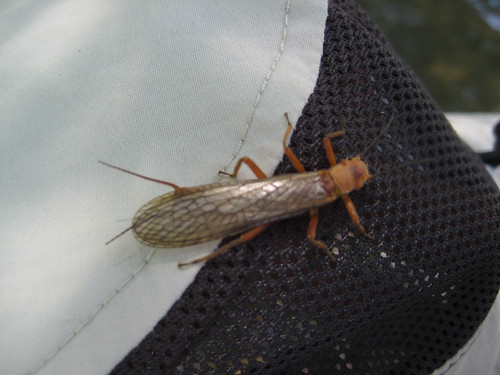
The dry fly fishing was so good that we did very little nymphing. The fish are keyed into the salmonfly and golden stone. Top producing patterns were the Clark’s Stone and Norm Wood’s Special in sizes six and eight, though many other patterns are working as well. The bugs should hang in there until the middle of June on certain stretches. The hatch starts on the lower end of the river and moves up, as of a couple days ago, the biggest density of stoneflies extended from Trout Creek down to the Dixon camp. Though the bugs thinned out downstream, the fish were still keyed on them.
It was a fun week of guiding: good groups, cooperative fish, great weather and lots of laughs.

IMG_0752

We still have open dates available throughout the summer and fall on the Deschutes. If anyone is interested in doing an outfitted trip on the Deschutes with experienced guides, great food, and comfortable camp amenities, contact the Caddis Fly for details.

IMG_0760

IMG_0743

IMG_0742

Though the stonefly hatch will taper off by the middle of the month, the fishing typically remains good on the Deschutes throughout the summer and fall. By mid-June, the fish have typically begun feeding on the dense hatches of small caddises and mayflies that continue to come off throughout the summer and fall. It’s a great time of year to go fishing in our area. Get out there and have some fun!–EN

Posted in Central Oregon Fishing Report | 1 Comment

Middle Fork of the Willamette high but fishing well

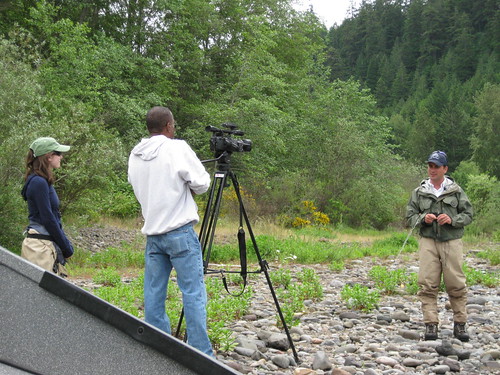
This Tuesday we fished a short section of the Middle fork of the Willamette near Oakridge while filming for Cityscenetv.com. Fishing was tough early, deep nymphing tactics yielded very little results. Around 12 noon things picked up considerably, Brown Caddis, McKenzie Green Caddis and Golden Stones became active and the fish followed suit. The water is still high but the fishing is good and it should be a nice summer on the Middle Fork.–CD

IMG_1563

IMG_1566

Posted in Middle Fork Willamette River fishing | Leave a comment

Product Review: Echo Dec Hogan Spey Rod and AirFlo lines – by Jay Nicholas

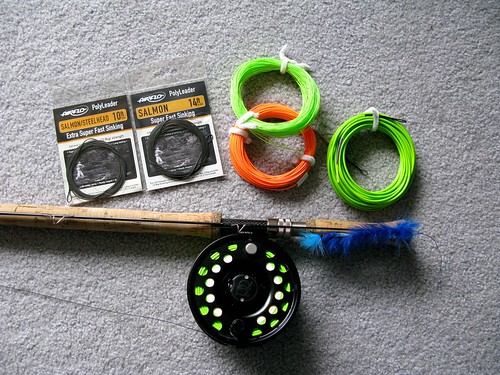
Let’s cut to the chase. If you are looking for an outfit to begin a transition from single- to double-hand fly fishing, and especially for fishing summer steelhead, buy an Echo Dec Hogan 5122, an AirFlo Skagit Compact 420 grain line, and several Airflo Poly leaders. Oh yeah – add a spool of AirFlo Miracle Braid shooting line and go fishing. Need a reel for this outfit? The Ross CLA reel is a great value to round out this rod/line combination, I have fished these reels for a full season and they are great performers.
AirFlo loop -- Jay Nicholas

There – how’s that for being opinionated?

Entering the leading edge of my fourth year of Spey fishing I offer this advice on the Dec Hogan rod outfit, because, well, here’s why – a recounting of my first three years fishing a two-hander.

Year-one: I fished four high-end Spey rods, studied Spey casting in an out-dated brochure, had no idea how to match a line with any of my rods or what a good cast might look or feel like, wrapped the leader around my head on several occasions, and seriously injured my right shoulder with bad casting technique. I made a lot of overhand casts and caught a few fish. I also had a great time with the two-handers and kicked myself for not learning to Spey cast years earlier. I was determined to learn this Spey “thing” myself. No lessons. Not me. Nope.

Year-two: Pretty much like Year-one, except that I took some advice from a few friends on line weights and asked one of them for a few pointers on my casting. I tend to be a slow learner and the coaching I got didn’t really sink-in very far.

Year-three: My Spey casting had improved to the point where I would occasionally make a respectable cast and I was having progressively more fun. My nine-year-old son, Jackson, bought me the Rio Spey Casting DVD. Finally, pictures! I was able to visualize two fundamental casts and the basics started to make sense. “D” loops became my focus for day-dreaming. I purchased a Dec Hogan 5122-4 (#5 weight, 12’ 2”, 4-piece Spey Rod by Echo). I lined this rod with an AirFlo Skagit Compact 420 gr line, Miracle Braid running line, and a 10’ fast sink AirFlo Poly leader.

Oh-my-gosh! Who just made that cast? Couldn’t have been me! I cast again. Same thing. It seemed like everything came together. The outfit was light, effortless to handle, and made the cast I had dreamed of for the last three years. The rest of the day was a delight, I felt like I was finally fishing the way I had been trying to, and yes, I even caught a summer steelhead.
AirFlo loop -- Jay Nicholas

Although this is a product review, I am not going to puke up technical details about this rod. I will only note that it is beautifully crafted, has cool hardware, and looks every bit the peer of my pricey rods. Two features combined to make this rod a joy to fish: it’s lightness and the deep, into-the-handle flex. Suddenly, I could feel the rod load; a feeling that often escaped me when I was casting faster action rods. The rod felt more like a light trout rod than a steelhead rod, but I was making 80 and 90 foot casts, mending line, and swinging my fly across good steelhead runs with consistency. My casting and fishing was relaxed and effective, and I was able to move past the angst of inconsistent casting to the joy of expecting a “tug” on every cast.

Was this newfound success simply a product of practice – or did the new rod/line combination really perform better than the others I had been fishing? Probably a little of both. My casting stroke with all my rods continues to improve with other rod/line combinations, but for now, the DH 5122 is my favorite summer steelhead rod. And yes, I have fished it effectively for winter steelhead too. Yeah, a 5-weight winter steelhead rod!

I prefer the AirFlo 420 gr Skagit Compact on the 5122 but the guys at AirFlo tell me the 390 is also a good match for this rod. I fish the AirFlo Poly leaders in both 10’ and 14’ with this rod, and add 3-6 feet of 8-10 Lb. Tippet.
AirFlo loop -- Jay Nicholas

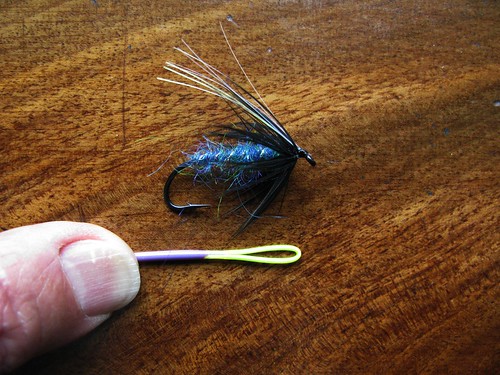
The AirFol Compact Skagit lines run from about 23 to 27 ft. The loops are color coded, duh, so even I can tell which head I pull out of the drawer. The lighter lines like the 420 gr are shorter and therefore customized to the (shorter) #5 and #6 Spey rods, while the heavier heads are a little longer and proportionally better suited to (longer) heavier #7-9 weight Spey rods.

I fished a friend’s DH 7130-4 and found it every bit the same joy to cast and fish. There is something about the Echo Dec Hogan rods that matches well with my casting skills – probably the deep flex of the rods. The Skagit Compact line and a sinking leader that is not overly heavy probably help me too. I have also fished 6-8’ T-14 tips with my 5122 but do not find this as pleasing a combination as the 10-14’ Poly leader. A 10’ T-14 tip was a bit much for the 5122 and my skill level.

While I’m at it, here is a final suggestion. Don’t be a silly-head like I was, insisting on learning to Spey cast on my own. Pester an accomplished Spey caster to teach you. Don’t just go fishing with them; really ask for their help. Watch them cast. Try to mimic their casting strokes. Cast short lines to get the movement down. Practice your casting strokes in the den, with only the butt-section of the rod. TAKE A SPEY CASTING CLASS. Yes, do it. It will take at least 3 years off your learning curve.

And one more excuse (like we need one more to buy this rod) – it makes an absolutely delightful strike-indicator rod. Yeah, fish your steelhead nymphs and egg patterns with a ThingamaBobber on this two-hander, you will love it.

See you on the river soon!

JN

Posted in Fly Fishing Gear Review | 3 Comments

Diamond Lake Fishing Report

Caddis Fly employee Clay Holloway has had two good weekends fishing Diamond Lake in a row. Water temperature yesterday was 60 degrees. Clay said they caught fish on sparse bodied chironomids in bronze and burgundy, tied with midge-bodi by Spirit River.

Diamond Lake May 2009

Diamond Lake May 2009

The fish averaged 15 but a few were larger. Minileeches were also producing, tied with a black marabou tail, black chenille, and red wire. Clay was primarily fishing with 10ft of 4x flouro. Crowds were down compared to Memorial Day weekend, plenty of fish to go around.

Posted in Fishing Reports, Oregon High Lakes | 4 Comments

McKenzie fishing well top to bottom

We are fortunate to have such a fine river so close to the Eugene Springfield area. The McKenzie boasts approximately 70 miles of  fishable water. 2009 has been another high water year for the McKenzie and fishing has had it’s ups and downs. That being said conditions are now prime for any section of the McKenzie.

Lower River: Leaburg Dam to confluence

McKenzie River Trout

The river is still high compared to historic levels but this helps the lower river stave off the summer doldrums.

Water temps are perfect and a plethora of bugs have been hatching. Pale Morning Duns # 16, Little  Yellow Stones # 16, Golden Stones #8-12, Green McKenzie Caddis # 10, Possie Buggers # 10, Prince Nymphs #10-16 are all taking fish. When the overcast/cooling air temps come early this week swing wets like McKenzie Caddis Wet, Greenwell Spiders and Hares Ear Soft Hackles. Stellhead have moved into the lower river and anglers have been inadvertently hooking them nymphing for trout, and catching them on Egg Sucking Stones near Leaburg Dam.

Upper River Between Blue River and Leaburg Dam.

McKenzie Rainbow Trout

Fishing was slow to get started in this section.  But now is the time to catch a boat load of planted trout, and some gorgeous native trout in the upper river. Watch out for Martin Rapids below Ben and Kay Doris State Park if you are floating the river. The rapid is still very “runable”. The normal right or left routes are open the left being a bit tighter this year with new timbers wedged in the entrance. Fish Half Down Golden Stones size #8-12 with Possie Bugger droppers, Brown Elk Hair Caddis # 12-16, Parachute Adams #10-14, and Little Yellow Stones.

Upper upper river Blue River up to Ollalie Campground.

McKenzie Trout

Still running high but fishing well. Hatches have been good most days on this section, but getting the fish to move consistently to the dry hasn’t been easy. Nymphing with Possie Buggers #10 and Prince nymphs #10 where possible in this ripping fast water has been very productive. Try Brown Elk Hair Caddis #12-16, Parachute Adams #10-16, Aanes Mo Joe Golden Stone #10 and Parachute Hare’s Ears #12-14 on the surface.–CD

Posted in McKenzie River | Leave a comment

Crane Prairie fishing report: Hot, crowded, fishy

Busy day out on Crane Prairie yesterday, but worth fishing for sure. We stayed near the Quinn side of the reservoir, fishing the edges of the channels. The fishing was best early morning — and the crowds were thinner. We tried slow stripping leeches on sinking lines, but all of our success came on chironomids under a thingamabobber. And specifically, sparse (NO FATTIES), red chironomids 9ft down on 4x fluorocarbon. The fish were picky, but we managed to boat some nice rainbows and a brook trout. I gotta say that the Buff headgear saved my neck from the sun. -MS

Crane Prairie fishing

Crane Prairie fishing

Crane Prairie fishing

Crane Prairie fishing

Crane Prairie fishing

Crane Prairie fishing

Posted in Central Oregon Fishing Report, Fishing Reports, Oregon High Lakes | 2 Comments

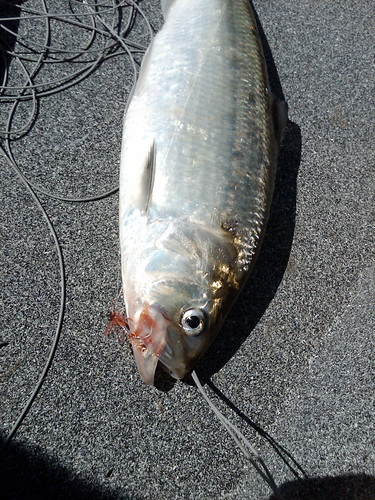
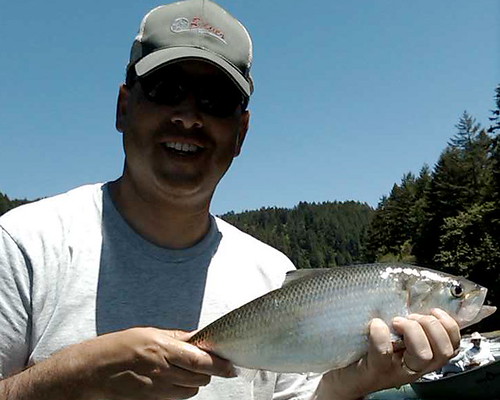
Fly fishing for shad in Oregon — the time is now

Male shad are showing up in the lower Umpqua — it’s just the beginning of the shad run. Best bets are 5-6 weight rods, sink tips with shad flies. Both the Coos Bay and Lower Umpqua Systems are producing solid numbers of fish. Be sure to check out this great fishery. Tony Torrence’s shad fly is a good pattern. Pack your coolers with these non-native fish for great halibut, sturgeon or crab baits.

Fly Fishing for Shad in Oregon

Fly Fishing for Shad in Oregon

Fly Fishing for Shad in Oregon

Posted in Fishing Porn, Fishing Reports | 2 Comments

Reminder: Fly Fishing, conservation films tonight at Rogue, Free!

Just a reminder, Trout Unlimited Chapter 678 will be at the Eugene Rogue Brewery tonight, showing fly fishing conservation films, FREE! Come on by, grab an Oregon microbrew and watch some new fishing movies. Beer and movies is what conservation is all about people. You don’t need to be a TU member — just show up. The event is tonight at 8pm, 844 Olive St, Eugene, OR 97401.


View Larger Map

Posted in Oregon Fly Fishing Clubs and Events | 1 Comment

Obama Administration Comes to Portland, Talks Salmon

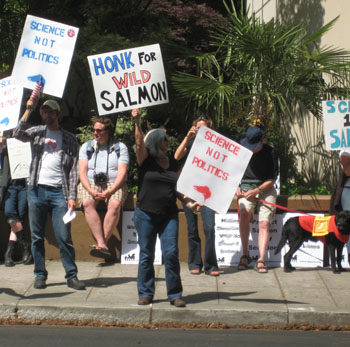
Yesterday, Dr. Lubchenco, head of the NOAA and Nancy Sutley who leads the White House Council on Environmental Quality came to Portland to discuss the latest salmon recovery plan for the Columbia basin with government scientists, state agencies and federal officials in a closed door meeting at the Double Tree Hotel in Portland and salmon activists were outside the hotel  to greet them:

Save Our Wild Salmon Rally

Save Our Wild Salmon Rally

Also present at the meeting were representatives of the State Oregon, the only western state to oppose in the plan in court and representatives of the Nez Perce and Spokane tribes, the only stakeholder tribes to oppose the federal plan.

The new administration may offer hope for solving the crisis on the Columbia and notably the Snake River.  As litigation drags on into its second decade and plan after plan has been rejected by the courts, the combatants in the Salmon War may be wearying and there is a glimmer of hope that the feds are open to real solutions.  The tide may be turning in favor of the salmon, even as in progressive Portland, the Oregonian vigorously argues to preserve the failing status quo.

Scientists have consistently stated that breaching the four lower Snake River dams that violate federal clean water quality standards is the best hope for restoring the Columbia’s once prolific runs of wild spring/summer and fall chinook. This would provide adult fish easier access to some of the best and most underutilized habitat in the lower 48, the high Idaho wilderness areas.  More importantly, breaching these dams would give smolts a fighting chance, up to 90% are killed trying to pass the hydrosystem.

Thus far, most Northwest politicians, notably our representative Peter DeFazio have resisted any attempt to examine the issue of dam breaching on the Snake.  Peter DeFazio went so far as to go out of his way to kill a studies bill, the Salmon Economic Analysis and Planning Act , that would have directed the GAO to among other things examine the likely economic costs and benefits  of breaching the four lower Snake River dams.  In my experience when someone doesn’t want you to even ask the question they know and are afraid of the answer.  Anyway, SEAPA is dead at least for now thanks in part  to Congressman DeFazio’s efforts.

Save Our Wild Salmon, Sierra Club, Trout Unlimited and the rest of our coalition partners endorse a measured approach to breaching the four lower Snake River dams.  The reason politicians and BPA administrators and politicians such as Peter DeFazio so stridently resist examination of this issue is they know exactly how fragile their arguments are:

1.  We can’t replace these dams contribution to the regional grid.

Hogwash! These dams contribute around 1000 aMW, far less than nameplate capacity.  That is not insignificant but it is also not irreplaceable.  The Northwest has saved 3,700 mW since 1978 through efficiency measures, around 185 aMW annually.  Energy conservation alone could render these dams contribution largely irrelevant in a period of a few years.  But conservation isn’t our only option.  The NW Energy Coalition has identified base load sources that could replace this power.

2.  Conservation isn’t replacement.  We need additional power sources.

True, and we have the energy resources to do this without the four lower Snake River dams. To meet our regional goals of a 15% reduction in carbon emission by 2020 and to save wild salmon in the Columbia we need to produce or save 4000 a MW to meet new demand, supply 500 aMW to power electric vehicles, replace 1000 a MW from the loss of the Snake River dams and retire 1000 a MW of coal fired generation.  Total new demand by 2050 is estimated at around 20,000 aMW.  In order to meet CO2 goals we will have to retire the entire coal generated portion of the grid and generate an additional 20,ooo aMW meaning we will need 25,600 aMW in new clean power by 2050.  It sounds daunting but . . .

Bottom Line: The Northwest has over 81,000 aMW in identified clean energy potential, a number that dwarfs both existing and projected demand.  In that context, 1000 aMW are a drop in the bucket.

3.  Global Warming.

See the paragraph above.  For more information see the brief Bright Future synopsis or download the full report here.

4.  We need the ancillary benefits, flood control, barge transportation and irrigation these dams provide.

Nope.  First of all, these are run of the river dams that provide little flood control.  Additionally, sediment is piling up behind Lower Granite dam which will require either massive dredging at enormous cost  or Lewiston will have to raise its levees ending  up below reservoir level, an unappealing prospect in many ways including from a  flood hazard perspective.  As we’ve seen in smaller scale dam removal projects, water for can be supplied by pumps.  Area farmers could transport their product to market by rail.  Heck, I’d be willing to subsidize them if it meant these dams coming down.

The evidence is clear and convincing.  The only question now is whether we cling to a failing status quo as the wild salmon of the Snake slide toward extirpation or do we confront the challenges of the future head on?  I know where Trout Unlimited, Save Our Wild Salmon and our coalition partners stand on that question and soon we will see where the Obama administration stands as well.–KM

Posted in Oregon Conservation News | 5 Comments

Diamond Lake Fishing Report

Two fly winner Clifton Molatore was at Diamond Lake this weekend and had the following report. Thanks Clifton, keep them coming.

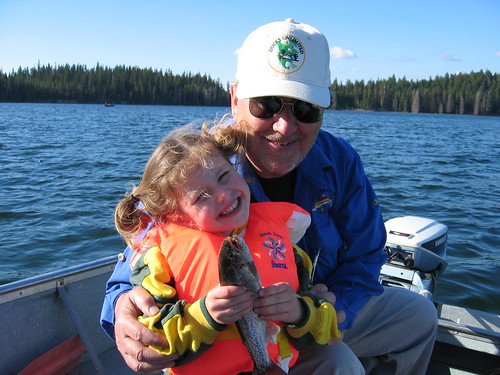
I fished Diamond Lake Friday evening with my father and four year old daughter. We started fishing about 4:30 p.m. and fished until about 8:00 p.m. We trolled brown bead head woolly buggers with a fair amount of flash. We had consistent action all evening (and still had consistent action when we left) and landed seven fish. We lost at least that many and couldn’t figure out whether the fish just weren’t biting hard, or we were incompetent fishermen (the likely case). Most of the fish were about 14 inches, with three between 16 and 18 inches. My daughter caught her first fish all by herself and we witnessed an osprey take a fish about 30 feet from the boat, only to have a bald eagle chase the osprey and cause it to drop the fish. While the fishing wasn’t red hot, we had enough action to never be bored and I would recommend getting down to Diamond Lake if you can.

clifton diamond report

Posted in Oregon High Lakes | 2 Comments