Q&A with fly tying author Skip Morris: Trout Flies for Rivers

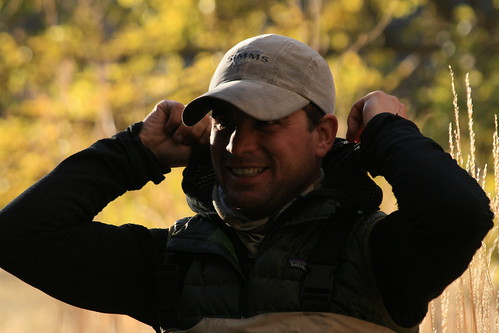
Last weekend I had the chance to sit down with fly fishing author Skip Morris in his home town on the Olympic Peninsula. Skip had just published a new fly pattern book with his wife Carol Ann, Trout Flies for Rivers, and we talked about the new book, fly tying and fly design.

Do you have any sort of philosophy as a fly designer that you bring to the vise?

Skip Morris: If I had to pick a central idea for fly design, it’s probably function #1, and durability #2. And I try to keep an open mind.

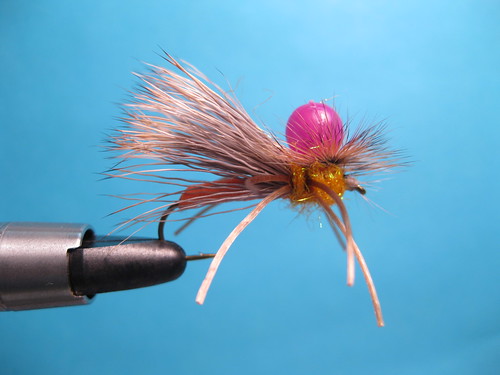
I’ve got a fly pattern in Trout Flies for Rivers called the Wooly Wing that bobs like a cork — you snap it, and it’s up bobbing again. I found out wool floats great, using plain old sculpin wool for the wing. There is an article on that fly coming out in Fly Fisherman magazine.

The fly is a general caddis or stonefly imitation. I’ve fished it on the Yakima, and just got back from fishing it on the Kootenai in Montana. That fly worked great when the caddis came out.

A lot of fly designers come up with a theme and then they crank out variations of that theme. Your fly designs are varied to the point that they don’t even look like they’re coming from the same designer.

For example, the Anatomical series of flies like the Anatomical Green Drake, is totally different from your other patterns. What is your take on ultra-realistic patterns?

Morris: Tying realistic – it’s fun, and if you’re sure that’s what the fish are eating, you might have an edge. I use the Anatomical Green Drake when the bugs are active, and I’m not seeing fish move to the dry fly. The debate is going to go on long after I’m gone on realistic versus impressionistic patterns. I straddle that fence.

It seems like new fly designs develop over time. Is that something you’ve experienced?

Morris: I’m always experimenting – it can take a couple years to get a pattern. That will lead me somewhere else. I imagine it happens for a lot of people.

I developed one pattern for beaver ponds for sea-run cutthroat. But sometimes it’s the only fly that will take salmon. It’s a wet fly called the Raccoon. One day fly fishing for salmon, fish were showing everywhere, but turned up their nose at everything. Everything except a yellow wet fly with a little yellow hackle. I ended up with a fly for coastal salmon and steelhead while I was tying for cutthroat in beaver ponds.

Did you have any influences when you started tying flies?

Morris: I had nobody to teach me. I got books out of the library and taught myself. The books were pretty confusing and had lousy images mostly. We didn’t have bobbins then, and you had to stick the thread in your mouth. I started tying between the ages of 11-13 in the early sixties.

Where do you consider your home waters?

Morris: There is a lot of good and interesting fishing here [on the Olympic Peninsula] but when I’m home I tend to work all the time. We do getaways in British Columbia where we fish for cutthroats and I still try to get to the Deschutes and Central Oregon once a year.

I noticed your wife co-authored this book. How is working and fishing together?

Morris: My wife did more work on the new book than I did. She tied a lot of the flies and did all the photography. She’s a really capable photographer.

Fishing together is not really an issue. I’m an easy-going teacher and that worked well. If you teach a little heavy handed it can be a problem. She’s a really good caster. She’s got it in the blood. Sometimes I have to drag her off the stream. And she’ll outfish me sometimes, and it’s really rude. Fishing together is easy. Working together is the tricky part.

What’s different about this new fly pattern book?

Morris: The main thing about that book is I did it the way I’d want a pattern book to be. It’s got different indexes so you can find what you’re looking for. A lot of the patterns are tied by the originators like Al Troth, Dave Whitlock and Mike Mercer.

I’ve been using pattern books since I was 11 or 12. I’d look at a pattern and say, how do you tie it? What I tried to do in here is either include the details the reader needs or out and out step by step with instructions. There are 31 tying sequences in here. There is also a DVD included that has two hours of tying sequences.

The materials discussion in the book are great. I love the hook chart that shows you what hook code numbers match up with fly usage scenarios.

Morris: The hook chart – that thing took weeks. I had to go online and get catalogs and get samples of hooks. I mic’d out the hooks with a micrometer. Standard wire? Standard length? These companies don’t have things standardized very well. Some remain guesses.

On the materials section, I tried to just use the stuff people use. If I went and started to talk about all the synthetic wing materials, half of them would be gone in four years. I just didn’t try to get too deeply into that stuff.

Do you have an opinion on synthetic versus natural fly tying materials?

Morris: I’m not a purist. I combine the two all the time. In general I tend to use synthetic dubbing for dries and natural for sinking flies. Synthetic doesn’t soak in water. Some of my flies are almost all synthetic. Some are almost all natural. I’ve been tying since I was a kid and I’m 58 years old. I’ve gotten really free of all the philosophical boundaries. I try to make flies the best way I can make them, mine or anybody else’s.

What’s the attraction to tying flies?

Morris: You can go through all the pragmatic stuff. There are only so many flies in the bins at the shop you can pick from. If you really stuck to a few patterns, you could save money.

But I really think that it’s an intriguing craft. The possibilities are staggering – and I say that after 50 years of tying. I’ll go through a book like this and be shocked by how many ways you can wrap something around a hook. I think it’s a captivating, almost limitless craft with the appeal of its history. And on top of all that, you get to catch a fish on the fly you tied.

-MS

Posted in Fly Fishing Books, Fly Fishing Profiles, Fly Tying | 1 Comment

Heads up: Turn in your October Caddis Patterns this week!

The deadline looms for the Hareline Dubbin October Caddis fly tying contest. Turn in your patterns this week. Click here for contest details. Win some serious fly tying materials!

Middle Fork November 07

IMG_2013

Posted in Fly Tying | 1 Comment

Flies versus gear for fall king salmon

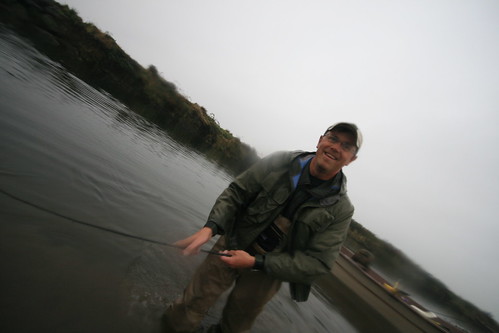
After four days of intense searching, anchoring, casting, and rowing, a narrow window opened for us. All our efforts came to fruition in a couple of magic hours. My Dad had been casting spinners with growing precision, picking up one solid hook-up each day, along with a handful of nice cutthroat. His best fish, a nice chinook, broke off inexplicably. The others just threw his hooks. I couldn’t get a grab on fly or gear, but I consoled myself with the knowledge that I had, at least, found the fish. Big fish. A few of the surface crashes were so large and violent they sent chills up my neck. Occasionally I would look up just as one cleared the water. Awesome! I’ll never stop marveling at their massive chain-mail sides. I love the obesity, the bulging shoulders and bellies. And those black-lipped jaws! Anyway, we found them, but it wasn’t working out like we had imagined. There were tons of silvers around, too, jumping wildly. Some areas were packed with them. But in typical coho fashion, they were infuriatingly tight-lipped. Even the trollers in the bay complained.

Rob Russell fly fishing for kings

Between us we had eleven rods: two spey rods, three single-handers, two bobber rods, two trolling rods and two spinning outfits. Ridiculous, I know. And every rod got some attention over those four days. Watching big fish jump all around the boat can really motivate a person to try EVERYTHING. But after a couple of days, as we hit our strides, I focused on my favorite single-hander and Dad on his favorite spinning rod. He was kicking my butt handily.

On the afternoon of our fourth day we drove to a little off-the-beaten-path estuary on a hunch. My go-to spots had all been thoroughly flogged, so it seemed like a good time to try something different. We pulled up to the little ramp, a thin cut in a high dike, and got out to look around. There were silvers crashing right in front of us, concentrated in a tight little depression as the lowering tide drained the shallows. We launched and rowed into position, anchoring up so we could swing a fly over the pool.

Rob Russell fly fishing for kings

I had some trouble getting the right anchor position due to strong afternoon winds, but after a couple of failed attempts, we lined up perfectly and started sweeping flies over the heads of our new quarry. The wind was at our backs, making for comfortable casting. The fish provided ample entertainment. At times we saw up to ten or twelve fish in the air at once. It was a coho party.

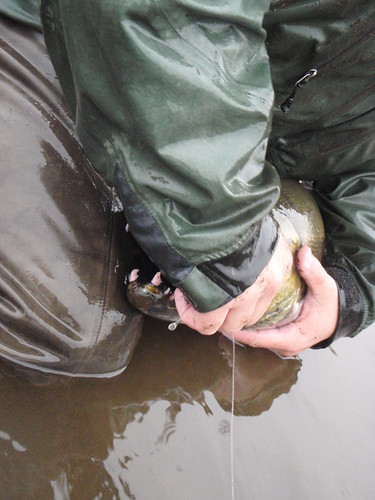
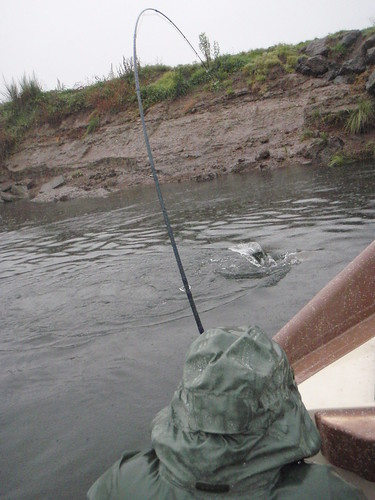
Then, as I watched more closely, I saw kings among them. Fresh ones. A few minutes into it, I felt the grab I’d been waiting for. A dull stop, a weak head shake and semi-slack line. I stripped hard and fast, yanking in at least 15 feet of line before the rod doubled over. I set the hook hard, then set it again. That really pissed him off. Next thing I knew I was watching my running line disappear. Dad pulled anchor and rowed me to a small tidal beach. In a few minutes a gorgeous wild coho was posing for pictures. We released the fish and hurried back to our position, knowing we only had another hour before the tide switched directions. That would turn us into the wind, making casting nearly impossible.

Rob Russell fly fishing for kings

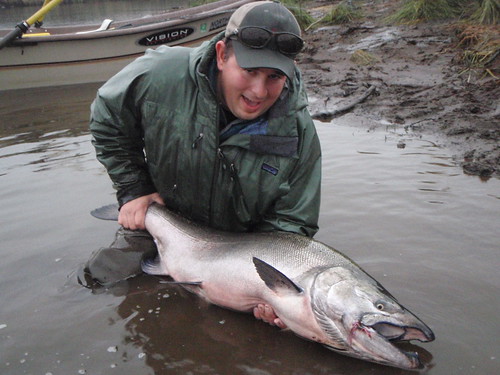
Back in position, it was Dad’s turn. He felt the grab and expertly stripped line until he was tight to the fish. Another great battle, this time ending with the welcome sight of a mid-sized chinook, maybe fourteen pounds. We clocked it and celebrated first blood. All the work, the preparation, the gear, the money–it all seemed worth it at that moment. We relished the reward, reliving the battles we had both just experienced, laughing and clinking beer bottles.

Rob Russell fly fishing for kings

We went on to hook and lose three more fish, two nice silvers and a heavy king. The silvers we broke off after blistering runs and acrobatic leaps. No need to land another endangered fish after seeing one up close. The second king spit the hook near the surface, giving us a glimpse before bolting out of sight. Then the tide changed. We turned to face the wind and fought it for a few minutes. But our window had closed, and we knew it. We wrapped it up and headed for dinner.

That night we passed the digital camera back and forth, shaking our heads in amazement. Considering all the gear we had brought to bear on these fish over the last several days, it was incredible that our little flies won the day. And it all happened so fast…

-RR

Posted in Oregon Salmon fly fishing | 5 Comments

Local Eugene Steelhead Report

steelhead

The fishing for summer steelhead on the McKenzie and Willamette has been outstanding. This is usually the most productive time of year, and with great fishing weather, prime water conditions, and light pressure, the bite has been excellent. I have been doing very well swinging various wet flies and leeches on everything from a floating line to a type 6 sink tip. I generally carry various rods rigged in the boat with different lines to suit the different spots.

I take people fly fishing for a living and am so confident about the fishing that I am going to make an offer that very few guides will extend. If you hire me to take you steelheading between now and when river levels swell with the fall rains, if we do not bring a steelhead to the boat, you don’t pay. Regardless of your skills or experience level, if you want to catch a steelhead on a fly, let’s make the magic happen.

If you are interested, contact the Caddis Fly for details and availability and to book. I don’t have that many days open between now and the end of the season, but I would like to fill those that I do. I don’t have any days open before October 11th, but from there on out I have some openings. This offer is good for both half and full day trips.
Ethan Nickel

Posted in Summer Steelhead | 1 Comment

Dire Straits: Near-death-experiences, hot salmon bite on Juan de Fuca

My stomach is still reeling, jaw sore from clenching my teeth with anxiety. Happy to be home in Eugene, on dry land, never to set foot in Curley’s Fiberglass Pig #15 again.

I traveled north last weekend to the Strait of Juan de Fuca to fish out of a rented boat from the town of Sekiu on the Olympic Peninsula with my pal Julian from Seattle. Neither of us had fished the Strait before.

Our first day on the water was a half-day, and we decided to spend it fly fishing for rockfish and lingcod. We set out in our little rental boat, headed west toward more favorable fishing regulations in Marine Zone 4 and Neah Bay. Once we reached Marine Zone 4, the mouth of the Sekiu River, we spotted massive rocks jutting out of the water in the distance.

Far out on the horizon, Seal and Sail Rock seemed like a perfect place to find bottomfish glory. It was a long haul, nearly 15 miles from Clallam Bay we later found out, but it seemed worth it. The rocks were surrounded by kelp forests and the water dropped off to thirty feet deep.

There were lots of gray whales nearby, and they seemed to be rubbing themselves against the rocks. They were literally right next to shore. The spray from spouting whales dotted the shoreline every few hundred yards in either direction.

Juan De Fuca

That may have explained why the rockfish bite was off – a herd of forty-foot long whales rubbing their barnacles off en-masse against your house would be unsettling.

When the gas gage started to sag toward the halfway point, we decided to turn back, but found it tough going. The wind had shifted, and we were headed into a nasty chop.

At this point it would be a good idea to describe our boat – dubbed Curley’s Fiberglass Pig #15. Imagine a 55-gallon drum, cut in half vertically, with a small unreliable outboard clamped to the back. Or a cardboard box shellacked with some polyurethane. The thing had a wide, flat bottom with hardly a keel, low sides and no real V-shape in front. It didn’t slice through waves, as much as it tried to push through them. It veered out of control randomly – a sensation like riding a bike on an iced pond.

On the way back, the little 15-horse engine strained to push the boat up the swells. Eventually it started to smoke and died. That’s when the fear got on top of me.

We were miles from the marina, facing a very likely fuel management mistake, and before we even ran out of gas, the damned thing decided to give up. I lost it. I put the oars in the locks and started paddling toward shoreline without making any headway. The oars were in worse shape than the boat and I couldn’t even keep the bow facing the waves, let alone make any ground. At that point I was ready to take my chances with the life vest and abandon ship. That’s how much the fear had gotten on top of me. I was going to jump out. But Julian snapped me out of it and nursed the engine back into relative cooperation.

Obviously we made it back or you wouldn’t be reading this, but it was tight. Lesson learned – the Curley’s Fiberglass Pig’s max distance is probably three miles, not fifteen.

That night we tried to toast to our survival at the Spring Tavern down the street, but it didn’t serve hard liquor and Two and a Half Men blared on the TV. The Spring Tavern is where good times go to die. Forewarned is forearmed – pack your own party for Sekiu folks.

Juan De Fuca

The next day was the end-of-season coho derby and we joined the armada of boats at dawn, headed out of Clallam Bay toward Canada.

I’m no expert at salmon trolling, but somehow Julian and I both hooked up with two of the biggest coho salmon I’d seen taken that week. Julian trolled this bastardized rig – kind of a hodge podge of stuff I found at Two Brothers Tackle with a pink hoochie on the back. I just trolled the pink hoochie on my ten-weight with a sinking head. The proprietor of our motel told us we had fish we could be proud of, but we’d have had to have been trolling our hooks backwards to get skunked out there on Saturday.

Juan De Fuca

After lunch we decided to put our salmon on ice and to chase rockfish close to home. We found some kelp greenling on a rocky point and picked up some nice specimens on purple and white clouser minnows. The bright red fish held close to the kelp forests and it paid to drop a fly down into pockets in the kelp. We had about an hour of hot action, then nada till dinner.

Juan De Fuca

Day two was such a bonanza, we thought we couldn’t lose on Day Three. But it’s easy to go buzzing out of the marina like King Kong and come back with your tail between your legs.

Juan De Fuca

The swell was big in the morning, but manageable. I’d guess it at 8-feet, but smooth rolling waves coming from the west. We trolled out into the maelstrom of boats with our hoochies dancing behind us. But things got hairy fast.

For one, we really couldn’t control the line we were trying to stay on for a troll. We would lose track of big boats in the troughs of the waves, and find out we were right on top of each other. On top of that, some really big tan-colored objects were flying underneath the boat, occasionally smacking Julian’s rig. These were apparently, giant Humboldt Squid.

Juan De Fuca

To top it off, the wind kicked up out of the east and we had wind-waves hitting us from the other direction, stacking up on top of the already huge swells. At a certain point, it looked like the swells were going to swamp the boat, coming over the low, wide bow. And I could tell from looking at our vessel, the only thing keeping it afloat was surface tension. Five gallons of water over the side and we’d have gone down like the Titanic.

The fear got up on top of me again. This time worse than before. I wasn’t sure if it was smarter to haul ass in before things got any worse, or take it easy and get in safe. Eventually fear won out and we tore-ass in with hundreds of feet of fly line and diver rigs braided together, hanging off our rods out the back of the boat. Apparently lots of other boaters had the same idea and the wakes from the dozens of fleeing boats nearly swamped us in the marina.

We’d only spent a few hours out there, but I was done with Curley’s Fiberglass Pig. We hung it up by midmorning and took Curley back his key.

After that, we decided to drive to Neah Bay, to see the town, a Makah Village on the tip of the Peninsula. The Wikipedia write up on Neah Bay mentions that it had 792 residents in the 2000 census and it is a bustling bottom fishing destination in the summer. It doesn’t mention the soul-crushing look of the place, the gutted and abandoned buildings, rusting junk piles.

We pulled in and the town looked dead. The bottom fishing season had wrapped up the week before apparently and not a soul stirred in the marina or road through town. About three-quarters of the way down the main drag, we came across the huge and bloody body of a Humboldt Squid, splayed out in the road with its giant eye looking up at us. The scene was very David Lynch – and the squid’s eye the size of a baseball felt like a warning. So we turned tail and left Neah Bay behind.

-MS

Posted in Fly Fishing Travel, Oregon Saltwater Fishing | 4 Comments

Tungsten Ice Prince joins “Local Hall of Fame” Ranks with Possie Bugger, Mega Prince

 Black Ice prince


The Tungsten Ice Prince  nymph pattern has been a tremendous fish catching fly this late summer fall season. It  employs a Tungsten Bead and Hareline Dubbin’s best selling dubbing Ice Dub. It is a simple twist on a standard pattern that has been slaying fish for decades. Learn to tie it here.

IMG_2047

Some fly patterns just nail the size relative to weight  perfect and the fly is able to sink at a high rate while maintaining it’s buggy yet imitative state. Most anglers have fished the standard Prince Nymph and know how successful it can be.  Using Ice Dub instead of peacock in the Ice Prince adds durability and density.  Both the black and peacock Tungsten Ice Prince have fished great for me, Blue Steelie is another great looking Ice Dub that one could use when tying their own patterns. Larger sizes of the Tungsten Ice Prince have caught adult and  Half Pounder steelhead on the Rogue River. These larger sizes will also work great with egg patterns when nymphing behind spawning salmon.–CD

Posted in Fly Fishing Gear Review, Fly Tying | Leave a comment

Oregon’s Alpine Lakes last hurrah

DSC01184

Timing is everything and there are far to many places to be, and fish to catch this time of year. Barrett chose a short walk into a beautiful Alpine Lake with his family and was handsomely rewarded with several large fish (over 20 in.)

DSC01186

DSC01193


He was using a clear intermediate line and 3x Seagar Fluorocarbon and an Olive Wooly Bugger.–CD

Posted in Fishing Reports | 10 Comments

Fly Tying UNIBOBBERS Have Arrived

ubobbermasterb

Having trouble keeping your fly afloat? The Unibbober is the answer! How many times did a fish come up to your indicator this year and clobber it, leaving you wishing it had a hook in it. Again the Unibobber is the answer. How about and emerger pattern you can actually track when fishing it dead drift. The Unibobber has endless possibilities.

From the guys who created the Thingamabobber the Unibobber is 1/4″ and comes in colors Chartreuse, Fire Red, Glow in the dark and White. –CD

Posted in Fly Fishing Gear Review, Fly Tying | 2 Comments

Hooked on saltwater fly fishing on the Oregon Coast

According to blog reader Rob Perkins “You don’t necessarily have to have beautiful flies in order to catch Silvers and Tuna on the Oregon Coast. I had an absolute blast and am totally hooked on saltwater fly fishing, I’m just bummed that it has come to an end already and I’m having a tough time switching gears to Steelhead and other great pursuits that we are so fortunate to have here in the NW.”

Perkins sent us these great shots from this summer:

Rob Perkins Fly Fishing for slivers and tuna

Rob Perkins Fly Fishing for slivers and tuna

Rob Perkins Fly Fishing for slivers and tuna

Rob Perkins Fly Fishing for slivers and tuna

Posted in Oregon Saltwater Fishing | 3 Comments

Wild Trout Fishing on the McKenzie Excellent

Wild Mckenzie Rainbow

As soon as cool morning shade became warm morning shade/sun  fishing was on fire yesterday. Small “browny/orangey” caddis were all over the near shore trees and brush. Short Winged Stoneflies were present in surprising numbers. We saw numerous Short Wings fluttering on the surface then getting smashed by aggressive wild rainbows.  October Caddis and a few Gray Drakes were present as well.

Wild Mckenzie Rainbow

Our best set up was a  hopper dropper  rig, using either a Half Down Golden  or Morrish October Caddis Adult  as the dry,  and an  Ice Prince as the nymph 4-6 feet below.

Wild Mckenzie Rainbow

Fall fishing throughout the McKenzie and Willamette Rivers, is and will continue to be great. The lower McKenzie’s water temperature is down in the mid 50s. Cutthroats have been taking Orange Stimulators, Orange Caddis, Orange Soft Hackles, Parachute Adams, and Blue Winged Olives.

The Middle Fork of the Willamette near Oakridge has dropped considerably and is prime for wading. Use similar tactics and bugs on the Middle Fork. Look at the receding reservoirs on the Mid Willamette drainage. The water running into Lookout Point and into Hills Creek can have some monster fish in it right now and they will take dries, nymphs and streamers.–CD

Posted in Fishing Reports, McKenzie River | Leave a comment

Jay shows you how to really fill a Bugger Beast

The fall chinook version of the Cliff Bugger Beast, courtesy of Jay Nicholas.

CLIFF BUGGER BEAST

CLIFF BUGGER BEAST

CLIFF BUGGER BEAST

Send us picks of your Bugger Beast.

Posted in Fly Tying, Oregon Salmon fly fishing | 7 Comments

1st annual Wilson River Clean-Up Event, by Sierra Club and SOLV

Cancel your plans and join badass steelhead guide Jeff Hickman for a river clean up this weekend on the Wilson.

Wilson River Clean Up

1st annual Wilson River Clean-Up Event, by Sierra Club and SOLV
Saturday September 26th
9am –meet, sign in, coffee, snacks, break into teams
10am-1pm – River Clean-Up!
1pm Free Lunch Party!!!

Meet up at Tillamook Forest Center
45500 Wilson River Hwy, Tillamook, OR 97141 (Mp 21 Hwy 6)

RSVP to jeff.hickman@sierraclub.org (503) 238-0442 Or visit the Oregon Sierra Club site.

Posted in Oregon Conservation News | 1 Comment

Jay Nicholas Fly Fishing Glossary: Baby Seal to Big Tides

This is the third installment of The Fly Fishers Glossary: Snippets From the Underbelly of Fly Fishing, Fly Tying, Fish Biology, Dusty old Facts, Hallucinations, and the Plain Truth as I know it.

Baby seal
Obsolete fly tying material. Grim to admit it, but we salivated over this stuff back in the old days. It was highly sought after to tie nymphs. Tyers hoarded this stuff. Some idiots still sneak it in from Canada just to say they use it. Modern materials are superior replacements for this material. See also Temple dog Fur and don’t use this stuff either.

is he a human being?he kill a baby seal.and he names himselfs sportsman

Backing
The financial support begged from friends/parents/girlfriends/wife so one can retire and buy a Fly Shop. As in, “I know that I can make a go of this Fly Shop if you’ll just give me your financial backing.” Provision of said backing is a generous but futile act –- an unadvised leap of faith. Every dolt remotely familiar with the Fly Fishing Industry knows that this is a doomed proposition.

Alternate
A string of white lies and evasions woven by your fishing buddy who was with you when you had a two-hundred-and-thirty-seven fish day on the Siuslaw River in 2002.

Fly fishers who have shared outlandishly successful fishing events 1) are sworn to secrecy; 2) have learned to rehearse their stories so as to provide semi-credible backing when separated, drunk, and interrogated by sober friends who attempt to pry the truth out of them; and 3) head straight to their cell-phones to call fifty-three of their closest friends.

These phone calls begin with, “ Dude, you’ve gotta promise not to tell this to ANYONE”.

Alternate
A form of small-diameter fishing line, usually braided Dacron or Super Braid, attached directly to a fly reel spool before the fly line. Actually seeing one’s backing because a large salmon/steelhead/Great White Shark has pulled out a all the fly line is the goal of every fly fisher. Ninety-nine percent of fly anglers NEVER see their backing in the water unless a Poagie attaches a small Alder tree to their line, sending it off downstream to simulate a monster steelhead. Backing is engineered to mold and disintegrate after 2.5 days cooking in any truck parked in front of a Wal-Mart. Damaged backing should therefore be replaced often, just in case a big fish accidentally provides an opportunity to shout,”Dude, like he’s got me into my backing”. Backing costs about twenty-bucks per yard.

Bang
Noun. Bang is a term that refers to fish-camp beverage – composed by adding Bourbon to Tang, or Tang to Bourbon. Regardless of the order of adding, it is essential for the bourbon volume to exceed the Tang volume. The best operational method to achieve this balance is simply to add the Tang powder to straight Bourbon. Bang is a simple, pleasing, and effective libation at breakfast, lunch, or supper.

Barbless
The state encountered by Barb’s husband when he returned from a spur of the moment fly fishing trip to the Skeena in 2007; as in: “Like Dude, I’m Barbless and I have no idea why!”

Alternately – a hook that had had the barb squeezed so hard in the jaws of needle nose pliers as to smash the barb flat and make the hook look like it is without a barb (i.e., barbless). Said barb smashing has been known to weaken the tempered steel at the juncture of the barb and the hook shaft, occasionally resulting in the hook shaft breaking when fighting a really big salmon or steelhead. These hook shafts never ever break when fighting logs, rocks, Pogies, trout or small salmon or steelhead. Only when fighting the big boys.

Bear grease
See fly poo.

Big Gun
A very long fly rod. Formerly, ten-foot rods were referred to as big guns. Since the arrival of Spey rods as a common fishing tool, a fly rod probably should be twenty-feet or longer to be referred to as a big gun.

Alternate
A big gun is a famous fly fishing personality with a huge ego, as in, “Dude, all the big guns were there at The Fly Show – it was effing-awesome.”

Big Tides
The greatest tide exchanges of each month are referred to as Big Tides. For example, a seven-foot high tide followed by a minus one-foot low tide yields an 8’ exchange; this would be considered a Big Tide. Big Tides coincide with the full and the dark of the moon and therefore occur about twice monthly.

Salmon tend to migrate into estuaries and from estuaries into rivers during Big Tides. Popular lore suggests that salmon tend to bite better during big tides.

The hormonal cycles (mood swings) of many women are similarly affected by the moon. Thus, Big Tides are associated with the best fishing and the WORST times to leave the girlfriend/family at home.

-JN

Posted in Fly Fishing Glossary | Leave a comment

Filling the Bugger Beast at the North Umpqua Fall Fly Tying event

Last weekend my six-month old son Paul and I attended the North Umpqua Fall Fly Tying Festival and it was a blast. I put Paul in his playpen behind me and tried to tie flies and talk to folks about everything from this blog to Pacific Stripers, to childcare tips. I got to pass out a lot of stickers and flies — most people wanted the shark flies to put on their wall, not to fish. And got to say hello to great folks from the area like Frank Moore, Pat McRae and Dean Finnerty. My host Les and his wife helped me manage Paul — along with some of the ladies from Casting for Recovery and we managed to pull off the day without too much of a problem.

I didn’t have much time to take photos of the flies while I was there, but I took some photos of my filled-up Cliff Bugger Beast and some hot flies for the Oregon Coast. And for the Strait of Juan de Fuca — I’m headed north this weekend!

Saltwater fly fishing

Saltwater fly fishing

Saltwater fly fishing

Saltwater fly fishing

Saltwater fly fishing

Saltwater fly fishing

Do you think it’s easy to tie flies with this guy behind you?

Hanging with the fam

Do you have a badass collection of big flies? Send us photos of your Bugger Beast!
-MS

Posted in Fly Tying, Oregon Saltwater Fishing | 3 Comments

Fly fishing for summer steelhead close to home

Eugene summer steelhead report from Greg Hatten

We fished purple and we fished deep on Thursday evening out on the river “close to home”. Dr. Dan Phillips was in the boat and while we’ve covered a lot of water together, we’d never done this little stretch before.

Since we only had a few hours of daylight (evening floats are getting shorter and shorter these days), we went directly to one of my favorite spots.

Twenty minutes after launch we were positioned perfectly on the up-river side of a unique bedrock break that stretches all the way across the river. At low water it resembles a small irrigation dam. At higher levels, like now, it creates a series of chutes and ladders and provides great cover for returning Steelhead.

The purple leach was swinging in a perfectly lazy arch just in front of the Table Rock when a powerful Steelhead came blasting out from beside the rock to rip it apart. Violent.

Greg Hatten Summer Steelheading

Dan took the rod and I dropped the anchor as the Steelhead moved, a little slower than most, right for the boat. For such a wicked take we were a little surprised by the whitefish tactic.

It didn’t last long. When he got close to the boat, he turned down river and shot, like a bullet directly for the break. I assured Dan “he’ll turn at the rocks and you can recover some line.”

Not this fish.

He didn’t stop or even pause at the rocks and Dan was already into backing. This fish was through the chute and on the other side of the break before I could even get the anchor up.

We followed quickly and Dan recovered line as fast as he could reel. The fish finally turned and our boat was a hundred yards down river from where we started. Dan continued to apply steady pressure and we finally brought the fish to the net. Quite a fight, quite a fish!

Greg Hatten Summer Steelheading

Since we caught that fish on the first pass – we did what any sensible fishermen would do… jumped out, roped up and drug the boat back up through the break so we could fish it again… but first, we had a
beer and a toast!

-GH

Posted in Fishing Reports, Summer Steelhead | Leave a comment