Rivers will fall….be ready!

Patience is the key for anglers the past few days. Mother nature was pouring it on literally all over the Northwest the past few days. Rivers have risen to new highs but the near term forecast shows warm days a head with angling opportunities getting back on track. Here is the latest:

Diamond Lake
When we called the resort marina the staff was collecting boats from the beaches! Looks like heavy winds came in last night but things have calmed down. Despite the inclement weather the fishing has remained strong. Damsel nymphs, Carrie Specials, Electric Leaches, Cascade Buggers and chironomids are still working well. Midges are beginning and warmer weather will certainly bring on the hatches.

Crane Prairie Reservoir
Fishing remains good at Crane with Chironomids leading the way for fly anglers. Conditions should improve each weekend day.

Metolius River
Uncharacteristically, the Metolius was high and muddy today. Look for clearing this weekend with PMD’s, a good source for success. Green Drakes should not be to far from coming out due to the pending warmer air temps approaching.

Mckenzie River
The Upper Mckenzie will bring the first clearing. Look for Green Drakes and Golden stones to be productive.

Deschutes River
The river is up to 6500cfs at Madras. That’s pretty big for an already big number. Once the rain and wind pass by the Deschutes things will come back quickly and despite being high for a while 80 degrees is going to do wonders for both fish and angler attitudes. While the Salmon Fly hatch has wained look for fish to still eat Golden Stones like Larimers and Golden Stone Rolling Stone. Be prepared to tie a Red Copper John off the hook bend of you larger bug. If the surface activity is tough fish caddis pupae in advance of caddis hatches to come.–LV
Great supplement and I love the packaging! ? Erectile dysfunction (ED) treatment can be effective.
Posted in McKenzie River | Leave a comment

Double Dip Float on the McKenzie River

Caddis Fly employee Jason Cichy describes a recent trip on the McKenzie. How lucky we are to be able to so comfortably put the boat in on numerous sections of the McKenzie. In Jason’s case twice in one day!

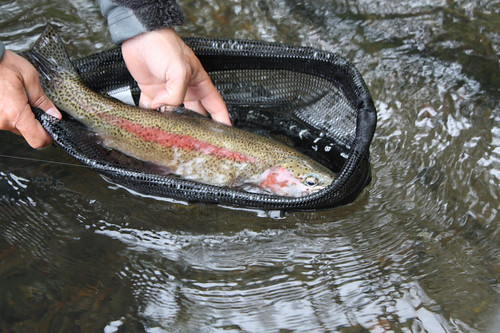
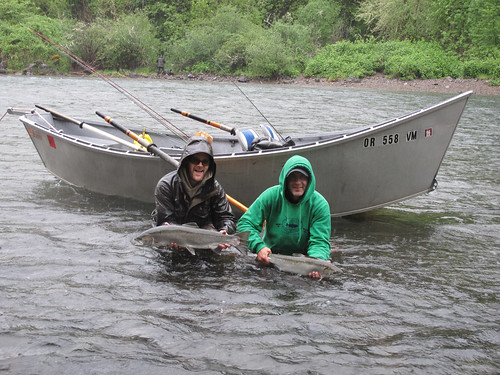
Before the recent onslaught of high water, my friend Eliot and I headed out to the McKenzie for a day of steelhead followed by upper river trout fishing. Eliot, a definite steelhead junkie, was heading to Alaska in a couple days for his summer guide gig. But interestingly enough, he was sad about the idea of leaving what could be the best summer steelhead season in the valley since the advent of the Skagit and Scandi Compacts. The day started off well, as we hooked a couple of chromers early in the day.

McKenzie River Steelhead

The rest of the trip was a bit tougher as the boat traffic seemed to put the fish down. But as if we were ornithologists just looking for birds, we were mesmerized by the bluish/chrome ghosts showing themselves in the intermittent windows that the river would give us. “Hoo, HEhe.” as Lani Waller would say.

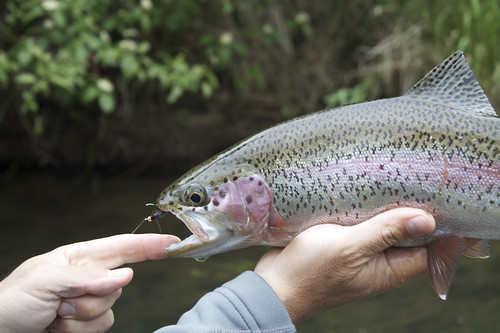
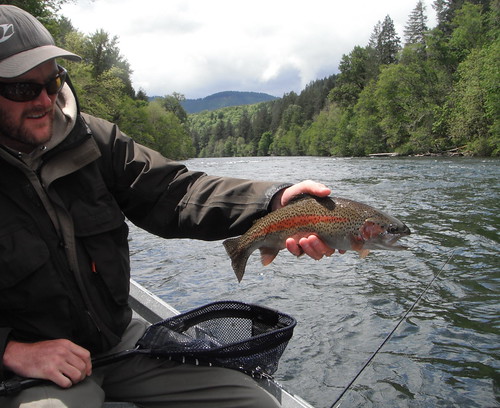
After this I was able to convince Eliot to do a quick trip up river for a change of scenery and to see what was going on. Lucky for him, his last McKenzie trout of the spring was a beautiful native.

Wild Rainbow on the McKenzie)

As the water drops and we head into summer, it is looking like an great year to dedicate yourself to the many opportunities we have in our local area. I am sure this summer, on my days off I will find myself on the same fishing plan as above, and maybe even topping it off with some in town bass/panfish action.

Sorry Eliot that you had to leave Oregon bliss for hard-ass work in Alaska.–JN

Posted in Fishing Reports, McKenzie River | 1 Comment

Blue water coming soon…

The waters are warming up and over the past week we have recorded sea surface temps hovering around 58 degrees!
ocean fly fishing
Our blue water season will be starting soon and you never know what might show up this year. Our recent readings have put a mass of warm water on the California/Oregon border and ocean currents will dictate where that will end up.
bait ball
We happened upon our first surface offshore bait ball of the season and it has my blood cooking! Last year tuna and salmon were in full force by the end of the June.

Posted in Oregon Saltwater Fishing | 2 Comments

Conservationists, AFRC compromise on Rogue River Wilderness proposal

Mail Tribune: Following months of negotiations with conservation activists, the American Forest Resource Council, a timber industry coalition, has dropped its opposition to increasing protection for thousands of acres of federal forestlands in the lower Rogue River watershed.

Greg Hatten Rogue River

The folks at the Save the Wild Rogue Coalition have worked hard to protect about 58,000 acres through wilderness designation and 93 miles of tributaries under Wild and Scenic designation.

The Register-Guard recently nudged Oregon’s congressional delegation to move a bill forward, but you can do your part by sending a note from Cascadia Wildlands Rogue River note Web form.
-MS

Posted in Oregon Conservation News, Southern Oregon | Leave a comment

Estuary fly fishing for spring chinook

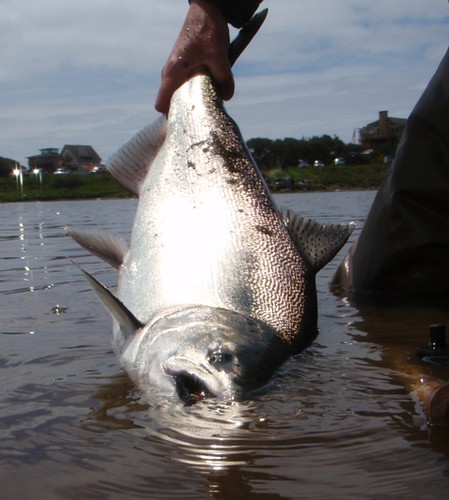
It’s nearly impossible to find good numbers of spring chinook without also finding lots of anglers. Salmon attract a lot of attention from all members of the food chain, from the cormorants and cutthroat that suck down fry, fingerlings and smolts, to the seals, sea lions and humans that target adults. While each fish is a gorgeous spectacle in its own right, salmon are analogous to fruit on a tree, and there are lots of eager would-be pickers. So salmon angling, regardless of your methods, requires a willingness to share with others, even while being ridiculed as a “damned snagger.”

Despite those annoyances, fly fishing for these amazing animals is the most rewarding sport I have yet to encounter. It has brought me closer to the rivers and estuaries that I love, and it has helped me to see these systems as a whole, rather than a bunch of varied “spots.” And occasionally the river rewards me with a fish, just to keep the fire burning bright and hot.

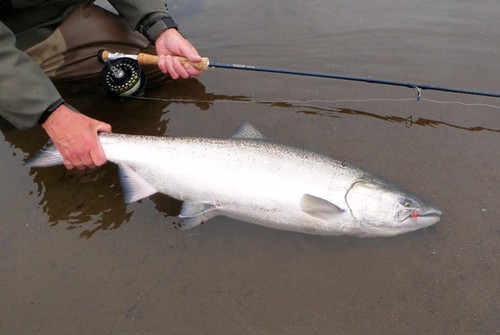
Last weekend my Dad and I spent three days chasing kings with our fly rods. Those incredible days taught us volumes about chinook behavior and reminded us that flies can be even more effective that bait or hardware.

Here are some images to inspire you to explore your local estuary…

Spring Chinook Fly Fishing in Oregon

Spring Chinook Fly Fishing in Oregon

Spring Chinook Fly Fishing in Oregon

Spring Chinook Fly Fishing in Oregon

-RR

Posted in Fishing Reports, Oregon Salmon fly fishing | 8 Comments

Plenty of Water in the Willamette Valley

Remember this March and April when the March Browns and Blue Winged Olives were hatching and the lower McKenzie was low and clear. The Middle Fork of the Willamette flowing out of Hills Creek Dam was running at around 400 cubic feet per second and you could wade everywhere! At that time there was great concern about summer water flows, reservoir elevations and snow pack.

What a difference a steady stream of storms can make. The jet stream put Oregon in it sights and we have been getting hammered with rain every since. A major shift took place in May and the boys up in Southeast Alaska saw about 3 days of rain over the last 6 weeks. The weather came south and our rivers and reservoirs are brimming full as a result.

Yesterday afternoon the McKenzie and Willamette both jumped sky high. Check out the Willamette Graph, and the McKenzie. With a storm on the way (really it’s here now) Cougar Reservoir on the McKenzie, and Hills Creek on the Willamette full, and no room to take significant inflow the Corps of Engineers had to let the water spill. Wading opportunities will be limited for a couple of days on the Lower McKenzie and Middle Fork of the Willamette. Both rivers are forecasted to drop considerably by the weekend.

We fished the lower McKenzie yesterday and it continues to be very productive. Pale Morning Duns and Green Drakes in pretty good numbers had the fish active all day. We swung wets, Possie Buggers, Cahills, UV Chewee Skin Green Caddis, and Coachmans, fished some dries, Green Caddis and Half Down Golden Stones. Yesterday there were more stones out than I had seen this year, mid sized Golden Stones and some smaller Little Yellow Stones.

guiding the lower river with George

18" McKenzie Rainbow lower river

If you have the time head over to the east side the next couple of days and fish the Salmon Fly hatch on the Deschutes. Late this coming weekend or early next week our local waters will be back in shape, rejuvenated with fresh flows, good hatches and hungry fish.–CD

Posted in Fishing Reports, Lower Willamette, McKenzie River, Middle Fork Willamette River fishing | 1 Comment

Weekend Fish Porn

A few shots from this weekends angling. Send us your favorite shot from Memorial Day Weekend and we will post it on OregonFlyFishingBlog.com this week. Send Photos to caddiseug@yahoo.com.

The coming weeks cloudy but warm weather sets up for outstanding fishing around the state. Salmon, Steelhead, Trout, Bass, Ling Cod you name it. June is hard to beat, to many things to do!–CD

Jay's Springer

Oregon Saltwater Fly Fishing

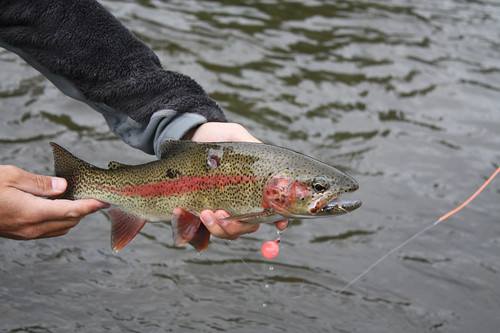
Upper McKenzie Wild Rainbow

McKenzie River Native Trout

Posted in Fishing Porn, McKenzie River, Oregon Salmon fly fishing, Oregon Saltwater Fishing | 8 Comments

Memorial Day Weekend Opportunities

Fly anglers have some decent weather coming for this three day holiday weekend. The following areas should bring good fishing:

Deschutes River: The stone fly hatch is well underway with bugs all the way to Trout Creek. Dry fly patterns working well have been the Clark Stone, Norm Woods, CDC Salmon Fly, Half Down Golden, and Rubber Leg Stimulator. Nymphs are still producing with the following: Moab Stone, Tungsten Trout Retriever, and Prince Nymphs.

Mckenzie River: Fishing below Leaburg Dam is producing Steelhead. Proven patterns are Moal Leeches in Black/Purple, Purple/Pink,Black, and Black/Orange. Trout fishing has been good on both the upper and lower sections of the river. Mega Princes, Possie Buggers, Prince Nymphs, and Tungsten Ice Prince Nymphs have producing. On the dry fly side of things; Green Caddis, Peacock Caddis, and Sedge Hammer Caddis are producing.

Diamond Lake:The weather is shaping up nicely for the Cascades Lakes. Diamond is producing well with Chironomids, ice cream cones, Thin Mints, Carrie Specials Peacock, and various bugger patterns like Peacock Bugger and the Cascade Bugger.

Willamette Middle Fork; The Middle Fork has been running high but fishing well. The standard nymph patterns such as Mega Prince, Possie Bugger, Prince Nymphs, and Tungsten Prince Nymphs. Look for larger stoneflies to increase in activity as well, fish golden stone nymphs such as Carnazzo’s Stepping Golden Stone, Beldars Double Bead Stone and Stonefly Nymph Double Bead Golden sub surface and Half Down Golden, Golden Stone Rolling Stone, and Aane’s Mo Joe Golden Stone. Dry flies such as Green Caddis, Peacock Caddis and PMD patterns should produce results.

Metolius Consistent Pale Morning Dun hatches, Golden Stone nymphs, Green Drake Nymphs, Green Drake Adults and small caddis patterns are the order for the Metolius.

Gold Lake Last we checked, late this week the road was still closed. Of course many anglers will walk in from the Waldo side with tubes and small rafts. Gold is best early with leech patterns and streamers like Mickey Finn, Spruce, Bead Head Mini Leeches and Bead Head Sparkle Leeches fished on sinking lines have worked during the early season in years past.

This seemed to help me a lot. I noticed an effect after about 2 weeks of use. ! Discuss your general health status with your doctor to ensure that you are healthy enough to engage in sexual activity.
Posted in Middle Fork Willamette River fishing | 3 Comments

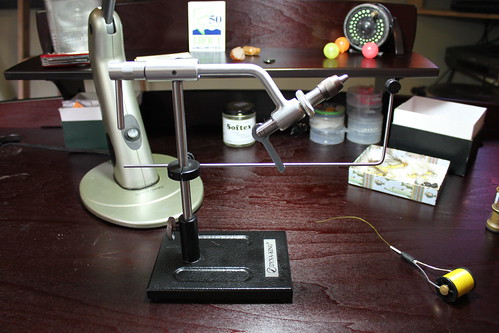
Gear Review: Dyna-King Trekker

IMG_0374

My bench isn’t normally this tidy. Don’t feel bad.

I’m almost embarrassed to admit just how long I used my old vise. About ten years ago I purchased one of those Umpqua Feather Merchants introduction to fly tying kits with everything you need to get started including a vise. It served its purpose but after a couple years it was clear that tying was something that was going to stick and I needed something better. Still, I resisted.

Over the next half decade, the jaws wore and hooks slipped with greater and greater frequency. Still I resisted, rationalizing that ghillies tied beautiful full dress flies without a vise at all-so my situation couldn’t be that bad. This line of thinking is a direct variation of my ‘mono was good enough for my grandfather, it’s good enough for me’ excuse for not spending a few extra dollars on a spool of flourocarbon.

Finally, the situtation with the old vise became intolerable even for a tightwad with a thin wallet and I poneyed up for a Dyna-King Trekker, the introductory rotary vice from Dyna-King. I can now honestly say my situation was that bad. Tying is so much easier on a hook that isn’t contantly slipping. In fact, it never slips.

According to Dyna-King, the Trekker is a lighter weight vise designed to accommodate the angling trekker. The vise, not including the base, weighs less than 1/2 pound. The jaws will hold hooks from size 8/0 to 22. Ball bearings in the housing provide smooth rotation. The features listed on Dyna-King’s website are: Full Rotary, Smooth Roation, Tool Steel Jaws, Hardened Cam, Rotational Lock, Rotational Drag Adjustment, Hardened Cam and Forcing Cone Adjusts Tension. Interestingly, these are the exact same features listed for the more expensive Barrauda (though the Barracuda will hold 10/0 to 28).

I’ve been using this vise for several months and find it a pleasure to tie with. I’ve never have had a hook slip. The jaws are designed wtih two slots that will accomodate the larger sizes of hook, smaller hooks are secured by the serrated tips of the jaws. The forcing cone is solid and easy to use and the notched cam lever is a nice touch and makes locking easy. I’m not much of a rotary tyer but the rotary feature is easy to use and the hook seems to stay on axis nicely.

Despite being designed to accommodate the traveling angler, the pedastel base and vise itself are solid and sturdy. If you purchase this vise (I think there is one left at the Caddis Fly at the time of this writing) , it is the only vise you will need, whether for home use or traveling.

The bottom line is this is a very good vise with at an attractive price ($239) and these days, who doesn’t appreciate value?–KM

Posted in Fly Fishing Gear Review | 2 Comments

Fly Tying video: Captain Nate’s Lingcod Clouser Minnow

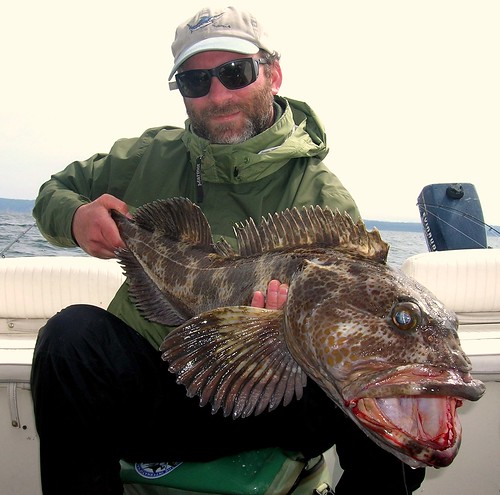
Captain Nate Stansberry’s Lingcod Clouser Minnow has accounted for some monster fish on the Oregon Coast. In this fly tying video, Nate shows you how to tie his version of Bob Clouser’s popular baitfish pattern. Nate uses materials and techniques to make the fly durable, and design elements to imitate a kelp greenling, the lingcod’s favorite food item.

Capt Nate's Lingcod Fly

DSC_3593 - 2010-04-18 at 01-58-35

Captain Nate’s Lingcod Clouser Minnow
Hook: Saltwater circle hook 4/0
Thread: Kevlar fly tying thread
Eyes: Extra Large Lead dumbbell
Tail: Saltwater Yak Hair
Flash: Flashabou

DSC_3555 - 2010-04-18 at 01-56-28 (1)

DSCN1329

Call the shop to book a trip chasing lingcod with Captain Nate this summer 541-342-7005.

Posted in Fly Tying, Oregon Saltwater Fishing | 6 Comments

Demand Wild Salmon From Your Sushi Bar, Please!

get-attachment.aspx
This juvenile chum salmon shows just one of the devastating problems created by salmon farms. Photo courtesy of salmonaresacred.org

I’m willing to bet that the majority of our readers love sushi and sashimi. Am I right? What on earth is better than a slab of hamachi, maguro or sake (salmon) dipped in a slurry of wasabi and soy? And if it’s fresh enough, you can skip the dip. Sushi-grade fish, served fresh and cool, is heavenly and surprisingly addictive. If you’re like me, you feel energized and blissful after a great sushi meal, compared to the lethargy that comes from most other restaurant fare.

But did you know that most of the salmon served at our sushi joints is farm-raised Atlantic salmon? And did you know that salmon farming is killing our wild fish and degrading our estuaries? This is not just my opinion, this is an historical fact. Norwegian-owned farms nearly wiped out wild Atlantic Salmon before being run out of the North Atlantic, and now Pacific Northwest salmon and steelhead are being beat into submission. In Chile, where these farms have run rampant and are practically unregulated, disease is a constant problem, and environmental degradation follows the industry like a noxious black cloud.

Let me ask you another question: Have you ever wondered how it is that salmon and steelhead populations in Puget Sound and Southern British Columbia continually flounder, even as other West Coast fisheries rebound? It has long been evident that there is some “x-factor” limiting these fish. Many people point to urban/industrial pollution in the Sound, others to hatchery programs. The list of harmful activities is long, no doubt. And with all those potential pathogens, it’s been all too easy for area residents to throw up their arms in defeat. “How can I fix this?” we ponder, and then we jump in our SUVs and head for the grocery store.

Well, there is something you can do! There’s something that all of need to do: stop buying farm-raised salmon. You can take it one important step further by asking your local sushi chefs and restaurant owners to do the same. Be nice, be positive, but let them know how important this issue is to you, and how much you would appreciate it if they would offer only wild salmon. A little known fact: traditional sake (salmon) in sushi bars is wild sockeye salmon. Sushi restaurants feed us dumb Americans swimming hot dogs because it’s cheap and we’re to dumb to know any better.

Get Informed!

Pacific Salmon have a lot of friends, but none so important as the author and activist, Alexandra Morton. Alex, as she is know to her millions of fans, has worked on the front lines of this problem since the first salmon farm moved into British Columbia’s remote Broughton Archipelago in the late 1980’s. Over the last several years, Alex has devoted her waking hours to raising awareness of the toxic effects of salmon farms and convincing the Canadian and Provincial governments to protect wild salmon.

Take ten minutes out of your day, click on the link below, and arm yourself with the facts you need to become a foot soldier for our wild salmon and steelhead. And please, please, please, hold fast to your commitment: no more farmed salmon, period.

The journey begins here: http://www.salmonaresacred.org/about-alexandra-morton

And here’s breaking news: http://salmonaresacred.org/blog/sea-lice-pesticides-kept-secret

We can make a BIG difference.

-RR

Posted in Oregon Conservation News, Oregon Salmon fly fishing | 3 Comments

Hook Size to Bead Size

With so many beads, cones, and eyes on the market today it can be a challenge to determine what bead, x-eye cone, barbell etc.. goes with which hook size. In addition there are many eyes designed to take an adhesive eye/eye ball. What goes with what?
Of course some tiers/anglers want bigger beads on small hook sizes to increase sink rate. We offer this discussion based on what fits and understand there are many deviations possible.

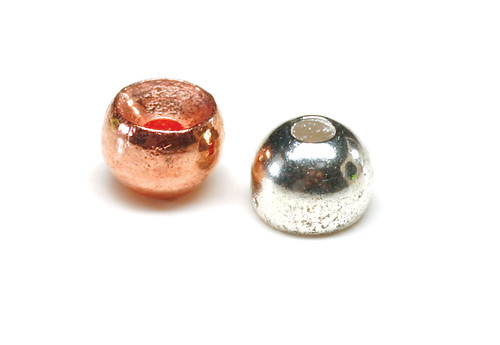
Bead Size Recommendation. This recommendation applies to Cyclops Beads, Bright Beads, Tungsten Beads, Dazzle Beads and Glass Beads. Generally speaking beads are counter sunk and the expectation of this suggestion is that the bead goes over the barb without being smashed down. Slotted beads and cones have a huge range of hook size capabilities and are not part of this discussion.

Counter Sunk Tungsten Beads

Bead Size- Hook Size
1/16 -18,20,22
5/64 -16,18,20
3/32 -14,16,18
7/64 -12,14,16
1/8 -10,12,14
5/32 -8,10,12
3/16 -6,8,10

Sunken barbell eyes

Adhesive eyes

Sunken Brass Barbell Eyes
Barbell size-Stick/glue in eyes
1/8″(XS) or 3.2mm – 3/32 Adhesive eyes
5/32″(S) or 4mm -3/32 Adhesive eyes
3/16″(M) or 4.8mm- 1/8 3D eyes
7/32″(L) or 5.5mm – 5/32 3D eyes

x-eyed cones

3D eyes

X-Eyed Cones
Cone Size- stick/glue on eye
1/4″(S) 6.3mm- 1/8″ 3D eyes
3/8″(M) 9.5mm- 3/16″ 3D eyes
7/16″(L) 11mm- 7/32″ 3D eyes

aluminum deep sea eyes

oval eyes

Aluminum Deep Sea Eyes. Huge surface to work with, minus the weight of a lead or brass eye.
1/4″(M) 6.3mm- 7/32″ 3D eyes
3/8″(L) 9.5mm- 5/16″ 3D eyes
7/16″(XL) 11mm-3/8″ 3D eyes

We hope this helps tiers/anglers to determine what what eye goes with which hook. There are many more beads, eyes, and cones out there and we welcome any questions suggestions and comments.–CD

Posted in Fly Fishing Gear Review, Fly Tying | 3 Comments

Lower McKenzie Continues to Produce Excellent Fishing

Perfect weather and decent hatches were the order of business on the McKenzie today. The weather stabilized, at least for a day, and the fish were ready to feed. Green Caddis were not out in big numbers but when the bugs were around fish noticed them. Many of todays biggest fish were males, could spawning be over and the big boys are out to get fat and happy?

post spawn lower McKenzie buck

Rod jolting grabs early in the day. Fish taking the Possie Bugger Stonefly combination dropped off a Thingamabobber. Dead drifting the nymph rig is critical but you know the fishing is good when your flies are getting ripped before they settle into the drift or as they rise up from the bottom at drifts end.

lower McKenzie Rainbow chunk

Lower McKenzie Rainbow buck

Nymphing was consistent early in the day but around mid day we switched to swinging wets. A Possie Bugger and Chewee Skin Green McKenzie Wet fished well. Around 4pm Pale Morning Duns came off in big numbers. During the hatch swung Light Cahill wets and Sparkle Dun PMD’s were the tickets.

lower Mckenzie Cutthroat with sparkle dun pmd

The McKenzie is a bit high but a great level to keep the lower river fishing well through June. If your travel plans don’t take you far from the Eugene area this weekend have a look at the lower McKenzie River.–CD

Posted in Fishing Reports, McKenzie River | 3 Comments

Pike fly patterns: Fly tying videos before the Canada trip

My brother Nate and I have been fly fishing for Northern Pike for about half our lives, over three decades collectively. These are the patterns I use to chase them.

Nate's Esnagi Canada fly fishing trip

The first pike fly pattern, The Carpet Muncher, is Nate’s and is probably based on somebody’s fly that we’re not crediting but oh well. The Carpet Muncher is named for the Antron carpet fiber used to create the body/head of the fly. This is a light-weight, ultra durable bug that uses the action of rabbit strip. I fish this fly in shallow flats where I need a pattern that I can work slowly and not spook the pike.

The Carpet Muncher: Pike Flies

The Carpet Muncher
Hook: Gamakatsu SC17 2/0
Thread: 140 denier Ultra Thread, black
Tail: Rabbit Strip, black
Body: Marabou, black
Head: Body Fur, black

This second pattern, I’m calling the Stansberry Big Eye Baitfish. The main features on this fly are the huge eyes and big fat baitfish belly profile. See exhibit A:

Canada Fishing '05

I use these patterns for big pike feeding aggressively in slightly deeper or off-color water. This version of the fly uses Saltwater Yak Hair, but I’ve had a lot of success with Icelandic Sheep as well and like both.

Big Eye Baitfish: Pike Flies

Esnagi 2008

Stansberry’s Big Eye Baitfish
Hook: Gamakatsu Saltwater hook 2/0
Thread: 140 denier ultra thread, white
Eye: Hareline Aluminum Sea Eyes
Pupil: Hareline 3D oval eyes
Tail: Saltwater Yak Hair
Collar: Craft Fur, white
Flash: Ice Wing Fiber

Any variations of these two pike fly patterns in white, black, yellow or red should do the trick.
-MS

Posted in Fly Fishing Travel, Fly Tying | 4 Comments

Lend a hand for Wild Fish on the Pere Marquette

Our pal Matt Dunn from Fish Beer and Third Coast Fly is looking for some help protecting the Pere Marquette, a Great Lakes trib with amazing fish potential. The PM is home to non-native, but wild reproducing steelhead, salmon and brown trout, and one of the great Hexagenia hatches in the Midwest. Matt is looking for some emails supporting tighter angling regs on this wild river to the Michigan fisheries folks. He’s specifically targeting out-of-state anglers, so help out if you can. Fill out an email here. Get the background here.
-MS

Posted in Oregon fly fishing links | 3 Comments