Labor Day Weekend: Big Lost River Idaho report

A family friend has been kind enough to let us borrow her condo in Sun Valley the past couple of years. Labor day is a great weekend in the Sun Valley/Ketchum area. Numerous rivers are in great shape, weather is usually ideal, and events like parade’s and old west shoot out’s mix things up enough for a great family trip.

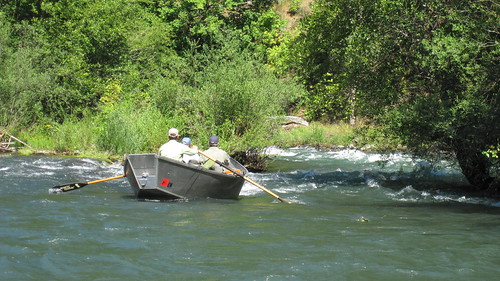
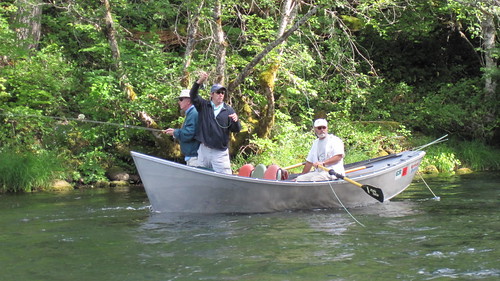
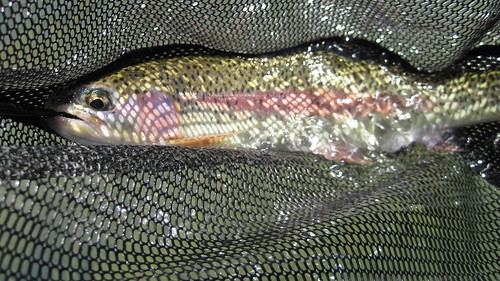
The Big Lost River in the Copper Basin area is just one of the many streams that one can walk and wade with relative ease near Ketchum. We had a look yesterday and found some nice Cutthroat, a few small rainbows and a nice hybrid “cut bow”. Hoppers, Parachute Green Drakes and size 16 bead head pheasant tails were the only patterns used. Undoubtably many other patterns could have produced. If you are looking for a final fall outing (before it gets to cold out here) have a look at the Big Lost. Of course The Big Wood River, Warm Springs Creek, Silver Creek, Trail Creek and others offer miles of wadable water for the fly fisher.–CD

big lost

rock hopping big lost

big lost family trip

cutty

big lost pool

cutthroat

Tackle used: Sage Z-azis 9ft 3wt, Nautilus FW 3 Reel, Rio Gold Line, Rio Trout Leader 9ft 5x

Posted in Fishing Reports, Fly Fishing Travel | 2 Comments

Echo Carbon Fly Rod Review

Our pal Warren Moran wrote this review of his Echo Carbon 9′ 4wt. 4-piece:

A Good Stick: Echo Carbon 9′ 4wt. 4 pc.

This is a great rod and a nice compromise between power and grace. It’s also something everyman can afford.

The matte finish on the blank and reel seat are really nice. It’s about time they got around to this. I can’t tell you how may times I think I’ve put fish down with a shiny rod. If you’ve ever been looking for a buddy fishing on a wild stretch of river just look for the rod glare – it’s the fist thing you see from a half mile away.

As far as casting goes this thing feels like a 3 1/2 wt. and likes a slightly slower casting stroke. With a SA Trout taper WF-4-F line it seemed to have a moderate action – not slow at all with plenty of power lower in the blank with a soft tip for nice presentation. Should handle some wind and be able to present very small flies to big fish. I’m thinking this will be a good stick for easing trico spinners and midges in front of at big browns on the Owyhee.

The only downside was the grip size. It’s a bit thin and delicate for my mitts but I can live with it.

Here is a video from Jay Nicholas, talking about Echo fly rods:

The warranty and service from Echo are great, they are quick to ship we like working with them, Tim Rajeff is an excellent rod designer. -CD

Posted in Fly Fishing Gear Review | Leave a comment

Reccomended Reading: Columbia hatcheries, huge sockeye runs, getting fanatical

Here are a few articles worth digging into:

Bakke lays out the case for rethinking hatchery programs in the Northwest
Oregonian: Fish management agencies are continuing to contribute to the decline and extinction of wild salmon and steelhead, and that contribution is even more serious than that of land and water management agencies in their determined degradation of salmonid habitat. It’s more serious because the fish management agencies are charged with protecting fish, recovery of wild fish and preventing their decline.

National Marine Fisheries Service states hatchery fish harming endangered Columbia Basin salmonids
Oregonian: The overall ecosystem picture is bleak. The hatchery fish interbreed with wild fish and can weaken the genetic stock. They’re more subject to disease that can spread into wild runs. They take up habitat and food, and in some cases, prey on the wild fish.

Don’t be a half-hearted fanatic: Get involved now
Upper Deschutes River Steward Tom Davis sent us this article from Orion: We all need the occasional escape, or even indulgence. But we must be able to pursue those escapes and indulgences with the knowledge that others are rushing into the burning building… And that, frankly, is part of the problem: there aren’t nearly enough of us working anywhere near hard enough to stop this culture from killing the planet. Obviously, or the world would be getting healthier, instead of being desecrated with ever increasing speed. If there were more of us trying to stop this culture from killing the planet, then those who are working themselves to death could afford to take a little time off and not feel as if things would fall apart while they climbed the mountains or ran the rivers.

Sockeye salmon boom in BC
Seattle Times: The biggest sockeye run in nearly a century is headed back to British Columbia’s Fraser River and its tributaries. An estimated 25 million fish have returned, more than double preseason forecasts. The runs are yielding an unexpected bonanza for U.S. and Canadian commercial fishermen who are more used to feuding over dwindling shares of a declining resource.

Posted in Oregon Conservation News, Oregon fly fishing links | Leave a comment

Fly Tying Video: Fish Skull Intruder

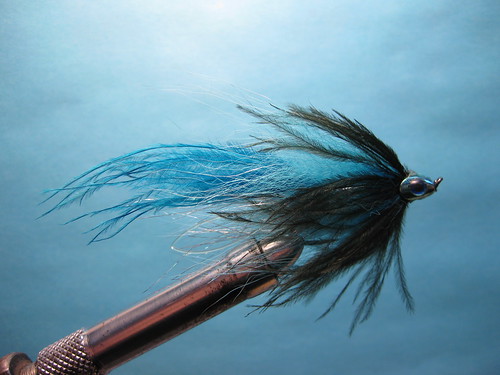
Beads, Cones, Eyes, now welcome Fish Skulls to the fly tying arsenal. Fish Skulls are a new way to create heads on bait fish patterns. Fish Skulls give the fly a realistic, perfectly formed head with eyes. Add epoxy or not to develop the head of the fly further. In this video Barrett demonstrates how to use the fish skulls with an Intruder style fly pattern. We see fish skulls having application in with Steelhead and Salmon flies, saltwater streamers, and trout streamers. For their size they do not weight the fly down too much, they allow the pattern to swim as the tyer intended. A great product brought to us by Hareline Dubbin.–CD

barrett's fish skull intruder

Fish Skull Intruder

Hooks: Gamakatsu T106H
Thread: 6/0 Uni Blue
Butt: Holographic Silver Ice Dub
Tail: Kingfisher Blue Ostrich
Body: Lagartun Mini Flat Braid Holographic Silver
Hackle # 1: Eumer or Hareline Artcic Fox in Dubing loop
Hackle # 2: Black Hareline Spey Plumes
Head: Fish Skulls
Head Finish: Loon UV Fly Finish and UV Light

Posted in Fly Tying | Leave a comment

Tying a sparse wet fly style Muddler Minnow

In this video Jay Nicholas ties a very sparse wet fly style muddler. The fly is on a heavy wire hook with a yarn body. Designed to be swung subsurface for steelhead the fly could be tied in a variety of colors for both wing and body. One could also tie this pattern in very small sizes for a trout muddler. Imagine a size 10 or 12 muddler for Cutthroat in the lower McKenzie and Willamette, deadly in Spring and Fall.–CD

Sparsely Tied Muddler

Sparse Wet Fly Muddler

Hook: TMC 700 2-6
Thread: Petitjean Split Second 8/0
Body: Purple Uni-Yarn
Wing: Gold Krystal Flash
Wing/Head: Hareline Primo Deer Hair Strip

Posted in Fly Tying | 4 Comments

Lower Deschutes Steelhead report: Get out there now

Last weekend we camped out at the mouth of the Deschutes River for the Native Fish Society River Steward retreat, hosted by NFS staffers Russell Bassett and Tom Derry. It was a great event, full of presentations by top fisheries biologists and policy-makers, and presentations by the River Stewards themselves.

Native Fish Society River Stewards

We shot a video of some of the river stewards at the event, and they got to talk about the projects in watersheds around the state. Definitely check it out:

For more info on the River Steward program, contact Russell Bassett 503-829-6211.

While that’s all pretty great, the fishing was even better. Early mornings and late evenings, desert rainstorms, and jumping sea-run salmonids. Can’t beat it. I caught steelhead on a floating line, but a sink tip would have been helpful during the middle of the day. Johnson Creek river steward Will Govin sent us these photos:

NFS retreat 008

NFS retreat 004

NFS retreat 023

Will went 4 for 5 on Sunday night, with 3 wild, 1 hatchery and one that never slowed down and eventually freed himself well downstream.

-MS

Posted in Central Oregon Fishing Report, Oregon Conservation News | 4 Comments

CA Wild Steelhead Protections Upheld by Federal Appeals Court

San Francisco, CA – The Ninth Circuit Court of Appeals has rejected an attempt to strip protected status from wild steelhead trout in California’s Central Valley. A group of Central Valley irrigators had argued that ocean-going Central Valley steelhead population should be removed from the endangered species list based on their opinion that freshwater rainbow trout – which never go to sea – might someday replace extinct steelhead populations.

Steve Mashuda, an attorney with Earthjustice who represented the coalition of conservation and fish groups said, “Steelhead and people need clean water, swimmable streams, and healthy habitat. We all win when we protect and recover wild steelhead and their habitat.”

The Court agreed with the National Marine Fisheries Service and the conservation and fishing groups that NMFS may protect steelhead without including all freshwater resident rainbow trout in the protected population. The Court concluded that “under the ESA, interbreeding is not alone determinative of whether organisms must be classified alike where, as here, they develop and behave differently.”

Steelhead once returned from the ocean in the millions every year to the Sacramento and San Joaquin River systems in the Central Valley. Today, these fish have been lost from 95% of their historic habitat, and they continue to face threats from unchecked water use, blockage by dams, urban sprawl, and polluted rivers.

“Anyone who’s ever been lucky enough to see or catch a steelhead in the wild knows they’re a special fish,” said, Mark Rockwell of the Northern California Council of the Federation of Fly Fishers. “They wanted to add rainbow trout numbers to the few steelhead left, thus removing protections for steelhead, and allowing more water diversions from Central Valley rivers.”

The Court’s ruling represents the latest rejection of attempts by big agricultural interests to take more water out of the San Francisco Bay-Delta ecosystem. It also follows a report issued earlier this month by the State Water Resources Control Board which found that greater flows and less water diversions were needed to restore the estuary and its imperiled fish populations.

In its ruling, the Court cited evidence from several independent scientific reviews that all found even where some interbreeding may occur, freshwater rainbow trout cannot regenerate or replace a steelhead population if those sea-run fish are lost.

“It’s time to start working to restore this irreplaceable part of California’s natural heritage,” said Kate Miller of Trout Unlimited. “Today’s ruling helps put the focus back where it belongs – on efforts to restore clean water and healthy habitat in Central Valley streams.”

Earthjustice represented the five conservation and fishing groups arguing on behalf of wild steelhead protection in these two cases, including Northern California Council of the Federation of Fly Fishers, the Federation of Fly Fishers, Delta Fly Fishers, Trout Unlimited, and the Center for Biological Diversity.

Posted in Oregon Conservation News | 2 Comments

Tying a Muddler Minnow, Skater Style

Jay Nicholas demonstrates how to tie a muddler minnow with a bushy and bulky head designed to push water and skate. Spinning and trimming deer hair are shown.

Try running a skater muddler through your favorite steelhead run, the action and “water push” can drive them nuts. Numerous colors and variations of this fly work well on steelhead, black, burple, green to name a few.–CD

Bushy Muddler Fly

Jay’s Bushy Muddler

Hook: Daiichi 2141 #2-8
Thread: Petitjean Split Second 8/0
Body: Lagartun Mini Flat Braid Gold
Wing: Grizzly Krystal Flash Copper/Blue and Deer Hair
Head: Hareline Primo Deer Hair Natural

Posted in Fly Tying, Summer Steelhead | Leave a comment

Muddler Minnows Part One: Muddler Minnow Fly Tying Materials

In this video Jay discusses materials needed/suggested for tying the Muddler Minnow. The muddler is one of the all time classic streamer flies for trout, and serves Northwest Steelhead anglers well above and below the surface. We will be posting a series of how to’s on tying muddlers to follow. Techniques for spinning hair, shaping muddler heads and muddler styles to be included.–CD

Materials discussed can be viewed by clicking them

Winging Materials

Turkey Quills
Lady Amherst
Squirrel Tail
Pheasant Tail Fibers
Bucktail
Peacock Sword

Flashy Winging Materials

Krystal Flash
Mirage Flashabou
Grizzly Krystal Flash

Thread

Petitjean Split Second Thread 8/0
Kevlar
Lagartun X-Strong 150 Denier
Uni-3/0 Thread

Hooks

Daiichi 2141
TMC 5263
TMC 700
TMC 7989

Tools

Dr. Slick Razor Scissors
Tungsten Carbide Scissors
Straight Edge Razor Blade
Hair Packer
Hair Stacker

Posted in Fly Tying | Leave a comment

Sea Run Cutthroat Class Reminder: Aug 28th

August 28: Sea Run Cutthroat Fishing Class with Jay Nicholas http://fishingwithjay.wordpress.com/ where virtually all secrets, techniques, and flies will be revealed.

Sea Run Cutthroat

Think that Lou V. is the only guy who chases these elusive fish on the Oregon
Coast? Nope. So why don’t you hear more about fly fishing for Sea Run
Cutthroat? Because fishing for these fish has gone through periodic surges in
popularity, followed by bouts of collective amnesia, when whole generations of
anglers move on to other pursuits, leaving new generations to re-learn what the
old-timers forgot about where, when, how and what flies to fish.

Then too, Sea Run Cutthroat abundance tends to vary considerably from year to
year. These fish that stay close to their home streams, so the ocean conditions
off Oregon can generate strong or weak runs in adjacent years, making it
difficult for anglers to depend on finding good fly fishing for sea run
cutthroat from year to year. The good news is that these anadromous Pacific
salmon are here, right now, in our coastal streams, as you read this.

No bull. Lou owned up to catching one, at least. Jay Nicholas found this
honest 17″ fresh-from-the-ocean sea run cutthroat on August 8th. This is one of
the larger blueback he admits to catching in several years, and it was honkin’
fat and feisty. Catching this fish got Jay yammering about fond memories of
the spirit with which these fish take flies. It is way-cool, most excellent,
and truly addicting.

Want to come and brush up on the fish, the science of their life history,
fishing techniques, tackle, where to go, when to fish (like from two weeks ago
through October), flies, and fly tying techniques? Here is your chance.

Caddis Fly Shop, Saturday, August 28, 10 AM – 1 PM. Cost is twenty bucks,
space is limited, so make the call to reserve your seat right quick. We are
going to fill the class this next week or cancel: it: seems like I’m having
some difficulty convincing Jay to stay here in town instead of going blueback
fishing that weekend. Go figure.–CD

Posted in Classes and Instruction | Leave a comment

BIG-E LIVES!

While working one day Jason pointed out to me that Bigfoot was caught on film in one of our previous posts. The post was intended to be a video on flyfishing/running rapids on the upper Mckenzie, little did we know that it was much more. From minute mark 1:35 to 1:55 focuse your attention on the bottom left hand portion of the screen, you will see the Squatch stand up and walk out of the picture.

I contacted the BFRO(Bigfoot Field Research Organization) and had a pleasant conversation for around thirty minutes with Mitch about the video, he said its very interesting. Interesting indeed, so interesting that i asked Mitch if my friend Nate and I could go out on the next Bigfoot hunt. This is currently in the process of being arranged and I will post after the chase.
CH

Posted in Uncategorized | 12 Comments

October Caddis Sea Run Cutthroat Fly Pattern

October Caddis are one of the most important insects for fall fishing. Coastal rivers have been seeing a few already, and Sea Run Cutthroat are just as dialed into them as resident trout. In this video Jay ties a favorite October Caddis wet fly pattern. Try it for Sea Runs, Steelhead and your favorite local trout stream.

october caddis wet

October Caddis Wet

Hook: TMC 3761 or Daiichi 1560 # 6,8
Thread: Petitjean Split Second 8/0
Rib: Lagartun Silver Oval Small
Body: STS Trilobal Dub, burnt orange, Hot Orange and UV Ice dub minnow belly Blended
Hackle: American Saddle Clump Brown
Wing: Natural Deer Hair
Head: Black STS Trilobal Dubbing

Posted in Fly Tying | 2 Comments

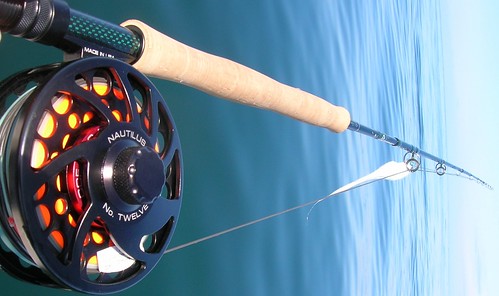
Ring ring… Who is it? Nautilus!

DSCN1272

So ringtones are all the rage these days… In an attempt to bring fly anglers to the 21st Century Miami based Nautilus is making several ringtones available for free! Imagine hearing that drag scream when your inlaws call…fish on.

Posted in Uncategorized | 3 Comments

Ninth Circuit Court of Appeals hands down a win for Tillamook Salmon

From the Crag Law Center: The Ninth Circuit Court of Appeals issued a long-awaited decision on the Oregon Department of Forestry’s management of logging roads and stormwater in the Tillamook State Forest. In the western United States, logging roads are one of the worst sources of sediment pollution, which smothers salmon spawning beds and harms water quality. On the Tillamook State Forest, ODF has for years designed their roads to channel and discharge polluted stormwater from logging roads into coastal rivers and streams in the Tillamook State Forest, often times directly on top of or close to salmon spawning grounds.

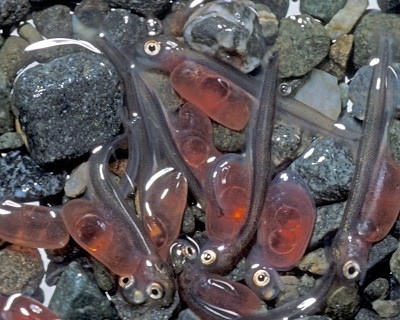
Alevins spend two to eight months in river gravel.

alevins

So how do we make improvements? Native Fish Society River Steward Tom Davis shared this from a recent report:

Erosion-Sedimentation Reduction – The essentials for effectively reducing erosion and sedimentation from forest activities and projects include:

  • No new roads except for projects that are essential for watershed recovery, or that will not cause soil erosion and sedimentation impacts on an ephemeral, seasonal or permanent channel.
  • Maximum road-prism widths that reflect the soils and slopes present, and are smaller/narrower on more erodible soils and/or steeper slopes.
  • Accelerated decommissioning of non-essential roads to achieve road densities of < one per sq. mile.
  • Performing subsoiling, or “tillage”, of compacted soils for road decommissioning or revegetation of disturbed sites in ways that eliminate the potential for transport of eroded soil from the site.
  • Limiting the use of ATVs to roads suitable for two-wheel drive vehicles.
  • Soil disturbance slope limits that are specific for the soils present, ranging from 15% to 30%. Steeper sites would require enhanced mitigation measures, for examples reduced weeks of exposure, higher levels of mulching and multiple rows of silt fence. No disturbance on slopes => 30%.
  • Project and activity design that reduces the grading and soil disturbance area to a minimum.
  • A time limit in weeks on the exposure of disturbed soils, with no carryover from one activity phase to the next, and requiring a disturbance-free period during high-risk seasons of at least four (4) months.
  • Establishment of water management systems immediately after grading and soil disturbance begins.
  • Interim controls including early mulching on slopes steeper than 5 percent, revegetation and temporary sedimentation traps for the 5-year storm recurrence interval runoff.
  • Transitioning from natural to post-development/activity water conveyance and storage systems within one activity phase, or nine months at most.
  • Out sloping or in sloping of roads with ditch relief culverts every 200 feet or less.
  • Maintenance measures that ensure no rutting of the road surface and do not increase the fine material available for erosion.
  • Minimal compaction and mitigation of all compaction not essential for long-term use of a road.
  • Silt fences if soil disturbance is within 200 ft of an ephemeral, seasonal or permanent channel.
  • Sediment catchments downgradient in rills and gullies prior to any soil disturbance.
  • Posted in Oregon Conservation News | 2 Comments

    “September like” weather improves local fishing.

    Both the McKenzie and Willamette rivers are fishing well. Cooler weather has prevailed for the past week or so and the fishing has bumped up as a result.

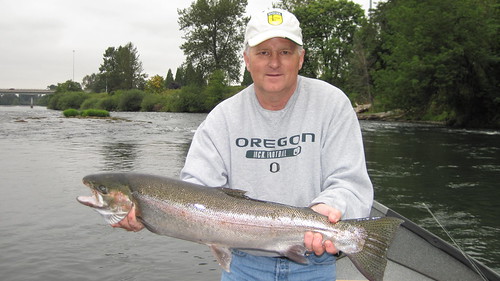
    Town Run: Although the Willamette River is now really low compared to much of the year Steelhead remain active. The river is very “wading friendly” now and it’s a great time to get out and learn the subtle slots and drops that hold fish regardless of water levels. Moal Leeches remain solid choices, muddlers and Hoh Bo speys are also doing the trick. Floating lines and type 6 sink tips are both nice to have this time of year. Vary your leader depending upon your sink tip, 10ft for the floater and 6ft for the sink tip.

    town run buck

    Middle Fork of the Willamette: Higher flows out of Hills Creek dam have made wading daunting much of the month of August. Flows of 2300-2400 CFS make the middle fork near Oakridge look out of shape. But as we know fish like water and the Middle Fork fishes well when it’s high in the spring and fall.
    MId-Summer, August flows are often low and fishing is best in the evening. This August (due to reservoir draw downs for future repairs) has the MFW rolling and the fish are digging it all day. Try nymphing with the standards, Prince’s, Possie Buggers, Pheasant Tails, try larger Caddis, Orange and brown, Royal Wulff’s, and X-Caddis will get the job done as well. Hatches are not impressive but they are developing. Small Caddis, a couple of October Caddis have even been spotted. Flows have dropped to around 1500 CFS out of Hills Creek and the fall fishing will be fantastic as long as we have decent water.

    hells gate

    Upper McKenzie: Again cooler weather has been nice on the Upper River and this weekend fishing was excellent. Typically August means small caddis, attractors and fishing fast water, this year is no exception. The Upper McKenzie is low and experiencing a serious “rubber (raft) hatch”. All that being said fall shadows are coming on strong and the shorter days have fish looking up in the afternoon. “Hopper Dropper” rigs have been productive as well.

    upper mac paradise down

    mckenzie wild rainbow

    Our local waters have had reasonable flows all Summer and fall fishing is looking great. 24,000 summer steelhead over Willamette Falls is a fine number, and trout fishing has been consistent. The the wild trout on both the McKenzie and Willamette will benefit greatly from the “better than last year” spring Chinook spawning cycle taking place over the next couple of weeks. Overall fall fishing should be great.–CD

    Posted in Fishing Reports, McKenzie River, Middle Fork Willamette River fishing | 1 Comment