New Hot Tipped Crazy Legs Released by Hareline

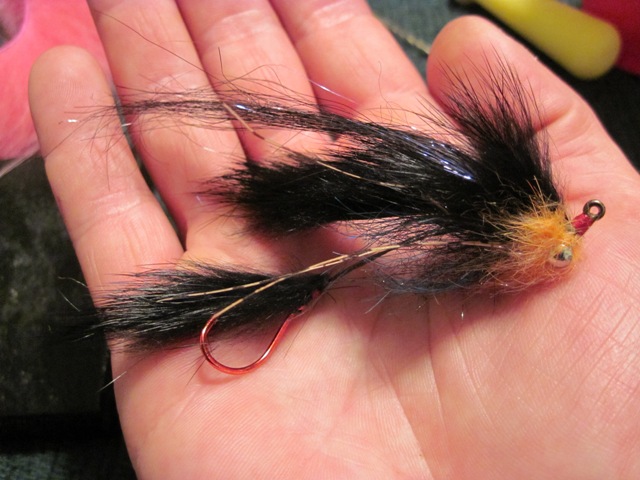
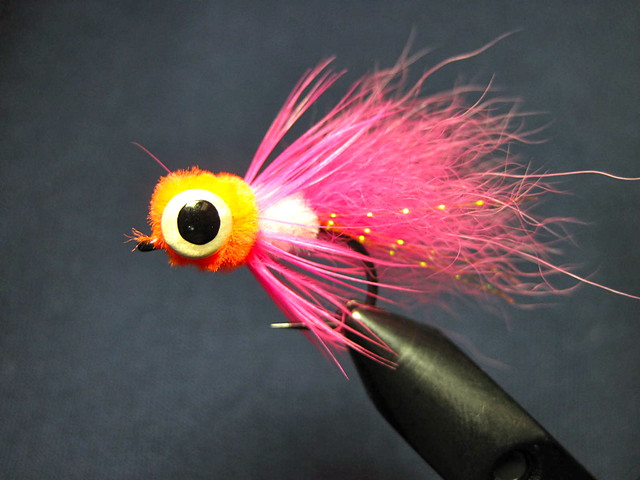
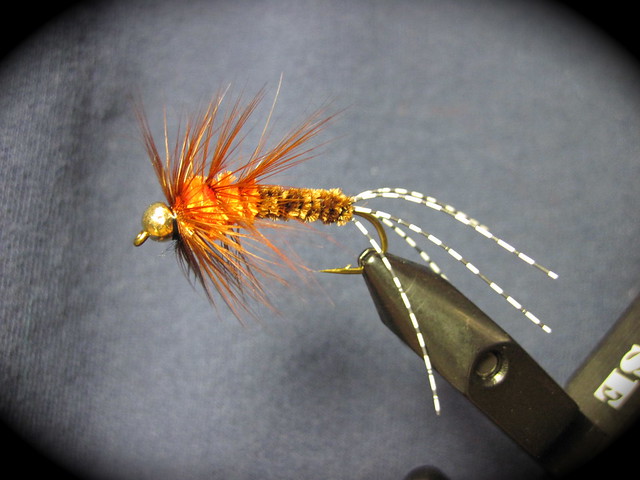
Hey you Squidro Fly tying fiends out there, Hareline Dubbin has just added some eye-catching colors of the Hot Tipped Crazy Legs we have come to adorn our Squidro Flies with and adapt to wings and tails on our traditional salmon and steelhead flies.

Nothing quite like a photo to show you the delights of these new color offerings.

All of these colors are available at the Caddis Fly , and my perusal favorites of this batch are the Salmon Pink/Hot Pink Tipped and the Blue/Hot Pink Tipped.

The full list of new colors is as follows:
BLACK/FL ORANGE TIPPED
HOT PINK/FL ORANGE TIPPED
BLUE/HOT PINK TIPPED
PURPLE/FL ORANGE TIPPED
SALMON PINK/HOT PINK TIPPED
BLACK/BLUE TIPPED

Ahhhhhh. So many choices to dress our flies.

JN

Posted in Fly Fishing Gear Review | 2 Comments

Dam Removal Updates: Klamath and Calapooia

Thanks to Issac Roman for pointing us to this article on the Trout Underground. Tom Chandler explains how dam-huggers are claiming “dams are good for salmon, it’s all the Native Americans’ fault, the UN wants to seize our lands and create a wildlife preserve, and his personal favorite: the Klamath’s coho salmon are not native to the Klamath watershed, so their ESA listing is illegal — as is removing the Klamath River dams to protect them.

Also, you can check out this great video by Freshwaters Illustrated about a dam removal project on a small Willamette Valley tributary, the Calapooia.

Freeing the Calapooia from Freshwaters Illustrated on Vimeo.

-MS

Posted in Oregon Conservation News | 2 Comments

Clear Cure Goo Red Butt Burgandy Chironomid Fly Tying Video

The third video of our Clear Cure Goo Chironomid series, demonstrating how to tie deadly, durable and easy to tie Chironomids. In this video Jim Terborg uses Clear Cure Goo, flashy materials, and markers to create a multicolored midge pattern that lights up in the water column, and lights up the fish in terms of catching.

chironomid clear cure goo

CCG Red Butt Burgandy Chironomid

Hook: Daiichi 1150 # 12
Thread: Lagartun 150 White and Uni 8/0 Black
Body: Thread
Rib: Gunmetal Flashabou and Red Ultra Wire size small
WingCase Lagartun Fl. Red Mini Flat Braid
Gills: Lagartun Mini Flat Braid Pearl

Posted in Fly Tying, Fly Tying Materials and Supplies | Leave a comment

Best Steelhead Egg Patterns – Pearly Pink Egg Dart

This steelhead egg fly pattern looks a lot like Darian Hyde’s Steelhead Dart. The Pearly Pink Egg Dart fly is weighted well with the lead eyes, but you may substitute a wide variety of dumbbell eyes that are of brass or tungsten composition. I like the Pearl painted lead dumbbells because they are inexpensive, I know I will loose a lot of these flies, they have a nice bar between the eyes that make it easy to tie in and wind chenille to make the egg-head, and I like the pearl white color too.

The Pearly Pink Egg Dart is a steelhead fly that I usually fish in high clear water, and I am likely to fish this fly in larger streams than in very small streams.

Jay Nicholas
February 2012

Pearly Pink Egg Dart

Best Steelhead Egg Patterns – Pearly Pink Egg Dart

Thread: Lagartun 95 D Fl. Orange
Hook: Daiichi 2571 Boss Hook #2 & #4
Eyes: Hareline Painted Lead Eyes Large, Pearl
Tail: Eumer Arctic Fox Tail – pink
Tail enhancer: Fl Pink Krystal Flash
Body: Hareline Carded Chenille – Fl. White medium
Egg Head: Fl Orange Hareline medium carded chenille

Posted in Fly Tying, Fly Tying Materials and Supplies, Oregon Winter Steelhead Fishing | Leave a comment

Perfect Steelhead Stonefly Nymph – McKenzie Golden Stone

The effectiveness of this steelhead stonefly nymph is not limited to our backyard, but it is deadly hot on the McKenzie, Deschutes, and Rogue. As such, I would be willing to bet a dozen Squidros to a Dozen parachute Adams that this same fly will be eaten regularly by Great lakes steelhead.

The fly shown here is one of my simplicity style nymphs that captures the essential form, size, and general color impression of stoneflies that are present in stonefly nymphs wherever they occur. And in the event that there are no stonefly nymphs in any unfortunate body of water that also contains steelhead, this fly imitates a brown stick tumbling along the bottom, an item that actual steelhead to eat from time to time.

Jay Nicholas
February 2012

McKenzie Golden Stone Nymph


Perfect Steelhead Stonefly Nymph – McKenzie Golden Stone


Hook: Daiichi 1730 #8

Thread: Lagartun 95 D Black
Tail: fine grizzly barred rubber legs
Body: Ultra Chenille – brown
Thorax: Medium Hareline Carded Chenille – Orange
Rib: Copper wire – small or brassie
Bead: Hareline Plummeting Tungsten Bead – 7/32 Gold
Legs/gills: narrow black or brown saddle or cape hackle

Posted in Fly Tying, Fly Tying Materials and Supplies, Proven Spring Fly Patterns | 1 Comment

Spring Break Fishing Outlook

winter steelhead

This past weeks nasty weather brought rivers up and out of their banks. Those rivers have come back down to “fishable” conditions and this weeks trends inland and on the coast are pretty good. It’s been an outstanding Winter Steelhead year with some of the best returns of the past decade. The Siuslaw and Lake Creek continue to fish well. The North Umpqua is a tinge high but should fish well this week. Siletz and Alsea Rivers will be in excellent condition. The forecast isn’t for sunshine but it’s not going to dump cats and dogs out there either. With little pressure and this big surge of water coastal streams across the state will be prime for a last shot at some Winter Steelhead.

winter coastal sunrise

Trout fishing prognosis is looking good as well. Rivers are not going to drop into Summer levels any time soon but the McKenzie and Middle Fork of the Willamette are green today and will fish. Nymphing with large stones and smallish droppers will be best, but do keep your eyes out for the late afternoon March Brown emergence.

Posted in Coastal Steelhead Fishing, Fishing Reports, Lower Willamette, McKenzie River, Oregon Winter Steelhead Fishing | Leave a comment

Best Steelhead Egg Patterns – TRD (The Real Deal)

Love em’, hate em’ or ignore them. Egg fly patterns are always on the menu for steelhead, summer, winter, spring and fall. Fly fishers who target steelhead that are feeding selectively on eggs from a specific redd or spawning bar sometimes get very particular about the size and color of egg pattern they fish, because selective feeding requires a sort of “match the hatch” finesse to get the grab.

Oft times, however, steelhead egg patterns are acceptable to fish just as long as they are able to bee seen and presented at the right depth and speed. The Steelhead Egg patterns that will be featured as part of this early 2012 fly-a-thon include some of my favorites that have been received well by steelhead over the years in a wide variety of water conditions.

This steelhead egg fly, the TRD (The Real Deal) is one I usually fish in dirty water, or high steelhead-green flows.

Jay Nicholas
February 2012

the real deal egg pattern steelhead egg fly

TRD (The Real Deal)

Thread: Lagartun 95 D Fl. Orange
Hook: TMC 2457 #6
Bead: Hareline Plummeting Tungsten Bead, gold – 3/16”
Rear body: chartreuse Fizzle Chenille
Egg: Fl Orange Frizzle Chenille
Egg Veil: Hareline Egg Yarn – Salmon Egg

Posted in Fly Tying, Fly Tying Materials and Supplies, Oregon Winter Steelhead Fishing | 2 Comments

Best Steelhead Egg Patterns – BEE (Best Egg Ever)

This Steelhead Egg seems too simple to be effective, but that may be why it is so darn effective. The fly is small and combines a hint of orange and pink, both great steelhead egg colors. The Bead of choice is fl. Orange, unless you prefer gold, and I suppose that a rainbow beat just might work too.

This fly has just a little weight, so you will either need to add some weight, fish it in tandem with another weighted egg, or cast far enough upstream that it sinks to the proper depth to begin your drift.

This is a fantastic fly to fish in pair with a big weighted stonefly nymph.

This BEE (Best Egg Ever) is a fly, that I usually fish clear water or even in green water if there are a lot of people fishing the same water ahead of me. The fly is small, but the steelhead can see it, and if the fish have already seen a lot of bigger flies and baits, they may be more receptive to this fly, largely because it is quite small. At least, that’s what I think. Who really knows?

Jay Nicholas
February 2012

Best Egg Ever Steelhead Egg Pattern

Best Steelhead Egg Patterns – BEE (Best Egg Ever)

Thread: Lagartun 95 D Fl. Orange
Hook: TMC 2457 #10
Bead: Hareline Plummeting Tungsten Bead, Gold or Fl. Orange – 3/16”
Tail: Eumer Arctic Fox tail, orange, with a hint of hot orange Krystal flash
Egg: Hareline medium Carded Fl shrimp Pink Chenille
Egg Veil: Hareline Egg Yarn – white

Posted in Fly Tying, Fly Tying Materials and Supplies, Oregon Winter Steelhead Fishing | Leave a comment

Best Steelhead Egg Patterns – Low Water Wiggle Egg

Here is the scenario. Low clear water; maybe low cold clear water. The steelhead are there but they are alert to any movement they might detect along the riverbanks. They may or may not be actively feeding on loose eggs tumbling along the river bottom. You know that you can drift an egg or a nymph through little pockets and grooves that are likely to hold a fish, under a curtain of bubbles or enough depth so that you can’t see the fish – and hopefully the steelhead won’t see you as you approach.

Tie on a Low Water Wiggle Egg, give it 4-6 feet of leader under your indicator, and drift it through the nooks and crannies that should/could be holding steelhead. Set up if that bobber makes so much as a quiver, and hope for the best.

Jay Nicholas
February 2012

Low water wiggle egg steelhead egg pattern

Best Steelhead Egg Patterns – Low Water Wiggle Egg

Thread: Lagartun 95 D Fl. Orange
Hook: TMC 2457 #8
Tail: Hot Tipped Crazy Legs
Butt: Fl. Flame Ultra chenille, standard
Bead: Hareline Plummeting Tungsten Bead, gold – 3/16” or Fl Orange

Body: Hareline Medium Carded Chenille – Fl. white
Egg Veil: Hareline Egg Yarn – Salmon Egg

Posted in Fly Tying, Fly Tying Materials and Supplies, Oregon Winter Steelhead Fishing | 1 Comment

Klinkhammer Callibaetis Fly Tying Video

Your anchored at Davis or East or Hosmer Lakes and the Callibaetis hatch is going nuts! Fish are cruising, sipping, slurping up mayflies all around you. You tie on a Klinkhammer and lead the biggest fish. The hanging down body of the Klinkhammer style pattern fools him as it appears to be a struggling adult Callibaetis.

Klinkhammer Callibeatis

Klinkhammer Callibaetis

Hook: Daiichi 1167 #10-14
Thread: Uni 6/0 black or gray
Tail: Lemon Wood Duck
Rib: Ultra Wire Gray or White
Body: Ostrich one each Olive, Tan, Grey
Wing: Grey Sparkle Emerger Yarn
Thorax: Callibaetis UV Ice Dub
Hackle: Grizzly or Dun

Posted in Fly Tying, Fly Tying Materials and Supplies | Leave a comment

Mike Maxwell: Lessons from the First Speyfisher

High water has its benefits, not the least of which is the shocking productivity it can bring back to a steelheader’s home life. Last weekend was a whirlwind of yard work, house cleaning and resumed projects, which inevitably led me to my dusty, neglected laptop computer. Browsing in the luxury of a lazy, spring-like afternoon, I clicked into an old, faintly familiar file entitled “Speyfishing.” I was surprised to find notes from a forgotten 2003 interview I conducted with Mike Maxwell–steelheading’s first Speyfisher. Mike passed away in 2004, but not before producing two important books and a series of instructional videos on his craft. As I read the interview, I knew it had to be shared. Mike’s irreverent, vital personality was refreshing in his day, and it was just a refreshing as I read it in the present. It occurred to me that modern Spey-fanatics could use a reminder that Speyfishing has roots that are wider and more inclusive than the strict down-and-across style that some folks cling to like an old-world religion. Some of the choicest bits had to be omitted, for fear of upsetting a few of today’s luminaries. But the essence of Mike’s message is as follows:

Spey_handle

Mike answered the phone. I told him I was working on an article about Speyfishing, and that I wanted to get his thoughts on the subject. He let out a little burst of laughter, and jumped straight into the interview like he had something to get off his chest…

“You know I’m 79 years old,” Mike said, “and I’ve been Spey casting for 60 years!”

Before I could say “Wow,” he continued, practically beaming through the phone.

“I learned in England as a young man, then came to Canada in the late ’50s. When I got here, everyone was using these puny little rods. Like seven feet long or something. I just thought it was ridiculous!”

He explained how he brought a handful of his “Salmon rods” from the UK, and started using them on British Columbia’s famed steelhead rivers.

“People couldn’t believe it,” he said. “They just looked at that thing and they couldn’t believe it! ‘What the hell are you gonna do with that?’ they would ask me. Then I would make a cast, and their jaws would drop!”

Mike’s energy was intense, and I found myself smiling as he held court.

“One time, about thirty years ago, a great friend of mine who organized fishing shows in the States asked me to bring one of my rods to demonstrate at his show. Well, when I showed up with my Spey rods, people went nuts. They couldn’t believe it. Of course, the organizers gave me a little casting pond about eight feet wide by a hundred feet long. What the hell was I gonna do with that? Well, I had to cast like they did. I remember I grabbed this old woman who didn’t know how to fish, and I gave her the rod. I told her to make a simple overhand cast, and she threw it over 70 feet. Oh, you should have seen everybody go on and on! And from that moment on, rod manufacturers have all been about distance. Everything has to do with the distance a rod can cast.”

I didn’t need to ask any more questions for a while. Mike was on a roll…

“You know, when most Spey casters go fishing, they wade up to their ass in the river and cast all the way to the other side. I tell them, ‘Why the hell don’t you just go over there and fish, for God’s sake?’ It’s just ridiculous. You know, we have these brilliant float fishermen here in Canada. They are very effective–too effective! Believe it or not, most of these guys give it up because it’s too easy. Anyway, one of these chaps walks up to the river after some Spey casters have been standing waist-deep, casting to the opposite bank. He flips his float out about four feet from shore, lets it drift as far as he wants–these guys can drift a float over 100 feet–and in three casts has three fish! It’s just amazing.

“But the reason I bring that up is that the fish were there the whole time. They were just waiting for the Spey fishermen to move. Then they got back to their business. You see, a steelhead has two eyes, both of which can see up to thirty feet in either direction. One eye can be focused on something twenty feet away, and the other can be focused a foot or two away. But the fish can’t see a fly until it’s right over his head. So, you see, what we’ve learned from float fishermen is that steelhead like a downstream-drift presentation.

“Most people who Spey cast never learn how to fish. We–Denise and I–we teach people how to fish with a Spey rod. We start with the customer–that is the fish–and work up from there. You see, most people just flop out a roll cast at a 45-degree angle from the bank and let it swing. But if a fish sees a fly swinging quickly by, it will rarely bite. If, however, the fly is drifted right over his head, the fish is much more likely to grab it. We Spey fish for steelhead like float fishermen fish. We cast across and upstream, let the fly drift down to the end, and then swing across. Then we do it a little farther each time. We fish the water.”

I asked Mike about the title of his book, The Art & Science of Speyfishing. I explained that I had been warned by a few people to avoid the term “Spey” and to always use the term “Two-handed.” Mike chuckled knowingly, then began another story…

“Well, you know, in the UK they’re known as ‘Salmon rods.’ When I first came over and started making these rods–of my own design–I didn’t know what to call them. I couldn’t call them ‘Steelhead rods,’ because here in Canada a steelhead rod is a huge bait rod. Of course, I didn’t want to call them Salmon rods because I don’t fish for salmon.

“Then I wrote an article for the Atlantic Salmon Journal where I first called my rods ‘Spey’ rods, and I introduced the concept of ‘Speyfishing.’ Oh, the Brits went ballistic! ‘You can’t call them Spey rods, blah, blah, blah!”

Mike paused momentarily and took a few breaths. It seemed to me he was reliving an old scene, and I wished I could see into his minds eye. I asked him which of his lessons he would most like to impart to budding Speyfishers.

“Fish the water, and stick to your effective range,” he said. “An angler only really has control over his or her presentation within two to five rod lengths.”

I countered, “But Mike, I was instructed that your rods and lines were meant to throw lines of six to seven times the rod length.”

“That’s bullshit. Absolute bullshit! Whoever told you that was an idiot.”

I love this guy!

For more information on Mike’s books and videos, or to book a trip to his beloved Bulkley River in British Columbia, contact Denise Maxwell via email: info@maxwellsteelheadguides.net
-RR

Posted in Fly Fishing Books, Fly Fishing Profiles, Oregon Fly Fishing Tips | 5 Comments

Kelly Galloup inspired articulated streamers

These past few weeks I’ve been tying a collection of articulated streamers for my dad’s birthday, inspired by Kelly Galloup’s style and specifically by the videos posted at Fly Fishing The Ozarks.

Dad's Fly Box

To be honest, I debated whether or not to post this because of how amazing this guy’s fly tying videos are. We hope to take some pointers from this in the future.

I think these flies are going to lay waste to some warm-water midwest brutes this spring/summer.
-MS

Posted in Fly Tying | 7 Comments

Montana?

“Many go fishing all their lives without knowing it is not fish they are after.”
– H.D. Thoreau

yellowstone brown 2

madison26

ellen's big brown

Here’s your chance to experience some of the finest fly fishing in the Lower 48 on two of Montana’s most famous, blue ribbon trout streams. The Madison and Yellowstone rivers are populated by 1200 – 1500 wild trout per mile; ‘Bows, Browns, and ‘Cutts.

“Lou” from the Caddis Shop, is heading up a group of anglers from September 24-27 to Bozeman Montana. We will hook up with our friend Ed Lawrence of Ed Lawrence’s Fishing Outfit. The trip is geared for both the inexperienced and experienced fly anglers who will be in the company of licensed, experienced guides who have been plying these waters for decades.

This four day all inclusive package has been created especially for the Caddis Shop, and will allow us to fully experience Montana fly fishing at its best.

What’s included?
4 Days of guided fly fishing, 5 nights lodging, most meals
It is affordably priced at only $1587* per person.
Why did we choose Ed Lawrence’s fishing outfit?

In one word: competence. He and his guides know the territory.
As Ed says, “We’re not crotchety old-timers, but we’ve been successfully guiding clients for decades, and we’re proud that a high percentage of our clients are returnees.”

HERE ARE THE details: We will have 4 days of guided fishing in drift boats, and will not fish the same place twice. We will stay at The Wyndham Wingate, the finest hotel in Bozeman. Cooked breakfast will be provided at the motel, lunch will be provided on the river, and we will have dinner at our choice of restaurants in the evening.

QUESTIONS? Call the shop (541-342-7005) to sign up or ask questions.

*Includes lodging, meals, transportation to the rivers and the services of a full-time, professional fishing guide. Rate does not include gratuities or travel to Montana. Package is based on two anglers per boat; lodging is based on double occupancy; Single occupancy rates.

This trip is going to be a lot of fun!
Space is limited!
Call today!

Posted in Fly Fishing Travel, Uncategorized | Leave a comment

South Island Trip Wrap Photos

We’ve had a great time in New Zealand this year. New friendships, new rivers and many fun adventures experienced. Here are a few photos from our last week.

view of lake wanaka

View of Lake Wanaka where we made our home base for two weeks. Wanaka is a really cool town near all kinds of fishing, and within striking distance of innumerable activities from Bungy Jumping to Wine Tasting.

a+p show wanaka

Wanaka A+P Show Jack Russell Race. Letting the Jack Russell’s get a sniff of a dead Rabbit.

a+p show wanaka

Over 70 Jack Russell’s line up to chase the Rabbit. Absolute chaos ensued.

clutha brown

clutha brown

Clutha River Brown Trout

south island browny

South Island Brown. Thanks for the loan of the Hatch Reel Bruce, it worked well!

chasing a 6lbs rainbow

Chasing a Rainbow Down

south island backwater Brown

Back Water Brown

feeding lamchop

Farm-Stay Fun

feeding lamchop

LambChop gets her bottle.

looking up the wilkin river valley

Classic New Zealand River Valley

chasing thar in the makarora valley

Chasing Thar in the Makarora River Valley

Posted in Fishing Porn, Fly Fishing Travel | 3 Comments

Brad’s Brat – Winter Steelhead Tie – Fly Tying Video

A search of the blogosphere and various fly tying books indicates that this fly, the Brad’s Brat, was a creation of Mr. Enos Bradner and fished extensively on the Stillaguamish River in Washington in 1937. I bet those old boys could teach us a thing or two or twenty over a cup of coffee these days.

The original Brad’s Brat steelhead fly pattern used orange and white for both tail and wing, typically orange over white. The body was orange in the rear and red for the fore-body, and wool was the material of choice. Hackle was typically brown saddle or neck hackle tied as a beard of sorts. Wing materials varied, and in those days the fancy flies could sport Polar Bear, but most of these flies were probably tied with bucktail. Over the years, Polar bear became less and less available, and reserved for special occasions, and thus was viewed as a magical and superior winging material, while in fact (in my opinion at least) the translucent bear was no more or less effective than the plain old Bucktail as far as the steelhead catching properties.

Now-a-days, Bucktail is still effective, calf or kip tail is good too, but it is difficult to find kip tails with long hair, but we now have Arctic Fox Tail materials for winging, and this is a great material in terms of ease of use, durability, and fish catching qualities.

This Winter Steelhead Tie version of the Brad’s Brat uses a largish gold hook and a solid profile to enhance its visibility in the dark cold flows of winter.

Fish this fly with confidence; it remains a winner after all these years.

Jay Nicholas
February 2012

Brad's Brad Winter Steelhead Tie

Hook: Alec Jackson’s Spey Fly Hooks #3 heavy wire Gold
Thread: Lagartun 150 D – Black
Rib: Lagartun Oval Gold Tinsel – Small or Medium
Tail: Short Tuft of Red Kip Tail
Rear Body: Orange Hareline STS blend with Fl. Shrimp pink Ice Dub
Fore Body: Red Hareline STS blend with gold Ice Dub
Under Wing: White Eumer Arctic Fox tail or Eumer Zonker strip
Over Wing: Orange Eumer Arctic Fox or Eumer Zonker Strip
Topping: Hot Orange Krystal Flash
Hackle: Hot Orange Saddle hackle soft and webby

Posted in Fly Tying, Fly Tying Materials and Supplies, Oregon Winter Steelhead Fishing | 2 Comments