Steelhead in Town

Greg Hatten who recently ran his drift boat down the Colorado, yes that’s the one with Lava Falls and giant rafts brings us this local report. You can see more about Greg’s journey down the Colorado here.

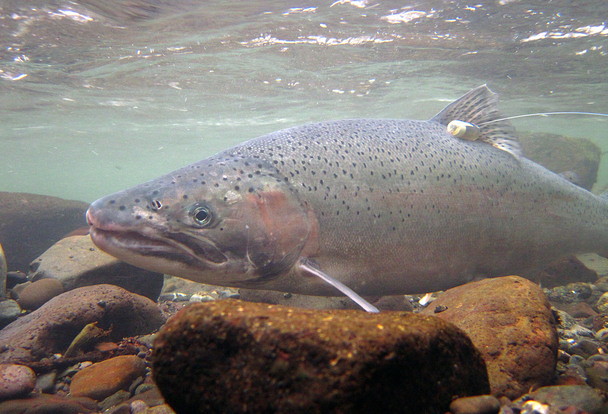
Father & son Rick and Mike Drake were in my boat last July at first light one morning with the intent of hooking up with a Steelhead on the fly on the “Town Run”. We fished hard and it was worth it – son Mike hooked, fought, and landed a nice fresh Steelhead hen just a few minutes before noon with the sun beating down from high in sky.

fly fishing for steelhead on the willamette river near eugene oregon

Tuesday this week, the father-son team hit the river again in search of a bright silver early-season fish. An “above average” Steelhead count was “countered” by “above average” river levels on both the Willamette and the McKenzie. Steelhead on a fly would be challenging – we started early in the day.

After an exhausting morning fighting the fast river flow, we had nothing to show for it – not even a curious trout with delusions of grandeur. At about 11 o’clock, Rick caught three trout on successive casts with a fly designed for bigger fish. At just before noon he made a cast and swung the fly close to river structure (next week, when the river drops a foot, this place will be too shallow fish and a week after that, too shallow to float). On this day however, it was the perfect cast to the perfect spot. Just as the fly was reaching the bottom of the swing it got “hammered” by an aggressive buck that was fresh from the Pacific and ready for a fight.

We got it all – a quick jump and a roll, several runs at the boat to make us think we’d lost it and then a couple of reel spinning sprints downstream that made us hold our breaths and hope the knots in our leader would hold.

willamette river summer steelhead

Rich landed the fish just before “noon” about 12 months after his son landed his just a few miles down river. We fished both rivers til dark and got a few more grabs but no “sticks”. It’s gonna be a great year for Steelhead on both the Willamette and the McKenzie.

GH

Posted in Fishing Reports, Lower Willamette, McKenzie River, Middle Fork Willamette River fishing, Summer Steelhead | Leave a comment

Local Steelheading Heating Up

favorite steelhead flies for the willamette

The Willamette and McKenzie Rivers have both dropped into near ideal shape for swinging flies for steelhead. Fish counts over Willamette Falls are off the charts. And new Sage ONE spey rods are beginning to trickle into the shop. The only question remaining is why aren’t you out on the river?

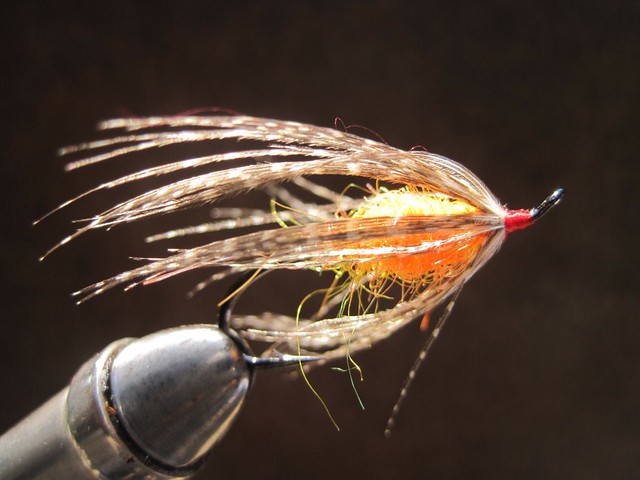
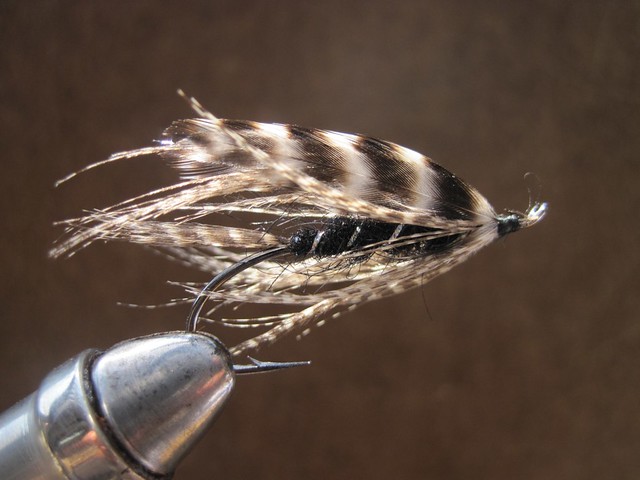
With optimal conditions and lots of fish around, swinging flies is our preferred method for finding chrome. We fish tried and true patterns, but also really enjoy giving new flies a go and have had good results with a number of innovative new creations that have come through the shop. The picture (above) shows seven of our favorite flies for chasing Steelhead on our local waters, clockwise from top left: Deuce Wigalo, Loop Leach, Hartwick’s Hoser, Green Butt Silver Hilton, MOAL Leach, Strung Out Rockstar, and Reverse Marabou Leech.

Fish these flies with a Skagit Compact shooting head, Ridge Running line, a 10′ medium MOW tip, and 4-6′ of 10 or 12lbs. Maxima. Fish brightly colored flies on bright and sunny days, fish dark colored flies on overcast and cloudy days. Fish pink and purple flies everyday.

Posted in Middle Fork Willamette River fishing, Oregon Weekend Fishing Forecast, Summer Steelhead | 1 Comment

New Skagit Master 3 DVD Arrives this Friday

skagit master 3 DVD

The newest in the five-part Skagit Master series, Skagit Master 3, will arrive in our shop THIS FRIDAY. We’ve secured a limited number of copies and they’ll be sure to go fast, so head over to our website and pre-order one today!

Skagit Master 3 features familiar names like Hannah Belford, Tom Larimer, Eric Neufeld, Jeff Hickman, Ed Hepp and of course Scott Howell, Ed Ward, and Jerry French. These steelhead junkies show you their newest and best steelhead fly patterns and provide in depth analysis of how different materials react under various water and light conditions. The Skagit Master crew puts their flies to the test in a flow tank to demonstrate just how fishy these new flies really are.

The Caddis Fly is working on a showing of Skagit Master 3, so stay tuned for details!

Posted in Fly Fishing Gear Review, Oregon Winter Steelhead Fishing, Summer Steelhead | Leave a comment

Where the Yellowstone Goes — Tix on sale now, beer and movie tomorrow

The new film, Where The Yellowstone Goes, will premiere in Eugene tomorrow — June 27 with two shows at the Bijou Art Cinema.

The Caddis Fly Shop is hosting the producers and film makers at 5:30pm on June 27th. Ninkasi is donating a keg we will have a few nibbles. We are also selling tickets to the first screening, 7pm that night at the Bijou.

Where the Yellowstone Goes follows a 30-day drift boat journey down the longest undammed river in the contiguous United States. Intimate portraits of locals in both booming cities and dusty, dwindling towns along the Yellowstone River, illustrate the history and controversies surrounding this enigmatic watershed leading to questions about its future. Connect with colorful characters, get lost in the hypnotic cast of a fly rod, and experience silhouetted moments of fireside stories on this heartfelt river adventure.

Tickets on sale at the shop or online/at the door as well.

bijou

Posted in Oregon Fly Fishing Clubs and Events | 1 Comment

Product Review: Echo King fly rod

Yes folks, the much anticipated Echo King rods are in the shop, handles neatly encased in a shimmering layer of plastique (or is it just shrink wrap?) and are ready for your next trip to the Kanektok, Norway, South America, or the Russian far-east.

These Echo King rods are 13′ two-handers designed to cast HEAVY Skagit head lines, but they also cast integrated shooting head lines overhead and have been very popular with east coast striper fishers casting from beaches and rocky outcroppings.

Two rods are offered in the King series, both at 13′ – 9 and 10 wts. The 9 wt. has a 630 – 720 gr. wt window and the 10 wt has a whopping 720 – 810 gr. line window. These are serious heavy duty lines intended to cut through wind, chuck long heavy tips, and swim big heavy flies deep – or in the case of our striper brothers and sisters – to reach waaaaaay into the blue and entice hog stripers to munch our flies.

Why Thirteen footers? This King Spey rod is a product of the ebb and flow of opinion, experience, and preference that is gradually evolving throughout the two hand fly fishing community: the long rods versus the short rods.  Both ends of the rod-length spectrum offer advantages under different conditions.   Tim Rajeff’s decision to go with a mid-range length of 13′ is based on his personal judgment and years of working with fly anglers that have ranged from the most experienced to the complete first-timer.  The Echo King’s modest length – combined with what Tim describes as a medium fast action – represents a configuration that will allow an angler to handle the heaviest Skagit heads and sink tips (or shooting head type lines) with the least fatigue- providing great flexibility to fish anywhere from open Tundra, beach, and tree/shrub lined rivers.

Cosmetics. These are very well appointed rods.  That isn’t the language that folks typically use when beginning to describe fly rod components, but hey, it fits.  The King rod shafts are a gloss jet black, thread wraps are deep red with metallic red tipping.  The reel seat, like all the components, is top-grade metal, and will accommodate any reel you may choose to line-up for the day’s adventure.

Handle.  We appreciate the cork handle on the Echo King.  The high density cork is shaped with a curvature that allows intuitive hand positioning, and the natural cork handle’s durability is enhanced with cork composite tips on both upper and lower grips.

Rod action. As noted, these are medium-fast, two-hand rods.  For the Spey fisher casting Skagit heads, this means the rod will provide the flex through the butt that will allow the Spey caster to feel the rod load.  For the overhead caster seeking stripers beyond the surf line, this means that you will be able to feel that integrated shooting head straighten out behind you, and then power your cast forward through the wind and salt spray.

Fish Fighting. The action of the Echo King offers an ideal combination of butt strength (lifting power), whole-rod flex, and tip sensitivity that make the process of interacting with a finned beastie a real pleasure.

Echo King Warranty. Like all Echo fly rods, the King offers a lifetime warranty.  In our experience, Echo’s warranty service is unsurpassed in the fly fishing industry.

Likelihood of needing warranty service? Our return rate on Echo fly rods is extremely low.  Tim Rajeff has a talent for designing rods that cast extremely well and that are among the most durable on the market.  His quality control inspections on rods are rigorous.  The result is that the King, like all the Echo fly rods, are meritorious of your trust.  Head out anywhere in the world, Alaska, Norway, Russia,  BC, and Cape Cod – and count on your Echo King to perform under the toughest conditions.  Just don’t stuff it into the Jet Pump Impeller, OK?

Outfit an Echo King rod with a precision fly reel like the Hatch Finatic 11 or the Bauer Mackenzie Xtreme, and line it with one of the Airflo or Rio balanced fly lines, and you are ready to tackle big fish just about anywhere. Tarpon? Honestly, this is an area where you could be a true pioneer, so if you are up to a challenge like this, give it a go.

CD & JN

Posted in Fly Fishing Gear Review | 3 Comments

Oregon Coastal lakes trout fishing


The cool weather we have had this spring has extended the usual season for coastal lakes trout fishing well into June, and it will probably be productive clear through July before warm weather and water send the trout into deeper, cooler water.

Most of the trout in many of Oregon’s coastal lakes are hatchery rainbow, but some lakes (examples include Tenmile Lake, Tahkenitch Lake, Siltcoos Lake, Devils Lake, and Munsel Lake) also contain native cutthroat trout.

Hatchery rainbow are typically stocked by the Oregon Department of Fish and Wildlife in the March through June window, but some trout may be stocked again in the fall when water temperatures cool.

Stocking schedules. Anyone can check on the locations, fish size, and dates where hatchery trout will be stocked in Oregon coastal lakes by looking on the ODFW website
here.

Fish Size. Hatchery trout stocked in coastal lakes are usually in the 8” – 11” range, with a few exceptions. Sometimes jumbo size broodstock rainbow or surplus steelhead will be stocked, and these can range up into the 20” – 30” size.

Best Fishing Methods. This is a fly fishing
oriented blog. Folks fish for these trout with all sorts of gear, spinners, baits and what not. Our experience has been that fly fishing usually out-produces other gear in a ten fold ratio. Be prepared to fish olive and black woolly buggers, lake leeches, chironomids. Traditional flies like dark Cahill and Bucktail Caddis. Spruce flies often work well too.

Getting started. The Caddis Fly Shop offers some complete fly fishing combo outfits and can custom create an outfit for your preferred price range. One example is shown here.

Fly action. Sometimes these fish respond best to a very steady retrieve, sometimes to a jerky retrieve, and sometimes to a dead still presentation under a strike indicator. Experiment and see what is working best on a given day.

Retrieve fishing. When searching for trout, a nice gentle cruise around a lake with a fly dragging behind boat or float tube is a good approach. The best sign that you have found fish is to spot trout rising in the process of surface or sub-surface feeding.

Strike indicator fishing. One extremely effective means of luring hatchery trout to the fly is with a very small thingmabobber – nymph combo. Depending on the lake, time of day, and insect activity, fish could be cruising anywhere from about 3’ to as deep as 10 or 12’ deep. A little experimenting might be necessary to find the right depth. Cooler water usually means fishing nymphs shallower, and warmer water may send the fish deep. In addition to the flies mentioned above, a gold Ribbed Hare’s ear nymph in black, natural, or olive – sizes 12-16 can be monstrously effective once you find the fish and the proper depth.

Dry fly action. Any time of day can find trout rising to dry flies. Light Cahills, Renegades, and Adams are all very general, impressionist style flies that work well. The size can matter more than the fly, though, and be prepared to fish #16s or #18s at times.  If the trout won’t take a sitting still fly, give it a twitch or two and see if that triggers a strike.

Fly lines. Floating lines are usually just fine for a variety of conditions, but short sink tips and intermediate lines could add to the effectiveness of one’s presentations on some days, especially in warmer water.

Float tubes and boats? Bank or dock access can be very limited, so this is especially suited to fly fishing from float tubes, rafts, or boats. This is a place to take kids fishing too – a nice laid-back seeing to learn fly fishing basics, tackle, tactics, casting and psychology. Wildlife viewing is a nice distraction from fishing too. The fishing action can range from very slim to blistering “hot”.

Remember – fishing fun takes many forms, and Oregon’s strikingly beautiful coastal lakes offer some exceptional opportunities to fly fish for hatchery and wild trout. These lakes are relatively close to “civilization”, but give the impression that you are fishing far-off in the outback. This can be a very nice day trip or a several day camping trip because these lakes are often located near campgrounds or perhaps the campgrounds are located near the lakes. You get the point, it can be a nice weekend or week-long outing in the spring and early summer for the lake fishing angler.

Posted in Fishing Reports | Leave a comment

Review: Favorite Tube Fly Hooks


I suppose that this post should note that my Tube hook favorites have evolved over the years, and next year or next week could possibly find me smitten by the bliss of having just discovered some new favorite hook.  But for now, these are my best-of-the-best Tube fly  hooks.

Why straight eye hooks? All of the hooks I suggest for Tube Flies are essentially straight-eye hooks because they fit nicely into the junction tube (Protube calls these Hook Guides).  The slight exception is the Daiichi Boss Fly Hook, and the eye on this hook is so close to straight that it functions perfectly for the tubes.  Tubes with hooks that hang loose behind the Tube may use an up-eye Octopus hook like the Gamakatsu, secured with a double Surgeons or Uni Loop knot.  But this review is focused on straight-eye hooks that are inserted into a hook keeper. I am not familiar with anyone using down-eye hooks for tube flies.

Hook size comparison. Do not for an instant think that the size any of these hook sizes can be compared easily. There may be some science involved in hook sizing between and among hook styles, but holding these hooks in your hand leads one to doubt this proposition.  Five different size #2 hooks can look like they are from different hook designers, and I wonder if they were all falling-down-drunk when they decided how to size these hooks.  The best way to select a size of your own liking is to use this review as a general guide, but then trust your own eye and judgment for application to your flies.

Gamakatsu C14S – Glo Bug Hook. This is a sleeper hook for Tubes.  Sticky sharp, short shank, straight eye make this hook in a #2 one of my dependable.  For smaller tubes, I will fish this hook in sizes 4-8 and it works.  Nickel Black and relatively heavy wire, this hook still penetrates easily.

Gamakatsu Big Game Hook – #2 only. This is a fantastic hook for many uses, and Tube flies are among these.  That said, I am not likely to choose this hook for a freshwater Tube, because the wire is a little heavy for my liking.  And I am deliberately noting the Size 2 here.  Personal preferences rule these choices, but I find the 1/0 in this hook has wire that is too heavy for me; and gosh I think the points are not as sharp as the #2s. I routinely use the 1/0 fishing silvers and kings in the ocean with 10 wt. rods, but I fear that the heavy wire requires a lot more pressure to seat in a fish jaw.  I would never fish a Tube using a 1/0 in this hook on a 7 wt. rod.  Even the #2 is heavier wire than, for example, the TMS 811-S or the Daiichi 2571, so it probably fishes best on 8 wt. rods to assist hook setting.   Final note on the Big Game hook:  this is a tinned (saltwater resistant) hook, and the point is beaked (curved-in).

Gamakatsu B10S Stinger. This is a black nickel, fine wire hook that is sized rather large for my tastes, so I tend to fish this excellent hook in a #4 (comparable to a lot of #2s) or a #6 (comparable to a lot of #2s).  As I mentioned, the hook sizing “party” must have been pretty wild.  This is an elegant, easy penetrating Tube hook that I also use on my Poppers.  last note on this hook, it looks rather unusual in terms of the fly hooks most of us are accustomed to, but it is a winner, so don’t let its looks scare you off.

TMC 811-S. This is my Tube hook of choice if I want to go to a 1/0, because it has finer wire than the Gamakatsu Bug Game hook and a sticky sharp point. This stainless steel hook has a straight point and also fishes very nicely in sizes smaller than 1/0, but I love the graceful curve of the Gamakatsu Big Game hook, Daiichi 2571, or Alec Jackson 1648, or Owner SSW, so I chose the latter over the former in Size 2.

Owner SSW Straight Eye Tube Hook. This is a rock solid performer for larger salmon and steelhead Tubes.  I prefer #2 for my steelhead tubes.  This hook has a black Nickel finish, a cutting-edge beaked point, relatively modest wire diameter, and low barbs that make this a hook that will penetrate with little pressure.

Alec Jackson’s 1648 Tube fly Hook.   This fine-wire nickel hook has a short shank and a slightly offset straight hollow point – it is offered in the off-scale sizes of #3, #5, and #7 that are characteristic of all Alec Jackson hooks.  This is a wonderful tube fly hook for smallish Tubes.    I fish the #3s for my King salmon tubes and the smaller sizes for steelhead and sea runs.  If you freak about the bright nickel shank, use the Daiichi 2571, but if you actually want a touch of extra sparkle, reach for this elegant Tube hook.

Daiichi 2571 – Boss Steelhead Hook. This is a wonderful Tube hook and I fish this one in sizes 2 – 6 depending on the size of my fly.  I do not know why Daiichi created this fly hook with a “slightly turned down eye”, but it is so close to a straight eye that it functions like same, and as such is perfect for tubes.  This is a black hook, and Daiichi classifies it as 2X heavy wire, but to me it seems like light wire and it penetrates very easily.  The hook point is straight, hollow point, and slightly offset.

Hope this Tube fly hook review is useful the next time you wonder which hook might be right for you. These are the Tube hooks that I am most familiar with, and I expect that there are other good options out there that I have not discovered yet, so please let me and our readers know about the Tube fly hooks that you fish and have confidence in.

JN, June 2012

Posted in Fly Fishing Gear Review, Fly Tying, Fly Tying Materials and Supplies | Leave a comment

Take action for Wild Salmon and Steelhead on the Sandy River

From the Native Fish Society: Send a message to ODFW and NMFS that you want to see the Sandy River managed for Wild Salmon and Steelhead.

Save Sandy Salmon Postcard - Front

The deadline for your comments is July 9, 2012. Send the note below by clicking on this link:

I value healthy runs of wild salmon and steelhead and urge NMFS to reject the current Draft Hatchery and Genetic Management Plans (HGMPs) for the Sandy River and require ODFW manage the Sandy based on the best available science for the recovery of its native, wild fish.

Over the past decade, dozens of organizations (including the City of Portland, PGE, Western Rivers Conservancy and The Freshwater Trust) have committed over $100 million toward Sandy River dam removal and habitat restoration for the purpose of recovering wild fish. Continuing to plant over 1 million hatchery fish in the Sandy River constitutes the single greatest threat to the recovery of its wild native fish. The ESA listing of Sandy River salmon and steelhead more than a dozen years ago led to sorting of wild and hatchery fish at the former Marmot Dam site. With the dam gone, and 50 miles of spawning habitat again available to wild fish, it is no longer feasible or desirable to trap and sort fish. Since 2007, ODFW’s continued hatchery plantings have jeopardized the tremendous public investment to recover wild fish in the Sandy Basin.

The Lower Columbia River Salmon and Steelhead Recovery Plan, which includes the Sandy, sets recovery goals that rewrite abundance levels previously labeled as “likely to become endangered” to be “recovery.” The new targets to achieve recovered status are spring Chinook: 1,230, Fall Chinook: 1,031, Late Fall Chinook: 3,561, Winter Steelhead: 1,519, Coho: 5685, Chum: 1,000. These new targets range from 29% (coho) to as low as 4.5% (spring Chinook)
of the modeled historical abundance and three times lower than ODFW’s targets in the Sandy River when Marmot Dam was removed in 2007. The signatories to the Marmot Dam agreement, including NFS, ODFW and NMFS, agreed to the dam removal on the promise of HATCHERY REFORM and recovery targets that now have been abandoned by the agencies. Wild fish in the Sandy River should not be victims of the death by a thousand cuts. Recovery goals should reflect that wild fish abundance is limited by the current condition of habitat and hatchery operations in the Sandy River Basin, not a new and indefensible claim of wild resilience in the face of conditions previously believed to produce extinction.

The spring Chinook draft HGMP allows for the continued release of 300,000 hatchery spring Chinook annually. Data collected by the Forest Service and ODFW in 2010 and 2011 very high stray rates, 78% and 61% respectively, greatly exceeding the 10% stray rate threshold set by ODFW in the Recovery Plan. Despite ODFW efforts to acclimate spring Chinook at the hatchery and in the Bull Run and the operation of weirs on the other tributaries, life history characteristics virtually guarantee that stray rates will remain high and wild fish will experience increased pre-spawn mortality due to handling and holding in traps. Despite Sandy River spring Chinook being derived from wild broodstock, a recent study on the Hood River indicates that domestication of wild broodstock occurs within a single generation. Sustained high stray rates on spring Chinook, currently at a very high risk for extinction, in the Sandy River constitutes a significant and immediate threat to the recovery of ESA listed spring Chinook. NMFS should not allow the continuation of this program under ODFW’s wait and see management.

The summer steelhead draft HGMP allows for 75,000 South Santiam stock (Skamania origin) to be released annually in the Sandy River. These fish are out-of-basin stock, and summer steelhead are not native to the Sandy River. With the removal of the artificial barrier at Marmot Dam, these fish stray into the upper spawning tributaries and reproduce naturally. The history of the Sandy, Clackamas, Molalla, and Hood Rivers make it clear that the presence of non-native hatchery summer steelhead in spawning areas harm wild winter steelhead populations. Evidence from extensive research by ODFW scientists on the Clackamas revealed that even if hatchery summer steelhead and wild winter steelhead do not spawn together, increased competition for juveniles can negatively affect the wild run. These risks are increased by the current recycling of summer steelhead, causing an additional threat that the non-native stock will stray and survive spawning. The science is clear that, if hatchery and wild steelhead cannot be separated by time and space, plantings of hatchery fish must cease to avoid impeding recovery of wild stocks.

The winter steelhead draft HGMP allows for the continued annual release of 160,000 hatchery winter steelhead in the Sandy River. Despite the hatchery winter steelhead’s wild origin, recent science indicates that these wild derived fish domesticate as soon as a single generation. Additionally, hatchery-bred fish do not have segregated run timing and thus are more likely to arrive on spawning grounds with wild fish, stray, and compete with wild steelhead for spawning gravel. Progeny of wild/hatchery salmon are less fit for survival, further degrading odds of recovery for the wild population. The current practice of recycling hatchery winter steelhead increases the threat of straying and subsequent harm to the wild winter steelhead population. Due to the high water events in the spring when winter steelhead are present spawning in the upper tributaries, the HGMPs do not explain how weirs or other artificial barriers could be used to prevent hatchery fish from harming wild fish.

The coho draft HGMP allows for the continued annual release of 500,000 hatchery coho salmon in the Sandy River. Hatchery coho are extremely voracious and will prey on other juvenile fish, including ESA listed wild steelhead and coho. The high stray rates (24%) found in tributaries downstream of the Sandy hatchery demonstrate the continued risk of operating large hatchery programs where hatchery fish stray into spawning tributaries and compete with wild fish.

The draft HGMPs do not respond to the cumulative impacts of the hatchery stocks presented in a scientifically robust fashion. While suggesting that the impacts to wild fish are minor, the draft EA does not specifically quantify this risk nor does the current monitoring and evaluation program exist to determine the entirety of risks posed to wild fish in the Sandy River. Most of the impacts of the proposed HGMPs and the supposed benefits of the mitigation and monitoring programs are “uncertain” or “unknown.”

Hatchery programs pose the single greatest impediment to wild fish recovery in the Sandy Basin. In order for the Sandy to fully realize its potential for wild recovery there must be higher escapement goals and a recovery program that allows existing wild stocks to reach their productive potential within the available habitat without hatchery or harvest impediments. Because operation of the hatchery under the HGMPs will continue to threaten the survival and recovery of wild fish in the Sandy River, we request that NMFS not approve the four HGMPs. Thank you for the opportunity to participate in the public comment process.

Posted in Oregon Conservation News | 3 Comments

Fishy Business at the Coast – June 2012

Yes angling devotees, it is past time for a fishing report from the Oregon Coast. In short, fishing has been slower than slow. Lots of cool water in all of the coastal rivers has allowed springers to push upstream and hide out in deep holes where they are more susceptible to Kwikfish and bait than to flies.

Not to worry though, because there are alway observations worthy of reporting anytime one spends days upon days on the water, chasing the Unicorn, as our friend Rob would say.

There is ample opportunity to bury hooks in fingers and leave blood dripping in the boat and smeared on cork fly rod handles. Hummmm. Is this a fish attractant or repellant? Maybe that explains fish less day after fish less day.

While actual grabs, as opposed to rocks, bull kelp, and underwater logs have been few in number this year, I did get a monster grab last week. Big grab, stong head shake, and then —- nothing. Upon examination of my hook, guess what I discovered. One of my “friends” set me up with a set of pliers. Well, I know who did it, and my memory is long in such matters. I do not believe in retaliation as this sordid process only spawns a downward spiral to eternal damnation for all concerned — but I will remember this one.

I have observed more than one fly fisher who apparently forgot to spool on some backing before loading his/her fly line. Tsk tsk, as Buggs Bunny would say. Get thee to the Shop and remedy this badness, I say.

There is never enough time to keep tackle organized, so I just throw it in the boat and let it sort itself out.

My friends occasionally drop by and often leave evidence of their visit. Evidence sometimes expresses itself in surprising form. On one occasion, I stepped over a beautiful Comet carefully laid on my front door sill. Thanks Jason.

On another occasion, as I reached for the front door handle, I noticed a fresh layer of silvery scales. Nice job Rob.

I did get close to a salmon recently and was able to capture the above image as it swam placidly along my Super Pram.

Have fun out there….. and remember, this thing we do is about far more than the fish.

JN — June 2012

Posted in Fishing Reports, Oregon Salmon fly fishing | Leave a comment

Echo ION Fly Reels: Product Reviews

Not that it matters, but my first fly reel was a Perrine Automatic. Black. Spring loaded. One lever to initiate the retrieve by engaging/releasing said spring, and another lever to put the brakes on any trout that tried to swim away with my fly. That is sort of a funny premise because by the time the fly line was 30′ out, the reel spring was wound so tight that any line-off-reel pulling was under maximum tension. Oh yes, there was no room or apparent need for backing.

Fast forward to 2012, and I find myself lining up a boat-load of Echo ION fly reels. I laugh at myself, because after decades of focusing my attention on high-end, high performance, high tech, high priced fly reels – here I am fishing some of the least expensive fly reels on the market today.

How come? Why fish day-after-day with sub-hundred buck fly reels? Just what gives with this? Whether I am casting a Burkheimer, a Sage ONE, or an Echo 3 Saltwater fly rod – there is a very strong likelihood that I am going to sling on an ION fly reel. Makes it simple, dependable, and economical.

Don’t think for a minute that I have abandoned my appreciation of highly engineered, high performance fly reels. I still love ‘em, every one of ‘em, and fish my best, finest fly reels on what I consider special occasions.

With time at a premium, day in and day out, I like to be able to toss my gear in the boat, fish it in fresh and saltwater, hardly ever rise my gear, and would rather not worry about issues like ‘boat rash’ on my fly reels. Those reasons, and more, are why I have come to appreciate the Echo ION series of fly reels.

I first saw an Echo ION 10/12 fly reel in the spring of 2011, when I was up visiting friends at Rajeff Sports. I picked up the reel, gave it a spin, and asked what the price point was going to be. Ninety-nine bucks. (Insert an imaginary photo of raised eyebrows here.) The reel had great heft, smoothness and decent spool tolerances. This is a winner, I said, straight up. So I had to get one to fish.

A year and many ION fly reels later, I am still amazed at the quality of these reels and confident recommending them to anyone, beginner or expert.

Are Echo ION fly reels perfect? Not at all. As the saying goes, these reels are perfect for me, and I bet that there are circumstances where they will be perfect fly reels for tons of anglers.

Performance. I have fished ION fly reels for King salmon, silvers, sea run cutthroat, steelhead, river and lake dwelling trout (8″ – 14”), rockfish, and crabs. I have fished these reels in estuaries, in rivers, in lakes and out in the deep green ocean. I have never had an equipment failure with an ION reel. Never.

Heft. I do not care for the trend to ultra-light fly reels, although I know that this is a general fashion in the fly fishing industry. My preference is for a fly reel with weight that I can feel, and I will chose a reel that may be on the heavy side over one on the light side, even though industry prattle says I should be looking for light.

Construction. Echo ION fly reels are die-cast and then machined. The high-end, high performance fly reels on the market today are classified as fully machined from very classy aluminum bar-stock. That’s great. Those fly reels start with one honkin’ big solid aluminum bar and then are lathed and otherwise machined into race-car tolerances. The ION reels aren’t built that way, but they have stood up just fine to all of the mistreatment I have been able to dish out over a full year.

Finish. The ION fly reels have a matte black finish, and this is an impact resistant finish, but yes, if you let it bang around the gravel bar or boat you will ding it. I have several ION reels I have fished in fresh and salt for a year, only infrequently rinsed them, and the finish is still holding up very well.

Freshwater environs – are where the IONs are intended to be fished. That is what our friends at Rajeff tell us. I routinely ignore this well informed advice, but please don’t complain if the finish on your ION suffers from the salt brine. Do as I say, not as I do, and kindly rinse these reels after salt water exposure, OK?

Internal Components. Stainless steel and a magic plastic called Rulon (I have no idea what this is nor do I care, because the drag works just fine for me).

Spool tolerances. Good. Not as fine a fit as you will see on multi-hundred-buck fly reels, but good enough for me. On occasion, I have had my fly or shooting line slip through the reel frame and scare me half to death. This required me to remove the reel spool, re-seat the line where it is supposed to be, and replace the spool. I have had this happen to me while fishing seven-hundred buck fly reels about as often as when fishing Echo ION fly reels; while this always makes me mutter, the hazard seems about the same fishing IONS than with many of the more expensive fly reels on the market, and line handling is something we all need to pay attention to.

Start up inertia. Virtually none. This is my way of saying that the drag on my Echo ION fly reels has been unequivocally smooth. Start-up inertia is what can happen when a fish first takes off on a run and the reel drag has that fraction of a second to decide whether or not to grab the spool or to just let it start spinning off. Click-and-Pawl drag mechanisms are very dependable and do not require a big jerk to set the spool in motion. The drag mechanisms of various high tech reels also tend to be very smooth on start up. Cork drag mechanism can be touchy especially when the drag is tightened down, and sometimes require a big pull to get the spool unwinding. No so with an Echo ION. The drag on the ION starts off smooth and I have not ever had a sticky start-up in a year of fishing all sizes of IONs under harsh conditions.

Drag Consistency. I have experienced some inconsistency with my ION reels, when I have had them submerged in saltwater and kept in service all wet and salty. This inconsistency can be characterized by the drag pressure decreasing from the level where I had adjusted it to a lighter setting. Since the inconsistency has been minor, and I have been able to compensate with a little finger pressure applied to the spool side pressure, this has not been a serious issue. Line Capacity. The Echo ION reels carry PLENTY of backing and large lines. The big IONs are well suited to Spey fishing with heavy Skagit heads. The 6/7 will carry plenty of backing and a floating line to fish silvers.

Drag control. The nob on the back side of the reel is simple and positive to adjust.

Reel song. Yes, this refers to the sound of the reel retrieving or on the run of a fish as line exits the spool: I like the subtle click of the ION. Silly, but yes, I like the reel song.

A word of caution.  Every fly reel has its quirks, and this is true for the thousand buck reels as is it for these hundred buck (or less) reels.  When removing and replacing the ION spool, keep your eyes on the little “O” ring on the spool shaft. If it drops in the bottom of the boat (mine has) or on the sand (mine has), just pick it up, and slip it back on the shaft. Now, pay attention here. When you re-seat the spool, engage the drag, and tighten the end-cap on the shaft and “O” ring smartly. If you don’t get this part right, no worries, the spool will just fall out in the boat or on the sand, and all you need to do is rinse it off and install it right this time. Yes, true story. And I really honestly love these fly reels.

Echo ION 4/5. I fished this ION with an Echo Shadow PE 3106-4, Echo Edge 590-4, and a Fenwick GFF 906-3. The reel was perfect and the drag smooth on 6X tippets. Small and medium trout were a perfect match. The

Echo ION 6/7. This was initially my sea run cutthroat fly reel, then a rockfish reel, and then a coho fly reel. Fished it in fresh, brackish, and saltwater. Like every ION I fished, the drag is smooth and consistent. Line capacity is generous, and this would make a good summer steelhead reel matched with a 7 w.t line.

Echo ION 8/9. This is my day-in, cay-out estuary Chinook and winter steelhead fly reel. Used this baby in the ocean bucktailing silvers and chucking heavy sinking lines for rockfish. I cast Poppers on heavy floating shooting heads and magnum tapers to lure boiling Coho. The ION 8/9 is a perfect match for an Echo Switch rods too. This has been a great reel for me.

Echo ION 10/12. This is my big-boy-pants ION fly reel, reserved for heavy Skagit head lines, ocean fishing with 300(+) years of backing, and deep sea lines.

Hope these thoughts help. I think it is difficult if not impossible to find a rly reel of the ION’s caliber at a lower price, or sometimes at twice the price. Just my opinion, though, consider seeing for yourself .

JN, June 2012

Bias disclosure: I have a bunch of great friends at Rajeff sports. I fish their gear. I fish lots of other rods, reels and lines too, as anyone in my boat can relate. I just yesterday fished an Echo ION on a Burkheimer 995-4 and a Hatch Finatic 11 Plus on an Echo 3 Saltwater rod. I focus my reviews on gear that I fish and appreciate. Simple as that.

Posted in Fly Fishing Gear Review | 6 Comments

Caddis Fly Shop Social Media Update

Tweet this fools! We operate a bunch of social media accounts. Facebook, Pinterest, Twitter, etc…

Fishing

Follow us on Twitter for updates on the latest blog posts, shop sales and fishing reports.

Join our page on Facebook. We’ve had a personal account on Facebook for a while, but we finally set up a business page, which we will largely be using going forward.

Lastly — Pinterest rules. It’s not just for trendy soccer moms posting healthy dessert recipes from Sunset magazine — though the cupcakes were fantastic. It’s a really slick format to display the best content and products we have to offer. Definitely sign up.

As if you needed more ways to waste your workday.

Posted in Oregon fly fishing links | Leave a comment

Sage ONE Switch and Spey rod line charts

Hizonner the right honorable George Cook shot us the following Rio Fly Line guide for the new Sage Sage ONE Spey and Sage ONE Switch rods a few days after he recuperated from the 2012 Sandy Spey Clave. Our thanks to Mark Bachmann for organizing this event – truly a gotta-see gathering of PNW and international two hand aficionados.

Sage ONE Switch Rod Line recommendations for Rio fly lines

Sage One Line Chart
And a zillion thanks to George and his friends who helped develop and refine this line recommendation chart for Sage ONE two handers. Now officially unveiled by Sage, but no secret to anyone, the ONE long rods will ship in mid-June and we are already building a waiting list for the much anticipated switch and spey rods. Based on what we have experienced with Sage ONE Fly Rods so far, these big boys and girls will deliver the amazing performance the ONE single hand rods have already proven.

CD

Posted in Fly Fishing Gear Review | 1 Comment

Bug Launcher Classic fundraises for Wild Steelhead Coalition

Where: The Reel McCoys’ Place, 9624 South bank Dr. Roseburg, OR
When: Saturday, July 21, 2012 9:00 – 5:00
Why:Raise some funds for the Wild Steelhead Coalition

Casting competition and BBQ. Raffle drawings for prizes
Donation of cash or check (any amount) goes to Wild Steelhead Coalition 100%

Bug Launcher Course Specifics: Twelve stations on and near the North Umpqua River, each with targets at three skill levels. 36 opportunities to challenge and tune your casting skills!

buglaunch

Recommended Equipment: Single handed rod, tapered leader to 2X, yarn fly only (provided), and a sense of humor.

RSVP with Mike or Jan
541-677-0100
mikemccoy@dcwisp.net

Posted in Oregon Fly Fishing Clubs and Events | Leave a comment

The Great Fly Fishing for Northern Pike Excursion of 2012

The trip starts with a fourteen hour ramble through farm country; silos and water towers dot the horizon – a pink and blue sunrise over Sandusky, swampland of Lake Erie. Semi trucks, rows and rows of corn.

Esnagi Fly Fishing Pike

Eventually the Midwest slips away, and we drive along the haunted Lake Superior coastline. We make the obligatory stop at Duty Free. I don’t like scotch, but buy a liter of Famous Grouse anyway. Something about it calls to me, maybe my grandfather’s genes. The Grouse was his downfall on his last trip a decade ago. He drank a handle of it one day and it nearly killed him.

We pull into White River Ontario at nightfall, and pile into the only restaurant in town. A fifteen year old kid with a guitar stumbles through the first few riffs of a handful of classic rock songs, over and over again. We beg the waitress to make him stop and gag down our shitty food.

The next morning the train to the lake is late. The rail workers had been on strike and the Canadian government ordered them back to work just that day. Three and a half hours we spend bitching about the train and drinking a cocktail called a tornado, I’d picked up from our buddy in NYC, Captain Ken. Half Famous Grouse and half Coors Light on ice. They went down smooth – aside from all of the complaining. About the train. And the scotch. Continue reading

Posted in Fly Fishing Travel | 1 Comment

Film “Where the Yellowstone Goes” Coming to Eugene

The new film, Where The Yellowstone Goes, made its world premiere in Bozeman, MT, two Saturdays ago to a sold-out audience. The film will premiere in Eugene on June 27 with two shows at the Bijou Art Cinema. Director Hunter Weeks will be on hand for a Q&A after the shows.

The Caddis Fly Shop is hosting the producers and film makers at 5:30pm on June 27th. Ninkasi is donating a keg we will have a few nibbles. We are also selling tickets to the first screening, 7pm that night at the Bijou.

Where the Yellowstone Goes follows a 30-day drift boat journey down the longest undammed river in the contiguous United States. Intimate portraits of locals in both booming cities and dusty, dwindling towns along the Yellowstone River, illustrate the history and controversies surrounding this enigmatic watershed leading to questions about its future. Connect with colorful characters, get lost in the hypnotic cast of a fly rod, and experience silhouetted moments of fireside stories on this heartfelt river adventure.

Tickets on sale at the shop or online/at the door as well.

bijou

Posted in Oregon Fly Fishing Clubs and Events | Leave a comment