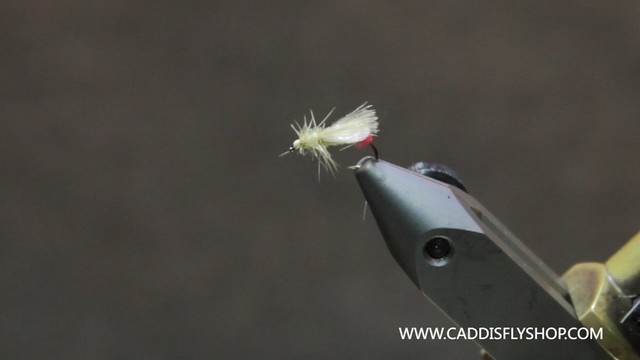
Pale Morning Dun Sparkle Dun Fly Tying Video

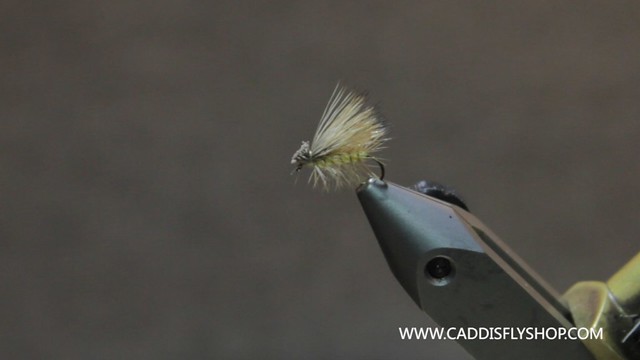
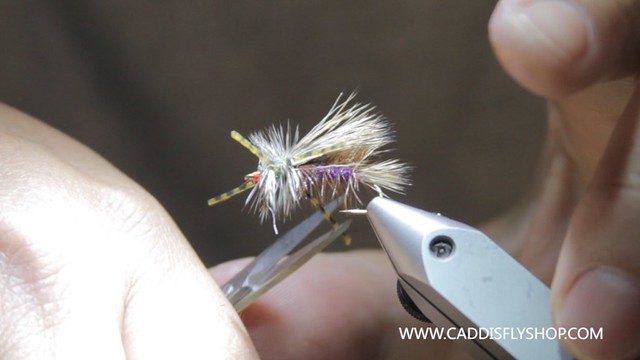
The Sparkle Dun is one of the best all around Mayfly imitations. Tony demonstrates how to tie a biot body Pale Morning dun PMD. Try a Blue Winged Olive, Mahogany Dun and March Brown version as well.

Emerger

PMD Sparkle Dun

Thread: Veevus 12/0 Cahill
Hook: TMC 100, Size 16-18
Tail: Rust Antron
Abdomen: PMD Yellow Hareline Turkey Biot
Thorax: PMD Yellow Hareline Micro Fine Dry Fly Dubbing
Wing: Comparadun Deer Hair

Posted in Fly Tying, Fly Tying Materials and Supplies | Leave a comment

Fly fishing links around the Web

Anadromy: Everybody loves fly tying videos — but fly tying comic strips? Incredible! I really like what these folks are doing at Anadromy, on the banks of the Hoh River, tying bugs and guiding. Here’s a step-by-step of an intruder. Here’s a cool idea for doing trailing hook bunny leeches. Totally radical approach.

Emerald Water Anglers: The guys at Emerald Water Anglers posted a note from Bob Margulis at the Wild Steelhead Center, outlining the steelhead potential for the Yakima in Washington. Given the good passage conditions in the Columbia in recent years and the good overall ocean conditions, the Yakima should be having wild steelhead returns of 15,000-20,000.

Blueback Chapter of TU: The Bluebacks are hosting Waypoints on Friday night in Corvallis. They’re also gathering up some great auction items and have a cool event shaping up. Follow them on Facebook to stay up to date with the new TU chapter’s activities.

Steel: Steelie Mike reports that Rich Youngers is shutting the doors at Creekside Fly Fishing in Salem. Please stop by and thank Rich and Kathy Youngers for everything they have done for our small community of fly fishers. Creekside will be missed.

Fishing and Thinking: Wendy Berrell out in Minnesota is writing some brilliant stuff these days, specifically about the fall season and what it means. Free protein falls from trees and swims in rivers; needs only be gathered by those who would dirty their hands. It is not shameful to walk with hands dyed in the black blood of walnuts; wear shirts spattered with the blood of fish. The mission is protein; it is around, to be gathered. It is not the case that it must be bought; using middle men and acquisitions of various sorts. Ducks can be chased with pellets propelled; squirrels, the gray rats of the woods, can be exploded by bullets and made to soup.

Posted in Oregon fly fishing links | Leave a comment

Beginning Fly Tying Classes

Expo 092 066

Beginning Fly Tying Classes start on Monday November 18 and will continue for four more Monday nights. Each class will build upon the previous session in complexity of flies tied. You will learn the basic elements of tying, work with tying tools, and develop skills such as dubbing. All equipment, tools and materials are included in the price of $55 per student. Call the shop at 541-342-7005 and sign up now!

Posted in Classes and Instruction | 1 Comment

Fall Report: Lower Willamette

Earlier this week, I had the privilege of having Peter (“nicest man in the fly fishing industry”) accompany me down the Lower Willamette. Fishing from Armitage Park to Harrisburg the past few weeks has been good. One change was this sign at Harrisburg.

2013-10-30 13.00.27

I knew the railroad bridge was under construction but unaware of the length of the project (Completion October 2014). Boaters should look for the center channel for passage. It is clearly marked with signage as you approach the bridge.

2013-10-30 16.35.44

Some Lou’s Brew comparaduns and soft hackles have been working well. Nymphing has been fair to say the least. Jig princes nymphs and Mega Princes have been proven on the upper section of the lower Willamette. The lower section has been good with tan, gray, and cream soft hackles. With the coming storms, anglers should keep a keen eye on the river level and water temperature. Overall, I would expect the fishing to remain solid for a few more weeks. We are fortunate to have such a great river located so close to where we live.

Willy 2 Oct 2013

Peter does not get to fish often, but when he does, he does very well!

Willy 3 October 2013

2013-10-30 16.43.38

LV

Posted in Fishing Reports, Lower Willamette, Oregon Fly Fishing Tips | Leave a comment

Loop Wing Parachute Adams Fly Tying Video

The Loop Wing Parachute style fly demonstrated below is a versatile pattern. Try changing the loop wing parachutes body color to a pale yellow for a Pale Morning Dun and rusty brown for a Mahogany Dun in size 16. For Blue Winged Olives use an olive toned dubbing and a size 18 hook and for a March Brown use a tan colored dubbing and a size 12 hook.

ParachuteAdams

Loop-Wing Parachute Adams

Thread: Veevus 12/0 Black
Hook: TMC 100, Size 10-20
Tail: Moose Hair or Grizzly and Brown Hackle Fibers
Body: Gray Dry Fly Dubbing
Wing: White Antron
Hackle: Brown and Grizzly Dry Fly Hackle

Posted in Fly Tying, Fly Tying Materials and Supplies | Leave a comment

Confluence Films Waypoints: Wolrd Premiere in Portland Nov 8

From Freshwater Trust: On Friday, November 8, 2013 at the Hollywood Theatre in NE Portland The Freshwater Trust will take part in a synchronized, nationwide “world premiere night” of Waypoints. The complimentary event begins at 7:00pm with a suggested donation at the door benefiting The Freshwater Trust.

Confluence Films: Shot around the world in both fresh and saltwater, locations including flats fishing St. Brandon’s Atoll in the Indian Ocean, trout fishing the wilds of Patagonian Chile, coastal Southeast Alaska for Steelhead, the Himalayan rivers of India for Golden Mahseer, and the jungles of Venezuela for saber-toothed payara. Waypoints beautifully illustrates all of these things and more.

Important: This venue has space for 385 people only, therefore guests will be let in on a first come first serve basis.

This event is free to the public, however we are accepting donations for The Freshwater Trust, the host of the event.

Hollywood Theatre is located at 4122 NE Sandy Blvd Portland, OR 97212.

If you have any questions feel free to contact Dominique Estlund at dominique@thefreshwatertrust.org.

She can also be reached at (503) 222-9091 x 14.

Posted in Oregon Conservation News, Oregon Fly Fishing Clubs and Events | 1 Comment

Royal Wulff Fly Tying Video

Tony demonstrates how to tie the tried and true Royal Wulff. The classic hair wing pattern floats great and catches fish world wide. Tony gives you some key techniques to make this pattern easier to tie.

RoyalWulff

Royal Wulff

Thread: Black 10/0 Veevus
Hook: TMC 100, Size 8-18
Tail: Cow Elk Hair
Body: Peacock Herl divided by a band of Red Floss or Chinese Red Uni-Stretch
Wing: White Calf Tail
Hackle: Brown Dry Fly Hackle

Posted in Fly Tying, Fly Tying Materials and Supplies | 2 Comments

Deschutes Fall 2013 Report

2013-10-15 09.42.27

The Technical Men’s Conference (old dawgs who have fished together for decades)was held this month. Sadly, our attendance for this year’s conference was the lowest in recent memory. Ken and I were the only attendees. Clear skies and very “crisp mornings” were the venue for the five days we spent. Trout fishing was good! Steelhead were not so good, for us. Frankly, it was really, really, hard to focus on steelhead, while “swinging”, and Redsides surrounded me doing “cannonballs”.

2013-10-15 14.54.12

2013-10-17 12.58.08

On our move day down river, we were pleased to see Bighorns! We estimated we saw around 18 in total. The Bighorns were located in the area near Windy Flat.
2013-10-17 15.32.51

2013-10-17 15.08.39

Bottom line, a great trip! We had many Redsides to hand. Not many large ones this trip, but enough to keep our thoughts on the next trip.

Posted in Central Oregon Fishing Report, Eastern Oregon, Fishing Reports | 1 Comment

“Switch rod ‘newby’ in NZ” Redington Dually Goes South to New Zealand

Thanks to John Taunton-Clark for the excellent gear review of his new Dually Switch Rod below.

A recent long spell away from fishing had me obtaining my ‘fix’ through the internet fishing sites. I saw lots on two-handed rods and I was hooked – I needed one of those! By chance I saw the blurb on the release of the Redington Dually series of switch rods. Seemed like good value and the cosmetics appealed. The Caddis Fly Angling Shop was really helpful in advising on shipping to NZ and within less than ten days my Dually Switch #6 rod arrived – all 11 feet of it.

DSC00048

I matched it with a fly reel I already had, and an Airflo Skagit Switch line of 390 grains with Airflo ridge running line. I also had a few poly leaders of different lengths and sink rates which I tried. Terminal end was about 4 feet of 8 lb test fluorocarbon tippet.

PA170015

Flies I tied myself and were experimental patterns borrowed from different steelhead sites. The cone-head woolly bugger variants in dark green, brown, and black were most successful, but I did catch a few nice fish on the grey rabbit/red marabou pattern. The latter worked better when the water was clear, but the darker colors took more fish in the higher, murkier flow after heavy rain. All flies were quite heavily weighted to get down in the strong flow. One thing to note is that I doubt my flies were getting to the best depth, as the sinking leaders (even the super-fast sinker) didn’t seem to have the necessary sink rate. I’m keen to learn about the leader or tip options for achieving faster sink rates.

I fished the Dually exclusively swinging these ‘streamer’ patterns down and across. The takes generally came at the end of the swing. The brutality of the takes was amazing – completely addictive and has shifted me from my previous focus on nymphing. Although new to the art of two-handed casting, I managed to reach a sufficient level of competency with ‘skagit casting’ to put the fly in the right places and catch a good number of fish. Even in my still-clumsy style, I found casting the Dually a pleasure – much less energy required than false-casting a “single hander”. Sincere thanks to the various internet video explanations of Scandi and Skagit casting – certainly helped the learning process!

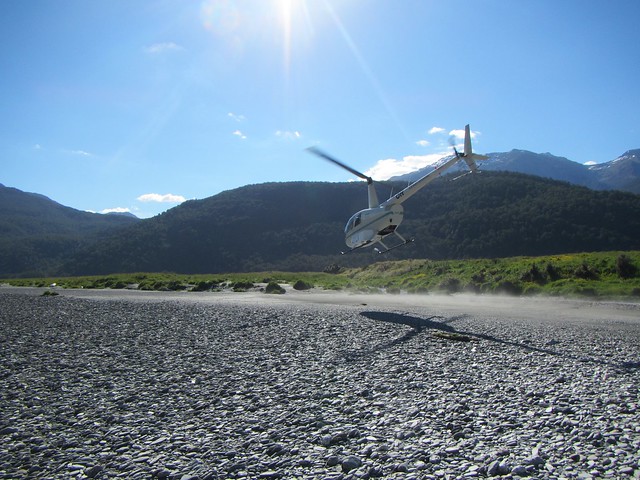
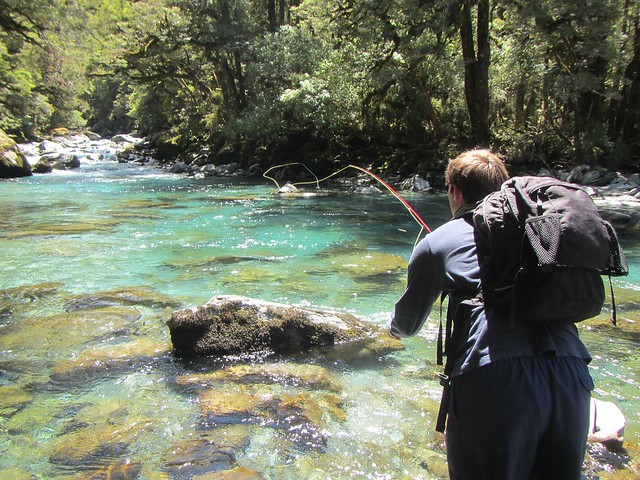
I was fishing NZ’s Tongariro River in the central North Island, catching rainbows fresh out of Lake Taupo, which is why we call them our version of ‘steelhead’. Most fish were in the 20 to 22 inch range, so well within the scope of a #6 switch rod. However, I was well pleased with the rod’s performance in making each fish a whole lot of fun, while easily handling the sink tips and weighted flies.

So the positives for me are a fine looking rod with good hardware, nicely presented in a cloth bag and rod tube, at a very reasonable price. As I have said, I’m no expert at this two-handed casting (yet), but the rod worked for me just fine and I feel my skill developed over the week’s fishing. Can’t wait for the next trip!

And lastly, stressing these comments are in no way about the Dually, I found that 11 feet long rods are not much fun bashing through the NZ bush! I learned quickly that it is worth pulling the rod apart before attempting to get through the riverside bush, even where there might be a vague pathway. Probably the most niggling thing I found about the Skagit setup was the clunky movement of the loop-loop connections through the line guides. Certainly see the benefits in the integrated lines now.

Next steps will be to get more practice with casting, and get back on the Tongariro as soon as I can. Skagit has me hooked!

Posted in Fishing Reports, Fly Fishing Gear Review, Fly Fishing Travel | Leave a comment

Captain Nate’s Bachelor Party: Full moon Texas tarpon

We drove sixty miles of bumpy shoreline – swerving between the encroaching surf and the fluffy loose sand, rumbling over the wrack: seaweed, stray shoes, broken plastic.

The full moon rose over the Gulf. We drove three hours, land crabs scuttling across the headlights – eyes lighting up on the beams. We’d waited for the tide to go out to open up the beach, drinking hot rum in the Texas sun for eight hours before the trip even started.

But our leader, Captain Ken Jones, was clear-eyed and confident. He piloted the group for my brother’s bachelor party to a remote jetty on the Texas coast.

The A-Team

We made camp at midnight on a protected patch of sand behind grassy dunes. The inlet lapped at the shoreline just past the fire ring. Tents assembled in the moonlight, the jetty called.

God only knows how long it was – it felt like miles of steep, irregularly pitched chunks of rosy granite marching out into the ocean. Spraying waves crashed on both sides.

I’d been on jetties before like this.

Some people, Ken and Nate specifically, loved jetties and this kind of fishing. It’s one of those situations where more skills, more effort, more balls all paid off. Walk longer, cast further, venture closer to the crashing waves.

All eight of the guys on the bachelor party were fly fishermen. But most were practical about it. Drunk, tired and blind was no way to fly fish the unforgiving surf. Instead, most of us used spinning rods with big jigs and soft plastics. We started quickly hooking up with big bull redfish.

Texas Redfish

Texas Redfish

Landing them was a miracle. Capt Ken would find a cauldron, a place on the edge of the jetty that would fill up on an incoming wave. You timed the surf and hauled the fish into the basin on an incoming swell. Ken, standing in swirling water up to his chest, would wrangle the 40-lb fish in that little hole and haul it up to you for a photo.

Then he would drag his ass back to the waters edge, to be swept away or taken by one of the many tiger sharks, while releasing this beautiful fish.

After a couple hours sleep, when the sun came up and the dolphins were jumping in the inlet behind our camp, we headed back out. Sea turtles were swarming the rocks, eyeballing the bleary gringos on our march to the tip of the jetty.

But we stopped short. A school of big Spanish mackerel was slashing bait just inches off the rocks. The wave would pass, and then a ball of ladyfish would push through, followed by a wave of jacks. From sun-up to whenever the Red Bull ran out, the fish roved the shoreline and we caught them on flies on every cast.

Nick Symmonds

Mackerel man

Mackerel Mouth

Later that day, Nate and I swam in the surf to cool down, and watched the beaky mackerel slashing through the green crashing waves, tearing up baitfish at top speed. Too much hot rum in our systems still to realize we were swimming within proximity to Nick Symmonds soaking shark bait.

Needless to say, we swam all afternoon without incident.

So effed

That evening we ate Spanish mackerel and drank more rum. As the moon rose up out of the horizon, we headed back out on the rocks. Tarpon were exploding off the mouth of the inlet. In the moonlight, we watched tarpon blast minnows ten feet into the sky, and a silver fish the size of Nate would hang in midair for a moment, curled like a giant comma.

That night was one of the more bizarre fishing experiences of my life. Everyone on the jetty was spooled multiple times. A couple fly rod hookups, but mostly spinning gear with huge popping plugs. We cast out as far as we could, popped back toward the rocks, and then WHAM. Fish on. 300 yards of line gone in thirty seconds. The fish were pushing 100lbs. We never came close to landing a big one. We did manage to land one thirty pounder pictured below, but every other fish was gone in seconds with all of our line.

Texas Tarpon

Topwater full moon tarpon, too damn big to land = bachelor party success.

We hung up the fishing some time after midnight, out of line and out of gear. Headed back to Port Aransas on the morning low tide. The rest of the trip is not fit to describe on this family-friendly fishing blog.

Many of you are wondering if Captain Nate really is getting married, or if this was really just a ruse to have a bachelor party. As far as I can tell, the wedding is on, and a large Pacific Northwest contingent will be descending on Ohio’s Steelhead Alley next month to see what the hype is all about. We’ll be sure to post photos.

If you happen to be in Texas, you need to look up Captain Ken Jones. Also, if you find my liver washed up on the beach, ship it to me. I’ll pay the freight.

-MS

Posted in Fly Fishing Travel | 4 Comments

New book by Jim Lichatowich: Salmon, People and Place

Via the Albany Tribune: OSU Press Publishes Book On Salmon By Acclaimed Biologist

For more than 40 years, Jim Lichatowich worked with Pacific salmon as a researcher, resource manager and scientific adviser, and he has seen first-hand the decline of Northwest salmon populations during that time.

In a new book published by the Oregon State University Press, Lichatowich outlines a plan for salmon recovery based on the lessons he has learned during his long career.

His book, Salmon, People, and Place: A Biologist’s Search for Salmon Recovery, points out many misconceptions about salmon that have hampered management and limited recovery programs. These programs will continue to fail, he argues, as long as they look at salmon as “products” and ignore their essential relationship with the environment.

Among his suggestions for reforming salmon management and recovery: Holding salmon managers and administrators accountable; requiring agencies to do more “institutional learning”; not relying on shifting baselines of data; undertaking hatchery reform; and returning to place-based salmon management.

John Larison, author of “The Complete Steelheader,” praised the OSU Press book written by Lichatowich. “Part science, part anthropology, part philosophy, this is a revelatory book and essential reading for anyone hoping to understand salmon in the Northwest,” Larison said.

Check out a great video of Jim here:

01 Jim Lichatowich SRF 2012 from Thomas B. Dunklin on Vimeo.

Putting this on my Christmas wish-list.

-MS

Posted in Oregon Conservation News | Leave a comment

Upper Deschutes Fish Stranding

From the Native Fish Society:

This past week there was a substantial dewatering on the Upper Deschutes, which in turn led to a large fish kill as flows dropped from 1,200cfs to 32cfs in 30 days. Native Fish Society would encourage you to share this story, and bring to light the fact that while terrible, the water mismanagement is this case was actually legal. Despite the number of wild fish dead and years of habitat restoration undone, the unfortunate reality is that over-appropriated water is common throughout Oregon.

Please read the article and share to put public pressure on the Oregon Water Resources Department to consider the implications that over allocating water has on our wild, native fish.

You can find more info here.

Posted in Central Oregon Fishing Report, Oregon Conservation News | Leave a comment

Crooked River Video Report

Rick and Sam share a recent trip to Oregon’s Crooked River. Thanks a bunch guys!

Posted in Fishing Porn, Fishing Reports | 1 Comment

Chinook Salmon Tackle Selection – October 2013

The 2013 Fall chinook salmon season on the Oregon coast is shaping up to be one of the best we have seen in at least a decade.  No bull.  More early fish, and the prospect of a steady push of fresh salmon entering through the end of December, with the South Coast closing strong for the season.

I’ve offered opinions previously – recommendations to help anglers who are trying to gear up for this specialized fly fishing niche.  the first was in November 2011 and the second was was in November 2012.

It’s difficult to convey just how excited I am about this season.  Honestly, I wasn’t at all sure I would ever live to see a run of Chinook hit the coast like this one has, is, and hopefully, will continue for the next three months.

But this post is going to be bare bones and help any of you who decide to go fishing for Kings with the fly rod, perhaps for the first time this season.

First admonition: leave the gear rods home. The only way to catch Kings on the fly is to cast the fly.  I promise that Chinook eat flies and they eat ’em good.  I still – sadly – run into people who think that fly anglers only snag or floss Chinook; but they are misinformed and I’m not going to waste anyone’s time debating or analyzing the wrongness of their views.  Last time I fished, I was blessed to have a 42″ Chinook eat a fly minutes after first being offered eggs suspended under a bobber and then a spinner.

Now to the topic of tackle selection.  After reviewing the previous advice I’ve offered, my ideas haven’t changed by much, so I’m going to mention the tackle I’ve been fishing this season because it is currently being beat around in my Super Pram and these rods, reels and lines have already proven themselves under serious load from Chinook.

Please note: as you read this material, keep in mind that I do not mean to exclude other brands or models of rods, reels and lines from the list of great tackle  to use fly fishing for Chinook.   There are plenty of excellent tackle choices and the staff at the Caddis Fly will be able to make interpretations and additional recommendations to guide you into appropriate gear for salmon fishing.

Oregon Salmon Fly Rods:

I’ve been fishing 8 wt, 9 wt and 10 wt rods for Kings this season.  I’m reaching for the 8 and 9 wt rods more often then the 10 wts.  A 9 wt Sage ONE is always in the boat, as are a pair of 8 wt Echo PRIMEs,  an 8 wt SAGE Motive, and a Burkheimer 995-4 and 7115-4.

The SAGE MOTIVE  is a new rod and has been a surprise to me.  I have pressured  a lot of Kings on the 8 wt – daring it to explode – and it took all the punishment in stride.  I love my SAGE ONE and am especially fond of my odd, one piece ECHO PRIME rods.  Honestly, I love all these rods, and they are my constant companions outfitted with different fly lines to fish in different water depths.

A very economical stand-in for these rods would be a 9 and 10 wt Echo ION or  Echo 3 Saltwater fly rod – my IONs and E3SW rods now, after proving themselves equal to the test, get loaned to friends only because at some point the number of rods in my boat becomes completely unmanageable.

Salmon fly reels:

I’ve been fishing a SAGE 8000 Pro series reel, a Hatch 9, three  Nautilus reels, and a SAGE EVOKE reel this season.  Every one of these reels has survived serious stress applied by salmon.  I will note that every fly reel I have ever owned is subject to the problem of occasionally finding my mono shooting line lodged somewhere it isn’t supposed to be.  This has been true with hundred buck reels and nine hundred buck reels.  I’ve concluded that this is partly due to my line handling ineptitude and I am resigned to just taking the spool out, clearing the foul, and re-inserting the spool.  Last week I accomplished this with a fish on, and got lucky.  Just don’t feel like you’re the only one because you ain’t.

The SAGE EVOKE is new in my boat this year and I’m very impressed with the drag and the reel’s overall toughness.  My Echo Ion reels are now my loaners and are in their second full year of fresh and saltwater overuse.  For the cost, they will get the job done and get you into the game immediately.

I fish two types of fly lines: shooting heads and full lines.  Currently, RIO is the principal provider of quality shooting heads.  I fish every head density from full floating, Intermediate, Type 3, and Type 6 – all on Rio Slickshooter, Gripshooter, or Airflo Intermediate Running Line 30 Lb.

The Rio Outbound, RIO Striper,the Airflo 40+, SA Streamer Express, and Airflo SNIPER fly lines are all examples of full fly lines that are available with slow to fast sinking head sections and integrated running lines. All of these lines are relatively easy to cast, and they also eliminate the  loop-to-loop connection that goes “bangity-clack” through the guides. If   a person must choose one of these fly lines, it would be the type 3 sink tip which is roughly a sink rate of 3-4 inches per second. Your second two fly lines will be Intermediate and Type 6 sinking heads, the former will be your go-to under low water conditions, but the latter will be absolutely essential in high water.  Yes, fly lines are crazy, and I often carry five rods with five different lines ready to fish in my boat.

Salmon leaders: recommendation. Try a 9 ft Rio Steelhead & Salmon Tapered Leader somewhere in the 10 Lb -16 Lb zone.   If you make your own, give Maxima Ultragreen a go, and keep your tippets in the sub 20 Lb class.

If all you have is a 15 ft sink tip single hand rod or a spey rod with a 12 – 15 ft tip and you long to go salmon fishing, then ignore the advice and just get on the water

Salmon flies –

Comet , Boss , and Clouser type flies all fish well and catch the “beasties”.  You can fish Intruders and bunny leaches and MOAL style flies too.  Again, the most important thing to do is tie on  a fly and cast it on the waters where Chinook live.

I know this is repetitive “gobbeldygook”.  Can’t help it.  Advice is constantly requested at the shop and in emails and phone calls.  We all started here at some point.  I remember calling Kaufmann’s decades ago and getting obfuscated with disinformation from some shop guy (ha ha, I fish with him now, yes I do Mr. so-and-so) and then buying my shooting heads from a barely-past-puberty Chris Daughters at the Caddis Fly in Eugene on my way South to fish the Rogue for Kings.  Seems like a lifetime ago.

I got my boat loaded, fresh loops on new and old shooting heads, flies tied and I’m going salmon fishing. Join me?  Just not too close please.  Got myself a brand new hernia and i M hoping to make is through the rest of the season.  Wish me luck please – and best of luck to all of you fellow salmon angler guys and gals.

Jay Nicholas – October 20 2013

Posted in Fly Fishing Gear Review, Oregon Salmon fly fishing | 3 Comments

Euro Jig Nymph Brown Fly Tying Video

In the video below we demonstrate how to tie another highly effective trout nymph in a “jig format”. The Euro Jig in Brown can be fished by itself or in tandem with another dry fly or nymph depending upon your rigging. It has been tremendously successful on the McKenzie and Willamette rivers this late Summer and Fall.

image

Euro Jig Nymph (Brown)


Thread: Veevus 10/0 Brown

Hook: TMC C400BL, Size 12-14
Bead: 1/8 or 5/32 Slotted Copper Tungsten Bead
Tail: Wood duck Flank
Body: Hareline Brown Midge Tubing
Throat: Pearl Flashabou
Thorax Dubbing Mix: Hareline STS Trilobal–Brown Stone, Claret, Olive, Red, and Kingfisher Blue.

Posted in Fly Tying, Fly Tying Materials and Supplies | Leave a comment