Disappearing rainbow trout on the Upper Deschutes?

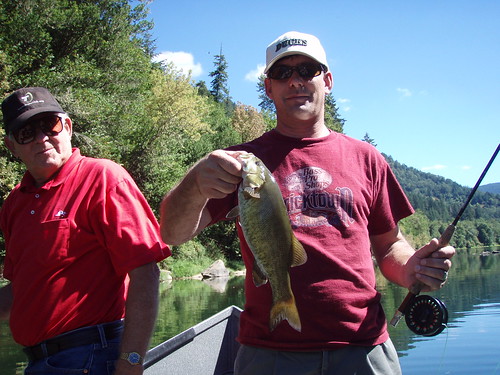
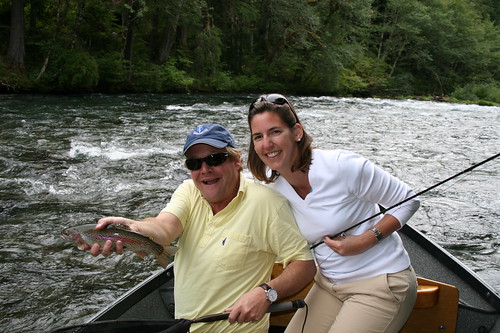
An email from our pal Nic Callero from the National Wildlife Federation: I have been drifting the Upper Deschutes River in the summertime for ten straight years between Wickiup Dam and the mouth of the Little Deschutes. One thing I have noticed is that over the past five years or so the absolute dismal showing of rainbow trout. Ten years ago stockers and natives seemed extremely abundant, this year I went whole days without even sniffing a native bow. On the other hand the brown population seems to be thriving. This year I noticed a sign posted by the Sunriver boat ramp asking for anglers to keep track of their rainbow catch and report it to this group who was researching the mysterious disappearing trout. I forgot the name of the group and for the life of me cant find them online. Help please.

Any ideas folks? Have you noticed a change in the trout species distribution on the Upper Deschutes River?

Posted in Central Oregon Fishing Report, Oregon Conservation News | Leave a comment

North Umpqua in great shape, fishing fair

Barrett, Tye and myself left Eugene at 4am this morning and headed down to the North Umpqua. We’d had some good reports of steelhead coming to the skated dry fly. Matt Sigmeund had a fish come to the surface the prior evening, and clouds were possible for today.

The report goes like this:

A couple of possible bumps, could have been bottom, could have been trout, maybe steelhead

One lost pair of Polarized Smith Optics, ouch

One case of poison oak

Three inadvertant swims with waders on

10 hours of fishless casts.

Great day out on the water with the guys-CD

IMG_2810

Posted in North Umpqua River Fishing Reports | 4 Comments

Water Less Fished: North Fork of the Middle Fork Willamette and Big Game Hunting on the Middle Fork

After putting in over 18 hours of work on Saturday, my desire to fish was minimal but with Matt out of town getting hitched I needed to step up and get out there.  Keith and I fished the North Fork Willamette for a change of pace. Part of the Wild and Scenic rivers system, the North Fork has exceptionally clear water and wary trout. I have caught fish to 16″ in there but not this weekend.  Fishing in the heat of the day probably didn’t help matters and the one decent fish  I did hook, jumped, shook its head and threw my barbless hook in no time.

Though we didn’t pick up anything woth photographing we caught numerous shakers and larger fish, both cutthroat and rainbow are present.   Counter-intuitively, the biggest fish are a little higher in the watershed.  The area around the gorge is a good place to start. I like to work upstream hitting the best habitat before moving on.   This stream get alot of swimmers and inner-tubers so your best bets for solitude are early in the morning and once the temperature starts to cool n the evening.  After Keith lost and then retrieved a box full of flies by taking a cold swim we decided we had worn out our welcome on the North Fork and headed to the Middle Fork near Oakridge in search of some big native fish.

The biggest fish alluded us and most were in the 10-13 inch range:

MIddle Fork Willamette Rainbow

The hatch was strong, caddis and PED’s were coming off and we picked rainbow up on Parachute Adams, PED patterns, Light Cahill wets and Peacock caddis.–KM

Posted in Fishing Reports, Middle Fork Willamette River fishing | 1 Comment

Video: Williamson River Rainbow Fly Fishing

Wrapping up our recent posts on fly fishing the Williamson River’s monster rainbows, here’s a video from last week:

Posted in Southern Oregon | 2 Comments

Morning proves most productive on upper Mckenzie River

Our local weather has been just about perfect lately. Cool mornings and evenings,  warm but not blazing during the day. The last day of July felt more like  June on the upper Mckenzie. Hatches of large cinnoman caddis, Pale Morning Duns, Little Yellow stones and Green Drakes were present.  Fishing was best in the hours before 1pm. Little wind and plenty of shade had some very nice fish looking up to large golden stone imitations, and per usual, unable to let the Possie Bugger go by. We caught a boat load lively, beautifully colored native rainbow and cutthroat trout in the 6-12 inch range as well as several “oversized” fish.-CD

IMG_2753

IMG_2756

IMG_2757

Posted in McKenzie River | 3 Comments

Gear Review: Simms G3 Guide Boots

If you are over 30 you will probably know what I am talking about and if you’re under 30 . . . well, you’ll know soon enough too.

There comes a time in your life when your knees will tell you you need a better pair of wading boots.  When that moment comes, you should listen.  In my case, I knew my beat up Hodgeman’s  had to go after a particuarly brutal wading trip on the Siletz.  My knee pain decided I needed a better pair of boots but what to get? Simms has a reputation for making a quality product and that is how I ended up with the Simms G3 late this spring. Water level being what it was I held off on the review until now– you don’t really get a feel for a pair of boots in a driftboat but after about a dozen wading trips trips, I can give you an informed review.

The boots are made of leather, they look good (for what that is worth), the molded toe protect my toes from rocks and they are uber-stable. I haven’t had any ankle twists wearing these boots. The hardware is solid and remains in good shape after more than a dozen wading  trips and the felt soles are pretty sticky. It is also really, really easy to get these boots on and off and that is a huge bonus. I mean, how many times have you lost your balance tugging on a wading boot that just won’t come off? Just the ease of getting these things off my feet has me sold (now if someone could figure out how to do that with stockingfeet).

Pros:

  • Solid, Stable
  • Seemingly durable
  • Easy to tighten
  • Good fit
  • Easy to get on/remove

Cons:

  • A little bulky (they don’t fit easily in my backpack)
  • A little heavy (I’m not looking forward to carrying these into a couple of backcountry trips I have planned)

The Bottom line: I haven’t had any fishing related knee pain since I started wearing these boots.  That alone earns the G3s a thunbs up–the rest of the good stuff is gravy.–KM

Buy your Simms G3 Guide Boots at CaddisFlyShop.com.

Posted in Fly Fishing Gear Review | Leave a comment

Deschutes River Steelhead

The lower Deschutes river is currently experiencing a very good run of summer steelhead.   Anglers who are walking or biking up from the mouth are having great success.  Typical summer steelhead patterns that are working well: Red Wing Blackbird, Green Butt Skunk, Freight Train, Purple Peril, and Silver Hilton.   The shop also has some addtional summer flys  on hand; Irish Car Bomb (stop laughing) Deschutes Demon, Crispy Critter Midnight Sun, Low Water Green Butt, and the Green Lanturn. LV

Posted in Central Oregon Fishing Report | Leave a comment

Worth Reading: Shiners in Diamond Lake, On the set at The River Why?

Lot’s o’ links readers:

For starters, State fish biologists found 11 golden shiners and one unknown fish in a trap net at Diamond Lake. Golden shiners can reproduce in Diamond Lake and were in the lake for years prior to the 2006 rotenone treatment. “We need the public’s help in reporting sightings of anglers using live fish for bait which is illegal in Oregon,” said Laura Jackson, Umpqua District Fish Biologist. Just as they get Diamond Lake cleaned up and fishing well again, some dumbass bubba is putting shiners in there. If you see Bobby Budweiser with a minnow bucket at Diamond, hog tie that dude and call the authorities at 541-440-3334 to report it.

In other ODFW news, In August, biologists from the Oregon Department of Fish and Wildlife will begin restoring habitat in the headwaters of the Wood River where rainbow trout from Upper Klamath Lake migrate to spawn. “We believe that 100% of the rainbow trout that spawn in the Wood River use the mile and a half stretch below the headwaters,” said Bill Tinniswood, assistant fish biologist for ODFW’s Klamath Watershed District. Historically, the upper reaches of the river held large numbers of logs and other natural in-stream structures that provided the fish with good spawning habitat and cover to hide from predators. However, over the years people have removed much of the wood and cut streamside vegetation to create pasture for cattle. To remedy that situation, ODFW will place a variety of wood debris into a half-mile section of river about one mile downstream from its headwaters that will provide habitat for all trout life stages.

Fishing Jones sticks it to PETA: If you’ve seen the “Fishing Hurts” ads, you’ll love this.

If you’re interested in the Oregon-based filming of the movie, The River Why, check out Jason Borger’s blog posts. He’s on set in the Coast Range.

Good stuff on WestFly: Uncle Fuzzy’s latest blog post on things to do when the fish aren’t biting is excellent. Also, if you’re a WestFly junky, you should consider the August 2nd-3rd East Lake Rondi.

Posted in Oregon fly fishing links | Leave a comment

Backpacking and fishing the McKenzie River Trail

Last weekend, Karl, Frenchy Laroux, Brent Ross and I tackled the McKenzie River trail, following the river, fishing from the Willamette NF ranger station above McKenzie Bridge to Koosah Falls. We hiked over 17 miles upstream, a majority of the 26.5-mile trail from McKenzie Bridge to Clear Lake.

It was an experimental trip – to see the entire upper watershed on foot and find the upper-most limits of the McKenzie’s wild rainbow trout. The ratio of effort expended versus fish caught was pretty substantial, but we made it from point A to B in 48 hours, finished Karl’s bottle of Jim Beam, and caught wild trout. I’d count that as a success in my book.

McKenzie River Trail

Friday:
We started out Friday evening at the Ranger Station, snugged our packs and headed east. We passed some great water just upstream from the Ranger Station, before Paradise Campground, but decided it unwise to start fishing a few hundred yards into a 17-mile trip. We needed to keep moving, so we skipped these fishy glides and promised to check them out on a day trip.

That night we made camp a few miles below Belknap Hot Springs and Lost Creek. There were two massive old growth log jams, forming a side channel and some slower water. We dubbed the upper logjam Frenchy’s Landing after he pulled several 10-12 inch fish rainbows and native cutthroats out of the hole.

McKenzie River Trail

That night we camped in a clearing a few hundred yards off the trail and were plagued by biting carpenter ants. We’d covered less ground than I’d expected (I’d hoped to pass Belknap Friday night), but the expedition was underway. I fought the bugs all night, diving into my sleeping bag until I got too hot to stand it. A mosquito net would be a good idea.

Saturday:

McKenzie River Trail

We woke late Saturday morning (I unrealistically thought we’d be moving by 6am), and spent a few minutes fishing Frenchy’s Landing, pulling in a few more fish. At this point, we decided hike with a couple rods rigged, running a hopper dropper through each good looking spot, picking up a few fish above Belknap.

McKenzie River Trail

We stepped up the pace soon after that and stopped fishing. We had six miles to cover to get to Deer Creek – I wanted to make camp above Olallie for the evening fishing. We hiked the ledge high above Fish Ladder rapid and through mixed old growth forest, making camp at 5pm above and across the river from Olallie.

The water from Deer Creek to Olallie was my favorite of the trip – it slowed on our side of the river and there were several boulder gardens with nice slicks for dry fly fishing. That night I picked up my largest fish of the trip, 12-inches or so, on a half-down parachute golden stone fly. According to Caddis Fly Guide Barrett, larger wild rainbows come up on this upper section of the river for the big hatches – March Browns, Green Drakes, October Caddis – but these 12-inchers fought really well in the big current. Karl spotted a large fish in one of the deep pools in this section, either a Chinook or a Bull Trout – awesome water.

At this point the trail was starting to take its toll. I had blisters on both feet and the only thing that made them any better was wet wading in my sandals. The cold water kept swelling down on my feet. You rarely had an opportunity to get in above your knees because the water is so fast. I did miss my waders on the first night — the water was freezing and we had more water to wade, but for days 2-3 I was happy not to have them on my back.

McKenzie River Trail

A second plague befell us Saturday night – no-see-ums. How can something smaller than the period at the end of a sentence break my skin? Nasty teeth apparently. We turned to the only practical remedy available – mass quantities of bourbon.

Sunday:

McKenzie River Trail

Sunday morning was a little ugly. Blistered, bourbon-soaked, clothes rancid with sweat, we pushed on. I was excited to see the next section of river, where the McKenzie dumps into the head of Carmen Reservoir at Trail Bridge. I’d heard monster fish hang out on this flat. That wasn’t the case this instance (middle of the day in the dead of summer), but we did catch quite a few 12-inch planters that had traveled up from the lake, along with a couple wild fish on Parachute Adams.

We had lunch on the bank above Trail Bridge, and then set off into the most grueling part of the hike. Here we faced our final plague. The section between Trail Bridge and Koosah was full of mountain bikers. I’d seen them along the entire trail – they seemed to outnumber hikers 2-1 – but they were especially thick here. Most were courteous and adhered to the rules of the trail which state that the bikers must yield the trail to hikers, pulling off the side and waiting for you to pass. But a good 25% barreled past us, some less polite than others. It felt good to give a shoulder brush to a few Richard Simmons look-alike extreme sport enthusiasts, but for the 97% of the interactions, that wasn’t necessary.

We didn’t fish from Trail Bridge to Tamolitch Falls, but could have in a few spots. The water was skinny and fast, and the trail was crowded so we pushed on. We reached the giant blue pool at Tamolitch by mid-afternoon, the upper-most natural barrier to upstream fish passage on the McKenzie. Above this section, the river disappears under Cascade lava flows all the way to Carmen Reservoir. This dry, hot section of the hike was less crowded by this time, and the forest was shady and amazing. We made to the shuttle car at Koosah by 5pm, wrapping up the trip.

Overall impressions if you want to try this:
-Scout it out by car first if you can with a GPS system, mark the best fishing holes, points of interest, decent camp sites.
-Skip the first two miles of the trail by starting at the Ranger Station. You don’t pass much productive water and a lot of that section is just along Rte 126.
-Stop the hike at Trail Bridge if fishing is your main goal. Avoid the crowds and spend more time on productive water.
-If you do decide to go all the way up to Clear Lake, try fishing any slow spots along the upper section for invasive brook trout. Keep all you can catch.
-MS

Posted in McKenzie River | 2 Comments

Williamson River Report: Slab rainbows storm Chiloquin

The time to slam some Klamath-run rainbows on the Williamson River is now. Caddis Fly employee Ty Holloway and guide Barrett Christiensen and I visited the Williamson River Monday. We put the boat in at the public ramp in the town of Chiloquin and fished from Blue Hole to Waterwheel Park. The Williamson River report is much the same as it was last week: Huge picky trout, slow water, greasy beaks cutting the surface film. Ty caught fish on small soft-hackles and a slime line, but most of the fish were caught under indicators on mini-leeches and mega-prince flies. Get there early — it was pretty crowded on Monday.

Also, this time we didn’t forget the camera:

Williamson River Oregon Fly Fishing

Williamson River Oregon Fly Fishing

Williamson River Oregon Fly Fishing

Williamson River Oregon Fly Fishing

Williamson River Oregon Fly Fishing

Williamson River Oregon Fly Fishing

Williamson River Oregon Fly Fishing

Posted in Fishing Porn, Southern Oregon | 1 Comment

Mainstem of Umpqua fishing well for smallmouth bass

This Sunday the family and I headed down to the Umpqua River near Sutherlin. We floated the section between Woods boat ramp and Osprey Ramp. Our float was 9 river miles, 8 road miles back up to the car (do it yourself bike shuttle). The river and suroundings are beautiful in this section. Our fishing was not all out, but when we did get the flies down near large boulder structure we found fish. Geting near shore in deeper water we found the bass using the boat for cover and were able to target some of the larger bass. Most of the fish we caught were 6-10 inches with a few larger fish in the mix. Water temps are warm, salomanders are plentiful, turtle hunting is superb, bass are tough and numerous, all great qualities for a family trip down the river.IMG_2688IMG_2679IMG_2705Access to the river is best by boat or pontoon type craft. The water is very slow in many areas and one can row, paddle or kick upstream. From Sutherlin take Ft. Mckay Rd towards the town of Umpqua, you can float from the Umpqua Ramp to Woods or Woods to Umpqua. There is also some walk in access along the road and at Mack Brown day use park. The water is low and will get lower, it looked like you could wade across the river at Woods ramp and walk downstream to some good water. Best flies were, Skinny Water Clouser Minnows, Thin Mints, and JJ’s Special.-CD

Posted in Southern Oregon | Leave a comment

Diamond Lake reports very good

Customers have reported excellent fishing at Diamond Lake on the south end of the lake. Chironomids have been best. Try Ice Cream Cone Chironomids #10-12 off of a strike indicator. Vary your depth off the indicator until you find the magic level. Starting around 5 feet and going deeper if neccessary. Stripping smaller woolly buggers and leaches has also been productive.-CD

Posted in Central Oregon Fishing Report | Leave a comment

Overcast and cooler great for fishing on the Mckenzie

Cooler mornings of late have led to some very good dry fly fishing on the Mckenzie River. Brown Elk Hair Caddis #12-16, Yellow Elk Hair Caddis #14-16, Parachute Adams #12-16, No Down Golden #12, Irresistable Elk Hair Caddis #12-14 have all been solid producers. Weather forecast for early this coming week is for 79 degrees and overcast. If you can get out of work or other obligations on the overcast days this time of year, it is well worth it. Dry fly fishing should hold up all day in the lower light and cooler temps. If things do slow down for you on the surface go to a small Possie Bugger #12-14 or a Prince #12-16.-CD

Posted in McKenzie River | Leave a comment

North Umpqua coming around

The North Umqua River has dropped to a fine fishable level. Enough fish have past over Winchester Dam that fly anglers are having success in the fly fishing only section of the North Umqua. Things appear to be a little late on the Umpqua as they have been around the state this year. August will be prime time for “skating up” a wild summer steelhead to a dry fly.-CD

Posted in North Umpqua River Fishing Reports | Leave a comment

State Trout or Steelhead stamp for fishing fly-only waters in Oregon?

I was having a conversation recently with a gear fisherman buddy about Oregon’s fly fishing only waters — places like the Metolius, North Fork Middle Fork Willamette and North Umpqua. He argued that those designations were unfair to folks using gear or bait because we all pay the same amount for license fees. He argues that fly fishermen are getting some of the most pristine water in the state “for free”, while others are excluded. So he has been trying to convince ODFW to require a stamp or fee to fish the fly fishing only waters.

And I think it’s a great idea. For an extra $5-$10 a year, maybe the fly only waters get expanded? Or better enforcement? Or most importantly, funds raised through the sale of trout stamps could go into an account that can be used only for stream habitat restoration (i.e. not hatcheries). Other states have tried trout and salmon stamps, a quick Google search brings up Minnesota and Delaware. The federal duck stamp project has been a huge success.

What’s your take on having an Oregon Trout and Steelhead conservation stamp?
-MS

Posted in Oregon Conservation News | Leave a comment