An unseasonably warm and dry start to fall has come to an end. We are finally starting to see conditions we are more accustomed to seeing in October. A fair amount of precipitation and cooler temperatures have really helped out the fishing both on the McKenzie and Willamette. We’ve had some good reports of dry fly fishing up on the MF Willamette with small dries, Carlson’s Olive Haze, small Purple Haze, Parachute Adams, Mahogany Duns all in 14-18 size range. If fish aren’t rising to your offerings, stick with the usual hopper dropper tactics with a Chubby Chernobyl and slender, fast sinking jig nymphs like the PCP #14, Dally’s Tailwater Jig #14, Peacock Frenchie #12. The forecast for the next couple weeks is showing a significant drop in temperature with more rain on the way, so get out there while the gettin’s good.
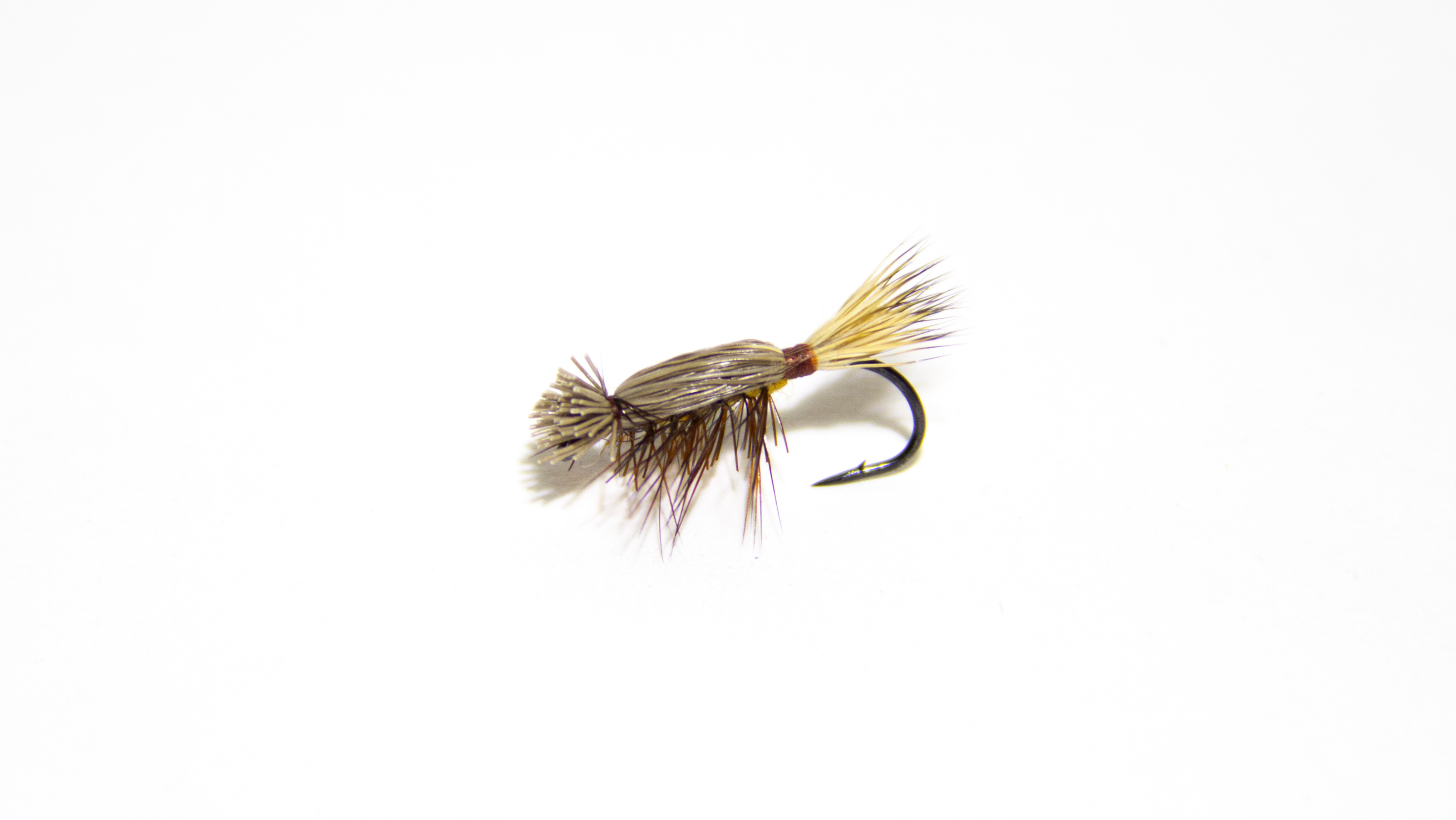
Jim Sens joins us in the shop to tie up a twist on an absolute classic. The pheasant tail nymph has been through the wringer and back with all of its variations and while we don’t mind fishing them with tungsten, that amount of weight defeats the whole purpose of why this fly was designed.
In 1958 English River Keeper Frank Sawyer put the pheasant tail together after closely observing what mayfly nymphs were doing in the water column. He originally tied it unweighted where it rode in the top few inches of the stream with the hackle legs extended. After even closer observation, he noticed that mayfly nymphs floated in the stream with their legs held close to their body, so he added wire and pheasant tail fibers as shorter legs – this got it deeper and replicated the natural appearance of typical mayfly nymph suspended in the flow.
Now, Jim Sens enters the conversation. He’s added UV hot orange ice dub because, well, orange hotspots seem to work well here on the McKenzie.
When:In-person event: Friday, November 11th, 2022; 6pm – 9pm
Online Auction: Bidding begins at Noon on November 4th, and closes at 8:30pm PST on November 11th
Where: In-person event: 65599 Tweed Road, Bend, OROnline Auction: Wherever you have wifi!
What:A Central Oregon celebration and virtual auction benefiting our wild, native fish, free-flowing rivers, and thriving local communities.
Join Native Fish Society as we kick up our heels for the 4th Annual Homewaters Roundup in beautiful Bend, Oregon, or participate virtually in our online auction!
Enjoy a lovely evening of fellowship, festivities, and even a few exciting raffle prizes, benefitting Oregon’s native fish and wild rivers. $100 admission includes a delicious buffet-style dinner from local favorite Tate & Tate Catering, Bend craft brews, a specialty cocktail or two from our friends at Crater Lake Spirits and Crafted Life, and the finest Willamette Valley wines from Lange Estate Winery.
Whether you join us live and in person, or from the comfort of your favorite easy chair, our Virtual Silent Auction has a little bit of everything for your bidding pleasure. From hosted fishing days on the Rogue to luxury accommodations in Sisters, Patagonia gear to hot air balloon rides, we’ve got it, thanks to our generous friends and sponsors.
Take a sneak peek at the auction catalog, updated regularly, and be sure to register! You don’t want to miss any of the fun!
Homewaters Roundup in-person tickets are limited so get yours today! Visit the Auction Homepage by clicking this LINK to purchase tickets to the in-person event, register (for free!) for the virtual auction, and take a sneak peek at the auction catalog!
It’s hard to complain about the fine water conditions, beautiful weather and solid fishing we have been having. But…. it seems like we need some rain. There are periods during the day when fishing is getting a little tougher, even feeling a bit “stale” at times… We need a change and it’s coming. Cooler air and water temperatures mean it’s mayfly time. Make sure you have a collection of Blue Winged Olives and Mahogany Duns this time of year. We are seeing tiny sailboat mayflies every afternoon. Fish are feeding on these size #16-20 mayflies on windless afternoons despite all the sun. Once we get some overcast and even rain it’s going to get even better. Have some Parachute Adams, Purple Haze, Purple Roosters, Hi-Vis Parachute Adams, Missing Links and Rainy’s X Fly Parachutes. These don’t all have to be tiny. I like to start big, a #12 or #14 and see if they will eat. If not tie a smaller pattern behind the larger dry and see if that works. You can even add a soft hackle or small Pheasant tail to the two fly rig. Good luck out there!
My fishing buddy Rob Gendron and I spent the first week of August fishing in Newfoundland-Labrador, Canada’s easternmost province. Rob, who fishes for Brook trout in Pennsylvania, was looking for a place to catch some big ones and suggested that we visit Three Rivers Lodge in Labrador. The Lodge is located on the Woods River system, consisting of braided river branches interspersed with large “pools” that could be confused with lakes (miles wide and long). Brook trout, Bull trout, Lake trout, and Pike occur throughout the system, providing high fishing diversity with a variety of approaches. One common approach had the guides out of the boat, dragging it upstream through riffles and small rapids while we cast in all directions. The guides were encouraging “anything green,” so we used olive Wooly Buggers and green Copper Johns.
Three Rivers Lodge, Labrador Byron is hauling the boat upstream
When fishing for Lake trout we used large flies, like Christmas Trees and Dolly Llamas. We were told that we couldn’t keep any Pike smaller than 5 lbs. We thought this was a regulation of some sort, but it was actually the chefs who did not want to fillet anything smaller. The water was off the week we were there and, although the fish were not plentiful, large fish were caught.
Rob with nice Brook trout, Three Rivers Lodge
The location is remote, involving a flight to Montreal, a charter flight to Schefferville, and an Otter flight into the Lodge. The lodge leases a Beaver and provides 2 or more fly-outs, including one option to the Outpost Camp for a night or two fishing “5th Rapid”. The main cabins are comfortable, as is the Lodge which has a dining room and a pleasant den with books, a fireplace, and a tying bench. The staff was great, and the guides worked hard to put us on fish.
Tsylos Park Lodge, British Columbia
In the third week of August, we migrated to British Columbia, the westernmost province of Canada, and stayed at the Tsylos Park Lodge on the Chilko River. A charter flight from Vancouver got us to a small runway near the Lodge and we were driven to the Lodge. The focus here is on casting dry flies to large rainbows. Drifts were repeated through named stretches of the River (Canoe Crossing, Bear Island, numbered rapids, etc.), often doing right-bank, center, and left-bank runs. Even though we fished the same stretches almost daily, the most productive runs differed every day or even hour to hour. Fish were often plentiful, but even during the lulls in the action, there was always the anticipation of hooking a nice fish. We also fished for Bull trout, casting streamers into channels while wading far out on soft gravel bars in the River.
Rainbow on Chilko River, Tsylos Park Lodge
A highlight of the trip was a 50-minute boat ride out onto the beautiful Chilko Lake (from which the River flows). We tossed streamers to Bull trout, some 30 plus inches, along the edges of muddy streams as they flowed into the Lake.
Casting for Bull trout, Chilko Lale Fishing for Bull trout along the muddy edge of inflowing water on Chilko Lake
We caught large Rainbows, most of which were acrobatic, using a variety of large dry flies. Of course, the guides had their preferred flies, although I had success with one of my favorites, Chubby Chernobyls. However, Rob had the trophy fly of the week. Two years ago his area in Pennsylvania experienced an explosion of periodical cicadas, an interesting insect group with some population that appears only in 13 and 17-year cycles. They emerge in huge numbers, covering vegetation and the ground. He thought they would be attractive food for the fish in his home waters, so he designed and tied cicada mimics. He brought some to BC, where they caught at least twice as many fish as any other fly. Periodical cicadas are not known to occur in the area of the Lodge, but this unfamiliar, large, juicy fly seemed irresistible.
Rob’s Cicada fly; notice the tooth marks on his super fly.
The location is beautiful, the cabins are comfortable, and the food is very good. Black and Grizzly bears wander through the area, but two Lodge dogs provided entertainment by chasing the bears if they got too close.
Anglers go to lodges seeking fishing opportunities, but also for adventures in beautiful, remote places. These two lodges at the opposite ends of Canada persevered through 2 years of Covid and provided us with their own distinctive fishing opportunities, beauty, and adventures.
Dock on Chilko River at Tsylos Park Lodge Perfect day on Chilko Lake.
In this video, Greg ties an October caddis stimulator fly pattern for fall trout fishing.
The stimulator was popularized by Randall Kaufmann in the 1980’s and can be tied in different colors and sizes. A classic attractor pattern for caddis, stoneflies, and much more.
Used as a dry fly, dry/dropper or a skater this fly has produced many fish and should be in everybody’s fly box.
It’s October again and we have some gorgeous weather and perfect water conditions to enjoy. Short winged stones are still around but we are seeing October Caddis, Gray Drakes,Blue Winged Olives and mid sized Brown Caddis. Not to make things too simple but right now you can fish October Caddis, Parachute Adams and Brown Caddis on the surface and do just fine. Get out there and enjoy!
Jim Sens sits down and ties a classic local pattern the Tied Down Orange Caddis. The Tied down in October Orange or Green Caddis Green can be fished dry or wet fly style. 20 years ago this pattern took up a bunch of space in the fly bins at the shop. It still works today!
After a catastrophic return of summer steelhead last year and multiple years of below-average spring Chinook, Winchester Dam remains more dilapidated than ever before. How does this 130-year-old dam maintained for private recreation affect the salmon and steelhead runs we all enjoy?
Sadly, Winchester Dam is likely the most significant fish killer in the Umpqua Basin, harming and depleting every native-run attempting to migrate up or downstream from the 160 miles of high-quality habitat stretching above this structure. A multitude of large false attraction holes remains in and under the dam. A gaping hole between the face of the dam and the fish ladder is still covered by what looks like a piece of conveyor belt, attesting to its careless upkeep.
These false attraction flows mean that fish will continue to jump into the side of the dam and meet hazards, injury and delay. Eroded concrete and exposed rebar are visible in the dam’s foundations, abutments and fish ladder. The fish ladder remains confusing to navigate for fish and doesn’t meet state or federal fish passage regulations. Meanwhile, a visible downstream curve in the dam crest raises questions about whether the dam is a threat not just to fish, but to public safety.
Almost two years ago, I wrote an opinion piece sharing issues with Winchester Dam on the North Umpqua River. Over the same time, state officials have continued to urge Winchester Dam’s owners to repair the dam and fish ladder. But to this day, little has been done on the dam itself to fix glaring problems or assist our salmon and steelhead in passing the structure. This is a clear insult to those involved in the hard work all over Douglas County focused on restoring our fisheries populations, from habitat projects such as riparian planting to the modernization of fish passage at Soda Springs Dam.
Winchester Dam is unlawfully killing and harming our salmon and steelhead. State and federal agencies have an obligation to uphold the rule of law to protect citizens and our natural resources. Rules and regulations for Winchester Dam must be enforced to protect our rivers and fish.
We even have a recent successful example of an agency holding private dam owners accountable for a fish-killing dam in southern Oregon: the former Savage Rapids Dam on the Rogue River. In the years before the successful removal of Savage Rapids Dam, which was removed to benefit salmon runs, the National Marine Fisheries Service filed a lawsuit against its owners for unlawful harm to federally protected salmon.
The National Marine Fisheries Service should take the same action now to protect federally protected salmon at Winchester Dam.
I ask our state’s senators, Ron Wyden and Jeff Merkley, to help direct federal agencies to help the North Umpqua River and its fish. The senators must continue to uphold their legacy on the North Umpqua by starting with bringing the rule of law to this dilapidated dam.
Two years ago, I saw two options for Winchester Dam:
Require the dam owners to finally overcome their indifference to responsibility and repair and rebuild the dam properly to bring it and its ladder up to state and federal standards; or
Remove the dam with public funds as conservation groups offered to the dam owners to do in writing back in 2020.
Today, it has unfortunately become clear that the Winchester Dam owners cannot be trusted to repair and maintain Winchester Dam to protect the North Umpqua. The dam represents a substantial financial and legal responsibility the owners have neglected to properly uphold, alongside their responsibility for the dam’s ongoing harm to salmon and steelhead in North Umpqua River. It is clear that removing Winchester Dam will benefit everyone in Douglas County and our fish.
However you want to frame it, Yvon Chouinard, the 83-year-old founder of Patagonia (and his family) recently did something so extraordinary, so unbelievable, that nobody can remember seeing anything quite like it, and nobody in their right business mind should ever expect to see it again.
The Chouinards GAVE Patagonia, the multi-billion-dollar enterprise Yvon built from scratch from fashioning climbing equipment from his California garage (now also one of the most iconic brands in fly fishing, because Yvon loves fly fishing)… away.
“The earth is in peril… thanks for caring, outdoorsy people… put your money where your mouths are. I just did,” Chouinard might have said. Or something like that. But he didn’t say that. He just did it, it for the purpose of combatting climate change and saving the wild places on this planet.
In sum, the company will now be run as a for-profit entity, but the ownership rests with trusts set up to battle climate change. You buy a pair of waders… you battle climate change. You give your sister a fleece for the holidays… you’re protecting the planet. (As it always has been with Patagonia, now stepped up a level.)
With respect to fly fishing and this “industry” we all work in, I’m struck with three thoughts.
First… THANK YOU. Rather than just reporting what went down, I think the first thought should be gratitude. I think everyone in fly fishing owes a debt of gratitude to Chouinard. If you’re a fly shop, whether you carry the Patagonia brand or not, say thank you. If you make rods or reels, or lines or widgets… say thanks. Even if you make waders and boots, fleeces and pack and have been fighting Patagonia for market share… say thank you also, because Patagonia totally threw down in support of the natural resources that make your business possible in the first place. Conservation organizations, say thank you, but don’t get caught up in the ugly money-grubbing game. Just do things that affect positive change.
Second, Chouinard’s actions should end any climate change debates within our industry. The science is clear. This move underscored a level of urgency we’ve never seen from any entity in corporate America before. If you don’t think climate change is important, and if you don’t think it matters to all outdoor recreation, indeed, human quality of life—maybe you think the answer is to kick the can down the road for another generation to face—please just think a bit deeper.
Third, Chouinard has set a bar, and we, as a fly-fishing community should endeavor to match it. I know, I don’t have a billion dollars to my name, and never will either. Heck, if I had a billion dollars, I don’t know that I’d do what Chouinard did. And I’m not expecting, nor calling for others to match the dollars, whether they have the means or not. There are many, many, many wonderful, committed companies who do a helluva lot for conservation already. And I commend them for that.
But we, as an industry, have a lot more we can and should do in support of the conservation that makes our sport possible in the first place. The fly-fishing industry’s support of conservation, as a whole, is embarrassingly light in comparison to what others—hunting, skiing, etc. pour into supporting their sports. “Cause-related marketing” is the thing now, but we really need to decide whether we’re an “extractive” industry, or if we stand for something better than that.
As all of us in this fly-fishing world consider what just happened with Patagonia, I think we should endeavor to make a billion-dollar “match.” Maybe it isn’t money. Maybe it’s a billion- dollars-worth of action. Think about your own habits and patterns as they relate to climate change. Can you tweak something? Can you burn a little less gas? Can you support companies that stand face-forward against climate change, and in favor of making waters cleaner, clearer, and more productive?
Can we, as a cohesive, dedicated fly-fishing community match, through actions, words, and, sure, money, the standard just set by Yvon Chouinard?
Just a reminder that we will be meeting this Wednesday, September 28th, at 5:30pm again at Ninkasi’s Better Living Room, 155 Blair Blvd, Eugene.
We will discuss:
Coordinating temperature monitoring in key watersheds next summer;
Sampling aquatic macroinvertebrates for stream health and public outreach; and
Putting together a list of speakers you would like to invite to teach the group about various topics.
You may be aware EWEB is deciding on the future of the Leaburg Canal and Dam over the next few months. For more background info, click here to watch an informational YouTube video EWEB created.
Please encourage others to join us! The more, the merrier!
If you have any questions or concerns, please reach out to me,
Jim Sens joins us back at Caddis Fly to tie up an effective summer steelhead pattern. Our guides and fellow steelhead enthusiasts all swear by this fly – it’s just one of those flies all steelhead fishers should have in their box. The green butt silver hilton can be fished all year, but it shines for summer steelhead during the summer and into the fall as winter takes its hold.
Jim ties the wing of this fly in with Ewing Grizzly because it’s a great, webby material for all steelhead and intruder-style flies. Once you have this fly down, feel free to mess around with different varieties of tinsel for the butt and rib section.
As summer winds down I’m getting excited for fall fishing. Usually around mid October we begin to see October caddis hatches along with the occasional callibaetis. It’s fun to fish October caddis because it’s the time we begin to use bigger flies (Stimulators Size 10) and begin to see some of the bigger fish cruising the riffles and pools.
With record low snowpack and high heat, the dry fly action this season was the worst I’ve seen. The Merced River was hitting 74° in early August so fishing was not an option (STOP FISHING @ 69°) so I took off down south to chase Corbina with my buddy Rob.
September was high country lakes and skinning water streams. We had to hunt and cover lots of water to find fish, but nymphing produced quality rainbow and brook trout.
As I write this we’re beginning to get rain and cooler weather, so the Merced has been fishing again, primarily with nymphs. I expect the dry fly action to pick up over the next few weeks and hopefully the fish are moving.
October and November are my favorite months to fish the Sierra. Shorter days, cooler temps, and caddis action!
Rob and I will be on the Deschutes late October and we’re thankful the river opened this year. 2021 was depressing on the D and I think of all the guides out there having to change their game plan or perhaps change careers. Sucks, but it’s the reality.
Tight lines,
Greg
Greg is a former Caddis Fly Shop employee and owner of Gregory Nespor Fly Fishing based in Yosemite National Park.
Man I wish September was about 60 days long. It’s hard to beat the weather, and of course the fishing is solid all across the state. Locally we have seen dry fly fishing pick up considerably. Prior to October Caddis the big bug of importance for me is the Short Winged Stone. From the bottom to top of the Willamette and McKenzie these stoneflies are present and fish definitely love smashing them near shore or wherever they get the opportunity. Check out this article bug guru Arlen Thomason wrote way back in 2009.
Grey Drakes, Pale Evening Duns and Blue Winged Olives are vital for your collection when you hit the water this time of year.
Anglers should hit the lower river with confidence this time of year. Cooler water temps and more bugs in the air will pull some of the larger fish out of the deepest pools. Swinging wets and fishing smaller dries can be really effective Hendricks down into the mainstream Willamette. When you head up into the upper reaches of the McKenzie and Willamette or branches of those rivers look for mid day to be best. Chubby Chernobyls, Parachute Adams, Half Down Golden Stones are all a good idea when trying to imitate larger stones, gray drakes and hoppers.
Alex Swartz ties up a clouser variation with barred crazy legs with color inspiration from a great local fly, the mega prince. It’s a quick, simple tie with few materials. This fly was designed for bass on the Umpqua but take it the coast, throw it at big browns or whatever you’d like – it’s versatile.