Oregon Trout Unlimited Scores a Major Victory

Oregon Trout Unlimited has secured a major legislative priority for the 2009.  Senate Bill 571 will make “bucket biology” aka “jackassery” a Class C Felony and convicted bucket biologists will lose their fishing privileges for five years.–KM

From the desk of Tom Wolf:

Oregon TU members-

SB 571A has just passed unanimously in the Oregon House-after already passing unanimously in the Senate . So now all it is waiting for is the Governor’s signature.

Passing a bill like SB 571A-which would stiffen penalties for illegally introducing non-native fish in Oregon waters and allowing the ODFW Commission to recover restitution costs, has been a major goal of the Oregon Council for over 12 years.

This bill should help deal with the problem we have in Oregon(and other states) to deal with the “bucket biology” attempts of people to put non-native fish in our waters. The most famous case is Diamond Lake , where the introduction of tui chub, has cost the state millions of dollars to fix. There have been many other cases such as Crane Prairie, Davis Lake and many others.

Thanks to all the TU members who helped, the Oregon Conservation Network for their support ,and  the  leadership of many legislators such as Senator Dingfelder, Senator Prozanski, Rep. Clem and others.

This is a great victory-due to the hard work of many people. Tom

Tom Wolf, Chair
Oregon Council Trout Unlimited

Posted in Oregon Conservation News | 1 Comment

Central Oregon weekend fly fishing report

Deschutes River:Tom just got done fishing a week at Trout Creek to Maupin, very little surface action, but lots of big fish on golden stone nymphs and caddis pupa under a dropper, little green copper johns, possie bugger in size 14-16. Dry fly fishing might pick up in a couple weeks.

Cascade Lakes: Little Lava is open, but the road is closed at Little Lava. Diamond Lake and Lost Lake have been producing nice fish.

Posted in Central Oregon Fishing Report, Oregon Weekend Fishing Forecast | Leave a comment

McKenzie Upper-Willamette Trout Unlimited kicks non-native blackberry butt

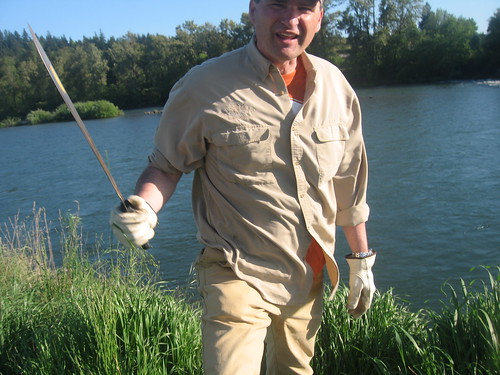
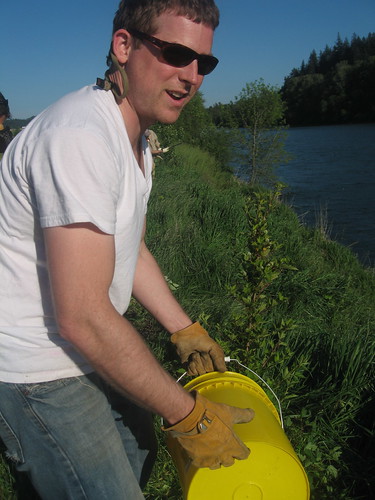
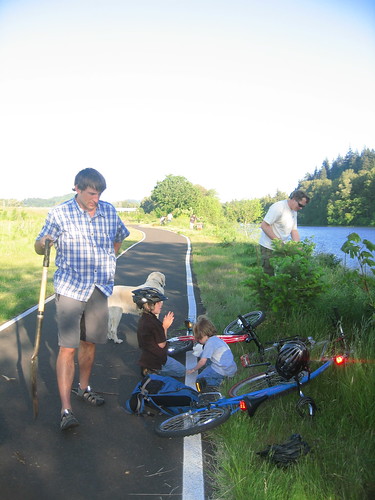
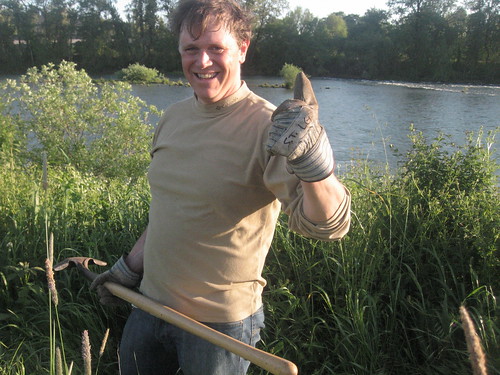
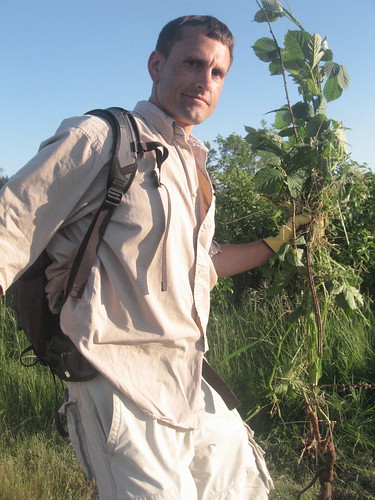
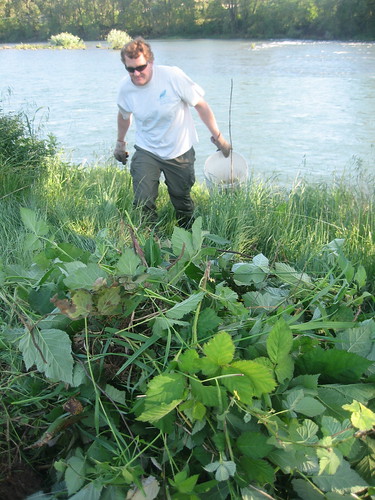
In order to give shade-producing, soil-holding native plants a chance, Trout Unlimited Chapter 678 adopted 100 yards of blackberry bramble three years ago in Alton Baker. Last night volunteers came out to dig out blackberry regrowth and mulch and water our native trees and shrubs. Thank you for everybody who came out — great night on the river and at McMenamin’s North Bank afterward. Click this link to sign up for future email newsletters from our TU chapter. Next event is Thurs 5/28. We’ll be watching fly fishing/conservation movies at Eugene City Brewery. Come on out for a free movie night and drink some beer with us.

Blackberry pulling goodtimes

Blackberry pulling goodtimes

Blackberry pulling goodtimes

Blackberry pulling goodtimes

Blackberry pulling goodtimes

Blackberry pulling goodtimes

Blackberry pulling goodtimes

-MS

Posted in Oregon Conservation News | Leave a comment

McKenzie continues to drop into shape

 IMG_1511

 Water temperatures are on the rise and water levels are dropping on the McKenzie River. Finally!! The river is fore-casted to continue to drop and be at a more historical “normal” level by early next week.  Currently mid-day fishing remains best by dropping weighted nymphs deep off the indicator.  Yesterday around 3pm I started to see decent numbers of our green McKenzie Caddis. Fishing should continue to improve throughout the river.–CD

IMG_1509

The pit falls of a two fly set up!

IMG_1513

Posted in McKenzie River | Leave a comment

McKenzie warming up and hatches improving

The lower McKenzie near Eugene continues to improve. Yesterday an excellent emergence of Pale Morning Duns had fish eating swung soft hackles and Possie Buggers. Nymphing was also effective.

IMG_1503

IMG_1502

IMG_1504

Today the nymphing proved to be the most productive tactic. Bright windy conditions caused most adult insects to blow off the water rather quickly. The really good news about today is that there were good numbers of big Green McKenzie Caddis around. The fish were’nt going bonkers for them but it is only a matter of time.–CD

banks7

IMG_1506

Posted in McKenzie River | Leave a comment

Possibly the most hated gamefish in Oregon

Last weekend, I spent precious fishing time chasing the two most frustrating species in Oregon on the fly rod: Carp and surf perch. For whatever reason, I’m perfectly fine with a tough day on salmon or steelhead, but there’s something about these two that just drive me to drink.

Friday morning we woke before dawn to chase carp around Eugene’s finest slackwater. Mist on the water, carp on the move – big suckers, sticking their Wilfred Brimley-lookalike faces out of the water, launching themselves like humpback whales clear out of the pond, tailing in the shallows. Basically, there were carp everywhere and we couldn’t buy a bite.

carp

We crept, we snuck, we crouched. Stripped slow. Tried San Juan worms, possie buggers, Jean-Paul’s specials.

It just galls me that these things are smarter than I am. And they’ll continue to be into the future. I’m never going to be John Montana, I’m too much of a hack. Give me dumb trout any day.

Then Saturday I fished from the beach for surf perch in Bandon – under what you could call ideal conditions. Small surf, manageable wind for the coast, 70 degrees. In fact, there were supposed to be so many perch in the surf, that there was a surf perch DERBY going on around town.

So there I am, wet-wading in the Pacific Ocean up to my waist, throwing my shoulder out casting a switch rod over the swells, using essentially a 9-weight rod for 2lb fish. I fished hard, with confidence (considering the derby and the fact that I thought my fly was pretty hot).

Surf Perch

But it doesn’t take long for that sinking feeling to creep in when you’re casting on the beach, and your arm gets tired. You look at all that beach, and realize that if there isn’t a goddamn perch within 20 feet of where you’re standing, you’re pissing up a rope because your line is landing in a pile in front of you.

I quit after a wind-blasted backcast buried a stainless steel hook in my eyebrow.

I’m not saying I’m done fishing for these species. Just that I’m not going to spend any more marital goodwill chasing them right now.

-MS

Posted in Fishing Reports | 8 Comments

Final Oregon legislative action alert for today — ODFW budgets and Water management

As Oregon’s population grows more demands are being placed on our groundwater and surface water resources. Many of Oregon’s surface waters are already over allocated and increased groundwater usage will only serve to exacerbate this problem as temperatures warm , snow pack declines and population grows. Clearly this is not the time to cut back on Oregon’s Water Resources Department.

Seemingly arcane, HB 2231 increases the amount of start card fees to $225.00 and provides a yearly fee of $50.00 for the use of Oregon’s groundwater resources. The average cost of drilling a new well is between five and fifteen thousand dollars. Currently, there is no fee for using up to 15,000 gallons per day of Oregon’s groundwater resources. Fifty dollars per year for up to 5.5 million gallons of water still seems like a giveaway to me. The revenue generated will be used to maintain the department and sustain the new well inspection program.

Now is not the time to cut back on the Water Resources Department. If anything, we Oregonians need to be getting a better handle on the amount of groundwater being pumped as this directly impacts surface flows and coldwater thermal refugia available for fish and other wildlife.

Trout Unlimited supports HB 2231. For more info on these bills, check out WaterWatch of Oregon’s 2009 Legislative summary.

Help direct ODFW Budget increases
Trout Unlimited also supports the proposed ODFW budget increase (HB 2223) and license fee increase, but we need to make sure that money goes towards wild fish policy and staff, not to maintain decrepit hatcheries. Please let your legislator know how you would like to see the agency use its increased budget.

The Native Fish Society has a great report with suggestions for legislators on how to help direct the agency:

1. Directing the agency to report its hatchery maintenance backlog expenses and a plan to repair or close hatcheries;

2. Directing the agency to determine the cost to produce a fish that is caught in a fishery. This will indicate which hatcheries are too expensive to operate and which are not;

3. Directing the agency to complete a risk analysis of each hatchery program on native species. High risk hatcheries will need to be reformed or closed;

4. Directing the agency to use the best available science when developing and implementing policy.

5. Directing the agency to report to the Legislature with a restructuring plan that will fully implement its overriding obligation to prevent the serious depletion of native species.

See posts from earlier today, to take action with your legislators. And thanks for helping out.

-Karl and Matt

Posted in Oregon Conservation News | 2 Comments

Take Action: Protect the Metolius River

Are some areas too unique, too important to develop with 3000 single family residences?  I think so and the Metolius basin is one such place.

Naar the head of the metolius

Wizard Falls, Metolius River

The cold, clear, spring fed waters of the Metolius are remarkable for their beauty and support one of the few healthy populations of bull trout in the state of Oregon.  The river also historically had a large run of Sockeye salmon, one of three in Oregon as well as spring chinook.  The remnants of this sockeye population are the huge runs of kokanee that you can watch on the spawning beds in the fall.  (Tip: When the kokanee spawn, enormous rainbow trout take up station behind the schools gorging themselves on eggs. I think you know what I’m saying.)  Much work has been done to prepare the Metolius for the return of salmon.  The Metolius also supports a very healthy population of rainbow trout.  The river fishes all winter as the springs that feed it provide stable year round flows.  As early as 1907 locals were calling for a National Park along its banks.  The river is special.  This river is unique.

In addition to inspiring reverence and calls for its protection, the Metolius has attracted the interest of large scale developers. Two recent destination resort proposals would place up to three thousand single family residences in the basin. They aren’t proposing shared overnight lodging facilities. What is proposed are essentially enormous rural subdivisions which would rely on the groundwater–groundwater that currently feeds the river, making it what it is. The Forest Service found that the Metolius is at carrying capacity.

Currently, there is a bill languishing in Committee in the Oregon House, HB 3100 that would adopt the recommendation of the Department of Land Conservation and Development, designating the Metolius watershed as a State Area of Critical concern. The DLCD recommendation is intended to protect the Metolius from development that is inconsistent with the resource values that make the watershed unique. It has been found that the developments as proposed would likely have a negative impact on the surface flows of the Metolius. The purpose of the House Bill is to prevent negative impacts to the surface waters of the Metolius, it’s springs, tributaries, fish and wildlife resources.

We need to get this bill out of Committee and onto the floor of the House. Please take a moment to write to the members of the Land Use Committee and your State Representative.–KM

Committee Members

rep.marynolan@state.or.us

rep.salesquivel@state.or.us

rep.chrisgarrett@state.or.us

rep.brianclem@state.or.us

rep.jeancowan@state.or.us

rep.mitchgreenlick@state.or.us

rep.brucehanna@state.or.us

rep.mattwingard@state.or.us

rep.davehunt@state.or.us

Your Local Representative:

rep.paulholvey@state.or.us

rep.hilbarnhart@state.or.us

rep.terrybeyer@state.or.us

rep.chrisedwards@state.or.us

rep.nancynathanson@state.or.us

Personal emails are best but if you don’t have time simply copy this text into the body of an email:

Dear Representative (insert Rep’s name here):

I am writing to express my support for House Bill 3100 designating the Metolius watershed as a State Area of Critical Concern.

As an angler, I am well aware of the uniqueness of the Metolius. It’s stable flows provide year round angling opportunities when there are few if any such opportunities in the entire state. There is only one Metolius and it demands our protection. Its spring fed waters support some of the healthiest populations of bull trout and native rainbow trout in Oregon and will soon be home to restored runs of sockeye and spring chinook. The sockeye are one of three such runs historically in Oregon and the only run that has a chance of avoiding extirpation.

The proposed 3000 single family residences are incompatible with what makes the Metolius special and will likely adversely impact the fish, wildlife and natural resources that have drawn Oregonians to this river for generations and are now just as sure drawing the interest of speculators seeking to cash in on this river’s beauty.

I urge you to help move this bill out of committee and onto the floor of the House where I ask for your support.

Sincerely,
(Your Name here)

Posted in Oregon Conservation News, Uncategorized | 7 Comments

Tillamook Rivers need our help — Contact your state legislators

If you care about rivers like the Nehalem, Salmonberry, Kilchis, Trask, it is time to take a moment on their behalf. From Jeff Hickman’s blog The River Writes:

A handful of Oregon’s state and county politicians are attempting to circumvent science and double the harvest from our state forests, putting the future of wild salmon and steelhead at risk. At the center of the debate are the Tillamook and Clatsop State Forests, known as “The Tillamook.” The Tillamook encompasses 518,000 acres and is the largest continuous unprotected tract of coastal temperate rain-forest left in the lower 48 states. It is among the most productive and least protected forestland in North America. The 810-square-mile-area, is larger than Crater Lake National Park and the Columbia River Gorge National Scenic Area combined. Rainfall in excess of 150 inches per year feed the legendary salmon rivers of the Tillamook—the Nestucca, Trask, Wilson, Kilchis and Nehalem. These rivers are known for producing incredible sea-run fish, but populations have declined sharply in recent years. Some species are at serious risk, including spring chinook and chum salmon. But all of the Tillamook’s rivers still support sustaining runs of wild fall chinook and winter steelhead.

Oregon’s current Forest Management Plan (FMP), adopted in 2001, operates under the paradigm of managing the State Forests for their Greatest Permanent Value (GPV). Which allows for the “sustainable” harvest of up to 150 million board feet of timber per year from the Tillamook. In reality, harvest rates from 2002 to 2008 have bounced between 175 and 225 million board feet. Several county commissioners, backed by the timber industry, want more. The counties need more money to help pay for important public services and schools, and they see the Tillamook State Forest as their cash box. The timber industry wants to use the current economic crisis as a lever to ensure unbridled access to Oregon’s public forests.

Tim Josi, Tillamook County Commissioner and chair of the Forest Land Trust Advisory Committee, recently stated his belief that harvest levels should be raised to 300 million board feet, and together with some state legislators and the timber industry, is pushing a house bill (HB 3072) to force a dramatic increase of timber harvests from Oregon’s state forests. This bill would change the entire Forest Managment Plan to a maximum timber harvest. This is state forest owned by everyone , not a tree farm owned by the county. Im not going to get into the specifics of what this will do to our fisheries.

Forester managers disagree with the proposed increase. In fact, last November the Oregon Department of Forestry (ODF) recommended that logging be scaled back to 144 million board feet per year, explaining that coastal forests have proved to be less productive than had been expected.

Time for action

The Ways and Means Natural Resources Sub-committee will hold a hearing on HB 3072 which re-defines the term “greatest permanent value” regarding management on Oregon’s State Forests. HB 3072 would make timber harvest the predominant value, a change from the current management that supposedly balances all forest values.

The passage of HB 3072 would result in:

  • Dramatically increased clear-cutting on state lands critical for wild salmon, steelhead and trout.
  • Increased sediment flow into rivers and streams deadly to endangered fish such as Coho salmon.
  • The reversal of years of progress in fish recovery through the Oregon Plan for Salmon.
  • The loss of carbon sequestering older forests in exchange for flammable tree plantations.
  • Increased use of herbicides on state lands.
  • The loss of hiking and biking trails, and hunting and fishing opportunities on public forestlands as logging becomes the primary focus of Department of Forestry staff.
  • Increased road building, road maintenance costs, and risk of landslides during winter storms.
  • The selling and harvest of some of the best Oregon trees for some of the lowest prices on record.
  • If you live in the Eugene – Springfield area, email or call

    Sen. Vicki Walker (Eugene)
    503-986-1707
    sen.vickiwalker@state.or.us

    Rep. Chris Edwards (West Eugene – District 14)
    503-986-1414
    rep.chrisedwards@state.or.us

    If you live in the Salem area, email or call:

    Rep. Brian Clem (Salem – District 21)
    rep.brianclem@state.or.us
    503-986-1421

    Also, please copy:
    Rep. Peter Buckley – D (Ashland) Co-chair of the Joint Ways and Means Committee and member of the Natural Resources sub-committee
    rep.peterbuckley@state.or.us
    503-986-1405

    Message: Be polite, respectful, and brief; ask to know what position that person will take on this bill. Give a personal account why Oregon’s State Forests and salmon and steelhead are important to you and your family. Please let your representatives know that the “Greatest Permanent Value” of Oregon’s state forests should include the values of wild salmon and steelhead.

    DO NOT WAIT FOR SOMEONE ELSE TO MAKE THESE CALLS OR SEND THESE EMAILS. PLEASE CONTACT YOUR LEGISLATORS.

    Posted in Coastal Steelhead Fishing, Oregon Conservation News, Oregon Salmon fly fishing, Oregon Winter Steelhead Fishing | 3 Comments

    Spey Caster Henrick Mortensen, free Zpey demo Monday afternoon, 3pm

    Zpey rod designer and spey casting guru Henrick Mortensen will be conducting a free product and casting demo for Caddis Fly customers interested tomorrow, Monday May 18th.

    henrik mortensen

    Henrick and the Zpey crew will be at Alton Baker Park at 3pm, casting in the canoe canal near the entrance to the park. The 2009 Zpey rod line will be on hand along with their super smooth Zpey shooting head lines. The new Zpey rods and lines were developed in concert and are joy to cast. The rods unique handle design really benefits the caster both in spey casting and single handed casting. Come check them out!

    Henrick’s fly rod design philosophy:

    Don’t believe the marketing of most fly fishing equipment companies. And most importantly, don’t focus on the concept of long distance casting. In all the years I’ve been an angler, almost every company comes out with “the world’s best rod” and the “farthest casting rod” every year. How can that be?

    “Distance””is an overused and inappropriate word and concept in the world of fly fishing. From the birth of the sport fly fishing, distance has never been a major factor. Distance is more important for another sport called casting, and this has nothing to do with “fly casting.” That distinction needs to be made clear.

    If you are interested in fly fishing then distance shouldn’t be a factor in your decision about which fly fishing equipment to buy. Fly fishing takes brains, not brawn. Precision and presentation are what make a successful fly fisher. Almost all tackle manufactured these days is able to cast an appropriate distance, but not much tackle is made to enable control and presentation the fly from any position and any depth. This is the tackle that should be bought, and this is my personal design goal.

    henrick

    Download a sample of Henrick’s upcoming book on Scandinavian Style casting.

    Posted in Fly Fishing Gear Review, Oregon Fly Fishing Clubs and Events | Leave a comment

    Green McKenzie Caddis Pop on the lower river

    Anglers observed Green McKenzie Caddis on the lower McKenzie yesterday. We had confirmed sightings in the stretch between Belinger and Armitage and it is likely that the bugs are emerging throughout the river. The river dropped over 1000cfs since yesterday morning, things are looking up. Important bugs to have in the box during this next stretch include, CDC Green McKenzie Caddis (#1 dry pattern), Green McKenzie Wet, Karnopp’s riffle diver, and Morrish’s Super Pupa.  Check last years Green Caddis post to learn to tie the CDC Green.–CD

    Posted in McKenzie River | 3 Comments

    Rivers still running high but plenty of options exist for the weekend

    The McKenzie and Willamette remain high but they are fore-casted to drop precipitously over the next 48 hours. Nymphing will be productive all day with Golden Stone Nymphs, Possie Buggers and Princes. Look for surface activity with Pale Morning Duns, Half Down Golden Stones, CDC Green McKenzie Caddis, Peacock Caddis and Little Yellow Stones. The Middle Fork of the Willamette near Oakridge is running very high out of Hills Creek Reservoir and we recommend you concentrate you efforts below the North Fork of the Willamette confluence on down to Hampton ramp. Similar bugs for Willamette.

    Other options around the state include.

    Davis Lake Bass fishing. Warmer weather should have this fishery on fire. Use poppers early in the day and crawl lead eyed bass streamers on the bottom during the day.

    Check on Diamond Lake, we just heard that the south end of the lake opened up for access. Please call the resort to confirm details. Diamond can be excellent early with Chironomids and Buggers.

    Crane Prairie Reservoir should also heat up this weekend with better weather. Chironomids, buggers and streamers imitating baitfish can be productive on Crane early. ODFW is reporting good catch rates on Brook trout, try Skip’s Rainbow Trout Streamer, it should be great on Crane and at Gold Lake (when it opens).

    The lower Deschutes is a great pick this weekend and coming weeks. The river is a bit high but nymphing should be awesome. Large stonefly nymphs with Copper Johns, small Princes and Possie Buggers.  Caddis larvae patterns will also work great.

    The lower Umpqua should also improve with the weather. Shad reports have been very mediocre and smallmouth are just getting going. Things will improve on the Umpqua this weekend.

    Wickiup Reservoir has been good as well. Fish the shallows early with Chironomids and streamers. Then move to deeper water with sinking lines and large streamer patterns.

    Have a great fishing weekend–CD

    Posted in Fishing Reports | 2 Comments

    Tony’s Millennium Prince Nymph — fly tying video

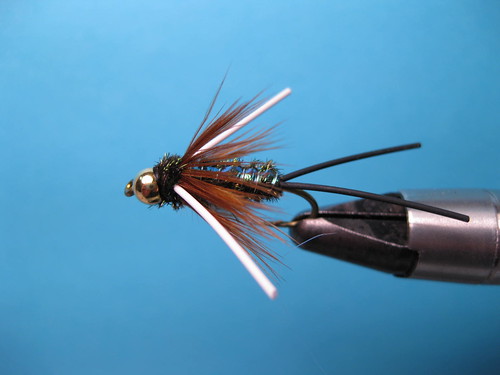
    In this new fly tying video, Tony Torrence demonstrates his Millennium Prince Nymph pattern. This is a great fly for trout or steelhead — combining three of my all-time favorite fly materials: tungsten, rubber legs and peacock. He also demonstrates how to use the Marc Petitjean Magic Tool. You probably won’t find anything close commercially tied, so get on it.

    Millenium Prince

    Millennium Prince Nymph
    Hook: TMC 3761 size 8-14
    Thread: Black 6/0
    Bead: Tungsten 5/32 (for size 10 hook)
    Tail: Medium Round Rubber legs, black
    Body: Peacock herl
    Rib: Silver brassie wire
    Flash: Pearl mylar
    Hackle: Brown hen saddle
    Front legs: White medium round rubber

    Collar: Peacock herl

    Posted in Fly Tying | 1 Comment

    Reminder: Trout Unlimited meeting tonight, new location

    Tonight at 7pm Trout Unlimited Upper-Willamette, McKenzie chapter will be holding its monthly meeting at the Eagles Aerie, 1375 Irving Rd., Eugene OR.


    View Larger Map

    Tonight’s featured speaker is Andy Talebere, EWEB fisheries biogist. We’ll also be joined by Our Ocean spokesperson and fishing guide Bob Rees, who will talk about how the proposed Oregon Marine Reserves program will affect both marine and inland fisheries. Definitely come by and hear our speakers, even if you’re not a member, the meetings are open to the public.

    Posted in Oregon Conservation News, Oregon Fly Fishing Clubs and Events | Leave a comment

    Rivers of a Lost Coast Q&A, post-show wrap

    Last night’s showing of Rivers of a Lost Coast was a huge success. Thanks to Jay Nicholas of the Wild Salmon Center for coming down to give a great presentation and providing our raffle prizes, and to filmmakers Justin Coupe and Palmer Taylor. We pre-sold out both showings at the David Minor Theater, thanks to our sponsor, The Caddis Fly Shop. This event raised money for Trout Unlimited McKenzie, Upper-Willamette Chapter as well as The Steamboaters, who had a great array of auction and raffle items, including autographed copies of The Angler’s Coast and a day’s fishing with North Umpqua Legend Frank Moore.

    Rivers of a Lost Coast

    In this video, Jay Nicholas interviews the guys behind this great new fly fishing film:

    The Lost Coast Crew will be in Portland tonight for a showing, Bend the following day, and Ashland, OR after that. Check their website for showing dates. Thanks to everyone who came out and supported us.

    -MS

    Posted in Oregon Conservation News, Oregon Fly Fishing Clubs and Events | 3 Comments