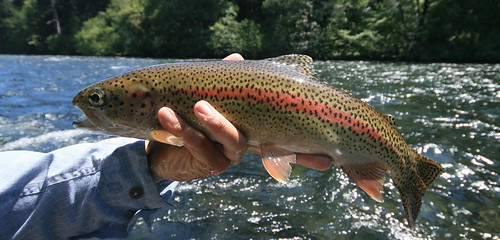
Deschutes River Fishing Report: Salmonfly Madness

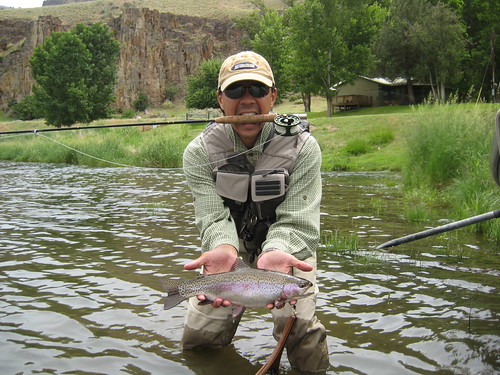
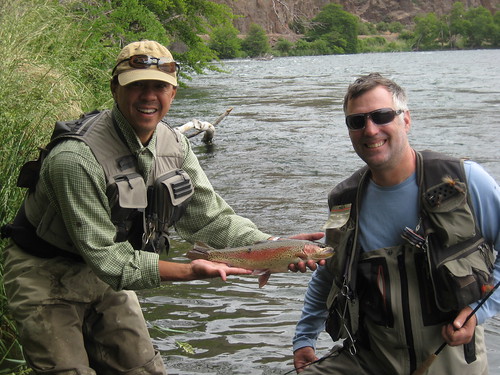
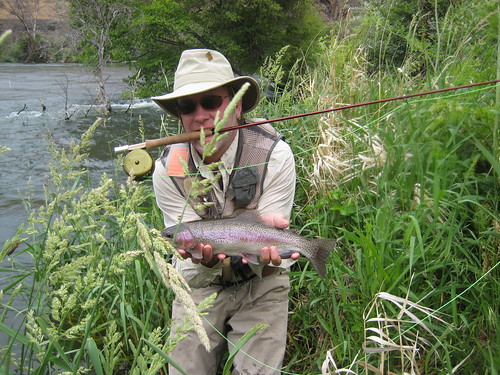
We just finished a week on the Deschutes yesterday. The fishing over the week ranged from good to outstanding. I would give specifics, but most readers would probably think I was full of it.

IMG_0764

IMG_0763

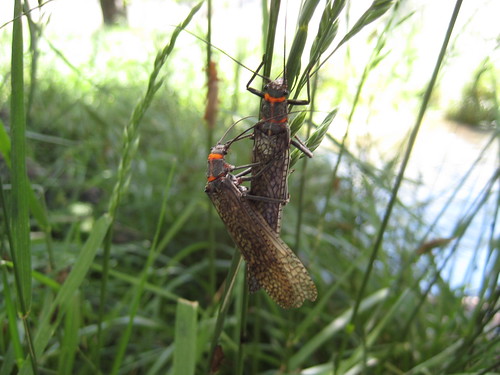
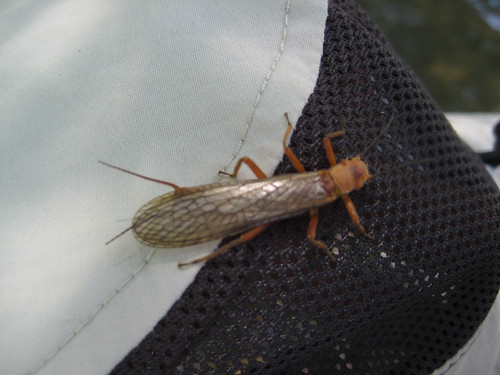
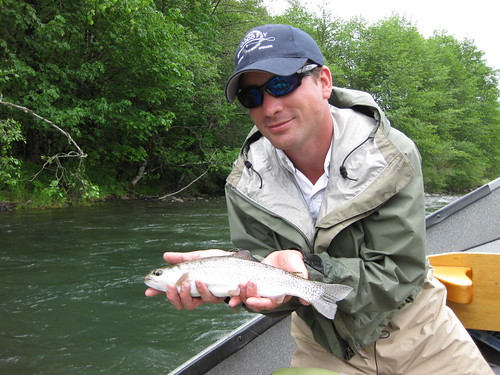
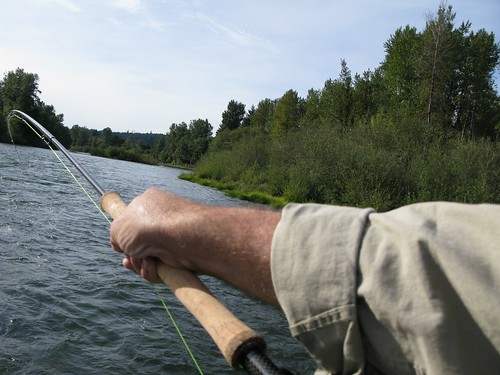
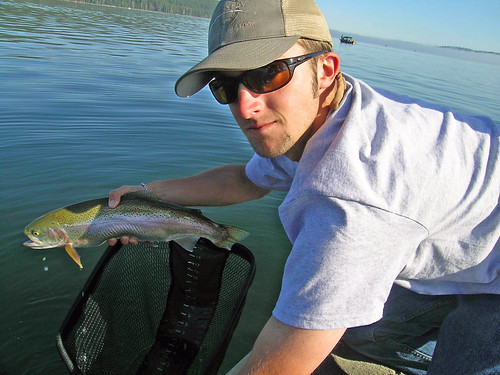
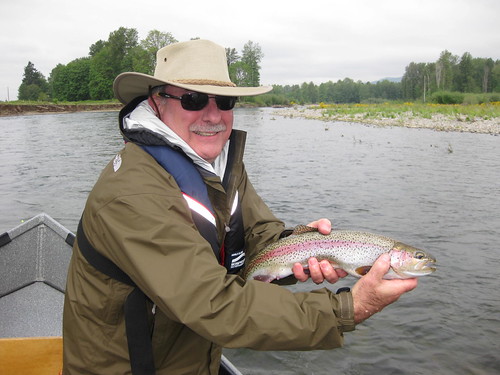
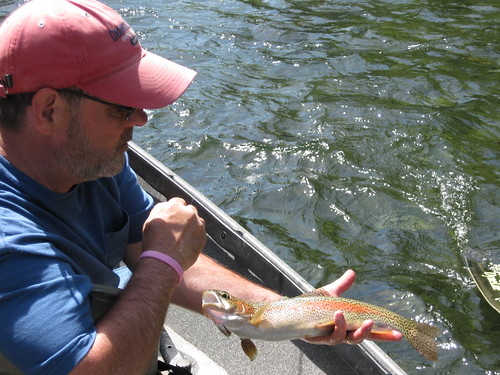
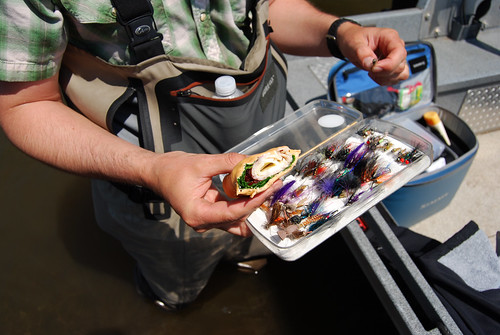
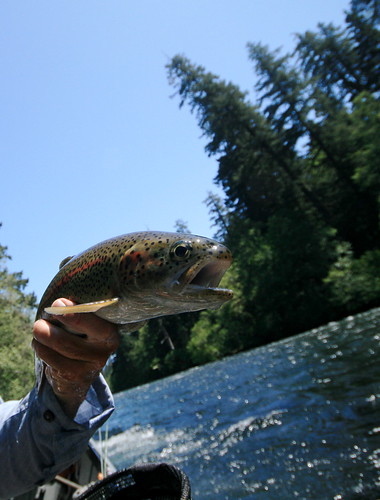
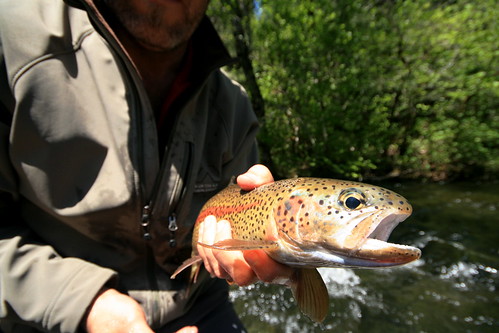
The dry fly fishing was so good that we did very little nymphing. The fish are keyed into the salmonfly and golden stone. Top producing patterns were the Clark’s Stone and Norm Wood’s Special in sizes six and eight, though many other patterns are working as well. The bugs should hang in there until the middle of June on certain stretches. The hatch starts on the lower end of the river and moves up, as of a couple days ago, the biggest density of stoneflies extended from Trout Creek down to the Dixon camp. Though the bugs thinned out downstream, the fish were still keyed on them.
It was a fun week of guiding: good groups, cooperative fish, great weather and lots of laughs.

IMG_0752

We still have open dates available throughout the summer and fall on the Deschutes. If anyone is interested in doing an outfitted trip on the Deschutes with experienced guides, great food, and comfortable camp amenities, contact the Caddis Fly for details.

IMG_0760

IMG_0743

IMG_0742

Though the stonefly hatch will taper off by the middle of the month, the fishing typically remains good on the Deschutes throughout the summer and fall. By mid-June, the fish have typically begun feeding on the dense hatches of small caddises and mayflies that continue to come off throughout the summer and fall. It’s a great time of year to go fishing in our area. Get out there and have some fun!–EN

Posted in Central Oregon Fishing Report | 1 Comment

Middle Fork of the Willamette high but fishing well

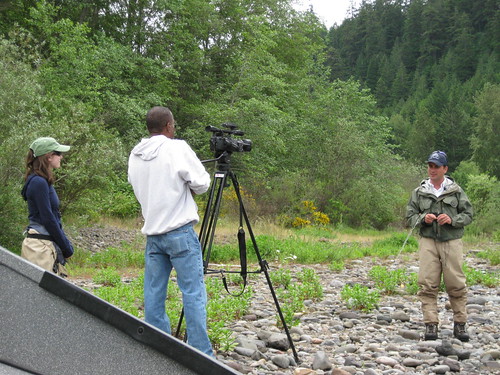
This Tuesday we fished a short section of the Middle fork of the Willamette near Oakridge while filming for Cityscenetv.com. Fishing was tough early, deep nymphing tactics yielded very little results. Around 12 noon things picked up considerably, Brown Caddis, McKenzie Green Caddis and Golden Stones became active and the fish followed suit. The water is still high but the fishing is good and it should be a nice summer on the Middle Fork.–CD

IMG_1563

IMG_1566

Posted in Middle Fork Willamette River fishing | Leave a comment

Product Review: Echo Dec Hogan Spey Rod and AirFlo lines – by Jay Nicholas

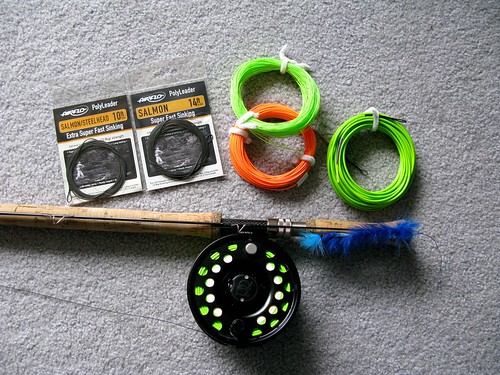
Let’s cut to the chase. If you are looking for an outfit to begin a transition from single- to double-hand fly fishing, and especially for fishing summer steelhead, buy an Echo Dec Hogan 5122, an AirFlo Skagit Compact 420 grain line, and several Airflo Poly leaders. Oh yeah – add a spool of AirFlo Miracle Braid shooting line and go fishing. Need a reel for this outfit? The Ross CLA reel is a great value to round out this rod/line combination, I have fished these reels for a full season and they are great performers.

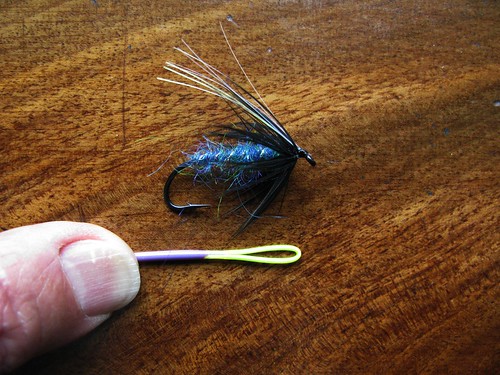
AirFlo loop -- Jay Nicholas

There – how’s that for being opinionated?

Entering the leading edge of my fourth year of Spey fishing I offer this advice on the Dec Hogan rod outfit, because, well, here’s why – a recounting of my first three years fishing a two-hander.

Year-one: I fished four high-end Spey rods, studied Spey casting in an out-dated brochure, had no idea how to match a line with any of my rods or what a good cast might look or feel like, wrapped the leader around my head on several occasions, and seriously injured my right shoulder with bad casting technique. I made a lot of overhand casts and caught a few fish. I also had a great time with the two-handers and kicked myself for not learning to Spey cast years earlier. I was determined to learn this Spey “thing” myself. No lessons. Not me. Nope.

Year-two: Pretty much like Year-one, except that I took some advice from a few friends on line weights and asked one of them for a few pointers on my casting. I tend to be a slow learner and the coaching I got didn’t really sink-in very far.

Year-three: My Spey casting had improved to the point where I would occasionally make a respectable cast and I was having progressively more fun. My nine-year-old son, Jackson, bought me the Rio Spey Casting DVD. Finally, pictures! I was able to visualize two fundamental casts and the basics started to make sense. “D” loops became my focus for day-dreaming. I purchased a Dec Hogan 5122-4 (#5 weight, 12’ 2”, 4-piece Spey Rod by Echo). I lined this rod with an AirFlo Skagit Compact 420 gr line, Miracle Braid running line, and a 10’ fast sink AirFlo Poly leader.

Oh-my-gosh! Who just made that cast? Couldn’t have been me! I cast again. Same thing. It seemed like everything came together. The outfit was light, effortless to handle, and made the cast I had dreamed of for the last three years. The rest of the day was a delight, I felt like I was finally fishing the way I had been trying to, and yes, I even caught a summer steelhead.

AirFlo loop -- Jay Nicholas

Although this is a product review, I am not going to puke up technical details about this rod. I will only note that it is beautifully crafted, has cool hardware, and looks every bit the peer of my pricey rods. Two features combined to make this rod a joy to fish: it’s lightness and the deep, into-the-handle flex. Suddenly, I could feel the rod load; a feeling that often escaped me when I was casting faster action rods. The rod felt more like a light trout rod than a steelhead rod, but I was making 80 and 90 foot casts, mending line, and swinging my fly across good steelhead runs with consistency. My casting and fishing was relaxed and effective, and I was able to move past the angst of inconsistent casting to the joy of expecting a “tug” on every cast.

Was this newfound success simply a product of practice – or did the new rod/line combination really perform better than the others I had been fishing? Probably a little of both. My casting stroke with all my rods continues to improve with other rod/line combinations, but for now, the DH 5122 is my favorite summer steelhead rod. And yes, I have fished it effectively for winter steelhead too. Yeah, a 5-weight winter steelhead rod!

I prefer the AirFlo 420 gr Skagit Compact on the 5122 but the guys at AirFlo tell me the 390 is also a good match for this rod. I fish the AirFlo Poly leaders in both 10’ and 14’ with this rod, and add 3-6 feet of 8-10 Lb. Tippet.

AirFlo loop -- Jay Nicholas

The AirFol Compact Skagit lines run from about 23 to 27 ft. The loops are color coded, duh, so even I can tell which head I pull out of the drawer. The lighter lines like the 420 gr are shorter and therefore customized to the (shorter) #5 and #6 Spey rods, while the heavier heads are a little longer and proportionally better suited to (longer) heavier #7-9 weight Spey rods.

I fished a friend’s DH 7130-4 and found it every bit the same joy to cast and fish. There is something about the Echo Dec Hogan rods that matches well with my casting skills – probably the deep flex of the rods. The Skagit Compact line and a sinking leader that is not overly heavy probably help me too. I have also fished 6-8’ T-14 tips with my 5122 but do not find this as pleasing a combination as the 10-14’ Poly leader. A 10’ T-14 tip was a bit much for the 5122 and my skill level.

While I’m at it, here is a final suggestion. Don’t be a silly-head like I was, insisting on learning to Spey cast on my own. Pester an accomplished Spey caster to teach you. Don’t just go fishing with them; really ask for their help. Watch them cast. Try to mimic their casting strokes. Cast short lines to get the movement down. Practice your casting strokes in the den, with only the butt-section of the rod. TAKE A SPEY CASTING CLASS. Yes, do it. It will take at least 3 years off your learning curve.

And one more excuse (like we need one more to buy this rod) – it makes an absolutely delightful strike-indicator rod. Yeah, fish your steelhead nymphs and egg patterns with a ThingamaBobber on this two-hander, you will love it.

See you on the river soon!

JN

Posted in Fly Fishing Gear Review | 3 Comments

Diamond Lake Fishing Report

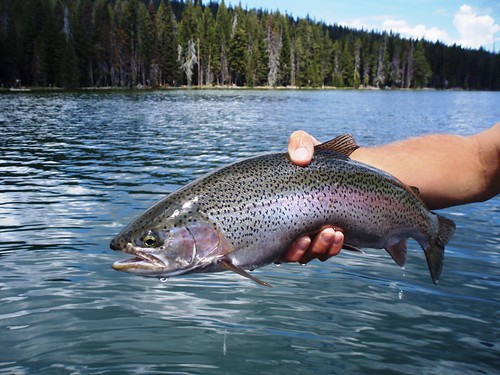
Caddis Fly employee Clay Holloway has had two good weekends fishing Diamond Lake in a row. Water temperature yesterday was 60 degrees. Clay said they caught fish on sparse bodied chironomids in bronze and burgundy, tied with midge-bodi by Spirit River.

Diamond Lake May 2009

Diamond Lake May 2009

The fish averaged 15 but a few were larger. Minileeches were also producing, tied with a black marabou tail, black chenille, and red wire. Clay was primarily fishing with 10ft of 4x flouro. Crowds were down compared to Memorial Day weekend, plenty of fish to go around.

Posted in Fishing Reports, Oregon High Lakes | 4 Comments

McKenzie fishing well top to bottom

We are fortunate to have such a fine river so close to the Eugene Springfield area. The McKenzie boasts approximately 70 miles of  fishable water. 2009 has been another high water year for the McKenzie and fishing has had it’s ups and downs. That being said conditions are now prime for any section of the McKenzie.

Lower River: Leaburg Dam to confluence

McKenzie River Trout

The river is still high compared to historic levels but this helps the lower river stave off the summer doldrums.

Water temps are perfect and a plethora of bugs have been hatching. Pale Morning Duns # 16, Little  Yellow Stones # 16, Golden Stones #8-12, Green McKenzie Caddis # 10, Possie Buggers # 10, Prince Nymphs #10-16 are all taking fish. When the overcast/cooling air temps come early this week swing wets like McKenzie Caddis Wet, Greenwell Spiders and Hares Ear Soft Hackles. Stellhead have moved into the lower river and anglers have been inadvertently hooking them nymphing for trout, and catching them on Egg Sucking Stones near Leaburg Dam.

Upper River Between Blue River and Leaburg Dam.

McKenzie Rainbow Trout

Fishing was slow to get started in this section.  But now is the time to catch a boat load of planted trout, and some gorgeous native trout in the upper river. Watch out for Martin Rapids below Ben and Kay Doris State Park if you are floating the river. The rapid is still very “runable”. The normal right or left routes are open the left being a bit tighter this year with new timbers wedged in the entrance. Fish Half Down Golden Stones size #8-12 with Possie Bugger droppers, Brown Elk Hair Caddis # 12-16, Parachute Adams #10-14, and Little Yellow Stones.

Upper upper river Blue River up to Ollalie Campground.

McKenzie Trout

Still running high but fishing well. Hatches have been good most days on this section, but getting the fish to move consistently to the dry hasn’t been easy. Nymphing with Possie Buggers #10 and Prince nymphs #10 where possible in this ripping fast water has been very productive. Try Brown Elk Hair Caddis #12-16, Parachute Adams #10-16, Aanes Mo Joe Golden Stone #10 and Parachute Hare’s Ears #12-14 on the surface.–CD

Posted in McKenzie River | Leave a comment

Crane Prairie fishing report: Hot, crowded, fishy

Busy day out on Crane Prairie yesterday, but worth fishing for sure. We stayed near the Quinn side of the reservoir, fishing the edges of the channels. The fishing was best early morning — and the crowds were thinner. We tried slow stripping leeches on sinking lines, but all of our success came on chironomids under a thingamabobber. And specifically, sparse (NO FATTIES), red chironomids 9ft down on 4x fluorocarbon. The fish were picky, but we managed to boat some nice rainbows and a brook trout. I gotta say that the Buff headgear saved my neck from the sun. -MS

Crane Prairie fishing

Crane Prairie fishing

Crane Prairie fishing

Crane Prairie fishing

Crane Prairie fishing

Crane Prairie fishing

Posted in Central Oregon Fishing Report, Fishing Reports, Oregon High Lakes | 2 Comments

Fly fishing for shad in Oregon — the time is now

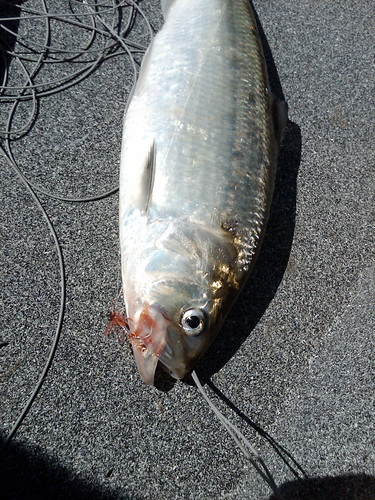
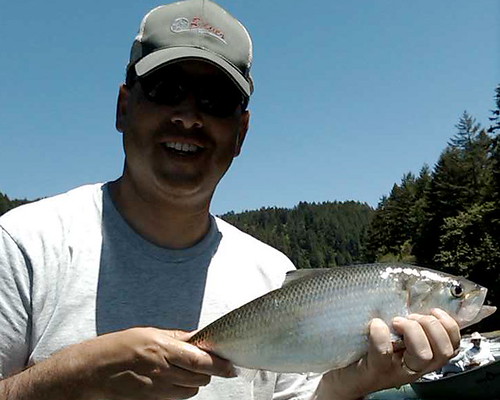
Male shad are showing up in the lower Umpqua — it’s just the beginning of the shad run. Best bets are 5-6 weight rods, sink tips with shad flies. Both the Coos Bay and Lower Umpqua Systems are producing solid numbers of fish. Be sure to check out this great fishery. Tony Torrence’s shad fly is a good pattern. Pack your coolers with these non-native fish for great halibut, sturgeon or crab baits.

Fly Fishing for Shad in Oregon

Fly Fishing for Shad in Oregon

Fly Fishing for Shad in Oregon

Posted in Fishing Porn, Fishing Reports | 2 Comments

Reminder: Fly Fishing, conservation films tonight at Rogue, Free!

Just a reminder, Trout Unlimited Chapter 678 will be at the Eugene Rogue Brewery tonight, showing fly fishing conservation films, FREE! Come on by, grab an Oregon microbrew and watch some new fishing movies. Beer and movies is what conservation is all about people. You don’t need to be a TU member — just show up. The event is tonight at 8pm, 844 Olive St, Eugene, OR 97401.


View Larger Map

Posted in Oregon Fly Fishing Clubs and Events | 1 Comment

Obama Administration Comes to Portland, Talks Salmon

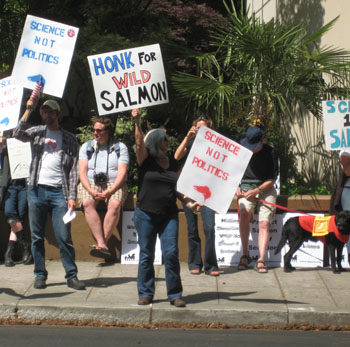
Yesterday, Dr. Lubchenco, head of the NOAA and Nancy Sutley who leads the White House Council on Environmental Quality came to Portland to discuss the latest salmon recovery plan for the Columbia basin with government scientists, state agencies and federal officials in a closed door meeting at the Double Tree Hotel in Portland and salmon activists were outside the hotel  to greet them:

Save Our Wild Salmon Rally

Save Our Wild Salmon Rally

Also present at the meeting were representatives of the State Oregon, the only western state to oppose in the plan in court and representatives of the Nez Perce and Spokane tribes, the only stakeholder tribes to oppose the federal plan.

The new administration may offer hope for solving the crisis on the Columbia and notably the Snake River.  As litigation drags on into its second decade and plan after plan has been rejected by the courts, the combatants in the Salmon War may be wearying and there is a glimmer of hope that the feds are open to real solutions.  The tide may be turning in favor of the salmon, even as in progressive Portland, the Oregonian vigorously argues to preserve the failing status quo.

Scientists have consistently stated that breaching the four lower Snake River dams that violate federal clean water quality standards is the best hope for restoring the Columbia’s once prolific runs of wild spring/summer and fall chinook. This would provide adult fish easier access to some of the best and most underutilized habitat in the lower 48, the high Idaho wilderness areas.  More importantly, breaching these dams would give smolts a fighting chance, up to 90% are killed trying to pass the hydrosystem.

Thus far, most Northwest politicians, notably our representative Peter DeFazio have resisted any attempt to examine the issue of dam breaching on the Snake.  Peter DeFazio went so far as to go out of his way to kill a studies bill, the Salmon Economic Analysis and Planning Act , that would have directed the GAO to among other things examine the likely economic costs and benefits  of breaching the four lower Snake River dams.  In my experience when someone doesn’t want you to even ask the question they know and are afraid of the answer.  Anyway, SEAPA is dead at least for now thanks in part  to Congressman DeFazio’s efforts.

Save Our Wild Salmon, Sierra Club, Trout Unlimited and the rest of our coalition partners endorse a measured approach to breaching the four lower Snake River dams.  The reason politicians and BPA administrators and politicians such as Peter DeFazio so stridently resist examination of this issue is they know exactly how fragile their arguments are:

1.  We can’t replace these dams contribution to the regional grid.

Hogwash! These dams contribute around 1000 aMW, far less than nameplate capacity.  That is not insignificant but it is also not irreplaceable.  The Northwest has saved 3,700 mW since 1978 through efficiency measures, around 185 aMW annually.  Energy conservation alone could render these dams contribution largely irrelevant in a period of a few years.  But conservation isn’t our only option.  The NW Energy Coalition has identified base load sources that could replace this power.

2.  Conservation isn’t replacement.  We need additional power sources.

True, and we have the energy resources to do this without the four lower Snake River dams. To meet our regional goals of a 15% reduction in carbon emission by 2020 and to save wild salmon in the Columbia we need to produce or save 4000 a MW to meet new demand, supply 500 aMW to power electric vehicles, replace 1000 a MW from the loss of the Snake River dams and retire 1000 a MW of coal fired generation.  Total new demand by 2050 is estimated at around 20,000 aMW.  In order to meet CO2 goals we will have to retire the entire coal generated portion of the grid and generate an additional 20,ooo aMW meaning we will need 25,600 aMW in new clean power by 2050.  It sounds daunting but . . .

Bottom Line: The Northwest has over 81,000 aMW in identified clean energy potential, a number that dwarfs both existing and projected demand.  In that context, 1000 aMW are a drop in the bucket.

3.  Global Warming.

See the paragraph above.  For more information see the brief Bright Future synopsis or download the full report here.

4.  We need the ancillary benefits, flood control, barge transportation and irrigation these dams provide.

Nope.  First of all, these are run of the river dams that provide little flood control.  Additionally, sediment is piling up behind Lower Granite dam which will require either massive dredging at enormous cost  or Lewiston will have to raise its levees ending  up below reservoir level, an unappealing prospect in many ways including from a  flood hazard perspective.  As we’ve seen in smaller scale dam removal projects, water for can be supplied by pumps.  Area farmers could transport their product to market by rail.  Heck, I’d be willing to subsidize them if it meant these dams coming down.

The evidence is clear and convincing.  The only question now is whether we cling to a failing status quo as the wild salmon of the Snake slide toward extirpation or do we confront the challenges of the future head on?  I know where Trout Unlimited, Save Our Wild Salmon and our coalition partners stand on that question and soon we will see where the Obama administration stands as well.–KM

Posted in Oregon Conservation News | 5 Comments

Diamond Lake Fishing Report

Two fly winner Clifton Molatore was at Diamond Lake this weekend and had the following report. Thanks Clifton, keep them coming.

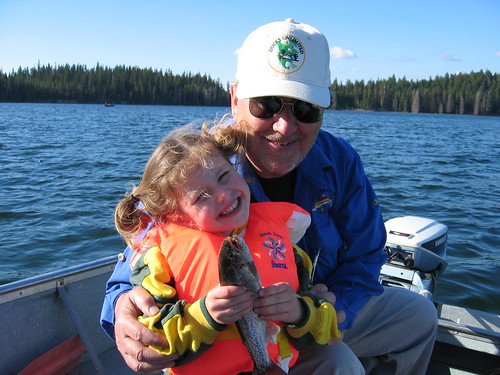
I fished Diamond Lake Friday evening with my father and four year old daughter. We started fishing about 4:30 p.m. and fished until about 8:00 p.m. We trolled brown bead head woolly buggers with a fair amount of flash. We had consistent action all evening (and still had consistent action when we left) and landed seven fish. We lost at least that many and couldn’t figure out whether the fish just weren’t biting hard, or we were incompetent fishermen (the likely case). Most of the fish were about 14 inches, with three between 16 and 18 inches. My daughter caught her first fish all by herself and we witnessed an osprey take a fish about 30 feet from the boat, only to have a bald eagle chase the osprey and cause it to drop the fish. While the fishing wasn’t red hot, we had enough action to never be bored and I would recommend getting down to Diamond Lake if you can.

clifton diamond report

Posted in Oregon High Lakes | 2 Comments

Fly Fishing at Christmas Island

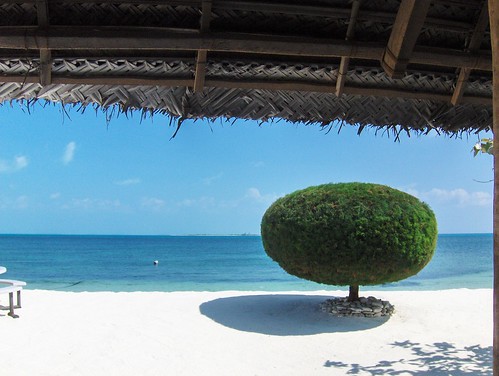
Lou, Caddis shop employee/guide visited Christmas Island last week, along with a group of four, in the Republic of Kirbati. Christmas Island is known for bonefishing and the pursuit of Giant Trevally. The neat thing about bonefishing is that it tests just about everything involved in fly fishing; vision, casting, knot tying, fly tying, and equipment: drags, rods, lines, fanny packs, and hooks!
Xmas Island 059

Christmas Island is one of the best bone fishing destinations in the world for both beginning and advanced saltwater fly fishing on endless flats, with remarkable numbers of cruising bonefish and trevally. Christmas Island is said to be, if not the largest, one of the largest atolls in the world. The flats are so large or long it’s not uncommon to fish all day and never see another group!

Christmas Island also offers great offshore fishing, catching tuna, wahoo, and billfish. Our hosts were Ikari House. This is a newer lodge on Christmas Island. Ikari House has a great staff, great guides, air conditioned rooms, complete with private baths, and great meals each day.

Xmas Island 069

Lou kept a log each day and here are the key events and stats for each day for the group.

Day I

Guides: English, Ray and Tookey
Flats fished; 9 mile, Ikari House Secret Spot, Elena, and Ren
Conditions: Slight Breeze, scattered clouds, water & air temp 80
Bones caught: 84
Bones lost; 53
*Toasted: 4
Flies used; George Bush, Xmas Island Special, Marabou Shrimp, “the worm”
Equipment issues; Frayed leaders, bent hooks
Angler Issues; Line around wrists, other body parts and reel seats; encounter with small reef shark.
General Comments; Awesome weather, fishing, even the Aussie Beer tastes good, PR day for Marc…..and it’s only Day 1! Six more to go…

Xmas Island 083

Day 2

Bones Caught; 75
Bones lost; 27
Toasted; 1
Flats Fished; Orvis, 9 mile, elena, go like hell, and Ikari Secret Spot
Conditons; same as yesterday
Flies Used; Marabou Shirmp, Xmas Island Special, pearl and yellow
General comments; Trevally!…just another day, 3 doubles at Ikari Secret Spot.

Day 3

Flats Fished; Paris, Whisper, Smokey, Ikari Secret Spot, Big Eddy
Conditions; most windy today & many clouds
Bones Caught; 45
Bones lost; 28
Toasted; 3
General comments; Trevally for Lou and Wink, two anglers blue water fishing for half of the day, barracuda and trevally caught while trolling out to flats.

Xmas Island 175

Day 4

Flats fished; Paris, Why Sight, Pancake Flats, Ikari Secret Spot
Conditions; tough wind today! not as cloudy
Bones Caught; 47
Bones Lost; 27
Toasted; 3
General comments; 3 travally caught, saw tuna chasing bait fish, large schools of bones at Paris flat observed.

Day 5

Flats fished; Paris, Texas, Big Eddy, Barry Rob, Ryan
Conditions; cloudy in the morning, afternoon good
Bones caught; 21
Bones lost; 23
Toasted; 3+
General comments; Lou had a 2/0 hook straighten by a trevally, 29 1/2′ bone caught by Hugh, 2 anglers blue water all day, 30 lb trally caught by Lou, est. 50lb trevally lost by Marc, Wink caught a nice skip jack and we had awesome sushi that night!

Day 6

Flats fished; Paris, Smokey, Texas, Whisper
Bones caught; 25
Bones lost; 14
Toasted; 0

General comments; Conditions were good. Large schools at Paris, many PR’s set for large bones, the schools had easily over 100 fish per school…all on the bite! It was windy, and casting into the wind was tough but very, very, rewarding!

*Toasted; both angler and reel screaming into backing, a very large fish heading for Australia, with no way of turning it back!

Xmas Island 123

Xmas Island 146

Another post later this week for Day 7 : The Grand Finale!

Posted in Fly Fishing Travel | 3 Comments

Middle Fork Willamette Report

While the upper Mckenzie was heating up, the Middle Fork Willamette between Oakridge and Black Canyon was staying cold.  That was the likely culprit, cold water.  I’d have confirmed that but my William and Joseph Boat thermometer read 15.6 C most of the day whether it was in the water or out.  On the bright side, since it stopped working completely I disassembled it and found a switch on the circuitboard and got it to not work in Fahrenheit–a definite improvement.

Todd Mullen, VP of Trout Unlimited 678 and I fished fairly hard from about 1:00 to 6:30 or so though it was readily apparent fishing was not going to be very productive.  Todd, normally a fine and fishy angler reported one trout that looked like it wanted to scratch its back with his fly.  As for me, I hooked one nice trout on a small brown soft hackle that I lost to too much slack in the line and I caught a 10 inch fish on a #8 Possie Bugger that hit in some really heavy water– as such, despite his small size he felt like a freight train.

I didn’t see a fish rise all day though it is only a matter of time.  I saw a couple Green Drakes, Green Caddis, Rusty colored caddis and a bunch of midges.

The North Fork should be coming into good shape soon and when we shake off this late spring, the Middle Fork will definitely heat up.  When that happens, I want to be there.–KM

Posted in Fishing Reports, Middle Fork Willamette River fishing | 1 Comment

Spey casting class wrap up by Jay Nicholas

Jon Hazelett’s Spey Casting Class was a big hit last weekend, with plenty of practical instruction, steelhead talk, and beautiful weather on the McKenzie River.

John_Shares_a_Tale

I joined Jon and a great group of fellow Spey anglers for the Saturday event, a perfect opportunity to tune my Double Spey and Snap-T casts. The day offered me an opportunity to catch up with Jon and bonus time to visit with several people I have met at fly fishing events over the last several years. I met Jon in 2003; fly fishing for Chinook on the Lower Rogue. Funny thing, though, I didn’t realize that I had met him until 2008, when I hired him as a guide on the upper Rogue and we started talking about the craziness of fly fishing for salmon.

There we were, floating down the Rogue in a party of three guide boats, enjoying a sunny day and trading fishing stories. Our conversation came around, as it inevitably does, to salmon fishing, and to a day on the lower Rogue when I had been showing my family where I had been fishing. As we watched a half-dozen Spey fishers who had staked out position in a productive riffle, I noticed a guy who had waded half-way across the river, spotting fish and directing the group’s casting over pods of Chinook moving upstream through the riffle. Wow, I thought, what a great system – all it took was one guy willing to sacrifice his fishing opportunity to maximize the opportunity for the rest of the group – altruism refined to new heights. The group was especially notable because it consisted of youngish men and women, all well equipped, all good casters, and a streamside chef who was grilling steaks for breakfast. Not your usual cast of characters on the lower Rogue.

Anyway, it was great to see Jon, a certified casting instructor, all-around great angler, and nice guy. And no, I’m not biased because Jon is a friend.

Now to the class. This was my first experience fishing floating lines. Wow.

I approached the river with a fair amount of confidence, a 15’ floating tip attached to my Skagit Head, and dumped a cast. Yuck. Dumped another cast. Must be the wrong head-weight for the rod (Winston 7123-4 B2MX), I thought. After all, this was my first day fishing this shiny new toy. I tried another head with the same floating tip. Same deal. I put on a different floating leader. Worse.

Guide_Gear

About this time, Jon had finished making his rounds with the guys and waded upstream to see what he could do to help me.

Find your anchor point, slow down, form a good D-Loop, and live with the 180 degree rule – he reminded me. Dump. He politely asked if he could try the rod/line combo. Drat. He was able to make respectable casts. But, thankfully, he suggested that I try out a Rio AFS floating line on the same rod. I had tried the AFS lines last year, with a heavy sink-tip, and had not been comfortable with the set-up. Jon patiently explained that the AFS lines were best fished dry, with a leader in the 3x rod-length range. Oh, I said – didn’t know that.

Jon put a 520 gr AFS line on the Winston and handed it back to me. Oh-my-gosh! This is how it’s supposed to feel! The same applied to my Dec Hogan 5122-4 – it performed far better with a full floating line than it did with a Skagit Head and floating tip. Turns out that everyone but me knew that Skagit Heads are best suited to fishing Sink-tips. If you want to fish shallow or skate dry flies, use a floating line! Duh. The Rio AFS and AirFlo Scandi Compact heads are a little longer and have considerable taper, in contrast to the shorter, blocky Skagit heads.

My classmates fished a variety of rods including the Echo Dec Hogan, Sage VT2, Sage Z-Axis, and Winston B2X and B2MX. Several of us cast a great little Sage Z-Axis Switch rod (6110-4) that cast like a dream.

We started the day casting from river-right with a slight upriver breeze, but with Jon’s guidance, our Double Spey worked as if it was dead calm, and our confidence level grew as we worked out the kinks. Jon worked his way from caster to caster, helping each of us learn or improve our Spey skills and reinforcing fundamentals.

Food_and_Flies

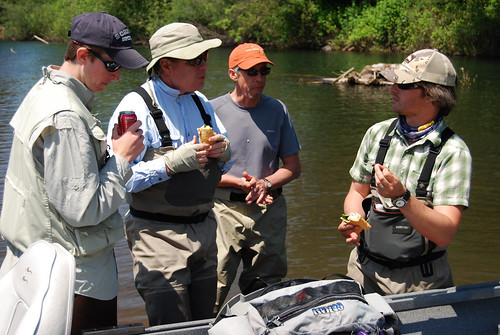
Lunch on the river was a great combination of munchies and fishing stories. Fly size, line mending, time of day, hook setting, shooting lines, grabs that never quite stick, and sneak-peaks at each-other’s fly boxes made the lunch break zoom by. Jon told a great joke about how he conceived a different name for the Snap-T. Twenty minutes later, I finally got it and laughed out loud. Then the rest of the guys laughed at me for being so slow on the uptake. The joke? Never mind. You had to be there.

Jon made a show of donning a BEAVER hat before shuttling us downriver to a gravel island for the afternoon session. The breeze picked up a notch. We spread out on both sides of the island and had the choice of an upriver, in-your-face wind on the main-river side, or an upriver over-the-shoulder wind that was about the nicest assist I have ever had for a Snap-T. This water even looked like it could hold a steelhead. A few of us shifted our attention to rock hounding as we strolled up the gravel bar – and were rewarded with several nice agates and a piece of petrified wood. River booty!
We ended the day with a brisk upriver run in Jon’s 18’ V-Hull jet sled and de-wadered in the shade at Armitage Park. Hand-shakes, hugs, exchanged flies, and promises to see each other again soon. A great day on the river. And now I know that ya can’t just add a floating tip to a Skagit head and expect to fish dry flies. Oh well – I do love buying tackle.

-Jay Nicholas

Posted in Fly Fishing Gear Review, Oregon Fly Fishing Clubs and Events | 2 Comments

Dry fly action on the Upper McKenzie kicks off

Today we took our first trip above McKenzie Bridge on the upper river, expecting high water and decent nymphing. But almost immediately into the drift (starting at Paradise Campground) trout were on top, chasing the indicator, so we switched to a hopper-dropper with a golden stone and a possie bugger. We had freelance writer Crai Bower with us in the boat, who was working on an assignment about outdoor adventures between Eugene and Bend. Crai claimed to be a novice, but managed to hook two fish on a single drift, and had the big redside for the day. We floated from 10am to 1pm, didn’t see much insect activity, but had lots of active trout for the five mile float.

Upper McKenzie 2009

Upper McKenzie 2009

Upper McKenzie 2009

Upper McKenzie 2009

Upper McKenzie 2009

Upper McKenzie 2009

-MS

Posted in Fishing Porn, McKenzie River | Leave a comment

Running a drift boat in the Florence Rhody Parade

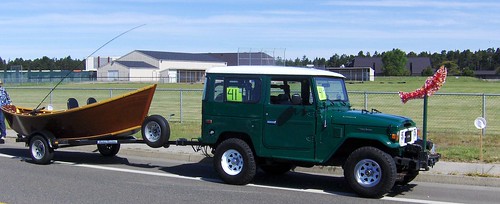
I took my boat out for a spin in Florence last Sunday but instead of running the cool waters of the Siuslaw, I was runnin asphalt and picking my way through road apples from Parade Ponies. It was the 102nd Rhody Parade in Florence and I entered my rig and boat to spread the gospel of fly fishing and drift boats in the name of Trout Unlimited – McKenzie River Chapter… or maybe I was just tired of high cold water and fishless outings on the “mac”. I had anglers in my boat – Matt, Katie, and little Paul Stansberry rowed the boat and fought a rather large Rhody Redside for over two hours before finally bringing the fish to hand. When we netted the brute, it actually resembled a spawned out Salmon (must have been the 85 degree heat and the 30 mph winds). My bad. A good time was had by all. And the people said… “Fish On”.

Rhody Parade

Rhody Parade

-Greg Hatten

Posted in Oregon Fly Fishing Clubs and Events | Leave a comment