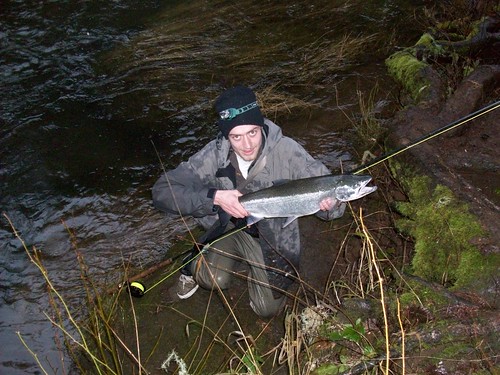
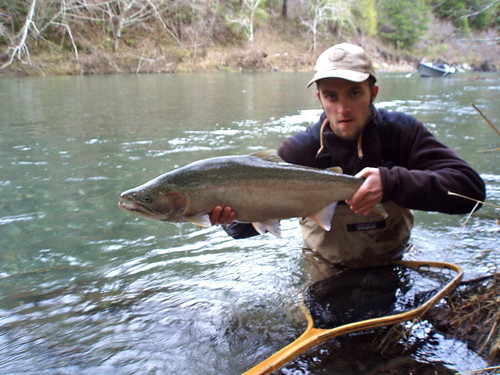
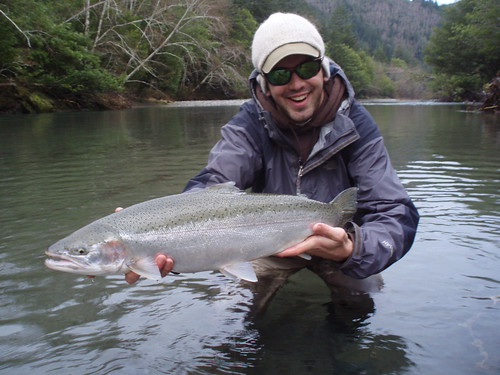
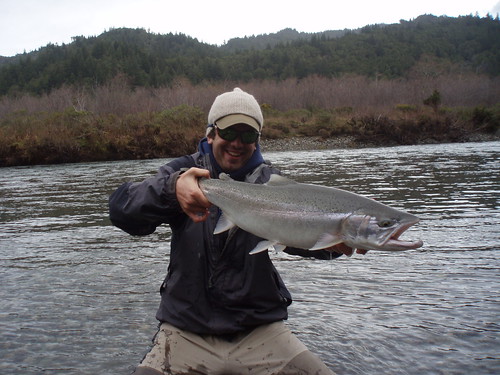
Meet Ken Morrish, fly fishing travel guru, fly tyer and photogrpaher
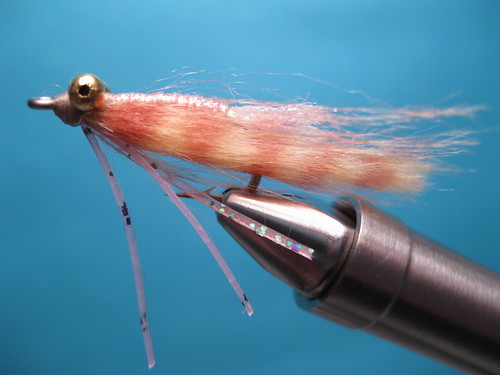
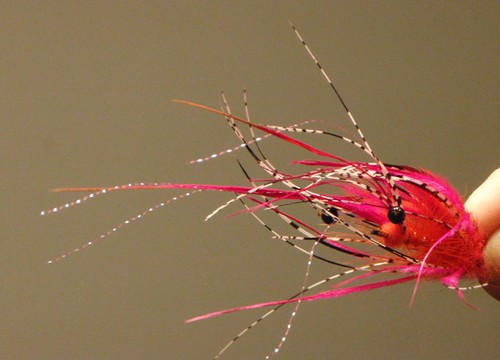
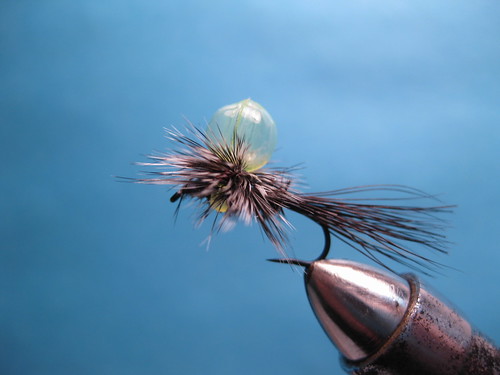
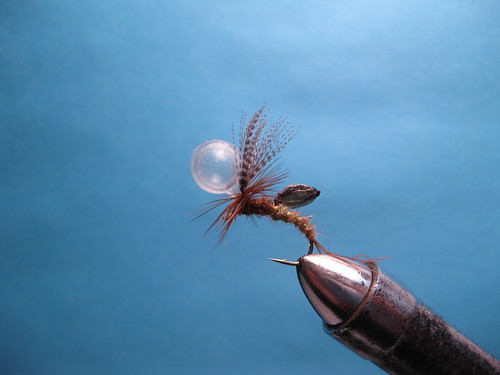
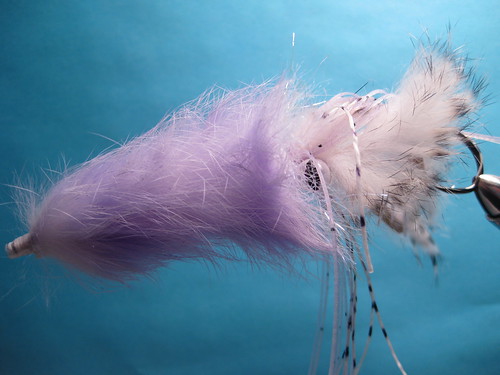
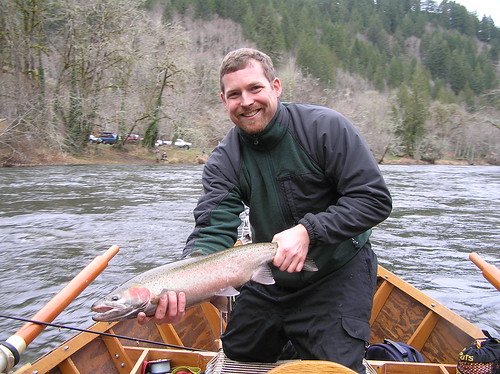
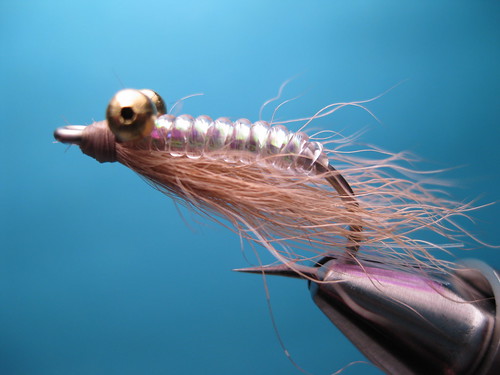
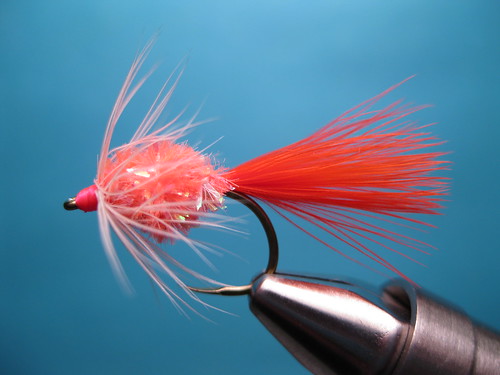
December 10th Ken Morrish of Flywater Travel LLC. Idylwilde Flies Signature Fly Tyer, and renowned photographer will be at the shop tying flies between 3-6pm. Please stop by for a beer and say hi to Ken. His tying session will focus on his Medusa Series of trailing hook steelhead patterns, Winter trout/steelhead Nymphs including his “Hotwire” Nymph series. Ken will be donating all flies tied at the shop on Dec 10th to the Casting for Recovery fly box. Please join us from 3-6pm for this free event.
Support Casting For Recovery see Rise at the David Minor Theater
On Thurs December 10th we’ll be hosting two showings of the new Confluence Films fly fishing porn — Rise to benefit Casting for Recovery. 21 and over. This new film will get your fly fishing juices flowing again, and the funds raised support a great cause. Stop by the shop for your tickets — $10. For more info on Rise showing in Eugene.
Just a heads up to anybody out there with fly fishing film-making skills — or even if you don’t! There’s still time to sign up for the Oregon Fly Fishing Film Festival. The contest was announced back in June. The rules are here. Basically, you send us your un-released (not even on YouTube) fly fishing video, and if it makes the cut, we’ll show it at the film fest. We’ve extended the deadline from 12/20/09 to 12/31/09 for entries. If you’re the winner, you get about $4,000 in prizes, including an Oregon-made Bellinger Bamboo Fly Rod and a tour of the state’s greatest fly fisheries. The event takes place Jan 10th. See below for details.
Oregon Fly Fishing Film Festival and Fly Tying Expo
Sunday January 10th, 2009 12pm-5pm
David Minor Theater, 180 E. 5th Ave, Eugene OR
Film Festival Lineup:
-Beattie Outdoor Productions’ Nervous Water
– Catch Magazine’s 2009 best-of video compilation
-Rollcast Productions’ Hustle and Fish
-Stu Apte’s Tarpon Country
-Never-seen-before film submissions from around the country!
Featuring Oregon’s Fly Tying Experts:
-Barrett Christiansen of the Caddis Fly Shop and OregonFlyFishingBlog.com fly tying video series
-Dean Finnerty, Five Rivers Guide Service, Umpqua River steelhead guru
-Darian Hyde, dead drift steelhead pattern innovator from Hareline Dubbin
-Jay Nicholas, salmon biologist and fly fishing addict
-Rob Russell, Salmonid Jedi Master
-Captain Nate Stansberry, Oregon’s saltwater fly fishing guide
Tickets are $10 pre-sale at the Caddis Fly Shop or available for purchase at the door. 21 and over. All funds raised by this event will benefit Trout Unlimited’s efforts to reduce or remove hatchery fish from the McKenzie River.
Looking for gift ideas? There were 266 new books and DVDs released into the fly fishing marketplace in 2009. That’s down significantly from 2008, when 499 titles were released. The soft retail market drove different responses from the various publishers. Some cut way back on new releases, saving cash on printing and taking fewer risks on titles with questionable sales potential. Others, like Stackpole, Skyhorse, Headwater and Barclay Creek, fired off a selection of blockbuster titles and enjoyed solid sales.
I’ve sorted through the lot and compiled top-ten lists of books and DVDs for 2009, according to sales.
Need I say more? Ted’s our man, and the prose offered here are lush, personal and haunting. The fly fishing market is usually not kind to such artistic creations, preferring the how-tos and where-tos. It’s no small achievement for such a book to top the sales chart.
This book, which includes an excellent, two-hour DVD, is mind-bending! Skip and Carol Ann offer up hundreds of new trout patterns, all of which are the result of on-the-water experimentation. Only the most effective flies made it into the book. Open this one up and it will blow you away.
As someone who avoids dams, I’m not qualified to speak on behalf of Pat’s new book, but I think its success speaks for itself. Fills a niche, for sure.
I’ve already bombarded the blogosphere with my praise for this great little novel, but here’s a little more: Northwest of Normal is the perfect gift for the steelheader in your life. Assuming he or she can read.
The Oregonian’s internationally acclaimed political cartoonist proves here that he is completely cracked. I mean this guy is totally bonkers. It took me a couple of chapters to figure out his writing style, and it was worth the effort, mostly. Ohman’s iconic cartoons add to the fun.
This is a gorgeous collection of fictional stories from one of our finest modern writers. Readers of Gray’s and the Drake already know how great he is. Now you can, too.
If you’ve ever wondered what it would be like to ditch your responsibilities and become an Alaska fly guide, save yourself the trouble and read Nolte’s blow-by-blow account. Good stuff.
Straight from the heart of the North Umpqua’s inner circle: Frank Moore provided the inspiration, Jim Van Loan edited (and scrambled the names of the spots to throw us off the scent), and McCrae fished his butt off, putting it all down for us to sift through. There’s no map included, if that’s what you are wondering. And even after studying Pat’s book, I’ll bet I still won’t be able to land a fish up there. Oh well. Check out our Q&A with Pat McRae and an Excerpt of the book.
The Top 10 New DVDs of 2009:
Ready to sit back with a brewski and watch other people catch fish? Want to take a quick trip to New Zealand for only $29.95? Or maybe you just want to cast and tie flies like Ed Ward? Check out this year’s best-selling DVDs. There’s something for everyone:
You can call him “R.A.” Which is nice, because his last name is kinda tricky: pronounced bee-yah-tee. I’m going out on a limb and calling him “the best.” Nervous Water is not only the finest fly fishing DVD I’ve ever seen, but it’s also the best value. Four mouth-watering features and ten shorts take you around the globe chasing the coolest fish that swim. If you already own R.A’s other DVDs, be warned: all his previous films are included in this collection: Slovenia on the Fly, Bird Chasers and Alaska First Decent. But the new footage and the ten shorts make it a must-have DVD.
I still haven’t seen this, and I’ve heard some mixed reviews. Most go like this: the tarpon stuff is totally sick, and the rest is good. The Confluence crew does good work, and I expect this to fall right in line. Selling like mad.
Ed really did change steelhead fly fishing forever, though he would never want to admit it. The Intruder is the bitchin’est fly tying invention since the vise, and short-bellied lines are required to throw them. Even bobbicator dudes are throwing these Skagit lines now. Gotta give the man his due, especially since he doesn’t want it. And hand it to Mish for busting his ass on this for the last couple of years. Well done, Jeffrey. Skagitmaster Review.
#4 ONCE IN A BLUE MOON: THE FLYFISHING ADVENTURE OF A LIFETIME
Jeanie Ackley, Carl McNeil & Earl Kingi
DVD, $29.95
As someone who will probably never go to New Zealand, I appreciated the aerial tour, the cool story line, and the fine cinematography. The film claims to unlock the mystery of New Zealand’s “Mouse Year.” I’d be willing to bet that people figured it out a long time before this, but it’s still a cool movie and an excellent seller.
Hahahahahahahaha! That’s some funny shit! Be sure to check out Fishizzle, too. This is the sequel. Gorgeous film, sweet soundtrack, and a nuts-kicking storyline. Steve says he’s never doing that again. His nuts are still sore.
This hard-hitting documentary follows the careers of California’s pioneering steelhead and salmon fly anglers as their precious rivers are dammed and their fish are slaughtered. By the end of the film, you’ll be sure there’s not a salmon left on the West Coast. It gives us Oregonians a taste of what will happen here if growing municipalities get their way. Required viewing, friends. But keep in mind that the Eel, Smith and Chetco actually had a semi-decent run this fall. So there may yet be hope.
#7 BONEFISH: A FISHING ODYSSEY
Charles Rangeley-Wilson
DVD, $24.95
British nut-job Charles Rangeley-Wilson and his camera-toting buddy hit the streets of Andros Island in search of a ten pound bonefish. They ride bikes along the coast and get unsolicited advice from all the islanders. Goofy, low-brow, and charming.
Most youngsters get tired of hearing older folks tell their stories. And when that older guy is Stu Apte, kids will naturally get the feeling that Stu is full of himself. But those people are missing Stu’s point. He’s not bragging. He really was the first guy to do all that stuff. He’s a hero, a patriot, a passionate angler and educator. If you think you’re pretty cool, you’ll be knocked down to size after watching Stu in this 1993 film. Watch, listen and learn. Then get a copy of his autobiography, Of Wind and Tides.
Meet our newest employee!
Be sure to stop in for a Ninkasi
Wed — 12/9/09 Trout Unlimited Meeting — Chris Orsinger executive director of Buford Park and Mt. Pisgah
Chris Orsinger will be at the Trout Unlimited meeting, 7pm Wed night at the Eagles Aerie in Eugene, 1375 Irving Rd. He will be talking about salmonid habit restoration on the Coast Fork Willamette in the Mt. Pisgah area. We will also be discussing the next steps in the McKenzie Hatchery Trout removal process.
Thurs 12/10/09 Meet Ken Morrish, fly fishing travel guru, fly tyer and photogrpaher
December 10th Ken Morrish of Flywater Travel LLC. Idylwilde Flies Signature Fly Tyer, and renowned photographer will be at the shop tying flies between 3-6pm. Please stop by for a beer and say hi to Ken. His tying session will focus on his Medusa Series of trailing hook steelhead patterns, Winter trout/steelhead Nymphs including his “Hotwire” Nymph series. Ken will be donating all flies tied at the shop on Dec 10th to the Casting for Recovery fly box. Please join us from 3-6pm for this free event.
Support Casting For Recovery see Rise at the David Minor Theater — 12/10/09
On Thurs December 10th we’ll be hosting two showings of the new Confluence Films fly fishing porn — Rise to benefit Casting for Recovery. 21 and over. This new film will get your fly fishing juices flowing again, and the funds raised support a great cause. Stop by the shop for your tickets — $10. For more info on Rise showing in Eugene. We’ll also have raffle and silent auction prizes to support CFR, including this amazing fly box:
Winners will be selected at noon on Saturday, December 12th at the Caddis Fly. Need not be present to win for either Raffle or silent Auction items. Winner will be notified by phone as soon as drawings are complete.
Caddis Fly Christmas Party!
December 18th 4-8pm Caddis Fly Christmas Party. Please join us our annual Christmas Party extravaganza, friends, festive food and drinks.
Fly Tying Classes Starting
Jan 4th will be the first night of 5 consecutive beginning Fly Tying Classes. No experience necessary, we supply everything. Classes run from 6-8pm and are $55. Call the shop to confirm
Jan 9th,10th Spey Casting Class with John Hazlett
McKenzie River Spey Casting Classes: Saturday-Sunday Jan 9,10 2009 9am-3pm, McKenzie River. Sage casting instructor John Hazlett will offer a two-day clinic on, 9am-3pm. John will be taking a maximum of six students and you will fish both sides of the river, using his jet sled. Cost is $100per day and lunch is included. The Caddis Fly will supply rods if need be but folks can bring their own. Because Jon has a sled he will teach anglers to fish/cast from both sides of the river. There may even be a few fish around. Jon guides for steelhead much of the year and will offer fishing insights as well.
Sunday January 10th — It’s the Oregon Fly Fishing Film Festival and Fly Tying Expo!
On Sunday January 10th, come to the Oregon Fly Fishing Film Festival, featuring celebrity fly tyers and new films from some of the best pros in the business, as well as amateur films from local anglers. 12-5pm. David Minor Theater in Eugene. More details forthcoming.
When your mental state is tied to the seasonal ups and downs of the fly fishing retail cycle November is a great month to get out of town. A couple of great family trips kept me out of the store this year. One to Southern California and one to Playa Del Carmen Mexico allowed for fun in the sun and an escape from the shops slowest month 30 years running..
One fishing day out the 18 away from the office is pretty sad, but that was the reality this year. I had planned for two but windy conditions kept me off the water one day. The plan was to fish the North side of Cozumel. When staying in Playa Del Carmen a 30 minute ferry ride is required to Cozumel. Ten minutes later you are rigging your rods, and a 15 minute boat ride gets you to the lagoon. Under ideal weather conditions the boat ride is undoubtedly shorter. My guide, Nacho wanted to be inside the lagoon to avoid wind the day we fished.
I had seen photos of the bonefish in Cozumel and honestly my expectations were pretty low. The Bonefish seemed to run small and tended to be taken from big schools. My take was that Cozumel is a great dive resort island with decent offshore fishing at the right time of the year. The fact that I was in Mexico to enjoy time with the family in the sunshine either reduced those expectations even more, or increased the self induced pressure one feels when sight fishing, the jury is out on this one.
The bottom line is that Cozumel is a very underrated bonefish/snook/tarpon spot and if you are in the area and enjoy flats fishing, Cozumel is a must do. My assessment of a good day of bonefishing is based on how many fish you see, and how many shots you get. If I am in fish most of the day, it is a great day. Landing big numbers of fish doesn’t happen all that often but if 6-12 fish come to hand I am more than satisfied. My day with Nacho produced plenty of action on bones, and later in the day we chased a few tarpon and snook. I was surprised at the size of the fish, my guide suggested one was 7lbs, I am thinking more like six. Either way a very respectable bonefish anywhere.
For those of you who might be filling a box full of baitfish patterns to try this winter for rockfish and ling cod your time has arrived! Ocean conditions are trending toward favorable this weekend and early next week. Get out there and have some fun on the coast! Should you have an interest in fishing with a guide please call the shop. Who knows we might even toss out some crab pots!
I bought some Simms boot foot waders last spring and they hung in my garage all summer. In the last two months, though, I chose to wear these, instead of my usual stocking-foots, while fishing on the beach, and from my pram and driftboat.
Man-oh-man they are nice. Convenient.
Here’s what inspired me. Step one: place waders next to my feet. Step two: slip one foot out of driving footwear and slide directly into wader boot. Step three: repeat step two with other foot. Step four: pull up waders, strap on wading belt, and go fishing.
The procedure at the end of the day is just a simple.
Am I giving up on my stocking foots? Nope. In fact, I would not recommend these non-studded boots in places like the Siletz Gorge, Lower Alsea, North Umpqua, or Deschutes. Those are the places where I really need cleats.
But for river reaches dominated by sand or gravel like the McKenzie, the Nestucca, the Lower Trask, the Elk and Sixes – these easy wading rivers are perfect for boot foot waders.
Oh by the way, they are warm on these windy, mid thirties’ pre-dawn ventures into darkness.
Experiencing the on-and-off ease of Simms boot foot reminded me of the old neoprene Streamline boot foot waders I wore in the 80s. Anyone else remember how nice those were compared to SealDris?
Saturday morning. Down the beach we went at daybreak – Bob, Ryan, and me. Paul and Jeff had abandoned us at the motel in the dark, sneaking away without even knocking on our door to see if we were awake.
Fellow salmon fishers, most carrying white plastic shopping bags, were lining up around the lagoon when we arrived. It was Saturday, the tides were building, and people were staking their claim for first-light fishing. Paul, Jeff, and a substantial group of fly-guys were clustered together between spinner, anchovy, and shrimp fishers. They were positioned to cover a trench that snaked along the inland side of the lagoon, an area where the most fish had been hooked during the week.
Our little group chose the sand side of the lagoon because it offered a little more room between fishers and still, we hoped, a chance to show our flies to a salmon. There was no wind that day, and a heavy salt mist hung in the air dimming the day.
Fifteen minutes passed. A few fish were boiling around the lagoon. Given the freedom, I moved around, shifting position over two or three hundred yards; casting short, casting long. Hoping for a grab on the drop. Retrieving with tiny three-inch twitches, striving for smoooooth retrieves, as slow as I could manage. I moved up the sand spit away from the ocean and kept my casts in the forty-foot range, remembering that there was a little trough close to the sand. I switched out my comet for an un-weighted Clouser, and cast at a downriver angle so my fly would stay in the trough as long as possible.
Suddenly, there was my salmon.
I had extended my retrieve to its absolute limit. The Clouser had lifted to the surface, my rod tip was raised high, and I was about to roll my line forward, begin working line out, and cast again.
But as that little Clouser rested on the surface, barely under tension from the leader and five feet of fly line, a deep-shouldered king rushed the fly, head-on. There he was, moving fast, mouth open, head and dorsal fin out of water, determined to eat that fly at my feet.
Instinctively, because there wasn’t time for intellectualizing, I turned away from the water, away from the fish, and ran, leaping over a drift log on the beach behind where I had been casting. By the time my line came tight, the fish had already turned, the hook set, and the connection signaled as the fish paused, made that glorious side-to-side, whole-body gyration we call the head-shake, and peeled off three hundred feet of line and backing while I tried to maintain a semblance of smooth tension on a protesting, sand compromised reel.
I was smiling. Hell, I was elated.
Eventually, I backed away from the water, maintained a long line and low rod-angle, eased the salmon to water’s edge, and ran back to secure my grip around its peduncle.
I knelt in the water and pulled the fish’s head back into deeper water. I was alone there, no one within a hundred feet either side of me on the sand. The Clouser was buried in the roof of the mouth, barely visible. Then it was time to kneel waist deep in the lagoon and complete the release. I felt the salmon’s strength return quickly, and let go.
The rest of the day passed in a blur. A crowd of salmon fishers gravitated to the place where I released my fish. I moved to a new place where I fished alone, got grabbed hard on my second cast and played the salmon for ten minutes before the hook pulled free.
Reeling in, I turned to find the place where I had fished alone now occupied by no fewer than two-dozen people. Big sigh. That’s just how it goes. By tradition, I could have waded back and claimed my original casting station, but I decided not to. My day was already perfect.
I returned to an abandoned place on the beach and fished-out the afternoon. Just before dark, Ryan was ready to go. “Just a few more casts,” I pleaded. “Do you have any un-weighted Comets?” he asked. “Sure,” I said, opening my fly box. “Give this little beauty a try,” as I handed him my smallest Boss. Ryan shrugged, tied the fly on, and hooked-up on his very next cast. Ryan hooked his fish where I had just fished at least an hour with the same fly.
It was dark when we got back to Bob’s Diesel truck and drove up the beach. I celebrated with Mary’s oven-baked chicken, mashed potatoes, and gravy, and a Henry’s Root Beer.
Back at the motel, everyone gathered to prepare for Sunday’s fishing. It should be the day, they say.
Sunday morning. I’m up at 5 AM. Everyone else is drinking coffee and messing with the day’s tackle, pulling on waders, loading pickups.
Not me. I’m throwing my gear in the 4-runner. I’m headed home. I’ll get Dutch Brothers coffee in Coos Bay, an hour away.
Highway 101 is deserted. There isn’t a hint of wind. I imagine my friends casting to fresh kings surging across the beach into the lagoon. Me? I’m going home.
Rains come to Pacific Northwest and 12-foot waves pound the coast for weeks on end. For some, the guide season is on hold for a few months. The days are dark and the beers are darker. Might as well tie huge steelhead flies and have a few laughs on the South Coast.
Warning: This video may waste of 4 minutes of your time.
On this Thanksgiving, we’d like to give thanks to you – the wild fish advocates – for standing up for wild trout on the McKenzie River. Thank you to all of the people who signed petitions, sent letters, filled out angler preference surveys and joined the McKenzie cause on Facebook. Here is an update on the situation:
Key facts regarding the McKenzie River hatchery trout program:
– ODFW’s public documents (McKenzie Fish Management Plan 1997 and McKenzie Sub-basin fish management plan from 1988) cite this hatchery trout program as the primary culprit in depressing native trout populations on the McKenzie River.
-Wild McKenzie Rainbows are thriving in 38 river miles while ODFW is imposing a hatchery program its own officials call a “sacrifice zone” in 42.3 miles.
– Of 57 relatively easily navigable river miles 42 miles are heavily stocked with hatchery trout. That’s 74% of the navigable river.
Does this sound like a reasonable way to manage the McKenzie redside population – by wiping it out in the majority of the river?
Meeting with ODFW officials
On November 17, Trout Unlimited Chapter 678 officers Todd Mullen, Karl Mueller and I headed up to Molalla to meet with ODFW fisheries biologists to chat about the situation on the McKenzie River. We met with Charlie Corrarino, Conservation & Recovery Program Manager and Rhine Messmer, Recreational Fisheries Program Manager, as well as other top Oregon fisheries bureaucrats.
Oddly enough, here’s my horoscope from the Register-Guard that day:
You may be confused by the signals you are receiving from people you are dealing with right now. Listen carefully to be aware of what’s true and what isn’t.
Karl and I presented and discussed the McKenzie situation as best we could, and the response from ODFW officials was two-fold:
-Our district biologist Jeff Ziller has been on this watershed for three decades and he is going to make the calls, not a top-down management from agency officials.
-Any decisions Jeff makes on hatchery trout on the McKenzie will come from data he collects – which includes the 2009-2010 creel survey and the 2009 angler preference survey.
Further detail on the 2009 ODFW McKenzie River angler preference survey: As McKenzie Trout advocate Scott Kinney has pointed out, asking people fishing the hatchery zone on the McKenzie River is essentially like asking people at McDonald’s if they like Big Macs. It’s not a valid method for taking the pulse of the angling community.
And our District Bio Jeff Ziller agrees. Jeff says he’s not taking the pulse of the angling community – he’s comparing angler preferences on the river. This sounds like splitting hairs, but what he’s trying to figure out is how the people who are using the river have changed since the last McKenzie angler preference survey in 1986, not the preferences of anglers in the area at large.
He’s not trying to account for the large portion of anglers who don’t use the main section of the river because they don’t want to catch hatchery fish. If Jeff wanted to know how people felt about McKenzie hatchery trout in general, he said he’d conduct a random phone survey of licensed anglers in the area.
So what’s happening with all the angler preference surveys that got mailed in? Well, they’re being put in a separate pile for consideration. Along with all the surveys generated by folks opposed to reducing/removing hatchery trout on the McKenzie, like the 8-inch trout advocates at the McKenzie River Guides Association. Jeff has extended the deadline for folks to turn in their surveys to Dec 15th. So if you haven’t filled out your survey, or want to fill out more, download it here and mail it to:
Jeff Ziller, ODFW
3150 Main Street
Springfield, OR 97478
Next steps: Rounding up allies, educating anglers
ODFW is a public agency beholden to us, and if enough people express outrage that tax-payer dollars are funding the destruction of our wild fish resources, change will come. We’re currently reaching out to some key folks, including state legislators, county commissioners, travel and tourism agencies and ODFW commissioners. Please check out the top ten ways to make a difference on this issue if you’d like to support this effort.
The McKenzie Fly Fishers are currently undergoing a rigorous review of the situation and a committee headed by Arlen Thomason is gathering data to make the most informed and defensible decision possible as the club membership has multiple opinions on the issue. Arlen expects the club to have reached a decision by March. We support that process 100%.
The Cascade Family Fly Fishers is in a similar position. Jack Wheeler says that the organization is in the preliminary data gathering stage, and will discuss the situation at an upcoming December meeting.
Some important dates:
-On February 11th, wild trout advocates will publicly square off against the planter-pushers at the McKenzie Watershed Council meeting.
-TU is meeting with officials from Travel Lane County 1/13/09 to discuss the tourism agency’s position.
Keep your ear to the ground for some big updates after Thanksgiving weekend – The Caddis Fly, Trout Unlimited, The Native Fish Society and our good friends at Ninkasi Brewing are teaming up for a public outreach barrage – and we’ll need your help. It will likely involve drinking beer, volunteerism at its finest. Stay tuned.
The Portland-based conservation organization, Native Fish Society has come on board to help our Trout Unlimited chapter reduce or remove hatchery trout in the McKenzie. I recently joined the ranks of the River Steward program for the McKenzie and NFS has agreed to fund some upcoming projects on the hatchery issue.
Not that salmon season is over, but I’ve started thinking more and more about fishing big water for steelhead and maybe even a few late season kings.
There is still time to fish our Comets, Bosses, and Clousers. But it makes sense to carry some Intruders and Leeches for big water, low visibility, and low light conditions. Rob Russell is the Intruder Jedi. His flies make my eyes sparkle and my imagination soar.
Me? Haven’t yet ventured into Intruder Territory yet, so I go to big nasty Rabbit Leeches.
I like the MOAL tying style developed by Derek Fergus, but I use dumbbells instead of cones. I like the cones, but have not been able to thread my trailer line in and out of the cones and the hook eyes as quickly as I would wish. So – dumbbells do the job in short order for me.
Like Derek and other MOAL enthusiasts, I like the full rabbit coverage created by wrapping cross cut rabbit around the trailer line. Unlike many tyers, I do not make my trailer long enough to replace the hooks. Ouch.
Why? I think that makes the hook more prone to fouling. Someone please enlighten me. For now, though, I tie-in my cross-cut so the hair tips almost reach the hook bend and get busy wrapping. When my hook is dulled, the fly is forcibly retired. Sad but true.
Remember to cut-off the lead hook after securing all the materials. These flies should be fished with a single Octopus-style trailer hook. Oh yes, I really prefer Tear Mender over Super Glue. I’ve watched other folks tie with Super Glue and know it works too. I just seem to glue my fingers to my face, so I’ve given up on it.
I like to use contrasting colors for the butt section, the head section or both.
I am very partial to Flashabou Mirage tied in about where the trailer line meets the lead hook-shaft. The front of the fly may be constructed of cross-cut rabbit, Schlappen, marabou, or some combination. These flies come alive in the water and they are killer salmon and steelhead attractors in big water. The Leeches pictured here are in the 4-5” range. I will go to 6” if I am specifically targeting king salmon, but theses smaller Leeches get eaten as often as the longer flies.
The Caddis Fly crew can help select the materials, hooks, glues and other goodies you’ll need if you tie your own.
According to Tom Murtagh, ODFW distric District Fish Biologist: A significant proportion of the Willamette coho run has entered the Tualatin and is currently spawning throughout the basin, mostly above Hillsboro. Coho counts at the falls is just above 25,000 adults, a record. Interestingly, about 94-96% are naturally produced, that is produced by adult fish that spawned in tributary streams above the falls in 2006. No hatchery coho have been released above Willamette Falls since about 1997, so since then the run has been growing on natural production alone. We are seeing high numbers in some reaches, particularly in the Scoggins Channel and in the East Fork of Dairy Creek. Good numbers are turning up in the tributary streams to the Gales Creek system as well. Note too that they are also migrating in large numbers into the Yamhill, Molalla/Pudding, and to a lesser extent the Luckiamute and Santiam rivers. We hope to get up in the air this week to track fish and verify distribution of our radio tagged fish in tributaries below Salem.
Also cool: Underwater rover footage in Depoe Bay — I’d love to see more of this:
Lastly, since messing around on YouTube is addictive and you wind up wasting waaaay too much time, we stumbled onto this cool video from ’07: Sockeye in the Nehalem?
In September, the Obama Administration endorsed a flawed salmon plan or BiOp, as it has been called, for the Columbia River system. The day is here now when Judge Redden will hear final arguments in the courtroom on the legality of this plan. Today, a group of advocates and fishermen are back in the federal court room in Portland and they are fighting for you, me and for the salmon and steelhead of the Northwest. One of those passionate fishermen is steelhead guide Jeff Hickman. Jeff grew up waist deep in Columbia tribs and has made a life guiding and fishing these same great rivers. He has followed closely the Columbia salmon fight for the last 10 years and like all of us, he is ready to see this situation be resolved once and for all.
I talked to Hickman this morning before he headed to the courthouse and asked him a few questions about today’s Court battle.
MS: Why is today so important for fishermen?
JH: Today is the final hearing on the legality of the obviously flawed Obama Columbia River salmon plan. As you know this “plan” is an ugly leftover from the Bush days. It has a couple bits of fluff added by the Obama folks but it would effectively shovel dirt onto the casket of wild Columbia River salmon and steelhead.
The Obama administration was elected on the hope of change and the promise to bring science back to the table. We asked them to save our salmon, our jobs and our Northwest way of life. But here, they chose politics over science and the law. The impacts of this failure are farther-reaching than you can imagine. This is affecting fishing communities, restaurants, and everyday Americans; not to mention the havoc it will wreak on the ecology of our Western landscape and cultural identity.
The Columbia is the most crucial link of the Pacific Rim fisheries. It’s like the jugular vein of the west coast and it is definitely the backbone of wild salmon and steelhead in the lower 48. So today is a big deal for fishermen.
MS: What do you think about NOAA’s head of fisheries Jane Lubchenco being in the courtroom today?
JH: We’re glad Dr. Lubchenco is here today. We hope she listens carefully and realizes that the plan the administration has proposed is deeply flawed. If she listens and learns from the hearing, it will be good news for our salmon and our communities.
MS: Some are saying that Dr. Lubchenco is here to pressure the judge and to give a sense that the science in this plan is sound. What do you think about that?
JH: I am confident that the judge will decide this case based on the law and the evidence,
period.
MS: Why are fishermen rallying outside this hearing?
JH: Fishermen are outside with their boats to remind Dr. Lubchenco and the administration that fishing jobs matter; that healthy salmon and steelhead runs mean healthy businesses and strong communities; and that science, not politics should be at the center of her and her agency’s decisions on this matter.
MS: Why is the judge questioning the administration’s decision not to release some scientific documents related to its review of the salmon plan? What are those documents? And is this a big deal?
JH: The administration has claimed that their revised plan is based on the best available science and relied on a closed-door discussion with a few scientists to make that claim. However, the administration has not publicly shared any of that information despite several requests to do so. Coming from an administration that pledged transparency and openness in policy-making as well as a reliance on sound science, this is troublesome. It is difficult to say whether or not it has substantial value because we haven’t seen it. It unfortunately reinforces this administration’s failure to engage with conservationists and fishermen in their deliberations, despite being directed by the judge to do so.
MS: So, the judge asked for a list of things – practical things – the feds could do to improve the plan. I don’t think he was talking about dam removal, so what else are you guys saying to him?
JH: We’ve been saying the same thing for years – We’re just asking that the hydro system start doing its fair share and we identified potential actions, short of dam removal, that we’ve been suggesting for years.
MS: Do you think that with almost all of the regional tribes and states behind this plan – and now even the Obama administration – the judge is going to have a hard time telling all these parties that they’re wrong about what’s good for these fish?
JH: The coalition of those insisting on a stronger, legally viable plan remains large and diverse, including sport and commercial fishermen, the national and regional environmental community, the State of Oregon, and the Nez Perce Tribe. What’s more, the judge will decide this case based on the law and science – nothing more and nothing less. As to why other parties support this plan with its obvious deficiencies, you’ll have to ask them.
MS: How can conservationists and fishing groups support removing the lower Snake River dams – a source of clean, renewable energy – when we’re facing the unprecedented challenge of global warming?
JH: First of all, we know that the electricity from these four dams can be replaced with cost-effective alternatives, such as energy conservation and efficiency and truly clean renewables like wind power. We don’t have to choose between healthy salmon runs and clean, affordable energy – the Northwest needs and deserves both, and both are 100% possible with the right vision, planning and leadership. We have the technology; now let’s find the political will to make it happen. [Editor’s note: Follow this link for a Great Debate — The Mule versus BPA bureaucrat over replacing this power capacity]
Secondly, the surest way to protect and restore the very salmon populations that are most likely to weather the impacts of climate change in the Columbia Basin is to reconnect these salmon to the best spawning habitat left in the continental U.S. – the thousands of high-elevation, high-quality stream miles that are currently locked behind the four lower Snake River dams. Snake River salmon climb higher than any other runs of salmon on earth; they stand the best chance of making it in a changed climate, but only if we give them access to the habitat they need; dam removal is the key to that habitat.