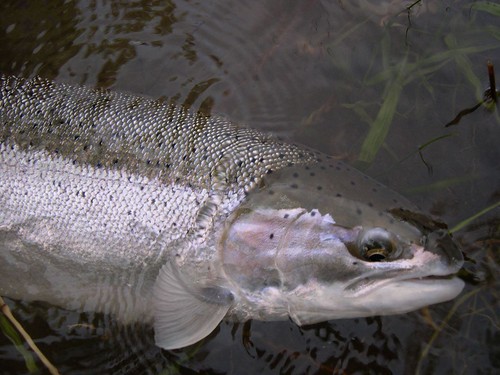
Fish and Wildlife Service Does Right by Bull Trout

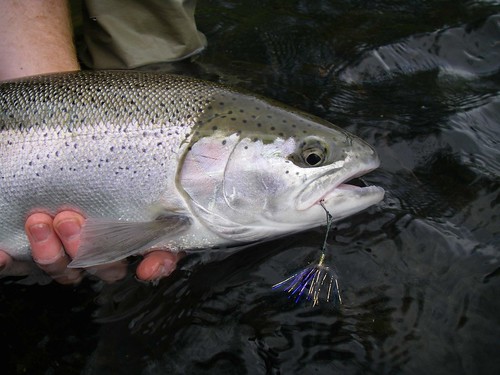
The US Fish and Wildlife Service recently announced its intention to revisit its 2005 critical habitat designation for bull trout, a species listed under the Endangered Spcies Act since 1999.

The new proposal would increase by 19,000 stream miles the amount of habitat listed as critical for the bull trout. The Forest Service revisted its previous decision after the Inspector General found that former Deputy Assistant Secretary for Fish, Wildlife and PArks, Julie Macdonald (a name which shall live in infamy) interfered with the designation of critical habitat for bull trout. She instructed agency biologists to abandon the best available science, to exclude all federal lands and exclude all lands that had any “plan” governing land use whether that plan was adequate or specific to bull trout.

From the Inspector General’s report: “We determined that MacDonald was heavily involved with excluding large amounts of areas from the bull trout CHD; she accomplished this goal by making several policy decisions. Many FWS staff whom we interviewed believed MacDonald’s ad hoc policy decisions resulted in a final CHD rule that was not based upon the best available science and was harmful to the recovery of the species.”

The newest propsal identifies 32 habitat units in five western states including 3100 miles of habitat in Oregon. The agency will be accepting public comment on the draft proposal until March 15. You can see Fish and Wildlife’s bull trout homepage here for more information. A Critical Habitat map can be found here.–KM

Posted in Oregon Conservation News | Leave a comment

Spey Rods, Bull Trout, and huge streamers

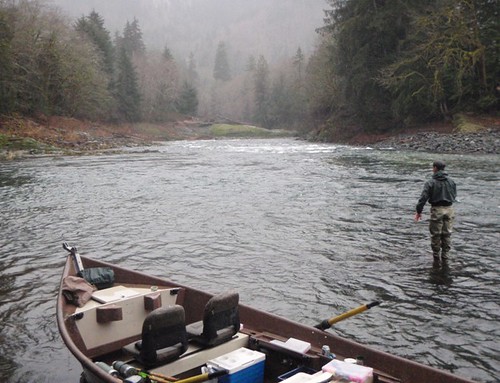
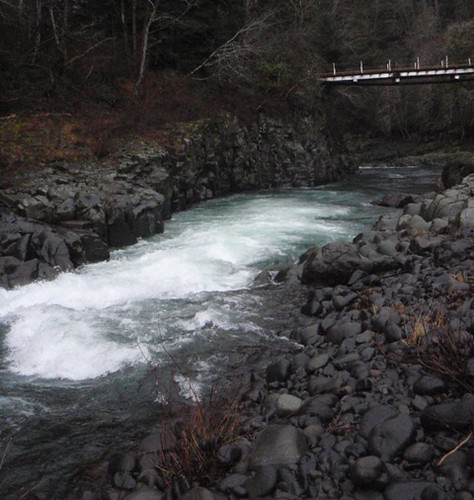
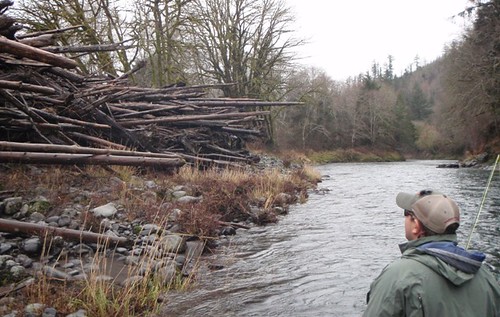
Each January I head over to the Central Oregon for my annual winter Trout trip. Last year we decided to target the river’s plentiful Bull Trout for the first time. While I have had the pleasure tussling with bullish fighters as an incidental catch as I nymph for trout, I had never taken the time to formulate a strategy to take these beautiful fish. This year the Trout and Whitefish would have to wait because the Bull Trout were our quarry.

Bull Trout

Matt Siegmund critiques my casting:

Bull Trout

The plan came together and the strategy was simple: go big, go deep, and go twitchy. A down-stream belly in the line, allow some sink time, and twitch the fly through the swing. My good friend Dean Finnerty struggled with the concept of “down-stream belly.” It goes against my instinctive to mend for Steelhead he explained, but it didn’t stop Matt and I from barking, “BELLY” with uproarious laughter each time he made a cast.

Despite unseasonable warm temperatures and a very unstable barometer we managed to put a few fish in front of the camera. This year we were joined by a few friends for a little fishing, and a whole lot of fun.

Dean Finnerty test his new invention:

Bull Trout

The Bull Trout agree…it tastes delicious!

finnertys bull trout

This year we would be fishing with our new friends—the Spey rods. There isn’t a lot of back-cast room and the flies are enormous. These rods, coupled with sections of T-14, T-17, and newly concocted streamers we had what we need to get the job done.

Chris and the Stansberry Bros. joined us for a day and Chris caught a toad. Nate grew bored with the whole bull trout thing, and decided to give them pesky whitefish a lesson or two.

bull trout

Chris Daughters caught the big fish of the trip:

Bull Trout

I try to go on my annual outing in January simply because it fits nicely into the end of the Duck hunting season and the beginning of my winter Steelhead season. This winter fishery remains strong until the winter run-off raises the river.
-TT

Posted in Central Oregon Fishing Report | 3 Comments

Gotcha Bonefish Pattern — Fly tying video

In this new fly tying video, Barrett shows you how to tie the Gotcha, a hot fly pattern for bonefish on the flats.

Barrett's Bonefish Gotch

Hook: TMC 811S #4-8
Thread: Tan 6/0 Uni Thread
Eyes: Bead chain or pseudo eyes
Body: Flat Diamond Braid, shrimp pink
Legs: Silicone Legs bonefish pink
Wing: Pseudo Hair tan/sand
Barring: Brown marker

Posted in Fly Tying | 2 Comments

Planets Align for Winter Steelheaders: Get on the water

Rob Russell Oregon Steelhead Pep Talk

After a month of wild weather and high water, this weekend is finally shaping up to be a classic. Rivers are dropping and fish are moving. The weak tides ahead may not bring a lot of fresh steel from the salt, but there are solid numbers of fish already navigating and staging in Oregon’s coastal rivers. Focusing on the upper reaches of your favorite river(s) will probably bring the biggest payoff–expect fish to be accumulating in the deeper pools where waters are clearing. That’s where the bobbicator boys will be hunting, and rightfully so. I’m going to stay down low, swinging the greenest water I can find for one of those monster, hump-backed, gator-mouthed bruisers that tend to show up from now through early February. There is NOTHING like the rip-the-rod-out-of-your-hands grabs that a swung fly will bring this time of year.

Rob Russell Oregon Steelhead Pep Talk

If you’ve been waiting for the right moment to dive into Skagit-style steelheading, this is it. Time to shelf the old Windcutters and Deltas. Give your arms and joints a break, and get the most out of your Spey rod. Your favorite fly shop can help you pick the right grain-weight for your rod, and get you hooked up with the right sink-tips. Most of your old tips will probably work fine with the new head. This is no sales job, folks. I’m trying to help you, because I know what it’s like fighting gear that isn’t dialed in. I was a late-adopter of short heads, in spite of plenty of expert advice.

Rob Russell Oregon Steelhead Pep Talk

If you’ve been cranking out Intruders at the vise, now is the time to employ them. They may be fun to play with in the bathtub, but they’re made to be thrashed and ripped to pieces by pissed off salmonids (or hung from tree limbs that are just out of reach). On-the-water testing is the only way to work out the kinks in your fly designs.

Rob Russell Oregon Steelhead Pep Talk

It’s quite ironic that I’m advocating the swung fly, considering that I’m a jig-a-holic. And a plug-a-holic. All the methods are good fun. But there is only one way to have your arm ripped out of its socket, or to hyper-extend your elbow on a grab, and that’s with a swung fly. Sure, there’ll be days, weeks and months without a yank. That’s why you need to start now.

See you on the water…

-RR

Posted in Oregon Winter Steelhead Fishing | 2 Comments

Oregon Fly Fishing Film Festival Winner: Oregon Water

Bryan Huskey of Fishbite Media walked away with the winning video for the Oregon Fly Fishing Film Festival. See his entry Oregon Water here:

Oregon Water from bryan huskey on Vimeo.

Huskey was up against tough competitors, but his enthusiasm for Oregon’s fisheries won over the judges.

For Justin Coupe, director of Rivers of a Lost Coast, the choice came down to Oregon Water versus Sam Ebersole’s Living the Dream.

From Coupe:

From a technical aspect “Living the Dream” is the better film. It is for the most part well lit and well composed, it has pretty good audio levels and continuity throughout its length. This stuff is important, shows patience and attention to craft.

What “Oregon Water” lacks in cinematic presentation it makes up for in gusto and entertainment. The filmmaker’s enthusiasm for Oregon waters is the driving force for the film and his enthusiasm is infectious. Although there is a less identifiable narrative in Oregon Water it seems to better achieve it’s overall objective than “Living the Dream”.

“Oregon Waters” lets us know pretty early that the film’s objective is to get you fired up about fishing these incredible waters. A short journey is meant to wet our whistle and start us making plans. For the most part, I think this film achieve these goals.

“Living the Dream” is a beautifully shot reflection on bamboo rod-making and fishing. This film also set-up pretty early its goals and directions; to capture the craft, enjoyment and uniqueness of bamboo rod-making and bamboo rod fishing. This is a difficult goal, given that much of bamboo’s appeal, lies in its tangible feel. This is not something easily related through film and video. The film is good, but falls short in completely understanding and relaying the subject’s incredible appreciation for his craft.

I think getting people fired up about great fishing is a much easier goal than relaying the character of bamboo rods. Although I really enjoyed Living the Dream, my nod goes to Oregon Water for no other reason than it accomplished what it set-out to do.

Here’s a quick interview with Huskey:

What kind of camera do you use?

Huskey: Funny thing, 3 different cameras, shot in 4 different formats, and somehow I was able to get it all to merge. An old Canon XL1s that I bought 6 years ago, JVC hm100, and Canon XH-A1. Thanks to Doug Powell and John Parker for providing me the HD rigs to shoot with. I am NOT a tech-geek at all, and totally self taught, so it was a bit of chance that it all came together.

Is it hard to be around hot fishing and film at the same time?

Huskey: Yeah, for sure. I can get pretty gripped at times and want to drop the camera in the water and grab a rod. But I am lucky to usually be around peeps who maybe out of sympathy usually pass me the rod when I start getting too cranky. I like to go out solo though and just film stuff. Sometimes I can get in the mood to just shoot stills or video and leave the rod behind.

How did you get into film making?

Huskey: I just started dragging my dads Sony handy cam along on archery hunts and fishing trips. I guess I was always a big fan of well done videos of the things I loved to do, and so I tried to make my own home videos. The Bruce Brown “On Any Sunday I & II” and Moto videos of the early 90’s really grabbed my attention and inspired me to drop fly fishing into that type of film.

Any advice for aspiring fly fishing filmmakers?

Huskey: Just give it a try and don’t worry about getting too techy about stuff. I think every person sees things a different way, and any one person may shoot amazing things without even realizing they have a talent for it. The quality of a 300 dollar camera today is amazing. The fact that we are seeing so many new fly fishing films coming out all the time is a sign that this is a healthy new niche. I think thats really cool.

Do you have any major conservation issues that you’re involved in?

Huskey: Not really at the moment, but I know I have several just on the horizon. I want to do a documentary type story featuring the North Umpqua. That is the raddest river I’ve ever known, and one of the places I learned to fly fish. I would like to raise awareness of just how important it is to keep it healthy and wild.

You live in Idaho, and you’ve got a lot of great fishing there. Why Oregon?

Huskey: We definitely have tons of great water in Idaho. But Oregon is where I grew up. We lived on the Wilson River when I was a little kid, and I caught my first steelhead there. My dad would haul home 50+lb chinook and us kids would lay in the grass next to them for photos. They were long as we were, and as a little kid, a fish that big is super cool!

I really got into fly fishing because of steelhead though. My buddy Adam was a guide on the Deschutes in the 90’s, and I thought that was so rad. He showed me what was up with proper swinging and such. We would rally over to the Umpqua and I caught my first fly fish there. It really screwed me up. It started a cancer like addition in me that has overtaken my love of hunting and a bunch of other things I used to love. But its a good trade.

I fell in love with trout fisheries like Silver Creek and the South Fork of the Boise, so I can see an “Idaho Water” happening some day as well.

Special thanks to Bellinger Bamboo Fly Rods!
Bryan will receive a new bamboo fly rod from Oregon-based Geniune Bellinger. Owner Chet Croco has also offered Bryan a rod set aside for the contest, or an opportunity to build a rod to his own specs instead at the Bellinger Shop. Check out our Bellinger Bamboo Fly Rod Workshop Tour for more info.

Bellinger Bamboo Fly Rods

Thanks again to all the participants and sponsors of the inaugural Oregon Fly Fishing Film Festival.

-MS

Posted in Oregon Fly Fishing Clubs and Events | 2 Comments

Killer winter steelhead egg pattern: The Lifter

This is an excellent dead drift winter steelhead fly pattern for Oregon’s coastal rivers.

Lifter

The Bead Head Lifter
Hook: Gamakatsu C14S #4-10
Thread: 140 Ultra Thread Pink or Orange
Bead: 5/32 copper bead
Tag: Fine Fl. Chartruese chenille
Body: Large Shrimp Pink Cactus Chenille
Collar: White sparkle emerger yarn

Posted in Fly Tying, Oregon Winter Steelhead Fishing | 4 Comments

Feds may drop the hammer on the Oregon Department of Forestry

There is no question that forest practices have improved since the heyday of Oregon’s logging boom. The Oregon Forest Practices Act was in its time a revelation and placed Oregon at the forefront of forest stewardship. That was then . . . .

“Oregon’s forestry program lacks adequate measures for protection riparian areas of medium, small and non-fish bearing streams, high risk landslide areas, and for mitigating the impacts of legacy roads,” according to the EPA and NOAA who are tasked with approving Oregon’s Coastal Managment Plan. These are all items that bear on fish productivity.

The agencies have already approved the forestry portions of similar plans in Washington and California so apparently the EPA and NOAA are not asking the impossible.

“The fact is, California and Washington have riparian protections that are two to three times as strong as Oregon’s,” said Dave Powers, EPA’s regional manager for forests and rangelands. Others dispute the need for larger buffers pointing out that Oregon’s forest lands are home to the cleanest water in the state. Sorry to sound insensitive, but isn’t that like being the skinniest kid on a fat farm?

The bottom line is that if Oregon doesn’t come into compliance with the Federal Clean Water Act it could end up costing the state about fifty million in funding. Sounds like the feds are wielding a pretty big stick and it might help our fish–KM

Posted in Oregon Conservation News | 3 Comments

Hareline Unibobber Fly Tying Contest Winners Unveiled

Our latest Hareline Fly Tying Contest, “Unibobber Patterns” has wrapped up.

First Prize goes to: Bill Reinhardt

Bill’s Lucky Bob
Hook: 900BL size 10
Thread: 8/0 Uni-Thread Gray
Tail: Moose Mane

Body: Peacock Herl
Post: Unibobber

Hackle: Grizzly

IMG_2869

Second Prize goes to Michael Webb

Michael’s March Brown Emerger

Hook: TMC 2487 # 10
Thread: 8/0 Uni-Thread Brown
Tail: Four Pheasant Tail Fibers
Abdomen: Haretron Dubbing, Lt. Olive Brown
+ Olive Ice Dub
Rib: single thread from an onion bag
Wingcase/shroud: medallion Sheeting
Thorax: STS Fiery Brown
Hackle: Brown Rooster
Wing: 2 pinches mallard flank
bubble: clear unibobber

IMG_2868

Third Prize goes to our own Barrett Christiansen

Barrett’s “Thingasquid”

Hook/Tube: 2/0 SC17 Gamakatsu, HMH Large Diameter Tube
Tag: Large Polar Chenille U.V pearl
Main Legs: Black Barred Rabbit Strips

Secondary Legs: Uni Flex phosphorescent white, barred with marker
Third legs: Violet u.v sili legs
Eyes: uni-bobber with Electrical tape pupil sealed with liquid Fusion,
posted on small diameter HMH Tube
Mantle: U.V Polar Chenille Pearl
Body: Med. White chenille for bulk, 9″ of .030 lead wire full length of tube,
Crosscut bunny strip Violet and white

IMG_2867

Stay Tuned for our next contest to be announced shortly.–CD

Posted in Fly Fishing Contests, Fly Tying | 1 Comment

Winter Steelhead Myth Busted

Matt recently wrote of my bushy beard’s seemingly mythic power to bring steelhead to the boat this winter.  It had a good track record and  I went so far as to boast that it wasn’t going anywhere despite it’s potentially ruinous effects on my love life.  Fast forward to last week–the devastation wrought on my personal life was too much to bear and out came the trimmer.   Turns out it wasn’t the beard at all:

Lake Creek Steelhead

The steelheading Monday remained exactly as it has been all season so far. Steady. Another trip, another fish but I haven’t stumbled into one of those magic days . . . yet. It was a heck of a fight though because this fish hit in some really heavy flow and I had no choice but to stand and fight right there.

Anyway, the buck was on the bucked out side but in keeping with my personal philosophy, his was a fatal lapse of judgment. You know what? He cut pretty well.

If you can shake loose this week, do it, the dropping river levels after a sustained period of high water–well, you know what that means.–KM

Posted in Coastal Steelhead Fishing | 3 Comments

Crazy Charlie Fly Tying Video — Classic Bonefish Pattern

The Crazy Charlie is a classic bonefish pattern. In this fly tying video, Barrett shows you how to tie the Crazy Charlie for flats fishing. Spring is a great time to chase bonefish, so get tying.

Crazy Charlie

Crazy Charlie
Hook: TMC 811S #4-8
Thread: 6/0 Uni Thread Tan
Eyes: Bead Chain
Underbody; Pearl Flashabou
Overbody: Vinyl Rib Med Clear
Wing: Tan Calf Tail

Posted in Fly Fishing Travel, Fly Tying | Leave a comment

Jay Nicholas’ Salmon Fisher’s Journal: Field Observations on Sea Lice

Sea Lice are a parasitic copepod, and when we see these on our salmon, steelhead or cutthroat we consider these an indication that they have not been in the river (out of the ocean) very long.

Funny thing, though, I really didn’t know much about how long these critters could hang onto a fish, so I decided to report my field observations and do a little research to see what I could learn.

First – my field observations. This calls for four photographs to accompany descriptions.

I usually see these critters at the base of the anal fin. I have seen them almost everywhere on salmon fresh from the ocean, on the top of the head, on the back aft of the dorsal fin, and behind the adipose fin.

It is common (but not universal) to see dark patches at the base of the anal fin: these result from erosion of the scales and skin where the copepods have been clinging to the salmon. Sea lice associated with salmon farms (net pens) are thought capable of inflicting disastrous impacts on wild salmon in BC and Norway.

Photo 1 shows dark patches associated with the rasping of sea lice on an Elk River Chinook.

Jay Nicholas Sea Lice 1

The truest sign of fresh-from-saltwater sea lice is the presence of very long tails. These long tails drop-off pretty soon after the fish hits freshwater, maybe only a day or a few days at best. I don’t really know. I do know that this copepod makes a transition from being very translucent with very long tails, first looses its long filament tails, gradually becomes an opaque grey and eventually becomes dark brown.

Photo 2 shows the longest freshest tails I have ever seen on sea lice, these on a chum salmon fresh in on the morning’s tide.

Jay Nicholas Sea Lice 2

Photo 3 shows a still-translucent copepod on a chrome Elk River Chinook – note that the long tails have dropped off already. This fish was about 8 miles from the ocean and had been in freshwater at least a week. Note also that this fish did not have the dark erosion scars sometimes associated with sea lice.

Jay Nicholas Sea Lice 3

Photo 4 shows a rapidly graying, tails-long-gone copepod on a winter steelhead caught near Siletz.

Jay Nicholas Sea Lice 4

I found an interesting Internet site with sea lice factoids, although much of the information presented here is focused on treatment of net-penned (farmed) salmon.

This site states that sea lice can survive on salmon for up to 21 days in freshwater and that sea lice-bearing salmon have been observed about 30 miles from the ocean.

So here’s a question for all you blog-readers: how far upstream from salt water have you caught fish with sea lice in varying conditions – here in Oregon or elsewhere? I’d appreciate your stories and observations.

Thanks.

Jay Nicholas

Posted in Oregon Salmon fly fishing | 10 Comments

Fox’s Fertilizer fly tying video: Low-water winter steelhead pattern

Fox’s Fertilizer is an excellent low-water steelhead pattern for indicator fishing. Crank out a bunch of these egg patterns for when the water drops.

Fox's Fertilizer

Fox’s Fertilizer
Hook: TMC 2499SPBL or Gamakatsu C14s #4-10
Thread: U140 Ultra Thread Pink or Orange
Tail: Hot Orange Marabou
Body: Speckle Crystal Chenille Pearl/fl. Orange
Hackle: Cream Hen Hackle

Posted in Fly Tying, Oregon Winter Steelhead Fishing | 2 Comments

Gratuitous winter steelhead fish porn for a wet weekend

Here are some great recent winter steelhead grin-and-grabs sent to us by our pals. Something to cheer up a wet winter weekend.

IMGP0668

Winter Steelhead oregonflyfishingblog.com

Winter Steelhead Fish Porn

Winter Steelhead Fish Porn

Winter Steelhead Fish Porn

Winter Steelhead Fish Porn

Posted in Fishing Porn, Oregon Winter Steelhead Fishing | 2 Comments

Leech pattern for Oregon’s High Lakes: Speckle Bugger

This leech fly is a versatile pattern for fishing Oregon’s High Lakes. You only want enough lead to sink the fly slowly, so you can retrieve it at a crawl. The variegated materials give an illusion of segmentation, and movement, which can be important. A fly that can suspend, but still look like it’s moving can be killer on stillwater fish.

Barrett's Speckle Bugger

Speckle Bugger
Hook: TMC 200R 6-10
Lead: .025
Tail: Grizzly Marabou Olive
Rib: Lagartun non-tarnishing French tinsel
Body: Variegated med brown olive chenille
Hackle: Dyed olive grizzly saddle hackle

Posted in Fly Tying, Oregon High Lakes | 2 Comments

McKenzie Flyfishers, McKenzie River Guides Association weigh in on hatchery trout

The McKenzie Flyfisher’s Fishery Committee–composed of members with a variety of outlooks–is continuing its extensive consideration of the issue of reducing or removing hatchery trout from the McKenzie River.

The club is still deliberating its official position, but has recently posted a substantial report on the McKenzie River Hatchery issue under the “News” section of the club’s website.

This is a very well-balanced, well-researched document and it draws the following conclusions:
-There is a consensus in the scientific community that in general, hatchery fish do harm native fish.
-Jeff Ziller, South Willamette Watershed District Fish Biologist agrees with the scientific consensus.
-ODFW and Army Corps of Engineers biologists suspect from observational evidence that the depression of wild rainbow trout populations in the planted zone is substantial, or even severe.

Despite the McKenzie FlyFishers’ Committee’s independent findings that hatchery trout are harming native trout populations on the McKenzie River, The McKenzie River Guides Association has maintained its official position, that it wants the McKenzie River be stuffed to the bursting point with hatchery fish.

Arlen Thomason, chair of the McKenzie Flyfishers committee on this issue, noted author and biologist had the following to say:

“In a late-breaking turn of events, the McKenzie River Guides Association’s Board of Directors has formally adopted a policy affirming its previously stated position in support of the continued planting of hatchery trout as it is currently being practiced in the McKenzie. Taking off my hat now as chairman of the Fishery Committee, and speaking for myself, this is an unfortunate and disappointing development, as I had hoped they would keep open minds and seek common ground with other groups who are concerned with the health of the river. For an organization that has a history of service to the river community, the decision to disregard the well-being of McKenzie native redsides reflects poorly on its membership, many of whom are otherwise good people and have much to lose from a continued decline of our wild trout. The adopted policy maintains that the acknowledged depression of the native redside population within half of its McKenzie range is a purely social and not a biological issue, and that anyone advocating changes to help it is guilty of selfishness. The policy is disingenuous at best. It is akin to saying that a disease like diabetes or hypertension is not a biological issue because it’s a chronic condition that you can live with, at least for a while. The truth of course is that it most certainly is a biological issue; it’s the decision whether it should be treated or tolerated, when weighed against the costs, that is the social issue.”

You can contact members of the McKenzie River Guides Association board here, and share your opinion on who it is exactly that’s working for their own self-interest and not for the good of the fishery.

-MS

Posted in McKenzie River, Oregon Conservation News, Oregon Fly Fishing Clubs and Events | 3 Comments