Good times at Native Fish Society Homewaters fundraiser

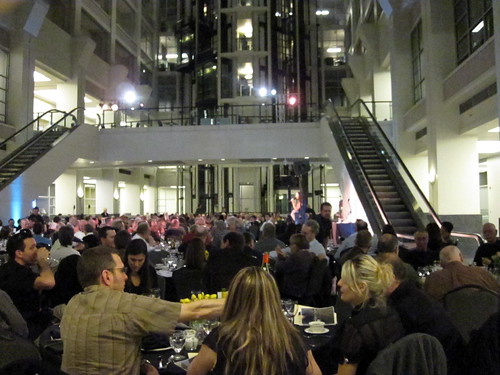
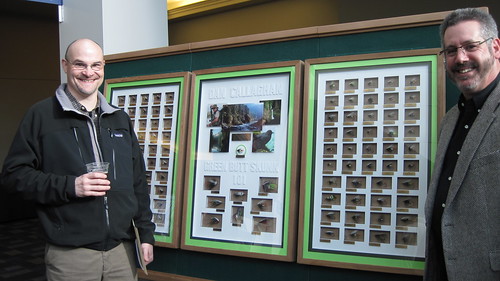
Last night, your friendly neighborhood River Stewards drove up to PDX to experience the Native Fish Society’s annual banquet and auction. Rob Russell and I rubbed elbows with the Portland fly fishing crowd and made lots of jokes about the bidding war over Jeff Hickman’s package. There were some amazing flies available on the silent auction, including some killer flies from NFS founder Bill Bakke, and a gorgeous set of traditional steelhead flies from Necanicum River Steward Peter Donahower. We also had a chance to check out the 101 Green Butt Skunks project. You can follow the North Umpqua’s Dan Callaghan memorial project on Facebook as well.

Native Fish Society Auction 2010

Native Fish Society Auction 2010

Native Fish Society Auction 2010

Historically a Portland-centric organization, the NFS has done a lot lately to bridge the distance with its supporters in the Eugene area. The NFS has offered moral and financial support to the McKenzie River Native Trout Coalition. And the shop reciprocated with donated trips in the auction to the McKenzie River and a saltwater fly fishing adventure with Captain Nate. If you haven’t supported this organization in the past, now is a great time to get on board and learn more about the Native Fish Society. Bill Bakke, NFS founder will be speaking to our local Trout Unlimited Chapter in May.

-MS

Posted in Oregon Conservation News, Oregon Fly Fishing Clubs and Events | 1 Comment

Tying The Tube Moal Leech with Jay Nicholas

In this video Jay Nicholas demonstrates how to tie a Tube Moal Leech. We love the Moal Leech for steelhead fishing year round. The Mother of all Leeches as it is know was originated by Derek Fergus.

 The rabbit strip body of the original pattern is wound down a strand of gel spun backing. When using a tube or in the case of this video multiple tubes, the tier can control length, color, weight and hook.  Jay even throws in  Hareline Super Eggs between his tubes.

tube moal

Jay’s Tube Moal Leech

Tubes: HMH Small Tubes
Body 1: Two Toned Hareline Crosscutt Rabbit Strip Hot Orange/Fl. Orange
Body 2: Two Toned Hareline Crosscutt Rabbit Strip Violet/Purple
Body 3: Hareline Crosscutt Rabbit Strip Black
Beads Between Tubes: Hareline Super Eggs
Cone: Hareline Black Tungsten Cone Large
Flash: Mirage Flashabou
Head: STS dubbing blend black+purple with Silver Holographic Ice Dub
Recomended Hook: Gamakatsu C14S or Gamakatsu SC15 or Alec Jackson’s Tube Fly Hook

Posted in Fly Tying | 4 Comments

Yeager’s Big Eye Hare’s Ear Fly Tying Video

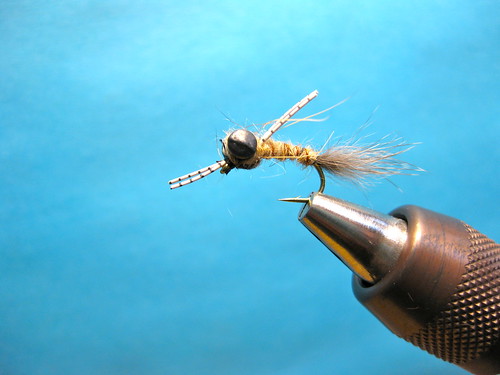
In this short video Barrett demonstrates how to tie a heavily weighted Hare’s Ear pattern that has worked for us on local waters and beyond. The pattern can be tied in a variety of sizes, adjusting the eye size with your hook size will keep your proportions correct and get the fly down in a hurry.

Yeagers Big Eye Hare's Ear

Yeagers Big Eye Hare’s Ear

Hook: TMC 2457 or Daiichi 1120 size 8-16
Thread: Uni 6/0 Black
Tail: Australian Possum or Dyed Brown Pheasant Tail fibers
Bib: Copper Wire
Body: Hare’s Ear Dub
Legs: Grizzly Barred Fine White
Wing Case: Turkey Feather fibers
Thorax: Hare’s Ear Dub

Posted in Fly Tying | 1 Comment

Tell Obama: Spill baby spill on Columbia Dams

Northwest jobs and fishing opportunities are on the line.

Regional newspapers, blogs and online fishing boards are ablaze with news of (hopefully) big Columbia and Snake River salmon and steelhead returns this season. It begs the question: what if every season was this promising?

Jeff Hickman, steelhead guide and hunter-angler liaison for the Sierra Club, encourages folks to keep up the pressure. “Since Judge Redden ordered spill flows, we’ve seen our salmon and steelhead respond with improved returns. What this year’s bonus returns are telling us should be brutally obvious: when rivers run just a bit more like rivers, rather than a series of warm, slack-water reservoirs, salmon and steelhead are resilient enough to rebound in force.”

IMG_4370

Spill baby spill

True enough. Judge Redden’s spill orders have been the key to improved salmon survival, salmon returns and fishing opportunities in recent years. Yet the Obama administration has proposed to eliminate key portions of spring and summer spill program for young salmon in the Columbia and Snake Rivers – the very measures that are working – instead preferring to transport out-migrating young salmon by barge and truck.

ACT NOW: Contact the Obama administration and Senators in the Northwest

Until our region develops a legal, long-term salmon and steelhead recovery plan, we need the Obama Administration to commit to full spill at the federal dams on the Columbia and Snake Rivers. Take action and forward on to your network.

For more information, contact Bobby Hayden, National Representative for Save Our Wild Salmon – bobby@wildsalmon.org

Posted in Oregon Conservation News | 4 Comments

Reminder: McKenzie River Watershed Council discusses hatchery program

Tonight, McKenzie River Native Trout advocates should plan on attending the McKenzie River Watershed Council meeting at the Campbell Senior Center 155 High St. in Eugene. Dinner at 5:00, meeting at 5:30pm.

MRWC is hosting a panel discussion on the various options for trout management on the McKenzie River. The five panelists include Trout Unlimited, the McKenzie Fly Fishers, Dave Vazquez, the McKenzie River Guides Association and the Vida Store. Each panelist will get 5 minutes to express their perspective; after each initial presentation, other panelists, council members and the audience will ask questions of that panelist. After all initial presentations, members of the audience will get an opportunity to express opinions that they felt were not presented by a panelist; panelists will get 2 minutes to make final comments.

Posted in McKenzie River, Oregon Conservation News | Leave a comment

Insane Caddis Hatch on the Lower McKenzie

IMG_4706

IMG_4708

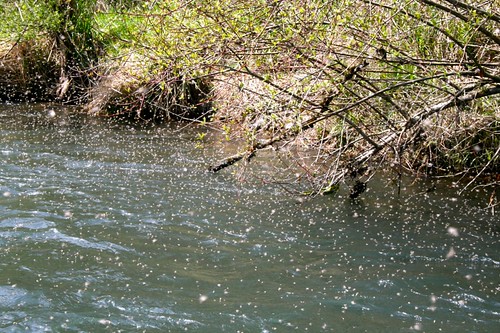
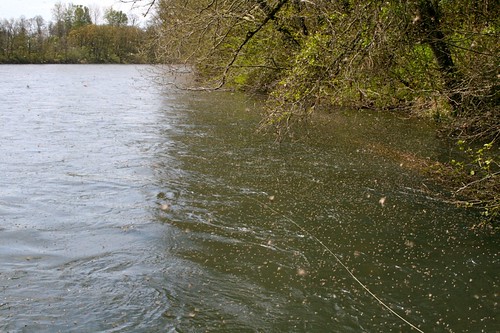
Today’s warmth brought out the bugs on the McKenzie. Specifically the Grannom Caddis emergence. The numbers of bugs between Belinger and Hayden Bridge in the 12-2pm time frame was simply shocking. Watching your fly or indicator on the surface amidst this madness was “dizzying”. Looking below the surface one could see millions of pupating caddis in the water column. Before the hatch we caught some decent fish nymphing with Golden Stone Nymphs and Possie Buggers. During the maddening hatch fishing was tough for us. Nymphing deep yielded a few grabs but we were unable to target consistent rising fish that were not recently released steelhead smolts. Swinging wets proved fruitless during the hatch but worked later in the day after the hatched seemed to diminish.

IMG_4701

IMG_4691

For more information on the Grannom Caddisfly emergence there is an excellent chapter the the wonderful book Bugwater by Arlen Thomason. Arlen goes into great detail about the life cycle of Caddisflies and discusses in-depth the Grannom.
Today’s hatch was very intense and this year we have seen more than a few of these immense Grannom emergences. The first warm (65+degrees) sunny day mid-March or April after a colder period of weather tends to spurn this hatch. Trout can really get going on Grannom Caddis along banks and current edges where they get funnelled to feeding fish.

The river is going to be in great shape and we are looking at a very nice weather forecast for the later half of the week and weekend. Caddis, March Browns and Golden Stone nymphs continue to be the best producers. Enjoy–CD

Posted in Fishing Reports, McKenzie River | 1 Comment

Roots: Midwest Crappie bite on the fly

Easter in Ohio 2010

Easter in Ohio 2010

Easter in Ohio 2010

Nate's Brim Shots

Easter in Ohio 2010

Easter in Ohio 2010

Easter in Ohio 2010

To the BRIM!
-MS and NS

Posted in Fishing Porn, Fly Fishing Travel | 9 Comments

EWEB to shut down Walterville Canal on McKenzie River to help spring chinook run

Due to the low water year, and public pressure from guides like Aaron Helfrich and Ethan Nickel, EWEB has decided to shut down the Walterville Canal for three weeks starting May 17, and reduce its take from the river from June 7-30th. EWEB’s Walterville Canal is located in the river section between Hendricks and Bellinger, and poses problems for both upstream migrating salmon, and wild trout.

When you run this section, you’ll notice EWEB is taking over half the flow of the river. As Ethan pointed out, in regards to wild trout and aquatic insect populations, the river can only support what the lowest and warmest water conditions of the year will allow. The effects of this year’s drought will be especially damaging in the sections of the river where over half of it is missing.

According to EWEB: The reduced canal flow also is intended to reduce, or possibly eliminate, the need to perform once-a-week shutdowns of the Walterville Canal when too many fish congregate below the tailrace barrier (we haven’t done this for fish-management purposes since 2007). We are hopeful that a steady, but much-reduced, flow in the canal will result in more adult salmon choosing to migrate up the river, instead of into the tailrace. These reduced flows also will provide you with higher and more predicable flow of water in the river bypass section. Our goal is to eliminate sporadic shutdowns for fish-management purposes. However, we will have to monitor this reduced-canal-flow situation daily and cannot predict with certainty whether any single-day shutdowns will be necessary during the period from June 7 through June 30.

EWEB’s shutdown of the canal will coincide with scheduled maintenance. The reduced flows from June 7 to June 30 will “cost EWEB” an estimated $95,000 in lost power generation revenues.

EWEB should be congratulated for helping out wild fish, and anglers need to be ready to continue to hold the utility accountable.
-MS

Posted in McKenzie River, Oregon Conservation News | 1 Comment

Barrett’s Ice Butt Mothers Day Goddard Caddis

In this video Barrett demonstrates how to tie one of our favorite early season caddis patterns. We love this fly during those blizzard caddis hatches in April and May. But it will fish all year round in various size and colors. This high floating caddis pattern employs spinning hair, which can be a pain. The small amount of hair and few steps, make this spun hair fly easier than most.

Ice Butt Mothers Day Goddard Caddis

Ice Butt Goddard Caddis

Hook: 2488 # 12-18
Thread: 6/0 Black Uni-Thread
Egg Sack: Caddis Green Ice Dub
Body: Spun Dyed Dun Deer Hair
Hacke: Grizzly Dry Fly

Posted in Fly Tying | Leave a comment

Step Up for Native Fish this Saturday

IMG_3146

I’ve prepared a special set of Intruders for this year’s Native Fish Society auction and banquet. Some happy steelheader will go home with six flies, all of which were specially tied over this past weekend, representing over 16 painstaking hours at the vise. Not only do they represent considerable effort in the tying, but their design is the culmination of two years of intense development and on-the-water testing. Several key refinements have been added here, including the use of tentacular grizzly hackle tips in place of Lady Amherst for added movement and contrast. My nerdy fishing pals will begrudgingly attest to the effectiveness of these flies. If they hesitate, it’s only because they’re still sore from having their pockets picked. But you can take it from me: these flies are worth the time and trouble.

This coming Saturday marks the Native Fish Society’s 14th annual auction and banquet. The event will again be held in Northwest Portland, at the Mongomery Park building. Tickets are $75 each, and include a fantastic meal. Here’s a link to details: http://www.nativefishsociety.org/homewaters/

Many of Oregon’s finest fly guides donate special trips to the auction as fundraisers. The list of available trips, gear and non-fishing items is world-class–maybe the finest to be found anywhere (http://www.nativefishsociety.org/homewaters/documents/AuctionItemswebpageteaser24.pdf). Somewhere way down on that list is a trip for two led by yours truly–should go real cheap!

The Native Fish Society is my favorite organization. It is specifically dedicated to the preservation and restoration of native fishes and their habitats in Oregon. Bill Bakke, the group’s visionary founder, has devoted his life to defending our endemic salmonids–the sacred core of human culture in the Pacific Northwest. So, in my world, where salmon, steelhead and trout reign supreme, Bakke and his team are my spiritual leaders. They hold the line for all of us salmophiles, under incredible pressure, arming themselves with a heady blend of science and common sense. In my opinion, all of us who care about our rivers and our fisheries owe them a great deal of gratitude and support.

I sincerely hope you will save the date and join me in supporting the Native Fish Society this weekend. There will still be plenty of time for fishing!–RR

Posted in Oregon Conservation News, Oregon Fly Fishing Clubs and Events | 7 Comments

McKenzie River Trust free movie night April 7th: RiverWebs

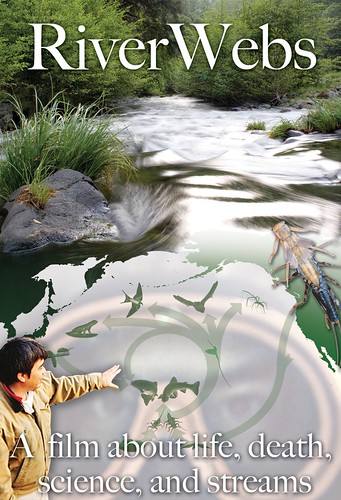
McKenzie River Trust is hosting a showing of the movie RiverWebs, Wednesday April 7th, 7pm at the Hult Center Studio across from the Jacobs Gallery.

riverwebs

Posted in Oregon Fly Fishing Clubs and Events | Leave a comment

Campeche Mexico Tarpon Trip Planned

Campeche Tarpon

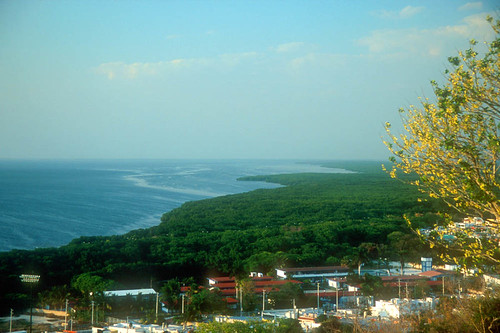
OregonFlyFishingBlog.com and The Caddis Fly Angling Shop’s very own Barrett Christiansen will be leading a small group of anglers on a Tarpon fly fishing trip to Campeche Mexico.

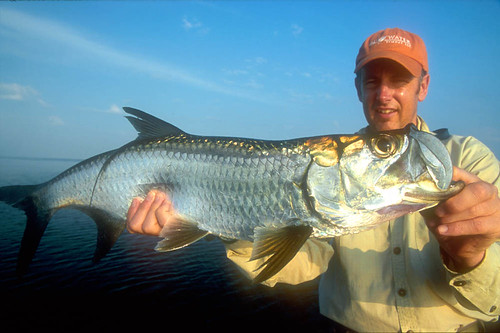
Located on the Western Yucatan, the quaint historic city of Campeche is virtually an unknown destination in today’s world of global angling. This region features more than 80 mile of mangrove coast, hundreds of inlet creeks, and numerous channels, making it the most prolific baby tarpon fishery in Mexico, if not the world. Offering skilled and kind hearted guides, a wonderfully quaint town with Mayan and Spanish history, and flats-style sight fishing for high numbers of feisty tarpon in the 5-30 pound class, Campeche is bound to become a staple for avid saltwater anglers.

Each day anglers depart their hotel early to meet their guides, board the pangas and venture out into the vast and varied waters of the Los Petenes biosphere preserve. Typical days will have anglers seeing hundreds of tarpon that range in size from 5 to 30 pounds with opportunities to cast to 20 or more. Depending on wind and tide conditions, anglers will either fish out on the open flats, along the edges of the mangroves, or in the creeks. Light breakfasts are served at the hotel and ample lunches are served on the boat. Guests enjoy evening meals (not included) at various restaurants in the charming historical city.
Campeche Tarpon

Your typcial fishing day is:
4:45 am wake
5:30 am breakfast
6:00 am – 2:30 pm fishing
Afternoons open for swimming and exploring the charming town of Campeche and dinners on your own.

Campeche Tarpon Dates for 2010 Nov 13th-20th

Saturday November 13th Arrive Merida, Mexico: In Merida you will be met by a driver who will take you to your accommodation in Campeche approximately 2 hours away. Your head guide will meet you at your hotel to help you check into your room and explain the fishing program.
Nov. 14th-19th Six full days of guided fishing with Campeche Tarpon + Lodging at Hotel Plaza Campeche
Saturday November 20th: Transfer from Campeche to Merida and Depart for home.

2010 Rate
Seven day Six Night Package $2700 based on double occupancy and sharing a guide.
Included: Guided fishing, accommodation at hotel, breakfast, and lunch, ground transfers from Merida to Campeche(2 hours), fishing licence, and local taxes.
Not Included: International air fare to and from Merida, Mexico, evening meals, guide gratuities and any additional activites.
Campeche Tarpon

We have a few spots left and would like to invite those interested in attending to call the shop (541-342-7005) or send us an email (caddiseug@yahoo.com).

Posted in Fly Fishing Travel | 1 Comment

How to tie and rig tube flies with Jay Nicholas

In this three part video series Jay demonstrates how to use a tube fly adapter tool, how to tie a simple tube fly and how to rig your terminal end when fishing tube flies. Tubes have incredible potential for various fly tying applications these videos simply scratch the surface.

HMH Tube Fly Tool
HMH Tubes

Jay’s Egg Sucking Leech Tube Fly

Tube: HMH Small plastic Tube
Thread: Lagartun X-Strong Fl. Orange
Body: Crosscut Rabbit Black
Flash: Mirage Flashabou
Eyes: Pseudo Eyes
Head: STS Trilobal Dub

Video 3 Rigging Tube Flies

Gamakatsu C14S Glow Bug Hook
HMH Tubes
Gamakatsu SC15 Hook
Hareline Super Eggs

Posted in Fly Tying | 5 Comments

New spey fishing gear: Rio Skagit MOW sink tips

Coming out next month (May 2010), Rio is introducing new sink tips for two-handed Skagit style spey fishing. Based off the DIY sink tip modifications from spey gurus Mike McCune, Scott O‘Donnell and Ed Ward, the MOW system is designed to help anglers fish short, fast-sinking tips (2.5′ to 7.5′) without casting disasters.

Here, Rio Rep and spey guru George Cook explains the system.

Previously, anglers created custom tips and used Skagit cheaters to swing a fly through areas that need short fast tips, like submerged boulder gardens. The Skagit MOW tips are great for probing small pockets where a big sink tip would hang up.

You can pre-order your Rio Skagit MOW tips today.

Posted in Fly Fishing Gear Review | 1 Comment

Chewee Skin Golden Stone Fly Tying Video

Another storm is pounding the Willamette Valley and it looks like our rivers are going to jack up again. It must be time to fill the fly boxes. The water will be up when the weather settles out, heavy nymphs will need to be part of the arsenal.

In this short video Barrett demonstrates how to tie a Golden Stone using new material. U.V Chewee Skin  from Hareline Dubbin is an excellent material to use for shell-backs, wing cases and bodies. We see U.V Chewee Skin having some excellent applications for bonefish and other saltwater patterns. “U.V colors in the 360 nm wave length are highly visible to fish in low light conditions. UV-A penetrates water over 600 ft. Using a mixture of highly and non UV-A material will attract more fish.”

The Chewee Skin Golden Stone is the ideal weight. It’s cast-able, but heavy enough to carry down to the bottom with it a dropper nymph. Fish the two flies under a Thingamabobber about 6ft.–CD

Chewee Skin Stone Fly Nymph

Posted in Fly Tying | Leave a comment