Current repairs at Winchester Dam on the North Umpqua River.
On August 7, 2023, Winchester Water Control District (WWCD) started repairing the derelict Winchester Dam. Despite far more expansive recent claims made to the public by WWCD about these repairs, WWCD representatives previously told state and federal regulators that the repairs would be “to the minimum extent necessary to eliminate known and reasonably anticipated dam safety deficiencies at the dam.” (DOWL Technical Memo, April 4, 2022, p. 4). On this basis, WWCD received approvals from the Oregon Department of Fish and Wildlife, Oregon Department of Environmental Quality, NOAA Fisheries, and the U.S. Army Corps of Engineers to proceed with the repairs. State and federal agencies issued the permits even after river advocates repeatedly raised concerns and pointed out multiple irregularities in the process (read about these irregularities and concerns here).
WWCD has hired the residential/commercial basement repair company of their own board president, Terra Firma Foundation Systems, as the primary dam repair contractor, despite the fact that his company has no experience in dam repair.
River advocates have been pressing this issue in part because harm from the previous Winchester Dam repair was devastating and well-documented. According to state investigators, pollution from the 2018 repairs at the dam degraded aquatic habitat, killed fish, and harmed the primary drinking water source for the City of Roseburg and the Umpqua Basin Water Association – serving approximately 37,700 people combined. Investigators also found that dam repairs were conducted without following known best management practices, even after authorities provided WWCD with information in advance on how to protect water quality and fish.
This ecological disaster is happening now because government agencies have consistently failed to hold WWCD accountable. Please take action by sending a letter to your state and federal representatives asking them to fully investigate these reported violations and, if substantiated, bring enforcement action to the fullest extent possible.
Together, we can end the ongoing harm from Winchester Dam once and for all. Please encourage your elected leaders to support the removal of Winchester Dam to restore a free-flowing North Umpqua River benefiting the fish, wildlife, and people who depend on it!
Three years after the Holiday Farm fire burned more than 173,000 acres in the McKenzie River valley, partners are celebrating the completion of floodplain restoration work at Finn Rock Reach. Beginning in the summer of 2021, restoration activities have included reshaping nearly 90 acres of floodplain forest and returning the area back to aquatic habitat along the Middle McKenzie River.
The project, led by partners including McKenzie River Trust, the US Forest Service, and the McKenzie Watershed Council, builds on years of investments in the Middle McKenzie Valley. The project has increased habitat diversity and available slow-water areas to protect fish, capture sediment, and bolster groundwater recharging. Across the site, aquatic habitat has been increased by around 50%, supporting Spring Chinook salmon, Pacific lamprey, Western Pond Turtles, and other plants and animals who call this area home.
Part of a long-term vision for restoring the Middle McKenzie River, Finn Rock Reach is one of many completed and planned projects. Working collaboratively across the basin, partners have already restored more than 900 acres between Finn Rock and the headwaters of the McKenzie River. Beyond benefiting fish and wildlife, restoration work offers broad community benefits. According to Susan Fricke, the Water Resources and Quality Assurance Supervisor for EWEB, one of the project’s key funders, “These large-scale restoration projects help build resiliency for downstream infrastructure. Community benefits include supporting clean drinking water by dropping out sediment and contaminants and slowing down water during storm events by spreading the water across a floodplain.”
Over the years ahead, contractors and volunteers will work to replant the site, tend to invasive species, and monitor the ongoing recovery of the area. With your support, we’ll continue to work in partnership across the McKenzie basin to support clean water, abundant fish and wildlife habitat, and thriving communities.
2023 Repair at Dam First Since Botched 2018 Attempt That Caused Fish Kill and Polluted Drinking Water Supply for 37,000 People
Winchester, OR ¬– On Monday August 7th, the fish ladder at Winchester Dam on the North Umpqua River near Roseburg will close until August 28th to allow reservoir drawdown and structural repairs at the 450-foot wide, 17-foot tall, 130-year-old wood, steel, and concrete structure. This drawdown method, chosen as the cheapest dam repair method by dam owner Winchester Water Control District over other well-established and more fish-friendly dam repair options, will release stored sediment downstream onto state-designated Essential Salmonid Habitat/federally-designated critical Coho salmon habitat while creating an migratory dead-end for imperiled summer steelhead, spring Chinook salmon, and other native species attempting to move upstream to the 160 miles of excellent cold water habitat above the dam. The release of stored water downstream on August 7th will likely attract native migratory fish towards the dam just after the ladder closes, confining them for weeks to the warm water below the dam, with no cold water refugia nearby. Compounding this harm, the reservoir refill occurring around August 28th will temporarily reduce river flows downstream of the dam during the driest and hottest period of the year and likely injure North Umpqua instream water rights intended to protect salmon and steelhead. Adding insult to injury, Oregon Department of Fish and Wildlife (ODFW) officials declined to answer river advocates’ formal request to use their authority to require a less harmful repair alternative maintaining upstream fish migration ¬– only weeks before collapsing summer steelhead numbers spurred ODFW to shut all angling in the North Umpqua from August through November.
Winchester Dam is a derelict former hydropower facility now owned and maintained solely to provide a private water ski lake for approximately 110 landowners surrounding the reservoir pool. River advocates from coalition of fishing, conservation, and whitewater groups have been working for years to raise alarm bells with government officials over the Winchester Water Control District’s chronic non-compliance with state and federal repair permitting, engineering, water quality, and dam safety requirements as well as their disregard for protections for fish and wildlife despite the essential habitat importance of the North Umpqua for salmon and steelhead.
Concerns and irregularities that river advocates raised during the permitting process in the lead up to the 2023 repairs include but are not limited to:
1. The dam owners failed to disclose to regulators that during past unpermitted repairs, the release of stored reservoir water also released stored sediment downstream onto salmon habitat and into public drinking water supplies. State and federal permit approvals for the 2023 repair were given after the dam owners told regulators that the presence of invasive aquatic plants in the reservoir would prevent release of sediment, and additionally, that they would secure a 50’ x 100’ tarp to the reservoir bed with sandbags. The plants and tarp will be subject to the full force and flow of the river flowing through the dam’s two narrow water release gates. (On average, Winchester Dam repairs have occurred once every three years since the 1960s, but public records show no permits for repairs prior to 2023.) 2. State records show the dam owners have previously repaired the dam by installing large numbers of toxic pressure treated wood planks. The U.S. Environmental Protection Agency and U.S. Department of Human Services recommend that treated wood not be used where it may come in direct or indirect contact with public drinking water. Winchester Dam is just 50 feet upstream from Roseburg’s public drinking water intake. Despite this, regulators have not required removal of any pressure treated wood from the structure. The 2023 repair plan calls for drilling large numbers of holes into the dam’s pressure treated wood to secure a steel lattice. 3. Previous repairs used rock fill to repair the many cavities within the wooden central span of the dam. As a cost-saving method, the 2023 dam cavity repairs will abandon rock fill in favor of injections of chemical intensive polyurethane foam, a known source of microplastic pollution, just 50 feet upstream from Roseburg’s public drinking water intake. 4. The Winchester Dam owners were notified by state officials in a January 2023 letter that they were storing water in excess of their filed water right claim SW 398. The letter instructed the owners to come into compliance by lowering their reservoir pool by 1.5 feet, or to file for a new water right. The owners have disregarded the state’s instructions, and instead proposed a repair involving a reservoir refill that will likely injure downstream water rights, including certificated instream rights intended to protect the North Umpqua’s invaluable fisheries, including Oregon Coast Coho, which are listed under the federal Endangered Species Act. Despite ongoing unlawful storage of water, the dam’s repair proposal has received all necessary state and federal permits.
Harm from the most recent previous Winchester Dam repair is well-documented. According to state investigators, pollution from the 2018 repairs at the dam degraded aquatic habitat, killed fish, and harmed the primary drinking water source for the City of Roseburg and the Umpqua Basin Water Association – serving approximately 37,700 people combined. Investigators also found that dam repairs were conducted without following known best management practices, even after authorities provided the dam owners with information in advance on how to protect water quality and fish. Winchester Dam lies entirely within state designated Essential Salmonid Habitat and federally designated critical habitat for Oregon Coast Coho salmon protected under the federal Endangered Species Act.
Unfortunately, 2018 likely wasn’t the first time Winchester Dam repairs polluted drinking water supplies and harmed North Umpqua fish and wildlife. Public records describe “leakage” during one previous repair and a state official complaining to the contractor “about cement in the river and no permits.”
According to the Oregon Department of Fish and Wildlife, Winchester Dam impedes access to 160 miles of high quality habitat for salmon and steelhead. Recently, the coalition forced the owners to finally agree to a schedule for bringing their emergency preparedness into compliance with state law for the first time in decades.
River advocates will be documenting the repairs during the three week fish migration closure and available to reporters for comment.
FOR MORE INFORMATION PLEASE CONTACT: Jim McCarthy, WaterWatch of Oregon, 541-941-9450, jim@waterwatch.org Kirk Blaine, Native Fish Society, 307-299-7834, kirk@nativefishsociety.org
Patagonia’s Swiftcurrent Ultralight Wader is their answer to a travel-friendly, super-light pair of waders. The Ultralight wader was added to their “Swiftcurrent” line of waders and is the lightest and least expensive pair priced at $499. They fit true to size, and if you have any of the other products in the Swiftcurrent line, these waders will fit the same. They are a fantastic option for traveling or backcountry adventures where packing light is preferred.
The Swiftcurrent Ultralight waders are the most lightweight wader in the line weighing in at an impressive 36 oz. As Patagonia says, they pack down into a “Grande Burrito” sized stuff sack, making them perfect for traveling by plane, car, or on foot backpacking. They are constructed with a gusseted crotch for maximum movement and freedom. They have a unique ultra-thin bootie which helps them pack down. Just like the other swiftcurrent waders, they have a sliding overall strap system making it easy to get into them. This system also allows you to slide the chest portion down to your waist, and wear them as pants to cool off on hot days. They are outfitted with a solid waterproof pouch on the chest just like their other waders. This is an often overlooked component on waders; I have put that pouch’s effectiveness to the test several times on the different models, and my keys and phone are always dry. They come with the unmatched warranty/repair program that only Patagonia offers.
I had the opportunity to put these waders to the test on two recent trips: one to Central Washington, and one to the Driftless area in the Midwest. They were both tested in cool mornings, and in hot weather. I was impressed with them on both trips for their performance as a light-weight, warm-weather wader that was also extremely packable.
They waders pack up small and take up minimal space.
My trip to the hot desert of Central Washington took place on some Yakima tributaries towards the end of July so it was a great time to test these waders in some hot weather. This trip was a camping trip and the waders packed nicely into my backpacking bag. The waders took up minimal space in their small stuff sack which kept them compartmentalized from the rest of my gear. Fishing early in the morning was best for the fish, and having the waders helped when it hadn’t warmed up yet completely. The same held true for fishing in the evening, some of the canyons got chilly once the sun tucked away behind the mountains. Having a pair of lightweight waders helped immensely, compared to wet wading in those conditions. They dried quickly at camp and were ready the next day to either be used again, or be packed up to head home.
Putting them to the test in the hot weather of Central Washington.
My most recent trip to the Driftless Area in the Midwest involved fishing meandering spring creeks for native brook trout and wiley browns hiding beneath undercut banks and streamside grasses. There was a trico hatch which came off early in the morning and a spinner fall which happened a few hours after. Often the valleys and coulees which the spring creeks flow through are thick with fog a few hours into the morning. The creeks stay cool and are shaded by the nearby hills and bluffs until late morning/early afternoon. Having a pair of thin waders was helpful on those cool mornings, fishing those cold spring fed streams. The waders were cool enough where if you didn’t want to change and wet wade, you wouldn’t overheat as it warmed up throughout the day. The waders on this trip packed into a small duffel bag, they were compact and light, being much better than a conventional pair of waders.
Morning Trico hatch in the Driftless.
My only critique of the waders is that the booties are very thin, which may not always be a bad thing, especially on hot days. With stockingfoot waders, and wading socks, we are used to the cushion of a neoprene bootie. These waders lack a neoprene bootie and in turn lack the cushion that most booties or wading socks provide. This is less of an actual issue, and more of something different that you have to get used to. The booties are thin enough that you can wear a pair of socks with more padding if this becomes an issue.
My younger brother trying them showing how the chest can be pushed down once it warms up.
During the dog-days of summer, wet wading can be nice during the middle of the day. Unfortunately that is when fishing is slow and can be dangerous for trout. Early in the morning and at last light in the summer is when hatches and spinner falls are concentrated and fishing is better. Unfortunately this is often when it is the coolest, especially when you are wet from wet wading. Having an ultra-light pair of waders that packs up small, and is easy to get in and out of is a game changer.
Our local rivers the McKenzie and Middle Fork of the Willamette continue to fish well despite a lack of significant hatches. Hopper dropper set ups with Chubby Chernobyls and various jigged nymphs continue to be very effective. Attractor patterns like Purple Haze and RIO’s Dry Humper are effective early and late in the day. Terrestrial patterns like hoppers and ants are also a good call to have on hand.
Smallmouth Bass fishing on the Umpqua is excellent! We floated from Umpqua landing to James Woods landing on Sunday and small clousers, stonefly nymphs, and poppers all caught plenty of willing bass.
It’s a great time to look at the Williamson and Wood rivers. The famous Hex hatch is happening at dark or after dark on the Williamson and you will find some of the states largest trout looking for these huge mayflies. Hoppers on the lower wood and lightly dressed bugger style patterns on intermediate lines for both rivers can be productive.
The steelhead forecast is pretty grim. The North Umpqua is flat out closed. You can read about the states decision here. The Deschutes remains open for the time being but numbers are not overly impressive. For more info on the potential open/closed fall fishing you can read the states explanation and criteria here. Steelhead counts over Willamette Falls are abysmal for 2023, we have yet to reach 1000 Summer Steelhead. That sub 1000 feeds the Willamette, McKenzie and Santiam systems. Catching a summer steelhead in the Willamette system this year is a bit like finding a needle in a haystack.
It’s a great time of year to get up into the upper reaches of our local waters. The North Fork of the Middle Fork of the Willamette, the Middle Fork of the Willamette above Hills Creek Reservoir and the South Fork of the McKenzie above Cougar Reservoir all off great wet wading and dry fly fishing for native trout. Similar attractor patterns as mentioned for the McKenzie and Middle Fork main-stems will work well.
If you are heading to the coast to escape the heat it’s a good time to start looking for Sea Run Cutthroat in the Alsea, Siuslaw, Siletz, and Nestucca rivers. Cloudy days are best and with little rain in the forecast you will find these fish in the lower reaches of coastal streams, even tidal areas. Here are a couple of older posts with a bit of info in them for chasing Sea Runs. Have fun out there, Fall isn’t far away!
Send thanks to Representative Val Hoyle for reintroducing the Southern Oregon Watershed and Salmon Protection Act!
Yesterday, U.S. Representative Val Hoyle took a significant step to protect Oregon’s treasured wild rivers by reintroducing the Southern Oregon Watershed and Salmon Protection Act (SOWSPA) to Congress!
SOWSPA aims to safeguard over 101,000 acres of Oregon public lands and will help to permanently protect the headwaters of Southwest Oregon’s outstanding collection of wild rivers – including the National Wild and Scenic Illinois and the National Wild and Scenic North Fork Smith, plus Pistol River and Hunter Creek – from the threat of mining pollution. The communities of Southern Oregon and Northern California depend on these wild rivers for pure drinking water, salmon and steelhead runs, and outstanding opportunities for outdoor recreation. Read the full legislation at this link.
Today, we’re requesting two minutes of your time to help share our gratitude to Representative Val Hoyle for her unwavering commitment to safeguarding Oregon’s precious rivers and the incredible life they sustain.
How can you help?
Send thanks to Representative Val Hoyle HERE by submitting the Action Alert. It will only take you a minute or two, but it will be hugely helpful in sharing our appreciation!
Additionally, Rep. Hoyle will be coming to Southern Oregon this weekend with Senator Wyden for public town hall meetings. We encourage anyone in the area to attend and thank Rep. Hoyle in person to share your support for reintroducing SOWSPA and her continued dedication to Oregon’s rivers! Town hall meeting details:
Please take a moment share your thanks to Rep. Val Hoyle today and join the groundswell of public support for the reintroduction of the SOWSPA that will protect the homewaters we all love!
Dry fly fishing has been great on our local rivers: the Mckenzie and Willamette. The fish will be most active in the mornings when the water is the coolest. There will be a lot of bug activity in the evening, but the water will be significantly warmer. You will be able to tease the fish to the surface with dries all day, however the morning and evenings will be the best. The water has been getting hot in the lower river; if it is too hot to safely target trout, consider heading upriver or to a shaded tributary.
Don’t forget to check the water temp on hot days.
With recent warm temperatures, fishing higher in the system will be the most productive and safest for the fish. Trout require highly oxygenated, cold water, and hot summer days make life difficult for these cold water species. It is helpful this time of year to carry a streamside thermometer to monitor rising water temperatures. Trout start to shut off feeding at 65 degrees fahrenheit, and fishing for them at 67 degrees and over can become lethal. As water temperatures rise, the levels of dissolved oxygen decrease, and fighting fish in these conditions can kill them. Imagine being in a boxing match while breathing through a straw… even after a short fight, you wouldn’t be in great shape. “Roping up” or using stronger tippet to reduce fight time, fishing higher in the system, fishing brushy tributaries that are shaded, and switching to targeting warm water species like bass, panfish, and carp are ways to mitigate fish harm. 65 is the magic number you want to remember, if your thermometer reads 65, moving spots may be smart.
A recently emerged PMD Dun still unfurling its tails.
The biggest players in terms of hatches recently are: Pale Morning Duns (PMD’s), Gold Stones, and assorted summer caddis. Yellow sallies may also be present along with the slight possibility of some green drakes in the upper river. Gold Stones can be seen fluttering in the afternoon through the evening laying their eggs in tailouts. Pale Morning Duns can be found hatching in the mornings, and a hatch of Pale Evening Dun’s will come off in the evenings. Assorted caddis are currently making streamside vegetation home, and will be active throughout the day. The caddis, like other bugs will be more active in the evening. Yellow Sallies can be seen zipping around the river mid-day into the evening. The occasional green drake hatch will be found very high up in the system on particularly cloudy or cool days. Lastly, in burn areas that are in recovery, there are a significant amount of grasshoppers. Fishing a terrestrial mid-day can be productive, especially on windier days.
Fishing a Dry Dropper is an extremely effective searching strategy this time of year. Fishing a larger Golden Stonefly imitation with a #12-16 sized nymph suspended a few feet below is the way to do it. Larger foam dries for a dropper rig include: Double Stack Chubby Chernobyl #6-10, Water Walker #8-10, or a Morrish Hopper #8-12. Some great small nymphs to tag below follow: Jigged Frenchie #12-14, Jigged Fullback Napoleon #12, or a Weiss’s Possum Anchor Jig #12. If fish seem more interested in your fly on top, removing your nymph, and tagging a small dry from the same piece of tippet is a quick swap and a productive way to fish two dries. Tagging a PMD or small caddis behind my larger fly has been productive for me.
PMD Spinners offer an easy and reliable food source for trout over the summer.
Dry fly fishing has been best during the mornings and especially the evenings. The mayfly of interest this time of year is the Pale Morning/Evening Dun (PMD/PED). It is a small pale-yellow mayfly sized 16-18. They are active in the mornings, and have a strong hatch from the afternoon into the evening. Here are some great patterns to imitate them if you come across a hatch: Sparkle Flag PMD #16/18, Sparkle Dun PMD #16/18, or a Parachute Extended Body PMD #16/18. PMD’s often hatch in abundance so fishing an emerger or cripple pattern can help your fly stand out. You may also catch a PMD spinner fall in the evening. You may see a cloud of mayflies bouncing up and down, they will eventually fall to the water dead after they spawn. Fishing a PMD Loopy that we have in the shop, or a PMD/Rusty spinner if you tie your own flies can be very effective to mimic a spent PMD spinner. If you are fishing very high on the upper mckenzie you may see a green drake or two, especially if it is a cloudy or cooler day. Although the hatch is at its tail end, having a few of the following is not a bad idea if you know you will be fishing up high: DJL Green Drake #10 or Hairwing Green Drake Dun #10/12.
Green Drakes can be found in sparse numbers in the upper river.
Euro-Nymphing or “Tight Lining” is an effective way to present your nymphs when there are multiple currents.
Flows on both of our local rivers are conducive for a float, or walk-and-wade fishing. Dry fly fishing has been great, trout are looking up for a number of insects. The fish are stressed enough with warm water, and summer angling pressure, so if the water is above 65, give our friends a break and find some colder water upstream. Feel free to swing by or give the shop a call if you need anything, we are happy to help!
The Klamath River flows by the remaining pieces of the Copco 2 Dam after deconstruction in June 2023.
The first of four hydroelectric dams along the Oregon-California border has been removed from the main stem of the Klamath River. All that remains of the dam known as Copco 2 in Siskiyou County, California, is the headworks of a diversion tunnel adjacent to the now free-flowing river.
“As little as a month ago, it was a 35-foot concrete dam that spanned the entire width of the Klamath River right there,” says Mark Bransom, CEO for the Klamath River Renewal Corporation, which is overseeing dam removal.
From a nearby overlook of red volcanic rock, an excavator looks like a child’s toy as it chips away at the remnants of the concrete wall that was embedded in the river.
When complete, the overall project will be the biggest dam removal in U.S. history and will reopen 400 miles of fish habitat that was cut off for more than a century.
Deconstruction activities on Copco 2 will continue until September. Getting this first dam out of the way takes deconstruction crews one step closer to drawdowns of the remaining three reservoirs next January.
Last December, the Klamath River Renewal Corporation took over the license of the Lower Klamath Hydroelectric Project from PacifiCorp, the utility that owned and operated it. The nonprofit KRRC, which formed expressly to oversee dam removal, is responsible for hiring contractors and complying with the many federal and state permits required to do this massive project. PacifiCorp will continue to operate the power plants as needed until they are decommissioned.
Klamath River Renewal Corporation CEO Mark Bransom stands above Iron Gate Dam in July 2023.
Kiewit, a national construction company, is the lead contractor for the deconstruction of the dams and associated infrastructure. The company will hire upwards of 250 to 300 workers once the project ramps up and has already selected a number of local and tribal subcontractors.
For the next several months, Kiewit will lay the groundwork for the drawdowns. Soon, crews staged at the base of Copco 1 Dam will “drill and shoot” a 10-foot diameter outlet tunnel through the concrete structure.
“The contractor will leave about a 10- to 12-foot plug of concrete that will sit there until early January of next year,” says Bransom. Come January, they’ll blast through the rest of the tunnel, effectively pulling the plug and allowing water and sediment to pour through the opening.
At Iron Gate, the lowest of the four dams, crews are testing the existing outlet tunnel to make sure it’s ready for the critical job it will have to do — that of a massive bathtub drain.
“So all the water from J.C. Boyle, all of the sediment accumulated there on the Oregon side, all of the water and all of the sediment behind Copco Number 1, and all of the water and all the sediment behind Iron Gate Dam are going to come out of that hole right there,” says Bransom. “That is the final control point, if you will, for the drawdown of the remaining three [dams].”
The outlet tunnel at the base of Iron Gate Dam is pictured in an undated photo. Water and debris will be removed from the three reservoirs upriver and will be channeled through the tunnel.
While this work takes place, the reservoirs are being carefully managed to ensure enough water flows downstream to support coho salmon, as required by federal fish agencies.
“The Bureau of Reclamation has a biological opinion that requires them to ensure that a certain amount of water always flows below Iron Gate Dam all the way down the river,” says Bransom. “So what we’ve had to do, in close coordination with the Bureau of Reclamation, tribes and others, is to overlay our construction operational requirements on top of those regulatory requirements.”
Starting next January, three reservoirs behind the remaining three dams will be drawn down at a rate of about five feet per day.
“We never want to have so much water coming through these outlet tunnels that we create a dam safety condition,” says Bransom. “And the second thing is we never want to overtop the riverbank.”
An estimated 20 million cubic yards of sediment has accumulated behind the dams over the last century; Bransom says about 5 to 7 million cubic yards of that will wash out during the drawdowns.
Crews will use fire hoses to blast sediment from especially steep slopes near the rims of the former reservoirs to prevent future erosion into the river.
To best protect fish from the muddy water, the drawdowns will take place in winter, with a pause in April to allow young coho salmon to migrate out to the ocean. The reservoirs could partially refill with spring snowmelt, but by June the Klamath River should be flowing freely through the newly open outlet tunnels in the dams.
Though it will temporarily impair water quality in the river, the movement of sediment is an important part of healthy river systems, says Bransom. “And the Klamath has been starved of that natural process since these dams were constructed.”
Once the drawdowns are complete, the remaining three dams will be taken down all at the same time, starting next June.
The deconstruction method will be tailored to each structure. At Iron Gate, excavators will bite chunks out of the massive earthen dam and feed them to an endless convoy of dump trucks. At Copco 1, crews will drill small holes in the base of the dam and pack them with dynamite — not to create a massive explosion, but to break the monolithic structure into more manageable chunks that can be hauled away. They’ll also remove a portion of the deep concrete foundation to ensure it doesn’t ever pose a barrier to fish.
Along with the dams, the powerhouses, penstocks and outbuildings will be dismantled. Steel will be recycled and any hazardous materials hauled off to the appropriate disposal site. Any concrete, rock or earth used to construct the dams will be blended back into the surrounding landscape.
At J.C. Boyle, the sole dam in Oregon, concrete rubble and earth will be used to fill in a long canal that feeds water to the powerhouse. And at Iron Gate, thousands of dump-truck loads of earth will be dumped, spread, and contoured into the same “borrow pit” from which it was extracted in the first place.
“We’ll basically try to restore as much of these lands as we can to a more natural condition,” says Bransom.
The sole purpose of Copco 2, the smallest of the four dams, was to divert “extra” water into a tunnel, which helped boost electricity production at the Copco 2 powerhouse downstream; it also dewatered a section of the Klamath River called Ward’s Canyon, which holds special significance to the Shasta Indian Nation.
Now that Copco 2 is gone, Kiewit will restore the channel to a more natural condition. In the meantime, the river is flowing freely through Ward’s Canyon for the first time since 1918 — a taste of the changes to come.
This story was co-reported by JPR News Director Erik Neumann.
Phase II of the Finn Rock ReachFloodplain Enhancement Project is underway. The Project will enhance habitat conditions across more than 80 acres adjacent to the McKenzie River and restore historic floodplain connections between the main stem McKenzie River and Elk Creek. Phase II builds upon the work completed during Phase I in 2021 that successfully reconnected more than 50 acres of floodplain.
Beginning around July 20th, contractors will temporarily reroute a section of Elk Creek into a diversion channel that bypasses the Phase II project area and returns flow into the Phase I project area. Phase II project activities, including the diversion, are anticipated to continue until no later than August 30th, 2023.
Project managers expect that the initial diversion may cause short-term turbidity impacts on the McKenzie River immediately downstream of the project area located near river mile 56. Minimal turbidity impacts were seen during Phase I implementation in 2021 and project managers expect similar results in 2023.
The Project will take several steps to minimize downstream turbidity impacts. The diversion will take place over a period of several days beginning around July 20th. The slow drawdown of the water levels in the project prior to the full diversion will allow for natural fish escapement prior to fish salvage operations within the project area.
For more information, please contact McKenzie River Trust by calling their office at (541) 345-2799 or emailing info@mckenzieriver.org.
In a letter to the editors of The News-Review, Roseburg, Oregon-resident Connie Page posed a question: Why does Winchester Dam (on the North Umpqua River) still exist? The dam is bad for the river’s salmon and steelhead runs, it’s a hazard to people and property, and it no longer provides either water or electrical services. We’re with Connie. Winchester must go.
The Winchester Dam, built in the 1890s, originally served a purpose by providing electricity and water to Roseburg. It stopped providing these services years ago. Today its sole purpose is to create a private lake for the approximately 150 homeowners immediately above the dam.
Is Winchester Dam part of the reason our fish runs are depleting so quickly? Please take time to read why the Klamath Dams are being removed, for your answer.
The dam limits river recreation for everyone else in the community and blocks water from flowing freely on one of Oregon’s premier rivers. The Umpqua River boosts Douglas County’s tourism dollars in many ways — fishing, rafting, kayaking, swimming, camping and more. These activities bring people, with their money, into our county. The dam removal could increase these opportunities.
The Oregon Department of Water Resources categorized the dam as “high hazard.” In 2022, the ODWR said in a letter to Winchester Water Control District: “The Water Resources Department conducts routine inspections of the dams’ exterior surfaces to identify conditions that might affect the safety of the dam. Dams are assigned a hazard rating based on downstream hazard to people and property, not on the condition of the dam. Winchester Dam is classified as a high hazard dam. High hazard dams are typically inspected every year.”
I empathize with the people living on this artificial lake, but their desires are no more important than the desires of the rest of those living in Douglas County. If they love the river, not just the lake, they will support the removal of the dam.
Concerned groups have offered to raise money for the dam removal. I encourage those who enjoy time on or live near our precious river to contact their legislators and ask: “Why does this dam still exist?”
In this video Simon demonstrates how to tie a balanced damsel nymph. The pattern is relatively simple to tie, and uses dyed ostrich feathers to create an “active in the water” nymph. The Balanced Ostrich Damsel Nymph can be used in lakes or slow moving streams. Be sure to have a good set of wire cutters for the balanced pins!
In this video Simon demonstrates how to tie a super productive Chironomid imitation. This fly it relatively simple to tie, super durable and highly effective.
With the majority of the runoff in our rear-view mirror, our local rivers and tributaries are shaping up nicely for summer conditions. Flows have stabilized creating great conditions for floating and wading. Both the Mckenzie and Willamette are currently seeing great hatches of PMD/PED’s, Yellow Sallies, and small Caddis. Golden Stoneflies are just starting to get moving, and you may catch a Green Drake hatch on a cloudier day. Hatches have been concentrated towards the morning and evening, but you may see bugs hatching sporradically throughout the day, especially on overcast days.
Dry-dropper rigs excel at searching water when there is not a hatch coming off, it is also a great way to make it through the mid-day “lull” and search above and below the surface simultaneously. Nymphing is also a great way to entice some eats when the surface is devoid of activity. Make sure you have your dry box, because when the hatch comes on, the fish have been feeding heavily on the surface.
Fishing a large foam dry with a nymph suspended below as a dry-dropper rig is a great place to start given the current conditions. Golden stoneflies are just starting to hatch and large foam dries that mimic them make a great buoyant choice for a dry-dropper rig. Montana Fly Comapany’s new “Double Stack” chubby is extra buoyant for suspending larger nymphs for fishing more swift, turbulent water. Here are some great choices for your rig: Double Stack Chubby Gold/Gold Stone #6-10, Morrish’s Still & Fluttering Golden Stones #6, or a Burkus Bear Back Golden Stone #6. Jigged attractor style nymphs like these should be your go-to below your foam dry: Jigged Duracell #12-14, Jigged PCP #14, or a Jigged Frenchie #12-14. If they are ignoring your nymph, try tagging a small caddis pattern or parachute off of the same piece of tippet, this is an extremely fast way to swap rigs and fish dries when bugs start coming off.
A freshly emerged PMD dun
Dry fly fishing has been on lately, and this has us all excited. There have been reports around the shop of some heavy PMD hatches upriver. There also have been significant hatches of green drakes if you’re in the right spot at the right time. PMD’s make up the bulk of current hatches; there will be a morning and evening hatch of them. On cloudy days, this can carry on through the whole day. If fish are seen rising to small yellow mayflies, you definitely want to have some flies like these: Sparkle Flag PMD #16-18, Sparkle Dun PMD #16-18, or an Extended Body PMD #16. I’ve found for this hatch, due to the abundance PMD’s come off in, that fishing an emerger or cripple pattern is most productive. When there are loads of bugs on the water, the fish sometimes key in on the easier meals. For green drakes, throwing something like the following can be productive: DJL Green Drake #10, Hairwing Green Drake #10-12, or a Green Drake Film Critic #10. For large golden stones, the same foam patterns as your dropper setup will work plus more delicate dries like: Clarke’s Golden Stone #8-10 or a Yellow Stimulator #8-10. Yellow Sallies can be active during the afternoon and into the evening. These patterns work great when you see naturals, but also make a great mid-day searching pattern: Galloup’s Working Girl #16, Silvey’s Yellow Sally #14-16, or a Hi-Tie Sally. Small Caddis can be imitated by Tan Elk Hair Caddis #12-16, X2 Caddis 14-16, or a Clueless Tan Caddis #14.
A Yellow Sally, one of the smaller stoneflies.
Nymphing is a great way to get. through the mid-day lull on warmer days. Running a flashy, attractor pattern with a more natural looking one has been productive lately. PMD’s are responsible for the bulk of the bugs moving through the water column currently. These are the hot PMD nymphs: Jigged PMD #16, Split Case PMD #16, or a Flashback Pheasant Tail #14-16. There is no need to bring these nymphs in quickly to cast again, swinging your nymphs at the end of your drift can entice a big eat. Golden stone and yellow sally nymphs are on the move in preparation to hatch. Larger nymphs work great for gold stones, smaller sizes will effectively mimic the yellow sallies: Tunghead 20 Incher #8-12, Iron Sally #12-16, Sili Leg Stone #8-10, or a D-Rib Golden Stone #12. Green Drake Nymphs follow: Better Than Sex Drake #12, Rio’s Point Drake #10-12, or a Crown Jewel Drake #10-12. General attractor nymphs are also working great: Rainbow Warrior #14-16, Perdigon #12, or a Jigged Hare’s ear #12-14. I like to run a large nymph with a small one and let the fish tell me what they’re eating; once it is clear what they prefer, I double up on that style.
Swinging a soft hackle fly can be deadly during the PMD hatch. Using a small soft hackle tagged behind a small tungsten nymph, or fished solo with split-shot is a great way to target fish feeding on ascending PMD nymphs. Casting upstream with a few upstream mends gives your fly time to sink, and as it swings below you it will ascend. This mimics an ascending nymph, something fish can not resist. As surface feeding activity increases, having weight on your rig becomes less crucial and fishing your flies just below the surface will work even better. Here are some must have PMD soft hackle patterns: Soft PMD Emerger #16, Light Cahill Wet #12-14, or aSimple Yellow/Orange Soft Hackle #14-16. An often overlooked use for soft hackles is using them as a drowned cripple imitation. Fished closely behind a visible dry fly, these flies mimic an easy meal for trout.
Both the Mckenzie and the Middle Fork Willamette sit at good levels for a float or wading. As the rivers continue to slowly drop, wading access will continue to improve. Have fun out there!
Given the recent declines in Oregon Coast fall Chinook salmon populations, Oregon Department of Fish and Wildlife is considering a more conservation-oriented approach to wild fall Chinook harvest in 2023 and has asked for public comment. This presents a crucial opportunity for wild fish advocates to weigh in on proposed limits to fall Chinook harvest. If adopted, this would be an important step toward more adaptive management for salmon runs throughout the state of Oregon, as well as a sensible strategy to ensure the viability of coastal Chinook populations for the long term. Before June 23, take the survey telling ODFW you support Alternative 1—the conservation-oriented management of wild Chinook salmon runs on the Oregon Coast. Please be sure to include support for implementation of ocean bubbles off Tillamook and Nehalem bays.
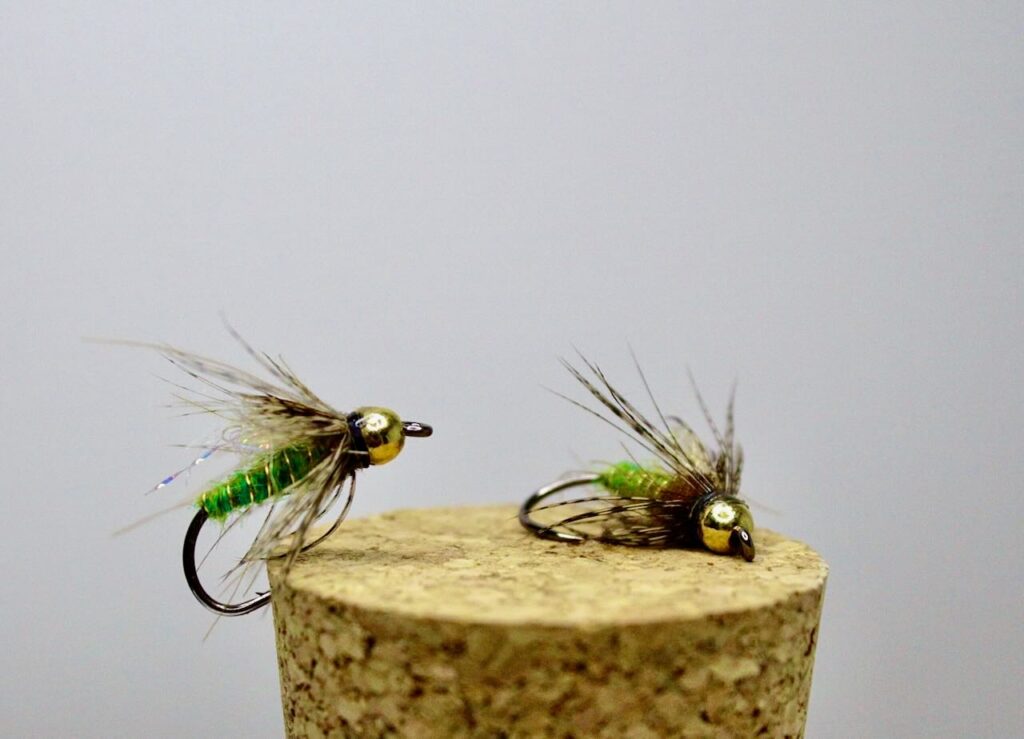
In this video Simon demonstrates how to tie a Beadhead Green McKenzie Caddis Soft Hackle. This is a big water version of an excellent all around caddis pupae pattern. Fish it subsurface dead drift or on the swing. This pattern can be made in smaller sizes and in a variety of colors.