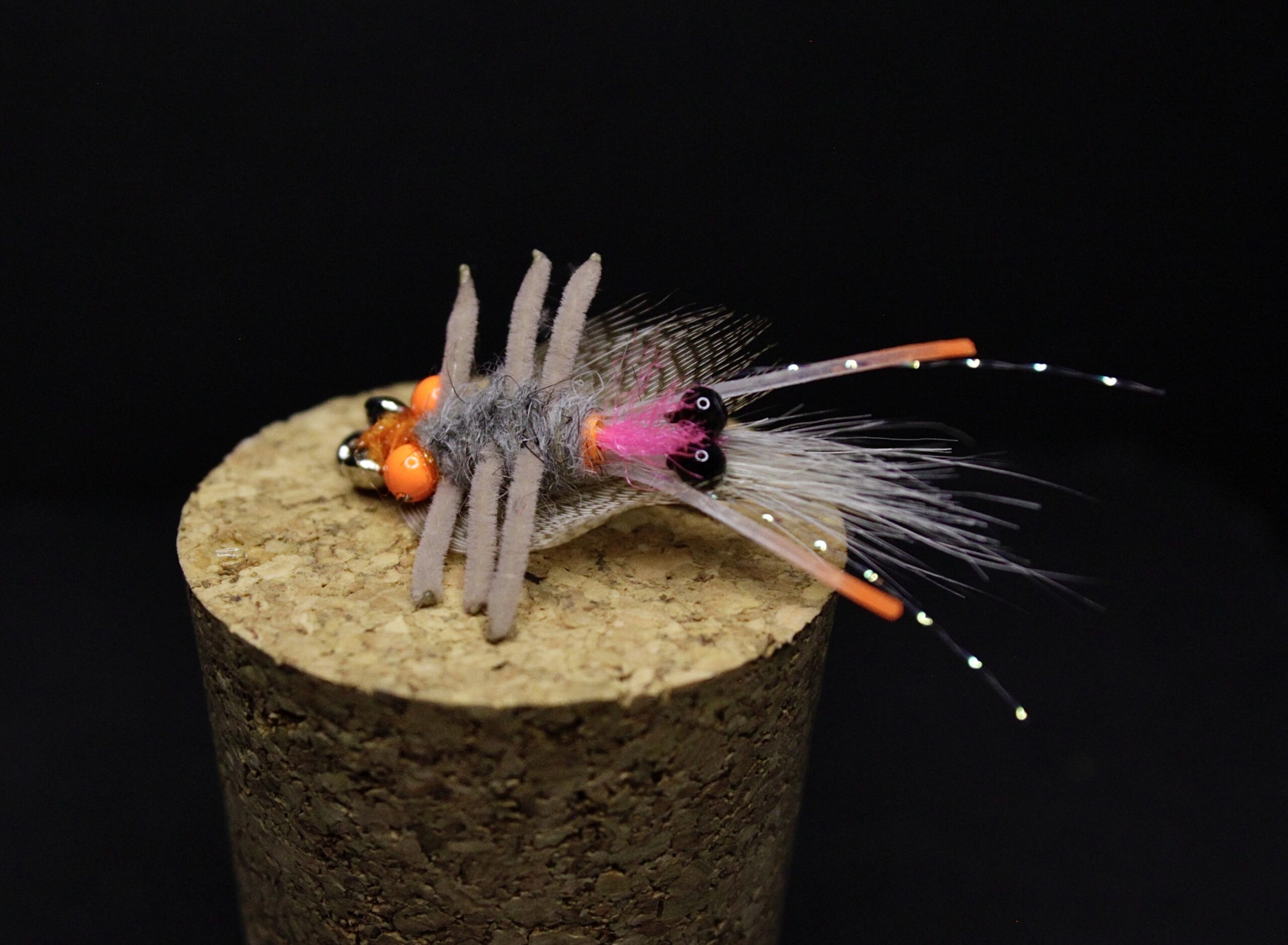
In this video, Simon ties a flashy take on the classic Fall Chinook fly called the Comet. When the water is clear, the general consensus is that Fall Chinook will eat surprisingly small flies for such a large fish. This is often considered a low water fly, especially if you size it down. Chartreuse and hot orange are popular colors used for comets, and other fall chinook flies of the like. This Comet variant uses some of the new materials from Hareline that came out this fall. Small Black Legged Squishenille offers a squishy chenille which is different from standard chenille. The new Hareline Badger Saddle Hackle offers a saddle feather with a dark center which compliments the dark chenille nicely. Both of these new materials come in several sizes and colors to mix and match. For salmon, it helps to have some different sizes and colors to try to see what is working on a given day. This fly can certainly be sized down or up and colors changed depending on where you are fishing. Tie some up and let us know how they work!
1 Lucky Angler, 1 Epic Week on the Babine River this Fall for just $100!
British Columbia’s Babine River is the hallowed homewaters of some of the largest wild steelhead swimming on the planet. At the Babine Steelhead Lodge, their goal is for you to have the fishing adventure of a lifetime – which you could experience for only $100!
From the minute you arrive at the lodge, you will experience first-class fishing and accommodations. Not to mention the Babine River is considered one of the last unspoiled rivers in British Columbia, making its pristine beauty the ideal setting for a memorable wilderness getaway.
Trip Details: 1 angler / Steelhead Season 2024 – dates to be determined / Guided steelhead fishing on the Babine River, hosted by Tom Derry
Don’t miss this week-long dream trip, including fishing with some of the best guides around, delicious gourmet dining, and tranquil river-side lodging – all of which could be yours for just $100!
We’re talking about your best (and most economical shot) at some of the incredible dry line (even dry fly) wild steelhead fishing in the world.
That’s right, the one and only Babine Steelhead Lodge has generously donated a week of steelhead fishing on the Babine River for one angler to support the Native Fish Society’s work reviving abundant wild, native fish across the Pacific Northwest.
How does it work? Native Fish Society is selling 250 tickets for $100 each. We’ll draw the winner on March 1st, and then the lucky angler will get ready for the time of their life!
Trip Includes:
World-class guided fishing on the Babine
Cozy accommodations at the newly renovated lodge
Gourmet meals prepared by the talented Lodge Chef and staff
Full bar, beer, and wine
Not Included:
Does not include travel to Smithers, B.C., taxes, gratuities, or licenses.
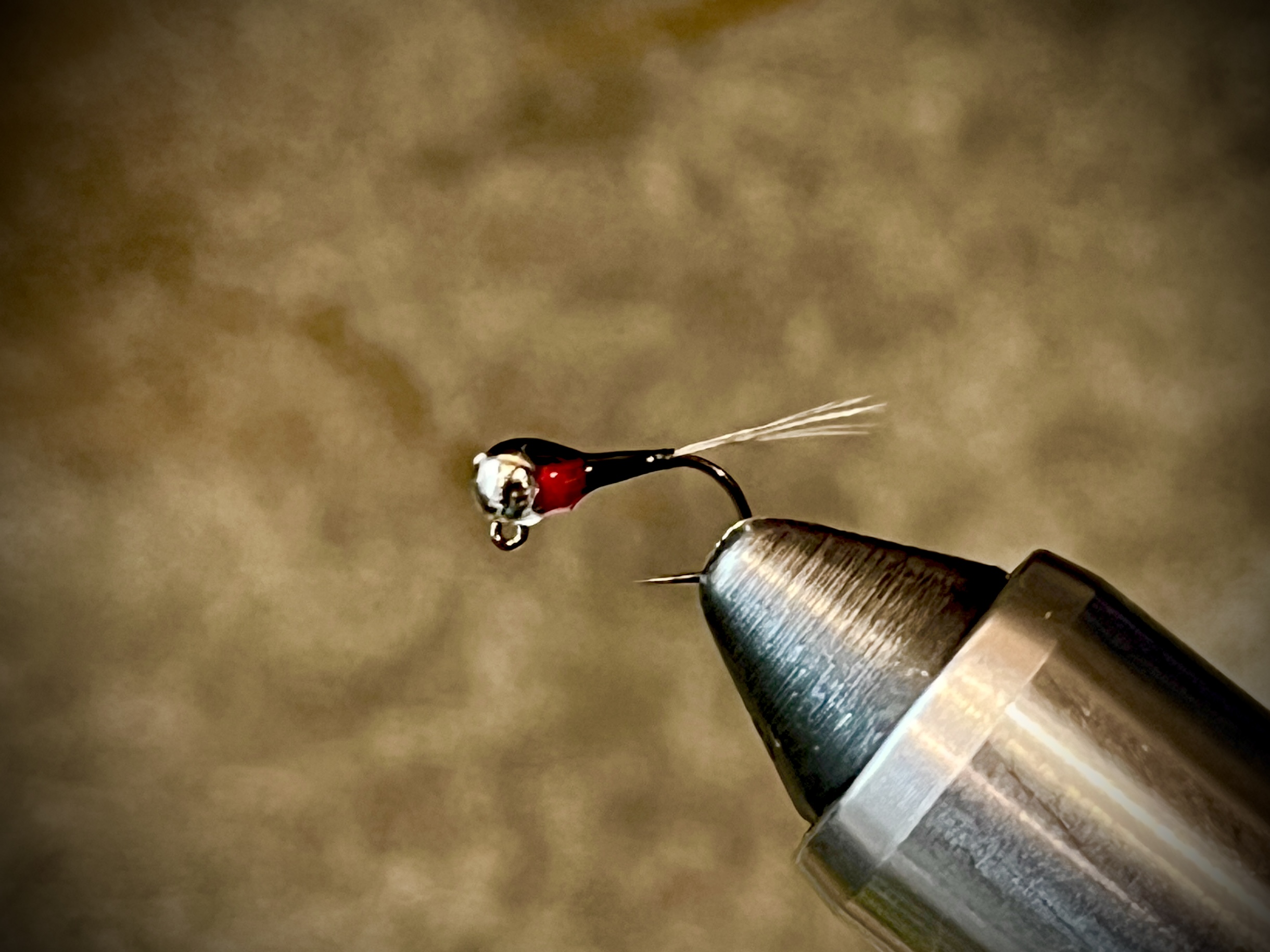
In this video, Greg ties a simple but very effective perdigon fly in black & red.
A small fly pattern designed to drop quickly, this fly can be tied in different colors and sizes to mimic just about any mayfly out there as well as midges.
Greg uses them primarily as a tag fly on an indicator setup or euro nymphing rod and ties them in sizes 16-20. Use them as a dropper fly off a dry fly too.
Last summer he had a client from the Perdigon area of Spain who tied his own and knocked it out of the park fishing the Tuolumne River.
A great fly pattern for trout and a great pattern for the beginning fly-tier. Give them a try!
A N.O.A.A. IMAGE SHOWS JUVENILE CLACKAMAS RIVER COHO AND CHINOOK, SALMON SPECIES THAT WILL BENEFIT FROM RESTORATION WORK COMING TO THE WILLAMETTE WATERSHED. (NOAA)
“This funding is a true lifeline to restoration practitioners who have been working to recover Endangered Species Act-listed Upper Willamette River Chinook and steelhead,” says NOAA Fisheries Biologist Anne Mullan. “These species are on the downward trajectory, but this funding gives us hope.”
Multiple major dams on the Willamette River tributaries stand between salmon and steelhead and their historic spawning grounds in the upper watershed. The Office of Habitat Conservation’s Restoration Center and its partners are restoring degraded habitat in the lower watershed. NOAA Fisheries’ West Coast Region works with the U.S. Army Corps of Engineers and others to provide passage for Chinook salmon and steelhead between the lower river and their upstream spawning habitat.
Restore floodplain and side channel habitat to provide spawning and rearing habitat for salmon and steelhead
Remove multiple barriers to fish passage including a dam on a Willamette River tributary
Reduce the risks of flooding, forest fires, and drinking water contamination
Provide jobs, educational and workforce development opportunities, new accessible greenspace, and recreational activities to local community members
In addition to helping Upper Willamette River Chinook and steelhead, the work will benefit other listed salmon and trout species as well as Pacific lamprey, which are important to Native American tribes.
“What’s exciting about this large influx of funding is that our partners are able to implement multiple large- and small-scale projects all at one time,” says Lauren Senkyr, Marine Habitat Resource Specialist for NOAA. “In the past it might have taken 5 to 10 years to get all of this work done. We’re pushing the fast-forward button on restoration and recovery.”
NOAA staff also help partners review project designs and monitoring plans and speed up permitting and regulatory compliance processes so they can start construction sooner.
Historically, hundreds of thousands of Chinook salmon and steelhead returned to the Willamette River Basin in Oregon to spawn. Fish counts at the Willamette Falls fish ladders show those numbers have plummeted. The current 5-year average annual return is about 30,000 Chinook and 3,000 steelhead. Aside from the major dams, pollution, climate change, and habitat degradation caused by development are threatening the survival of migratory fish.
“Salmon and steelhead move between streams, rivers, estuaries, and the ocean, depending on their life stage,” says NOAA Marine Habitat Resource Specialist Larissa Lee. “In each habitat they need places to hide and forage and certain temperature or chemical cues to tell them to move on to the next stage. It’s difficult to control the ocean, but we can improve conditions on land by giving them access to high-quality habitat for spawning adults and rearing juveniles.”
Why Restore Threatened Species?
Willamette salmon and trout stocks once supported robust fisheries that benefited commercial fishers, the tourism industry, and local communities. Salmon and trout also hold cultural significance with local tribes. “These species have been important to the culture and diet of the people of the Pacific Northwest for thousands of years,” says Megan Hilgart, Marine Habitat Resource Specialist for NOAA. “There’s a really strong commitment to try to get back the subsistence-level fisheries for the tribes.”
In addition, salmon bring nutrients from the ocean deep inland, supporting entire forest ecosystems. Pacific salmon species die after spawning. Their bodies provide food for species ranging from black bears to Douglas fir, which absorb nutrients from decaying fish through their roots.
The restoration work itself provides jobs and educational opportunities, helps mitigate flood and forest fire risks, and will invite the community back to rivers and waterfront parks.
Over the coming months we will be posting a series of stories about each project. Stay tuned to see how NOAA and its partners will help restore the health of rivers and forests in the Willamette Valley for both wildlife and people.
The Mckenzie River Discovery Center (MRDC) is holding two riverboat building classes in April: the McKenzie River Drift Boat (April 22-26), and the Diablo Canyon (April 29 – May 9), a re-creation of Keith Steele’s first Colorado River dory for Martin Litton in 1962. Both workshops will be at the MRDC site where Keith Steele built both boats. Teaching the 5-day McKenzie boat workshop is the popular Jayson Hayes, Hayes Custom Wood Boats. Teaching the 10-day Diablo workshop is the dynamic duo of Brad Dimock and Cricket Rust, Fretwater Boatworks. Go here for more information and registration details – https://www.mckenziediscoverycenter.org/product/mckenzie-river-drift-boat-building-class/ and here: https://www.mckenziediscoverycenter.org/product/build-the-diablo-canyon-the-first-colorado-river-dory/
In this video, Simon ties a more flashy version of the famous prince nymph. It is tied on a new hook from Ahrex called the FW563 “Short Nymph”. This hook is extremely stout making it a great candidate to tie a small attractor nymph used for nymphing for winter steelhead. It uses some new materials from Hareline; one being their new Synthetic Peacock Chenille. Which offers a more durable and colorful option compared to natural peacock herl. This fly would be great nymph for steelheading when the water is low and clear, and it would be a great half-pounder fly on the Rogue as well. For you Midwesterners doing steelhead fishing in the great lakes tributaries, this fly would be killer. This would make a great trout nymph as well tied on a more tame hook and sized down a bit. Sizes and colors can be substituted to fit your fisheries needs. Tie some up and let us know how you do!
In this video, Greg ties a guide fly he began tying the summer of 2023 that is simple, heavy, and so good at catching trout. Plus it’s fast to tie.
Originally tied for the East Walker River in the Eastern Sierra, Greg took this fly to the Merced River on the western side of the Sierra and had amazing results. There’s something about the burnt orange bead and orange hotspot that gets the fishes attention, but he also ties them in olive.
He uses it as a dropper fly on European nymphing rigs and indicator setups. It could also be used as a streamer in the Spring when the brown trout are looking for a meal.
Give them a tie and let us know how they work for you.
In this video, Simon ties an effective egg pattern used for winter steelhead. It uses a new egg chenille from Hareline that makes tying eggs easier than ever. The chenille comes in a wide variety of colors to ensure you have a wide variety of eggs in your box. Tied on a large inverted jig hook allows for a larger bead to be out on for when water is high and allows for the fly to ride hook point up reducing snags. The Ahrex FW550 is a stout jig hook and in larger sizes is ample for winter steelhead. Whitefish spawn is right around the corner and that means tying this in lighter colors like yellow or apricot and in smaller sizes will be killer on our local rivers for trout.
In this video, Simon ties an effective buzzer chironomid pattern for still-water fly fishing. Chironomids are often the first insect to hatch in high alpine lakes in the spring. When timed right, large fish can become very careless when putting on the spring time chironomid feed bag. The fly uses a stout Alec Jackson chironomid hook, which is essential for those strong lake fish. They are often fished using a floating line under an indicator, sometimes in tandem with another chironomid, balanced leech, or nymph. They can also be fished on an intermediate or full sink line using a slow “hand twist” retrieve. They can vary in size and color depending on the season and your location. Feel free to substitute colors and sizes tailored to your local fishery.
No greater gift for a new angler or one who wishes to have a refresh on fly angling or casting than signing up for a Intro to Fly Fishing Class!
We have been introducing anglers to basic casting skills for almost 30 years. Inspired by the original casting classes held by Les Eichorn, Bob Guard, Lefty Krieg, Jeff Carr and Mel Krieger this 5-6 hour class will have interested anglers on their way to fly casting mastery. Basic tackle discussions, casting, knots, entomology and fly presentation will be covered. All tackle, textbook is included, and we maintain a one instructor to 5 student ratios. (15 students max per class)
Four hours of the course will be on water casting. Cost is $70, all equipment is provided, sign up at the shop or call 541-342-7005 to sign up.
Class Schedule for 2024 : Classes on two dates are Friday evening (6-8PM) at the shop and Saturday at Alton Baker Park (9am-12:00pm).
Class Schedule for 2024: The two-day classis on a Friday evening (6-8PM) at the shop and Saturday morning at Alton Baker Park (9am-12:00pm). Due to popular demand, we are holding two sessions in March, April and May! Sign up early and get your spot!
Drone footage was taken on 12/4/23 by Brent Ross, McKenzie River Trust Land Steward
From: McKenzie River Trust News
Making a messy river for salmon and long-term resilience at Finn Rock Reach
The project at Finn Rock Reach was already showing encouraging signs in September when wild Chinook salmon scattered across the site for spawning. With this week’s high water spread more broadly and moving slower outside the main channel, the newly emerged juvenile salmon, western pond turtles, and many other aquatic critters find better safety and more food among the large trees and sediment that are scattered throughout the project area. LEARN MORE.
From 1909 to 1976 the McKenzie River Drift Boat evolved and gained fame on Oregon’s McKenzie River. Today it is an icon of Oregon adventure. The first to run many of the big white water rivers of the West from top to bottom, charting major rapids, and building up the growing river guide community that provides safe recreation for all.
It is time that the story about the evolution of the McKenzie River Drift Boat is told in a professional documentary movie. Research, script writing, and the collection of historical videos and photographs have been underway for the last year. We are now ready to edit the music, narration, video, and historic photographs to complete the project. We need a total of $30,000 to finish this documentary.
A supportive grant opportunity you can be a part of.
The McKenzie River Discovery Center is offering a matching grant opportunity. They will donate a matching dollar for every dollar we raise to $15,000. So, each dollar you donate is worth two dollars to the completion of the Oregon’s Boat documentary.
Sponsorship availability
The movie will list any individual, foundation, or company that gives $5,000 or more as an official sponsor of the documentary. Of course, everyone who donates is listed in the film’s credits, and no donation amount is too small. Oregon’s Boat is a 501(c)(3) charitable organization. All gifts are tax-deductible.
In this video, Simon ties an effective mole crab pattern for targeting Surf Perch off of the Oregon coast. Pacific mole crabs live in the swash zone of shallow water on beaches all up and down the Pacific coast, and are often seen burrowing in the sand as the shallow water washes back out into the ocean. They congregate in areas, if you see an abundance of them near your feet, perch will be nearby and tying one on is a good idea. These burrowing crustaceans are called sand fleas on the East coast, or sometimes referred to as sand crabs, or sand shrimp. They are found on beaches all over the world and are a staple in the diet of not only our many species of Pacific Surf Perch, but several other species that make their home in the tidal surf. Colors and sizes can be changed to match the fishery you are spending time in. Adding orange beneath the shell or towards the rear of the fly mimics eggs, and works great for Pacific Surf Perch when the mole crabs are spawning between February and October. Give it a go and let us know how it works for you.
In this video, Simon ties a foam body Grey Drake Dun which works great in the fall when these larger mayflies come off. The abdomen is made of 2mm foam instead of being dubbed to reduce water absorption which greatly improves buoyancy. The fly is tied with water wicking fibers, and hackled vertically which allows it to shed water quickly with a few false casts. The vertical hackle can be trimmed horizontally on the water with nippers creating a lower riding fly for the pickiest of fish. Size and colors can be swapped to mimic other mayflies depending on the season or your local fishery. Fish it and let us know what you think!