ODFW seeks comment on plan for six coastal salmon and trout species

Some of you may recognize the plan outlined below, in an article we ran five years ago. Well, it’s coming to fruition, and now is your chance to comment.

Via ODFW: The Oregon Department of Fish and Wildlife will host six public open houses in January to solicit public comment on a draft management plan for six coastal salmon and trout species.

chrome steelhead

The draft Coastal Multi-Species Conservation and Management Plan describes the conservation status of these species and outlines a suite of actions related to harvest and hatchery programs, predators, and habitat to sustain these species and improve overall fishing. The goal is to better balance risks to wild fish populations by being conservative in some areas while also increasing fishing and harvest opportunities in others.

The species and area for the plan include spring and fall chinook, chum salmon, winter and summer steelhead, and coastal cutthroat trout along much of the Oregon coast (from Cape Blanco to Seaside).

The draft plan was developed with input, compromise and consensus from four stakeholder teams distributed along the coast whose members represented recreational and commercial fishing interests, local watershed councils, conservation groups, resource producers, local government and Native American tribes.

In addition, the department conducted an opinion survey of anglers and non-anglers about their general views regarding fishing in Oregon and wild fish conservation, and received informal feedback from other individuals and groups, such as independent scientists and volunteer groups from the Salmon and Trout Enhancement Program.

According to Tom Stahl, ODFW’s Conservation and Recovery Program Manager, all of this input was used to help develop the draft plan and the Department is now seeking additional input from the public before finalizing recommendations to the Oregon Fish and Wildlife Commission later this spring.

The dates, locations and times for the public open houses are:

January 16 – Salem – ODFW Headquarters, 4034 Fairview Industrial Drive SE, Salem, 6-9 p.m.
January 21 – Tillamook – Tillamook County Library Meeting Room, 1716 3rd St., Tillamook, 6-9 p.m.
January 23 – Newport – Best Western Plus Agate Beach Inn, 3019 N. Coast Hwy., Newport, 6-9 p.m.
January 27 – Roseburg – Douglas County Library Meeting Room, 1409 NE Diamond Lake Blvd., Roseburg, 6-9 p.m.
January 28 – North Bend/Coos Bay – North Bend Community Center, 2222 Broadway St., North Bend, 6-9 p.m.
January 29 – Reedsport – Reedsport Community Center, 451 Winchester Ave., Reedsport, 6 -9 p.m.

“The Coastal Multi-Species Plan is the agency’s first attempt to create a management plan for multiple species that are not listed under the Federal Endangered Species Act and for which the State of Oregon has a fair amount of management flexibility due to the relative good health of the populations,” Stahl said.

The Plan takes a portfolio approach where, for example, a hatchery program change on one stream to protect wild fish could be balanced by an expanded hatchery program on a nearby stream.

“We realize it’s unrealistic to expect that every river will be everything to everybody,” Stahl said. “So instead we are trying to create a portfolio of varied management actions throughout the Coastal planning area, balancing reduced conservation risk to wild fish with increased fishing opportunity in different locations.”

Some key elements of the draft plan include:

-Increases fishing opportunities – for example, total hatchery releases will increase 5 percent.
-Provides more protection to wild fish by clearly identifying areas that will not have hatchery programs.
-Proposes harvest opportunities for wild steehead in three new areas among the 19 basins with steelhead.
-Proposes two new spring chinook hatchery programs in Yaquina and Coos bays.
-Proposes managing wild coho, chinook, and spring chinook harvest on a sliding scale that increases or decreases the number of fish that can be retained based on anticipated returns.
-Calls for anglers and guides to provide more data for use in management through the mandatory return of harvest tags and a pilot program asking guides to keep logbooks of harvest.
-Identifies actions to address the threat that marine mammal, bird and non-native fish predators pose to wild and hatchery salmon and trout, as well as the overall fishing experience.
-Provides guidance on how to prioritize habitat restoration and protection efforts, but relies on local groups to continue working under the Oregon Plan for Salmon and Watersheds to identify the necessary projects and best areas to work in their local basins.

Members of the public will find the draft plan on the ODFW website at: http://www.dfw.state.or.us/fish/CRP/coastal_multispecies.asp, and can comment on the plan at a public open house, or by sending written comments to ODFW.CoastalPlan@state.or.us by February 10, 2014.

There will be additional opportunity for public comment when the Oregon Fish and Wildlife Commission considers the plan at two future meetings: March 7 in Tigard and April 25 in North Bend.

Posted in Oregon Conservation News | 2 Comments

Founding Flies

Mike Valla’s Founding Flies book “will no doubt be considered a definitive history for the flies of the 20th century. He’s dug out stories never before heard, interviewed tiers or people who new them and photographed the places where all-time classic patterns were created”. Founding flies discusses the history, background and creators of the flies that were archetypes for every fly that has come since. Founding flies contains 300 fly patterns and sells for $39.95. We offer free shipping and no sales tax on Founding Flies to most destinations.

Adobe Photoshop PDF

Posted in Fly Fishing Books, Fly Fishing Gear Review, Shop Sales and Specials | Leave a comment

Lamprey hatcheries coming to the Northwest?

Via ODFW: The Pacific Lamprey is an old, old fish—one that dates back 500 million years, and while biologists will be the first to tell you what they don’t know about the prehistoric fish, what they do know is fascinating.

Pacific Lamprey

An Oregon native, the Pacific lamprey, is long and eel-like. It is classified as a fish but has no jaws or fins. Its disk-shaped mouth is dominated by three large and many smaller teeth, and its life history is jam-packed with more intriguing events than a soap opera.
Pacific Lamprey life stages

It hatches from an egg in two to three weeks as larvae, called ammocoete. For the next three to seven—yes seven!—years, it lives burrowed in the muck of stream and river beds. During one summer, the ammocoete goes through a slow metamorphosis and becomes a juvenile lamprey, developing eyes and a mouth. On winter flows, it migrates to the ocean, becoming an adult. Once in the ocean, and after years of feeding on algae, it cuts its new teeth by becoming parasitic to larger fish. After a couple of years, it leaves the ocean and returns to freshwater. Then, there is nest building, courtship, spawning and death. What’s not to find fascinating?

Pacific lamprey populations are in serious decline. A new effort to rebuild Pacific Lamprey stocks is underway, but creating them through hatchery means is proving difficult. An article details the project here.

Posted in Oregon Conservation News | Leave a comment

McKenzie River Fly Patterns page updated

We’ve updated the McKenzie-Willamette River Fly Pattern page with tons of great new trout patterns by Tony Torrence and Jay. There are some old standbys with new twists, some repeats by new tyers with different perspectives on the craft and fishing of these flies, and just new crazy stuff hot off the vise in 2013. New patterns are added to the top of each section on the page. Enjoy and get tying!

Fall Flies for trout McKenzie River

Posted in Fly Tying, Fly Tying Materials and Supplies, McKenzie River, Middle Fork Willamette River fishing | 1 Comment

Recycle your Christmas Trees

From TU Oregon Council Chair Tom Wolf: The Tualatin chapter of TU is in the third year of collecting discarded Christmas trees to be placed in the Necanicum River as woody debris in salmon rearing areas. The Bill Monroe article does a nice job in describing the program. Check out the article here.

Is she old enough to drive that thing?

So please thing about donating your tree on Jan. 4, 11 or 18 at the donation locations mentioned in the article. And more volunteers are needed to staff the donation sites on the fore mentioned dates. If you are interested and available, contact Mike Ellis at flyfishmde@gmail.com.

Posted in Oregon Conservation News | Leave a comment

Oregon Fly Fishing Blog: Best of 2013

Another great year in the books. As ORFFB approaches the six-year mark, it’s nice to look back at some highlights from the last year’s posts.

Cedar Lodge, New Zealand
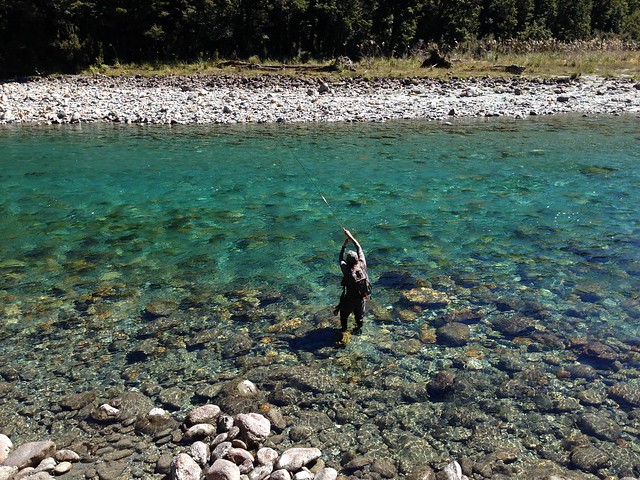
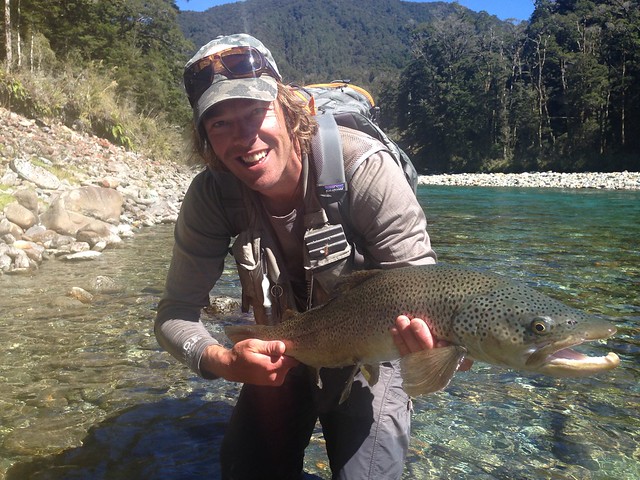
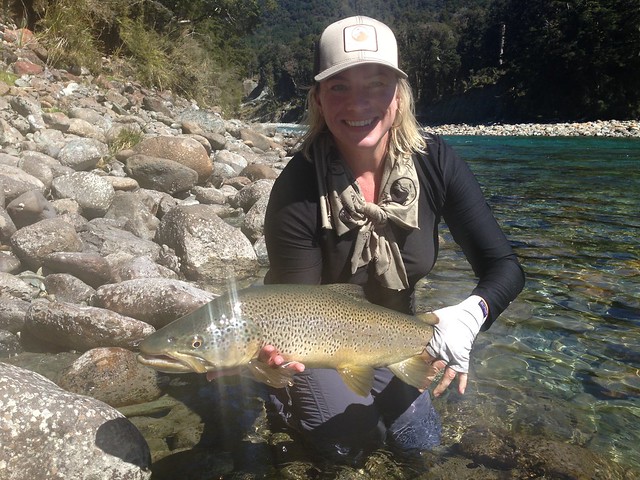
Chris and Shauna recently took ownership of a fly fishing lodge in New Zealand. Cedar Lodge is on the South Island of New Zealand and offers all-inclusive heli fly out fishing to amazing rivers with big trout.

The Daughters have been posting fishing reports and lodge projects throughout the year and you can read the posts here:

Helicopter fly fishing in New Zealand
Lodge Ownership Chapter 1
Cedar Lodge Adventure Update
Low Water on New Zealand’s South Island

Jay tackles saltwater fly fishing

For those of you who know Jay, you know he tends to get obsessed. This year, the obsession was saltwater fly fishing. He wrote a comprehensive introduction to the evolution of his saltwater fly tying. But the real treasure is the series of reports from the Oregon Coast.

July 19, 2013: Fish were as deep as 70 ft and as shallow as 10 ft, but most of our grabs came in the 30 – 40 ft depth range. Cast, let ‘er sink, feed line as the Dory drifts away from the fly, and then strip the fly back up through the schools of cooperative fish. No salmon this date, but tomorrow, who knows?

July 22, 2013: Ocean current was strong but we were able to get our flies down with careful line management; fish were more in the 30 – 40 ft depth range, more scattered, and more difficult to find. We found enough fish to hit doubles whenever we did find the fish and we found full crab pots too.

July 31, 2013: Calm ocean. Warmer water moving onshore. TONS of baitfish. Silvers on the surface in the morning. Black Rockfish at 15 ft all day long. Rockfish on the surface in the evening. None of it is easy. All of it is fun.

August 18, 2013: We cast the fly to Tuna, caught just enough to make our hearts full and open our minds to the possibilities out there west of our usual trout, salmon, steelhead, and carp haunts here in Oregon.

August 19, 2013: Tim spent a fair amount of time teasing a big Blue Shark at the boat, while we watched and cheered the shark as it repeatedly teased him right back with slow drive-bys and last-second rejections.

September 6, 2013: Silvers will often respond well to a trolled bucktail fly, right in the prop wash, but it is also a ton of fun to find the occasional salmon casting and stripping flies in the open ocean.

Speaking of saltwater fly fishing…
Captain Nate, former Oregon Saltwater fly fishing guide, had his bachelor party in the Texas surf late last fall.

The full moon rose over the Gulf. We drove three hours, land crabs scuttling across the headlights – eyes lighting up on the beams. We’d waited for the tide to go out to open up the beach, drinking hot rum in the Texas sun for eight hours before the trip even started…

Great fishing on our home waters
Let’s face it… the wild trout on the McKenzie and Willamette Rivers are so fantastic. The big flashy silver guys are cool, and the fish in far-flung locations are exciting. But our native trout provide some of the best fishing experiences around the Northwest.

Check out some reports from throughout the year:

Chris and Jay on the Lower McKenzie in Spring
Bull Trout on the Dry Fly in May
Fly fishing the upper sections in the Fall

Native trout conservation continues
Earlier this year, The Fly Fish Journal ran an article on the McKenzie River Hatchery Trout, bringing the plight of the McKenzie River Redside to a national audience. Also, Native Trout advocates launched a new Website to publish the latest information on the ongoing population and telemetry studies. Last, but certainly not least, we raised another $5,000 for habitat restoration on the McKenzie River with the help of some special guides and great anglers. That brings the grand total to $30,000 raised for McKenzie River Trust since the McKenzie River Two-Fly Tournament launched just a few years ago. And the McKenzie Flyfishers filed suit to reduce/remove hatchery spring chinook salmon from the McKenzie River! A good year for native fish on a wild river.

Fly fishing with Jimmy Carter for Mongolian Taimen

Another excellent writeup from Matt Ramsey on Mongolian Taimen. Some of the best writing and photos of the year, plus presidential cred.

For any fly fishing guide, there are special experiences that remind you why you are lucky to have chosen this path. The week with the Carters was just such a time. I got to stand shoulder to shoulder and thigh deep in the river with President Carter for the entire week. And one thing I learned is that you don’t get to be President of the United States by being a wuss. This guy just turned 89 on October 1st, and I am not exaggerating when I say that he out-fished and out-efforted every other client at the Lower Camp this year. He would fish the entire nine-hour day, fish or no fish, with a grit and determination that were frankly intimidating. And while others in the party would grouse about the slow fishing, he truly relished the process and punishment of hard-core taimen fishing.

Grand Slams in Cayo Largo

Fly fishing for tarpon, bonefish and permit is challenging. Catching all three species in one day, the vaunted “Grand Slam” is even more difficult. When opportunity arises to chase a slam it creates an exciting intensity to fly fishing like no other I have experienced. On our trip my wife Shauna and I had one of the most memorable and exciting fishing days our lives.

More trip report here.

Gratuitous 2013 winter steelhead fish porn

Missing Oregon
Settling into my second year in Ohio… looking back at all of the great posts this year is a little melancholy. Here are a couple love notes to my old home and friends. Looking forward to the next time I get back.

Painting my way back to the Northwest
First trip back to Oregon

Wishing you and yours a happy 2014 from the Caddis Fly Shop and Oregon Fly Fishing Blog. And thank you for contributing, reading, and just being a part of this project for the last six years.
-Matt Stansberry

Posted in Fishing Porn, Fishing Reports, Fly Fishing Travel | 1 Comment

New Redington Rods Get a Work Out Down Under

It’s Christmas break at Cedar Lodge and we don’t have guests for another week or so. It’s time for us to get some projects done around the lodge and do a little fishing.

I brought down some new gear to try out this season including the new “Vapen Red”, and “Butterstick” fly rods from Redington.

The Vapen Red 9ft 5wt is a perfect stick for New Zealand fly fishing.

I have tried a couple of different lines on it and have found that over-lining the rod is best for easy casting. A standard Rio Gold 5wt did not load the rod very well in normal trout fishing distances (20-40 feet). On the other hand a Rio Grand or SA Mastery GPX 5wt or even a 6wt loaded the rod much better, and allowed the rod to maintain excellent line speed. Casting in wind and with multiple fly rigs was achieved easier in my experience with the heavier line.

The Vapen Red is most notable for it’s Winn Grip handle configuration. The Winn Grip is a comfortable “red polymer” synthetic grip that is utilized in the golf industry. The grip is indeed very comfortable and “grippy” the no slip claim is very true. The softer than cork grip also reduces the “death grip” tendency some anglers get when they are in deep concentration mode while casting.

There are several line weights available in the new fiberglass Butter Stick fly rod from Redington. I chose the 7.5ft 4wt version. It’s most likely a bit light for much of the fishing in New Zealand but it’s not my everyday go to rod ( 590-4 Sage ONE). I figured I would use the Butter Stick in smaller streams, backwaters, and windless evenings around the lodge. The rod is a blast to fish with, and is surprisingly effective in delivering medium to large dry flies at reasonable distances. The Butter Stick is fantastic with a fish on as it’s fiberglass construction gives you a fully loaded/bent rod with fish of any size on the line.
I have been using the Butter Stick as my instruction rod with the kids. At six and nine they are starting to really get interested in casting. The slow action of the Butter Stick makes the caster slow down and concentrate on that hard stop at the top of the stroke and smooth finish at the end of the front cast. I wouldn’t say the rod is overly forgiving on the lawn practice casting. It takes good timing and a good back cast to make things go without the “water load” one gets on a lake or river.

Overall both the Vapen Red and the Butter Stick Fly Rod models are excellent and some of the best work Redington has done in some time in my opinion.

CD

Posted in Fishing Reports, Fly Fishing Gear Review, Fly Fishing Travel | Leave a comment

Hottest New Fly Tying Tool: Marc Petitjean Stacker

This new Petitjean product is one of the most exciting innovations in Fly tying tools we have ever seen, no kidding. Marc Petitjean is a creative blend of fly tyer, innovator, and engineer. His tools really work and work. Not by accident, by design.

Other new additions from Marc include the Premier series of C Clamp and Base vises for traditional hooks and for tubes.  The 4 vises in the Premier series are a welcome addition to the Petitjean line because they provide a lower price, more easily transportable vise option with no sacrifice in hook/tube holding and tying effectiveness.  Top quality and great versatility locked up in this Premier Series of new vises.

Marc has a nice Tool Rack for us to hang on the stem of any of his vises too.

Traditional hair stackers are great, we have used them for decades, and this is no replacement, but they have limitations the Magic Tool Stacker overcomes. Seriously, though, Marc should have called this tool a wing CLUMPER instead of a stacker, to avoid confusion with the usual stackers we have used over the years.

Realistically, as we said, this might better be called a CLUMPER than a STACKER.

Here is why. When we think about our tap-tap-tap hair stackers, we want to end up with deer or elk hair that have their tips all exactly the same length. This is accomplished with gravity with the hair tips down, and then we grasp the bundle and remove it from a tube and tie in the wing with tips all nicely aligned.

The Petitjean Stacker is different indeed.

The Petitean Stacker works in concert with the Magic Tool Clamps, so you need to have a set Magic Tool Clamps already, because the Stacker is essentially an add on devise to make the clamps even more versatile. Remember that the Clamps come in MT1 Regular and MT2 Magnum sizes, but the Stacker functions perfectly with both sizes of clamps.

Essentially, you grasp fibers in one of your Petitjean Magic Tool Clamps and the Stacker allows you to neatly slide all the fibers down to one end of the clamp where you may now grasp it, and then tie it in as a wing. Surprisingly, this process works with materials as diverse as marabou, CDC, hackle fibers, deer, elk, moose, and a variety of synthetics and blends.

From CDC and Parachute Posts, tiny deer hair wings, to full size wings for steelhead and saltwater flies, the Petitjean Magic Tool Stacker will produce great wings that have eye and fish appeal.

Sure one may just grasp these materials and make a wing, but this tool makes quick consistent work of the job and produces superior wings.

The Petitjean Magic Tool Stacker includes a fold out Fiber Plucker and Fiber Comb that make for really precise and elegant fly hackle and wing finishing touches.

Below is an excellent video that demonstrates the Petitjean Magic Tool Stacker. The video has some really nice techniques aside from excellent instruction.

We see a lot of great innovation in both materials and tools coming along these days, and this Petitjean tool really stands out in terms of it’s innovation and versatility.

Give us a call or drop an email to the Caddis Fly if we can help you select the proper tools for any of your fly tying needs.

CD

Posted in Fly Tying, Fly Tying Materials and Supplies | 1 Comment

Caddis Fly Staff Picks: Three Must Have Fishing Items

With only a few days before the Fat Man comes down the chimney, Chris D. asked the Caddis Fly Shop team to select three favorite items we would always take fishing. As you can imagine they vary but, these are items we all use when we do go out. Enjoy the list, and of course, the holidays! Best wishes to all, and to all….tight lines!

Bryson
Thingamabobber Half and Half
Dr Slick Scissor Clamps
Patagonia Boat Bag

Austin
Echo Carbon Fly Rod 5wt
Dr Slick Nippers
Patagonia Chest Pack (on sale!)

Clay
Simms Guide Jacket
Simms Bibs
Scott Radian 10 ft 7 wt

Lou
Fish Pond Blue River Pack
Shimazaki Dry Shake
Rising Nippers

Peter
Nautilus Reel (FWX)
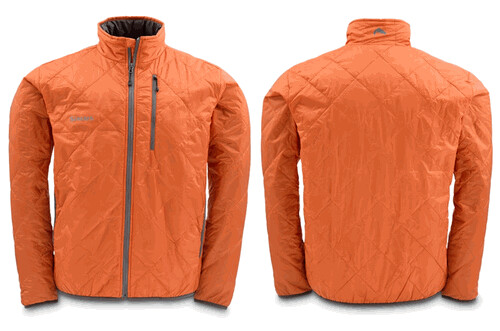
Simms PAC Light Jacket
Bombay Sapphire or enough beer to get me through the day!

Ty
Simms Contender Jacket
Clown Egg
Rising Ultra light Tool


Andrew
Storm Front Hip Pack ( Patagonia)
Mow Tips
G3 Simms Waders

Zack
Simms Hat
Tie Fast Tool
Simms Bottle Opener

Jay N. Last, but certainly, from amongst us all, there is no way our teammate Jay can have only three!

Streamworks Night Hawk Pliers
Abel Nippers
Cliff Bugger Barn
Hydo Flask
Simms Rivershed Sweater

Posted in Fly Fishing Gear Review | 1 Comment

Saltwater Fly Tying: Tips for using Clear Cure Goo

Very frankly, I was not an instant fan of the Clear Cure Goo Product line.  I tried it a little when tying Salmon and Steelhead flies, sometimes applying Goo on top of a fly head already treated with a conventional fly tying cement.  Perhaps not the best choice.  My first curing lamps were not very good, and I did not like the sticky feel of the heads.

So I put the Goo aside and resumed tying my usual Chinook Comets and Muddlers, Rabbit Leech tubes, Sea-Run Cutthroat flies, and the like.

My first encounter with Cure Goo, thusly, was as a tyer focused almost entirely on my usual range of freshwater trout flies plus my typical river/estuary salmon and steelhead flies.

Fact is, my early Cure Goo trials were not sufficient to reveal the Goo’s potential, because my trials were applied on less than a handful of flies, and because I had virtually no experience with tyng flies principally designed for saltwater species, a genre where various epoxies are often required to secure eyes and create sturdy fly heads.

That all changed over the last year, when I immersed myself deep in the brine of saltwater specialty patterns.   This occurred because I decided to veer completely outside my comfort zone and explore the possibility that some of the flies people use to target Stripers, Blues, Snook, Tarpon, and Redfish might be productive here in the Pacific too.

This quest led me into the world of synthetic materials and big eyes on baitfish patterns, the likes of which were mostly new to me.  I dusted off my Cure Goo bottles, and went to work tying.  I watched YouTube videos by the dozen, tried to imitate them, and cringed as tyers stated that the flies they were demonstrating were easy to tie, while I struggled ineptly to match their work.

Roughly a year into the effort, my skill-set tying saltwater flies is much improved, and my opinion of Clear Cure Goo has shifted from ho-hum to absolute devotion.  I now view the Goo as an essential product on my tying bench, have found uses for the Goo on my traditional freshwater and estuary flies.

I disagree with tyers who imply that using the Goo is superficially intuitive or that every fly tyer will pick up the skills during his or her first session with the stuff.  You might, but I did not.  I say this to give comfort to anyone who finds themselves messing up like I did, and to reassure you that if you stick with it, you will get the hang of the Goo, and I believe that you also will be pleased that you mastered the skills, and that the Goo is a great addition to your fly tying materials.

Tip 1.  Paper towels and micro brushes. The first thing I do when sitting at the bench to use Clear Cure Goo is to take 3 or 4 paper towels and cut them into pieces that are in the 3×3” size range.  Now I have a nice stack of little towels that I will certainly need to use wiping extra goo off applicator bottles, fingers, the desk and so on.  Second thing I do is to get my bottle of Micro Brushes within reach.  These are useful to help shape heads, tame drips, and clear hook eyes on occasion.  Use something else if you wish, but the Micro Brushes are very handy.

Tip 2.  Combining bottles. It is not much fun working with a bottle of Goo that is less than half full.  This is true for me using an applicator brush or squeeze nozzle.  The brush must be dipped deep to get enough Goo, or the bottle must be squeezed repeatedly to purge air before the liquid will flow.  So I make a point of keeping my bottles at the ¾ to full level by adding from a back-stock of Goo.  I suggest buying two bottles of any product you will be using and frequently topping off the bottle that you are working from.  This is a huge time saver over wrestling with a single bottle until it is empty.

Tip 3.  Using the brush when goo level is low. See above note about keeping bottles topped off.  It is a miserable time-sink to dip from an almost empty bottle of Goo.

Tip 4.  Which curing lamp is right for you? The most expensive lamp cures the Goo the fastest.  Unless your use of Cure Goo will be on rare occasion, you will achieve time and temper efficiencies by using the most powerful curing lamp.

Tip 5.  Leaving light on. Don’t do it.  I have had a tendency to fail to click my lamp off and put it on the table, upright.  In this position, I have no clue that the lamp is still on until I next reach for it, find it is rather warm, and then wonder how many minutes of expensive battery life I just wasted.  You might try leaving the lamp horizontal with the bulbs facing you or just make double sure the lamp is off before placing it upright on your bench.

Tip 6.  Aiming the curing lamp at Goo bottles. Not good.  Obviously the lamp cures the Goo, and this is sometimes an accident of placing a Goo bottle under the fly in progress while using the lamp; shining the lamp on the fly simultaneously cures Goo on the fly and the applicator tip.  Prevent this by placing the Goo bottle well to the side of the desk under the fly in the vise.

Tip 7.  Syringe versus nozzle head. Some folks have mastered the use of the syringe.  I am not one of these master tyers.  I push on the plunger until too much Goo squirts out, then I have to grab the plunger and retract it to remove pressure (otherwise it will continue to ooze Goo when I set it down.  Instead, I purchase Thick Goo in the syringe and transfer it into a squeeze bottle with a large applicator tip.  I find that I have better control over the rate of Goo ejection from the squeeze bottle.  If you are good with the Syringe, more power to you; I have just decided that the bottle application is better suited to my temperament and skill-set.

Tip 8.  Get the Cure Goo accessory tips set. This set includes several straight and curved application tips that fit on any of the bottles and the syringe.  It also includes a few spare tip caps.  This set is well worth the investment; sometimes applicator tips get so clogged that it is far better to replace them than struggle to un-foul them.  If you do purchase the accessory set, I bet you will use it.

Tip 9.  Hand cleaning with alcohol based hand sanitizer. My fingers get sticky with Goo.  A pump bottle of hand sanitizer makes it easy to get the sticky off.

Tip 10.  Cleaning drips off desk.  I use the hand sanitizer for still wet drips or a razor blade for semi cured blobs.

Tip 11.  Cleaning out applicator tips and sticky bottles.  A needle helps, plus a set of pliers to grasp the needle to pull it out.  Some bodkins are just the right diameter to work also, as are some tube mandrels.  Try not to jam one of these sharp things through your finger.  I have done this and it hurts.  It hurts a lot.  The paper towels are in constant use wiping off fingers and the applicator nozzles and the bottles, which seem to get sticky fairly quickly.  None of this is a big deal, just routine maintenance.

Tip 12. Attaching eyes. This can only be learned by fiddling around and practice.  Small eyes do not require much Goo, and a dab of thin or tack free in the gap between top and bottom of eyes might do the trick.  Big eyes with large gaps will almost certainly require a lot of the thick goo plus a quick coat of Hydro to seal off the stickiness when you are finished.  Eyes placed on winging materials may require a buildup of Goo all around the eyes, in essence creating a baitfish head with the eyes in the center.  These Goo heads require practice and just be patient and plod through it like an artist in residence, learning the tricks of the trade.

Tip 13.  Goo will sink into winging materials. Depending on circumstances, I may let a lot of Goo sink in before curing with my lamp.  Other times, I will hit the lamp fairly early; this is something one must just play with to get a feel for when enough is enough.

Tip 14.  Cure time. Hydro cures in but a few seconds.  Very thick Goo requires perhaps ten seconds.  Go at it and you will figure it out.  You may always shine the light again if you wish.  Remember, I use the hi power lamp, a weaker lamp will take longer.  And yes, you could leave your flies out in the sun after a quick hit with a weak lamp, but this seems less effective than simply getting the good lamp in the first place.

Tip 15.  Layering Goo.  I often create fly heads on baitfish in layers, applying the cure lamp at each successive stage.

Tip 16.  Using a rotating vise. Gosh, this seems really important for a lot of the saltwater fly patterns I have been working with, and it is a huge help when working with Cure Goo also.  Each fly vise has its own quirks, but the ability to rotate a vise head to see where one is placing the Goo, and to more evenly distribute pre-cured Goo is a significant advantage.

Thick Cure Goo. I use this stuff to fill the biggest spaces between the largest eyes, and to form the largest epoxy-like heads.

Tack free Cure Goo. I probably use this Goo the most often.  It cures non-tacky, is almost as thick as thick, and it very broadly useful securing eyes and serving as an epoxy replacement.

Thin Cure Goo. I keep this handy to fill in the smaller spaces where I failed to get proper coverage with a thicker Goo around hook eyes and fly eyes.  When just a little Goo is needed, the Thin product is probably easiest and best for the job.

Tack free flex Cure Goo. This works for Surf Candy Flies and to build up heads around eyes on baitfish flies.  It really does stay flexible.  I often use this to stiffen the base of tail materials on baitfish flies in order to reduce the tendency of the materials to foul or wrap around the hook shank when casting in windy conditions.  Nice stuff to play with.

Hydro Cure Goo. I have taken to using Hydro throughout fly construction as well as the finish coat on mono and traditional threads at the fly’s head.  I have tried the brush as well as the fine tip applicator, and I by far prefer the needle like applicator tip.  Hydro is about the consistency of water and cures nearly instantly when the lamp is turned on.  Try starting a fly by laying down a thread base, squeezing on a thin layer of Hydro, and zapping it with the lamp.  This forms a secure foundation for any fly you will build on the base.  I also apply a drop of Hydro at various points during the fly’s construction to provide secure hold on synthetics and minimize the need for thread build-up.

Thick Fleck Goo. Nice incorporation of sparkle for fly heads and Surf Candy style flies.

Hope these ideas help.

Jay Nicholas, August 2013

Posted in Fly Tying, Fly Tying Materials and Supplies | 3 Comments

Coastal Steelhead Report

Siletz Last

This week provided some decent fishing on the coastal streams for steelhead. I had Clay and Andrew, my work teammates aboard “the beast.” We decided Monday would be our day. It proved to be a great day on the coast. Andrew was first on the scoreboard with what we thought was a nice steelhead. Turned out it was a late arriving Coho!

Siletz 20

Siletz 16

Clay then got into the action with a fine jack steelhead. We were hopeful this fish would be a symbol of what could be an even better day. It did not take long!

Siletz 19

Using an egg pattern, Clay hit one out of the park with a taped out 33″ in length, 16″ girth, hatchery steelhead. This hatchery “piggy” still had some sea lice. It was a keystone cop moment as the fish raced up and down, and around us. Rowing “the beast” with the fish rolling, and leaping, down the river provided some comical moments. We finally were able to get the bank and take some pictures.

Siletz 17

Siletz 13

As we headed down river we were greeted with clearing sky and cooler temps. Anglers should be hitting the lower stretches of the coastal streams. It looks like we are still in for a dry period and low water winter conditions. We need some storms!

Siletz 18

LV

Posted in Coastal Steelhead Fishing, Fishing Reports, Oregon Winter Steelhead Fishing | Leave a comment

Caddis Fly Christmas Party Tonight

We will miss this years party but not the weather. Patsy, Cash, Shauna and Chris wish everyone a very merry holiday season.

Please join us for our annual Christmas party at the shop on December 19th from 4-830ish. A discount of 10% will be extended to all in stock purchases during party hours.

Food, beverage, cheer and last minute gift specials will be served up at the shop. Please stop by and let us say thanks to you for your patronage over the years.

Cedar Lodge Golf Course 2013

Posted in Oregon Fly Fishing Clubs and Events | 1 Comment

Op-Ed in Register Guard: McKenzie Hatchery Lawsuit

Yesterday, Caddis Fly Shop Owner Chris Daughters’ Op-Ed ran in the Register-Guard, in support of the McKenzie Flyfishers and Steamboaters lawsuit, filed earlier this month regarding hatchery spring chinook on the McKenzie River.

Chinook Spawning McKenzie River

An excerpt of the column is here:

The state Department of Fish and Wildlife claims that its No. 1 priority is to maintain and improve wild spring chinook salmon in the McKenzie. However, you might be surprised to learn that in the years since the listing of the wild spring chinook as threatened, the department has continued hatchery operations that harm wild spring chinook without an open, public assessment of how its hatcheries are run.

Each year, the department breeds and releases more than 1 million hatchery-raised chinook salmon into the McKenzie. But for at least a decade, fish biologists — including those within the department — have noted that hatchery fish have harmful effects on the survival of wild fish.

Read the piece and comment on the blog or the RG site. And thanks for your support of wild, native fish.

Posted in Oregon Conservation News | 2 Comments

SAGE METHOD Switch Rod Review: Thumbs up for Kings

Here we are on the trailing end of the 2013 Chinook Season and it’s time for me to muse over snippets from the season– one being more time fishing with Switch rods for Kings.

Short story: I have come to keep a couple of switch rods in my boat every day and I think you would find it well worth your time to play around with these sub-12 footers.

George Cook was kind enough to loan me his brand spankin’ new SAGE METHOD 8 wt this season, on very short notice, and I promptly put it under strain the very first day it arrived via UPS to my Pacific City fishing Lair. I told Georgie that I thought it would be a great asset but I really had little idea just how much I would fish the rod (every day) and how many fish it would tame for me (many).

Not being one to blather about cosmetics, I’ll just say that this is a NEW-EDITION high-end SAGE rod, priced at just under nine hundred bucks, so if you know SAGE, you know that their rods from entry level to top of the heap have solid components, and that the high end rods have really great components.

Rod color and action: Magma Red is the designer color of these METHOD rod shafts; the action is described as ULTRA FAST, a classification I wholeheartedly agree with; and yes, SAGE’s KONNETIC technology is imbedded in this rod series, so it delivers the true tracking and minimalist recovery we came to appreciate with the SAGE ONE rod series.

METHOD Rod Length: 11 ft 9 inch.

Switch Rod/Line wts available: 6-9, (I fished the 8 wt METHOD Switch)

Why fish a Switch rod versus single hander? Every rod has advantages in different circumstances. Wouldn’t want to limit myself to one rod, unless pressed to do so. Here is when I would like to fish a Switch rod for kings.

Anytime my Back-cast is impaired by rocks, bridge pilings, clay banks, trees, or brush close behind me. This is a commonplace situation for anyone fishing salmon and steelhead. The switch rod makes possible a true Spey style cast using floating line (with or without sink tip) from a position where a back cast with single hand rod is just plain impossible.

Fishing Strike Indicators: yes folks, fishing all sorts of flies under Strike Indicators is deadly in the right place and right time, this being true for kings as much so as steelhead. The indicator is a great way to present a dead drift, stripped, and swung fly to Chinook. No bull.

Lines fished: RIO Switch Chucker 8 wt, Airflo Power Fly 9 wt; RIO Outbound Short (from full floating to type 6 sink (all in 9 wt); RIO Outbound Short Shooting Heads in floating, Intermediate, Type 3 and Type 6; AIRFLO Sniper full floating 9 wt; Wulff Ambush 9-11 wt.

Tips fished on floating lines: RIO 10 and 15 ft sink tips in floating, Intermediate, Type 3 and Type 6; Airflo Poly leaders; AIRFLO Custom Cut Tips.

Shooting Lines fished: RIO floating shooting line, RIO GripShooter; Airflo 30# floating and Intermediate running line; RIO Slickshooter 44#.

Casting styles applied: traditional overhead casting; snap T; Double Spey; nothing fancy. I know that Switch rods are intended for specialized lines and casting techniques, but often I would just slap on a reel with my shooting line and fish it with the Switch rod.  Clearly, I have not yet been able to experience the high end of the casting skills qualities of this rod, only because I have been so focused on keeping flies wet and taming fish.

Fish Fighting power of the SAGE METHOD Switch rod. These are very powerful rods and are well up to the challenge of modest King salmon in the sub 30 pound class, I’m betting the 9 wt would handle the big boys. These slightly longer rods provide some advantage over single handers, I think, maneuvering Kings, and it is really fun to fight a big fish on these rods. There is a tipping point, however, where a too-long rod becomes difficult to handle in a boat by yourself. This is why I like the sub 12 ft Switch rods better than the longer true Spey rods – when it comes time to net a Chinook, the longer rods are more of a challenge to get my net up close and personal with the salmon. For pure netting ease, the 9 ft rod is easier than the Switch Rod, but I like the fly presentation and fish fighting abilities of the METHOD enough to deal with a little extra challenge on the net end of the battle. Beaching, of course, is straightforward with the Switch rod.

Beaching Fish with Switch Rods: after watching far too many YouTube videos I see a common error repeatedly featured by anglers beaching salmon and steelhead with long rods. Heck, they do the same thing with short rods too, and it is so simple to avoid if you just think about it.

Please don’t: stand right at water’s edge, lift your rod straight up, and try to bring the salmon or steelhead ashore immediately at your feet. Why? Bad rod angle, it puts too much stress on rod, you have practically no leverage and virtually no control in steering the fish, and you will have a very short line-length to cushion our tippet when the fish head-shakes.

Try this instead: stand or walk back as far as reasonable from the water’s edge, fifteen feet if possible. This gives you a low rod angle, more control over the fish, and more cushion in rod and line to protect your tippet from stress at the time when the most pressure is often applied. By standing back from the water’s edge you can steer the fish into shallow water and have far more control than the fellow who tries to land the fish with rod straight up to the sky.

When you fish from a boat, alone, you are forced into the worst possible position described above to bring a chinook into the net. Whenever I am able, I will beach my boat and land fish on beach or eelgrass banks rather than do the solo net job.

Light and powerful: seriously light rods, almost freaky light for their power, but METHOD Switch rods have solid power clear through the butt. The METHOD has serious lifting power, and this is super important when fighting Kings. A steelhead will tire itself with a little pressure applied from a light rod, but a Chinook typically will not, and I like to have a firm powerful rod that will keep solid pressure on the fish to bring it to the boat or beach.

Comfortable to handle? Pardon the pun but yes. The METHOD Switch has downsized grip length compared to the longer Spey rods, but up-sized compared to the single hand rods.

Is Switch Rod Chinook fishing in your future? Don’t know. I recommend that any serious salmon angler include switch rods in their arsenal of fly fishing tools. They will allow you to cast from places where you would otherwise not be able to, and they will put indicator fishing into your bag of tricks, both of these factors will simply give you more chances to get the grab on any given day on the water.

Is the SAGE METHOD Switch  a superior rod for kings? Georgie, you want it back? Ha ha –  I can report that I tamed many salmon on the METHOD this fall.  The rod’s power as applied to hook setting (at distance) plus lifting power close-in is I think superior to the majority of 8 and 9 wt Switch rods available on the market these days.   I can also report that this rod has casting and fishing capabilities that I have not fully tested, but I sure as heck will when I’m fishing for winter steelhead this season, even with George trying to chase me down in the Coast Range.

Jay Nicholas
December 2013

Posted in Fly Fishing Gear Review, Oregon Salmon fly fishing | 1 Comment

Saltwater Fly Tying: Introduction


I have tied flies for something over five decades, but until recently I tied relatively few patterns that could properly be classified as pure Saltwater Specialty flies. Being predictably unpredictable, I stepped away from my usual range of flies about a year ago and resolved to dig deep into the Saltwater fly world. Oh my, what an adventure.

This blog post represents a quick update on what I’ve been up to in the fly tying universe, and an effort to share my enthusiasm and a few learning moments related to tying saltwater flies.

I’ve been tying flies like Decievers, SeaDucers, Surf Candy flies, Clousers, Gurglers, Poppers, Crabs, Shrimp, Trolling Bucktails, Baitfish tubes, and a wide range of baitfish patterns on hooks, with finished flies that range from 2” to 6”. I’ve also been fishing these flies in the ocean and in estuaries, seeing how they swim, how they hold up to fish teeth, and whether in fact fish will eat them.

I’m going to get the ball rolling with this post to most briefly introduce the world of Saltwater flies to people like me – a year ago – who had but little experience with these weird critters.

Here we go.

Are Saltwater and Freshwater fly tying different? Yes, yes, and yes. Over forty years tying traditional flies in the trout, steelhead, and salmon section of the Fly Shop were a good introduction to tying saltwater specialty flies, but I still had a big transition to make before my saltwater flies looked right and fished properly. If you want to learn how to tie saltwater flies and have fun yourself , why not give it a go?

Vises for Saltwater fly tying: My current fly vises (NorVise and Regal
Full Rotating Vise
) are the standard models and are marginally acceptable for 3/0 and 4/0 hooks. Plenty of Saltwater flies are tied using hooks in the #1/0 – # 8 size-range, so you may be fine with your existing vise. In my case, I want to tie a lot of 3/0 and larger flies, so I have purchased a specialty head for each of my vises. Chances are good that your current vise will perform just fine for most of the saltwater flies you might want to tie; I suggest that you experiment to find out if your existing vise is really able to accommodate the hooks you will be using (it probably is), and be prepared to purchase an additional head for larger hooks if you decide to tie on 2/0 and larger hooks.

A rotating vise is essential. OK, maybe not essential, but really handy. You’ll see.

Saltwater hook styles. I never appreciated the Mustad 3407 hook before. Now I love the hook. Sure it must be sharpened before use, but it looks nice, and the fly swims well on the hook. Other great SW hooks include the Gamakatsu SC 17; Gamakatsu SC 15; Gamakatsu S 12 S; TMC811-S, and TMC 811. The Daiichi X-Point DX452 and Daiichi Saltwater D2546 are very good hooks too. There are others good saltwater hooks including Mustad and Eagle Claw brands, but this list is a start and these are hooks I have personal experience with to date.

Why use big hooks? I always thought that saltwater tyers used hooks far too large, but then I tried actually fishing these flies and it all came together that I was in fact not smarter than the cadre of striper, Snook, tarpon, and redfish fly tyers. Big bulky baitfish flies swim better when tied on large heavy hooks than when tied on smaller lighter wire hooks. It is so simple, and now I get it. Yes, it does require more tension to pull heavy wire into fish’s jaws, but the bones are tough and the hook weight is needed as a keel to allow the fly to swim properly. The Prospect of fishing a 4/0 heavy wire hook on #12 tippet seemed insane before, but now that I am fishing the bulky baitfish flies myself, and now that I think about the jaw bone structure of the target species for many of these flies; the use of big heavy wire hooks just makes sense.

Saltwater Tying Threads: Mono and traditional threads. Some tyers recommend using Kevlar thread. I still can’t see the point, but I may be shortsighted on this point. To date, I have had very good experience using threads like Danvilles 210 D Flat Waxed thread; Ultra Thread 140 D, Veevus Stomach Body Thread, and I especially have enjoyed using mono threads like Danvilles fine mono and Uni Mono thread. I think the mono threads really come in handy when tying baitfish patterns that will be finished with eyes and Clear Cure Goo. The use of mono threads and the Goo has reminded me about minimalist tying – where if 3 wraps of thread and a dab of Hydro are plenty of security, there is no need to apply twenty wraps of thread. I find that Saltwater Clousers and Bucktails can be tied with either mono or traditional threads, but again, the size of the fly and relative bulk of the finished head will guide you towards selection of a thread that is right-sized for the job.

Natural materials for wings. Although many saltwater flies use synthetic materials, there is good reason to use many of our traditional natural materials in the salt brine too, and these include our favorite Bucktail, Fox, and Rabbit Zonker strips at the very least. Bucktail is a natural material that is absolutely fantastic for use in flies designed for use in both freshwater and salt, and the Clouser Deep Minnow style of fly is a perfect example. The Clouser may be tied with synthetics also, and the synthetics may offer perks in terms of already-incorporated flash or durability, but for pure fish catching properties, I believe it is really difficult to surpass the qualities of natural Bucktail. Similarly, the Arctic Fox or Rabbit Zonker strips we use to tie our river flies for Atlantic salmon, Pacific Salmon, steelhead, and trout are often very good choices for winging a wide variety of saltwater baitfish flies.

Feathers, saddles & neck hackles for tying saltwater flies. People who specialize in tying flies for Musky, Pike, and Bass have a close kinship with tyers who specialize in baitfish patterns for offshore species. These flies tend to emphasize feathers like saddles and large neck hackles for tails and wings. The trout anglers may require very narrow feathers to wind around a hook, but the saltwater or Pike fly tyer will look at the same feather and like the fact that it is 12” long and strongly marked never noticing whether the feathers are wide or narrow. Point here is that many of the flies we would not find useful for our trout or steelhead flies make for great saltwater flies.

Flash materials for saltwater flies. We use flash in freshwater flies, but the saltwater fly styles are often a little flashier and then the Pike and Musky flies add even more flash to the game. Saltwater specialty flash materials are sometimes wider, stiffer, and tougher than flash materials intended principally for freshwater flies. This extra measure of firmness is intended to make for more durable flies that will withstand the wear-and-tear of toothy critters.

Dumbbells, Cones, and Eyes for saltwater flies. We may use very similar dumbbell eyes, cones, and eyes on smaller saltwater flies, say in the #2 – #8 range. When it gets to flies in the 1/0 and larger sizes, we are likely to reach for the XL dumbbells and cones, and to use larger stick-on eyes for our baitfish patterns.

Cure goo versus Epoxy to secure and finish our saltwater flies. I’ve covered this topic in a different post, but suffice to say, the Cure Goo is absolutely essential on my saltwater flies, and it should be on yours too.

Synthetic winging materials: tying-in securely. Some wing materials may be tied in just as we would tie in Arctic Fox or Bucktail; the fibers compress and will be held securely by a little thread or a lot if we want a bulky head on the fly. Some synthetic winging materials do not compress and should be super glued, lashed down very tightly, or tied in reverse-style. My preference is to use the reverse-tie-in method. Basically, this means tying the wing in facing forward, applying a drop or two of Cure Goo Hydro to the tie-in, and then reversing the wing and lashing it down with a few more turns of thread (regular or mono). When doing this, one may build multi colored wings in several layers or in a single tie-in by stacking wing colors and putting the darkest material on the bottom as the forward tie-in is executed. By doing this, the reversed wing will have the proper arrangement of colors with the darkest on the top of the baitfish fly.

Synthetic winging materials: tapering. Baitfish wings that are tied with synthetics look better if you taper the materials so that the fibers are a variety of lengths, instead of just cutting straight across the material. Taperizing scissors can help in this department, and you can feather the tips of synthetics to achieve a variety of fiber lengths by gently pulling out some of the tips and by rolling the bunch to better distribute the different lengths.

Hook fouling issues and solutions. Hook fouling refers to what happens when the tail or wing of the fly wraps under the hook and the fly does not swim as intended. This can be a minor issue if a few strands of Bucktail on a Clouser wrap around the hook shank or a major issue when a Deceiver with a very long tail gets tail-wrapped (same deal when a baitfish fly tied with long materials fouls around a short shank hook). There are a variety of strategies to reduce fouling, including weed guards, “posting” thread around the base of tails, foam or mono shelves tied under tails to keep them upright, and using epoxy (cure goo) to keep the winging material at an elevated angle above the hook’s plane. All of these are helpful, and all have weaknesses. Some flies are foul-proof as a virtue of their design, as in, they have very short tails and their wings are shorter than the bend of the hook. In fishing experience, making good casts is a great anti-fouling measure, and I have reached the stage where I don’t worry overly about fouling. That said, it is important to think about the issue and see how your own flies perform, given each individual’s casting style and fishing conditions (wind is not our friend in the fly fouling department). This topic deserves greater attention in the detailed instructions and videos for tying specific patterns.

Tying saltwater flies on hooks versus tubes. In my opinion, the use of Tube flies is not nearly as common as it will be in five to ten years. Some flies don’t make much sense tied as tubes: say for example a Bonefish Gotcha or many Crab patterns. On the other hand, I currently believe that many flies in the saltwater, Pike, and Musky realm make a lot of sense to tie on Tubes. The longer it takes to tie a fly, the bigger the fly, and the greater the beating a fish will give the fly – all of these factors hint at the potential advantages of tying the fly on a tube instead of on a hook shank.

I’ve experimented with a wide variety of baitfish flies and compared their effectiveness and durability tied on hooks versus tubes. For many of these flies, the tubes fished just as effectively on tubes and proved far more durable than a similar fly tied on a hook shank. I also found some fly patterns that just didn’t look right when I tried to tie them on tubes. Smaller-size Surf Candy style flies are an example, as are very small Clousers (say, sizes 6 & 8 in sub-2”). Larger size Surf Candy flies and Clousers fished and performed effectively, and allowed me to replace saltwater- and pliers-damaged hooks on still perfectly good tube flies.

I’ve learned that there are a growing number of tyers producing and fishing saltwater flies on tubes; this is true as well for the Musky and Pike fly world. These tyers are both innovative and demanding, and I think that it is worth our while to devote serious thought and bench time to tying tubes. Where Tube flies are concerned, Scandinavian Atlantic Salmon anglers are decades ahead of us here in the Pacific Northwest, as are European Sea Trout and Pike anglers. My fledgling efforts tying and fishing tube flies for saltwater have been entirely satisfying – expect to see plenty of tube flies in our upcoming video series, including tube poppers and Gurglers in addition to tube trolling and casting flies.

New Synthetics for Saltwater Fly Wings. We have had several synthetic materials like Fishair, Polar Flash, and Craft Fur for a long time, plus others that I am not very familiar with. Of late, we have a family of synthetic winging materials from Enrico Puglesi and Steve Farrar. While similar, the EP and SF family of synthetics offer some different properties with more or less flash already incorporated, and of both similar and distinct fiber stiffness and texture.

These materials and others like Baitfish Emulator and Shimmer Fringe Minnow Back merit your attention, and many will be featured in the upcoming series of saltwater fly tying videos we will produce for the Oregon Fly Fishing Blog.

Saltwater fly tying with Brushes. Enrico Puglesi has produced a series of brushes on stainless steel wire that are specifically designed for tying saltwater flies. I had already discovered these brushes a year ago tying steelhead and salmon flies, but my new venture into tying everything salty from baitfish to crabs and shrimp this year led me to several other EP brushes including the EP Foxy Brush, EP Anadromous Brush, EP Sparkle Brush, EP Crustacean Brush, and EP Shrimp Brush. These will all be shown in use in fly videos. I have been especially fond of several of these brushes to use for baitfish bellies. Imagine that.

Securing eyes on flies. This is a skill unto itself, and encompasses different techniques depending on the size of the fly and they eyes and how they are placed on the fly. Our videos will review techniques including applying Super Glue on surface of wing material, applying a blob of Cure goo to the gap between top and bottom of eyes, applying a bead of Cure goo to form a head around the eyes, deciding whether or not to pinch eyes between your fingers while curing Goo, the necessity to rotate the fly in your vise to establish the Goo shape around eyes, whether or not to add a finish coat of Hydro Goo, and applying eyes to flies tied on hooks versus flies tied on tubes.

‘Nuff for a start. Time to get tying saltwater flies and let the tips and ideas flowing at the bench.

Hope you have a ton of fun with these flies – as I am.

Jay Nicholas, September 2013

Posted in Fly Tying, Fly Tying Materials and Supplies, Oregon Saltwater Fishing | 3 Comments