Saltwater Fly Tying: Tips for using Clear Cure Goo

Very frankly, I was not an instant fan of the Clear Cure Goo Product line.  I tried it a little when tying Salmon and Steelhead flies, sometimes applying Goo on top of a fly head already treated with a conventional fly tying cement.  Perhaps not the best choice.  My first curing lamps were not very good, and I did not like the sticky feel of the heads.

So I put the Goo aside and resumed tying my usual Chinook Comets and Muddlers, Rabbit Leech tubes, Sea-Run Cutthroat flies, and the like.

My first encounter with Cure Goo, thusly, was as a tyer focused almost entirely on my usual range of freshwater trout flies plus my typical river/estuary salmon and steelhead flies.

Fact is, my early Cure Goo trials were not sufficient to reveal the Goo’s potential, because my trials were applied on less than a handful of flies, and because I had virtually no experience with tyng flies principally designed for saltwater species, a genre where various epoxies are often required to secure eyes and create sturdy fly heads.

That all changed over the last year, when I immersed myself deep in the brine of saltwater specialty patterns.   This occurred because I decided to veer completely outside my comfort zone and explore the possibility that some of the flies people use to target Stripers, Blues, Snook, Tarpon, and Redfish might be productive here in the Pacific too.

This quest led me into the world of synthetic materials and big eyes on baitfish patterns, the likes of which were mostly new to me.  I dusted off my Cure Goo bottles, and went to work tying.  I watched YouTube videos by the dozen, tried to imitate them, and cringed as tyers stated that the flies they were demonstrating were easy to tie, while I struggled ineptly to match their work.

Roughly a year into the effort, my skill-set tying saltwater flies is much improved, and my opinion of Clear Cure Goo has shifted from ho-hum to absolute devotion.  I now view the Goo as an essential product on my tying bench, have found uses for the Goo on my traditional freshwater and estuary flies.

I disagree with tyers who imply that using the Goo is superficially intuitive or that every fly tyer will pick up the skills during his or her first session with the stuff.  You might, but I did not.  I say this to give comfort to anyone who finds themselves messing up like I did, and to reassure you that if you stick with it, you will get the hang of the Goo, and I believe that you also will be pleased that you mastered the skills, and that the Goo is a great addition to your fly tying materials.

Tip 1.  Paper towels and micro brushes. The first thing I do when sitting at the bench to use Clear Cure Goo is to take 3 or 4 paper towels and cut them into pieces that are in the 3×3” size range.  Now I have a nice stack of little towels that I will certainly need to use wiping extra goo off applicator bottles, fingers, the desk and so on.  Second thing I do is to get my bottle of Micro Brushes within reach.  These are useful to help shape heads, tame drips, and clear hook eyes on occasion.  Use something else if you wish, but the Micro Brushes are very handy.

Tip 2.  Combining bottles. It is not much fun working with a bottle of Goo that is less than half full.  This is true for me using an applicator brush or squeeze nozzle.  The brush must be dipped deep to get enough Goo, or the bottle must be squeezed repeatedly to purge air before the liquid will flow.  So I make a point of keeping my bottles at the ¾ to full level by adding from a back-stock of Goo.  I suggest buying two bottles of any product you will be using and frequently topping off the bottle that you are working from.  This is a huge time saver over wrestling with a single bottle until it is empty.

Tip 3.  Using the brush when goo level is low. See above note about keeping bottles topped off.  It is a miserable time-sink to dip from an almost empty bottle of Goo.

Tip 4.  Which curing lamp is right for you? The most expensive lamp cures the Goo the fastest.  Unless your use of Cure Goo will be on rare occasion, you will achieve time and temper efficiencies by using the most powerful curing lamp.

Tip 5.  Leaving light on. Don’t do it.  I have had a tendency to fail to click my lamp off and put it on the table, upright.  In this position, I have no clue that the lamp is still on until I next reach for it, find it is rather warm, and then wonder how many minutes of expensive battery life I just wasted.  You might try leaving the lamp horizontal with the bulbs facing you or just make double sure the lamp is off before placing it upright on your bench.

Tip 6.  Aiming the curing lamp at Goo bottles. Not good.  Obviously the lamp cures the Goo, and this is sometimes an accident of placing a Goo bottle under the fly in progress while using the lamp; shining the lamp on the fly simultaneously cures Goo on the fly and the applicator tip.  Prevent this by placing the Goo bottle well to the side of the desk under the fly in the vise.

Tip 7.  Syringe versus nozzle head. Some folks have mastered the use of the syringe.  I am not one of these master tyers.  I push on the plunger until too much Goo squirts out, then I have to grab the plunger and retract it to remove pressure (otherwise it will continue to ooze Goo when I set it down.  Instead, I purchase Thick Goo in the syringe and transfer it into a squeeze bottle with a large applicator tip.  I find that I have better control over the rate of Goo ejection from the squeeze bottle.  If you are good with the Syringe, more power to you; I have just decided that the bottle application is better suited to my temperament and skill-set.

Tip 8.  Get the Cure Goo accessory tips set. This set includes several straight and curved application tips that fit on any of the bottles and the syringe.  It also includes a few spare tip caps.  This set is well worth the investment; sometimes applicator tips get so clogged that it is far better to replace them than struggle to un-foul them.  If you do purchase the accessory set, I bet you will use it.

Tip 9.  Hand cleaning with alcohol based hand sanitizer. My fingers get sticky with Goo.  A pump bottle of hand sanitizer makes it easy to get the sticky off.

Tip 10.  Cleaning drips off desk.  I use the hand sanitizer for still wet drips or a razor blade for semi cured blobs.

Tip 11.  Cleaning out applicator tips and sticky bottles.  A needle helps, plus a set of pliers to grasp the needle to pull it out.  Some bodkins are just the right diameter to work also, as are some tube mandrels.  Try not to jam one of these sharp things through your finger.  I have done this and it hurts.  It hurts a lot.  The paper towels are in constant use wiping off fingers and the applicator nozzles and the bottles, which seem to get sticky fairly quickly.  None of this is a big deal, just routine maintenance.

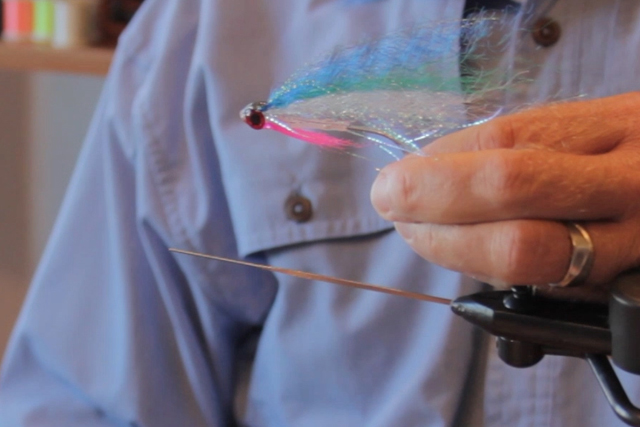
Tip 12. Attaching eyes. This can only be learned by fiddling around and practice.  Small eyes do not require much Goo, and a dab of thin or tack free in the gap between top and bottom of eyes might do the trick.  Big eyes with large gaps will almost certainly require a lot of the thick goo plus a quick coat of Hydro to seal off the stickiness when you are finished.  Eyes placed on winging materials may require a buildup of Goo all around the eyes, in essence creating a baitfish head with the eyes in the center.  These Goo heads require practice and just be patient and plod through it like an artist in residence, learning the tricks of the trade.

Tip 13.  Goo will sink into winging materials. Depending on circumstances, I may let a lot of Goo sink in before curing with my lamp.  Other times, I will hit the lamp fairly early; this is something one must just play with to get a feel for when enough is enough.

Tip 14.  Cure time. Hydro cures in but a few seconds.  Very thick Goo requires perhaps ten seconds.  Go at it and you will figure it out.  You may always shine the light again if you wish.  Remember, I use the hi power lamp, a weaker lamp will take longer.  And yes, you could leave your flies out in the sun after a quick hit with a weak lamp, but this seems less effective than simply getting the good lamp in the first place.

Tip 15.  Layering Goo.  I often create fly heads on baitfish in layers, applying the cure lamp at each successive stage.
Tip 16.  Using a rotating vise. Gosh, this seems really important for a lot of the saltwater fly patterns I have been working with, and it is a huge help when working with Cure Goo also.  Each fly vise has its own quirks, but the ability to rotate a vise head to see where one is placing the Goo, and to more evenly distribute pre-cured Goo is a significant advantage.
Thick Cure Goo. I use this stuff to fill the biggest spaces between the largest eyes, and to form the largest epoxy-like heads.

Tack free Cure Goo. I probably use this Goo the most often.  It cures non-tacky, is almost as thick as thick, and it very broadly useful securing eyes and serving as an epoxy replacement.

Thin Cure Goo. I keep this handy to fill in the smaller spaces where I failed to get proper coverage with a thicker Goo around hook eyes and fly eyes.  When just a little Goo is needed, the Thin product is probably easiest and best for the job.

Tack free flex Cure Goo. This works for Surf Candy Flies and to build up heads around eyes on baitfish flies.  It really does stay flexible.  I often use this to stiffen the base of tail materials on baitfish flies in order to reduce the tendency of the materials to foul or wrap around the hook shank when casting in windy conditions.  Nice stuff to play with.
Hydro Cure Goo. I have taken to using Hydro throughout fly construction as well as the finish coat on mono and traditional threads at the fly’s head.  I have tried the brush as well as the fine tip applicator, and I by far prefer the needle like applicator tip.  Hydro is about the consistency of water and cures nearly instantly when the lamp is turned on.  Try starting a fly by laying down a thread base, squeezing on a thin layer of Hydro, and zapping it with the lamp.  This forms a secure foundation for any fly you will build on the base.  I also apply a drop of Hydro at various points during the fly’s construction to provide secure hold on synthetics and minimize the need for thread build-up.

Thick Fleck Goo. Nice incorporation of sparkle for fly heads and Surf Candy style flies.

Hope these ideas help.

Jay Nicholas, August 2013

Posted in Fly Tying, Fly Tying Materials and Supplies | 3 Comments

Coastal Steelhead Report

Siletz Last

This week provided some decent fishing on the coastal streams for steelhead. I had Clay and Andrew, my work teammates aboard “the beast.” We decided Monday would be our day. It proved to be a great day on the coast. Andrew was first on the scoreboard with what we thought was a nice steelhead. Turned out it was a late arriving Coho!

Siletz 20

Siletz 16

Clay then got into the action with a fine jack steelhead. We were hopeful this fish would be a symbol of what could be an even better day. It did not take long!

Siletz 19

Using an egg pattern, Clay hit one out of the park with a taped out 33″ in length, 16″ girth, hatchery steelhead. This hatchery “piggy” still had some sea lice. It was a keystone cop moment as the fish raced up and down, and around us. Rowing “the beast” with the fish rolling, and leaping, down the river provided some comical moments. We finally were able to get the bank and take some pictures.

Siletz 17

Siletz 13

As we headed down river we were greeted with clearing sky and cooler temps. Anglers should be hitting the lower stretches of the coastal streams. It looks like we are still in for a dry period and low water winter conditions. We need some storms!

Siletz 18

LV

Posted in Coastal Steelhead Fishing, Fishing Reports, Oregon Winter Steelhead Fishing | Leave a comment

Caddis Fly Christmas Party Tonight

We will miss this years party but not the weather. Patsy, Cash, Shauna and Chris wish everyone a very merry holiday season.

Please join us for our annual Christmas party at the shop on December 19th from 4-830ish. A discount of 10% will be extended to all in stock purchases during party hours.

Food, beverage, cheer and last minute gift specials will be served up at the shop. Please stop by and let us say thanks to you for your patronage over the years.

Cedar Lodge Golf Course 2013

Posted in Oregon Fly Fishing Clubs and Events | 1 Comment

Op-Ed in Register Guard: McKenzie Hatchery Lawsuit

Yesterday, Caddis Fly Shop Owner Chris Daughters’ Op-Ed ran in the Register-Guard, in support of the McKenzie Flyfishers and Steamboaters lawsuit, filed earlier this month regarding hatchery spring chinook on the McKenzie River.

Chinook Spawning McKenzie River

An excerpt of the column is here:

The state Department of Fish and Wildlife claims that its No. 1 priority is to maintain and improve wild spring chinook salmon in the McKenzie. However, you might be surprised to learn that in the years since the listing of the wild spring chinook as threatened, the department has continued hatchery operations that harm wild spring chinook without an open, public assessment of how its hatcheries are run.

Each year, the department breeds and releases more than 1 million hatchery-raised chinook salmon into the McKenzie. But for at least a decade, fish biologists — including those within the department — have noted that hatchery fish have harmful effects on the survival of wild fish.

Read the piece and comment on the blog or the RG site. And thanks for your support of wild, native fish.

Posted in Oregon Conservation News | 2 Comments

SAGE METHOD Switch Rod Review: Thumbs up for Kings

Here we are on the trailing end of the 2013 Chinook Season and it’s time for me to muse over snippets from the season– one being more time fishing with Switch rods for Kings.

Short story: I have come to keep a couple of switch rods in my boat every day and I think you would find it well worth your time to play around with these sub-12 footers.

George Cook was kind enough to loan me his brand spankin’ new SAGE METHOD 8 wt this season, on very short notice, and I promptly put it under strain the very first day it arrived via UPS to my Pacific City fishing Lair. I told Georgie that I thought it would be a great asset but I really had little idea just how much I would fish the rod (every day) and how many fish it would tame for me (many).

Not being one to blather about cosmetics, I’ll just say that this is a NEW-EDITION high-end SAGE rod, priced at just under nine hundred bucks, so if you know SAGE, you know that their rods from entry level to top of the heap have solid components, and that the high end rods have really great components.

Rod color and action: Magma Red is the designer color of these METHOD rod shafts; the action is described as ULTRA FAST, a classification I wholeheartedly agree with; and yes, SAGE’s KONNETIC technology is imbedded in this rod series, so it delivers the true tracking and minimalist recovery we came to appreciate with the SAGE ONE rod series.

METHOD Rod Length: 11 ft 9 inch.

Switch Rod/Line wts available: 6-9, (I fished the 8 wt METHOD Switch)

Why fish a Switch rod versus single hander? Every rod has advantages in different circumstances. Wouldn’t want to limit myself to one rod, unless pressed to do so. Here is when I would like to fish a Switch rod for kings.

Anytime my Back-cast is impaired by rocks, bridge pilings, clay banks, trees, or brush close behind me. This is a commonplace situation for anyone fishing salmon and steelhead. The switch rod makes possible a true Spey style cast using floating line (with or without sink tip) from a position where a back cast with single hand rod is just plain impossible.

Fishing Strike Indicators: yes folks, fishing all sorts of flies under Strike Indicators is deadly in the right place and right time, this being true for kings as much so as steelhead. The indicator is a great way to present a dead drift, stripped, and swung fly to Chinook. No bull.

Lines fished: RIO Switch Chucker 8 wt, Airflo Power Fly 9 wt; RIO Outbound Short (from full floating to type 6 sink (all in 9 wt); RIO Outbound Short Shooting Heads in floating, Intermediate, Type 3 and Type 6; AIRFLO Sniper full floating 9 wt; Wulff Ambush 9-11 wt.

Tips fished on floating lines: RIO 10 and 15 ft sink tips in floating, Intermediate, Type 3 and Type 6; Airflo Poly leaders; AIRFLO Custom Cut Tips.

Shooting Lines fished: RIO floating shooting line, RIO GripShooter; Airflo 30# floating and Intermediate running line; RIO Slickshooter 44#.

Casting styles applied: traditional overhead casting; snap T; Double Spey; nothing fancy. I know that Switch rods are intended for specialized lines and casting techniques, but often I would just slap on a reel with my shooting line and fish it with the Switch rod.  Clearly, I have not yet been able to experience the high end of the casting skills qualities of this rod, only because I have been so focused on keeping flies wet and taming fish.

Fish Fighting power of the SAGE METHOD Switch rod. These are very powerful rods and are well up to the challenge of modest King salmon in the sub 30 pound class, I’m betting the 9 wt would handle the big boys. These slightly longer rods provide some advantage over single handers, I think, maneuvering Kings, and it is really fun to fight a big fish on these rods. There is a tipping point, however, where a too-long rod becomes difficult to handle in a boat by yourself. This is why I like the sub 12 ft Switch rods better than the longer true Spey rods – when it comes time to net a Chinook, the longer rods are more of a challenge to get my net up close and personal with the salmon. For pure netting ease, the 9 ft rod is easier than the Switch Rod, but I like the fly presentation and fish fighting abilities of the METHOD enough to deal with a little extra challenge on the net end of the battle. Beaching, of course, is straightforward with the Switch rod.

Beaching Fish with Switch Rods: after watching far too many YouTube videos I see a common error repeatedly featured by anglers beaching salmon and steelhead with long rods. Heck, they do the same thing with short rods too, and it is so simple to avoid if you just think about it.

Please don’t: stand right at water’s edge, lift your rod straight up, and try to bring the salmon or steelhead ashore immediately at your feet. Why? Bad rod angle, it puts too much stress on rod, you have practically no leverage and virtually no control in steering the fish, and you will have a very short line-length to cushion our tippet when the fish head-shakes.

Try this instead: stand or walk back as far as reasonable from the water’s edge, fifteen feet if possible. This gives you a low rod angle, more control over the fish, and more cushion in rod and line to protect your tippet from stress at the time when the most pressure is often applied. By standing back from the water’s edge you can steer the fish into shallow water and have far more control than the fellow who tries to land the fish with rod straight up to the sky.

When you fish from a boat, alone, you are forced into the worst possible position described above to bring a chinook into the net. Whenever I am able, I will beach my boat and land fish on beach or eelgrass banks rather than do the solo net job.

Light and powerful: seriously light rods, almost freaky light for their power, but METHOD Switch rods have solid power clear through the butt. The METHOD has serious lifting power, and this is super important when fighting Kings. A steelhead will tire itself with a little pressure applied from a light rod, but a Chinook typically will not, and I like to have a firm powerful rod that will keep solid pressure on the fish to bring it to the boat or beach.

Comfortable to handle? Pardon the pun but yes. The METHOD Switch has downsized grip length compared to the longer Spey rods, but up-sized compared to the single hand rods.

Is Switch Rod Chinook fishing in your future? Don’t know. I recommend that any serious salmon angler include switch rods in their arsenal of fly fishing tools. They will allow you to cast from places where you would otherwise not be able to, and they will put indicator fishing into your bag of tricks, both of these factors will simply give you more chances to get the grab on any given day on the water.

Is the SAGE METHOD Switch  a superior rod for kings? Georgie, you want it back? Ha ha –  I can report that I tamed many salmon on the METHOD this fall.  The rod’s power as applied to hook setting (at distance) plus lifting power close-in is I think superior to the majority of 8 and 9 wt Switch rods available on the market these days.   I can also report that this rod has casting and fishing capabilities that I have not fully tested, but I sure as heck will when I’m fishing for winter steelhead this season, even with George trying to chase me down in the Coast Range.

Jay Nicholas
December 2013

Posted in Fly Fishing Gear Review, Oregon Salmon fly fishing | 1 Comment

Saltwater Fly Tying: Introduction


I have tied flies for something over five decades, but until recently I tied relatively few patterns that could properly be classified as pure Saltwater Specialty flies. Being predictably unpredictable, I stepped away from my usual range of flies about a year ago and resolved to dig deep into the Saltwater fly world. Oh my, what an adventure.

This blog post represents a quick update on what I’ve been up to in the fly tying universe, and an effort to share my enthusiasm and a few learning moments related to tying saltwater flies.

I’ve been tying flies like Decievers, SeaDucers, Surf Candy flies, Clousers, Gurglers, Poppers, Crabs, Shrimp, Trolling Bucktails, Baitfish tubes, and a wide range of baitfish patterns on hooks, with finished flies that range from 2” to 6”. I’ve also been fishing these flies in the ocean and in estuaries, seeing how they swim, how they hold up to fish teeth, and whether in fact fish will eat them.

I’m going to get the ball rolling with this post to most briefly introduce the world of Saltwater flies to people like me – a year ago – who had but little experience with these weird critters.

Here we go.

Are Saltwater and Freshwater fly tying different? Yes, yes, and yes. Over forty years tying traditional flies in the trout, steelhead, and salmon section of the Fly Shop were a good introduction to tying saltwater specialty flies, but I still had a big transition to make before my saltwater flies looked right and fished properly. If you want to learn how to tie saltwater flies and have fun yourself , why not give it a go?

Vises for Saltwater fly tying: My current fly vises (NorVise and Regal
Full Rotating Vise
) are the standard models and are marginally acceptable for 3/0 and 4/0 hooks. Plenty of Saltwater flies are tied using hooks in the #1/0 – # 8 size-range, so you may be fine with your existing vise. In my case, I want to tie a lot of 3/0 and larger flies, so I have purchased a specialty head for each of my vises. Chances are good that your current vise will perform just fine for most of the saltwater flies you might want to tie; I suggest that you experiment to find out if your existing vise is really able to accommodate the hooks you will be using (it probably is), and be prepared to purchase an additional head for larger hooks if you decide to tie on 2/0 and larger hooks.

A rotating vise is essential. OK, maybe not essential, but really handy. You’ll see.

Saltwater hook styles. I never appreciated the Mustad 3407 hook before. Now I love the hook. Sure it must be sharpened before use, but it looks nice, and the fly swims well on the hook. Other great SW hooks include the Gamakatsu SC 17; Gamakatsu SC 15; Gamakatsu S 12 S; TMC811-S, and TMC 811. The Daiichi X-Point DX452 and Daiichi Saltwater D2546 are very good hooks too. There are others good saltwater hooks including Mustad and Eagle Claw brands, but this list is a start and these are hooks I have personal experience with to date.

Why use big hooks? I always thought that saltwater tyers used hooks far too large, but then I tried actually fishing these flies and it all came together that I was in fact not smarter than the cadre of striper, Snook, tarpon, and redfish fly tyers. Big bulky baitfish flies swim better when tied on large heavy hooks than when tied on smaller lighter wire hooks. It is so simple, and now I get it. Yes, it does require more tension to pull heavy wire into fish’s jaws, but the bones are tough and the hook weight is needed as a keel to allow the fly to swim properly. The Prospect of fishing a 4/0 heavy wire hook on #12 tippet seemed insane before, but now that I am fishing the bulky baitfish flies myself, and now that I think about the jaw bone structure of the target species for many of these flies; the use of big heavy wire hooks just makes sense.

Saltwater Tying Threads: Mono and traditional threads. Some tyers recommend using Kevlar thread. I still can’t see the point, but I may be shortsighted on this point. To date, I have had very good experience using threads like Danvilles 210 D Flat Waxed thread; Ultra Thread 140 D, Veevus Stomach Body Thread, and I especially have enjoyed using mono threads like Danvilles fine mono and Uni Mono thread. I think the mono threads really come in handy when tying baitfish patterns that will be finished with eyes and Clear Cure Goo. The use of mono threads and the Goo has reminded me about minimalist tying – where if 3 wraps of thread and a dab of Hydro are plenty of security, there is no need to apply twenty wraps of thread. I find that Saltwater Clousers and Bucktails can be tied with either mono or traditional threads, but again, the size of the fly and relative bulk of the finished head will guide you towards selection of a thread that is right-sized for the job.

Natural materials for wings. Although many saltwater flies use synthetic materials, there is good reason to use many of our traditional natural materials in the salt brine too, and these include our favorite Bucktail, Fox, and Rabbit Zonker strips at the very least. Bucktail is a natural material that is absolutely fantastic for use in flies designed for use in both freshwater and salt, and the Clouser Deep Minnow style of fly is a perfect example. The Clouser may be tied with synthetics also, and the synthetics may offer perks in terms of already-incorporated flash or durability, but for pure fish catching properties, I believe it is really difficult to surpass the qualities of natural Bucktail. Similarly, the Arctic Fox or Rabbit Zonker strips we use to tie our river flies for Atlantic salmon, Pacific Salmon, steelhead, and trout are often very good choices for winging a wide variety of saltwater baitfish flies.

Feathers, saddles & neck hackles for tying saltwater flies. People who specialize in tying flies for Musky, Pike, and Bass have a close kinship with tyers who specialize in baitfish patterns for offshore species. These flies tend to emphasize feathers like saddles and large neck hackles for tails and wings. The trout anglers may require very narrow feathers to wind around a hook, but the saltwater or Pike fly tyer will look at the same feather and like the fact that it is 12” long and strongly marked never noticing whether the feathers are wide or narrow. Point here is that many of the flies we would not find useful for our trout or steelhead flies make for great saltwater flies.

Flash materials for saltwater flies. We use flash in freshwater flies, but the saltwater fly styles are often a little flashier and then the Pike and Musky flies add even more flash to the game. Saltwater specialty flash materials are sometimes wider, stiffer, and tougher than flash materials intended principally for freshwater flies. This extra measure of firmness is intended to make for more durable flies that will withstand the wear-and-tear of toothy critters.

Dumbbells, Cones, and Eyes for saltwater flies. We may use very similar dumbbell eyes, cones, and eyes on smaller saltwater flies, say in the #2 – #8 range. When it gets to flies in the 1/0 and larger sizes, we are likely to reach for the XL dumbbells and cones, and to use larger stick-on eyes for our baitfish patterns.

Cure goo versus Epoxy to secure and finish our saltwater flies. I’ve covered this topic in a different post, but suffice to say, the Cure Goo is absolutely essential on my saltwater flies, and it should be on yours too.

Synthetic winging materials: tying-in securely. Some wing materials may be tied in just as we would tie in Arctic Fox or Bucktail; the fibers compress and will be held securely by a little thread or a lot if we want a bulky head on the fly. Some synthetic winging materials do not compress and should be super glued, lashed down very tightly, or tied in reverse-style. My preference is to use the reverse-tie-in method. Basically, this means tying the wing in facing forward, applying a drop or two of Cure Goo Hydro to the tie-in, and then reversing the wing and lashing it down with a few more turns of thread (regular or mono). When doing this, one may build multi colored wings in several layers or in a single tie-in by stacking wing colors and putting the darkest material on the bottom as the forward tie-in is executed. By doing this, the reversed wing will have the proper arrangement of colors with the darkest on the top of the baitfish fly.

Synthetic winging materials: tapering. Baitfish wings that are tied with synthetics look better if you taper the materials so that the fibers are a variety of lengths, instead of just cutting straight across the material. Taperizing scissors can help in this department, and you can feather the tips of synthetics to achieve a variety of fiber lengths by gently pulling out some of the tips and by rolling the bunch to better distribute the different lengths.

Hook fouling issues and solutions. Hook fouling refers to what happens when the tail or wing of the fly wraps under the hook and the fly does not swim as intended. This can be a minor issue if a few strands of Bucktail on a Clouser wrap around the hook shank or a major issue when a Deceiver with a very long tail gets tail-wrapped (same deal when a baitfish fly tied with long materials fouls around a short shank hook). There are a variety of strategies to reduce fouling, including weed guards, “posting” thread around the base of tails, foam or mono shelves tied under tails to keep them upright, and using epoxy (cure goo) to keep the winging material at an elevated angle above the hook’s plane. All of these are helpful, and all have weaknesses. Some flies are foul-proof as a virtue of their design, as in, they have very short tails and their wings are shorter than the bend of the hook. In fishing experience, making good casts is a great anti-fouling measure, and I have reached the stage where I don’t worry overly about fouling. That said, it is important to think about the issue and see how your own flies perform, given each individual’s casting style and fishing conditions (wind is not our friend in the fly fouling department). This topic deserves greater attention in the detailed instructions and videos for tying specific patterns.

Tying saltwater flies on hooks versus tubes. In my opinion, the use of Tube flies is not nearly as common as it will be in five to ten years. Some flies don’t make much sense tied as tubes: say for example a Bonefish Gotcha or many Crab patterns. On the other hand, I currently believe that many flies in the saltwater, Pike, and Musky realm make a lot of sense to tie on Tubes. The longer it takes to tie a fly, the bigger the fly, and the greater the beating a fish will give the fly – all of these factors hint at the potential advantages of tying the fly on a tube instead of on a hook shank.

I’ve experimented with a wide variety of baitfish flies and compared their effectiveness and durability tied on hooks versus tubes. For many of these flies, the tubes fished just as effectively on tubes and proved far more durable than a similar fly tied on a hook shank. I also found some fly patterns that just didn’t look right when I tried to tie them on tubes. Smaller-size Surf Candy style flies are an example, as are very small Clousers (say, sizes 6 & 8 in sub-2”). Larger size Surf Candy flies and Clousers fished and performed effectively, and allowed me to replace saltwater- and pliers-damaged hooks on still perfectly good tube flies.

I’ve learned that there are a growing number of tyers producing and fishing saltwater flies on tubes; this is true as well for the Musky and Pike fly world. These tyers are both innovative and demanding, and I think that it is worth our while to devote serious thought and bench time to tying tubes. Where Tube flies are concerned, Scandinavian Atlantic Salmon anglers are decades ahead of us here in the Pacific Northwest, as are European Sea Trout and Pike anglers. My fledgling efforts tying and fishing tube flies for saltwater have been entirely satisfying – expect to see plenty of tube flies in our upcoming video series, including tube poppers and Gurglers in addition to tube trolling and casting flies.

New Synthetics for Saltwater Fly Wings. We have had several synthetic materials like Fishair, Polar Flash, and Craft Fur for a long time, plus others that I am not very familiar with. Of late, we have a family of synthetic winging materials from Enrico Puglesi and Steve Farrar. While similar, the EP and SF family of synthetics offer some different properties with more or less flash already incorporated, and of both similar and distinct fiber stiffness and texture.

These materials and others like Baitfish Emulator and Shimmer Fringe Minnow Back merit your attention, and many will be featured in the upcoming series of saltwater fly tying videos we will produce for the Oregon Fly Fishing Blog.

Saltwater fly tying with Brushes. Enrico Puglesi has produced a series of brushes on stainless steel wire that are specifically designed for tying saltwater flies. I had already discovered these brushes a year ago tying steelhead and salmon flies, but my new venture into tying everything salty from baitfish to crabs and shrimp this year led me to several other EP brushes including the EP Foxy Brush, EP Anadromous Brush, EP Sparkle Brush, EP Crustacean Brush, and EP Shrimp Brush. These will all be shown in use in fly videos. I have been especially fond of several of these brushes to use for baitfish bellies. Imagine that.

Securing eyes on flies. This is a skill unto itself, and encompasses different techniques depending on the size of the fly and they eyes and how they are placed on the fly. Our videos will review techniques including applying Super Glue on surface of wing material, applying a blob of Cure goo to the gap between top and bottom of eyes, applying a bead of Cure goo to form a head around the eyes, deciding whether or not to pinch eyes between your fingers while curing Goo, the necessity to rotate the fly in your vise to establish the Goo shape around eyes, whether or not to add a finish coat of Hydro Goo, and applying eyes to flies tied on hooks versus flies tied on tubes.

‘Nuff for a start. Time to get tying saltwater flies and let the tips and ideas flowing at the bench.

Hope you have a ton of fun with these flies – as I am.

Jay Nicholas, September 2013

Posted in Fly Tying, Fly Tying Materials and Supplies, Oregon Saltwater Fishing | 3 Comments

Pale Morning Dun Emerger Fly Tying Video

Tony demonstrates how to tie a Pale Morning Dun emerger pattern. The low floating emerger is perfect for flat water with picky fish. The fly floats low in the surface film and is effective during any Pale Morning Dun hatch.

Pale Morning Dun Emerger

PMDEmerger

Thread: Veevus 12/0
Hook: TMC 100, sizes 14-20
Tail: Rust Antron, One Strand Pearl Krystal Flash
Rib: Small Copper Ultra Wire
Body: Rusty Brown Ice Dub
Thorax: PMD Yellow Hareline Micro Fine Dry Fly Dubbing
Wing: Lt Dun CDC
Hackle: Dun, Ginger, or Cree Dry Fly Hackle

Posted in Fly Tying, Fly Tying Materials and Supplies | Leave a comment

Steelhead Muddler Minnow Fly Tying Video

The Muddler Minnow fly pattern is adapted in this video to for steelhead fly fishing. This pattern can be fished on the surface or “skated” or subsurface swung down and across. While the fly has a nice “spun” head Tony demonstrates how to clump and trim the muddler head without truly spinning the hair.

Steelhead Muddler Minnow
Muddler

Hook: Daiichi 2141, Sizes 4-10
Thread: Veevus 10/0 Black(Body/Wing), Veevus 150D GSP(Head)
Body: Gold Flat Diamond Braid
Underwing: Gray Squirrel Tail, Pearl Krystal Flash
Wing: Mottled Turkey
Collar/Head: Deer Hair
Comments: This fly may be tied in a multitude of color combinations—Orange, Purple, Brown, Rust, etc.

Posted in Fly Tying, Fly Tying Materials and Supplies | Leave a comment

Bloom’s Parachute Ant Fly Tying Video

This simple ant pattern is highly visible and perfect for summer fishing on a variety of waters. Antron wings can be added before the parachute style hackle as well.

Bloom’s Parachute Ant

FlyingAnt

Thread: Veevus 12/0 Black
Hook: TMC 100, Sizes 10-20
Rear-Body: Black Antron Trico Hareline Micro Fine Dry Fly Dubbing
Wing: (optional) Lt. Dun Antron
Post: Florescent Antron
Hackle: Black or Brown Dry Fly Hackle
Fore-body: Trico Hareline Micro Fine Dry Fly Dubbing
Comment: Can be tied in a cinnamon with a brown hackle

Posted in Fly Tying, Fly Tying Materials and Supplies | Leave a comment

Caddis Fly Christmas Party Slated For December 19th

get-attachment-1

Please join us for our annual Christmas party at the shop on December 19th from 4-830ish.

Food, beverage, cheer and last minute gift specials will be served up at the shop. Please stop by and let us say thanks to you for your patronage over the years.

CD

Posted in Oregon Fly Fishing Clubs and Events | Leave a comment

Oregon Hatchery Research Center Board meets in Corvallis Monday

The newly formed Oregon Hatchery Research Center Board is meeting this coming Monday, December 9th from 9am-3pm at the South Willamette Watershed District Office (7118 NE Vandenberg Avenue Corvallis, OR 97330-9446). The meeting is open to the public, so anyone who is interested should drop in.

CohoCedarCr1_swart_odfw

The board is a fairly new entity with oversight over the strategy and budget of the Oregon Hatchery Research Center.

The goal of the Oregon Hatchery Research Center (OHRC) is to answer scientific questions related to fish recovery and hatchery programs, including the differences that may exist between wild and hatchery fish, and how to better manage those differences.

Information gained at the Research Center will help answer questions vital to the success of the Oregon Plan for Salmon and Watersheds and implementation of the Native Fish Conservation Policy.

Native fish advocates on the board include Jim Lichatowich, Peter Tronquet, and Kyle Smith. You can find a full list of the folks on the board here.

Posted in Oregon Conservation News | Leave a comment

Native Fish Society Action Alert: Washington Steelhead

From the Native Fish Society:

The Washington Department of Fish and Wildlife (WDFW) is seeking public comment on a proposal to eliminate hatchery steelhead plants as early as next year in three Lower Columbia River tributaries (EF Lewis, Green/NF Toutle and Wind Rivers) to support the recovery of wild fish. These three watersheds would join the Sol Duc River as Washington State Wild Steelhead Gene Banks.

The elimination of hatchery plantings in these three watersheds is the recommendation of three stakeholder groups convened by WDFW over the past two years. Gene Banks are part of actions endorsed by the state of Washington’s 2008 Statewide Steelhead Management Plan and were mandated by National Marine Fisheries Service (NMFS) to protect wild steelhead in the Lower Columbia.

Olympic Penninsula Winter Steelhead

Wild Steelhead Gene Bank designation does not close a watershed to angling, but does create restrictions placing the priority on the health of the wild populations, not angling opportunity. Establishing Gene Banks would be a solid first step toward limiting the negative impacts of hatchery fish on threatened wild populations in the Lower Columbia.

Comments and suggestions collected during this public process will eventually be submitted to the National Marine Fisheries Service who oversee the recovery of threatened salmon and steelhead populations.

We ask that you let WDFW and NMFS know that you support management actions that implement the best-available science and recover threatened wild steelhead populations in Washington. Read and alter the comments below as you wish, but please make your voice heard in support of protections for wild steelhead.

Fill out a quick form here to let your voice be heard. It takes less then one minute.

Posted in Oregon Conservation News | Leave a comment

Fly Fishing the Inland Oceans: Jerry Darkes sparks my interest

With the crew in last week for Capt. Nate’s Wedding extravaganza, we had the opportunity to spend some time with my old fishing buds from the Northwest and do a little recreating on the Ohio watersheds, looking for Lake Erie Steelhead. If you see the photo attached, it’s old RR holding a chromed out little guy caught right in the lake, stripping a clouser minnow at the mouth of the Rocky River from our little Boston Whaler.

Great Lakes Steelhead

Now, it’s no secret that I haven’t been thrilled about my move back to the Midwest. I’ve been moping around Ohio, mourning over what I’d lost. Hell, I’ve even taken up birdwatching to fill the void. But it turns out, I’ve been looking at this all wrong.

Yes, comparing Ohio steelheading to Oregon steelheading sucks. A couple years back, I was fishing with some of the best anglers I’d ever met, for native, marine-fueled fish in wild rainforests. So yeah, resentfully wandering around Cleveland with my brother, who didn’t really like steelhead anyway, wasn’t a recipe for success.

I’ve been living with this crazy existential crisis for months. But two nights ago I had a huge breakthrough.

My local TU chapter had invited Jerry Darkes to speak. Jerry had just written a new book called Fly Fishing the Inland Oceans. Nate had picked it up and told me I had to read it. I told him I was busy cataloging species that came to my birdfeeder, and couldn’t be bothered.

But then I saw Jerry speak.

First of all — if you think it’s all about steelhead you’re wrong. This book is really about the amazing spectrum of species and fishing styles available in my region. I considered all the uncharted, or rarely visited corners of the Great Lakes, and you start to look at the fishery from the perspective of saltwater fishing, rather than limiting the comparison to steelheading opportunities, and all of the sudden I was back in the game.

His slide deck featured photos of big native lake trout, caught the day before out of a boat at the bar of the Niagara River, where it drains into Lake Ontario. I was hooked.

If you live in the middle of the country, you need to buy this book. You need to hear Jerry talk. I can’t thank him enough for firing me back up.

-MS

Posted in Fly Fishing Books | 4 Comments

Tibor McKenzie River Custom Key Chain – a perfect Christmas Gift


Tibor crafts absolutely fantastic fly reels, but did you know that they make other nifty gear of the highest quality that would make for a great gift too?

Christmas, birthday, retirement or just another day driving to the river or the Fly Shop is a perfect occasion to purchase or gift a Tibor Key chain. Come to think about it, I’m not quite sure whether to call it a key chain, key holder device, or what, but it is sleek and strong and works like a champ.

The quick release slide will (yes indeed) release the split ring at one end of the key holder, so you can keep one or a few keys on one end and more keys on the other in case you want to be able to separate the two on a moment’s notice.

These key chains are sure to meet with a smile for anyone who lives in the Willamette Valley or who has ever or will ever fish the world famous McKenzie River. These elegant key chains are right-sized; machined of high grade aluminum; offer a positive Quick release for keys at one end; and show a Rainbow Trout on one side and McKenzie River on the other.

Anodized Black or Clean Goldish metallic finish options are sure to please any fly angler, especially those with close ties to the McKenzie River.

Sure, you can still buy a Tibor Fly reel for yourself or that fly angler you love, but you can also start modest with the Keychain that celebrates our wild native rainbow and the McKenzie River. the Keychain is packaged in a very nice Robin Hood Green, velvetish pouch as shown and offered in the two color phases photographed here.

Enjoy! And yes, we have a huge range of unique and exclusive Christmas Gifts in the Shop now, for every price range, so I invite you to drop by, call, or email if we may offer suggestions for that fly angler in your life.

CD

Posted in Fly Fishing Gear Review, Shop Sales and Specials | Leave a comment

South Island Work and Fish Trip

IMG_0855

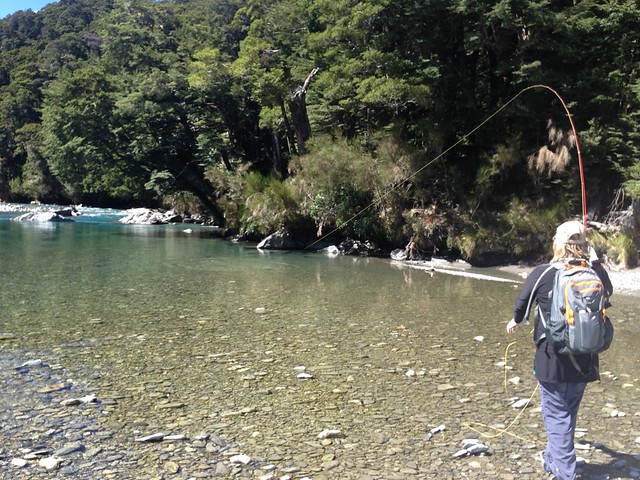
I have just returned from traveling to Cedar Lodge, Chris and Shauna’s new home and business on the South Island of New Zealand. I was greeted by beautiful weather, warm accommodations and large trout right out front of the lodge. Each day I found myself staring out at the mountains that surround the lodge in the stunning Makarora valley.

cedar lodge paddock

I arrived about 10 days before the first guests and our main focus was preparing the lodge for their arrival. We spent the first few days rebuilding and painting the 20 year old deck. Soon we were ready for a break headed out for an afternoon fish.

fly fishing for trout on New Zealands south island at cedar lodge

backcountry fly fishing at cedar lodge new zealand

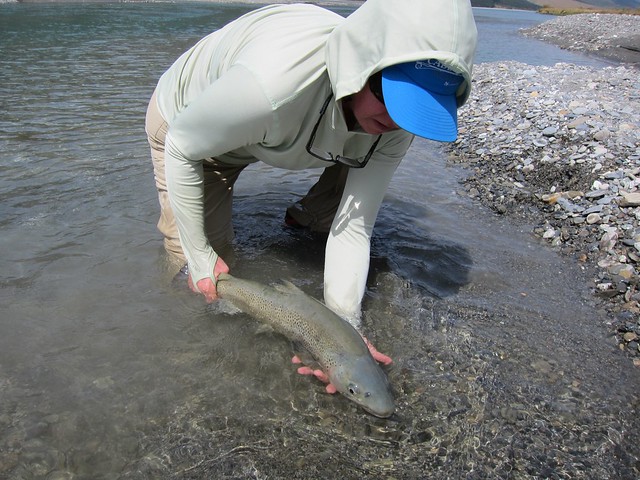
My first cast in the Southern hemisphere I landed this 4 pound brown trout. The rest of the day we spotted and landed several rainbows from 2-4 pounds.

IMG_0901

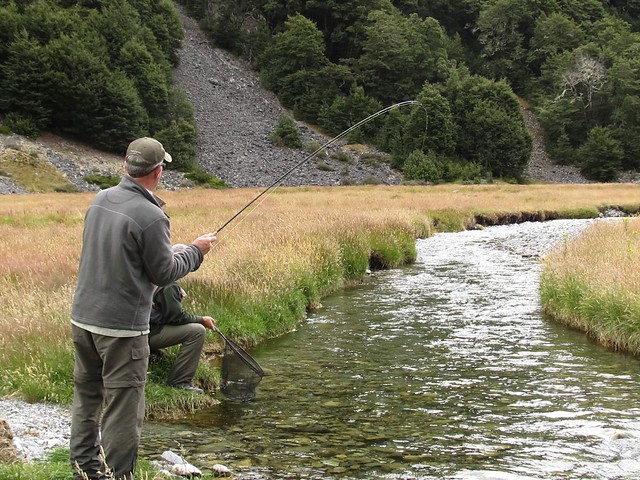
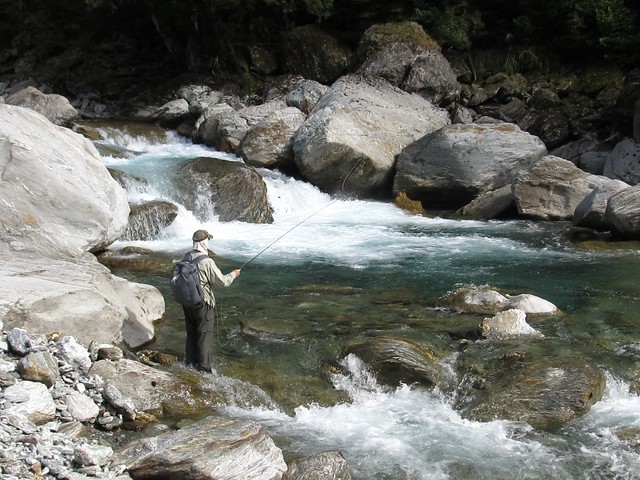
For the next week we spent most mornings working on projects around the lodge and then spending our afternoons hiking around a few of the many rivers in the area. We fished mostly large Parachute Adams and Royal Wulffs with or without a
small dropper. Rods of choice were the Sage One 590 and the new Method 590, which was nice when the wind picked up.

A few days before my departure the chopper showed up! We quickly got our gear and jumped in for an afternoon trip. I had never been in a helicopter so the ride and views blew me away. The fishing in the remote systems was more of the same, stunning rainbows and browns up to 5 pounds, willing to crush the well presented fly.

All said it was an amazing adventure and I can’t wait to go back.

BF

Posted in Fishing Reports | Leave a comment