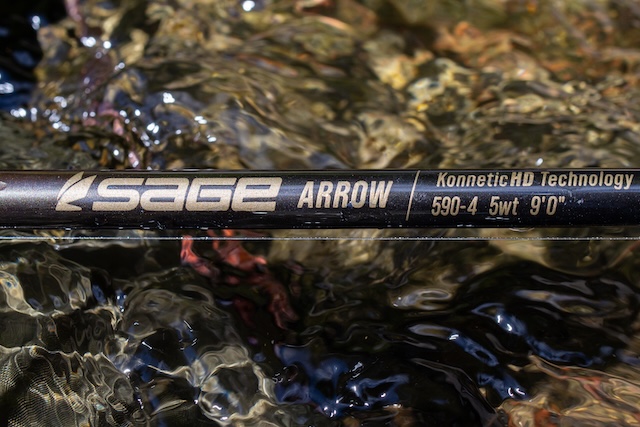
If you haven’t already heard, Sage released an entirely new collection of rods earlier this year. We both heard mutterings of a new collection coming, and casted these rods far before their release date, and keeping the secret wasn’t easy. Despite our excitement with these new rods, we wanted to really put the new Arrow to the test before releasing any sort of longwinded review. This review mainly focuses of the 9′ 5wt or 590-4 offering from our friends at Sage. It is a fantastic rod that preforms well in the hand of a beginner and expert, alike.
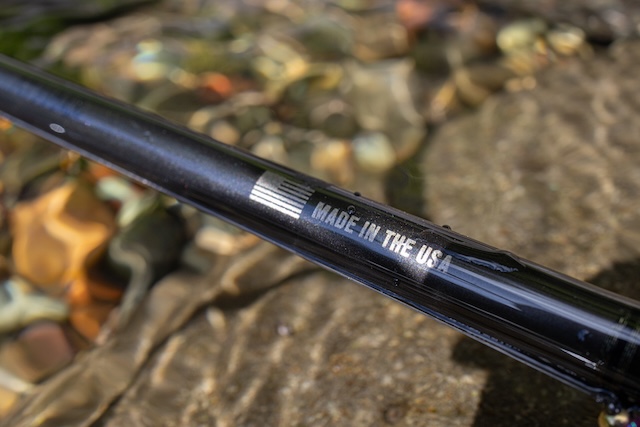
Right out of the tube, the Arrow is a gorgeous rod. It features a deep colored blank that Sage calls “Flint Black”, and sports classic Sage tan marking reminiscent of the RPL and other heritage Sage rods. Each rod from 3-5wt without a fighting butt has a deep walnut reel seat that, in my opinion, is a small feature that adds a lot of character to a rod. These lighter rods feature a gorgeous shaped half-wells cork grip. Rods with fighting butts trade their walnut inserts for a fully anodized bronze colored aluminum reel seat that matches the rear hardware. All Arrow models with fighting butts and any rod 7+ features a full wells cork grip. Sage nailed the aesthetics of this rod, and its performance matches just how good it looks.
Feel & Technology
Today’s world moves faster than it did 30 years ago. The same holds true for the action of modern fly rods. As someone who objectively can appreciate the technological advancements that fast-action rods showcase, I also recognize that if a rod is too fast, it sacrifices feel. This delicate balance of power, flex, recovery time, and ultimately the amount of tactile feedback the angler receives is carves out a rod’s feel and capabilities.
Sage absolutely nailed the delicate balance of these attributes with the Arrow. Some ultra fast action rods lack the tactile feedback which most advanced anglers look for in a rod. This is where you hear the term “broomstick” thrown around. When an angler cannot feel what the rod is doing, the rod and angler aren’t on the same page. The 590 Arrow does a fantastic job of keeping the angler informed in a tactile manner, allowing them to make micro adjustments as late as when they are shooting line.
The Arrow’s feel does not undermine its power. Some rods that are too soft, and have too much feel have blanks that flex deep and lack power. The Arrow has a quick recovery time and has enough power in its blank to throw cumbersome nymph rigs, dry dropper setups with large buoyant dry flies, and even small streamers. The feedback anglers get from the rod allows it function as a delicate dry fly rod and gracefully lay down a #16-18 BWO or a #20-22 Trico. The rod designers at Sage created a wonderfully balanced, adaptable instrument will do exactly what you want it to in a variety of situations.
The Arrow features the new KonneticHD technology from Sage. This breakthrough in graphite technology allows for rods that are more powerful and lighter than previous iterations. KonneticHD blanks have more feel and allow the angler to be more in touch with their instrument. These more powerful rods recover quicker and are a powerful tool when wielded by an experienced angler. The beauty of faster rods is that they can also help newer anglers cast further by recovering faster and aiding a more powerful cast and tighter loop.
Lines & Setup
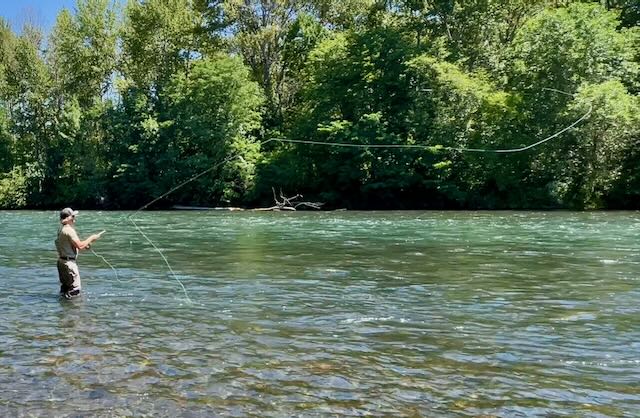
I primarily fished the 590 Arrow with the 5 wt Elite Technical Trout. This is a fantastic delicate dry fly line which, is a great pairing with the 5wt Arrow. It really unlocks the rod’s power while keeping it in check enough to lie down flies gently. This was especially crucial when I was fishing dries on one of Oregon’s premier stillwater venues: East Lake. More on that below. The line was capable on our larger rivers, the McKenzie and Willamette, offering seemingly endless reach when needed. I also took this rod up several freestone tributaries and headwater sections of our local rivers, and the Arrow and Elite Technical Trout combo performed at closer range too.
There are endless ways to setup a 590 Arrow line wise. The Elite Technical Trout listed above is a fantastic option for anglers wanting a serious dry fly stick. For anglers throwing more cumbersome rigs or want unmatched versatility consider the lines below.
First off, the Rio Elite Gold is your go to for unlocking more versatility with a 590 Arrow. This true to size line makes turning over medium dries, modest dry dropper setups, and reasonable nymph rigs much easier. Its head is front loaded allowing you to load the rod at short distances and it has a longer rear taper for mending at distance. The innate power that the Arrow has really shines when paired with the Gold series of lines, making it a more adaptable tool.
The Rio Elite Gold XP is the line that you want if you often fish big dry dropper rigs and nymph often. It is 1/2 weight heavy and really allows the Arrow to charge and turn over more cumbersome rigs. It also would allow the Arrow to function more effectively as a light streamer rod. Its drawback being 1/2 a size heavy is that to will be much splashier when presenting teeny dries. This likely isn’t the line for your Arrow if you spend a lot of time fishing venues that require more stealth like spring creeks and high lakes.
Lastly, the Rio Elite Gold Max is the biggest and baddest line in the gold series that really unlocks all of the power within the new Arrow rods while keeping the setup in the “all around” realm. This line is 1 size heavy, and excels at throwing large dries, extra heavy dry dropper setups, modest streamers, and bigger nymph rigs. If you have Deschutes Salmonflies on the mind, this would be a fantastic line. If you want to turn your Arrow into a dry-dropper beast running big foam chubbies with 5/32/3.8mm Tungsten jigs on the Mckenzie, then this is the way you’d want to setup your rod. Again, this line’s power has a drawback, which is making presentations splashier. If you frequently fish size 18 and smaller on technical water, try one of Rio’s dedicated dry fly lines like the Rio Elite Technical Trout.
Stillwater Test
I spent two days with, friend of the shop and stillwater guide for Caddis, Adison Rook on one of the Pacific Northwest’s most renowned stillwater venues: East Lake. I don’t know much about stillwater angling compared to rivers, but Adison did, and he told me to bring a dry fly stick. I figured it was early for callibaetis, terrestrials, and things, but figured I’d bring the Arrow along to test.
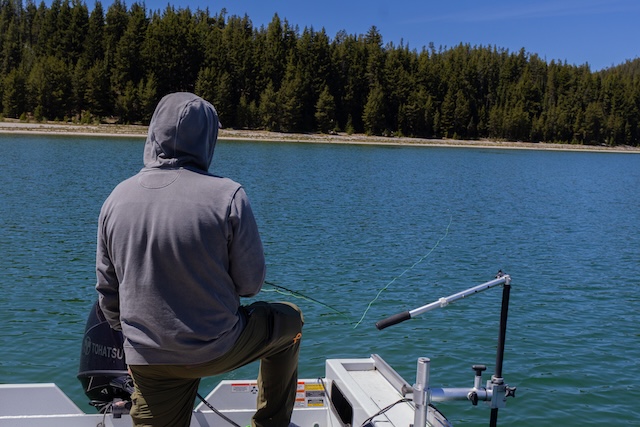
Among other techniques, we spent the next two days fishing small terrestrials to rising trout on downwind banks. The Arrow with the Elite Technical Trout delicately presented size 12-16 ants and beetles consistently fooling large, fickle stillwater trout. We used a trolling motor to work the shelf off of the bank. The innate feel that the Arrow has gives fantastic feedback and allowed me to reach mend into our drift and prolong the presentation. This is a technique Adison showed me on other stillwater venues, and I was pleased at the Arrow’s ability for adjustment. The rod was responsive enough to stop long powerful casts short and flutter dries down onto the surface when needed.
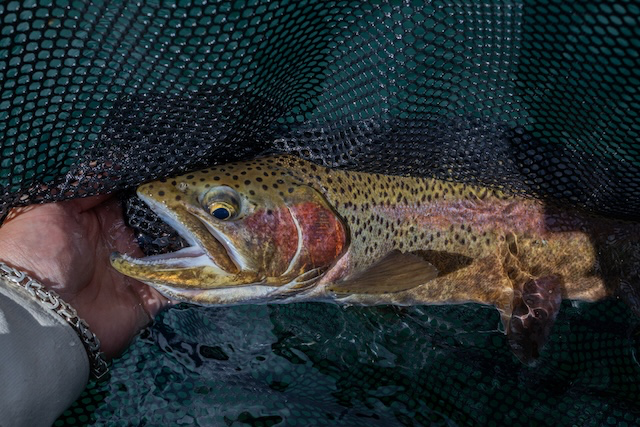
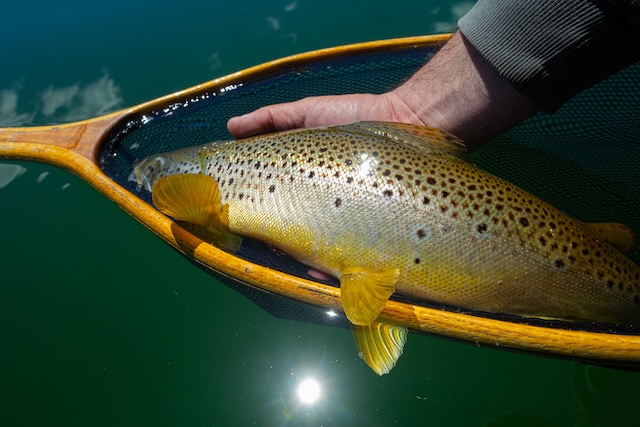
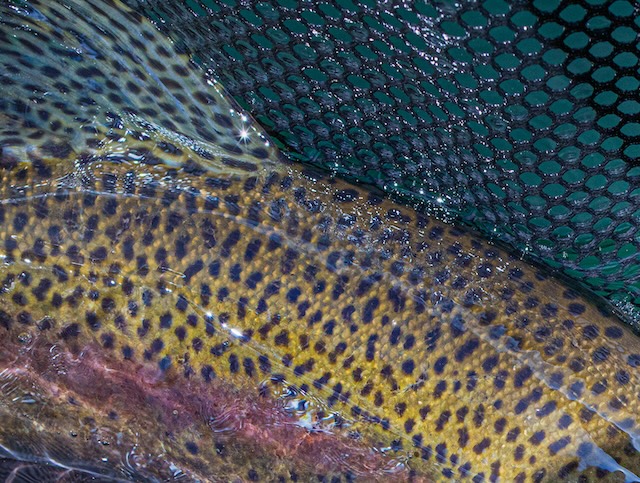
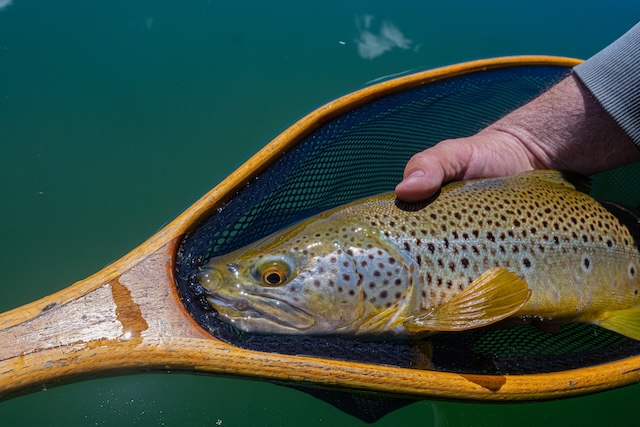
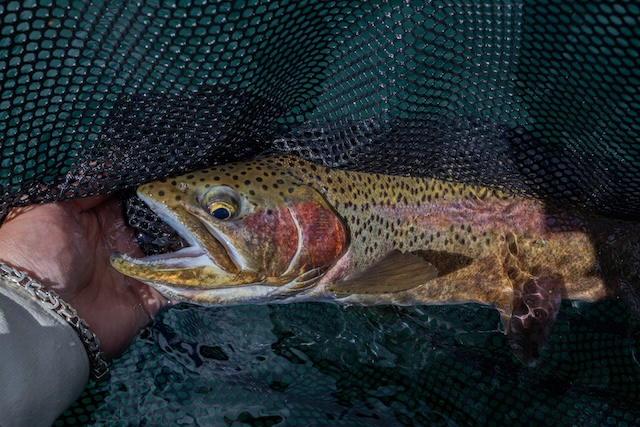
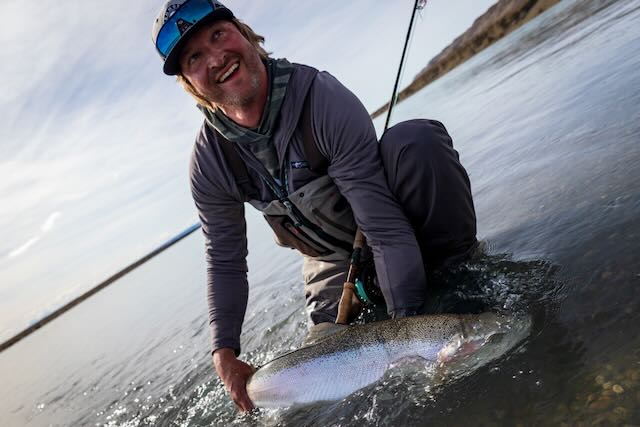
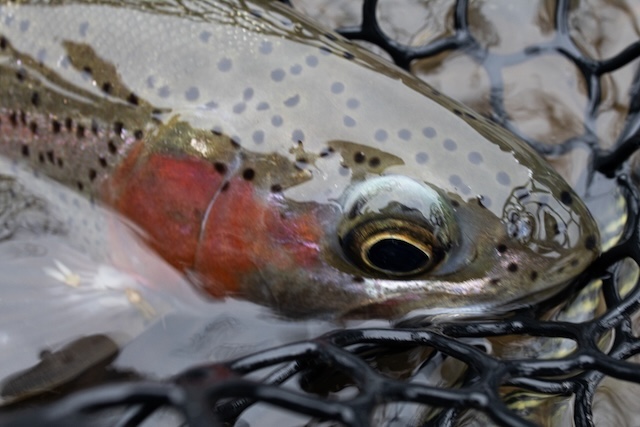
A large Blackwater Strain Rainbow from East Lake that decided to have a #16 Hippie stomper for lunch
There were several situations where we spotted fish that were cruising the bank feeding. The 590 Arrow quickly picked up significant amounts of fly line with an impressive degree of stealth, which is important on lakes, and redirected the line quickly in a different direction. We also spotted fish that were holding a specific territory and intermittently feeding in the same zone. Some of these fish were large like the toothy Blackwater Strain rainbow seen above that was holding off of a large rock just off the bank. Adison spotted the fish feeding and the Arrow performed well under pressure, delicately presenting my dry in the fish’s feeding zone.
I am pleased with the 590 Arrow’s ability to delicately present flies when needed. I love fishing spring creeks, and although at the time of writing this, I haven’t taken it for a spin on a spring creek, I have fished enough rods to know this would be a phenomenal rod working such technical water. Fishing small dries to stillwater trout has showed me that the 590 Arrow when paired with the Elite Technical Trout makes an impressive dry fly rod that will excel on lakes, spring creeks, and highly pressured waters.
Working the bank of East Lake with the 590 Arrow
River & Stream Test
I fished the 590 Arrow on a variety of rivers and small tributaries in the Western Cascades. I started testing the rod right as the dry fly fishing got really good and had a blast every time I took it out. The first day I had it out was fishing a mix of March Browns and Grannom Caddis. The rod turned over a tandem rig of a parachute March Brown with a Cripple as the trailer extremely well. I was working an eroded bank with large rainbows holding in root wads periodically rising. The rod had enough power to reach the far seam and enough control to mend line at distance. Towards the end of the day I swung some caddis pupa and picked up a few other fish.
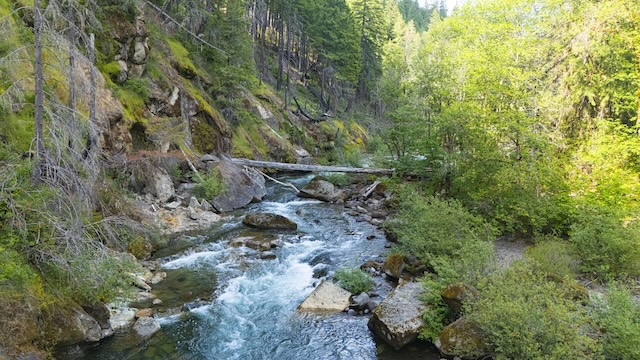
I fished this rod searching on some smaller tributaries and the headwaters of our larger rivers with a small Snowshoe Grannom Caddis that I tie. The rod was able to both present the caddis well, but also animate it over small riffles and in likely holding water. The power embedded within the KonneticHD blank of the Arrow makes it a fantastic rod for line control in technical water. Many of our local tributaries have complex currents with concurrent seams and small micro-eddies. The rod is powerful enough to mend in technical water, but delicate enough in the tip to make adjustments without dragging your fly.
I did fish this as a smaller Gold Stone dry dropper rig on a separate tributary and found a plethora of willing juvenile rainbows and coastal cutthroat. I would’ve preferred a more powerful line from Rio’s Gold Series, but I was having too much fun watching young, eager trout smash both my dry and dropper to care. For someone looking to upgrade their arsenal, the Arrow makes a phenomenal all around stick that will leave you giddy after finding a pod of cooperative fish.
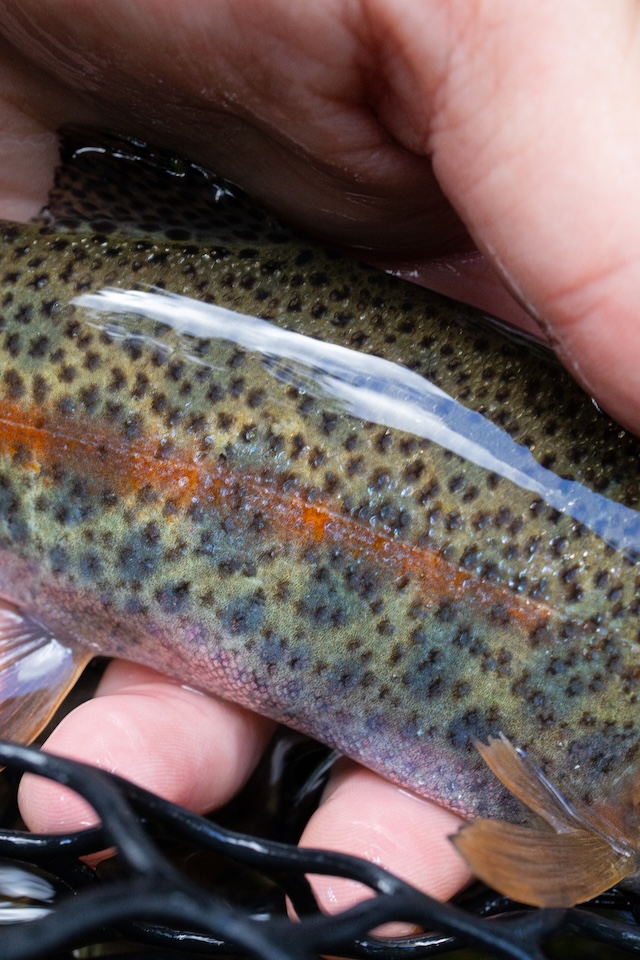
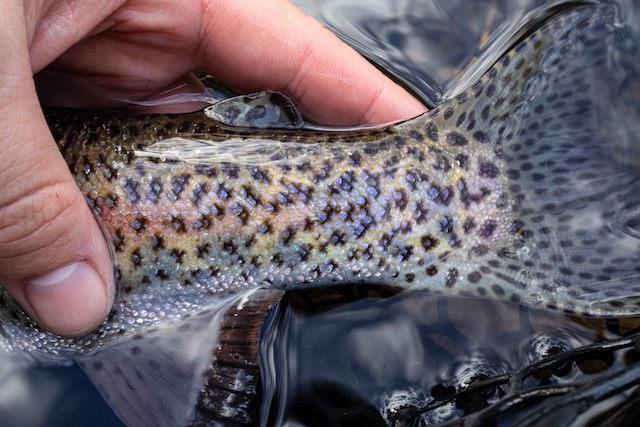
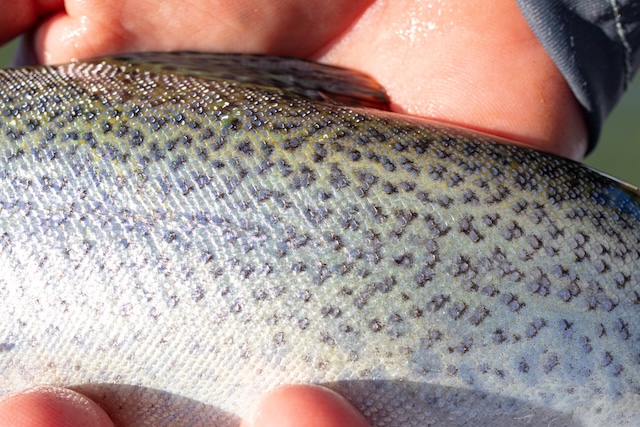
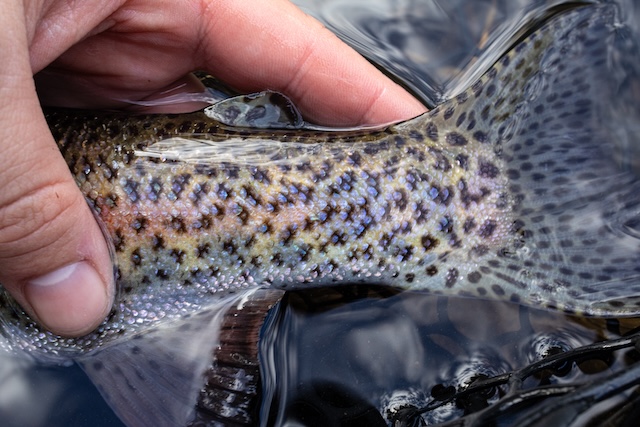
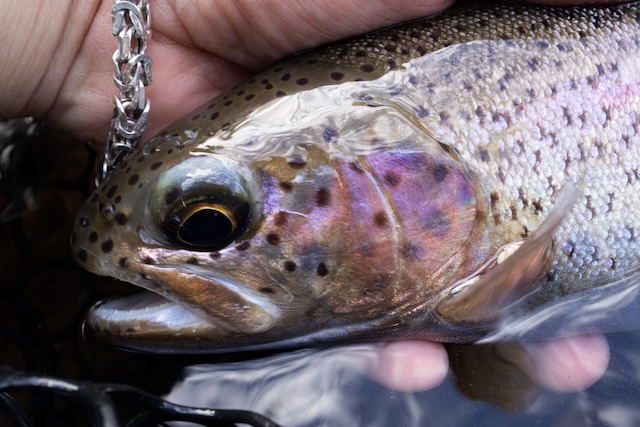
What young wild trout lack in size, they make up for in their gorgeous parr markings
Models
Sage has an impressive battalion of 14 rods within the Arrow family. These rods range from 3-8 wt and range in length from 7’6″ to 10′. Many of the heavier wt rods do come in a fighting butt option for those interested. For sake of conciseness, I will not delve into every rod that Sage offers within the Arrow family. I will outline the heaviest hitters based on type of angling that people like to do. As many of you know the 590 is the Swiss army knife of fly rods for trout, and is the #1 recommendation from this family of rods.
For those of you who like to tromp your way up a small stream the 8″6″ 4 wt Arrow would make a fantastic small stream rod. It would be capable of everything from throwing dries, smaller dry dropper rigs, and light nymph rigs. It has enough power to be an adaptable small stream rod, with enough give to still be fun on small water.
The 9’6″ 6wt Arrow is a great streamer rod in the Western US. The extra 6 inches will aid in turning over heavy sinking lines and sink tips. My previous streamer rod was the 696 Sonic, which the 696 Arrow replaced. The additional power and feel that the Arrow brings to the table makes it a more capable rod. The 696 Sonic was a great streamer rod for trout and bass, but the added feel of the Arrow helps anglers fish at a higher level being more in tune with what is on the end of their line.
The 10′ 7 wt Arrow is a versatile heavier rod with many uses. This would be a fantastic winter steelhead rod for working small to medium water with a floating line, and possibly sink tips. The extra reach makes it a deadly rod in terms of line control. The 7100 Arrow would make a phenomenal Pyramid Lake rod for Lahontan Cutthroat. It would excel at a variety of methods including indicator nymphing and stripping beetles on sinking lines. The rod could also be used for other applications like bull trout on the Metolious, large and smallmouth bass, or Surf Perch & Rockfish on the coast in a pinch.
Any of these Arrow rods pair well with the new Shift or Shift LT reels from Sage. The Shift is the base model, and the Shift LT is the lighter option with more porting. Longer rods may balance better with the Shift or a sized up Shift LT. Not matter which the 14 Arrow models you decide on, you are getting an exceptional fly rod hand crafted right here in the USA.
The Arrow is a testament to Sage’s ability to constantly innovate and improve seemingly perfect rods. It is a fantastic mid-priced rod that is made here in the US. The rod is versatile, responsive, powerful, and looks great. If you’re local and you want to check one out, swing by the shop and see for yourself. If you are online and have any questions, contact us and our friendly staff are happy to help guide you to the Arrow model that best fits your needs.
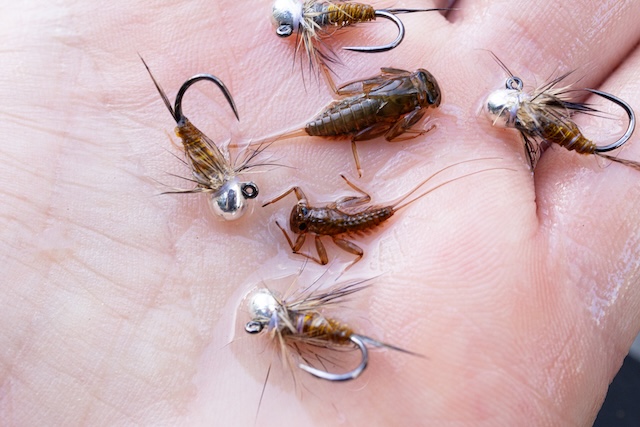
In this video, Simon ties a fantastic jigged PMD pattern that should be a staple in everyone’s summer box. Pale Morning Duns or Pale Evening Duns (PMD or PEDs) are small yellow to cream mayflies that hatch prolifically in the summer months in the Western US. Their eastern counterpart is typically more yellow and referred to as a Sulphur. While PMDs provide western anglers with some of the finest dry fly fishing of the summer, their nymphs are equally important. For months, fish are keyed in on both the adults and their nymphal form. This particular pattern features a split back suggestive of an ascending nymph ready to burst through its thorax out of its nymphal form. This fly can be tied with a heavier 5/32 bead or a lighter 1/8 bead depending on the water you are fishing it in. Having a few tied in each bead size will help you be prepared for a variety of conditions. PMD hatches are typically long winded on the calendar, so these nymphs will be an effective searching pattern for most of the summer. They make an especially fine dropper below a big buoyant golden stonefly.
Last week I had the opportunity to fish East lake with one of our friends and stillwater guides of the shop, Adison Rook. I have screwed around on many of our famed Stillwater venues over the years and done okay. Based on my past experience, I felt that I’d leave the stillwater thing as something to figure out when I got old and cannot wade anymore. Being in the boat with Adison, who intimitately knows many of the Northwest’s most famed Stillwater fisheries, opened my eyes to the dynamic world of technical stillwater angling. Utilizing techniques from competition Stillwater angling in the UK, we caught fish on a variety of methods, consistently all day. I’m not going to say I’m a changed man, but I am convinced that stillwater fishing can be just as engaging as floating the river, or working your way up a small stream when done right.
We were testing a variety of stillwater products, some new to the market, others not so new. We are excited to be working more with Adison leaning into his stillwater expertise and sharing it with you all on the blog, our YouTube, and most importantly our instagram. Stay tuned for additional educational content and product reviews. This year, especially, our stillwater venues will be getting a lot of love as our rivers are already unseasonably warm as a result of the subpar winter we had.
East Lake rests in the Newberry Caldera which is the crater left behind after the eruption of the Newberry Stratovolcano about 600,000 years ago. East Lake shares the caldera with Paulina Lake, separated by a relatively small flow. East lake is smaller coming in at just over 1,000 acres and Paulina being roughly 1,500 acres. East lake is the higher of the two being about 50 feet higher in elevation. Both lakes are considered high lakes sharing an elevation over 6,300 feet. Both East and Paulina have fantastic fishing for Rainbow Trout, Brown Trout, Kokanee, and the occasional Brook Trout, with East Lake having better access for bank anglers on the fly.
The most necessary part of our rig was a slip strike indicator, which allows you to fish at a depth longer than your fly rod. When stripping a fish in, once the indicator hits your top guide, it is tripped and will slide down freely until it is stopped by your first fly. Adison prefers to fish the smallest ones he can get away with; which made sense after seeing some very subtle takes. We also fished Phil Rowley’s Indicator Line which has a tippet ring instead of a welded loop. This made stripping your long leader through guides much easier when landing fish close to the boat. Typically we fished about a foot off the bottom, and got eats at frequent intervals that kept things fun.
As things warmed up, Chironimids starting popping off on the surface and on Adison’s instruments he could see fish starting to move off the bottom. We started to see more fish eating dries and as things slowed down we switched over to Callibaetis nymphs. With a significant early season Callibaetis hatch starting we each turned one of our flies to a Callibaetis nymph and began picking fish up again. Here are some Callibaetis patterns that we like: Mercer’s Epoxyback Emerger Callibaetis, KJ’s Diawl UV Hot Head Fly, Foisset’s UV Callibaetis, Red Holo Diawl Bach Fly, Callibungus Nymph, or a Callibaetis Pandemic May. Adison flipped over to another fantastic line from Phil Rowley, the Midge Tip Long Float/ Intermediate. He promptly hooked up on a 20 inch brown that ate his slowly stripped Callibeatis. We fished these lines “Loch Style” the day before and I was impressed at how these lines both shot and presented flies.
The day prior, we fished “Loch Style” which entails letting the wind catch the boats broad side and casting with the wind to your back. This allows you to present flies to fish that you have not floated over yet. A “drogue”, which is like a parachute dropped off the side of the boat, allows you to slow your drift and get more casts in over the prime shoal habitat. I’ve heard Adison talk about this technique, but seeing it, and fishing it really helped me understand how deadly of a tactic it is. There’s no surprise it is standard procedure on the stillwater venues in the UK, where that is there jam. It is also a fantastic option when it gets too windy for dries or indicator fishing. We fished Callibaetis and Chironomid nymphs on Midge Tips and got bit on most casts. Our retrieve rate depended on how heavy our flies were, and more importantly how quickly the boat is drifting. This method is certainly effective with streamers as well s, but we were dialed in giving the fish exactly what they wanted.
We finished up the afternoon fishing terrestrial patterns up against the banks. If you can fish downwind of the banks of East, Adison told me that you can have fantastic terrestrial fishing early in the season. We brought countless fish to hand fishing terrestrials which I figured was unseasonably early, but was assured that the fish get dialed in on them extra early. Working the banks, Adison taught me that fish will hang out in a territory that they claim, sipping terrestrials that end up in their zone. He spotted a large fish repeatedly eating off of a rock as we were slowly working up the bank. I landed a nice 20″ Blackwater strain Rainbow on a dry. They are so dark and bronze, we both assumed it was a big brown at first. These fish were introduced from Canada to help control the booming Tui Chub population, but happen to also fancy dry flies in the afternoon.
I’ve done well working the bank from foot with many of the above mentioned tactics. Typically, I make my way up to East Lake later in the year, but got a taste of earlier season there and it is just as good. Searching with dries in the afternoon into the evening can be fantastic, especially as summer carries on. Stripping flies from the bank has yielded more of my large fish over the years. Indicator fishing from the bank is doable, especially with a 10′ rod. Obviously being in a boat is best, but East lake is a venue that is extremely accessible for most bank anglers.
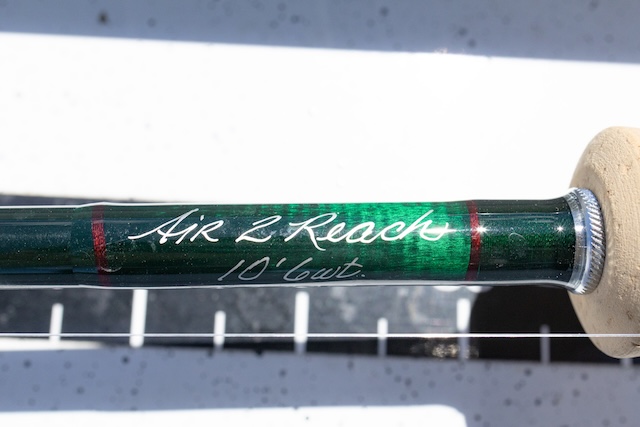
We fished a handful of rods there, most were 10′ 5 weights. These rods have enough punch to reach far from the boat or the bank, without being overpowered for the trout there. We compared the Echo Stillwater and Lago both in 10′ 5 wt; stay tuned for an in depth review comparing them. We also fished the brand new Sage Arrow 9′ 5 wt mainly for risers throwing terrestrials. Another rod that we threw for dries happened to be one of my favorite rods of all time: The Winston Air 2 9′ 5wt. We also ran the newer 10′ 6wt Air 2 Reach from Winston which felt great. I have the 10′ 4wt Air 2 Reach which is a fantastic nymph stick, and with the right dry fly geared line, would be an epic high lakes dry fly rod. We ran the extra long Absolute Indicator/Stillwater Leaders which have a sighter and is very helpful.
East Lake is a fantastic option to spend a weekend learning the ropes of stillwater angling, whether you’re in a boat or from the bank. The suggestions above will surely enhance your experience there, but you can make things work with your standard 9′ 5wt setup enough to catch a handful of fish. This past trip really opened my eyes into the big leagues of stillwater angling. With Adison showing me the ropes, I have seen into a whole different side of the sport that typically does not get as much love here in the US as it does in the UK. We’ve got everything you need to have a fantastic trip there. Swing by the shop for advice and to get geared up, or shop online here.
Fishing dry flies for the grannom caddis hatch can be a lesson in patience. Some would say it is a fool’s errand entirely. If you know what to look for, and can time it right it can be extremely rewarding. The Mother’s Day Caddis hatch or Grannom Caddis is a spring hatch that sweeps North America. Typically, it is the first significant caddis hatch of the year and can produce huge “blanket” hatches which provide trout with many targets on the surface. Many people claim that fish strictly feed on pupae for this hatch, which sometimes is true. Swinging soft hackles and dead drifting pupae can be deadly, but so can fishing flies closer to the surface. Running an emerger behind a dry is typically my go to, but egg laying variants can work fantastic, especially if you time it right with an egg laying event. If you are on the river and happen to see swarms of grannoms moving upstream, I highly recommend that you follow that swarm up. Typically they will choose a glide to spawn and for females to oviposit eggs on the water. These egg laying events create a feeding frenzy and it can be some of the best dry fly fishing of the spring if you can time it right. After the hatch has been going on for some time, fish are keyed in on cripples, mergers, pupae, and egg laying females specifically. This makes searching with an egg laying caddis a fantastic choice. Grannoms are similar size to many of our summer and fall caddis species too, so this fly will get love all of the way through fall as well.
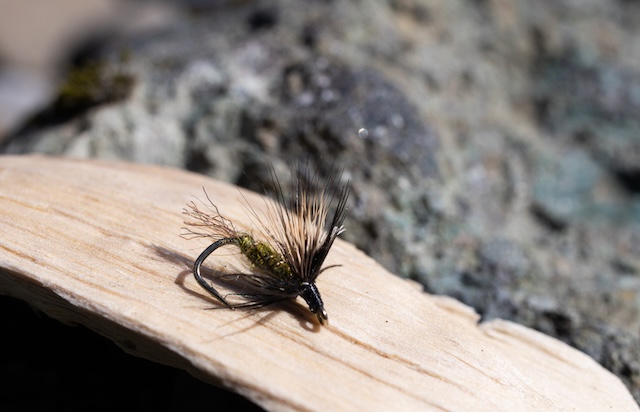
The Grannom Caddis hatch is an impressive spring caddis hatch that comes off every year. This hatch can come off in a “blanket” fashion leaving the surface littered with insects. When this happens, it can be hard to convince fish to take your dry fly over all of the naturals. This is when fishing a trailing emerger behind a dry is advantageous. Even when just searching for trout without a huge hatch, fish will often take the soft hackle/ cripple off of the rear. The beauty of this pattern is that it also can be swung picking up fish feeding subsurface. Starling makes a great hackling material because the fibers are pre-sized for smaller flies. This is a fantastic versatile pattern that should be in every angler’s spring box!
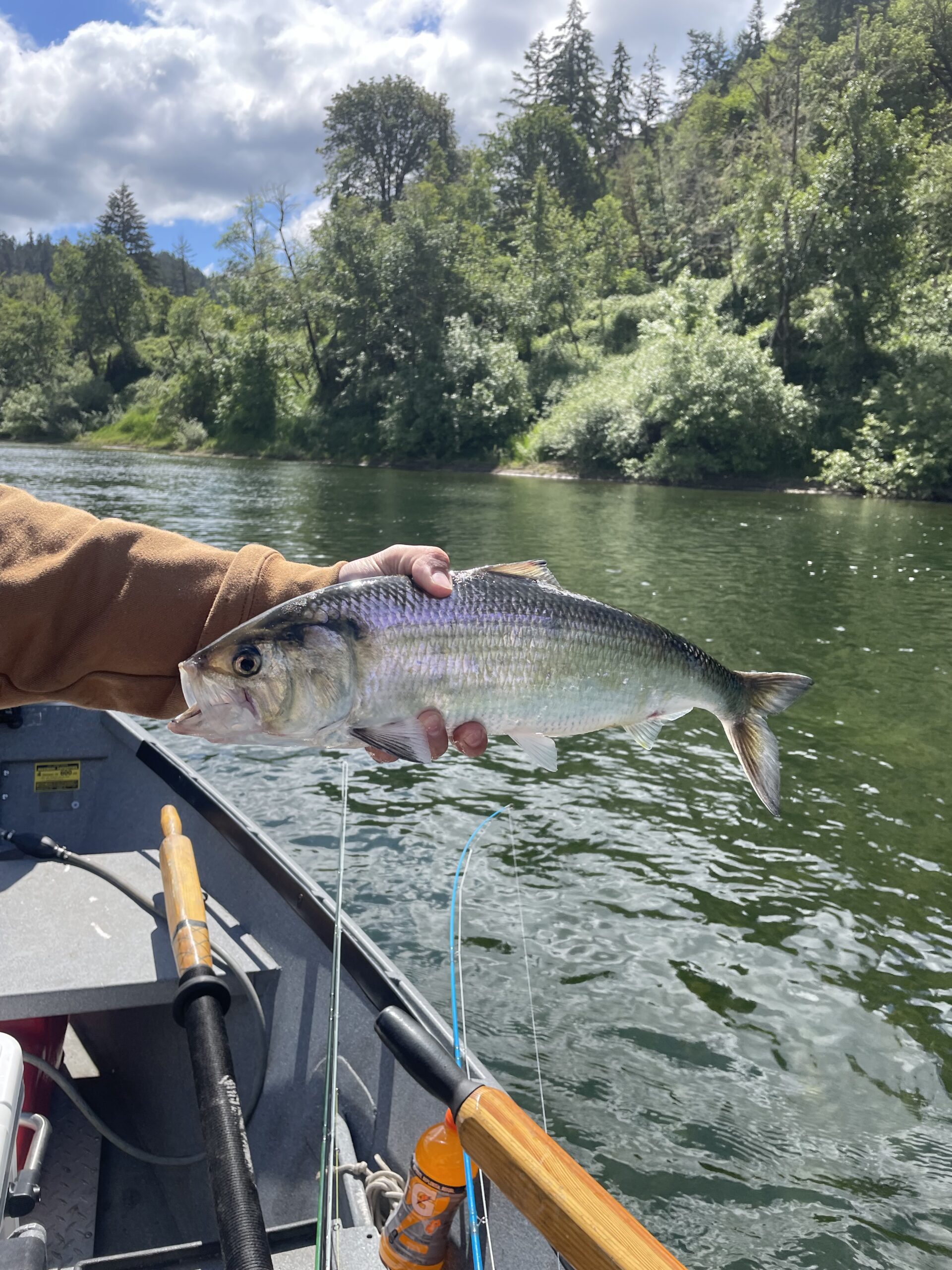
Every year we get quite a few calls and in person inquires about the shad run’s status on the Umpqua. Usually answered by checking the ODFW report and with: “uhh…they should be in mother’s day to father’s day”. Its been a long time since our last Shad Report. This year we can report that the shad are in the Umpqua in great numbers as expected. There are many bank spots, short rows/motors from ramps or full floats on the Umpqua.
I got out with former Caddis employee, Alex, who figured out how to get them a few days before. Shad fishing is: “consistent, low stakes fun”. Plus pound for pound they put similar sized fish to shame, our beloved redsides included. Shad run, dig, pull and jump – doing everything you want out of a sportfish. Once you find the travel lane of a big school, you can get as many to bite as you want. Hooking them every cast is a different story. They give a little tap tap and then let the fly go. You’ve got to be quick! We found a short, couple inch strip followed by a hard lift was the best way to hook them.
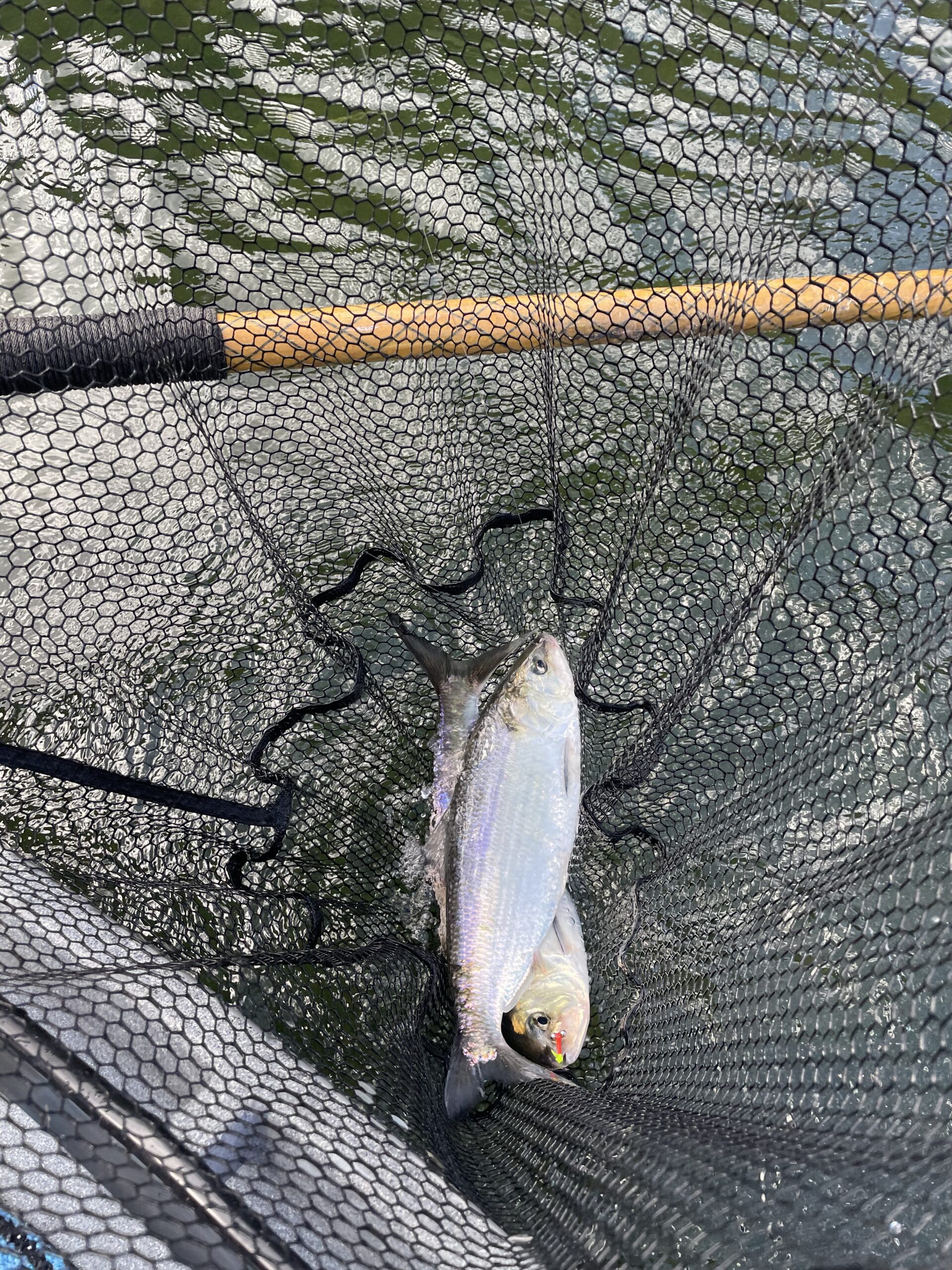
Doubles are common while shad fishing!
When I fished for shad before I jigged curly tails and mr. twisters below bedrock ledges and in the slots. This kind of water is fishable with fly rods, but better fly water exists. We found the most luck in even flowing, walking paced water a good distance below the ledges. Middle to the end of the tailouts. If you are in a boat you can often spot large schools of shad. Look for a horde of evenly spaced, surprisingly large fish hugging the bottom. Shad travel upstream at a gentle pace. We anchored to the side of schools and had an absolute blast. Cast upstream slightly or perpendicular to the current to achieve a low and slow swing.
A lot of lines and flies that will work for shad. Some will work better than others. A clean, slow drift with a sinking style line is important. The optimal line is probably a 25 foot sink tip in 150-200 grains. A 20-25 foot sinking section seemed to be in the zone. Neither of us had this line so we utilized our bass sink tip lines SA Sonar Titan Sink Tip in sink VI combined with a Sonar Sinking Leader in Sink VI to achieve the 20 feet or so to hold our flies in the zone. Use what you got! A full Sink III or I/3/5 would probably work fine as well. We caught fish on Krill Bill’s (pictured in a shad’s mouth above) and Shewey’s Mirage Shad Dart. Alex also tied some shad darts with XS brass eyes, as opposed to bead chain, that worked great in slightly deeper water. Five-ish feet of straight 3x or 2x paired with 5 – 7wt rods helps kick off the fun. With a 5wt the fun is maximized. However, you can get into stalemate with the bigger shad as they hug the bottom. You decide what type of fight you’re looking for.
Plenty of other willing participants between shad spots
There’s also lots of smallmouth around between shad spots or if you want a change of pace throughout the day. Thanks for reading and good luck out there! -Robbie
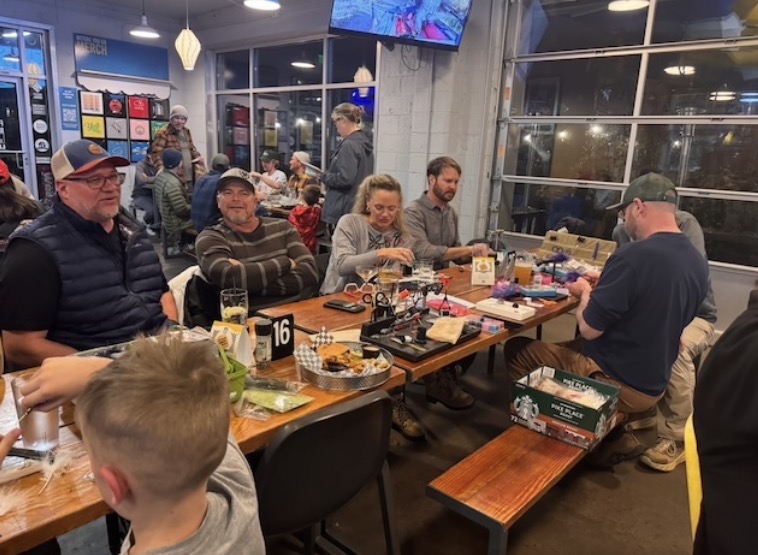
This coming Tuesday the 19th is our monthly Fly Fishing Community Night. Every month, our local community looks forward to gathering at our favorite brewery which has hosted us for over a year: Falling Sky Brewing. Beginners and experts alike are found in the crowd, there are also new faces each month as well as the veterans that have been attending since the monthly event’s inception.
Where: Falling Sky Brewing [1334 Oak Alley Eugene, OR 9740]
When: Tuesday, May 19th at 6:00
What: Fly tying, new friends, prizes, great food, great beer, fly swap, fly tying lessons (must reserve your spot), and connecting with the community.
This past month, our friend Alan Eubanks gave complimentary fly tying lessons to beginners. Again, this month Alan will be hosting an intro to fly tying class sponsored by Caddis Fly Shop. There are limited seats so message our Instagram to reserve your spot, stop by the shop and get your name on the list, or give the shop a ring (541) 342-7005. Alan has been tying flies for decades and is excited to share his wealth of knowledge with eager students. This month he will be pairing down the class size and scope of the class, and will be teaching beginners how to tie a Pheasant Tail Nymph. There are also a plethora of other experienced tiers who show up each month who will be more than willing to lend a hand as well. Again, please reserve your spot if you are interested; we only have limited supplies and for those who want to learn
If you haven’t been to a Community Night, you’re missing out, and we’d love to see you there. It is a great excuse to get together and talk about fly fishing, tie flies, meet new people in the community, usher in newbies, etc. See the bottom of this post for the full schedule for 2026.
Tiers are encouraged to bring their vise and materials and tie flies if they choose. We will still continue with the monthly fly swap for tiers who participate. If you aren’t planning on tying, but want to bring a hand tied fly, you are welcome to bring one from home.
We have gotten in some gifts from our friends at Fulling Mill & Trout Unlimited that we will parcel out to those participating in the fly swap. We won’t give everything out this month, as we will stretch the prizes over the next few months but if you participate in the fly swap, you will have a chance to win something.
Falling Sky has great beer and some very talented chefs working hard in the back. Their burgers and sandwiches are fantastic, if you choose either of those you have to try the truffle fries. They also have a fantastic bacon loaded truffle Mac and Cheese. Stephen, the owner, has been generous enough to host us monthly for a year and a half. He is a fly angler himself and always makes his rounds. Be sure to extend your gratitude to the man who has made this happen every month for well over a year.
We can always expect our regulars to show up monthly. We also encourage new people to swing by. We have had a massive influx of new faces and new anglers, so it is a great time to stop by if you’ve been hesitant. Whether you’re a veteran to community night or brand new, we are looking forward to seeing you Tuesday!
Help spread the word, the more the merrier!
-Simon
2026 Schedule
Community Nights will typically land on the third Tuesday of each month for 2026. Some dates are subject to change, so keep a close eye for updates.
Tuesday January 20th at 6:00
Tuesday February 17th at 6:00
Tuesday March 24th at 6:00 (Initial date of the 17th changed Due to St. Patricks)
There are a handful of destinations around the world that everyone who travels to fish has either visited or is planning to visit. This is one of those places. Luxury meets rustic as you fish your way through 150 miles of named runs while staying at two different lodges during a week’s stay. The main lodge boasts a spectacular, modern post-and-beam facility and offers single-occupancy cabins for up to 12 guests per week (private bathrooms with heated floors).
Morice River
Each guest fishes 3 days (2 nights) out of the Morice River Lodge. We are the only guided fishing operation on the entire Morice River. The Morice River embodies what a wild steelhead system should look like and is laid out as if designed for a spey rod and a dry fly.
Bulkley River
The other 4 days are spent fishing the Bulkley canyons, which arguably have the hottest steelhead on the entire Skeena system. Our specialized logistics and attention to detail make it effortless to fish all this incredible water with ease in one week. Our main lodge matches the highest level of luxury of any fishing operation in the world, while the other gives you that rustic, riverside, campfire vibe you have been craving. Together, over one week, they fulfill every steelheader’s wildest concept of a dream vacation.
Terms and Conditions: Travel to Canada, Insurance, Licenses, and Gratuity not included
Spey Casting guru, fishing guide, Sage and Rio ambassador Jon Hazlett will be instructing two sessions of two handed casting lessons on June 20th. A max of 6 casters, or 6 spots in each class will be available. All equipment will be provided. Anglers are welcome to bring their own rods if they would like. Casting instruction will be on the water at a location to be announced.
Class #1: June 20th, 9am-12 Spey Fundamentals ($95) – Spey class for beginners, with the focus being on basic fundamentals, and the introduction of the Double Spey and Snap-T
Class #2: June 20th, 1pm-4pm Intermediate/Advanced Spey ($95) – Spey casters who want to refine their technique, such as the finer points of the D-Loop Stroke, the Single Spey and Snake Roll.
Each class will include hands on instruction, discussion of moderns spey lines, tactics and techniques. John Hazlett has been in and around the two handed rod game since the late 1990s and is an excellent instructor and fly fishing guide. Classes aim to introduce and improve your spey casting skills.
Call The Caddis Fly Shop to sign up: 541 342 7005 – Space is limited to 6 casters per session.
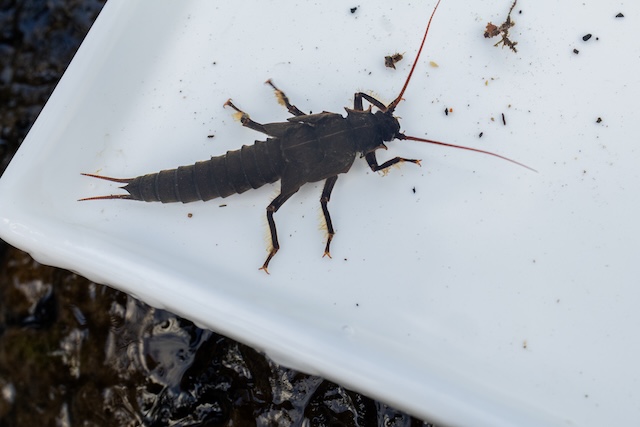
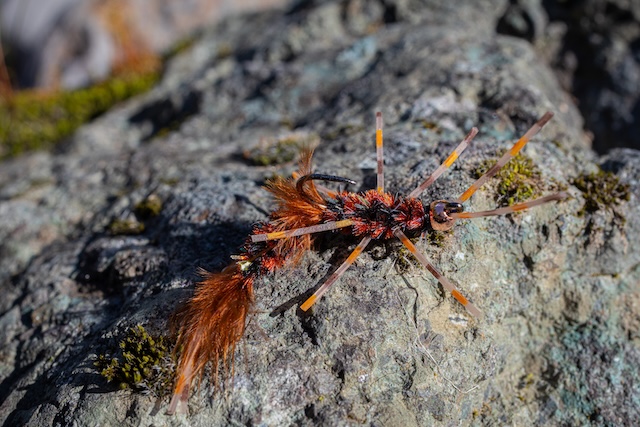
Every spring, giant insects make their emergence from our rivers that they called home for the last 3-4 years. Many know these insects for their winged adult form, which brings fantastic dry fly fishing each spring. This hatch typically kicks off dry fly fishing for the year. The winged adult form of the salmonfly makes up a tiny fraction of the insects lifecycle and what is available to trout to feed on. Salmonfly nymphs are slow growers, taking 3-4 years to fully emerge. That is 3-4 years to get eaten by a trout vs the few weeks that makes up the seasonal hatch of the adults. Therefore, fishing a salmon fly nymph is arguably a greater asset in your box and more effective in terms of timeframe available for trout to feed on compared to a large salmonfly dry. Even during the height of the famed salmon fly hatch, fish are still keyed in on the large nymphs. Large salmonfly nymphs make fantastic searching patterns year round and often move large opportunistic trout.
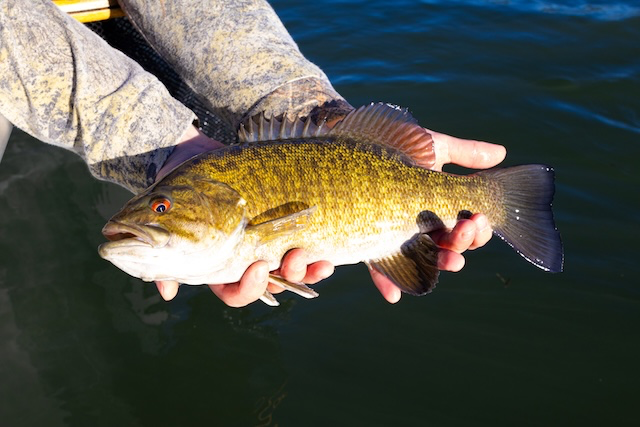
When someone in the Wilamette Valley mentions smallmouth fishing, most people assume that the South Umpqua is the destination. For those a little more daring, the John Day may come to mind, but it is a bit of a drive. Many local anglers overlook the smallmouth that make our valley reservoirs home. These venues are closer and can produce as many fish as the Umpqua and the John day. Believe it or not, the average size of fish can often be better close to home as well.
There is no one who knows these venues more intimately than our local stillwater guide, Adison Rook. Adison is a master of stillwater angling both in the valley, and in our high Cascade lakes. He has put years in to learning the stillwater game and it shows with his deep understanding of lake geography, Entomology, fish behavior, angling techniques, etc. It is no wonder that Adison feels at home at many of the famed bass and trout stillwater venues across the Northwest.
I’ve spent a number of days in Adison’s boat, and being largely a river/small stream angler, I am always out of my element floating on a lake. Adison’s deep understanding of stillwater dynamics reminds me, every time, just how in the dark I am when it comes to fishing lakes. This year, we are really leaning into Adison’s expertise to share his deep knowledge of stillwater angling with all of you across the blog here, and our social media platforms.
I grew up in the Midwest primarily fishing lakes and ponds, so naturally I gravitate to moving water as it is something different. Switching gears and fishing the valley lakes more this spring has opened my eyes to just how lucky we are having these reservoirs close to home.
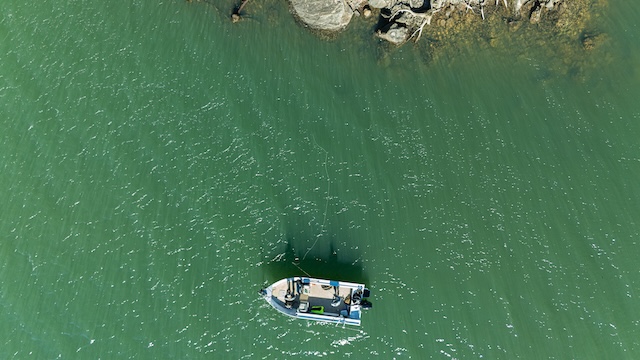
Note the proximity to the bank
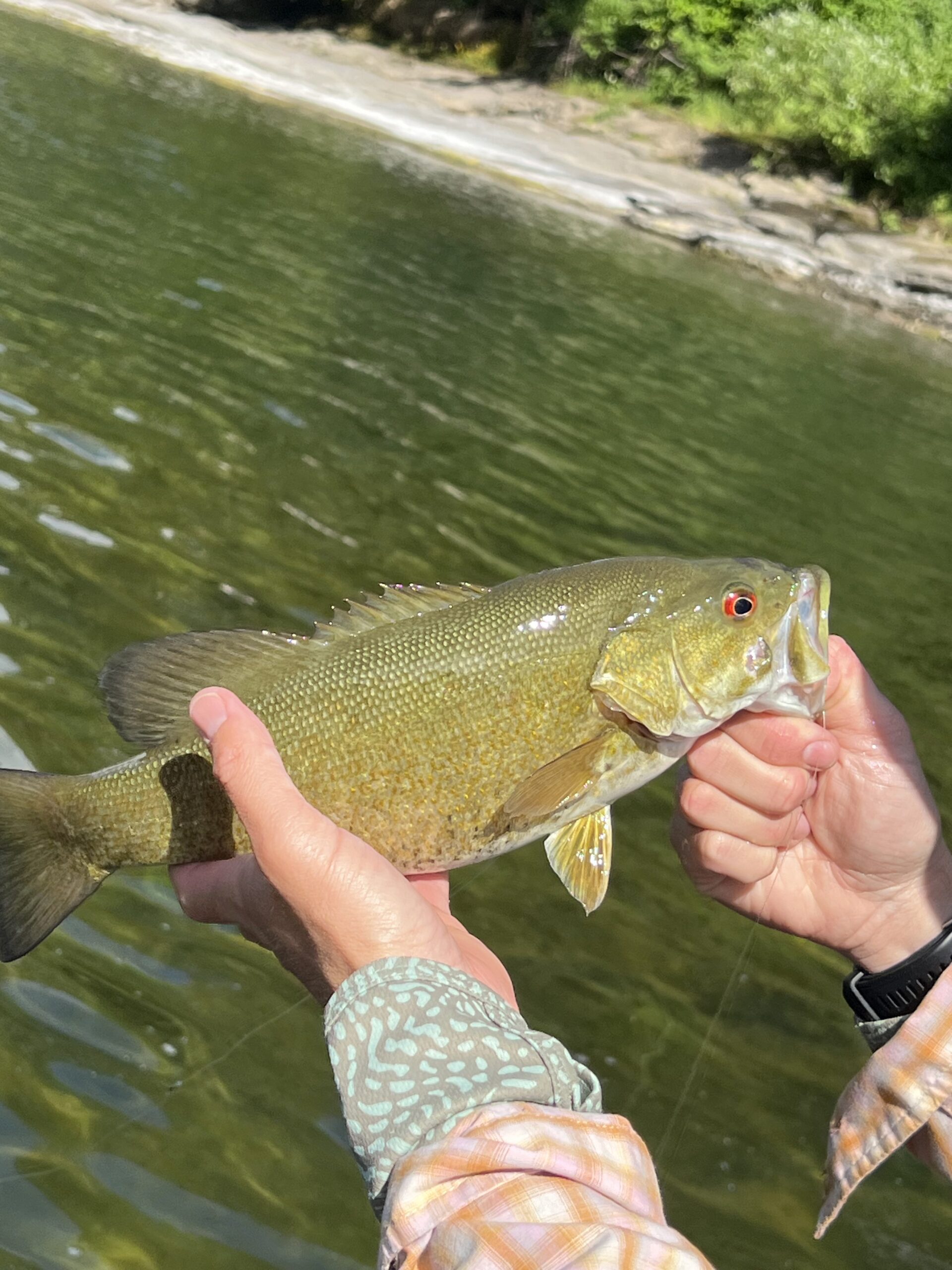
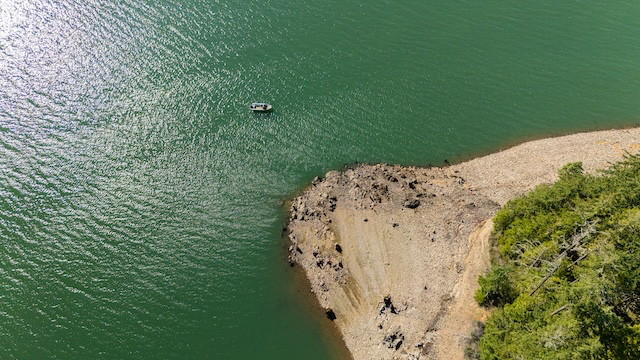
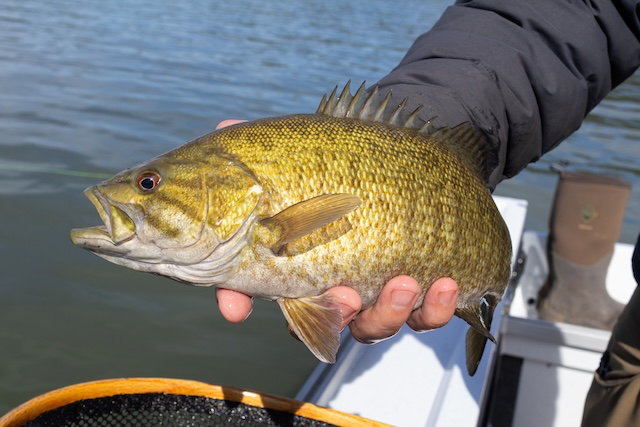
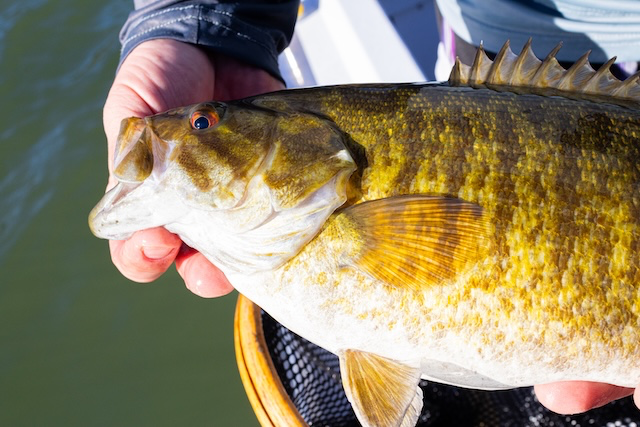
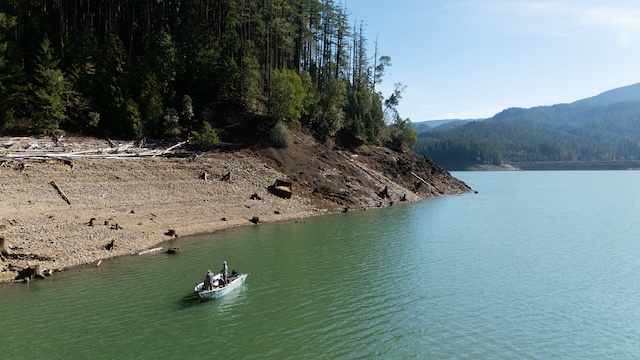
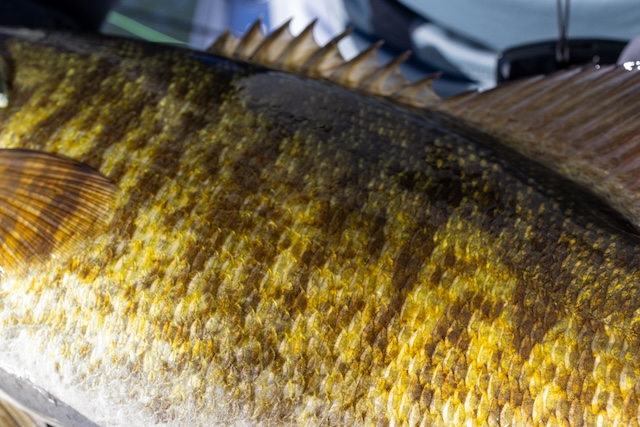
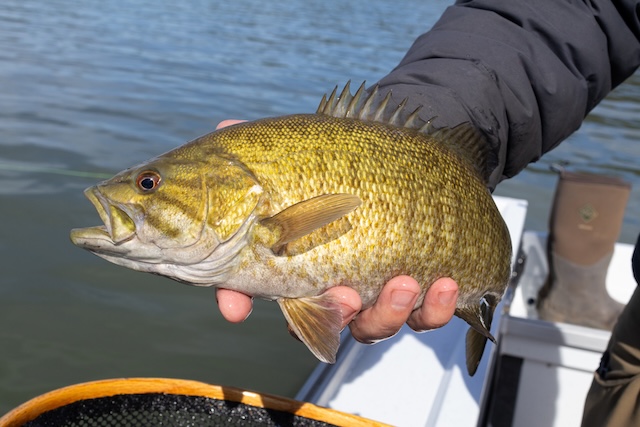
For someone like me, who primarily fishes rivers, the spring smallmouth scene is ideal, because it does not require you to be in a boat. Fish stage close to the bank as things warm up each spring, making angling from the bank not only viable, but extremely productive. Typically, Adison had us working the bank from the boat in a proximity entirely reachable for bank anglers. Working drop-off structure, submerged stumps, points and more, bass obliterated our flies all day. These smallmouth are like small John Deere tractors and will tear you up digging deep and pulling drag. If you’ve never experienced the athleticism of a smallmouth bass, I highly recommend you try chasing them on the fly.
Adison wrote a fantastic article last year HERE which explains things in better detail than I can. The absolute best line you can be running for this is a Scientific Anglers Textured Anadro Indicator. The taper of the Anadro is makes turning over cumbersome bobber rigs effortless. Whether it is a big roll cast, or you are picking the whole head out of the water, this line does it all. The textured line floats high, so it is easy to pick up, and shoots far when needed. It has quickly become one of my favorite lines from SA. Stay tuned on more about this line down the road.
Fishing for smallies will still be good for some time now. Get geared up at the shop and get out there. If you don’t want to fish on foot from the bank, reach out to the shop to book a guided trip with Adison in his boat.
Keep your eyes peeled on our Instagram account and YouTube for additional stillwater content featuring Adison throughout the seasons at various venues. He is an untapped well of knowledge in the stillwater game, and we are excited to be showing you all a whole lot more.
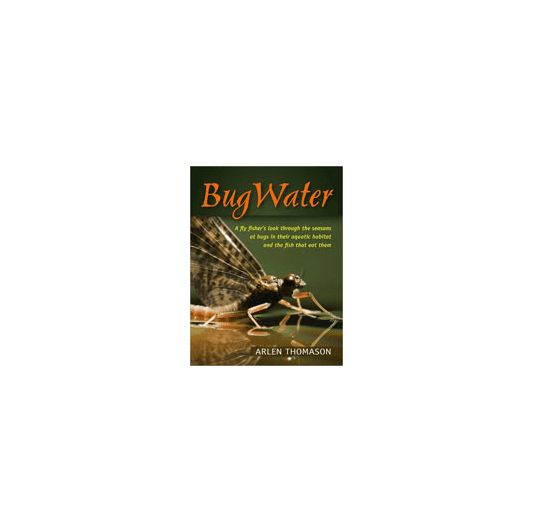
Author of “Bugwater“, long time shop customer, and member of Mckenzie River Fly Fishers, Arlen Thomason, wrote a fantastic update on one of his favorite hatches: The McKenzie Green Caddis.
“For those who might not have noticed, one of my favorite hatches is underway on the McKenzie.
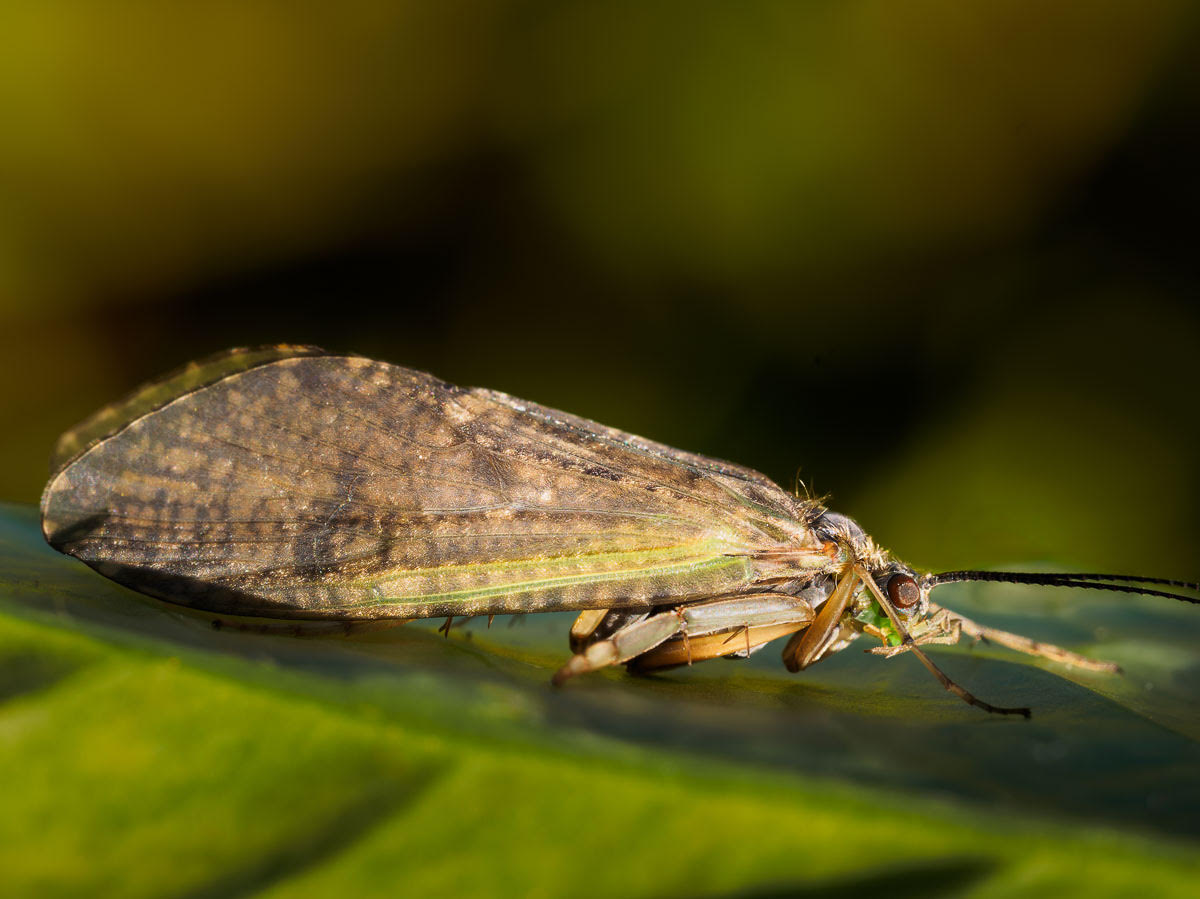
McKenzie Green Caddis (Arctopsyche grandis)
The big green McKenzie Caddis–second in size only to fall’s October Caddis–is now hatching sporadically from mid-afternoon to near dark. Look for them in or just below riffles and fast water. Even if you don’t see any, it’s worth fishing a good imitation. Trout know they are around.
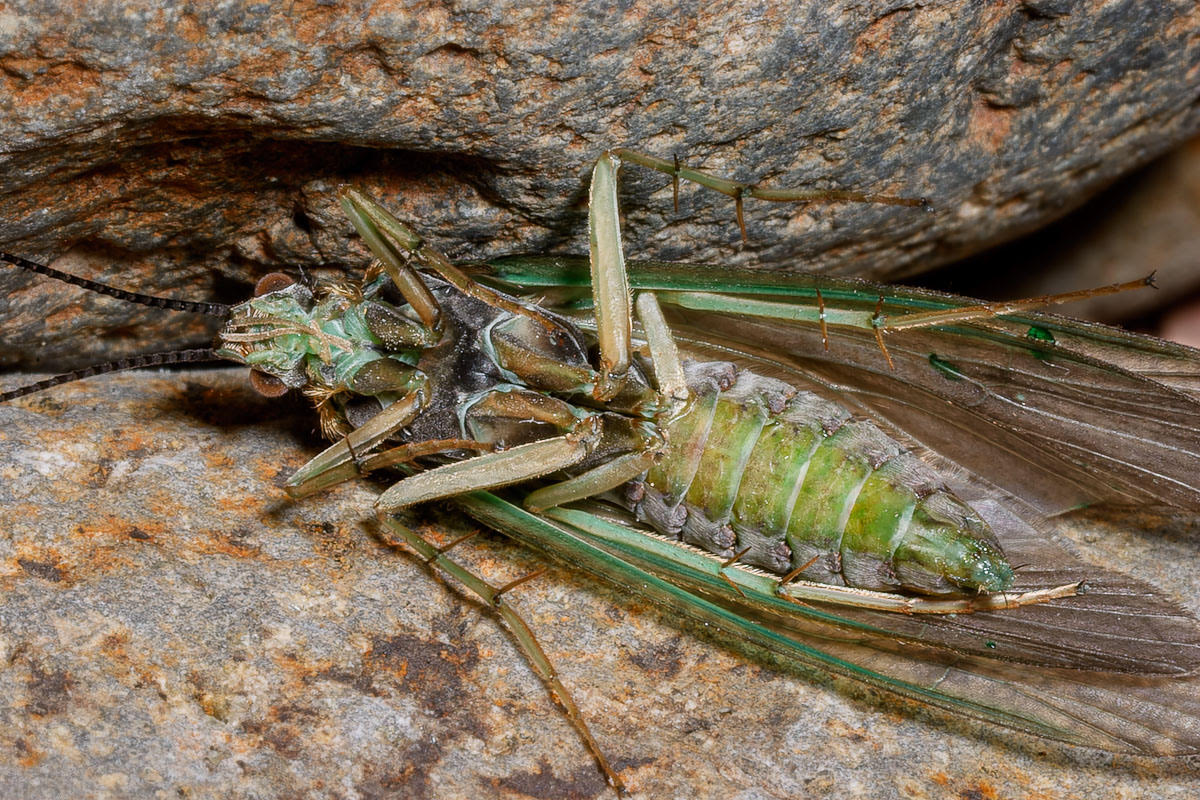
Though they only show a trace of green when seen from above, from a fish’s position it’s a different story.
Ventral view
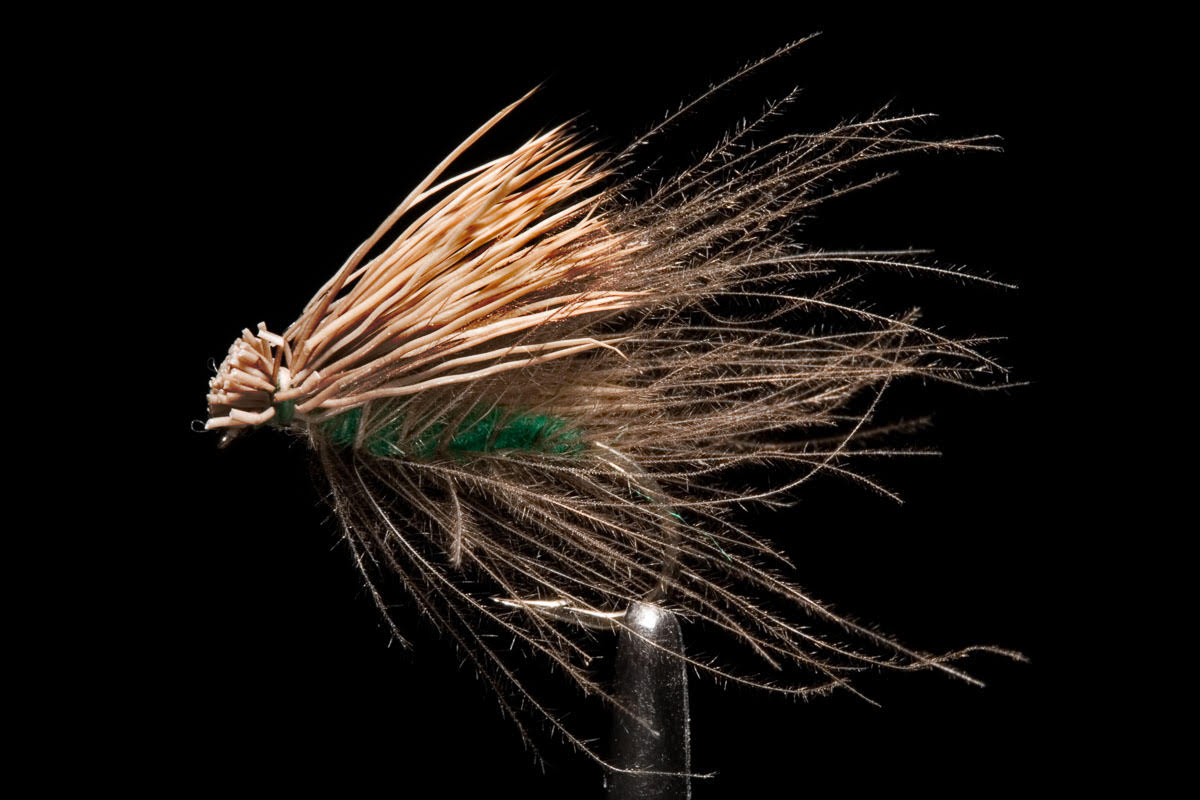
My favorite fly for this hatch is a CDC elk hair caddis. The CDC, though somewhat of a chore to keep powdered and not waterlogged, consistently adds enough movement to provide a good dose of realism.
CDC elk hair caddis, size 10
I give them a drag-free drift or two over likely holding water, and if that doesn’t draw attention, I start twitching them a little. These bugs tend to jump around on the surface a bit before they get airborne. Drives the fish crazy sometimes. Those of you who have fished with Bill Laing, or heard Mike Starr talk about it at Bill’s recent memorial, will be reminded of his dogged dedication to twitching dry flies. He had the technique perfected.
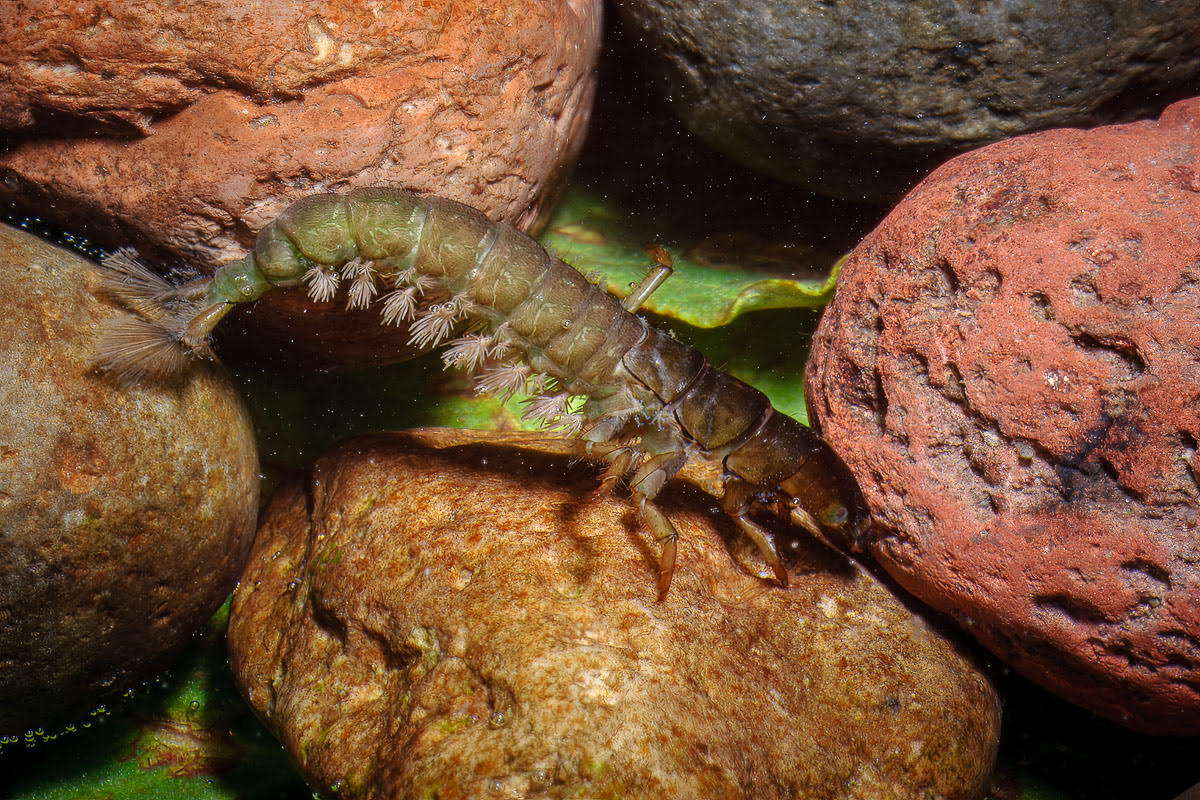
If you’re one of my tribe who turns over river rocks to see what dwells there, you might have encountered juvenile McKenzie caddis. These bugs are net spinners, building webs in rock crevices to catch whatever is drifting by and might be edible.
McKenzie Caddis larva
But neither you nor the fish are likely see these during hatch season. The larvae will have built and sealed themselves inside pebble cases that they attached to large rocks some time ago. After metamorphing into adults, they will break out of the cases, make their way to the surface and try to get airborne as soon as possible.”
– Arlen Thomason
Bugwater is our number one favorite insect book regarding our local entomology in the valley. The photos are unmatched and Arlen provides readers with phenomenal photos as references, fly choices, and a wealth of information regarding each insect’s behavior. It is available in the shop and online for those interested.
We have a variety of Mckenzie Green Caddis in the shop. Swing by and ask the shop staff their favorite patterns for the hatch and get loaded up. This is one of our favorite hatches of the year and one of the two prolific large caddis hatches you can experience on our local rivers. If you miss this one you’ll have to wait until fall.
In this video, Simon ties a productive Jigged Grannom Caddis pattern. This fly will work fantastic on a euro rig, indicator rig, or a dry dropper setup under a large chubby. The Grannom or Mother’s Day Caddis hatch can be notoriously difficult to convince trout to rise to your fly. During this hatch, trout gorge subsurface and fill up on ascending pupa. With enough food beneath the surface, trout have no need to expose themselves to predation and rise to the adults. As a result, running caddis pupa subsurface can be a more productive approach. This fly can also be swung like a soft hackle. The beauty of its heavy bead, is that it can be dead drifted for the majority of the drift and swung at the end. Often fish will pick up the swung pupa as they swing and ascend through the water column. The flashy target point helps fish find this fly, its buggy, realistic body looks close enough to a true pupa to get eaten. This pattern can certainly be sized up or down, and colors shifted to match what caddis species are making their emergence.
Our long strange winter has come to pass and things are feeling a bit more on time. Flows are stabilizing, insects are hatching, flowers & trees are blooming, and trout are rising once again. Despite a seriously low tide in terms of snowpack this year, we remain optimistic that the great fishing that we are currently experiencing will continue through summer. Later this summer, especially, we likely will have to monitor river temps, levels, and flows as it gets real warm. For now, our entire Willamatte Valley drainage is coming alive and it is a fantastic time to get out.
Prespawn smallies are a blast close to home
Springtime can be almost as overwhelming in terms of choices as the fall can be.
Do I float or wade the mainstream Mckenzie or Wilamettte? Tromp my way up a small tributary looking for dry fly eaters? Look for Morels? Chase Turkeys? Visit one of our valley Stillwater venues? Go to the jetty for prespawn Lings and Rockfish? Chase Surfperch from the beach? Drive to a high lake? Or make a drive somewhere out of the valley for something entirely different?
That is at least what goes through my mind, and it can paralyze you leaving you in a drunken stupor, unable to decide what to do on your day off. The good news is whether you’re on a lake, small stream, or large river, the fishing is fantastic with good weather to match.
Check stream side vegetation and you’ll likely find hundreds of Grannom Caddis
Insects on the Menu Currently
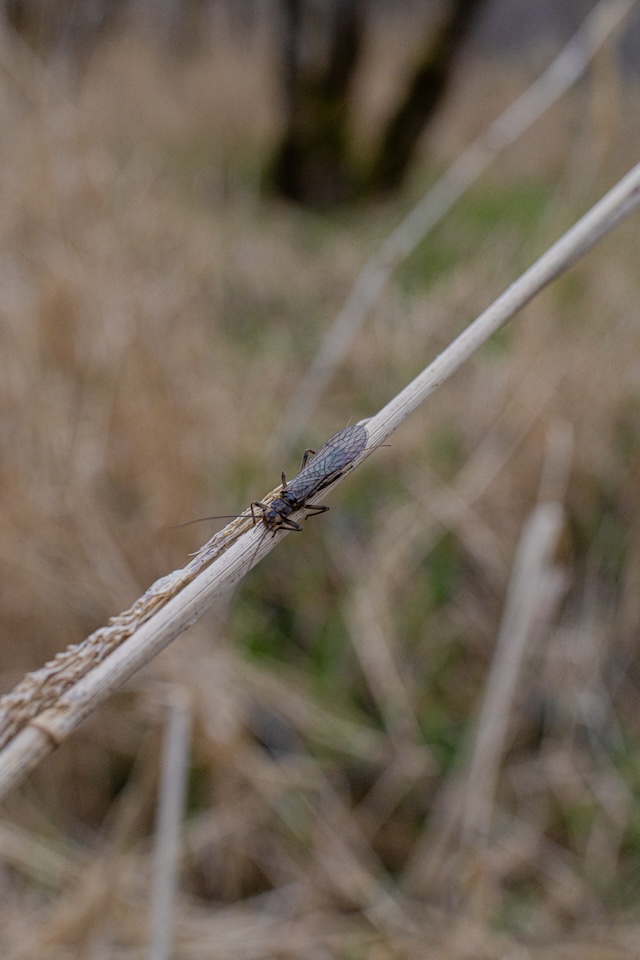
There is a serious buffet of insects hatching currently, and often trout key in on one bug in particular. On especially overcast days we are seeing great hatches of Baetis sp. or Blue Winged Olives. Great BWO hatches are often accompanied by blanket hatches of March Browns this time of year. In riparian vegetation and moss Winter Stones are found in abundance. On warmer days, we are seeing mega hatches of Grannom or Mothers Day Caddis. On these warm days, you may see ovipositing female Salmonflies and Skwalas over the water. Otherwise, you will find both males and females in stream side vegetation sharing the habitat with hundreds of Grannom Caddis. This has been an especially prolific year for Skwalas, I’ve seen more this year in the valley than ever before. As the warm weather continues, Pale Morning/Evening Duns PMDs and Gold Stones will be a daily sight. We have already seen a few of them starting along with Yellow/Lime Sallies.
Rainy days can yield some fantastic Baetis hatches
For salmon flies I’d fish the following with a trailing mayfly, caddis, or jigged dropper if the fly is foam: Burkus Bearback Rider Salmon Fly, Emma’s Stone, Clarks Stone, Chubby Chernobyl or a Double Stack Chubby Chernobyl Fly in orange larger #6-8 sizes. Fishing a Skwala is the same, but smaller. Try a Bullet Head Skwala or a Chubby Chernobyl or a Double Stack Chubby Chernobyl Fly in darker smaller #10-12 sizes. We are also seeing heavy hatches of Grannom or “Mother’s Day” Caddis, but having a fish rise to your fly during these large hatches can be frustrating. I’ve found that when this hatch is in full swing, fish are more cooperative taking swung pupa. See the section below for more. If you can catch a large egg laying event where spent caddis fall into the river, it can be ridiculous fishing dries. Here are some of my favorite dries for the spring caddis hatch: Jonny King’s Splitsville Caddis is by far my favorite as it mimics a struggling/spent caddis on the surface, J’s Black Hi-Tie Caddis, Peacock Caddis, Dusty Old Bat Caddis. Trailing a soft hackle listed below can increase your odds of fish choosing your fly. In addition to the soft hackles listed below, here are some trailing caddis patterns that work for me during the spring: X2 Caddis, Harrops CDC Caddis Emerger, or a Sparkle Pupa Caddis.
Salmonflies out and about
Dry dropper rigs are starting to become effective. As things warm up even more, your surface fly will continue to get more love. For now, it is a fantastic way to stare at something other than an indicator, that sometimes will get eaten. See the foam flies listed in the section above for options for your foam top fly. Running 3-5 feet of 4x Absolute Trout Fluorocarbon Tippet to any of the jigged nymphs listed below is a fantastic rig that will get plenty of attention from feeding trout.
Skwalas offer opportunistic trout a larger meal than the mayflies and caddis currently coming off
Nymphing
Nymphing remains one of the most effective methods to employ on the river still, however that may be changing with the abundance of spring insects hatching. I had a day a week or so ago where, no matter what nymph I ran, I got no love on the nymph rig all day. I’m not complaining, as I picked up large fish all afternoon feeding on trailing March Brown cripples. Eventually as things warm up, fish tend to look upwards for their food instead of in front of them. Fish aren’t entirely looking up quite yet, which makes nymphing extremely effective still on most days. Typically, I like to run a larger nymph with something small. I also like to mix one natural nymph with more of an attractor style pattern. Probing the water using these two criteria, I can narrow down what fish are taking then double up on the style that is getting eaten the most. I also like mixing large and small because I can use the larger flies as “utility flies” to get my smaller offerings down that are getting eaten. Typically I do everything in my power to avoid having to run split shot.
Our reservoirs in the valley offer fantastic prespawn smallmouth and spotted bass fishing which is accessible to anyone from the bank. Our local Stillwater guru and shop guide knows his way around these venues better than anyone else. He wrote a fantastic guide here that covers flies, gear, rigs, etc. for anyone wanting to try it from the shore. If you want a trip in a boat from Adison himself contact the shop to get in his books. Some flies we like for banking it for bass follow: Blonde Leech Balanced, Level Headed Bugger, Montana Fly Company Balanced Squirrel Leech, Montana Fly Company Rowley’s Balanced Leech, Svend Diesel’s Balanced Bou Leech. You will need likely some sort of slip strike indicator which breaks free as you retrieve fish such as: Slip and Strike Tapered Indicators or a Jaydacator. Swing by the shop we can get you geared up to crush our local stillwater venues or connect you with Adison.
These are the giants that are close to the bank right now. Here is Stephen of Falling Sky Brewing, who hosts our monthly community fly fishing night, with a monster.
There is a lot to choose from, if you are having trouble deciding where to spend your day off swing by the shop and pick our brains. Spring is one of our favorite times of year that revitalizes us after our winter slumber. Fantastic dry fly fishing and long days are right around the corner. Have fun out there!
We also have a monthly Community Night where we meet in town at Falling Sky Brew every third Tuesday of the Month. See more HERE.
-Simon
If you’re on instagram, follow us there and on our YouTube for more up to date content:
@Caddisflyshop
@Oregonflyfishingblog
@caddis_ Fly_Travel
* We are also always open to suggestions on what you all want to read on the blog for future articles. The same goes for our instagram and Youtube. Please comment your thoughts below to let us know and we’ll get on it!
We are still seeing phenomenal hatches of March Browns into April, which isn’t too uncommon. On especially overcast days, March Brown Duns can be found emerging in longer pools with fish sipping them in the tailouts. When these hatches are heavy, trailing a crippled or stillborn emerger off the back of your parachute dun is crucial to success. Fish get selective and deliberately choose to expound energy rising to meals that have little to no chance of getting away. This fly aims to capture the chaos of a failed emergence: wings tattered, shuck stuck to the dun, slightly sinking, etc. A flash spot of Hareline/ Hedron Magnum Flashabou: Pearl offers the fish a target point to pursue. Tie some up while the hatch is still going strong. This fly will be eaten in the weeks following the hatch as it tapers off as well. Fish have been keyed in so long on March Browns that they typically rise to cripples for a short window following the hatch.