Bahamas for a Benjamin – Bonefish the Bahamas for $100!

mail-1

mail

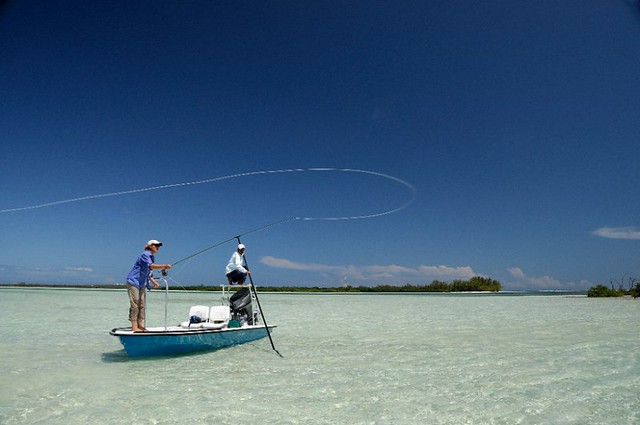
Bonefish the Bahamas with your best friend for only $100!

Thanks to the Native Fish Society’s Board Chair, Paul Fortino, Fish Head Expeditions, Abaco Lodge, Nervous Waters Fly Fishing, and The Fly Shop two lucky anglers will enjoy 3 days of bonefishing and 4 nights at the famous Abaco Lodge in the Bahamas!

Get ready for bruiser bonefish that will test your gear and challenge your skills as you explore the “Marls of Abaco” on Great Abaco Island near March Harbor! Nervous Waters’ expert guides will join you every day as you explore some of the largest and most productive flats fishing in the world.

On your return to Abaco Lodge you’ll be greeted by five-star accommodations. Imagine stepping off your flats boat to be handed an ice cold cocktail and delicious appetizers. Dinners are gourmet and locally sourced…did we mention that all meals and drinks are included! Every night you’ll retire to your spacious and plush air-conditioned room.

From the moment you step off the plane in the Bahamas the caring staff at Abaco Lodge will make this the best trip possible!

How does it work? Native Fish Society is selling raffle tickets for $100 each. We’ll draw the lucky winner on September 14th and they’ll get ready for the time of their life!

Dates: November 4-8, 2018

Purchase your tickets online by clicking HERE or call (503) 344-4218.

What if you aren’t the big winner? Every penny we raise in this campaign will support our work protecting and recovering wild, native fish in their Northwest homewaters. So, no matter what, you’re giving a boost to wild salmon, steelhead, and trout, not to mention your fishing mojo.

*Does not include travel to Bahamas, flies, gratuities, and VAT tax.

Posted in Fly Fishing Contests, Fly Fishing Travel, Oregon Conservation News, Oregon Fly Fishing Clubs and Events | Leave a comment

September Trout Unlimited Meeting Announcement

mail

Please join The Redsides Trout Unlimited Chapter 678 at out next meeting.

When: Monday September 10, 6pm

Where: New location: Claim 52 Kitchen 1203 Willamette

This first meeting of the season will be a meet and greet time to share your summer fishing tales.

There will be door prices.

Terry Turner of Oregon council TU will fill us in on TU activities in the state.

Posted in Oregon Conservation News, Oregon Fly Fishing Clubs and Events | Leave a comment

Cast a Wider Net: Is Fly Fishing the New Yoga?

673626853

From the Robb Report, By Sheila Gibson Stoodley On August 30, 2018

Are you ready to trade in your yoga mat for a fishing rod and waders? Women are embracing the sport of fly-fishing like never before, and they’re doing it for some of the same reasons that yoga retreats took off.“Today, it seems to be more important to women to be able to unplug and be immersed in nature,” says Christine Atkins, from The Orvis Company and a co-leader of the 50/50 On The Water project, the outfitter’s campaign to increase the number of women fly-fishers to 50 percent through offering women-only classes, events, and trips, and fostering a sense of community. “The adrenalin piece of catching a fish is nice, but there’s so much more to it. It’s pretty meditative.”

Women are the fastest-growing demographic in fly-fishing, thanks to the introduction of better gear, the rise of digital media delivering captivating images, and efforts by entities such as Orvis. According to the Recreational Boating and Fishing Foundation (RBFF), 31 percent of American fly-fishers are women, which reflects a double-digit jump over seven years.

Regardless of how quickly fly-fishing reaches equality on the water, the women who love it will see it as much more than a hobby. “Fly-fishing is such a personal experience,” says April Vokey, the Canadian founder of the 11-year-old guiding operation Fly Gal Ventures. “I like it because I can personalize it to what I need at that time. If I need to reflect and reconnect with myself, I find an intimate trout stream or a misty lake accessorized by calling loons. If I need invigoration and excitement, I raft the whitewater of wide, rugged British Columbia rivers in search of silver steelhead fresh from the ocean. But mostly, if I need to find myself, fly-fishing allows me to do so while trekking through the bush in search of fish, animals, foliage, and experiences… it’s the perfect symbolism.”

new zealand fishing lodges

There are several opportunities to learn fly fishing, from Orvis’s all-women fly-fishing trips to Belize (the next one is planned in October 2019) to private guides at luxury resorts, including The Resort at Paws Up in Montana, which employs women fly-fishing guides. “On vacation, it’s the perfect time for them [women] to step out of their comfort zones and experience something brand new or improve a current skill that they don’t get to do every day,” says Alison Lewis, an executive at the resort.

“We have had women at the lodge who have never cast a fly rod before, and with some instruction, have success on the first day,” says Shauna Daughters, owner and operator of Cedar Lodge, on the South Island of New Zealand, who notes that the resort is planning a women’s fly-fishing week for March 2019. “One of the wonderful things about teaching women is they are very good listeners, and novices don’t come with any bad habits, so it’s really fun to watch their success.”

from The Caddis Fly Angling shops casting instructor Lou Verdugo

We continue to see an increase in women in our Intro to Fly Fishing Classes. Over the past few years women’s attendance has increased by 40%. Women are leading the way in our classes and enjoying the benefits of fly fishing. They get it, its not the just the catching, but the whole experience!

Posted in Fly Fishing Travel | 1 Comment

Steelhead Fly w/Pink Aqua Flies Intruder Eyes Fly Tying Video

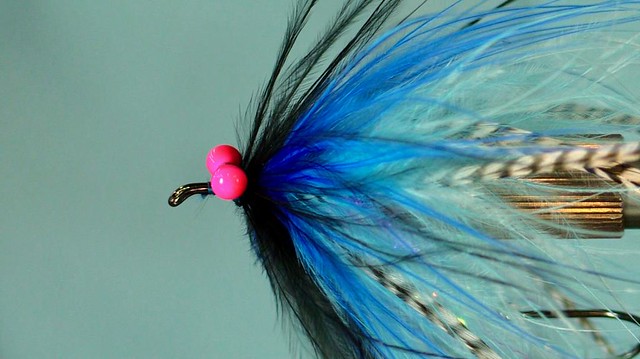
In this video Jay ties an Intruder style Steelhead fly using the OPST Shank Chuck Tool and a few new products from Aqua Flies including their Round Eye Shanks (which come in several sizes), Swing Hooks, and Intruder Eyes. This is an extremely effective Steelhead pattern with a lot of movement and flash. The Willamette has picked up for steelhead recently and this is a great color scheme to try.

pink-intruder-eyes

Steelhead Fly w/Pink Aqua Flies Intruder Eyes

OPST Shank Chuck Tool
Aquaflies Return and round eye shanks
Aquaflies AquaTalon Swing Hooks Size 2
Fire Line, Wire or Mono
Danville’s 210D blue
Loc-Tite Brush On
Ice Dub UV Purple
Blue Marabou (Silver Doctor Blue)
Grizzly Saddles
Flash: Smolt Blue Ripple Ice
Blue Marabou (Royal Blue)
Black Marabou
Aquaflies Intruder Eyes Pink

Posted in Fly Fishing Travel, Fly Tying | Leave a comment

Scientific Anglers Sonar Fly Lines – Nicholas’ 2018 Review

sonar-banner

The SA Sonar series of fly lines are all sinking lines. Most of these lines are designed for specific angling environments. For example, each line in the series will indicate whether the fly line will be suited to cold or hot climate, if it has a super strong line cores to handle the largest fish, and relevant unique sink rate qualities.

I’ve fished SA fly lines since roughly 1962, in an era when the range of lines available was scant compared to the choices we are faced with today. I remember fishing a level, brown, floating line for several years and eventually purchasing an Ivory Air Cell Supreme Double Taper line. Scientific Angler current catalog lists something over 70 different fly line styles. While the diversity and specialty features are good on one hand, the huge variety of lines also generates confusion on the angler’s part.

I hope that this post helps bring a little order into the process of recognizing the features of the Sonar series of sinking fly lines. I’m going to limit this review to SA Sonar fly lines most useful in estuarine and saltwater environments. There are at least 5 Sonar lines best suited to freshwater that I will not mention here.

My personal experience in recent years includes fishing the Sonar Titan Intermediate, Sonar Titan Intermediate Clear Tip, Sonar Sink 30 Cold, Sonar Sink 25 Cold, and Sonar Sink 30 warm. From Pacific City Oregon to La Ventana Mexico, these lines performed in recent line improvements. In years past I added my own braided loops to front and rear of these lines—so the factory loops are a small but important improvement. Of course, there have been technological advances along the way also. Line coatings. Line Cores. Slippery stuff added to make the line shoot. Bubbles to keep lines floating and depleted uranium bullets to make the lines sink. Frankly, I understand little of this technical babble. I go fishing and decide if I like the line or not. There have been fly line disappointments over the years. But I move on and find lines that do work and do please me when I’m fishing. These here SA Lines have NEVER disappointed, and I am enthused, genuinely, with the specificity some of these lines offer the avid fly angler

____________________________________________________________
Generally, with SA Sonar fly lines:
• Titan lines are very assertive, two weights higher front-loaded taper.
• Most Sonar lines are identified by a Line ID label, but not all are.
• Most have front and rear welded loops.
• Clear tip lines are generally on a mono core, the rest are on a multifilament core.
• The suitable temperature climate for all lines is indicated – sometimes in the name.
• Two lines have 100-pound cores.
• Most of the lines will have a core of 30 pounds or more if line class 8 or higher. Lower line classes generally will have a core in the 20-pound range.
• SA offers a warm and cold climate custom cut line analogous to lines offered by RIO and Airflo. These allow the angler to shorten the tip to reduce the head weight and match a specific rod weight.
•SA fly lines have performed for me in various configurations for over fifty years. I have never had a SA line fail on me.

____________________________________________________________
Temperate/cold climate Lines

sonar-full-intermediate


Sonar Titan Full Intermediate
Line range WF-6 I to WF-12 I
AFFTA note line is two sizes heavier than labeled
Sink rates 1.25 IPS
Climate temperate to cold climate
Clear head/tip no
Head length 33.5 ft
Running line intermediate
Line loops front and rear
Line ID yes
Core braided multifilament
Remarks: powerful front-loaded taper for wind and large flies


sonar-titan-clear-tip

Sonar Titan Clear Tip
Line range WF-6 I to WF-12 I
AFFTA note line is two sizes heavier than labeled
Sink rates 1.25 IPS
Climate temperate climate
Clear head/tip 15 ft tip
Head length 33.5 ft
Running line intermediate
Line loops front and rear
Line ID yes
Core braided multifilament
Remarks:  powerful front-loaded taper for wind and large flies

sonar-sink-25-cold

Sonar Sink 25 Cold
Line range 150, 200, 250, 300, 350, 400, 450 gr
AFFTA note head is as labeled
Sink rates 4-8 IPS depending on head wt
Climate temperate climate
Clear head/tip – no
Head length 25 ft super fast sink
Running line floating (well suited to line mending)
Line loops front and rear
Line ID yes
Core braided multifilament
Remarks:  streamer and salmon steelhead long sink tip

sonar-sink-30-cold

Sonar Sink 30 cold
Line range 150, 200, 250, 300, 350, 400, 450 gr
AFFTA note head is as labeled
Sink rates 4-8 IPS
Climate temperate climate
Clear head/tip no
Head length 30 ft
Running line intermediate
Line loops front and rear
Line ID yes
Core braided multifilament
Remarks:  powerful front-loaded taper for wind and large flies

__________________________________________________________

Titan Taper Triple Density Sinking lines

sonar-titan-hover-s2-s4


sonar-titan-int-sink3-sink5


sonar-titan-s3-s5-s7


This series of triple density fly lines includes THREE different lines with the following configurations:

Sonar titan Hover/sink 2/sink 4
Sonar Titan Int/sink 3/sink 5
Sonar Titan sink 3/sink 5/sink 7
* Line range WF-8 S to WF-12 S
* Sink rates as specified from rear to front of fly-line head
* Climate temperate to cold climate
* Clear head/tip: no
* Head length 33.5 ft
* Running line the line sink rates is progressive toward the tip as specified for leach ine
* Line loops front and rear
* Line ID yes
* Core braided multifilament
* Remarks: minimum line hinge effect, superior sink performance

_________________________________________________________
Tropical/warm Climate Lines


sonar-saltwater-intermediate

Sonar Saltwater Intermediate
Line range WF-7 I to WF-12 I
Sink rates 1.25 IPS
Climate temperate to tropical
Clear head/tip yes
Head length 38 – 41 ft as the line class increases ft
Running line Intermediate sink
Line loops Front and rear
Line ID yes
Core Tropicore unspecified material
Remarks:  a generalist line with less assertive line taper than the Titan series


sonar-sink-30-warm

Sonar Sink 30 Warm
Line range 150, 200, 250, 300, 350, 400, 450 gr
AFFTA note head is as labeled
Sink rates 4 – 8 IPS as the head weight increases
Climate temperate to tropical climate
Clear head/tip no
Head length 30 ft
Running line intermediate
Line loops front and rear
Line ID yes
Core braided multifilament
Remarks: powerful front-loaded taper for wind and large flies


sonar-sink-30-clear

Sonar Sink 30 Clear
Line range 150, 200, 250, 300, 350, 400, 450 gr
AFFTA note head is as labeled
Sink rates 1.25 IPS
Climate temperate and hot climate
Clear head/tip yes the entire head is clear
Head length 30 ft
Running line intermediate
Line loops front and rear
Line ID yes
Core mono
Remarks: powerful front-loaded taper for wind and large flies


sonar-tropical-clear-tip

Sonar Titan Tropical Clear Tip
Line range WF-8 to WF-9 I
AFFTA note line is two sizes heavier than labeled
Sink rates 1.25 IPS
Climate hot tropical line
Clear head/tip 15 ft tip
Head length 33.5 ft
Running line floating
Line loops front and rear
Line ID yes
Core multifilament
Remarks: powerful front loaded taper for wind and large flies

sonar-titan-jungle-clear-tip

Sonar Titan Jungle Clear Tip
* New for 2019 line built on SA Tropicore foundation
* Performs in the demands of tropical heat
* The clear tip helps when fishing to shy quarry under the most demanding conditions
* Overweighted by two line sizes for delivery of the largest flies
* Targeting Golden Dorado and Peacock Bass


Sorry, I can’t find an image for this NEW SA Fly line! 

Sonar Titan Jungle Custom Tip
* New for 2019 line built on SA Tropicore foundation
* Performs in the demands of tropical heat
* The fast sinking tip can be cut shorter to match rod weight and caster’s preference
* helps when fishing to deep laying species where it is necessary to get fly down fast
* Can be Overweighted depending on how you do or do not cut the head
* Targeting Golden Dorado and Peacock Bass

_________________________________________________________
100-pound core lines

sonar-titan-big-water-taper

Sonar Big Water Taper

Line range two lines: 350 gr or 450 gr head
Sink rates 1.25 IPS
Climate tropical
Running line floating
Line loops no
Line ID yes
Core 100lb unspecified material
Remarks: tropical intermediate line for GT and similar species


sonar-titan-big-water-max

Sonar Big Water Taper Max Sink
Line range three lines: 500gr, 600 gr, or 700 gr head
Sink rates 6.0 IPS
Climate tropical
Running line intermediate
Line loops no
Line ID yes
Core 100lb unspecified material
Remarks: tropical line for any species requiring deep fly presentation

_______________________________________________

Custom Tip lines

sonar-custom-tip


sonar-tropical-custom-tip

Sonar Custom Tip and Sonar Tropical Custom Tip 

* One line for cold/temperate climates, the other is for use in tropical climate
* Line range this is a single line with 462 gr 35 ft level head
* Sink rates 7.5 IPS
* limate cold/temperate
* Running line Intermediate sink
* Line loops front and rear
* Line label no
* Core braided multifilament
* Remarks: cut the 35 ft sinking head back to suit rod class

_______________________________________

I know this is a lot to digest. Hopefully the information will be helpful to the fly line researcher.

Jay Nicholas – 2018

Posted in Fly Fishing Gear Review | Leave a comment

UV Dragon Tail Tarpon Classic Fly Tying Video

In this video, Jay ties a Tarpon Fly pattern using Mangum’s UV2 Dragon Tails. These tails are great for giving your fly lots of motion and movement in the water.

dragon-tail-tarpon-pattern

Jay’s Dragon Tarpon Classic

Hook: SC17 3/0
Thread: 210D Chartreuse
Tail: Mangum’s UV2 Dragon Tail Chartreuse
Brush: EP Craft Fur Brush Olive/Orange
Head: Senyo’s Laser Dub Orange and Red
Head: Pro Sportfisher Pro Softhead Medium
Glue: Loctite Super Ultra Gel Control
Eyes: 5/16 Holo Super Adhesive Eyes

Posted in Fly Tying, Fly Tying Materials and Supplies | Leave a comment

Ten Fall Fly Patterns to have in your Fly Box – August 2018

It’s that wonderful time of year again and fall fishing is picking up everywhere. Here are ten consistent “fall producers” you need in your fly box to fish our local waters.

Chubby Chernobyl: Short winged stones, hoppers and October Caddis are represented by a variety of chubby styles. It’s also a great “hopper dropper” pattern.

Fall flies 2018

Purple Parachute Rooster: Mahogany Duns, Beatis, “lesser drakes” are imitated by this versatile parachute pattern. This fly has been one of our favorite all around patterns.

Fall flies 2018

Hippy Stomper: Superb all around attractor fly pattern. Fish this fly during the day when you do not see any activity.

Fall flies 2018

Parachute Caddis: This pattern imitates a variety of caddis species present in the fall. Hi Vis and high floating pattern fishes great all fall.

Fall flies 2018

Heavy Hackle Moose Tail Parachute Adams: Big water no problem, this version of the Parachute Adams floats and floats. It will even float with a smaller bead head nymph under it which serves as an outstanding searching method. Fall Mayflies like Grey Drakes are well imitated by the HH Para Adams.

Fall flies 2018

Hi Vis Parachute Adams #16-18: Late in the evening and on some of those “grey days” when the blue winged olives are hatching in the fall the Hi Vis Para Adams is a great pattern.

Fall flies 2018

Kingrey’s Better Foam Caddis: We are super close to October Caddis time and the Better Foam has been a favorite of many for years. Slap in on the surface and watch them come!

Fall flies 2018

Brillon’s Lucent Jig: We have been super impressed with this fly all year. As we get towards lower light, spawning salmon and a bit more water look for these to really ramp up in the brighter options.

Fall flies 2018

Possie Bugger Jig: All time favorite Possie Bugger with Jig style hook is simply one of our best nymphs. Day in day out on our local waters you can’t beat this nymph pattern.

Fall flies 2018

Jigged CDC Pheasant Tail: This slender fly with quick decent has been great using Czech Nymphing tactics as well as under a Chubby.

Fall flies 2018

Bead Head October Caddis: These large caddis pupae will be available to the fish throughout the fall.

Fall flies 2018

Have fun on the water this Fall

CD

Posted in Fishing Reports, Lower Willamette, McKenzie River, Middle Fork Willamette River fishing | Leave a comment

Area closure issued for Terwilliger Fire – South Fork of the McKenzie

From Denise Mercer – Willamette National Forest, McKenzie River Ranger District

Blue River, OR (Aug. 21, 2018) — Fire officials are implementing an area closure order for the Terwilliger Fire for public and firefighter safety due to a combination of high fire danger, exceptionally dry conditions and unpredictable fire behavior. The area closure includes a section of Forest Service Road 19 (Aufederheide Scenic Highway) and recreation sites.

“We understand this is a disappointment to residents and visitors who patiently waited for the road to reopen after the December 2017 landslide, but unfortunately, the risk is too great,” said Forest Supervisor Tracy Beck. “Our highest responsibility must be visitor and firefighter safety.”

The size of the closure allows for safe access and work by firefighters, and reflects the rapid growth that fire managers have witnessed since the fire was initially reported on August 19. Given the weather forecast and already dry forest conditions, the fire could continue to grow and additional closures could take place.

From Hwy 126, the closure begins where Forest Service Road 19 intersects with Forest Service Road 1900-408 and continues south to Rebel Trailhead.

Closed Campgrounds:

· Hard Rock Campground
· French Pete Campground
· Cougar Crossing Campground
· Sunnyside Campground
· Slide Creek Campground

Closed Recreation Sites:

· Indian Ridge Lookout
· Terwilliger Hot Springs
· Echo Day Use and Boat Launch

Closed Trails:

• French Pete Trail #3311
• Bear Flat Trail #3301
• Quaking Aspen Trail #3332
• Lowder Mountain Trail #3329
• Olallie Mountain Trail #4100
• Walker Creek Trail #3330
• East Fork Trail #3308
• Indian Ridge Trail #3315
• Rider Creek Trail #3319
• French Pete Trailhead
• Upper Lowder Mountain Trailhead
• Upper East Fork Trailhead
• Lower East Fork/Lower Echo Trailhead
• Echo Trailhead
• O’Leary / Castle Rock Trailhead
• Lowder Mountain Trailhead
• Indian Ridge North (Upper) Trailhead
• Indian Ridge South (Lower) Trailhead

Closed Forest Service Roads (FSR):
• Sections of FSR 1900
• Sections of FSR 2618
• Sections of FSR 1927
• FSR 1900-408
• FSR 1900-410
• FSR 1980
• FSR 1985
• FSR 1986
• Sections of FSR 1993
• FSR 1994

Sources below are available to stay up-to-date on the Terwilliger Fire and current fire restrictions.

• Closure area map and details: https://go.usa.gov/xUzQC
• Terwilliger Fire information line: (541) 822.7259
• InciWeb: https://inciweb.nwcg.gov/incident/6160
• Fire information and current fire restrictions: https://www.fs.usda.gov/main/willamette/fire

Posted in Fishing Reports | Leave a comment

Jay’s Trout Clouser Jig Black Dace Fly Tying Video

In this video Jay Ties a Trout Clouser Jig “Black Dace” using an Umpqua 60 degree Jig Hook. Like many of Jay’s flies this fly is tied using a 60 degree jig hook which allows for a variety of applications. This is why Jay prefers this type of hook. This fly can be fished on the swing, cast and stripped, or fished under an indicator.

thumbnail

Jay’s Trout Clouser Jig Black Dace

Hook: Umpqua S506H Jig #4
Thread: Danville’s 210D white
Eyes: Balz Eyes medium or Double Pupil Lead Eyes
Cement: Loc-Tite Brush On
Tail: White Bucktail
Body: Lagartun Carded Flatbraid Fl. Blue
Tail: Black Bucktail
Flash: Angel Hair Peacock
Collar: Senyo’s 3.0 Live Bait

Posted in Fly Tying, Fly Tying Materials and Supplies | Leave a comment

Fall Creeps into Summer – Local Fishing Improves

caddis fly guide service

Signs of fall are in the midges and small numbers of size #16 tan caddis. Mahogany Duns and fish looking up in shallow water mean that the high sun of summer is past us. Dry fly fishing is better and fish will come to Parachute Adams, Parachute Caddis and attractors like Hippy Stompers and Royal Madam X. Nymphs are still working, possie buggers and pheasant tails have been best. Euro Nymphing tactics have been gaining steam, and those that put in the time are doing really well fishing the deeper slots of the river with longer leaders and heavy slender jig patterns. No matter how you slice it some of the best fishing of the year is coming our way in the over the next 60 days. Enjoy!

Posted in Fishing Reports, Lower Willamette, McKenzie River, Middle Fork Willamette River fishing | Leave a comment

Chinook Salmon Dragon Tail Fly Tying Video

In this video, Jay ties a Chinook Style Dragon Tail pattern using Mangum’s UV2 Dragon Tails. This is essentially a Clouser fly on steroids! Tied using classic Chinook colors – pink and chartreuse, this is a bold option for the hungriest of Chinook! Give this pattern a try next time your at the vise.

chinook-style-dragon-tail

Jay’s Chinook Style Dragon Tail

Hook: SC15 3/0
Thread: 210D Chartreuse
Tail: Mangum’s UV2 Dragon Tail Chartreuse
Body: Bucktail White
Flash: Ripple Ice Fiber Blue or Purple
Collar: EP Fibers Pink
Glue: Loctite Super Ultra Gel Control
Eyes: 5/16 Holo Super Adhesive Eyes

Posted in Fly Tying, Fly Tying Materials and Supplies | Leave a comment

Oregon needs temperature-based fishing regulations – August 2018

summer fish

From: The Native Fish Society

Across Oregon, we are all feeling the effects of hot summer weather. We seek out cool air, take a dip in our local waters, and find refuge to avoid the summer heat.

For many rivers, this hot summer weather also means warm water temperatures, which can stress our native cold-water species like salmon, steelhead, and trout.

Of all the factors that influence the health of these fish, temperature is arguably the most important. Water temperature affects almost every phase of their life histories, including their metabolisms, upstream and downstream migration, spawning, rearing, food availability, swimming speed, direct and delayed mortality, susceptibility to disease, and can alter the competitive dominance of other predators.

Many of our favorite fishing locations across the state, such as the Deschutes and North Umpqua rivers, have already seen repeated days where water temperatures have exceeded 68F, a temperature that can be stressful for salmonids.

Read more and take action by signing a petition directed to the ODFW director and administrator by clicking here: TAKE ACTION

Posted in North Umpqua River Fishing Reports, Oregon Conservation News | Leave a comment

The Last Steelhead – An Eco Rock Opera by Chris Santella

From Chris Santella – In the spring of 2017, I researched and wrote a story for “American Angler” on the plight of wild steelhead in the Columbia Basin, which impacts Oregon, Washington and Idaho. As a die-hard Deschutes River steelhead angler, I was aware that runs were shrinking—but had no idea conditions were so dire. Like so many of the world’s environmental woes, most of the factors impacting the well-being of wild steelhead have been instigated by humans. The Last Steelhead attempts to explore some of these factors, a bit of their history, and the attitudes surrounding our behaviors and policies that seem to be standing in the way of taking meaningful action to prevent another extinction. It’s my opinion that by using the best available science and re-directing resources accordingly, we can avoid a future without wild steelhead…and The Last Steelhead will be just a piece of music, not an ecological statistic.
–Chris Santella

Screen Shot 2018-08-13 at 4.57.55 AM

Click here to download/listen to Chris’s songs

Screen Shot 2018-08-13 at 4.59.18 AM

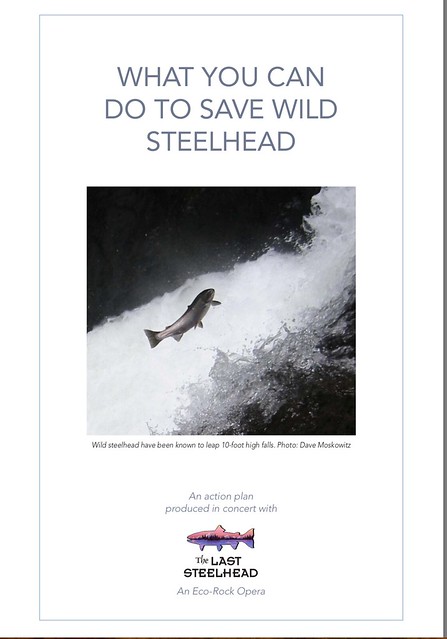
Click here to read about What you can do to Save Wild Steelhead.

Posted in Oregon Conservation News | Leave a comment

Field trial and review of OPST Commando Smooth fly line

opst commando smooth

I was looking for a short head fly line that I could cast from a dory offshore Pacific City. Many floating fly lines work well for this purpose, including most of the short head floating fly lines such as the

RIO OUTBOUND Short (30 ft)
SA MASTERY SBT (~22 ft)
AIRFLO Float (~30 ft)
WULFF Ambush (20-24 ft)

Although I have fished all of these lines successfully, I constantly fiddle with my tackle and I am something of a fly line freak. I simply wanted a shorter head and here is why. The shorter the head, within reason, the more likely I supposed that I would be able to make a cast of something like 50 – 60 ft with no more than one back cast. Casting poppers and small streamers from a dory requires fast reaction to deliver a fly quickly to fish that may be moving beyond casting range. A short head would, I supposed, be less likely to foul in antenna or other caster’s rods.

So while I fished other lines and found them satisfactory, I wanted to try the super short heads offered in the OPST Commando Smooth series.

So I set to sea on August 9th 2018, in my friend Kevin’s Breaker Dory, seeking silvers.

Most of our time was devoted to trolling but a short time was set aside to test my new fly line, and this video records my awkward efforts.

Overall, I was MORE THAN PLEASED with the line’s performance.

I fished a 200 gr SMOOTH with 7.5 ft floating tip on a 5 wt Winston B3X with Nautilus CCF-X2 reel.

One or two back casts allowed me to lay my fly out 50-60 feet, well in the zone I wanted to cover. The line laid out straight in spite of my best efforts to throw a curve into it. I did not try a 10 ft floating tip of a sink-2 tip, but will do so in the future.

I almost hooked a silver while I was stripping out line to make my first cast, but that is soooooooo typical.

I am not well versed on appropriate line weights to match to various fly rods, but the 200 gr plus 7.5 ft floater was very comfortable and cast with authority.

I will add that I tried casting the line with only a mono leader and it was HORRIBLE!

The 7.5 ft floating tip changed everything, and the line laid out straight and true.

So, here is a solid thumbs up for this new fly line.

Current line configuration is:

Length: 99.3 feet.

Head weights: 150, 175, 200, 225, 250, 275, 300 grains.

The head on the 200 gr line is roughly 13 ft.

Front and rear line loops

The running line is the thinnest I have seen  (light fly line coating over mono core) and is low memory to reduce line coiling.

I have nothing to say regarding casting this line with sustained anchor styles, but for straight overhead with or without change of direction, this line was intuitive and an instant performer for me.

Jay Nicholas July 2018

Posted in Fly Fishing Gear Review | Leave a comment

Support McKenzie River Trust – Buy a Patagonia Trucker Hat

IMG_4314

Many of you know how much great work the McKenzie River Trust does to protect, restore and expand treasured outdoor spaces. We have held our annual Two Fly Tournament to help the trust for over 10 years now and Patagonia has been a key sponsor for the last two years.

IMG_7001

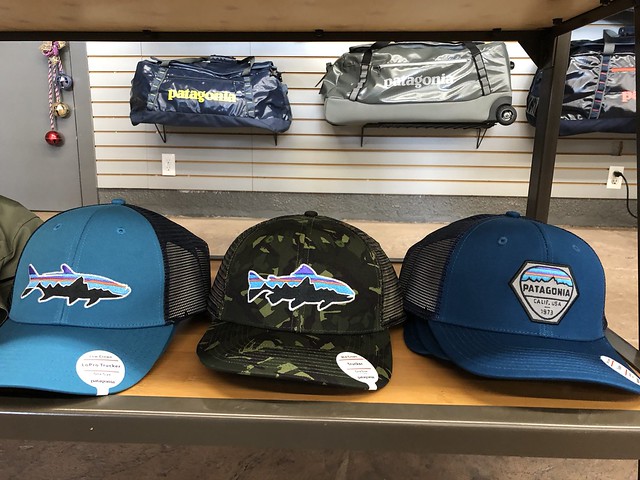
We thought we would expand the partnership a bit this weekend with a promotion to help the trust through sales of Patagonia hats. This Thursday through Sunday The Caddis Fly will donate $5 towards the McKenzie River trust with each sale of a Patagonia lid.

IMG_3026

Come by and check out our new selection of Patagonia hats and update your collection for a cause!

Posted in Oregon Conservation News, Shop Sales and Specials | Leave a comment