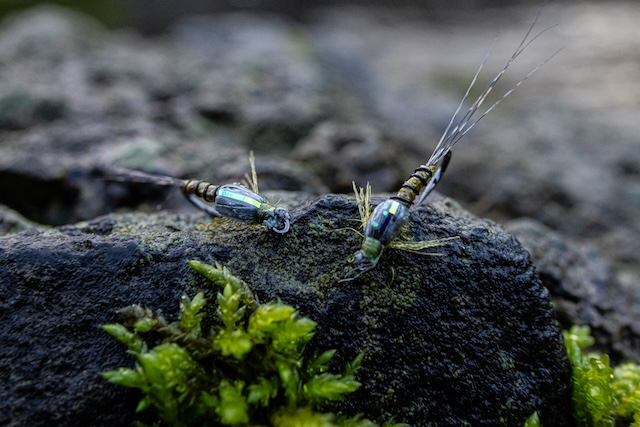
Blue Winged Olives or Mayflies from the “Baetis” are a staple in trouts diets all over the world during the colder season. Many places only have a good BWO hatch in the spring and fall, but our weather is mild enough that we have them opt off during the winter too. They prefer hatching on overcast days when the air is cool, not cold. In this video, Simon ties a fantastic classic unweighted baetis nymph. This creates an extremely versatile fly, one that can be fished with virtually any rig. Because it lacks a bead, it can be fished as a dropper behind a small dry fly. If you want to fish it as a nymph locally, you will have to use another fly or add split shot to aid in getting it deep enough. The fly uses a new material from Montana Fly Company called Medallion Sheeting V2. This makes a great body when palmered around the hook shank, and an even better wing case. Feel free to size this up or down and adjust colors to mimic other species of slim bodied mayflies.
Note the slim body of Baetis sp. mayfly nymphs; this is consistent for most nymphs in the Swimmer family of mayflies.
In this video, Simon ties a unique variation on the traditional pheasant tail nymph. With winter conditions, a heavy tungsten bead on a jigged hook was a must. Simon kept high flows in mind while designing this fly and aimed to create a fly that gets down deep, and holds a more significant profile compared to a traditional pheasant tail nymph. He aimed to do something different with a fantastic dubbing from Fulling Mill. Eco Warrior Dub is a rabbit dubbing that is extremely buggy from our friends over at Fulling Mill. It makes a great dubbing for ultra buggy bodies such as a scud, but this dubbing can also be utilized to create legs. Simon puts a healthy helping of this dubbing into a dubbing loop made by a Smhaen Thread Splitter and seamlessly creates a fantastic, ultra buggy pheasant tail. This material will kick out as legs near the head, while also compressing only slightly under heavier flows. This creates an extremely lifelike profile effectively mimicking the silhouette of a variety of mayfly species. This fly will be an excellent searching pattern during the march brown hatch, which is approaching sooner than you think. This fly can certainly be sized up or sized down for your needs.
The new year finally came around and this coming Tuesday is the first community night over at Falling Sky Brewery off of 13th. If you haven’t been to one, it is a monthly gathering that we do over at Falling Sky. It is a great excuse to get together and talk about fly fishing, tie flies, meet new people in the community, usher in newbies, etc. See the bottom of this post for the full schedule for 2026.
Where: Falling Sky Brewing [1334 Oak Alley Eugene, OR 9740]
When: Tuesday January 20th at 6:30
What: Fly tying, new friends, prizes, great food, great beer, fly swap, and connecting with the community.
Attached photos are from our holiday party which ended 2025. We gave away items from Loon, Scientific Anglers, Fulling Mill, and Costa. It was a blast, we had a fantastic turn out and loads of new faces.
Falling Sky has great beer and some very talented chefs working hard in the back. Their burgers and sandwiches are fantastic, if you choose either of those you have to try the truffle fries. They also have a fantastic bacon loaded truffle Mac and Cheese. Steph en, the owner, has been generous enough to host us monthly for a year and a half. He is a fly angler himself and always makes his rounds. Be sure to extend your gratitude to the man who has made this happen every month for well over a year.
Local fly tiers are invited and encouraged to bring their gear and tie flies while they visit. Fly tiers have the opportunity to engage in a “Fly Swap” where they contribute a hand tied fly into a pot. They will receive a ticket and as the numbers are called you can select someone else’s fly. The first handful of people will have their choice of materials donated by Fulling Mill.
We can always expect our regulars to show up monthly. We also encourage new people to swing by. We have had a massive influx of new faces and new anglers, so it is a great time to stop by if you’ve been hesitant. Whether you’re a veteran to community night or brand new, we are looking forward to seeing you Tuesday!
Help spread the word!
-Simon
2026 Schedule
Community Nights will land on the third Tuesday of each month for 2026. Some dates are subject to change, so keep a close eye for updates.
Tuesday January 20th at 6:30
Tuesday February 17th at 6:30
Tuesday March 17th at 6:30 (This date may change due to St.Patricks)
In this video, Simon ties an effective large profile searching pattern. The fly is versatile in its imitation of several different types of large calorie food items for trout. The fly effectively imitates stonefly & salmon fly nymphs, crawdads, hellgrammites, sculpins, and more. The fly was initially developed for large predatory brown trout and rainbows. Simon was looking for a fly that would stand out to an opportunistic large fish that selectively feeds. Upon testing, he realized there was not much wrong with the fly. The bigger issue was his tippet was too light or his knows were bad He left the fly testing 2 flies lighter pondering what, if anything, he would change when he restocked. Two massive fish breaking off was enough to show Simon that this fly was worth tweaking and refilling his box. Some more tinkering at the vise yielded several colors and a little extra weight in the form of lead wraps hidden below the body. This aided in getting the fly deeper quicker and improving the flies overall silhouette and taper. Simon likes to tie these in several different colors depending on where, when, and how he is fishing them. See the photo below for all of the color variants he likes: Black, Brown, Olive, Orange, Gold Grizzly.
This is one of Simon’s confidence flies, especially right now with the high winter flows we are having. High flows knock large stonefly nymphs and sculpins loose. This is the time of year, more than ever, that large educated trout are on the lookout for these large food items that enter the middle water column haphazardly. The fly also is suggestive of crawdads and can be dead drifted, stripped, twitched, or swung for bass. As the fly swings, the legs collapse onto the body forming a wide head silhouette just like a sculpin. Simon has caught several fish letting this fly swing into structure or at the end of his drift. The Fulling Mill Rabbit Strip along the top adds movement and the Fulling Mill FM5130 Jig Force Long Hook provides a stout foundation for a long bodied stonefly nymph, sculpin or crawdad. Stay tuned for another update on this fly in the near future, you may be able to get it from the fly bins at your local shop.
River left or the South channel exiting the “Powerline” flat below Bellinger is blocked.
The lower river is one of the most dynamic sections of the river, with all the “post fire” wood in the river. We strongly advise against even putting in at Bellinger boat launch or floating past it.
A large log spans the entire river, there is no route around it.
A strainer has formed in the Upper Mckenzie just below Paradise bloat launch. The log spans the entirety of the river between paradise and the trailhead of the McKenzie River Trail. The log lies just above it. In the upper river, do not put in on any launch above Bruckart. Ollie and Paradise are not viable launch sites at the current time.
Please share this article and spread the word! Please help out and spread the news before people do their weekend recreating.
This time of year with high water, debris in the river is not an uncommon sight. Keep your wits about you and be safe!
If you have any questions give us a ring (541) 342-7005
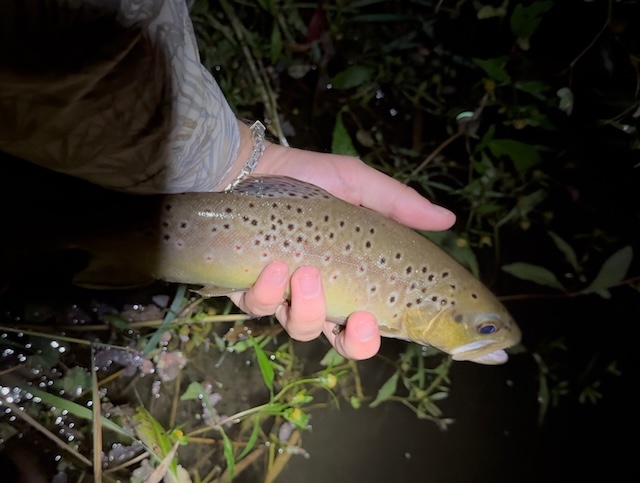
Nothing beats the excitement of waiting quietly in the pitch black for a brown to inhale your mouse.
Reminiscing on summer months I was recounting my annual trip to the Midwest’s Driftless Area spring creeks. This past summer I tried something new: mousing for large brown trout. This is an exhilarating method of fishing that, unfortunately in Oregon, we cannot do. Fishing for salmonids after sunset is strictly prohibited in Oregon. There is nothing stopping you from taking a trip to indulge once things warm up.
Short mashup of mousing on some spring creeks this summer.
Many seasoned anglers are familiar with the term “mousing”. For those that this is a novel term to, mousing refers to targeting fish using a floating mouse fly. It is most commonly associated with large brown trout that feed nocturnally, but mousing can be done for bass, jungle species, other types of trout, etc. It also is not restricted to the night; in Alaska people target large resident rainbow trout using mice. Generally through, when you hear someone across a fly shop talking about mousing, they are talking about chasing aggressive brown trout at night.
Note the Atomic Glow Strip from Hareline that I incorporated into this micro mouse’s design.
The best time to go is when it is dark out, which may come obvious. The level of darkness is generally correlated with better fishing; the more dark the better. This generally means avoiding full moons and timing your mousing trip close to the absent new moon. Most of my mousing on my trip was done over a few nights between the 11pm and 2:30 AM. Minimizing light also means only turning on your headlamp or flashlight when absolutely necessary. This is especially important on the small intimate spring creeks of the Driftless Area that sometimes are a few feet wide.
The browns are relentless once the sun goes down, slashing at anything that disturbs the surface.
Mousing most importantly requires a mouse. Knowing the size and temperament of the fish you are targeting is helpful when choosing the size of your mouse … or rat. In the jungle of South America Chris has told me stories of throwing rat sized mice for golden dorado. Throwing Squirrel sized rodents for Taimen overseas is not uncommon. Generally I like to start with a medium sized mouse and size up or down based on what I encounter. I feel it is a good way to probe unfamiliar waters.
This articulated mouse is one I designed and glows bright to make tracking easy.
My top choices for searching mice are: Rio’s Pip Squeek or a Preparation H Mouse. The Pip Squeak has a trailing hook and the Prep H is tied on a classic Salmon/Steelhead hook setting the hook towards the rear. Fish sometimes short strike mice so I always look at the hook placement. If I need a smaller mouse my absolute favorite is the RIO Pip Squeak Baby. For larger mice that blue the lines between mouse and rate try the Satkowski’s Headbanger Mouse . Other options using deer hair are the classic Morrish’s Mouse with or without a trailer or a Mini Mouse. Deer hair mice are great at pushing water, but can bounce off of a trout’s mouth when they try to eat it. I’ve found that I prefer the foam and rabbit strip variations, and get more consistent hookups.
Charging the Atomic Glow Strips and Scientific Anglers Indicator Glow Marker.
Technique for mousing varies but generally it involves swinging or stripping the mouse across attractive holding water. Generally this is a glossy glide or pool where the wake of the mouse will be more intrusive on the calm surface. This is why mice are designed to push water and drive predatory fish nuts as they pick up vibrations with their lateral line. Mice are surprisingly confident swimmers, so generally swinging is the preferred method. The most difficult part of mousing for browns is not pulling the mouse out of the trout’s mouth. You need to use a significant amount of restraint and not trout set early, yanking the fly out of the trout’s mouth. Instead you need to be patient and feel the take and strip set hard. Another method that helps is tagging a small streamer off of the back of the mouse off of heavier Scientific Anglers Fluorocarbon 3x-0x is the size you’d be looking at depending on the size of the trout. Here are a few good options for your tandem mouse/streamer rig: Rubber Legged Jigged Soccer Mom, Conehead Slump Buster, Conehead Kiwi Muddler, Coffey’s Sparkle Minnow, or the trusty Thin Mint.
Application is easy and turns any standard mouse into one that you can keep track of.
There are a variety of items that make mousing much more easy. First a good headlamp or light is necessary even though the goal is to keep it off as much as possible. Using some sort of glowing substance to track your mouse is extremely helpful. Scientific Anglers released their Indicator Markers last year and they have countless uses. I always have one in my pack. The glow color can be charged with a light, but a UV torch is even better. Ive found that the Loon UV Bench Light fits easily in my pack and charges the SA Marker 2-3 times as long as a headlamp. If you tie your own flies, incorporating Atomic Glow Sheets into the fly is fantastic. You can see them incorporated into an articulated mouse that I designed. Having good Fluorocarbon tippet is essential, especially when doing a tandem streamer rig. My favorite is Absolute Trout Fluorocarbon Tippet in 3x-0x depending on your fishery. Lastly having a good line to turn over flies is crucial. A delicate trout taper is what you do not want. You need a line with a powerful taper such as a Scientific Anglers Amplitude Infinity or a Scientific Anglers Amplitude MPX Fly Line. This must be paired with at least a 5 wt, but a 6 is even better. Anything below a 5wt would only work well throwing the RIO Pip Squeak Baby. Some good rod options are: Winston Air 2 , Sage R8 Spey , Scott Centric, Scott Session , or an Echo Trout X. All of these rods are powerful and have ample backbone to turn over a wet mouse. For tighter water I’d choose a rod closer to 8 feet and if you have more space a 9’6 works great. I personally use a 9’6 Sage Sonic with a Scientific Anglers Amplitude Infinity.
These come in several other colors; stay tuned for an article in the future for more summertime uses.
Unfortunately to chase large nocturnal browns at night you must leave the state of Oregon. Traveling opens up tons of options and there are rivers in neighboring states that offer shots at massive brown trout. My last trip yielded some decent sized browns, but the massive 24+ inch browns of the Driftless eluded me. What a great reason to make a trip back to one of my favorite small stream destinations. If you want to try your hand at mousing some big browns up, swing by the shop, we are happy to get you geared up.
In this video, Simon ties a wonderful BWO soft hackle. Soft hackles are traditionally swung, but their sparse design allows them to be so much more than a swung wet fly. Simon developed this pattern for a late season trip to the spring fed creeks of the Midwest’s Driftless area. The fly quickly proved productive when tagged behind another, more buoyant dry. Trout, especially in spring creeks, get keyed in on more vulnerable insects. Ones that are stilllborn, actively emerging, or have become crippled in their emergence. This fly fished in tandem with another dry mimics a bug in trouble rather than the typical ascending nymph that a swung soft hackle imitates. Since then, the fly has become a staple in Simon’s box not only from its productivity, but also its versatility. Its simple construction makes it attractive when needing to fill your box. Few flies can be swung, stripped, fished tagged off of a dry in the film, and nymphed. This makes this style of fly very important and every angler should carve out space ion their box for flies of this likeness.
Alaska has been an iconic destination for anglers from all over the globe, and for good reason. The opportunities for world class fishing seem to be endless. Saltwater, rivers, lakes, creeks, ponds, trout, char, grayling, sheefish, pike, salmon, steelhead, halibut, lingcod, rockfish…. Whether you fish conventionally or with a fly it’s hard to pick your pursuit. Personally, I’m a dedicated stillwater angler. My first trip to Alaska was in 2018 with my wife, our float tubes, a rental car and a list of lakes to check off while we looked at properties for sale on the Kenai peninsula. I’ll certainly be back to Alaska for a similar trip due to its logistical ease, price point, accessibility, and excellent stillwater fishing, but this year I stepped up the adventure aspect with a remote backcountry DIY wilderness float through Papa Bear Adventures in Bethel.
This trip has been on my radar for over a decade. Dreaming of fishing the Alaska backcountry and seeing some of the most remote wilderness in the union has an allure that can consume you. When I first started dreaming of this trip I wanted to share it with my father. My dad is responsible for my current fishing addiction. I started at a young age fishing with him and my grandfather whenever possible and they created a monster; in a good way of course! Like everything in life, things get increasingly expensive over the years. Add not getting any younger to the equation, and we just decided it’s time to make this thing happen. I selected a group of close friends and family to invite, mulled over our options and the five of us were set to have the adventure of a lifetime in July on the Arolik river in remote Alaska. We chose the Arolik because it was a less popular river from the given options. Being a smaller, more intimate river came with its own set of challenges. My goal in this post is to help take some of the guesswork out of planning a trip of this magnitude, give you some useful tips, and of course stoke the fire in you and inspire you to get out there and make your own dreams come to fruition.
We were set to land in Bethel in the afternoon of our arrival. Papa Bear Adventures would pick us up, do some grocery shopping, we would lodge with PBA for the night, and fly out after breakfast the next morning. It was nice to be able to do our own shopping, but PPA does has a service where you can just fill out a form/list and they will do the shopping for you. It is super convenient and I recommend you use that service, as your food will be ready to go when you get there. Aside from convenience, if you get to Bethel early enough and the weather is clear the owner will give you the option of being dropped at your river the same day and I recommend you take advantage of that if you can. The weather is very unpredictable all year in this part of the world. What are good flying conditions today, might be the only shot you get for the foreseeable future. We learned this lesson on day two when the owner told us conditions weren’t good to fly and we waited, and waited, and as the time went by, we got anxious. So, here’s another tip: stay prepared and be flexible. The elements can foil any plans in Alaska and if you can, add an extra day or two into your schedule in case inclement weather pushes your flights out.
We waited for what seemed like forever, and I even started contemplating putting together a rod and commandeering a raft so I could fish the small lake PBA resides on. Then at the end of the day the owner found us and told us to suit up, and we were leaving immediately before it’s too late. A small spike of adrenaline hit our veins as we scrambled to get our waders on and figure out our seating arrangement. It was happening. We were going into the most remote wilderness any of us had been to, and despite the wait throughout the day, it seemed to happen quick.
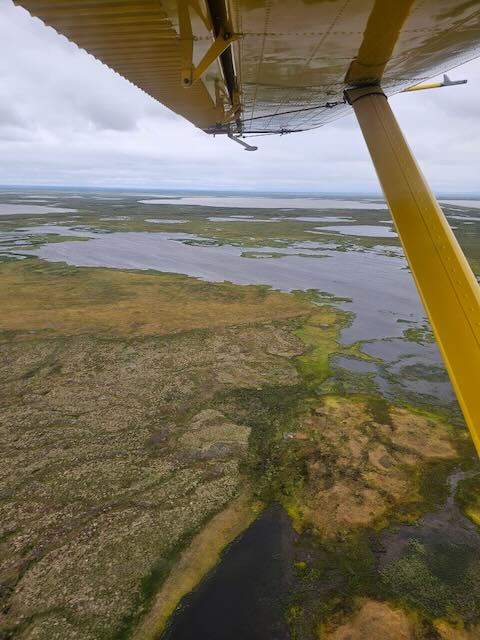
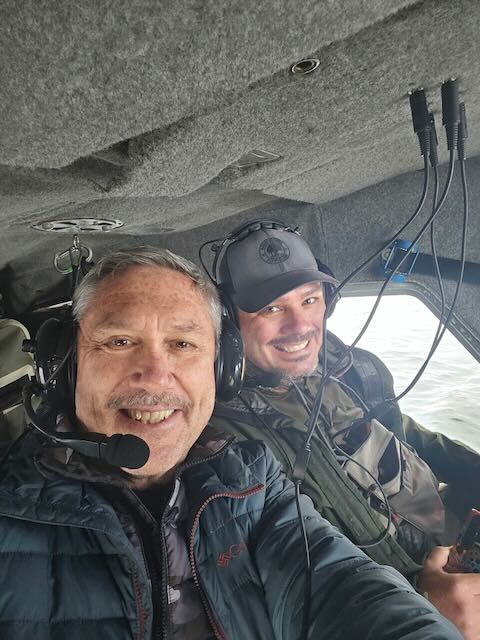
I’d never been on a float plane before; as crude as the planes seem, I was very comfortable and takeoff was smooth. As the plane lifted off the lake, our journey began and I immediately went into adventure mode. We started over the tundra. Our pilot, a cool young guy from Bend, started pointing out the moose that frequently cruise certain spots out of town. Then a little while into the flight we spotted caribou. “Let’s check him out!” our pilot said over the radio. He banked the plane around to get a couple looks at the lone Caribou, and we were off. These planes aren’t instrument rated, so the pilots fly from sight. They generally only fly a few hundred feet in the air, so you get a good look at the landscape, and it was beautiful. We flew across the tundra until we found the Arolik. Then the pilot turned up the drainage, and we followed the river for some time. From the air it seemed untouched. I spoke up over the comms, “Those fish have no idea what’s about to hit em!” we we’re only the third group they had on the river, so the pressure these fish had was nothing compared to back home.
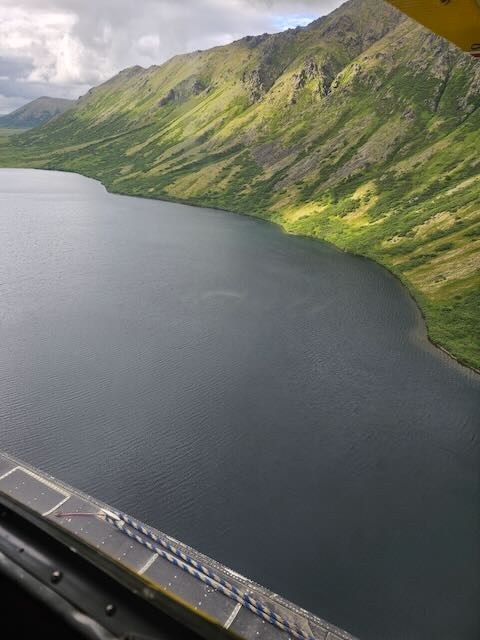
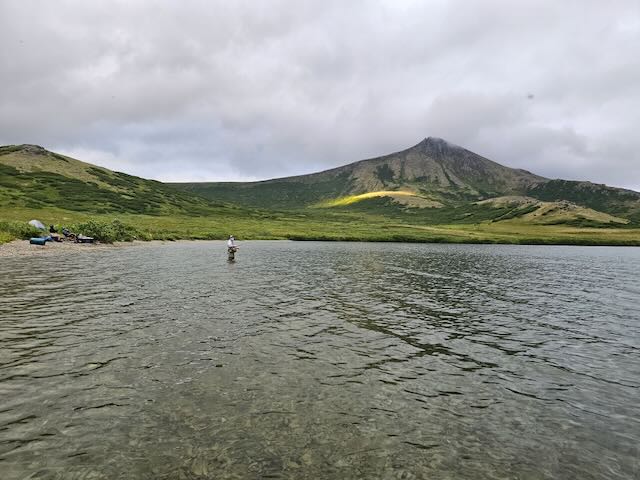
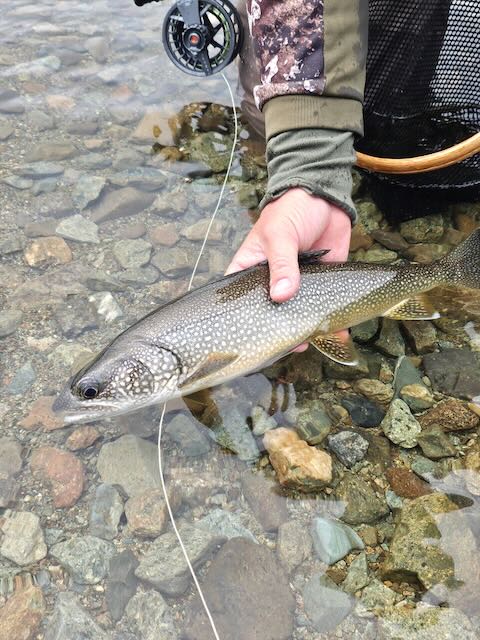
The pilot made his way to the head waters, Arolik lake. It’s big, and we flew all the way around the lake. We spotted two Grizzlies chasing salmon around the creeks that emptied out of the opposite end we were set to camp on. “If those are the only two bears I see this whole trip, I’ll be just fine with it.” I chuckled over the comms. The pilot set that plane down smoother than a mallard on a flat pond, and we throttled back as we approached shore. After the pilot anchored the plane on shore we popped out and started off loading gear. The pilot pushed off, throttled down and he tipped his wings to us as he headed back to civilization. We were all alone in remote Alaska! There was only a couple of hours of solid light left in the day, and we just focused on getting the rafts set up and making camp. Being the stillwater junky that I am, I had to see if we could catch something out of the lake. Of course camp could wait, so I rigged up a rod and got after it. It didn’t take long to work up a couple lake trout from shore. I was stoked; my first fish of the trip was a species I had never caught before. I was off to a good start. We made a quick dinner of sandwiches and got things ready for morning. More weather blew in, and my little tent rattled in the wind all night.
The first day of the float was rough. The first ten miles before the main confluence is notoriously skinny water. There is a lot of getting out and dragging the boat. We were told that it gets worse as the season goes on, but it was boney by the time we got there. Another tip: If you aren’t in good shape, I’d consider a float less physical. I would also advise leaving the rods in the tube and waiting until after the confluence to fish. There is some fishing in this stretch, but it’s probably best to wait. The river is still beautiful, meandering through a few different types of topography. We immediately began to see schools of sockeye salmon. The schools seemed to part as the boat floated by. We even had a caribou that followed us downriver for a mile or so. He seemed to be curious of our presence. Even though the first ten miles was a rough go, the adventure was full throttle. We hit the confluence towards the end of the day and we were stoked. The fishing picked up a tick, and we decided on a camp for the night.
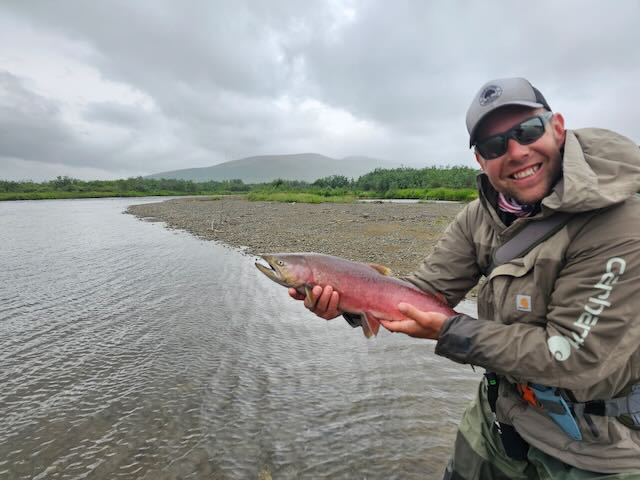
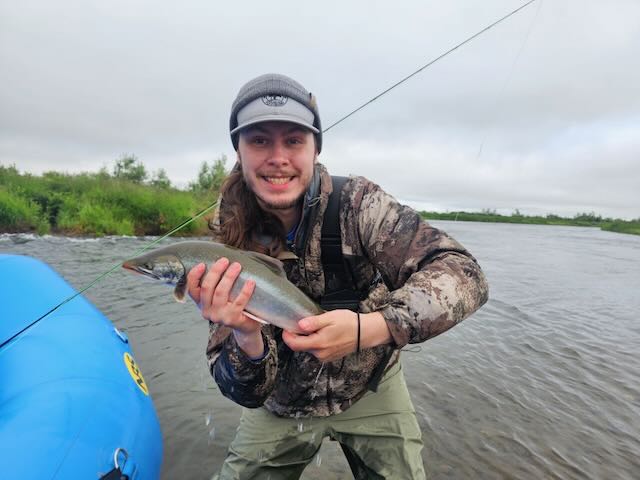
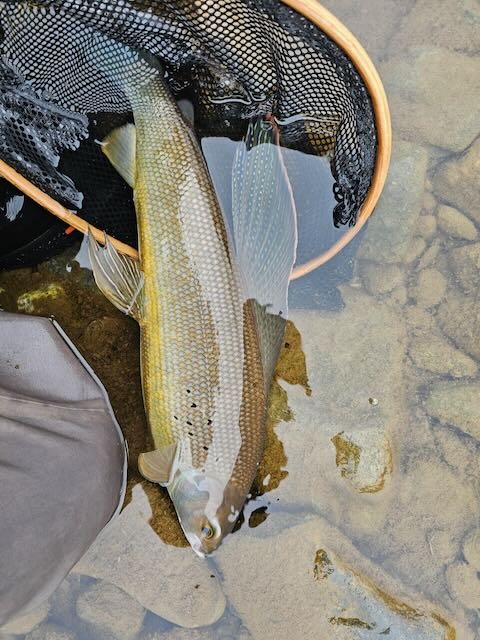
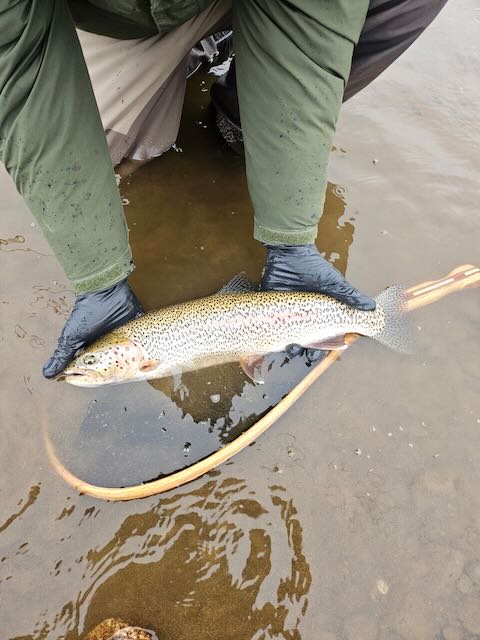
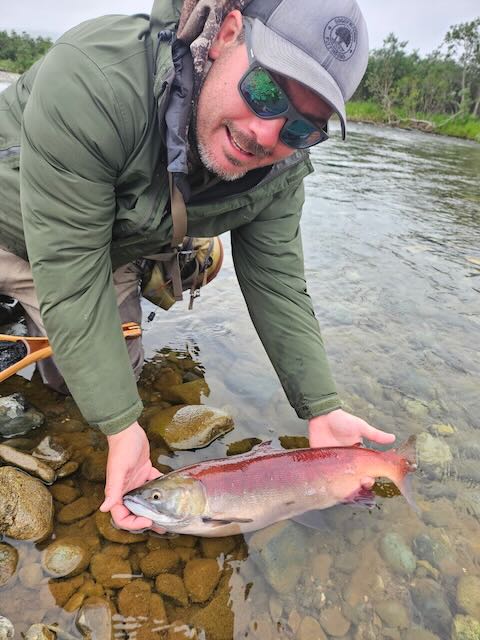
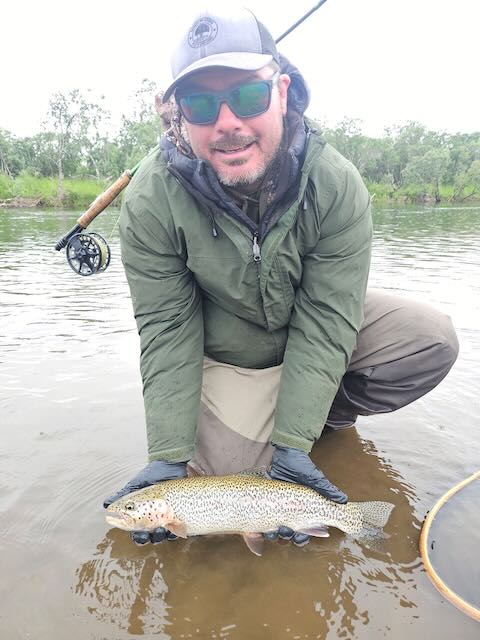
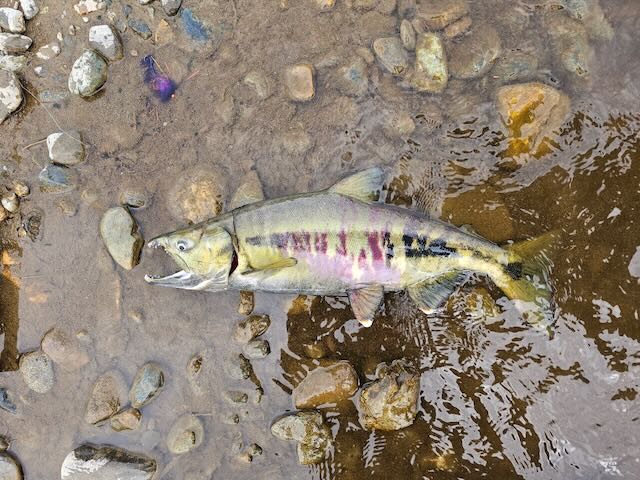
Over the course of the next few days, the fishing really picked up. Our group had two boats, and we caught fish as we floated. When we would see a big gravel bar the five of us could spread out on, we hopped out and fished. It was ridiculously good most of the time in the middle section of the Arolik. We were catching king salmon, rainbows, coho, grayling, chum salmon, a few sockeye, and more char than you could shake a magic bug wand (fly rod) at. I had waited so long for this trip, and I couldn’t believe it was happening. Sharing it with friends and family made it perfect. It was the ultimate form of adventure and not knowing what was around the next bend was exhilarating.
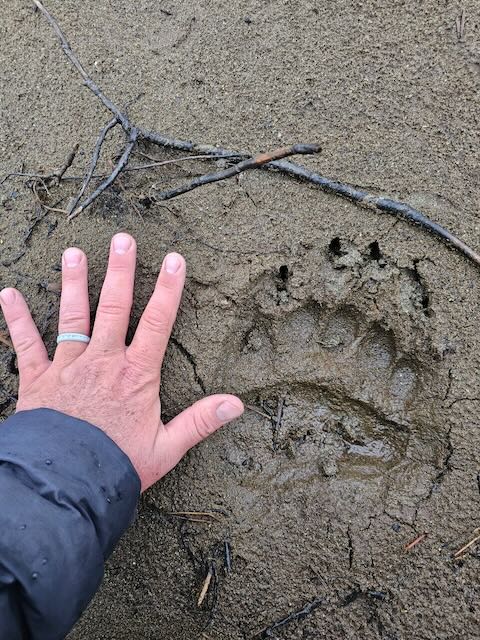
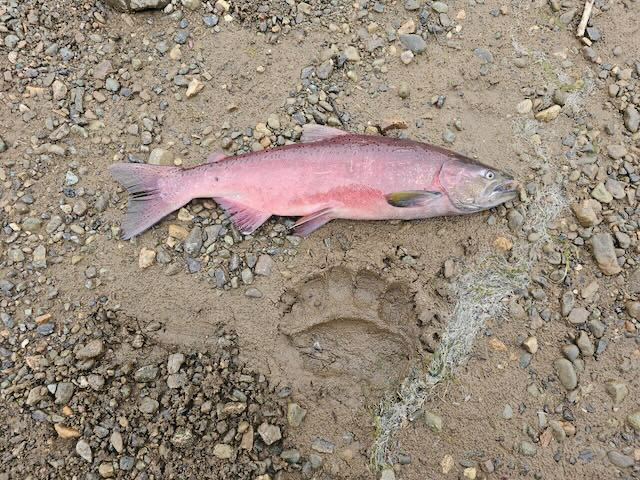
Every gravel bar we stopped at, I mean EVERY gravel bar, had grizzly tracks on it. We got somewhat lucky that we never had an encounter, but they had a presence everywhere. Another tip: have whatever form of protection you choose within arm’s reach. Even bear spray is prone to accidental discharge. My friend’s dad was fishing in the adjacent raft and accidentally knocked off the safety clip; he gave himself a small shot of bear spray. Luckily, he only got the overspray and didn’t take a direct shot. He took it like a champ! Things were intense as we tried helping him relieve the pain. Once the situation was under control, the jokes started rolling and we were back to business as usual, laughing and looking for the next fishing spot. I’m not one to be “bearanoid” in the woods. I’ve done a lot of backpacking in my day including the Bob Marshall wilderness of Montana which is home to plenty of Grizzlies. I just accept it and try not to let it take up head space. I slept fine in camp.
The old men in camp snore so bad that I told them I’d take my chances with the bears and set my tent up isolated well away from them. I STILL heard them snoring on occasion. Those bears are on the forefront of most people’s minds when going to Alaska but let me tell you, it’s the mosquitoes that draw first blood out there. To put it simply, they will black out the sun. That brings me to another tip: whatever you do, when you make your gear rental list through PBA, rent the screen tent for your trip. Between your sleeping tent and the screen tent they are your only refuge from the bugs while in camp. The screen tent also sheds rain well. Head nets are another easy choice, but I was smart enough to bring a couple pairs of thick mechanic nitrile style gloves to keep them off my hands too. Between screen tent, sleeping tent, head nets, gloves, rain jacket or long sleeves, pants or waders, you might escape the little vampires and not need a blood transfusion by the end of the trip. Back to the fishing.
Gear choice can be tricky. I wanted a rod that would be fun for the average trout and char, but I also wanted to be prepared for salmon. I had never fished for salmon on the fly before. I build rods, and I have plenty of them. As a stillwater angler, I fish 10’ rods exclusively. I settled on a 10’ 5wt, 10’ 6wt, and a 10’ 7wt in case we got into a lot of salmon. The 10’ rods might have been too long in the upper section, but they served me well in the middle and lower river. I paired them with Scientific Anglers Anadro Indicator Lines, Rio Xtreme Indicator Lines, Rio Outbound Short Lines, and even brought a spool with a OPST Skagit head setup for swinging flies on sink tips. I was actually surprised at how versatile the Outbound Short was. The line seemed to be able to fish everything well. It even handled skagit style casts and swinging smaller weighted streamers on a longer leader. It didn’t seem like it was overkill for indicator fishing either. I run that line on my guided stillwater trips when I’m indicator fishing using longer leaders and balanced leeches with clients and it performs well.
As far as flies go, you could fish a bead under an indicator from beginning to end and catch an absolute pile of fish. While it was deadly effective, I’m not a fan. Due to the nature of the way a bead fishes, you end up hooking fish all over their face. That put me off and next time I’ll be tying and fishing egg patterns on jigged hooks to get a clean purchase in the roof of the mouth. I love jigged hooks as you rarely damage the maxillary. Other effective patterns were egg sucking leeches, sculpin patterns, squirrel leeches, dolly llama, and graboid leeches. I fished a mouse pattern on occasion and got some blow ups, but I didn’t land any fish. Leaders ending in 3x for trout and 0x for salmon were sufficient (although I did have a king salmon break my heaviest tippet).
The fishing was straight forward. As mentioned above, a bead under an indicator was king. The one thing that surprised me was how shallow the fish were holding in the river. Most fish were caught on the edges in 1-2 feet of water. Most of the fish caught mid river were salmon with the occasional trout, grayling, or char. Swinging flies is my favorite way to fish the river; although it wasn’t as effective as the bead, it still accounted for plenty of fish. Don’t overthink fly patterns. Part of the excitement of getting prepared for any trip is loading a fly box, but it is easy to overthink it.
The river can be divided into three sections. Upper, middle, and lower. The upper section generally doesn’t fish well until after the confluence. The middle section is lights out. The beginning of the lower section fishes well, and the bottom of the lower section becomes tidewater. You’ll notice the riffles give way to a deep river with a slick surface; the fishing slows substantially. I can see it potentially fishing well for salmon, but our trip was focused on trout, char, and grayling. That brings us to another tip: focus your efforts on the middle portion of the river. It might be a good thing to stay two nights in one camp if you end up on a gravel bar worth staying on. We noticed an uptick of King Salmon, Chum Salmon, and a few Coho in the middle section. It seemed like everything was happening in the middle section. Downloading maps on an app like OnX Hunt is super helpful in determining where you’ll end up staying and keeping track of your progress. It is also fantastic for finding potential gravel bars to fish while out of cell service.
We floated the Arolik for 9 days; it could have easily been done in 7 or less. That being said, I wouldn’t change a thing. I think we had one day of sunshine. We basically lived in our waders and rain gear. It was so wet and dank that it was difficult getting a fire going most of the time. Another tip: the second to last day of your float you’ll end up in or near tidewater. You should find the highest elevation to set your camp up on, even upriver. Enough rain or tide flux can raise the river enough to flood camp, so keep that in mind. Always drag your raft ashore and tie it off. We woke up to our raft floating one morning and the only reason we didn’t lose it was the fact that it was tied off to a willow.
While I was getting prepared for this trip I spoke with some of the guys at The Caddis Fly, who are well versed in Alaska fly fishing. They have everything you need to get set up. A couple of them had even floated the Arolik in their day. They were kind enough to share some stories about their trip, helping elevate my stoke factor even more. Papa Bear Adventures is super helpful with any questions you might have for the trip, but I would lean on the fly shop for any fishing intel and supplies.
Alaska has adventure you can’t experience anywhere else in the lower 48. We are truly blessed to have it as part of the union. I’m already plotting my next back country trip with PBA. I hope this article helps you lock in a date and pull the trigger on the trip you’ve been dreaming of regardless of where it is. Don’t let another year pass by if you can help it. But be careful, it’s a slippery slope….
Adison Rook is a stillwater focused fly fishing guide in the Willamette Valley. Contact Caddis Fly Shop or visit the oregonflyfishingblog.com for details on his trips. Follow him on Instagram @soggy.waders
For any of you who have attended any of our community nights in this past year, thank you. This has served as a great opportunity to bring our community together, spark friendships, and usher in beginners. Our last Community Night of 2025 is around the corner and you don’t want to miss it.
Where: Falling Sky Brewing [1334 Oak Alley Eugene, OR 9740]
When: Tuesday December 16th at 6:30
What: Our last community gathering of 2025: fly tying, prizes, great food, great beer, fly swap, and connecting with the community.
For this Community Night, we have great gifts from several of our favorite brands: Scientific Anglers, Loon, Fulling Mill, and Costa. We’re ending the year with a bang doing a big giveaway, so besides the events being a great time, you do have a chance to win a prize.
Community Night regular, Mark won the last raffle for the Fishpond Tailwater Tying Kit
Local fly tiers are invited and encouraged to bring their gear and tie flies while they visit. Fly tiers have the opportunity to engage in a “Fly Swap” where they contribute a hand tied fly into a pot. They will receive a ticket and as the numbers are called you can select someone else’s fly. The first handful of people will have their choice of materials donated by Fulling Mill.
Falling Sky has great beer and some very talented chefs working hard in the back. Their burgers and sandwiches are fantastic, if you choose either of those you have to try the truffle fries. They also have a fantastic bacon loaded truffle Mac and Cheese. Steven, the owner, has been generous enough to host us monthly for a year and a half. He is a fly angler himself and always makes his rounds. Be sure to extend your gratitude to the man who has made this happen every month for over a year.
We can always expect our regulars to show up monthly. We also encourage new people to swing by. If you’ve been thinking of swinging by, this is a great one to come to as there are a bunch of free gifts. We also have had a massive influx of new faces and new anglers, so it is a great time to stop by if you’ve been hesitant.
Please help spread the word. The more the merrier and we all love meeting new faces. A big thank you to all who have attended and made this possible over the years. If you can’t make it, happy holidays and we will see you in the new year.
The change of seasons can be an especially challenging time to find fish. This is even more true for new anglers. Beginners and experts alike have had the last 6 months to become accustomed to summer and fall conditions, which sometimes do not differ all that much. Winter fishing for trout is often very different from the summer and fall conditions that we all love. It comes with its own challenges, but can become an extremely rewarding time of year when we and the fish get our winter bearings.
Occasionally we are blessed with the opportunity to chase trout with a snowy backdrop.
Winter in most places is synonymous with one word: cold. In some places it means snow, some places wind, but in the valley here it typically means rain. Winter rains affect every aspect of fly fishing, most notably because the creeks, streams, and rivers where we fish collect much of this rain that falls in the valley. Excess rain makes its way down the draws in our Cascades, eventually hitting a small creek, a larger tributary, then into a river that will reach the valley floor. In this way, conditions from day to day can change depending on rainfall. Heavy rain can cause rivers to rapidly rise and become off color with sediment. When rivers rise to the point that they are un-fishable we refer to them as being “blown out”. Conditions like this can also be dangerous, so please use caution if you venture out in high water. As temperatures and precipitation constantly fluctuate throughout the winter, insect and fish behavior follows.
This is great winter holding water. A calm refuge with a feeding lane nearby.
Insect hatches are generally not as consisitent as in the summer time. When the weather is in the right window, we can see extremely prolific hatches of Baetis sp. mayflies. These are also commonly referred to as: Blue Winged Olives, BWOs, Olives, Blue Wings, or by their family name Baetidae. These small olive bodied mayflies love hatching on overcast days, generally the hatch begins mid day. Blue Wings generally prefer to hatch along “glides” of relatively calm water. This ensures a more successful emergence as mayflies have to let their wings dry on the water’s surface before flying away. This means when the river is rushing faster, and there is more turbulent water, that there is less desirable space for them to make a successful emergence. Generally, timing a great BWO hatch means finding an overcast day, that doesn’t happen to land after several days of torrential downpours. Especially cold weather in the low 30s is also a bit too cold for them to hatch in massive numbers, however I have seen it in past years, finding olives and winter stones on the snowy banks.
Baetis sp. are some of the most widely distributed cool weather mayflies in the world.
Winter Stoneflies are another insect that hatches in the winter. These are extremely small stoneflies of the Nemoura family. They are sometimes referred to as forest flies or little black stones, and can actually tolerate being frozen. Generally these show up later in the winter in January and February. Unfortunately the dry fly eat for these bugs is far less than the BWOs, almost nonexistent in comparison. They do however make a fantastic searching nymph. As large quantities of these nymphs move into the shallows to hatch, trout do get especially keyed in on these small black stoneflies. Here is an especially productive winter searching pattern for winter stones.
Fish behavior heavily follows insect hatch behavior. It is also influenced by two other factors: temperature & flows. Temperature directly influences a trout’s metabolism. Cold weather slows trouts metabolism significantly and they are focused on conserving energy. This means that when trout are not actively feeding, you need to practically hit them on the nose with your nymphs to elicit any response. Times of feeding during the warmer parts of the day, or during an active hatch is a different story. Lots of activity is packed into a smaller time window, so being in the right place at the right time is crucial. After the window has passed trout will again default to their sluggish disposition that they will not shake until late winter/ early spring. Like humans, fish are also slow to rise on cold mornings, most of their activity will be isolated to the warmest parts of the day.
You can see the water is high. This fish was caught just off the tip of my rod.
Especially high flows displace fish. This can be understood again through a trout’s slowing metabolism. A trout’s tendency to conserve calories in the winter means they will hold in ares that require very little physical effort. Trout may leave these areas to enter a feeding lane for a short window, but generally will hold in slower water. This means behind rocks, snags, deep pools, long glides, and they will not be sitting right on a seam, rather they will be unusually far from it compared to the summer. As rivers swell and approach “blown out” conditions fish find a respite from fast currents unusually close to the bank. In high water you can catch fish right at your feet on the bank, so start close and progressively probe deeper and deeper. Generally, finding where fish stack up will reward you with several fish that may investigate your nymph offerings. When you locate where fish hold in sections of river you are familiar with, it is important to learn when they most actively feed based on current conditions and return then.
A sneak peak of a new pattern coming soon, the fly is very big and moves correspondingly big fish in high water.
High water not only corrals fish into more calm water, it also displaces smaller trout, baitfish, and sculpins. Especially old, large fish have seen this for years and know high water means displaced T-bone steaks. These fish can be awoken from their slumber for large meals, only to return to their calm lie after inhaling a small fish frantically darting downstream. The same can be held for larger nymphs such as slamonflies, gold stones, and worms that end up in the river after rains causing high water.
Because a trout’s metabolism slows in the winter, after they feed they re-enter their winter trance and can’t be bothered. In the summer, trout have to constantly feed as it is their growing season and they physically are more active. After a trout feeds heavily during a short winter hatch or after eating up a large baitfish, fish do not have to feed frequently as other times in the year as those calories go much further in the winter.
A late winter sampler. Note the worms, eggs, and the size of most nymphs being extremely small.
Streamer fishing requires heavy flies or a sinking line or tip this time of year. Streamers can be fished in tandem as well, and it is often especially productive. When fishing them in tandem, Generally tagging a smaller, lighter streamer off the back is best. You can even tag one of the soft hackles listed above when swinging and stripping streamers in the winter. Here are some winter staples: Tactical Jig Zonker, Tungsten Thin Mint, Sculpzilla, Krystal Bugger, Bead Head Mini Bugger, Cascade Bugger, Gaviglio’s Minnow Bugger TSB, or Kure’s Squirrel Micro Zonker. Below is a fantastic streamer developed especially for winter fishing.
If you have any additional questions swing by the shop if you’re local. We’re happy to help get you geared up for the change of the seasons. If you’re out of state give us a ring or reach out on social media, we are happy to lend a helping hand over the phone (541)-342-7005 or online.
-Simon
P.S. if you’re a fly tier, here are some additional local patterns that work great in the winter. These are local patterns that you can’t find in any store! We’ve got all of the materials online and in the shop!
Cold weather and winter rains are late this year, but are not entirely out of the picture. With plenty of rain in the forecast, our rivers are likely going to swell and a heavy nymph that stands out is necessary. In this video, Simon ties a fantastic high water offering that is on the smaller side but still stands out. Many people’s go to for high water is a large stonefly nymph, worm, egg, or chucking streamers. There is nothing wrong with any of those options, but they do not necessarily represent what fish are feeding on in large quantities. Sure fish eat up a sculpin, worm, egg or stonefly as it is a large meal, and trout are opportunistic. Mayfly nymphs and Caddis larvae vastly outnumber the former, so having a fly that is small and still can stand out is important.
This fly uses Fulling Mill Eco Warrior Dub spun into a buggy body using the Smhaen Thread Splitter which helps the fly cast a wide profile even in high water. It has additional lead hidden under the body to supplement the already heavy 3.8 or 5/32 tungsten bead. A hot tag of Fluoro Fiber out the rear and up the back adds an extra attractor element to the fly. Lastly, a CDC collar, as we all know, is a fantastic additional to a jigged nymph providing movement, which is curial in high water.
The fly naturally provides a wide profile effectively mimicking many larger mayflies. This would be fantastic for the spring March Brown hatch. Other clingers that this fly mimics follow: Quill Gordons, Cahills, or Black Quills. Many species of drakes also have large bodies that this fly effectively imitates. This makes a fantastic searching pattern on the Metolius for Green Drakes or late summer for Gray Drakes on the Mckenzie. The Rockies, Sierras, and Tetons, with their heavy runoff, will appreciate this pattern in the spring.
Heading into December winter steelheaders start itching with excitement. Most steelhead that get caught this early will get posted on social media and people will often recycle pictures to generate excitement (like in this report). So things can seem better than they really are! This write up is meant to help people focus and temper that excitement. A lot of people have time off late November, December, and early January. That is winter steelhead time right? It can be. We have gotten quite a few phone calls asking where to go winter steelhead fishing. Uhhhh… maybe nowhere without some rain.
First a Bit of History
Pre 2010s the kickoff for numerous coastal streams was the first rain around Thanksgiving. For more history check out our article from 2008. Long story short: the same strain of hatchery fish, an early returning Alsea stock, was planted everywhere. Those fish were notoriously poor biters and returned late November – January. This created frustrated anglers, homogeneous fisheries and short seasons. The seasons were distinct: an early hatchery fishery and a late season wild one. Now those early returning fish are used sparingly and only stocked (I believe) on the Alsea and two North Coast rivers. Currently, on the Alsea early returning hatchery steelhead make up about 30% of the run. So it still can be a true early season producer. Wild steelhead and modern broodstock hatchery fish return in numbers much later: January– March across our rivers. I put more effort in winter steelheading starting December 15th and go to about March 30th, sometimes fishing into the first week of April. I fish hard early January through March.
Former Caddis Fly employee Owen with an Alsea Winter Steelhead – December 16th, 2022 (photo by me)
Report
I fished the Umpqua Thanksgiving week and swung a couple diminutive smallmouth on my sublime 8126 Sage R8 Spey Rod. Nice. Its very low with summer sludge still on the rocks. I talked to a couple anglers who had the same idea and everyone turned up 0’s. I have seen some pictures and heard some murmurings from faraway North Coast streams of connections. Not to say there is not a single fish around locally but I would focus on tying, other prep or prepare for a long drive. We are fully stocked on MFC Ostrich and Aquaflies materials. We even have black ostrich! I also love Skeena River Ostrich, Angel Hair, and Lagartun Flatbraid for my winter steelhead flies.
Earliest Siuslaw winter steelhead I have landed – December 18th, 2023
Outlook
Everywhere south of the Siletz is too low for a serious push of fish to have come in. If you need to get out, I’d focus on the Siletz and North Coast. Oddly enough they got rain this weekend and the week before. We missed both those rain events. That puts us two freshets behind. I usually don’t bother to venture north of the Siletz. However, over the next week and half that is where your best opportunities lie. Yes, you will have to compete with the glass boat loving city folk from Portland and the Bendites by way of California that winter on the North Coast. But anyone who loves to steelhead fish is all right to me. We might get some rain (or a lot of rain) by the end of the week that will bring in the first few fish to the Siuslaw, Alsea and Umpqua. The past few years I have gotten into my first winter steelhead on: December 25th, December 18th and December 20th. So don’t feel hard done if it takes a few weeks! Wild winters will trickle in throughout December and some hatchery fish are out there to be had. The earliest winter I have landed I believe was December 8th and it was a one salt wild on the lower Alsea oddly enough.
Who else is getting excited?!?!
Some Old Blogposts to Get You Stoked!
Here are some old posts to get you excited and nostalgic! January 2025 report by me with lots of advice on tactics and products. Some success on the Alsea, December 2009. Couple epic shots from February 2014, and December 2013. Our blog contains a treasure trove of articles dating back to 2008 that display the history and evolution of fly fishing throughout the Pacific Northwest with tons of regionally famous contributors. If you need a break from prep and tying flies do some exploring on our blog!
The Caddis Fly Shop has been helping anglers and their loved ones purchase cherished gifts since 1975. Check out this years favorite gifts for the fly fisher. Have a wonderful holiday season.
Just returned from a great trip to Cayo Paredon, Cuba. I traveled with 8 anglers and 5 non anglers. Flight from Miami to Camaguey is an easy 90 minutes and then 2 ½ hour bus ride to our resort for the week. We were immediately met by our fishing manager Yoel with cold mojitos. We then discussed tides, weather and guide assignments for the week.
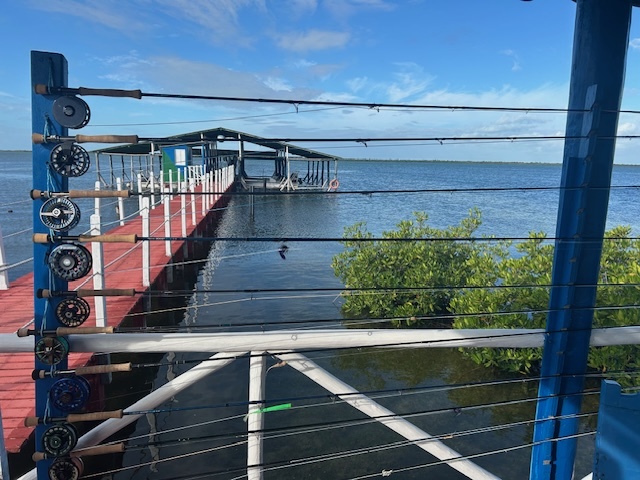
The marina is a 10 minute ride from the hotel and each morning an electric golf car zipped us out there. The area is secure and manned 24 hours a day, so we were able to leave all our tackle there each day and not lug it back and forth.
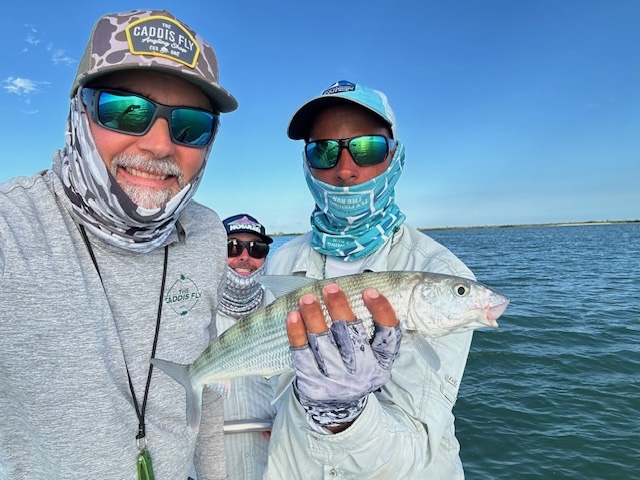
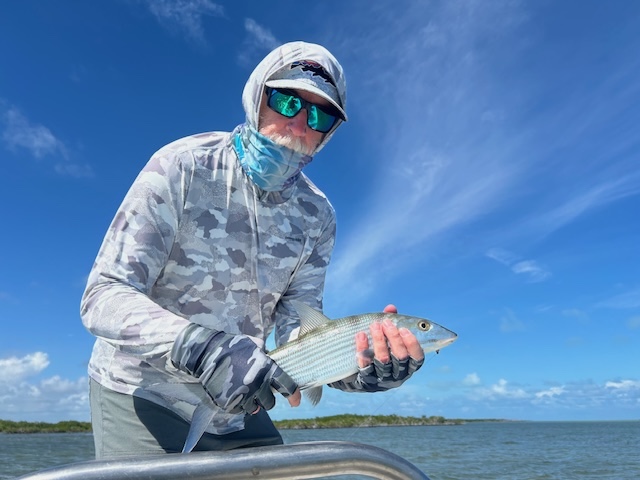
One of the main attractions that lead me to choose Paredon was the advertised numerous hard wadable flats. Right off the bat this was clearly true and each day anglers spend between 1/3 to ½ the day wading if so desired. The bonefish here are plentiful and range from small dinks to 8–10 pound monsters.
Targeting them while walking is one of my favorite ways to fish. One highlight for me was sharing the skiff with my wife Tanya for the first time and watching her land two bonefish. Another was landing a nice bone on a fly I tied with shop mascot Jasper’s fur.
Most folks had at least a couple shots at permit but our group landed only 1 for the week. There were a few resident tarpon around this time of year and our group landed three in the 20# class. I hooked three myself including one with a permit crab on 16# test but they all spit the hook.
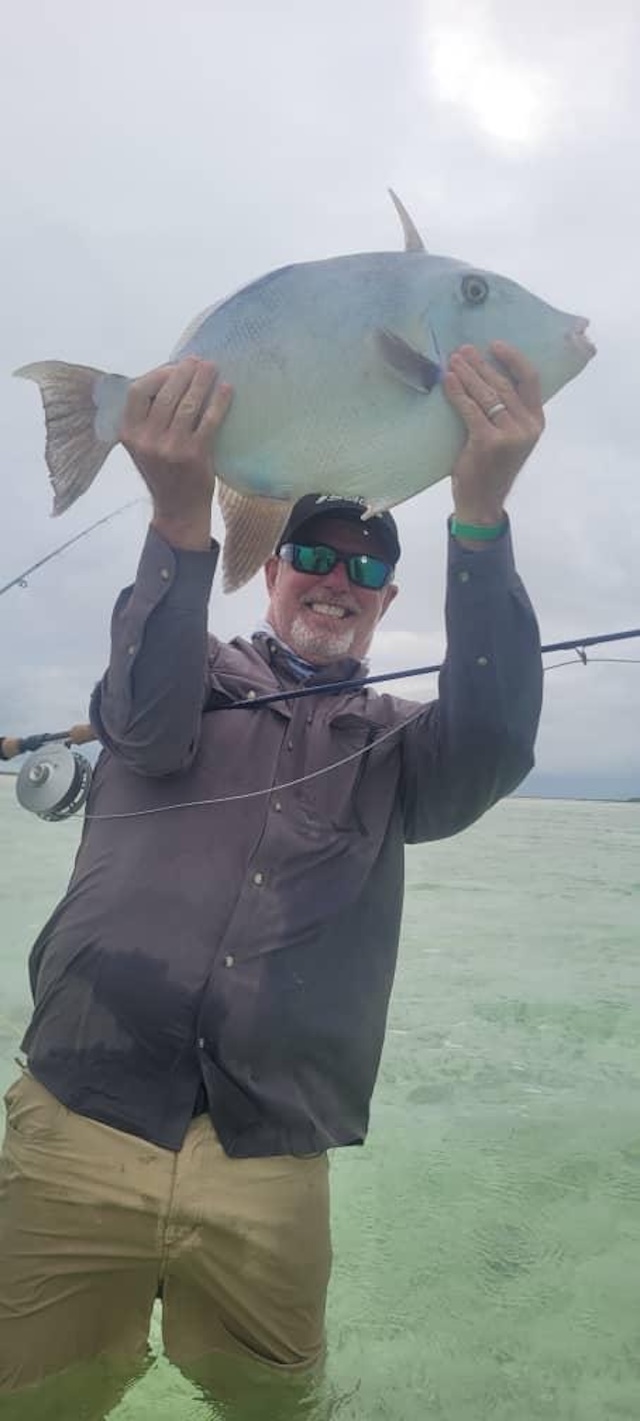
Another neat thing about this area is the option to target triggerfish. We saw them most days and I had one eat three times but did not hook up. Our East Coast buddy Chris landed this amazing specimen.
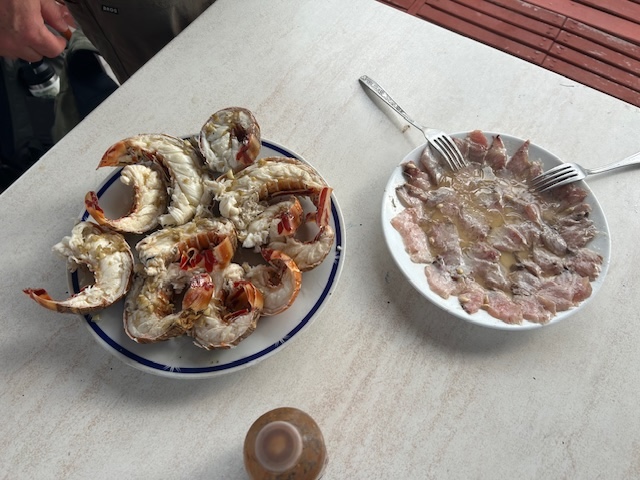
Longtime shop customers Mark and David became the providers as they caught several snappers that the guides fried up for us to supplement our rice and bean diet. The guides also cooked spiny lobsters for us on two occasions and that is always a treat.
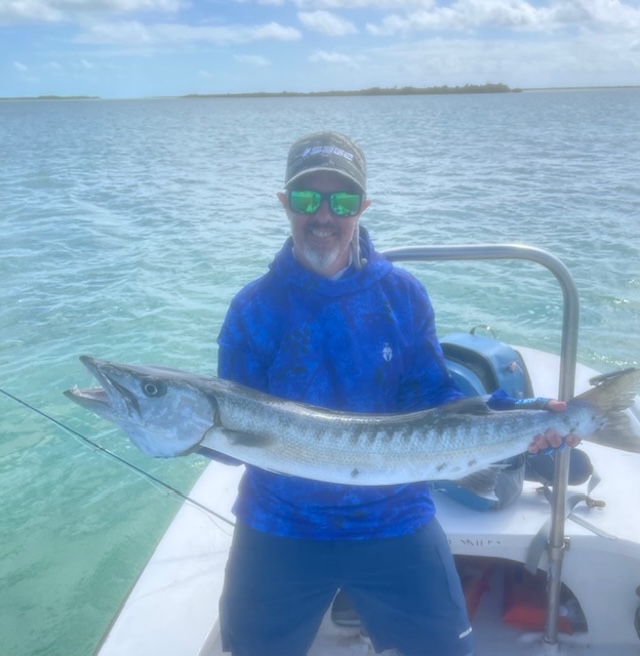
There are lots of barracudas and jacks around so even in tough weather there is always something to do. My close friend Rio arranged to dive on his own for 5 days and on one dive he said it was the best of his life. He has done scuba all over the planet so that was cool to hear.
Cubans are some of the friendliest folks we have ever encountered. They will do everything they can to make your day brighter. They were all eager to chat with us and practice their English. The ability to stay positive against all odds is incredible as getting even basic supplies is very difficult.
Every gift we brought for the locals was greatly appreciated. Starting plans to go back Fall 2026 or Spring 2027 so let me know if you have any interest in joining the next trip.
Join The Redsides Chapter of Trout Unlimited at 6 p.m. on Dec. 3rd in Springfield’s PublicHouse for our holiday happy hour get-together and an exciting presentation from longtime Oregon angler and author John Shewey, entitled 50 Years on the Fly: Ramblings of a Western Angler. Following the presentation, John will answer questions and be available to chat all-things Oregon and Pacific Northwest fly fishing.
About the presentation:
This constantly evolving, beautifully photographed, and eminently entertaining program follows John Shewey and his tiny band of two-legged and four-legged misfits through angling adventures on a variety of waters in many different places. Having celebrated his 50th year of fly fishing in 2023, John invites you along for the ride as he revisits some of his favorite travels and most cherished adventures, from famous places to little-known waters; from distant destinations to close-to-home fisheries; from humorous misdeeds to whimsical memories. Enjoy the fish, the places they live, the beautiful surrounds, and the memorable stories.
Notably, this program offers a celebration of fly fishing in the Northwest, a region richly endowed with a wide array of fascinating fisheries and a region frequently visited by anglers from across the continent. No matter where you live—here in the West or anywhere else in the country—this captivating presentation will keep you enthralled.
About John Shewey:
John Shewey has been accused of being a deadbeat slacker, but he steadfastly refutes such charges and insists instead that he is a lifelong fly-fishing addict. He usually admits to being the editor-in-chief of American Fly Fishing, unless you are mad at the magazine, in which case John is likely to deny any involvement. His long career as a writer and photographer has produced countless magazine articles and about 20 books. A couple of his books are pretty good.