Red Midge & Chironomid Still Water Fly Patterns for Crane Prairie

In this video, Greg ties two patterns that produced lots of trout on Crane Prairie this last summer.

These flies were fished with great success this summer at Crane Prarie Reservoir under an indicator and Greg recommends tying them in appropriate sizes (usually smaller) for still-water fisheries throughout the United States along with colors tied in black/silver, black/white, and red/white.

Follow along as Greg explains his set-up and how to fish these productive lake flies.

Screen Shot 2021-01-26 at 9.04.23 AM

Red Midge/Chironomid Fly Patterns

Hook(s): Daiichi 1120 Size 10
TMC 200R Size 12
Bead: Silver Tungsten 1/8″
Thread: UTC 70d Red or Floss
Wire: Ultra Wire Silver Sm.
Glue: Hard as Hull Penetrator Cement or Zap A Gap

Posted in Fly Tying, Fly Tying Materials and Supplies | Leave a comment

Bed Head Steelhead Muddler Fly Tying Video

Today Alex ties for us his favorite steelhead muddler in a pink, red, and claret colorway. A versatile framework, this fly can be tied in any combination of colors with many different materials. The muddler is a tried and true classic for summer steelhead, and this one can be fished multiple ways — Alex likes to riffle hitch it and skate it. Tell us how you’re going to tie and fish yours!

20210429_120026

Materials:

Hook: Daichi 2151

Thread: 6/0 UniThread, wine

Tag: Pearlescent Mylar Tinsel, Small

Tail: Golden Pheasant Shoulder

Body: Lagartun Silk Floss, magenta

Ribbing: Lagartun French Tinsel. Copper, Small; Pearlescent Mylar Tinsel, Small

Dubbing bump: STS Trilobal Dubbing, Claret; Ice Dub, Red

Hackle: Golden Pheasant Breast Feather

Wing: “Custom Hair Wing Fur,” Lady Amherst Tail Fibers

Muddler head: Deer Belly Hair, Claret

Materials are available at https://www.caddisflyshop.com/​​

Posted in Fly Tying, Fly Tying Materials and Supplies, Middle Fork Willamette River fishing, North Umpqua River Fishing Reports, Oregon Fly Fishing Tips, Summer Steelhead | Leave a comment

Seychelles Trip Report April 2021

IMG_4087

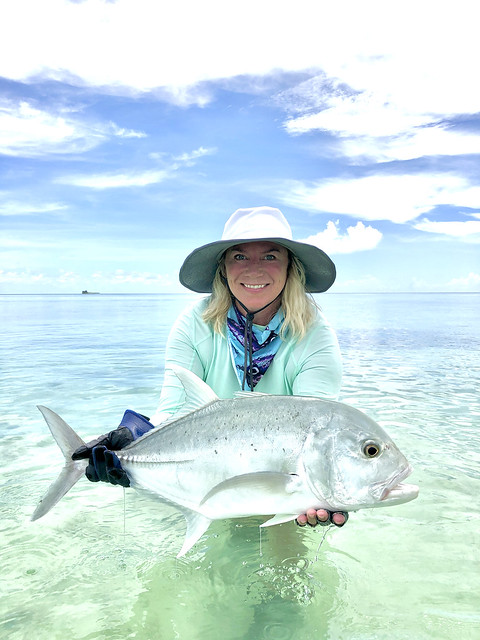
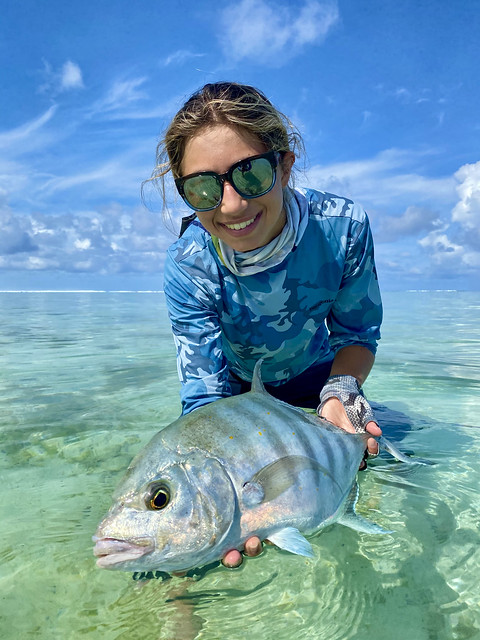
My family and I were extremely fortunate to lead a small group of anglers to Alphonse Island in the Seychelles this past April. Our week-long fishing adventure was outstanding. The Seychelles offers some of the most pristine marine habitat on the planet. Game fishes like Bonefish, Triggerfish, Giant Trevally, Bluefin Trevally, Golden Trevally, Queenfish, Sailfish, Tuna and many more thrive. Giant land tortoises, at least two species of turtle, tons of birds and dolphins are seen daily. Alphonse is a beautiful island paradise perfectly manicured daily by the large staff of Alphonse Fishing Company employees and IDC (Seychelles International Development Company). The accommodations are fantastic, the service level is as high as any fishing destination that I have experienced. The Seychelles is a bucket list trip for sure, anglers and visitors of all types will not be disappointed.

IMG_4344

IMG_3935 2

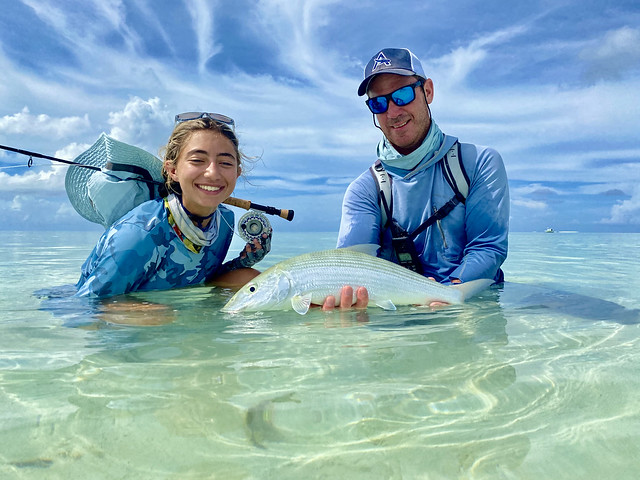
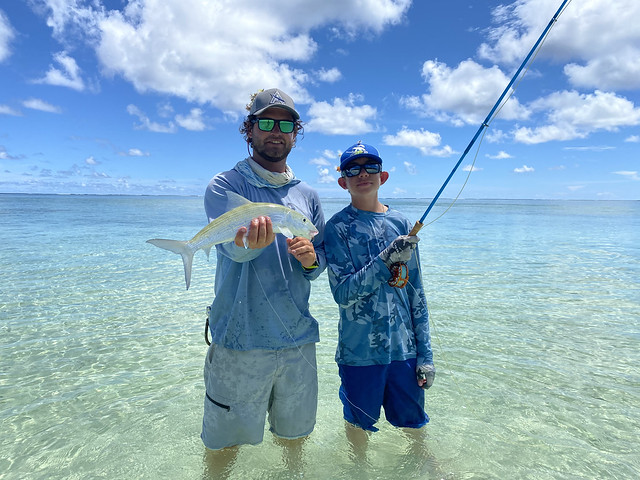
Each morning anglers depart from Alphonse Island and run top quality flats skiffs across a deep channel towards St Francois Island. On the way, depending upon the tide you can fly fish for numerous species. The main five species that guides and anglers target are Bonefish, Triggerfish, Giant Trevally, Indo Permit, and Milkfish. Bonefish are by far the most available and cooperative of all the species. The numbers of bonefish are incredible. Our week was an ebb tide and there were bonefish everywhere. The guides said a spring tide brought even more fish to the flats. Bonefish seemed to be available at all times of the day, and at any tide.

IMG_4358

IMG_4132_MG_0363_TREVOR SITHOLE

Triggerfish are a fascinating fish that none of our group had ever targeted. They’re spooky, finicky eaters that are tricky to hook and keep on. After you hook them they immediately run into a hole or off a finger flat into a coral head. You need to “hold” them and minimize the run in most instances. Casting has to be super precise and even with the perfect cast they often spook or ignore the fly. Triggers occupy shallow “reefy” water and guides like to target them when the tide was not moving too much.

IMG_2639_MATTHEW PHILLIPS

IMG_5830

IMG_5709

IMG_7348 2

Giant Trevally are the marauders of the flats. GT’s can show up at any time chasing bait, cruising along near a ray or a shark or on the protective reef east and west of Alphonse and St. Francois Islands. Our week did not see big numbers of GT’s but they were around for sure and once a GT has decided to grab your fly you can’t keep it away from them.

IMG_2753 2IMG_4270

We saw quite a few Permit over the week, but none really in ideal situations feeding on the flats or on top of rays. The Indo Permit has a really cool look to it but like all permit are hard to find and even harder to catch.

Milkfish were everywhere and our group hooked a couple of them. The algae eating monster bonefish looking Milkfish cruises the flats and has a reputation as one of the toughest fishes that swims. Lacking the lactic acid build up during the fight, they rip line and pull and pull and pull. Ideally you find these fish on the surface feeding like carp in deep water. All things need to line up perfect to actually get a Milkfish in the mouth and then hang on.

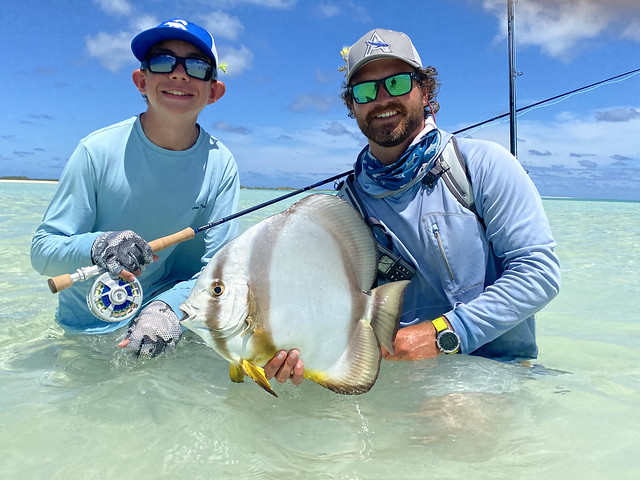
There are a ton of other fun species to catch and not necessarily target, Batfish, Emperor Fish species, Pompono, smaller Golden and Bluefin Trevally are everywhere.
IMG_3990 2

Bluewater fishing is also available at Alphonse and we experienced a half day morning trip. From the same marina as the flats skiffs an offshore boat took us just outside the reef surrounding Alphonse Island (two minute run) and we were into Tuna and Sailfish right away. Wahoo also came to teasers but didn’t stick around long enough to eat our flies like the Sails. Cash was lucky enough on our Bluewater day to have a “Bills and Bones” slam. Billfish on the fly in the Bluewater and a bonefish ( or 10) on the flats in the afternoon.

IMG_4212

IMG_4230

The fishing schedule at Alphonse: each morning we rode our bicycles a few minutes from our beachside bungalows to the restaurant where breakfast was served at 6am. From there we rode to the fishing center/fly shop. Fishing days were 7am start and 4-4:30pm finish. Upon return to the marina you can clean and leave all your gear for the next day. If you are missing anything, broke anything, or just want to check out specific flies the guides have developed, the Alphonse fly shop has everything one could need. Gear loan is available as well.

IMG_3919 2

IMG_3935 2

A beautiful beachside bar awaits each evening and after a hot day in the equatorial sun. A fresh chilled coconut with a straw is a great way to start. The bar is fully stocked and Ajit and Abe where fun guys who took great care of our crew. Appetizers and snacks where served prior to a wonderful dinner each night often consisting of fresh fish, ceviche, sashimi, grilled fish, salads sides, deserts and more. We had outstanding al acarte dinner services and beachside buffets where you could customize your meal. Alphonse has a massive garden and fresh fruits and veggies accompany all meals. If a person had dietary specificities they were met with ease by the incredibly attentive staff diverse and plentiful menu options. The fresh seafood was phenomenal, Wahoo, Rosy Jobfish, and Tuna were served in some form almost every night.

IMG_3921 2

IMG_4148IMG_5759

IMG_4239The Seychelles are a beautiful part of the world and offer incredible saltwater fly fishing in a pristine setting. I feel very lucky to have visited and look forward to returning. The Caddis Fly will be hosting more trips in the near future. Contact me at caddisflyshop@gmail.com for details or if I can help you with an upcoming trip. IMG_4043 2

Tackle Notes and post trip thoughts on tackle: I continue to love my Echo Bad Ass Glass 8wt, it was awesome on the bonefish. Beulah loaned me a 10 and 12wt in the OPAL series and having the foregrip was really handy for sailfish and GT’s. The OPAL rods are really tough and cast well, I pretty much tried to break one on a milkfish in an attempt to shorten the battle but the rod took the bend no issues. We used Nautilus CCFX-2 Reels that performed perfectly, as did Nautilus XL series. I got a chance to use Shilton Reels that I brought and Shilton Reels that the lodge loans. Shilton is the reel that Alphonse stocks and loans and feels it’s the finest reel out there to handle the tough conditions of the saltwater species they chase. The Shilton’s were flawless on Billfish, GT’s and more. Thomas and Thomas’s new Sextant was excellent in an 8wt and 12wt, fast action stronger than previous T&T salt specific models. Our favorite rod overall for “castability” remains the Scott Sector, the Sector is just lighter and smoother than any other saltwater stick out there, I had an 8,10,12 with me. The Loomis NRX+ is a super-fast rod and in wind performed very well in a 9ft 8wt. RIO’s new Elite Bonefish, Elite GT, and Elite Permit lines were awesome and to hear the guides enthusiasm for them was great. The lines remained slick and few “tangles on the bow” were experienced.

IMG_3922 2

Fortunately, I had lunch with Bruce Berry (our Montana Fly Co. sales Rep) a few days before departure and he hooked me up with his favorite versions of Christmas Island Specials. By far the best performing bonefish flies were very sparse, simple lead eyed patterns, no legs, not much flash. You need a wide range of tippet and the guides basically build saltwater leaders to the specific species targeted, I did not bring 30lbs but the guides wanted it for sure. They have material but one should really bring 16, 20,25,30,80 and 100lbs tippet and you don’t need tapered leaders at all. I used RIO Saltwater Fluoroflex and had zero issues. Bringing a few gigantic poppers on 6/0 or 8/0 hooks is advisable, and small crab pattern as well.

IMG_4062

Posted in Fishing Porn, Fishing Reports, Fly Fishing Gear Review, Fly Fishing Travel | 1 Comment

Speaking up for our Homewaters

bWFpbi9pbWcvcGFnZXMvNWQyMDM0ODcuanBn

From Native Fish Society

Jeff Hickman, Nehalem River Steward and wild fish advocate wrote an opinion piece this month on his concerns for the future of wild fish in his homewaters. In this piece, Jeff shares the impacts of the fishing regulations on the Olympic Pensula to Oregon, current population trends on his homewaters, and how we all can help our beautiful rivers in the Pacific Northwest to work on restoring abundant Wild fish.

Conserving Today to Preserve Tomorrow

For twenty years, I have been fishing and guiding Oregon’s north coast rivers. My wife and I along with our four year old son live on the coast in Nehalem, Oregon. As a family we love and cherish the outdoors. To give back, I am a volunteer River Steward on the Nehalem River for the Native Fish Society. My son is the inspiration for my work in conservation, and I want to provide him with the opportunity to fish for wild steelhead long into the future. I am deeply concerned about the current and future population health of our Oregon Coast wild Steelhead.

This year, the Washington Department of Fish and Wildlife (WDFW) enacted emergency regulations on the Olympic Peninsula’s rivers. These regulations include: a shorter season, no fishing from a floating device, implementing selective gear rules, and requiring the release of all wild rainbow trout. These regulation changes follow four seasons of not achieving the minimal number of adult wild steelhead necessary to achieve and maintain a healthy population in the watersheds of the Olympic Peninsula. WDFW has forecasted wild runs to be below critical abundance in the winter of 2021 for many of these rivers.

The actions by WDFW were necessary to protect adult wild steelhead. Populations of these fish have been plummeting with no recovery in sight. My thoughts go out to the guides and anglers whose fishing methods must change. Will WDFW’s next course of action be eliminating angling? Such a move would be devastating to the communities and economies of the Olympic Peninsula.

These regulation changes in Washington had a direct affect on our rivers here in Oregon. Many traditional float anglers from Washington and other states traveled to Oregon to fish. This increase in pressure, coupled with our Oregon Coast wild steelhead populations’ current status, is very concerning.

In 2018 and 2019, Oregon Department of Fish and Wildlife (ODFW) reported that wild steelhead populations of the north coast rivers, including the Necanicum, Nestucca, Wilson, Trask, Kilchis and Nehalem Rivers, all fell below critical abundance. “Critical abundance” is identified as a threshold below which the population’s conservation could be in jeopardy if the downward trend continues.

ODFW’s own management plan stipulates that the department implement changes if populations are below critical abundance for two successive years, precisely what happened in 2018 and 2019. ODFW has not identified conservation actions to be executed when populations reach critical levels. Unfortunately, the status quo continues, and ODFW has not implemented any actions to ensure the conservation of these fish into the future.

How long is too long before we show concern? Wild steelhead returns on the Oregon Coast were extremely low this year. The same situation as Washington’s Olympic Peninsula except ODFW made no management changes. So the responsibility lays in our hands as anglers. What can we do today as anglers that will help our rivers, fish, and economies in the future?

Over the past ten years, I have seen pressures from anglers increase each year on all of our north coast streams. We have more anglers fishing for fewer fish than ever. Next season, and seasons ahead, I encourage everyone to be a part of the solution by using angling strategies that reduce impacts on wild fish. Don’t fish on redds, steelhead are highly vulnerable when spawning and staging sitting in shallow water and on gravel beds. Giving steelhead space will allow them to reproduce and create another generation of wild fish. Consider limiting your catch. We all love those days of landing multiple fish, but we don’t have enough fish to go around and each encounter with an angler increases stress experienced by wild fish and potential mortality. Next season, consider taking a pledge to catch one fish and be done for the day. Use Barbless hooks, don’t use bait, handle all fish with care, keep fish in the water, we know that air exposure harms fish and reduces their ability to successfully spawn. The list goes on. We can be part of the problem or part of the solution.

I fear that we are at a tipping point. As anglers, let’s ensure we keep wild steelhead around. Let’s all limit our impact on these fish, and conserve the opportunity to angle long into the future.

Jeff Hickman is the owner and head guide at Fish the Swing, guiding trips throughout the Pacific Northwest. In his off time, Jeff volunteers countless hours and his voice to wild native fish on all the rivers that he loves. For more information or to contact Jeff, get in touch with our Northern Oregon Coordinator Liz Perkin at liz@nativefishsociety.org today.

Posted in Coastal Steelhead Fishing, Oregon Conservation News, Oregon Salmon fly fishing | Leave a comment

Fishing Report – Early May McKenzie River

Screen Shot 2021-04-30 at 7.45.02 AM

Spring continues to be productive on the McKenzie and Middle Willamette Rivers. Hotter days with cooler nights has been the trend and the fishing seems to fluctuate depending on temperatures, cloud cover, and hatches.

March Browns are still active, but pick up a rock and you’ll see that the Green Caddis are about to start popping pretty soon. The “McKenzie Green Caddis” is another fun hatch that fly fishers look forward too and they are big, tasty, beautiful insects that trout key in on.

Screen Shot 2021-04-30 at 8.06.20 AM

Dry fly fishing has been hit or miss, but fishing softer water off the channels has produced some stunning cutthroat trout. My friend James and I were able to get them to rise to Parachute Adams Size 14 & Carson’s Purple Haze Size 14 fly patterns consistently. Cool note, James first fish on a fly rod. Great job James!

Screen Shot 2021-04-30 at 7.45.29 AM

Old Man Larry and Amazing Mike were out too. I watched them swing soft hackle fly patterns all day crushing it in the riffles. If you want to learn how to fish effectively watch the veteran fly fishers and what they do. They can teach a young buck or doe a thing or two.

Screen Shot 2021-04-30 at 7.37.59 PM

Nymphing continues to produce too and Bryson reported that the Hopper/Dropper set-up worked great all day on Friday. Sometimes people will ask, “how far down should the nymph be from the dry fly?” Six to eight feet.

Screen Shot 2021-04-30 at 7.40.50 PM

Dry Fly Patterns
Parachute Adams Size 14
Carson’s Purple Haze Size 14
Purple Rooster Size 16
Chubby Chernobyl Purple or Pteronarcys Size 6

Nypming Patterns
Possie Bugger Size 8
Sens Improved Jigged Tungsten Twenty Incher Size 12
Mega Prince Size 8
Jigged Frenchie Size 12

Soft Hackle Patterns
Soft Hackle Hare’s Ear Size 14
Soft Hackle March Brown Size 12 or 14

Screen Shot 2021-04-30 at 7.47.00 PM

This spring has been really interesting with the hot, almost summer days, to cooler spring-like conditions with rain and much cooler days. The Dry Fly enthusiast may find it difficult since the hatches have been inconsistent, but with a nymph attached under a BIG Dry Fly or a bobber you’re sure to find something. If you don’t have a fly in the water you’ll never know.

Tight Lines,
Greg

Posted in Fishing Reports, McKenzie River, Middle Fork Willamette River fishing | Leave a comment

Hot Creek CA Action Alert

hot creek

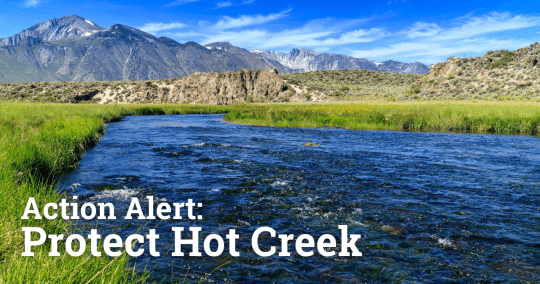
Protect Hot Creek, Stop KORE Mining

The US Forest Service is taking public comments on a proposed exploratory mining operation near the headwaters of Hot Creek in the Eastern Sierra that could lead to harmful open pit mining near this fishery. We need your help to stop it.

This project is problematic and disastrous in many ways:

KORE Mining wants to drill around Hot Creek for gold with no plan or guarantee that gold exists in that area. Dredging, excavation, and hydraulic mining will cause dramatic stream degradation.

The proposal for the exploratory operation provides no information on how much water is needed, the depth of drilling, or the negative impact on the wildlife and the environment. If the operation is granted, it would have long-term ramifications for one of California’s iconic wild trout fisheries and for the wildlife surrounding the area.

The Hot Creek watershed is highly sensitive and has remnant impacts of historic mining and development in that area.

How You Can Help

We need you to submit a public comment opposing this mining operation to Colleen Garcia with the US Forest Service. Deadline for public comment is May 7th. The link to submit comments and a sample letter are below.

We encourage you to demand an Environmental Impact Statement be conducted and share your personal comments and stories about why you wish to protect Hot Creek. Specifics are not necessary, any comment helps. Please share this action with your network. For more information visit our webpage.

Submit Public Comment

Posted in Uncategorized | 1 Comment

Fishing Report – Middle Fork Willamette – Late April 2021

Spring is my favorite time of the year to fish the McKenzie and Willamette Rivers. Cool days, light rain, and overcast skies make the Dry Fly Fisher drool with excitement.

Screen Shot 2021-04-27 at 7.36.10 AM

After a very unseasonably warm April, cooler temperatures and rain arrived later in the month and it began to feel like spring again.

March brown, caddis, osprey, and swallows were all out in abundance. These are good signs for an Epic day of fishing.

Here we go….

Screen Shot 2021-04-27 at 7.35.02 AM

Justin and I decided to fish the Middle Fork up high and after a delayed start to scout some rapids we were on our way.

The day started off great with fish smashing our Possie Buggers w/ Legs and Black Copper Johns off our Hopper/Dropper setup. The trout all seemed to jump like dolphins once hooked. The fishing was great mid to late morning, but slowed down a little between 1 p.m. and 3 p.m.

Screen Shot 2021-04-27 at 7.37.53 AM

Later in the afternoon the fish began to look up and all I used was a Chubby Chernobyl which was my hopper or top fly the entire day. Justin also used Purple Roosters, Purple Haze, and Parachute Adams with some success, but they seemed keened in on the big Chub.

Screen Shot 2021-04-27 at 7.36.44 AM

It was one of those days where you had to be there to believe it. Great fishing, great friends, fun rapids, and beautiful scenery.

Flies Used:

Chubby Chernobyl Pteronarcys Size 8
Possie Bugger w/ Legs Size 10
Black Cooper John Size 14
Purple Rooster Size 16
Purple Haze Size 14
Parachute Adams Size 14

Flies I’d Try Too:

Western March Brown Size 14
Mega Prince Size 8
Big Black Stone Fly Patterns Size 6
Hare’s Ear Size 10 or 12
Prince Nymphs Size 10 or bigger

It was nice to have some rain, because most of April felt like June and Oregon is way low in rainfall percentages. Which reminds me…

Be very careful with fire as we begin to camp under the stars at our favorite fishing destinations. Oregon last year saw the worst fires in the state’s history. People are still recovering from the devastating fires last summer and we do not need carelessness starting fires that should never happened in the first place. It’s one thing when lightning is around but, unattended campfires, burning during restrictions, cigarette butts, dragging trailer chains, target shooting in dry areas are all examples of careless and dangerous ways that ignite fires. Yes, my years rangering in Yosemite the Telegraph Fire was started in July by a man target shooting with tracer rounds in dry brush…Carelessness

Tight Lines,
Greg

Posted in Fishing Reports, Middle Fork Willamette River fishing | 1 Comment

Local Fishing Report end of April 2021 – McKenzie and Willamette Rivers

I have been out of town for the past ten days or so and asked the staff to chime in with current conditions for the McKenzie and Willamette.

thumbnail-3

Owen Grigsby was first: Bright sunny days can make McKenzie fishing difficult at times, but water is in decent shape. Black caddis are out and a few leftover March browns. The above photo is one of the biggest fish I have seen this year, nice work Owen.

thumbnail-2

Lou Verdugo: I have been fishing the Willy from Armitage to Crossroads for the past month. Its been solid “good” dry fly fishing! Mckenzie arm is slowing down due to lower water level and temp. The hatch was March Browns, now PMD’s and caddis. The greatest hatch is now later in the day. Been catching most fish on the Willy. Many Cuts but the Redsides are in the there. Proven winners have been tan soft hackles, x caddis, and parachute Adams. No nymphing! All dry flies or swinging soft hackles. The coming week with clouds should keep it going….but I am going up river. Have yet to fish it above the dam.

thumbnail-4

Justin Helm: Alex and I did a quick float today from Silver creek down to helfrich. Overcast with off and on showers made for some decent dry fly fishing with the para rooster. When it was really dumping on us, we switched over to the hopper dropper and got some nice ones on that new hustler jig and purple dart from umpqua.

thumbnail

Bryson Fairlamb: March browns winding down, light hatch around 2 but wind kept fish from keying in on them. Dry dropper with Norm Chubby and jigged 20”, Duracell and smaller standard PT (#16) produced fish all day long. McKenzie is low and with low snow pack and very little rainfall, we will see what summer holds.

Thanks for the reports guys.

Have fun out there and lets hope for some rain in May.

CD

Posted in Fishing Reports, McKenzie River, Middle Fork Willamette River fishing | Leave a comment

Carolina Spring Postcard

The creeks here are awake.

Untitled

I’ve found it easier to talk to them higher up in the watersheds. They’re fresher, less world weary.

The chub priests call one of my creeks The Transparent Serpent. They say they conjure Him into being, gathering the stones that make up His body.

The chub priests say the Serpent creates the world, and that they are trying to rebuild Him as quickly as He is devouring himself.

Untitled

So male chubs busy themselves reshaping the surface of things. They aren’t wrong, not entirely.

They grow keratin spikes this time of year. The tubercles are their armor, weapons, signs of fierceness like the span of antlers on a deer.

Untitled

They live upstream from the confluence of Plum Creek where the water is clear most of the time.

The Nocomis gathers rocks into a pile for his wife. He carries the stones in his mouth while the crawdads watch. His wife follows behind him, leaving eggs behind where he finished piling a layer of stones.

The current sweeps the nest and keeps the eggs clean.

Down in the creekbottom, cricket frogs and jumping spiders fling themselves into the air. Everything is excited as a kingfisher. Beech blossoms fall from the sky. Stoneflies emerge like smoke off the water.

It’s hard not to feel joy and awe, that places like this could exist anywhere. My creek flows out of Ace Speedway, a stockcar racetrack in Altmahaw.
Upstream from Plum Creek, there is a settlement of redbreast sunfish. Tangled tree roots hold a deep bowl. I count sycamore, sweetgum, holly, hornbeam, tuliptree, all of them inosculated. A gemel.
Untitled

There is a kingfisher settlement downriver on the flats where the creek meets the Haw. Any fish passing from the main river to this tributary is exposed on the silt.

Upriver, the creeks must have wandered at some point. They left a low wetland that fills with Atamasco Lilies.

Untitled

Fishflies are flopping all over the streambanks, soaking up the sun, the caresses from the soft leaves.

Untitled

Beech blossoms pile up in the backchannels. The dewberry is flowering. Everything is.

I want to tell you about all of this, each of these things a wonder, constantly moving. I’m happily drowning in it.

Hope y’all are good!

-MS

Posted in Fly Fishing Travel | Leave a comment

Native fish vulnerable during current low water flows in south coast streams

From ODFW: GOLD BEACH, Ore – Wild winter steelhead and Pacific lamprey are now actively spawning in southern Oregon coastal streams. Unfortunately, spawning is happening during low water flows that are more characteristic of early summer than spring and may put these and other fish species at risk from human activity.

Pacific Lamprey Spawning Apr 14, ODFW Photo

Pacific Lamprey Spawning Apr 14, ODFW Photo

ODFW fish biologists are encouraging people to take steps to protect the fish species in these streams. Landowners should not clear native vegetation along streams that run through their property. Recreationists should not to drive vehicles across creeks which can destroy redds (fish nests) of wild winter steelhead and Pacific lamprey and the fall Chinook salmon fry that are just beginning to emerge from the gravel. Normally, flows would be higher this time of year, and people would not be crossing rivers and creeks with ATVs or vehicles.

“We’re seeing flows right now that are typical of early summer, and we’re concerned about water temperatures heating up sooner if riparian vegetation is removed,” said Steve Mazur, Gold Beach district fish biologist. “Spawning activity typically occurs at the bottom end of pools as the water shallows and starts to speed up. This is where livestock and vehicles tend to cross and impact the redds.”

Mazur also encourages landowners living along some of the smaller south coast streams to start thinking about conserving water and leaving a little bit more in the streams for fish

ODFW is surveying smaller watersheds to monitor wild winter steelhead spawning and help inform development of the draft Rogue-South Coast Multispecies Conservation and Management Plan. The plan identifies habitat (including water quality and quantity) as a main limiting factor for winter and summer steelhead, coho salmon, and coastal cutthroat trout.

The most vulnerable watershed where ODFW is seeing impacts to riparian and spawning areas are in Hunter Creek and the Winchuck and Elk rivers.

Posted in Oregon Conservation News | Leave a comment

Fly Fishing Outfits for the Aspiring Fly Fisher – Spring 2021

Redington Field Kit – New 2021

Echo Traverse Kit

Additional outfits now in stock at Caddisflyshop.com include:
SAGE FOUNDATION OUTFITS
Echo Base Outfit now on Sale
Echo Gecko Kit

Posted in Fly Fishing Gear Review | Leave a comment

New Sage & Redington European Style Nymphing Gear 2021

The SENSE is designed specifically for the European Style Nymphing angler, with a rod that combines Euro Nymphing specific action, optimized components, and stealthy cosmetics to make the perfect tool for those looking to get the most out of their tight line techniques.

Sage Sense ESN Rod

The TILT Euro Nymph Fly Reel was designed to give you the unfair advantage you have been looking for. We incorporate three one-ounce removable weights that will allow anglers to dial in any rod and find that perfect balance. The TILT features a fully machined, full-frame narrow large arbor design, which prevents narrow comp line from slipping in between the frame and the spool, with the capability of quick line retrieval. At the heart of this design is a carbon fiber drag system that will quickly put the brakes on any fish, so you get quickly get it in the net and your flies back into the water.

Redington Tilt ESN Reel

Posted in Fly Fishing Gear Review | Leave a comment

Upper McKenzie April Fishing Report

IMG_3841

I floated from Hamlin to Silver Creek this past Friday. It was a gorgeous sunny day, and the river is in perfect condition. Nymphing was solid all day long with larger stonefly imitations being best. Hatches included a massive Grannom caddis emergence, March Browns, Blue Winged Olives and a few Salmon flies. I saw very few fish feeding on the surface.

IMG_3835

IMG_3836

Boat landings above the dam that are open and cleaned up post Holiday Fire Farm: EWEB Ramp, Helfrich Landing, Silver Creek, Finn Rock, Blue River, Hamlin, Bruckart. Closures include: Ben and Kay Doris and Rennie landing.

IMG_3837

IMG_3842

I had driven 126 post fire but this was my first time floating through the area and the devastation is shocking. There are tens of thousands of trees that undoubtably will be removed so the landscape is likely to change further. It’s difficult to describe the feeling you get floating through the area. It’s extremely sad for the homeowners and businesses in the area. The power of the fire and ruggedness of the exposed terrain if humbling. The river is still stunning and the fish are still very healthy.

IMG_3843

Posted in Fishing Reports, McKenzie River | Leave a comment

April March Browns Still Going Strong on the Lower McKenzie River

IMG_3821

March Brown mayflies continue to hatch from 2-4pm on the lower McKenzie. Dry fly fishing has been everything from challenging to very good. Setting up on a “feeding lane” during the hatch and presenting sparse mayfly imitations seemed to be the most effective strategy the two days I spent out on the lower river this week. Cooler afternoons are seeing Blue Winged Olives mix in the later part of the March Brown hatch. Presenting smaller Parachute Adams or Olive Haze patterns has also been successful.

IMG_3823

Nymphing with larger stonefly patterns (Pat’s Rubber Legs), and smaller mayfly nymphs Rowley’s Mayday Mayfly Nymph and Jigged Frenchie has also been very effective.

Screen Shot 2021-04-09 at 6.12.15 AM

Water levels have come up a a bit since the 6th of April but they are still excellent for spring angling. Enjoy!

Posted in Fishing Reports, Lower Willamette, McKenzie River | Leave a comment

Justin Helm’s McKenzie Green Cornfed Caddis Variation Fly Tying Video

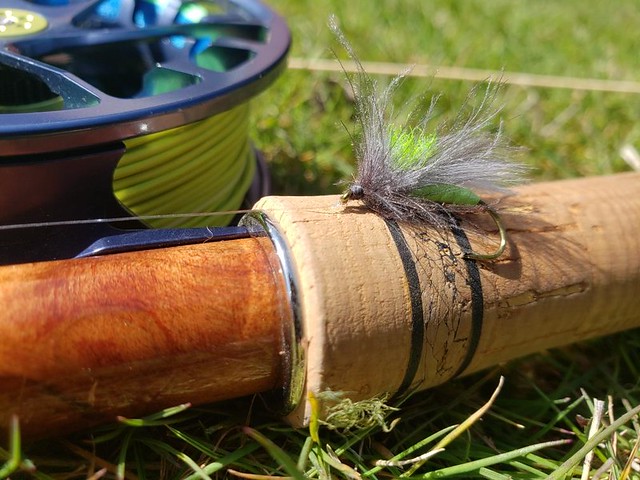
Today, Justin Helm ties for us an exciting variation of Lance Egan’s heralded Cornfed Caddis. Sure to fool trout on our local waters, this size and color specific pattern will closely resemble the natural McKenzie Green Caddis. These green caddis will start showing up soon, so it is a great time to start filling your dry fly boxes with some of these killer flies. If you enjoyed the video, feel free to comment, like, and subscribe for more.

Resized_20210330_114015

Materials list:
Hook: TMC 100, Sz 8
Thread: Ultra Thread 70D, Dark Grey
Body: Chicone’s Fettuccini Foam, Chartreuse
Wing: Select CDC, 2 Feathers Grey, 2 Blue Dun
Post: McFlylon Flo. Green
Front Hackle: Select CDC, 2 Feathers Grey, 2 Blue Dun
Key Tools: Swiss CDC Clamp

Materials are available at https://www.caddisflyshop.com/​

Posted in Fly Tying, Fly Tying Materials and Supplies, NW Fly Tyer & Fly Fishing Expo | 1 Comment