It doesn’t seem long ago that she was my little tag-along on fishing trips and I worried more about keeping her back from the bank then catching fish when we would hit the river. We’ve taken lots of trout trips but I admit it, I’ve been greedy with my salmon and steelhead fishing. The rivers are only perfect every so often, the conditions in fall and winter aren’t normally kid friendly, I need some time to relax, blah, blah. In my defense, there are three kids and that is more than one guy can handle on the river at once so there aren’t a ton of chances (not that I’ve fully taken advantage, I readily admit.)
But lately the dinner table talk invariably turns to . . . BOYS. Ugh. I say the only thing I can think of in these situations, “Gross.” I don’t want to give her a complex or anything but I can’t help myself. It doesn’t seem right. The words just have a nauseating ring to them coming from her. Panic has started to set in.
The days of slammed doors and sleeping in beyond all reasonable hours are coming, the days when she’d rather die than spend her spare time with her mother and me. With that realization came the resolve to get out more together before it’s too late. Low water. Most steelhead kegged up in the very lowest reches of our coastal rivers. Whatever. I decided we were getting out more no matter what. Best case scenario, we hook into a bright steelhead. There remains the possibility of a late bright salmon (it has happened plenty of times before), and worse case I figured we’d tussle with a couple darker salmon.
The morning of the trip we layered up and hit the road. I was worried her silenced meant boredom as we navigated the backwoods logging roads to our first destination. But when I asked, Iwas told “No. I’m just checking things out. It’s really pretty out here.” Good kid, I thought to myself and felt really lucky.
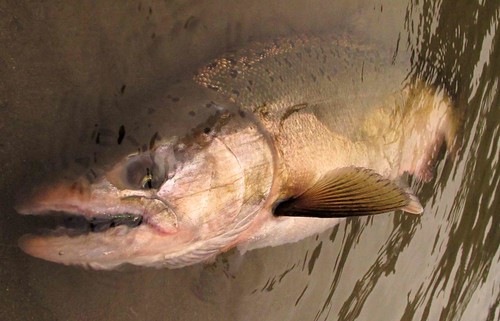
We reached the first hole and began fishing it, but nothing was doing. The morning was really cold with freezing fog and ice in the uppper elevations. The fish were feeling sluggish. I explained that I knew a really good spot downriver and we better hit it before someone else does. I had a good feeling as the sun burned off the fog and started to warm us. I pointed out where I wanted her to cast and how to retreive her lure but after watching Shea fish for a few minutes, she wasn’t working the hole right by my estimation. “Let me show you what I want you to do,” I said and flipped my lure out into the pool retrieving it slowly near the bottom. First cast, fish on and the smallest little tomato of a coho came to hand. After another 15 or so minutes I decided I’d cast a few more times before we moved on. The thumpity-thumpity of my lure was stopped by a familiar chompity-chompity surge. I set the hook and handed off to Shea. “Lay the wood to him.”
“Huh?”
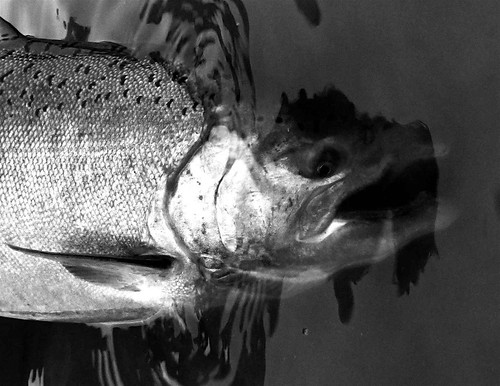
“Reel, reel!” The rod tip went limp. “Is he still there? Give me that. Yeah, he’s still there. Here.” I handed the rod back but as quickly as that the fish was gone. “That was a better fish,” I said. “No matter, it’s early and there’ll be plenty more. Like lots of rivers, there is too much private property down low for good access so we worked upstream hitting all the fishy spots I know of. We ended up back at our first hole and I watched her fish the run. After about 10 minutes I started to work it too and hooked into another fish that was hanging really close to the bank. I consoled myself by thinking, she would have never been able to work that spot with her spinner. I handed the rod off to Shea and coached her through the process. “Don’t let him run into those rocks . . . keep him in the hole . . . Good.” I tailed the fish, a bigger coho than the first and we revived it and watched it swim away.
The best spot on the river had been rested long enough and we headed back to make our last stand. As I was picking out a backlash, I noticed Shea reefing on her rod trying to break off. But it wasn’t the bottom and I could see a coho and she saw it too when it broke the surface. I set my rod down and went and zoomed in the video camera (that turned out to be a mistake). We banked the fish and I tailed it and showed it to her. The nicest coho of the day was solidly hooked so I said, “I’m going to put it back in the water to grab the still camera.” As I placed it in the river, Shea slipped. The fish went that way, the rod this and with a quick snap it was all over.
As we packed up the last of everything into the truck I said, “Well, we lost a few lures today.”
“How many?”
“About sixty dollars worth.”
“Do you think it was worth it? Sixty dollars?” I smiled to myself. It was worth a lot more than that.
All boat owners should be aware of a new permit required for 2010. This permit impacts both motorized and non motorized boat owners. Yes, it means drift boats, canoes, and rafts. Read on to see how it will or could impact you and how to get your permit.
Why do boaters need an Invasive Species Prevention Permit?
* Aquatic invasive species seriously damage waterbodies. Species like the quagga mussel and Eurasian watermilfoil “hitchhike” from one body of water to the next, primarily on boats. Revenues from permits will fund a new statewide prevention program to help protect our waters.
* Destructive invaders including the quagga and zebra mussels are rapidly spreading across the nation degrading water quality, depleting native fish and waterfowl populations and costing millions of dollars in maintenance of water and power facilities. The new program will be implemented by the Oregon State Marine Board and the Oregon Department of Fish and Wildlife.
What does this mean to the motor boater with a boat registered in Oregon?
* Registered boaters (including sailboats 12 feet and longer that are registered) will pay an additional $5 surcharge when they renew their boat registration. Current boat decals (which are stickers that attach to the bow of the boat) are proof that you’ve paid the fee. Renewal notifications will itemize the cost of registration and the $5 surcharge so boaters understand how their fees are used.
* If your registration expires next year (December 31, 2010), you do not need to have a permit for the 2010 boating season. The fee will automatically be added when you renew your registration. * Sailboats under 12 feet (that are not registered) will need to carry and purchase a $7 annual permit ($5 + $2 agent fee), which the boater can use with any manually powered boat. Permits for non-motorized vessels are being sold through www.dfw.state.or.us.
* If you have paddle craft, in addition to your motorized vessel, you will need individual permits when the paddle craft are in use. Permits for non-motorized vessels are being sold through www.dfw.state.or.us. What does this mean for those with manually powered boats (paddlecraft)?
* Non-motorized boat operators (rafts, drift boats, kayaks, canoes, etc.) 10 feet and longer will need to carry and purchase a $7 annual permit ($5 + $2 agent fee), which the boater can use with any manually powered boat. * Permits are required for both residents AND non-residents and are transferable to other non-motorized craft, but every vessel on the water must have a permit.
* Non-motorized liveries (rental businesses) will receive a quantity discount. Clubs and organizations can have permits issued in their name. Permits must be purchased directly from the Oregon State Marine Board.
* Permits are printed on water-resistant paper and easy to carry.
What about out-of-state visitors?
* Out-of-state visitors who trailer a motorized boat will be required to purchase a $22 annual permit ($20 permit + $2 agent fee) and carry it with them when boating on Oregon waters.
* Permits will be available ONLY through ODFW license agents, ODFW offices that sell licenses and on the ODFW web site. Out-of-state permits will not be sold through boat registration agents or the Oregon State Marine Board.
* Non-motorized out-of-state visitors will need to purchase the $7 annual permit ($5 + $2 agent fee).
What about Stand-Up Paddle Boards (SUP’s). Do they need a permit?
* YES. The USCG determined that stand-up paddle boards are considered boats for the purpose of life jacket requirements. Based on this determination, and if the stand-up paddle board is 10 feet or longer, the operator would need to have a permit.
What about multi-jurisdictional waters like the Columbia and Snake Rivers?
* Oregon residents will need to have the permit. Washington residents who launch in Washington follow Washington waterway rules. Because Washington does not have an invasive species permit program, Washington boaters do not need to purchase Oregon’s when operating on the Mainstem Columbia River.
* The Multnomah Channel is considered “inside” Oregon, and permits will be required when boating in the channel.
* Along the Snake River into Idaho, if Oregon boaters launch in Idaho, then they will need Idaho’s out-of-state aquatic invasive species prevention permit. If they launch in Oregon and boat into Idaho, they will need Oregon’s permit.
LV
Where do I get a permit?
* Permits can be purchased online at the Oregon Department of Fish and Wildlife’s Web site: www.dfw.state.or.us/online_license_sales/index.asp.
* ODFW license agents and ODFW offices that sell licenses. A complete list can be found at www.dfw.state.or.us/resources/licenses.
* Remember, motorboat registration fees include the $5 permit. Current registration decals are proof of payment into the AIS program.
Does this mean non-motorized boats will have to be registered?
* No. Non-motorized boats are NOT titled or registered under the program. Fees from permits are deposited directly into a fund dedicated to this program. They do not benefit the state’s general fund. Some of the funds will be transferred to ODFW to implement the program.
* Permits will be in the names of the people/organization purchasing them.
Why do motorized boats pay $5 every two years and non-motorized $7 ($5 permit + $2 agent fee) each year?
* Boat registration decals are non-transferrable -they adhere to the bow of the boat. Non-motorized permits are transferrable.
* Because this is a new program involving a different segment of boater, a new delivery system will need to be created which carries additional overhead costs.
* The surcharge on a motorboat will be automatic, with little overhead cost. Motorboaters are already paying a certain amount of their registration fees to maintain the registration data infrastructure. Eight-six percent of boaters’ fees go back to the boater in the form of boating access facilities, marine patrol services, and education/outreach programs.
* Because ODFW has nearly 500 point of sale agents and an online license sales system, their permit delivery system better serves boaters statewide.
Are there any exemptions to the new law?
* Yes, but they’re very limited and specific.
* State, county and municipality-owned watercraft used for official business.
* A ship’s lifeboat used solely for lifesaving purposes
* Seaplanes
* The Lightship Columbia
* Eleemosynary groups (Eleemosynary organizations are those which are operated primarily as a part of organized activities for the purpose of teaching youths scoutcraft, camping, seamanship, self-reliance, patriotism, courage and kindred virtues). Defined in ORS 830.790.
What if I don’t purchase a permit?
* Law Enforcement Officers will issue warnings for the first few months of the program. After that, they will begin actively enforcing the new law which is a Class D Violation which carries a $142 fine.
What if I lose my permit? How do I get a replacement?
* Because personal information isn’t kept, boaters will need to purchase another permit.
All boaters need to take personal responsibility by taking a few extra steps to prevent the spread of unwanted invaders.–LV
Very impresive with fast order process and delivery. Generic cialis softtabs? Every discount drug order from Canada Drugs is backed by our No-Risk Guarantee that guarantees you 100% free shipping on every order.
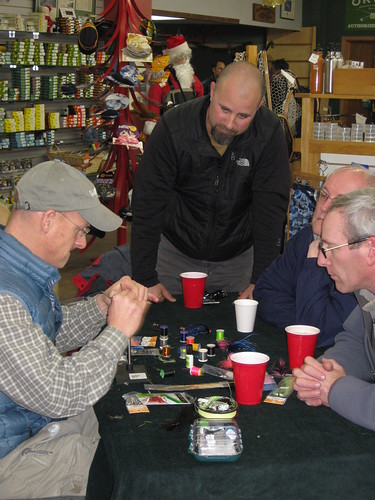
Today Ken Morrish of Idyldwilde Flies demonstrated some of his fly tying skills to some Caddis Fly Shop visitors.
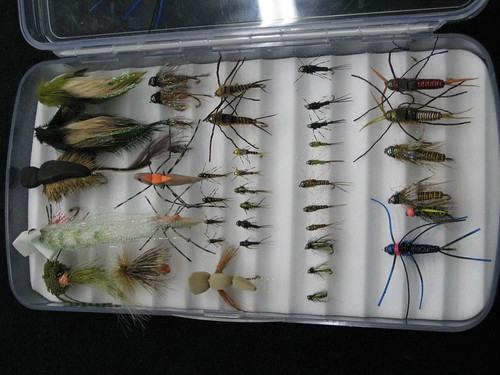
Ken donated a fly box of his well known patterns, (HotWire Nymph Series) to the raffle for the movie “Rise” this evening for Casting for Recovery at the David Minor Theater.
A Couple of Ken’s creations.
Great product. I do switch this probiotic with another brand just to keep my tummy from getting used to one product. Like this one the best. Cheap cialis! Online Canadian Pharmacy provides one of quickest and easiest ordering processes available oline today.
Trout Unlimited and our coalition partners campaign to remove hatchery trout from the Mckenzie River remains in high gear. Over the course of the next week or so I’m going to look at some of the criticisms directed at the campaign and of course, refute them.
Critics say we are “greedy” (I’ve been called worse) and don’t want to “share” the resource. (This is ironic.) They say we want to take trout out of Jr.’s creel and deny kids the joy of fishing. Nothing could be further from the truth.
The truth is that of about 113,000 trout stocked in the Mckenzie annually, maybe 37% percent make it to the creel and that’s a high end estimate. By my calculation, about 82,500 of the hatchery trout stocked last year were not caught by anglers and instead died of natural causes! What a waste! On top of that abysmall return rate, the Cape Cod hatchery strain trout are severely depressing our magnificent native redsides. That is no way to maximize opportunity or to treat our Oregon’s native trout. It’s tragic.
There is a hard cap on the number of trout ODFW can stock in the district. If you want people to harvest more trout, you have to put the trout where they are easier to harvest. If ODFW was serious about maximizing opportunity for taking trout, ODFW would plant trout where they get a high creel return rate, not the Mckenzie. Stillwater stocking can have a catch rate of 90% or more. Putting all the hatchery trout destined for the Mckenzie in those waters could result in about 60,000 more trout on Jr.’s stringer and the Mckenzie Redside trout would rebound.
There would be more trout for those who define opportunity as this:
and for those of us who prefer our opportunity like this:
Meet Ken Morrish, fly fishing travel guru, fly tyer and photogrpaher
December 10th Ken Morrish of Flywater Travel LLC. Idylwilde Flies Signature Fly Tyer, and renowned photographer will be at the shop tying flies between 3-6pm. Please stop by for a beer and say hi to Ken. His tying session will focus on his Medusa Series of trailing hook steelhead patterns, Winter trout/steelhead Nymphs including his “Hotwire” Nymph series. Ken will be donating all flies tied at the shop on Dec 10th to the Casting for Recovery fly box. Please join us from 3-6pm for this free event.
Support Casting For Recovery see Rise at the David Minor Theater
On Thurs December 10th we’ll be hosting two showings of the new Confluence Films fly fishing porn — Rise to benefit Casting for Recovery. 21 and over. This new film will get your fly fishing juices flowing again, and the funds raised support a great cause. Stop by the shop for your tickets — $10. For more info on Rise showing in Eugene.
Just a heads up to anybody out there with fly fishing film-making skills — or even if you don’t! There’s still time to sign up for the Oregon Fly Fishing Film Festival. The contest was announced back in June. The rules are here. Basically, you send us your un-released (not even on YouTube) fly fishing video, and if it makes the cut, we’ll show it at the film fest. We’ve extended the deadline from 12/20/09 to 12/31/09 for entries. If you’re the winner, you get about $4,000 in prizes, including an Oregon-made Bellinger Bamboo Fly Rod and a tour of the state’s greatest fly fisheries. The event takes place Jan 10th. See below for details.
Oregon Fly Fishing Film Festival and Fly Tying Expo
Sunday January 10th, 2009 12pm-5pm
David Minor Theater, 180 E. 5th Ave, Eugene OR
Film Festival Lineup:
-Beattie Outdoor Productions’ Nervous Water
– Catch Magazine’s 2009 best-of video compilation
-Rollcast Productions’ Hustle and Fish
-Stu Apte’s Tarpon Country
-Never-seen-before film submissions from around the country!
Featuring Oregon’s Fly Tying Experts:
-Barrett Christiansen of the Caddis Fly Shop and OregonFlyFishingBlog.com fly tying video series
-Dean Finnerty, Five Rivers Guide Service, Umpqua River steelhead guru
-Darian Hyde, dead drift steelhead pattern innovator from Hareline Dubbin
-Jay Nicholas, salmon biologist and fly fishing addict
-Rob Russell, Salmonid Jedi Master
-Captain Nate Stansberry, Oregon’s saltwater fly fishing guide
Tickets are $10 pre-sale at the Caddis Fly Shop or available for purchase at the door. 21 and over. All funds raised by this event will benefit Trout Unlimited’s efforts to reduce or remove hatchery fish from the McKenzie River.
Looking for gift ideas? There were 266 new books and DVDs released into the fly fishing marketplace in 2009. That’s down significantly from 2008, when 499 titles were released. The soft retail market drove different responses from the various publishers. Some cut way back on new releases, saving cash on printing and taking fewer risks on titles with questionable sales potential. Others, like Stackpole, Skyhorse, Headwater and Barclay Creek, fired off a selection of blockbuster titles and enjoyed solid sales.
I’ve sorted through the lot and compiled top-ten lists of books and DVDs for 2009, according to sales.
Need I say more? Ted’s our man, and the prose offered here are lush, personal and haunting. The fly fishing market is usually not kind to such artistic creations, preferring the how-tos and where-tos. It’s no small achievement for such a book to top the sales chart.
#2 MODERN MIDGES: TYING & FISHING THE WORLD’S MOST EFFECTIVE PATTERNS
Rick Takahashi and Jerry Hubka
Spiral Hardbound, $39.95
I sure needed another thousand midge patterns. Thanks, guys!
#3 FLY PATTERNS
Randall & Mary Kaufmann
Hardbound, $125.00
How about 3,600 new patterns? Wow. And most of them are Hickman’s.
This book, which includes an excellent, two-hour DVD, is mind-bending! Skip and Carol Ann offer up hundreds of new trout patterns, all of which are the result of on-the-water experimentation. Only the most effective flies made it into the book. Open this one up and it will blow you away.
As someone who avoids dams, I’m not qualified to speak on behalf of Pat’s new book, but I think its success speaks for itself. Fills a niche, for sure.
#6 NORTHWEST OF NORMAL: A NOVEL
John Larison
Hardbound, $24.95
I’ve already bombarded the blogosphere with my praise for this great little novel, but here’s a little more: Northwest of Normal is the perfect gift for the steelheader in your life. Assuming he or she can read.
The Oregonian’s internationally acclaimed political cartoonist proves here that he is completely cracked. I mean this guy is totally bonkers. It took me a couple of chapters to figure out his writing style, and it was worth the effort, mostly. Ohman’s iconic cartoons add to the fun.
#8 LOST IN WYOMING
Scott Sadil
Hardbound, $24.95
This is a gorgeous collection of fictional stories from one of our finest modern writers. Readers of Gray’s and the Drake already know how great he is. Now you can, too.
#9 ALASKA CHRONICLES
Miles Nolte
Hardbound, $24.95
If you’ve ever wondered what it would be like to ditch your responsibilities and become an Alaska fly guide, save yourself the trouble and read Nolte’s blow-by-blow account. Good stuff.
#10 THE NORTH UMPQUA CHRONICLES: THE SECRET DIARY OF A YEAR ON THE RIVER
Pat McRae
Softbound, $26.95
Straight from the heart of the North Umpqua’s inner circle: Frank Moore provided the inspiration, Jim Van Loan edited (and scrambled the names of the spots to throw us off the scent), and McCrae fished his butt off, putting it all down for us to sift through. There’s no map included, if that’s what you are wondering. And even after studying Pat’s book, I’ll bet I still won’t be able to land a fish up there. Oh well. Check out our Q&A with Pat McRae and an Excerpt of the book.
The Top 10 New DVDs of 2009:
Ready to sit back with a brewski and watch other people catch fish? Want to take a quick trip to New Zealand for only $29.95? Or maybe you just want to cast and tie flies like Ed Ward? Check out this year’s best-selling DVDs. There’s something for everyone:
You can call him “R.A.” Which is nice, because his last name is kinda tricky: pronounced bee-yah-tee. I’m going out on a limb and calling him “the best.” Nervous Water is not only the finest fly fishing DVD I’ve ever seen, but it’s also the best value. Four mouth-watering features and ten shorts take you around the globe chasing the coolest fish that swim. If you already own R.A’s other DVDs, be warned: all his previous films are included in this collection: Slovenia on the Fly, Bird Chasers and Alaska First Decent. But the new footage and the ten shorts make it a must-have DVD.
I still haven’t seen this, and I’ve heard some mixed reviews. Most go like this: the tarpon stuff is totally sick, and the rest is good. The Confluence crew does good work, and I expect this to fall right in line. Selling like mad.
#3 SKAGIT MASTER FEATURING ED WARD
New Water Media (aka Jeff “Cap’n” Mishler)
DVD, $39.99
Ed really did change steelhead fly fishing forever, though he would never want to admit it. The Intruder is the bitchin’est fly tying invention since the vise, and short-bellied lines are required to throw them. Even bobbicator dudes are throwing these Skagit lines now. Gotta give the man his due, especially since he doesn’t want it. And hand it to Mish for busting his ass on this for the last couple of years. Well done, Jeffrey. Skagitmaster Review.
#4 ONCE IN A BLUE MOON: THE FLYFISHING ADVENTURE OF A LIFETIME
Jeanie Ackley, Carl McNeil & Earl Kingi
DVD, $29.95
As someone who will probably never go to New Zealand, I appreciated the aerial tour, the cool story line, and the fine cinematography. The film claims to unlock the mystery of New Zealand’s “Mouse Year.” I’d be willing to bet that people figured it out a long time before this, but it’s still a cool movie and an excellent seller.
Hahahahahahahaha! That’s some funny shit! Be sure to check out Fishizzle, too. This is the sequel. Gorgeous film, sweet soundtrack, and a nuts-kicking storyline. Steve says he’s never doing that again. His nuts are still sore.
#6 RIVERS OF A LOST COAST
Justin Coupe & Palmer Taylor
DVD, $29.95
This hard-hitting documentary follows the careers of California’s pioneering steelhead and salmon fly anglers as their precious rivers are dammed and their fish are slaughtered. By the end of the film, you’ll be sure there’s not a salmon left on the West Coast. It gives us Oregonians a taste of what will happen here if growing municipalities get their way. Required viewing, friends. But keep in mind that the Eel, Smith and Chetco actually had a semi-decent run this fall. So there may yet be hope.
#7 BONEFISH: A FISHING ODYSSEY
Charles Rangeley-Wilson
DVD, $24.95
British nut-job Charles Rangeley-Wilson and his camera-toting buddy hit the streets of Andros Island in search of a ten pound bonefish. They ride bikes along the coast and get unsolicited advice from all the islanders. Goofy, low-brow, and charming.
#8 JOY OF FLYCASTING PART 1: TRICK CASTS
Michael Mauri
DVD, $29.95
Here’s a bunch of showy casts that chicks will dig!
#9 STU APTE’S QUEST FOR GIANT TARPON
Stu Apte
DVD, $29.95
Most youngsters get tired of hearing older folks tell their stories. And when that older guy is Stu Apte, kids will naturally get the feeling that Stu is full of himself. But those people are missing Stu’s point. He’s not bragging. He really was the first guy to do all that stuff. He’s a hero, a patriot, a passionate angler and educator. If you think you’re pretty cool, you’ll be knocked down to size after watching Stu in this 1993 film. Watch, listen and learn. Then get a copy of his autobiography, Of Wind and Tides.
#10 STU APTE’S TARPON COUNTRY
Stu Apte
DVD, $24.95
Travel back to the Florida of 1976 when Stu and Flip were still pioneering the sport of tarpon fishing. What a stud!
Meet our newest employee!
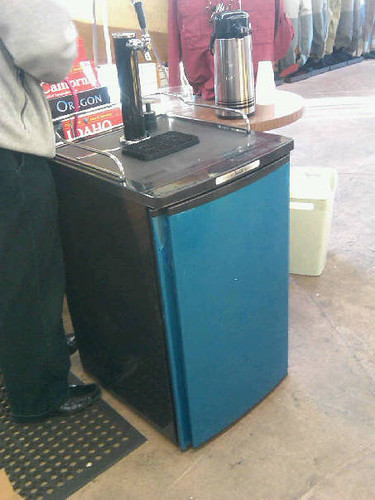
Be sure to stop in for a Ninkasi
Wed — 12/9/09 Trout Unlimited Meeting — Chris Orsinger executive director of Buford Park and Mt. Pisgah
Chris Orsinger will be at the Trout Unlimited meeting, 7pm Wed night at the Eagles Aerie in Eugene, 1375 Irving Rd. He will be talking about salmonid habit restoration on the Coast Fork Willamette in the Mt. Pisgah area. We will also be discussing the next steps in the McKenzie Hatchery Trout removal process.
Thurs 12/10/09 Meet Ken Morrish, fly fishing travel guru, fly tyer and photogrpaher
December 10th Ken Morrish of Flywater Travel LLC. Idylwilde Flies Signature Fly Tyer, and renowned photographer will be at the shop tying flies between 3-6pm. Please stop by for a beer and say hi to Ken. His tying session will focus on his Medusa Series of trailing hook steelhead patterns, Winter trout/steelhead Nymphs including his “Hotwire” Nymph series. Ken will be donating all flies tied at the shop on Dec 10th to the Casting for Recovery fly box. Please join us from 3-6pm for this free event.
Support Casting For Recovery see Rise at the David Minor Theater — 12/10/09
On Thurs December 10th we’ll be hosting two showings of the new Confluence Films fly fishing porn — Rise to benefit Casting for Recovery. 21 and over. This new film will get your fly fishing juices flowing again, and the funds raised support a great cause. Stop by the shop for your tickets — $10. For more info on Rise showing in Eugene. We’ll also have raffle and silent auction prizes to support CFR, including this amazing fly box:
Winners will be selected at noon on Saturday, December 12th at the Caddis Fly. Need not be present to win for either Raffle or silent Auction items. Winner will be notified by phone as soon as drawings are complete.
Caddis Fly Christmas Party!
December 18th 4-8pm Caddis Fly Christmas Party. Please join us our annual Christmas Party extravaganza, friends, festive food and drinks.
Fly Tying Classes Starting
Jan 4th will be the first night of 5 consecutive beginning Fly Tying Classes. No experience necessary, we supply everything. Classes run from 6-8pm and are $55. Call the shop to confirm
Jan 9th,10th Spey Casting Class with John Hazlett
McKenzie River Spey Casting Classes: Saturday-Sunday Jan 9,10 2009 9am-3pm, McKenzie River. Sage casting instructor John Hazlett will offer a two-day clinic on, 9am-3pm. John will be taking a maximum of six students and you will fish both sides of the river, using his jet sled. Cost is $100per day and lunch is included. The Caddis Fly will supply rods if need be but folks can bring their own. Because Jon has a sled he will teach anglers to fish/cast from both sides of the river. There may even be a few fish around. Jon guides for steelhead much of the year and will offer fishing insights as well.
Sunday January 10th — It’s the Oregon Fly Fishing Film Festival and Fly Tying Expo!
On Sunday January 10th, come to the Oregon Fly Fishing Film Festival, featuring celebrity fly tyers and new films from some of the best pros in the business, as well as amateur films from local anglers. 12-5pm. David Minor Theater in Eugene. More details forthcoming.
When your mental state is tied to the seasonal ups and downs of the fly fishing retail cycle November is a great month to get out of town. A couple of great family trips kept me out of the store this year. One to Southern California and one to Playa Del Carmen Mexico allowed for fun in the sun and an escape from the shops slowest month 30 years running..
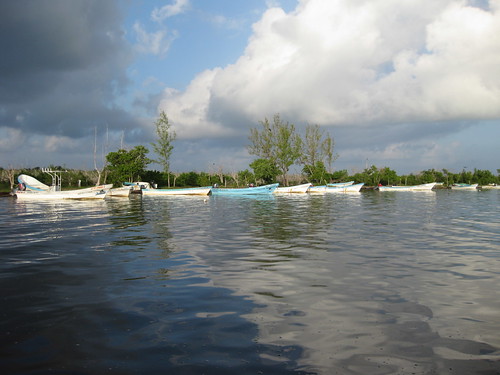
One fishing day out the 18 away from the office is pretty sad, but that was the reality this year. I had planned for two but windy conditions kept me off the water one day. The plan was to fish the North side of Cozumel. When staying in Playa Del Carmen a 30 minute ferry ride is required to Cozumel. Ten minutes later you are rigging your rods, and a 15 minute boat ride gets you to the lagoon. Under ideal weather conditions the boat ride is undoubtedly shorter. My guide, Nacho wanted to be inside the lagoon to avoid wind the day we fished.
I had seen photos of the bonefish in Cozumel and honestly my expectations were pretty low. The Bonefish seemed to run small and tended to be taken from big schools. My take was that Cozumel is a great dive resort island with decent offshore fishing at the right time of the year. The fact that I was in Mexico to enjoy time with the family in the sunshine either reduced those expectations even more, or increased the self induced pressure one feels when sight fishing, the jury is out on this one.
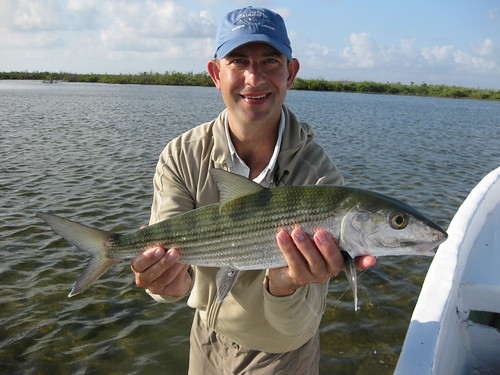
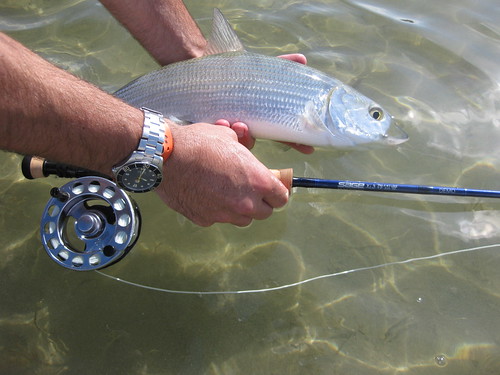
The bottom line is that Cozumel is a very underrated bonefish/snook/tarpon spot and if you are in the area and enjoy flats fishing, Cozumel is a must do. My assessment of a good day of bonefishing is based on how many fish you see, and how many shots you get. If I am in fish most of the day, it is a great day. Landing big numbers of fish doesn’t happen all that often but if 6-12 fish come to hand I am more than satisfied. My day with Nacho produced plenty of action on bones, and later in the day we chased a few tarpon and snook. I was surprised at the size of the fish, my guide suggested one was 7lbs, I am thinking more like six. Either way a very respectable bonefish anywhere.
For those of you who might be filling a box full of baitfish patterns to try this winter for rockfish and ling cod your time has arrived! Ocean conditions are trending toward favorable this weekend and early next week. Get out there and have some fun on the coast! Should you have an interest in fishing with a guide please call the shop. Who knows we might even toss out some crab pots!
I bought some Simms boot foot waders last spring and they hung in my garage all summer. In the last two months, though, I chose to wear these, instead of my usual stocking-foots, while fishing on the beach, and from my pram and driftboat.
Man-oh-man they are nice. Convenient.
Here’s what inspired me. Step one: place waders next to my feet. Step two: slip one foot out of driving footwear and slide directly into wader boot. Step three: repeat step two with other foot. Step four: pull up waders, strap on wading belt, and go fishing.
The procedure at the end of the day is just a simple.
Am I giving up on my stocking foots? Nope. In fact, I would not recommend these non-studded boots in places like the Siletz Gorge, Lower Alsea, North Umpqua, or Deschutes. Those are the places where I really need cleats.
But for river reaches dominated by sand or gravel like the McKenzie, the Nestucca, the Lower Trask, the Elk and Sixes – these easy wading rivers are perfect for boot foot waders.
Oh by the way, they are warm on these windy, mid thirties’ pre-dawn ventures into darkness.
Experiencing the on-and-off ease of Simms boot foot reminded me of the old neoprene Streamline boot foot waders I wore in the 80s. Anyone else remember how nice those were compared to SealDris?
Saturday morning. Down the beach we went at daybreak – Bob, Ryan, and me. Paul and Jeff had abandoned us at the motel in the dark, sneaking away without even knocking on our door to see if we were awake.
Fellow salmon fishers, most carrying white plastic shopping bags, were lining up around the lagoon when we arrived. It was Saturday, the tides were building, and people were staking their claim for first-light fishing. Paul, Jeff, and a substantial group of fly-guys were clustered together between spinner, anchovy, and shrimp fishers. They were positioned to cover a trench that snaked along the inland side of the lagoon, an area where the most fish had been hooked during the week.
Our little group chose the sand side of the lagoon because it offered a little more room between fishers and still, we hoped, a chance to show our flies to a salmon. There was no wind that day, and a heavy salt mist hung in the air dimming the day.
Fifteen minutes passed. A few fish were boiling around the lagoon. Given the freedom, I moved around, shifting position over two or three hundred yards; casting short, casting long. Hoping for a grab on the drop. Retrieving with tiny three-inch twitches, striving for smoooooth retrieves, as slow as I could manage. I moved up the sand spit away from the ocean and kept my casts in the forty-foot range, remembering that there was a little trough close to the sand. I switched out my comet for an un-weighted Clouser, and cast at a downriver angle so my fly would stay in the trough as long as possible.
Suddenly, there was my salmon.
I had extended my retrieve to its absolute limit. The Clouser had lifted to the surface, my rod tip was raised high, and I was about to roll my line forward, begin working line out, and cast again.
But as that little Clouser rested on the surface, barely under tension from the leader and five feet of fly line, a deep-shouldered king rushed the fly, head-on. There he was, moving fast, mouth open, head and dorsal fin out of water, determined to eat that fly at my feet.
Instinctively, because there wasn’t time for intellectualizing, I turned away from the water, away from the fish, and ran, leaping over a drift log on the beach behind where I had been casting. By the time my line came tight, the fish had already turned, the hook set, and the connection signaled as the fish paused, made that glorious side-to-side, whole-body gyration we call the head-shake, and peeled off three hundred feet of line and backing while I tried to maintain a semblance of smooth tension on a protesting, sand compromised reel.
I was smiling. Hell, I was elated.
Eventually, I backed away from the water, maintained a long line and low rod-angle, eased the salmon to water’s edge, and ran back to secure my grip around its peduncle.
I knelt in the water and pulled the fish’s head back into deeper water. I was alone there, no one within a hundred feet either side of me on the sand. The Clouser was buried in the roof of the mouth, barely visible. Then it was time to kneel waist deep in the lagoon and complete the release. I felt the salmon’s strength return quickly, and let go.
The rest of the day passed in a blur. A crowd of salmon fishers gravitated to the place where I released my fish. I moved to a new place where I fished alone, got grabbed hard on my second cast and played the salmon for ten minutes before the hook pulled free.
Reeling in, I turned to find the place where I had fished alone now occupied by no fewer than two-dozen people. Big sigh. That’s just how it goes. By tradition, I could have waded back and claimed my original casting station, but I decided not to. My day was already perfect.
I returned to an abandoned place on the beach and fished-out the afternoon. Just before dark, Ryan was ready to go. “Just a few more casts,” I pleaded. “Do you have any un-weighted Comets?” he asked. “Sure,” I said, opening my fly box. “Give this little beauty a try,” as I handed him my smallest Boss. Ryan shrugged, tied the fly on, and hooked-up on his very next cast. Ryan hooked his fish where I had just fished at least an hour with the same fly.
It was dark when we got back to Bob’s Diesel truck and drove up the beach. I celebrated with Mary’s oven-baked chicken, mashed potatoes, and gravy, and a Henry’s Root Beer.
Back at the motel, everyone gathered to prepare for Sunday’s fishing. It should be the day, they say.
Sunday morning. I’m up at 5 AM. Everyone else is drinking coffee and messing with the day’s tackle, pulling on waders, loading pickups.
Not me. I’m throwing my gear in the 4-runner. I’m headed home. I’ll get Dutch Brothers coffee in Coos Bay, an hour away.
Highway 101 is deserted. There isn’t a hint of wind. I imagine my friends casting to fresh kings surging across the beach into the lagoon. Me? I’m going home.
Rains come to Pacific Northwest and 12-foot waves pound the coast for weeks on end. For some, the guide season is on hold for a few months. The days are dark and the beers are darker. Might as well tie huge steelhead flies and have a few laughs on the South Coast.
Warning: This video may waste of 4 minutes of your time.