Oregon Fly Fishing Film Festival this weekend: Sunday 12-5pm

The Oregon Fly Fishing Film Festival takes place Sunday, January 10th 12-5pm at the David Minor Theater in Eugene (21 and over, sorry). Admission to the event is $10, and wristbands are pre-sale down at the shop. This event could sell out, so get your wristbands this week. They will allow you to come and go throughout the day.

But if you want to stay all five hours, we’ve got you covered with great draft beer, excellent food delivery and a killer line up of fly tying and new movies.

12:00 — We kick off the event with celebrity fly tying demos from Steelhead Intruder Stud Rob Russell, Hareline Dubbin’s own Darian Hyde, Oregon Fly Fishing Blog’s resident video star Barrett Christiansen, and Oregon’s Saltwater Fly Fishing Captain, Nate Stansberry.

12:30 — Rollcast Productions’ Hustle and Fish

“Hustle and Fish” Trailer V1 from Rollcast Productions on Vimeo.

2:00 — World Premiere of the Oregon Fly Fishing Film Festival Submissions

3:00 — Beattie Outdoor Productions’ Nervous Water

3:30 — 2nd round of fly tyers: Including salmon guru Jay Nicholas, North Umpqua Steelhead expert Dean Finnerty and Rob Russell Intruder encore.

4:00 — Catch Magazine’s best videos of 2009

Following the event, we will be sending the Festival Submission videos to our celebrity judges, Catch Magazine’s Brian O’Keefe and director of the new film Rivers of a Lost Coast, Justin Coupe. But you will see all of the submitted videos and get a chance to weigh in. Click here for rules and prizes.

Special thanks to all of our sponsors:

Bellinger Bamboo Fly Rods
Beattie Outdoor Productions
Catch Magazine
The Caddis Fly Shop
Roll Cast Productions
Big thanks to Hareline Dubbin providing our tyers with materials.

The funds raised at this event benefit Trout Unlimited’s efforts to reduce or remove hatchery trout from the McKenzie River.

-MS

Posted in Oregon Conservation News, Oregon Fly Fishing Clubs and Events | 2 Comments

Oregon Winter steelhead fish porn: New camera!

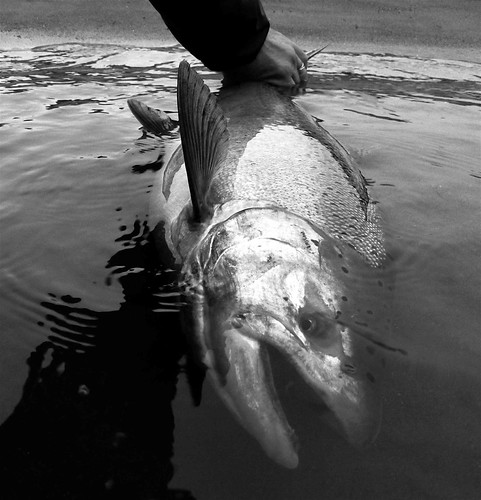
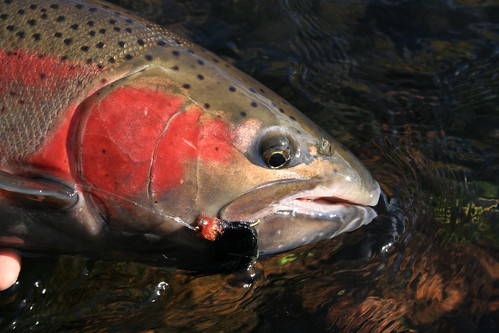
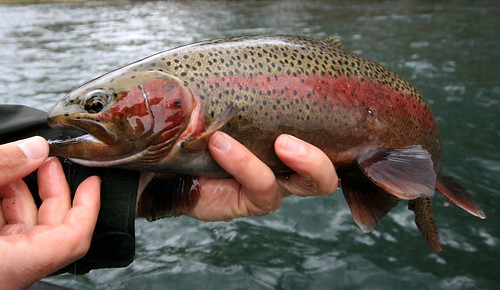
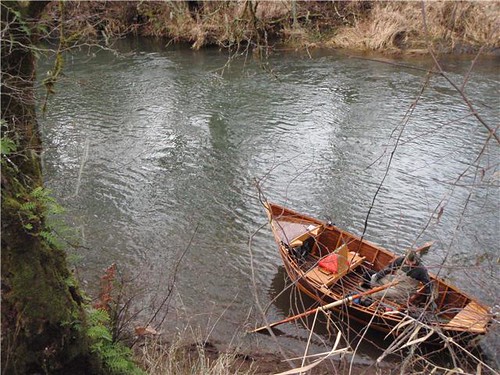
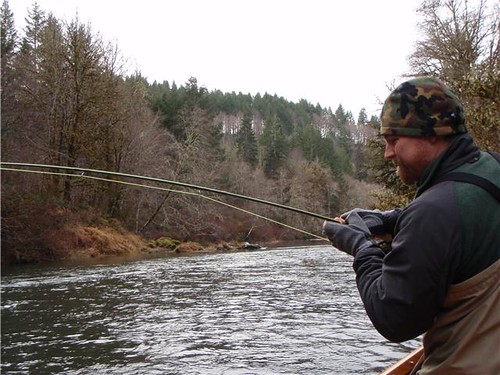
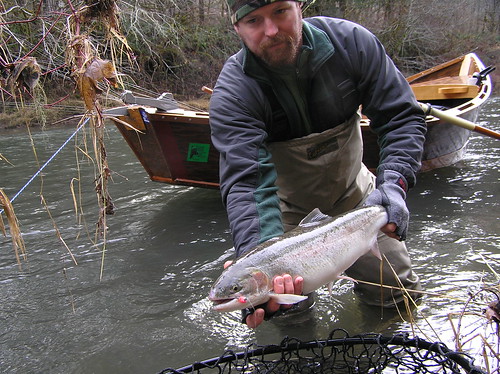
Over the holidays, Santa gave me a new Canon Waterproof camera. And this weekend, I got to put it to good use. I also followed my New Year’s resolution, which was to fish local for winter steelhead. The water was a little high and off color, but still gave up some nice fish with persistence.

Oregon Winter Steelhead Fishing

Oregon Winter Steelhead Fishing

IMG_0651

Oregon Winter Steelhead Fishing

Oregon Winter Steelhead Fishing

-MS

Posted in Fishing Porn, Oregon Winter Steelhead Fishing | 6 Comments

Oregon Fly Fishing Blog: Best of 2009

This is the Oregon Fly Fishing Blog Best of 2009. What were the top ten most important events, blog posts, conservation issues and fly fishing products of 2009? Check out our list:

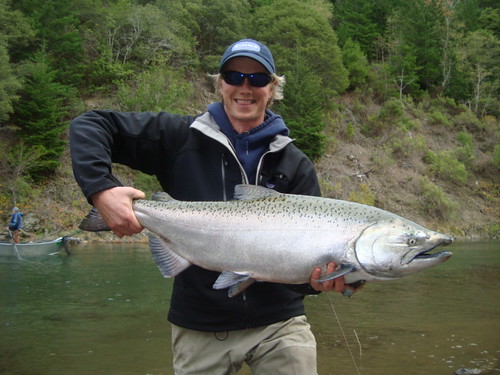
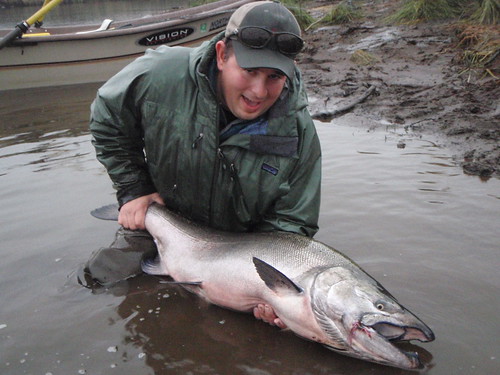
10. Huge chinook on the fly: Despite a dismal chinook salmon return this year, Oregon Fly Fishing Blog went Salmon Crazy. Comets were the name of the game.

oregon coast salmon

Salmon on the fly by Rob Russell

Jay Nicholas Elk Salmon

9. Skagit Master tell all. Cap’n Jeff Mishler tells the true story of Northwest Steelhead visionary Ed Ward. As a complement to that, Rob Russell laid out step-by-step instructions on how to tie steelhead intruders.

tying intruder flies

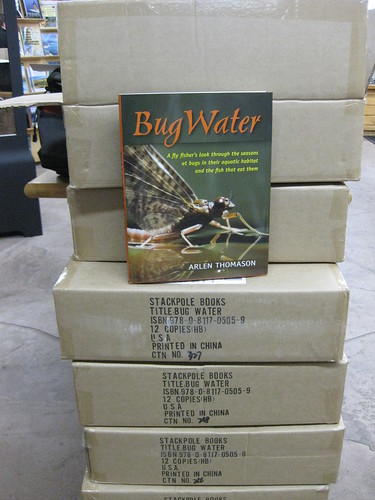
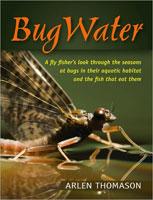
8. A fly fishing entomology book in Eugene, Oregon’s backyard Arlen Thomason and Stackpole Books published Bugwater. This is the most exciting and revelatory book on the behavior of aquatic insects we have ever seen.

Bugwater by Arlen Thomason

7. Second Annual McKenzie River Two-Fly. The Caddis Fly Shop. Trout Unlimited and a host of local guides banded together to raise $4000 for McKenzie River Trust’s habitat improvement projects during last October’s McKenzie Two-Fly Tournament. But the real show stopper was Jeff Carr’s team, bringing in three trout from the Lower McKenzie River, measuring a total 54″ — that will be hard to beat.

6. Hareline Dubbin launches the Oregon Fly Fishing Blog Fly Tying Contest. Hareline Dubbin has sponsored three fly tying contests so far through the blog. Summer Steelhead Patterns, October Caddis and patterns using the UniBobber. What’s in store for 2010 contests? Find out soon.

IMG_2013

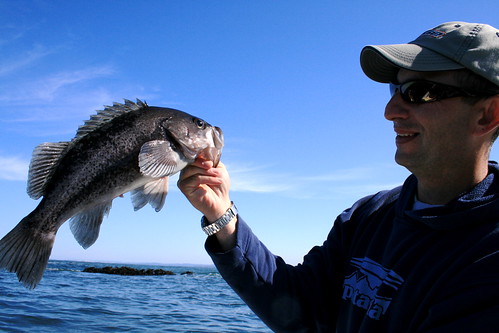
5. Saltwater fly fishing on the Oregon Coast: We spent a lot of time in the saltwater in 2009, exploring Oregon’s ocean rockfish, salmon and offshore fisheries. Cap’n Nate has hooked sharks too big to land. We’ve stripped clousers through surface baitballs and caught salmon on top. We’ve seen some of the weird and beautiful bottomfish on the West Coast. All on the fly.

Oregon Fishing Bottomfish

4. Jay Nicholas’ Fly Fishing Glossary: We’re lucky enough to have our good friend Jay Nicholas writing for Oregon Fly Fishing Blog, and his ongoing humor column, Jay’s Dark Side Fly Fishing Glossary, is one of his greatest contributions. If you can’t get enough of Jay, check out his new blog Fishing With Jay.

3. Speaking of Jay… The North Umpqua Wild Steelhead Q&A: This monster interview with Jay Nicholas on the biological and cultural significance of the North Umpqua Wild Winter Steelhead is one of the most important documents we’ve ever published. Hands down, a must-read for any student of Oregon’s fishery issues.

2. Record breaking numbers of steelhead on the Deschutes: 2009 had a record-breaking run of summer steelhead on the Deschutes. Oregon fly guides Jeff Hickman and Ethan Nickel kept us up to date on the action.

Deschutes River Fall Steelhead

1. Standing up for McKenzie River Redside Rainbow Trout. The McKenzie River’s native strain of rainbow trout are some of the biggest, baddest rainbows around. Centuries of evolution developed a fish adapted to whitewater, coexistence with voracious bull trout, and ping-pong ball sized prey (Green McKenzie Caddis, Golden Stones, Green Drakes, Etc). These are the greatest trout in the Lower 48, uniquely adapted to about 80 miles of the McKenzie River.

McKenzie River Rainbows

For the past several decades, ODFW has been planting 8-inch hatchery pukes on top of these amazing fish and have created what our district biologist Jeff Ziller has called a “Sacrifice Zone” covering 42 miles of river. While a funding-strapped state bureaucracy and a handful of hatchery trout collectors (i.e. guides) are fine with wiping out our native trout in over half its range for short term benefit, the public is not. The McKenzie’s native trout advocates made progress in 2009 in that at least we’re being heard. 2010 is going to be even bigger.

What’s on your top ten list from 2009?
-MS

Posted in Oregon Conservation News, Oregon fly fishing links | 4 Comments

Arlen Thomason’s Bugwater is in; Book signing Thurs 3-6

We’ve got a huge stack of Arlen Thomason’s Bugwater in the shop today, and Arlen will be on hand to sign books at The Caddis Fly from 3pm-6pm tomorrow. Read Bugwater review here.

Bugwater by Arlen Thomason

Posted in Fly Fishing Books, Shop Sales and Specials | 1 Comment

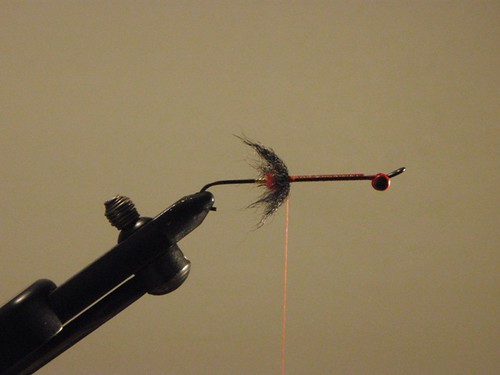
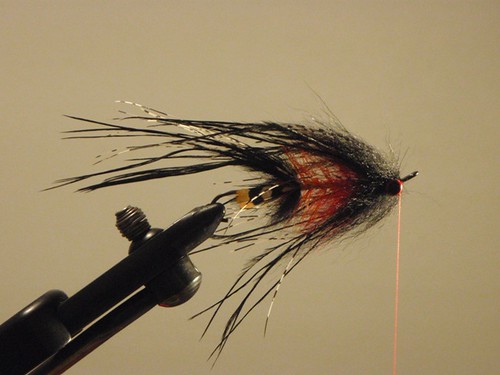
Tying Shank-style Intruders

get-attachment-1.aspx

Intruders can be tied on tubes or on hook shanks (or on any wire shank that fits the purpose). The extra steps, materials, and rigging techniques required to tie and fish shank-style Intruders make them highly impractical compared with tubes. So why would anyone bother to tie on shanks? I can come up with some weak arguments regarding the practicality of shank-style Intruders, but they are not terribly convincing, even to me. Call it inertia or nostalgia, but my preference for shanks is most likely based in my lack of experience. It’s only been one year since I took the plunge (see Intruder Alert) and I still have the exuberance of a newbie. But I love the way they fish, in spite of the extra effort they require.

Thankfully, the most important techniques outlined here will work on tubes without much, if any, translation. So here’s my first attempt at sharing the steps and details that were first gifted to me by my friend and mentor, Monte Ward.

Special Tools
Besides your vise, bobbin and scissors, here are the basic tools you’ll need:

Dubbing loop tool, heavy
Toothbrush
Needle-nose pliers
Hook file

Materials
Gearing up for Intruders can cost hundreds, even thousands of dollars if you intend to prepare for every potential variation and color combination. But over the last year, through considerable trial and evolution, I’ve developed a basic Intruder that embodies all of my favorite attributes with materials that can be found at most fly shops. Here’s what you’ll need to get started:

6/0 UNI-Thread, red
Partridge 45mm Waddington shanks
Lead eyes (small, medium or large, depending on application)
Holographic tinsel, large
30# Maxima monofilament
Florescent orange or red chenille, medium
Eumer arctic fox tail, 2XL, in red and black
Jungle cock cape (nails if you don’t have a cape)
Ostrich herl, black
Lady Amherst pheasant tail, matched pair (left and right handed)
Copper wire, small
Saddle hackle, hot orange
Grizzly hackle neck

Steps

1) Prepare your shank: I use a highly modified Waddington shank. The way I prepare these requires that the shanks are not hard-tempered—they need to be soft enough to be bent, clipped and filed without breaking. Gently bend the longest end of the Waddington until it sticks out at about 45 degrees from the main shank. Clip the long end to ¼” and file it smooth. Using your pliers, bend it back to its original position. Straighten the other end of the Waddington—huge pain in the ass—then put a tight hook-bend on it to fit in your vise.
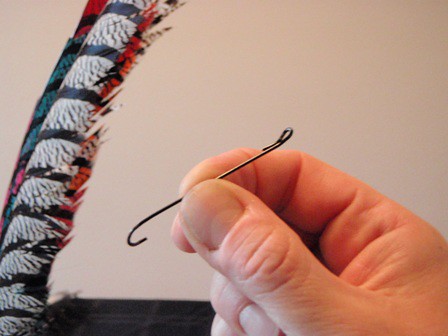
intruder fly tying

Monte makes his shanks from piano wire. Others use long-shanked hooks which they later clip and file. Use any hook or shank that fits your needs.

2) Add eyes, tag & mono loop: Tie in lead eyes underneath the shank, close to the eye, leaving enough space for a standard thread head. Wind the thread back 1 ¾” and tie in holographic tinsel. Build a thin layer of thread over ¼” of the shank, then wrap tinsel tightly over the thread to create a tag. It’s important for the tag to taper slightly, getting thicker toward the front of the fly.

Clip off a 5” section of 30# monofilament and put a hard bend in the middle. Use this to tie in a small mono loop, about 1/8” long, then wrap thread over the mono all the way up the shank to the lead eyes. Clip off ends, and wrap thread to the back. Bend the mono pool forward so that it sticks up at a 45% angle to the shank. Your tippet will go through this when you rig the fly.
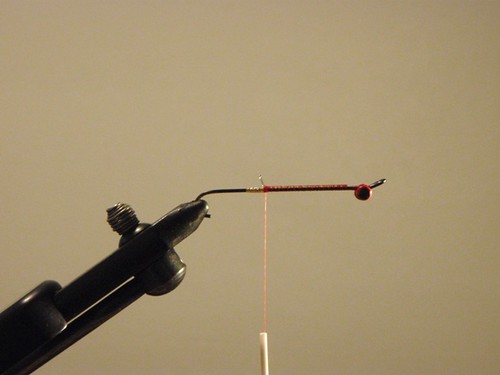
get-attachment-3.aspx

3) Create the butt of the fly: Tie in two wraps of chenille, one behind and one in front of your mono loop. Keep them tight, trim and tie off.

Next comes the first of six dubbing loops that make this Intruder such a time-consuming fly. Tie off a loop of about 6” of thread, creating a 3” dubbing loop. Lightly wax the loop. Cut a small bunch of black arctic fox tail. Remove the guard hairs and trim to 1” long. Insert the fox fur into the dubbing loop such that the tip-end is slightly longer than the butt end, then spin it up. Once tightly spun, the fur will be clumped up badly. Brush vigorously with the toothbrush, forwards, backwards, and from all angles. After a minute or so of brushing, you’ll see that each strand of fur is cleanly separated and ready to be turned onto the shank. Fold and wrap tightly, keeping each turn as tight as possible to the previous turn. Tie off neatly and brush the finished “hackle” of fur forward, back, and forward again until it stands up straight. Wet your fingers and pull the fur hackle back so it is out of the way.
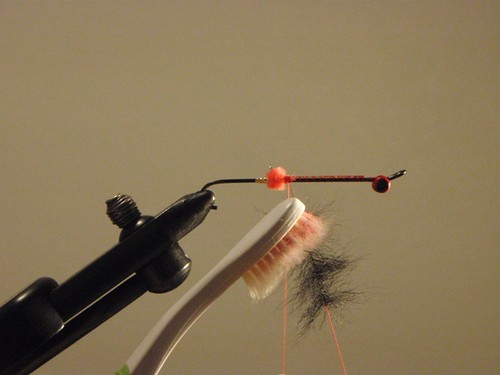
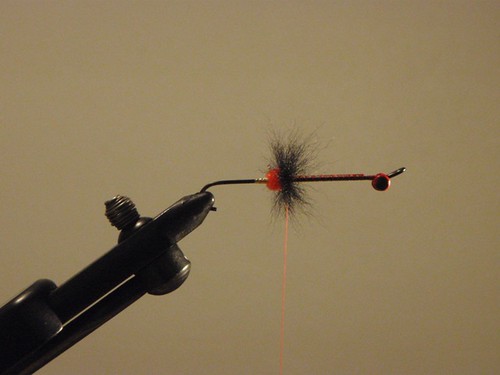
get-attachment-4.aspx

get-attachment.aspx

get-attachment-1.aspx

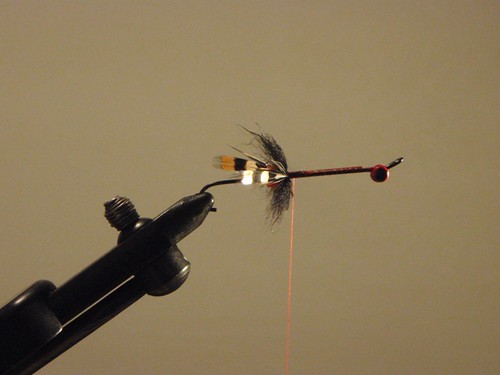
Tie in the “eyes” of the Intruder. These are jungle cock feathers tied in over the fur hackle so they flare out at roughly 45-degrees. Look at the fly from behind. If you’ve done this step correctly, the eyes should be staring at you.
get-attachment-2.aspx

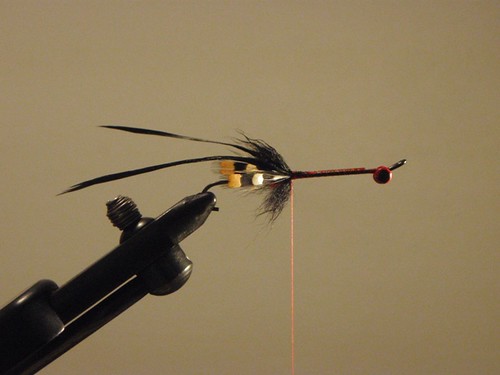
Clip six strands of 2 ½” to 3”black ostrich herl. Pinch them between your thumb and index finger, holding the butt end. Wet your other hand and slick the ostrich fibers together, then tie in over one of the eyes. Repeat on the other side.
get-attachment-3.aspx

Clip five strands of Lady Amherst tail fibers, same length as the ostrich, and tie over the ostrich on one side. Clip five identical strands from the other of your matched pair of tail feathers and tie in. The idea here is for the natural curve of the fibers to be symmetrical on the left and right of the fly. The fish probably don’t care about this, but I do.

Wet all the fibers and slick back so they are out of the way.

get-attachment-4.aspx

4) The body: Most of the time I just wrap holo-tinsel from the butt to the thorax. Keep it simple. But a palmered saddle hackle looks super sweet, so when I’m on a roll and feeling like blowing another 10 minutes on a fly that is already gonna take an hour and a half, I go for it. Just tie in a few inches of copper wire at the back, holo-tinsel the body with tight enough wraps to mold the tinsel to the body, and wrap a nice hot orange saddle feather from front to back, counter wrapping the copper wire to lock it all down.

get-attachment.aspx

5) Wow, you’re halfway there! Now let’s get serious about dubbing loops for the next 30 minutes—or the next hour, depending on how things go…

Heart of the fly
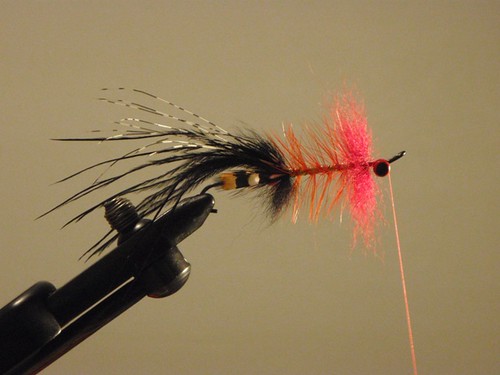
Your next dubbing loop is going to create the live, beating heart of your kick-ass new Intruder. You could pick any color or material for this, but since you’re following my personal pattern, you should try hot orange or red arctic fox tail. Clip a generous chunk of red arctic fox, about 1 ¼” long. Remove the guard hairs, and dub in a nice big loop. Before you spin it up, make sure the fur is spaced out nicely, evenly, and that the tip ends are slightly longer than the butt ends. Spin tightly, then brush the living shit out of it until the core diameter is barely thicker than spun thread—in other words, pick out every tangled strand of fur until your dubbing loop resembles a hackle. Wrap the fur as tightly as possible, folding and wrapping, with each wrap pulling snug to the wrap before. You’re getting the idea that these dubbing loops are different from the others you’ve done. Here you are creating a base that will hold the shape of your Intruder when it swims through strong currents.

Once a fox tail dubbing loop is tied off, it needs more brushing. This step has been the source of much ridicule for me among my closest friends. In an already geeky world of steelheaders, I am endowed with the distinction of the “brusher of dollies.”

“Oh, that’s just Rob, brushing his little dollies,” they say. But it’s the only way to hackle arctic fox, or any other dubbing. The more you brush, the better the fly turns out.
intruder fly tying

Your Intruder’s heart can also be made with spun deer hair of the same color. This creates a formidable flare, and adds buoyancy, in case you prefer a lighter fly. I’ve heard stories about the use of polar bear body fur for this step. Apparently it hackled quite nicely in a dubbing loop. I wouldn’t know anything about that.

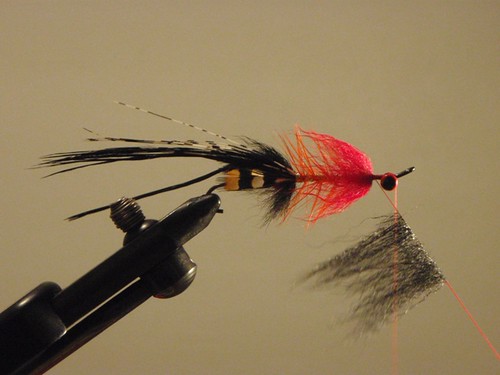
Okay, let’s burn to the finish line. You’ve got these super-tight dubbing loops down. Cut a small chunk of 1 1/2” black fox tail. Pull all the guard hairs, space out nicely, spin and brush. Fold and wrap. Brush some more, backward and forward, then slick back out of the way for the next one.
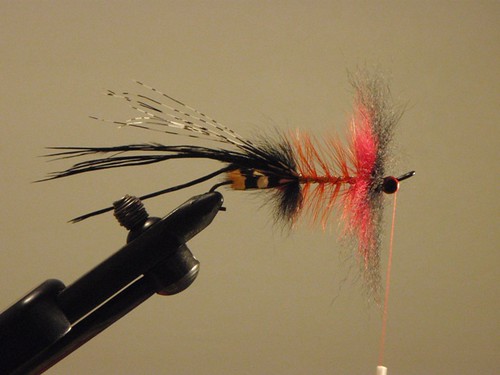
intruder fly tying

intruder fly tying

Your next dubbing loop is going to be a little weird. Wax the thread loop, then cut a ½” section of Lady Amherst pheasant tail fibers from a tail feather. They should be nice and long, like the ones you used at the back. Place them in the dubbing loop, pull the dubbing tool tight, and place your index finger under the tail fibers. Holding it all tightly, separate the fibers with a bodkin, or with your scissors. The pressure of your fingers will hold them in place as you spread out the fibers until they expand to twice their original width—about 3/4.”
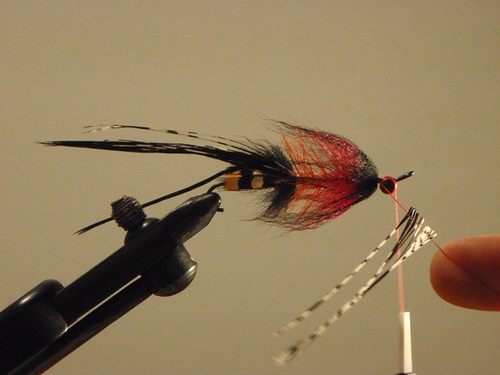
intruder fly tying

Now, the only way this is going to spin up is if you keep tension on it. If you give it a hint of slack it will drop out and you’ll have to start over. So keep tension, pinch the base of the loop with your free hand, and spin the dubbing loop tool with the other hand. When the thread is spun really tight, release your pinch, and let the Lady Amherst spin. This is how you spin long feather fibers. Pinch, spin, release. As long as your fibers were lined up properly, the fibers will spin up beautifully, creating the coolest hackle you’ve ever seen. Brush if needed, then hackle with tight wraps and tie off.

intruder fly tying

Cut a ¾” section of black ostrich herl, the same length as used in the back—2 ½” to 3.” Use a dubbing loop to hackle the herl, as in the previous step. Once hackled, wet and slick back.

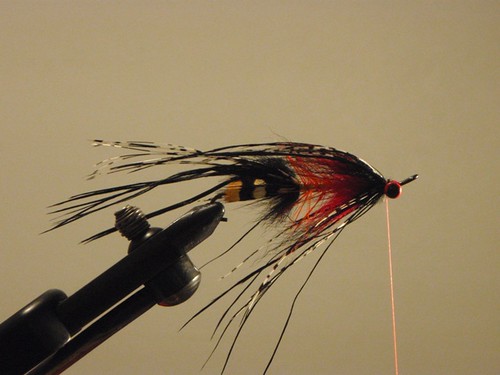
Tying intruder style flies

Tying intruder style flies

At this point, you want to have only a tiny gap between your last hackle and the lead eyes. Your final dubbing loop will be a 1” section of black fox tail, spun, brushed, folded and wrapped in a figure-eight over the eyes, then tied off tightly.
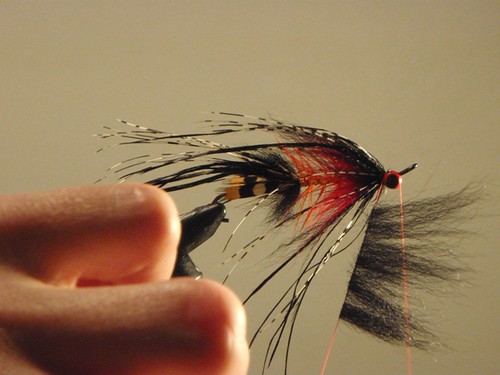
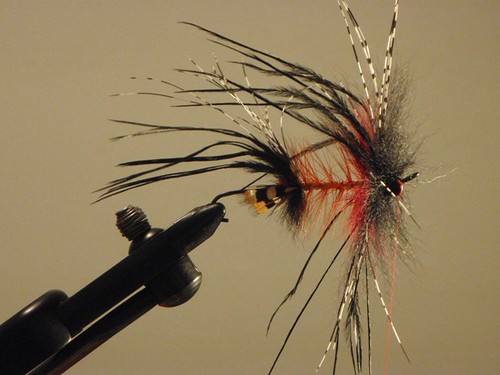
Tying intruder style flies

Tying intruder style flies

Tying intruder style flies

6) Wings: Many people are comfortable tying in their hackle tips and finishing their fly quickly. I was taught to tie flies that last. And Intruders are a special breed of steelhead fly that can last for years, catching dozens of fish. If they are tied with care.

So we’re going to tie these wings in…in reverse. This sucks. The feathers are unruly, requiring some trial-and-error. Take them one at a time, and carefully tent a pair of 2 ½” grizzly hackle tips as wings. If they aren’t right, start over. You’ve devoted a lot of time to this fly, so another five minutes is warranted to get it right.
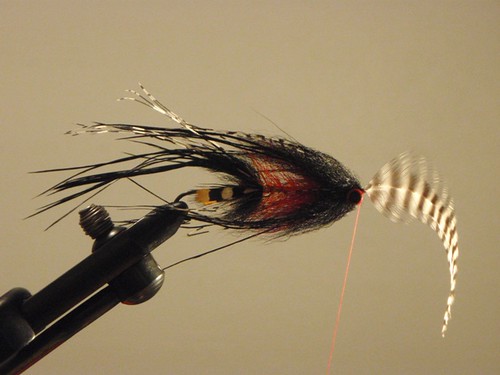
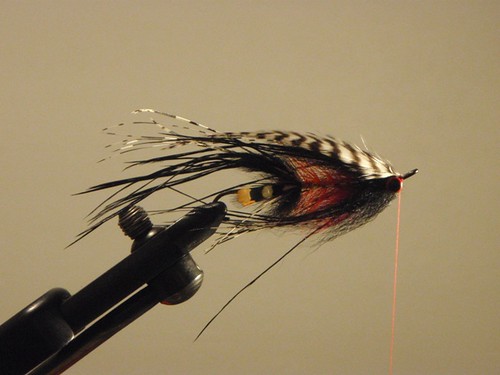
tying intruder flies

tying intruder flies

Give the fly two six-wrap whip-finishes and varnish with super glue.
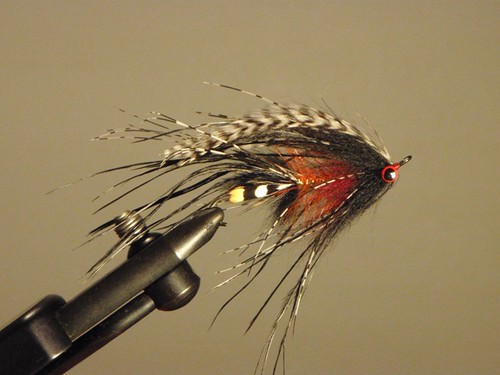
tying intruder flies

Once the varnish is completely dry, remove the fly from the vise. Pull the rear-end materials back and hold them so that the hook-bend is clear of all fibers. Clip with your needle-nose pliers’ wire cutters, about 1/8” past where the holo-tinsel tag ends. Don’t let go. Take your hook file and file the end of the wire smooth.

7) The Bowl Test: As Ed demonstrates in Skagit Master, the final step to tying an Intruder is putting it in the water. Cut a section of 10- or 12-pound mono, tie on the fly, and submerge it in a big bowl of water. Soak the fly, then pull the line in a figure-eight. If your loops were tight, if you brushed enough, you’ll have a living creature swimming around in the bowl. Nice work!

tying intruder flies

8) Rigging: Shank-style Intruders require short sections of narrow tubing for their final rigging. The tippet runs through the eye of the hook, through the small mono loop at the back of the fly, then through a 3/8” section of tubing. A hook is tied on at the end, and the tubing is pushed onto the post at the back end of the fly. The final step is to pull the tippet tight and position the hook so it rides upside down as it swings.

Conclusion

Intruders tied in this way present a large, undulating profile, full of contrast, with bold eyes staring back at the fish.
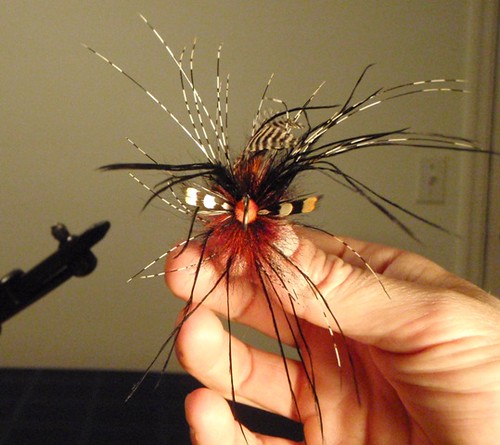
tying intruder flies

They elicit a response from steelhead that I can only describe as “predatory.” Listen to Ed in Skagit Master—he says it all. It’s all about the grab!–RR

Posted in Fly Tying | 27 Comments

Alsea River Report: Christmas Break Steelhead

The only thing I miss about being a student those many years ago are the vacations.   A couple weeks around Christmas, Spring Break-and don’t even get me started on the summer.   Now I  consider myself  lucky to have the week between Xmas and New Year’s.  I live for this week.  So when I saw the forecast, I wasn’t daunted.  “Rain with 60% chance of freezing rain.”  Hmmm, sounds like winter steelheading.  With only passing thoughts of how nasty Mary’s Peak might be (Hey, that’s what 4x4s and engine braking are for, right?)  I threw the rest of my gear in the truck.

I picked up Rob Russell pre-dawn and he wondered how I thought conditions might be . . .  .  Despite being one of the best steelheaders I know, Rob hadn’t fished the Alsea much.  “Perfect . . .  of course, I always think it’s going to be perfect.”  The drive was almost perfect, (we might have fishtailed a little), and soon enough we were slipping the boat into the waters of the Alsea River.  The water was an ideal level and approaching that pefect shade of steelhead green but was just barely on the slate side of the color spectrum :

Alsea River

I started on the sticks as Rob fished from the front of the boat.   Soon we anchored in a productive area and Rob’s float slipped under the surface in the bottom end of the run.   A chrome six poundish steelhead put on an aerial display for the ages and what that fish lacked in size he more than made up for in spunk.  As Rob tailed the fish, I heard him yell “native” and before I could even get a shot, the sleek steelhead was freed and on his way, hopefully to father many smolts.

With Rob having scored a fish, I grabbed my fly rod moved up front. We ran my indicator rig through all the fishy looking spots I could reach and sure enough my thingmabobber plunged under.  A hatchery hen had eaten my lowly glowly.  Now, I’ve heard it said that fishing isn’t a matter of life or death, it’s much more important than that and my face bears this truism out:

Fighting an Alsea River Winter Steelhead

Hey, she wasn’t the prettiest girl at the dance but she was the one that bit me–and I am happy she did:

Fly Caught Alsea River Winter Steelhead

As the day went on, the river cleared and was a perfect shade of steelhead green.  We marveled at the amount of spawing gravel, spotted plenty of redds and an elk forde and admired all the diverse  fishable water this nice, intimate, productive little river offers.  We hoped to stumble upon a pod of fish but that never happened.  Instead, there are fish around, scattered thoughout the river.

The levels should be good through tommorrow on many coastal watersheds. If you can, seize your vacation.–KM

Posted in Coastal Steelhead Fishing, Fishing Reports, Oregon Winter Steelhead Fishing | 6 Comments

Great Lakes Winter Steelhead report: Ohio’s Lake Erie Tribs

After spending the better part of a week breaking through ice to free up fishing spots and packing in leftover holiday ham to help overcome the cold and snow I’m taking a break! The winter steelhead run is in full swing in Ohio and ice and cold are just part of the program. Fishing the tributaries off the main river systems near Cleveland means tiny water, urban decay, and lots of big fish.

Cleveland Steelhead

Ice

The scene is something out of a Pacific Northwest steelheader’s nightmare. Under graffiti covered bridges and around other remnants of the industrial age is where your will find your quarry. You get used to the constant sounds of the bridges coming apart as the ice relents in the warmth of the day(+/-30 degrees) and fall to the slush and gravel below.

Release

Small flies are key as the river temps are freezing and light tippets (so light I cannot mention) are the name of the game. This is what I would imagine the tail water fisherman feel like in the Rockies in the winter.

fishw

Sound weird? Well it is. The good kind of weird though. Like giving your grandfather the 2010 Women in Waders Calendar for Christmas. Happy Holidays!

Ohio Holiday
-NS

Posted in Fly Fishing Travel | 4 Comments

Jay Nicholas’ Salmon Fisher’s Journal: Great Grabs

October 28, 2008 — Ed and I were fishing the River Styx. A slow day, as far as fishing goes. Only a few Chinook were showing, no grabs, and now the tide had turned in, sweeping leaves, twigs, logs, lawn-clippings, plastic water bottles, Styrofoam bait tubs, strings of kelp, and all sorts of unidentifiable junk past our anchor point.

Basically, the river transformed from highly fishable to – not-a-hope-in-the-world.

Not willing to give up on the day, as normal humans would have, we pulled into the lee of a tree, where the main tidal flow swept past us, leaving a debris-clear, if dirty water, area where we could at least pretend to fish.

For the umpteenth time, Ed asked about the fly lines we were fishing, about sink rates of our respective lines, and why-on-earth my line had one of those silly loop-to-loop connections that seemed engineered to hang up in my guides just when it shouldn’t.

I stood there in the pram, patiently explaining the difference between an integrated-head versus a shooting-head fly line. Doing the show-and-tell thing, I reeled the shooting head nearly into the reel and held it in the palm of my right hand, displaying the loop-to-loop connection between head and running line. To keep the instructional moment manageable, I then reached out and grasped the shooting head in my left hand.

Do the math.

I had ten feet of the shooting head within the guides and ten feet from the tip-top to where I held the line in my left hand. All that remained was ten feet of shooting head and nine feet of leader dangling in brownish water down-current from the boat.

I gave the lecture. Ed pretended to listen. A frequently repeated ritual. The tide brought new treasures past our anchor point.

About half-way through the lecture my concentration was interrupted by a steady yank, yank, yank of my left hand. Shortly thereafter, my brain received the message: “hello Jay, a salmon is eating your fly.”

Jay Nicholas' Great Grabs

End of lecture. I made a big sweeping pull with my left arm to set the hook. Mr. salmon answered with that wonderful head shake and the fight was on.

Go figure. I still love to make 90-foot casts, and do so regularly, just to remind myself that I can. But sometimes, it’s the close hang-downs that deliver the grab.

Jay Nicholas' Great Grabs

Jay Nicholas' Great Grabs

JN

Posted in Oregon Salmon fly fishing | 1 Comment

Bugwater by Arlen Thomason

Bugwater is the most exciting and revelatory book on the behavior of aquatic insects I have ever seen. Arlen’s photography rivals that of Ted Fauceglia, with special emphasis on capturing characteristic behaviors in the wild. I can only imagine the painstaking effort that has gone into this collection of images. But Arlen brings much more to Bugwater than ground-breaking photography. He’s a storyteller in the best sense of the word. He intuitively crafts his chapters in a way that grabs the reader, assuming the reader is serious about trout fishing. Arlen is obviously a dedicated fly-fisherman, and his analytic brain knows what questions to ask, and how to go about finding answers.

bugwater

Rick Hafele, Oregon’s best-known entomologist and author, comments: “Dave and I took a trip last spring to see Arlen and check out his photographic process. We expected to see a new approach, given the incredible photographs we’d seen. We were kind of surprised to find that he was doing basically the same stuff we were, but with exceptional results. He has an eye for artistic composition, that’s for sure. But I think what comes through most is his dedication and commitment to spending the hours necessary to make important observations and record them.”

Rick relates a story about Arlen staying up all night for multiple nights in order to witness and photograph October caddis hatches. “His wife would come down and check in on him every so often. But Arlen stuck with those bugs all night. He not only got the shots, but he learned that there was no predictability to the hatch.”

Dave Hughes adds, “Part of it is how close he gets to the insects. Just beautiful, if you like bugs. But, more importantly, he pays special attention to subtle behavioral details and presents unique spins on how these details translate to fishing.”

In addition to his bug work, Arlen is leading a committee within the McKenzie Flyfishers to thoroughly investigate the impacts of hatchery trout on wild McKenzie redsides. Many anglers here in Eugene are excited to have him on the case. He brings a scientific mind to the important questions surrounding the issue, and is committed to uncovering the answers. The committee’s findings will inform the club’s decision this coming spring whether to back the grass-roots movement now underway to reduce put-and-take trout planting on the McKenzie.

Autographed copies of Bugwater will be available at the Caddis Fly starting December 31st. We have Arlen scheduled to sign his new book from 3-6pm and the shop is taking preorders now.–RR

Happy Holidays!

Posted in Fly Fishing Books | 6 Comments

Oregon Early Winter Steelhead Report

Rob Lewis sends us this report from his fishing late this past week. We have a break in the wet weather.Look for coastal rivers to drop. Winter Steelhead conditions should be ideal this week.–CD

Hi Chris just a quick report! Fished the Alsea the 18th Friday. The day started out at Clemens park, we fsihed all the usual places to no avail. Switched it up went down stream saw fish moving but no biters! The water was a little dirtier too. We went back to Clemens for the after noon bite, And finally managed a 30in Hatchery hen! I was fishing a Sage 11 foot 7wt z-axis switch rod using lowley glowley in pink and a thingamagigger bobber! Simply deadly!

Rob Lewis Winter Steelhead


Posted in Coastal Steelhead Fishing, Oregon Winter Steelhead Fishing | 6 Comments

December on the Middle Fork Willamette

Some time ago I argued  that Oregon has the best year around angling of any state in the U.S. period.  It’s still true.  As the eastern half of the United States tried to dig itself out from a blizzard, Greg Hatten and I decided to float the Middle Fork of the Willamette River from Oakridge to Black Canyon in pursuit of native rainbows.  We had wanted to chase steelhead on the coast but the forecast was 100% chance of rain with our coastal rivers rising fast and so we decided instead to use Hills Creek dam to our best advantage.

I thought for sure that the trout would want something smallish and I spent Saturday tying #14 flash back pheasant tails, prince nymphs, copper johns and a few BWO adults but I was wrong.  The fish ate Mega-princes. Go figure.  Now, the fishing wasn’t red hot or anything but we caught a couple nice healthy wild rainbows.  Not a bad way to spend a December day.–KM

Posted in Fishing Porn, Middle Fork Willamette River fishing | 5 Comments

Brian O’Keefe Mexico Bass Trip

Brian O’Keefe sends us this photo report from his most recent trip to Mexico.

Take a break and check out a fun, good weather, good food, trip. These
photo collections are from Lake Mateos and Lake El Salto in Mexico, a
couple hours east of Mazatlan.

I went with www.anglingonthefly.com and stayed with www.anglersinn.com

If you need a break from the weather…

Happy Holidays – Feliz Navidad

Brian O
Mexico_Bass_-_Mateos_&_El_Salto_Lodges

Mexico_Bass_-_FISH!!

Mexico_Bass_-_bass_fishing_!!

Mexico_Bass_-_Birds

Posted in Fly Fishing Travel | 1 Comment

Fish and Wildlife Service proposes reintroduction of bull trout into Clackamas River

From the US Fish and Wildlife Service: As part of a broad effort to recover the threatened bull trout, the Fish and Wildlife Service proposed today to reintroduce this native fish species to the upper Clackamas River. A public comment period on the proposal is open until February 8, 2010. The Oregon Department of Fish and Wildlife and U.S. Forest Service are cooperators in the proposed project.

The reintroduced fish would be designated as a “nonessential experimental” population, under the Endangered Species Act. This classification precludes anyone who accidentally kills or harms the fish from being in violation of the law, provided that this happens as part of an otherwise lawful activity. Federal projects will not be altered or stopped to protect these fish, and sport fishing in accordance with Oregon regulations would not result in a violation of the Endangered Species Act if a bull trout was harmed.

“For thousands of years bull trout were present in the Clackamas River,” said Robyn Thorson, regional director of the Fish and Wildlife Service. “After evolving there and existing all that time they were eliminated by human activities; reintroducing them will provide another solid step in our recovery strategy for the species.”

The boundaries of the proposed experimental nonessential population would include the entire Clackamas River as well as the Willamette River from Willamette Falls downstream to where it meets the Columbia River, including Multnomah Channel. Recent surveys have determined that bull trout currently do not exist in the area, and it is thought highly unlikely that they could re-colonize the area on their own due to geographic distance to other existing bull trout populations.

The last documented bull trout observation in the Clackamas River drainage was in 1963. Their elimination was likely caused by many of the same factors that led to the decline of the bull trout across its range, including migration barriers from hydroelectric and diversion dams, direct and incidental harvest in sport and commercial fisheries, targeted eradication through bounty fisheries, and habitat and water quality degradation from forest management and agricultural activities not in accordance with best management practices.

A detailed feasibility assessment completed by the agencies in 2007 determined that this reintroduction is biologically possible. The best candidate for bull trout donor stock was found to be the Metolius River, a tributary of the Deschutes River in central Oregon.

If a public hearing request is received on this proposal, in writing, within 45 days of the proposal’s publication in the Federal Register, one will be held at a location and time to be determined. If a hearing is to be held, it will be publicized on the USFWS Bull Trout Reintroduction Page.

We are also seeking comment on the draft environmental assessment (EA), prepared under the National Environmental Policy Act, which analyzes the potential environmental impacts associated with the proposed reintroduction. The draft EA can be viewed on the internet at this link.

Bull trout are protected as a threatened species under the Federal Endangered Species Act throughout their U.S. range, which includes parts of Oregon, Washington, Idaho, Montana and Nevada. The draft recovery strategy for bull trout was developed over a three-year period with involvement from more than 120 stakeholder states, tribes, watershed councils, and representatives of industry and conservation groups.

Bull trout are members of the char subgroup of the salmon family, which also includes the Dolly Varden, lake trout, and Arctic char. They can grow to more than 30 pounds in lakes, but in streams rarely exceed 4 pounds. They have small, pale yellow to crimson spots on a darker background, which ranges from olive green to brown above, fading to white on the belly. Historically bull trout occurred throughout the Columbia River Basin, east to western Montana, south to the Jarbidge River in northern Nevada, the Klamath Basin in Oregon, the McCloud River in California and north to Alberta, British Columbia, and possibly southeastern Alaska. Today bull trout are still widely distributed but they have declined in overall distribution and abundance. Small bull trout eat terrestrial and aquatic insects but shift to preying on other fish as they grow larger.

FAQs:
Q. Why choose the Clackamas River for this proposal?
The Clackamas was considered for reintroduction even before the bull trout was listed as threatened, in years of discussion between the Forest Service and Oregon Department of Fish and Wildlife. With these two key partners already exploring the possibility, and the need expressed in the bull trout recovery plan, it was logical to continue exploring the idea. There are other appropriate locations for bull trout reintroduction, and accomplishing this reintroduction will gain knowledge and experience that can be applied elsewhere. From the bull trout’s perspective, the Clackamas is a good candidate because bull trout haven’t been documented there since about 1963; the factors which caused them to disappear have been remedied, and about 70 miles of the upper river and tributaries contain suitable habitat for bull trout spawning and rearing.

Q. How can a “nonessential” population contribute to recovery?
A nonessential experimental population would contribute to the recovery of the bull trout in the Willamette Basin, but it is not essential to the survival of the species in the wild. The designation allows for greater flexibility in managing other land uses and human activities, without the usual level of protections being given to individuals of the reintroduced species. The designation of nonessential experimental populations [through Section 10(j)] was added to the Endangered Species Act in 1982 by Congress in order to increase the public’s tolerance for putting a protected species back into an area where it had been previously.

Q. Would the agencies later want to change the nonessential population to an “essential” designation?
It is not likely that the Fish and Wildlife Service would propose to change the nonessential experimental population classification. Any changes that might become necessary would occur in cooperation with the State of Oregon and other affected parties and would require another federal rule-making process. The only likely change would be if the species recovers and is removed from the list of threatened and endangered species, in which case the “nonessential experimental population” designation would be eliminated as part of the delisting.

Q. Would bull trout negatively impact salmon and steelhead in the Clackamas River?
A. Like many other native fish in the Clackamas River, bull trout will eat juvenile salmon and steelhead. They also will eat other fish which would have eaten juvenile salmon and steelhead. These predator/prey dynamics are complex, and despite the fact these species evolved together, it is uncertain whether bull trout would have a negative, positive, or neutral effect on today’s salmon and steelhead populations. Because of this, the agencies are seeking to understand the potential impacts before making the decision to propose the reintroduction. A panel of expert scientists met in July 2008 to investigate potential bull trout effects on salmon and steelhead in the Clackamas River and to develop associated monitoring and management recommendations. Results from the workshop suggest the overall probability of extinction to salmon and steelhead in the Clackamas River from a successful bull trout reintroduction would be very low to moderately low. While the workshop provided an estimate of impact from expert scientists, actual baseline monitoring and evaluation in the Clackamas River prior to and following a reintroduction of bull trout would provide the data necessary to inform management options including reversing the reintroduction action if impacts are greater than anticipated

Q. Where in the Clackamas River would the fish be reintroduced?
They would be released into historical bull trout habitat in the upper Clackamas River above the confluence with the Collawash River. This reach contains the most suitable habitat for reintroductions.

Q. When might these fish be put into the Clackamas?
The reintroduction could begin in 2010 or 2011. Transfers would continue annually for the first phase of the reintroduction (approximately 7 years). Transfers of fish in phase two (years 8 through 15) would be contingent on the success of phase one.

Q. How many bull trout would be moved?
The proposed action includes the direct transfer of multiple life stages of bull trout from the Metolius River to the Clackamas River. Although current abundance of the donor stock would support more, we currently propose 30 adults, 30 subadults (more than two years old but not of reproductive age), 1,000 juveniles (age one and two years) and up to 10,000 fry annually at the onset of the project. The numbers and life stages of fish transferred annually will be linked strongly to the annual population size of the donor stock, as well as to information derived from monitoring and evaluating the success of the various life stages of the reintroduced fish over the initial years of the project.

Posted in Oregon Conservation News | 4 Comments

Short on time, order online, or call in and we will gift wrap for free.

Don’t forget our holiday party tonight December 18th from 4-8pm.

The final week is upon us and many of us have a lot going on. Finding the perfect gift for the angler is easy though. Check out caddisflyshop.com, and order online. When you choose in store pick up we will gift wrap the item automatically and you can just stop  by and pick it up. Shipped orders can also be gift wrapped, please let us know in the comments field of your order.

If you do have time we welcome you to come by  the shop and we will be happy to consult on gift ideas for the angler. Great gifts include, custom fly selections, gift certificates, new fly fishing books and DVD’s and and array of other items for the angler.  Open until 4pm on Christmas Eve, closed Christmas day, normal hours resume after Christmas day.–CD


IMG_2816

Posted in Shop Sales and Specials | 2 Comments

Sulfite Cures Kill Juvenile Salmonids, ODFW Researchers Find

Breaking news–ODFW researchers today released findings showing up to 30% mortality in juvenile salmonids that ingested sulfite cured roe. The study shows that some fish die from eating just one egg, but that others survive up to 23 days before dying. Sodium sulfite, the most popular “bite stimulant” in modern salmon cures, was clearly identified as the culprit. Early reports from the study had shown much higher mortality in rainbow trout–up to 60% from ingestion–but the final report tempers those findings.

For those who market sulfite cures, this should come as no surprise. Sodium sulfite, and its relatives sodium bisulfite and sodium metabisulfite, are all linked to cancer in laboratory animals and humans, while not officially recognized as carcinogens by the National Cancer Institute. Those who cure eggs commercially, and those who have regular contact with cures and cured eggs, know the caustic effects first hand. Eyes and lungs burn, noses bleed, and skin becomes irritated. Some people report the development of allergies after repeated exposure.

Jeff Mishler, a long time advocate for wild salmonids, instigated the study in 2008 after becoming concerned about the potential harm sulfite cures might be having on baby salmon and steelhead.

“I had heard stories of trout dying from eating cured eggs,” says Mishler. “Then one day while I was bobber fishing with my Dad, I noticed swarms of young-of-the-year steelhead pecking at our baits. Then we noticed the shoreline. Bait anglers had disposed of their old bait along the beach, creating a fuzzy pink margin along the river bank. Baby steelhead were eating them like crazy, and cutthroat hung behind waiting for an easy meal. It suddenly occurred to me that the poisons in cured eggs could be having serious impacts.”

Over the year that followed, Jeff saw this scene repeated everywhere he went. Finally, his concern demanded action, and he worked with ODFW’s research team to craft a study.

Now that this study has been released, anglers and the sportfishing industry are unsure what will happen next. Advocates for wild steelhead and salmon will work hard to spread the word, and push for a ban on sulfite cures. Debate is likely to flare, and more study will undoubtedly be call for to prolong any action.

“The smart manufacturers will simply design new cures that are not poisonous to our fish,” says Mishler. He adds, “Anglers want to do the right thing, and will undoubtedly move toward products that are safe for salmon.”

Ed Bowles, chief of fisheries at ODFW, was careful to clarify that the new study does not attempt to quantify the impact these poisonous bait cures have on fish populations. “We’re not interested in doing that research. It would be incredibly difficult and costly, and it’s not necessary,” Bowles said. “While this doesn’t appear to represent a crisis, we’ve found out that these cures present a non-targeted impact on our salmon and steelhead. Manufacturers need to adjust and get on with it.”–RR

eggcurepost

Posted in Oregon Conservation News | 14 Comments