Ah, fly fishing. The peaceful art of standing in the middle of a stream with nothing but the sound of the water rushing around you and the occasional plop of a fish jumping out of the water. It’s a sport that’s been around for centuries, and it is just as charming as you can imagine.
Fly fishing is a unique kind of fishing because you aren’t just throwing a line in the water with a hook and some smelly bait on the end, waiting for a fish to swallow it. Instead, you’re carefully mimicking the natural movement of the insects and fish that fish feed on. It takes a lot of practice and skill to get it just right, but once you do, it’s like magic.
The Caddis Fly Shop in Eugene, Oregon is a great place to ignite your passion. We offer a Beginner’s Fly Fishing class where you can learn the basics of knot tying and casting, including a roll cast, a pick up and lay down, and an overhead cast, the combination of which is enough to get you started on the right track. We also offer guided trips from boats to help you catch a dozen or more fish in one day. Plus, the guides will tell you what to use and even rig your fly rods up for you to be the most productive.
Between the beginner’s lesson and the guided trip, though, there isn’t much to fill the gap. Insert our Intermediate Fly Fishing Course. We want to teach you how to fish more effectively on your own, the Intermediate Fly Fishing Lesson to helps fill this gap. The Intermediate lesson will be held out at a spot on the river where we will start by covering advanced leader setups and rigs. For example, we will discuss how to tie and effectively cast a dry fly, a dry-dropper, and an indicator rig with various techniques. This intermediate lesson will also help to hone your basic casts in a more active section of water, then it will cover advanced techniques like water-loading, line management, and more. Throughout this lesson, we will also discuss how to approach different types of water, and how to read currents in order to locate fish. This type of class is a lot of fun and provides the capacity to thrive by preventing years of bad habits right from the start. We are getting into the best time of the year to fly fish, so let’s get out there!
—————
Call the Caddis Fly Angling Shop at 541-342-7005 to book! Three hour Intermediate Lessons will be $300 for 1 or 2 people. Flies, leaders, waders, rods and reels can be included for those who do not have their own, but feel free to bring what you have.
Deschutes River Alliance presents a rare opportunity to learn from four northwest fly fishing icons. This is an amazing opportunity to learn from four guys who are truly northwest fly fishing gurus. Read more about this event here: DRA ICONS
PORTLAND, Ore.— Resolving multiyear litigation over the harms of logging to coho salmon, conservation groups reached an agreement today with the Oregon Department of Forestry to greatly expand stream buffers across more than half a million acres of the Tillamook and Clatsop state forests. (View the full settlement agreement here).
The Center for Biological Diversity, Cascadia Wildlands and Native Fish Society brought the suit, which asserted that for years the Department had been harming threatened coho salmon — in violation of the Endangered Species Act — by hauling timber on roads hydraulically connected to streams and by logging steep slopes, which causes landslides. Both activities choke streams with fine sediments that smother coho spawning and rearing habitat and degrade water quality for people.
“For too long the timber industry has treated our state forests like cash cows, without enough protection for fish or water quality,” said Amy Atwood, senior counsel at the Center. “The protections provided by today’s agreement aren’t everything we want, but they’ll go a long way toward recovering coho salmon on Oregon’s North Coast.”
Under the agreement, no-cut stream buffers will be expanded from as little as 25 feet to 120 feet and will include many non-fish bearing and seasonal reaches that previously received little to no protection. The Department will also now buffer some upland sites where landslides start, as well as the seasonal stream channels that carry landslide debris into fish habitat, with devastating consequences.
“Logging the exceedingly steep slopes of the Tillamook and Clatsop state forests has real consequences for our beloved and iconic salmon,” said Jennifer Fairbrother, conservation director for the Native Fish Society. “While there is more to be done to improve the management of our state forests, there’s no question that these new protections will help restore fish as well as soil health, water quality and even our climate.”
The agreement also requires the Department to inventory the extensive road network on the state forests within five years to identify problems and estimate the cost to fix them. Built almost entirely for the benefit of the timber industry, there are currently more than four miles of road per square mile of state forest. These include many areas where roads are blocking fish passage, unstable, or contributing sediments directly to streams. The cost of fixing these problems likely extends into the hundreds of millions of dollars and will almost certainly fall to the public to cover.
“The current model of logging state forests to pay for essential county services and Department expenses and provide Big Timber a subsidized source of logs is archaic and unsustainable,” said Josh Laughlin, executive director of Cascadia Wildlands. “Besides not providing a stable source of county funding, the model utterly fails to protect salmon and wildlife, water quality, soil health or our climate. It is past time Oregon leaders sever the tie between clearcutting state forests and county funding and devise a more contemporary strategy to pay for critical services.”
The protections in the agreement are also proposed as part of a “habitat conservation plan.” Under the Endangered Species Act this would allow the Department to cause some harm to coho salmon, as well as marbled murrelets, spotted owls and other imperiled species, in exchange for protecting portions of the state forests from logging and roads. The Department first developed a conservation plan in 1997 but has continuously failed to finalize one. The current plan is expected to be completed this year but is facing stiff opposition from the timber industry and some county officials.
The Center for Biological Diversity, Cascadia Wildlands, and Native Fish Society were represented by Center attorney Amy Atwood and Oliver Stiefel and Maura Fahey of Crag Law Center.
The Center for Biological Diversity is a national, nonprofit conservation organization with more than 1.7 million members and online activists dedicated to the protection of endangered species and wild places.
Cascadia Wildlands defends and restores Cascadia’s wild ecosystems in the forests, in the courts, and in the streets. We envision vast old-growth forests, rivers full of wild salmon, wolves howling in the backcountry, a stable climate, and vibrant communities sustained by the unique landscapes of the Cascadia bioregion.
The Native Fish Society is a nonprofit conservation organization with a mission to restore abundant wild fish, free-flowing rivers, and thriving local communities across Oregon and the Pacific Northwest.
Let your Oregon legislator know that Fly Fishing, Fly Tying, and Fishing in general should be exempted from this Fur Ban House Bill, as it will have a negative impact on all of our businesses and all of your suppliers.
In this video Alex demonstrates how to tie the simple but killer NYAP popper. We had a chance to fish these in Brazil and the Seychelles recently and they are phenomenal to cast pop and catch fish with. The large hook acts as a keel to keep the popper upright. We sell a 3 sizes of these NYAP popper forms and it’s critical to use the prescribed hook to keep the flies fishing correctly after each strip. Bass anglers will love the 2/0 and 6/0, don’t leave home on any saltwater trip without the 6/0 and 8/0 versions.
Recent fluctuations in weather has made fishing a toss up. Some days, as of late, fishing is on and the fish are cooperating, other days things are a bit slower. It seems like spring is on its way, but the weather isn’t quite sure what it wants to do. Warmer days are bringing the hatches and great dry fly fishing we’ve all been waiting for, but the colder days have been putting a damper on good fishing.
The long awaited March Brown hatch has begun on the lower portions of our local rivers. Both March Browns and Baetis (Blue Winged Olives) will become active during the warmest part of the day. Depending on the weather, this can begin as early as 11, and wrap up as late as late afternoon as the temperature drops. I have seen a handful of Skwalas lately, and even saw some small Grannom Caddis on the lower Mckenzie that last warm Saturday we had. These spring hatches begin on the lower river where it is warmer and move their way up as the season progresses, and water in the upper stretches warms.
March Brown’s have the unique ability to shed their shuck subsurface during their ascent, so they don’t always spend a lot of time on the surface like other mayflies. This is why there are so many march brown wet fly patterns, and stinging wet flies for this specific hatch is so popular. Some of our favorites for this time of year are: Fulling Mill’s March Brown Wet Fly #12-14, Bead Head March Brown Emerger #12-14, or a March Brown Soft Hackle Spider #12-14. Swinging these before or even during the hatch can sometimes be even more effective than fishing dries.
Everyone has been doing the best on warmer days. Even days with clouds can be productive as the clouds help insulate the temperature from fluctuating; small bugs feel a 1 degree difference much more than us. The best days are those with stable, warmer temperatures. Keep an eye on the gauges for flows and temps. High flows and low temps make for unfavorable fishing conditions. Flows on the lower Mckenzie have been conducive for a float, and the lower river is in great shape for fishing. Inconsistent flows and rain on the Middle Fork Willamette have made fishing there a crapshoot. Now is a great time to get out and get your dry fly fix!
In this video Simon gives an overview of the new Hareline Foamanizer fly tying bench organizer system. The Foamanizer is completely modular. It’s great way to keep your fly tying tools and supplies close at hand and ready to go. Stop searching through bags and boxes for beads, hooks, threads, lead and more; get the new Foamanizer system here.
We are proud to announce we are now a carrier of Monic Fly Lines. Monic is based out of Boulder, Colorado, and has been around since the early 90’s. They are responsible for introducing clear tipped lines to the market, and have mastered that niche for both salt and freshwater. Monic lines are Eco-Friendly and made PVC free, this means there won’t be toxic chemicals leaching into our beloved waters. As PVC lines are exposed to the elements, the compounds break down and not only taint our waters, but also weaken the coatings on our lines, and cause them to crack. Once this happens, dirt and debris make their way into the inner core, which then begins to absorb water and sink. The PVC free lines from monic avoid a lot of this, as a result, they are better for our waters, and last longer. According to Monic, their lines should have a lifespan approximately 2-3 times longer than their PVC counterparts. These lines are a great value, and preform on par with other top line brands, at a fraction of the price. As stated above, Monic manufactures both fresh and saltwater lines. At the Caddis Fly Shop, we carry both, but this review will focus on their freshwater lines.
Starting with the line I have fished, Monic’s Precision Dry Stealth line is a floating line offered in in line weights 3 to 6 and runs $104.99. It is a weight forward floating line that is specifically designed for the tactical dry fly fisherman. This line features a 12 foot clear tip with a welded loop. In the belly of the taper, the line changes to a dark, translucent chartreuse, and continues through the rear taper and into the running line. The 38 foot taper is designed to turn over dries and present them extremely delicately to picky trout. The line features a low-stretch core, which makes for quick hook sets when it counts. This line is unique, and stands out as there is not another dry fly trout line like this on the market.
I was hesitant to fish this line; I never had heard of Monic. I decided that taking it out on a nice winter day for an afternoon Baetis hatch would be a great time to test it. I swapped my old line out and spooled the dry stealth line on and headed down to a tailout I liked to fish. I was greeted by a pod of trout lazily sipping Baetis duns off the surface; just what I was hoping for. I was surprised that fish were continuing to rise right next to my fly line like nothing was there. Fish after fish rose to my flies. With my other lines, I feel like the pod of fish would spook after a few fish, or sometimes even after a few casts, nevertheless I continued to pull fish out, until the hatch died down. This outing gave me my much-needed dry fly fix mid January, and I headed back to my truck content with my time spent on the water.
I was skeptical at first that the clear tip was a marketing gimmick, but after several outings, I do think it makes a difference. I had another day, more recently, swinging emergers during another Baetis hatch. I had trout hammering my flies so much so that by the end of the hatch, they were obliterated and completely unrecognizable. This line would excel fishing spring/limestone creeks, on lakes for dries, or places with pressured or especially finicky fish. This line is one of the slickest I’ve ever casted, and its ability to shoot large amounts of line with ease is impressive. My only issue with the line is that it has a mono core which coils and holds its memory in colder temperatures, so this line is really is more of a 3 season line. The slickness makes up for the coiling though, and shoots the coiled line with ease. I am looking forward to warmer weather to really put this line to the test on some spring fed streams, as well as see how it performs locally with the various hatches coming up.
The All-Around Trout is Monic’s standard weight-forward floating trout line, and it comes in weights 4 to 6 and is 59.99. It is the go to line for the angler that wants to do it all. It features a 41 foot taper is designed to handle a range of fishing situations and techniques. The rear taper extends back to offer easy mending, line control, and roll casting. The front taper is delicate enough to turn over small dries, while also being able to handle nymph rigs and streamers. The line is engineered to perform in a variety of circumstances such as blue-lining on small creeks, or fishing on larger rivers. This line features a fiber braided core, which gives the line low to moderate stretch, while also providing some shock absorbing properties for aggressive takes. Generally, entry price point lines do not have this much technology packed into them. This makes this line an excellent line for a new angler, or a well seasoned one.
Monic’s Advanced Trout line is their more aggressive weight-forward floating taper and is offered in 4 through 8 weight options and costs $79.99. This lines taper is 36 feet and features Monic’s “Javelin” taper. This is their more aggressive taper which allows you to throw cumbersome rigs with confidence and ease. This is perfect for setups like: heavy nymph rigs, nymph rigs with split shot, double nymph rigs, bushy dries, large dry dropper rigs, poppers, and streamers. The construction of the taper allows the rod to be loaded with less line out and the slickness of monic lines allow you to shoot more line with less backcasting. Even though the line is engineered with an aggressive taper, it will present your smaller flies well. This line features a fiber braided core, which gives the line low to moderate stretch, while also providing some shock absorbing properties for aggressive takes. For seasoned caster that can control a more aggressive taper, this line is a great “do it all” line. Whether you’re fishing small creeks on a 4 weight, or fishing for steelhead on an 8 weight single hand rod, this line will deliver for you in situations where a more powerful taper is preferred.
Lastly, Monic’s Trout Master is for experienced fisherman that want a high-performance line with some extra features. This line is a weight-forward floating line and is offered in weights from 4 through 6; this line costs $99.99. The main feature of this line is its tri-color coded 30 foot taper which shows the angler what section of the line they are at. The front taper is green, the belly is gray, and the rear taper through the running line is light blue. This is great for the distinguished angler who likes extra features to help inform their casting style at different distances. The front taper aids in delicate presentation of dry fly and dry-dropper rigs. The line does have increased mass in the belly, which loads your line with ease and gives the line the power to load more cumbersome rigs like nymphing setups. The rear taper has increased mass and length to aid in an experienced angler making micro adjustments to their drift with mends, even at longer distances. This line features a fiber braided core, which gives the line low to moderate stretch, while also providing some shock absorbing properties for aggressive takes. Monic designed this line with the proficient angler in mind, and the line will serve an excellent caster well.
As the nights warm, and water temps creep up more and more, March Brown Nymphs become more active. In this video, Simon demonstrates how to tie a killer March Brown Nymph Jigged style. The buggy legs and slotted tungsten bead give this pattern an excellent “clinger” profile in the water.
We are proud to announce we are now a dealer of Fulling Mill. They are a UK based company that started its roots in fly fishing in the 1930’s. Fulling Mill’s long history of fly fishing is reflected in their craftsmanship and high quality of their products. We now stock a wide assortment of their best flies, boxes, and hooks. Special orders can be accommodated as well if you’d like something that we don’t currently stock.
Fulling Mill makes proven fly patterns for both fresh and saltwater. We stock both, but this article will mainly be focusing on their freshwater products.
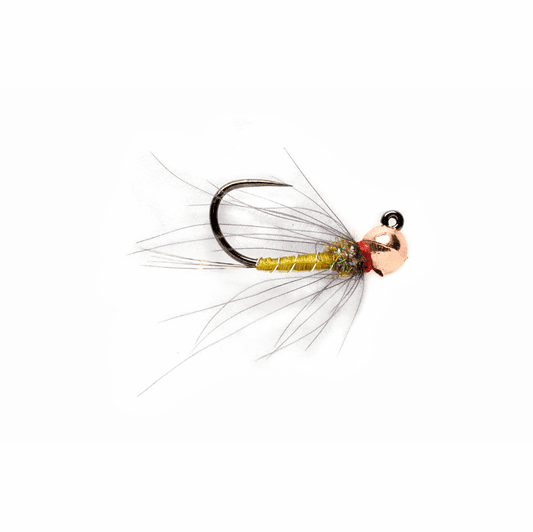
This is one of the most productive flies we have in the shop this time of year. If the water is clear, running a Roza’s Jigged Pheasant tail through some slower water is sure to get you an eat. The slim profile of this small sized 18 nymph makes it a fantastic Baetis (BWO) imitation. Until things really warm up these Baetis nymphs currently make up a large portion of our local trout’s diets; so it a must have.
Our new Size 14 Crostons Full Metal Jacket Jig will prove itself to be an indispensable fly in the coming weeks. It’s slim body, robust head, and large legs make it a great Clinger nymph imitation. March Browns being of that family will be active and hatching as soon as we get some warm weather. Croston’s Full Metal Jacket will be an important fly in your box for that hatch; for now it can make a great general attractor pattern that gets down deep fast.
Weiss’s Possum Anchor Jig Fly a great general attractor with a slim body and a CDC collar. The CDC pulsates in the water and gives the nymph a lot of movement which will catch a fish’s attention. A sparse collar of flashy dubbing near the bead helps create a great silhouette, especially when the CDC is pressed along the body in the water. This fly can be dead drifted or swung. Its lighter color and CDC can make it a great fly to swing during a caddis hatch.
The UV Green Weenie in a size 14 is a great fly for this upcoming hatch of Grannom caddis this spring. The Grannom caddis or “Mothers Day Caddis” is the first large hatch of caddisflies of the year and the fish go crazy for them. Often with spring runoff flows, timing this hatch can be difficult. This is where having a nymph like this in your box can save your day. Sometimes the Grannom Caddis’ come off in such great numbers that the fish will be feeding subsurface more than on the top. This is again where having a great caddis imitation like this can turn a bad spring day around quick.
The Squatchy B Jigged Nymph is a high and dirty water hero. It is a jigged stonefly nymph imitation that comes in sizes 8 and 12. Rubber legs make it durable and provide a lot of movement; a partridge collar creates even more movement and drive fish nuts. This fly is sure to be seen during high, off color water or get deep and move enough to catch that large fish’s eye in a deep pool.
The Jigged Swimming Drake makes a great imitation for all drake nymphs. Brown, green, or gray, this nymph will cover all of your drake needs. It comes in a size 12 or 14 and features a marabou tail, rubber legs, dubbed body, and a large copper bead. This fly will preform well around drake hatches, and can also imitate a range of stonefly nymphs. Its large silhouette and radical movement make it a great fly to use during high, off color water.
Croston’s Jigged Chenille Worm has been my guilty pleasure lately. Fulling Mill’s take on a jigged San Juan will be sure to impress you. It is tied with an inverting bead in the center of the fly and features a simple chenille body. The body is secured with UV resin for increased durability. For rainy days or spring runoff this fly can’t be beat. It comes in red, hot pink, and soft pink; all in size 14.
The Perdiworm Jig combines the body of a Perdigon nymph with the tail of a worm and creates a deadly euro style worm pattern. Fine red rubber legs protruding out of a slim Perdigon body with flash ribbing is sure to get deep and find some takers. Rubber legs and a UV resin coated body makes for a super durable fly. This one comes in a size 12 and makes for a great flashy attractor to pair with another more natural nymph.
The Jigged Slush Egg is unique because it is a jigged egg fly. We don’t see too many of these, unless they’re tied up at home, so it is great to have jigged egg option to get in from a fly company. It is a small flashy pink egg tied on a size 14 hook with a matching pink bead. This fly makes a great whitefish and trout egg imitation. With whitefish currently spawning, and trout right around the corner, this fly is one you don’t want to leave home without.
Here is Fulling Mill’s classic inspired take on March brown wet fly. With matched wet fly wings, gold tinsel ribbing, dubbed body, and partridge legs, it is as productive on the swing as it is beautiful. Although it may look too pretty to fish, this fly should be a staple in your box in the coming weeks as the march brown hatch picks up. These come in a size 14 and 12 which is nice as you can swap between sizes and figure out which the fish prefer. If you’re a wet fly connoisseur, this is a great fly to pick up and get your spring time swinging fix.
Here we have a unique and flashy attractor egg pattern from Fulling Mill. The FAB Biscuit Blob Fly comes in a size 10, so it is a larger egg pattern. It is tied with a flashy, long fiber chenille and features a chartreuse foam butt and pink body. Its most unique quality is that it has some foam under the chenille so it will give the egg more of a natural buoyancy in the water. Pair it with a heavier nymph, and tag this off its back to let the FAB Biscuit’s foam give it a natural more buoyant presentation. This fly is also tied on a more stout hook making it fishable not only for trout, but also other anadromous fish.
The Tatical Jig Zonker is an extremely effective sculpin/ small streamer tied with rabbit strip body and collar. It is tied on a jig hook and rides “point up” this is especially effective when fishing sculpin patterns deep, bouncing them along the bottom. The Tactical Jig Zonker comes in a size 12 in a natural rabbit color as well as olive.
Croston’s belly flop sculpin is a different take on the jigged streamer above. It is tied far more sparse, making it easier to cast and sink faster. The zonker body is also a tad longer to add more movement. It is very heavy and features a tungsten bead as well as a tungsten scud body. Due to it’s construction it makes a great euro streamer. It can be drifted in a tight line style and twitched downstream to imitate an injured fish. It comes in one natural rabbit color in a size 10. This fly gets down deep fast into the feeding zone; while other flies are still sinking, Croston’s Belly Flop Sculpin will already be in the feeding zone doing the work for you.
The Jiggy Fat Minnow breaks conventional trout fly boundaries in a sense that is can be extremely useful in both warm and cold water fisheries. When water gets too warm to responsibly trout fish in the summer, this fly will drive bass nuts. It comes in a wide variety of colors, all size 10: Olive/White, Brown/White, Bluegill, and Sexy Shad. The Jiggy Fat Minnow is a great example of a “do it all” fly.
The Burkus Bearback Rider Salmonfly makes a killer salmonfly imitation. With three layers of foam this fly is unsinkable and is buoyant enough support the weight of midsized tungsten beaded nymphs with ease. An orange chenille belly, ribbing on the abdomen, and knotted rubber legs make it a realistic, yet effective pattern. Whether you’re catching the legendary salmonfly hatch on the lower Deschutes, or catching the salmonflies on your local stretch, this pattern is sure to impress.
The Tactical Fly Box is Fulling Mill’s standard double sided box, and holds an impressive 520 flies. This box has enough clearance to hold larger chubbies and strongly nymphs with ease, or you could fill it with 520 of your favorite smaller nymphs. Pre cut foam slits are durable and will keep your flies safe. [186 (W) x 104 (D) x 30 (H) 149 grams]
The Tactical Max box is essentially the Tactical Box, except it is a tad bit deeper, and it has a double sided leaf. This depth and leaf increase the storage from 520 slits in the Tactical Box, to 960 in the Tactical Max. Due to the leaf, this box does not have as much clearance for bushier flies. It does make a great box for smaller, low profile nymphs and dries. It can easily combine all of your smaller flies into one box. [186 (W) x 104 (D) x 40 (H), 250 grams]
Think of the Stealth Box like a single-sided version of the Tactical Box. It is great for low profile nymphs and dries and is slim enough for you to hold several in your pack. This is a great way to compartmentalize flies into different boxes as these boxes are slim, but still hold an impressive 260 flies. [186 (W) x 104 (D) x 17 (H) 114 grams]
The Hopper Box is essentially a deep version of their Stealth Box. The increased depth make it a great box for a summer day trip. It has enough depth to hold dries as small as tricos all of the way to large hoppers and chubbies. It also has plenty of space for some jigged or standard nymphs making it a perfect box for a summer day fishing a dry-dropper setup. The increased depth also makes it a great streamer box. This box, like the Stealth Box offers 260 foam slits, except it offers significantly more clearance for your bushier flies. [186 (W) x 104 (D) x 17 (H) 114 grams]
If you are a minimalist and like to travel lightly, the Pocket Box would be for you. It has enough room for small dries and nymphs for a day out on the water. For its small size, it offers storage for an impressive 122 flies if they are placed side by side. Their slim profile makes them great for compartmentalizing your flies by type, while maintaining a light pack weight. [119 (W) x 84 (D) x 20 (H)]
Fulling Mill’s standard jig hook, the Jig Force [FM5045] is a strong jigged hook offered at a great value in sizes 8-18. It features a 50 degree jig eye and is 2x heavy. The hook’s stout construction keeps them still when tying with strong thread and can hold up to large, strong fish. It comes in a pack of 50 hooks for for $13.95 making it a steal if you like to tie jigged nymphs.
The Jig Force Short hook specializes in tying Euro style nymphs. It features a 45 degree horizontal eye, is 2x heavy, has a 2x wide gap, and is forged for extra strength. These forged hooks are extremely durable, and are unique in their look due to their unconventional 45 degree bend and horizontal eye. These also are offered in a 50 pack for $13.95 and come in sizes 10-16.
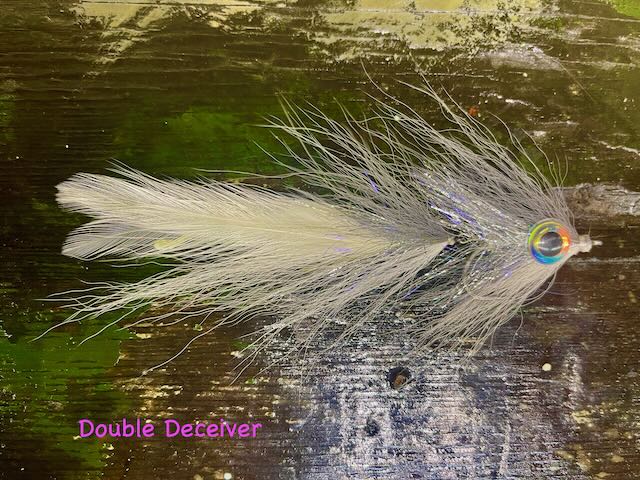
This video demonstrates how to tie a Double hooked Deceiver fly. Alex uses new Ahrex Hooks, Next Generation Fish Skull Shanks and new Tie in Fold Over Eyes from Hareline. This pattern can be tied in numerous color combos and works well for a variety of predator species. If you are gearing up to fish Lake Billy Chinook for Bull Trout consider this pattern it’s a good one!
I know I am a little late reading this book as it was published in September 2020, but Lords of the Fly was worth the wait. Full of wild stories involving legends of our sport and the early days of fly fishing for tarpon. Loved hearing about flats boat designs, the beginnings of Tibor and Abel reel companies, modern-day guides and the obsession that burns in IGFA record hunters. I really enjoy reading history books and Burke conveys the history of Tarpon fishing brilliantly. He covers the tarpon’s place in history as I had never heard, including art and Biblical lore. Coming fresh off my first trip to the Keys chasing these prehistoric giants last June, I could literally not put this book down. Hope you enjoy it too.
Simon demonstrates how to to a cool Grannom Caddis pattern complete with egg sack and realistic wing profile. The spring Grannom caddis emergence can be frustrating, make sure to have a few of these on hand when you see fish looking up during the hatch.