Reminder: Fly Fishing Film Tour in Corvallis Tomorrow

The Blueback Chapter of Trout Unlimited is bring the Fly Fishing Film Tour to Corvallis on February 15th at the Whiteside Theatre. Tickets are available online here, $10 advance or $15 at the door. Ninkasi, Nectar Creek Honeymead, 4 Spirits Distillery, Lumos Winery, Vivacity Spirits, and others will be on-hand to make sure everyone has a good time.

Proceeds from the event will go to support the Bluebacks steelhead monitoring efforts on the South Fork of the Siletz River. Make the drive to Corvallis to see some of this year’s best fly fishing footage, drink some beers, and support a worthwhile cause. For questions about the event or to sponsor the Bluebacks, email bluebacksTU@gmail.com or check their website at www.bluebacks.org for other upcoming events and restoration projects.

Posted in Oregon Conservation News, Oregon Fly Fishing Clubs and Events | Leave a comment

Columbia River Endorsement Fee

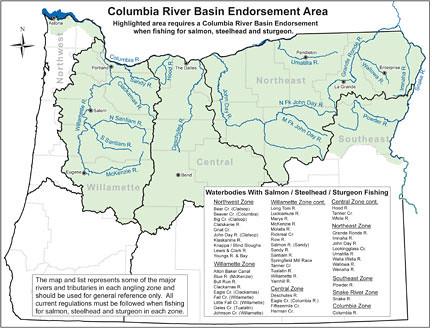
ColumbiaEndorsement_map

The Oregon Fly Fishing Blog has been approached about a doing an informative blog post on the latest change to the 2014 Oregon Fishing License Fees. Yes, Oregon Department of Fish & Wildlife (ODFW) has assessed a additional fee of $9.75 to our annual license and a $1 fee to a daily license. Although many anglers may have already purchased a 2014 license, we would like to give an informational overview of what “the fee” is all about.

One thing for certain…if you plan on a fishing on any rivers and tributaries in the Columbia River Basin you must pay the fee.

Simplifying the fee: if your fishing the coastal streams that do not flow into the Columbia, and nothing else, you don’t have to pay the fee. If you live in the southern parts of Oregon and don’t fish the Snake River, you may not have to pay the fee. I tested this simplified view of the streams I fish and for myself….yes, all are Columbia River tributaries! See the map for its impact on you or go directly to http://www.dfw.state.or.us/resources/fishing/reg_changes/index.asp

Reason for endorsement

The endorsement helps fund the transition of non-tribal commercial gill nets out of the mainstem Columbia River, freeing up additional salmon and steelhead for sport fishing. This is part of a package of Columbia River fish management and reform actions adopted by the Oregon Fish and Wildlife Commission and their Washington counterparts. The package includes a higher priority for sport fishing in the mainstem Columbia River, improved commercial fishing with gill nets in off-channel areas of the lower Columbia River, use of alternative commercial fishing gears and techniques in the mainstem lower Columbia River, and improved fish conservation by better targeting of hatchery runs.

The endorsement is a key part of Senate Bill 830, which was passed by the Oregon Legislature and signed into law in 2013 with the support of several sport fishing organizations.

SB 830 deposits money from the endorsement in a Columbia River Fisheries Enhancement Fund to help enhance fisheries, optimize the economic benefits of fisheries and advance native fish conservation.

SB 830 also created a separate Columbia River Fisheries Transition Fund to provide financial assistance to individual commercial fishermen affected by the new law – including the potential purchase of alternative gear. This fund received state general funds appropriated by the Legislature and does not use any money from the endorsement fund.

Highlights:
•Required for salmon, steelhead or sturgeon fishing on all rivers and tributaries in the Columbia River Basin.
•Cost is $9.75 for an annual endorsement or $1 per day for a daily licenses.
•The endorsement helps fund the transition of non-tribal commercial gill nets out of the mainstem Columbia River into enhanced off-channel areas, freeing up additional salmon and steelhead for sport fishing.
•No angler dollars are planned for commercial buyouts, purchase of alternative gear, or other reimbursements to commercial fishermen.

The endorsement is required on all rivers and tributaries in Oregon that ultimately empty into the Columbia River. This includes:
•Columbia and Snake rivers,
•All rivers and tributaries in the Willamette, Central and Northeast zones (as described in the Oregon Sportfishing Regulations booklet), and
•Those rivers in the northern section of the Northwest Zone that drain into the Columbia River.

The endorsement may be purchased wherever fishing licenses are sold, including ODFW offices that sell licenses, authorized license dealers and on the ODFW website. It will go on sale beginning Dec. 1, 2013.
Anglers with a resident disabled veteran, resident pioneer, and resident and non-resident youth under 14 licenses will be issued a free endorsement upon request. They will need an endorsement to fish for salmon, steelhead or sturgeon in the Columbia River Basin.

Additional information

What if I’m just fishing catch-and-release, especially when sturgeon retention is not allowed?

If you’re fishing for salmon, steelhead or sturgeon within the Columbia River Basin – catch-and-release or retention – the endorsement is required.

Do I have to buy an endorsement at the same time I buy my fishing license?

The endorsement can be purchased separately at any time during the year. However, there will be an additional $2 transaction fee for endorsements sold separately.

Do I need an endorsement for every hatchery tag I buy?

No. An annual endorsement covers a year of fishing, regardless of the number of hatchery tags.

What about salmon or steelhead seasons that open later in the year under emergency regulations?

If the river is in the Columbia River Basin and you are fishing for salmon, steelhead or sturgeon, you will need the endorsement regardless of when or how the season was set.

Is the endorsement permanent?

Under SB 830, the Columbia River Fisheries Enhancement Fund, along with the endorsement, is set to expire in 2021.

What is meant by the Columbia River Basin?

The Columbia River Basin includes all rivers and tributaries that drain into the Columbia River, including the Snake River and its tributaries. It does not include coastal rivers or some rivers in central and southern Oregon. See the attached map for details.

How much money will the endorsement raise?

ODFW estimates sales of the endorsement (annual and daily combined) will be about $1 million a year.

Does this take into account the number of anglers who may just stop fishing for salmon, steelhead and sturgeon rather than pay the additional fee?

Yes. Our economic analysis does predict some anglers will decide not to fish for salmon, steelhead or sturgeon in the Columbia Basin – either because they stop fishing for these fish or because they choose to fish in places that do not require the endorsement.

How will the changes on the lower Columbia River benefit salmon, steelhead and sturgeon anglers fishing in mainstem and tributary areas above Bonneville Dam and Willamette Falls?

The endorsement is part of a larger suite of management changes that was negotiated in order to remove commercial gillnets from the lower river. Once the harvest reforms are completed we expect there will be benefits to:

1) Wild fish: Removal of less selective gillnets will allow mainstem fisheries to target more hatchery fish and thus reduce the number of hatchery fish on wild fish spawning grounds.

2) Anglers above Bonneville Dam and Willamette Falls: Providing a higher priority to sport fishing in the mainstem Columbia River will free up more fish for sport anglers, including sport fisheries above Bonneville Dam and Willamette Falls.

This article is for informational purposes only and the best place to understand more is the ODFW 2014 Fishing Regulations found at: http://www.dfw.state.or.us/resources/licenses_regs/regulations.asp

Posted in Oregon Conservation News | 3 Comments

Fly Tying Saturday: hands-on with Jay at the Shop

The weather outside is dreary and wet; good news and bad depending on just how high the rivers get by Saturday.  This is a great time for anyone who isn’t going fishing to dust off their fly tying gear and plow into the coming season’s supply of bugs.

I will be at the Shop this Saturday, and on at least two Saturdays over the next two months, with my fly tying gear set up and ready to provide hands-on consultations to help everyone from full fledged beginner to advanced tyers.

I’ll start about 10 AM and wrap up about 4 PM, and the entire time will be dedicated to the skill levels of the individuals who would like to hone their skills – no matter what level of expertise that may represent.  If you have never tied flies but are interested, I’ll help walk you through the basics from selecting tools to tying your first fly.  If you are an advanced tyer and want to explore new techniques or fly styles, anything from Saltwater to Tube Intruders for steelhead and salmon, we can focus on those skills too.  Chances are, one of us will be able to advance the skills of the other, and it’s likely that I will be learning from other tiers who drop in – that’s the nature of the fly tying game, we all learn from each other.

No need to bring your own gear (but you certainly can), you may use our Shop Class tools – just make a point of dropping by to share in the fun.  I’ll be working on some coastal lake nymphs in the morning and steelhead/salmon Tube leeches in the afternoon – but those are just the most general guidelines.

Bring your questions, your enthusiasm, and let’s share some time at the vise.  This is especially helpful if you have considered signing up for a formal tying class but are not sure if you’re ready.

I hope to see you at the Shop this saturday, February 15 between 10 and 4.  all you need is your enthusiasm and interest, because this is going to be fun.  I may even make a little progress filling my bug boxes too.  As if?

JN

Posted in Classes and Instruction | 2 Comments

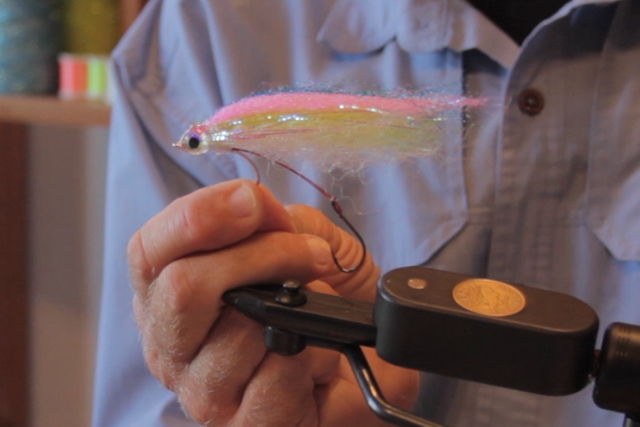
Coho Salmon Bucktail Trolling Fly Tying Video with Fish Mask and Stinger Hook

Trolling Bucktail style flies for Coho Salmon is an art that has come out of practice here off the Oregon coast since both wild and hatchery silver salmon runs tanked in the 1990s. Improved regulation of ocean fisheries and better survival conditions have resulted in some fairly robust runs of wild Silvers in most Oregon coastal rivers. Although the reasons for the improved runs and the health of the individual populations remain subject to debate, anglers in the ocean offshore Oregon now often find that regulations permit fishing for hatchery and/or wild Coho, albeit the regs sometimes only permit retaining fish on a few days per week and usually require use of de-barbed hooks.

I never experienced the glory days of Coho Bucktailing when the combined runs of hatchery and wild Coho were super abundant and fishing was considered easy. My recent ventures into the Pacific have been rewarding, though, and I have especially enjoyed Bucktailing Coho. For those of you who are wondering – grab a fly like this and strip out enough line that it trails just behind the boat (20 – 30 ft or so should be sufficient) and troll around current rips and temperature clines at somewhere between 2 and 5 knots.

Silver salmon will come up and chase these Bucktail flies, the trailer hook helps nab the short strikers and some anglers make a habit of clipping off the front fly, while others keep both hooks. Anglers in BC, Puget Sound, and SE Alaska know these techniques well. My best days on the ocean involve finding a school of silvers trolling Bucktails on the surface, then cutting the motor, drifting, and casting un-weighted flies and stripping the fly to entice a grab.

Jay Nicholas

Coho Salmon Bucktail Trolling Fly:

Fly 7

Overall Length = 4”
Trailer Hook: Up-eye Gamakatsu #2/0 Barb smashed
Trailer Hook Harness: Senyo’s Intruder Wire Pink
Hook: #2/0 Gamakatsu Sl 12S – smashed Barb
Thread: Fine mono
Body: Pearl Diamond Flat Braid
Flash Under Wing: Cascade Crest Pink Pearlescent Mylar tubing unraveled
Under Wing: White SF Flash N Slinky
Mid Wing: Chartreuse Fishient Flash N Slinky
Over Wing: Hot Pink Fishient Mirror Image
Topping: Flashabou Blue Accent
Fish Mask: Size 7.5
Eyes: 5/16: Adhesive Holographic eyes Super Pearl
Cure Goo: Hydro and Tack Free

Posted in Fly Tying, Fly Tying Materials and Supplies, Oregon Saltwater Fishing | 4 Comments

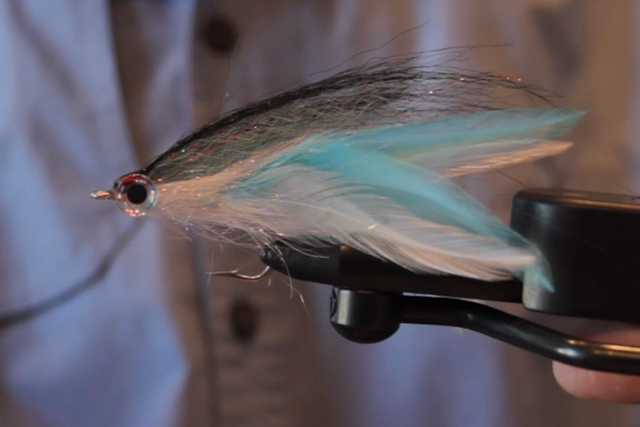
Saltwater Northern Pacific Albacore Deceiver Fly Tying Video

Pacific Albacore eat fish eat all day, every day. They may eat little tiny baitfish less then two inches long, or great big fat baitfish in the 6” size range, and they may be selective or undiscriminating in their feeding preferences.

I developed this Deceiver pattern to create a fly that would cast easily, swim true, and present an overall baitfish profile and color hue that would induce Pacific Albacore to chase and inhale the bug. This Deceiver has received the gulp of approval and you can have fun tying and fishing this tradition-based fly.

Jay Nicholas

Pacific Albacore Deceiver

Fly 6

Overall Length = 4”
Hook: #3/0 Mustad 3407
Tail: Silver Doctor Blue & White Saddles splayed out
Body: Pearl Flat Diamond Braid
Baitfish Belly: EP Anadromous Sparkle Brush – Miracle Pearl
Lateral Line: Lateral Flash
Wing: Steve Farrar’s Blend – UV SF Mackerel/Bleeding Black
Eyes: 5/16” Adhesive Holographic Super Pearl
Cure Goo: Tack Free, Thick, & Hydro

Posted in Fly Tying, Fly Tying Materials and Supplies, Oregon Saltwater Fishing | Leave a comment

Guided Winter Steelhead Trips: Prime Time

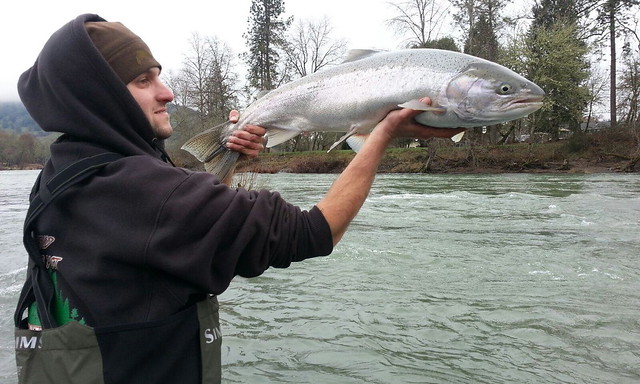
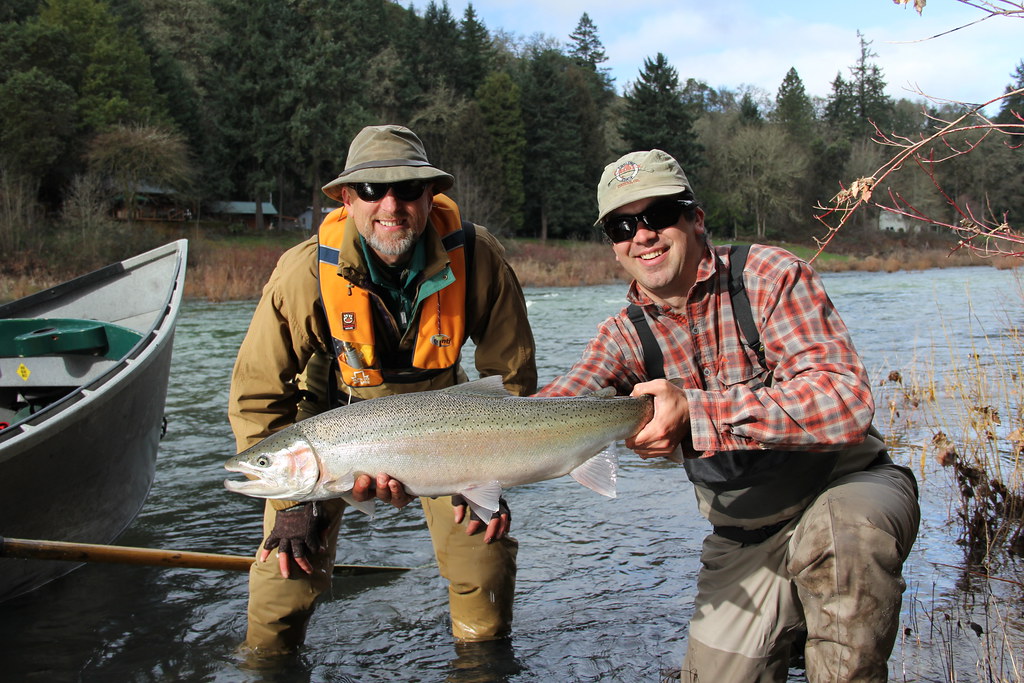
This is our most anticipated time of the year. On all coastal rivers you will find dwindling crowds and a influx of fresh wild fish.

photo 2

IMG_8912

IMG_3449

The next several weeks offer the best winter steelheading opportunities of the season. Look for river levels to rise and fall in the near future, with NOAA projecting a significant amount of much needed rain.

Guests on our most recent trips have experienced great fishing, with a mixed bag of large wild specimens as well as hatchery fish available for harvest.

Our winter steelhead trips have increased dramatically in popularity over the past few seasons, and we are very grateful. We truly believe that the systems within a days drive of Eugene offer potential for world class winter steelhead fishing.

IMG_3378

If interested in a winter steelhead trip, call the shop at 541 342 7005.

-TH

Posted in Coastal Steelhead Fishing, Oregon Winter Steelhead Fishing | 3 Comments

Summer Arrives on the South Island

IMG_1474

Our first season as owners of Cedar Lodge has been really enjoyable in many ways. Meeting new clients and returning guests has been great. Exploring new water, fishing new gear and new fly patterns has been a blast.

BUT… each morning from early November to late January examining the weather and making a flight/fishing plan based upon cold fronts and high water was challenging to say the least. We managed to fish all but a couple of days despite the weather but the “brochure day” was not the norm.

This last week however the weather has come right and I haven’t needed to do anything but look outside, it’s been fantastic!

A few photos celebrating Summer on the South Island to follow.

IMG_1460

Dan and Anne Spogen joined us for there 25th year!

IMG_1472

The kids have been enjoying riding our our “car less” country road.

IMG_1514

IMG_1500

I have been loving my Fishpond Mid Length Boat Net. I have also loved the fact that my kiwi guide com-padres have been giving me a really hard time for it. Yes it’s bigger and more difficult to get through thick west coast bush, but it’s really good when you need to scoop a big brown mid stream. The net is also really good in terms of protecting a fish it’s in shallow water. Finally flies do not catch in the very tough rubber bag!

IMGP0049

IMG_1488

IMG_1449

Cicada’s, hoppers, Royal Wulff’s and Blow Flies have all been working well!

IMG_1457

Eighty two year old Jon Pennachi with a nice fish on!

If you are looking at a trip to New Zealand this season we still have a few open dates, get in touch with us at info@cedarlodge.net. If New Zealand is on the bucket list in the future make Cedar Lodge part of your plans.

Posted in Fly Fishing Travel | 1 Comment

Saltwater Coho Salmon Deceiver Fly Tying Video – Using a Fish Mask and EP Sparkle Brush

Coho Salmon are as likely to feed on little shrimp and various larvae as to feed on good-sized baitfish in the ocean, but when they want bait, they will chase streamer style flies with gusto.

I wanted to adapt the Deceiver fly style to a streamer that I could cast-and-strip in the open ocean when I thought I was somewhere within range of feeding Silvers. Pinks and blues are colors I have incorporated into flies that have been well received by Coho in the ocean, so that’s where I started with the design of this fly.

The Fish Mask makes easy work of finishing the eyes and head on this fly.

Jay Nicholas

Saltwater Coho Salmon Deceiver

Fly 5

Overall Length = 4”
Thread: Clear Mono fine
Hook: #2/0 Mustad 3407
Tail: White & Pink Saddles splayed out
Body: Pearl Flat Diamond Braid
Baitfish Belly: EP Sparkle Brush Holographic Silver
Lateral Line: Lateral Flash
Wing: Hot Pink & Fl Blue Bucktail
Fish Mask: Size 7
Eyes: 5/16” Adhesive Holographic Super Pearl
Cure Goo: Hydro, Thick, and Tack Free

Posted in Fly Tying, Fly Tying Materials and Supplies, Oregon Salmon fly fishing | 3 Comments

Steve Farrar’s Blend: Review and list of Must-Have Colors to tie this season

OK fellow baitfish fly-tyers, here is a questin answered, as in – Hi Jay, I’m interested in trying some of the Steve Farrar’s synthetic wing materials you have mentioned in your fly tying videos, but am a little unsure as to where to start.

Having had the opportunity to look at and handle virtually every color of the Farrar synthetics to date, I have had a ball experimenting with these.  I first note that there is a Steve Farrar Blend, and then there is also a UV Steve Farrar Blend, and not all colors are available in the UV material.  There are also, naturally other materials offered that make great fresh and saltwater baitfish patterns, but i am going to focus this product review on the Farrar’s Blend in the colors that I find myself most often incorporating into my flies.

One point of note, I have found the perceived barriers or distinctions I formerly drew between ocean flies and freshwater flies dissolving.  Pretty much gone.  I now fish my river flies in the sea and my sea flies in the river.  Nice.

Texture assessment:  this material is a synthetic and it relatively fine.  Similar to Bucktail but a little slimmer fibers, I would say. The fibers are somewhat “translucent-ish” if that makes sense, because they range from very solid in the dark colors to the translucent in colors like the pink and chartreuse and mackerel.  Most of the fibers have a little crinkle in them – that is to say they are not necessarily arrow shaft straight like we expect with Fish Hair.  The SF Blend fibers are firmer than Craft Fur (by far) but have more wiggle and flex than Fish Hair.

Typically NOT boring: these SF Blends usually but not always have a variety of colors mixed together to make the overall color appearance.  Not so with some colors.  The Bleeding Black and Midnight Blitz are strictly black fibers with added metallic sheen fibers in the red or blue range to enhance the appearance.  Point is, with many synthetic fibers you get a single color and stiffness in all of the fibers, but with SF you have a blend of fibers that I think make the product fishier to both tier and the intended eaters of our creations.

Slightly compressible.  Think they are anyway.  Less to than bucktail and Craft Fur, and EP Fibers and other related products.  More so than Fish Hair.  Maybe about the same as with Yak hair, but I honestly have only a passing acquaintance with the Yak.  I tie with Clear Cure Goo and traditional cement like Penetrator (addicted to the sniff of the good old stuff) and have good results with both.

Length and tips character:  the bundles of fibers are roughly 9 inches long.  because these bundles consist of  blended loose fibers, the bundles have an appearance that is much like hair because the tips are not squared-off.  Wings constructed by simply clipping off a pinch of SF Blend and tying it in look great and require no effort to create a taper like we would need to do if using a different product that consists of equal length fibers.

After creating natural looking wings/flies using the fibers cut directly from both ends of the hank, one may create a taper by systematically messing up the squared-off bundle of fibers remaining in the center of the hank.

Overall, SF Blend and SF UV bend is excellent stuff to work with at the fly bench.  It comes in hanks of loose fibers with the sparkle and color variation blended in.  I sometimes cut a hank in two equal sections to tie with.  Other times I will separate off a section of fibers thick enough to tie a single fly and then tie it in using the double-back-over technique.

This material has earned my respect and absolute devotion over a full season tying fresh and saltwater flies.

Here are my most reached-for Steve Farrar’s Blend colors.  Obviously this list is shaped by my quirks and the local environments i fish.  The synthetics are offered in a color range that is probably four or five times longer than my list, and you should certainly browse the full list to see if some of the colors would better suit the bait-fish imitations you tie for different geographic regions and fish species.

But if you fish Pacific Northwest Salt or Fresh waters, I frankly think you could not go wrong with an assortment that includes the following palate.

Bleeding Grey: I use this for bellies, lateral lines, and backs on different flies.  it has sheen and hints of red and will find its way onto your bench I’m betting.

Chartreuse: one of several color shades, this is my favorite middle of the road pick for the white and green Clouser, a catch everything anytime fly.

Dark Green:  use this instead of the Chartreuse for a switch up.

Herring Back:  When ya gotta have a blue herring back on your fly, this one can’t be beat.

Bleeding Black:  I use this shade for backs of Sea Flies tied for Ling Cod, Chinook Clousers, and also for tails on Comets.  Think it will find its way into my Intruders eventually too.

Midnight Blitz:  Much like the above shade, but this one has blue sparkle hints instead of red.  Bait-fish backs and Comet Tails.

Bucktail White:  This is the brightest of the white shades offered and a bit more crinkly, with lots of shiny fibers blended in.  I tie with all the white shades, but this is my choice when I want the white to POP.

Pink:  forgot to put pink in the photo but this is my choice for my pink and chartreuse Chinook clousers and my coho bucktail offshore flies.  Steelhead had better look out when I fish my Bleeding Mackerel and Pink Clouser this winter.  Hah!

Fl. Chartreuse:  Rather pale compared to Fl Chartreuse Bucktail, this will still light up a fly in tidewater and ocean environments, and I tie with it regularly.

Electric Yellow:  ya want bright?  Here you go.  Almost Fl Yellow Chartreuse, I tie in a pinch of this color if i want my fly to really shine in low light conditions.

Bleeding Orange:  A favorite offshore rockfish and Ling Cod color, also used in my Chinook Comets.

Hot orange:  Darker and hotter and mottled like most of Steve’s blends, this is another offshore bottom fish selection that I will fish for Kings in 2014, soon as I catch my breath

Mullet Brown:  If you tie bottom fish flies, you gotta try this stuff.  Mottled and sparkly with browns and hints of black.  Smallie Clousers should be irresistible with this, but never tried it myself yet.

Bleeding Red:  Perfect mottled dark red with sparkly hints for my Patriot Clouser pattern.

Violet Night:  An awesome purple beauty for backs of unweighted offshore flies, including Albacore flies, and my dark day Clousers.

Bleeding Purple:  Adds the hint of red sparkle and

Bleeding Mackerel: Among my top 6 colors.  Difficult to describe.  This is a greenish, bluish, got some black and some sparkle and some red and some fluorescence and it works for backs and bellies and is just amazing stuff.  YOU MUST GET SOME OF THIS.

Top six Farrar Blend colors:  Bucktail White, Bleeding Mackerel, Bleeding Black, Bleeding Grey, Fl Chartreuse, Chartreuse, Pink, Dark Green.  OK, that’s eight top colors, but hey, I’m just say-in’ these are fantastic assets on the tying bench.  You literally can not go wrong if you start with these colors, remembering you will need several packs of the white to tie your bellies with different color backs……

Jay Nicholas, December 2013

Posted in Fly Tying, Fly Tying Materials and Supplies | 6 Comments

Saltwater Deceiver Fly Tying Video for Pacific Rockfish

Continuing Jay’s series on Saltwater Fly Tying: Black Rockfish are opportunistic predators and sometimes feed voraciously on a variety of baitfish – making them vulnerable to a cast-and-strip presentation with a wide range of baitfish fly styles. I wanted to create a fly in the Lefty’s Deceiver style that Rockfish would eat with gusto. Experience with these fish and other flies informed me that these colors should be effective, and indeed Rockfish do eat this Deceiver. I like the big eyes, but you can tie the fly with painted-on eyes if you wish, and that is more in keeping with the original Deceiver fly style.

Tie and fish this Deceiver with confidence. And have fun on the water and at your fly bench.

Jay Nicholas

Rockfish Deceiver

Fly 4

Overall Length = 4”
Thread: Clear Mono fine
Hook: #2/0 Mustad 3407
Tail: White & Purple Saddles splayed out
Body: Pearl Flat Diamond Braid
Baitfish Belly: EP Sparkle Brush Miracle Pearl
Wing: Steve Farrar’s Blend – Chartreuse & Purple
Eyes: 5/16” Adhesive Holographic – Super Pearl
Cure Goo: Tack Free & Hydro

Posted in Fly Tying, Fly Tying Materials and Supplies | Leave a comment

Register-Guard: Writing is on the wall for McKenzie Hatchery Springers

A Register-Guard editorial last week predicts the the recent decision in the Sandy River hatchery lawsuit will make way for changes on the McKenzie River that will protect endangered Upper-Willamette Spring Chinook Salmon.

Haggerty’s ruling is handwriting on the wall for the McKenzie hatchery. The alarming downward trend in the river’s wild chinook population, along with the high rates of introgression, made it appear from the start that the plaintiffs had a strong case. Haggerty’s decision reinforces the message that a fundamental changes in the McKenzie hatchery’s operations are on the way.

Chinook Spawning McKenzie River

Read more on the Sandy River Lawsuit here.

Posted in Oregon Conservation News | Leave a comment

Saltwater and Estuary Bend Back Fly Tying Video – Virtually Weedless Chartreuse Chinook Salmon Bendback

The Chinook Bendback is a fly style that has been popularized in saltwater and estuarine waters where anglers fish flies in shallow waters where weeds and muck could easily foul hooks on traditional patterns.

The process of bending the hook is crucial because it will impact the ability to hook a fish when it takes the fly. Make sure that the hook point is above the plane of the new axis of the hook eye. Using a Mustad 3407 saltwater hook is a good idea because the hook has a great balance of toughness and retains modest pliability. I have had great success fishing this hook and think you will too if you give it a go. You will need to sharpen this hook, but you can re-sharpen it too.

Jay Nicholas

Estuary Bend Back Minnow

Fly 3

Overall Length = 3”
Thread: Fine mono
Hook: #1 Mustad 3407 Bend as required for traditional Bendback fly style
Wing: Chartreuse over White Bucktail
Eyes: 7/32” Adhesive Holographic
Cure Goo: Hydro and Tack Free

Posted in Fly Tying, Fly Tying Materials and Supplies | 5 Comments

Fly Fishing Film Tour, Corvallis Feb 15th

The Blueback Chapter of Trout Unlimited is bring the Fly Fishing Film Tour to Corvallis on February 15th at the Whiteside Theatre. Tickets are available online here, $10 advance or $15 at the door. Ninkasi, Nectar Creek Honeymead, 4 Spirits Distillery, Lumos Winery, Vivacity Spirits, and others will be on-hand to make sure everyone has a good time.

Proceeds from the event will go to support the Bluebacks steelhead monitoring efforts on the South Fork of the Siletz River. Make the drive to Corvallis to see some of this year’s best fly fishing footage, drink some beers, and support a worthwhile cause. For questions about the event or to sponsor the Bluebacks, email bluebacksTU@gmail.com or check their website at www.bluebacks.org for other upcoming events and restoration projects.

Posted in Oregon Fly Fishing Clubs and Events | Leave a comment

Hot links! PhotoTaxidermy, radioactive salmon, nasty carp and more

Well folks, the weekend is almost here! Enjoy some hot links to get you through your workday.

Don’t cry for me, Captain Ken in Argentina
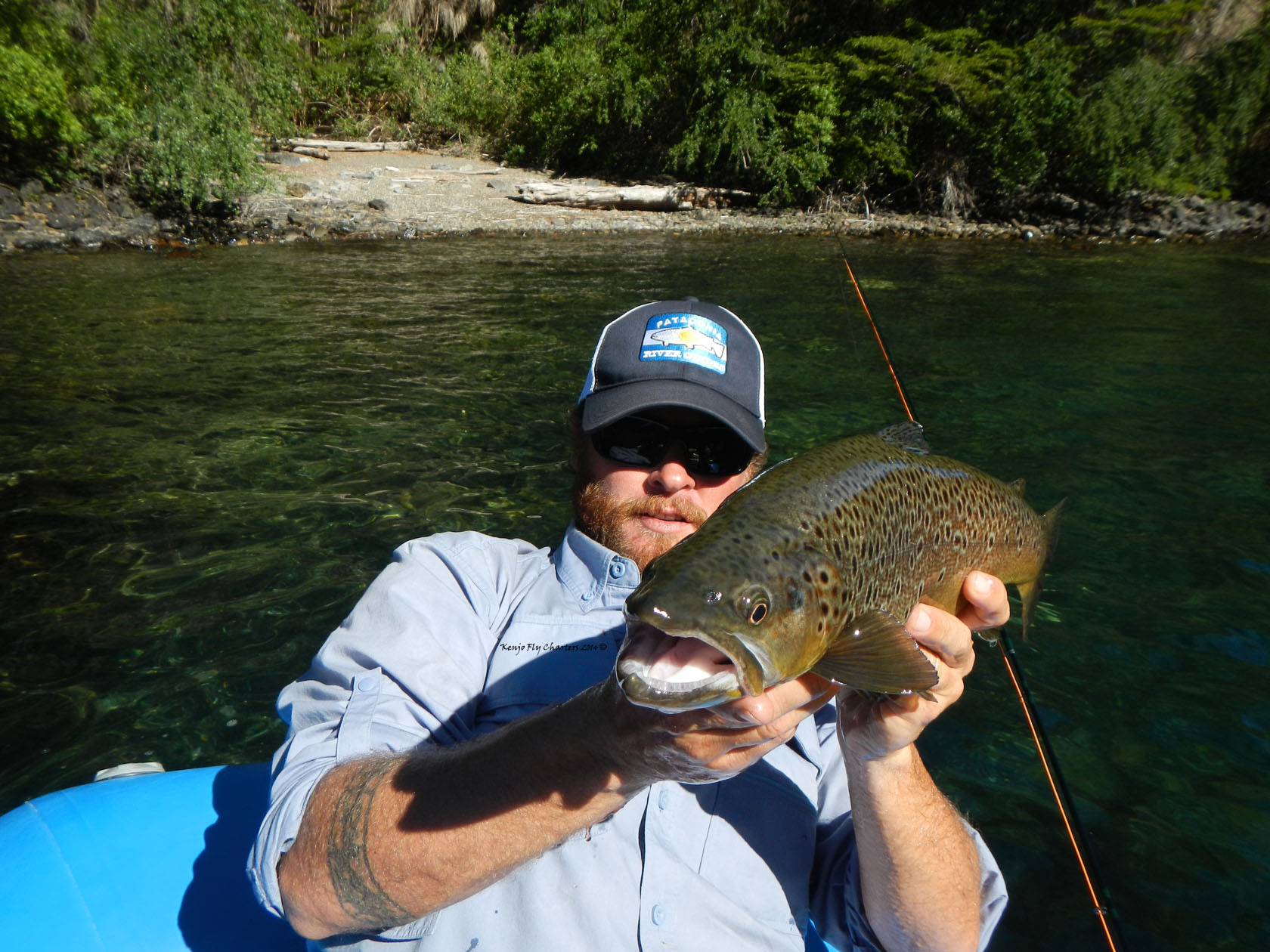
Our buddy Capt Ken Jones just got back from a great week fishing for trout in Patagonia: This is the biggest trout our guide has ever witnessed on the Rio Grande and he swiftly grabs the giant landing net in preparation of landing this beast. Carefully and slowly, but with maximum pressure, I inch the massive trout closer and closer. Now, only the leader is out past the rod tip, but the fish is 4-5 feet straight down where we cannot see it and directly under the boat. What happened next is tragic and disheartening, but I must have put too much pressure on the fish when trying to lift its head up so that Leo could get the net under it and I pulled the hook from the gaping jaws of this seemingly prehistoric trout.

And that was it folks… this trout was “THE ONE” that got away. I got everything back, the line, the leader and even the fly with the hook still intact and in good shape. The fish escaped and that’s just how I like it. Swim free my pretty. The World is yours, as much as you want, and as much as you can handle.

Like those Fathead stickers, but for fish!
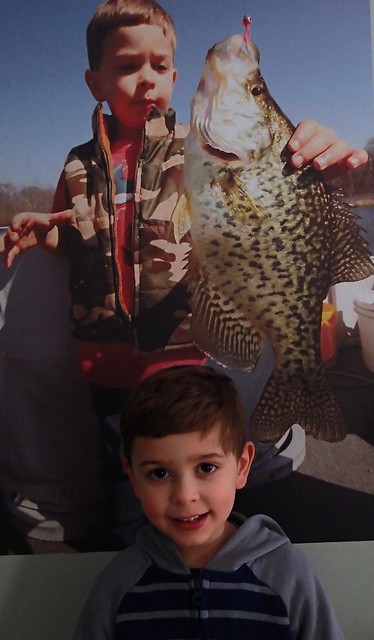
The folks at PhotoTaxidermy sent me a sample product last week, a larger than life-size vinyl static sticker of my little guy holding his mega-crappie from last year. I think its a great product. The colors are solid, the image is crisp, and it’s huge. I’d be interested to see how it looks with just you and the fish (no background) which is a product option they offer apparently.

PhotoTaxidermy

From the press release on the recent launch of the company: While traditional taxidermy takes months and needs the physical animal to create the replica, PhotoTaxidermy customers can simply snap a photograph of their trophy, upload it to PhotoTaxidermy’s website and have an exact replica printed and sent to their doorstep in a matter of days. Plus, the animal can be released back into the wild while hunting and fishing enthusiasts can still have a beautifully detailed memory to enjoy for generations.

Preventing a zombie carpocalypse in the Great Lakes
Capt. Nate and I are back in the mix with fisheries conservation out East — showing up at public meetings with the Army Corps of engineers to rant about the Corps’ inaction on a pending Asian Carp invasion.

Asian Carp

You can check out an interview with Nate from our local NPR station here.

Fukushima radiation not showing up in Pacific Salmon
From the Seattle Times: Is it safe to eat fish from the Pacific Ocean in the wake of the Fukushima nuclear disaster? The consensus since the 2011 power plant failure has been a yes, but Seattle’s Loki Fish Co. found customers remained concerned. The fishing company, a local institution, went on to do its own testing for radiation levels in its fish, and shared the laboratory reports online. (The short version: The fish were fine.)

NFS call to action on ODFW’s Coastal Management Plan
The Native Fish Society is running a petition to improve native fish protections in the comprehensive CMP currently under discussion around the state. They’ve got a form online to send your comments in to ODFW leadership and the governor’s natural resource dept here. The basic message is this:

The CMP is a status quo hatchery and harvest management plan, not a conservation plan, and it is unlikely that this draft plan will ensure these salmonid populations are viable in the future.

MS

Posted in Oregon fly fishing links | Leave a comment

Introduction To Fly Tying Class

069

Introduction to Fly Tying Class Begins

We will be putting on our second class of the Winter season. Class begins Monday, January 27th and will continue to February 24th.

6-8 pm at the Caddis Fly Shop

The class takes place over five consecutive Mondays, with each class building off of the previous nights instruction. Each night includes approximately 2 hours of instruction with at least three patterns tied. Patterns tied are locally proven flies and will incorporate techniques and materials that are used in all facets of fly tying.

Top quality materials are provided, as are all necessary tools. Class Fee is $55

Call 541 342 7005 to reserve a spot, or if you have any questions.

-TY

Posted in Classes and Instruction, Fly Tying | Leave a comment