Trees for Wild Salmon: USFS Video

This video depicts a tree tipping project in the Santiam River watershed that is meant to create spawning habitat for the threatened fish species, Winter Steelhead and Chinook Salmon.

Posted in Oregon Conservation News | 1 Comment

Casting for Recovery Fundraiser: Southern Oregon Retreat at the Big K Ranch in Elkton, Oregon

From Kathy McCartney, on behalf of the Damselflies, supporting Casting for Recovery

There are 2 ways you can support this great cause:

Donate Flies
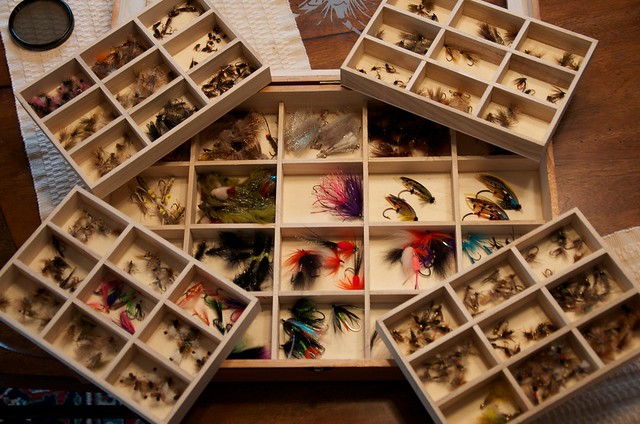
You can drop your flies off at the Caddis Fly. The more flies in this box, the more raffle tickets we sell, the larger the donation amount to send 14 Oregon Women to the Southern Oregon 2 1/2 day Casting for Recovery Retreat! This was a huge success a few years ago and hopefully, you guys and gals are still willing to donate as generously as you did then. Thank you!!!!

Buy Tickets!
The second way to help the retreat is to buy raffle tickets for a chance to win the fly-filled box tied by the best fly fishers and tiers in the business and sport. The raffle tickets are 2 part tickets and your name, address and phone number (add email address please) part will go into the raffle drawing. You can purchase tickets for $5 each or 5 for $20.00. Cash or checks accepted at the Cascade Family Flyfisher’s meetings that are scheduled for their regular meetings, which is the last Wednesday of each month (February 26th this month at Mac’s Restaurant on Willamette Street) Doors open at 6:15 PM so you can buy tickets before the great meeting scheduled at 7:00 PM, Fly Fishing for Sea Run Cutthroat by Chester Allen. Make sure to list all: name, address, phone number and email address on your ticket so I can contact you when you win! If paying by check, make your check out to Casting for Recovery, Southern Oregon Retreat. It is so easy!

The drawing will be held at the Cascade Family Flyfishers May meeting (May 28, 2014) at Mac’s Restaurant on Willamette St in Eugene. I will be contacting the winner by email and phone on May 29, 2014 if he or she is not present at the May Cascade Family Flyfishers meeting. I will also be posting the winner’s name and picture, if possible, on this website. Thank you, Chris and the crew at the Caddis Fly for allowing us to post the drawing information on the blog.

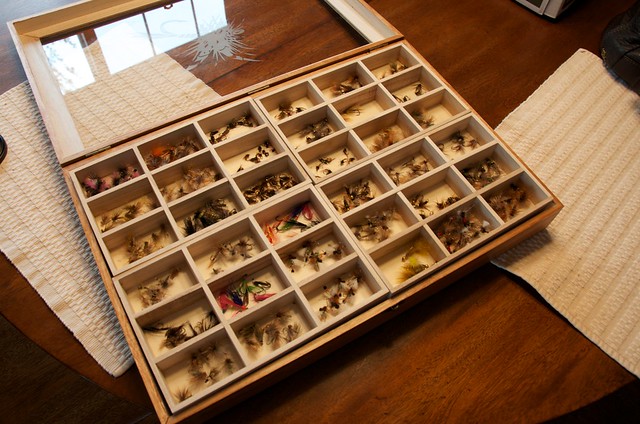
The box is 12″ x 18″ by 3″ and I have custom designed and hand-etched an “Adams” on the glass top. It is one of my originals. It is a hinged wooden box finished in a pecan stain with the inside left unfinished. There are 4 lift-out trays on the top each with 9 smaller compartments perfect for trout flies and 20 larger compartment in the bottom section perfect for larger saltwater, steelhead or streamer flies. This would make a wonderful gift for any fly fisher including yourself!

Thank you for donating to Casting for Recovery, Southern Oregon Retreat!

Please email me if you have any questions. Thanks! Kathy, mccartney0583@comcast.net

Posted in Oregon Fly Fishing Clubs and Events | 2 Comments

Caddis Fly Shop Announcements & Anticipation

Last Saturday’s Fly Tying Clinic at the Shop was fun, attended by approximately three-hundred, standing room only persons, all throwing crumpled up twenty dollar bills and shouting more; show the whip finish; show the cement applicator jar; thread the bobbin again;  fold that hackle; and other unintelligible requests so numerous as to be exhausting to repeat here.

Seriously, (why?) there it was a nice quiet rainy day with some very fine people of all skill levels asking questions and me pretending to answer while I was tying coastal lake chironomids and 6 inch clousers for Bob Borden.  I tied a few Tube Flies too, and resolve to do more next time.

Next Saturday Fly Clinic (FREE) will be

March 1st from 10 AM to 4 PM

and I will again do what I can to accommodate requests from folks of all interest and experience levels including just selecting proper tools to advanced use of molecular physics in the design of flies that fish find irresistible.  Or perhaps i should say un-resistable?

Dory Charters – Finally! My friend Johnny Harrell is getting his captains license and will be inviting clients to book Dory Fly Fishing charters as early as Mid-April, 2014.  My blog posts relating the great times and fishing I have enjoyed with John and his dad Jack have always drawn enquiries from folks who wanted to book trips, but in the past Jack and John were only in-river guides.

Now they can officially provide services of the first-cabin variety to fly anglers out in the briny Pacific.  Stand by for  a full post on details regarding pricing and booking, or just get hold of the Shop and they will email me and I will email John and we’ll get it all figured out.

You will have the time if your life if you give this a shot.  It makes steelhead fishing seem like checkers at the senior center.  Black rockfish, Ling cod, salmon and maybe Halibut (maybe?) on the fly?

Nicholas’ Fly Fishing -Fly Tying Glossary soon set for publication!

Yes.  Years in creation, the Glossary stands now at well over seven hundred  terms, depending on how many the editorial staff cuts, roughly two hundred and twenty pages:

The unvarnished guide to meaning, origin and etiquette of words, phrases, flies, wisdom, fishing destinations, and angling morality:  an indispensible reference for fly anglers, family members, and the rest of humanity.

First press run will be at least ten copies priced at $9,995 and signed personally by me, so now is the time to reserve your copy.

Kidding.  I guarantee you have never seen a fly fishing fly tying glossary like this, anywhere.  Stay tuned.  Since Chris is in New Zealand, I billed the Shop for the first print run!

Fly Tying Tips Video: now accepting requests for a video that will review basic tips and techniques of the working fly tyer.  I have a list but would appreciate your suggestions as well.  Call the Shop and they will make a list.  Comment on this post,  Send an email to the shop or to me jaynicholas@cocast.net and i will try to accommodate your ideas if I am capable.

Have fun this weekend folks, hope to see you next weekend at the Shop and hear from you in-between.

Jay Nicholas

Posted in Classes and Instruction, Fly Tying | 3 Comments

Tying a Coho Bucktail Tube Fly Tying Video with Steve Farrar’s Blend – BC Needlefish

Trolling Bucktail style flies tied on Tubes was very common during the glory days of ocean Silver Salmon recreational fisheries of the 1950s – 1980s from Northern California through SE Alaska. Regions like Puget Sound and Vancouver Island spawned many versions of Coho Tube flies that had local followings and rationale for the selection of one pattern over another. Near as I can tell, fly anglers used these tube Bucktail flies to troll as well as cast to feeding Coho in saltwater. The various fly patterns are sometimes suggestive of a natural baitfish and sometimes just wild bright flashy fish strike attractors.

This Tube Bucktail is a simple pattern inspired by several flies I have seen popularized by BC anglers specifically imitating big Needlefish. The Steve Farrar’s Blend material is easy to work with, durable, and swims your fly true, without the worry of needing to select the perfect Bucktail hair.

Jay Nicholas

The BC Needlefish Tube Fly

Fly 8

Overall Length: 4” – 5”
Tube: Pro Sportfisher Nano Tube Clear
Hook Guide: Pro Sportfisher XL Clear
Hook: #2/0 Gamakatsu SL 12 Big Game
Thread: Fine mono
Body: Pearl Diamond Flat Braid
Lateral Line: Lateral Flash
Flash Under Wing: Cascade Crest Med Green Everglow Tubing unraveled
Under Wing: Steve Farrar’s Blend – UV White
Over Wing: Steve Farrar’s Blend – Bleeding Black
Topping: Flashabou Accent – Purple #55082
Eyes: 5/16 Adhesive Holographic Eyes – Red
Cure Goo: Hydro and Tack Free

Posted in Fly Tying, Fly Tying Materials and Supplies, Oregon Salmon fly fishing, Oregon Saltwater Fishing | 2 Comments

Reedsport Fly Fishing Expo This Weekend

The Lower Umpqua Flycaster Fly Fishing EXPO is happening this coming Saturday, February 22nd at the Reedsport Community Charter School on South 22nd St., Reedsport, OR from 9 AM to 3 PM.

Oregon Steelhead Fishing

There will be fly tying, fly casting, demonstrations, programs, equipment displays, information displays by various stream and fish enhancement groups, and a concession stand with meals and snacks. There will also be free door prizes along with raffle drawings .

Posted in Oregon Fly Fishing Clubs and Events | Leave a comment

Oregon Chub, Ultimate Underdogs, beat the odds

Via ODFW: An inconspicuous minnow that inhabits the backwaters of the Willamette Valley gained national prominence this week when it became the first fish in the United States meet its recovery goals under the federal Endangered Species Act.

The U.S. Fish and Wildlife Service announced today it will propose that Oregon chub be taken off the Endangered Species List, the first fish to achieve this status since the Endangered Species Act (ESA) was enacted 40 years ago.

Oregon chub

It’s all thanks to a remarkable story of cooperation between landowners, non-profit organizations, and state and federal agencies that got behind the effort decades ago to ensure the species would not become extinct.

“I couldn’t be prouder that the first fish species to be proposed for delisting under the Endangered Species Act is an Oregon native,” said Governor John Kitzhaber. “This is a huge compliment to Oregonians and our history of conservation leadership, and an extraordinary testament to the power of collaboration between landowners and local, state, and federal agency employees. The delisting of the Oregon chub is the product of remarkable partnerships by committed people who have advanced Oregon’s natural legacy while showing that economic health is not only possible but strengthened by efforts to recover and safeguard native fish and wildlife.”

“This is an excellent example of how the Endangered Species Act is intended to function, working together with partners to recover endangered species,” added Paul Henson, state supervisor of the U.S. Fish and Wildlife Service’s Oregon office. “This is a monumental success and could not have happened without our partners at Oregon Department of Fish and Wildlife, U.S. Army Corps of Engineers and the many others. This came about from a great vision and a lot of hard work on behalf of the Service and our multitude of partners.”

Oregon chubs: The ‘ultimate underdogs’

Oregon chub are likely one of Oregon’s least known fish species because of their size and where they are found. Oregon chub are small; they reach a maximum length of three inches, and they are not targeted by anglers as sport or food fish. These silvery, speckled minnows make their homes in sloughs, bogs, beaver ponds and other slow-moving backwaters of the Willamette Valley. Over the past 100 years, many of these habitats were destroyed by the construction of dams, channelization of streams and draining of wetlands. These habitat losses, combined with the introduction of non-native fish that preyed on and competed with chubs for food, resulted in a sharp decline in their abundance.

“Oregon chub are like the ultimate underdogs,” said Paul Scheerer, ODFW Oregon Chub Project leader, who has devoted the past 22 years of his professional life to recovering the tiny fish. “Not many people know what they’re looking at when they see one, including some biologists.”

When Oregon chub were listed as “endangered” under the ESA in 1993 the population had declined to under 1,000 fish in eight known locations, down from at least 29 locations historically. The listing triggered a multi-agency campaign to recover the Oregon Chub population. The now 22-years-long recovery program included better monitoring, working with landowners to secure new habitat, improving floodplain management and transplanting fish to more than 20 new locations.

When a multi-agency task force known as the Oregon Chub Working Group met in 2012 to review the numbers they concluded the populations were large, stable and dispersed enough to warrant a closer look at delisting the fish. A follow-up review of the numbers a second time, in 2013, confirmed their earlier finding – the populations had grown to approximately 160,000 fish in 83 locations.

Under the criteria set in the Oregon Chub Recovery Plan there needed to be at least 20 populations of at least 500 adults, with each population stable or increasing in abundance for seven years. In addition, these populations needed to be dispersed with at least four populations each in three Oregon river basins – the Middle Fork Willamette, Santiam, and main stem Willamette.

“When I crunched the numbers in 2012 I thought, ‘Oh my gosh, we’ve achieved our delisting targets!’” said Brian Bangs, ODFW fish biologist and assistant Oregon Chub Project leader, who’s been studying Oregon chubs since 2008. “This is a big deal to us. We’ve been working on this a long time. It’s been our passion for years.”

Private landowners aided recovery effort

Landowner cooperation was important to the success of the program, according to Bangs. Many landowners were at first wary of introducing an endangered species on their property but became enthusiastic partners as they learned more about Oregon chub and the “Safe Harbors Agreements” available under the ESA. These agreements assure landowners that they will not be required to undertake management activities beyond those specified in the agreement.

The recovery biologists considered private landowner participation pivotal to the recovery effort.

“A lot of our landowners like knowing they’re doing things to help recover a species,” said Bangs, especially when it involves lands like swamps, bogs and beaver ponds that landowners consider marginal in the first place.

Recovery was also due to the efforts of the Oregon Chub Working Group, which was formed in 1992, with representatives from the FWS, ODFW, U.S. Army Corps of Engineers, the U.S. Forest Service, Oregon State Parks, Oregon State University, the McKenzie River Trust, Grand Ronde Tribe and others. The Working Group ensured that the management of Oregon chub habitat was informed by the latest research, and provided a forum for discussion and collaboration on projects that aided recovery.

A formal delisting proposal will be published in the Federal Register, followed by a 60-day public comment period. The proposal includes a post-delisting monitoring plan and sets thresholds where protective actions would take place to make sure Oregon chub populations do not get into trouble again. Once public comments are analyzed, FWS will issue final rules in the Federal Register.

The Oregon chub (Oregonichthys crameri) is one of several chub species in Oregon. Two of them – Borax Lake chub and Hutton tui chubs – are protected under the ESA. Others, including Alvord chub, blue chub, Umpqua chub, and several additional subspecies of tui chub, are not listed.

This recovery of the Oregon chub underscores the success of the Endangered Species Act, which just celebrated its 40th anniversary. Twenty-six species have been successfully recovered and removed from the endangered species list.

Oregon has been successful in recovering other Oregon-specific species as well. The Douglas County population of the Columbian white-tailed deer was delisted in 2003, and recent status reviews have recommended reclassification from endangered to the less critical threatened status for the Borax Lake chub and the Lower Columbia River population of Columbian white-tailed deer.

For more information, visit ODFW’s Oregon chub webpage.

Posted in Oregon Conservation News | 1 Comment

Oregonians Fly South Island For the Winter

Untitled

We have been lucky enough to host some great folks this season at Cedar Lodge. The last few weeks have been beautiful, with excellent weather and good fishing. It’s been particularly nice to hear, “it’s to hot” during the Southern Hemisphere’s February from Oregonians fishing in New Zealand!

Peggy and Greg Cushman visited from Bend and had a fine couple of days.

Untitled

Untitled

Dick Matteri and Laura Parrish made their third annual pilgrimage to Cedar. As our first “first” customers we greatly appreciate their continued support and encouragement.

Untitled

Untitled

Untitled

Tom and Jane Holloway had fine fishing their first trip to Cedar.

Untitled

Untitled

Untitled

Untitled

Untitled

We have even managed a day or two out having a look around.

Untitled

Untitled

Untitled

Untitled

Untitled

CD

Posted in Fly Fishing Travel | 3 Comments

Reminder: Fly Fishing Film Tour in Corvallis Tomorrow

The Blueback Chapter of Trout Unlimited is bring the Fly Fishing Film Tour to Corvallis on February 15th at the Whiteside Theatre. Tickets are available online here, $10 advance or $15 at the door. Ninkasi, Nectar Creek Honeymead, 4 Spirits Distillery, Lumos Winery, Vivacity Spirits, and others will be on-hand to make sure everyone has a good time.

Proceeds from the event will go to support the Bluebacks steelhead monitoring efforts on the South Fork of the Siletz River. Make the drive to Corvallis to see some of this year’s best fly fishing footage, drink some beers, and support a worthwhile cause. For questions about the event or to sponsor the Bluebacks, email bluebacksTU@gmail.com or check their website at www.bluebacks.org for other upcoming events and restoration projects.

Posted in Oregon Conservation News, Oregon Fly Fishing Clubs and Events | Leave a comment

Columbia River Endorsement Fee

ColumbiaEndorsement_map

The Oregon Fly Fishing Blog has been approached about a doing an informative blog post on the latest change to the 2014 Oregon Fishing License Fees. Yes, Oregon Department of Fish & Wildlife (ODFW) has assessed a additional fee of $9.75 to our annual license and a $1 fee to a daily license. Although many anglers may have already purchased a 2014 license, we would like to give an informational overview of what “the fee” is all about.

One thing for certain…if you plan on a fishing on any rivers and tributaries in the Columbia River Basin you must pay the fee.

Simplifying the fee: if your fishing the coastal streams that do not flow into the Columbia, and nothing else, you don’t have to pay the fee. If you live in the southern parts of Oregon and don’t fish the Snake River, you may not have to pay the fee. I tested this simplified view of the streams I fish and for myself….yes, all are Columbia River tributaries! See the map for its impact on you or go directly to http://www.dfw.state.or.us/resources/fishing/reg_changes/index.asp

Reason for endorsement

The endorsement helps fund the transition of non-tribal commercial gill nets out of the mainstem Columbia River, freeing up additional salmon and steelhead for sport fishing. This is part of a package of Columbia River fish management and reform actions adopted by the Oregon Fish and Wildlife Commission and their Washington counterparts. The package includes a higher priority for sport fishing in the mainstem Columbia River, improved commercial fishing with gill nets in off-channel areas of the lower Columbia River, use of alternative commercial fishing gears and techniques in the mainstem lower Columbia River, and improved fish conservation by better targeting of hatchery runs.

The endorsement is a key part of Senate Bill 830, which was passed by the Oregon Legislature and signed into law in 2013 with the support of several sport fishing organizations.

SB 830 deposits money from the endorsement in a Columbia River Fisheries Enhancement Fund to help enhance fisheries, optimize the economic benefits of fisheries and advance native fish conservation.

SB 830 also created a separate Columbia River Fisheries Transition Fund to provide financial assistance to individual commercial fishermen affected by the new law – including the potential purchase of alternative gear. This fund received state general funds appropriated by the Legislature and does not use any money from the endorsement fund.

Highlights:
•Required for salmon, steelhead or sturgeon fishing on all rivers and tributaries in the Columbia River Basin.
•Cost is $9.75 for an annual endorsement or $1 per day for a daily licenses.
•The endorsement helps fund the transition of non-tribal commercial gill nets out of the mainstem Columbia River into enhanced off-channel areas, freeing up additional salmon and steelhead for sport fishing.
•No angler dollars are planned for commercial buyouts, purchase of alternative gear, or other reimbursements to commercial fishermen.

The endorsement is required on all rivers and tributaries in Oregon that ultimately empty into the Columbia River. This includes:
•Columbia and Snake rivers,
•All rivers and tributaries in the Willamette, Central and Northeast zones (as described in the Oregon Sportfishing Regulations booklet), and
•Those rivers in the northern section of the Northwest Zone that drain into the Columbia River.

The endorsement may be purchased wherever fishing licenses are sold, including ODFW offices that sell licenses, authorized license dealers and on the ODFW website. It will go on sale beginning Dec. 1, 2013.
Anglers with a resident disabled veteran, resident pioneer, and resident and non-resident youth under 14 licenses will be issued a free endorsement upon request. They will need an endorsement to fish for salmon, steelhead or sturgeon in the Columbia River Basin.

Additional information

What if I’m just fishing catch-and-release, especially when sturgeon retention is not allowed?

If you’re fishing for salmon, steelhead or sturgeon within the Columbia River Basin – catch-and-release or retention – the endorsement is required.

Do I have to buy an endorsement at the same time I buy my fishing license?

The endorsement can be purchased separately at any time during the year. However, there will be an additional $2 transaction fee for endorsements sold separately.

Do I need an endorsement for every hatchery tag I buy?

No. An annual endorsement covers a year of fishing, regardless of the number of hatchery tags.

What about salmon or steelhead seasons that open later in the year under emergency regulations?

If the river is in the Columbia River Basin and you are fishing for salmon, steelhead or sturgeon, you will need the endorsement regardless of when or how the season was set.

Is the endorsement permanent?

Under SB 830, the Columbia River Fisheries Enhancement Fund, along with the endorsement, is set to expire in 2021.

What is meant by the Columbia River Basin?

The Columbia River Basin includes all rivers and tributaries that drain into the Columbia River, including the Snake River and its tributaries. It does not include coastal rivers or some rivers in central and southern Oregon. See the attached map for details.

How much money will the endorsement raise?

ODFW estimates sales of the endorsement (annual and daily combined) will be about $1 million a year.

Does this take into account the number of anglers who may just stop fishing for salmon, steelhead and sturgeon rather than pay the additional fee?

Yes. Our economic analysis does predict some anglers will decide not to fish for salmon, steelhead or sturgeon in the Columbia Basin – either because they stop fishing for these fish or because they choose to fish in places that do not require the endorsement.

How will the changes on the lower Columbia River benefit salmon, steelhead and sturgeon anglers fishing in mainstem and tributary areas above Bonneville Dam and Willamette Falls?

The endorsement is part of a larger suite of management changes that was negotiated in order to remove commercial gillnets from the lower river. Once the harvest reforms are completed we expect there will be benefits to:

1) Wild fish: Removal of less selective gillnets will allow mainstem fisheries to target more hatchery fish and thus reduce the number of hatchery fish on wild fish spawning grounds.

2) Anglers above Bonneville Dam and Willamette Falls: Providing a higher priority to sport fishing in the mainstem Columbia River will free up more fish for sport anglers, including sport fisheries above Bonneville Dam and Willamette Falls.

This article is for informational purposes only and the best place to understand more is the ODFW 2014 Fishing Regulations found at: http://www.dfw.state.or.us/resources/licenses_regs/regulations.asp

Posted in Oregon Conservation News | 3 Comments

Fly Tying Saturday: hands-on with Jay at the Shop

The weather outside is dreary and wet; good news and bad depending on just how high the rivers get by Saturday.  This is a great time for anyone who isn’t going fishing to dust off their fly tying gear and plow into the coming season’s supply of bugs.

I will be at the Shop this Saturday, and on at least two Saturdays over the next two months, with my fly tying gear set up and ready to provide hands-on consultations to help everyone from full fledged beginner to advanced tyers.

I’ll start about 10 AM and wrap up about 4 PM, and the entire time will be dedicated to the skill levels of the individuals who would like to hone their skills – no matter what level of expertise that may represent.  If you have never tied flies but are interested, I’ll help walk you through the basics from selecting tools to tying your first fly.  If you are an advanced tyer and want to explore new techniques or fly styles, anything from Saltwater to Tube Intruders for steelhead and salmon, we can focus on those skills too.  Chances are, one of us will be able to advance the skills of the other, and it’s likely that I will be learning from other tiers who drop in – that’s the nature of the fly tying game, we all learn from each other.

No need to bring your own gear (but you certainly can), you may use our Shop Class tools – just make a point of dropping by to share in the fun.  I’ll be working on some coastal lake nymphs in the morning and steelhead/salmon Tube leeches in the afternoon – but those are just the most general guidelines.

Bring your questions, your enthusiasm, and let’s share some time at the vise.  This is especially helpful if you have considered signing up for a formal tying class but are not sure if you’re ready.

I hope to see you at the Shop this saturday, February 15 between 10 and 4.  all you need is your enthusiasm and interest, because this is going to be fun.  I may even make a little progress filling my bug boxes too.  As if?

JN

Posted in Classes and Instruction | 2 Comments

Coho Salmon Bucktail Trolling Fly Tying Video with Fish Mask and Stinger Hook

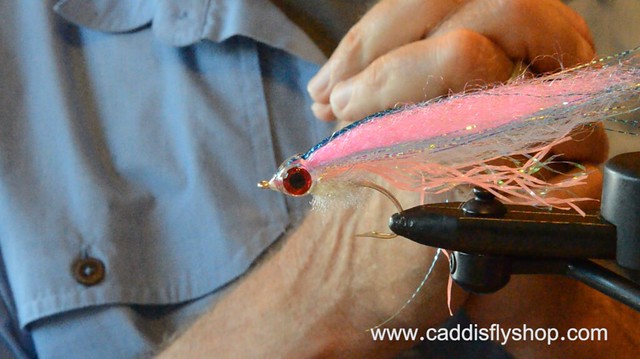
Trolling Bucktail style flies for Coho Salmon is an art that has come out of practice here off the Oregon coast since both wild and hatchery silver salmon runs tanked in the 1990s. Improved regulation of ocean fisheries and better survival conditions have resulted in some fairly robust runs of wild Silvers in most Oregon coastal rivers. Although the reasons for the improved runs and the health of the individual populations remain subject to debate, anglers in the ocean offshore Oregon now often find that regulations permit fishing for hatchery and/or wild Coho, albeit the regs sometimes only permit retaining fish on a few days per week and usually require use of de-barbed hooks.

I never experienced the glory days of Coho Bucktailing when the combined runs of hatchery and wild Coho were super abundant and fishing was considered easy. My recent ventures into the Pacific have been rewarding, though, and I have especially enjoyed Bucktailing Coho. For those of you who are wondering – grab a fly like this and strip out enough line that it trails just behind the boat (20 – 30 ft or so should be sufficient) and troll around current rips and temperature clines at somewhere between 2 and 5 knots.

Silver salmon will come up and chase these Bucktail flies, the trailer hook helps nab the short strikers and some anglers make a habit of clipping off the front fly, while others keep both hooks. Anglers in BC, Puget Sound, and SE Alaska know these techniques well. My best days on the ocean involve finding a school of silvers trolling Bucktails on the surface, then cutting the motor, drifting, and casting un-weighted flies and stripping the fly to entice a grab.

Jay Nicholas

Coho Salmon Bucktail Trolling Fly:

Fly 7

Overall Length = 4”
Trailer Hook: Up-eye Gamakatsu #2/0 Barb smashed
Trailer Hook Harness: Senyo’s Intruder Wire Pink
Hook: #2/0 Gamakatsu Sl 12S – smashed Barb
Thread: Fine mono
Body: Pearl Diamond Flat Braid
Flash Under Wing: Cascade Crest Pink Pearlescent Mylar tubing unraveled
Under Wing: White SF Flash N Slinky
Mid Wing: Chartreuse Fishient Flash N Slinky
Over Wing: Hot Pink Fishient Mirror Image
Topping: Flashabou Blue Accent
Fish Mask: Size 7.5
Eyes: 5/16: Adhesive Holographic eyes Super Pearl
Cure Goo: Hydro and Tack Free

Posted in Fly Tying, Fly Tying Materials and Supplies, Oregon Saltwater Fishing | 4 Comments

Saltwater Northern Pacific Albacore Deceiver Fly Tying Video

Pacific Albacore eat fish eat all day, every day. They may eat little tiny baitfish less then two inches long, or great big fat baitfish in the 6” size range, and they may be selective or undiscriminating in their feeding preferences.

I developed this Deceiver pattern to create a fly that would cast easily, swim true, and present an overall baitfish profile and color hue that would induce Pacific Albacore to chase and inhale the bug. This Deceiver has received the gulp of approval and you can have fun tying and fishing this tradition-based fly.

Jay Nicholas

Pacific Albacore Deceiver

Fly 6

Overall Length = 4”
Hook: #3/0 Mustad 3407
Tail: Silver Doctor Blue & White Saddles splayed out
Body: Pearl Flat Diamond Braid
Baitfish Belly: EP Anadromous Sparkle Brush – Miracle Pearl
Lateral Line: Lateral Flash
Wing: Steve Farrar’s Blend – UV SF Mackerel/Bleeding Black
Eyes: 5/16” Adhesive Holographic Super Pearl
Cure Goo: Tack Free, Thick, & Hydro

Posted in Fly Tying, Fly Tying Materials and Supplies, Oregon Saltwater Fishing | Leave a comment

Guided Winter Steelhead Trips: Prime Time

This is our most anticipated time of the year. On all coastal rivers you will find dwindling crowds and a influx of fresh wild fish.

photo 2

IMG_8912

IMG_3449

The next several weeks offer the best winter steelheading opportunities of the season. Look for river levels to rise and fall in the near future, with NOAA projecting a significant amount of much needed rain.

Guests on our most recent trips have experienced great fishing, with a mixed bag of large wild specimens as well as hatchery fish available for harvest.

Our winter steelhead trips have increased dramatically in popularity over the past few seasons, and we are very grateful. We truly believe that the systems within a days drive of Eugene offer potential for world class winter steelhead fishing.

IMG_3378

If interested in a winter steelhead trip, call the shop at 541 342 7005.

-TH

Posted in Coastal Steelhead Fishing, Oregon Winter Steelhead Fishing | 3 Comments

Summer Arrives on the South Island

IMG_1474

Our first season as owners of Cedar Lodge has been really enjoyable in many ways. Meeting new clients and returning guests has been great. Exploring new water, fishing new gear and new fly patterns has been a blast.

BUT… each morning from early November to late January examining the weather and making a flight/fishing plan based upon cold fronts and high water was challenging to say the least. We managed to fish all but a couple of days despite the weather but the “brochure day” was not the norm.

This last week however the weather has come right and I haven’t needed to do anything but look outside, it’s been fantastic!

A few photos celebrating Summer on the South Island to follow.

IMG_1460

Dan and Anne Spogen joined us for there 25th year!

IMG_1472

The kids have been enjoying riding our our “car less” country road.

IMG_1514

IMG_1500

I have been loving my Fishpond Mid Length Boat Net. I have also loved the fact that my kiwi guide com-padres have been giving me a really hard time for it. Yes it’s bigger and more difficult to get through thick west coast bush, but it’s really good when you need to scoop a big brown mid stream. The net is also really good in terms of protecting a fish it’s in shallow water. Finally flies do not catch in the very tough rubber bag!

IMGP0049

IMG_1488

IMG_1449

Cicada’s, hoppers, Royal Wulff’s and Blow Flies have all been working well!

IMG_1457

Eighty two year old Jon Pennachi with a nice fish on!

If you are looking at a trip to New Zealand this season we still have a few open dates, get in touch with us at info@cedarlodge.net. If New Zealand is on the bucket list in the future make Cedar Lodge part of your plans.

Posted in Fly Fishing Travel | 1 Comment

Saltwater Coho Salmon Deceiver Fly Tying Video – Using a Fish Mask and EP Sparkle Brush

Coho Salmon are as likely to feed on little shrimp and various larvae as to feed on good-sized baitfish in the ocean, but when they want bait, they will chase streamer style flies with gusto.

I wanted to adapt the Deceiver fly style to a streamer that I could cast-and-strip in the open ocean when I thought I was somewhere within range of feeding Silvers. Pinks and blues are colors I have incorporated into flies that have been well received by Coho in the ocean, so that’s where I started with the design of this fly.

The Fish Mask makes easy work of finishing the eyes and head on this fly.

Jay Nicholas

Saltwater Coho Salmon Deceiver

Fly 5

Overall Length = 4”
Thread: Clear Mono fine
Hook: #2/0 Mustad 3407
Tail: White & Pink Saddles splayed out
Body: Pearl Flat Diamond Braid
Baitfish Belly: EP Sparkle Brush Holographic Silver
Lateral Line: Lateral Flash
Wing: Hot Pink & Fl Blue Bucktail
Fish Mask: Size 7
Eyes: 5/16” Adhesive Holographic Super Pearl
Cure Goo: Hydro, Thick, and Tack Free

Posted in Fly Tying, Fly Tying Materials and Supplies, Oregon Salmon fly fishing | 3 Comments