Tube Fly Tutorial on Saturday December 10th

I’ll be at the Caddis Fly Shop on December 10th to present a tutorial on the basic approach to tying traditional style flies on tubes. By traditional flies I’m referring to patterns like the Polar Shrimp, Green Butt Skunk, and Thor.

Here are three traditional winter steelhead patterns that I tied on tubes - examples of the flies I will  be tying at the shop on December 10th.

Here are three traditional winter steelhead patterns that I tied on tubes – examples of the flies I will be tying at the shop on December 10th.

These three fly patterns are time-tested and proven effective when fished for winter fish under a wide variety of conditions across steelhead territory. Many tyers remain insecure, confused, or otherwise deterred from tying on tubes. This tutorial session will show how simple it can be to tie steelhead-catching flies on tubes with a minimum ecnomic investment and minimum of confusion too.

I will set aside some time throughout the day to show you the entire variey of tube fly tying products that we carry at the shop, and this is a very extensive array of tubes, weights, hook guides, junction tube, cones, disks and so forth. The most important concept I’d like to convey is the fact that the basic components of tube flies are very simple and the flies I’ll show off require only a tube, a mandrel to hold the tube, one weight, and one cone to cover the thread at the head of the fly (plus adding a little motion and weight).

This is just how simple it can be to tie traditional steelhead flies on tubes.

This is just how simple it can be to tie traditional steelhead flies on tubes. This photo shows the mandrel to hold the tube, a tube that includes a hook holder, two versions of tube weights, and two colors of cones to finish the head of the fly. Yes, it can be this simple.

I will tie using only the items pictured here, namely a flexi needle, a flexitube, a tungsten raw weight, a flexiweight, and an ultra sonic disk. Of course I’ll also use feathers, thread, body material, but the point I want to emphasize here is that the few items I’ve mentioned here are the basics needed to tie a great winter steelhead fly on a tube.

Mark your calendar for December 10th from 11 to 3, because I’ll be at the Shop to help any aspiring tube fly tyers who are able to join me.

Of course I’ll also be prepared to tie a Possum Leech and an Intruder on a tube, but first priority will be placed on de-mystifying and simplifying the process of tying on tubes.

I hope you can join me!

Jay Nicholas

Save

Posted in Classes and Instruction, Fly Tying | Leave a comment

Town Lake Steelhead Report

Jack Harrell knows Town Lake steelhead like no one else. This photo is from a recent trip when he guided me and Guy Allen on the Lake.

Jack Harrell knows Town Lake steelhead like no one else. This photo is from a recent trip when he guided me and Guy Allen on the Lake.

I can report that fly fishing for landlocked hatchery summer steelhead at the Town Lake is slow but there are opportunities to have some very challenging fishing here when the rivers are otherwise un-fishable.

On a recent guided trip to the Lake with Jack Harrell at the oars we found one fish that took our fly and held it long enough and securely enough to be hooked well.  Three other steelhead took our flies into their mouths only to have us pull them out without actually hooking the fish securely.

First good run across the lake.

First good run across the lake.

Getting close now.

Getting close now.

Ready for release in the net.

Ready for release in the net.

Thanks for a great day on the Lake Jack. Our tippets were 5X and the most productive flies included glass bead size 10 buggers, size 14  bead head Hare’s ears, and simple size 14 chironimids.

ODFW stocks these fish into the lake from the trap on Three Rivers but not very many surplus steelhead were available this season. Still, we found enough to keep the day interesting and the casting is always a challenge. I fished a #4 Echo Switch rod in the Glass family with a Nautilus fly reel and Airflo Floating line. Not that it matters – the most important matter is to fish small tippets and small flies that are cast precisely in the proper zone ahead of the fish. They will sometimes spook before the fly hits the water but not always. Sometimes they lunge at your fly and devour it – triggering much excitement. Windy days do not fish well because it is difficult to spot the fish. Almost all of the fishing we do is sight fishing but on occasion I have had success bind casting an egg sucking leach in deeper water near the dock.

I’m sure you will have fun (fish or not) if you give this fishery a try – unless the darn fish make their way out of the lake and back into the Nestucca River!

Good Luck everyone!

Jay Nicholas, December 2016


Posted in Coastal Steelhead Fishing, Fishing Reports | Leave a comment

Understanding Schlappen Feathers for Fly Tying

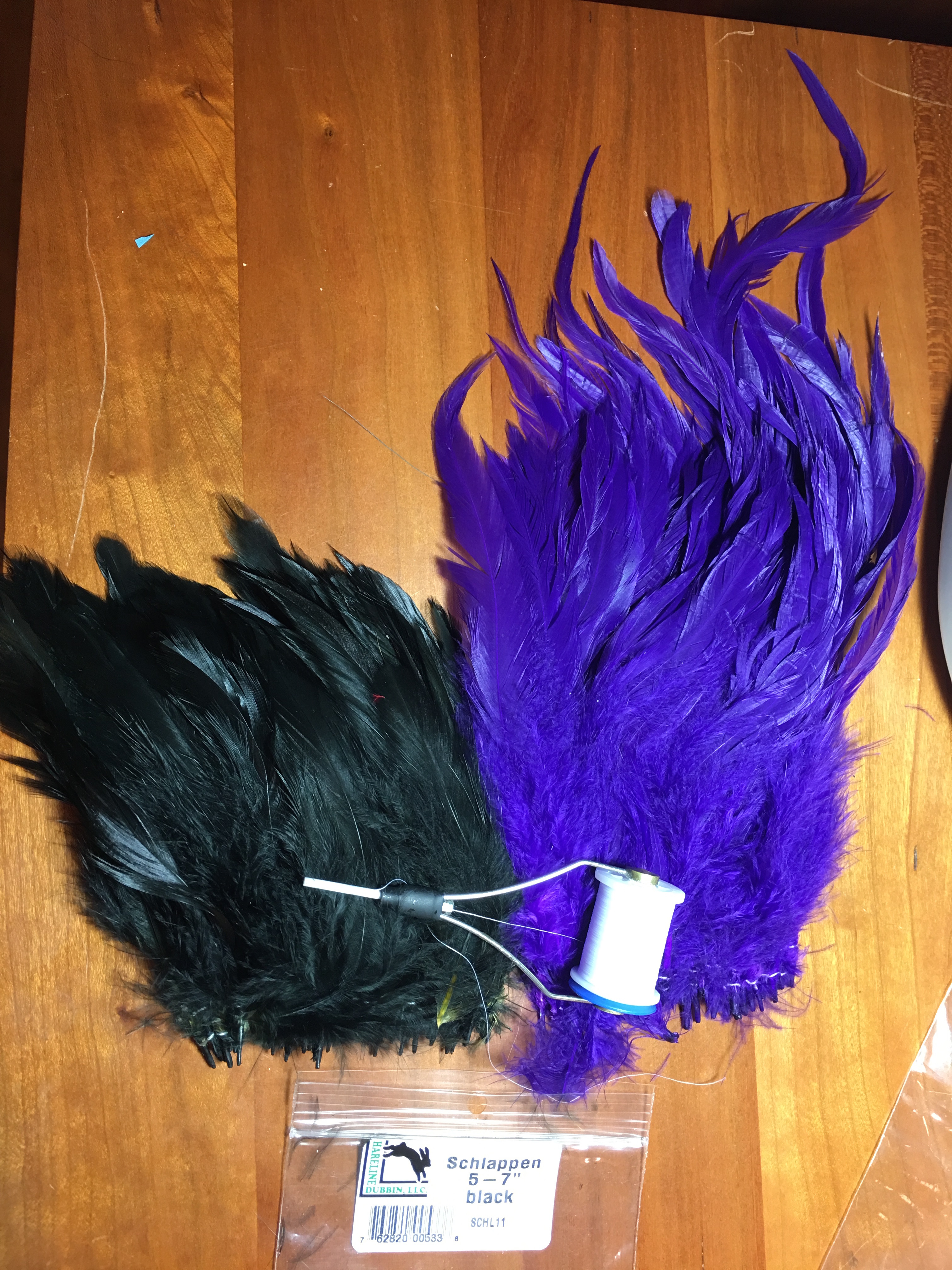
Comparing the Schlappen feathers in two packages of 5" - 7" feathers.

Comparing the Schlappen feathers in two packages of 5″ – 7″ feathers.

I have been using Schlappen feathers on a regular basis lately while tying up my boxes of winter steelhead flies. Fact is, I have been very surprised and pleased with the overall quality and diversity of the feathers I have obtained lately, and I guess it would be fair to say that my recent experience is but one more in a long string of situations where I continue to learn even after having more than fifty years experience as a fly tyer under my belt.

It was my routine practice to avoid purchasing Schlappen feathers, preferring instead to use hand selected saddle feathers for use as collars and beards on my salmon and steelhead flies. I was fond of being able to pluck feathers from a full saddle patch, from the shortest feathers at the top of the patch to the longest webbiest feathers at the base of the saddle patch.

In case you are not already familiar with these feathers, I would describe Schlappen as the softest, dullest feathers found near the base of the rooster’s tail and these lay between the saddle feathers on the rooster’s back and the long tail feathers.

I formerly considered Schlappen to be junk feathers, far less desirable than saddle hackles.

Lately, however, I have completely reconsidered that opinion and done a full reversal of my decades-long disdain for these feathers. I have tied flies with randomly selected packages of Hareline Schlappen during the process of tying a wide variety of winter steelhead flies, including Intruders, and have been overwhelmingly pleased with the results.

Sure, there are waste feathers in each package and the proportion of junk feathers will vary between packages and also depend on the variety of flies that you intend to tie with any specific package.

I just did an analysis of a random pack of black Schlappen and here my opinionated assessment. One package of Schlappen had had 84 feathers in it. i discarded 25 feathers, set aside 20 feathers that had good tips and 29 feathers that met my standards for high quality wet fly collars from tip to webby base. Priced at under seven bucks for the package, I’m pleased to get that many good feathers for my steelhead and salmon flies. Most of the feathers that I discarded as so-called “junk” could actually have been used for smaller flies beards, tails, and various smaller wet flies.

29 super select Schlappen feathers prepared for use as collars on winter steelhead flies.

29 super select Schlappen feathers prepared for use as collars on winter steelhead flies.

The 29 super select Schlappen feathers are pictured above, after I stripped off the stem where it became too thick to wind on a tube or hook.

How representative were the results of this Schlappen package? I have found an occasional package with lower percentage of feathers that met my standards and a few packages that had an even higher proportion of super feathers.

Stem thickness of Schlappen feathers – tends to be slender, more so I think than you will find on most strung saddle feathers. Slender stems make it easier to wind the collars and reduce bulk on my flies, so I have been very favorably impressed with these slender stems.

Overall length of Schlappen feathers – these feathers are in packages labeled as 5 – 7″. When the wholesale dealer gets these feathers from the producer, they are on a sewn string that is roughly four feet long, with the shortest feathers on one end and the longest feathers on the other end. These long strings are then cut into short sections for packaging. As a result, any specific package may be from the short end, the middle, or the long end of the feathers sewn together on string.

The photo at the beginning of this post illustrates two different strings of Schlappen that represent about the two extremes of feather lengths that you will find in any given package of these feathers. The average length of black Schlappen feathers in the one package is about 5″ with some feathers as short as 4″. The average length of the purple Schlappen feathers is closer to 8″ with a few feathers nearly 10″ or so. These two packages represent extremes of the packs that you are likely to find on the pegs at your local fly shop, and you are more likely to find feathers that are in the range of 5″ to 6″ than smaller and larger feathers.

I find that I like to get a few packages of the shorter feathers and a few packages of the longer feathers – that way I have a broader range of feather qualities to use on my flies.

I hope that this post helps answer some of the questions you may have about Schlappen feathers. My enthusiasm for tying with these has blossomed in the last two months and I think that my winter steelhead flies have benefitted greatly from my new perspective.

Questions? Shoot an email the Caddis Fly Shop and I’ll try to answer.

Jay Nicholas, late November, 2016


Posted in Fly Tying, Fly Tying Materials and Supplies | 2 Comments

Hareline Fly Tying Kits – Quality for Beginner or Aspiring Tyer

Hareline materials only fly tying kit has all first rate products and step-by-step instructions to tie 20 great fly patterns.

Hareline materials-only fly tying kit has all first rate products and step-by-step instructions to tie 20 great fly patterns.

Our friends at Hareline Dubbin in Monroe Oregon have recently introduced three new options in fly tying kits that I have had the opportunity to examine recently. Nicely done. Following I’ll note some of my observations on these three kits. They are all in stock and available as gifts or for the beginner who is about to venture into the world of fly tying for the first time.

First, the fly tying instruction booklet is very good, providing clear instructions regarding how to tie 20 of the best trout flies that are fish catchers in most waters around the world. In addition, the skills you will exercise while tying these patterns will provide a foundation for tying flies for salmon & steelhead,  bass, pike musky and bonefish at the least. Sorry, got carried away.

The instructions are good, the materials are first rate too, from threads to dry fly hackle to dubbing and hooks and so forth. All of the materials contained in this kit are the same as I select to tie flies myself, and that is my test for quality. This is not to say that there are not other high quality fly tying kits out there, only to say that I have personally inspected these kits and believe that they represent excellent value and price, with far more and diverse selection of materials than anyone could possibly purchase for a similar investment in normal packaging sizes.

Except for the spooled materials, all of these packaged materials generally represent a smaller quantity than normal packaging that you would find in fly shops. Downsizing on the materials makes perfect sense in fly tying kits because a person would not normally want to get larger quantities of many of these materials until deciding which patterns they want to tie most often.

What is in the Hareline materials-only kit? Briefly, you get two sizes of beads, six sizes of hooks, six spools of veevus thread, copper wire, gold wire, silver gold mylar tinsel, yellow floss, pearl krystal flash, sparkle emerger yarn, parapost wing, Mcfly foam, three colors of chenille, a half Hare’s mask, five colors of dubbing, rubber legs, elk hair, comparadun hair, rabbit strips, crosscut rabbit strips, marabou feathers turkey tail feathers, keough sadddle feathers and grizzly saddle feathers, tailing feathers for dry flies, saddle feathers, ringneck pheasant feathers, partridge soft hackle feathers, a half grizzly cape suitable for tying wings and all sizes of wet fly collar hackles, peacock herl, two colors of bulcktail hair, Loon water based cement, and a Hareline drink coaster, all contained in a useful plastic box.

What flies will the instruction booklet cover? San Juan Worm. Brassie. Bead Head Caddis. Prtridge & Yellow soft hackle. Girdle Bug. Woolly Worm. Woolly Bugger. Hare’s Ear Nymph. Pheasant Tail Nymph. Darian’s Kool Kat Soft Hackle. TP’s Little Nymph Thing.  Buck Tail Streamer. Bead Head Bunny Leech. Comparadun. Elk Hair Caddis. Adams. Light Cahill Parachute. Black Ant. Griffith’s Gnat. Black Gnat Dry Fly.

Hareline also offers two complete kits, the first includes an economy vise and economy tools. This vise and tools are perfectly fine for the beginner who is not sure how dedicated they will be to the adventure of fly tying. This is the Hareline Economy Kit.

The superior full fly tying kit offered by Hareline is the one I am most impressed with and includes a premium vise and premium tools.  The Hareline Premium Fly Tying Kit includes mostly USA tools and this is the best choice for the beginning tyer who is likely to continue tying – because the tools are more durable and in my opinion perform at a higher level than the imported economy tools.

Tools include a vise, a bobbin, scissors bodkin, hackle pliers, hair stacker, and a whip finish tool.

The instruction booklet also shows the proper way to secure a hook in your vise, , dub material on thread, start your thread on a bare hook, thread a bobbin, and as previously noted, tie 20 great trout flies.

Jay Nicholas, November 2016

Save

Posted in Fly Tying, Fly Tying Materials and Supplies | Leave a comment

Hydroelectric Dams: Major source of global greenhouse gas

Hydroelectric dams have had a devastating impact on anadromous fish populations, from inundating spawning areas to changing historic river flow patterns and raising water temperatures, and most importantly blocking passage of salmon and steelhead between the streams and Pacific Ocean.

But dam apologists often point to the carbon emission avoidance of using hydroelectric power. A new study from Washington State University finds that methane, which is at least 34 times more potent than another greenhouse gas, carbon dioxide, makes up 80% of the emissions from water storage reservoirs created by dams.

Mt. Hood Rises behind the Dalles Dam on the Columbia River This Dam Has Two Fish Ladders and a Powerhouse Collection System 05/1973

From The Guardian:

“I think this study shows that dams as a source of energy aren’t without their greenhouse gas costs,” says Bridget Deemer, a research ecologist at the US Geologic Survey, who led the study during her prior position as a research associate at Washington State. “Even though it’s a renewable source of energy, people should keep the greenhouse gas side of the picture in mind when making planning and policy decisions regarding dams.”

The research, which examines 100 recent studies on greenhouse gas emissions from 267 large reservoirs around the world, also calls into question the wisdom of building more hydroelectric dams as countries try to nix their dependence on coal, natural gas and oil. An estimated 3,700 new dams are proposed or under construction around the globe, the study reports. It suggests the hydropower industry will need to control its emissions.

According to the Seattle Weekly, some reservoirs emit more greenhouse gases than fossil-fuel-based energy providers, such as natural-gas power plants.

Posted in Oregon Conservation News | 1 Comment

Cedar Lodge NZ 2016 November Report

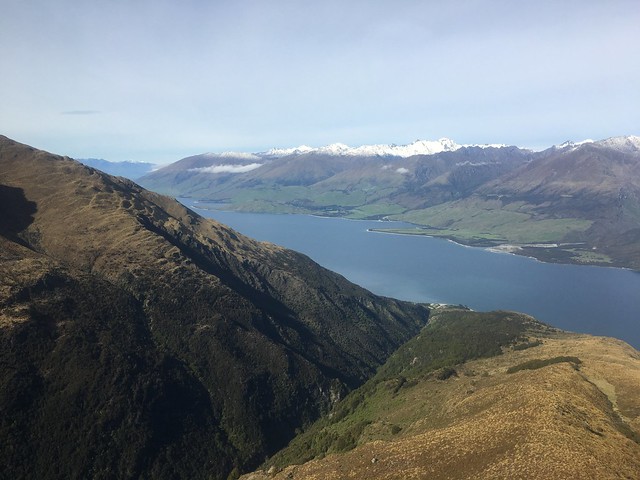
Cedar lodge November 18 2016

2016 first week Cedar Lodge NZ

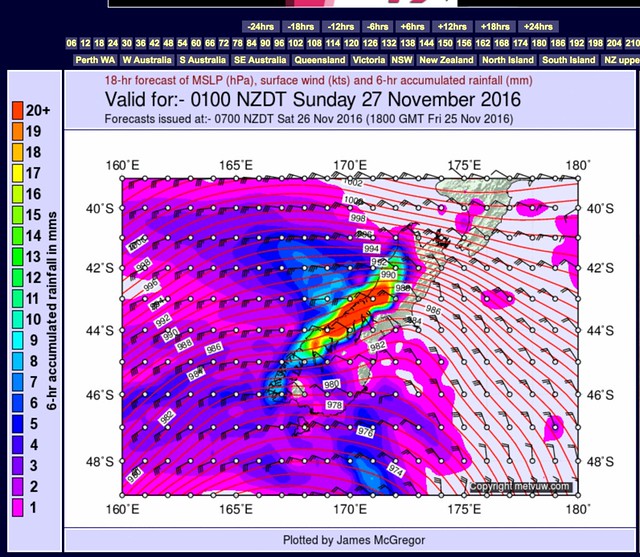
We have had a mixed bag of weather this early season at Cedar Lodge. After what many have described as a mild Winter on the South Island we are now having an extreme Spring. This week was wrought with wind, and the last few days it’s been pelting rain near the lodge putting most “west of the divide” rivers out of shape.

Screen Shot 2016-11-26 at 12.31.00 AM

There has been some good fishing despite the wind and now rainy conditions. It would seem that we won’t be short of water this Spring and hopefully early Summer. Next weeks conditions are forecast to improve dramatically.

2016 first week Cedar Lodge NZ

Cedar lodge November 18 2016

CD

Posted in Fishing Reports, Fly Fishing Travel | Leave a comment

Black Friday Sale at The Caddis Fly Angling Shop

All in store purchases are 10% off.

Fall 2016 Patagonia

New Nautilus fly reels

Get 10% on top of all gift card purchases. Example: buy a $100 gift card and we will load it for $110.

Buy any fly tying kit or complete fly fishing outfit and get 15% off.

Posted in Fly Tying, Fly Tying Materials and Supplies, Shop Sales and Specials | 1 Comment

Holiday Shopping Guide for the Fly Angler

It’s that time of year again and we have created a short video to help you and yours seek out the very best gifts for the angler in 2016. Of course there are many more options and our helpful staff at Caddisflyshop.com is happy to assist in person or on the phone.

Posted in Shop Sales and Specials | Leave a comment

Cuba Trip Gear Notes – Island of Youth July 2016

On my July trip to the Island of Youth I got to test out some of the great gear available in the fly fishing world today. Saltwater fly fishing for tarpon, bonefish and permit test your gear. The following is a discussion of the gear I used.

SAGE SALT 890-4

The 9ft 8wt Sage Salt Rod is the perfect bonefish and permit rod in my mind. We used heavy flies on our recent trip, the Avalon Fly and EP Descendent Crab with a 12ft leader require a powerful rod that will turn over line, leader and fly with accuracy speed and power. The Sage SALT delivers these qualities beautifully. I think the 890-4 is on the heavier side of an 8wt compared to another favorite the Scott Meridian but on this trip we used the rod more for Permit than bonefish.

Scott Meridian 9ft 10wt

I had a 10wt clear tropical outbound line on rigged on the 10wt Meridian all trip and it was fantastic. The rod is super light in the hand for a power house 10wt. It’s “easy to feel” tip section rockets long casts with larger rabbit and EP tarpon flies. No troubles fighting fish on the Scott 10wt either. Tarpon hooked on rocky reefs required some “pull back to the boat” to keep them on the line and headed to hand. No problem for the Scott Meridian.

Nautilus Silver King Fly Reel

I called Kristen Mustad of Nautilus Reels last August and asked him to trick me out a Silver King reel. He sent one in blue with tarpon graphics, red parts and hooker fly holder. I knew I would love it well before it came to me. The Silver King has a mega retrieval rate and while it looks larger than some other 10wt reels it’s not heavier so why not get the retrieval rate and the reduced line memory for a tarpon reel. If you are looking for a reel in the 10-12wt capacity range take a good look at the Silver King. Large drag knob, easy spool release and great looks! I used three other Nautilus reels this trip. The N/V series and CCFX-2 Silver King worked perfectly!

Hatch Tapered Leaders, Tippet and Shock Tippet

We used 9ft 16 and 20 pound Hatch Fluorocarbon Tapered Leaders for Permit. If added length was needed we used 16lbs Hatch Tippet. 60lbs and 80lbs Hatch Shock Tippet formed our larger two part tarpon leaders. Hatch fluorocarbon material cinches down clean and smooth, the outer coating of the material allows knots to tighten completely and form streamline knots. I have been using the Hatch brand material for the last couple of saltwater trips without failure. Good Stuff!

Mastery Titan Taper Intermediate Line

My new favorite tarpon line! The Titan Taper 450 grain was great on my Winston 12wt rod set up for tarpon. We used it both in deeper reef situations and on the flats. The line seems to get down and hold in that mid level “tarpon eat zone” really well. The taper of the line is not so aggressive that it creates a splashy presentation or a super hinge effect when casting.

Patagonia Sunshade Shirt

Patagonia makes a ton of great fishing clothing. This years Sunshade Shirt iteration is has a high UPF rating, great fit and a handy vertical chest pocket for a phone/camera. It was really hot all trip and I fished the Sunshade crew and hoody exclusively. They worked great!

Best Flies -EP Flies

Our EP flies rep has been trying to get me to carry Enrico Puglisi flies for a couple of years now. I fished a few over the years and really liked how the EP fibers shed water and are light to cast. I ordered a bunch for this trip and loved all the flies that we fished.
Shauna’s first cast to a Permit with EP’s Descendant Crab yielded a fish. This unique fly is a realistic crab pattern that reminded me of the successful pattern last year at Cayo Cruz. It’s super durable and super “crabby”, complete with EP Crab Claws. All of the Tarpon flies worked well particularly the Yellow/Chartreuse Bunny pattern. Our guide was adamant that it imitated a bait-fish that was available to Tarpon in the region at this time of year.

CD

Posted in Fly Fishing Gear Review | Leave a comment

Underway at Cedar Lodge New Zealand

Cedar lodge November 18 2016

We arrived to 3 days of pounding rain and wind. Puddles dotted the property and gum boots were a requirement. Fortunately our good friend Alan Cooper had been taking care of the lodge grounds. Golf course, gardens and new plantings were all in place. The returning superstar chef team of Crystal Platt and Kirsten Hansen arrived a week prior to prep the kitchen and guest rooms.

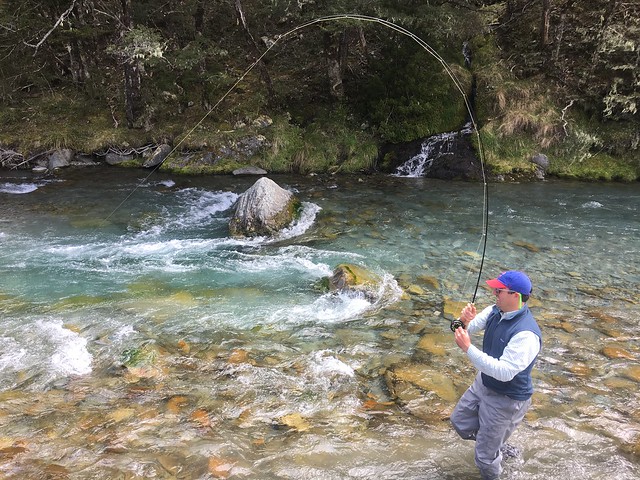
When our first day of fishing arrived a cold southerly pattern left us with a “blue bird”, “brochure day”. All of our waters nearby were high but we found a clear stream and hungry trout. Stay tuned for more reports to come from Cedar Lodge New Zealand.

Cedar lodge November 18 2016

Cedar lodge November 18 2016

Cedar lodge November 18 2016

Posted in Fishing Reports, Fly Fishing Travel | 1 Comment

Red Bandit Fly Tying Video

In this instructional fly tying video Matt Powell demonstrates how to tie the Red Bandit. This “attractor” nymph pattern was developed by Matt in Colorado, but has produced a lot of fish for him in the Pacific Northwest. The fly features Hareline’s new Gritty Tungsten bead, giving it a “glowing” red head. Tie one on and see if it measures up on your favorite trout stream.

Red Bandit pic

Red Bandit

Hook: TMC 5262 or Daiichi 1710, sizes 8-14
Thread: Danville 70D, Red
Bead: Hareline Gritty Tungsten Bead-Red
Tail: Natural Ringneck Pheasant Tail
Body: Wapsi Awesome Possum Dubbing, Natural
Rib: Ultra Wire, Red
Back: Pearl Flat Mylar Tinsel
Thorax: Senyo’s Fusion Dub-Rainbow
Gill: Hungarian Partridge
Hot Spot/Collar: Hareline Ice Dub, UV Red

Posted in Fly Tying, Fly Tying Materials and Supplies | Leave a comment

Cedar Lodge Season Four Under Way

We left Portland on Veteran’s day and flew to Los Angeles for a late evening flight to Nandi Fiji. From Nandi, a mid day flight on to Auckland. We were pretty tired from the flight and had an early dinner and then to bed. At midnight Shauna woke me and I immediately felt the swaying of our hotel building. The 9th floor was gently rocking back and forth. The swinging lasted for nearly a minute.

On our way 2016

Shauna hopped on to GeoNet to get the most recent info on earthquakes around New Zealand and the reports were streaming in. It was shocking to know that we felt the quake in Auckland so far north of the most affected areas.

On our way 2016

There has been widespread damage in many areas around New Zealand and much of the news is still breaking. We are very fortunate to have been able to fly from Auckland to Queenstown yesterday and begin to get settled in for our first week of fishing starting this Friday.

Thanks so much to all who emailed with concerns.

More to come from Cedar Lodge…..

Chris and Family

Posted in Fly Fishing Travel | 1 Comment

Trouble Maker October Caddis Fly Tying Video

August through early November is prime time for fishing October caddis pupae. In this video Matt Powell demonstrates how to tie an excellent imitation. This pattern works for trout and steelhead on our local waters and beyond.

Troublemaker October Caddis

Hook: TMC 2302 or Daiichi 1760, sizes 6-10 (size 6 in video)
Thread: Danville 140 D, Black or Olive
Beads: Bead Black Brass; 2nd Bead Copper Brass (5/32 in video)
Underbody: Lead Wire 8-12 wraps (.030 in video)
Body: Hareline UV Chewee Skin, Peach
Thorax: Hareline Angora Goat Dubbin, Black
Collar: Senyo’s Fusion Dub, Emerald
Hackle: Hungarian Partridge, Natural

Posted in Fly Tying, Fly Tying Materials and Supplies | Leave a comment

Lower Mckenzie Report : November 2016

hayden-1

The shop has been getting reports the fishing has been “good” on the lower river.    So…., Only one way to find out?   Lou and Tim headed out and, let’s just say we confirmed….”the fishing is good”!

lower mckenzie river fly fishing

The mild temps and much better water levels are producing some fine results.


mac-4

The winning flies for the day were:  Jigged Prince NymphChubby Chernobles, Stimulator, and a large Parachute Adams.  Below are the last remains of a Jigged Prince Nymph.    The more the this fly got chewed…the better it worked!

mac-3


The current forecast calls for mild temps and no bombing rain. If you can make the time….get out there…”the fishing is good”!

Lou V.

Save

Save

Save

Posted in Fishing Porn, Fishing Reports, Uncategorized | Leave a comment

Purple Prospector Fly Tying Video

Matt Powell demonstrates how to tie a simple shank style steelhead fly. The weight and color combo are perfect for summer steelhead on the swing. The OPST shanks and Senyo’s trailer wire make this fly an effective “trailer hook” style pattern proven on Oregon Steelhead.

Purple Prospector pic

Purple Prospector

Thread: Danville 140 D-Black
Shank: OPST Steelhead Shank-32 mm
Bead: Hareline Plummeting Tungsten Bead, Black Nickel
Trailing Hook Wire: Senyo’s Intruder Trailer Hook Wire, Purple
Hook: Gamakatsu Octopus or Daiichi 2557 or OPST Swing Hook, sizes 2-4
Body: Hareline Ice Dub, UV Purple
Wing: Hareline Rabbit Strip,Purple
Hackle: Hareline Strung Saddle Hackle, Cerise
Collar: Senyo’s Fusion Dub, Midnight

Posted in Fly Tying, Fly Tying Materials and Supplies | Leave a comment