Fourth of July Fly Rod Clearance – SAGE and Winston Rods at 25-43% Off

July means it’s time for the fly fishing industry to clear out the old and introduce the new. SAGE and WINSTON rods are now available for fantastic values. If you need a new rod, a backup rod, a rod for a trip, a gift…. you get the picture. We have some sweet deals!

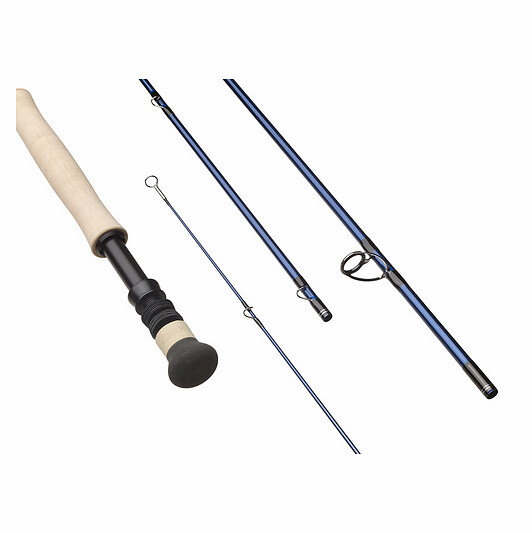
SAGE SALT RODS – Regularly $850 now $510

sage-salt-fly-rods-35

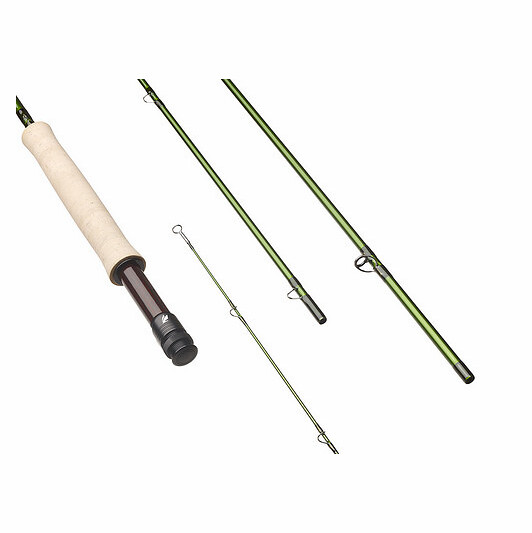
SAGE ACCEL FLY RODS – Regularly $650 now $350-$501

sage-accel-fly-rod-29

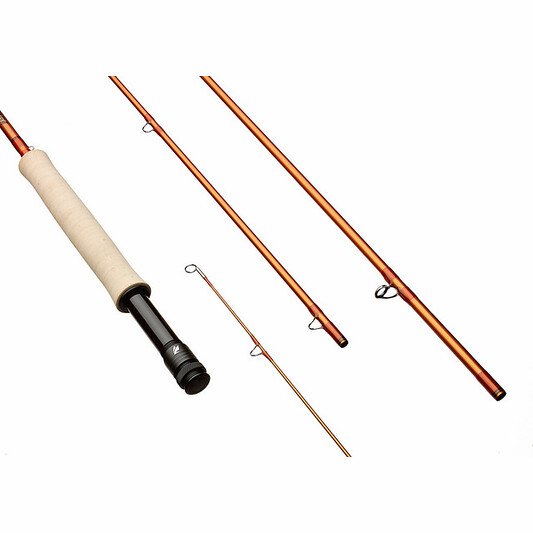
SAGE BOLT FLY RODS – Regularly $650 now $350

sage-bolt-27

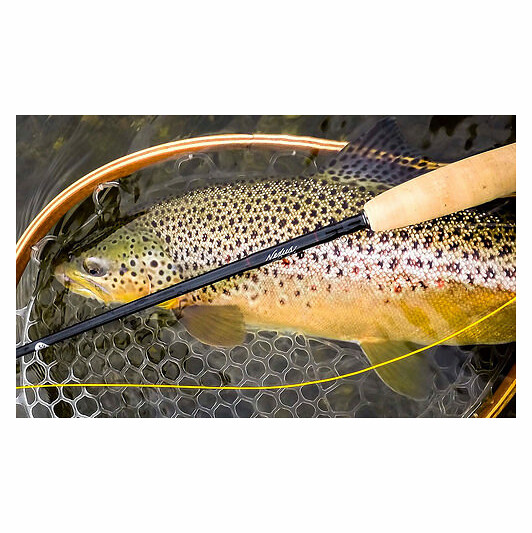
WINSTON NEXUS FLY RODS – Regularly $475 now $356.25

winston-nexus-fly-rod-40

Stop by the shop or order online while they last!

Posted in Shop Sales and Specials | Leave a comment

Who We Are Series Post 11: Chris Daughters

This series of posts is meant to introduce all of you terrific tiers and cool customers to our small, but fantastic team of anglers here at The Caddis Fly Angling Shop. Each employee answered a number of questions about their fishing expertise, their favorite style of fishing and fishing products. Each week we will publish another employee’s answers to these questions to let you know Who We Are. This series will hopefully give you a peak into who we are, how we fish, and who you are chatting with when you next call or email Caddis.

And finally, though you will find them here only half of the year, busy at Cedar Lodge November through April, we have to introduce Caddis Fly’s oldest employee and now owner, Chris (and family)!

IMG_1116 IMG_1115

Who: Chris Daughters. Caddis Fly Shop Owner.

*Chris and his wife Shauna have two kids, Patsy and Cash, and they make up a fanatical fly fishing family.

Time at Caddis: Owner for 21 years, but with the shop since I was a kid.

Are you a Eugene local, or are you a transplant? 

I was born and bred Eugenian; I grew up fishing on the Mckenzie.

How many years have you been fly fishing?

35

What is your favorite rod and reel combo?

There is so much great tackle out there that is a really tough question. The season at Cedar Lodge I have really enjoyed casting the new SAGE X with the new Scientific Anglers MPX Amplitude fly line.  Bauer RX reels are phenomenal trout to saltwater.

Wet wade or float, and why?

During the season at Cedar Lodge (Nov-April) it’s all wet wading. Generally we have better success when you can approach the fish from shore. We cross river but don’t wade deep when casting.  Locally fishing out of my McKenzie boat will always be special to me as guiding made me realize you could get paid for doing something you love.

Where do you fish?  I love to travel to fish. Current favorites are the Bahamas, Cuba and New Zealand. Sight fishing is what it’s all about for me.

Dry fly, streamer or nymph–and do you tie them? Upstream I dry fly fish, preferably.  My son and I tie flies for trip prep, latest creations are nymphs for New Zealand.

Spey or single hand cast?  Both

Salt or Freshwater? Both. I love the salt when it’s cold in the northwest. isla de juventud permit

Where do you fish?

(The real question is where Chris hasn’t.)

bolivia dorado

What is your favorite part about working at Caddis?

Interesting folks come through the door everyday, and its a fun environment. You work with like minded individuals working at something they enjoy.

When a fellow angler asks, “What is the biggest fish you have ever caught?” what is your answer? 

Not important to me. It’s about the places fishing takes me, not the size of the fish.

nz rainbow

Christopher Daughters is one of the most experienced and practiced anglers around.

Not only is he the owner of Caddis, but having grown up in Eugene and in the fly fishing industry, he knows the McKenzie and the Willamette like the back of his paddle, and the products he uses are ones he has watched go from innovative newcomers to the angling arsenal to household names and go-tos. If you need to know the difference between an older rod and its successor, ask Chris. If you want to know where to go on the McKenzie in October when the water is blown out from rains, ask Chris.

He’s a busy man, but Chris tries to get into the shop as much as he can. When he is in the states (May to October), he is either in shop or out on the water, guiding on the McKenzie or Willamette. If you plan far enough ahead (Chris is normally booked out for the season by mid-April) you can even get out on the water for a personal tour with Chris as your guide. Chris is a wonderful fly fishing mentor and he is always ready and willing to answer any question about fishing here or around the world.

And with that, you have met all of the Caddis Fly Crew members!

We thank you for reading oregonflyfishingblog.com and for your continued business and support at The Caddis Fly. You, our customers, are all as big a part of our little Caddis Fly Family as we are, and you are the biggest part of why Caddis is the resource that it is for tiers around the world. We look forward to the opportunity to serve you in the future!

Want to know more about the Caddis Fly? Visit our website’s About page at this link and feel free to call or email us any time at our contacts below:

(541)505-8061

caddiseug@yahoo.com

Tight lines until next time!

The Caddis Fly Crew

Save

Save

Save

Posted in Fishing Reports, Fly Fishing Gear Review, Fly Fishing Glossary, McKenzie River, Oregon Conservation News | 2 Comments

June on the Lower Deschutes

While it was once the prime time of the salmon fly hatch, June is now a transitional period when it comes to insects on the Lower Deschutes. However, just as the salmonflies begin to thin out, so do the crowds, and that is why June can be phenomenal on this desert oasis of a river.

DCIM101GOPROGOPR1912.

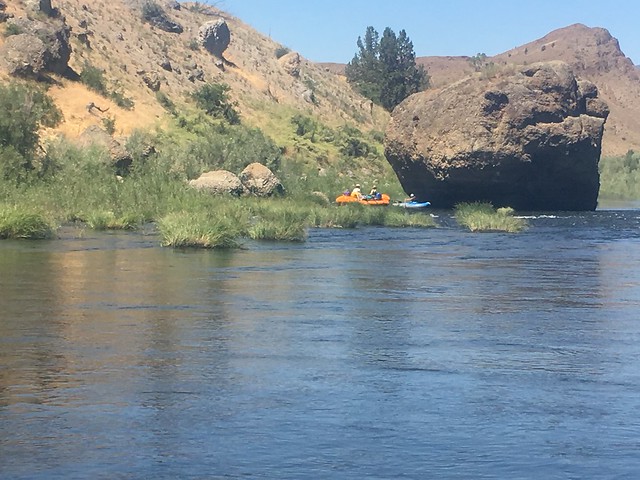
The story of our float from Warm Springs to Maupin last week is an interesting one. With rain and mild to warm temperatures in the forecast, we really did not know what to expect. Would there still be salmonflies in the upper river? Would the mayflies be out due to the forecasted conditions? Would we be lucky enough to see some green drakes? The answer is yes, to all of the above.

In terms of weather, we had stints of rain and mild temperatures, which would quickly transition to sun and warmth. It was very “fishy” weather, and extremely conducive to lots of insect activity. In the upper part of the river there were still fish willing to eat a golden stone dry, but I think that in the past few days that hatch has tapered off completely. Once we got below Whitehorse Rapid it was an assortment of bugs. Whenever the clouds would roll in and there’d be a sprinkle of rain, there were tons of PMDs and a few drakes fluttering around. Once the cloudy skies gave way to sun, the caddis would be out in numbers. It was fun, constantly-changing fishing that kept us on our toes the whole time, but there was no denying that the fish were willing to eat on top so long as you were able to determine what each individual fish was rising to. And of course, nymphing was producing fish as it so often does on this river.

Some of our favorite flies for June on the Lower Deschutes are the Peacock Caddis, X-Caddis, Sparkle Dun PMD, Sparkle Pupa, Clarks Stone, Outrigger Yellow Sally, Extended Body Green Drake, and the Jigged Tungsten Prince Nymph.

Overcast

Overcast

And then the sun would make an appearance!

And then the sun would make an appearance!

The most memorable part of our float wasn’t the fishing. It was spending the duration of it with great friends and taking our friend Nick down the Deschutes for the first time. He was blown away, and rightfully so. In my opinion, there are few places as stunning as the Deschutes between Trout Creek and Maupin. It’s truly tough to beat a river trip with your best friends. If one of us was fishing up a riffle or tree line, the rest of us were wading along behind, wishing more to experience those times together than each of us splitting off and fishing solitary.

Nick's first taste of the 'bow and arrow' cast.

Nick’s first taste of the ‘bow and arrow’ cast.

DCIM100GOPROGOPR1852.

Nothin' better

Nothin’ better

DSC_0081

Whether you can carve out time to head to the Lower River this month or anytime this summer, regardless of the fishing it never ceases to amaze. As these consistent, hot days become the norm, caddis will become the standard fare down on this stretch and that can be some of the best dry fly fishing of the year, especially at last light. Cheers to Summer!

Andy Archer

Posted in Eastern Oregon, Fishing Reports | Leave a comment

Tying the Glass-Bead Wooly Bugger Trout Lake Fly

Jay Nicholas Screen Shot 2017-04-24 at 1.01.10 PM

This is one of my most favorite wet flies to fish for trout in lakes and for sea run cutthroat in the river and estuary. If you are an intermediate or advanced tyer you need not watch this video—just open your mind to the possibility of using glass beads instead of brass and tungsten, because these flies sink more slowly and sometimes that can be the ticket to success when fishing shallow feeding fish or in shallow water where a heavier fly will hang up on the bottom.


Hook: TMC 5252 or 5263 in sizes 8-14 (I prefer a #12 most of the time)
Thread: your choice but I’m liking Veevus black or red in 10/0 these days
Rib: Copper wire
Dubbing: I use a mixture that includes some Ice Dub to yield a brown over all effect
Tail: Brown wooly bugger marabou
hackle: Brown dyed grizzly
Bead: Glass in orange or red size large
Cement: Hard as Hull Penetrator

I know this is not rocket science, but this is really a favorite fly and I hope you enjoy fishing it.

Jay Nicholas
Spring Season 2017
Posted in Fly Tying | 1 Comment

Walk The Land Day – Join The McKenzie River Trust for a Day at Green Island

LR-HomePage-header-2017
All day on June 24th – Here is a link to the days events, maps, and details. – http://www.mckenzieriver.org/events/walk-the-land/

Event-flyer

Posted in McKenzie River, Oregon Conservation News, Oregon Fly Fishing Clubs and Events | Leave a comment

Six Superior Fly Lines to Fish Baja (Nicholas’ Review)

Ok, it’s really funny now that I’ve fished Baja for one week I’m now an EXPERT!

An SA Saltwater Hover Fly Line rips off the deck as a skipjack makes its first run in Baja.

An SA Saltwater Hover Fly Line rips off the deck as a skipjack makes its first run in Baja.

Really, not trying to overstate my knowledge, but I found several fly lines that I particularly liked fishing and that performed very well, so I thought it might help to share my impressions here.

Not in order of quality or usefulness, I fished and recommend these fly lines to fish Baja.

RIO Tropical Outbound Short fly line.
* short head
* loads rod quickly and allows me to make long casts with minimum false casting
* available in floating, Intermediate sink, and fast sink tips on a fully integrated line
* not the best choice if you are intending to pick up a long line to recast
* superior if you will retrieve your fly close to the boat or shore and then recast quickly
* this line shoots exceptionally well and handles well in warm climate

Airflo Chard’s Tropical Punch
* this is an agressive floating line
* most of the weight in the head is in the front 20 or so of the line
* this line allows you to fire off a long cast even if you have stripped your fly close to the boat or shore
* the front-loaded head means you do not need several false-casts to launch a rocket
* powerful enough to cast large wind resistant flies
* This line has sufficient rear taper to the head that you may pick it up and recast with considerable line out of the rod tip
* this line shoots exceptionally well and handles well in warm climates

Scientific Anglers Sonar Saltwater Hover fly line
* this is a slow sink intermediate head fly line suitable for warm and tropical climates
* I found this to be a great intermediate head fly line
* it is important to note the weight of this fly line head and decide how to match it with your casting style
* my personal preference is to fish the Sonar Hover WF-10 on my 8 wt Echo EPR rod (305 gr head)
* my personal preference is to fish the Sonar Hover WF-12 on my 10 wt ECHO EPR rod (415 gr head)
* these personal line choices reflect the fact that I often retrieve my fly very close to the panga and like to cast with quickly with minimum false-casts
* anglers who will pick up 30 feet of line and recast will probably not want to over-line their rods as is my preferance

Scientific Anglers Warmwater Sonic Sink 30 fly line
* this is a very easy line to cast, in spite of the long head
* I found that the 450 gr head was perfect on my 12 wt and the 400 gr was perfect on my 10 wt rod
* this line sinks fast and shoots a long distance
* the line handles very well in very warm water
* this has been my go-to fly line offshore Oregon fishing for albacore tuna

Airflo Big Game Depth Finder fly line
* 30 ft sinking head may provide the fastest sink rate when you really need to get your fly down to the fish
* 50 pound core is low stretch
* this fly line offers some very heavy heads to cast on rods over 12 wt and to get flies to great depth
* this fly line handles well in warm and temperate climates

Hatch Premium Fly Lines
* these fly lines are particularly well suited to warm and tropical climates
* Hatch premium fly lines are available in floating, intermediate, and fast sinking fully integrated heads
* these fly lines will perform with big fish and big flies
* these are agressive tapers built on heavy fly line cores

I hope this review is helpful to get started. Our staff at the Caddis Fly Shop will be pleased to offer additional support and recommendations regarding your fly line selection, and I will also answer any questions you might have.

Jay Nicholas May/June 2017
Posted in Fly Fishing Gear Review | Leave a comment

Drink Beer and Protect Wild Fish Party – June 28th

Support the Western Environmental Law Center at a this special “beer release party” from 5-7pm this coming June 28th. WELC has been and continues to fight for wild fish habitat in Oregon and beyond. Come by and have a beer in support of the great work they do.

BierSteinSalmonEventPoster

Posted in Oregon Conservation News, Oregon Fly Fishing Clubs and Events | Leave a comment

Metolius Magic

Central Oregon’s Metolius River takes pride in humbling anglers on a daily basis. The Metolius is a gin-clear, spring fed river that possesses few of the characteristics of a typical spring river. Rarely is it still or meandering; it chugs and churns and cascades its way East toward Lake Billy Chinook at a staggering pace, quickly getting bigger and wider and faster the further you go downstream from its stunning headwaters at the base of Black Butte.

The Metolius is all about your mindset. You don’t really go there to catch fish, but instead to enjoy a day on a magnificent river with gorgeous, crystal clear water at your feet and old growth ponderosa pine trees one hundred feet above your favorite fishing hat. That’s not to say there aren’t fish to be caught– wild rainbow trout, the prettiest you’ve ever seen, swim in these waters and are only fooled by light tippet and flawless presentation. Boasting far less fish per mile than rivers of similar size, the Metolius does not give up its bounty easily. When you do manage to catch a few fish on this river, it makes all of the previous days of no avail completely worthwhile.

June can be special on the Metolius. While we are getting closer and closer, summer hasn’t truly taken hold yet. In no time blue skies and temperatures in the nineties will be the norm. But June still clings to spring tightly and often refuses to let go until we close in on July. That means we still get a bit of rain, cloudy skies, and plenty of fish on dry flies.

Caddisflies, mayflies, stoneflies, you name it. They can all be hatching at once in great numbers on this bug-factory of a river. At the bottom of a pool you may find a fish feasting on small, olive caddis but at the top you could find a fish who wont touch anything but a Size 18 Pale Morning Dun. The Metolius is cool like that. What you really hope for on a cloudy day are the Green Drakes, the king of mayflies, to make an appearance.  That’s exactly what my closest fishing pal and I were after a few days ago. Pick an overcast day, have a box full of dry flies and a few green drake patterns at the ready and when 3pm rolls around, it just might go off.

We were lucky enough to have it happen.  Within minutes, as if someone had flipped a switch, there were hundreds of colossal green bugs fluttering gracefully around our heads and over the mysterious, dark blue surface of the water. Each insect in a biological race against time to mate and lay its eggs before an opportunistic fish makes it its lunch. We stood with our mouths agape as Green Drake after Green Drake vulnerably floated down a deep run only to be intercepted by a splash and the deep red stripe of a wild rainbow trout. For the next few hours the two of us passed one fly rod back and forth and laughed simply out of joy for the moment we were living in.  Its days like these that remind us of how fortunate we are to live in the places we do, and how nothing brings us happiness like the rivers we love.

FullSizeRenderAndy Archer

Posted in Central Oregon Fishing Report, Fishing Reports | 4 Comments

What is the best time of year to fish the McKenzie and Willamette Rivers?

FullSizeRender

Cloudy days in June when the temperature cracks 65 degrees are pretty hard to beat. Gray and Green Drakes, Pale Morning Duns, Blue Winged Olives, Brown Caddis, and Green Caddis are present. The rivers are generally at “full” levels and the fish are looking up. The plethora of insects and the varied emergence period keeps fishing active all day.

We are at that point now and fishing has been nothing short of great. If you have yet to get out and enjoy it, do it asap!

Back to the title question of this post. It’s a question we get mostly in reference to guided trips, “when should we come?” When is the best time to come? My answer for years has been May 15 to July 15 and Sept 15 to October 15. Of course these are not absolutes and we do more guided trips in mid summer than any other time. Mid summer is when folks have time and the weather is ideal so it’s a great day out but the hatches and the numbers of really high quality fish are not the same.

2017 is a unique year. We have a ton of water. I don’t see us having the summer “doldrums” that summer low water can create. Increased habitat for fish and bugs, water temperatures that will stay cool throughout, and fishery that really hasn’t had intense pressure on it because of the tough winter and spring conditions equal a really great trout year!
Steelhead numbers are incredibly low. Last year this time in June there were roughly 12,000 summer steelhead over Willamette Falls. This year we have 1,000 fish over. Ouch. As stated earlier get out and enjoy this great trout season!

CD

Posted in Fishing Reports, Fly Fishing Travel, Lower Willamette, McKenzie River, Middle Fork Willamette River fishing, Proven Spring Fly Patterns | Leave a comment

Trout Unlimited: Migration Celebration!

Join Oregon Council of Trout Unlimited for a casual evening of beer, food and fun to support OCTU’s conservation work in Oregon. The event is Saturday, June 24, 6-10pm at Portland’s Migration Brewing Company, 2828 NE Glisan St. FREE admission!

unnamed

Plan to buy a few pints, enter our raffle and bid on silent auction items. Lucky winners will take home prizes like a guided fishing trip or a new fly rod! We will also feature several short conservation films and popular speaker John McMillan, Science Director for Trout Unlimited’s Wild Steelhead Initiative.

Money raised goes to support Trout Unlimited’s efforts to protect fish and their habitat across Oregon. If you don’t know about our conservation projects, this is your chance to find out more and help out our cause. We look forward to seeing you there!

RSVP here.

Posted in Oregon Conservation News | Leave a comment

Nicholas’ ECHO EPR fly rod review

Strip set on a 10 wt Echo EPR fly rod.

Strip set on a 10 wt Echo EPR fly rod.

Just returned from fishing a week at La Ventana with Gary Bulla. I took my permitted four fly rods with me on the trip, including an 8 wt and 10 wt ECHO EPR in the Winston rod case. These EPR (extreme performance rod) rods had only been cast in my local park in Corvallis, but my years of experience and a few short sessions on the grass gave me confidence to place 50% of my fly rod quiver in ECHO territory.

Line run out after the hook set. Echo EPR.

Line run-out after the hook set. Echo EPR.

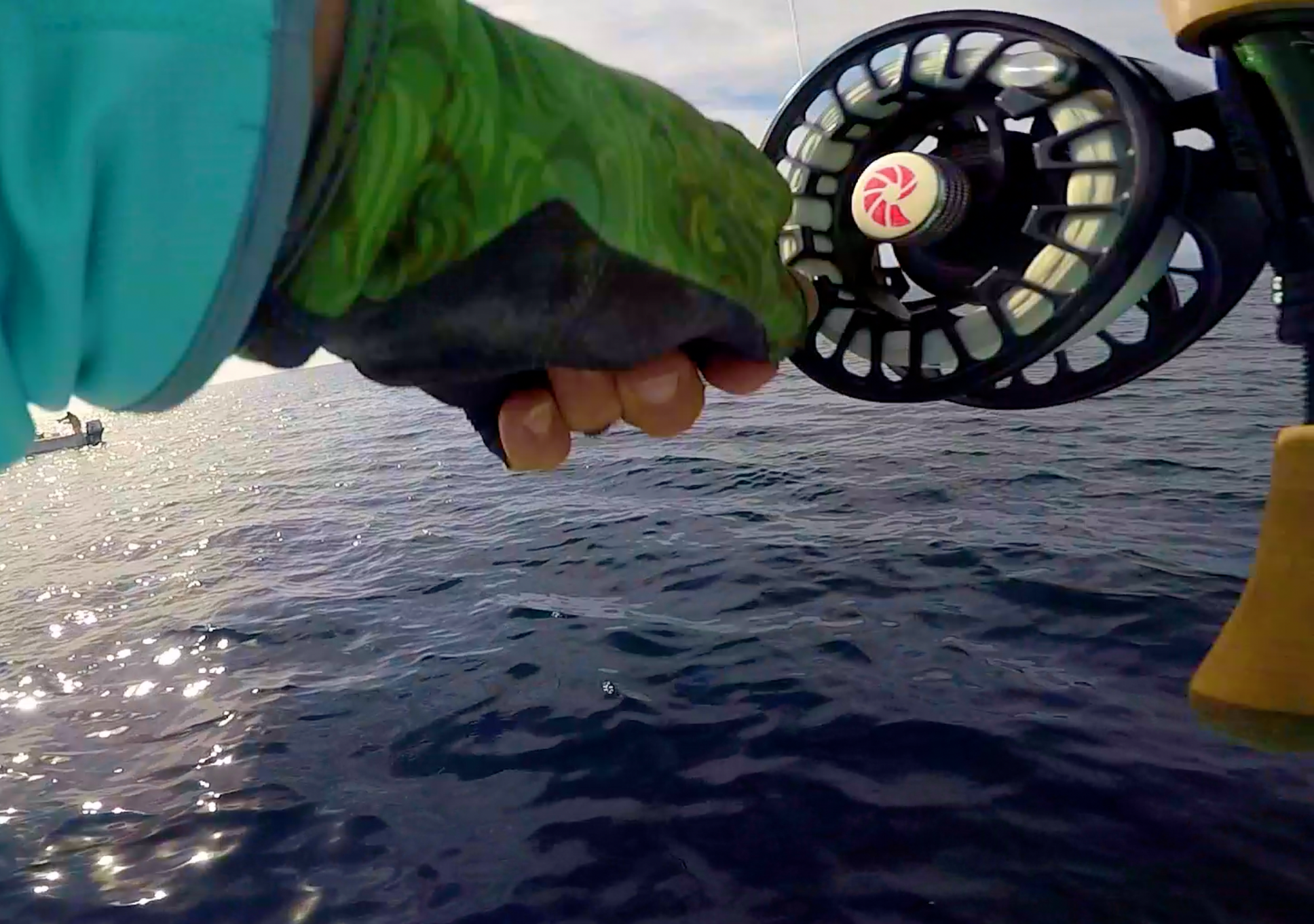
Fly line on the reel, now keep calm.

Fly line on the reel, now keep calm. ECHO EPR fly rod.

I’d racked up plenty of experience fishing ECHO 3 SW rods, ECHO Boost, and ECHO Prime rods in saltwater for species including black rockfish, lingcod, salmon, and Pacific albacore.

A big dorado gets air time on the ECHO EPR fly rod.

A big dorado gets air time on the ECHO EPR fly rod.

That said, I was not really sure what to expect from the EPR. The rod’s catalog description led me to think that this would be a stiff, harsh rod to cast. That is how many specialty saltwater rods strike me. But my brief pre-trip casting seemed positive and I decided to go all in, and took consolation in that I had two high end fly rods in my trip tube, so if the EPR turned out to be disappointment, I knew I had great fly rods to fall back on.

Good lifting power here with the EPR.

Good lifting power here with the EPR.

Lift now.

Lift now.

Keeping the pressure on.

Keeping the pressure on.

Well, from day one, the only motivation that led me to reach for a rod other than the EPR was the fact that I had different lines loaded on each rod, and sometimes I needed a sinking line or a line with a more gradual taper that allowed me to pick up a lot of line to re-cast.

After a little fiddling on the first day, I had floating and intermediate head lines loaded on the 8 and 9 wt EPR rods. The 8 wt had a Cortland Precision Tropical Compact 350 gr floater and the 10 wt had a 10 wt RIO Tropical Outbound Short Intermediate line. I also fished a Bruce Chard Tropical Punch floating fly line by AIRFLO and found it very pleasing at both short and long distance deliveries. One more line I fished on the EPR rod was the SA Sonar Sink Saltwater Hover fly line. This is a great intermediate fly line but it is far lighter than I prefer and so the best match for my 8 wt was the WF 10 and for my 10 wt EPR I preferred the 12 wt SA line. he circumstances of our fishing found us with fish that were often close aboard — and just as often the fish we were casting to were quite a long cast away. From one moment to the next, I found myself alternately making 40 ft casts and then 70-80 ft casts.

Fortunately, we only rarely found it necessary to cast into the wind, as we were usually drifting in the panga with the wind. Still, the presence of a stiff wind made the back-cast a challenge, so the compact head fly lines I preferred helped penetrate the wind on the back cast and then I was able to launch fairly impressive (for me) wind aided casts with only one or two back-casts.

I know I’m probably overdoing the discussion on the fly lines here, but still, I was impressed by the fact that both of my EPR rods were able to load well to make short casts and then wind up and launch really long casts downwind when the fish were breaking well away from the panga.

In fact, our captain often urged me to make casts far beyond where the fish were breaking, thus drawing my fly through the rampaging dorado or skipjack. It seemed more effective to strip a fly through the school than to land the fly in the middle of the school and then begin retrieving.

Here are some things I liked about the ECHO EPR fly rod:
* light weight
* nice oversized full wells cork rod handle, a real nice design for me
* composite cork ends at top and bottom of handle – this will pay dividends in the long haul
* very powerful butt that afforded great lifting power when fish buried under the panga
* fast tip – not at all stiff, that allowed me to load the rod easily and make short casts as well as long ones
* super sized guides and tip tops (there are some great casting rods out there with sadly undersized guides)
* high modulus graphite generates high line speed with low rod weight
* delivered big wind resistant flies mostly where I intended (the line can only go where your arm tells it to go)
* great looking rod (black on black on black with copper tip on guide wraps)
* solid reel seat, alignment dots on rod and reel seat, square rod case

Here is what I didn’t like about the EPR:
* nothing at all

These fly rods are, in my opinion, lighter and ultimately more versatile and powerful than the E3 SW, Boost, and Prime fly rods. All of those mentioned fly rods by ECHO are solid performers in the salt, but the EPR pounds out the fly line and battles hard charging fish in great form. Anyone who knows tackle and fishing probably shares my opinion that it is really difficult for all but a very small handful of experts to detect the fine points of different performance that exist among the range of high quality tackle we have at our hands these days. I’m first to state that I’m not among the few expert-experts. All I can do is tell you that I fished the EPR a lot in my 6 days in Baja. I fished these rods hard. I pushed the lines, flies, and fish hard. And I was entirely, totally, positively, fiercely admiring of these two rods.

Captain's hand on the leader.

Captain’s hand on the leader.

Further, from my perspective, the EPR performed to the same level as fly rods in the same class that cost twice the price. Those rods may have had slightly nicer reel seats, rod tubes — but I never felt that the more expensive fly rods gave me something in the way of performance that the EPR lacked. I will say, however, that some of my companions were more impressed to see that I owned high-end price-point fly rods. These rods gained me more attention and “respect” than my humble ECHO rods. That’s ok with me. I was there to fish, not show off my tackle. My bottom line is performance. If I need high-end tackle to get great performance, that’s where you’ll find me. In this case, I fished Hatch fly reels on both of my EPR rods, and they performed at the highest level. I also fished Nautilus fly reels on my High-end fly rods, with great performance, but that will be the subject of a different post.

My prize of the trip, a big bull dorado, came to the 8 wt EPR and a Cortland tropical precision Compact floating line. The fish took my ballyhoo fly close aboard and was over 200 yards into my hatch premium backing before Fedilito was able to get the panga under power and follow the fish. Many leaps and deep dives later, this fly rod had been well tested and proven in my mind. The tip was sensitive and absorbed the shock of repeated jumps and head shakes. The butt (of even the 8 wt) was exceptionally powerful and allowed me to lift the fish from deep under the panga.

I think this is enough said about my agreeable opinion of the EPR fly rod. Thanks Tim, this is another winner.

Jay Nicholas, May/June 2017

Posted in Fly Fishing Gear Review, Fly Fishing Travel | 2 Comments

Upper Willamette Steelhead and Trout Strategies and Techniques

tu-meeting-june-2017

Presentation: Dean Finerty will give a presentation which will cover tips and techniques for trout and steelhead on the upper Willamette and Lower McKenzie systems.

When: 6:30PM Monday, June 12th
Where: Roaring Rapids Pizza Company, 4006 Franklin Blvd, Eugene

There will be a board meeting directly following the presentation. TU members are welcome to attend.
See you there!

Save

Posted in Oregon Conservation News, Oregon Fly Fishing Clubs and Events | Leave a comment

Who We Are Series Post 10: Lou Verdugo

This series of posts is meant to introduce all of you terrific tiers and cool customers to our small, but fantastic team of anglers here at The Caddis Fly Angling Shop. Each employee answered a number of questions about their fishing expertise, their favorite style of fishing and fishing products. Each week we will publish another employee’s answers to these questions to let you know Who We Are. This series will hopefully give you a peak into who we are, how we fish, and who you are chatting with when you next call or email Caddis.

This week we have a Caddis Fly Shop veteran employee. 

IMG_1878

Who:  My name in the shop and in life is Lou Verdugo. My primary function is retail sales.

Time at Caddis: This year will be my 10th year at the Caddis Fly Shop

Are you a Eugene local, or are you a transplant? 

I moved here from Silicon Valley many, many, many years ago….with NO California equity!

How many years have you been fly fishing?

I have been fly fishing since I was 18.

What is your favorite rod and reel combo?

Today, a Sage X, 9′ 5 weight , with a Sage Click series reel.

Prior to today…9′ Sage Z Axis with Nautilus FWX, prior to that…GLoomis GLX 9′ 5 weight with Hardy Princes reel.

Favorite Nymphing rod: Sage 99 5 weight….produced no longer but a flat out Nymphing machine!

Favorite Streamer Rod: Winston Nexus 9′ 6 weight with Lamson Speedster.

Favorite small stream dry fly rod: Sage Circa 5 weight, with Sage Click series…very bamboo like…

Favorite sea run cutthroat fly rod Scott G2 8’8″ 5 weight with Bauer MPX2.

Lou Guide

Wet wade or float, and why?

Float…cause I have “The Beast”! 17 feet of cold, hard, Koffler built, aluminum. Love to run the big water (Deschutes) and the technicality of the Mckenzie. Wading only on the Deschutes or when necessary.

mac-4

Dry fly, streamer or nymph–and do you tie them?

Prefer hopper dropper system for most streams. Nymphing only when necessary or the conditions warrant. I tie flies, my favorites are the stimulator and soft hackles…especially for the March Browns.

Where do you fish?

States: Alaska, Idaho, Washington, Montana, California, *Christmas Island, *Abaco Island, *Cuba: Cayo Cruze, Florida

Waters: McKenzie River, Willamette River, Cascade Lakes. Call Lou and ask–he’s been all over!

Spey or single hand cast? 

Single handed but I do have Spey equipment. I prefer single while steelheading on the Deschutes but remain committed to Spey when conditions are right.

Salt or Freshwater?

Salt! Nothing like it…challenges every part of angling ability…knots, casting, dealing with wind, equipment, tides, and finding the fish! 80 degrees air and water temp are not bad either….prefer bones, tarpon…I may go to the grave before I catch a freaking permit! The pursuit of the grand slam ….nothing like it…!

IMG_2122

Lou Tarpon

What is your favorite part about working at Caddis?

Customers and new equipment….I have had the privilege of meeting many great people and who just happen to share a common passion…fly fishing! Also, to share in the first looks at many new products and innovations within the fly fishing industry. My colleagues also create an environment that’s often fun to work within.

When a fellow angler asks, “What is the biggest fish you have ever caught?” what is your answer? 

Easy….approx. 65 pound Tarpon. Caught it near Key Biscayne on the way to Cuba. 10 weight Echo 3 salt, and Sage 6000 series reel, Sci Angler Tarpon Line with clear tip and a fly you would not believe! Captain Carl Ball and Jim T. by Cuba buddy, were present.

Lou Steelie

When you want to take the intimidation factor out of fishing, talk to Lou! He is our Fly Fishing 101 teacher and a great educator of all things angling. You will find him in the shop at the register or helping a customer talk shop on the floor Thursdays and Fridays. Some of our favorite fly fishing stories are those told by Lou, and he is ready to tell you all about what he knows when you call. Lou is a wonderful resource for Christmas Island fishing experience, and product know-how.

Want to know more about the Caddis Fly? Visit our website’s About page at this link and feel free to call or email us any time at our contacts below:

(541)505-8061

caddiseug@yahoo.com

Tight lines until next time!

The Caddis Fly Crew
Posted in Classes and Instruction, Fishing Porn, Fly Fishing Gear Review, Fly Fishing Profiles, Fly Fishing Travel | Leave a comment

Spring has Sprung – McKenzie River Fishing Great Top To Bottom

mckenzie-river-flyfishing

The McKenzie River’s flows have dropped into fine shape. This past week I was able to fish the very lower river, (Hayden Bridge to Armitage State Park) the middle river, (Finn Rock to Ben and Kay Doris) and the upper river, (Frissel Ramp to Hamlin). All three stretches were very productive. Each stretch varied in terms of bug life but each had good numbers of bugs and fish.

mckenzie-river-bull-trout

On the lower river we swung wet flies. Small brown caddis, Pale Morning Duns and little yellow stones were the most visible insects. The middle river’s flow had me using a larger dry with a dropper to get down in some of the quicker runs. Most of the fish we caught ate the nymph but we had many fish eat the Chubby Chernobyl on the surface. Golden Stones, Little Yellow Stones, Brown and Green Caddis and Green Drakes were all present on the middle river. The “way upper” river is still really moving and lacked hatches until things warmed a bit mid morning. Caddis and Golden Stones began around noon and late afternoon “Grey” and Green Drakes were present and fish really looked up. Saturday we were lucky to hook and land a rare Bull Trout. This time of year you can see one of these beauties attack a hooked fish but to catch one on a dead drift is virtually unheard of. It was really great to see. Hopefully the Bull Trout of the McKenzie are having a better year than the Salmon and Steelhead!

Posted in Fishing Reports, McKenzie River | Leave a comment

Baja Fly Fishing Report – May 2017

This is a very brief report on a fishing trip I just made with friends Gui and Jim. We fished with Gary Bulla and lodged at Baja Joe’s. Gary is a great host; the panga captains are knowledgable guides and boatmen; our accommodations and meals were very pleasant; and our fishing companions were a wonderful group of enthusiastic, experienced adventurers.

Baja.

Yes, me going out of state to fish. Unlikely, unexpected, and last minute decision. Anyway, there I was south of the border with fly rod in hand, hunting warm water species that broke the surface as they crashed baitfish and got my adrenaline levels through the roof.

The fishing was challenging, as fishing can always be. My casting left a little to be desired, as I plowed though several lines to find the rod-line matches that worked the best for me. I faced down many fish working the surface well within my casting range, and more often than not, delivered lackluster presentations. Some of my craftsmanship, however, met the high standards of the fish and I managed to connect often enough to conclude each day on the water with a smile.

One of several species we encountered is not generally considered as one of the glamor targets in the region, but dang, I really enjoyed catching skipjack.

I’ll be following this post with others that feature tackle selection (fly rods, fly lines, leaders) that are suitable for the conditions I experienced in the warm climate of Baja.

Meanwhile, here are a few photo images from our trip.

Game on!

Game on!

Clearing the line deck.

Clearing the line deck.

The first run.

The first run.

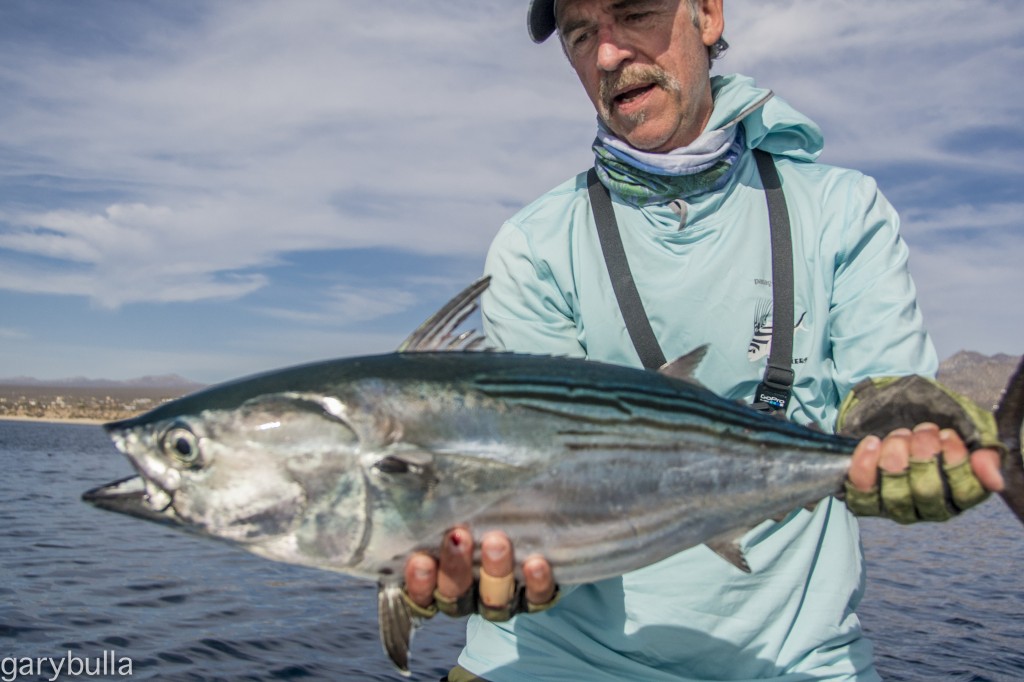
Baja Skipjack photographed by Gary Bulla.

Baja Skipjack photographed by Gary Bulla.

This rooster evaded my best efforts but chomped onto Chuck's fly.

This rooster evaded my best efforts but chomped onto Chuck’s fly.

The ballyhoo fly reigned supreme.

The ballyhoo fly reigned supreme.

Dorado!

Dorado!

Gui rocked the dorado.

Gui rocked the dorado.

I prepared for the sun each day.

I prepared for the sun each day.

Putting the load on an ECHO EPR rod.

Protecting a tippet late in the game – on an ECHO EPR rod.

Some fly rods are meant for hard times - like encounters with lines wrapped around props.

Some fly rods are meant for hard times – like encounters with lines wrapped around props.

Dawn on day 7 - time to head home to Corvallis.

Dawn on day 7 – time to head home to Corvallis.

I hope you enjoyed this brief tour. I had a great time and plan on returning as soon as I can. Trip details may be found at garybulla.com.

Jay Nicholas – 2017

Posted in Fishing Reports | Leave a comment