Celebrate Father’s Day with Catch Magazine!

mail

Celebrate Father’s Day with Catch Magazine!

Issue #65 has three Oregon features including Jay Nicholas and a fun video on the McKenzie!

Give the Instant Gift of Fly Fishing on Father’s Day!

Got dad anything special yet?

Give a him a GIFT SUBSCRIPTION to Catch Magazine!
No postage, no packaging. Pure fly fishing entertainment. Make your dad’s day amazing…his virtual fly fishing vacation awaits!

Do you want the Magazine, too?

Buy a gift subscription by SUNDAY, JUNE 21, 2020 and get one for yourself FREE!
Treat your dad and yourself to the best Father’s Day ever!

*Within 24hrs of purchasing a Gift Subscription during the promo period, you will receive an email with a PROMO CODE for your one-time access to a FREE subscription for yourself!

mail-1

Give a gift subscription here and receive

the current issue #64 – issue #65 coming on Father’s Day
new issue announcements and Catch Magazine newsletters
access to a growing handful of enhanced back issues since 2008
T-Motion fly fishing videos
photo essays from around the world
tips and inside information on fly fishing destinations
PLUS a FREE subscription for yourself!
Your virtual vacation awaits!

Give a GIFT SUBSCRIPTION of Catch Magazine
and receive a FREE subscription for yourself!

PROMO valid through June 21st, 2020

mail-2

Subscribe to Catch Magazine

Just $15 a year for world-class
fly fishing photography and film
delivered direct to you.

Your virtual
fly fishing vacation awaits

Posted in Fly Fishing Travel, Oregon fly fishing links, Shop Sales and Specials | Leave a comment

Video – Reclaiming the Klamath

From High Country News

The Klamath water crisis has shaped the Yurok Tribe for a generation. Many feel a fierce responsibility for a river that not only carries fish and water, but centuries of stories and struggle. Now, for the first time, one of the tribe’s own citizens is leading its long-running legal fight for increased water flows in the Klamath.

Read the whole story HERE.

Posted in Oregon Salmon fly fishing, Summer Steelhead | Leave a comment

McKenzie and Willamette Rivers Fishing Well mid June 2020

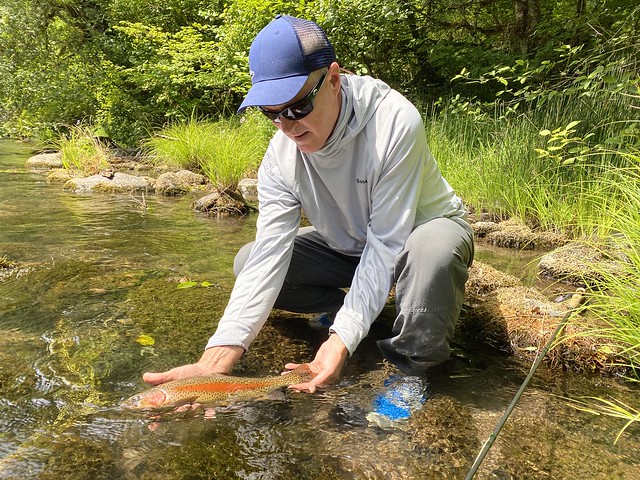
IMG_2781

The McKenzie and Middle Fork of the Willamette have been fishing really well. Hatches of Pale Morning Duns, Green Drakes, Blue Winged Olives and Brown Caddis have been strong during the last week of wet weather. Mayflies have been hatching mid to late afternoon and wet weather has made lift off difficult. Mayflies have been struggling to get off the water and have been available to fish!

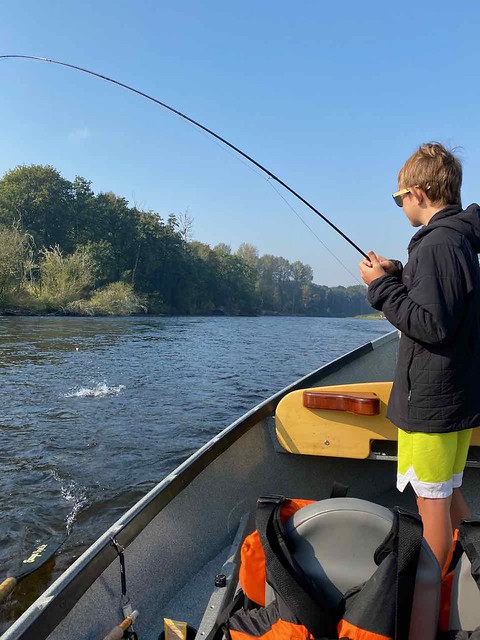
IMG_4399

With the onset of Summer on the horizon look for those hatches to move later in the day. If you don’t see hatches mid day don’t worry, fish still recognize the big Drake or larger caddis and they will rise to those patterns. Look for Little Yellow Stone Hatches to intensify in the coming warmer days. You may see some Salmon Flies and Golden Stones as well. Of course going down with a nymph will be super effective as well. Try the following nymphs: Hindmarsh’s Pleaboi, Jigged Iron Sally, Jigged Hares Ear and Pheasant Tails.

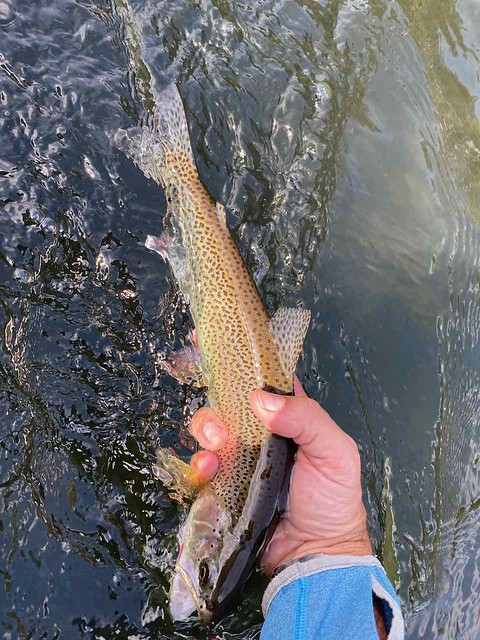
IMG_7158

Happy Fathers day to all the dads and enjoy your time on the water.

Posted in Fishing Reports, Lower Willamette, McKenzie River, Middle Fork Willamette River fishing | Leave a comment

Review of Fly Tying Cements, Adhesives, and UV Resins: Part 4 – Summary Charts

Jay Nicholas Chinook Deceiver a 2

Here we are, finally, Part 4 of our 4-part cement review.

How could I have known, back in 1963, that one simple bottle of glue from Herter’s would evolve to  this wide assortment of products that are available to the ordinary fly tyer?

Not possible.  Of course, that was a time when my family had one telephone, a black rotary corded phone with a phone number I still remember to this day.

As promised, this part of our post is simply a recap of the conversational review of these adhesive and finishing products – minus the wisdom.

The first chart will summarize traditional fly tying cements and UV resins (minus the Solarez products).

The second chart will summarize the Solarez products offered specifically to Fly Tyers.

For many tyers, these two tables are worth saving or copying to your computer and printing out to save in a folder or 3 ring binder at the side of your fly bench.

From our vantage point here in spring of 2020, in the midst of the Covid-19 pandemic, I wish you all health and safety in your fly tying dens, basements, garages, attics, and wherever you are when you tie. May we all soon be fishing.

Jay Nicholas, late April, 2020

_________________

Traditional fly tying cements – Graphic Overview

Caddis fly shop SS non-Solarez review

Solarez UV Resins– Graphic Overview

Caddis fly shop SS Solarez review


Thank you. May your fly tying be ever joyous.

Posted in Fly Tying, Fly Tying Materials and Supplies | Leave a comment

Green & Red Hollow Deceiver Fly Tying Video for Peacock Bass/Golden Dorado

In this video, Jay ties a huge hollow fly used to hunt out predator fish.

Incorporating saddle hackles in different colors and flash to catch the fishes attention, these flies are for your 8 & 9 weight rods and are fun to tie.

Screen Shot 2019-08-18 at 8.17.46 AM

Hook: Ahrex PR320 4-6/0
Thread: Veevus GSP 150D White
Cement: Loctite or Hard as Hull
Tail: Strung Saddles (6-8) Forest Green & Red
Flash: Mixture of several colors of Holographic Flashbou & Magnum Flashabou
4 Hollow Stations: Alternate Green & Red Bucktail
Finishing Bucktail: Yellow Bucktail
Eyes: Pro Tab or Jungle Cock sub
Head: Copic Marker

Posted in Fly Tying, Fly Tying Materials and Supplies | 1 Comment

Review of Fly Tying Cements, Adhesives, and UV Resins: Part 3 – Solarez UV Resins

Solarez – Product Review & Application Guide

Jay Nicholas Solarez Thick

As promised, Part 3 of our review will focus on to the Solarez UV resins specifically packaged for fly tyers, a product line so extensive and effective that I believe it deserves special treatment.

Tips for handling UV Resins.

1. I learned to use Clear Cure Goo as my first UV resin. The product was OK. It was faster and more convenient than the five-minute epoxy and the flies tied with it were durable and caught fish. But the new evolution products are by far superior. Seriously superior. The old resins got sticky so you had to coat them with thin head cement. The old resins would yellow and crack over time. These new resins are smooth, never sticky, never crack, and stay clear as glass after weeks of sun exposure

2. Solarez is a resin produced by surf board specialists. These professionals take their sport seriously, and the demands placed on their resins are extreme when compared to our expectations as fly tyers. I say this not because I am an expert in these matters, but as information that I take note of when testing and evaluating the potions that I use on my flies.

3. Anyone who ties with these resins, except for the bone-dry, will tell you that it takes time and repetition to get the hang of it.

4. The bone-dry is so much like a thin head cement that it is very easy to get accustomed to.

5. When an experienced tyer says these are easy to use, that is true, but only because they have time under their belt practicing. Do not get discouraged.

6. These liquids are vulnerable to any sunlight, so do not try applying to your flies outdoors unless you are a fast applicator and have practices before you go at it with a large number of flies.

7. You can cure your fly heads by laying flies outside, or putting them on a rotating wheel. This is best used if you use your UV torch (flashlight) first, to get the surface of the resin set enough to hold shape for the time it takes to get them outside.

8. These resins get more viscous on cold days than warm. When I tie flies in my garage in winter, I wear a coat and put my Solarez bottle in a narrow glass of warm water. The warmth allows the resin to flow more easily than it would if it was 60 degrees. The water doesn’t need to be hot, just comfortably warm to the touch.

9. Any UV resin will dry and get goopy over time. If you have a bottle that you have used off and on for two years, don’t be surprised if the left-overs in the bottom of the bottle have thick lumps. Do yourself a favor and get yourself a new bottle. This is not true for the small squeeze tubes. Put the. cap on, and they will last longer than the bottles.

Solarez Fly tying Resin 

Solarez Thick: Day in and day out, this is the formula I reach for more often than any other if I am tying Saltwater streamers for salmon and albacore. Use this resin to form the largest fly heads; it will hold in place a long time with minimum movement until you hit it with a UV light, often referred to as a torch.

Solarez Glow in Dark: Like the clear-thick-hard formula, this UV cure best when used on relatively large fly heads; as well as on flies that will be fished at night & in deep-water fishing. With finesse, it can be used with smaller fly heads too. Some tyers have found that they coat fly bodies like Chironomids and tout these when fishing deeper water in lakes. Tarpon, snook, and other saltwater anglers give this UC cure high marks

Solarez Medium : This formula will run faster than the thick and it is well suited to fly construction when you want to put a little dab between the eyes on top, hit it with the cure torch, then add a dab between the eyes on the underside, then repeat as you gradually build- the material between and around the eyes. hold-in-place. This also works well to “tack” an eye in place on the one side of a fly, then “tack” a eye on the other side, then add a larger dab that you let flow around the entire head as you rotate the fly in your vise – before hitting it with the torch.

Solarez Medium FLEX: This is definitely a viscosity that lies somewhere between the thick hard and the thin hard, but I would place the needle somewhere closer to the thick than to the thin side of the meter.

I have found this works well on heads of flies especially where I put a coating completely around the wing and belly behind the eyes. This is common as a way to foul-proof flies, and the flex seems particularly well suited for this.

Solarez Thin: heads on small flies, perdigones, and steelhead wet flies – all of these are fair game for this formula.

Jay Nicholas Solarez Bone Dry

Solarez “Bone-Dry: this bottle is equipped with the most slender brush applicator I have ever seen. This makes it perfect to apply this very thin viscosity cure to the head of very small flies as well as to the body of chironomids of all sizes.

Solarez Roadie Kit: This kit is very good investment if you travel and might need to tie some flies to suite local conditions. You get a good variety of resins with maximum adaptability and a very good UV Cure light

Solarez Pro Roadie Kit: The Pro kit provides larger quantities of UV resin and is therefore a better investment if you will tie big flies on your trip of a lifetime. This is a case of “don’t skimp.”

Solarez Fly Tie Color: These 5-gram bottles are amazing. The resin hardens with a gloss that makes an ideal foundation for trigger points, highlight attractors, and fly heads as well. We have been looking for a solid quality resin like this for. years – now we got it.

While all of the UV products currently available on the market for fly tyers are very good, in my opinion, all are superior to the cure goos i worked with nearly ten years ago.

Two problems we encountered in those days were 1) yellowing of the resin over  time, and 2) sticky resins even after proper cure times. The first issue had no  solution. The second issue was supposedly resolved by adding a thin coat of finish UV cure after the main body of resin hardened.

I was never satisfied with that answer to stickiness, so i lived with it, like most of us did in order to bypass the laborious production of working with epoxy.

I can state categorically, Solarez UV cures do not yellow, and they are not sticvky, ever, with the possible matter of the Flex formula, and i find it hard to imagine a flex gthat is not at least a little non-glossy.

So there you have it, most ardent fly tyer-blog readers.

May you all stay healthy in this difficult time of the mist awful virus, and may we all be fishing shortly.

Jay Nicholas, June 2020

Posted in Fly Tying, Fly Tying Materials and Supplies | Leave a comment

Native Fish Society Action Alert – Crooked River

NFS_e-banners_RED

From the Native Fish Society

Speak up on the need for fish passage, not mitigation, at Bowman Dam on the Crooked River

A preliminary permit to add hydropower generation at Bowman Dam on the Crooked River has triggered Oregon’s fish passage requirements. The licensee has requested a waiver from the requirements and has proposed mitigation in lieu of establishing the required fish passage at the dam. ODFW’s required Benefit Analysis found “that the proposed mitigation actions will not provide greater benefits than if passage were provided at the Dam.” This analysis found that establishing fish passage at Bowman Dam would provide connectivity for redband trout below the dam with 498 miles of habitat above the dam. It would also provide key connectivity to 63 miles of steelhead trout habitat and 53 miles of historic spawning and rearing habitat for spring Chinook salmon, both of which are actively being reintroduced to the upper Deschutes basin. Please send a comment by June 22 encouraging ODFW and the Oregon Fish Passage Task Force to deny the requested waiver, and tell them that reconnecting the Crooked River is critical to reviving abundant, wild fish in the Deschutes Basin.

How to comment: Send comments to Ted Wise, ODFW East Region Hydropower Program Coordinator at 61374 Parrell Road Bend, OR 97702, by e-mail, ted.g.wise@state.or.us, or by calling (541) 633-1115.

Posted in Eastern Oregon, Oregon Conservation News, Oregon fly fishing links | Leave a comment

Spey Casting Exercise Using a Dog Chuckit™

In this video, Greg uses his dog’s Chuckit™ to help improve one’s bottom hand while spey casting.

“Many people have tools to improve and practice their spey cast at home. I use my dog’s Chuckit™ everyday and really focus on my bottom hand to execute the cast.”

Spey Casting Resources:

Skagit Master Spey Casting DVD Series
Rio’s Modern Spey Casting DVD

Individual Instruction Classes Available:
(541) 342-7005

Posted in Classes and Instruction | 2 Comments

Get Summer Fly Patterns “Cheaper by the Dozen”

Check out some great deals on summer fly patterns at caddisflyshop.com and at Caddis Fly Shop in Eugene. We are offering these staple patterns at the great price of only $12 per dozen while they last. Check out the entire listing here: SALE FLIES

Patterns available include:

Sale flies
Soft Hackle Wets

Sale flies
CDC Transitional Dun

Sale flies
Caddis Poopah

Sale flies
CDC Green McKenzie Caddis

Sale flies
Rusty Biot Spinner

Sale flies
Vitamin D Nymph

Sale flies
Green McKenzie Caddis

Sale flies
Kaufman’s Stone Nymph

Sale flies
Orange Elk Hair Caddis

Sale flies
Parachute March Brown

Sale flies
CDC ELK Hair Caddis

Sale flies
Damsel Nymph

Sale flies
Sparkle Duns

Sale flies
March Brown Nymph

Sale flies
Ugly Albert

Posted in Shop Sales and Specials | Leave a comment

New Airlock Strike Indicators for 2020

In this video, Chris introduces Airlock’s new strike indicator for 2020.

Screen Shot 2020-02-27 at 8.23.09 AM

Airlocks

Posted in Fly Fishing Gear Review | Leave a comment

Jay’s Three Salt Alaska King Salmon Fly Tying Video 2020


In this video, Jay ties an intruder type Alaskan King Salmon Fly.

This fly is meant to be fished on the swing, but you could use this stripping for peacock bass, tiger fish, muskie, and other large predators. With variations of colors and sizes you could get creative.

What with the Three Salt? “A salmon or steelhead that has 3 seasons of growth in the ocean.” -JN

DSC_0003

Jay Nicholas March 2020

Alaska King Salmon Fly

Tube: Pro Sportfisher 40/40 Flexitube Clear
Thread: Lagartun 150D Chartreuse
Butt: Cactus Chenille Charteuse
Rear Station: Marabou Chartreuse
Lady Amherst Chartreuse
Saddle Hackle Chartreuse
Body: Lagartun Flat Braid Chartreuse
Weight: Pro Sportfisher Raw Wt. XL
Front Station: Cactus Chenille Chartreuse
Marabou Fl. Blue
Craft Fur Chartreuse
Krystal Flash Chartreuse
Marabou Silver Doctor Blue
Pro Sportfisher Gen. 3 Jungle Cock
Cone: Pro Sportfisher Pro Cone Chartreuse
Zap a Gap

Posted in Fly Tying, Fly Tying Materials and Supplies | Leave a comment

Good News for Wild Fish!

mail

From The Conservation Angler

Oregon Department of Fish & Wildlife Takes Action to Protect Wild Steelhead and Salmon

No Angling Sanctuaries Established to Protect Wild Steelhead Resting in Three Columbia River Thermal Refuges.

The Oregon Department of Fish and Wildlife (ODFW) will protect wild steelhead and salmon using the cold water refuges at the mouth of Eagle Creek, Herman Creek and the Deschutes River where no-angling sanctuaries will be established to protect heat-stressed migrating wild salmonids this summer.


Thank you to all who supported our efforts to establish these critical wild fish sanctuaries!

The Conservation Angler is grateful for your encouragement and personal advocacy.

David Moskowitz, Executive Director

Background on Cold Water Refugia and Wild Steelhead

Anglers have known for decades that wild steelhead and salmon have relied on cold water refugia (CWR) during their upstream migration in the Columbia River. Bill Bakke, then director of the Native Fish Society, had been advocating for the protection of heat stressed wild steelhead and salmon during summer hot water conditions since 1998. It was not until 2018 and again in 2019 that ODFW was moved by public advocates and the Oregon Fish & Wildlife Commission to close the mouth of the Deschutes River to fishing when the Columbia became too hot.

The Conservation Angler led the science-based advocacy before the Commission which urged the reluctant department staff to act. TCA appreciates the support of the Wild Fish Conservancy, Native Fish Society and Trout Unlimited who backed up our work at every turn.

ODFW was unable to ignore a critical US Environmental Protection Agency (EPA) draft report released in October 2019. That report highlighted the critical role that CWR played in the migration of wild salmon and particularly, wild steelhead. The EPA Report presented essential scientific evidence that the CWR were extensively used by heat-stressed wild salmon and steelhead – however, these fish remained vulnerable to targeted sportfishing efforts that significantly reduced the meaningful biological benefit of the thermal resting areas.

These No Angling Sanctuaries will be effect for two summer months (July 15 thru September 15) and are part of the 2020 Columbia River Salmon and Steelhead sportfishing regulations announced on May 18. ODFW also announced that development of a permanent Thermal Angling Sanctuary rule is underway.

While it took ODFW 20 years to protect ESA-listed wild salmonids threatened with extinction during their migration to spawning grounds throughout the Columbia and Snake Rivers, The Conservation Angler sincerely applauds ODFW and the Fish & Wildlife Commission for taking critical action in 2020 to protect low returns of ESA-listed wild steelhead and salmon seeking relief in the cold-water refuges.

Yet more remains to be done.

Washington has not established No Angling Sanctuaries at thermal refuges both below and above Bonneville Dam. However, WDFW did modify specific angling rules that they believe will prevent the targeted angling on wild steelhead resting in CWR at the Wind, Little White Salmon and Big White Salmon Rivers. The Conservation Angler will monitor the effectiveness of these modest rule changes in these areas this summer season.

Establishing no angling sanctuaries in these cold-water refugia for ESA-listed wild steelhead are only half the battle, as the EPA Report on CWR predicts that the Columbia River will be a lethal migration corridor for salmonids by 2040, if not before. All of us will need to join the on-going fight for source protection immediately.

For more scientific and policy background on Cold Water Refugia, checkout this Blog Post on our website.

Contact: David Moskowitz, Executive Director * theconservationangler@gmail.com * 971-235-8953

Posted in Oregon Conservation News | Leave a comment

Hendricks Bridge County Boat Ramp Closure

Screen Shot 2020-06-01 at 6.45.34 AM

Hendricks Bridge Boat Launch will be closed from June 8-Oct 1st for improvements. Anglers who want to float downstream from Hendricks are advised to put in at Taylor Boat Launch at 40945-41483 Deerhorn Rd, Springfield, OR 97478. One could also put in at Deerhorn Bridge for longer run.

Fishing has been excellent on the McKenzie of late. Golden Stones, Little Yellow Stones, Pale Morning Duns, Green McKenzie Caddis and Green Drakes are must have patterns for fishing the McKenzie in June.

Posted in McKenzie River, Oregon Fly Fishing Tips | Leave a comment

Jay’s Pro Sportfisher Squid Tube Fly Video

In this video, Jay ties a Squid Tube Fly using Pro Sportfisher Predator tubing, EP Invader & Fair Flies Predator Brushes.

An effective fly to imitate a squid for salmon, rockfish, and lingcod for coastal fishing or you could use it to swing your favorite steelhead run as well.

Screen Shot 2019-06-04 at 12.05.05 PM

Thread: Danville 210D White
Pro Sportfisher Flexineedle Predator Size
Tube: Pro Sportfisher Predator Clear
Tube: Short Section Pro Sportfisher Large Clear
Cement: Loc Tight Brush On
Tentacles: White Saddle Feathers (8-12)
Waist: Fl. White Medium Chenille
Head: Fair Flies Predator II Brush White & Orange
Head: EP Invader Brush 2.5″ Hot Pink

Posted in Coastal Steelhead Fishing, Fishing Porn, Fly Tying, Fly Tying Materials and Supplies | Leave a comment

Jay’s Seal Bugger Jig Jigged Leech Fly Tying Video

In this video, Jay ties a Seal Bugger Leech pattern on a jigged hook. A good pattern to try for alpine lakes.

Screen Shot 2019-03-25 at 1.14.28 PM

Hook: Gamakatsu Jigged barbless size 10
Bead: Mottled Slotted Tungsten Bead Red
Glue: Loc-Tite Brush On
Thread: Veevus 8/0 Olive
Wire: .015 Lead Wire
Tail: Marabou Olive
Body: Spirit River UV2 Seal X Olive

Posted in Fly Tying, Fly Tying Materials and Supplies, Uncategorized | Comments Off on Jay’s Seal Bugger Jig Jigged Leech Fly Tying Video