Middle Fork of the Willamette River Fishing Report

IMG_1437

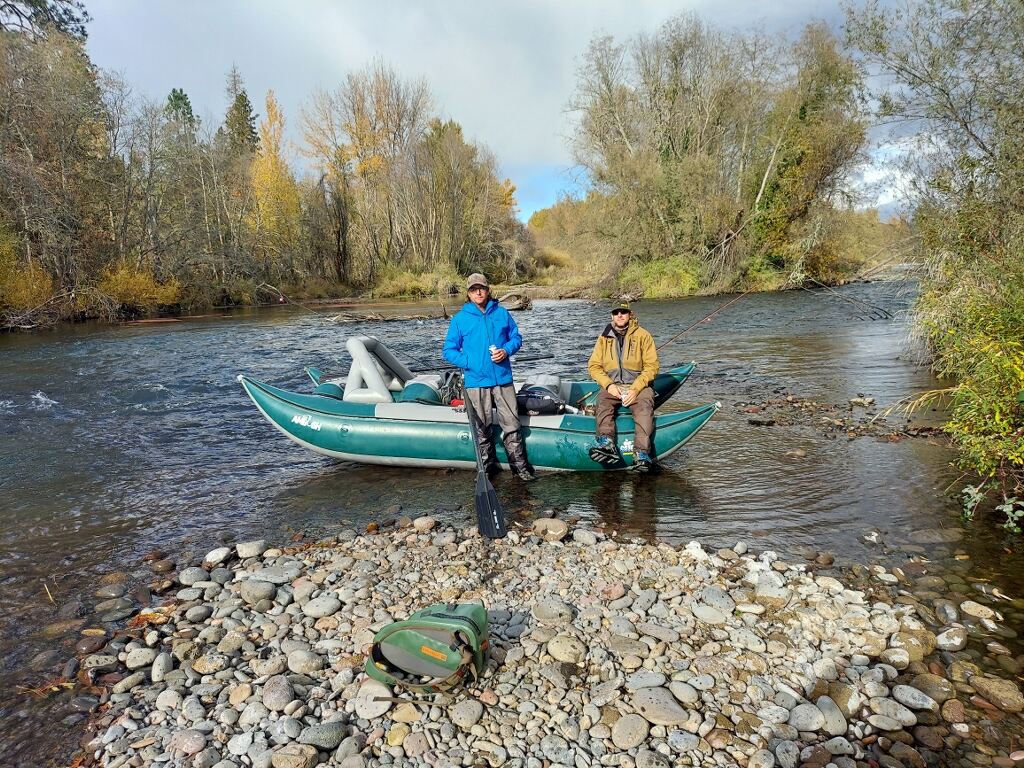
We decided to give the Middle Fork of the Willamette a shot this past Tuesday. I knew the river would be low and I knew there was potential for smoke. Both bore out true of course… Driving up HWY 58 I could see the smoke clinging to the Black Canyon section of the Middle Fork.

IMG_1438

Looking down river from the boat launch at Black Canyon Campground is was clear in Eugene. A brisk wind followed and blew most of the smoke out of the river valley. The smoke ended up not being much of issue except for near the confluence of the North Fork of the Middle Fork.

IMG_1443

Fishing was active not long after putting in my raft at Greenwaters Park. I was very happy I did not bring the drift boat as the first rapid out of the gate would have had me walking the boat down the river. Instead I rubbed and bumped and clumsily slopped down in the raft. Fish were in quick water and not in slow runs. Despite some water that had foam lines, good depth and cover, fish were not present in slower than walking speed water. They really preferred quick water with quick depth change. This water could be in the middle, on a bank, or in front of a rock, the key was there simply weren’t fish in slow water.

IMG_1456

IMG_1445

Hopper dropper rigs ( chubby Chernobyl or Parachute Madam X as the dry and a 1/8 or 3.3mm Beadhead ) with mid sized jig nymphs of all types worked. The key was to have the bead 3.3mm or 2.8mm, a 5/32 or 3.8mm bead was simply to heavy for the flow.

IMG_1446

IMG_1459

The Middle Fork is so low it’s really a wading anglers paradise right now. You can literally get almost anywhere in the river. A wader could start at Black Canyon and walk upstream like 3 miles.. and keep going. Access along the backside of 58 east of the Westfir Bridge is unlimited as well. Just look for the fastest water and you will find the fish.

Best bugs included Hippy Stomper #12 Purple and Gold, Chubby Chernobyl #10, Strolis Quil Body Jig #12, Tungsten Jig Yellow Sally and Tungsten Jigged Pheasant Tails.

Posted in Fishing Reports, Middle Fork Willamette River fishing | Leave a comment

Vinyl Jig Midge Fly Tying Instructional Video

Hey y’all. I tied this fly up, along with the Golden Stone jig nymph from an earlier video, at the end of July, when we were already experiencing tough, low water conditions that we would normally see at the end of August. It’s now the second week of September, and water levels are still quite low. Luckily, there’s some rain on the horizon, but it won’t change all that much in terms of river levels until the rain really starts to dump. Temps are on the drop, which is great. Fall is starting to show up, but I’ve been pretty confident in this fly with variations in colors for the past couple months both on the McKenzie and on a few trips I took out to the Metolius. It’s definitely earned a place in the box for low water conditions and picky spring-fed fish.

Materials:
Hook: Daichi 4698, Sz14
Bead: 3.8mm Slotted Tungsten, Black
Thread: UTC 70D, Dark Grey
Tail: Glo-Brite Floss
Body: Vinyl Rib Midge Black
Thorax: Ice Dub Peacock Black

Materials are available at https://www.caddisflyshop.com/​

Check us out on Instagram at

https://www.instagram.com/caddisflyshop

Facebook:

https://www.facebook.com/caddis.shop/​

Posted in Classes and Instruction, Fishing Reports, Fly Tying, Fly Tying Materials and Supplies, McKenzie River, Uncategorized | Leave a comment

Fall is in the air – Local Fishing Heating Up

IMG_1416

Water temps are ideal on the upper McKenzie River and each cooler night we have going forward will help the Lower river cool down as well. More bugs are present each day. Gray Drakes, October Caddis, Blue Winged Olives and a variety of mid sized caddis are available to feeding trout.

Best Flies to have in your box in the coming days:

Purple Parachute Rooster
Purple Haze
Gray Drake
Parachute Adams
Hi Vis Parachute Adams
Morrish’s Foam October Caddis
Orange Stimulator
Anderson’s Bird Of Prey October Caddis Nymph
Jigged Tungsten Hare’s Ear

Posted in Fishing Reports, Lower Willamette, McKenzie River | Leave a comment

The Biology of Harvest – Wild Steelheaders United

Rogue_Steelhead_2-864x648

By Nick Chambers for Wild Steelheaders United

Steelhead anglers probably have disagreed with aspects of sport fishing management since the dawn of fishing regulations. In recent years, however, one area of disagreement has come into sharp focus: sport harvest of wild steelhead.

Throughout the Lower 48, nearly all wild steelhead runs are now at a fraction of their historical abundance, distribution and diversity, and in recent years, many populations have produced some of the lowest, if not the lowest, run sizes on record. Despite the worrisome status and trends, a few fisheries in Oregon continue to allow harvest of wild steelhead, and as a result, there has been renewed controversy over whether any direct harvest should be allowed. To be clear, this is not merely a social debate about how we value these fish — this is primarily a debate among scientists, fish managers, fish advocates and anglers about whether the effects of harvest will contribute toward further declines, and eventual closure of fisheries. The way steelhead populations respond to harvest is rooted in the basic biology of the fish. While it can be difficult to separate the wheat from the chaff in these debates, steelhead and other salmonids have been well studied, and the large body of scientific literature can provide us with important insights to guide wild steelhead management.

From Seattle to San Diego, the only region where sport harvest of wild steelhead is still allowed is Oregon’s south-central coast. Earlier this year, the Oregon Department of Fish and Wildlife released a draft Rogue-South Coast Multi-Species Conservation and Management Plan (RSP) that would update sport fishing regulations for steelhead in rivers such as the Rogue and Chetco. This plan would continue to permit sport fishing harvest of wild steelhead, despite large gaps in scientific data on population and age class numbers.
Over the last month, anglers came together to voice their support for pausing the harvest of wild steelhead on Oregon’s south coast. Over 2,000 comments from wild steelhead angler-advocates urged ODFW to select a catch and release alternative for wild steelhead in its final RSP.

On October 15th, ODFW will present the RSP to the Oregon Department of Fish and Wildlife Commission, and the commissioners will review and comment on the plan. In the meantime, we offer this five-part series of posts on why catch and release is the best option for the long-term health of wild steelhead, and drill down to the basics about the methods scientists use to evaluate whether a population can support harvest, and if so at what level.

Rogue-halfpound-4-small-1024x760

MANAGING STEELHEAD: DENSITY DEPENDENCE AND ESCAPEMENT GOALS

Successful management of any fish or game animal — which necessarily means ensuring a healthy, durable population that can persist as habitat conditions change — must start with the biological fundamentals. How many animals do you have? How productive are they? What is their distribution and is the population stable, decreasing or increasing?
Without this type of data it is impossible to know how many, if any, animals can be removed through harvest without harming the population, and how such actions could impact the population’s resilience and diversity.

The questions are simple, but they are not necessarily easy to answer, especially for a species like steelhead that often inhabit large watersheds with hundreds to thousands of stream miles. We can’t survey and count steelhead across an entire watershed, or sample them every day of the year. Counting every fish in every nook and cranny of a watershed is an almost impossible task, so even answering the first question is more challenging than it might seem.

Generally, managers sub-sample a portion of stream habitat for adult redds and/or juveniles and then extrapolate that information to the entire basin. The more thorough the sampling is, such as covering a greater length of the total stream habitat in a watershed, the greater the certainty in the estimate. For example, ODFW has done a remarkable job of monitoring, researching, and adaptively managing Coastal Coho Salmon populations, and many scientists have relied on the methods that were developed for those fish.

fry_Nick_Chambers-1024x814

Unfortunately, steelhead have not received the same amount of attention, presumably because they are not ESA listed and there is, consequently, less funding for monitoring and research. Because the monitoring is much more limited and less habitat and fewer fish are sampled, there are substantial data gaps and tremendous uncertainty associated with their annual monitoring efforts. Turning this data into meaningful estimates requires making several assumptions, and if those assumptions are not tested and validated, it can lead to policy decisions that are not in the best long-term interest of the fish and the fisheries they provide.

Let’s unpack what this means and define what we mean by assumption. An assumption is a concept that is generally accepted scientifically as true or accurate, but lacks specific data to support it. For instance, in many watersheds it is assumed the stream habitat is filled to capacity with juvenile steelhead. If true, adding more adults to the spawning population (think more eggs in the gravel) will not necessarily result in increased abundance in the next generation because there is simply not enough “room and board” for the extra juvenile fish. Under such conditions, the only way to increase the abundance of adult steelhead is to improve freshwater habitat so it can support more juvenile fish.

Unfortunately, these assumptions are rarely tested for steelhead. There is a tremendous amount of knowledge and research on steelhead, but data quality and quantity on adults and juveniles is often insufficient to rigorously evaluate the capacity or productive potential of the available habitat. Bridging the gap between a basic understanding of fish and habitat associations and watershed capacity is difficult, and where it has been done, it has been based on sound monitoring and research on abundance, life history (e.g., size, age, time of entry and spawning), and distribution of juvenile and adult life stages.

Still, even in our best case scenarios — and as we outline in future posts — a great deal of uncertainty remains, which is why we are going to take a deeper dive into the biology of steelhead that forms linkages between their biology, management, and the future of our fisheries.

To understand fisheries, we first need to understand density dependence and its relevance to the fish, fishery management and estimating productive potential.

Density dependence is how population vital rates change in relation to density. For example, a common result of density dependence is decreased growth or increased mortality in relation to an increase in density of juvenile steelhead. This occurs because of competition for limited resources. There simply isn’t enough food or space for all fish to grow and survive equally. Consequently, some fish grow and survive at higher rates than others, which is why size is often a good predictor of survival from one life stage to the next. All else being equal, size matters: larger fish usually survive better than smaller ones.

The concept of density dependence is at the core of a population’s ability to compensate for a reduction in the number of spawning adults, whether that reduction be related to natural or human factors, such as harvest. Compensation occurs when the per-capita productivity of spawning adults increases as their density decreases.

In theory, once the number of returning adults is low enough that there is ample vacant spawning and rearing habitat (which would be utilized in years when run sizes were larger) the reduced number of fish grow and survive better. ODFW’s assumption for the Southern Oregon Coast is that low levels of harvest will not have a negative effect on the long-term health and durability of wild steelhead populations because they will compensate with better growth and survival, which should in turn improve productivity for the next generation.

While salmon and steelhead are known to exhibit compensatory responses, each population has a different capacity for response. For this reason, most successful fisheries are grounded in collection of high-quality data at appropriate scales over a sufficient period of time to have a basic understanding of population status and trends.

Rogue_Fall-1024x514

A fishery should always have as its primary goal the maintenance of a sufficiently abundant, diverse and well distributed supply of spawning adults. If too few adults return to spawn, there may not be enough juveniles to fill up all of the habitat, partly because fewer adults will not be able to spawn across all the habitat, and partly because juvenile steelhead have their limits (even though they can swim relatively long distances) and long-distance dispersal often comes with a cost of increased mortality. Ultimately then, if too few fish return they may not be able to fully compensate, resulting in reduced production of smolts and returning adults.

This is where a fishery’s escapement goal comes in. Escapement refers to the number of fish that escape the fishery and survive to spawn. Escapement goals attempt to estimate how many spawning adults it would require to take advantage of the available habitat. If the run size is forecast to be greater than the escapement goal, a fishery is allowed. Alternatively, if the run size is expected to be less than the escapement goal, a fishery could be restricted or perhaps, in the case of very small run sizes, not allowed at all.

Establishing an appropriate escapement goal is critical for any fishery. Goals that are too low may depress a population beyond its ability to recover, while goals that are too high may be unrealistic and eliminate potential for any fisheries. Ideally, there is a sweet spot that balances the conservation needs of the population to remain resilient through climate change and also creates opportunities for anglers to get on the water and enjoy fishing for wild steelhead. But finding that sweet spot depends on having sufficient information about density dependence on other population and habitat metrics — which is what ODFW does not have right now as it prepares to bring the draft Rogue-South Coast Multi-Species Conservation and Management Plan to the Oregon Fish and Wildlife Commission.

Next week we take a deep dive into the important early-life biology of steelhead, and how the distribution and timing of spawning can influence density dependence and escapement goals. Until then, please help our wild steelhead by fishing responsibly during this drought- and heat- afflicted summer.

Author Nick Chambers — from Grants Pass, OR — is a Master’s candidate in the University of Washington’s fisheries program.

Posted in North Umpqua River Fishing Reports, Oregon Conservation News, Oregon Salmon fly fishing, Oregon Winter Steelhead Fishing, Southern Oregon | Leave a comment

Chicken Strip Baitfish Fly Tying Instructional Video with Alex Swartz

In this video, Alex Swartz ties a baitfish pattern with a multitude of predator species applications. Alex uses bucktail, saddle hackles, flash, and some exciting new snowrunner brushes to whip this fly up — many different sizes and color combinations could be applied to this fly, and could lead to your angling success in all 4 corners of the globe. We hope you enjoy!

Materials:
Hook: Ahrex PR-378
Thread: Veevus 240D
Tail: Flashabou red, pearl, gold; Bucktail Sunburst
Yellow, Strung Chinese Saddle Hackles in Yellow
Body: Snowrunner Brush Yellow, Flashabou in gold,
red, and pearl, Bucktail Sunburst Yellow
Head: Snowrunner Brush Red
Eyes: ProSportfisher Tabbed Eyes 10mm

Materials are available at https://www.caddisflyshop.com/​

Check us out on Instagram at

https://www.instagram.com/caddisflyshop

Facebook:

https://www.facebook.com/caddis.shop/​

Posted in Fly Tying, Fly Tying Materials and Supplies | Leave a comment

Fishing Locally Remains Strong – Cooler Nights Ahead

IMG_1346

The McKenzie and Middle Fork of the Willamette Rivers continue to fish well, and cooler nights ahead should improve things further. Despite extremely low numbers of steelhead some good fall trout fishing is still available. We are starting to see a few more mayflies emerging throughout the drainage. It’s time to restock your mayflies and start thinking about October Caddis patterns.

Best mayflies to have in your box for the next month include:
Rainy’s X Fly Parachute Adams
IMG_1392

Hatchmaster Blue Winged Olive Parachute Extended Body Blue Winged Olive
IMG_1390

Hi Vis Parachute AdamsIMG_1391

Hair Wing Green DrakeIMG_1394

IMG_1302

Get out there and enjoy! Fall is coming!

Posted in Fishing Reports | Leave a comment

Emergency fishing closures in Deschutes, other mid-Columbia tributaries begin Sept. 1 due to low steelhead returns

steelhead on the deschutes

ODFW Press Release August 27, 2021

SALEM, Ore.—In response to extremely low returns to date of Columbia Basin upriver summer steelhead, ODFW is adopting additional emergency rules to increase protections for wild summer steelhead in certain Oregon Columbia River tributaries.

Passage counts of summer steelhead at Bonneville Dam from July 1 through Aug. 26 are the lowest since counts began in 1938. This continues a pattern of several years of low returns for many populations and comes during a period when flows throughout the basin are generally low because of drought. Within this run are ESA-listed wild summer steelhead destined for the Upper Columbia and Snake rivers, as well as several mid-Columbia tributaries.

On Aug. 16 and 23, fisheries scientists from the U.S. v Oregon Technical Advisory Committee (TAC) downgraded the forecast for A-index summer steelhead from an already low preseason estimate of 89,200 to an in-season estimate of 35,000.

“We’re in uncharted territory here” said Shaun Clements, ODFW Deputy Administrator for Fish Division. “The combination of a historically low run on top of multiple years of low runs, and the very poor environmental conditions that seem likely to continue based on the most recent drought forecast, mean this is a regional problem.

We know these actions are going to negatively affect anglers this year and we don’t take that lightly,” Clements continued. “But they are unfortunately necessary at this time to give the fish the best chance to rebound and ensure the populations can support fisheries in future years.”

The rules will close steelhead fishing in the lower Umatilla and in additional areas of the Deschutes and John Day rivers beginning Sept. 1. See more details on the emergency regulations below. They are addition to existing steelhead closures in portions of the lower Deschutes and John Day rivers.

These changes come on top of measures already taken in mainstem Columbia River fisheries to protect summer steelhead during their migration to the tributaries. Because of the low pre-season forecasts for summer steelhead, fishing seasons in 2021 were crafted with additional measures to protect steelhead. These included extensive closures to retention of steelhead in mainstem angling areas (including some tributary river mouths), and implementation of no-angling sanctuaries in Oregon tributary mouths that serve as cold-water refuges for migrating steelhead.

The actions taken today are part of a multistate response and put protections in place in mid-Columbia Oregon tributaries that are expected to have low to very low returns. While wild steelhead mortalities are generally low under normal fishing regulations, and fisheries are not generally a limiting factor for recovery, the additional restrictions will further reduce effects on wild summer steelhead during this unprecedented low return.

“The fact that we’re having to make these restrictions underlines the urgency in addressing the factors that are ultimately causing these declines, notably addressing issues with the Columbia River hydrosystem and protecting/restoring habitat in the tributaries,” said Clements. “It is only by addressing these factors that we will really move the needle on recovery.”

Effective Sept. 1 the following emergency regulations are in place:

Deschutes River

–From markers at lower end of Moody Rapids upstream to Sherars Falls, closed to angling for steelhead from Sept. 1-30.

–From markers at lower end of Moody Rapids downstream to the mouth at Interstate 84 Bridge closed to angling (all species) from Sept. 1-30.

Managers will monitor the return and consider whether the fishery can reopen in October or whether further restrictions are needed.

Umatilla River

–From Hwy 730 Bridge upstream to Threemile Dam, closed to retention of steelhead Sept. 1-Dec. 31.
John Day River

–Upstream of Tumwater Falls, closed to angling for steelhead from Sept. 1-Dec. 31.
Walla Walla River

–Upstream of the Oregon/Washington state line, closed to retention of steelhead Sept. 1-Dec. 31.

Anglers are reminded that several previously adopted emergency rules in the Columbia River Zone and certain adjacent tributary mouths, including the Deschutes and John Day rivers, remain in place. Always check the angling zone report at MyODFW recreation report for the latest regulations, https://myodfw.com/recreation-report/fishing-report/

Regional fishery managers will continue to monitor passage counts and fisheries and will make further adjustments to fisheries as warranted as the fall progresses.

Posted in Central Oregon Fishing Report, Oregon fly fishing links, Oregon Fly Fishing Tips, Summer Steelhead | 1 Comment

Columbia Steelhead Crisis: What Needs to Happen

Screen Shot 2021-08-27 at 6.46.51 AM

From Native Fish Society

Click here to add your name to the letter below and join the groundswell of public support speaking up for Columbia Basin steelhead!

Dear Governors Brown & Inslee and ODFW & WDFW Commission Members,

To put it bluntly, Columbia Basin wild steelhead are in crisis. Steelhead counts at Bonneville are unlike anything we have seen in nearly a century and are on the path to being the worst run ever recorded since counting began in 1938. The few fish that have returned are facing the second hottest water temperature trends in the past decade.

We implore the states of Oregon and Washington to take aggressive action immediately to ensure that as many wild fish as possible make it to their homewaters and successfully spawn. To be frank, we are quite possibly looking at the end game for wild steelhead in what was once one of the world’s greatest wild anadromous fish-producing ecosystems. It’s now or never if we are going to act to prevent the extinction of these Pacific Northwest icons.

Today, we ask that the states take the following actions to reverse the slide toward extinction of these magnificent fish:

1) Through 2021, close non-tribal commercial drift gill nets in the lower Columbia River and close or seriously curtail recreational fisheries (including catch and release) in the Columbia River mainstem and tributaries that target wild steelhead.

As of August 16, the cumulative hatchery and wild steelhead return for the entire Columbia Basin was a mere 22% of the current 10-year average, which itself is the lowest 10-year average on record. Wild steelhead returns are on track to be the lowest since counting began to differentiate between hatchery and wild fish in 1994. It is quite likely that far fewer than 20,000 wild steelhead will make it past the first Columbia mainstem dam (Bonneville) this year. The fish that do will still have hundreds of miles, lethally hot water temperatures, and numerous dams to navigate on their return to their spawning grounds. Every fish needs to be given the best chance possible to successfully reproduce. The states should close all non-tribal fisheries that target steelhead and commercial gill net fisheries that potentially intercept these fish. This should include catch and release angling which causes stress to fish and can result in unintended mortalities, especially when fish are already facing hot water temperatures.

The state of Oregon has recognized that fisheries closures are an important management tool during low run years. In August, the Umpqua River, where similarly low steelhead returns and high water temperatures are being observed, was closed to angling by ODFW for the remainder of the year. Similar conservation actions are warranted for Columbia basin populations as well.

2) Issue a disaster declaration.

Commercial and recreational fisheries are being significantly affected by the poor returns. Management actions to protect the run will further impact these important economies. We ask that the Governors of Oregon and Washington declare a disaster so that commercial anglers and recreational fishing guides can access federal and/or state funding to see them through this emergency while the state Departments of Fish and Wildlife implement conservation-oriented management actions that can protect what remains of this year’s wild steelhead populations.

3) Establish and protect cold water refugia in Washington.

Unlike Oregon, the state of Washington has failed to designate thermal sanctuaries and closure policies for these important cold water refugia. Summer water temperatures in the mainstem Columbia River often reach lethal levels during the migration period for Summer Steelhead. When water temperatures rise above 64F, survival begins to decrease. At 70F, there’s a 10% reduction in survival compared to when the temps are 64F and below. The Columbia River at Bonneville Dam usually surpasses the 64F threshold by early July, can remain above 70F for a month or more, and often reaches highs of 73-74F. This summer, mainstem temperatures are on their way to being some of the most sustained high temperatures ever recorded.

By contrast, many of the major tributaries entering the Columbia in the critical migration corridor below the John Day Dam have water temperatures that can run substantially colder than the mainstem, up to 10F or more in some rivers. 60-80% of fish migrating up the Columbia use these cooler pools of water as refuges when mainstem temperatures top 68F. They are a critical piece to increasing survivability of upper-basin bound fish.

At the same time, thermal refugia can expose fish to increased angling. Even catch and release encounters can greatly reduce the survival and reproduction of fish. Areas where fish congregate are naturally attractive to the angling public and can turn what should be refuge into another stressor on fish already being pushed to their physical limits.

Oregon recently established thermal angling sanctuaries at a number of key cold water refugia. We thank the ODFW Commission for taking this important conservation step. It’s time for Washington to do the same. We urge the WDFW Commission to adopt and enforce thermal angling sanctuaries on EPA designated cold water refugia rivers including the Cowlitz, Lewis, Kalama, Wind, Little White Salmon, White Salmon, and Klickitat Rivers.

4) Extend Thermal Angling Sanctuary protections in Oregon until October 31 and extend the Deschutes sanctuary to cover 100% of the cold water plume.

At present, angling closures at these important thermal sanctuaries are set to expire on September 16. Yet a substantial portion of Snake River Steelhead use cold water refuges like the Deschutes through September and into October. Oregon should extend these sanctuaries through at least October 31 to provide steelhead safe harbor on their journey. Further, the Deschutes River thermal angling sanctuary should be extended to cover 100% of the cold water refugium plume (at present, the sanctuary only covers 75% of the plume). This cold water refugium is particularly critical as it is the last recognized sanctuary for fish until they make their final run for their homewaters.

5) Establish and implement high temperature and low flow angling closure policies.

As we continue to experience the effects of year-after-year warm water temperatures and low snowpack, we urge the departments to develop river-specific, temperature- and flow-based angling regulations that protect sensitive stocks, rather than having department staff respond each year, mid-season, and often after the temperature thresholds have been exceeded.

The scientific literature on the effects of warm water temperature on salmonids is extensive and shows that temperature affects every stage of their life histories. It is now common for many Oregon and Washington rivers to experience temperatures that exceed the thresholds suitable for ethical catch and release angling or in mixed-stock fisheries that have sensitive or threatened populations caught as bycatch. It is important for the departments to develop and implement science-based policy to respond to these emerging, but annually recurring, threats. It behooves the agency to craft such regulations in advance of the hot summer season, rather than through piecemeal emergency responses.

Today, we ask that ODFW and WDFW take the actions necessary to establish statewide angling regulation policy that sets standards for fishing closures when temperature thresholds are exceeded. We implore the department to craft this regulation before summer of 2022 in order to best protect and conserve all of our native fish in the coming year and beyond.

It is also critical that the department establish publicly accessible temperature monitoring systems on all major tributaries and cold water refugia of the Columbia in order to effectively implement this policy and provide transparency to the public when triggers are reached. In Washington, the Cowlitz, Lewis, Wind, Little White Salmon, White Salmon, and Klickatat Rivers (all EPA designated cold water refuges) lack temperature monitoring, and in Oregon, the Sandy and Hood Rivers and Tanner, Herman and Eagle Creeks (all EPA designated cold water refuges) lack temperature monitoring.

6) Establish a suite of in-season adaptive management triggers and actions.

When run sizes are below a set critical abundance target, regulatory actions must be taken. Both the critical thresholds and the management actions to be taken need to be specified in advance of the run season and regularly evaluated during the return. The strength of any regulatory actions should be based on the return size, with the lowest return years requiring the most drastic actions.

7) Support and advocate for the removal of the four Snake River dams.

We know that removing these dams is necessary to revive abundant, wild fish in the Snake River system. We ask that the states and Oregon and Washington formally declare their support for dam removal, call on President Biden to withdraw support for the Federal Columbia River Power System Biological Opinion, and advocate for federal legislation that gets the dams out soon while providing a net uplift for all of the Columbia’s fish populations, upstream and downstream.

The state of our rivers and fish populations can no longer be sustained with the business as usual approach. Yes; the change that is needed immediately and in the coming years will have real world impacts on individuals, on businesses, on communities, and on economies. But those will also be the impacts that come about if we no longer have salmon and steelhead returning to our rivers. We stand ready to advocate strongly for state and federal compensation for those communities and industries that are impacted. We stand ready to support the states in taking immediate and aggressive action to prevent the serious depletion or extinction of Columbia Basin wild steelhead.

Wild, native fish are a keystone species; they’re uniquely entwined in a natural relationship with people and wildlife. Their wellbeing and success affect us all.

What will we lose when these fish are gone? What are we losing right now as they disappear on our watch? What will the state do? What will the department do? What will you do, right now, to ensure that Columbia basin steelhead have a future?

The time is now to act. Otherwise, it will be on our watch that these magnificent creatures disappear from our landscapes.

Thank you.

Posted in Oregon Conservation News, Oregon Salmon fly fishing, Summer Steelhead | 2 Comments

Resisting the call of the Deschutes – Chris Santella

264AYMHGQZEIDOPF2L4VZZWU7U

Our friend and favorite author Chris Santella had this opinion piece published in he Oregonian and Oregonlive.com recently.

Every March, I begin looking forward to late summer afternoons at the mouth of the Deschutes River. The kaleidoscope of kite sails around Hood River and the creosote smell of railroad ties in The Dalles signal that I’m getting close to once again, experiencing world-class fishing — swinging flies for wild summer steelhead on a majestic western river.

The Deschutes is celebrated for its run of steelhead. These fish hatch in the river, grow to the size of a smallish trout, pass through The Dalles and Bonneville dams, then head down the Columbia to the sea, and spend a year (or more) feeding in the North Pacific before returning to procreate in their natal river—a truly epic journey. Averaging six to eight pounds, native Deschutes steelhead may not rival the size of their brethren on the Olympic Peninsula or British Columbia, but their aggressiveness toward a fly or lure and their speed and power once hooked are legendary. Not easy to fish, steelhead are sometimes referred to as the fish of a thousand casts, and once you’ve felt the fish’s unmistakable grab, it’s positively addictive. “The tug is the drug,” and in catch-and-release fishing, returning an unharmed native fish back to the river makes for a very good day, indeed.

Alas, it’s not a good time to be a steelhead, nor a steelhead angler. Thanks to drought and extreme heat, water temperatures in the lower 40 miles of the Deschutes are dangerously warm, exceeding 70 degrees some days. That’s prompted fishing closures on the Deschutes (and some other rivers) after 2 pm when river temperatures reach their maximum. Warm water holds less oxygen, exacerbating the stress that fish experience when hooked to often fatal levels.

Worse yet, the number of steelhead returning to the Deschutes and other Columbia Basin tributaries is at a historic low. To put returns in perspective: in a good year more than 130,000 steelhead pass through Bonneville Dam by August 1; this year, only 15,000 have made it that far. Some groups, including The Conservation Angler have called for the closure of the recreational steelhead season until returns improve.

There are many factors contributing to declines. Certainly, ocean conditions are poor. But there’s also commercial fishing operations on the Columbia River that unintentionally catch steelhead; competition from hatchery fish; historical spawning habitat access blocked by dams; and compromised spawning grounds. The impact of catch-and-release fly fishing with barbless hooks and swift release to the river is fairly negligible, yet the impact adds up as some wild fish are caught more than once.

And at a time when the future of these iconic fish hangs in the balance, even one fish that’s unintentionally killed by recreational angling seems one fish too many. It seems only fair that I should do my part.

Since early July, when the first pods of steelhead returned to their birth waters, I’ve resisted the Deschutes’ clarion call. Some have suggested that I hike to the pools I would usually be casting across as the sun begins to fade behind the canyon walls to the west, praying for that tug. But I can’t bear the temptation. Others have suggested that I fish but clip the point off my hook. There would still be the thrill of the grab. But it’s not quite the same.

For now, I’ll monitor the river conditions and dam counts in hopes that fishing might be an ethically sound decision sometime down the road.

And take a small bit of comfort in thinking that perhaps I’m doing the right thing.

Posted in Eastern Oregon, Oregon Conservation News, Summer Steelhead | 1 Comment

Long-term closure on four-mile section of McKenzie River Trail from Knoll Fire

KnollFireMap

From the USFS- August 19,2021

McKenzie Bridge, Ore., Aug. 19, 2021 — The Knoll Fire on the McKenzie River Ranger District has transitioned back to the local unit. The 544-acre lightning-caused Knoll Fire is located seven miles northeast of McKenzie Bridge, Ore., and is currently 60% contained. The fire is staying within the containment lines, and fire crews are mopping up and monitoring the fire.

Due to fire impacts and safety hazards, four miles of the McKenzie River Trail will be closed until summer of 2022, and possibly longer, from the Blue Pool/Tamolitch Falls Trailhead south to Deer Creek. The section from Deer Creek to Frissell Boat Launch is currently inside the Knoll Fire closure order but could be opened when the fire closure is lifted. Recreation sites north of Blue Pool/Tamolitch Falls Trailhead, including Blue Pool, remain open as well as recreation sites south of Frissell Boat Launch. The section of the trail is closed due to significant fire damage to the trail surface and trail structures, including Deer Creek Trail Bridge. Additionally, the McKenzie River is closed to boaters from the Trail Bridge Reservoir to the Frissell Boat Launch. The Knolls Fire closure order is still in effect, and recreation sites such as Olallie Campground, Deer Creek, Deer Creek Road, Deer Creek Hot Springs and all other uses within the closure area remain prohibited. For more information on the Knoll Fire closure, visit https://go.usa.gov/xFwt9.

Smoke will potentially be visible in the McKenzie River area from the Knoll Fire and surrounding fires. For information about the air and smoke quality, visit https://fire.airnow.gov/. Campfires are still prohibited on the entire Willamette National Forest due to extreme fire danger and ongoing active fires. “Know Before You Go” and check local fire restrictions before visiting the forest. For more information on fire restrictions or to find detailed maps and the full text of fire-related closure orders, visit https://go.usa.gov/xFfth.

For updates, please follow the Willamette National Forest Facebook page or Twitter (@WillametteNF).

Posted in Fishing Reports, McKenzie River, Oregon fly fishing links | Leave a comment

Cooler Temperatures mid August – Fishing Remains Solid on the McKenzie

IMG_5453

Fishing with smaller nymphs and a variety of dry flies has been good on the McKenzie River. Water levels are low and water temperatures are a bit higher than normal but the fishing above Leaburg Dam is solid. It’s a great time to try hoppers and attractors as well as more standard patterns.

Best dry fly patterns are:

Parachute Adams
Parachute Purple Haze
Hippy Stomper
Missing Link Honey Ant
Blade Runner Hopper
Bullet Head Hopper
Parachute Caddis

Best Nymph Patterns are:

Sweetmeat Caddis
Tungsten Dart
Jigged Hustler
Jigged CDC Pheasant Tail Nymph

Posted in Fishing Reports, Lower Willamette, McKenzie River | Leave a comment

Bruce Berry Ekis’ Christmas Island Special Fly Tying Instructional Video

Today Bruce Berry joins us at the Caddis Fly Shop to tie a staple fly in every saltwater fly angler’s box. A variation on a Christmas Island Special he picked up from his favorite guide there, this fly is simple to tie, requires few materials, and is absolutely deadly. Tie some up, book a trip to the salt, and have at it.

Justin and I got to talk with Bruce for awhile after he finished tying the flies, and it really seems like this is one of the most versatile saltwater flies you can put in your travel box. He spoke very highly of the guide from Christmas Island who he tied the fly with during his last trip down there, and Eketi swears by the fly. I’ll definitely be whipping some up myself for future saltwater trips!

IMG_0461

Materials for Fly #1:
Hook: Tiemco 800S #8
Eyes: X-small Lead eyes
Thread: 6/0 Tan through the body, 70D
Danville Shell Pink
Tail, Body, and Wing: UV Tan Krystal Flash
Wing: Finn Raccoon, Tan, Ginger
———
Materials for Fly #2:
Hook: TMC 800S #6
Eyes: X-small Lead eyes
Thread: 6/0 Tan through the body, 70D
Danville Shell Pink
Tail, Body, and Wing: UV Tan Krystal Flash
Wing: Craft Fur, Sand

Materials are available at https://www.caddisflyshop.com/​​

Check us out on Instagram at

https://www.instagram.com/caddisflyshop

Facebook:

https://www.facebook.com/caddis.shop/​

Posted in Uncategorized | Leave a comment

All things Spey Lines and Sink Tips – George Cook, Erik Johnson, John Hazlett

IMG_1308

George Cook, Erik Johnson and John Hazlett have been innovators, instructors and anglers in the world of two handed rods since the beginning of the “Northwest Spey” movement. These guys have thousands of hours on the water testing line matches and performance. Below you will find an in-depth discussion of all things spey lines and sink tips.

Skagit/ology 4.0 “Generation 4 has arrived”
2021 George Cook/Erik Johnson/Jon Hazlett

Almost two decades have passed since the introduction of the vaunted, original Ol’ Yeller Skagit Line. However, despite its effectiveness and popularity, misconception, confusion, and lack of overall clarity of the use of Skagit Lines remains. The following is a short but specific conversation regarding the history and usage of the various Skagit lines in the worldwide spey fishing theater.

History- Beginning in the 1990’s many of today’s most recognizable spey authorities independently where developing Skagit type lines. Noted casters and anglers such as Ed Ward, Mike Kinney, Scott O’Donnell, Scott Howell. Mike McCune, Jerry French and the legendary Harry Lemire among others were at the forefront of the Skagit revolution. Along the banks of Northwest rivers coupled with late nights in the depths of fly-tying rooms of the Pacific Northwest the chop-shop artist and line theologists were hard at work developing what would become today’s Skagit Lines. Some would cut and splice their way; others would utilize bumped up WindCutter bodies to perfect the craft. The shorter belly approach was underway. The day had come to maximize the spey rod for winter Steelhead conditions as well as Alaskan and B.C. Kings with large, outsized flies. The use of Northwest hybrid and Skagit Casts such as the Snap T, Perry Poke, Snap Z and Wombat lent themselves to a shorter more powerful approach. Today the Skagit line is THE approach to sinking line endeavors worldwide. Be it Kings in Alaska to Sea Run Browns of the Rio Grande from the Umpqua to the Babine and all points in between. The Skagit Line has become the omnipresent tool. Originally developed purely as a sink tip asset, the Skagit line also can be an effective full floating line particularly on 12’ to 13’9” rods. To be sure, the spey caster will endure a greater level of stripping of line to recast (applies to all Skagit lines versus mid to long belly lines) but the reward is a undeniable highly energized, long and straight cast.

Types- The original RIO Skagit Line worked from a 27’ body that today in the era of the NEW Skagit Max Launch is found in a 23’ to 25’ length. In 2009, the Skagit Short came onboard providing an ideal line for switch rods as well as shorter spey rods in the 12’-12’9” range. These lines are specialized shorter 17’ to 20’ Skagit lines now known today as the NEW Skagit Max Power. Often times the Max Power serves the ardent spey caster well in strategic tight corridor situations often found in such Steelhead haunts as the Oregon Coast, Olympic Peninsula, and Vancouver Island.

Usage- Specific Skagit Line size (grain weight) matchups come with a degree of variability coupled with angler opinion. Line speed versus load, moderate versus fast action all add up to a witch’s brew of variables that must be fleshed out on any given rod regardless of manufacturer. The great casters often find themselves 25 to 100 grains apart on any given rod. In the end the angler must boil it down and get the details. All in all, most spey rods 12’ to 15’ in length will have as many as three different Skagit Lines that will work. For example, the TCX 7126-4 the famous “Deathstar” can work with a Skagit Max Long in 525, Skagit Max Launch 550 and even 575. The 525 offers the line speed choice while the 575 offers the max load choice. Overall as it relates to this rod, we found that the 550 Skagit Max Launch is the everyday choice. Generally, one will be ideal. To discover this, the angler must seek out opinion within the spey community, be it a guide, angling buddies, factory rep or retail representative, as well as GET OUT AND CAST!

Skagit Trout Spey- Skagit Trout Spey lines are an ideal choice for trout spey rods that are gaining popularity throughout the West. Available as fully integrated lines along with traditional heads spanning 200-375 grains these new lines hit the mark dead on for trout spey rods in 2wt through 4wt along with the smaller switch rods in 4wt and 5wt. The integrated version allows for seamless transition between head and running line allowing the streamer enthusiast should they desire to strip the fly without incurring any loop “clang.” Heads are available and will work with a multitude of floating, mono, or hybrid style shooting lines. Overall available weights and dialed in lengths make these ideal for fishing various poly-leaders, conventional 10’ sink tips, along with MOW light systems. Usage with 4wt and 5wt switch rods along with 4wt Trout Spey can include the whole of MOW Medium Systems. To be sure, the trout spey revolution is upon us, and ideal lines are now found in spades.

NEW Skagit Max Power– Ideal for switch rods in the 10’6” to 11’9” range along with application for shorter spey rods in the 12’ to 12’9” range, 9 weights and under. These are specialized shorter 17’ to 20’ Skagit lines. The Max Power is available in 25 grain increments from 325 grains to 650 grains.

NEW Skagit Max Launch– The Max Launch is the go-to Skagit line from the Pacific Northwest to Western Alaska to the wind-swept plains of Tierra Del Fuego. Featuring RIO’s exclusive connect-core technology, along with a new taper that produces outrageous line speed with wind slicing tight loops. Available from 400 grains up to 750 grains, these revolutionary 23’ to 25’ heads are destined to become a Northwest favorite.

Skagit Max Gamechanger 3D/4D. These strategic use heads feature multi-progressive sink rates that serves to sustain an acquired swing depth. For those of you who have cast and/or fished the F.I.S.T. line, these take 3D/4D (D=Density) technology to the next level. Coupled with various sink tips, (10’, 12.5’, conventional sink tips/custom cut 9’,11’,13’) and IM.O.W. (limited to 3D systems), these lines can serve the angler well for deep lies for winter Steelhead, spring and summer Chinook, and South American Sea-Run Browns.

Building a la carte Skagit Floating Lines- The Skagit line as a floating line is both an effective and practical match up particularly on 12’ to 13’9” spey rods. The a la carte construction for a full floating line works as follows; Skagit Max Launch 550 as an example (23’) with a #9, 15’ replacement floating tip or a 10’ Floating Medium M.O.W. tip. This format gives you a complete Versi-Tip approach with your Skagit line in the a la carte floating line approach.

No doubt spey casting has more opinions out there than any other sport other than maybe Archery. In this, one thing remains true to form. Sink tip lines, in conjunction with intruder type flies get free flight lessons, long and straight with the Skagit Max Family of tapers. Floating line enthusiasts upon acceptance of extra line strip will enjoy the benefit of highly energized long straight casts with dries and summer patterns as well.

RIO Switch Lines George Cook/Erik Johnson/Jon Hazlett 2021

To Switch, or not to Switch? What a silly question. Switch rod mania has fully arrived. Despite the beauty found with the versatility of such tools, lies a state of confusion. Switch rods mean many things to many anglers; an indicator rod fishing beads on the Kenai in late August; skating a dry fly on the North Umpqua in the same time period; an Oregon Coastal rod in the dead of winter; a Great Lakes stick of choice; the bomber beach rod on Puget Sound transcending to an extreme distance or “Spey Game” Rod from the pontoon boat on Eastern Washington lakes. Lots of fisheries, lots of methods, one tool. No one line will cover all these needs, however the RIO Switch Chucker Line covers two of the most predominant uses: nymph/indicator fishing along with spey style swing fishing. The Switch Chucker will prove to be the best foot forward as a one line “Does Most,” covering an array of uses that have popularized the switch rod craze. There is no compromise here as the Switch Chucker is a Super Legit spey casting line that gives up no ground for the nymph/indicator enthusiast as well. Available in 225 to 570 grain weights (#2 thru #9).

Traditional Switch line: RIO’s InTouch Switch Line brings connect core technology to the all-important switch category. RIO’s InTouch switch line features a 55’ head which answers the call for nymph fishing, and a little overhead when called upon. The 55’ foot length allows for short to mid range nymph fishing with plenty of body and back taper to spare for the tactical advantage of stack mending. The thick diameter tip turns over big flies and indicator rigs with ease, allowing the most ardent nymph enthusiast the ability to turnover all the “junk in the trunk.” This is the go-to line for the pure indicator angler whether wading or fishing from a drift boat. Available in sizes 4/5 through 8/9 to meet your switch rod needs.

Traditional Spey Series:
In Touch Short Head Spey (Looped 15’ Versi-Tip)
Old meets new in the form of the Short Head Spey line from RIO. This is an easy casting, traditional style spey line which is ideal for Northwest spey casters moving up from Scandi and Skagit style heads. Head length varies between 40’ and 50’ (available in a 5/6 through 10/11 weights) depending on line size. The longer head lengths allow for less stripping post swing, which for both the traditionalist and the “E-FISH-ENT” angler equates to less stripping and more fishing. While not a true mid-belly in the historical sense, the Short Head Spey is a modern day compact mid-belly that plays to today’s popular 12’ to 13’6” Spey Rods. This is a classic Versi-Tip format that can be utilized with traditional 10’ and 15’ sink tips (Type 3, 6, & 8). In addition, the MOW Light and Medium family will find a place at the table here as well. From a full floating line spanning the versatility of a multitude of sink tip types the Short Head Spey now becomes an all season line.

Traditional Spey Series
InTouch Mid Head Spey
RIO’s NEW In Touch Mid Head Spey features a progressive head in varying from 52-60 feet that provide today’s 13’-15’ rods in 6 through 10 wt. in ideal traditional mid length spey line. In a full floating integrated line featuring a 115’ overall length traditional casts like the single spey, double spey , and Snake roll can be performed both easily and with a high performance level. Whether you find yourself on Idaho’s Clearwater, BC’s Bulkley, the N. Umpqua, or Southern Oregon’s Rogue. Your traditional Spey line is here.

InTouch Long Head Spey
RIO’s InTouch Long Head Spey features head lengths from 64’-70’ (64’ at 7/8, 70’ at 10/11) with overall lengths from 110’ to 120’. More often than not rod length with these lines starts at 13’6” but hits a premium at 13’9” to 15’. The Sage 7140-4 X (14’ for a 7 Line) is a good example of ideal rod length coupled with expected steelhead use (Think Idaho’s Clearwater, Mainstem Snake/WA or Idaho sides and even Oregon’s Deschutes). The rear weight distribution ensures easy load while the unique front taper allows energy to unroll effortlessly to the fly.

SCANDI/OLOGY 2.0
George Cook/Erik Johnson/Jon Hazlett 2021

Rivers of the Pacific Northwest pose incredible yet rewarding challenges to the steelhead enthusiasts who pursue these great game fish from mid-May through October. Conditions can and will vary with a steady diet of both wind and fly size variance. Rivers led by the Deschutes of Oregon, along with the Grande Ronde, Rogue, Klickitat, Clearwater, and main stem Snake are prime examples of the need for today’s Scandi style heads.

RIO Scandi Lines are designed for the spey and switch rod steelhead anglers specific and focused Northwest needs. These lines feature an overall shorter head length 28’ to 40’ across grain weights from 180 grains to 640 grains. RIO Scandi lines are ideal for casting popular steelhead flies with 10’ & 12’ Spey VersiLeaders. RIO’s Spey VersiLeaders come in 6’, 10’ along with Scandi Light 10’ versions with 10’ being the default length of choice. Multiple varieties from floating, along with 1.5ips through 7.0ips are available. These heads will produce blistering line speeds coupled with positive turn over. Steelhead anglers can step into the Deschutes or Clearwater and proclaim, “What? Wind? No Problem!” RIO’s connect-core technology along with extreme slickness additives make these new heads the slickest shooting, greatest wind slicing lines available today.

RIO’s Scandinavian Series also features the Scandi Versitip lines. The Scandi Short Versitip features a 33’ head in 275-540 grains and provides the switch rod enthusiast with a high line speed offering to tackle summer and fall fisheries. Unlike the RIO Scandi heads these Scandi Short Versitips work off a 10’ interchangeable tip system that comes with a set of four 10’ tips featuring floating, intermediate, and type 3 and type 6 density compensated sink tips. These lines also play well on 12’9” and under spey rods particularly 5-7 weights. NOTE: It is critical that the angler understand that the overall fly size and weight lean towards smaller, lighter, and un-weighted, in order to effectively realize the line speed and turnover capability of these Versi-tips, along with Scandi lines in General.

The Scandi Versitip available in 445 through 700 grain weights also come with four tips of a 15’ variety. This new line plays particularly well for spey rods in the 13’ to 15’ range in 6-10 weight line sizes.
Trout (Scandi) Spey
RIO InTouch Trout Spey: Make no mistake these are Scandi lines, but in a Trout Spey Formula. Featuring a 22’ Taper these are simply wicked on today’s trout spey rods in 1wt-4wt. In addition, Switch rods in 4wt, 5wt, and even 6wts work wonderfully with these lines. Available in two formats, there are traditional heads (200-375 grain) along with an integrated version available in four grain weights (230/265/305/350). These new lines can be fished as full floaters utilizing either a floating poly-leader, a 10’ replacement tip (Floating #5), or even a 12’-15’ trout leader. Sink tip use can be of Poly-leader variety or conventional 10’ sink tips in a size 5 or 6, MOW Light Systems can see some employed here as well. Whether you are swinging soft hackles, Classic old school Streamers, or swinging/stripping a Sculpzilla (size 8 version) or micro mini intruder you will find these lines to produce blistering speed producing positive and repeatable turnover to which the Scandi concept is famous. All in all, for the trout spey enthusiast these are great casting and fishing lines, simply not to be missed as the Trout Spey Revolution forges forward.
One Final Note:
It should be noted that Scandi lines as a whole, are incredibly good tools for summer and fall endeavors but posing fly size/weight limitations. In this, an angler must understand and get his hands around the fact that while the Skagit style line approach provides the best anecdote to large intruder style flies, compared to the elegant, high line speed, and laser like loops produced with the Scandi style line approach. Given this, fly selection is a critical factor in getting the best performance from your Scandi style line. Traditional steelhead patterns working up through such vaunted summer run patterns as the Hoh Bo Spey, and smallish, lightly weighted, Micro intruders round out both an effective and productive fly to line strategic approach. All in all, an angler in the Pacific Northwest should expect to have a two-line battery for any given spey rod in his quiver. A single running line such as the Connect-core or Grip Shooter from RIO form the base of which a Skagit head along with a Scandi head can form a complete 12-month steelhead system.

IMG_1310

The Genius of RIO’s Skagit MOW and iMOW Tips 2021
By George Cook

Originally brought forth by the “3 Speyketeers” as I call them, Mike McCune, Scott O’Donnell, and Ed Ward (Hence the name MOW…McCune-O’Donnell-Ward). The MOW System is nothing short of brilliant!!

Available in Light (T-8 format 7.0 ips), Medium (T-11, 8.0 ips), Heavy (T-14 format @9.0 ips) and Extra Heavy (T-17, 10.0 ips).

Each MOW Family (Series) has 6 “Family Members” consisting of the following:
10’ Floating Tip
10’ Sinking Tip
12.5” Sinking Tip
THEN….the 3 MOW’s…..7.5 x 2.5 (7.5 Floating integrated into 2.5 of given make up say medium as an example in T-11). 2nd MOW is a 5 x 5 (5’ of Floating integrated into 5’ on sinking).MOW #3 is a 2.5 x 7.5 (2.5 of Floating Integrated into 7.5 of sinking).

There are two ways to get these 6 family members, either individually or in a MOW Kit (Say, a MOW Medium Kit as an example).

Practical Usages as prescribed below….

10’ Floating Tip: The MOW system is built for use with Skagit Style Spey Lines. Regardless of Skagit “Type” (RIO formula’s include Max Launch/Max Power) the MOW’s are formulated to play in the Skagit line theater. The 10’ Floating Tip is a quick way to “Ala Carte” your Skagit Line into a Full Floating use line.

10’ and 12.5’ Sink Tips: Available throughout the MOW Range (Light/Medium/Heavy/EX Heavy), these practical length sink tips play incredibly well with a wide range of Spey and switch rods making them a wonderful addition to the standard “Traditional” 15’ sink tips (Intermediate/Type 3, 6 and Type 8). These 2 sink tips will provide the Angler with sink rates from 7.0 ips (Light T-8) all the way to 10.0 ips (EX Heavy T-17)that will cover a wide range of use from Alaskan Kings to Tierra Del Fuego Sea Run Browns as well as the full gamut of Steelhead application.

The 3 True MOW’s

Here is where the absolute Genius of the MOW boys shines brightest! Given that any “Cut” sink tip under 9’ is likely going to basically become a boomerang/tumbler within the cast that will prove to be ugly at best and ultra-frustrating at worst. The “Integration Format” that McCune/Scotty O and Ed brought to the table from their “Chop Shop” artistry days providing the stability/cast-ability of a 10’ common denominator in overall length coupled with the desirable “Baby Tips” making for one of the all-time great innovations.

7.5 x 2.5 (2.5 being the Sinking Portion): True “Rock Garden/Tail Out Probe Tool”. One could think of a 15’ Type 3 in this instance but the beauty of the MOW idea/format is that the mere 2.5 sinking portion is simply unrivaled when it comes to sliding around and thru such haunts. The traditional 15’ sink tip or even the 10’ and 12.5” MOW Sink Tip family members are all prone to “Swing Drag Thru” often catching/hanging up and killing any real chance at a follow and/or GRAB.

5 x5 (5’ Floating with 5’ Sinking): Again, another Rock Garden probe but long enough to provide quick drop for given slots particularly in ledge rock environments found in many Steelhead streams. The 5 x 5 MOW Heavy (T-14 Format) is a great one for such a task where the angler needs a quick drop into a slot where he’ll need to engage quickly in order to be in that zone/slot target area. Lots of Pacific Northwest watersheds feature just such places making the 5 x 5 MOW a handy tool.

2.5 x 7.5 (7.5 being the sinking portion): My personal favorite in both the standard MOW as well as IMOW (See Below). This “Baby Tip” if you will has tons of application for a host of fisheries most certainly including the trout game. Given water depth and speed considerations often play perfectly into the hands of the 2.5 x 7.5 MOW quite often in the MOW Medium (T-11) format. Incredibly versatile sliding thru the boulders and swinging “All The way In” giving both “The Long Followers and The Down Below You” Critters time and opportunity to run down or run into your swung offering.

iMOW Family

I personally love the iMOW’s, as a general MOW use tool as they can, and do have their place covering a host of angling waters particularly where you know going in, that the bottom format is relatively clean but needing “Less” of a given sink tip. iMOW’s come in LIGHT/Medium and Heavy. Kits have 6 family members with the previously mentioned 10’ floating Tip subbed out for a 10’ Intermediate tip.

iMOW Family:
10’ Intermediate Tip
10’ Sink Tip
12.5” Sinking Tip
The 3 iMOW’s
7.5 x 2.5 (7.5 is intermediate integrated to 2.5 of given sink tip say iMOW Heavy T-14 as an example)
5 x 5 IMOW
2.5 x 7.5 IMOW

3D MOW Tips (Available in Light, Medium, and Heavy)

The 3D Story Line: The Success of the Skagit Game Changers (3D, 4D Skagit Heads), have provided the inspiration for a family of 3D MOW Tips. Increased “Swing Dig” is a hallmark trait of these 10’ tips. Available in 3 sinking formats (Light, Medium, Heavy). These new 3D MOW’s will find themselves as the new tip in many a sling pack, be it trout, steelhead, or salmon.
Light (8 grains per foot) with sink rates of I/S3/S4, S3/S4/S5, S5/S6/S7
Medium (11 grains per foot): with sink rates of I/S3/S4, S3/S4/S5, S5/S6/S7
Heavy (14 grains per foot) with sink rates of I/S3/S4, S3/S4/S5, S5/S6/S7

15’ Format MOW’s

The 15’ Storyline: The MOW revolution has become an omni-present item for anglers throughout the global spey theater. Over these last 10yrs it has become increasingly apparent that within this tremendous popularity, coupled with its incredible angling success that the 10’ basic length format is at times fundamentally too short. Not short in a fishing sense but rather in an execution of cast sense. It is noteworthy to understand that the original Skagit heads of 2003 were 27’-32’ across the original range. Today’s Skagit head lengths from all manufactures are largely in the 20’-26’ range. Depending on Spey rod length, coupled with head length, there can be, and is the potential for a percentage of casts to fall victim to a blown anchor within the D-Loop set. As rods reach 12’9” and beyond (Especially 13’-13’6”), a short head in that 20’-24.5” range is susceptible to this phenomenon. Given the overall popularity of 13’-13’6” spey rods, the need for a second-generation MOW system is well founded. This day has arrived.

15’ MOW TIPS. Available in Medium (T-11), Heavy (T-14), and Extra Heavy (T-17). Each MOW Family will have 6 family members. Consisting of the following:
15’ Floating
10’ Floating x 5’ Sink
7.5’ x 7.5’
5’ Floating x 10’ Sink
2.5’ Floating x 12.5’ Sink
15’ Full Sink

The Sinking lengths of these new MOW’s are based on proven sinking lengths which have not only become standard, but legendary. It is worth noting that the 15’ full sink tip may prove better at 12.5’ to 13’ to which an angler can feel free to custom cut back in order to achieve great casting coupled with wicked sink length. We say this because T-14 and T-17 have a known history of super effectiveness at 13’ in length, “where castability and sink rate meet on the curve.”

All in all, the MOW Families have a lot to offer the Spey and Switch Rod enthusiast. I can tell you with absolute confidence that every angler out there has and knows places that are “Made To Order” for MOW use, in particular the 3 True MOW tips. The Spey community owes a lot to the genius of the 3 “Speyketeers” Mike McCune, Scott O’Donnell and Ed Ward.

Sorting Out Sink Tips In The Modern Era 2021
By George Cook

For a good decade (1993 thru the early 2000 period) the conventional (Now Traditional) 15’ sink tip was the “Tip Of The day” so to speak. Here the angler was typically armed with an array of 15’ Sink Tips in Type 3, 6, 8 and even a clear version Intermediate. Both Single Hand as well as Spey Anglers employed their use plying waters from Alaska to Tierra Del Fuego. Such tips, particularly in the Type 6 and 8 sink rates were extremely common in the Pacific Northwest. Such popularity was well deserved and fully earned as these sink Tips (The Brainchild of RIO Founder Jim Vincent) were simply indispensable be it winter or summer assignment. The beauty of these 15’ tips was that they cast extremely well and play wonderfully throughout the Steelhead range of the west coast. In this, the classic and beautiful gliding runs from the Rogue to the Babine and all points in between were covered by single hand (Versi Tip Line sets) and spey anglers alike, (Windcutter and Skagit lines of era). The selection of these tips by the Steelhead and at times the King enthusiast, was well thought out on any given run. The study of a given run (Head/Body/Tail out) closely coincided with just how these tips would play out in such waters and the education/selection/use understanding was well under way. Available in various Grain weights from 95-190 with the #9 (129 Grain) and 150 grain (#10 Weight) leading the way these tips while not as popular today these still have their place in every anglers shooting head wallet.

15’ Intermediate Tip

Use: The sleeper tip in your wallet. The intermediate has a reputation as a “Slicer/Wind Cutter” that can and will serve the summer angler well from dawn to mid-morning even during the day as it provides what I like to call slicer line speed that often makes the difference on a turned over fly on such haunts as Oregon’s Deschutes or Idaho’s Clearwater (Same goes for an Intermediate Spey-Freshwater Versi-leader used on a Scandi style line).

15’ Type 3

Often overlooked but has a distinctive place in the Steelheaders wallet with Silver Salmon use as well. The obvious use is classic tail out scenarios both winter, and summer; unobvious use is for what we lovingly call “Frog water” which many of these Pacific Northwest Rivers have and Big Ol’ Late winter Runs have a penchant for hanging in. These often “Given Up On” portions of bottom end runs can hold Big Nasty Steelie Bucks that can only be swung up with lesser sink tip or MOW type animal. Anything beyond a Type 3 (3.0 ips /inches per second sink rate) sink tip is simply too much, dragging bottom and out of the game.

15’ Type 6

A Longtime, prime time sink tip player. To be sure, loads of Steelhead and Kings have been subdued with these 6.0 ips tips. When in doubt upon arriving courtside on a classic northwest Steelhead run string up a 150 grain (#10) 15’ type 6 sink tip and proceed with CONFIDENCE. Truly a tip to not be missed as it will serve one well in the global spey theater.

15’ Type 8

7.0 ips provides for high line speed charged cast coupled with a sink rate that has become the new standard in historical 15’ tips. #9 @129 Grain along with the vaunted 150 Grain (#10) are the go to players here. Long classic glide runs are possibly the foremost targets with these tips.

Posted in Classes and Instruction, Fly Fishing Gear Review, Oregon fly fishing links, Oregon Fly Fishing Tips, Summer Steelhead | Leave a comment

Win a fishing trip to the Babine Steelhead Lodge for $100!

mail

Question: What do you get when you have one generous donor and two local Oregon organizations working together?

Answer: A match made in heaven and an opportunity to revive the Lower Deschutes River!

An anonymous donor – a supporter of both Native Fish Society and Deschutes River Alliance – has generously donated their prime-time Babine Steelhead Lodge spot to our organizations. To leverage this donation, DRA and NFS have decided to raffle off this prime spot and use the funding to help fuel our shared missions of reviving the Lower Deschutes River.

BUY TICKETS HERE

According to legendary Babine guide Bob Wickwire, the week donated is labeled “The best of the season, year in and year out!” You will enjoy some of the most epic Steelhead fishing known to humankind the week of September 17 – 24, 2021.

Ticket sales will begin on Sunday, August 15th and run through August 31st.

Each entry is $100 with only 250 tickets being sold. The winner will be drawn at 3pm on Wednesday, September 1st.

The fortunate winner of the draw will have 16 days to pack their bags – and lucky fly rod – and make the trek to Smithers, BC in time for the helicopter ride to the Babine.

It really doesn’t get much better than this!

All proceeds from this raffle will support the Native Fish Society and Deschutes River Alliance’s collaboration conservation project to revive the lower Deschutes. Learn more about this amazing and unique project HERE. Hint…it involves 600 goats!

Details:
1 angler / September 17 – 24, 2021 / Guided steelhead fishing on the Babine River
*Does not include travel to Smithers, B.C., taxes, tip, or licenses.

Raffle tickets on sale: August 15 – 31, 2021
Drawing: September 1, 2021 @ 3pm

Posted in Coastal Steelhead Fishing, Fly Fishing Contests, Oregon Conservation News, Oregon Fly Fishing Clubs and Events, Oregon fly fishing links | Leave a comment

Native Fish Society ACTION ALERT: PROTECT DESCHUTES RIVER STEELHEAD

Screen Shot 2021-08-13 at 5.51.13 AM

From Native Fish Society

In the middle of another heat wave in the Pacific Northwest, Oregon Department of Fish and Wildlife shocked coldwater-fishery advocates by lifting Hoot Owl regulations on the Deschutes River between its mouth and Sherars Falls. Join us in standing up for wild steelhead by asking ODFW to reinstate Hoot Owl regulations, calling for the implementation of Climate and Ocean Change Policy in the Deschutes Basin and statewide. Click here to to add your voice.

Posted in Central Oregon Fishing Report, Summer Steelhead | Leave a comment