2021 Two Fly Tournament Wrap

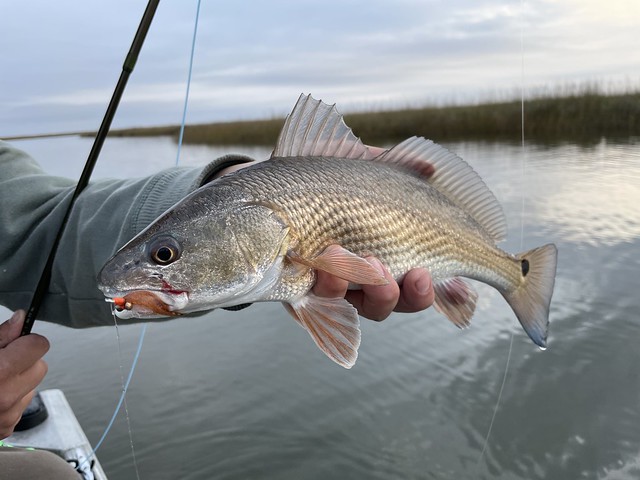
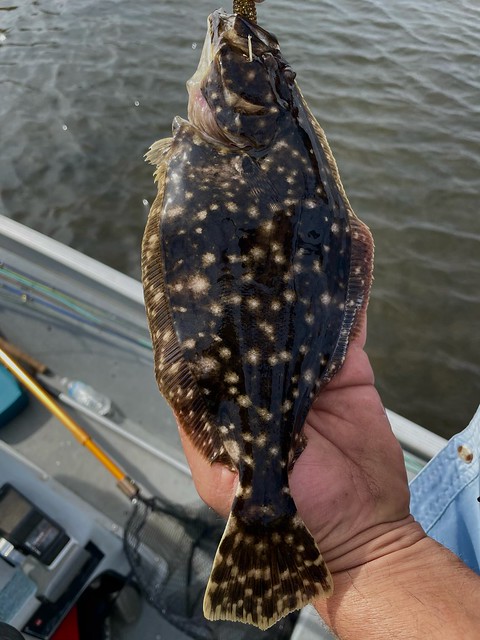
PXL_20211003_013416032

From: The McKenzie River Trust

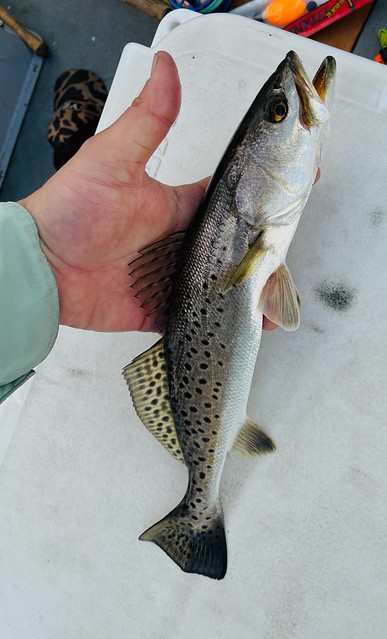
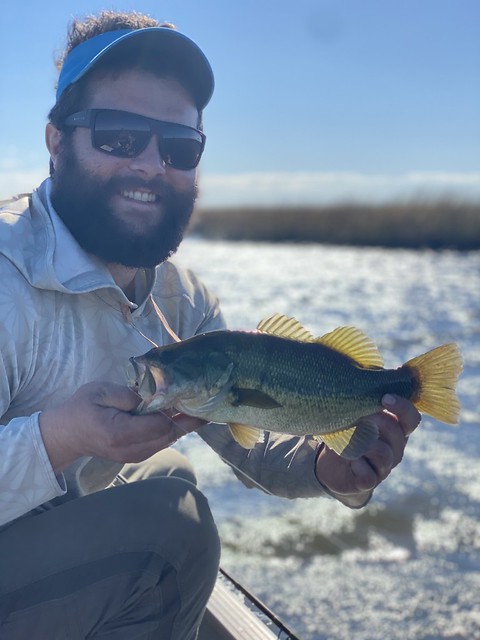
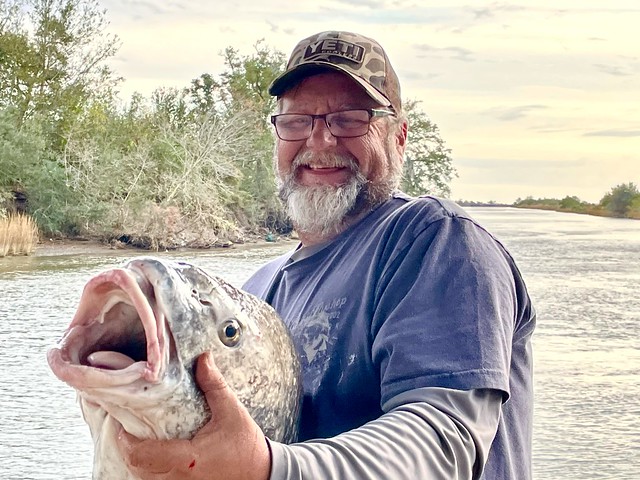
The McKenzie River Trust thanks you for Fishing for the River during the 13th Annual Two-Fly Tournament. We raised over $12,500!

A big, heartfelt hug goes out to all our amazing guides who donated their time and expertise. This event would not be possible without these wonderful humans: Chris Daughters, Clay Holloway, Justin Helm, Matt Ramsey, Andrew Shipman, Bryson Fairlamb, Troy Leedy, Alex Burgdorfer and Quint McDonald.

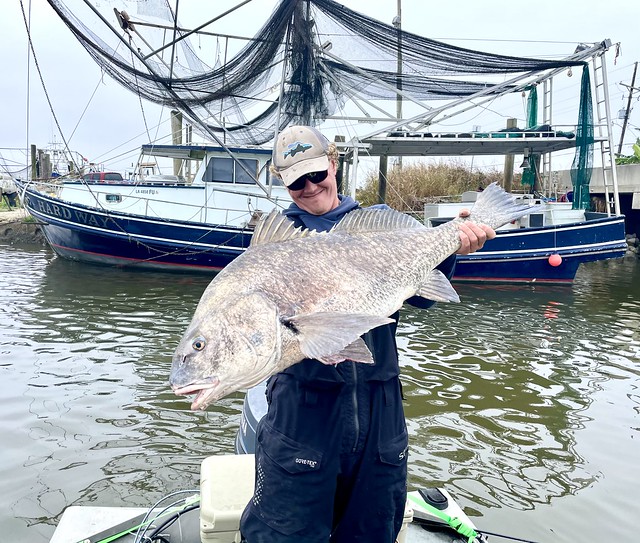
PXL_20211003_020008956.PORTRAIT

2021 CHAMPIONS: Guide Alex Bergdorfer with anglers Gary Ladenes and Devin Thompson

Huge thanks to Two Fly Prize providers: Fishpond USA, Redington, Patagonia and Montana Fly Company

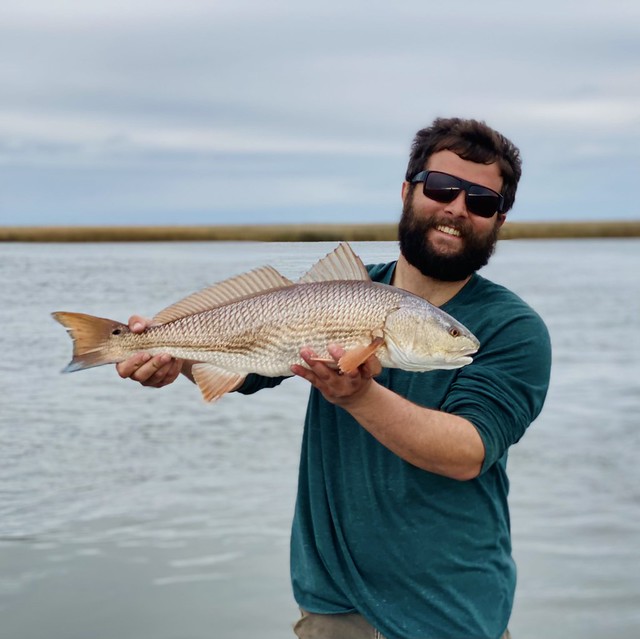
PXL_20211003_011804989~2

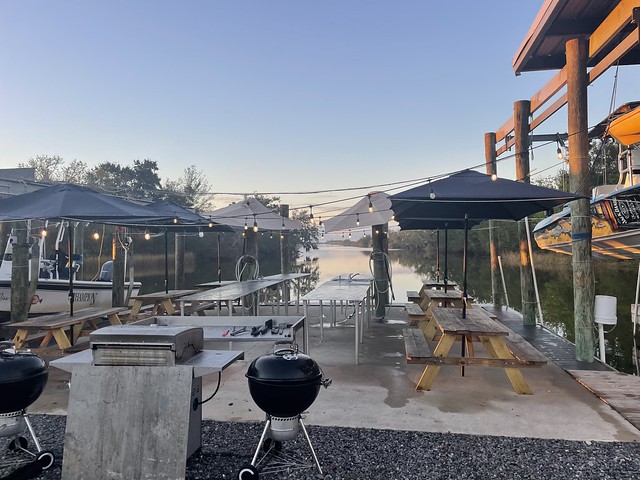
IMG_20211003_201453

Additional thanks the Richardson Richardson Sports and Koffler Boats for their key sponsorship of the event.

The Two Fly Tournament has now raised over $139,000 in its thirteen year history. We greatly thank all the participants and guides, many who have competed in the tournament numerous times.

IMG_20211003_082902

IMG_4339

If you would like to participate in the 2022 Two Fly as an angler or sponsor please contact me at caddisflyshop@gmail.com.

Posted in Fishing Reports, Oregon Fly Fishing Clubs and Events, Oregon Fly Fishing Tips | 2 Comments

October Sea-Run & Jack Salmon Flies – from the 1970s

Orange Caddis tenkara Cutthroat Fly.

Orange Caddis tenkara Cutthroat Fly.

Everyone knows that the Borden Special is a very good fly to fish in the fall. No argument there. And by the way, the photo above is not a Borden Special!

But Bob Borden’s pink fly isn’t the only fly to fish for Bluebacks and Jack Salmon. I have been researching the most reliable flies that have been fished by several friends: flies that have been in use for fifty years. This is a solid basis to be assured of these flies’ fish-attracting powers.

And I’d propose that there are two reasons to tie up these flies before setting out to fish the coastal streams.

These are the same two reasons we don’t limit ourselves to fishing a Green Butt Skunk for steelhead.

First, always tying & fishing only one fly, even the Borden Special, is boring.

The process of challenging ourselves with new patterns, different materials, and different proportions inevitably challenges us to become more proficient and versatile as fly tyers.

So without droning on with more rationale that you know already, I’ll move on to show you three effective patterns you can fish for sea-run cutthroat and Jack Salmon.

Although I will list a materials recipe for the flies I am featuring here, none of the materials are precisely crucial. The important matter is to try to achieve a similar shape, color, and so on.

Green Caddis Cutthroat Fly.

Green Caddis Cutthroat Fly.

Yellow dubbing can be substituted for yellow chenille. Baby Pink chenille can be substituted for baby pink yarn. White deer body hair or arctic fox can be substituted for white bucktail. Finding a good substitute for yellow-dyed mallard is difficult, but a modest-sized, yellow-dyed grizzly marabou would be very good, I’m sure.

Have fun, give these Autumn Coastal River flies a genuine try. These patterns are fun to tie, and if there are cutthroat or Jack Salmon around, you have a good chance of connecting.

My thanks to Jeff Hunter for loaning me the Yellow Blueback Spider (Jeff’s pattern), and “Jerry’s Pink Panther” (a pattern of Jerry Stoopes, tied by Jeff). Thanks also to Stan Davis, for loaning his “Blueback Special.”

Jeff Hunter's Yellow Blueback Spider.

Jeff Hunter’s Yellow Blueback Spider.

Yellow Blueback Spider

Hook: Wet fly, size 6, 4
Thread: Veevus 8/0, yellow
Tag: Gold
Tail: GPT any color
Body Yellow chenille wrapped with
grizzly or yellow badger
Wing: Yellow Mallard

Jay’s note: You could substitute yellow schlappen for the yellow mallard if the schlappen is very bright yellow and very wide to give a “breathing” action.

Jeff:
“This is a great fly after the river comes up. The fish will move into the backwater to avoid the salmon, and this fly is deadly then. Has lots of action when stripped.”

Jay: I like this fly midday in sun, the bright yellow cast of the fly shows well and seems to produce better than my Borden Special. This fly also reminds me of the days I fished yellow RoosterTail spinners on the Yaquina tidewater.

Jerry Stoopes' Pink Panther.

Jerry Stoopes’ Pink Panther.

Jerry’s Pink Panther” (Jerry Stoopes pattern, tied by Jeff Hunter.)

This is a sea-run fly developed by Jerry Stoopes, mentor of my friend Jeff Hunter. Jerry was fishing blueback cutts in the 1960s, and this was one of his go-to patterns. It is pink, like the Borden Special, but it is the far more subtle baby pink rather than the hot pink we now associate with the flies we tie for sea-runs and silver jacks. The recipe is here.

Jerry’s Pink Panther

Hook: 2 X-long #8
Thread: Veevus 8/0 pink
Body Baby pink yarn
Rib: Small silver tinsel
Wing: Baby pink yarn, to end of body
Hackle: White, webby wet fly

Note: Baby pink Marabou is a perfect substitute for yarn as a wing. The Wooly Bugger Marabou makes very nice wings on a fly of this size.


Stan Davis' Sea-Run Special.

Stan Davis’ Sea-Run Special.

Blueback Special (Stan Davis Pattern).

Hook: Eagle Claw 1197-N #6
Thread: White 3/0
Tail: Golden pheasant tippets
Rib: Silver wire
Body: Yellow Chenille, yellow hackle
Hackle: Orange collar
Wing: White bucktail or other hair, soft

Jay’s note: The TMC 3761 in a size 6 or Daiichi 1530 make very nice hooks for this fly, Naturally, a TMC 7999 in a size 8 is excellent also, but I would not fish the TMC 7999 in size 6, in my opinion, the hook is too large for sea-runs that could be anywhere from 11 to 18 inches.

Stan:
“Dad found this pattern in “Sea-Run Cutthroat Trout,” a book by Less Johnson. He used this fly at Winchester Creek, Winchester Bay, as a backup pattern.

One cold, foggy evening, five fishermen were fishing Winchester Creek just below the bridge. The fishing was very slow. The fish must have had “lock-jaw.” Dad tied on a Sea-run Special and caught three Bluebacks on about 10 casts. Dad was a hero and he found a new friend, the Sea-run Special. He usually tied this fly on a Wright & McGill 1197B hook. Nine-foot rods matched with five or six weight lines were the preferred rod. Five or six-pound Ultra Green was the tippet material of choice.”

I hope you find amusement, an idea you find useful, and joy somewhere in this post.

A final note regarding these blueback flies and their barbed hooks. These flies are traditional, and some are twenty years old. They are not the flies in my working fly boxes. These flies are as they are, and the photos are as they are, as traditional flies were tied and fished.

Please smash all of the barbs on your hooks that you will fish. I am not pretending that I always have done this. My friends know this. But nowadays, using a barbed hook just isn’t acceptable and doesn’t fit in my conscience under any manner of reasoning.  Life is about change. Some people change. Some change is for the better.

Jay Nicholas

Posted in Fly Tying, Fly Tying Materials and Supplies | Leave a comment

Loon Outdoors October Caddis Fly Tying Video

Our friend Matt Callies at Loon Outdoors has this super cool October Caddis Pattern, a great pattern for fall fishing.

Posted in Fly Tying Materials and Supplies, Oregon Fly Fishing Tips | Leave a comment

A Pause on Hatchery Summer Steelhead in the North Umpqua River

bWFpbi9pbWcvcGFnZXMvNmY2NjNmMTMtMTZmMy00YmY1LWExZWMtNDFhYmI0NTYyYTU3XzFfMTA1X2MuanBlZw==

From Native Fish Society

During the September Oregon Fish and Wildlife Commission meeting, the North Umpqua Coalition: Native Fish Society, Trout Unlimited, Steamboaters, The North Umpqua Foundation, Conservation Angler, and Umpqua Watersheds, expressed their advocacy for a pause of the current summer steelhead hatchery program on the North Umpqua River. The time is right and the lack of current resources makes it easy and simple for the department to implement this adaptive management change. We would like to make our position clear, we are not asking for a total closure of the Rock Creek Hatchery facilities nor a total elimination of all hatchery programs being propagated at Rock Creek Hatchery, yet a simple pause on summer steelhead.

Read more about the coalition’s advocacy work below and if you have any questions, don’t hesitate to contact Southern Oregon Regional Coordinator Kirk Blaine today.

Screen Shot 2021-10-01 at 8.58.03 PM

September 29, 2021

The North Umpqua Coalition

ODFW Commission

RE: CMP Adaptive Management Actions – Summer Steelhead on the North Umpqua River

Dear Chair Wahl, ODFW Commissioners, Director Melcher:

Thank you for hearing The North Umpqua Coalition’s testimony on Friday, September 17 regarding our deep concern for the decline of the North Umpqua’s wild summer steelhead population. We are grateful that many of you made the time to visit the hatchery and witness the destruction caused by the 2020 Archie Creek fire, which included both the Rock Creek and the North Umpqua watersheds. We also thank those of you who met with local advocates virtually. Multiple fires started in the upper North Umpqua Basin this summer and continue to burn.

To be clear, The North Umpqua Coalition is advocating for a pause of the summer steelhead hatchery program, for two generations or ten years, not the removal of the Rock Creek hatchery facility. Before burning in 2020, the Rock Creek hatchery facility cultivated fish for multiple hatchery programs including spring Chinook salmon, Coho salmon, winter steelhead of the South Umpqua, and rainbow trout. The Coalition is requesting a pause of just one program, not the elimination of other programs or facilities. We understand that ODFW is evaluating options regarding rebuilding the facility in the future. We support an open public process that will engage in evaluating those options.

Currently, a hatchery summer steelhead smolt (juvenile) release is planned for the North Umpqua River in the spring of 2022, not 2023 as stated during the Commission meeting, adding to the urgency of this critical fisheries management decision. ODFW took 2020 summer steelhead broodstock to Cole Rivers hatchery days after the Archie Creek Fire. These fish were spawned and offspring are currently being reared at Cole Rivers Hatchery until the spring of 2022 when they will be brought back to Rock Creek in the North Umpqua Basin for acclimation and release. In the 2021 September Commission meeting, Commissioners asked for a full evaluation of alternatives before moving forward. That means this evaluation must be complete and decisions about continuing the North Umpqua summer steelhead program must be made sooner rather than later. ODFW has also collected hatchery fish that returned during the summer of 2021 for their broodstock in subsequent years.

In regards to compromise, the North Umpqua Coalition believes that a pause of the summer steelhead hatchery program is a compromise. We have not asked for a reduction in hatchery Spring Chinook releases, which monitoring shows the percent hatchery origin spawners (pHOS) is exceeding CMP targets. We understand the social and political values of the spring Chinook hatchery program to the community and other stakeholders throughout the entire Umpqua basin. Likewise, The North Umpqua Coalition has not considered advocating for the pause or elimination of the winter steelhead hatchery program on the South Umpqua River, something that could quite possibly boost wild populations in that basin. We understand the social and political values of this program as well. Lastly, our request is not asking for a total elimination of the Rock Creek Hatchery facility. This action was mistakenly referred to by others and taken out of context in the September Commission meeting.

Currently, we are seeing record low wild summer steelhead returns in the North Umpqua Basin, and we are likely to see this trend continue in the absence of management changes. The time to act is now. Returns in 2021 will likely be 25-40% of the current critical abundance threshold identified in the CMP set at 1,200 wild summer steelhead. We ask you to please recognize this emergency and take action before it’s too late. Pausing the Summer Steelhead hatchery program is an adaptive management action in alignment with the CMP and the Climate and Ocean Change Policy. It is the management action that best responds to the drastic change in habitat from the Archie Creek Fire by bolstering the resiliency of the wild fish population. Wild winter steelhead, which are thriving after the removal of hatchery reared winter steelhead, show us that wild steelhead can flourish in the North Umpqua River. It’s time to give wild summer steelhead the same chance.

Sincerely,

The North Umpqua Coalition

Mark Sherwood,

Executive Director, Native Fish Society

mark@nativefishsociety.org

Dean Finnerty

Northwest Director, Trout Unlimited – Wild Steelheaders United

Dean.Finnerty@tu.org

David Moskowitz

Executive Director, Conservation Angler

david@theconservationangler.org

Jeff Dose

President, Steamboaters

jfdose@msn.com

Becky McRae

President, The North Umpqua Foundation

bmcrae@centurytel.net

Ken Carloni

President, Umpqua Watersheds

ken.carloni@gmail.com

Posted in North Umpqua River Fishing Reports, Oregon Conservation News | Leave a comment

10% of Friday October 1st Caddis Fly Sales go to McKenzie River Trust

Screen-Shot-2021-06-24-at-4.43.54-PM

About the Two-Fly Tournament

It all starts on a Friday evening in the fall, as an eager group of anglers and local fishing guides come together at the Caddis Fly Angling Shop in Eugene to eat, drink, strategize and raise money for the rivers they care about. Join us to Fish for a Cause at the Annual Two-Fly Tournament!

**FRIDAY: 10% of all sales at the Caddis Fly Shop will go to MRT**

The Caddis Fly Angling Shop will host an evening with dinner and local brew. 13th Annual Two-Fly Tournament Shirts will be handed out and your team will draw your guide for the tournament.

Saturday: Full day of fly fishing with your local guide on either the McKenzie or Willamette River. In the evening we all come back together again (location TBD) to celebrate a great day of fishing on the rivers we all care about. There will be a catered dinner, local brew, and we will determine the 2021 champions!

Posted in Fly Fishing Contests, McKenzie River, Oregon Conservation News | Leave a comment

Bruce Berry’s Pink, Copper, & Peacock “PCP” Jigged Euro Nymph Fly Tying Instructional Video

In this video, Bruce Berry joins us at the Caddis Fly shop to tie a favorite staple of his jig nymph lineup, the PCP. The fly is simple and deadly, and deserve a spot in any angler’s nymph lineup!

Materials List:
Hook: Ahrex FW555, Sz14
Bead: 3.8mm Copper Slotted Tungsten Bead
Thread: Flo. Red Danville 70D
Tail: Coq De Leon
Body: Peacock Herl
Rib: Micro Flashabou, Copper Wire, small
Glue: Zap-a-gap, Pro Sportfisher UV Thin Flex Clear

Materials are available at https://www.caddisflyshop.com/​

Check us out on Instagram at

https://www.instagram.com/caddisflyshop

Facebook:

https://www.facebook.com/caddis.shop/​

Posted in Uncategorized | Leave a comment

Local Fishing Report – Fall Fly Patterns

IMG_1492

The McKenzie and Willamette Rivers received a “freshen up” last weekend. While rivers came up quickly they came right back down into great shape. Water temperature have dropped a bit but fishing has remained excellent.

IMG_1510

This time of year is so great, light winds, good hatches, and salmon spawning in the McKenzie make it one of the very best windows of fishing each year.

IMG_1519

IMG_1502

Fishing has been good all day. In the a.m hours fish seem to be keying on larger dries. Nocturnal Short Winged Stoneflies still fresh in there memory banks. Mid-day a smaller jigged nymph or adult caddis pattern has been working well. In the afternoon Parachute Adams, Blue Winged Olive patterns, and then moving towards evening October Caddis begin flopping about and you can get out the big orange patterns.

Best Flies for current conditions:

Chubby Chernobyl #6 and #8 tan, gold, orange
Parachute Adams size #10-14
Brown and Tan Elk Hair Caddis #10-16
Blue Winged Olive #18-20
Dally’s Tailwater Jig
Orange Elk Hair Caddis #8-14
Morrish Foam October Caddis #8

Posted in Fishing Reports, Lower Willamette, McKenzie River, Middle Fork Willamette River fishing | Leave a comment

Imagine spending a week fishing at the Babine Steelhead Lodge in 2022 for just $100!

mail

From Native Fish Society

Imagine it, you’re sitting in your cozy cabin along the amazing Babine River in beautiful British Columbia, reminiscing on the week-long fishing adventure of a lifetime you just experienced, new friends you met, delicious food you ate, stunning nature you explored…and all for $100! Well, these dreams could be reality thanks to an anonymous donor – a supporter of both Native Fish Society and Deschutes River Alliance – who has generously donated their Babine Steelhead Lodge spot to our organizations. To leverage this donation, DRA and NFS have decided to raffle off this prime spot and use the funding to help fuel our shared missions of reviving the Lower Deschutes River.

In partnership with Deschutes River Alliance, we recently kicked off the Bakeoven Watershed Rehabilitation Project – a collaborative endeavor in a dedicated effort to remove invasive blackberries that decrease water flow in Bakeoven Creek in Maupin, Oregon.

Ticket sales are currently available for purchase NOW through October 14th, 2021. Remember, only 250 tickets will be sold! Each entry is $100 and the lucky winner will be drawn on Friday, October 15th, at 3pm.

All proceeds from this raffle will support the Native Fish Society and Deschutes River Alliance’s collaborative conservation project to revive the lower Deschutes.
Learn more about this amazing and unique project HERE. If you can’t fit a trip to the Babine into your 2022 schedule, consider donating to this joint project by clicking the DONATE button on the right-hand side of the raffle page HERE

PURCHASE RAFFLE TICKETS HERE.

Details:

1 angler / *2022 Dates – specific week to be determined / Guided fishing on the Babine River

*Does not include travel to Smithers, B.C., taxes, gratuities, or licenses.

Raffle tickets on sale: September 13 – October 14, 2021

Drawing: October 15, 2021 @ 3pm

**Please Note** Throughout the Pacific Northwest, our native steelhead runs are in a precarious state. When purchasing an NFS/DRA Babine For A Benjamin Raffle ticket, please keep in mind that the trip will depend on adult returns in the Skeena Basin meeting annual escapement goals. As always, thank you for your continued support for the revival of wild, native fish, and free-flowing rivers. We appreciate you!

Posted in Coastal Steelhead Fishing, Fly Fishing Contests, Oregon Conservation News | Leave a comment

What Happens To Native Trout Fisheries When We Remove Competing Hatchery Stock – The McKenzie River Example

McKenzie River Rainbow Trout

Two of the smartest fish bio guys I know collaborated to create the article below. Dave Thomas and Arlen Thomasen ( author of the best bug book out there “Bugwater“) also were participants/leaders in the McKenzie River Trout study referenced within the article.

What Happens To Native Trout Fisheries When We Remove Competing Hatchery Stock – The McKenzie River Example
By David Thomas and Arlen Thomason

The Problem:

The native “Redside” rainbow trout of the McKenzie River was an established destination fishery well before World War II. Post-war, ODFW began a program of outplanting out-of-basin hatchery origin fish in the river. In 1963, following their construction of several flood control dams on the river, the Army Corps of Engineers (Corps) built a new trout hatchery adjacent to Leaburg Dam (38.8 river miles above the confluence of the McKenzie River with the Willamette River). The rationale for the hatchery was to mitigate for the losses to the Willamette Basin fisheries caused by the dams. Over the years various stocks of rainbow trout were utilized in the hatchery’s outplanting program. Production was largely managed to meet demands from local anglers rather than any established limits regarding the impact of the hatchery stock on the native Redside population.
Though there had been no systematic population count, local anglers reported that they were encountering increasingly diminished numbers of Redsides, possibly due to interbreeding with or competition from hatchery trout. To partially assuage these concerns, the hatchery stock was converted to a mostly sterile (trisomy) strain. This likely answered any concern regarding gene-flow from hatchery rainbows reducing fitness of the wild spawning fish, but did not speak to possible competition between the native and hatchery stocks for resources (food and habitat). As in any situation where data are scarce, there was considerable disagreement among the fishing communities regarding what, if anything, should be done regarding the status of the Leaburg Hatchery trout program.

Citizen Science:

In 2009, ODFW announced that it would cease outplanting hatchery fish in a 5.1 mile section of the Lower McKenzie River. Seeing an opportunity to finally estimate the impact of hatchery stock, a group of conservation minded anglers, with cooperation from the local ODFW staff, designed a program to measure the effects of the hatchery stock removal on resident fish populations. Financing for study costs came from donations from local clubs and conservation organizations. From 2010 through 2013, 108 trained volunteer anglers floated and fished the study section using a “mark and recapture” model to estimate the numbers and physical distribution of species. The study involved 277 angling trips for 2,558.5 hours on the river.

Results:

After two years from the cessation of hatchery fish planting, the density of native Redside trout in the study section had more than doubled; at the end of the fourth year the increase was more than 300%. In parallel, the number of native spawning cutthroat trout also increased, but to a lesser degree. Interestingly, a parallel study by ODFW using electrofishing methodology came to the same result regarding the proportional changes in the fishery.
As a consequence of this study result, ODFW has continued to refrain from planting hatchery trout in this 5.1 mile section of the river, and the native Redside fishery there has recovered. However, the study results have not resulted in removal of all hatchery trout outplants from the rest of the river, although the study results suggest that it would be possible to quickly reestablish a flourishing native fishery throughout the McKenzie absent the hatchery program The points of resistance for such a wholesale change in managing the fishery are multiple. For instance, some members of the local fishing guides organization feel that the loss of catch and kill hatchery fish would lead to fewer fishing customers, and a resulting reduction of their income. Also, ODFW relies on fishing license sales for a good portion of its fishery management operating budget, and the loss of the abundantly available hatchery stock might conceivably result in a reduction of fishing license purchases. Moreover, the hatchery programs are largely paid for by the Corps as part of its Upper Willamette Basin fishery mitigation obligation. Put another way, these hatchery fish are “free fish” to Oregon, so ODFW works very hard to assure that the programs continued. Finally, ODFW’s Fish Division budget and operations are heavily weighted towards the management and production of hatchery fish. For these reasons, questions regarding the advisability of curtailing hatchery programs are often met with considerable pushback.

Sources:

Study Website: http://www.mckenzietroutstudy.org/
Final Report: http://www.mckenzietroutstudy.org/reports/
For a history and consequences of Hatchery trout see: Anders Halverson’s An Entirely Synthetic Fish. Published by Yale University Press, 2010.

Posted in McKenzie River, Oregon Conservation News | 5 Comments

Columbia & Snake River Wild Steelhead in Crisis

mail

From The Conservation Angler

Compelling commentary on the Columbia River’s Wild Steelhead Crisis from Rich Simms, co-founder of the Wild Steelhead Coalition. Read it HERE.

Dean Finnerty, Director of Trout Unlimited’s Wild Steelheaders United! Read it HERE.

Both organizations make the case to close some steelhead fisheries amid record-low returns, as well as issue a call to action to anglers who are passionate about wild steelhead.

Check out the latest Columbia-Snake steelhead return data in TCA’s most recent update and action report HERE.

Oregon steelhead guide Jeff Hickman cancels entire Deschutes season out of concern for fishing impacts on extremely dismal wild steelhead returns. Read the Hatch story HERE.

What can you do? Support conservation groups like The Conservation Angler, Wild Steelheaders United, Wild Steelhead Coalition and Native Fish Society. These groups are fighting hard for wild fish at all levels and need our help to keep up the fight.

Posted in Oregon Conservation News, Summer Steelhead | Leave a comment

Middle Fork of the Willamette River Fishing Report

IMG_1437

We decided to give the Middle Fork of the Willamette a shot this past Tuesday. I knew the river would be low and I knew there was potential for smoke. Both bore out true of course… Driving up HWY 58 I could see the smoke clinging to the Black Canyon section of the Middle Fork.

IMG_1438

Looking down river from the boat launch at Black Canyon Campground is was clear in Eugene. A brisk wind followed and blew most of the smoke out of the river valley. The smoke ended up not being much of issue except for near the confluence of the North Fork of the Middle Fork.

IMG_1443

Fishing was active not long after putting in my raft at Greenwaters Park. I was very happy I did not bring the drift boat as the first rapid out of the gate would have had me walking the boat down the river. Instead I rubbed and bumped and clumsily slopped down in the raft. Fish were in quick water and not in slow runs. Despite some water that had foam lines, good depth and cover, fish were not present in slower than walking speed water. They really preferred quick water with quick depth change. This water could be in the middle, on a bank, or in front of a rock, the key was there simply weren’t fish in slow water.

IMG_1456

IMG_1445

Hopper dropper rigs ( chubby Chernobyl or Parachute Madam X as the dry and a 1/8 or 3.3mm Beadhead ) with mid sized jig nymphs of all types worked. The key was to have the bead 3.3mm or 2.8mm, a 5/32 or 3.8mm bead was simply to heavy for the flow.

IMG_1446

IMG_1459

The Middle Fork is so low it’s really a wading anglers paradise right now. You can literally get almost anywhere in the river. A wader could start at Black Canyon and walk upstream like 3 miles.. and keep going. Access along the backside of 58 east of the Westfir Bridge is unlimited as well. Just look for the fastest water and you will find the fish.

Best bugs included Hippy Stomper #12 Purple and Gold, Chubby Chernobyl #10, Strolis Quil Body Jig #12, Tungsten Jig Yellow Sally and Tungsten Jigged Pheasant Tails.

Posted in Fishing Reports, Middle Fork Willamette River fishing | Leave a comment

Vinyl Jig Midge Fly Tying Instructional Video

Hey y’all. I tied this fly up, along with the Golden Stone jig nymph from an earlier video, at the end of July, when we were already experiencing tough, low water conditions that we would normally see at the end of August. It’s now the second week of September, and water levels are still quite low. Luckily, there’s some rain on the horizon, but it won’t change all that much in terms of river levels until the rain really starts to dump. Temps are on the drop, which is great. Fall is starting to show up, but I’ve been pretty confident in this fly with variations in colors for the past couple months both on the McKenzie and on a few trips I took out to the Metolius. It’s definitely earned a place in the box for low water conditions and picky spring-fed fish.

Materials:
Hook: Daichi 4698, Sz14
Bead: 3.8mm Slotted Tungsten, Black
Thread: UTC 70D, Dark Grey
Tail: Glo-Brite Floss
Body: Vinyl Rib Midge Black
Thorax: Ice Dub Peacock Black

Materials are available at https://www.caddisflyshop.com/​

Check us out on Instagram at

https://www.instagram.com/caddisflyshop

Facebook:

https://www.facebook.com/caddis.shop/​

Posted in Classes and Instruction, Fishing Reports, Fly Tying, Fly Tying Materials and Supplies, McKenzie River, Uncategorized | Leave a comment

Fall is in the air – Local Fishing Heating Up

IMG_1416

Water temps are ideal on the upper McKenzie River and each cooler night we have going forward will help the Lower river cool down as well. More bugs are present each day. Gray Drakes, October Caddis, Blue Winged Olives and a variety of mid sized caddis are available to feeding trout.

Best Flies to have in your box in the coming days:

Purple Parachute Rooster
Purple Haze
Gray Drake
Parachute Adams
Hi Vis Parachute Adams
Morrish’s Foam October Caddis
Orange Stimulator
Anderson’s Bird Of Prey October Caddis Nymph
Jigged Tungsten Hare’s Ear

Posted in Fishing Reports, Lower Willamette, McKenzie River | Leave a comment

The Biology of Harvest – Wild Steelheaders United

Rogue_Steelhead_2-864x648

By Nick Chambers for Wild Steelheaders United

Steelhead anglers probably have disagreed with aspects of sport fishing management since the dawn of fishing regulations. In recent years, however, one area of disagreement has come into sharp focus: sport harvest of wild steelhead.

Throughout the Lower 48, nearly all wild steelhead runs are now at a fraction of their historical abundance, distribution and diversity, and in recent years, many populations have produced some of the lowest, if not the lowest, run sizes on record. Despite the worrisome status and trends, a few fisheries in Oregon continue to allow harvest of wild steelhead, and as a result, there has been renewed controversy over whether any direct harvest should be allowed. To be clear, this is not merely a social debate about how we value these fish — this is primarily a debate among scientists, fish managers, fish advocates and anglers about whether the effects of harvest will contribute toward further declines, and eventual closure of fisheries. The way steelhead populations respond to harvest is rooted in the basic biology of the fish. While it can be difficult to separate the wheat from the chaff in these debates, steelhead and other salmonids have been well studied, and the large body of scientific literature can provide us with important insights to guide wild steelhead management.

From Seattle to San Diego, the only region where sport harvest of wild steelhead is still allowed is Oregon’s south-central coast. Earlier this year, the Oregon Department of Fish and Wildlife released a draft Rogue-South Coast Multi-Species Conservation and Management Plan (RSP) that would update sport fishing regulations for steelhead in rivers such as the Rogue and Chetco. This plan would continue to permit sport fishing harvest of wild steelhead, despite large gaps in scientific data on population and age class numbers.
Over the last month, anglers came together to voice their support for pausing the harvest of wild steelhead on Oregon’s south coast. Over 2,000 comments from wild steelhead angler-advocates urged ODFW to select a catch and release alternative for wild steelhead in its final RSP.

On October 15th, ODFW will present the RSP to the Oregon Department of Fish and Wildlife Commission, and the commissioners will review and comment on the plan. In the meantime, we offer this five-part series of posts on why catch and release is the best option for the long-term health of wild steelhead, and drill down to the basics about the methods scientists use to evaluate whether a population can support harvest, and if so at what level.

Rogue-halfpound-4-small-1024x760

MANAGING STEELHEAD: DENSITY DEPENDENCE AND ESCAPEMENT GOALS

Successful management of any fish or game animal — which necessarily means ensuring a healthy, durable population that can persist as habitat conditions change — must start with the biological fundamentals. How many animals do you have? How productive are they? What is their distribution and is the population stable, decreasing or increasing?
Without this type of data it is impossible to know how many, if any, animals can be removed through harvest without harming the population, and how such actions could impact the population’s resilience and diversity.

The questions are simple, but they are not necessarily easy to answer, especially for a species like steelhead that often inhabit large watersheds with hundreds to thousands of stream miles. We can’t survey and count steelhead across an entire watershed, or sample them every day of the year. Counting every fish in every nook and cranny of a watershed is an almost impossible task, so even answering the first question is more challenging than it might seem.

Generally, managers sub-sample a portion of stream habitat for adult redds and/or juveniles and then extrapolate that information to the entire basin. The more thorough the sampling is, such as covering a greater length of the total stream habitat in a watershed, the greater the certainty in the estimate. For example, ODFW has done a remarkable job of monitoring, researching, and adaptively managing Coastal Coho Salmon populations, and many scientists have relied on the methods that were developed for those fish.

fry_Nick_Chambers-1024x814

Unfortunately, steelhead have not received the same amount of attention, presumably because they are not ESA listed and there is, consequently, less funding for monitoring and research. Because the monitoring is much more limited and less habitat and fewer fish are sampled, there are substantial data gaps and tremendous uncertainty associated with their annual monitoring efforts. Turning this data into meaningful estimates requires making several assumptions, and if those assumptions are not tested and validated, it can lead to policy decisions that are not in the best long-term interest of the fish and the fisheries they provide.

Let’s unpack what this means and define what we mean by assumption. An assumption is a concept that is generally accepted scientifically as true or accurate, but lacks specific data to support it. For instance, in many watersheds it is assumed the stream habitat is filled to capacity with juvenile steelhead. If true, adding more adults to the spawning population (think more eggs in the gravel) will not necessarily result in increased abundance in the next generation because there is simply not enough “room and board” for the extra juvenile fish. Under such conditions, the only way to increase the abundance of adult steelhead is to improve freshwater habitat so it can support more juvenile fish.

Unfortunately, these assumptions are rarely tested for steelhead. There is a tremendous amount of knowledge and research on steelhead, but data quality and quantity on adults and juveniles is often insufficient to rigorously evaluate the capacity or productive potential of the available habitat. Bridging the gap between a basic understanding of fish and habitat associations and watershed capacity is difficult, and where it has been done, it has been based on sound monitoring and research on abundance, life history (e.g., size, age, time of entry and spawning), and distribution of juvenile and adult life stages.

Still, even in our best case scenarios — and as we outline in future posts — a great deal of uncertainty remains, which is why we are going to take a deeper dive into the biology of steelhead that forms linkages between their biology, management, and the future of our fisheries.

To understand fisheries, we first need to understand density dependence and its relevance to the fish, fishery management and estimating productive potential.

Density dependence is how population vital rates change in relation to density. For example, a common result of density dependence is decreased growth or increased mortality in relation to an increase in density of juvenile steelhead. This occurs because of competition for limited resources. There simply isn’t enough food or space for all fish to grow and survive equally. Consequently, some fish grow and survive at higher rates than others, which is why size is often a good predictor of survival from one life stage to the next. All else being equal, size matters: larger fish usually survive better than smaller ones.

The concept of density dependence is at the core of a population’s ability to compensate for a reduction in the number of spawning adults, whether that reduction be related to natural or human factors, such as harvest. Compensation occurs when the per-capita productivity of spawning adults increases as their density decreases.

In theory, once the number of returning adults is low enough that there is ample vacant spawning and rearing habitat (which would be utilized in years when run sizes were larger) the reduced number of fish grow and survive better. ODFW’s assumption for the Southern Oregon Coast is that low levels of harvest will not have a negative effect on the long-term health and durability of wild steelhead populations because they will compensate with better growth and survival, which should in turn improve productivity for the next generation.

While salmon and steelhead are known to exhibit compensatory responses, each population has a different capacity for response. For this reason, most successful fisheries are grounded in collection of high-quality data at appropriate scales over a sufficient period of time to have a basic understanding of population status and trends.

Rogue_Fall-1024x514

A fishery should always have as its primary goal the maintenance of a sufficiently abundant, diverse and well distributed supply of spawning adults. If too few adults return to spawn, there may not be enough juveniles to fill up all of the habitat, partly because fewer adults will not be able to spawn across all the habitat, and partly because juvenile steelhead have their limits (even though they can swim relatively long distances) and long-distance dispersal often comes with a cost of increased mortality. Ultimately then, if too few fish return they may not be able to fully compensate, resulting in reduced production of smolts and returning adults.

This is where a fishery’s escapement goal comes in. Escapement refers to the number of fish that escape the fishery and survive to spawn. Escapement goals attempt to estimate how many spawning adults it would require to take advantage of the available habitat. If the run size is forecast to be greater than the escapement goal, a fishery is allowed. Alternatively, if the run size is expected to be less than the escapement goal, a fishery could be restricted or perhaps, in the case of very small run sizes, not allowed at all.

Establishing an appropriate escapement goal is critical for any fishery. Goals that are too low may depress a population beyond its ability to recover, while goals that are too high may be unrealistic and eliminate potential for any fisheries. Ideally, there is a sweet spot that balances the conservation needs of the population to remain resilient through climate change and also creates opportunities for anglers to get on the water and enjoy fishing for wild steelhead. But finding that sweet spot depends on having sufficient information about density dependence on other population and habitat metrics — which is what ODFW does not have right now as it prepares to bring the draft Rogue-South Coast Multi-Species Conservation and Management Plan to the Oregon Fish and Wildlife Commission.

Next week we take a deep dive into the important early-life biology of steelhead, and how the distribution and timing of spawning can influence density dependence and escapement goals. Until then, please help our wild steelhead by fishing responsibly during this drought- and heat- afflicted summer.

Author Nick Chambers — from Grants Pass, OR — is a Master’s candidate in the University of Washington’s fisheries program.

Posted in North Umpqua River Fishing Reports, Oregon Conservation News, Oregon Salmon fly fishing, Oregon Winter Steelhead Fishing, Southern Oregon | Leave a comment

Chicken Strip Baitfish Fly Tying Instructional Video with Alex Swartz

In this video, Alex Swartz ties a baitfish pattern with a multitude of predator species applications. Alex uses bucktail, saddle hackles, flash, and some exciting new snowrunner brushes to whip this fly up — many different sizes and color combinations could be applied to this fly, and could lead to your angling success in all 4 corners of the globe. We hope you enjoy!

Materials:
Hook: Ahrex PR-378
Thread: Veevus 240D
Tail: Flashabou red, pearl, gold; Bucktail Sunburst
Yellow, Strung Chinese Saddle Hackles in Yellow
Body: Snowrunner Brush Yellow, Flashabou in gold,
red, and pearl, Bucktail Sunburst Yellow
Head: Snowrunner Brush Red
Eyes: ProSportfisher Tabbed Eyes 10mm

Materials are available at https://www.caddisflyshop.com/​

Check us out on Instagram at

https://www.instagram.com/caddisflyshop

Facebook:

https://www.facebook.com/caddis.shop/​

Posted in Fly Tying, Fly Tying Materials and Supplies | Leave a comment